Chiapas Support Committee
Home of the Compañero Manuel blog on zapatistas & mexico
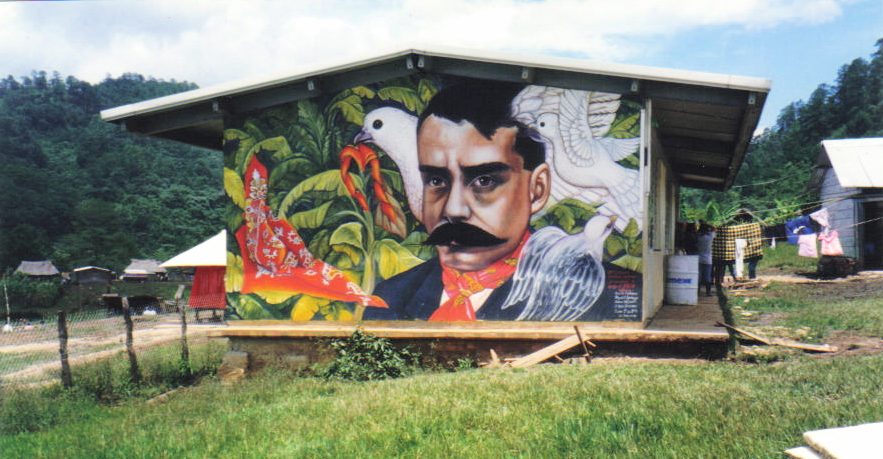
The Chimalapas, a chima victory
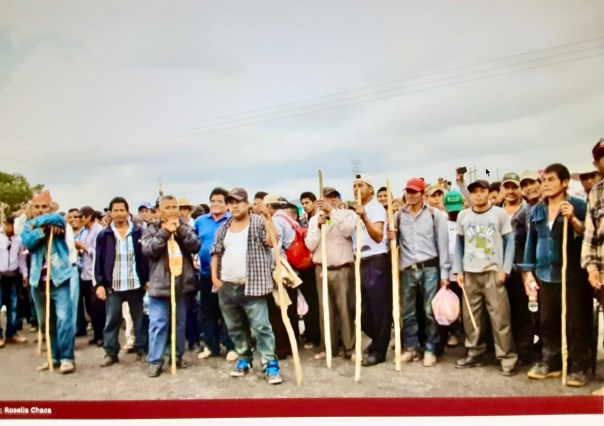
On November 11, 2021, Mexico’s Supreme Court of Justice of the Nation (SCJN) ruled in favor of Oaxaca in its dispute with Chiapas over 64,777 acres in the area known as the Chimalapas.
By: Luis Hernández Navarro
The real driving force that moves the lawsuit over the territorial limits between Oaxaca and Chiapas in the Chimalapas Jungle, is the conflict between the Zoque community members (chimas) who defend their lands and natural resources, and the Chiapas loggers, ranchers, politicians and drug traffickers, who loot and attack indigenous communities.
In Serpent’s Knot, the extraordinary novel-testimony published in 2004, Alejandro Aldana Sellschopp narrates the kidnapping, a few hours after the armed uprising in January 1994 of General Augusto Castillejos (in reality the finquero and former governor of Chiapas Absalón Castellanos Domínguez, the one responsible for the Wolonchán Massacre) [1], guarded by the then Major Moisés of the Zapatista National Liberation Army (EZLN, Ejército Zapatista de Liberación Nacional (EZLN). On the same track, the writer also tells of the pillage of the Chimalapas at the hands of Chiapas politicians and loggers.
Interweaving stories of different personages, Aldana Sellschopp, relates how, Rodrigo del Monte, a personage at the service of the general’s brother, responsible for the cutting of cedar, mahogany and pine, instructs his subordinates: “we will organize people to move to San Isidro la Gringa, in the Chimapalas (…) from there we are close to Santa María and San Miguel, where there is a very big mess, because some say it belongs to Chiapas and others say Oaxaca; As you will see, there is no defined law and that gives us a chance to cut trees without problems.”
When one of his interlocutors tells him that the argument had already been resolved, Rodrigo responds: “No, man, fucking laws are worth shit, we screw them by moving the markers about 30 kilometers, and that’s it, now it’s Chiapas land, and to top it all off the very Secretary of Agrarian Reform, one Rafael Rodríguez, just now in April ruled that there in Cintalapa, that La Gringa is national property and now it doesn’t matter if the enemies fight with us.”
The novel also relates the moment in which, in that war over wood, the Oaxacans took Hernán (Jorge Castellanos Domínguez), the governor’s brother, as a hostage while he was devastating the jungle in November 1985. To release him, they demanded that the Chiapas president abandon predatory action in the region. “They cut us down –says a personage in the book–, became very fucked up, disarmed everyone, beat us up, it turned into a mess. The little shits didn’t respect don Hernán, they tied him to a pole and they say that Governor Heladio Ramírez will hand him over to the general; but I think that they will kill him.”
The kidnapping of Jorge Castellanos Domínguez is just one more episode in the uninterrupted ancestral struggle of the Zoque communities in defense of their territory. In 1867, they bought their own lands from the Spanish crown in order to preserve them. In 1850, the then president, José Joaquín Herrera, recognized the document. And in March 1967, Gustavo Díaz Ordaz’ presidential resolution validated the property of two communities: Santa María and San Miguel.
In the Zoque language, Chimalapas means “gourd of gold,” in memory of the payment made to the crown to obtain their viceregal titles. It’s located in eastern Oaxaca and shares borders with Chiapas and Veracruz. Its surface is greater than those of states like Tlaxcala or Colima. According to Miguel Ángel García, for many years dedicated to the defense of the indigenous communities and to the region’s biodiversity, “it has 594,000 hectares of land, of which 495,000 are forest and jungle, which makes it the most important of Mexico and also of Mesoamerica” (https://bit.ly/3wO1uSR).
Supported by the Chiapas government and with federal endorsement, in 1947 five large forestry companies with 25 sawmills were established in the region, led by the Rodolfo Pérez Monroy from Michoacán. Without concern for conservation of the environment or the needs of the population, they savagely exploited the jungle and the labor. Until, in 1977, the residents and workers rose up and expelled the loggers.
Then the hand of Absalón Castellanos continued the invasion of that territory with ranchers, new loggers and drug ranchers supported by Governor Patrocino González Garrido. At the same time, the state government sponsored migrations of poor Tsotsils from the Chiapas Highlands, of those displaced by the Cerro de Oro Dam [2], or of victims of the Chichonal Volcano [3] explosion.
To legalize the dispossession 160,000 hectares (approximately 64,777 acres) of the Chimalapas, in 1995 Chiapas modified Article 3 of its Constitution. Before that date, the boundaries of that state were clearly established and there was almost no overlap between its boundaries and those of Santa María and San Miguel. State governors like Julio César Ruiz Ferro and Roberto Albores sponsored the occupation of that territory and protected the predators. To nail down the illegal invasion, the government of Juan Sabines created Belisario Domínguez Municipality on that soil.
Last November 11, after a 10-year controversy, the Supreme Court of Justice of the Nation set the boundary line between the two states. It established that Belisario Domínguez Municipality, which the Chiapas government unilaterally created in 2011 in the Chimalapas, is in reality in Oaxaca territory.
The decision is, without a doubt, a legal victory for the golden communities in defense of their territory. A victory that ranchers, drug traffickers and loggers will not stand idly by.
Translator’s Notes:
[1] In 1980, after 28 fruitless attempts to legalize the land they farmed, indigenous people took over the Wolonchán finca. In May of that year, state police entered and killed one campesino and injured several others. Two weeks later, a large contingent of soldiers entered the community, launched tear others gas canisters and then began uninterrupted shooting. This caused the death of 12 people; 40 wounded, homes burned and 723 families expelled from the village. Days later in nearby Yajalón, police attacked a group of families from Wolonchán, leaving one dead and several injured. The victims were militants of the Socialist Workers Party.
[2] Cerro de Oro Dam (Gold Hill Dam, in English) and also known as Miguel de la Madrid Hurtado Dam is located in the state of Oaxaca. Construction began in 1973 and was completed in May 1989. 26,000 people were displaced as a result of the dam’s construction.
[3] The Chichonal Volcano (also known as El Chichón) is located in Francisco León, which is in northwest Chiapas. Presumed to be dormant, it erupted 3 times in 1982. It destroyed 9 communities, killing 1,900 people, which made it the largest volcanic disaster in modern Mexican history.
=====Ω=====
Originally Published in Spanish by La Jornada
Tuesday, November 16, 2021
https://www.jornada.com.mx/2021/11/16/opinion/017a1pol
Re-Published with English interpretation by the Chiapas Support Committee
State Racism and War Against the People in Chiapas
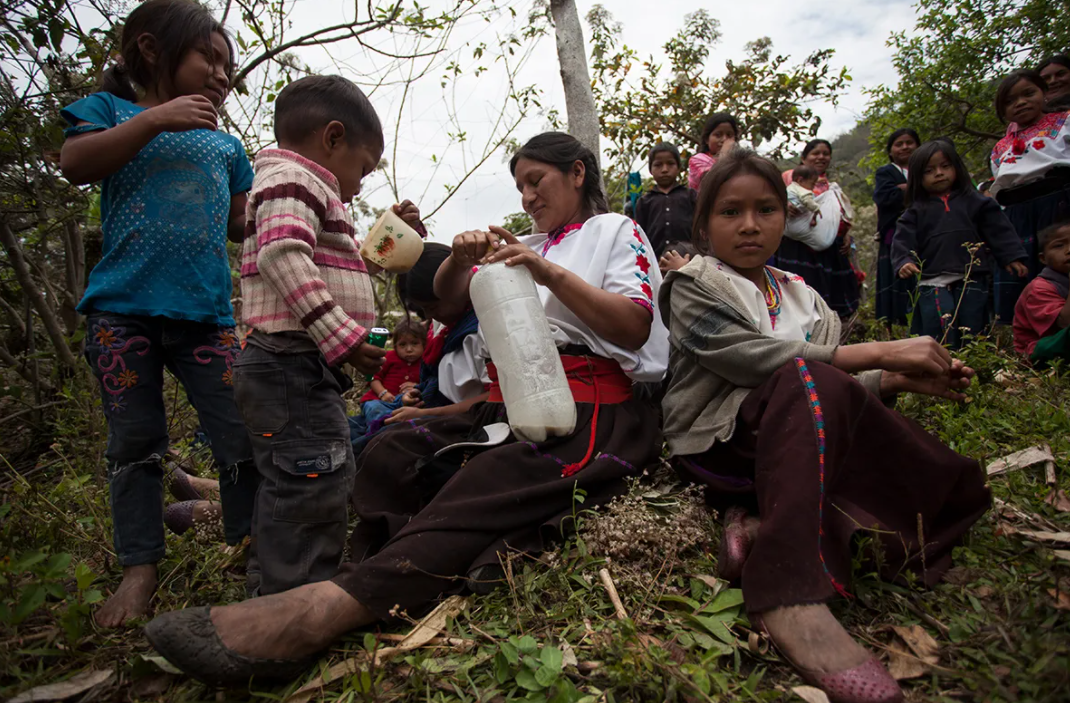
Above Photo: More than 3,000 residents of Aldama Municipality have been forcibly displaced from their homes due to paramilitary violence.
By: Gilberto López y Rivas
This past November 4th, the Fray Bartolomé Human Rights Center (Frayba) published on their page Urgent Action No. 10, which reports the forced displacement of more than 3 thousand inhabitants of the municipality of Aldama, whose recorded population is not greater than 5 thousand inhabitants. In the note they counted 47 recent attacks with high powered firearms against 10 communities, by a paramilitary group that operates out of Santa Martha in the municipality of Chenalhó, and denounced the ongoing absence and complicity of the Mexican government in attending to the serious situation and extreme violence, also revealed for several months by other social organizations, the Diocese of San Cristóbal de Las Casas and the EZLN itself, which, in its communiqué from the 19th of September, “Chiapas on the Brink of Civil War” confirms that the alliances of the government of Rutilio Escandón with drug trafficking are forcing the indigenous communities to form self-defense groups, because the government does nothing to protect the life, liberty and property of the inhabitants. The government of Chiapas not only gives shelter to the gangs of drug traffickers, it supports, promotes and finances paramilitary groups such as those that continuously attack the communities in Aldama and Santa Martha.
Frayba has repeatedly made it clear that the inefficiency and simulation of the actions of the Mexican state continue to foster an environment of violence and terror against the communities of Aldama, which since the 28th of March of 2018 had presented before the InterAmerican Commission on Human Rights, a plea for cautionary measures “in the face of risk to life and physical and psychological integrity from the constant attacks with firearms that they receive — and continue to receive— from paramilitary-style armed groups acting in the municipality of Chenalhó, Chiapas, who are causing the displacement of people.” Three years after this request and after multiple communications sent by Frayba and the Mexican State, finally on the 23rd of April in 2021, the InterAmerican Commission on Human Rights (IACHR), under resolution 35/2021, decided to grant cautionary measures, registered with the number MC-282-18.” Despite the adoption of these measures, there have been more than a hundred aggressions counted, that have cost seven people their lives, and left another 22 wounded, provoking an environment of total insecurity that has disrupted community life.
The EZLN in its communiqué pointed to the actions of ORCAO, which it characterizes as a paramilitary style political-military organization that has uniforms, gear, weapons and a fleet obtained with the money that they receive from social programs. They keep some (for the organization) and give the rest to officials so that they could report that they were complying with social assistance. With those weapons, they fire every night against the Zapatista community of Moisés y Gandhi.
In this context, it very concerning that the Zapatistas warn: “Given the action and negligence of the state and federal authorities, in the face of current and previous crimes, we will take the necessary measures so that justice is applied to the criminals of ORCAO and the officials that sponsor them… On another occasion there will be no communiqué. That is there will be no words, but actions.”
Doesn’t it seem evident that we are facing a scenario similar to the one which preceded the Acteal Massacre? With recommendations from an international agency, like the IACHR, to the Mexican state, its representatives are not aware of the seriousness of the deeds in the state that concentrates the greatest number of military personnel in the entire national territory. Could it be that those in the high command of the SEDENA are not informed by their second division of the existence of the paramilitary groups that have ravaged Chiapas from 1994 to this day? Is their commander in chief, busy as he is granting considerable increases in budget, mission, tasks, duties, responsibilities and perks to the armed forces, outside of the Constitution, going to continue to maintain the old theory of community conflicts, to avoid his responsibility of a situation that is reaching its limits?
The historical racism of the Mexican state, which despises the indigenous peoples, considered passive targets for the government’s policies and actions, continues in Chiapas with the multiple forms of violence that the counterinsurgency strategy follows, with the complicity of the local political class, by means of the saturation of the theater of war with soldiers, barriers, paramilitary groups and organized crime, despite the evident political and social risks and costs.
Whether it be by omission or commission, it will be the Mexican State that will have to answer for another humanitarian tragedy foretold.
=====Ω=====
Originally Published in Spanish by La Jornada
Friday, November 12, 2021
https://www.jornada.com.mx/2021/11/12/opinion/022a2pol
English interpretation by Schools for Chiapas
Re-Published by the Chiapas Support Committee
Amidst soldiers and cartels, academia examines the rising violence in the Southeast
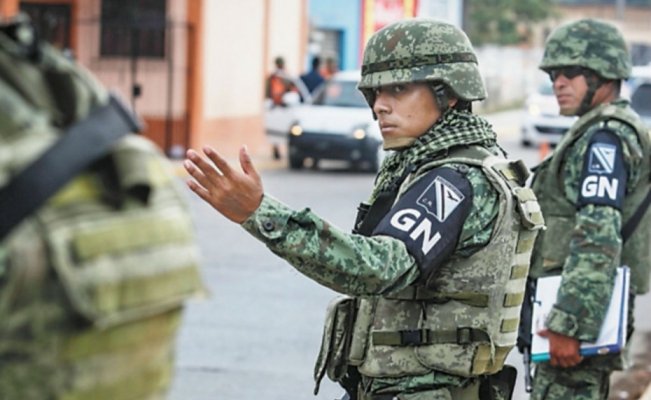
Above Photo: Courtesy of Avispa Midia – With regard to the distribution of forces in national territory, the majority of General Coordination Units and personnel are found in the South and Southeast of the country.
From: Editorial Staff: Yessica Morales
The research offered systematization of information regarding the militarization of the Southeast and the phenomena of the presence of networks of drug and human trafficking, migration controls, or specific enterprises like real estate and tourism.
The academics listed at the end of this article [1], from the Latin American Observatory of Geopolitics at the National Autonomous University of Mexico (UNAM), mentioned in their research “Militarization of the Mexican Southeast” that the Armed Forces currently have among their functions: public security, migration assignments, control of the ports, and construction of the infrastructure megaprojects like the Maya Train.
They are occupied with barracks for the National Guard (NG), the Welfare Banks, delivery of vaccines against Covid-19 and distribution of textbooks. One final concession of the government was to grant them the administration and use of these works.
In this sense, the “monies that are obtained from the Maya Train, will no longer go to the Secretary of Finance, but will go directly to the Army, and the nearly 1,500 kilometers (930 miles) of railroad will be the property of the Secretary of National Defense (SEDENA).”
The researchers emphasized that, according to Rogelio Jiménez Pons, head of the National Fund for the Promotion of Tourism (FONATUR), the strategy corresponds to a “nationalist vision of long-term patrimony.”
In other words, since SEDENA owns the mega-project, it prevents it from being privatized in the future, and it is a business “for the benefit of a majority of Mexicans.” In addition, the Maya Train becomes a “national security factor” because of the presence of organized crime in these areas.
“What is notable is that, with the fragility of the current government, the military establishment has acquired excessive constitutional powers that in other moments of history used to be won only by means of coups d’état,” said the academics.
They considered that government interest in the region was to promote a series of megaprojects of high socio-environmental impact in times of ecological emergency, and despite the valuable and astute arguments against, they noted with concern that there is no intention of stopping the works.
They added that, despite the demonstration of its predatory nature, and of complicating the conflict, [the megaprojects] will not be possible without extensive militarization of the zone which is already underway. But it points to a more permanent establishment with the multiplication of barracks and deployment of troops, which puts society, cultures, histories and treasures of the rich lands of the southeast at risk.
The academics indicated that the trafficking of drugs has been one of the strong arguments to justify military deployment, not only in general, but in some specific regions of the country. However, they revealed facts and testimonies about the rise in regional violence with military participation, whether it be directly or indirectly, as well as their complicity with organized crime.
What is demonstrated on a daily basis is the intervention of the armed forces in the control and repression of populations, in tasks of forced territorial reorganization or in counterinsurgency operations, said the researchers.
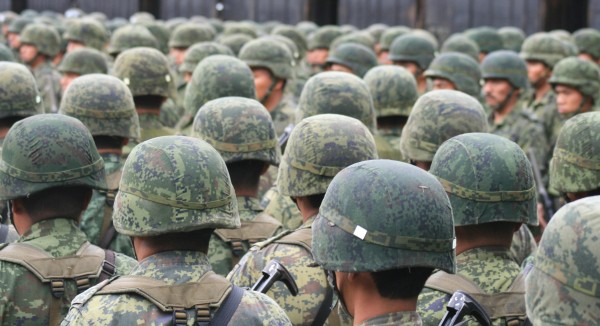
A Progressive Militarization
The academics highlighted that by May 2020, the National Guard was made up of 50% military police from SEDENA, 10% naval police from the Secretary of the Navy (SEMAR), 20% Federal Police, and 17% new recruits hired by SEDENA and SEMAR, trained in military bases.
What is more, they explained that on August 13, 2021, the restructuring of the Armed Forces outlined and announced since the arrival of Andrés Manuel López Obrador, President of Mexico, was approved, and that it corresponds to the materialization of point 3.1.8 of the National Defense Sector Program 2020-2024, entitled “Developing the project for the creation of the Army Command and its General Staff.”
They explained that the creation of a new area is supported by articles 14, section IX, and 17 of the Organic Law of the Mexican Army and Air Force where “it is hereby ordered and authorized to implement the necessary actions to create the Command of the Mexican Army, in order to contribute to the training, administration and development of the armed force for the benefit of our nation.”
Cartel Presence along the Maya Train route and Processes of Violence
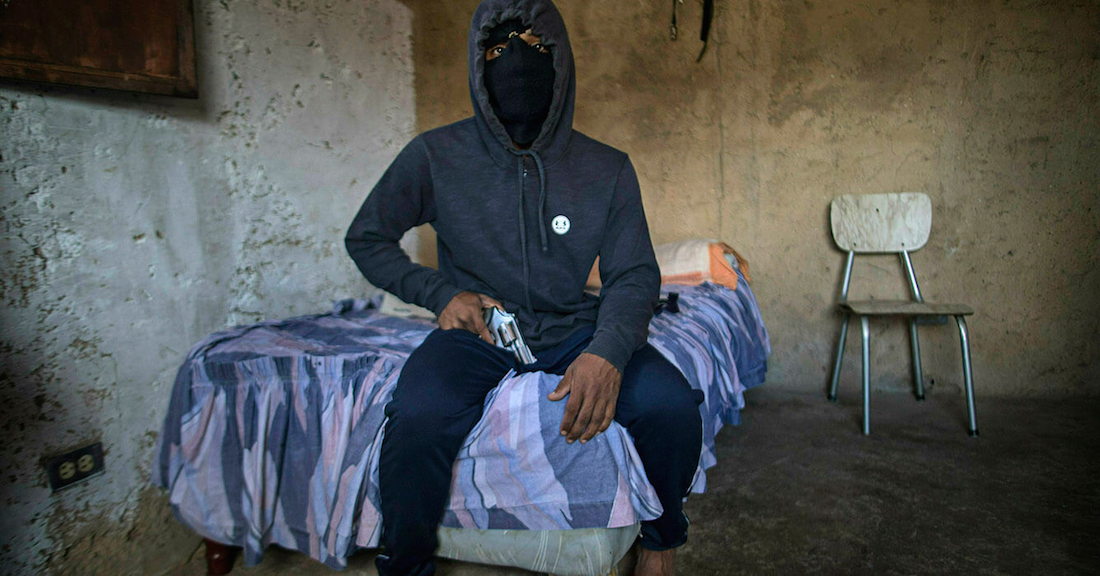
Violence and criminal governance: what’s behind the criminal and commercial structures of drug trafficking?
Researchers mentioned that the consulting firm Stratfor established that in the states where the Maya Train will be implemented, two dynamics prevail: the first is that in Chiapas, Tabasco, Yucatan, Campeche and a portion of Quintana Roo, there is a dispute between remnants of the Gulf Cartel and Los Zetas.
The second describes that, in the areas of greatest tourist activity in Quintana Roo associated with the Riviera Maya, both the larger and more consistent organizations – the Sinaloa Cartel and the Jalisco Cartel – New Generation (CJNG) – and remnants of others – Los Zetas – are involved.
“Recent investigations have detected the presence of the CJNG in the strip that goes up from El Salvador to Chiapas, which for the moment is dealing in business other than drug trafficking so as not to attract the attention of the US Drug Enforcement Agency,” the scholars mentioned.
Other phenomena of violence add to this, such as assaults on women and femicides, both of which are associated with economic activities linked to infrastructure megaprojects and some of their specific modalities, such as hydrocarbon extraction and transportation, or tourism. Not to mention also, that different points of the Peninsula, Chiapas and Tabasco stand out in the trafficking route of girls, boys and women for labor and sexual exploitation.
Chiapas: Tourism, Violence and Militarization
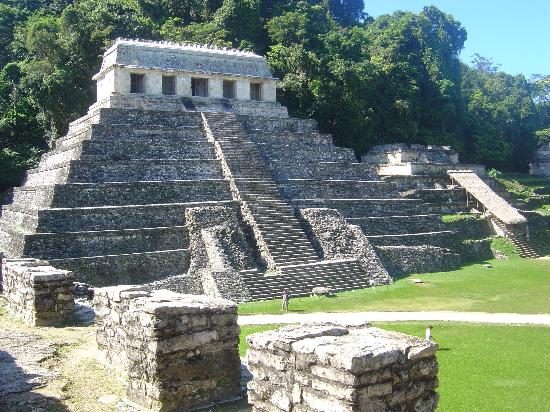
Temple of the Inscriptions, Palenque, Chiapas
The experts specified that, in Chiapas, the processes of violence are associated with its position as a migratory route and the growing presence of criminal economic structures that control these movements, and that dispossess and brutalize the migrant populations.
At the same time, they mentioned that the implementation of social programs such as Sembrando Vida has been taken advantage of by criminal groups to extort the population that obtains these benefits. They have reported cases of kidnapping and recruitment of migrants by these organizations on the southern border.
“Although the aforementioned problems have no place in the area where the Maya Train will be implemented (Northern Zone), they are expected to deepen due to the markets that will be opened attracting illicit activities. Even so, the actions of armed groups, in a context of increasing violence, have provoked a forced internal displacement in the state of around 10,000 people since 2006 to date,” indicated the researchers.
Another report points out that Oaxaca and Chiapas represented 87% of forced displacement in the country in 2018, of the total estimated for this year, 45 percent corresponds to indigenous people.
Militarization of Human Migration Routes
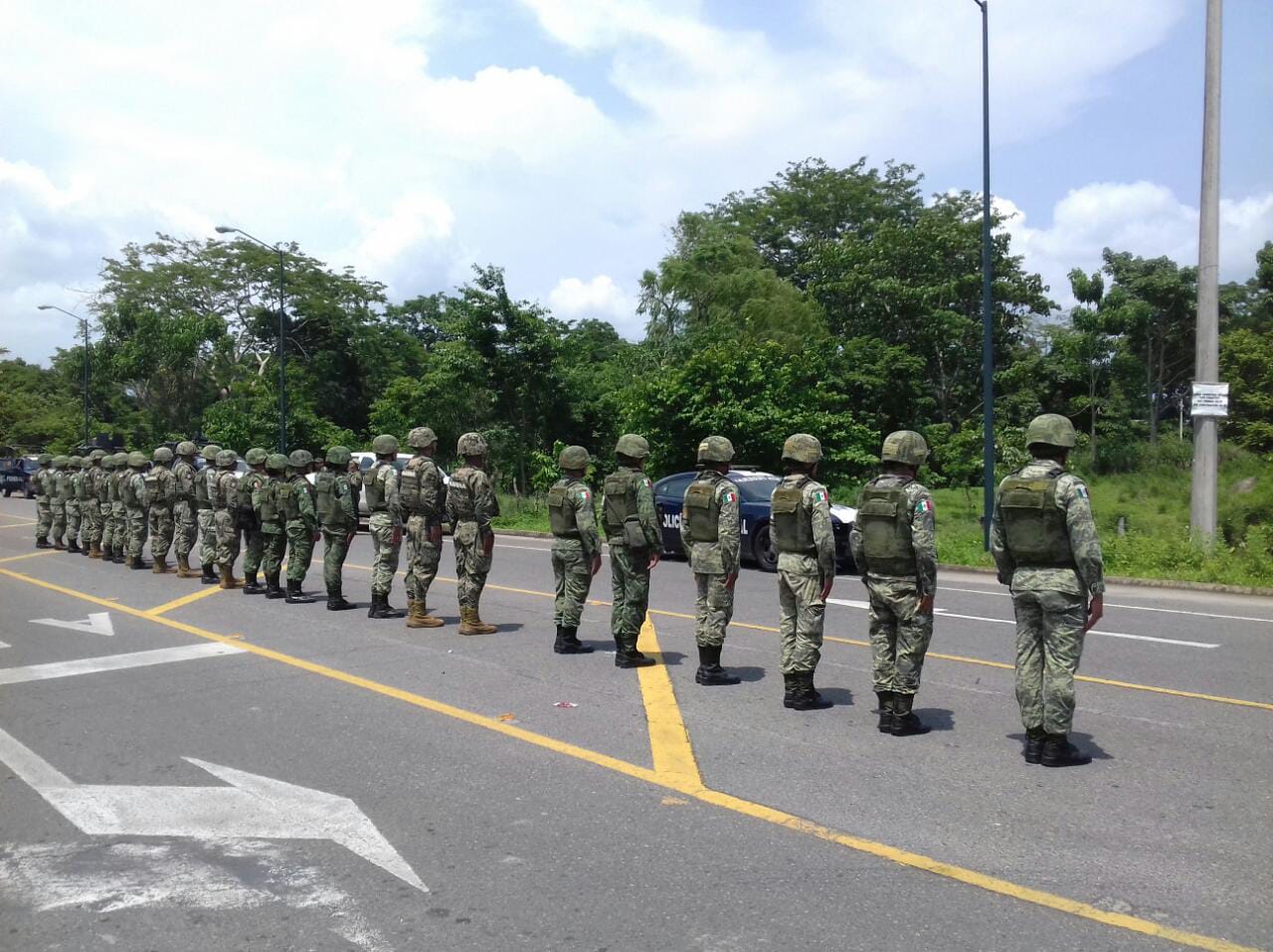
Currently, militarization in human migration routes is one of the issues of concern, since the deployment of forces to control the migratory flow has been a constant, academics exposed.
The above, since the Donald Trump administration, in May 2019, urged Mexico to stop migration with the threat of imposing progressive tariffs on all Mexican products crossing into the northern country.
They revealed that deployment of the National Guard in migratory situations has had a serious impact on the safeguarding of human rights of the migrant population, which has been clearly flouted by difficulties in accessing state services, the overall implementation and conditions of their detention, and the situation of insecurity and xenophobia.
The National Human Rights Commission (CNDH) issued a series of recommendations against abuses of the migrant population committed by this new force.
In Recommendation 50/2020, the autonomous organization pointed out that the National Migration Institute (INM) violated the legal rights and protections of the victims, as the National Guard “overstepped its bounds” when dealing with the inspection and detention of people in the process of migration.
On the other hand, they mentioned that Luis Cresencio Sandoval, head of SEDENA, in his visit to Chiapas last August 28, stated that the Mexican Armed Forces had completed “a series of operational activities” on the southern border that had as its “main objective to stop all migration,” so that throughout the state there were “more than 14 thousand elements of the Army, the Navy and the National Guard” carrying out the operations.
In turn, the Ibero-American University through its Citizen Security Program, presented an analysis of data obtained by requests for access to information, revealing that between June 2019 and December 2020 the Armed Forces and the National Guard detained 152 thousand migrants at the southern border of the country.
In the same period, the Immigration Policy Unit reported that 193,640 migrants were presented before the migration authority, which suggests that “more than 78 percent of the detentions of migrants in Mexico during this period were carried out by the military or elements of the militarized National Guard.”
The researchers affirmed that, from data provided by the head of SEDENA during the visit, they know that in Chiapas there are 10 National Guard barracks, located in Villaflores, San Cristóbal de Las Casas, Tonalá, Huehuetán, Tapachula, Chilón, Las Margaritas, Frontera Comalapa, Bochil and Palenque.
Finally, they added that next year there will be 6 more barracks in Cintalapa de Figueroa, Arriaga, Acacoyagua, Altamirano, Palenque and Solistahuacán.
[1] Academics: Ana Esther Ceceña, David Barrios, Alberto Hidalgo Luna, Sandy Ramírez, Yetiani Romero, Adriana Franco, Bianca Bachelot, Melissa López and Alma Daniela Garduño
=====Ω=====
Originally Published in Spanish by Chiapas Paralelo
Tuesday, October 5, 2021
English Interpretation by Schools for Chiapas
Re-Published by the Chiapas Support Committee
“If the world expects COP26 to solve its problems, we’re lost”

Protesters from all over the world took the streets of Glasgow, Scotland, to march against those most responsible for climate change. The event, with a carnival flair, achieved enormous diversity. It also stood up to the lengthy responses of the United Nations.
*Text and photos by: José Ignacio de Alba and Arturo Contreras in Pie de Página
GLASGOW, SCOTLAND
Just when COP26 reaches the halfway point of its events, in a march called by activists and citizens they were able to stand up to the governments and companies that have barely been accountable to citizens about climate change. Despite the fact that world personalities congregated at official United Nations’ activities, Glasgow streets were the center of attention.
If COP26 has been considered the most exclusive climate summit in history, the demonstration that took place in the streets of Glasgow was one of the most diverse. Some 100, 000 people, with a plurality of demands, took over the city.
More than a demonstration, it was a carnival. The music harmonized with those in attendance. There were drums, bagpipes, flutes, tambourines, djembes, violins, bongos and piccolos. They also sang songs and organized dances. The strong winds and freezing drizzle revitalized the demonstrators for hours.
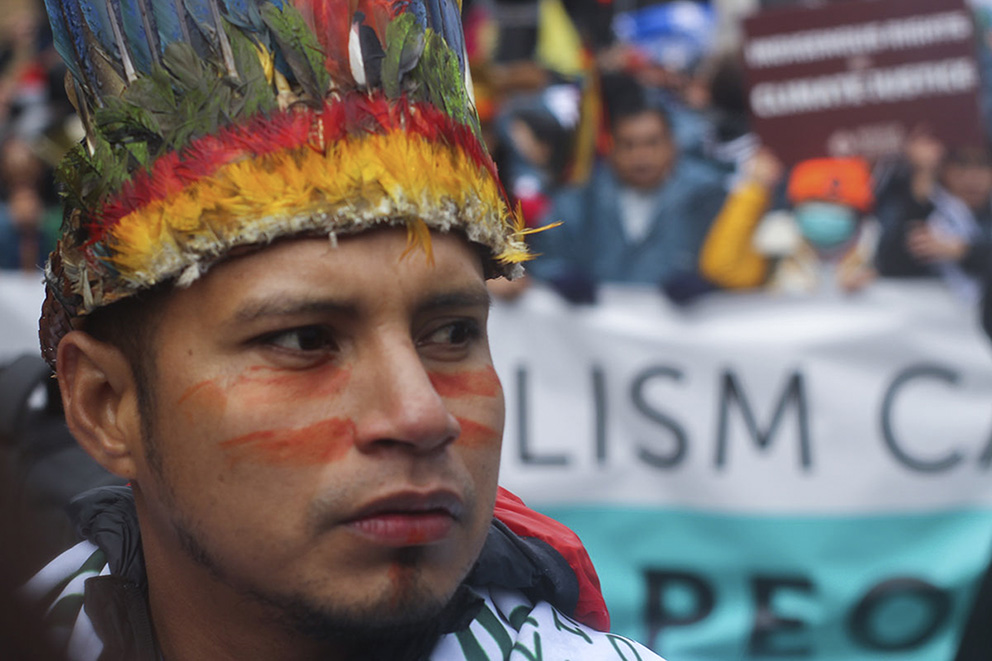
Photo: Arturo Contreras
The march was headed by indigenous groups from the Amazon, Canada and Alaska; those who are in the first line of the climate battles. In the march they chanted: “we don’t need your energy transition, to hell with your colonizing rule.” Also: “We were witnesses to the arrival of the colonizers and we will be witnesses to their departure.”
At the start of the event, the activist Vanessa Nakate told the attendees: “Presidents rarely have the courage to lead. That causes citizens like you and me to stand up and demand action. And when enough people do that, our leaders will move.”

Photo: José Ignacio de Alba
In the official installations of the United Nations, those attending the COP wear suits, and the vast majority are white men coming from first world countries. But this Thursday’s march brought together mostly young people, feminist blocs and mothers with strollers.
Violenta Campbell is a trans woman who attended the march. With a poster that denounces “we can’t drink money,” the woman summarizes this feeling that is experienced among the attendees: “in this march there is more hope than in there (COP26), at least here we can all raise our voices.”
Among the demonstrators were contingents of vegans, Marxist student leagues, socialists and anarchists. There were Tibetans, animal lovers, antifascists, pro Palestine groups, free Hong Kong groups, pro climate refugee groups and religious orders. A single bloc brought together various citizens who live on islands in the Pacific Ocean which are about to disappear. An activist from the Solomon Islands assures in an interview: “the place we have inhabited will no longer exist due to climate change and rising sea levels. No one wants to know that or they don’t want to be aware of that.”
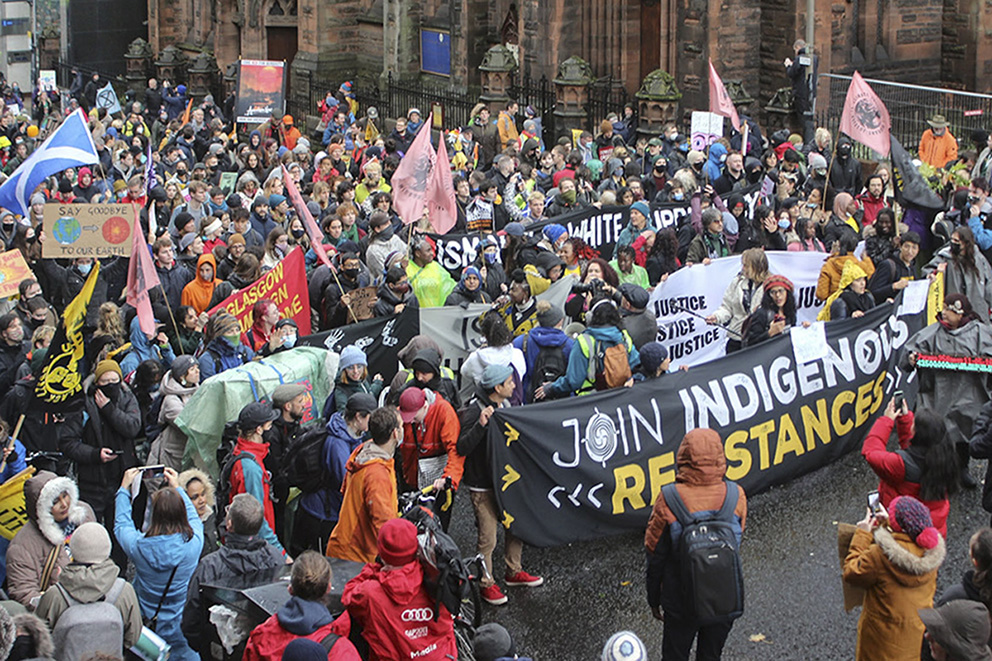
According to its organizers, the climate action march in Glasgow brought together more than 150,000 people; it left from Kensington Grove Park, in one of the most affluent areas of the city, crossed the center, the commercial district and arrived at Glasgow Green Park. Among the attendees were mothers, infants and seniors. Photo: Arturo Contreras
In the long contingent there were also unions, indigenous Latin Americans, while on a sign that reads: “Justice for Samir;” a group of Mexicans exclaimed “Samir didn’t die, the State killed him.” In the march there were also peoples of Africa hit by extreme droughts.
A group of citizens on bicycles closed the march with the slogan: “this machine saves the planet.” Above all there were citizens, housewives, people with strollers and elderly people in disguise.
A score of scientists chained themselves on one of the main bridges that cross the Clyde River, the demonstrators who blocked one of the city’s most important arteries were arrested by Scottish police. The Scientist Rebellion collective assured that this form of peaceful disobedience helps draw the world’s attention to the urgency of taking action on climate change.
When the march approached the center of Glasgow, it passed by some of the corporations that champion dispossessions in various countries, such as Scottish Power.
When Rosa Marina Flores Cruz passed in front of the building she said: “We are in front of the offices of Iberdrola, of the subsidiary Scottish Power, just to say that they are cynical and hypocritical because they are financing COP26; they say that they are taking actions to save the planet, but they are false actions. They are green washing actions that are only washing their hands with our lands, with our territories. Using a discourse of renewable energies based on the dispossession, destruction, murder and persecution of the indigenous peoples in Mexico.”

Contingents of Extinction Rebellion carried out various performances during the climate action march in Glasgow, in the image, a group of activists emulate businessmen who order using fossil fuels under the threat of suing those who don’t. Photo: Arturo Contreras
Daya Bai, a demonstrator from India, assures that the world should not put too much hope in the COP. She is sure that citizen organizations and individual actions are the way out: “If the world expects the COP to solve its problems we are lost.”
Similar demonstrations were held around the world, a hundred events were held in countries like France, Philippines, Turkey, Canada, Kenya, Switzerland, the Netherlands and Australia.
The indigenous minga refers to a meeting of several people, of different peoples, with different wisdoms and languages that place them in common to create a mutual and collective benefit, so indigenous people from all over Latin America marched in Glasgow.
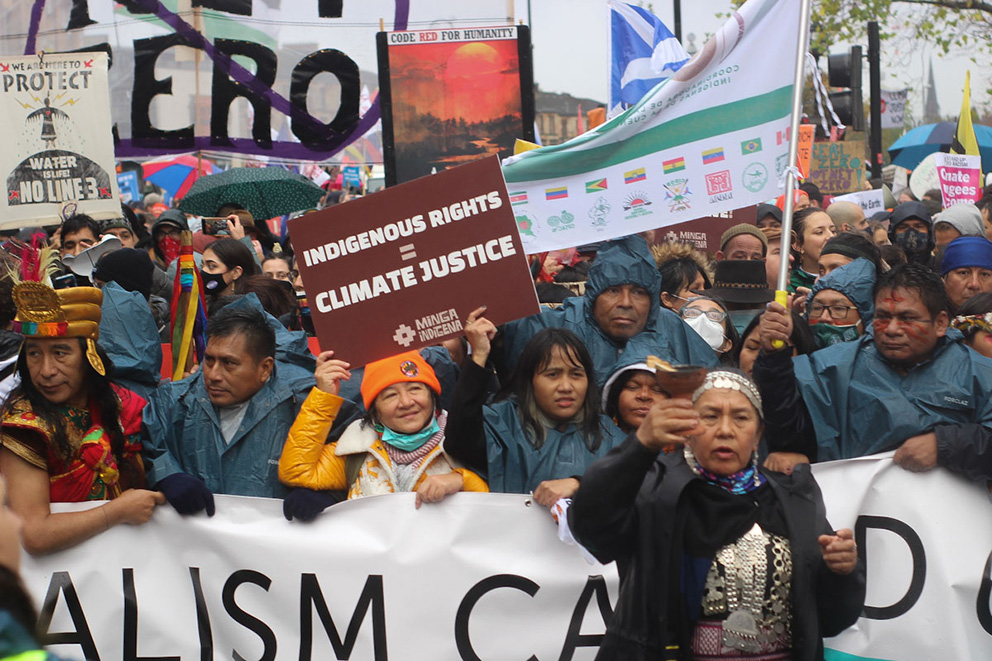
Photo: Arturo Contreras
At the end of the Glasgow event they called for creating a world summit of indigenous peoples to discuss climate change and leave the summit organized by the United Nations.
An indigenous member from the Amazon said at the closing of the event: “We have come here to tell our politicians not to extract more oil, no, they are killing us, our water, our life. Who do you believe; the leaders or us, the true guardians of the jungle?”
=====Ω=====
Originally Published in Spanish by Pie de Página
Sunday, November 7, 2021
Re-Published with English interpretation by the Chiapas Support Committee
Brief chronology of paramilitary violence in Chiapas
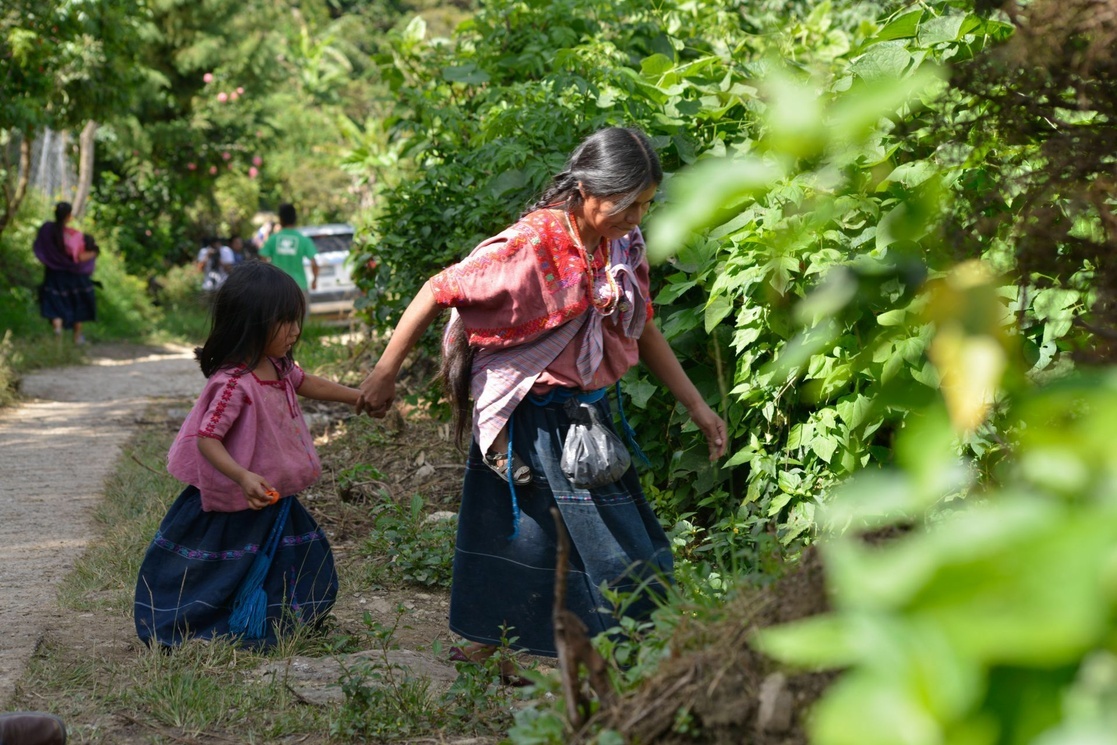
In the last several years, and escalating during 2021, paramilitary attacks on indigenous communities where civilian Zapatista supporters and sympathizers live have intensified and they have done so with impunity.
In September, the EZLN warned that the paramilitary violence was pushing Chiapas to the brink of civil war.
Here below is a snapshot of the 2021 counterinsurgency offensive taking place in Chiapas. This is a limited description because in some communities, the Aldama/Magdalena and Patria Nueva/Lucio Cabañas/Moisés Gandhi region, the paramilitary attacks are so frequent, almost a daily and nightly occurrence, that most are not being reported or documented outside the area.
Read more at the Chiapas Support Committee Blog.
1. Aldama Municipality – A paramilitary group in the Santa Martha sector of Chenalhó municipality shoots its weapons on a regular basis into the municipality of Aldama. The parallel autonomous Zapatista municipality is Magdalena de la Paz. In January 2021, the shooting that has continued for roughly three years, started up again. Gunfire has killed seven Aldama residents, injured others and, when the shooting starts, has caused hunger and the forcible displacement of many families, both Zapatista and non-Zapatista, in search of refuge. Residents of Aldama municipality reported that in October 2021 members of the “armed paramilitary group of Santa Martha, Chenalhó” committed at least “203 attacks against the communities of Xuxch’en, Coco’, Tabac, San Pedro Cotzilnam, Yeton, Chivit, Stzelejpotobtik, Juxton and the municipal seat.” Despite repeated complaints filed by Aldama municipality residents, the Mexican government has not done anything to stop the paramilitaries.
2. Pantelhó Municipality – On July 5, 2021, organized crime hit men (sicarios) on a motorcycle, murdered Simón Pedro Pérez López, the former president of Las Abejas of Acteal, a member organization of the National Indigenous Congress. Armed fighting erupted soon after in the municipal seat. Within a week, an armed and well-organized group of “indigenous soldiers” announced itself as the El Machete Self-Defense group, supported by the 86 communities and 18 neighborhoods in the municipality. El Machete’s goals are to remove the elected municipal government, which they say has been part of organized crime and to protect Pantelhó residents from the violence of organized crime and its sicarios.
3. San Cristóbal de Las Casas – On August 8, 2021, sicarios on a motorcycle murdered Gregorio Pérez Gómez, the special prosecutor for the Pantelhó case (the murder of Simón Pedro). The murder occurred on the main avenue of the city of San Cristóbal de Las Casas.
4. Patria Nueva – On September 11, 2021, members of the ORCAO kidnapped Sebastián Núñez and José Antonio Sánchez, members of the Good Government Junta located in Patria Nueva, Zapatista Caracol 10. The compañeros were robbed of a walkie-talkie and 6,000 pesos in cash belonging to the Junta. They were released after eight days due to the efforts of the Diocese, human rights defenders, as well as mobilizations and denunciations. Other Zapatista communities within the Caracol of Patria Nueva have suffered repeated attacks from ORCAO members as described below.
5. Moisés Gandhi – The community of Moisés Gandhi, a Zapatista community within the Caracol of Patria Nueva, suffers nightly shooting from weapons the ORCAO purchases with money from government-sponsored social programs. According to the Good Government Junta located in Patria Nueva, the most recent attack they denounced occurred on the night of October 13, 2021 and again in the early hours of October 14, as well as in the afternoon of October 14. ORCAO fired their weapons into the middle school, and the proximity of the paramilitaries to the homes of some compañeros caused families to flee to seek refuge.
6. Cuxulcá Crossroads – The Zapatista commercial area at the Cuxulcá Crossroads is almost adjacent to Moisés Gandhi. Both are part of the autonomous municipality of Lucio Cabañas within Caracol10 (Patria Nueva). On August 22, 2020, ORCAO , a political-military organization of a paramilitary nature, looted and burned coffee warehouses, the Compañera Lucha Diner and the New Dawn of the Rainbow store, causing a huge loss to the regional Zapatista economy.
7. Nuevo San Gregorio – Nuevo San Gregorio is another Zapatista community in Lucio Cabañas autonomous municipality. In 2020, ORCAO members invaded the community and took over 145 of the 155 hectares of recuperated land the community held—dispossessing the Zapatistas of their means of economic support, the land. The invaders fenced off the Zapatista area with barbed wire and took control of the autonomous middle school. Now, ORCAO members who invaded are continuously harassing the Zapatista support bases, who report that attacks against homes, livestock, natural springs and rivers continue in 2021. In July 2021, the community reported that the invaders installed five guard posts near the center of the Zapatista community; the guards carry machetes, knives, slingshots, pointed sticks, cell phones, walkie-talkies and binoculars.
8. Lucio Cabañas Autonomous Municipality – ORCAO repeatedly attacks and harasses Zapatista communities within the Lucio Cabañas autonomous rebel municipality, destroying and stealing crops, animals, cutting water pipes and electricity, damaging or polluting water sources, shooting into homes and communities. ORCAO members have even kidnapped and tortured a civilian Zapatista and they do all of this with complete impunity.
______________________________________________________________________________________________________________________
Compiled by the Chiapas Support Committee for the “National Days of Action for Peace and In Solidarity with the Zapatista Communities.”
Take Action on November 17 to Demand Mexican Government Stop Paramilitary Attacks
Read and sign on here to the November 17 letter to the Mexican and U.S. governments demanding an end to the paramilitary attacks and to prevent civil war,
See the Chiapas Support Committee Blog.
A Tseltal woman is the new mayor of Altamirano, Chiapas

The new mayor’s unlikely story began when a group of Altamirano residents started operating mototaxis without permits. Drivers of the “pirate” mototaxis clashed with drivers of traditional taxis with permits; one group would set the other group’s taxi on fire and the other group would retaliate in kind. The mototaxis involved in this dispute are 3-wheel motorbikes with a covered cab for carrying passengers a short distance.
Altamirano is a municipality located in the jungle region of the Mexican state of Chiapas. It is also the name of the town that serves as the municipal seat. The Morelia ejido is just a few miles down the road from the town of Altamirano. Morelia is home to Caracol IV, one of the regional government centers of the Zapatista National Liberation Army (EZLN, Ejército Zapatista de Liberación Nacional). Caracol IV is where Zapatista women hosted International Women’s Gatherings.
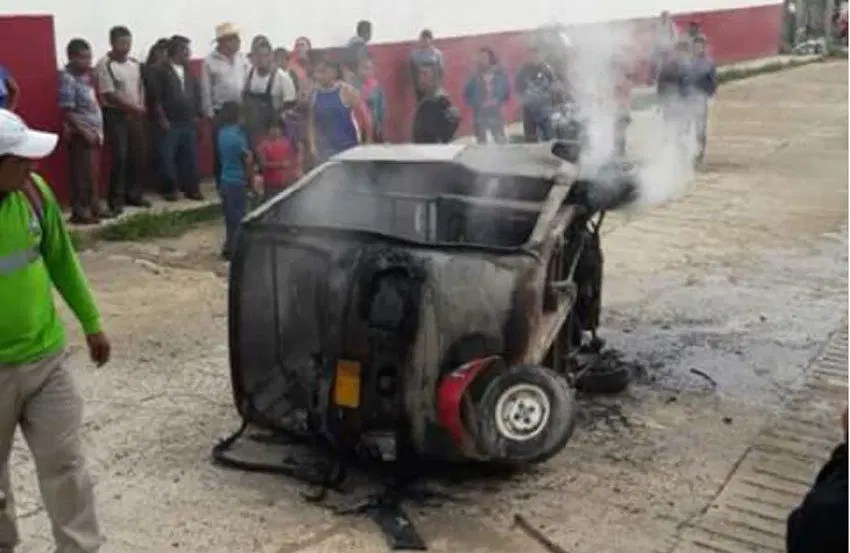
Above: A mototaxi burns in Altamirano
Eventually, the “pirate” mototaxis received a few permits from municipal authorities, but Altamirano ejido owners complained that the municipal council supported the traditional taxi drivers and did not give the ejido owners enough permits. Mototaxis can provide additional income to struggling campesino families. Conflict between the two groups of drivers persisted and other violent conflicts took place, including kidnappings and house burnings.
The conflict came to a head on September 16, 2021 after the traditional Cry of Independence ceremony [1], when a group of people set fire to the Altamirano City Hall, causing serious damage; they also burned a police patrol car and reports allege that furniture and computers were stolen. The mayor, Roberto Pinto Kanter, blamed the sons of ejido owners and asked state authorities to solve the problem and bring the full weight of the law to bear on the offenders. Ejido authorities denied his accusations.
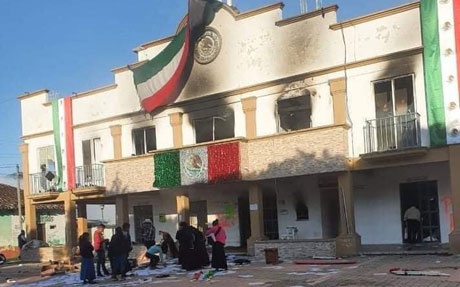
Above: Damage to Altamirano City Hall, September 16, 2021
Reports about the conflict revealed disagreement and dissatisfaction with the mayor and the municipal council coming from Altamirano ejido owners. Comments about Pinto Kanter never being present in the municipality and that he and his wife had occupied the municipal presidency for too long were quoted in the press. There have also been indications in some press reports that Altamirano experiences violence involving criminal gangs. The mototaxi dispute became part of a larger political dispute.
Finally, on September 29, 2021, ejido owners and residents closed off the three accesses to the small town of Altamirano. The following day, they took the mayor, Roberto Pinto Kanter, into custody and placed him in the ejido jail. His term as mayor expired that night (September 30). His wife, Gabriela Roque Tipacamú, was elected in the June 6 elections to succeed him on October 1. However, residents said the election was stolen with money and that voters were threatened. They also claimed that Pinto Kanter had threatened to kill “four or five” members of the opposition group.
The ejido owners and residents of Altamirano began meeting with the state Congress to press their demands. They demanded that Pinto Kanter and his entire family leave the municipality and that the state Congress name a new municipal council. Meanwhile, Roque Tipacamú was unable to take office because the opposition blocked her entry to the town. Residents placed another seven people, including some of the municipal council, in jail, and then began providing services and security to the town on their own.
In a video, a Self-Defense group announced itself in support of Altamirano residents’ actions to oust the Kanters. The group said it would not reveal its name “out of respect for the EZLN brothers.” Its discourse revealed a class consciousness and a distaste for the political parties. [The video in Spanish: https://www.youtube.com/watch?v=tzAPSHw2LDQ&t=47s] The residents’ opposition group claimed not to know anything about the self-defense group.
Three weeks and many meetings with state representatives later, on October 21, Roque Tipacamú and her entire municipal council asked the state Congress to approve their requests to resign.
On Thursday, October 28, 2021, the state Congress of Chiapas approved the resignations and appointed a new municipal council for Altamirano municipality. María García López, an indigenous woman from the Tseltal zone of the municipality, is the new council president. The Congress also appointed Gabriel Montoya Oseguera [2] as trustee and three councilors, one from each of the three areas that make up the municipality. García López and the rest of the municipal council will govern until September 30, 2024.
The Congress took the above action to resolve a political war that first seemed to erupt as a dispute between rival groups of taxi drivers, but escalated after the municipal elections of June 6, 2021 into violent conflicts with political overtones. The area’s history may provide some insight into the rapid escalation of events.
In an article for Chiapas Paralelo, Angeles Mariscal reviewed the history of the Kanter family, who had governed the municipality since 2002. They not only had political control, they had also monopolized large swaths of land known as latifundios, once coffee plantations that morphed into cattle ranching estates, or fincas, after other countries began filling the demand for coffee beans and McDonalds and fast-food hamburgers went international to create a huge demand for beef. Indigenous residents of Altamirano were housed as peons, or serfs, on the coffee plantations and fincas.
Altamirano was one of the municipal seats taken over in the 1994 Zapatista Uprising, when the EZLN also took back many of the lands stolen from their ancestors, so that an indigenous population dying from malnutrition and curable disease would have enough land on which to grow food to feed themselves. The Kanter family were finqueros (estate owners) and the EZLN “recuperated” their estates.
Jorge Constantino Kanter was the finquero who became the leader of the Altamirano, Comitán and Las Margaritas finqueros in their marches and protests to demand that the Mexican Army enter the jungle to fight the Zapatistas. Constantino Kanter became famous for saying: “the life of a chicken is worth more than the life of an indigenous person.” Constantino Kanter and his family also became famous for their appearance in Nettie Wilde’s film “A Place Called Chiapas” (1998), in which they proudly express negative opinions about the Zapatistas.
Although the EZLN took back much of their property, the sons and daughters of the estate owners have continued to hold on to political power in Chiapas. The political process that just played out in Altamirano challenged that political power. While it may seem like removing a former estate-owning family from power is a step in the right direction, only time will tell if Altamirano’s residents now have a municipal government that will work for them and if the violence will stop.
Notes
[1] The Cry of Independence (El Grito de independencia) commemorates the battle cry of 1810 calling people to a war of independence from Spain.
[2] Gabriel Montoya Oseguera was a pre-candidate for mayor with Morena in the June 6, 2021 elections. However, he ended up as a candidate for mayor with the United Chiapas Party. He was once an advisor to the Lacandón Community and has been one of the leaders of the Altamirano residents opposing Pinto Kanter and his wife.
By: Mary Ann Tenuto Sanchez
Residents: Paramilitaries attacked Aldama 203 times in October
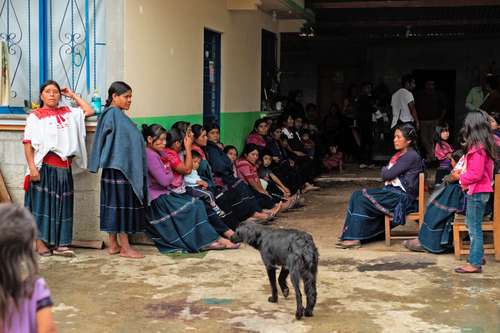
Above Photo: Cuartoscuro | In a file image, families are given refuge in a carpentry workshop in Chivit community last June 18.
By: Elio Henríquez
San Cristóbal De Las Casas, Chiapas
Residents of Aldama municipality affirmed that in October members of the “armed paramilitary group of Santa Martha, Chenalhó” committed at least “203 attacks against the communities of Xuxch’en, Coco’, Tabac, San Pedro Cotzilnam, Yeton, Chivit, Stzelejpotobtik, Juxton and the municipal seat,” due to a dispute over 60 hectares.
In a communiqué signed by “The voice of the people of Magdalena Aldama,” governed by the Green Ecology Party of Mexico (PVEM, Partido Verde Ecologista de México), accused: “There have been direct attacks on homes; there are houses with lead, broken sheet metal roofs, cars and machines with bullet holes; workers that rehabilitate the road, masons who build houses, contractors, engineers and police who make tours have been attacked.”
They pointed out that: “the 60 hectares have belonged to the people of Magdalena Aldama ancestrally. Seven families lived there who in 2016 were dispossessed and threatened with firearms and took refuge in different Aldama villages. The armed paramilitary group that operates in Chenalhó was activated that year.”
They stated: “We are 115 comuneros affected, dispossessed, threatened and displaced from our homes, from our lands, which our grandparents and parents have left us, which is certified by the Unitary Agrarian Court, which recognizes us as the legitimate owners.
“The government has ignored our complaints and just threatens to put our representatives in jail. We are already tired of so many threats and we have not seen that it acts; it has just treated us as its puppet.”
They recalled that in 2018 “the attacks with high-caliber weapons intensified, because of which 2,036 people displaced towards the mountains” and on March 14, 2020 “our compañero Cristóbal Santiz Jiménez was arrested and secluded in the El Amate prison, in Cintalapa municipality.”
They pointed out that: “the reason for his arrest was that one of the representatives of the 115 community members affected and displaced from the 60 hectares by residents of Santa Martha, Cristóbal Santiz, is one of the hostages of the government of Rutilio Escandón Cadenas and Ismael Brito Mazariegos (former Secretary of Government and current federal deputy), as well as of the state attorney general’s office,” which Jorge Luis Llaven Abarca then headed. Now, he’s a federal legislator.
“Since 2020, the armed attacks have been increasing in intensity, affecting 12 communities and 5,000 people. Today, we once again express our feelings. As people of de Magdalena Aldama, we publicly denounce the threats and attacks that we receive from the paramilitary groups in Santa Martha.”
They added that: “as a result of the daily armed attacks on our communities of Tabac and Coco’, workers from the construction company that rehabilitates two kilometers of road abandoned the work because of unsafe conditions.”
They mentioned that the job “should have already been finished, but there has been no progress, rather it’s in worse condition, which affects the 12 villages, since in harvest season they cannot move the farm trucks.”
Besides, “several vehicles have been trapped after the destruction of the Tabac Bridge, so the lives of our brothers are at risk, just like on that two-kilometer stretch of road.
They remarked that they just want “to live in tranquility and peace to be able to work our lands;” that’s why they demanded that the agreed schedule of the police force’s tours be observed, from 9 am to 4 pm, since “members of the police only come to collect signatures from the agents and they don’t comply with the schedule.”
They insisted that an immediate solution be given to the conflict over the 60 hectares, since “we already showed our will with the distribution of our lands, but there has been no progress, because the three levels of government just manipulated the information and administered the conflict.”
–Ω–
Originally Published in Spanish by La Jornada
Tuesday, November 2, 2021
https://www.jornada.com.mx/2021/11/02/estados/025n1est
Re-Published with English interpretation by the Chiapas Support Committee
Communities, barrios and “Machetes” disavow the Pantelhó mayor in front of the government palace
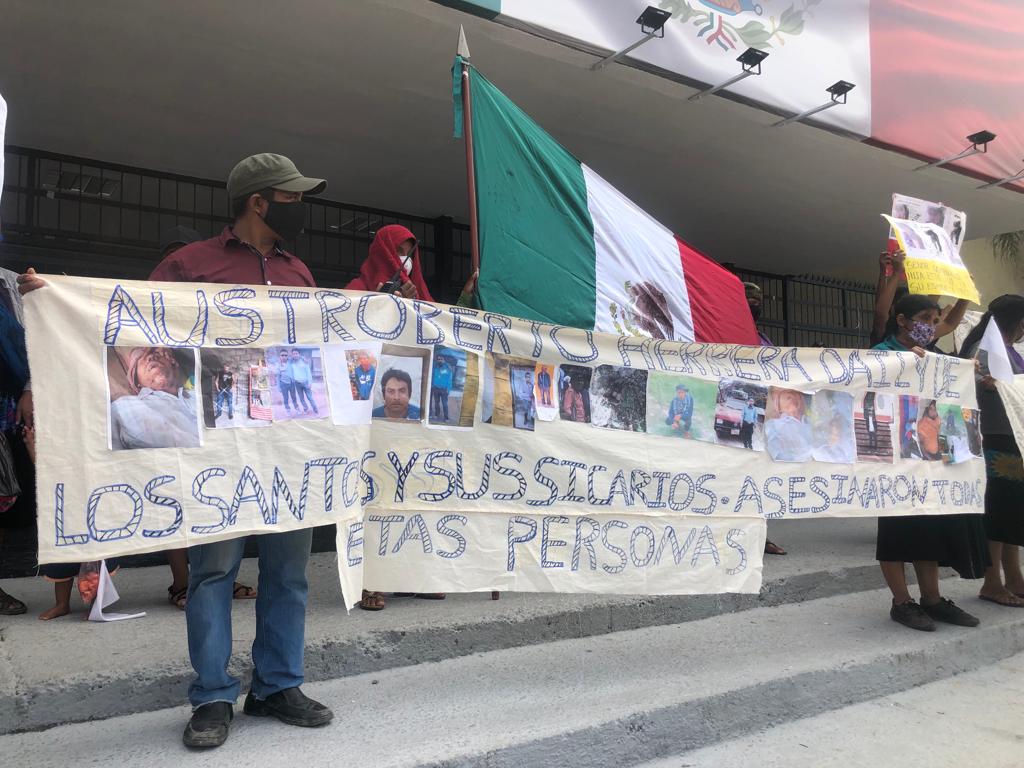
The above banner reads: “Austroberto Herrera, Dayli De Los Santos and their hit men murdered all these people.” Photo: Isaín Mandujano
By: Isaín Mandujano
Raquel Trujillo Morales left Pantelhó after the irruption of the “Los Machetes” Self-Defense group. However, he proclaimed himself constitutional president from a hotel in the Chiapas capital last October 1.
More than 1500 residents of the 86 communities and 18 barrios of Pantelhó, as well as members of the “El Machete” Self-Defense group arrived in the state capital to demand that Governor Rutilio Escandón Cadenas and local legislators not recognize Raquel Trujillo Morales as mayor of that municipality, and at the same time, that they accelerate the process of official recognition of the municipal council that they have elected.
Dozens of farm trucks left Pantelhó in the early morning. At noon, they parked around the national palace, and then the 86 municipal agents together with representatives of the 18 neighborhoods (barrios) took out their signs to demand justice for their dead. They placed blame for the deaths on the sicarios (hit men) of “Los Herrera,” who were expelled from the municipal seat last July 7 when El Machete irrupted publicly.
A group of women arrived in order to be present and to exhibit images of those who they blame for having lived between murders and disappearances for more than ten years. They pointed to Austreberto Herrera Abarca and his son Dayli de los Santos Herrera, both prisoners, of having created an armed group.
An indigenous woman publicly denounced the disappearance of her husband Juan Gómez Santiz. She hasn’t heard from him to this day. She blamed Raquel Trujillo Morales, with whom her husband had differences when he was the municipal trustee and his wife was the mayor. She asserted that Trujillo Morales’ victory was the result of buying votes, threats and intimidation.
The municipal agents and representatives demanded that the state government and the Congress recognize Pedro Cortés López as president of the municipal council, since he was elected in a full assembly. They asked the FGE (Attorney General’s Office) and the State’s Judicial Power not to release Dayli de los Santos Herrera or his father, Austreberto Herrera.
Meanwhile, in back of the government palace, several families from Pantelhó were guarded in their protest because they were demanding the live appearance of 21 people who the El Machete Self-Defense group [allegedly] retained last July 26 and, as of this date, they have not heard from. [1]
[1] Los Machetes Self-Defense group has consistently denied that it retained, currently has under its control, or knows the whereabouts of the 21 people alleged to be missing.
–Ω–
Originally Published in Spanish by Chiapas Paralelo
Tuesday, October 26, 2021
Re-Published with English interpretation by the Chiapas Support Committee
Armed “scooters” sow terror in San Cristóbal de las Casas
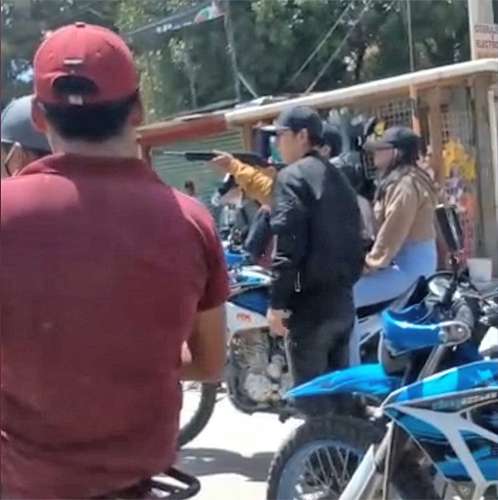
Above Photo: Screen Capture from video posted on Twitter – In the image, at the end of last September, in broad daylight, a group of motonetos (“scooters”) fired off gunshots in San Cristóbal de las Casas, Chiapas.
From the Editors
At least five groups popularly known as “scooters” (motonetos) or motor gangsters linked to local drug dealing that, day or night, shoot firearms into the air, have sown terror and anxiety among the inhabitants of San Cristóbal de las Casas, Chiapas.
Municipal authorities, organizations and individuals hire these criminal gangs as shock groups to generate conflicts, and to pressure the government so that it frees a detainee or gives impunity to those who are involved in traffic accidents, according to testimonies of the victims.
The competent authorities attribute to members of one of these groups, not identified by name, the murder of the special prosecutor for Indigenous Justice, Gregorio Pérez Gómez, which was perpetrated last August 10.
San Cristóbal de las Casas, located 60 kilometers from the state capital of Tuxtla Gutiérrez, is considered a jewel of Mexico’s cultural heritage, both for its viceregal buildings and for its ethnic makeup; catalogued as a Magic Town, it is one of the towns in the country most visited by national and foreign tourists.
“The motonetos are the ‘evolution’ of unemployed youth who opt for organized crime and are not only dedicated to robbery, but have been used, everything seems to indicate, by the political class in general as shock groups,” said a researcher, who requested anonymity.
Organized crime
“They are ‘for sale’ to the highest bidder and are not disentangled from the pornography, or ethno-pornography as it’s called now, of the narcoculture. They are called ‘scooters’ because in the beginning they traveled on motor scooters and motorcycles; they are young people who at night get drunk or do drugs and go out to make trouble,” he explained in an interview.
“They operate with radios; they use pistols, rifles and submachine guns. They don’t go out every day to exercise violence, just at determined times or conjunctures. They have not caused an uncontrolled situation, but have sowed psychological terror. We don’t know who might be behind them, but they warn of very strong accomplice networks,” he explained.
No authority has official information about their origin or their structure, but, according to local police sources, there are at least five groups, identified as: Los Torres, Los Vans, ZN, Élite and Los Patos; the latter travel around in taxis, but act like gangs.
They are settled mainly in the city’s northern districts, where many indigenous people live, including former mayors of neighboring municipalities, expelled between 1970 and 1990 from Chamula, allegedly for religious reasons. The sons of several of them are the ones who now make up those groups.
They started to become more visible during the administration of municipal president Marco Antonio Cancino González (2015-2018), of the PVEM.
A resident who asked that his name be protected commented on his experience: “a year ago they hit my and the culprit didn’t want to pay for the damages, alleging that he was not responsible. During a pause in the discussion, he made a telephone call and minutes later about 15 young people on motorcycles arrived to threaten me that if I didn’t pay, they would hit the vehicle. I had nothing left to do but pay 3,000 pesos for the hit from which I was affected.”
Police sources revealed that with the growth of the organizations, several years ago some leaders began to use the motorcycle as a means of transportation for shock groups, for the purpose of blocking roads, protesting in dependencies or exercising pressure on some authority.
“One of those who started to lead the ‘scooters’ is known as El Chicano. The first group that showed itself to be violent stoned a taxi driver to death some years ago in the Primero de Enero district,” in the northern zone, “and little by little they were growing in the type of violence used; they went from stones and blows to carrying firearms and drug dealing; now they are gangs that are rented as sicarios (hit men).”
The informants pointed out that: “all these groups live off crime, may be related to assault, the sale of narcotics and they charge other criminals to defend, for example, the clandestine sale of fuel, or, if an irregular public transport vehicle crashes, shock group arrives to defend it.”
One of the exhibitions of their power happened on the afternoon of last September 28, when they shot firearms into the air, during the funeral procession of one of their compañeros who was murdered by members of a rival gang. For more than half an hour, on the route from the La Hormiga District, where the deceased lived, to the municipal cemetery, they made detonations, without caring that the passersby saw them.
No detainees
Gang members stopped firing their pistols before arriving at the cemetery, due to the presence of the municipal police, but there were no detainees.
Two days before, the night of September 26, when her compañero was murdered in a fight on the Northern Peripheral, gang members fired into the air while they placed a cross in front of the bar in which he was shot. According to official information, on October 10, members of municipal and state police: “repelled an armed attack in the vicinity of the market in the northern zone,” in which members of the gangs participated. The fight originated over the dispute between tenants over the sale of products. A municipal agent was injured by a bullet in the attack; he was taken to a hospital aboard one of the patrol cars.
The agents arrested a man by the name of Raúl N, 24, who his compañeros attempted to get out of a police vehicle by force; they were unable to do so, and therefore he was placed at the disposal of a Public Ministry agent with the Indigenous Justice Prosecutor’s Office, for the crime of damages.
They also confiscated four cars and a motorcycle that were vandalized and that one of the groups participating in the fight sought to burn, and therefore they had to be towed to the Indigenous Justice Prosecutor’s Office.
The researcher stated that gang members move with certain freedom in the city’s northern zone, and when National Guard, state and municipal agents carry out preventive tours, they lower their profile because “the hoodlums are warned about the patrols and the agents only go on specific objectives.”
Black markets proliferate
He highlighted that in many of the districts where they mainly operate, flea markets for the sale of used vehicles and tires have proliferated. “They distribute drugs in the northern market,” he asserted.
Public security personnel –who spoke unofficially– considered that what’s necessary is: “intelligence work to break up these gangs, and an end to their impunity, because that’s what causes the most uncertainty in the population: knowing that whoever denounces will go through the ‘revolving door’ of corruption and revenge will be sought.”
Just on October 15, a man identified as Juan N El Fallo, the alleged leader of one of these groups, was arrested in the Bosques del Pedregal subdivision, also in the city’s northern region. In the operation, when the criminal tried to flee together with a companion in a vehicle, he shot a firearm at the agents; there4 were no injuries.
-Ω-
Originally Published in Spanish by La Jornada
Monday, October 25, 2021
https://www.jornada.com.mx/2021/10/25/estados/029n1est
Re-Published with English interpretation by the Chiapas Support Committee
Chiapas and Organized Crime

Above Photo: Kiosk in the central square (zócalo), San Cristóbal de las Casas, Chiapas
By: Raúl Romero
During the second half of Mexico’s 20th century, the entrepreneurs of organized crime gained a significant role in the country’s economy, in the administrative structure of the State, and also in society. It was not merely a local phenomenon, but one of global reach, and one that, seen at this magnitude, warrants the category of transnational organized crime.
Organized crime entrepreneurs manage a diversity of businesses that include the sale of arms, kidnapping, extortion, human trafficking, migrant smuggling, smuggling of natural resources, money laundering, drug trafficking and a score of other crimes. To carry out all of these businesses requires a broad and complex web of corruption that encompasses different structures of the State apparatus, as well as banking and business networks. The information that has come to light with the Panama Papers and the Pandora Papers is barely a trace of the problem which stars political elites, businessmen and celebrities.
The military and combat strategy adopted by the government of Felipe Calderón in 2006 meant expanding a bloody war to the entire Mexican territory and to all social sectors. With the war came not only tragedy and pain for millions of families, but also profits for the criminal business class: they drafted impoverished youth into the criminal industry and grew the business of illegal weapons, thousands of campesinos abandoned the planting of traditional crops and began to sow marijuana and poppy, this at the same time that the drug market demanded more merchandise, and the money continued being laundered to increase the profits of the transnational bourgeoisie.
In 2018, the arrival of a new government in Mexico inspired hope in many that the situation would change. However, despite the implementation of some financial intelligence and anti-corruption measures, both entrepreneurs of organized crime and the war scenarios and situations have continued to spread with their assassinations, displacement and forced disappearances. What is happening today in Chiapas is proof of that, but also in Guerrero, Michoacán, Sonora, Guanajuato…
The expansion of the criminal business sector found in the shifting of borders an incentive to strengthen its presence in Chiapas: to turn Mexico into a country for containment of migrants, Chiapas, the state through which thousands of people enter, on their way to the United States, became a key point for human trafficking.
The Jalisco Nueva Generación Cartel, the Gulf Cartel, and the Sinaloa Cartel, the three groups that according to the Financial Intelligence Unit, have a presence in Chiapas, found important allies in local cartels and powerful regional groups protected by political parties and official government structures. Likewise, organized crime entrepreneurs found fertile ground for their interests in a state in which the Mexican Army financed, trained and gave weapons to paramilitary groups to combat and encircle the Zapatista rebellion and communities in solidarity and resistance. In addition to these paramilitary groups are others like ORCAO, a group that with complete impunity kidnaps, burns houses and fires at Zapatista support base communities. Narco-paramilitary violence today seems to be the continuation of the same war of the past, but reinforced with new actors.
This tangled amalgam between legal and illegal businessmen and the State apparatus, which has been present throughout the country and which today has Chiapas on the brink of civil war, is combined with other elements such as the crisis of the real and formal structures of government, the repressive acts committed by the government of Rutilio Escandón, as well as the anticipated contest for governorship of the state in 2024.
To this complicated scenario we must add that Chiapas is one of the states with the largest presence of Army and National Guard troops, which has not translated into a decrease in organized crime, but quite the contrary: criminal entrepreneurs are now able to send their armies of underemployed and exploited youth to parade shooting into the air in cities like San Cristobal de las Casas, thus exhibiting their mobilization capacity and firepower.
Militarization, para-militarization, organized crime, repression, impunity and complicity are some of the problems that have Chiapas on the verge of war. Meanwhile, the people and their organizations are now intensifying their processes to survive as individuals, as peoples and as organizations, even to the point of organizing self-defense groups — their lives are at risk and they will not hesitate to defend them in the face of complicit abandonment by the governments.
Chiapas is on the brink of war and hopefully, as Mercedes Sosa sang, we will not be indifferent.
–Ω–
Originally Published in Spanish by La Jornada
Wednesday, October 20, 2021
https://www.jornada.com.mx/2021/10/20/opinion/024a2pol
Translation by Schools for Chiapas
Re-Published by the Chiapas Support Committee
 Chiapas Support Committee