Chiapas Support Committee
Home of the Compañero Manuel blog on zapatistas & mexico
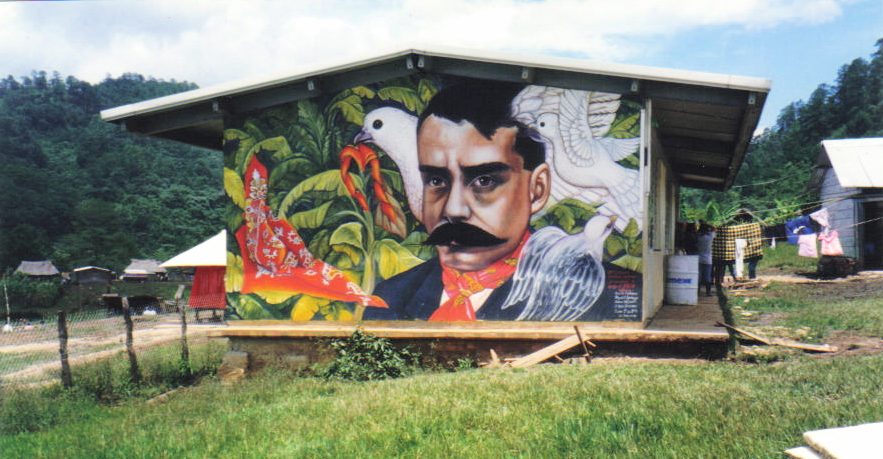
Palestinians & Zapatistas: Extremes that come together in the fight against inhumanity
By Pietro Ameglio | Originally published by Desinformémonos in Spanish.
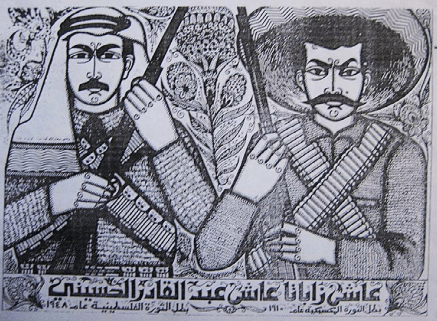
For this article we will take as a basis the textual words chosen from particularly significant moments, of Palestinian and Zapatista protagonists about their struggles, challenges and sufferings, since they seem to us in this case stronger and more effective than any other reflection.
1. Palestinian genocide in Gaza: Moral Compass of humanity
We return to the question in the title of our previous article in this medium (in Spanish at https://desinformemonos.org/por-que-el-papa-y-el-patriarca-ortodoxo-junto-a-lideres-rabinos-e-imanes-no- are-accompanying-with-their-bodies-today-Palestinian-and-Israeli-families-in-Gaza/ ): why have the Pope and religious leaders of Judaism, Islam and other traditions not yet gone to “place their body” in Gaza, alongside Palestinian families? It is a brutal snapshot of the level of growing inhumanity that affects our species. It shows the lack of a living incarnation with the victims on the part of the leaders of religious traditions, unlike their people and faithful believers who have carried out numerous acts of solidarity. And also of the helplessness, with little voice in key decisions and the lack of challenges in the most radical nonviolent action of the people of God in those religious traditions, where we are not capable of making — as the Zapatistas would say– the authorities “lead by obeying” the people, and do what the sacred words of their texts say unambiguously: Put their bodies next to the victims “until they give their lives for them.”
Regarding the impossibility of risking nonviolent actions that “oblige” our religious hierarchs to fulfill “their duty,” a passage from the Gospel comes to mind (Mc. 2, 3-5), where relatives of a sick person, seriously ill such he could not go to Jesus Christ in his public healing meetings to be cured, had to take him up to the roof of a house where Jesus was. Then they lowered him through the roof so that he could see him and cure him, which is what happens. It seems to me, in all ignorance and simplicity, but also with audacity and humility, that this evangelical story could give us a clue about how we should act nonviolently so that the Pope and other religious hierarchs “land” -yes or yes!- in Gaza, even if it had to be removing rubble.
Father Donald Hessler, whom I have cited more than once in this medium as an example of nonviolence, used to ask people to question the type of faith they had in their lives: “Where do you want to die: in bed?” or on the cross?” It is the question that should be asked at least to the Pope and the Christian religious heads now regarding this genocide. In the only passage of the gospel where Jesus refers to the Last Judgment – something that goes beyond any religious belief, it seems to me – he calls himself “Son of Man” (not of God), and clearly indicates what the measure will be. with which our life will be measured: “I was hungry and you fed me, I was thirsty, I was imprisoned, naked… (Mt. 25, 31-46)”… I was bombarded. As we have said, it is not about seeking any form of gratuitous martyrdom but about embodying the Word of God and the will of the people suffering from him, which is the only thing that justifies exercising that religious power.
For a few days now, a video has been circulating on the networks about a homily (“Christ under the rubble”) by the Palestinian Lutheran pastor Munther Isaac, made in Bethlehem the day before Christmas (https://www.youtube.com/watch ?v=CjIG2YZBXpo&ab_channel=PEAPIECUADOR See links below.), which seems to me to be very strong, profound and clear regarding this issue and the current emergency of humanity, with which we are in full harmony since our previous articles.
The pastor begins by saying that “Gaza as we knew it no longer exists. This is annihilation. It is a genocide. The world watches, the churches watch. The people of Gaza send live images of their own execution … We are tormented by the silence of the world. Leaders of the so-called ‘free world’ are lining up to give the green light to the genocide of a captive population.” And he adds: “If you are afraid to call it genocide, it is your responsibility, it is a sin and it is darkness that you voluntarily welcome.”
This political sphere is complemented by another, which is the cover-up of “theological protection” by Western churches; In South Africa the concept of “state theology” was created: theological justification of the status quo of racism, capitalism and totalitarianism. In Palestine “we confront the theology of the Empire that masks oppression under the cloak of divine decrees: it speaks of a land without people, it divides people between ‘them’ and ‘us’. It dehumanizes and demonizes… calls to empty Gaza (go to Egypt, Jordan… to the sea).” And he continues to question the theology of the Empire, asking: “How does the murder of 9,000 Palestinian boys and girls amount to self-defense? How is the displacement of 1.9 million people, the murder of more than 20 thousand Palestinians, self-defense? They transform the colonizer into a victim and the colonized into the aggressor.” And he adds that it is evident that “The world does not see us as equals… If 100 Palestinians have to be killed to hunt down a Hamas militant, then go ahead. They don’t see us as humans. In the eyes of God, no one can take away our humanity.”
Pastor Munther says that the genocide in Gaza “has become the moral compass of the world today” (of the current moral state of humanity). And he continues to reflect self-critically: “If you are not horrified by what is happening in Gaza… there is something wrong with your humanity. If as Christians we are not outraged by genocide and the use of the Bible to justify it, our Christian witness is distorted.” He then adds that “We are outraged by the complicity of the churches. Let’s be clear: silence is complicity. An empty call for peace without demanding a Ceasefire and End to the Occupation, and superficial empathy without direct action, all of this is complicity.”
He also wonders, remembering how Jesus was displaced by the empire and had to flee to Egypt – just like the Palestinians today -, what Jesus exclaimed with great pain on the cross: “My God, why have you abandoned me?” And he answers that through the supportive people, nearby, they know that God has not abandoned them, He is among the rubble there: vulnerable, displaced, refugee. That is precisely where the Incarnation is: “we see it in every murdered boy and girl…in every displaced family wandering around in despair without a home.”
Finally, the pastor concludes with a message to the world: “This Genocide Must Stop Now!” And he adds that the Palestinians, as they have always done, will rise up and continue fighting; however the moral problem will lie with the rest of us who may have been complicit in our silence: “Look in the mirror and ask yourself: where was I when Gaza was passing through a genocide?”
This resistance and permanent moral and material strength in their bodies to fight against inhumanity and injustice deeply unites the Palestinian people with the Zapatistas.
2. Zapatismo: 30 years of building humanity and a profound “common root” change
Zapatismo has been much more than a great and heroic revolution of a people in arms in a very specific, mainly indigenous Mayan territory of the Mexican southeast. It has also been more than an enormous, original and inspiring global phenomenon of cultural, social, economic and political resistance against neoliberalism and for humanity. There is also an unobservable social long-term history: A humble and very concrete advance, totally real, of the millennia-long process of humanization of our species. An important community in number within a certain territory – also large – is trying – with very precise results and also limitations – to build a model of community life from the principles of equality and community co-operation, non-capitalist as much as possible. There are no more examples and results – not even close in quantity and quality – in universal human history, for a similar number of bodies and territory, with that temporality and continuity.
How is the structural reorganization of Zapatista autonomy proposed today?
The EZLN in the last and twentieth part communiqué from a few days ago, titled “The Common and Non-Property,” delves into the explanation about a “new stage that the Zapatista communities have decided:” “Let’s say that the first 10 years of autonomy, that is, from the uprising to the birth of the Good Government Boards in 2003, was a learning experience. The next 10 years, until 2013, were about learning the importance of generational change. From 2013 to date it has been about confirming, criticizing and self-criticizing errors in operation, administration and ethics.”
In November of last year they had already advanced the main points of their decentralized political structural reorganization of the autonomy project, in their IX part of their communiqué (“The new structure of Zapatista autonomy,” where they pointed out that the base would be the Local Autonomous Governments (GAL): “There is a GAL in each community where the Zapatista support bases live. The Zapatista GAL are the core of all autonomy. They are coordinated by autonomous agents and commissioners and are subject to the assembly of the town, ranchería, community, area, neighborhood, ejido, colony, or however each population calls itself. Each GAL controls its autonomous organizational resources (such as schools and clinics) and the relationship with neighboring non-Zapatista sister towns. If before there were a few dozen MAREZs, that is, Zapatista Rebel Autonomous Municipalities, now there are thousands of Zapatista GALs…” and they also address all forms of corruption that may arise.
In turn, according to the reality of the area, “several GALs convene in Zapatista Autonomous Government Collectives, CGAZ, and here they discuss and make agreements on matters that interest the GALs that gather. When they so determine, the Collective of Autonomous Governments calls an assembly of the authorities of each community. Here the plans and needs of Health, Education, Agroecology, Justice, Commerce, and those that are needed are proposed, discussed and approved or rejected… Each region or CGAZ has its directors, who are the ones who call assemblies if there are any “an urgent problem or one that affects several communities…that is to say, where before there were 12 Good Government Boards (JBG), now there will be hundreds.”
On another scale, there are “the Assemblies of Collectives of Zapatista Autonomous Governments (ACGAZ), which are what were previously known as zones. But they have no authority, but depend on the CGAZ, and the CGAZ depend on the GAL. The ACGAZ convenes and presides over zone assemblies, when necessary…They have their headquarters in the caracoles, but they move between the regions.”
In this way, in this profound political and social change towards a process of decentralization and more direct control of power and decisions from the community bases and their assemblies, “the Command and Coordination of Autonomy has been moved from the JBG and MAREZ to the towns and communities, to the GAL. The zones (ACGAZ) and the regions (CGAZ) are governed by the people, they must be accountable to the people and find a way to meet their needs in Health, Education, Justice, Food and those that arise due to emergencies caused by disasters. natural disasters, pandemics, crimes, invasions, wars, and the other misfortunes that the capitalist system brings.”
What will the Common and Non-Property be like?
In the very recent communiqué-part number XX (“The common and Non-Property,” they explained that the aim will be to “establish the extent of the recovered land as common land. That is to say, without property…without papers…of ‘nobody’, that is, ‘of the common’.” To achieve such revolutionary advance in its social order and community organization, in terms of the ownership of the land, its use, work and the social relations between those who occupy and work on it, “there must be an agreement between the residents regardless of whether they belong to a party or are Zapatistas…that they work together in shifts.”
Why did they come to this decision to face the current “storm,” which is one of survival?
The reasons are varied: “nature’s dissatisfaction” with current exploitation; “breakdown of the social fabric because of violence;” the capitalists “don’t care what happens tomorrow;” “Western civilization” only brings wars and crimes.
How did you build the knowledge necessary for this new path?
For years, a community process developed, from the elders and collective memory, where “We remember how it was before… and we saw that (the storm) came with private property… in all cases it is the bad government that issues the papers.” The farmers have to go out of their way to obtain their papers and apparent property rights, fighting among themselves, violently dividing families, being subjugated and deceived by chiefs and parties… all for a fucking piece of paper.” And they add how natural resources are a commodity “as were your parents, grandparents, great-grandparents… as you are, and your children will be.” This new approach questions at its roots one of the main bases of the capitalist system, such as private property, and the entire machinery of its apparatus and legalistic bureaucracy, which largely starts from a “fetishization” of the signature and paper, rather than the recognition of justice and social equality.
What will the “material base” be like in this new stage of the common?
Individual-family work (small personal property) will be combined with collective work (the land belongs to a collective) -existing until now- and what is now proposed as work in common or non-property: “A portion of the land recovered is declared as ‘common work’. That is, it is not parceled out and is not owned by anyone…according to the nearby communities, they mutually ‘loan’ that land to work on it. It cannot be sold or bought. It cannot be used for the production, transfer or consumption of narcotics. The work is done in ‘shifts’ agreed upon with the GALs and the non-Zapatista brothers and sisters. The benefit or gain is for those who work, but the property is not, it is a non-property that is used in common.”
What do the young generations say about the new change in their autonomous revolutionary process?
In the recent celebration of the 30 years of the uprising in Caracol VIII of Dolores Hidalgo, they reflected – amidst group music – young people born free, new generations built in these decades through autonomy projects, self-government… especially in areas of health, education, good government, production and food…We share here verbatim some phrases that we consider significant to understand this revolutionary social process in the Zapatista lands of Chiapas: “Today 30 years later, let us be the guardians of Mother Earth, make this world the sharing of working the land and water in a common way…We will leave them a better life for the future of our generations. We and you sow life, together we will reap life together.”
And going deeper they added: “The community is the wisest inheritance that our grandfathers and grandmothers left. In the community we are everything and without the community we are nothing…Unity has made us resist. With organization we advance in autonomy, we can destroy those who oppress us.” And in turn, “I, Mother Earth, belong to everyone and for everyone, I am not anyone’s property. New is life in common, where the master and the boss do not exist.”
Likewise, regarding autonomous education, they pointed out that: “Between the shadows of the giant trees, between wind and heat, among the mountains a volcano of imagination is made, this is how education is born…Boys and girls already prepared for a decade, we look for another way and we find it. It’s time to form a story of no return. Build now a new way of educating ourselves together…We are the men and women of Mayan roots, we are the ceiba of history…we long for a dream of another tomorrow without distinctions.”
Towards the end, a young man recited a very significant poem about the current struggle titled “It is not a time to cry:”
This is not the time to cry…
It’s time to wake up and prepare together
It is time to jointly challenge the main enemy
It is time for unity and saving humanity
It is time to cultivate and defend mother earth
It is time to resist and rebel against the great storm that we are going to face.
___________________________________________________________
Translated from the Spanish by the Chiapas Support Committee. Published originally in Desinformémonos here.
VIDEOS
From the sermon: Christ Under the Rubble (full service; clip from the Sermon)
The Common: the new horizon
By Raúl Romero | Published in Spanish in La Jornada here.
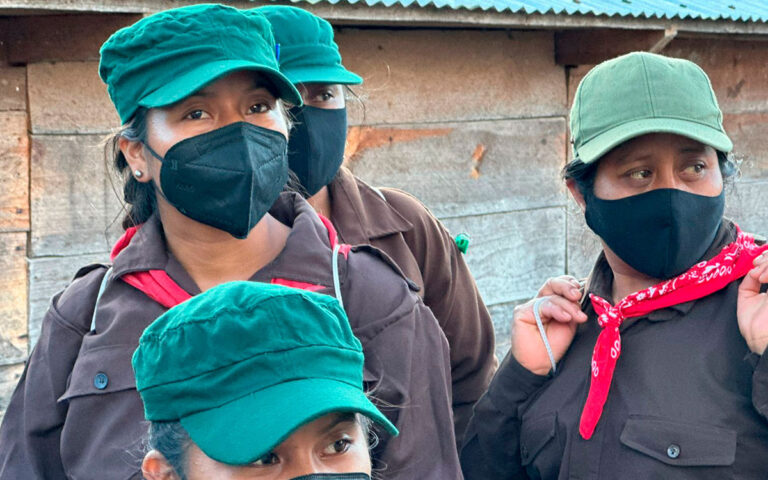
The journey has been long. Due to battered and privatized roads, we are running into sections under repair and accidents. The driver of our vehicle says: “You have to drive carefully, the devil is loose.” A trip that takes 14 hours, from Mexico City to San Cristóbal de las Casas, Chiapas, we do it in 21 hours.
The climate of violence in the country, that devil that has been unleashed since 2006, leads us to take all precautions: We leave a list with emergency contacts and a group monitors our trip from fixed locations. Every four hours they receive our location. If no report comes, they look for us. If they do not find us within a certain amount of time, they have to notify Frayba or the TDT Network, the independent organizations that accompany the “National and international Caravan to Zapatista territory.” No precaution is less necessary to cross this painful country and its geography of terror.
Then comes the second leg of the trip, from San Cristóbal de las Casas to the Caracol “Resistance and Rebellion: A New Horizon,” in the town of Dolores Hidalgo, a little more than an hour from Ocosingo. Here the dilemma is which route to take: the one that is usually taken by paramilitary groups and that charges a “right of way” fee, that has sections with landslides, or the longest one and full of curves. There is no discussion. We take the curvy road, some take dramamine, and we begin the journey.
Four and a half hours later, with pale faces and some stomachs emptied along the way, we arrive in rebel territory. We send the last report: “We have arrived.” In Zapatista territory we are not in danger. At the entrance to the Caracol, the compas – as we affectionately call the Zapatista people – have placed several banners from previous events such as the “dance-share,” “the women with rebel dignity”, “the capitalist hydra” . . .
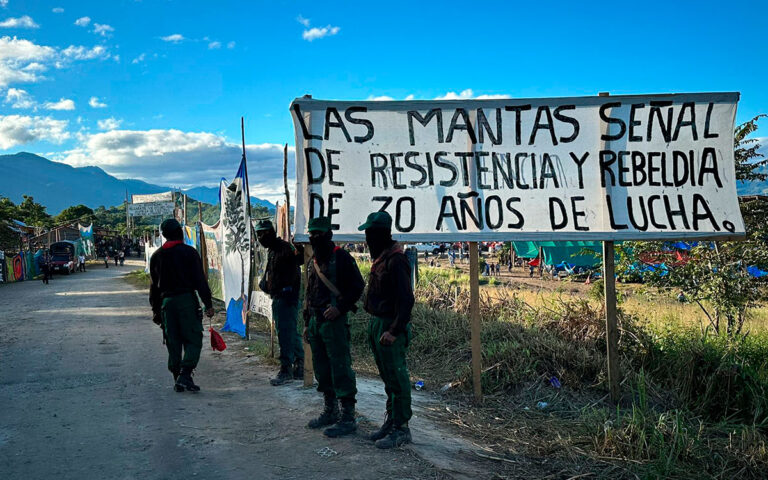
The entrance becomes a collective hug, hundreds of people traveling from different parts of the world meet again in Zapatista territory. The conversations last for hours. Hearts are happy. Collective projects begin to be planned. Diagnoses generate debates. Palestine and Kurdistan are present in the talks. New alliances are forged. The great network of global solidarity that is articulated around the EZLN is strengthened.
The celebration of 30 years of the war against oblivion is also the celebration of a new stage of internationalism. At the Caracol you meet the protagonists of the Zapatista movement. Marijosé, the compañeroa who more than two years ago traveled on the ship La Montaña from the Mexican southeast to Europe – and renamed it “Unsubmissive Europe” – now fulfills a new assignment: they are in charge of the kitchen that will feed the thousands of people.
Verónica, Chinto, Amado and other prominent members of the Palomitas Command – reinforced with new members such as Remigio – also roam around the Caracol. They ride dragons, unicorns and other fantastic creatures. Their laughter and pranks, one of the secret weapons with which Zapatismo seduced Rebellious Europe, now also call for hope.
A friend comments: “Zapatista territory is the only place where I do not have to keep my eyes on my daughters and I feel calm.” This is one of the objectives of Zapatismo: a world where a girl can play without fear. If in the past, theater and pastorelas were used in order to evangelize indigenous communities in the “new world,” today the Zapatista indigenous communities subvert their function and make theater a tool to pedagogically explain an extremely complex process: its history, the war against oblivion, leading by obeying, the autonomous Zapatista rebel municipalities, the councils of good government and what is its new horizon, the common and non-property.
On December 31, at 11:30 p.m., the EZLN shows its strength and organization. Thousands of militiamen, men and women, perform exercises to the rhythm of cumbia and ska. The message is clear, Zapatismo is an army that has chosen life, but is willing to defend its territories and project.
Contrary to what intellectuals, “specialists” and journalists forged in “lazy thinking” say, Zapatismo is full of youth. Among militiamen and militiamen, the faces and bodies of those who are beginning to leave adolescence behind can be seen. A new generation of Zapatistas and a new stage of Zapatismo. “The property must belong to the people and be common, and the people have to govern themselves,” says Subcommander Moisés, spokesperson for the EZLN, in his speech. Sketches that manage to draw the new theoretical and political horizon launched by the Zapatistas. 30 years after the war against oblivion, Zapatismo embarks towards the future of humanity.
* Sociologist @RaulRomero_mx
Translated by the Chiapas Support Committee from the original in Spanish; published January 7, 2024 in La Jornada: https://www.jornada.com.mx/noticia/2024/01/07/opinion/el-comun-el-nuevo-horizonte-5412
EZLN: Fourteenth Part & Second Approach Alert: The (other) Rule of the Excluded Third Party.
Fourteenth Part and Second Approach Alert: The (other) Rule of the Excluded Third Party.
The meeting was a year ago. One early morning in November. It was cold. Subcomandante Insurgente Moisés arrived at the chambers of the Captaincy (yes, you are not wrong, by that time SupGaleano had already died, it was just that his death had not been made public). The meeting with the jefas and jefes [the main leaders] had ended late, and SubMoy took time to stop by and ask me about what he had done in the analysis that had to be presented the next day at the assembly. The moon was moving lazily towards its first quarter and the world population reached eight billion. Three notes appeared in my notebook:
The richest man in Mexico, Carlos Slim, to a group of students: “now, what I see for all of you is a buoyant Mexico with sustained growth, with many opportunities for job creation and economic activities” (November 10, 2022). (Note: Perhaps it refers to Organized Crime as an economic activity that generates employment. And with export goods).
“(…) the number of people who are currently reported missing in Mexico, since 1964, now amounts to 107,201; That is, seven thousand more than last May, when the 100 thousand threshold was exceeded. (November 7, 2022). (Note: Look for the search engines).
In Israel, the UN put the number of Palestinian prisoners at around 5,000, including 160 children, according to the report by the Special Rapporteur on the situation of human rights in the Palestinian territory occupied since 1967. Netanyahu takes over as head of the government for the third time. time. (November 2022). (Note: He who sows wind will reap storms).
-*-
A crack as a project.
It was not the first time we had discussed the topic. What’s more, the last few moons had been the constant: the diagnosis that would help the assembly make a decision about “what’s next.” They had also been discussing this for months, but the idea-proposal of Subcomandante Insurgente Moisés has not just landed or materialized. It was still a kind of intuition.
“It’s not that all the doors are closed,” I began. – There are no doors. All those that appear as “true” do not lead anywhere other than to the starting point. Any attempted route is just a trip through a labyrinth that, at best, takes you back to the beginning. At worst, to disappearance.
So? SubMoy asked, lighting the umpteenth cigarette.
Well, I think you’re right, all that remains is to open a crack. No longer looking for him elsewhere. You have to make a door. It’s going to take time, yes. And it’s going to cost a lot. But yes, it is possible. Although not just anyone. What you are thinking, no one, ever. I myself didn’t think I would even hear it – I pointed out.
SubMoy remained thoughtful for a while, looking at the floor of the champa, full of cigarette butts, tobacco residue from the pipe, a burnt match, wet mud, some broken twigs.
Then he got up and, heading to the door, he only said: “Well, no way, we need to see… what’s missing is missing.”
-*–
Failure as a goal.
To understand what that brief dialogue meant, I must explain a part of my job as captain. In this case, a work that I inherited from the late SupGaleano, who in turn received it from the late SupMarcos.
A thankless, dark and painful task: foreseeing the Zapatista failure.
If you are considering an initiative, I look for everything that could make it fail, or, at least, reduce its impact. Look for the contradictory opposite. Let’s say something like “Marcos Contreras”. I am, therefore, the maximum and only representative of the “pessimistic wing” of Zapatismo.
The objective is to attack the initiatives with all types of objections from the moment they begin to be born. We suppose that this causes this proposal to be refined and consolidated, be it internal organizational, be it external initiative, be it a combination of these two.
To put it clearly: Zapatismo is preparing to fail. That is, imagine the worst scenario. With that horizon in perspective, plans are drawn up and proposals detailed.
To conceive these “future failures”, the sciences that we have at our disposal are used. You have to look everywhere (and when I say “everywhere” I mean everywhere, including social networks and their bot farms, fake news and the tricks that are carried out to get “followers”), obtain the greatest amount of data and information, cross it and thus obtain the diagnosis of what the perfect storm would be and its result.
They must try to understand that it is not about building a certainty, but rather a terrible hypothesis. In terms of the deceased: “suppose everything goes to shit.” Contrary to what one may believe, this catastrophe does not include our disappearance, but something worse: the extinction of the human species. Well, at least as we conceive it today.
This catastrophe is imagined and we begin to look for data that confirms it. Real data, not the prophecies of Nostradamus or the biblical Apocalypse or equivalent. That is, scientific data. Scientific publications, financial data, trends, records of facts, and many publications are then used.
From this hypothetical future, the clock starts in reverse.
-*-
The rule of the excluded third.
Already in possession of the drawing of the collapse and its inevitability, the rule of the excluded third begins to work.
No, it is not the known one. This is an invention of the late SupMarcos. When he was a lieutenant, he said that, in the event of a failure, a solution was first attempted; second, a correction; and third, since there was no third, it remained as “there is no remedy.” Later he refined that rule until he reached the one I now present to you: supported by a hypothesis with true data and scientific analysis, it is necessary to look for two elements that contradict the aforementioned hypothesis in its essence. If these two elements are found, the third is no longer sought, then the hypothesis must be reconsidered or confronted with the most severe judge: reality.
I clarify that, when the Zapatistas say “reality,” they include their actions in that reality. What you call “practice.”
I then apply that same rule. If I find at least two elements that contradict my hypothesis, then I abandon the search, discard that hypothesis and look for another one.
The complex hypothesis.
My hypothesis is: There is no solution.
Notes:
Balanced coexistence between humans and nature is now impossible. In the confrontation, the one who has the most time will win: nature. Capital has turned the relationship with nature into a confrontation, a war of plunder and destruction. The objective of this war is the annihilation of the opponent, nature in this case (humanity included). With the criterion of “planned obsolescence” (or “expected expiration”), the commodity “human beings” expires in each war.
The logic of capital is that of greater profit at maximum speed. This causes the system to become a gigantic waste machine, including human beings. In the storm, social relations are disrupted and unproductive capital throws millions into unemployment and, from there, into “alternative employment” in crime and migration. The destruction of territories includes depopulation. The “phenomenon” of migration is not the prelude to the catastrophe, it is its confirmation. Migration produces the effect of “nations within nations”, large migratory caravans colliding with concrete walls, police, military, criminal, bureaucratic, racial and economic.
When we talk about migration, we forget the other migration that precedes it on the calendar. That of the original populations in their own territories, now converted into merchandise. Have the Palestinian people not become migrants who must be expelled from their own land? Doesn’t the same thing happen with the indigenous peoples of the world?
In Mexico, for example, the native communities are the “strange enemy” that dares to “desecrate” the soil of the system’s farm, located between Bravo and Suchiate. To combat this “enemy” there are thousands of soldiers and police, megaprojects, buying of consciences, repression, disappearances, murders and a veritable factory of guilty people (cf. https://frayba.org.mx/). The murders of brother Samir Flores Soberanes and dozens of nature guardians define the current government project.
The “fear of the other” reaches levels of frank paranoia. Scarcity, poverty, misfortunes and crime are responsible for a system, but now the blame is shifted to the migrant who must be fought until annihilated.
In “politics” alternatives and offers are offered, each one more than false. New cults, nationalisms – new, old or recycled -, the new religion of social networks and its neo prophets: the “influencers”. And war, always war.
The crisis of politics is the crisis of alternatives to chaos. The frenetic succession in the governments of the right, the extreme right, the non-existent center, and what is presumptuously called “left”, is only a reflection of a changing market: if there are new models of cell phones, why not “new ” political options?
Nation-States become customs agents of capital. There are no governments, there is only one Border Patrol with different colors and different flags. The dispute between the “Fat State” and the “Starving State” is just a failed concealment of its original nature: repression.
Capital begins to replace neoliberalism as a theoretical-ideological alibi, with its logical consequence: neo-Malthusianism. That is, the war of annihilation of large populations to achieve the well-being of modern society. War is not an irregularity of the machine, it is the “regular maintenance” that will ensure its operation and duration. The radical reduction in demand to compensate for supply limitations.
It would not be about social Neo-Darwinism (the strong and rich become stronger and richer, and the weak and poor become weaker and poorer), or Eugenics, which was one of the ideological alibis for the Nazi war of extermination of the Jewish town. Or not only. It would be a global campaign to annihilate the majority population in the world: the dispossessed. Dispossess them of life too. If the planet’s resources are not sufficient and there is no spare planet (or it has not been found yet, although they are working on it), then it is necessary to drastically reduce the population. Shrink the planet through depopulation and reorganization, not only of certain territories, but of the entire world. A Nakba for the entire planet.
If the house can no longer be expanded nor is it feasible to add more floors; If the inhabitants of the basement want to go up to the ground floor, raid the cupboard, and, horror!, they do not stop reproducing; if “ecological paradises” or “self-sustaining” (in reality they are just “panic rooms” of capital) are not enough; if those on the first floor want the rooms on the second and so on; In short, if “modern civilization” and its core (private ownership of the means of production, circulation and consumption), is in danger; Well, then you have to expel tenants – starting with those in the basement – until “balance” is achieved.
If the planet is depleted of resources and territories, a kind of “diet” follows to reduce the obesity of the planet. Searching for another planet is having unforeseen difficulties. A space race is foreseeable, but its success is still a very big unknown. Wars, on the other hand, have demonstrated their “effectiveness.”
The conquest of territories brought the exponential growth of the “surplus”, “excluded”, or “expendable”. The wars over the distribution continue. Wars have a double advantage: they revive war production and its subsidiaries, and eliminate those surpluses in an expeditious and irremediable manner.
Nationalisms will not only resurface or have new breath (hence the coming and going of far-right political offers), they are the necessary spiritual basis for wars. “The person responsible for your shortcomings is whoever is next to you. That’s why your team loses.” The logic of the “bars”, “truncheons” and “hooligans” -national, racial, religious, political, ideological, gender-, encouraging medium, large and small wars in size, but with the same objective of purification.
Ergo: capitalism does not expire, it only transforms.
The Nation-State long ago stopped fulfilling its function as a territory-government-population with common characteristics (language, currency, legal system, culture, etc.). The National States are now the military positions of a single army, that of the capital cartel. In the current global crime system, governments are the “place bosses” that maintain control of a territory. The political fight, electoral or not, is to see who is promoted to head of the plaza. The “floor collection” is through taxes and budgets for campaigns and the electoral process. Disorganized crime thus finances its reproduction, although its inability to offer its subjects security and justice is increasingly evident. In modern politics, the heads of national cartels are decided by elections.
A new society does not emerge from this bundle of contradictions. The catastrophe is not followed by the end of the capitalist system, but by a different form of its predatory character. The future of capital is the same as its patriarchal past and presents: exploitation, repression, dispossession and contempt. For every crisis, the system always has a war at hand to solve that crisis. Therefore: it is not possible to outline or build an alternative to collapse beyond our own survival as indigenous communities.
The majority of the population does not see or does not believe the catastrophe is possible. Capital has managed to instill immediatism and denialism in the basic cultural code of those below.
Beyond some native communities, peoples in resistance and some groups and collectives, it is not possible to build an alternative that goes beyond the local minimum.
The prevalence of the notion of the Nation-State in the imaginary below is an obstacle. It keeps struggles separate, isolated, fragmented. The borders that separate them are not only geographical.
-*-
The Contradictions.
Notes:
First series of contradictions:
The fight of the brothers from the Cholulteca region against the Bonafont company, in Puebla, Mexico (2021-2022). Seeing that their springs were drying up, the residents turned to look at the person responsible: the Bonafont company, from Danone. They organized and took over the bottling plant. The springs were recovered and water and life returned to their lands. Nature thus responded to the action of its defenders and confirmed what the farmers said: the company deprecated water. The repressive force that evicted them, after a time, could not hide the reality: the people defended life, and the company and the government defended death. Mother Earth responded to the question like this: if there is a remedy, I correspond with life to those who defend my existence; We can coexist if we respect and care for each other.
The pandemic (2020). The animals recovered their position in some abandoned urban territories, although it was momentary. The water, the air, the flora and fauna had a respite and remade themselves, although they were once again overwhelmed in a short time. They thus indicated who the invader was.
The Journey for Life (2021). In the East, that is, in Europe, there are examples of resistance to destruction and, above all, of building another relationship with Mother Earth. The reports, stories and anecdotes are too many for these notes, but they confirm that the reality there is not only that of xenophobia and the idiocy and petulance of their governments. We hope to find similar efforts in other geographies.
Therefore: balanced coexistence with nature is possible. There must be more examples of this. Note: look for more data, review the Extemporánea reports again upon returning from the Journey for Life – Europe Chapter, what they looked at and what they learned, follow the actions of the CNI and other organizations and movements of sister indigenous peoples in the World. Pay attention to alternatives in urban areas.
Partial conclusion: the contradictions detected put one of the approaches of the complex hypothesis in crisis, but not yet the essence. The so-called “green capitalism” could well absorb or supplant these resistances.
Second series of contradictions:
The existence and persistence of the Sixth and the people, groups, collectives, teams, organizations, movements united in the Declaration for Life. And many more people in many places. There are those who resist and rebel, and try to find themselves. But it is necessary to search. And that is what the Searchers teach us: searching is a necessary, urgent, vital struggle. With everything against them, they cling to the remotest hope.
Partial conclusion: the mere possibility, minimal, tiny, improbable up to a ridiculous percentage, that resistance and rebellion coincide, makes the machine stumble. It is not its destruction, it is true. Not yet. The scarlet witches will be decisive.
The percentage probability of the triumph of life over death is ridiculous, yes. Then there are options: resignation, cynicism, the cult of the immediate (“carpe diem” as vital support).
And yet, there are those who defy walls, borders, rules… and the law of probabilities.
Third series of contradictions: Not necessary. The Excluded Third Rule applies.
General conclusion: therefore, another hypothesis must be raised.
-*-
Ah! Did you think that the initiative or step that the Zapatista people announced was the disappearance of MAREZ and JBG, the inversion of the pyramid and the birth of the GAL?
Well, I’m sorry to ruin your peace of mind. It is not like this. Go back to the so-called “Part One” and the discussion about the motives of wolves and shepherds. Ready? Now put this up:
Permissu et gratia a praelatis dico vobis visiones mirabiles et terribiles quas oculi mei in his terris viderunt. 30 Anno Resistentise, et prima luce diei viderunt imagines et sonos, quod nunquam antea viderant, et tamen litteras meas semper intuebantur. Manus scribit et cor dictat. Erat mane et supra, cicadae et stellae pugnabant pro terra…
With the permission and grace of the superiors I tell you the wonderful and terrible visions that my eyes have seen in these lands. In the 30th year of the Resistance, and with the first light of day, they saw images and sounds that they had never seen before and yet they always looked at my letters. The hand writes and the heart dictates. It was early morning and above, crickets and stars were fighting for the earth…
–-El Capitán.
He did not appear then because they did not know about the death of SupGaleano, nor about the other necessary deaths. But that’s how we Zapatistas roll: what we keep silent about is always more than what we say. As if we are determined to design a puzzle that is always unfinished, always with a pending piece, always with that extemporaneous question: What about you?
From the mountains of the Mexican southeast.

El Capitán.
40, 30, 20, 10, 2, 1 year later.
P.S.- So what’s missing? Well… what’s missing is missing.
Lacking patience, the EZLN’s communique, “Fourteenth Part and Second Approach Alert: The (other) Rule of the Excluded Third Party,” was translated rapidly by the Chiapas Support Committee. You can read the original in Spanish here. And you can also read the Spanish and other translations here too:
EZLN Subcomandante: The Zapatista vocation is to be of “good seed’
By Elio Henríquez, La Jornada correspondent, November 21, 2023
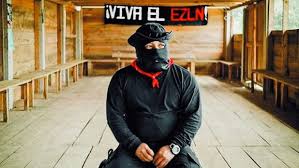
The Zapatista vocation, according to “a laconic definition,” is “to be a good seed,” stated Subcomandante Moisés of the Zapatista Army of National Liberation (EZLN, Ejército Zapatista de Liberación Nacional).
“We do not intend to bequeath a conception of the world to the next generations. Not bequeath to them our miseries, our resentments, our pain, our phobias, or our philias. Nor that they be a mirror with a more or less approximate image of what we assume is good or bad,” but rather that “what we want them to inherit is life,” he added.
He stated that “what other generations do with it will be their decision and, above all, their responsibility. Just as we inherited life from our ancestors, we take what we consider valuable, and we assign ourselves a task. And, of course, we take responsibility for the decision we make, for what we do to accomplish that task, and for the consequences of our actions and omissions.”
‘We see that terrible storm, whose first gales and rains are already hitting the entire planet.’
Moisés, who now also signs as the General Coordinator of the “Journey for Life”, insisted that “we do not intend to bequeath laws, manuals, worldviews, catechisms, rules, routes, destinations, steps, companies, which, if you look closely, is what almost all political proposals aspire to. Our goal is simpler and terribly more difficult: to bequeath life.”
He elaborated: “… Because we see that this terrible storm, whose first gales and rains are already hitting the entire planet, is arriving very quickly and very strongly. So we don’t see the immediate. Or yes, but according to what we see in the long term.”
“Our immediate reality is defined or in accordance with two realities: one of death and destruction that will bring out the worst in human beings, regardless of their social class, their color, their race, their culture, their geography, their language, their size, And another one of starting over on the rubble of a system that did what it does best, that is, destroy.”
He asked: “Why do we say that the nightmare that is already here and, which will only get worse, will be followed by an awakening? Well, because there are those, like us, who are determined to look at that possibility. Minimally, it’s true. But every day and at all hours, everywhere, we fight so that this minimal possibility grows and, although small and unimportant—like a tiny seed—it grows. And, one day, it is the tree of life that will be of all the colors or it won’t be.”
He clarified that “we are not the only ones. In these 30 years (since the armed uprising of January 1994) we have looked into many worlds. Different in ways, times, geographies, own stories, calendars. But equal only in the effort and the absurd gaze placed on an untimely time that will happen, not by destiny, not by divine design, not because someone loses so that someone wins. No, it will be because we are working on it, fighting, living and dying for it.”
‘It is not necessary to conquer the world, it is enough to make it new again,’
He also said that “when we say that ‘it is not necessary to conquer the world, it is enough to make it new again,’ we move away, definitively and irremediably, from current and previous political conceptions. The world we see is not perfect, not even close. But it is better, without a doubt. A world where everyone is who they are, without shame, without being persecuted, mutilated, imprisoned, murdered, marginalized, oppressed. What is that world called? What system supports it or is it dominant? Well, that will be decided, or not, by those who live in it.”
A world, he added, in which “those who desire to hegemonize and homogenize learn from what they caused in this and other times, and fail in that world to come. A world in which humanity is not defined by equality (which only hides the segregation of those who ‘are not equal’), but by difference. A world where difference is not persecuted but celebrated. A world in which the stories told are not the stories of those who win, because no one wins.”
_________________________________
Translated from the Spanish by the Chiapas Support Committee, originally published by La Jornada November 21, 2023. Read the original in Spanish here.
Diocese of San Cristóbal: Chiapas, a failed state, overwhelmed and colluding with criminal groups
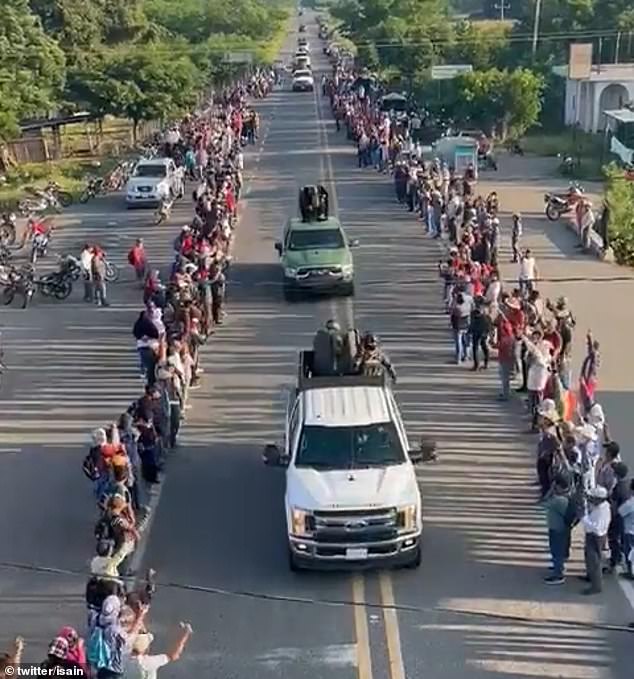
Comalapa and San Gregorio Chamic are cheered by residents. See the video here.
Mexico City | Desinformémonos. Faced with the growing dominance of organized crime groups throughout Chiapas, the Diocese of San Cristóbal criticized “the silence of the authorities” which demonstrates “a failed state that has surpassed and/or colluded with criminal groups,” whose presence and territorial disputes subject the population to a general climate of violence in which forced recruitment, kidnappings, threats and dispossession predominate.
“Criminal groups have taken over our territory and we find ourselves in a state of siege, under social psychosis with narco-blockades, which they use as a human barrier to civil society, forcing them to be there and putting their lives and that of their families at risk,” The Diocese denounced in a statement released on September 23, in which it pointed out the omission of “municipal and regional prosecutors, municipal presidents, and the state and federal governments.”
Journalist Hermann Bellinghausen, a correspondent in Chiapas, summarizes the situation of violence as generated largely by territorial disputes among cartels in search of new routes to the north of the state, especially the Sinaloa Cartel and the Jalisco Nueva Generación Cartel. The climate of violence is also due to the presence of armed civil groups in municipalities such as Pantelhó and Chenalhó, the so-called “motonetos” in San Cristóbal de las Casas, the protection fees for spaces in public markets and “old” territorial conflicts.
“The alarming cocktail [of violence] is accompanied by the immense wave of Central and South American migrants that floods the land border strip and who seek to enter the country at all costs. They constitute another commodity for criminals,” highlights Bellinghausen.
Control by organized crime groups extends from the capital to the municipalities and roads throughout the state. Just today a video was released in which a caravan of armed men from the Sinaloa Cartel can be seen on the highway between the municipalities of Frontera Comalapa and San Gregorio Chamic, amidst cheers and applause from the civilian population on the sides of the via. [See the video at Desinformémonos here.]
According to the Diocese of San Cristóbal, organized crime not only keeps the population of Chiapas subject to threat, harassment, persecution and shortages, but also exerts “pressure and social, political and psychological control of different groups so that the people take sides with one party or another of the criminal groups.”
So far, there has been no clear statement about the government’s intervention to protect the people of Chiapas and address the crisis of violence that the state undergoing. Already in 2021, the Zapatista Army of National Liberation (EZLN) had already framed the violent panorama in its statement “Chiapas on the brink of the civil war,” where the EZLN denounced the armed and paramilitary attacks on the indigenous communities of the state, the pilfering by officials “of everything they can from the state budget,” as well as the alliances of public servants with drug traffickers. “The government of Chiapas not only supports drug trafficking gangs, it also encourages, promotes and finances paramilitary groups,” Subcomandante Galeano said then.
__________________________
Translated by the Chiapas Support Committee from the original published September 25, 2023 by Desinformémonos available at https://desinformemonos.org/chiapas-un-estado-fallido-rebasado-y-coludido-con-los-grupos-delincuenciales-diocesis-de-san-cristobal/
The socio-cultural aspects of the Maya Train
By: Gilberto López y Rivas
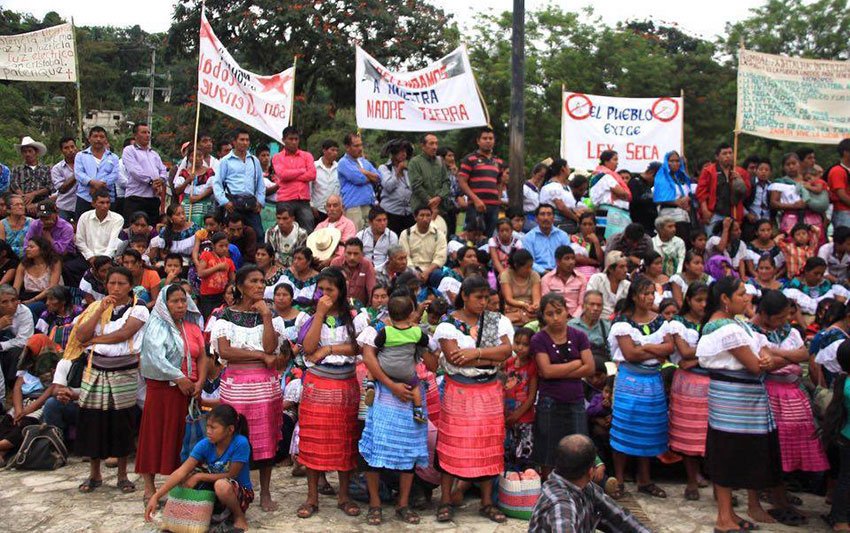
First of all, I would like to highlight the non-consulted nature of the Tren Maya mega-project among the affected populations, which include original peoples protected by the Constitution and by international agreements, such as ILO Convention 169 and the 2007 UN Declaration on the Rights of Indigenous Peoples, which stipulate, among others, the right to prior, free, informed, good faith and culturally appropriate consultation regarding projects and actions of the State and corporations of various kinds that could affect their lands, territories, identities, cultural heritage and environment.
In this sense, the communiqué of the Office in Mexico of the United Nations High Commissioner for Human Rights (UN-HR) was very clear in calling attention to the indigenous consultation process carried out by the INPI, from November 15 to December 15, 2019, for not having complied with all the international standards on the matter, assuring that the authorities unilaterally decided the method of the process without the agreement of the communities, for which it criticized the partiality of the consultation.
For its part, the International Tribunal for the Rights of Nature, which met to hear the case of the Maya Train, held the Mexican State responsible for ecocide and ethnocide for the violation of the fundamental rights of nature, of the Maya people, of Mother Earth, and of the right to life and existence. It also ordered Mexican authorities to immediately suspend the megaproject, as well as the demilitarization of indigenous territories and the suspension of the processes of dispossession of ejido land.
In the cultural sphere, the conflictual rupture within an institution whose task is the research, dissemination and preservation of the cultural heritage of the nation and its peoples is notable: the National Institute of Anthropology and History (INAH), a situation aggravated by its participation in the Maya Train, and by serious problems within the institution that have not been resolved. Specifically, the commitments acquired by INAH with the Maya Train, under the control of the Secretary of National Defense (SEDENA), have caused the deepening of this rupture between authorities who obey the demands of tasks, times, disciplines and ways of working of SEDENA, and the union of academics of the institution that has expressed its rejection of the repressive policies of the authorities against researchers who maintain critical perspectives towards the megaproject, as demonstrated by the paradigmatic case of the archaeologist colleague Fernando Cortés of Brasdefer.
Likewise, it is worth mentioning opinions that consider that INAH should limit itself to one of its disciplines, archaeology, such as in the Maya Train, and, consequently, minimize or ignore the contributions of other anthropological and historical sciences that within the institution are represented by numerous researchers, whose knowledge, specialties and opinions are not taken into account in INAH, except for those who are in favor of what is considered the anthropology of social dissuasion, which, as in the State indigenism of the past, mediates the resistances of the peoples in favor of the neo-developmentalist policies, as the current government is doing.
Also, and based on the condemnations of international organizations, ignored by the Federal Executive, it seems to me necessary and urgent to become aware of the global context in which this mega-project is embedded. This is something that the Zapatista Mayas consider to be the storm that is approaching and is reaching us, and which is neither metaphorical nor symbolic, nor does it allude to an apocalyptic vision of prophetic voices, but rather to the real and scientifically-based possibility of a catastrophe on a planetary scale. Carlos Taibo referes to it as a collapse, a general and massive collapse of the dominant system, characterized by substantial reductions in industrial production; the simultaneous and combined financial, commercial, political, social, cultural and ecological meltdown due to its own contradictions and verifiable realities that are taking place: climate change, depletion of energy raw materials, irreversible damage to biodiversity, social conditions of unemployment, poverty, hunger, massive forced displacements, exponential increase in mortality from curable diseases and pandemics, wars for raw materials, and geopolitical strategies to impose or continue the economic, political and military domination of imperialist powers in certain regions; genocides, ethnocides, ecocides, state terrorism, proliferation of nuclear weapons, collapse of mega-cities and the transition to necropolis, and the spread of criminality and criminal gangs as the other face of recolonization or militarized and mafia-like accumulation.

Originally Published in Spanish by La Jornada, Friday, September 15, 2023, https://www.jornada.com.mx/2023/09/15/opinion/012a2pol Translated by Schools for Chiapas and Re-Published by the Chiapas Support Committee
Indigenous peoples: Farewell to the so-called new relationship
By: Magdalena Gómez
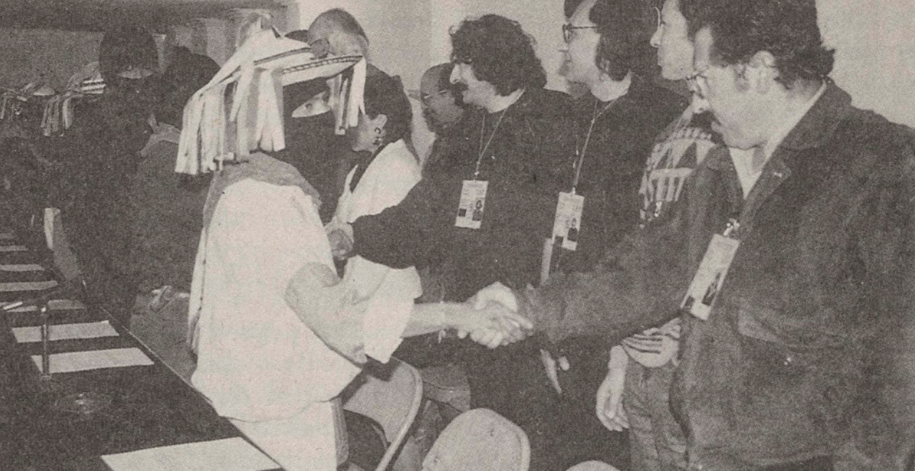
At the time of the suspended dialogue between the federal government and the Zapatista National Liberation Army (EZLN) it was claimed that a new relationship would be built between the State and the indigenous peoples. The farewell ceremony began in September 1996, when EZLN declared the suspension of the dialogue due to a crisis in what was to be the second round table on democracy and justice. It has been 27 years since that event, which was not announced as a rupture, since the Law for Dialogue, Reconciliation and Dignified Peace in Chiapas of 1995, established that while the dialogue is maintained, the State will not exercise persecutory actions for the armed uprising of the EZLN on January 1, 1994. This law, still in effect by the way, did not establish sanctions against the State in case of non-compliance with the agreements signed on February 16, 1996, those of San Andres on indigenous law and culture resulting from the first roundtable, which ultimately was the only roundtable. It is not possible to extend this anniversary, since it is already well known that successive governments since then have waged war by other means, as the classic would say. Including the indigenous counter-reform of 2001, which in Fox’s time, along with allied parties, tried to declare the San Andres Accords fulfilled. With that, it put an end to the political will expressed by the EZLN to resume the dialogue if the conditions they set, among them the constitutional reform in accordance with the referred agreements, were fulfilled.
From 2001 to this date, the State has not risked its word in this regard. The aforementioned farewell has been endorsed in times of the so-called 4T and it must be recognized that the President of the Republic has not offered anything in this respect, despite the initial expressions of the current head of the National Institute of Indigenous Peoples (INPI) that had to be omitted. He did put together a strategy of indigenous consultation forums with which they supported a proposal for a new constitutional reform, although it never came to life as an initiative, they recently organized a campaign with indigenous people and academics involved in this process, demanding that the President keep his word, which he did not do even with the Yaquis, when they publicly handed him the document containing the proposal. The campaign was silenced like the mariachis when one of the deputies of the Commission of Indigenous Affairs publicly affirmed that there were no conditions for such demand. Its proponents have remained silent.
This brief recounting of the farewell serves to remind us that the National Indigenous Congress has pointed out that the peoples do not define their struggles by sexennia and, nonetheless, we can already guess the hackneyed discourse on the subject, since at the end of the day its members represent potential votes. We already have two pearls voiced by the two women who will be on the ballot for next year’s presidential election.
The newly elected Claudia Sheinbaum as national coordinator of the Committees for the Defense of the Fourth Transformation, a prelude to Morena’s candidacy for the Presidency of the Republic in 2024. Even while campaigning, sorry, in an informational assembly in San Cristóbal de las Casas, Chiapas, on August 13 she declared: “I will never fail you, I will always be close to the heart of the indigenous peoples, after receiving from indigenous women present the baton of authority and traditional dress ceremony. She highlighted, among the advances of the 4T, the construction of historic works, such as the Mayan Train and reiterated: It is a historic moment for the country, in addition justice is being done for the indigenous peoples which is something that must not stop and must continue, which represents recovering land, territory. Water. It means the wellbeing of the peoples. It means support for the indigenous peoples, but not from the top down, but in a dialogue between the peoples and their authorities.”
I would like to know her data to support this discourse because I have other data. Days later, on September 2, Xóchitl Gálvez, elected by the Frente Amplio por México, also in San Cristóbal stated, I confess that to my astonishment: I will comply with the San Andres agreements. She acknowledged that they are still pending and criticized the incapacity of the current government to promote a constitutional reform. She is informed, no doubt, but she does not recognize the many failures of the Fox government in which she participated. And she outlined her plan that, in addition to economic support, there will be infrastructure development and ecotourism projects and equitable access to education. It is difficult for both speeches to be transformed even when they come from women, and assuming that the axis of the peoples is autonomy and self-determination; even worse: they do not sympathize with the violence that is being suffered throughout the country, especially in Guerrero and Chiapas. True, it is too much to ask. They are only campaigning.

Originally Published in Spanish by La Jornada, Tuesday, September 12, 2023, https://www.jornada.com.mx/2023/09/12/opinion/022a2pol and Re-Published by the Chiapas Support Committee with English interpretation by Schools for Chiapas
The “Narco” in the Lacandón Jungle
By: Luis Hernández Navarro
The San Javier Crossroads, on the Palenque-Trinitaria Highway, is a strategic point of the old Desert of Solitude. Communities that make up the Lacandón Community intersect there: Frontera Corozal, Lacanjá and Nueva Palestina, where Choles, Lacandons and Tseltals live. The crossing is, symbolically, the headquarters of the communal property commission. The indigenous prosecutor’s office and the municipal police are also located there.
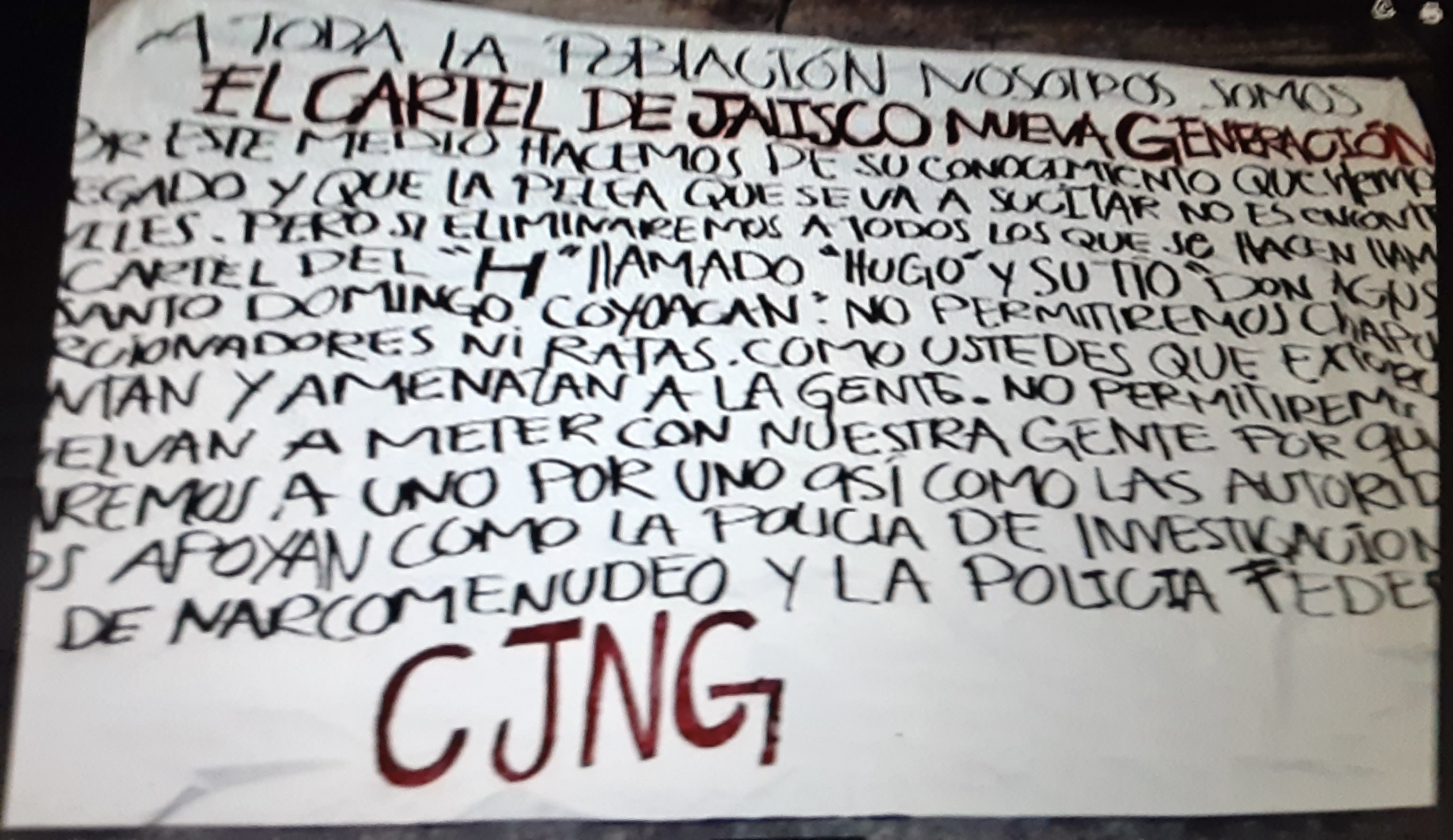
As part of its strategy to take over the territory, a commando from the Jalisco Nueva Generación Cartel (CJNG) took control of the place and began to extort protection money. Every vehicle that crosses must pay a fee. The police had their uniforms taken away.
To transport a shipment of sugar, the community of Nueva Palestina hired a transporter who is a member of Pueblos Unidos in Defense of Uses and Customs (Paduc), an association of more than a thousand vehicle owners, to transport people and goods in the jungle. They organized to confront extortion by organized crime. They carry walkie-talkies in their vans and trucks to provide help in emergency cases.
When the drug traffic stop halted the transportation of the sweetener, the driver refused to pay the fee they demanded and alerted his associates from Paduc in Nueva Palestina. He claimed that the merchandise was not his. The criminals, in addition to savagely beating him, carved the initials CJNG on his back with a sharp weapon.
Six of the driver’s companeros came to support him but were subdued with heavy-caliber weapons. Inside the prosecutor’s office, they were kidnapped and tortured, pulling out their nails. They tried to disappear them, but a crowd, with machetes and weapons, came to rescue them. The criminals fled, probably towards the municipality of Benemérito de las Américas, where they have had a base of operations for years.
So that there would be no doubt about their intentions, they distributed a notice entitled “Tread carefully, raza.” There they warn that the Jalisco Nueva Generación cartel has arrived and established a curfew starting at 11 p.m. They threaten to torture, kill and dismember the fucking rats that we have already located (sic). They prohibit driving in vans with tinted windows (very widespread in the area) and announce a total clean-up, especially of glass sellers and consumers.
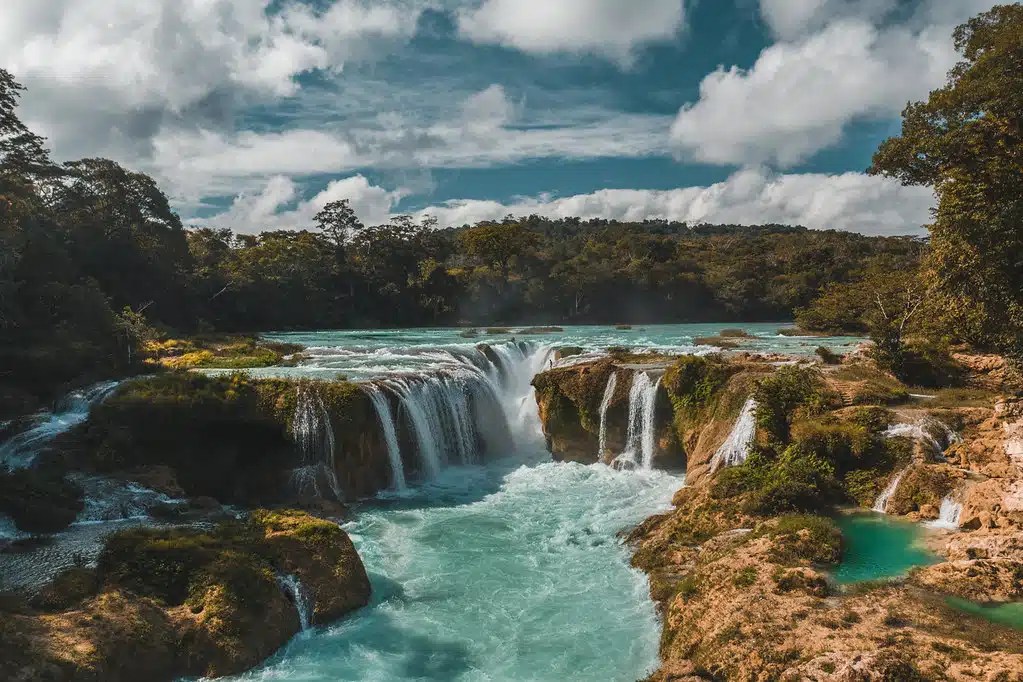
What happened at the San Javier crossroads is just a sample of what is experienced in the region. On July 22, 18 Chol families from the Corazal ranch were evicted from their lands by criminals. They took refuge in the community of Salvador Allende, on the border with the town of Amador Hernández. On August 28, they did the same with 34 families from San Gregorio, who sought asylum in Ocosingo. There is a strategic landing strip and it is also the route to reach the impressive waterfalls of the Río Negro and an unexplored archaeological zone.
On September 6, the authorities of Nueva Palestina addressed a letter to President López Obrador in which they denounced the attacks they are experiencing at the hands of a commando linked to the Sinaloa Cartel of Mayo Zambada. A day before, the hitmen entered the offices of the community property commissioner, attacked elements of the rural police and announced that they would take control of the town.
It is not an exaggeration to say that Lacandón territory has been invaded by organized crime. It has taken over its jungle. Drug traffickers have opened clandestine landing strips to transport cocaine. They control the trafficking of undocumented immigrants. They charge floor rights to small merchants and fees to tourism service providers. They carry out forced evictions of hundreds of families. They threaten to kill community leaders. They enslave young Central American women to work as prostitutes. Simultaneously, the northern culture – as it is known in the region – with its corridos tumbados and narco-corridos, flourishes in the towns, while the consumption of glass, marijuana and crack spreads. Gangs of boys have emerged who wear colored headscarves as a badge.
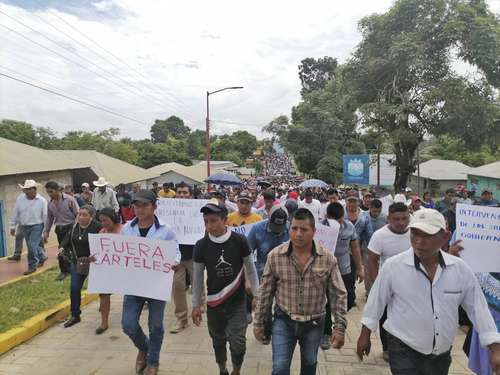
On August 7, more than 3,000 residents of Nueva Palestina, with signs painted by hand on cardboard, demanded: Out with cartels! and No more polleros! They traveled 3 kilometers and denounced the construction of land rights. On September 8, the people of Frontera Corozal marched peacefully against organized crime and to demand security. Their banner read: Mr. President of the Republic: we demand security in the Lacandón area, particularly in Frontera Corozal.
Since 2008, to achieve peace and security, and leave behind the shadow of the Viejo Velasco massacre, the Lacandón Community has carried out an absorbing and incessant work of dialogue and reconciliation with the 52 ejidos that surround it. The signing of a territorial reorganization and promulgation decree is pending that would create conditions to reestablish new bases of coexistence in the area. The war of the cartels against the inhabitants of the jungle is a broom in the hornet’s nest of inter-community conflicts that derails the possibility of peaceful coexistence.
Organized crime advances in the Lacandón Community. It seeks to appropriate the territory, recruit young people, dismantle the associative fabric and tighten the siege on the peoples in rebellion. The alarm lights are on.
Twitter: @lhan55
Originally Published in Spanish by La Jornada, Tuesday, September, 12, 2023, https://www.jornada.com.mx/2023/09/12/opinion/023a1pol and Re-Published with English interpretation by the Chiapas Support Committee
Allende and don Pablo through the great avenues

By: Raúl Romero*
Pablo González Casanova used to narrate with irony what his detractors said about him and his constant trips to Chile during his time as rector (1970 -1972): I traveled so much, that they told me that I was more in the Palacio de la Moneda than in the Rectory, and that is why what had happened to me had happened to me. Interviewed by Claudia Rojas, Hugo Miranda, who was director of the Casa de Chile in Mexico, will recall: the former rector of the National Autonomous University of Mexico (UNAM) Pablo González Casanova goes to Chile, has links with the University of Chile, gives conferences, has meetings with the intellectual world and all that is creating a friendship and a very close bond between Mexico and Chile.
For those years, don Pablo not only occupied the UNAM’s Rectory, in his works Democracy in Mexico and Sociology of Exploitationhe had expressed his commitment against inequality and exploitation, choosing as an alternative the struggles for socialism, democracy and liberation, which years later he would refer to as three alternatives in one. The experiences of the government of Jacobo Arbenz, the Cuban revolution and the world revolt of 1968 would deeply mark González Casanova in those years, and of course, he would follow with attention the rise of the Popular Unity to the government of Chile. From different spaces, it will be deeply committed to the Chilean road to socialism, and will also open spaces for the dissemination and strengthening of that experience. After the fateful September 11, 1973, don Pablo will devote his energies to help bring to Mexico intellectuals and political leaders who in Chile will be at risk of imprisonment, torture and death. His relationship with Pedro Vuskovic, who was Minister of Economy under Salvador Allende, and who after the coup d’état was exiled in Mexico, will be testimony to this solidarity.
With his great friends Luis Cardoza y Aragón and Lya Kostakowsky, don Pablo will approach a powerful network of intellectuals, artists and popular leaders committed to the struggles of Latin America. Thus, González Casanova will forge friendship with Pablo Neruda, who will also keep him informed about the details and particularities of the process in Chile.
If the Cuban revolution summoned González Casanova to be in the front line of solidarity in the anti-imperialist struggle, Popular Unity and Salvador Allende will lead him to reflect on the peaceful, legal and democratic path to socialism, a socialism that at the same time posed the struggle against imperialism and for internationalism. The processes of the nationalization of copper, iron and coal allowed the rector of the UNAM to observe the difference of the Chilean process with other populists and revolutionary nationalists in the region.
But González Casanova not only recognized the feat of the Chilean people, he also had a deep respect for Salvador Allende, whom he saw as a great orator, a great politician and above all a revolutionary. Just a few weeks after having resigned from the UNAM, in November 1972, at Allende’s direct request, Don Pablo will participate by making contacts and relations for the historic trip that the Chilean president made in December of the same year to Mexico.
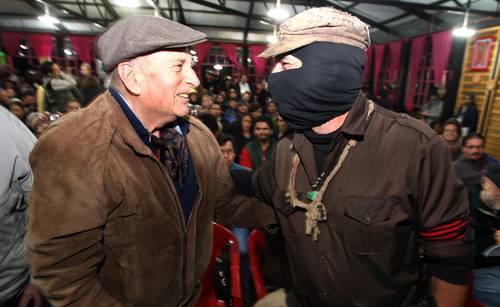
Don Pablo highlighted Allende’s congruence, of doing what he said and to what he was committed: He used the word as an exact announcement of the action. Salvador Allende, recognized that the author of Democracy in Mexico had a place next to Fidel Castro as leaders of revolutionary processes that theorized about their processes and that with their speeches and writings contributed to educate and arm the peoples with theory.
Six years after the coup d’état in Chile, Don Pablo will write: He died like no Latin American president, invested with the symbols that the people gave him, weapons in hand, the palace burned and destroyed, the project of defense of the law for the popular program alive, and a new history that they would write being born, as he thought, America and its people.
The neo-fascist and neocolonialist repression that would be unleashed first in Chile, and then in much of Latin America, would commit González Casanova to support exile and collaborate in safeguarding the heroic memory of the Chilean people. Thus, among other initiatives, he supported the Salvador Allende Center for Latin American Studies, which will promote the analysis of the Chilean road to socialism and recover writings of the former Chilean president.
Each people is free to choose its own path to socialism, said Salvador Allende, and González Casanova helped to understand that the path chosen by the Chilean people was a contribution to the struggles of Latin America and the world. Today Allende and Don Pablo walk through the great avenues of history, and sooner rather than later the peoples of our America will travel that path that they and so many other men and women helped to trace.
*Sociologist

Originally Published in Spanish by La Jornada, Sunday, September 10, 2023, https://www.jornada.com.mx/2023/09/10/opinion/006a1pol and Re-Published with English interpretation by the Chiapas Support Committee
Inhabitants of Nueva Palestina demand help in the face of an invasion by organized crime
From the Editors
Approximately 3,000 residents of the community of Nueva Palestina, municipality of Ocosingo, Chiapas, marched yesterday to demand the presence of security forces because members of organized crime, who are disputing the territory, are trying to charge small businesses with “derecho de piso” (extortion to continue operating, aka “protection monay”).
At the same time, authorities of the town, located in the Lacandon jungle, sent a letter to President Andres Manuel Lopez Obrador asking him to protect the town by land and air, as we are being threatened by organized crime.
During the demonstration, which concluded in the central plaza, the Tseltales affirmed that they marched to reclaim their rights “to life, tranquility and peace.”
“Andrés Manuel López Obrador: we still believe in you. Send us the Army, the Navy, the federal forces, the National Guard; send them to New Palestine, they demanded.”
With a bull horn placed on a vehicle at the front of the march, they warned: “If the government does not act, the people are also organizing to take care of themselves.”
They pointed out that members of the Sinaloa Cartel are extorting them and asked: “What derecho de piso, if we are farmers and ranchers? We are peaceful and hard-working people.” Then they chanted: “Out with the Sinaloa Cartel! Out with organized crime! Yes to the Army! We want order, peace and tranquility! On their placards they read messages such as: No more smugglers in Nueva Palestina, no more cartels, and we denounce the collection of money by criminals.”
They claimed that at the San Javier intersection, located seven kilometers from Nueva Palestina, members of the Sinaloa cartel are positioned, operating alongside the Public Prosecutor’s Office.
Extortionists announce they will take over the community
Authorities commented that on Tuesday “about 16 hired killers arrived in two white vans. They entered the offices of the ejidal police station armed, wanting to kill us. Then they left. They are angry because we did not give them permission to charge the small businesses.”
They explained that they forced the door and entered. They told them that they were going to “work in an orderly manner without disrespecting anyone”, that they were “only” going to charge a “floor fee.”
They slapped the rural policeman who was recording them, snatched his phone and erased the contents. They warned that they would enter the community “because it was their right.”
In the letter addressed to the President they recounted what happened on September 5 and added that the individuals arrived to inform them that they would take control of the town and the region that day. Later they surrounded the house of the president of the commission, but fortunately they retreated.
They stated: “We are a peaceful people and we confirm that we are willing to receive the troops of the Mexican Army and the police, to whom we urgently request their actions with flyovers and by land.
The local leaders confirmed that they were alerted that an armed group “that calls itself the Sinaloa Cartel of El Mayo Zambada is surrounding the town,” the reason for which they insisted on requesting the government’s prompt intervention.
Other sources said that the Jalisco New Generation Cartel (CJNG) has control of the San Javier intersection, a key point in the Lacandon Community, and is charging a fee. The driver of a sugar truck had the letters CJNG engraved on his back because he refused to pay them.
An anonymous letter circulated in recent days states that in the last two months the inhabitants of the San Javier crossing have been threatened by self-proclaimed members of the Jalisco Cartel, who are charging all the truck drivers and migrants who pass through. There have already been violent encounters and people marked on their skin with the initials CJNG.
Originally Published in Spanish by La Jornada, Friday, September 8, 2023, https://www.jornada.com.mx/2023/09de8/estados/024n2est English translation by Schools for Chiapas and Re-Published by the Chiapas Support Committee
 Chiapas Support Committee