Chiapas Support Committee
Home of the Compañero Manuel blog on zapatistas & mexico
They integrate a new self-defense group in Chiapas; that warns they will not permit “any cartel to enter”
From the Editors
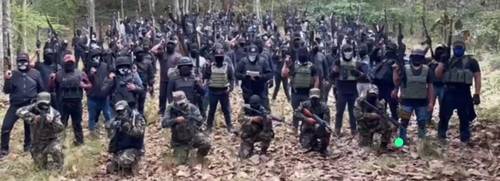
A group of around 50 armed men, uniformed and masked, who call themselves the self-defense forces of San Cristóbal de las Casas municipality, published a video on social networks in which they make their existence public knowledge.
In the video, which they titled: We are not some cartel. We are self-defense forces of San Cristóbal and its surrounding area [1]. One of them appears reading a message directed to all those who want to enter San Cristóbal to destroy the peace and want to form some “place” (plaza).
We tell them that San Cristóbal, Chamula and Betania (a community located in the neighbor municipality of Teopisca) are free, autonomous, and we do not want any cartel, we are nothing like that.
With a distorted voice, he continued: “We already have had enough of the fucking Motonetos (Scooters). We are watching now. That is why we will take care of and watch over the peace, and any scourge that wants to make his mess like Alejandro, alias El Chicle, and (…) that we now know are supported by the director of the municipal police of San Cristóbal, Romeo. They touch one of us and they touch us all. They are warned, we are not going to leave.”
The message was released four days after a television station broadcast a story showing the sale of all kinds of drugs in broad daylight in the markets of San Cristobal de las Casas.
[1] We know nothing more about this group than what is in this article. A similar article appeared in El Heraldo de Chiapas on April 7. We wonder who is financing this group, which appears well-equipped with bulletproof vests, uniforms and high-powered rifles.

Originally published in Spanish by La Jornada, Saturday, April 8, 2023, https://www.jornada.com.mx/2023/04/08/estados/022n2est and Re-published with English interpretation by the Chiapas Support Committee
El sur resiste | The south resists: Gathering on the Zapatista & Indigenous struggles against mega-projects
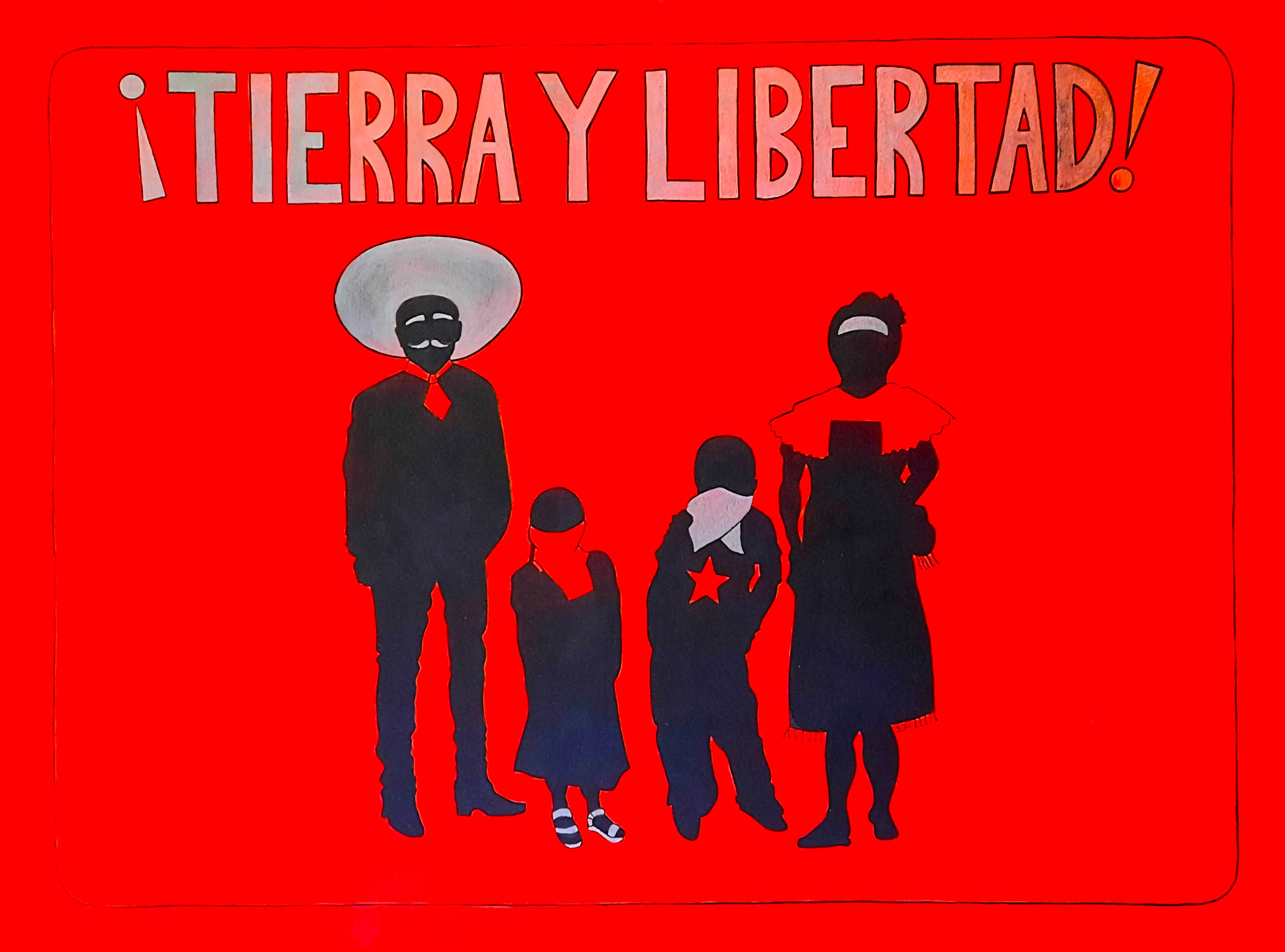
El sur resiste | The south resists
Updates on the Zapatista movement & land justice struggles in México:
On the CNI campaign to stop the “Maya Train” & Inter-Oceanic Corridor
An Evening of Solidarity, Poetry & Zapatismo

At Medicine for Nightmares Bookstore and Gallery
3036 24th Street, San Francisco, CA 94110
Tuesday, April 11, 2023, 6:00-7:30 pm
Sponsored by Chiapas Support Committee | www.chiapas-support.org with
Medicine for Nightmares Bookstore and Gallery
Program
- La poética resistencia: Elizabeth Jiménez Montelongo, Arnoldo Garcia, and more
- Music by Francisco Herrera
- Updates on the Zapatista struggle & movements for autonomy & land justice in Mexico by members of the Chiapas Support Committee
- Information & update on El sur resiste | The south resists, a campaña against the capitalist mega-projects “Maya Train” & Inter-Oceanic Corridor launched by the Congreso Nacional Indígena (CNI, Indigenous National Congress) + short film interviews about the devastating effects of these mega-projects on communities.
For more information on the El Sur Resiste campaign, visit ¡El sur resiste! blog
To work together in solidarity against the mega-projects, connect at: www.chiapas-support.org
Ayotzinapa, the difficult road to truth
Luis Hernández Navarro

Ayotzinapa is an open wound. Eight and a half years have passed since the atrocity and the wound still has not healed. How can it close if the truth doesn’t come? If there is no justice? If the damage is not repaired?
The fifth report of the Interdisciplinary Group of Independent Experts (GIEI), An Overview of the Facts, Those Responsible and the Situation of the Ayotzinapa Case, the latest, shows us, broken down into 36 points, the enormous obstacles to illuminating the darkness that hangs over the tragedy. With proven evidence, they show the impossibility of closing the case.
The report demonstrates that different authorities at the municipal, state and federal levels, including the information services against drug trafficking, that is, the Army, Federal and State Police, the Cisen (Center for Investigation and National Security) and the Iguala municipal police, knew, in real time, about the arrival of the students of the Raúl Isidro Burgos Rural Normal School and their intention to take buses to go to the October 2 march in Mexico City.
The statements of protected witnesses and the documents found by the GIEI paint a terrifying portrait of the narco-state in Guerrero. There was collusion between members of municipal, state and federal security forces and institutions and organized crime in Iguala and nearby cities. Although it was known about the transfer of drugs in passenger buses, the experts have not located any reports about the departure of these buses, or about the filters used by drug trafficking groups to enter the city.
Military personnel were in collusion with drug traffickers, as can be deduced from the Chicago wiretaps (DEA wiretaps of conversations of Guerreros Unidos members) responsible for the 27th and 41st Battalion, in which there is talk of payments to at least one commander and one captain. Protected witnesses have confessed that they periodically received money to enable Guerreros Unidos business.
The rural normalistas were not all captured at the same time, in a single operation. They were attacked with firearms at seven different times, in different places, over four hours. The information about the events was known in real time by the C4 [1]. Despite this knowledge and the brutality of the aggressions, no government authority at any level did anything to prevent it.
Despite President Andres Manuel Lopez Obrador’s order to allow experts full access to critical information, the Secretariat of National Defense (known as SEDENA, its Spanish acronym) is withholding it. Statements by commanders and personnel of the 27th Infantry Battalion, based in Iguala, have been modified as the investigations have progressed. Its members have lied over and over again. For example, they hid their presence in the barracks or said, falsely, that they remained in their barracks that night.
A soldier observed, through technical means, three municipal police vans. In the middle one, civilians were being transported. However, this evidence has not been turned over to the Attorney General’s Office (FGR).
Inexplicably, despite the evidence against them and despite having all the legal support, the arrest warrants against numerous military personnel who participated in the events were cancelled by the Attorney General’s Office in September 2022. Six of them, which are priorities for the GIEI, have not been reactivated.
As part of a counterinsurgency logic, the Army sent three soldier infiltrators as students in Ayotzinapa. Known as search and observation bodies (OBI), they informed their superiors of the students’ agreements and movements. They communicated every day to report on the situation. One was among the 43 missing boys. Another OBI reported on September 27, after the events, and announced to his commanders that he would suspend communication for security reasons. The Secretary of National Defense at the time falsely stated that the missing soldier had suspended the relationship since September 22. On the 27th, the Secretary made contact with the young man’s family. “All of this,” the experts assert, “was concealed in the investigation for seven years, until the GIEI found the documents in SEDENA’s archives following an access warrant from the President of Mexico.”
The SEDENA knew at all times what was being done to the students. Despite this, it did nothing to prevent it, protect them or rescue them. However, the Army denies this, as it also denies the existence, proven with documents, of the Iguala Regional Intelligence Fusion Center (CRFI), when the attack against the youths took place.
They were not the only State intelligence services that knew what was happening in real time. The Cisen had agents and information about what was happening. But these reports have not been made public.
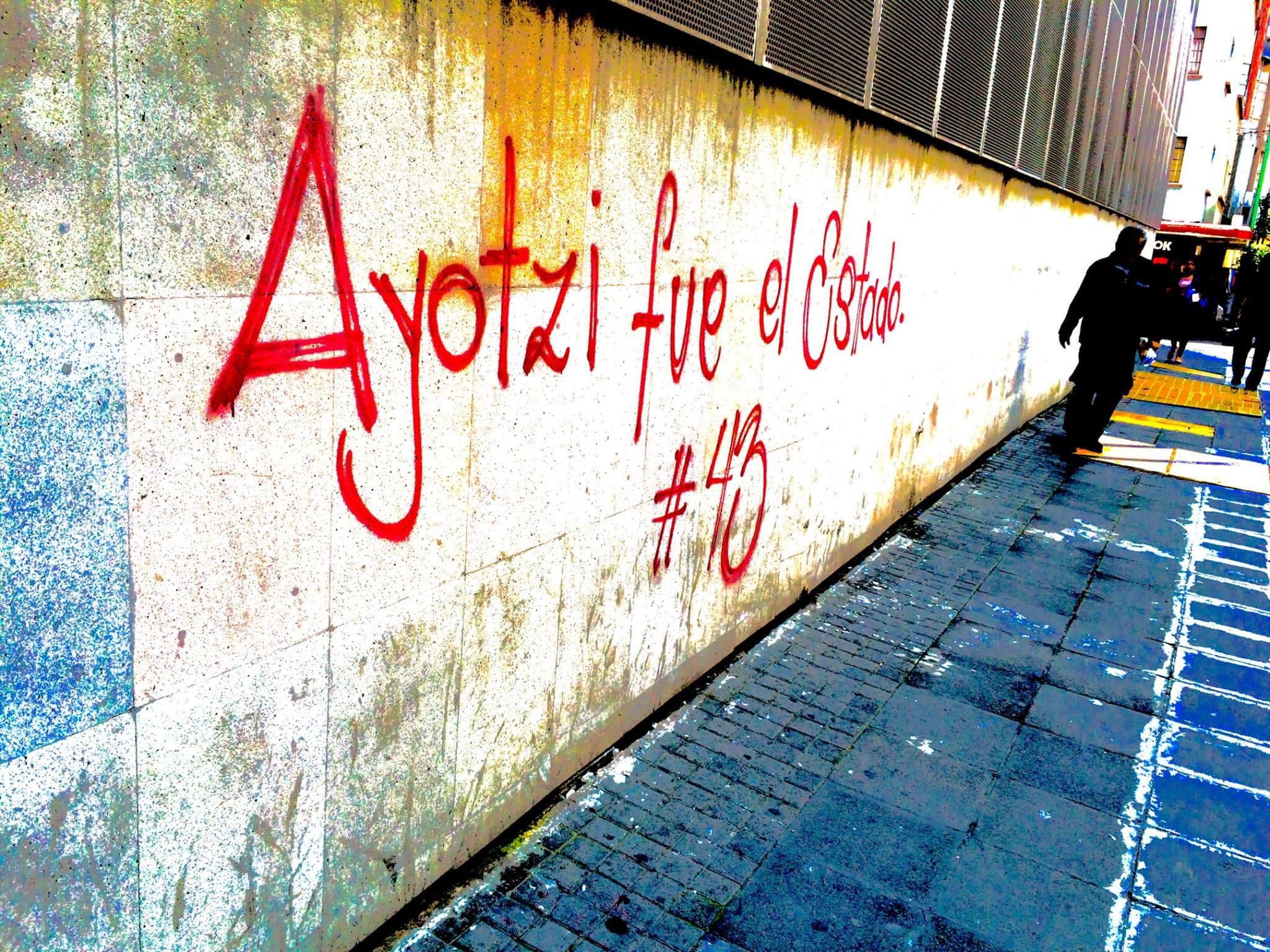
From the GIEI report it is clear that Ayotzinapa was a State crime, a crime against humanity. An atrocity in which the highest civilian and military authorities of Enrique Peña Nieto’s administration are involved, with enough power to stop and boycott the full understanding of the facts. If the truth of the night of Iguala does not emerge and if justice is not served to the victims, the ghost of Ayotzinapa will mercilessly haunt the entire country.
[1] The C4 is an inter-institutional monitoring and intelligence center in Iguala coordinated by security institutions of different levels.
Originally Published in Spanish by La Jornada, Tuesday, March 4, 2023, https://www.jornada.com.mx/2023/04/04/opinion/016a2pol with English Translation by Schools for Chiapas and Re-Published by the Chiapas Support Committee
The sentence of the killer of human rights defender Simón Pedro is not justice
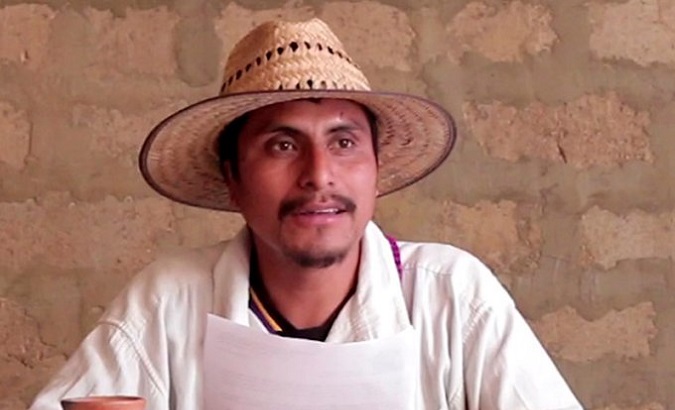
San Cristóbal de Las Casas, Chiapas
Frayba Bulletin No. 09
*We recognize their work in defense of life, land, territory and the rights of peoples and communities.
*May it be guaranteed that there is no impunity in murders of defenders.
This Fray Bartolomé de Las Casas Human Rights Center (Frayba) widely recognizes Simón Pedro López Pérez (Simón Pedro) as a human rights defender, who walked together with the peoples in the demands for rights that the Civil Society Organization of Las Abejas of Acteal (Las Abejas of Acteal) have historically promoted. The Control Judge of Pichucalco adjusted to the lesser sentence, with the sentence of 25 years in prison against the material author of the murder of the human rights defender, and the economic “reparation” for the families, reflects how narrow and limited is the justice of the State, which denies access to truth and True Justice.
A little over 19 months ago, together with Las Abejas de Acteal, and with the entire family of Simón Pedro, we began to walk justice and truth; we have learned many things, one of them the generosity of Las Abejas of Acteal and the family of the community defender, who at the beginning of the oral trial hearing outside the control court in Pichucalco, shared bread, water and food with the family of the person who deprived Simón of his life.
The sentence and reparation are the lowest and omit his work as a human rights defender that he carried out, as well as adequate and culturally relevant measures of reparation of the damage and non-repetition. From Frayba we exposed the facts based on two eyewitnesses. He had the opportunity to issue a judgment with a human rights perspective by presenting the evidence that showed his activity as a defender.
The sentence is ignored, from what the General Law of Victims dictates, regarding that the criminal process must guarantee the right to the truth. It is not an isolated murder, which is why we demand that the intellectual authors be investigated and that minimum measures of integral reparation be granted, from medical and psychological care, measures of satisfaction, and public recognition of their activity in defense of human rights.
It is important to pay special attention to the continuation of the violence that plagues the region, and to the need for non-repetition measures that can protect their family, the community and the Bees of Acteal.
We will be attentive to ensure that the sentence remains firm and that freedom is not granted in other bodies, in order to guarantee that there is no impunity against murders of defenders, which, like the work of Simón Pedro, commits us to continue walking with the peoples and communities that fight for their dignity and the construction of alternatives of life, where there is Lekil Chapanel (True Justice).
Originally Published in Spanish by Frayba, Friday, March 31, 2023, https://frayba.org.mx/la_sentencia_no_es_justicia and Re-Published with English interpretation by the Chiapas Support Committee
“Sembrando Vida”: Counter-insurgency, neoliberalism and clientelism
Folks in Chiapas say that this federal anti-poverty program is actually a counterinsurgency program that divides communities.

By: Aldo Santiago
While Andrés Manuel López Obrador tours the various countries of Central America to promote the extension of governmental assistance programs such as Jóvenes Construyendo el Futuro (Youth Constructing the Future) and Sembrando Vida (Sowing Life), the latter is implicated in undermining community organization in indigenous and campesino communities in Mexico, according to a report published by the Center of Studies for Change in the Mexican Countryside (Ceccam).
“The indigenous and campesino communities in Mexico have an extensive tradition of collective management of territory, supported by social ownership of the land with the assembly acting as the highest authority. The Sembrando Vida program is intentionally undermining these structures that allow the communities a certain level of autonomy,” Ana de Ita writes in the publication elaborated by Ceccam, Community and Autonomy in the face of Sembrando Vida.
“In addition to this denunciation, there are other consequences of the program: that of causing deforestation in order to enter into the program, the opacity in the management of the government budget, as well as the creation of parallel organizations to that of the communities for decision-making, which is used to buy consciences.
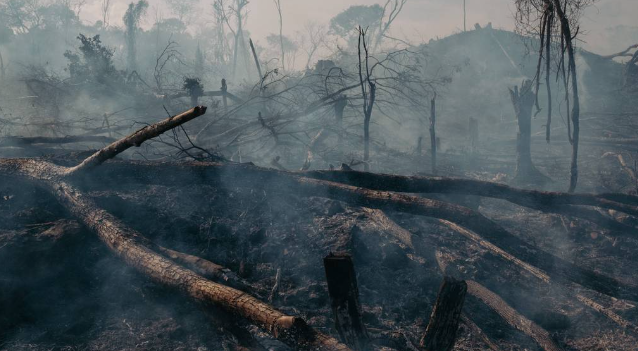
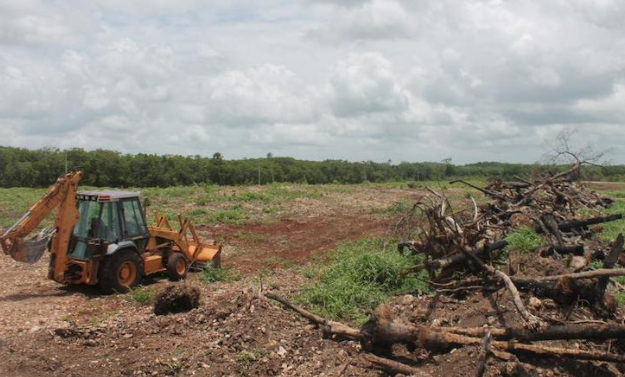
Among these problems, identified by campesino and indigenous communities of Oaxaca, Chiapas, Tlaxcala, Veracruz, Campeche, Quintana Roo, and Yucatan, they underscore that the most damaging effect of the program is the destruction of the community fabric and of the organizing structures of decision-making.”
Ceccam’s publication also brings together the perspectives of agroecologists, researchers and civil organizations that accompany community members in various regions of the country. Because of this, one of the publication’s research projects is to be able to identify the uses that Sembrando Vida can have in the regions where the intent is to impose megaprojects like the Maya Train, the Trans-Isthmic Corridor, “and others where it is urgent that the communities are not an obstacle.”
It is difficult for the participants in the Sembrando Vida program to participate in “social resistance movements, for example, in the face of the government’s megaprojects, or the extractive interest of companies, when they fear that they will lose the benefits of the program,” Ana de Ita reports in her text entitled “Sowing Envy,” included in the publication.
For Ita, this explains the coincidence in the new lines of the “Maya Train” with the locations of Sembrando Vida, as well as the express instructions to include the municipalities of the Interoceanic Corridor in Oaxaca.
Neoliberalism and the reorganization of the countryside
The director of Ceccam indicates that the implementation of the program weakens community organization due to the fact that it follows the neoliberal logic “that leaves the realm of rights and places itself in the realm of handouts, granted to whomever the government decides.” This way, the resources are given to individual producers, who spend the money on personal consumption rather than strengthening community organization.
“In regions in which the program is operating, an increase in luxury spending has been noted, such as beer in a can, since in the rural communities there are not many alternatives for consumption of other goods; health, education, culture, nutrition, etcetera, and what is most readily available is junk food,” Ita denounces.
Another common problem is that young people and women don’t have land, and in many cases they don’t have the 2.5 hectares required, personally, in order to enter the program. According to the program, in these cases, individuals can access the required acreage by establishing a share-cropping contract with the agrarian nucleus until at least 2024.
To Ita, this means that the program encourages collective social property to be parceled and individualized. “In common use land that the ejido cedes for a period of time to campesinos that don’t have it, they will plant fruit and timber trees that will just be producing when the program ends, so it will be very difficult to return this land to the common use of the agrarian nucleus,” the director of Ceccam maintains.
Sembrando Vida proposes the coordination of the program through so-called Campesino Learning Communities (CAC), which in fact form a parallel organization to the community or ejidal assembly, which is the main authority in the territories. “Contrary to the strategy of better organized communities that strengthen the power of their assemblies, the CACs do not report to, nor are they held accountable by the agrarian assemblies,” Ana de Ita reports.
Deforest, in order to re-forest?
The goal of Sembrando Vida is the reforestation of a million hectares, and for this, between 600 million to a billion trees are needed, according to federal government figures.
It does not have this number of trees, however, and since the announcement of the program, forestry experts warned of the absence of capacity for production of such a quantity of plants in Mexico. According to the data from the Secretary of Welfare, in 2019 only 14% of the goal of 575 million trees were planted and survived.

Among the complaints that Ceccam compiled, campesinos reported that they are obliged to plant trees that don’t belong in the region, which is why they frequently die and, despite this, “they demand that they replant them, instead of planting trees that are adapted to their own climatic conditions. For example, in the Northern Sierra of Oaxaca, they are demanding that they plant cedars that need a lot of water that is scarce in the region, which is why many plants have died,” Ita maintains.
This is in addition to the evidence that has emerged in states such as Puebla, Campeche and Chiapas, where farmers, organizations and the press have documented the deforestation of land for the purpose of registering it with Sembrando Vida.
“But this problem can’t be demonstrated, because the government hasn’t made public the location data of each of the 430 thousand parcels,” clarifies the Ceccam researcher.
Audits
The budget assigned to Sembrando Vida in 2022 reaches 29 billion 231 million pesos, an amount close to the total that corresponds to the Secretary of Agriculture (32 billion 750 million). Notwithstanding its resources, the program is only destined for 430 thousand campesinos of the 5.5 million agricultural producers and around 2.5 million agricultural day laborers that exist in the country, according to data from the National Institute of Statistics and Geography.
In this context, the program has been evaluated by entities like the Federal Superior Audit Office (ASF), which detected shortcomings in its design, content and implementation. According to its Individual Report of the Results of the Superior Audit of the 2019 Public Account, “the objective of achieving that agrarian subjects in rural locales with income below the welfare line, have enough resources to make the land productive,” is at risk.
Without participation of the communities
For the researcher, the execution Sembrando Vida, like other federal programs, has avoided social participation in the design of its public policies in accusing the campesino organizations of being corrupt.
For Ana de Ita, it’s necessary to remember that during the current federal administration, the recognition of indigenous rights has not received any impetus, “and the guardians of the forests and the jungles are threatened and persecuted for their labor of caring for them.” According to data by Global Witness, in 2020, 30 environmental defenders were murdered in the country, placing Mexico as the second-most violent in the world.
In this context, the Ceccam member writes, “to not take into account the agrarian authorities, the forms of organization in the countryside, the systems of community authorities, the forms of collective work, the ways of making decisions —and in not addressing the campesino agrarian nuclei as collective owners of the land, but instead as individuals, choosing some and not others —the end of this term [AMLO’s 4T] will not see a single difference, neither in the reduction of poverty, nor in reforestation and care of the forest.”

Originally Published in Spanish by Avispa, May 15, 2022, https://avispa.org/sembrando-vida-counterinsurgency-neoliberalism-and-clientelism/ English Translation by Schools for Chiapas and Re-Published by the Chiapas Support Committee
Is migrating a crime?
A La Jornada Editorial
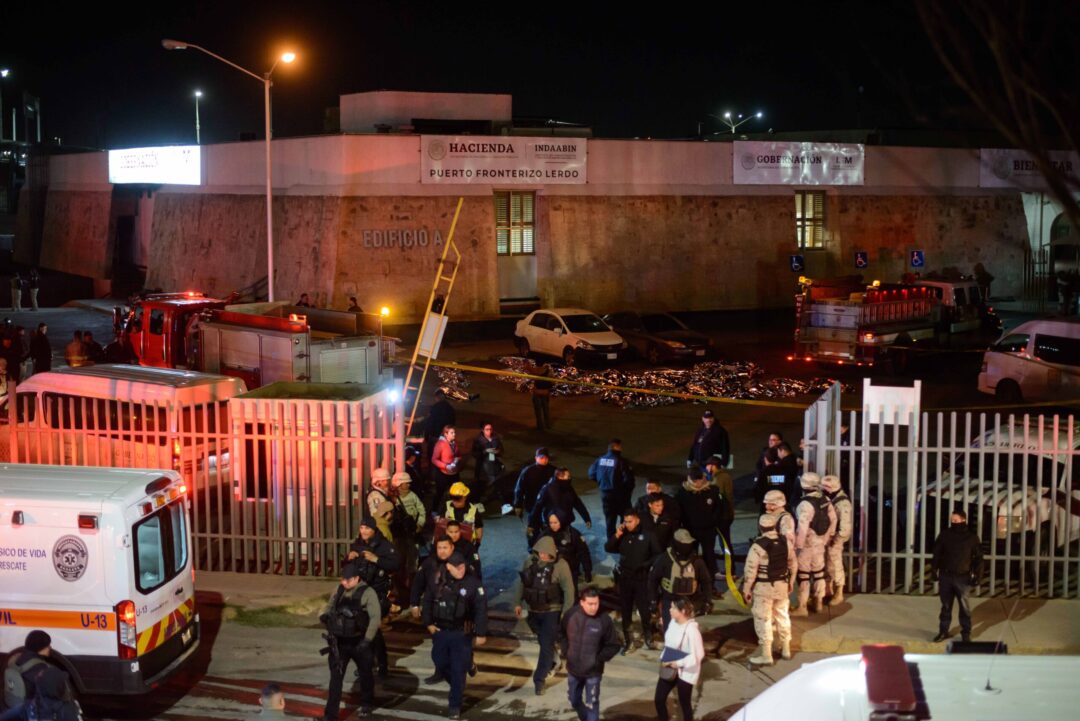
It is devastating that episodes have become increasingly frequent in which dozens of people lose their lives at some point in their journey to reach US territory, and that many of them meet a tragic end when they thought they had achieved their dream, since Washington expels them automatically and arbitrarily, in open violation of the human right to asylum. The U.S. responsibility for tragedies like that of Monday in Ciudad Juarez is all the more palpable considering that migrants repelled by its border guards meet all the eligibility requirements for asylum, as they are survivors of the insecurity, violence and other scourges that plague their regions of origin.
Mexico has been caught between the incessant flow of human beings who travel the continent with the conviction that in the United States is the opportunity they seek to raise their families, develop professionally or be safe from direct or indirect threats to their life and physical integrity, and the stubbornness of the political class in Washington in rejecting any humanitarian solution. sensible and realistic to the migratory phenomenon. In addition to being cruel to migrants, this lack of political will is unfair to our country by involving it in a human drama that has no reason to exist, since the U.S. economy requires foreign labor as much as migrants need a source of employment.
Last Monday’s tragedy [1] shows that it is imperatively necessary for Mexico to abandon all forms of tacit collaboration with the atrocious US immigration policies and assert its sovereignty in this area. That is, it should no longer be accepted that our country continues to be used by Washington as a destination for the expulsion of migrants.
On the other hand, there is no binational circumstance that serves as a pretext or justification for unpresentable migratory actions in national territory. For example, the provisional stay of the National Institute of Migration in Ciudad Juárez did not function as an accommodation or a shelter, but as a center of deprivation of liberty, as was clear in the media conference presented yesterday by the head of the Secretariat of Security and Citizen Protection (SSPC), Rosa Icela Rodríguez, and the human rights prosecutor of the Attorney General’s Office (FGR), Sara Irene Herrerías.
It is inadmissible from every point of view that people are imprisoned for migrating, because if this is a crime, we would have to consider the millions of Mexicans criminals who live in the United States and who, through remittances, are a pillar of our economy. Because of its history, its deep link with migration and a mere ethical imperative, Mexico cannot criminalize human displacements of the same type that it has been asking for decades not to be criminalized when it concerns our fellow citizens.
[1] 39 migrants died and 27 were injured in a fire that broke out at a migratory station in Ciudad Juarez on Monday, March 27, 2023. The migrants were locked in their cells, like prisoners.
Originally Published in Spanish by La Jornada, Thursday, March 30, 2023, https://www.jornada.com.mx/2023/03/30/opinion/002a1edi and Re-Published with English interpretation by the Chiapas Support Committee
Criminal groups displace residents from the Lacandón Jungle

By: Ángeles Mariscal [1]
On December 16, 2021, the Velasco family was expelled from Nueva Palestina community, the largest community in the Lacandón Jungle [2], Months before, the family’s father, Versaín Velasco García, had denounced the impact that groups linked to trafficking drugs, arms and people are having on the population to state authorities.
“My father saw it as human rights, he saw the [human rights] abuses they were committing, supported by community authorities. The last thing my father reported was that they arrested some young people and had them locked up for 12 days, without water and without food. After that, they came at us,” said Moctezuma Velasco, son of Versaín, who was 17 years old at the time, in a video.
On Wednesday, December 16, 2021, when Versaín returned from the municipal capital of Ocosingo, where he went to file a complaint with the Public Ministry in the case of the detained youths, a group of armed men arrived at his house. He was there with his wife, his sons and daughters, his sons-in-law and grandchildren. They entered, beat them, sexually abused one of the women, some were shot, wounded on the spot. Other family members fled to the mountains.
Among the aggressors were people appointed as community police, explained Isaura Velasco, daughter of Versaín, who was injured inside the house. “They beat me very hard, shot me and left me there because they left me for dead,” she said in an interview.
Fredy Gómez Santíz, Versaín’s son-in-law, was shot. So far, his body has not been located, so the surviving family members filed a complaint in this case for the crime of forced disappearance.
In a video recorded by a resident of Nueva Palestina, it can be observed that on the day of the attack, neighbors approached when they saw the aggression, but when they heard the shots, they dispersed and ran.
34 people displaced from Nueva Palestina
Moctezuma was also injured, his attackers left them lying there and forbid his neighbors to help them. After several hours, “as best we could, we got up and started looking for some women in the family, my little nephews. The women were locked up in the prison inside the community,” the young man said.
“We got together and saw that we had to flee the community. In total 34 people left, including children and adults. We arrived in Ocosingo and there my dad said that we had to report what had happened; but when I arrived at the Prosecutor’s Office, they set a trap for my father and imprisoned him; they accused him of homicide, fabricated a crime and now he is being held in the San Cristóbal de Las Casas prison,” Moctezuma explained.
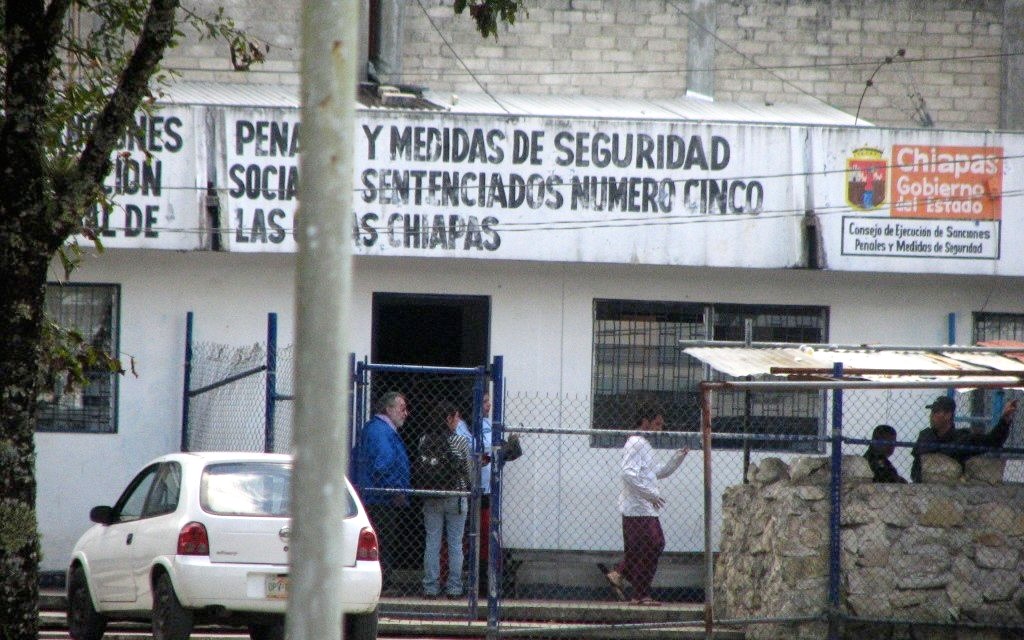
His sister, Isaura Velasco, and Antonia Aguilar Solorzano were also accused of robbery with aggravated violence; They were imprisoned for a year until they were released for lack of evidence.
The family saw that Ocosingo was not a safe place for them either, because some of their attackers, who they say were traveling there, have links with municipal authorities and the Chiapas Prosecutor’s Office.
They decided to move to San Cristóbal de Las Casas and seek help from civil society organizations dedicated to the defense of human rights in that city. With their support, they denounced through institutional channels the wrongs committed against them.
Drugs, arms and human trafficking in the jungle
– How did the population begin to get involved with criminal groups, what has changed in the jungle?
– They are not the majority of the community, they are just groups of people who have power in the community, who have dedicated themselves to these types of activities. They are engaged in the trafficking of migrants, as well as drug and arms trafficking. But they also agree with the same authorities of the community, explained Moctezuma.
Groups that traffic in illegal merchandise and persons have used the territory that is on the border between Mexico and Guatemala for decades; but the difference in the current situation -he explains- are the violent acts against the population that doesn’t agree, it’s the use of weapons, and the control of roads and transportation routes.
Just last March 21, in the capital of Chiapas, during his press conference, the president of Mexico, Andrés Manuel López Obrador, and the head of the Secretariat of National Defense (SEDENA), Luis Cresencio Sandoval, acknowledged that the presence of organized groups has increased in the area of the Lacandón Jungle where the town of Nueva Palestina is located.
They explained that drug cartels have taken over airstrips that exist in the area. These strips help the population, who would otherwise have to walk long distances through the jungle, in order to leave the community.
Invisible displacement

Civil society organizations working in the jungle have documented the silent departure of people displaced by violence being generated in the jungle by organized crime groups. Most of these departures have taken place in silence, fearing reprisals.
The Velasco family is one of the few who decided to make it known. So far, it has filed three complaints: one in the Office of the Prosecutor of Indigenous Justice, for attempted homicides, injuries, threats, damages, and those that result; another in the Specialized Unit for the Investigation of the Crime of Torture, for sexual torture; and the third in the Office of the Prosecutor Against the Forced Disappearance of Persons and That Committed by Individuals, for the forced disappearance of Fredy Gómez Santíz. No criminal proceedings have been brought against those likely to be perpetrators.
They have also asked the State Council for Comprehensive Attention to Internal Displacement, without this instance having met to respond. At the international level, on February 1, 2023, the United Nations Committee on the Forced Disappearance of Persons asked the Mexican State to take Urgent Action 1569/2023 regarding the forced disappearance of the indigenous Tseltal Maya Fredy Gómez Sántiz.
This measure urges the search for and location of Fredy Gómez Sántiz and the protection of his life and personal integrity. The family also demands the release of Versaín Velasco, who’s hearing to define his legal situation is this March 28; and their relocation to some other region. They left 70 hectares of land in the Lacandon Jungle that belonged to the family. Now they live as displaced people, crammed into a couple of rooms, without a job that allows them to buy food.
Translator’s Notes
[1] Ángeles Mariscal is a Chiapas-based journalist who has covered the Lacandón Community for years, including Nueva Palestina.
[2] Nueva Palestina has a population of 11, 984 and is one of two towns Mexico’s federal government used to relocate indigenous residents of the Lacandón Jungle who were being dispossessed and displaced by the government’s massive land grant to the Lacandón Community. Those indigenous Tseltal Mayas who accepted relocation were sent to live in Nueva Palestina with the Lacandóns. Indigenous Chol Mayas also live in the Lacandón Community. Some residents of Nueva Palestina requested and participated in the eviction of jungle settlements; they also participated in the Viejo Velasco Massacre.
Originally Published in Spanish by Chiapas Paralelo, Wednesday, March 22, 2023, https://www.chiapasparalelo.com/noticias/chiapas/2023/03/grupos-del-crimen-desplazan-a-pobladores-de-la-lacandona/ and Re-Published with English interpretation by the Chiapas Support Committee
Powers and limits of demonstrations

By: Raúl Zibechi
In 2003, millions of people won the streets of many cities around the world to protest against the invasion of Iraq by the United States, fabricated with the false argument of the existence of weapons of mass destruction. That same year, an article in The New York Times noted that global public opinion had become the second superpower ( https://nyti.ms/42uLZz0 ).
Two decades later, things have drastically changed; 3.5 million protesters in the streets of France, representing the two-thirds who oppose the pension reform, failed to prevent the government from ending up imposing it, bypassing public opinion and parliament.
In Peru, 1,327 protests took place between December 7, 2022 and February 20, 2023, between mobilizations, strikes and sit-ins, reports the Ombudsman’s Office ( https://bit.ly/3mWLFbK ) . There were also 145 blockade points, 15 police stations were damaged and five airports taken, in addition to an unknown number of smaller actions. Despite this gigantic collective energy, President Dina Boluarte is still in government, supported by the armed and police forces that killed more than 60 people.
In recent years there have been riots in Ecuador, Chile, Nicaragua, Colombia and Haiti, but neoliberalism continues to reign throughout the region, because the collective energy in the streets is channeled towards the polls.
The questions accumulate. Have the demonstration and protest already lost their transformative and destituent power? [1] The philosopher and psychoanalyst Miguel Benasayag recalls that in May 1968, in France, there were far fewer people on the streets than now, but power listened to the protest and attended to it in some way. Now the sky can come down, that there are no answers from above.
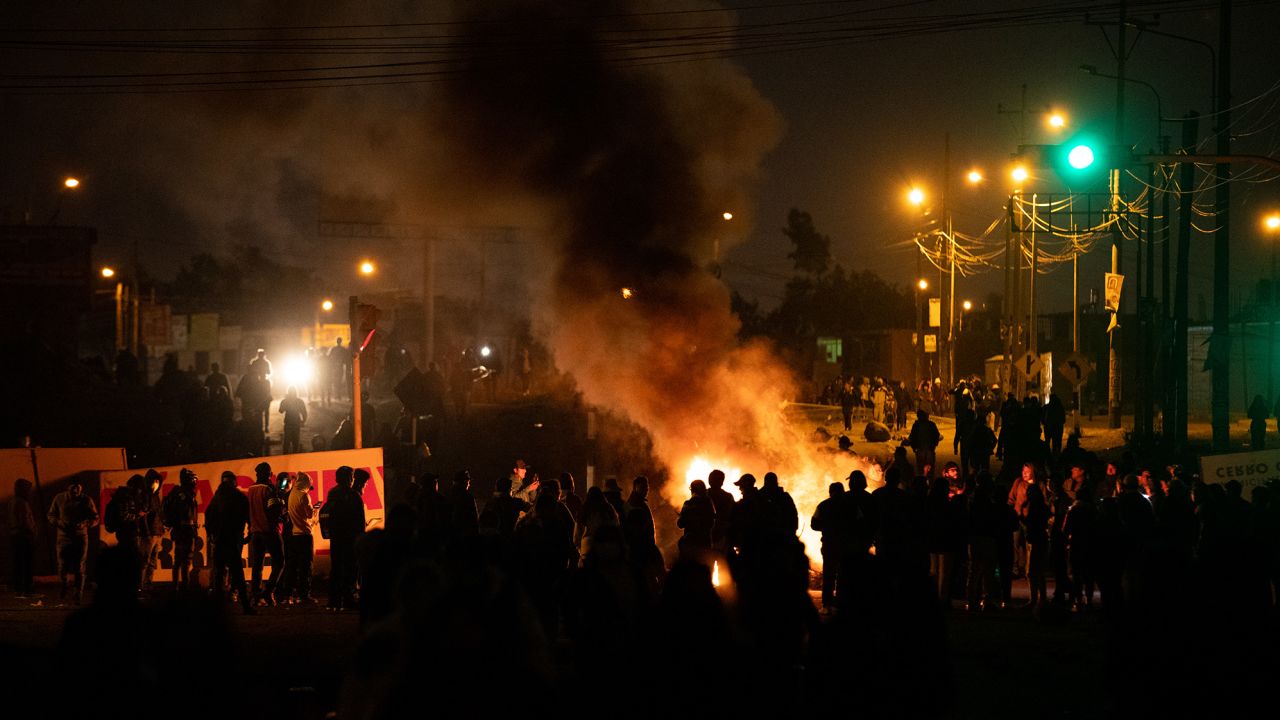
At least three things have changed in this time.
The first is that the nation-state has been “taken” by storm by the richest 1%, financial and speculative capital, to protect their interests. This is a long-term structural change, at least until we defeat capitalism.
The second is that this ultra-concentrated power learned to manipulate the movements with small concessions in the form of social policies and public opinion as a whole through the large monopolistic media.
The third is the one that I intend to develop briefly, since the previous two have been analyzed in various spaces. It is about how the State is neutralizing the destituent capacity of the street fight, through very powerful forms of repression, but at the same time novel and less strident than lead bullets.
One is the long-range acoustic device (LRAD), denounced by Eva Golinguer in 2009, which are “sirens capable of ‘torturing’ the human ear, with a range of over 500 meters” ( https://bit.ly/ 3Z6AhHA ). This is sonic warfare capable of dispersing demonstrations with flashbangs.
Venom is a weapon used by riot police in Colombia (as part of misnamed less lethal arsenals ), consisting of 30 tubes that launch simultaneous projectiles capable of disseminating large amounts of irritating chemicals over a wide area almost instantly ( https:/ /bit.ly/3JuZh5P ). The weapon has been denounced by human rights organizations, including the Inter-American Commission on Human Rights.
Rubber bullets deserve separate treatment, since they have caused thousands of mutilations and eye bursts, especially in Chile, in addition to other physical damage and dozens of deaths. Amnesty International and the Omega Foundation call for an international treaty banning the trade and use of rubber bullets ( https://bit.ly/3Tzcxe1 ).
A report by the special rapporteur for the promotion of human rights was presented at the United Nations, where its author Fionnuala Ní Aoláin denounces “the adoption of high-risk and highly intrusive technologies, such as biometric technologies, artificial intelligence (AI), surveillance with spyware or drones” ( https://bit.ly/3n84OYm ).
The range of repressive forms that go from shooting with rifles and the introduction of provocateurs to the use of biometric data, going through selective assassinations camouflaged as extrajudicial deaths or attributable to drug trafficking (which in some places we already name as “poly-narcos”), exponentially broaden the ability of states to neutralize protest.
We will continue to go to demonstrations and protest. I intend to warn that it is not enough to protest, that we need to rebalance our energies. We must dedicate ourselves day by day to building our new, different and autonomous worlds, because the system has found ways and means to neutralize the streets to avoid the removal of their governments.
[1] Destituent power outlines a force that, in its very constitution, deactivates the governmental machine.
Originally Published in Spanish by La Jornada, Friday, March 24, 2023, https://www.jornada.com.mx/2023/03/24/opinion/018a2pol and Re-Published with English interpretation by the Chiapas Support Committee
They disappear seven ejido authorities in the “death zone” of Chamic, Chiapas
The campesinos were last seen on March 22 when they left the Nueva Libertad ejido, municipality of Frontera Comalapa, in the direction of Palenque, but they never reached their destination.
By: Isaín Mandujano
TUXTLA GUTIÉRREZ, Chiapas. (apro)
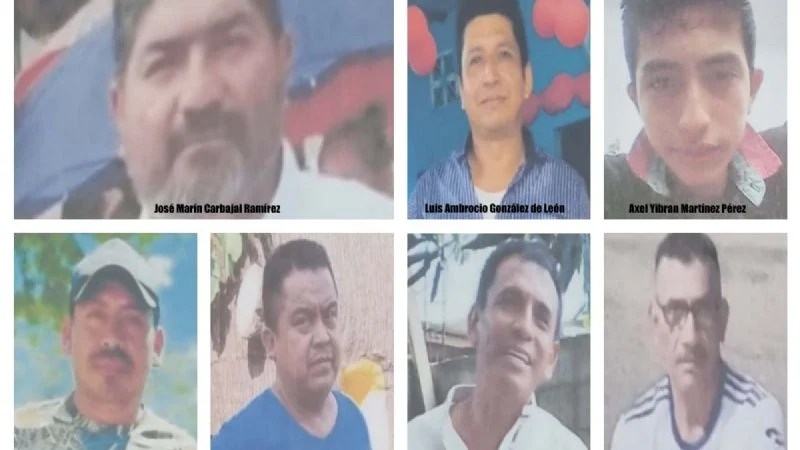
A group of seven campesinos, ejido authorities of a rural community in Frontera Comalapa, disappeared on March 22 in Chamic, in the so-called “death zone.”
Axel Yibrán Martínez Pérez, 22; Jordan Gordillo Genovez, 48; Yovani Vázquez Méndez, 43; Hernan Aguilar Morales, 57; José Marín Carbajal Ramírez, 43; Raymundo Sandoval Córdova, 51, and Luis Ambrocio González León, 53, were last seen when they left the Nueva Libertad ejido, in the municipality of Frontera Comalapa.
The seven people who make up part of the ejido authorities boarded a Dodge Ram van color red, with license plate DC3614A of the state of Chiapas; according to the search record issued this Thursday, March 23 by the State’s Attorney General (FGE, its initials in Spanish).
The document indicates that the seven people boarded a van that would take them from that community towards the municipality of Palenque, however, they never reached their destination.
Their family members suspect that civilian armed groups that dispute territory in the “death zone,” in Chamic, between Frontera Comalapa and La Trinitaria, detained and disappeared them.
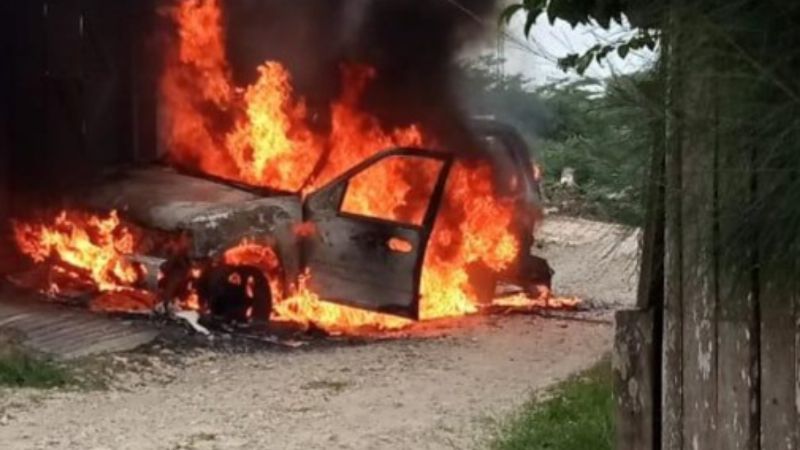
Ever since July 2021, Chamic has experienced a situation of narco-violence, where many armed confrontations have been recorded, where organized crime groups set up checkpoints, murder and disappear even people who are innocent or unrelated to the conflict who cross through that territory.
The number of disappeared could reach some 100 people, residents of the region calculate unofficially.
From the community of the Sinaloa ejido alone, municipality of Frontera Comalapa, six people from six different families were disappeared from July 2021 to date, including the ejido commissioner Rolando Rodríguez Morales, and all the families had to flee or be victims of forced displacement, for fear of reprisals for demanding the appearance alive of the six men.
See also: At least 850 families displaced by narco-violence in La Trinitaria and Frontera Comalapa https://chiapas-support.org/2022/07/23/at-least-850-families-displaced-by-narco-violence-in-la-trinitaria-and-frontera-comalapa/
Originally Published in Spanish by Proceso. Friday, March 24, 2023, https://www.proceso.com.mx/nacional/estados/2023/3/24/desaparecen-siete-autoridades-ejidales-en-la-zona-de-la-muerte-de-chamic-en-chiapas-304209.html and Re-Published with English interpretation by the Chiapas Support Committee
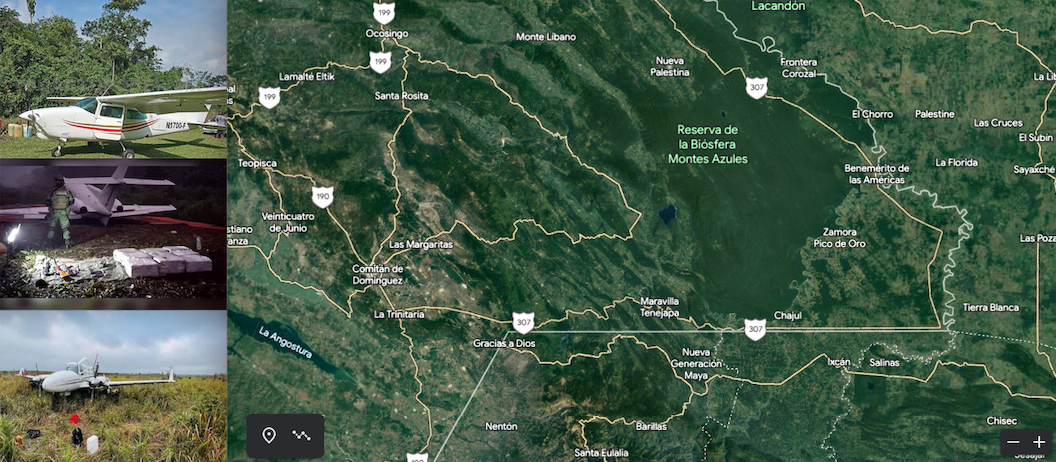
Cartels arrive in the Lacandon: “It’s the worst time in the Jungle,” residents point out
This may be the first journalistic report of drug cartels murdering jungle residents, taking over a community and causing forced displacements.
By: Ángeles Mariscal
They take possession of landing strips in the area
Chiapas – In the Lacandón Jungle, located at the border between Mexico and Guatemala, the population has been constructing landing strips since the 1970s, to be able to get sick people out by air, without having to travel on foot for several days through the mountains of thick vegetation; now, drug cartels are taking possession of the landing strips and entire towns.
This region was populated by indigenous peoples who fled from the semi-slavery that existed on the big coffee and cattle estates (fincas), by campesinos without land coming from other states in Mexico, and by Lacandons coming from the Caribbean.
They went into the jungle because it was a place where the estate owners couldn’t reach them, and because this was the only place where the government could provide them with land to plant; There were more than 957 thousand hectares (more than 2 million acres) of fertile and inhospitable lands crossed by turquoise rivers.
Juan López arrived in the Jungle as a child, in the middle of 1985. He grew up there and formed his own family. In the village that they founded, two of his children died from curable diseases, while for decades they were experiencing threats of eviction that environmental authorities exercise over his village, by accusing them of impacting the ecosystem.
“But we never experienced anything like what we’re experiencing now. This is the worst time in the jungle,” he said when he reached the municipal seat of Ocosingo, in the middle of 2022, accompanied by his whole family. He is one of the hundreds of displaced persons who, little by little, are escaping from the Lacandon Jungle.
The reason is that his community, whose name he asks not to be identified for fear of being located and killed, was taken over by a group of people who arrived, first to offer them monthly rent to use the airstrip and, later, heavily armed, to expel them from the place.
“There were only some of the villagers who agreed with what is happening there. The rest of us escaped walking through the mountains, some went to their relatives, others are renting… And we can’t even denounce, because they have already killed two people from my community,” he explained on that occasion. He asked not to make his testimony public, until there were better security conditions.
Small planes with drugs on landing strips

In the morning of March 20, the president of Mexico arrived in Chiapas and, in his daily press conference, he recognized the problem that exists in the Lacandon Jungle region, due to the presence of drug cartels.
From December 2018 to date, the federal government has detained 30 aircraft transporting drugs onto Chiapas soil; but this figure is only 56 percent of the “aerial alerts” that the Ministry of National Defense (SEDENA) has had in Chiapas territory located at the border of Mexico with Guatemala, among these places, the Lacandon Jungle.
According to the report given by Luis Cresencio Sandoval, head of the SEDENA, they have destroyed three airstrips, and have seized marijuana, cocaine, more than 30 thousand ampules of fentanyl; as well as weapons, grenades and other equipment used by organized crime groups operating in the area.
President Andrés Manuel López Obrador (AMLO) acknowledged that the cartels are having a strong impact on the population of the Lacandon Jungle, which they subject in order to use the airstrips that for decades, the population has used as a means of transportation. [1]
When asked, he said he knows of a person who was killed this year because he opposed the use of his community’s truck. “Indeed, it’s a family in the Lacandon Jungle, near Bonampak. There are clandestine airstrips run by one of the cartels. Planes are landing with drugs.”
He said that according to SEDENA reports, drug traffickers have agreements “with some people, not all the people. Either because they are giving out handouts or money, or because they are threatening.”
He even acknowledged that drug traffickers and some residents have confronted the army so that drug seizures cannot be carried out.
“I take this opportunity to make an appeal to the people of Corozal (one of the largest communities in the Lacandon Jungle) and the entire region (…) There is going to be more surveillance and we are already reinforcing that entire area so that these cases don’t occur,” the president said.
Drug seizures on aircraft

In January 2021, a Cessna with registration No. N1700-F, allegedly coming from Colombia, landed on a local landing strip belonging to the Bonampak ecotourist center, in the heart of the Lacandon Jungle.
On December 17, 2022, inhabitants of the Lacandon Jungle held military members until they returned a shipment of six packages of cocaine left by a small plane in the town of San Javier.
On January 24 of this year, members of the Mexican Army intercepted a jet aircraft that had landed just over 20 kilometers northeast of San Quintín; It was transporting 270 kilos of cocaine wrapped in various packages.
On February 18, the Guatemalan government reported that it was notified by its Mexican counterparts that an aircraft was attempting to land on a runway in the Lacandon Jungle; When detected, the plane returned to Guatemalan territory, where it was finally intercepted by the Guatemalan army. They seized 19 sacks with 397 packages of drugs.
[1] There are no roads in remote sections of the Lacandon Jungle.

Originally Published in Spanish by Chiapas Paralelo, Monday, March 20, 2023, https://www.chiapasparalelo.com/noticias/chiapas/2023/03/carteles-llegan-a-la-lacandona-es-el-peor-momento-en-la-selva-senalan-pobladores/ and Re-Published with English translation by the Chiapas Support Committee
 Chiapas Support Committee