Chiapas Support Committee
Home of the Compañero Manuel blog on zapatistas & mexico
In Chiapas, a new armed group emerges in Pantelhó; They say they will confront Los Machetes
By: Isaín Mandujano
TUXTLA GUTIÉRREZ, Chiapas (apro)
A new armed group emerged in the Chiapas Highlands and says its members have all of Pantelhó surrounded. They say that if the government doesn’t intervene to stop “the criminal actions” of Los Machetes, they will take justice into their own hands with weapons.
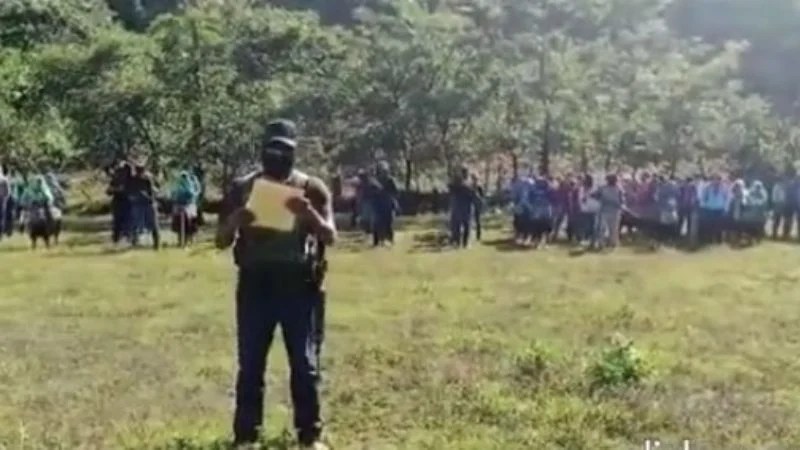
In a video, a masked man with a rifle slung over his shoulder reads a communiqué with some 200 people behind him, some armed men and also women are seen in the civilian contingent.
In their message, they pointed out that “the people of Pantelhó are suffering absurd attacks from El Machete, running over innocent people, decent people, children of God people, who are being run over, women and girls who have been imprisoned for more than 48 hours.”
“We are deciding to confront different groups. We are going to tell the government to act in defense of those people who are bathed in broken blood, beaten, women raped, if the government doesn’t act, we’ll give it a little time, otherwise we will take action under the circumstances that El Machete, a bloodthirsty group, forces on us. A really criminal group that is kidnapping and disappearing innocent people,” says the group’s spokesman, who did not give his name.
They accused Daniel López, alias Comandante Machete, of “collecting fees and charging for protection” in the municipality of Pantelhó. That is why they warned: “The strong hand of the government is required or we will act accordingly to rescue our beloved innocent countrymen.”
And that if there is no reason and way to solve the problem as soon as possible, the guns will speak for them.

“If the government does not act severely against this murderous criminal group that has killed more than 21, 30 people or more, they have also grabbed campesinos and disappeared them,” they said.
They said that El Machete passed from being a political group to now being a criminal group that walks around disputing the place between them.
“They are killers,” the video says at 3 minutes 31 seconds.
El Machete emerged on June 7, 2021 to rebel against an armed political group that controlled the municipality from the municipal seat and the City Hall, which for more than a decade kept the population devastated.
Now they are accused of disappearing 21 people directly and of maintaining terror in the municipality.
Two days ago, last Thursday, an armed group antagonistic to Los Machetes, [1] perpetrated an ambush and left four people dead instantly, a woman who turned out to be the wife of Comandante Machete Daniel López, and also three municipal police who belong to that same armed group.
[1] We, the Chiapas Support Committee, don’t know who the members of this new and unnamed self-defense group might be. Nor do we know how much support this new group has among the people of Pantelhó. What we have learned from folks in Chiapas is that El Machete is now a criminal group that has lost the support of the population.

Originally Published in Spanish by La Jornada, Saturday, March 4, 2023, https://www.proceso.com.mx/nacional/2023/3/4/nuevo-grupo-armado-irrumpio-en-pantelho-chiapas-advierten-enfrentar-los-machetes-video-303114.html and Re-Published with English interpretation by the Chiapas Support Committee
Legal protction of lithium in Mexico will favor US and Canada

As part of its program called Lithium Exploration, the Mexican Geological Survey carried out work in 82 locations in 17 states, in which “possible deposits of the mineral” were identified, according to the report prepared by Mining Watch Canada and the Mexican Network of People Affected by Mining. The map above was prepared by the organization Geocomunes, with data from the National Institute of Geography and Statistics.
By: Alfredo Valadez Rodríguez, Correspondent
Zacatecas, Zacatecas
The governments and transnational companies of the United States and Canada will be the principal beneficiaries with the “protection” that the Mexican State has legally granted to the lithium deposits in national territory with the creation of the state company LitioMx, the civil associations Mexican Network of those Affected by Mining (Rema) and Mining Watch-Canada warn.
In a research document, they point out that with said action the two North American countries will be able to “consolidate agreements to link the processing and production chains of individual electric vehicles to a market constituted mainly of upper and upper-middle classes in the global north, at the expense of territories, water, land, biodiversity and culture, as well as the lives of the Mexican communities” settled in the locations where the mineral will be exploited.
“This plan is mainly designed to take advantage of the reforms made in the neoliberal context of the T-MEC and serve the race of the U.S. auto sector, against China’s control, throughout the electric vehicle value chain,” they stressed.
The 70-page text, called Lithium Exploitation in Mexico: Public Interest or Transnational Extractivism? consists of five chapters and was prepared by specialists in the field, Susana Isabel Velázquez Quesada, Yannick Deniau, Andrea Sánchez Mendoza, Jen Moore and Kirsten Francescone.

In the conclusions section, Rema and Mining Watch-Canada argue that lithium is only one of several metals whose exploitation is being stimulated by a “supposed” energy transition, in which it is intended to move from one energy source to another. However, they argue, this “entails the deepening and expansion of the same damages that have already been documented by the extraction of gold, silver, copper and other metals in this country, as well as in many more places around the world.”
Extractivism labeled “green” and “sovereign”
They also warn that: “promoting this mining as a supposed response to climate change and also as the way to construct national sovereignty, makes that this extractivism now labeled ‘green’ and ‘sovereign’ apparently has unanimous social approval.” With that, they say, the circles of people previously critical and sensitive to the socio-environmental, economic and cultural damages of mining, now seem to agree with “the most recalcitrant sectors” in which the extraction of lithium “is necessary or, even, inevitable and indispensable. We say that’s not the case.”
Among the other aspects analyzed in the study, both organizations consider it wrong for the federal government to compare the measures it has adopted to “protect” Mexico’s lithium legally with the ones took President Lázaro Cárdenas del Río in 1938 to nationalize hydrocarbons.

“They evoke historical facts without realizing that this supposed parallelism is riddled with errors and injustices: lithium is neither an energy per se (it is, in any case, a component for its storage), nor will its extraction generate economic abundance, in some way similar to that of oil in twentieth-century Mexico.”
To the contrary, they say, currently in the country “we cannot exercise sovereignty without first untying the hands of the State from the perverse scaffolding of the International Investment Agreements installed since the entry into force of the North American Free Trade Agreement in 1994, and other agreements that promote and sustain the control of transnational companies over the commons.”
Finally, Rema and Mining Watch-Canada question: How can one speak of a decree and a proposal “in favor of the Mexican people” when their natural resources, their territories and life itself will be endangered?
“Regardless of whether the company (LitioMX) is public, private or mixed capital, those affected by mining say no to the exploration, exploitation, benefit and exploitation of lithium and other minerals. The true public utility of these is the determination to leave them in the subsoil, ” they emphasize.

Originally Published in Spanish by La Jornada, Sunday, February 26, 2023, https://www.jornada.com.mx/2023/02/26/estados/020n1est and Re-Published with English interpretation by the Chiapas Support Committee
The Corn War
By: Luis Hernández Navarro
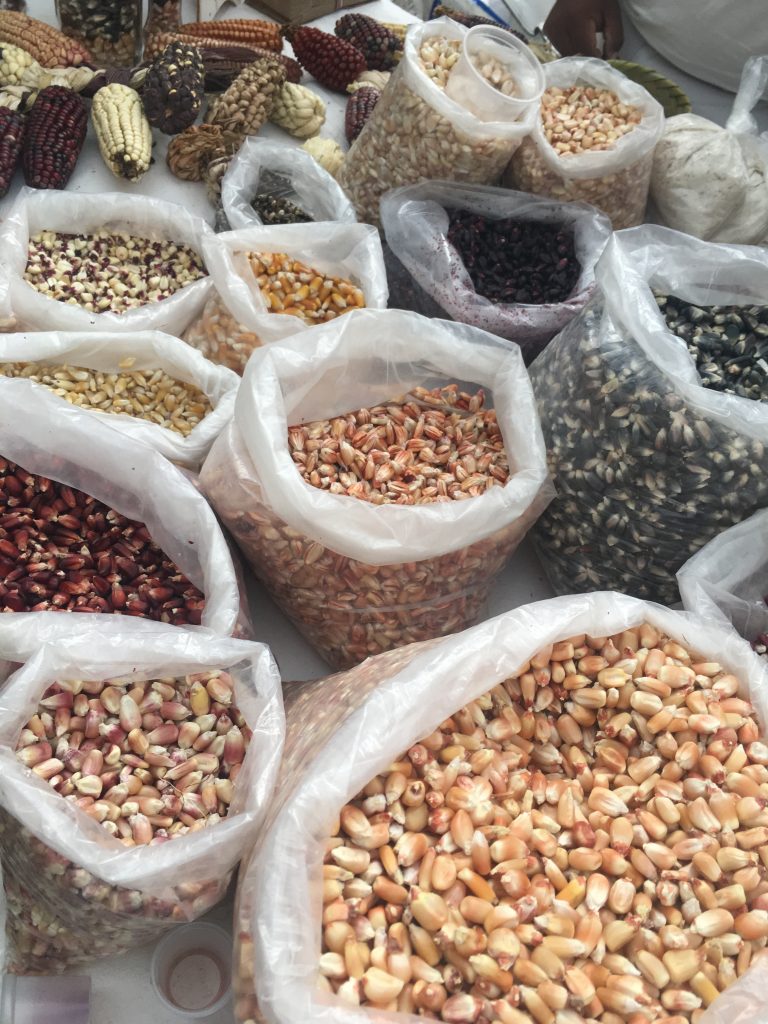
The United States is the world’s largest producer, consumer and exporter of corn. But its crops are used to feed livestock and automobiles, manufacture high fructose sweeteners, snacks, alcohols, oils and, marginally, for people to eat. About 60 percent of local consumption of the grain goes to industrial uses, most significantly to ethanol production. The crop is a business, not part of their culture. [Corn is part of the culture in Mexico.]
Although corn is grown almost everywhere in the United States, mainly with genetically modified seeds, its production is concentrated in the corn belt states, which include Iowa, Illinois, Indiana, Nebraska, Kansas, Minnesota and Missouri. In many of these states, the main political force is the Republican Party. For the most part, it is grown on highly mechanized ranches of more than 500 hectares. The number of family farmers engaged in this activity is decreasing every year.
This cereal is the agricultural product to which Washington allocates the most subsidies. In 2019, it received 2.2 billion dollars. These benefit large agribusiness companies more than producers, and large farmers over small family farmers. As Ana de Ita demonstrated since 1997, in the book Mirage and reality: NAFTA three years later, coordinated by Andrés Peñaloza and Alberto Arroyo, these subsidies are a real dumping mechanism affecting Mexican peasants and farmers.
The US exports between 10 and 20 percent of the total volume of its subsidized production to countries such as Mexico, China, Japan and Colombia. In order to place its grain in other countries without restrictions, it pressures/negotiates access to their markets and the dismantling of sovereign protections through free trade agreements. This is what it did with Mexico, first with NAFTA and now with T-MEC. It competes with Brazil, Argentina and Ukraine, which have increased their presence in the world grain market.
Uncle Sam’s agricultural exports are not just a business. They go beyond that. Food production is a key and powerful weapon that he has been oiling for decades. As Peter Rosset has pointed out, war, food and intellectual property rights have been closely linked to White House economic strategy since the 1970s. Military industrial development, massive grain production and patents have been pillars of U.S. hegemony in the world economy. Food is an instrument of imperial pressure.
By confession, the proof is in the pudding. John Block, Secretary of Agriculture from 1981 to 1985, stated: “The effort by some developing countries to become self-sufficient in food production must be a memory of times past. These countries could save money by importing food from the United States.” Agricultural products made in the USA are one of that country’s main export commodities. With its domestic market saturated, it is pushing aggressively to open the borders to its agri-food products.
President George W. Bush reaffirmed this when he signed the Farm Security and Rural Investment Act of 2002: Americans can’t eat everything the nation’s farmers and ranchers produce. That’s why it makes sense to export more food. Today 25 percent of U.S. farm income comes from exports, which means access to foreign markets is crucial to the survival of our farmers and ranchers. Let me put it as simply as I can: we want to sell our cattle, corn and beans to people around the world who need to eat.
President George W. Bush reaffirmed this when he signed the Farm Security and Rural Investment Act of 2002: “Americans can’t eat everything the nation’s farmers and ranchers produce. That’s why it makes sense to export more food. Today 25 percent of U.S. farm income comes from exports, which means access to foreign markets is crucial to the survival of our farmers and ranchers. Let me put it as simply as I can: we want to sell our cattle, corn and beans to people around the world who need to eat.”
At the end of this year, the new Farm Bill, the Five-Year Plan that regulates the agricultural policies of the northern neighbor, will have to be approved. In the discussion, Uncle Sam’s interest in continuing to make food a weapon for controlling other nations and a big business, the votes of the corn belt farmers and the interests of the large agribusinesses are all mixed up. In the midst of this debate, Mexico’s February 14 decree banning the use of genetically modified corn for human consumption in masa (the dough of ground corn) and tortillas fell like a bombshell. Immediately, interests moved to put pressure on Mexico.
According to Tom Haag, president of the National Corn Growers Association, “the Biden administration has been more than patient with Mexico, as U.S. officials have tried to enforce a rules-based trading system and defend U.S. farmers.” Now, he added, “the integrity of the T-MEC, signed by Mexico’s own President Andrés Manuel López Obrador, is at stake. Giving special attention to corn, our number one agricultural export to Mexico, and rushing through a ban on imports of numerous types of food categories, makes the T-MEC a dead letter unless it is enforced.”
Neil Caskey, vice president of that association, went further: “We have always believed that this would ultimately be resolved through the dispute settlement process of the U.S.-Mexico-Canada agreement. Today we are urging the administration to begin that process immediately.”

The corn war between the U.S. and Mexico has escalated. Unless the grain becomes a bargaining chip in other major negotiations, what is at stake today is the real margin our country has for a policy of food self-sufficiency under the T-MEC.
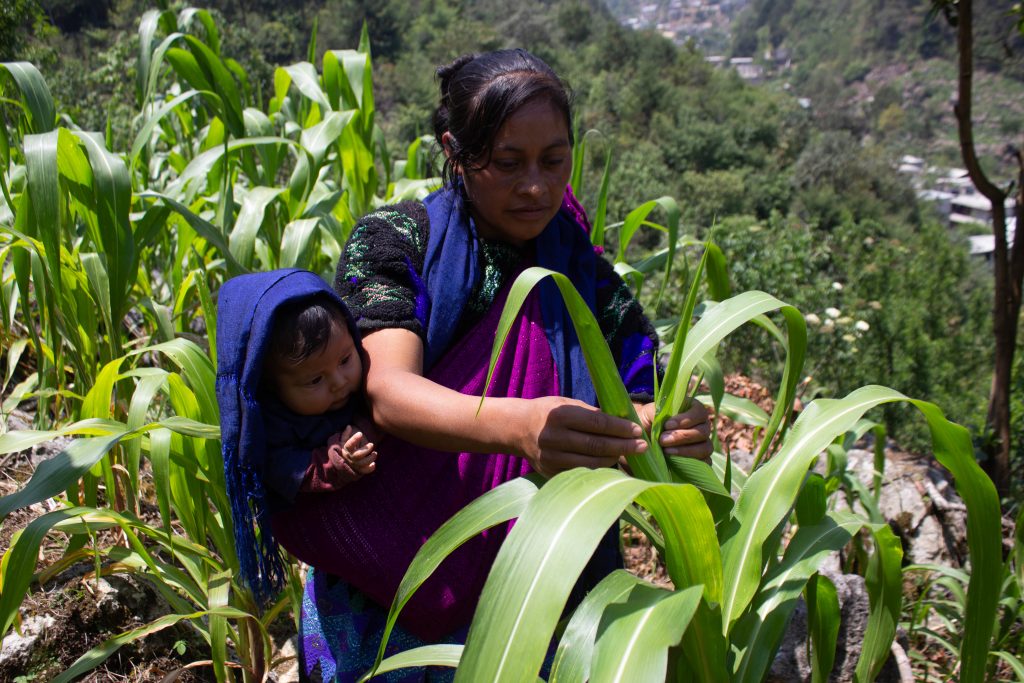
[1] The name “milpa” comes from Náhuatl, the original language of the Aztec people, and means “what is sown in the field.” The milpa has long represented the key to ensuring food security for many indigenous and rural populations in Mexico, and is the most effective way to safeguard and reproduce ancestral seeds.
Originally Published in Spanish by La Jornada, Tuesday, February 21, 2023. Translation by Schools for Chiapas and Re-Published by the Chiapas Support Committee
Samir Flores: four years without justice
A La Jornada Editorial
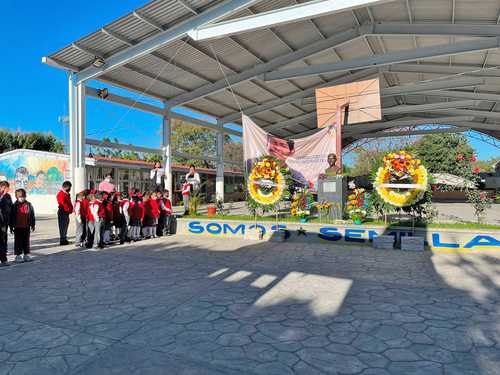
On February 20, 2019, the indigenous Morelos activist Samir Flores Soberanes, a member of the Permanent Assembly of the Peoples of Morelos and the founder of Radio Amiltzinko, was shot and killed in front of his house, in his native Amilcingo. To date, the crime remains unpunished and the investigation does not present any advance.
It should be noted that at the time, the murder of Flores Soberanes took on particular relevance in the eyes of public opinion, since it took place against the backdrop of the conflict over the hydroelectric power plant in Huexca, built mostly in the previous six-year term, and whose completion and start-up were opposed by various local organizations, in which the victim had a prominent participation. No evidence has been found that the killing could be linked to this matter; instead, data have been emerging that point to the possible authorship of the Tlahuica Command, an organized crime establishment that operates in Morelos under the protection of still powerful political groups.
The only solid and indisputable element that could lead to the clarification of the death of Samir Flores is action from the local prosecutor’s office, headed by Uriel Carmona Gándara, which has made an effort to make it impossible to bring justice in this and other cases. From the outset, just six days after the Amilcingo murder, that autonomous institution “lost” the weapon with which the activist was killed and henceforth has not wanted or has not been able to advance in the investigations.
The governor of Morelos, Cuauhtémoc Blanco, declared in September 2020 that Carmona Gándara “already has the investigation, but he does not want to let go because there are many people involved; I hope he really opens up and has enough courage to declare who Samir Flores’ killers were. Days later, the state governor reiterated that his state’s prosecutor “is afraid” and that’s why he did not reveal what he knew.

It should be remembered that Carmona Gándara was elected in 2018 by the state Congress, in which the first force was the Party of the Democratic Revolution (PRD), proposed by former governor Graco Ramírez, a member of that party, for a period of nine years. Since then, the prosecutor has been singled out on several occasions for his poor performance in numerous circumstances; for example, the handling of corpses in the clandestine graves of Tetelcingo, with implications of forced disappearance, as well as the abuses of power of his bodyguards and the re-victimization of eight young people murdered in the Antonio Barona neighborhood of Cuernavaca. Likewise, Carmona Gándara was accused of covering up the femicide of the young woman from the capital, Ariadna López Díaz, whose body was found in October of last year on the outskirts of Tepoztlán, and of whom the Morelos prosecutor’s office asserted that she had died of “serious alcoholic intoxication and bronchial aspiration.” She was actually beaten until she died from multiple traumas.
Attempts to remove Carmona Gándara from office have not yielded results. When an attempt was made to submit him to a trial to remove his immunity in the Congress of the Union, he inexplicably obtained an injunction that prevented such a trial. Attempts to remove him in his state’s legislature also failed, and last November the Congress of Mexico City urged its Morelos counterpart to dismiss the questioned prosecutor. [1]
In sum, everything indicates that the murder of Samir Flores fell into the black hole of the Morelos Attorney General’s Office and that it will not be possible to clarify it and do justice until the exit – and perhaps, the criminal accusation – of its attorney general, exponent of that generation of protected state prosecutors that governors of the past regime left in several states of the country, perhaps for the purpose of covering their backs and also achieving lasting impunity.
[1] People’s Front in Defense of Water, Land and Air of Morelos, Puebla and Tlaxcala (FPDTA-MPT), of which Samir Flores was a member, also demands the removal of Carmona Gándara from office.
Originally Published by La Jornada, Tuesday, February 21, 2023, https://www.jornada.com.mx/2023/02/21/opinion/002a1edi and Re-Published with English interpretation by the Chiapas Support Committee
Democracy and the manipultion of public opinion

By: Raúl Zibechi
The most adequate form of ensuring governmental stability has been, until now, controlled democracy or low-intensity democracy; that is, a system that achieves stability through disinformation that the monopolized communications media promote, which is proving to be more efficient than dictatorships.
A study conducted by scientists with groups of fish, whose results they estimate can be extrapolated to human societies, was published in the Science journal in 2011, under the title “Uninformed individuals promote democratic consensus in animal groups.”
The research concludes that to counteract the influence of an obstinate minority, “the presence of uninformed individuals spontaneously inhibits this process, returning control to the numerical majority.”
The work insists on the importance of what it calls “uninformed people” in decision-making, whose result would be democratic because they are simply in the majority.
At this point, scientists seem influenced by the concept of a democracy of the ruling classes, which reduce democracy to the role of the majority in the election of their representatives. The problem in our societies is that these majorities are created by the manipulation of information, a task that falls to the big media monopolized by small groups of highly concentrated entrepreneurs.
Although the work is much more extensive than the above-cited paragraphs, which only synthesize it, the importance of misinformation or, if you prefer, of the confusion they are capable of creating to distort the population’s perceptions, often pushed to support options that go against their interests, must be retained in order to paralyze its capacity to react with a real bombardment, a task that falls particularly on the audiovisual media, especially television, the segment of communication most concentrated and impervious to dissent.
Examples abound: from misinformation about the causes of the covid-19 pandemic, with over-information about the bat in a Chinese market as a cause, to hiding the proven role of deforestation for [growing] industrial crops, to the causes of the war in Ukraine. Rejecting Russia’s invasion should not go hand in hand with denial of the existence of a coup in Kiev in 2014, nor the closure of 217 media outlets in Ukraine during the first year of the war, while 12,000 local and foreign journalists were accredited to cover it, according to Reporters Without Borders.
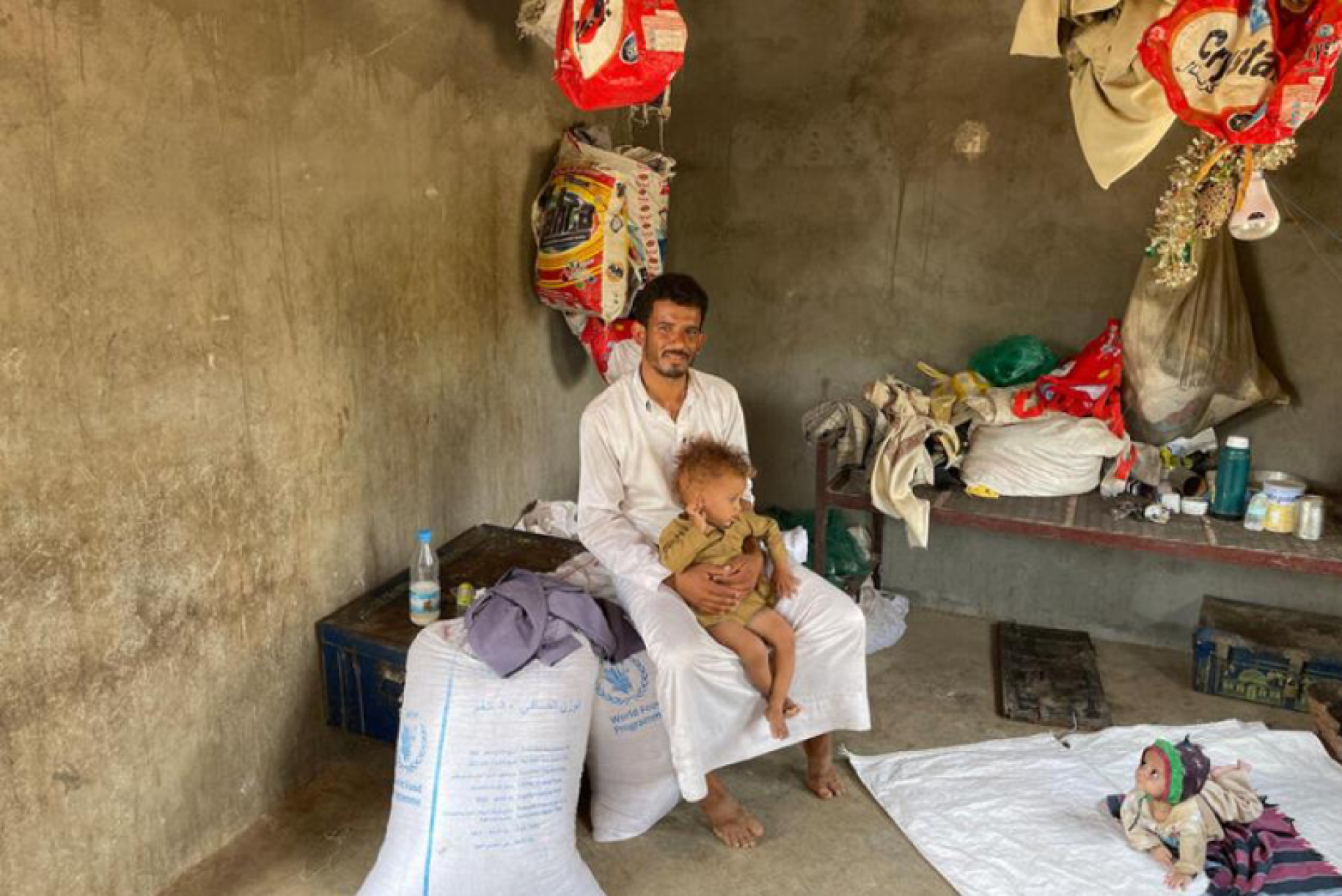
Nor are there reports in the Western media about Nazism in Ukraine, nor about Saudi Arabia’s war on Yemen, with its corollary of death, famine and humanitarian disaster. The presence of the U.S. armed forces in Syria, and so on in many other cases, is not considered an invasion.
Not to mention the US sabotage of the Nordstream gas pipeline, Seymour Hersh, who prepared a detailed report on how it was destroyed, “will be silenced and vilified”, as Noam Chomsky has just assured.
The truth is that disinformation plays an important role in sustaining the Western systemic order, a sector of the world that controls the principal media outlets that reach the population. As a recent coverage of El Salto points out: “the best journalistic content may not have any consequences,” because the power and the media at its service ignore it.
It’s clear that democracy does not exist in the media. This almost absolute control has achieved something that decades ago seemed impossible: eradicating conflict from public perception. The most brutal crimes can go unnoticed if the media insists on it.
When this media control overflows, because the reality is too evident, as in Peru in the last 70 days, there are the police, “the permanent coup d’état”, to break up the protests.
In my view, this reality has two major consequences.
The first is that it doesn’t make much sense to fight for public opinion, nor to compete with the system’s media, something that the peoples who struggle will never achieve. Without a doubt it’s about creating our own media, but not to compete for the opinion of the majorities, but rather to consolidate our field, the peoples in movement and all those who accompany them. That’s not something minor.
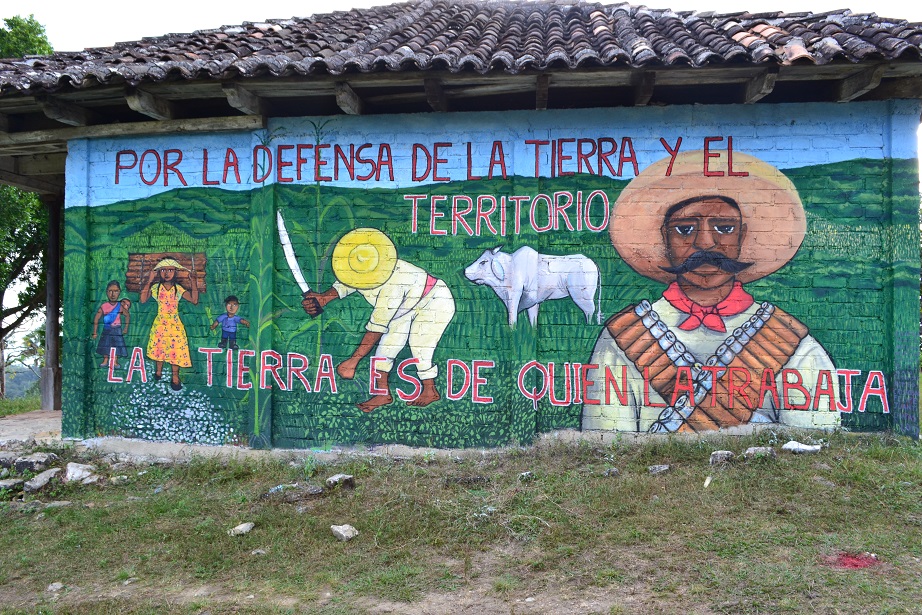
The second is the conviction that something called democracy doesn’t exist, if it ever existed. From the moment in which peoples’ opinions and wills are molded and manipulated by gigantic machines that escape any control other than that of the ruling classes, entering the electoral game has no future.
Constructing below and to the left seems the only emancipatory path possible.
Originally Published in Spanish by La Jornada, Friday, February 24, 2023, https://www.jornada.com.mx/2023/02/24/opinion/017a1pol and Re-Published with English interpretation by the Chiapas Support Committee
Movements from below 2022-2023. Learning to navigate the storm
By: Raúl Zibechi
The year that has just ended was dominated by war after the Russian invasion of Ukraine. It was a year led by the States, particularly the most powerful (United States, China, Russia, European Union…), which seek to redesign the world according to the interests of the ruling classes of each nation.
In the Latin American region, media prominence has been taken up by the electoral victories of Gustavo Petro in Colombia and Lula da Silva in Brazil, the assumption of Gabriel Boric in Chile and the fall of Pedro Castillo in Peru. They say that progressivism would be experiencing a “second wave,” although in fact it resembles continuity with the first. They also say, even their supporters, that these are increasingly moderate governments or, in common parlance, more to the right.
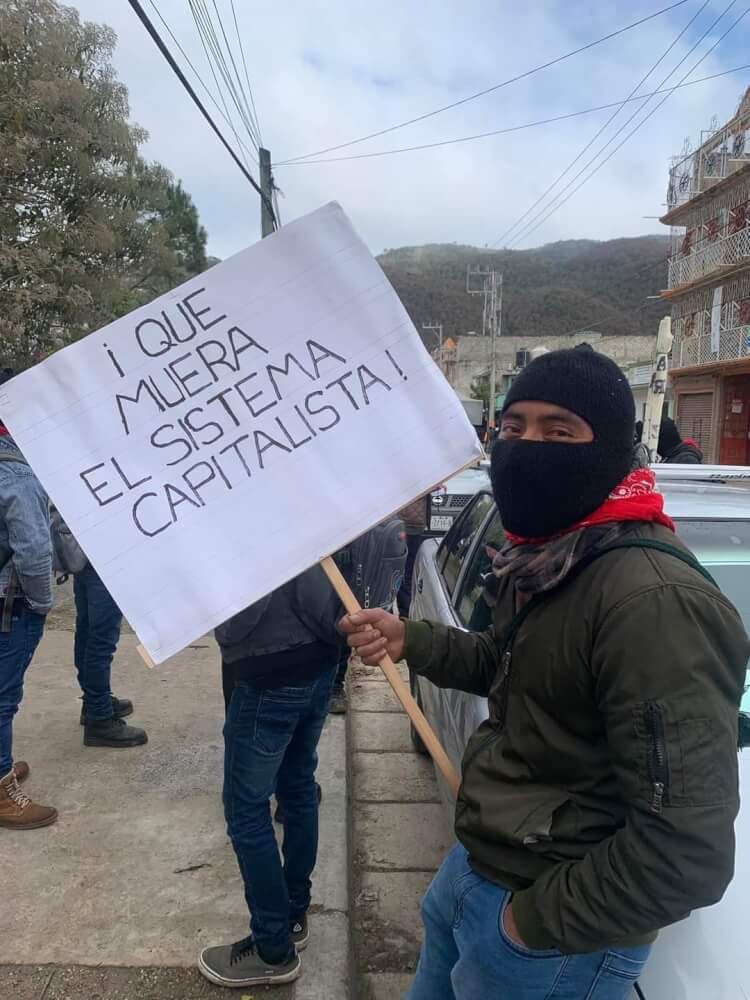
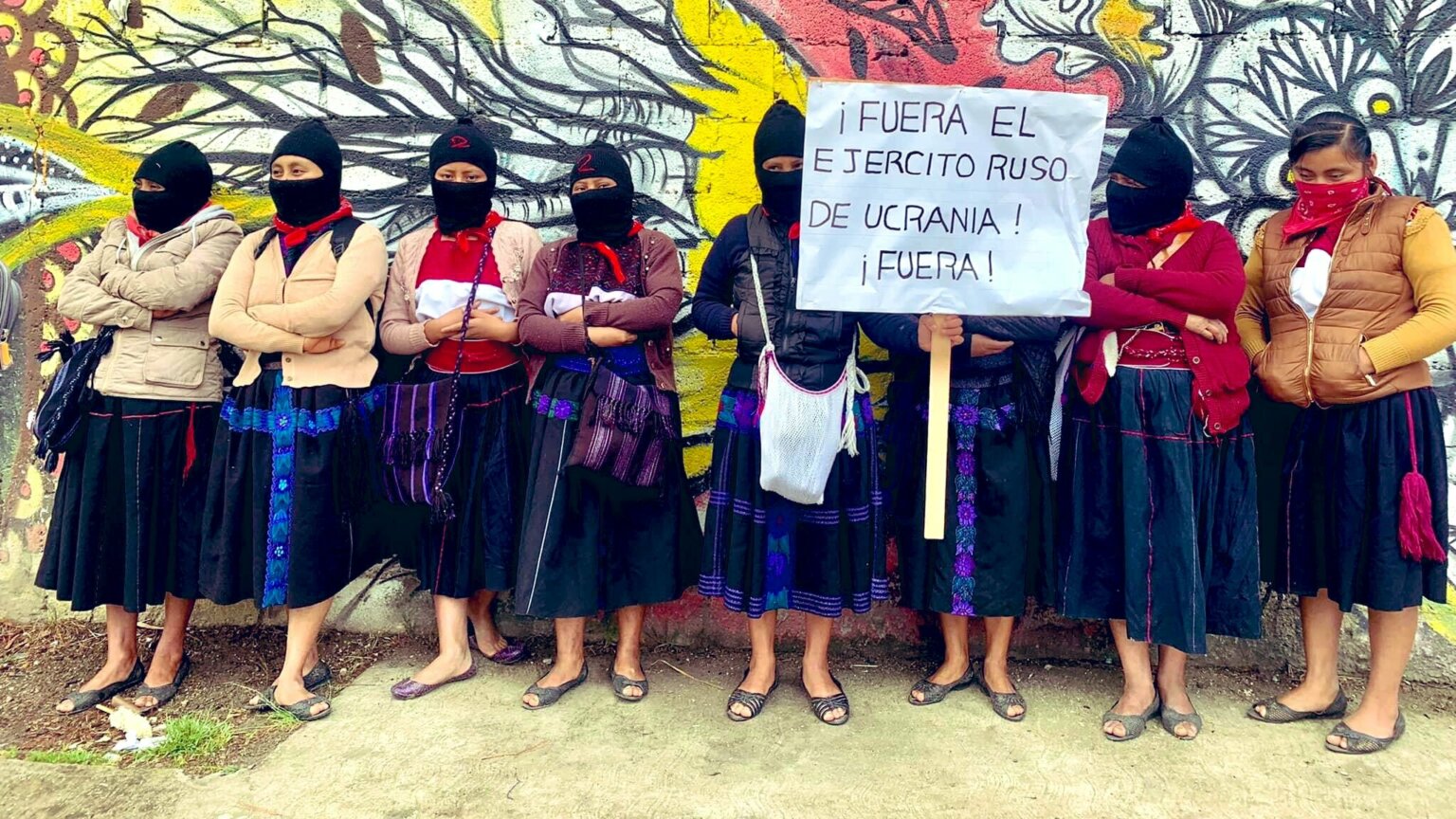
Although our region doesn’t seem to know, the world is at war. For the first time in a long time, the leaders of the main powers are talking about the possible use of nuclear weapons to settle their conflicts, although it’s clear that “There will be no landscape after the battle,” as the EZLN communiqué of March 2022 is titled, which analyzes the situation created by the invasion of Ukraine.
As is often the case, little or no talk is made in the mainstream media about anti-systemic movements, about organized peoples struggling to survive in the midst of the storm that has come upon us. They pretend that everything is still “normal,” although violence against peoples continues to grow in every geography of this continent.
In 2022 there were no major collective actions like those of 2019 in Chile, Ecuador and Colombia; nor like the popular revolt against the impostor Manuel Merino in Peru, in 2020, or the blockades in Bolivia against the illegitimate government of Jeannine Añez. This 2022 there was a great uprising in Ecuador, harshly repressed, and a phenomenal revolt in southern Peru, where the head of State murdered 28 people.
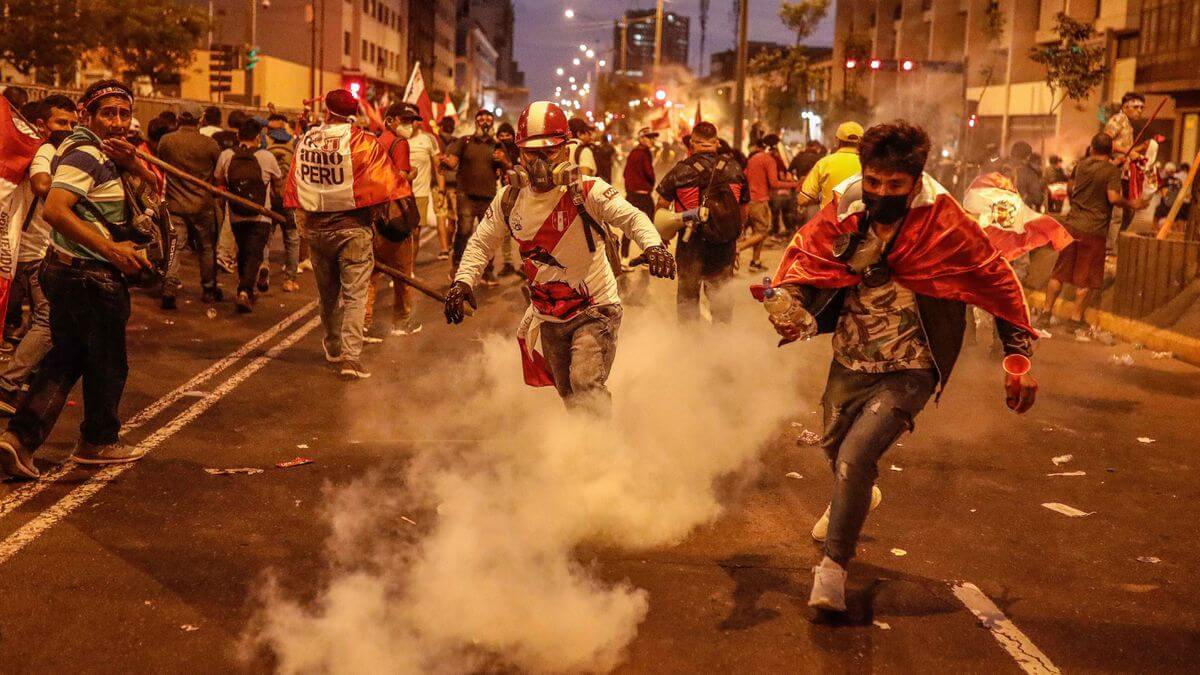
It cannot be said that 2022 has been the year of movements and struggles, as the previous ones were. What’s happening? Have they been weakened, co-opted or have they handed themselves over to progressive governments that are already in the majority at least in South America?
None of that. Listening carefully, we can understand that organized peoples are in a process of inward growth, which involves debating what to do in a completely new situation, in which the Covid pandemic, wars between States and the continuity and deepening of wars against peoples are added. They debate, draw new horizons, strengthen and deepen their de facto autonomies in the most remote corners of the continent. They resist because, as the EZLN says, “to resist is to persist and to prevail.”
It’s therefore time to resist, and in doing so to clarify the panorama, clearing shadows and doubts, taking advantage of the moments when the storm breaks out and it’s possible to look beyond, although the sky is still overcast. Many words within the towns, many small meetings and assemblies seek the way, which will be a new path because the situation is completely different from the one we experienced before.
In Brazil, the new government created the Ministry of Indigenous Peoples and placed at the head an indigenous woman who Time magazine had nominated as one of the hundred most influential people in the world in 2021. Why does Lula create this ministry? Because indigenous peoples were the most active in resisting Bolsonaro for four years. And because the Amazon is a strategic space for big capital. In other words: to reassure the Amazon, to facilitate big capital’s conquest of the main green space on the planet.
Below is a map of the land demarcations of indigenous peoples in the Brazilian Legal Amazon, provided by militant geographer Fabio Alkmin.
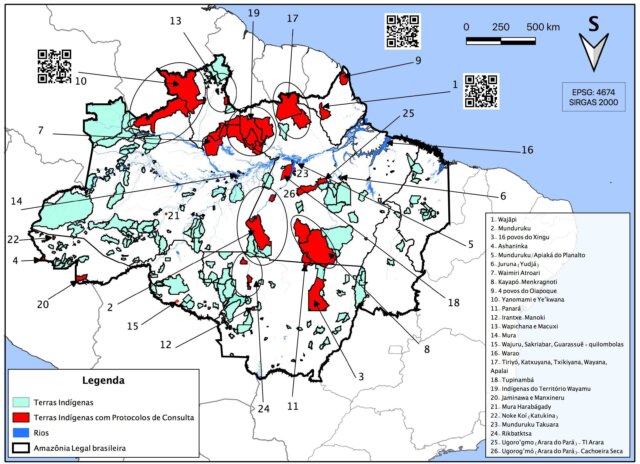
As can be seen in the areas colored in red, the territories where the peoples carry out “autonomous demarcation” with their own indigenous guards, are already an important part of the Amazon. This can grow since, as indicated by the green areas, there are many more villages that can take the same path in the face of the State’s refusal to demarcate their lands.
But the most important thing is the acceleration of these processes. As of 2019, Alkmin had identified 14 demarcation protocols. Three years later, there are a total of 26 protocols, covering 64 different indigenous peoples and 48 different territories. This indicates that under the Bolsonaro government there was a growth of autonomous processes among the Amazonian indigenous peoples, which is consistent with the enormous role they have had on a scale throughout Brazil. That’s why Lula wants to tame them.
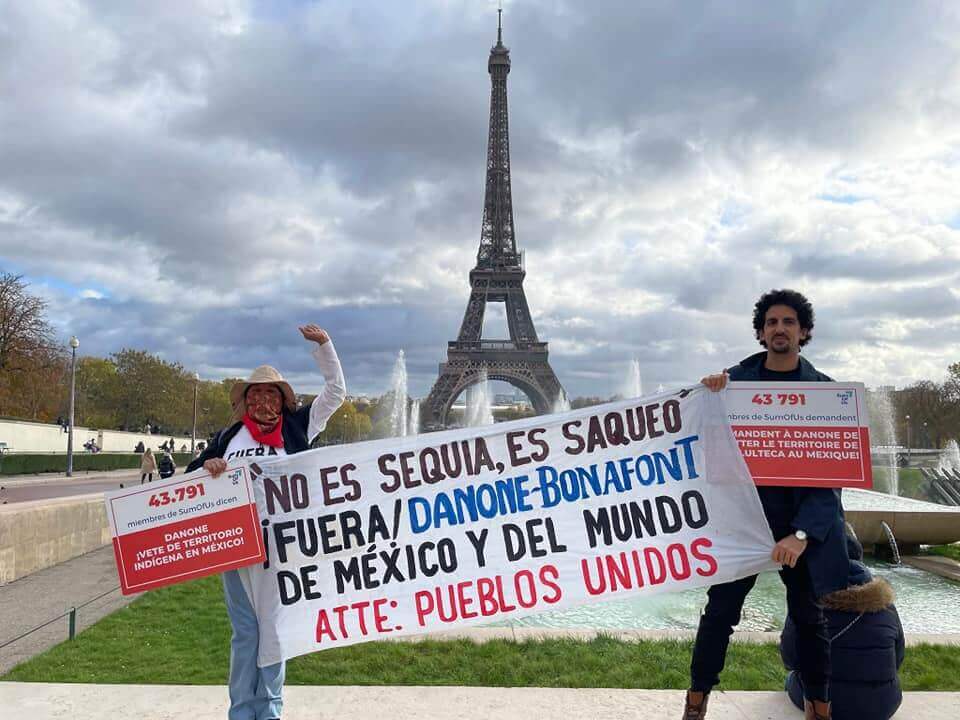
This is not the only case. We know that under the government of Andrés Manuel López Obrador new Zapatista caracoles were formed in Chiapas, going from the initial five to the current twelve. In Puebla, the struggle for water has grown exponentially since Pueblos Unidos took over the Bonafont plant and definitively closed the well that stole water from the campesinos. Resistance on the Isthmus to the Trans-Isthmus Corridor is solid and widespread. Surely there are other processes of which I’m not aware.
In Chile, the Mapuche people have carried out more than 500 recuperations of land since 2019 and the organizations fighting for autonomy have multiplied despite the increasing militarization of Wall Mapu by the new progressive government.
They are only fragments of resistance that have not stopped growing, under the line of media visibility, in this 2022 that, apparently, does not show us great actions.
This 2023 that has just begun, will be a year of struggles of greater intensity than the previous one. Organized peoples are learning to move under the storm, something they have never suffered with such intensity. They haven’t taken a breather. Not at all. We are facing new modes, those that are necessary to continue browsing.
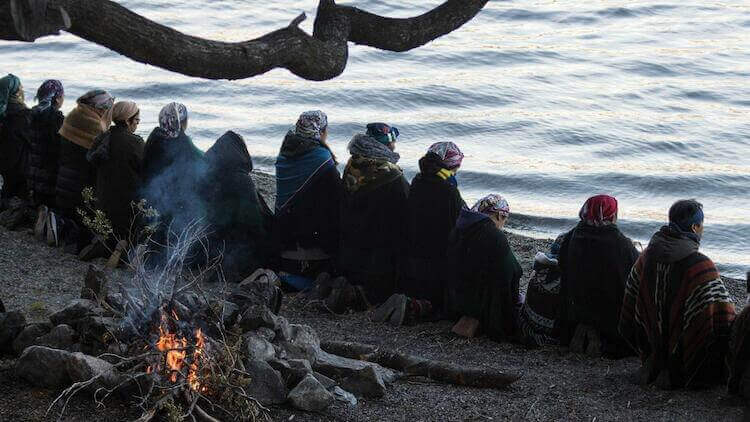

Originally Published in Spanish by Desinformemonos, Monday, January 2, 2023, https://desinformemonos.org/movimientos-de-abajo-en-2022-2023-aprendiendo-a-navegar-en-la-tormenta/ and Re-Published with English interpretation by the Chiapas Support Committee
Chiapas activists lament the increased presence of organized crime
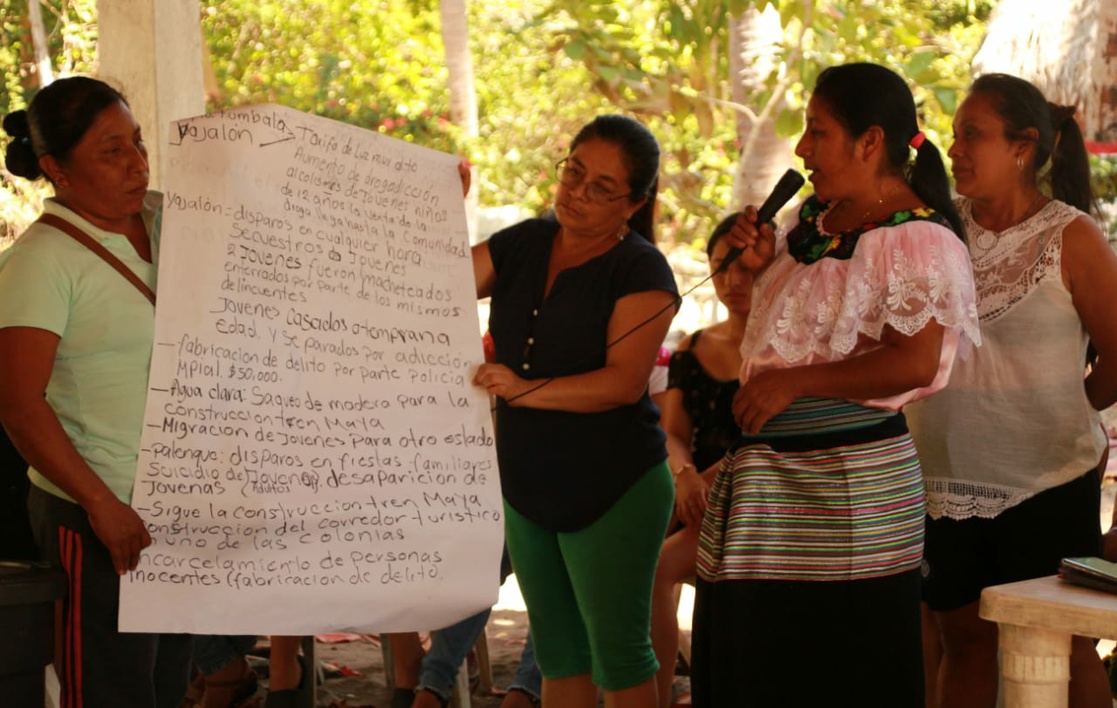
By: Elio Henríquez, correspondent
San Cristóbal de Las Casas, Chiapas
The Women’s Movement in Defense of Mother Earth and Our Territories expressed its concern about “the increase in organized crime, the sale and consumption of chemical drugs, the circulation of weapons in safe houses and the calls for extortion and kidnapping of young people,” as well as the imposition of megaprojects that destroy Mother Earth.
“A constant that we women look at and experience in the countryside and the city is that the increase of organized crime in our regions does not stop. They seek that in our paths of life there is no tranquility or joy, they want us locked up,” it said in a statement.
“We see in all regions the increase of bars, the distribution, sale and consumption of drugs and alcoholism that puts the lives of young people at risk; The dynamics of crime lead to losing them and losing their lives,” it added.
It pointed out that “the increase in drug addiction is linked to the increase in the presence of organized crime and the problem is increasingly advancing towards the communities.”
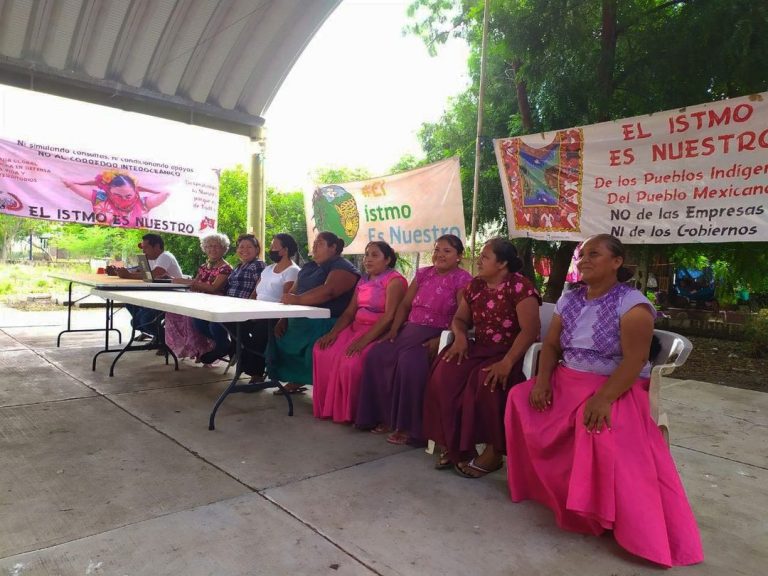
The more than one hundred women from different regions of Chiapas, who on this occasion were joined by representatives of the Zapotec people of Oaxaca, Mexico City and southern Argentina, participated in their third assembly, which took place in the municipality of Tonalá, located in the state’s coastal region.
The meeting began with a ceremony “to honor our ancestors, the seven directions and to ask permission from the sea” and then they shared “the contexts we are experiencing as women.” Next, they carried out “collective healing activities, as well as communication workshops, political-community organization, solidarity economy and products for personal and collective self-care.”
In the statement released at the end of the assembly, they pointed out that “now there are more of us who are convinced of the organization, autonomies and defense of Mother Earth and our territories. We have agreed to do it from listening, looking at each other and recognizing each other, with respect, joy and affection.”
They reaffirmed their willingness to follow their principles from political-organizational autonomy, “the defense of Mother Earth against projects of death,” awareness in personal care and collective healing, the participation of women in decision-making, the rejection of all types of violence against them, the articulation and political solidarity among peoples, networks and collectives of the Zapatista National Liberation Army (EZLN), the National Indigenous Congress (CNI) and the Sixth Declaration of the Lacandón Jungle.
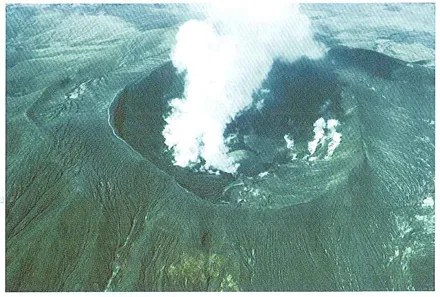
The women from the coastal region assured that they continue “in defense of Mother Earth due to the imposition of concessions for up to 50 years in mining and hydroelectric plants,” while those from the northern zone denounced “the abandonment of the roads of Francisco León, Chapultenango, and Viejo Nicapa, Pichucalco, which are evacuation routes in case of an emergency in the Chichonal Volcano, which has become more active in recent years. It is about to be 41 years since that tragic 1982 when more than two thousand people died and the roads are still abandoned. The volcano is not only for tourism, it is home to thousands of families who have lived there for more than three thousand 500 years.”
In the northern-Palenque region, the women said, “government people enter to cut down trees for the construction of the so-called Maya Train. We are the ones who defend, we do not let them knock down more trees, we are defending the river, the water and the land because there we plant corn and beans.”
The attendees from Los Altos who participated in the meeting, said that “in some communities the agreement has been reached that the military will not enter. There is fear because of what we see and hear about organized crime. Women cannot go out alone, we are afraid that something will happen to us.”
They added: “As women we are experiencing different types of violence generated by organized crime, groups of young people who are dedicated to transport, sale, assaults, kidnappings and disappearances, creating a sense of daily terror, where there is fear and uncertainty. In the main markets of the city of San Cristóbal, the sale of drugs and weapons is becoming a constant, as well as the promotion, sale and networks of pornography and child prostitution.”
In the case of the women from Oaxaca who attended, they denounced that in that territory “the megaprojects of dispossession of the interoceanic corridor and the wind farms are present,” while those from Mexico City and Argentina denounced “the persistent rape and sexual abuse to which we continue exposed as women.”

Originally Published in Spanish by La Jornada, Wednesday, February 15, 2023, https://www.jornada.com.mx/notas/2023/02/15/estados/activistas-de-chiapas-lamentan-aumento-de-presencia-del-crimen-organizado/ and Re-Published with English interpretation by the Chiapas Support Committee
Campaign in defense of San Cristóbal wetlands begins
By: Elio Henríquez, Correspondent
San Cristóbal de Las Casas, Chiapas
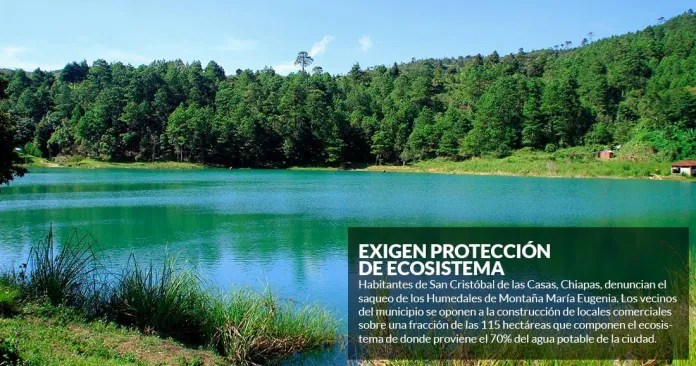
With a march in which dozens of people, the General Council for the southern zone initiated a national and international campaign in defense of the San Cristóbal wetlands, which encompass some 200 hectares and are protected by official decrees.
Nicolás Gómez Velasco, one of the representatives of the grouping, explained that as part of the Let’s Save the Mountain Wetlands of the Jovel Valley, which began this past Sunday and will end April 22, Earth Day, they will carry out artistic, cultural and popular environmental and agroecology educational activities in different districts of the city.
He explained that the first action was the march-pilgrimage yesterday, in the Las Minas neighborhood, as well as a traditional ceremony at the Navajuelos spring, located in the wetlands of María Eugenia.
In a statement, the council, made up of 14 neighborhoods, called on the inhabitants of the city to “take photographs and videos of each dump truck, landfill and construction that destroys mountain wetlands to report them to the State Attorney General’s Office.”
Gómez Velasco said in an interview that as part of the defense actions, they created Las Minas, a sustainable colony that has community gardens. In addition, they have carried out reforestation campaigns (last year they planted more than a thousand endemic trees in the wetland area) and a rainwater collection tank was built, among other actions.
He said: “we seek that agroecology is the element of unity to defend wetlands, as well as food sovereignty through the creation of gardens, compost, chicken coops, cleaning campaigns, etc.”
Photo exhibitions will also be presented, films will be shown, and there will be cultural and sporting events.
Originally Published in Spanish by La Jornada, Monday, February 6, 2023, https://www.jornada.com.mx/2023/02/06/estados/026n4est and Re-Published with English interpretation by the Chiapas Support Committee
The Decomposition of Democracy
By: Raúl Zibechi
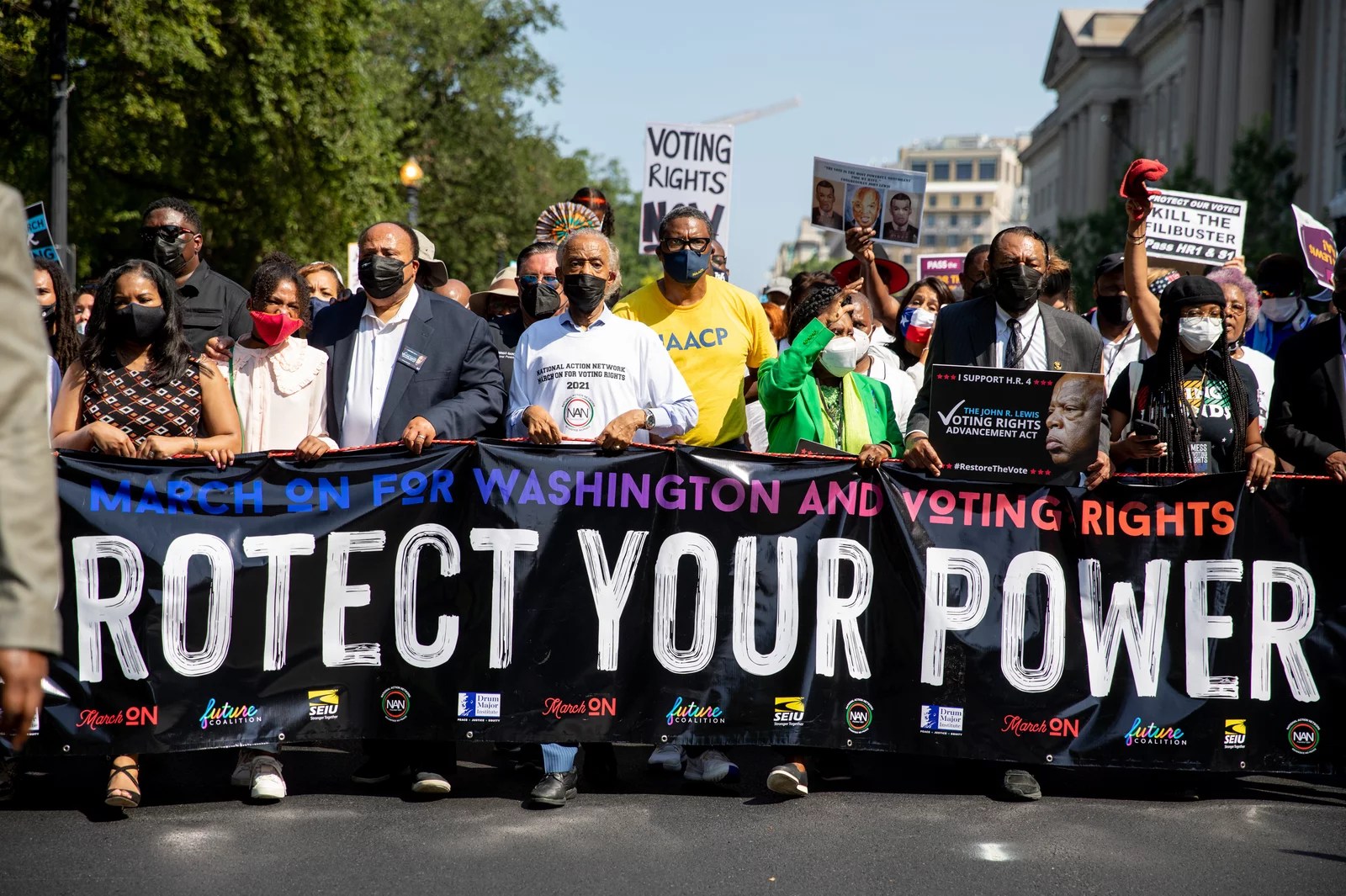
There is consensus as to the convenience of democracy and rejection of dictatorship. But this consensus obscures opposing ideas about what we understand by democracy and where we place the emphasis: from those who prioritize the electoral system and the vote to those who understand by democracy “an authentic egalitarian system of power” (Immanuel Wallerstein).
The hegemonic media, the political parties and the capitalists, emphasize in the periodic holding of elections to elect presidents and parliaments, with freedom of the press, diversity of candidates and the possibility of rotation in these positions. They reduce democracy to the electoral act and to the existence of certain civil rights, although the extension of these is usually at the discretion of the government of the day.
The right to demonstrate, for example, is often severely restricted during economic and political crises, during health emergencies and whenever states of emergency are imposed by the executive. It has become customary for police to establish cordons surrounding demonstrations, whereas previously they were established remotely to intervene only in the event of incidents.
In this way, it intimidates the demonstrators and seriously limits the right to demonstrate. As Foucault pointed out, “the police are the permanent coup d’état,” so legal armed apparatuses are used when power and the powerful consider the time has come.
The right to strike is also often undermined, by imposing minimum services that neutralize the effects of workers’ stoppages, as is being debated these days in England, and before in so many corners of the planet.
Something even worse happens with freedom of expression: media concentration with a monopoly character neutralizes the basic right, since access to communication is enormously unequal according to social class, skin color, age and regions or barrios where you reside. The media’s monopoly excludes anti-systemic political expressions and is one of the major obstacles to the functioning of a true democracy.
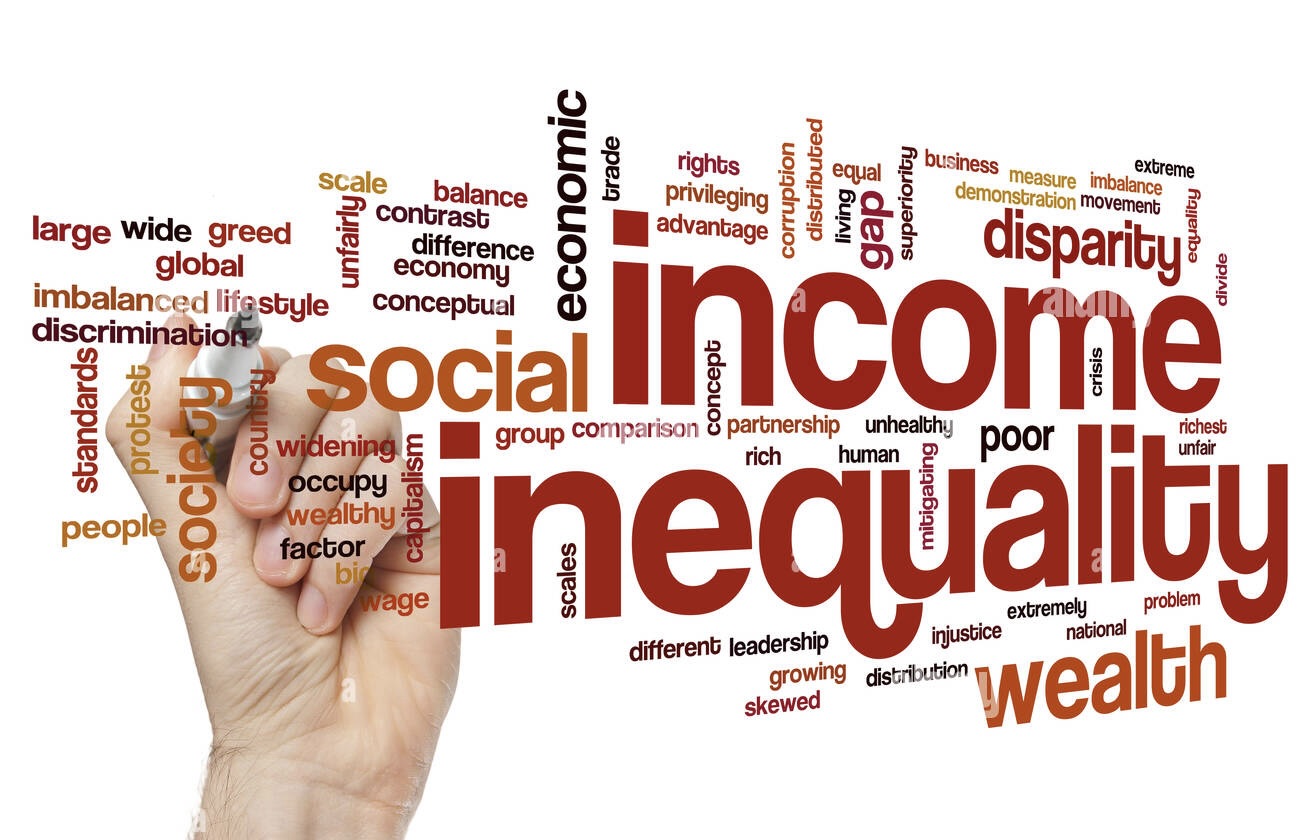
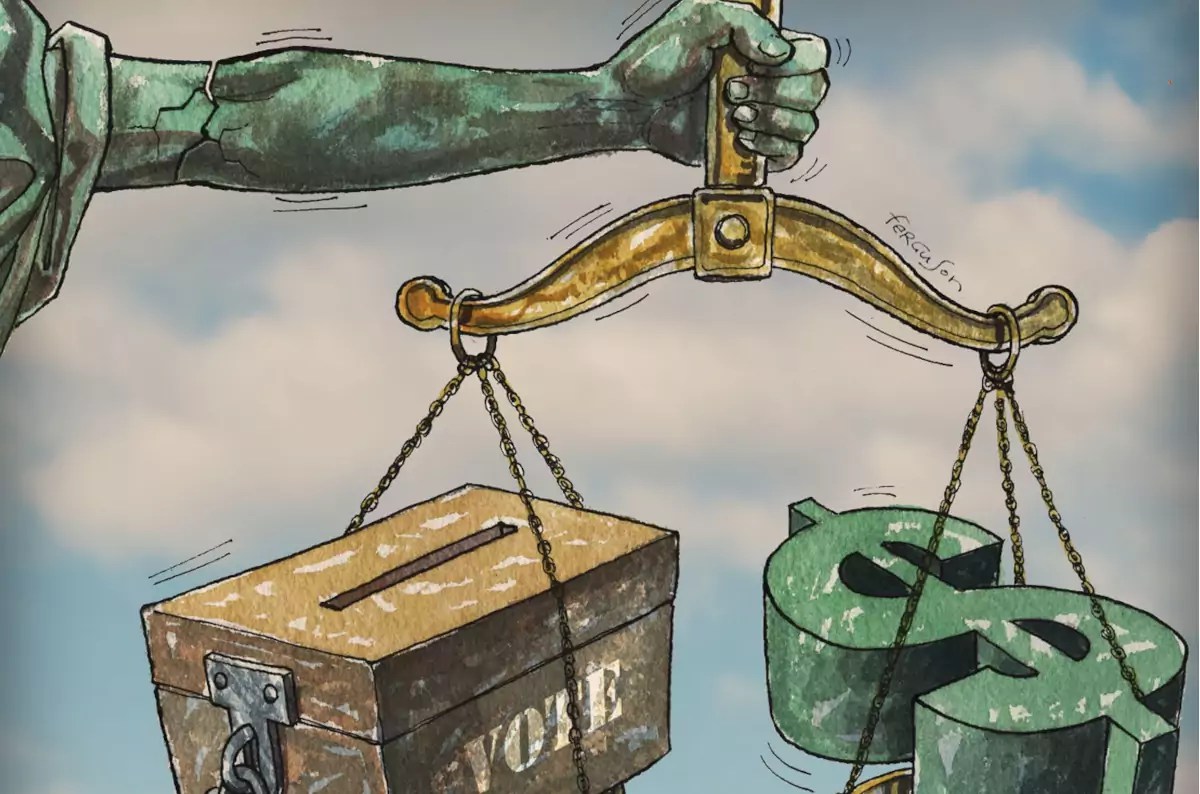
The exponential growth of inequality is revealing that democracy is a fantasy, because the concentration of wealth occurs in a fully functioning “democracy,” under governments of any sign and color, without the slightest interruption. The richest one percent captured about half of the new wealth in the last decade; but since 2020 they have taken twice as much as the remaining 99 percent of the world’s population, according to Oxfam (https://bit.ly/40jele8), with the blessing of democratic institutions.
Democracy is a factory of the rich, in reality of multimillionaires, because those who represented workers went over to the side of the bosses. The American sociologist Heather Gautney argues in an interview with Truthout: “The Democratic Party at a particular time, before Bill Clinton, made the decision to cut ties with workers and build ties with corporations” (https://bit.ly/40RNA11).

Gautney is the author of The new power elite, inspired by the famous work of C. Wright Mills The Power Elite, in 1956, which offered a powerful critique of the concentration of political, economic and military power, which influenced movements in the 1960s.
She maintains that inequality is “a class program” that includes Democrats and Republicans, which in Latin America we must interpret as rights and progressives, both committed to promoting the interests of the ruling classes and capitalism. Both currents encourage large infrastructure projects, mining and monocultures, which are the ways in which neoliberalism is presented in this continent.

The sociologist adds that population manipulation has grown dramatically: “Today, a small number of people exercise more control over the media than any dictator in history.” Without dismantling the power of the elites, and preventing new ones from forming, there will never be structural changes.
For the popular sectors, democracy has always been a means to defend their interests, never an end in itself. For Wallerstein, universal suffrage aims to “integrate the dangerous classes,” a point on which the historian Josep Fontana agrees in his book Capitalism and democracy. He affirms that the cultural hegemony imposed by the bourgeoisie (in the nineteenth century), sought and managed to integrate the workers “in their vision of society and history.”
But democracy fulfills an additional role: It manages to hide that capitalism needs the democratic game to colonize all the pores of society through consumerism. The electoral lefts defend this camouflage, by transferring conflicts of classes, sexes and skin colors to the institutional terrain, where they vanish in laws and regulations.
Originally Published in Spanish by La Jornada, Friday, February 10, 2023, https://www.jornada.com.mx/2023/02/10/opinion/015a2pol and Re-Published with English interpretation by the Chiapas Support Committee
The rise and continuity of indigenous struggles
By: Magdalena Gómez
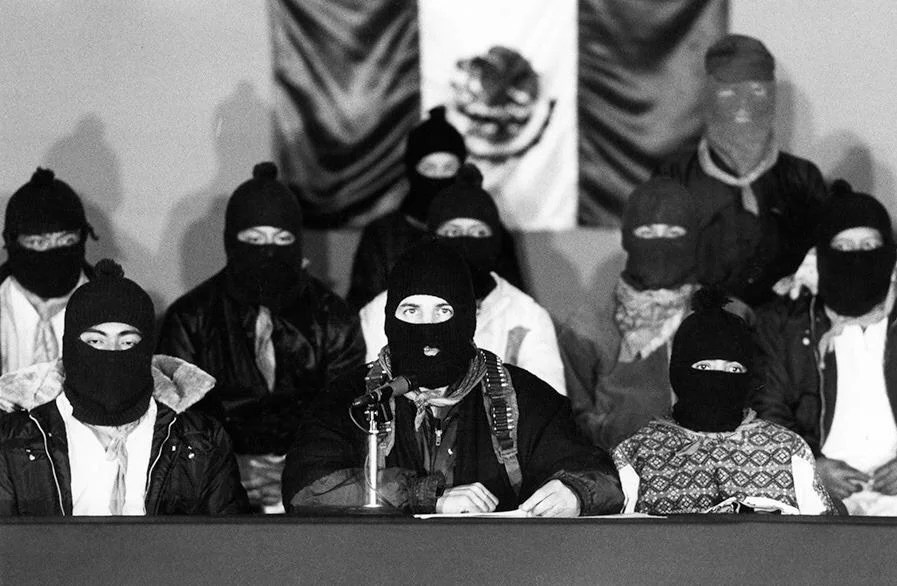
We are two days away from the 27th anniversary of the signing of the San Andrés Accords. We will be mistaken if we disqualify them with an eye on successive betrayals by the state. They are certainly not forgotten and yet it is a document that marked a key stage in the struggle of indigenous peoples. As the Zapatistas insist, let each one construct their autonomy according to their geography and possibilities, in their own way, then. I have insisted that we break with the temptation of anniversaries, because just as we have February 16, 1996, it was preceded by February 9, 1995, which had nothing to do with the March of Loyalty recently evoked by the federal government. These are other historical data, because the one of 1995 did mean a major betrayal and artful blow to the peace process that was intended to restart with the Zapatista National Liberation Army, since the so-called Cathedral dialogues had been left in limbo with the crisis that the assassination of Luis Donaldo Colosio, on March 23, 1994 meant.
We know well that the crisis generated by the coup of that February 9 led to the construction of a legal scaffolding for the dialogue process between the EZLN and the federal government within the framework of which the document was signed, one that in fact resulted in the single dialogue table, since until today the dialogue is suspended and there have been no serious signs of attempts to resume the path of dialogue, although an attempt took place during Foxism in 2001 and, in the face of the indigenous counter-reform, the EZLN retreated to the construction of its autonomous spaces. The peoples in the rest of the country joined this de facto construction, confronting the State that, in its neoliberal logic, approved a whole constitutional and legal scaffolding for dispossession, especially with the mining and energy reforms. Needless to say, the agenda of peace and resumption of dialogue did not enter the so-called Fourth Transformation.
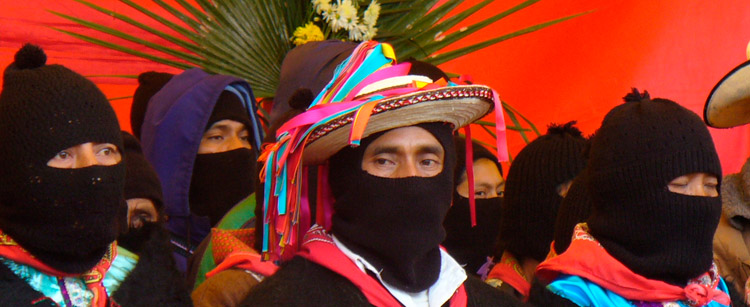
A key element is to realize hat the so-called San Andrés dialogues had a result beyond the unfulfilled document, and that was the creation of the National Indigenous Congress (CNI), in October 1996, which has marked until today the very close relationship of the EZLN with the indigenous movement of a good part of the country, which is not grouped in that space. They also defined an anti-capitalist and anti-patriarchal agenda, with a broader scope and horizon than the aforementioned agreements outlined. On the other hand, members of indigenous peoples’ organizations today do not necessarily know the text of the agreements, but they do participate in the axis of building autonomy-in-fact and based on the rights that emanate from the international aspect in the face of the shortcomings and contradictions of national law and the Judiciary. The key is in the organization to advance in that line.

The current moment in the struggle of indigenous peoples occurs in a context marked by violence against their territories that have often suffered dispossession due to the escalation of mining concessions from 2006 to 2018, for example, whose deadlines far exceed the current six-year period. What is happening today is the imposition of ongoing megaprojects such as the so-called Maya Train, the Interoceanic Corridor or the Morelos Integral Project. The clamp closes with social programs that are individualized and in fact divide communities that try to strengthen collective life through their spaces of self-government. All this, in addition to confronting the expansion and consequent aggression of criminal groups without obtaining protection from the state to stop the open impunity with which they act.
Examples: in Michoacán the very recent crimes of community guards in Ostula and Aquila, the disappearance of Ricardo Lagunes and Antonio Díaz. Guerrero, full of violence against communities. Chiapas, aggressions against Zapatista support bases. These strokes are the backdrop against which the resistance of the peoples and the struggle for life are developing, whose concrete evidence is in the activities planned until the first days of next May. From all this they will define the features of the next stage of their struggle that, they point out, is not measured by six-year terms, nor with the electoral calendar.

On March 4 and 5, the CNI will hold its national assembly in Tehuacán, Puebla, “in the face of the narco-state’s growing violence and the imposition of megaprojects.” On May 6 and 7, the international meeting El Sur Resiste 2023 will take place; it will be preceded by a caravan that will leave on April 25 from the coast of Chiapas, will travel the Isthmus of Tehuantepec from south to north to continue in the Yucatan Peninsula and will end with this meeting in the Cideci / Jacinto Canek Caracol, in San Cristóbal de las Casas, Chiapas. As we can see, in the CNI they take up the Zapatista thought of “achieving the impossible, because too much has already been said about the possible.”
Originally Published in Spanish by La Jornada, Tuesday, February 14, 2023, https://www.jornada.com.mx/2023/02/14/opinion/015a2pol and Re-Published with English interpretation by the Chiapas Support Committee
 Chiapas Support Committee