Chiapas Support Committee
Home of the Compañero Manuel blog on zapatistas & mexico
Making the path to walk
By: Raúl Romero*
In October 2016,the National Indigenous Congress (CNI, Congreso Nacional Indígena) celebrated its fifth congress and 20 years of existence. Meeting in the Universidad de la Tierra, in San Cristóbal de las Casas, Chiapas, delegates to the congress met to analyze the situation of its peoples, of their organizations and of the CNI itself. In that context, the Zapatista National Liberation Army (EZLN, Ejército Zapatista de Liberación Nacional) shared its diagnosis with them. The war against the native peoples has been extended to other social sectors: The war that we have suffered for a long time as native peoples, has now arrived, is now in their streets, in their homes, in their schools, in their workplaces. For that reason, it argued, the peoples are no longer attentive to the massacres and deaths of the indigenous peoples as they would have done before: Our pains are now one more among many others. And, although the pain is extended and becomes deeper, we are more alone than ever. Each time we are going to be less.
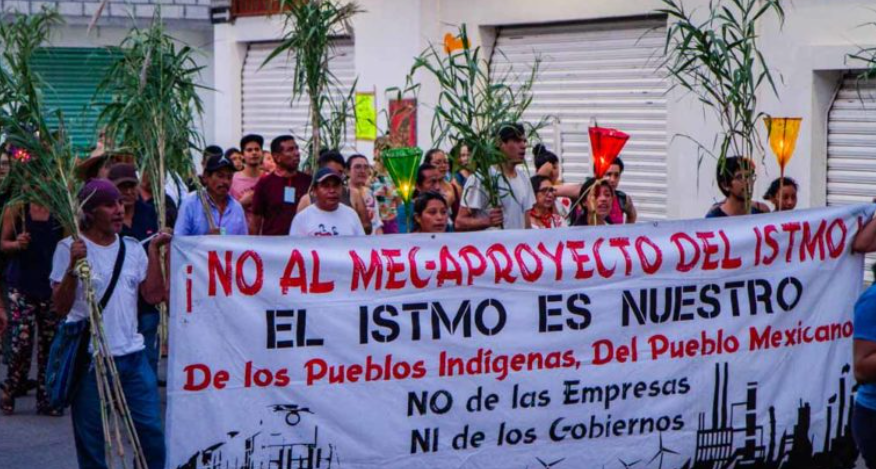
At the end de 2018, the indigenous peoples joined together around the CNI faced new threats and challenges. Defender their territories from megaprojects like the misnamed “Tren Maya | Maya Train,” the Interoceanic Corridor, the Morelos Integral Project and others, within the new national political scenario, earned them being branded as part of the conservative block. In the media, the narratives from above attempted to delegitimize their struggles and erase their long history of resistance.
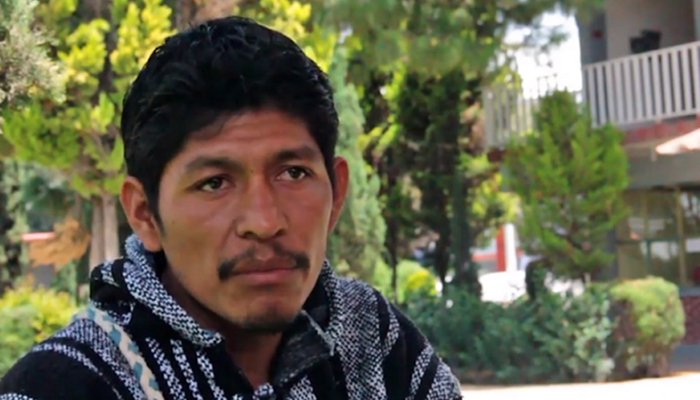
These peoples suffered a painful blow in 2019 with the murder of Samir Flores, defender of the territory and opponent of the Morelos Integral Project. Samir would not be the only defender of territory linked to the CNI killed so far in the current six-year term. In much of the country, the murder and disappearance of community organizers continues.
With the covid-19 pandemic, the peoples of the CNI faced a new challenge, to take care of the virus, while defending the territories from the megaprojects that didn’t stop [during the pandemic]. Saving life in a broad sense: that of its peoples and organizations, and that of humanity and the planet. Taking care of life in the face of the pandemic and organized crime attacks, defending territories, resisting delegitimizing narratives and processes of cooptation and disarticulation. A complicated scenario.
Guided by the principles of not surrendering, not selling out and not betraying, the peoples of the CNI continued weaving from below, in silence, invisible in a media agenda that only knows about conservatives and authoritarians, and where the walking that takes place outside of the established margins, of what’s important to the media and of what’s politically acceptable doesn’t fit.
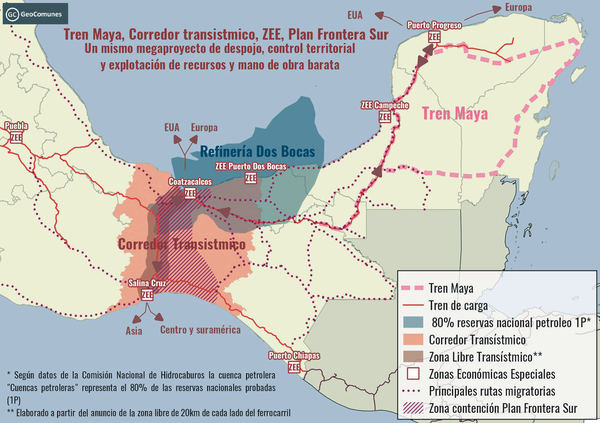
In their walking, these peoples build initiatives of national and international character, dialogue with others, native and non-native, who observe the limitations and contradictions of the current government and the planetary threats. This is the case of the second National Assembly for Water and Life, which covered the demand for the presentation of Ricardo Lagunes and Antonio Díaz alive. The assembly brought together members of 125 collectives, organizations, networks, indigenous peoples and communities, from 18 states in Mexico and six other countries. Among other points, the assembly diagnosed the current moment as a planetary war characterized by: a) the looting, extraction, trafficking, sale and exploitation of water; (b) the extermination of our forests, rivers, seas, minerals, flora, fauna, richness and diversity, both culturally and linguistically; c) the imposition of megaprojects such as the Maya Train, the Interoceanic Corridor and the Morelos Integral Project, and d) by all means they seek to end the autonomy of we indigenous peoples.
On the other hand, in an effort to continue with the analysis and articulation, the CNI convened its National Assembly, which posed two main questions: how are we? And what’s next? Since its invitation, the CNI also diagnoses a war: as humanity and indigenous peoples, we are living a war of capitalist and patriarchal extermination against life on the planet, its plants, jungles, forests, rivers, mountains, plains, peoples and entire cultures for the ambition of extractive capitalism. And they clarified: the indigenous peoples of the CNI and beyond it, are resisting and fighting with dignity and integrity to defend Mother Earth and that we are not willing to extinguish ourselves or let them destroy our common home.

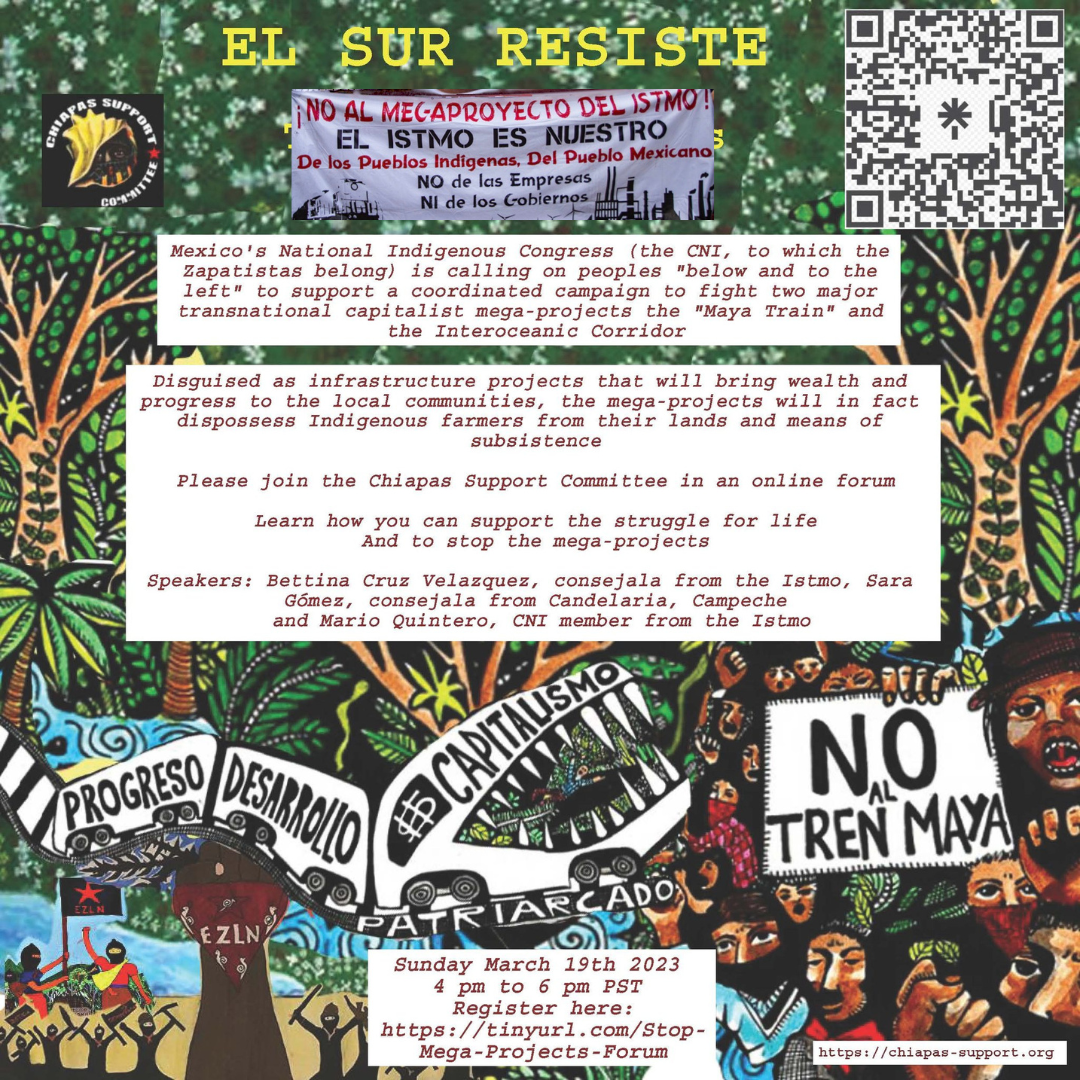
The initiatives don’t stop there. In the coming weeks, the caravan and the international meeting ¡El Sur Resiste! (The South Resists!) will be held, with the aim of building a broad articulation to resist the interconnected Maya Train-Interoceanic Corridor megaproject, an initiative that has a strong internationalist calling.
In a complicated national and international scenario, the native peoples brought together in the CNI continue weaving, constructing horizons, insisting on the global and anti-capitalist nature of the struggle. Accustomed to resisting, the peoples walk knowing that their path is made by walking.
* Sociologist
Twitter: @RaulRomero_mx

Originally Published in Spanish by La Jornada, Wednesday, March 22, 2023, https://www.jornada.com.mx/2023/03/22/opinion/017a2pol and Re-Published with English interpretation by the Chiapas Support Committee
Criminality and Violence in the Chiapas Highlands
By: Mónica Daniela Osorio Reyes y Edgar Baltazar Landeros*
It has been almost eight months since June 14, 2022, in San Cristobal de las Casas, Chiapas, a group of armed civilians took over the northern part of the municipality, shooting into the air and setting fire to vehicles. After five hours of chaos, the armed group withdrew with impunity, without the intervention of security forces [1]. What has been locally called “the taking of San Cristóbal” is a recent milestone in the complex criminality and violence in the Chiapas Highlands. It was an event that evidenced a deep-rooted conflict.
The armed civilians were identified as a group disputing the control of the Mercado del Norte (Northern Market), a strategic point for illegal activities [2]. Although carried out by different actors and for different reasons, these types of events are far from being isolated and, to the contrary, are examples of the complex web of historical violence in the region. The purpose of this contribution is to shed some light on this violence so that it can be addressed.
Structural violence [3] is a characteristic feature of the Highlands (Los Altos) [4], where historical phenomena of racism, poverty [5], para-militarism and political-criminal bosses are interwoven. Despite this, these phenomena of violence and insecurity receive little attention, analysis and response, perhaps because conventional crime indicators do not place the state among the most victimized [6]. Moreover, we know that there are still significant gaps in data, explanations and interventions to explain and prevent or mitigate structural violence in Los Altos; and that this absence, coupled with the complexity of causes, consequences and actors who exercise such violence, prevents its recognition.
Two phenomena serve to analyze the structural nature of the violence and the lack of understanding and interest in what is happening in one of the most victimized and precarious regions of the country:
The existence of illicit economies and criminal actors in the region that does not unleash state action that is common in other states.
This is the case of anti-drug actions [7], which in this part of the country are not carried out as frequently as in other states of the republic; even when criminal groups dedicated to their illicit trafficking have been identified in the region, such as the Chamula Cartel [8].
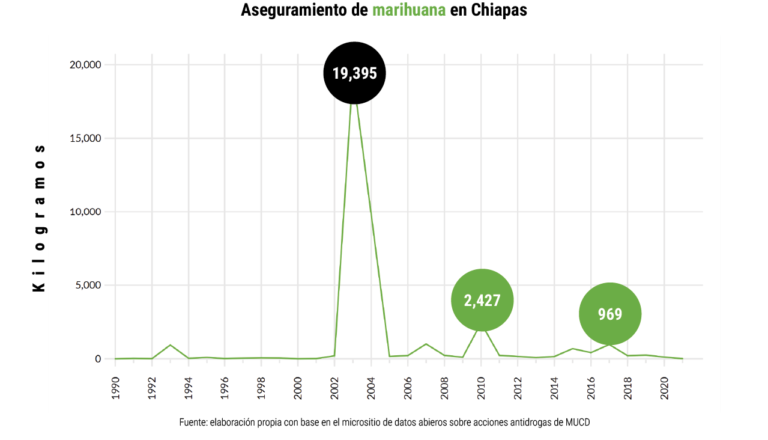
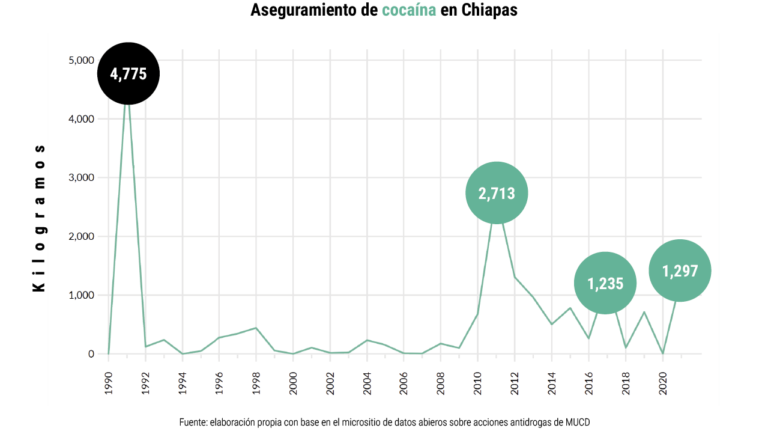
According to the open database on anti-drug actions of Mexico United against Crime, in Chiapas the records of practically all categories of anti-drug actions are very low and only the seizures of marijuana stand out (for having the highest number of records from 1990 to 2021 with 38,237 kilograms) and, more recently, of cocaine [9] (for registering a historic seizure of 1,297 kilograms of this substance in 2021).
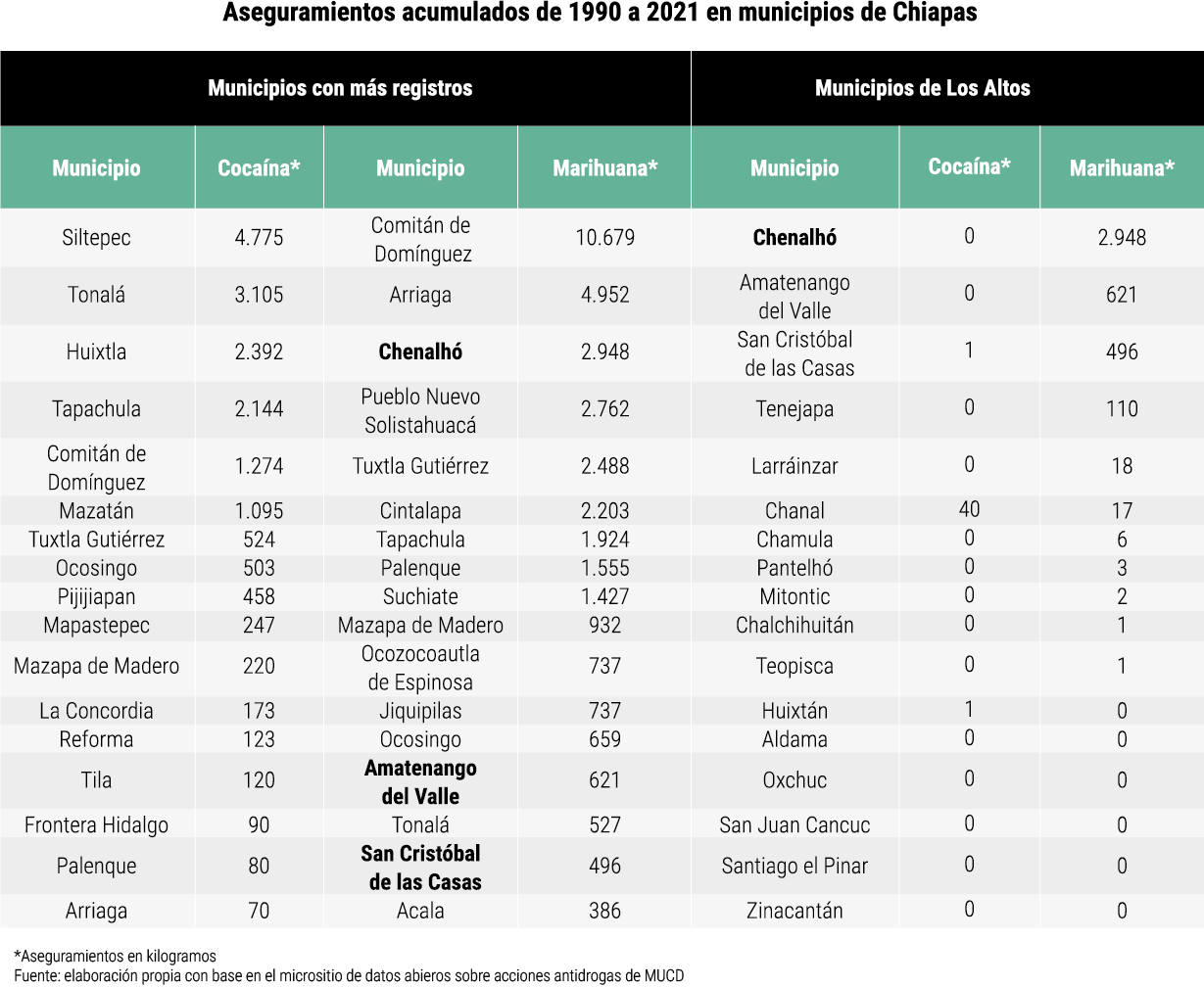
At the municipal level, the relevance of these data lies not only in their potential underreporting, or the lack of connectivity of the few actions recorded with a strategy to address the structural violence experienced in the region, but also in the fact that, when observed closely, they reveal different dynamics depending on whether or not the municipality belongs to Los Altos (The Highlands).
For example, while for most of the state’s municipalities the annual information on confiscations remains relatively stable and constant over time, for others such as Siltepec and Chenalhó, the latter located in the region of Los Altos, there are very few seizures, but when they do occur, the quantities of drugs seized reach historic highs [10]. In other words, in these municipalities there is an atypical pattern for an indicator that is in itself scarce for the state, but which could be a reflection of the dynamics of structural violence in the region: namely, the existence of paramilitary groups, cacique control over the territory, the political use of violence and the lack of attention that the region receives from state and federal strategies and actions.
The existence and use of paramilitary groups in the region has not been addressed nor has it been discontinued.
Another indicator of the historical continuity of structural violence in Los Altos is the existence of paramilitary groups that were created as part of the counterinsurgency strategy of the 1990s [11], with military assistance, sponsorship of local bosses and acquiescence of the authorities [12]. The continuity of these groups has had an impact on the forced displacement of communities. Three indigenous municipalities concentrate the largest number of displaced persons: Aldama (3,499), Chalchihuitán (1,237) and Pantelhó (3,205).
From Santa Martha, Chenalhó, paramilitaries carry out recurrent shootings against communities in the municipality of Aldama. From January to April 2022, 1,113 armed aggressions were registered against communities in Aldama [13], leaving three people dead and five wounded. Journalists have calculated that from 2018 to March 2022, this conflict has left 30 people murdered, although when corroborating this information with data from the SESNSP, in both municipalities 23 investigation files for homicide were registered [14]. It is imperative to point out these sub-registries in order to begin to understand what is happening in the Highlands.
In July 2021, for example, an armed civilian group called “people’s self-defense El Machete” [15] appeared in Pantelhó. By October of the same year, self-defense groups also appeared in the municipalities of Simojovel and Altamirano. In all three cases, these are indigenous municipalities that were experiencing post-electoral conflict due to the crisis of legitimacy of local family fiefdoms [16].
The existence of various armed groups in the Chiapas Highlands demonstrates the historical continuity of structural violence in the region. The recent appearance of “new” armed groups is not entirely new if one takes into account a social context where weapons and violence are central to the historical fabric of inequalities and permanent disputes.
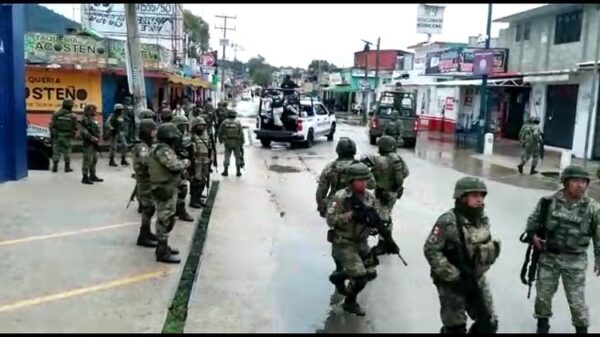
The historical tensions between the political and criminal spheres in Chiapas, as in other parts of the country, do not allow us to speak of separate spheres but rather of networks of complicity and confrontation [17]. The permanent socio-political conflict, forced displacement, the unpunished operation of paramilitary groups and the systematic use of armed violence by cacicazgos (fiefdoms) add to a historical context of backwardness and marginalization that make Los Altos a permanently victimized region.
About the Authors:
* Daniela Osorio is a sociologist from the Autonomous National University of Mexico (UNAM, Universidad Nacional Autónoma de México) and a student of Data Science Engineering at the Universidad del Valle de México. She is a researcher for México Unido Contra la Delincuencia (Mexico United Against Crime).
* Edgar Baltazar has a PhD in Social and Humanistic Sciences from the University of Arts and Sciences of Chiapas. Director of Research and Public Policy of Mexico United Against Crime.
NOTES
[1] Paradoxically, there is a significant military presence in Chiapas, with 12,830 military personnel deployed in 72 military posts. In addition, ten National Guard installations have been built in the municipalities of Palenque, Chilón, Frontera Comalapa, Las Margaritas, Huehuetán, Tapachula, Tonalá, Villaflores, San Cristóbal de las Casas and Bochil.

[2] The criminal group known as “Los Motonetos” (Scooters) operates in this market.. This group is mainly made up of young Tsotsil youths who participate in criminal activities such as arms trafficking, extortion of merchants, sale of drugs, pornographic material of indigenous women and stolen cars.
[3] Structural violence derives from social structuring processes that have “negative effects on people’s opportunities for survival, well-being, identity and/or freedom”. La Parra Casado, Daniel and José María Tortosa Blasco (2003) “Violencia estructural. An illustration of the concept” in: Documentación Social, no. 131, p. 60. The power mechanisms of this type of violence cause “processes of deprivation of basic human needs” and include “ideas of deprivation, psychological harm, alienation, repression or inequality”. Villarruel Mora, Aarón (2017) “Violencia estructural: una reflexión conceptual” in: Vínculos. Sociology, analysis and opinion, no. 11, July-December, p. 15.
[4] The municipalities that make up the region of Los Altos de Chiapas are: Aldama, Amatenango del Valle, Chalchihuitán, Chamula, Chanal, Chenalhó, Huixtán, Larráinzar, Mitontic, Oxchuc, Pantelhó, San Cristóbal de Las Casas, San Juan Cancuc, Santiago el Pinar, Tenejapa, Teopisca and Zinacantán.
[5] According to CONEVAL data, in Chiapas 76% of the population suffers from poverty, 29% lives in extreme poverty, only 25% has access to quality food and 40% to health services.
[6] According to victim data provided by the Executive Secretariat of the National Public Security System (SESNSP), Chiapas is usually among the 15 entities with the fewest victims in the country.
[7] These have been registered by MUCD in a database that retrieves information from 1990 to date, in relation to actions of crop destruction and seizure of illicit substances by the National Guard, SEDENA, SEMAR and the now defunct Federal Police.
[8] This group is also involved in other activities such as trafficking in people, fuel and wood, as well as in the production of pornography.
[9] It is worth noting that from 1990 to 2021 Chiapas was the fifth state with the most cocaine seizures.
[10] Siltepec for cocaine in 1991 of 4,775 kilograms and Chenalhó for marijuana in 20003 of 2,948 kilograms.
[11] The Chiapas 94 Campaign Plan saw the military training of civilian counterinsurgent forces.
[12] Galindo de Pablo, Adrián (2015) “El paramilitarismo en Chiapas” in: Política y Cultura, no. 44, pp. 189-213.
[13] One of the reasons for the conflict is the dispute over a 60-hectare plot of land.
[14] It should be clarified that the secretariat does not provide information on victims at the municipal level, so it is likely that within these 23 investigation files more than one victim can be found.
[15] A few days before the formation of the self-defense group, the human rights defender Simón Pedro Pérez López was murdered in that municipality. Initially, this group defined itself against the criminal group known as Los Herrera.
[16] Researcher Araceli Burguete presents a synthesis of the political processes involved in the construction of municipal councils.
[17] In the recent political history of Chiapas, it is possible to observe this interweaving of the political and the criminal, with a preponderance in the Altos region. In September 2020, the leader of an armed group that disputed power with the mayor of Chamula was arrested. In April 2019, a former candidate for the municipal presidency of Bochil was arrested for leading an armed group that harassed the mayor of that municipality. In 2017 and 2018, a paramilitary group from Chenalhó caused the displacement of communities in Chalchihuitán. In 2017, the mayor of Chenalhó employed an armed group to recover the municipal presidency that was occupied by an antagonistic group. In 2018, the mayor of Yajalón irregularly created a “tactical” group as a parallel structure to the municipal police.

Originally Published in Spanish by Chiapas Paralelo. Saturday, March 11, 2023, https://www.chiapasparalelo.com/opinion/2023/03/criminalidad-y-violencia-en-los-altos-de-chiapas/ with English interpretation by Schools for Chiapas and Re-Published by the Chiapas Support Committee
Payán and the war in Chiapas

Carlos Payán Velver, founder and former director of La Jornada, died on March 17, 2023, at the age of 94. Below, Hermann Bellinghausen recalls La Jornada’s response to the Zapatista Uprising.
By: Hermann Bellinghausen
The days of January 1994 that followed the indigenous insurrection on New Year’s Eve in Chiapas, were days that moved the world. The country’s political axis shifted; new coordinates, new interpretations, new words, new priorities. The burst was political, intellectual and media. Spontaneous masses demonstrated in the streets. The global outcry was huge. The self-satisfied government of Carlos Salinas de Gortari faced its worst nightmare on the opening night of its Free Trade Agreement with North America. Additionally, the international left woke up from the knockout in which the fall of the Berlin Wall and the collapse of the Soviet Union had left it.
A media bombshell! The most important newspapers and television stations in America and Europe were allowed to come, all the agencies, top-level observers. For La Jornada, directed by Carlos Payán Velver, it was a crucial hour: he turned it into a unique journalistic experience in the world. With globalization on the rise and the Internet emerging, Payán turned the newspaper into covering the uprising of the Zapatista Army of National Liberation (EZLN) with visionary clarity, commitment and a lot of audacity.
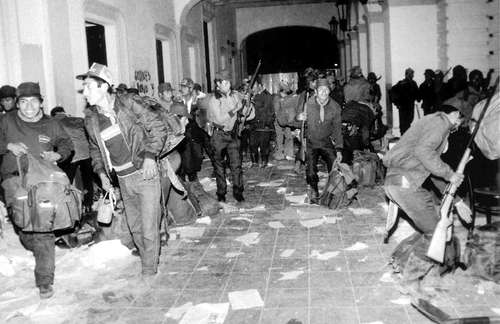
On Sunday, January 2, we woke up with the front page about the Uprising in Chiapas, with a devastating photo by Carlos Cisneros of the indigenous people in possession of the municipal palace of San Cristóbal de las Casas. The first day the reporters Rosa Rojas and Matilde Pérez and the photographer had traveled to Chiapas they interviewed Subcomandante Marcos and collaborated with Amado Avendaño, director of the local newspaper Tiempo, in giving a first-hand account of the unusual indigenous challenge.
The initial reaction of La Jornada, between embarrassment, admiration and rejection of the violent, tried to conjure, in its first editorial of the year, the ghost of Lucio Cabañas. And from the first minute he covered the news very well, which he did not agree to accompany the day before, since only three media directors were notified by the insurgents: Julio Scherer, from Proceso, Amado Avendaño, from Tiempo, and Carlos Payán, from La Jornada . Only the latter did not send an envoy to the uprising. The correspondent, Elio Henríquez Tobar, who by the way months before had given the world premiere of a guerrilla camp in Ocosingo and of some combat with the federal Army, was on vacation.
Events developed very quickly and for its edition on Monday the 3rd, La Jornada had taken a turn in favor of the uprisings, which would deepen in a few days. Payán made use of the entire newspaper and by the 4th he already had about 15 people there: photographers, reporters, chroniclers, correspondents, and all the house columnists on the subject. The pages that were needed.
The outburst and caution on the day 2 corrected, La Jornada immediately reached a high note in terms of coverage, discussion and documentation of the matter. It was the only major newspaper in the world that fully committed itself to the indigenous rebellion and placed the irreversible rise of indigenous peoples on its future path.
The position of Payán, director of the orchestra, a communist for life, founded this historical turn. He understood that he did not need to understand everything to know that it had great significance. Only in the first two weeks of that January did it attract the most lucid or influential writers: Carlos Montemayor in the forefront, Rodolfo Stavenhagen, Octavio Paz, Carlos Fuentes, Carlos Monsiváis (via For my mother, Bohemians), Fernando Benítez, Enrique Florescano, Luis Villoro, Antonio García de León, Luis Javier Garrido, Eraclio Zepeda, Elena Poniatowska, Homero Aridjis, Adolfo Gilly, Víctor Flores Olea, Arturo Warman, as well as the Spaniards Manuel Vázquez Montalbán and Manuel Vicent.
It’s easy to say that no one else proposed or achieved coverage like this, which would also be maintained and deepened informatively in the months and years to come. Not that we were very buoyant, but no paper was spared to also include the entire communiqués of the indigenous commanders and the long and widely read political-literary disquisitions of Subcomandante Marcos.
La Jornada won readers around the world, it became indispensable. It challenged the federal government and the armed forces head-on by giving voice and follow-up to the rebels and all the indigenous issues that gained prominence. Payán remained incorruptible, unyielding, enduring and a visionary, shoulder to shoulder with Deputy Director Carmen Lira and all the workers.
Newspaper materials were reproduced and translated halfway around the world. The explosive spread of the Internet found us sharp. Another success of Payán was to make electronic access to our pages free, unlike other media. Because, whatever, Chiapas was the issue. The assassinations of the presidential candidate and the national leader of the PRI would soon emerge. A convulsive year that projected La Jornada and its contents formidably.
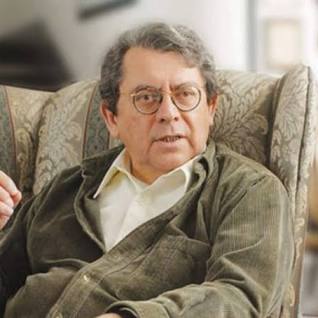
Montemayor
Aware of the journalistic prowess of the newspaper he directed, Payán led the edition of a book, unavailable today, that brings together what was published only in the first 17 days of January: Chiapas. The uprising (La Jornada Ediciones, September 1994), with a prologue by Carlos Montemayor.
Over time, already a Senator of the Republic, Payán was a constant presence in Chiapas, as a member of the mediation commission between the treacherous government of Ernesto Zedillo and the rebels; He played a fundamental role in maintaining the truce between the parties, with open sympathy for the Zapatistas, who called him a teacher. He put his body in favor of peace.
Thanks to Captain Payán, our ship collectively achieved an exemplary work of modern journalism. He knew the risks. We are priority targets for military intelligence, he warned me at some point. He had to face tremendous pressures from power. No fear stopped him. Freedom of expression had scored somewhat formidable thanks to the lucidity, commitment and moral authority of Carlos Payán.
Originally Published in Spanish by La Jornada, Monday, March 20, 2023, https://www.jornada.com.mx/2023/03/20/opinion/004a1pol and Re-Published with English interpretation by the Chiapas Support Committee
More armed groups emerge in Pantelhó, Chiapas
By: Ángeles Mariscal
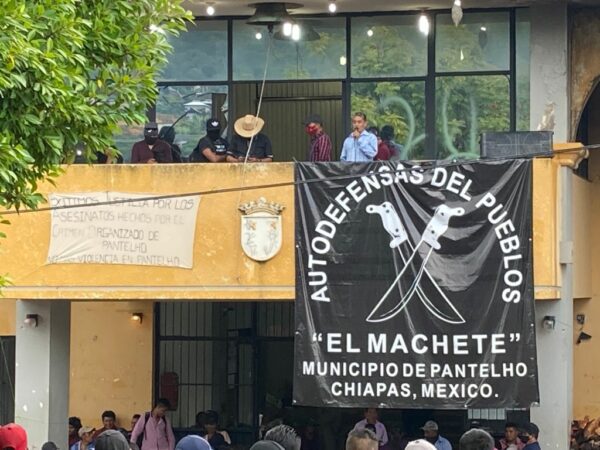
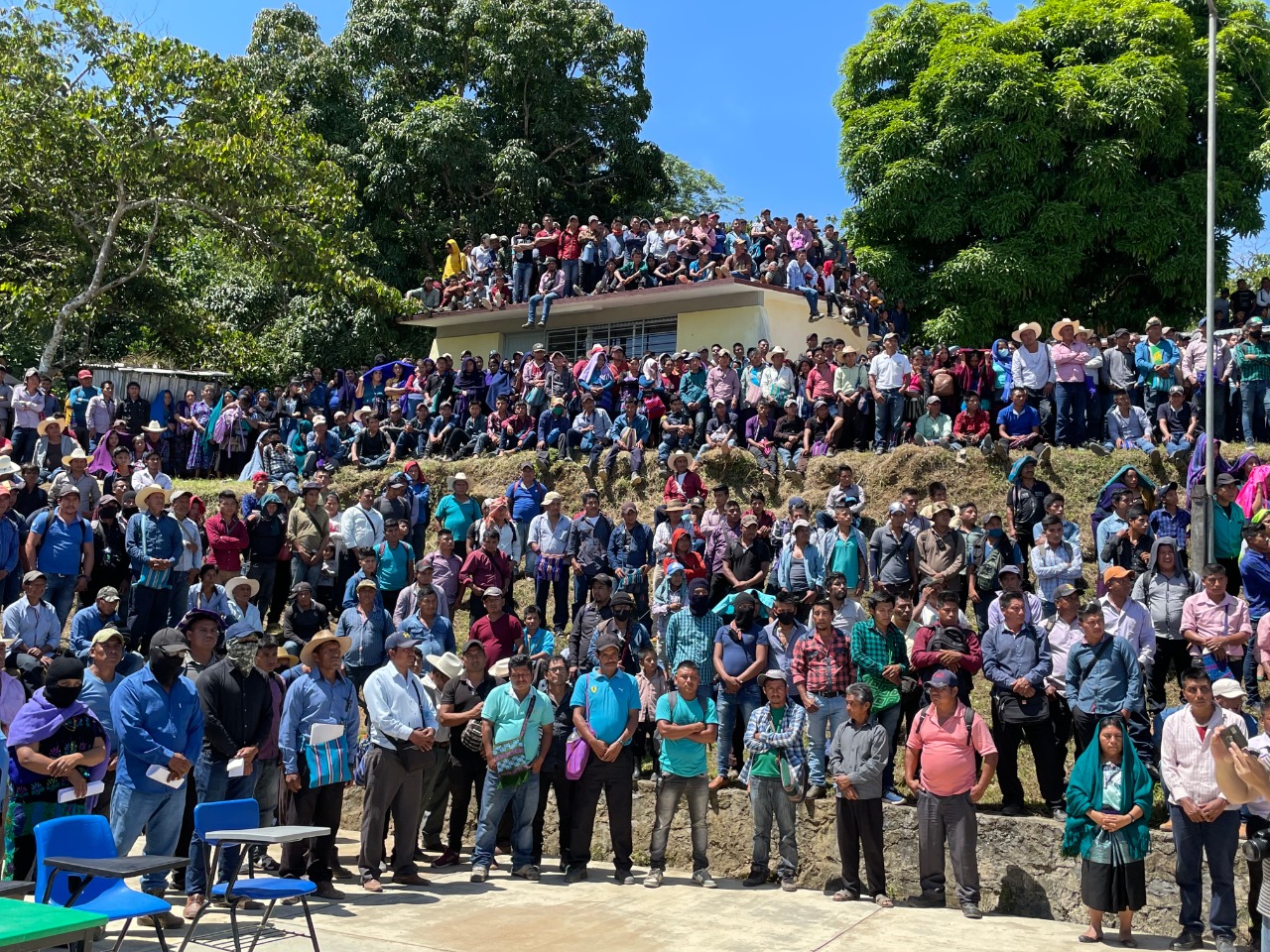
Three armed groups have emerged so far this month, in the municipality of Pantelhó, located in the Chiapas Highlands, an indigenous region. Armed with high-powered weapons, these groups verbally confronted the self-defense group called “El Machete” through videos.
In July 2021, the self-defense groups against which the armed groups are now demonstrating expelled people accused of being linked to organized crime, who for years subjugated the population of Pantelhó.
At that time (July 2021), the self-defense groups negotiated with the government to install a municipal council that has functioned since then, amid tensions within the municipality.
Now, almost two years after the emergence of the self-defense groups called Los Machetes [1], the tension in Pantelhó has increased, because one of its commanders, named Daniel, was ambushed on March 2. His wife, Petrona López Pérez, died during the ambush, which occurred at the entrance to the municipality. [2]
In the days following the ambush, three armed groups made their public appearance, sending videos to the media, where they introduce themselves and flaunt their weapons.
In the messages they read, they ask the state and federal governments to arrest those who make up the self-defense groups, in particular Commander Daniel.
The latest video from someone who identifies himself as a member of a new armed group from Pantelhó was sent on Tuesday, March 14. He accuses the government of protecting the El Machete vigilantes, calling this organization a “group of criminals.”
In the message they vindicate the 21 people who disappeared in July 2021, allegedly in the hands of the Los Machetes self-defense groups.
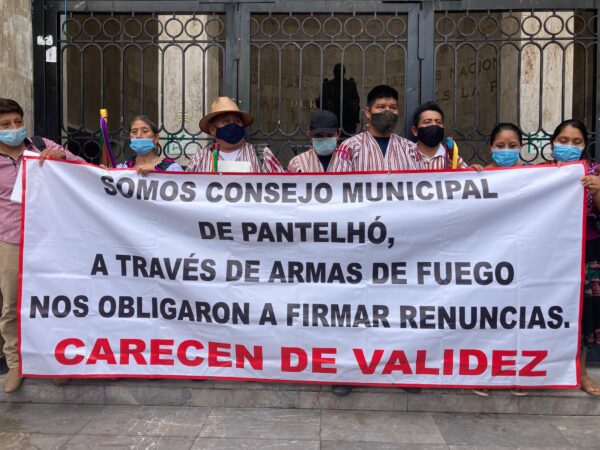
Shortly before they were taken away and disappeared, these people were exhibited at the kiosk in the municipal seat of Pantelhó, accusing them of being part of criminal groups. Then they were never seen again.
This group, opposed to El Machete, also warns that if the government does not respond to their requests, including dismissal of the municipal council that now governs the municipality, there would be new armed clashes.
“In order to avoid bloodshed in the municipality of Pantelhó, heed our requests, appeals and warning; otherwise, we will clean up our people,” the masked men say.
He emphasizes that whoever makes this pronouncement does not have an indigenous accent characteristic of those who live in the Pantelhó region. Prior to this, two other armed groups had already sent similar messages.
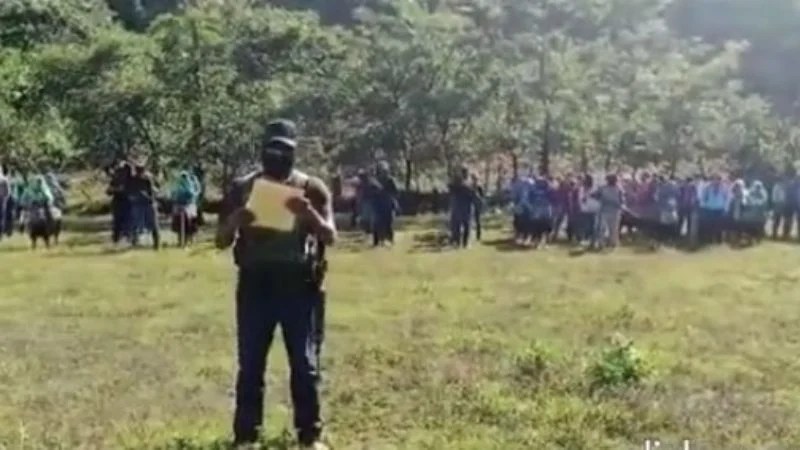
In the first, on March 3, a masked man in camouflage clothes reads a statement, while armed people are seen in the background, some of them women with their faces covered and dressed in traditional clothes.
Two days later, on March 5, another armed group sent a new recorded message. It contains men in military-style uniform, who ostensibly carry machine guns and other weapons.
The situation that the indigenous municipality of Pantelhó is going through is similar to what happens in other Chiapas municipalities with the presence of armed groups that confront each other, and accuse each other of being criminal groups. These are groups that subjugate the population with their arms.
In the case of the Los Machetes self-defense groups, when they emerged in July 2021, they had the support of residents from the 86 communities and 18 barrios, who explained that for years they were subjugated by organized crime groups.
Now the situation is confusing because the state and federal governments have not explained to society what the diagnosis is and how this is being addressed.
[1] It is a bit confusing that the article first uses El Machete and then Los Machetes to describe the self-defense forces in Pantelhó. The explanation could be that El Machete has internal divisions and now consists of more than one group.
[2] According to Borderland Beat, 4 people were killed in the ambush. The other 3 were municipal police agents who belong to El Machete.
Originally Published in Spanish by Chiapas Paralelo, Wednesday, March 15, 2023, https://www.chiapasparalelo.com/noticias/chiapas/2023/03/surgen-nuevos-grupos-armados-en-municipio-de-pantelho-chiapas/ and Re-Published with English interpretation by the Chiapas Support Committee
The storms from above
By: Raúl Zibechi
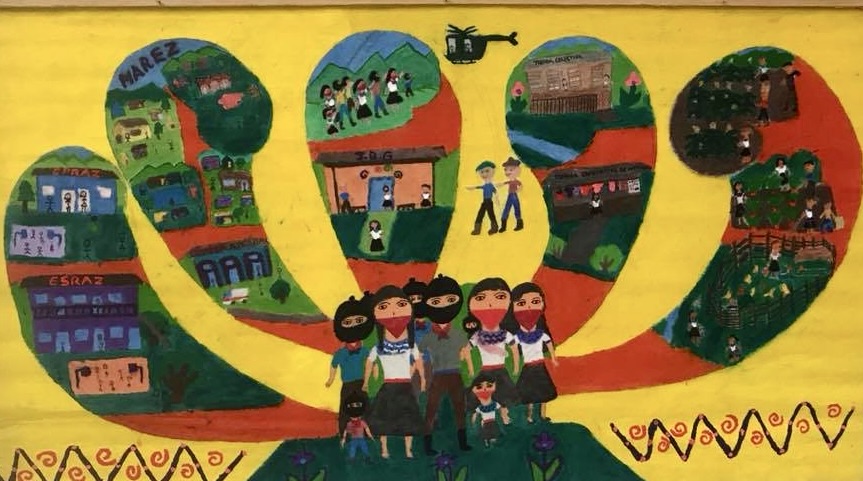
They are multiple and simultaneous. They are environmental, military, political, paramilitary, economic and femicidal storms. It’s drug trafficking as an arm of the states and the powerful. It’s a policy of accumulation of capital and of power, predatory of everything it finds in its way. Violence has been converted into the principal argument of the ruling classes.
There’s not enough space to name them, but they are summarized in death and destruction. That is the capitalism that really exists in Latin America and doesn’t stop advancing in corpses, human and non-human, living beings, rivers, hills and meadows.
In recent weeks governments and ruling classes have deployed a variety of modes of attack on the peoples, which reveal how power tightens with its claws. The autonomous community of Temucuicui, a Mapuche village in southern Chile, was attacked by carabineros (Chilean national police) with the result of one seriously injured and the burning of the wheat crop.
It’s not the first time that community has suffered repression, nor will it be the last. But burning food is something extremely serious. On February 10, they seized 80 tons of wheat and last week they burned 50 hectares of the community without harvesting. “Carabineros violently repressed the harvest work, there were twenty people injured with steel pellets” and left the community member Hugo Queipul in serious condition (https://bit.ly/3J4UFTQ).
The autonomous community’s communiqué adds that: “This act is the simple reiteration of the terrorist Chilean State’s treatment of the Mapuche people, which during the 19th century used to burn the ruka [casas] and the crops, as well as stealing the cattle in order to deliver them to them to expat colonists who fled poverty in Europa” (https://bit.ly/41PM8MR).
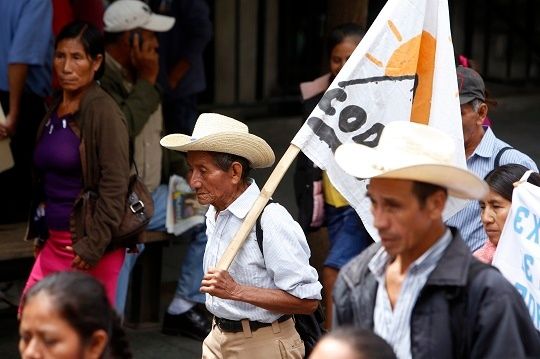
Journalism is being criminalized and persecuted in Guatemala. A judge opened an investigation into a group of journalists of elPeriódico because of “obstruction of justice.” With good reason, justice fears journalistic investigations because they might reveal the system’s misery.
“The final objective is to destroy independent journalism as a democratic space par excellence, or contaminate it enough that the most suspicious voices are silent, self-censorship is applied and they renounce confronting power,” says La Prensa Gráfica (https://bit.ly/3ZvdpCJ).
In an attitude reminiscent of the Daniel Ortega dictatorship, the judge is also obstructing the Movement for Liberation of the Peoples (MLP) [1] so that it cannot present candidates. But it authorizes the candidacy of Zury Ríos, daughter of the dictator Efraín Ríos Montt, expressly prohibited by the Constitution. International bodies tried and convicted Ríos Montt of corruption (https://bit.ly/3mxIgQC).

It is assured that El Salvador, Honduras and Guatemala (in addition to Nicaragua), are no longer democracies. Were they ever one? What democracy can be built on the poverty of 70 percent of the population, marginalization and violence?
We end this brief tour with Argentina. UNICEF says that 66 percent of children are poor and that 87 percent of families in popular neighborhoods have complications accessing food. The journalist Darío Aranda argues that “like for 200 years, the main idea of local rulers is to be a supplier of raw materials, which is precisely one of the main causes of poverty and dependence” (https://bit.ly/3mAzocJ).
He adds: “His proposals to get out of the crisis were the same as in 2022: more mega-mining, more agribusiness, more oil and lithium exploitation.” They do not want to go further than to repeat again and again the same thing that has already failed, and that is at the basis of the current problems. Alberto Fernández, the Argentine president, seems to be copying AMLO, in the sense of solving violence with more guns on the street. Faced with the narco offensive in Rosario, their response is to send police and military (https://bit.ly/3T2Zrpd).
In the countries mentioned there are governments of the right as well as the left, conservatives and progressives. But all of them do exactly the same thing. Some with better manners. Others are cruder. What is not in question is the model of accumulation by dispossession. [2] The only debate that really exists is how to manage a model that neither right nor left discuss: a reality impossible to hide with elections and with “rights.”
They preach rights to us when extractivism systematically violates them. They use the commons to pay the foreign debt, please the multinationals and the ruling groups. That’s why Aranda concludes: “Governments don’t think about the next generation, but about the next election.” But in the areas devastated by the model, there is already talk of a “mining dictatorship.”
The model is not defeated from the institutions, but with direct action from below. We can learn from indigenous peoples and women who struggle: Extractivism is not stopped with decrees and laws, but rather with organized rebellion.
Translator’s Notes
[1] The Movement for the Liberation of the Peoples is a Guatemalan political party, anti-systemic and left, which seeks a multi-cultural state, in which indigenous peoples are equally represented. It received official party status in 2018.
[2] Marxist Professor David Harvey explains accumulation by dispossession here.
Originally Published in Spanish by La Jornada, Friday, March 10, 2023, https://www.jornada.com.mx/2023/03/10/opinion/017a1pol and Re-Published with English interpretation by the Chiapas Support Committee
Neocolonialism in the Isthmus of Tehuantepec. The Gringos are coming!
What follows is a statement from the Assembly of the Indigenous Peoples of the Isthmus in Defense of Land and Territory (APIIDTT)), dated March 13, 2023 and posted on the website of the National Indigenous Congress as background for the El Sur Resiste / The South Resists Forum on Megaprojects.
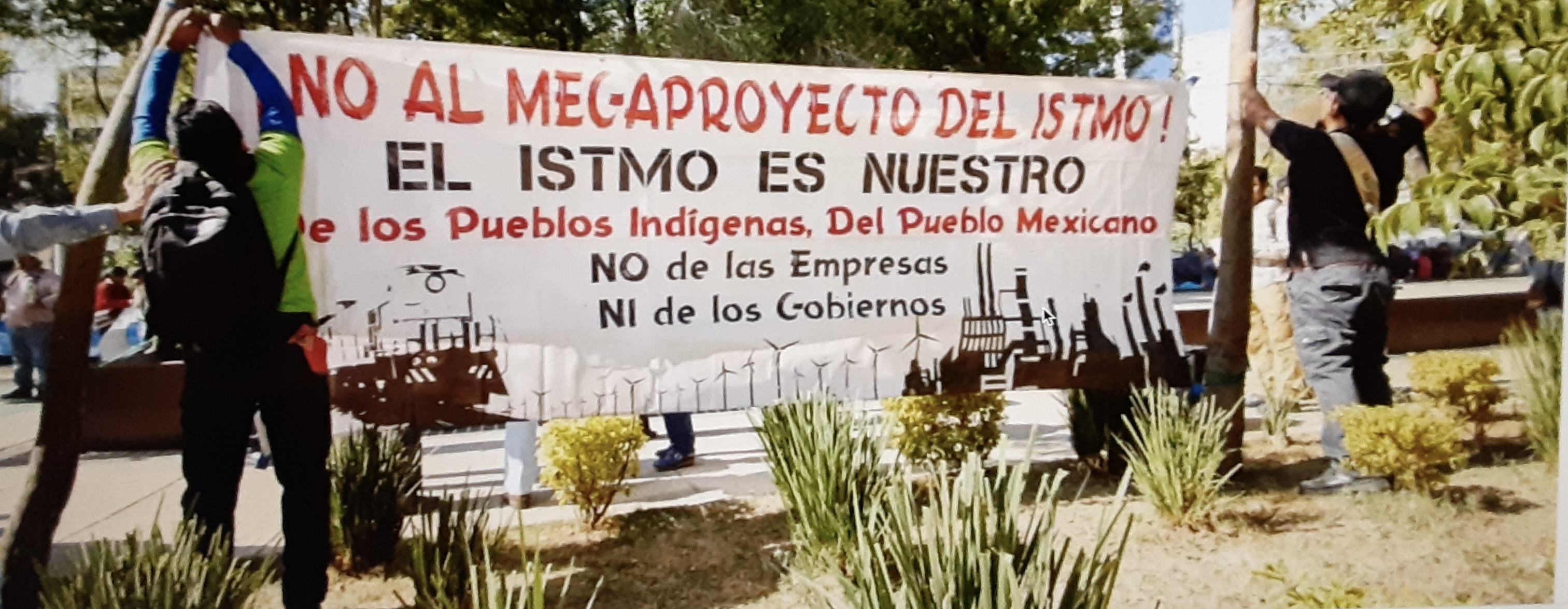
We can look as far back as the 16th century, when Charles V entrusted his explorers (colonizers) to find the best passage between the Atlantic and the Pacific, to locate what is perhaps the first moment in the long history of the colonizers´ interest in connecting both oceans with an interoceanic passage through the Isthmus of Tehuantepec
Looking into the distant past, we can see that opening up access routes, across countries or entire continents, is a constant in this long history called colonialism.
This vision has persisted for five centuries, with the same goal of promoting trade, an essential condition of the capitalist mode of production, and the large international conglomerates continue to promote it.
The interoceanic passage, a megaproject accepted today with great fanfare, has a long prehistory: under President Juarez it was known as the McLane-Ocampo Treaty; during the administrations of Lopez Portillo and De la Madrid, it was presented as the Alpha-Omega Plan; under Ernesto Zedillo, it was promoted as the Integral Economic Development Program for the Isthmus of Tehuantepec. Vicente Fox, taking up the previous iterations, included it in the so-called Plan Puebla-Panama; Felipe Calderon, following the initiative of his predecessors, inserted it within the Mesoamerica Integration and Development Project or Mesoamerica Project; Peña Nieto once again promoted it within the Special Economic Zones. And, surprise! the historical need to amputate the Isthmus of Tehuantepec, is now being promoted again, under the name of Interoceanic Corridor of the Isthmus of Tehuantepec or Program for the Development of the Isthmus of Tehuantepec.
From the 16th century to the present, the domination and subordination of an interconnected and geographically dispersed world has seen the birth of new empires that have taken the roundness of the earth as the stage for their interests. In other words, what is called geopolitics has changed actors throughout these five centuries. Are we exaggerating when we say that the megaproject will amputate the Isthmus of Tehuantepec? The truth is that we are not. The ones who exaggerate here are those who do not see the colonial continuity of this Program for the Development of the Isthmus of Tehuantepec.
Let’s take a look a little further south, at the commercial Channel closest to our country. Panama was amputated in the XIX century from Colombia, turned into a defenseless and depopulated country (according to the logic of commerce ), allowing the United States to establish, in perpetuity, disadvantageous agreements for the administration of the Interoceanic Canal built in the Panamanian Isthmus. This country, built under the slogan “For the benefit of the world”, is today one of the most dynamic economies in Latin America, and amongst those in with the greatest social inequality (according to international financial organizations).
The gringos are coming to the Isthmus of Tehuantepec! Or rather, they are already here, and it seems that nobody bothers, or maybe the State has everybody so blinded that they are all applauding the efforts of the American (mainly) and Chinese (seeking to position themselves) empires to administer the Isthmus of Tehuantepec to further their geoeconomic interests and geopolitical expansion.
How will this neocolonial adventure be explained to their ancestors who defended this territory from various foreign invasions? With what arguments will they justify why they submissively accepted, applauding the gringo empire as it enters the region and completely devours it.
The Federal Executive himself shouted it out into people’s ears at this morning’s daily press conference: the gringos are coming with great interest in this geo-strategic region for world trade and manufacturing. Ken Salazar (US ambassador in Mexico) has reiterated this on several occasions, stating that:
“The Isthmus is such a strategic site that it was recognized more than 100 years ago, but it has not been developed. That is why we look to the south. We can do some truly great things. You know that if we just sit still, we cannot thrive. You know it. It happens in your personal lives, in your governments. We have to be optimistic about where we can go ,but also we need immediate action to make efforts that will have an impact. So we, the government of the United States, see opportunity, we see optimism, we see that with this project and other efforts that we are embarking on in Central America, this region of the Americas is where the future of the economy lies. Here is also the future of democracy. Because our values, as President Biden says, is to lift up all people (words said by Ken Salazar, in San Juan de Ulua Veracruz, on April 22, 2022).
Laura Richardson, the new head of the US Southern Command, has also reiterated the interest of the United States, in the midst of the dispute between the US and China over world hegemony of lithium and water resources in Latin America, since, as she stated, the natural resources of this hemisphere “have a lot to do with national security (of the United States) and we have to up our game” (https://cutt.ly/k8CyAup).
The American Chamber of Commerce, the largest business organization in the world and the largest lobbying group in the United States, has stated through its spokesperson in Mexico, that this megaproject will enable “natural resources, geographic location, strategic industries and trade agreements to accelerate the integration of global supply chains” (words by the AmCham, in San Juan de Ulua, Veracruz, on April 22, 2022) and turn the Isthmus of Tehuantepec into a center of development controlled by those at the top.
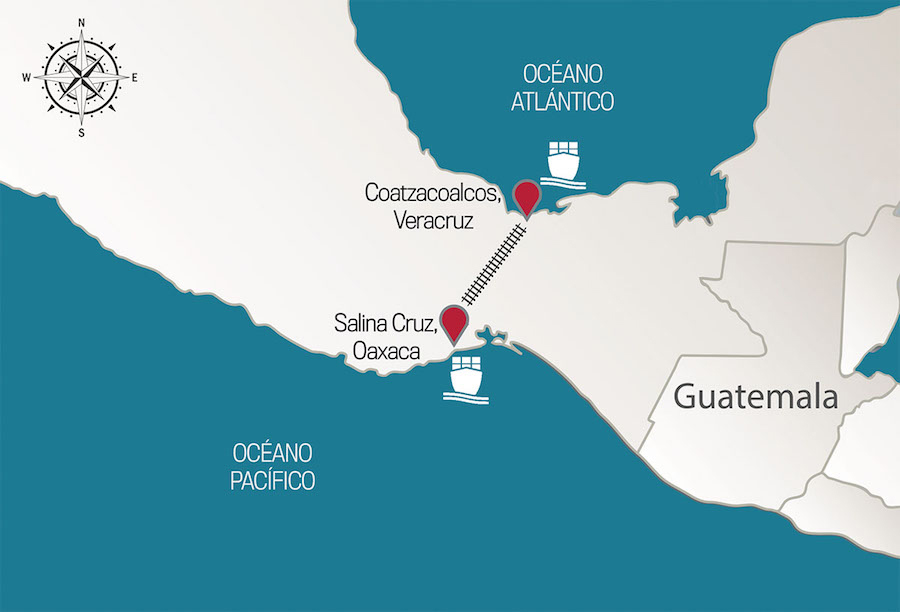
If this is not enough to demonstrate that a neocolonial crusade over the Isthmus of Tehuantepec is coming for everything and everyone, from March 19 to 21 of this year (2023), some of the future administrators of this region will come to diagnose the territory. The Federal Executive has invited legislators from the United States to come on those dates to offer the region to them. Among those who have publicly announced their participation is John Kerry, currently the United States special presidential envoy for climate.
If all these statements that the United States is making publicly about its intentions in the Isthmus had been made in the past, and not even the very distant past, we know that the inhabitants of this region and the whole of the territory dominated by the Mexican State, would have righteously raised the issue and brought to public discussion the imminent surrender of this territory to foreign interests, or in other words, the threat to our sovereignty. But this is not the case at the moment. Why not? As we have emphasized before, today the danger is dressed up as a leftist and from his podium he convinces his followers to surrender themselves as instruments of submission. Erasure of memory is one of his main qualities.
To conclude, it is important never to forget that a country is and will be dominated by the capital invested in it. Ken Salazar, AmCham and John Kerry are not the only ones in this camp. The colonialist crusade that clings to the Isthmus of Tehuantepec, involves capitalist conglomerates relocating global supply chains to be nearer to their closest and most powerful ally: the United States. The current scenario of war, pandemic and disruption of commerce, forces capitalism to reorganize; the Isthmus of Tehuantepec is once again positioned as the heart of relocations, with increasing militarization and punitive mechanisms aimed at Indigenous communities. This megaproject is not only for the connection and distribution of goods to the USA, Asia, Europe and Central America, it will allow companies to insert themselves in the area order to regionalize global value chains and promote the development of productive activities that generate large quantities of goods to supply the immediate market, the USA, or the international market. The cost will be the environmental, territorial, symbolic and political degradation of everything that constitutes the entirety of this region.
Are we exaggerating? We wish we were. It has been announced that Constellation Brands an American company that produces and markets beer, wine, and spirits, will be installed in one of the 10 polygonal areas that the State has offered. A brewery will be built in one of the Centers of Development for Wellbeing (PODEBI by its acronym in Spanish) located in Veracruz. The brewery conglomerate has been given 17 concessions to extract 3,972,355 cubic meters of water for this purpose. Constellation Brands requires 20 million cubic meters of water annually to operate. And no, it will not be using recycled water, because the Federal Executive has said that there is plenty of water in the Isthmus of Tehuantepec; and who better to take advantage of this resource than a multinational?
But this company, based in New York, is not the only one accompanying the U.S. General Staff in the crusade for the Isthmus. It has been announced that a total of 400 companies from Asia are interested in relocating in Mexico. Several among them are interested in coming to the Isthmus of Tehuantepec. We highlight: Caxxor Group, Hyundai Motor Company, Amazon Inc, CARGILL, General Motors, VISTEON, SHELL and NESTLE, among several others that come together both in the AmCham as in the Council of Global Companies. Raquel Buenrostro (Secretary of Economy), recently offered the region to the latter.
Let’s go back to John Kerry. According to the Federal Executive, the recent visit of this American legislator to Mexico is due to the fact that the United States will be the main investor in the four wind farms that will be installed next to the PODEBI. According to the President of the Republic, the United States will provide resources to the CFE (Federal Electricity Commission) to be the owner of these wind farms. What they have not said is that there are also capitalist conglomerates focused on the wind farms sector, such as: Applied Energy Services (AES corporation); EDP Renewables; Sempra Infrastructure; TC Energy; INVENERGY; and again SHELL. Do you really believe that it will be for the benefit of the population?
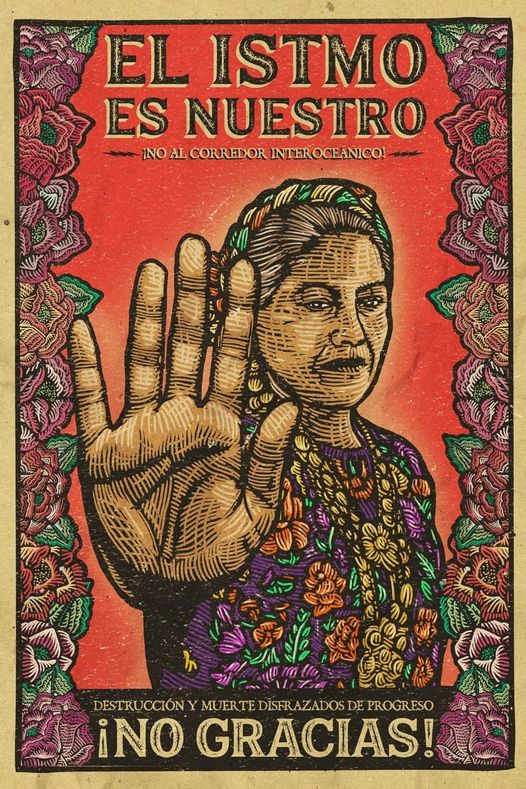
The Neocolonialist enterprise over the Isthmus of Tehuantepec, headed by the U.S., will lead to the commercialization, speculation and disappearance of everything that constitutes the territory, under mountains of ash and scrap thrown up by the Centers of Development and Well-Being. American and probably Asian domination is the main goal of the crusade undertaken by the capitalist conglomerates. It will allow for an almost miraculous improvement of the means of production and at the same time a catastrophic dislocation of the life of the 12 indigenous peoples that inhabit this isthmic region.
And as we emphasized before, today once again the Isthmus of Tehuantepec and we, who are an organic part of it, must be on the alert, since the new plantation owner occupying the presidential chair wants to amputate our territory and hand it over to the foremen, who he really represents. If we let them advance, they will come to strip us of our land and our memory, they will close our ears and our hearts to the voices that warn us as omens: it is time to walk very carefully, to defend, as have those who preceded us, this vast territory that belongs to us, we who make the worlds and the symphonies, in the face of the gringos who come to divide up this convulsive but beautiful territory.
Five days before the U.S. tour of our territory, we say to them: we will be waiting for you, with dignity and without stepping back. For the defense of life and our territories.
Undoubtedly there are more veins that unite us than the cracks that divide us.
From the Isthmus of Tehuantepec this is our word as well as our call to be ALERT.
Assembly of Indigenous Peoples of the Isthmus in Defense of Land and Territory – APIIDTT

You are invited to participate in the Chiapas Support Committee’s Forum on Megaprojects (Interoceanic Corridor and the “Maya” Train). You can register for the El Sur Resiste / The South Resists forum here.
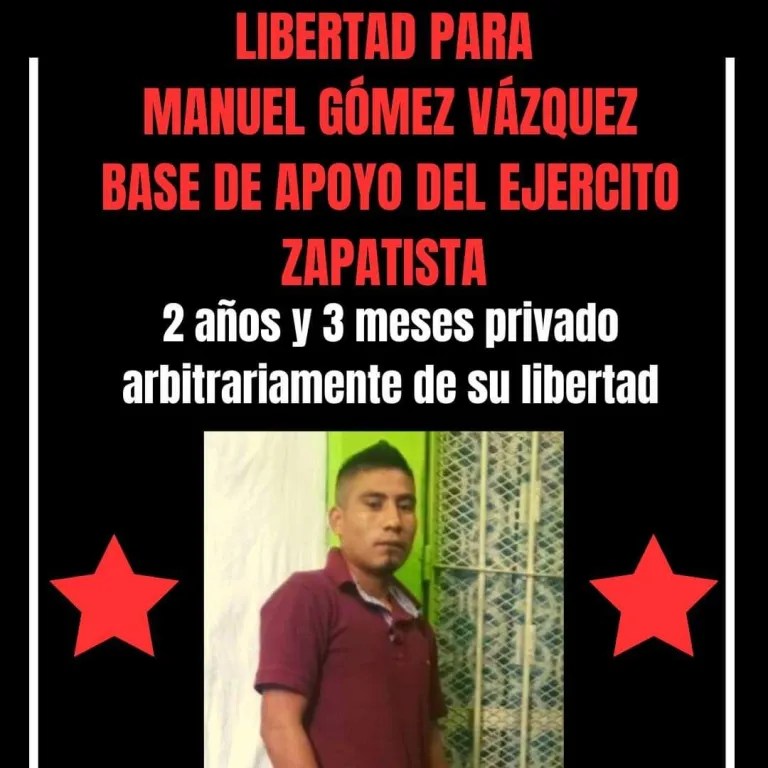
They demand immediate freedom for Manuel Gómez Vázquez, a Zapatista
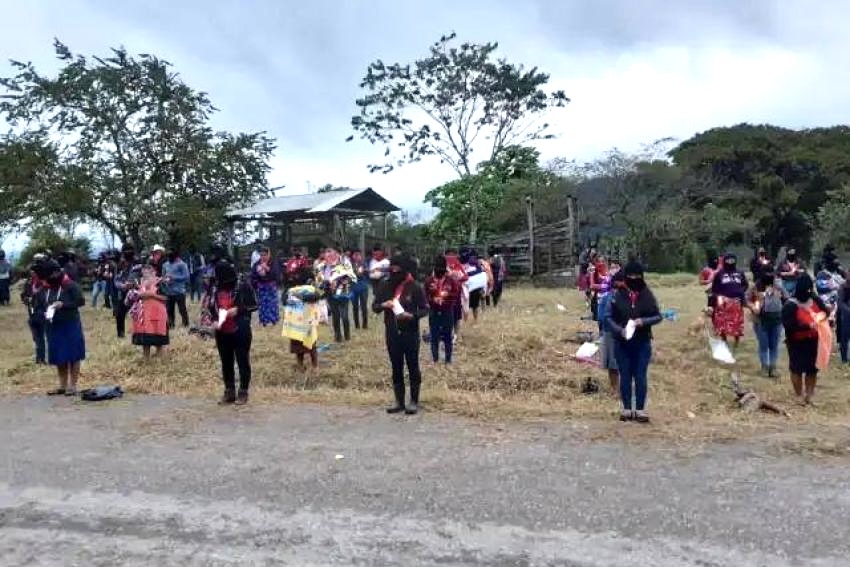
By: Yessica Morales
Manuel, a 22-year-old Tseltal campesino, is a native of Ricardo Flores Magón autonomous Zapatista rebel municipality, Good Government Junta Rebel Thought, Caracol IX, Nuevo Jerusalén, located in the official municipality of Ocosingo.
*The oral trial hearing was scheduled for this March 7. Therefore, they demanded that the Prosecutor’s Office dismiss the accusation against the Maya Tseltal, because it was based on a set-up. However, that did not happen.
The Fray Bartolomé de Las Casas Human Rights Center (Frayba) demanded the immediate release of Manuel Gómez Vázquez, a support base of the Zapatista National Liberation Army (EZLN, Ejército Zapatista de Liberación Nacional), who has been arbitrarily deprived of his freedom for 2 years and 3 months in the State Social Reinsertion Center for the Sentenced (CERSS) No. 16 in Ocosingo.
An armed civilian group and community authorities illegally arrested Manuel on December 4, 2020. He was tortured and suffered cruel, inhuman and degrading treatment. The next day, he was handed over to the Municipal Public Security Secretariat and investigative police from the Indigenous Justice Prosecutor’s Office, under the State Attorney General’s Office (FGE).
He was made available to the Control Court and the Court of Prosecution for the Ocosingo Judicial District on December 9, 2020, added the Frayba Center.
Between December 4 and 5 of that year, in the El Censo ejido [1], in Ocosingo, a series of violent acts took place that resulted in 4 people dead. Therefore, the Human Rights Center affirmed that the Office of the Prosecutor of Indigenous Justice did not carry out a diligent and scientific investigation, charging Gómez Vázquez with homicide, although at the time of the events he was at home with his family.
Manuel is being judicially criminalized along with his family, for being part of the EZLN support base, since the Prosecutor’s Office lacks evidence to accuse him, Frayba said.
To the contrary, Frayba indicated that in a way the Prosecutor’s Office fabricated evidence, since the alleged witnesses do not appear to testify, which has resulted in the Oral Trial hearing being postponed on two occasions. In addition, there are no autopsies for the homicides and the State Judiciary has exceeded the preventive detention that in no case shall exceed two years.
Finally, they made a call to the individuals, collectives, as well as national and international organizations, to be in solidarity and demand that the FGE and the State Judicial Power immediately release the EZLN support base.
[1] El Censo has been anti-Zapatista since the early days of the EZLN. An armed civilian group, the Opddic, was born in the communities of El Censo and Taniperla (Ocosingo), on the periphery of the Montes Azules Biosphere Reserve, in the Tseltal Jungle area. Hermann Bellinghausen explains the history in La Jornada, February 27, 2007.
You are invited to participate in the Chiapas Support Committee’s Forum on Megaprojects (Interoceanic Corridor and the “Maya” Train). You can register for the El Sur Resiste / The South Resists forum here.
Originally Published in Spanish by Chiapas Paralelo, Tuesday March 7, 2023, https://www.chiapasparalelo.com/noticias/chiapas/2023/03/exigen-libertad-inmediata-para-manuel-gomez-vazquez-base-de-apoyo-del-ezln/ and Re-Published with English interpretation by the Chiapas Support Committee
And you, where were you?
By: Magdalena Gomez
I take up this question, to engage in an imaginary dialogue, but in reverse, toward those who have posed it in order to discredit any criticism or dissent directed at projects of the current federal government. The atmosphere of dismissal that prevails in the country is not conducive to what they call democracy, which is intrinsically linked to the electoral space in a reductionist way.
There are, however, other necessary questions that deserve reflection. One, which I will ask in good faith, will be: and you, where were you when the indigenous peoples were fighting? To provide an answer, one will have to recognize that society as a whole and the political class, of all its acronyms, have not incorporated this dimension into their respective national projects, which is not exclusive to Mexico; it is especially prevalent in all Latin American countries with indigenous peoples.
Pluralism has been seen as a threat, the legal doctrine of monism has been imposed: each country, with only one people. And it is worth noting that this position, in our case, transcends the past six years, its rulers, and even society. Some have used a rhetorical and reactive appeal with the commonplace theme of the “historical debt,” recognizing that they are native peoples, which they have tried to “pay” with folklore, insufficient and various economic supports to combat extreme poverty, they have said, which is now focused on the people who are part of the communities.
We are well aware that in the last decades, for the sake of so-called development, the government has given way to projects directed against the territories of the peoples. Not to mention those that are currently underway. That is where the emergency and the struggle against dispossession has been sparked. It is unavoidable to resort to the example of Zapatismo, without a doubt it is not the same as from 1994 to 1996. In those public beginnings a civil conscience seemed to emerge that led to the coining of the phrase “we are all Indians.” Perhaps those who were there and are no longer there remember it because it has been their silent decision, when after that the “fashionable” trend faded away, we saw it afterwards.
From political correctness they gradually moved on to a realistic vision; they said that first they had to win elections and better if it was the Presidency of the Republic. As the years went by, the EZLN concentrated on the organization in its territories and thus made it known that it already had good government councils, in fact it made the autonomy it demanded from the State a reality and was agreed upon in the San Andres Accords, which they (the Congress) later, in 2001, adjusted to accommodate “legal technicalities” and voided its content; 22 years later there are no realistic signs of a constitutional reconsideration, although there are those who hope for it, it must be said, not the Zapatistas, not the National Indigenous Congress.
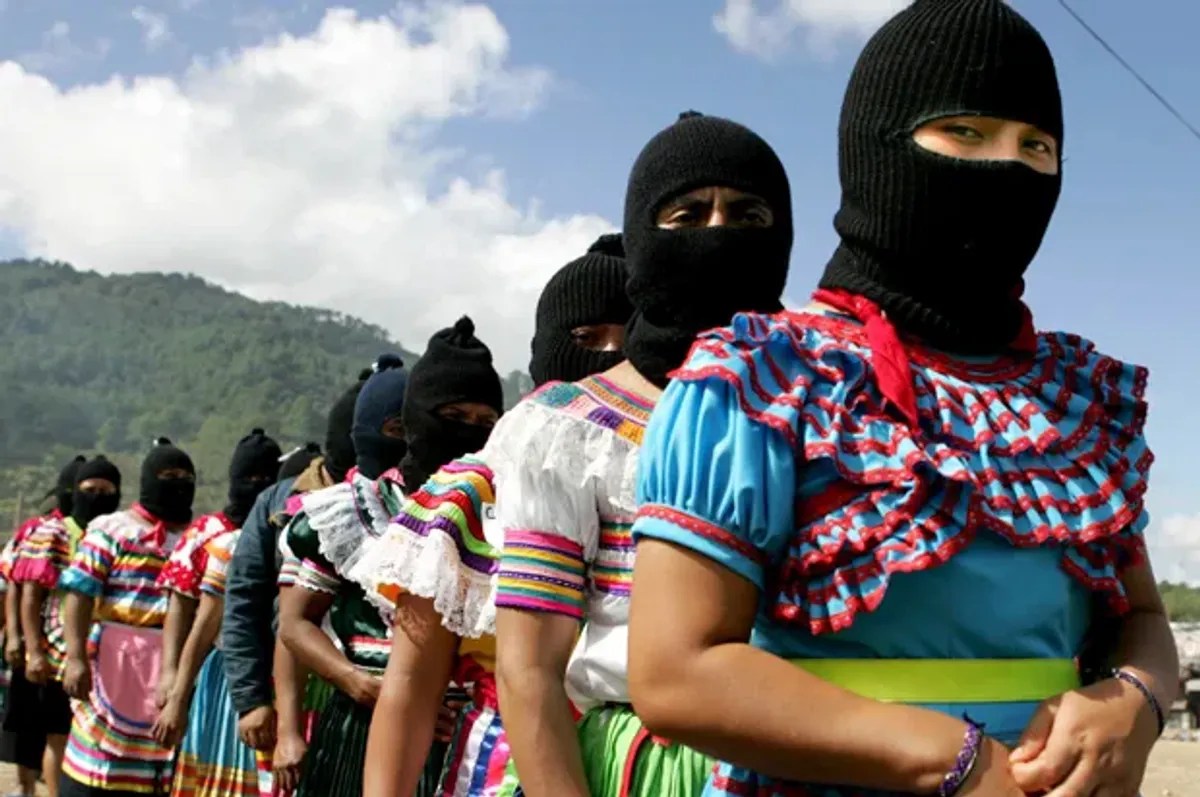
That said, it is clear that the indigenous Zapatista path was marked by organization, the struggle to stop the many faces of dispossession; not always successfully, we know. The current phase places our gaze on anti-capitalism beyond our borders, in order to unite with the peoples who face similar challenges. It’s not in vain that they point out at this stage that the struggle is for life.
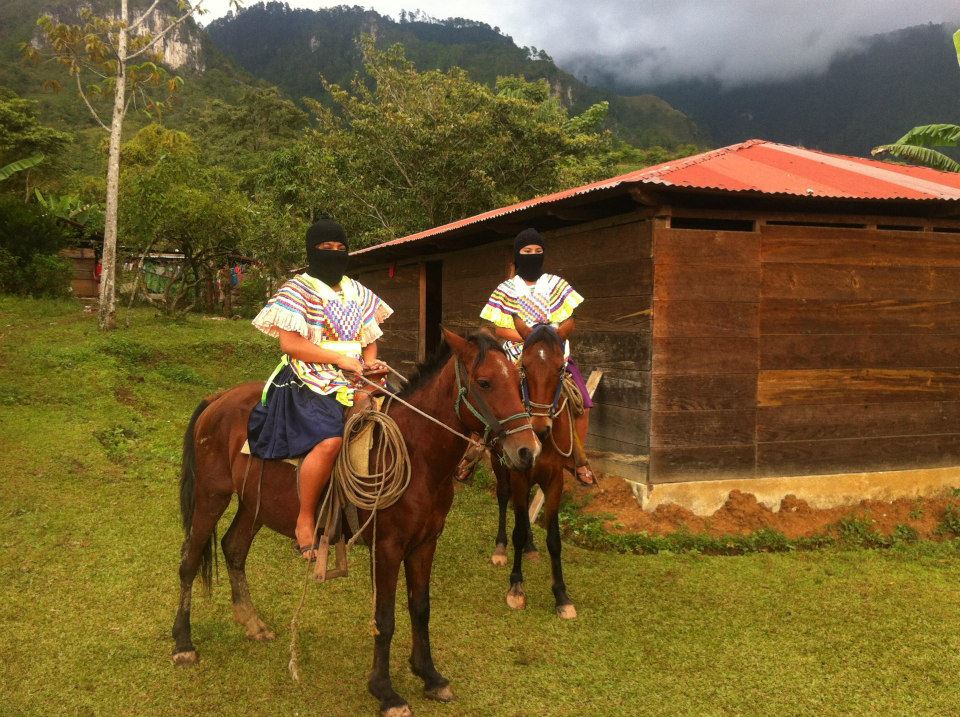
On the other hand, it should be noted that the collective struggle of the peoples does not imply that the situation of its individual members is exempt from dynamics and processes that maintain hegemony in all societies. This is the case of patriarchy. It is a hegemony that is based on a social construction around gender that affects almost all indigenous and non-indigenous women.
The Zapatistas have also realized the need for autonomy to not omit the anti-patriarchal dimension. They did it from the beginning with the revolutionary women’s law, and there are advances with new practices and significant international meetings.
Until today, in general, women’s movements do not take into account the complexity that belonging to a people and the gender factor entails for indigenous women. In this case, they raise their demands and claim their rights, not to go against their culture or their people, but to think about custom from a perspective that includes them and does not violate them. In the last 20 years, they have built favorable spaces for the vindication of their demands as women.
Many of them are similar to the generic demands of all women, but others question, from within their communities, conceptions and practices endorsed by the so-called costumbre (custom). An example of this is the marriages agreed at early ages and against their will, where a legal prohibition will only be the beginning of a process that gives substance to their own slogan: custom is good when it respects women. Having said that: And you? What are you doing from your spaces and conditions to push a pluricultural country that respects autonomy and stops the abuses against the indigenous peoples in the name of the so-called development?
Originally Published in Spanish by La Jornada, Tuesday, February 28, 2023, https://www.jornada.com.mx/2023/02/28/opinion/018a1pol and Re-Published with English Interpretation by the Chiapas Support Committee
Relatives of Simón Pedro Pérez reject an abbreviated trial of his killer
By: Isaín Mandujano
TUXTLA GUTIÉRREZ, Chiapas. (apro)
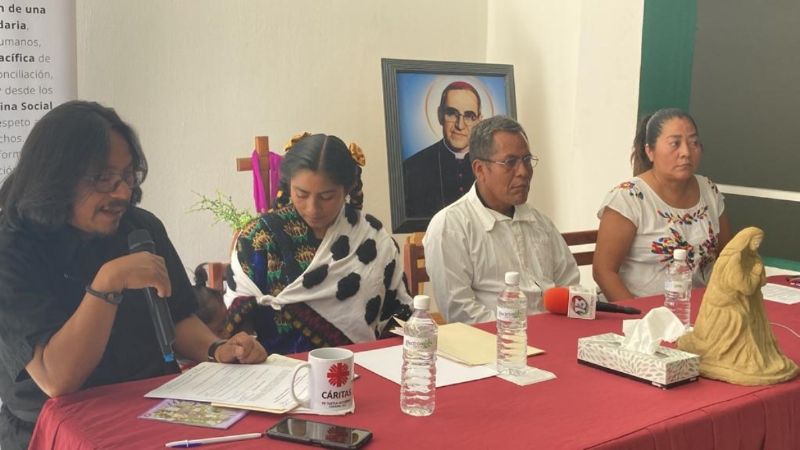
Human rights defenders, members of the civil organization Las Abejas of Acteal and relatives of Simón Pedro Pérez López demanded justice for the indigenous leader from the Chiapas Prosecutor’s Office and the judge in the case, and refused to negotiate an “abbreviated” trial in which the only material author arrested is given a short sentence and the intellectual authors are left unpunished.
Juan Pérez and Crescencia López, parents of Simón Pedro Pérez López, shot dead on July 5, 2021 when he walked with his young son hand in hand through one of the downtown streets of Simojovel, in the Highlands of Chiapas, demanded that his crime not go unpunished.
At a press conference, accompanied by Dora Lilia Roblero García, director of the Fray Bartolomé de Las Casas Human Rights Center, Guadalupe Luna, of Las Abejas, the relatives of Simón Pedro Pérez López denounced that the trial to issue a sentence against the only material author, detained in the El Amate prison, has been delayed.
18 months after the murder, they denounced that with “legal tricks” the trial has been delayed and has also been suspended on many occasions because the case is being handled by a judge in Pichucalco, in the northern part of the state, but the detainee is imprisoned in prison 14 of Cintalapa, hundreds of kilometers away.
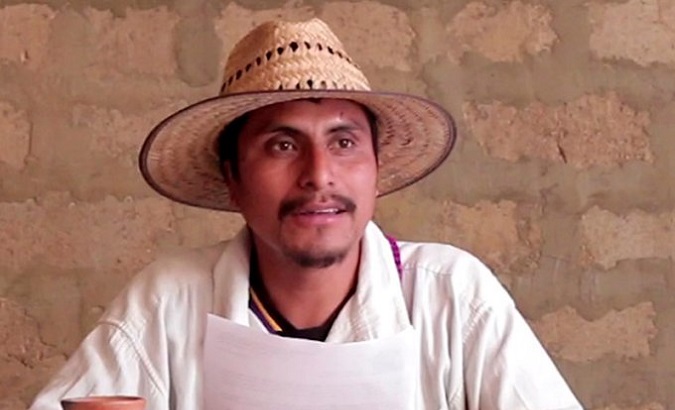
Simón Pedro Pérez López was a Maya Tsotsil human rights defender, former president of the Board of Directors of Las Abejas of Acteal. He carried out activism in defense of the rights of indigenous peoples of the Chiapas Highlands region; he moved mainly within Chenalhó, Pantehló and Simojovel, where he was from originally.
Dora Lilia Roblero, of the Fray Bartolomé de Las Casas Human Rights Center (Frayba) asked the justice authorities on Wednesday to take into account the lines of investigation that guide the causes of his murder.
She reiterated that the motive that led to the taking of Simón Pedro’s life is linked to his work as a defender of human rights and life, in favor of the construction of peace and the denunciation of the existence of a criminal group that locally controlled the political, social and economic sphere in the territory based on threats, murders and disappearances in the region.
On Friday, March 3 and Saturday, March 4, the oral trial is scheduled to take place in the Pichucalco Control Court.
That is why she requested that the judge handling the case and the FGE guarantee the presence of the material author of the murder of Simón Pedro, who is being held in the State Center for Social Reintegration of those Sentenced No. 14 “El Amate” in Cintalapa.
“As we know, the respect, guarantee and protection of human rights are duties that the State is obliged to fulfill through its different organs of government, and thereby avoid delay, continuity of human rights violations and possible discrimination due to the ethnic condition of the victims in the face of access to justice,” said Dora Lilia.

She urged both the Pichucalco Control Court and the State Attorney General’s Office to take into account all lines of investigation that lead to the clarification of the murder of Simón Pedro and find those responsible for masterminding the murder.
In addition, she demanded that the Chiapas justice system promptly guarantee the truth by offering adequate attention to the evidence about the motive for his murder, and that this be recorded in the final ruling.
“The Mexican State has the responsibility to avoid the constant vulnerability and risk faced by human rights defenders, communities and peoples who fight for peace; therefore, we demand that article 10 of the General Law on Victims, which establishes the right to an adequate and effective judicial remedy before independent, impartial and competent authorities, be fully observed and complied with in order to also guaranty the right of the victims, their families and society in general to know the whole truth,” the human rights defender said.
Originally Published in Spanish by La Jornada, Wednesday, March 1, 2023, https://www.proceso.com.mx/nacional/estados/2023/3/1/familiares-de-simon-pedro-perez-rechazan-un-juicio-abreviado-contra-su-ejecutor-302936.html and Re-Published with English interpretation by the Chiapas Support Committee
 Chiapas Support Committee
