Chiapas Support Committee
Home of the Compañero Manuel blog on zapatistas & mexico
Chiapas: Paramilitarism in counterinsurgency

BY: Gilberto López y Rivas
In the context of the multiple forms of neoliberal violence that prevail at the global and national levels, in the forum: “From the horror of war to the resistance for life,” summoned by the emergency situation that prevails in territories of the Zapatista National Liberation Army, I exposed, at the table around violence, the deepening of the counterinsurgency war strategy through the action of various armed actors. On the one hand, paramilitary groups, such as the ORCAO, which multiply their attacks against Zapatista communities, and, on the other, the growing presence throughout Chiapas of cartels of so-called organized crime, within the framework of a process of militarization and militarism continued by the current government.
The action of paramilitarism has lasted for several decades, starting with a military counterguerrilla tactic known as anvil and hammer, according to which the Army and police institutions adopt the passive function of containment forces (anvil), which allow them to perform, in this case, the active function of harassment of paramilitary groups (hammer) against the EZLN and its support bases. Since the outbreak of the Zapatista rebellion, the paramilitary groups have been reformed.
Thus, there is a crucial element in the counterinsurgency strategy: the action of paramilitaries who are used in tasks that the armed forces prefer not to perform directly. This was a tactic used in Guatemala, although there the army directly played the fundamental role in the genocide against the indigenous people. In the Guatemalan conflict, exacerbated in the 1960s, we find what could be the workshop of para-militarization and militarization in Central America and Mexico. Ultra-right groups that showed themselves to be autonomous, but attached to the intelligence section (G-2) of the Guatemalan army, civil self-defense patrols, which in principle were forcibly recruited by the army and played a role in massacres and military control of communities, scorched earth practices during the government of Efraín Ríos Mont (brought to justice for genocide), in the 80s, which were nothing more than the bombing of the communities with the population inside, are samples of an experience that left, over a period of 36 years, 100 thousand dead, 40 thousand disappeared, 50 thousand refugees abroad, many in Mexico, a million displaced to other parts of the country, 600 collective killings and an accumulated experience of repression that transcends the borders of Guatemala: the kaibiles, a particularly bloodthirsty army corps that trains the Mexican armed forces.
The state link provides a fundamental element for a definition of the Latin American experience: thus, paramilitary groups are those that have military organization, equipment and training, to which the State delegates missions that the armed forces cannot carry out openly, without implying that they recognize their existence as part of the monopoly of state violence. Paramilitary groups are illegal and unpunished because it suits the interests of the State. The paramilitary consists, then, in the illegal and unpunished exercise of State violence and in the concealment of the origin of that violence. Above all, in the cases of Chiapas, Guerrero and Oaxaca, paramilitarism serves the purposes of counterinsurgency, destroying or severely deteriorating the social fabric of communities and social organizations in resistance. It acts under the most diverse expressions: it attacks social service providers, causing conditions of expulsion and displacement of indigenous and peasant communities, colludes with civil authorities, exercises harassment through the actions of venal judges and judicial police, infiltrates religious associations, carrying out intelligence work, poses developmental dilemmas that cause clientelism and environmental deterioration, as Sembrando Vida (Sowing Life), and places as enemies of development communities that refuse to follow the logic of capital and, above all, originates or increases the spiral of violence in communities by imposing that this is a way of life. The insertion in the communities of Chiapas, and other states of the country, of phenomena such as prostitution, alcohol consumption, and domestic violence, are also the result of the presence of the Army, as documented by Juan Balboa since 1997 (La Jornada, 1/27/97).
This is only part of the broad-spectrum war that is being waged in Chiapas (and in other states of the country), and that we denounced in that forum, with the purpose of breaking the media siege and denialism that the Mexican State encourages impunity.

Originally Published in Spanish by La Jornada, Friday, August 4, 2020, https://www.jornada.com.mx/2023/08/04/opinion/019a2pol and Re-Published with English interpretation by the Chiapas Support Committee
The right to dissent

By: Gilberto López y Rivas
Fernando Cortés de Brasdefer, noted archaeologist with a trajectory of more than 40 years as a research professor at the National Institute of Anthropology and History (INAH), currently attached to its regional center in Quintana Roo, has been the object of a singular campaign of discredit, workplace harassment, lifting of administrative records and threats of dismissal by state and central authorities of this institution, for expressing, in a chat with colleagues, his well-founded criticisms of the so-called Maya Train. These opinions were uploaded to social networks by third parties, which led to excessive repressive reactions, in which the Archaeology Council ultimately participated, with an unsigned statement. Since 1970, the Archaeology Council, has served as a consulting body to INAH’s national directors, lacking, of course, the legal abilities to normalize research into that ambit, and much less to apply sanctions, counterclaims or accusations to the researchers, who, correspond to the National Archaeology Coordination.
The paradox is that there is a record of a 2018 federal government statement, in which Cortés is presented as the discoverer of several archaeological sites in the Maya area in his long and meritorious career, and author of important books in renowned publishers, such as the Encyclopedia of Archaeology and Monuments of Quintana Roo, now described by the secret council as an inexperienced researcher who has carried out perhaps a couple of salvage interventions without reaching good terms.
For its part, the National Union of Professors of Scientific Research and Teaching of the INAH, in compliance with the agreement of its general assembly on August 15, made known to public opinion its energetic rejection and indignation at the attempt to dismiss the colleague and colleague Fernando Cortés de Brasdefer, as well as to demand that the general director of the institution cease hostilities against our colleague, the immediate withdrawal of the
On August 21, unionized INAH personnel in Chetumal, Quintana Roo, held a protest in support of the archaeologist who denounced the archaeological devastation caused by the work of the Maya Train, while, in various regional centers and offices of the institute in the country, they deployed support banners and carried out peaceful demonstrations for the same purpose.
On August 22, the Sélvame del Tren collective released a document in which its members sympathize with the archaeologist for his courage and his decision not to be an accomplice to the destruction that the mega-work misnamed the Mayan Train is causing, also pointing out that in our tours to document the environmental impact of the jungle and the aquifer, archaeologists expressed their rejection of this megaproject, because they needed more time to rescue all the richness of the elements found in this area that should be protected, as stipulated by law . In the face of anomalies, looting and violations of the law, archaeologists have been forced to remain silent for fear of losing their job or being persecuted like the archaeologist Fernando Cortés de Brasdefer. With his brave words, Cortés de Brasdefer has revealed that the INAH has become a cowardly cover organization for the disasters committed in the Maya jungle. Scientists, academics, activists, and divers involved in monitoring the destruction caused by the train in the Maya jungle have documented the destruction of vestiges and cenotes in videos, photos, and testimonies.
During these years, criticism of the mega-work has proliferated, based on the document Why we oppose the Maya Train, addressed to the President of the Republic, which on April 1, 2022 was disseminated and endorsed by hundreds of researchers from various disciplines and institutions. academics, as well as by organizations dedicated to the preservation of nature and territories.
Books have also been written, such as “Peoples and territory versus the Maya Train, coordinated by Giovanna Gasparello and Violeta Núñez Rodríguez, in which a frontal criticism is made of the rhetoric of progress, conflict engineering and the anthropology of social deterrence that accompany this high-impact mega-work, denouncing its destructive nature for the archaeological, historical, natural and social heritage, as well as the community disintegration of peoples and the commodification and reification of their culture.
Originally Published in Spanish by La Jornada, Thursday, August 31, 2023, https://www.jornada.com.mx/2023/08/31/opinion/019a1pol and Re-Published with English interpretation by the Chiapas Support Committee
Violence in Chiapas opens the way for looting resources, the Bishop says

By: Elio Henríquez, Correspondent
San Cristóbal de Las Casas, Chiapas
Scenarios of violence such as those prevailing in some regions of Chiapas favor the entry of transnational companies for the imposition of megaprojects and the dispossession of natural resources of indigenous peoples, said the bishop of the local diocese, Rodrigo Aguilar Martínez.
“What is seen in a very remarkable way in the Amazon is also happening in Chiapas; for example, in mining and the use of water from dams and lagoons; It is a very strong reality that needs to be addressed,” he said.
In an interview, he said that “the wealth of Chiapas has not produced the effects of the disappearance of degrading poverty of individuals, families and communities, because it remains in some sectors.”
He pointed out that unlike previous years in which, “according to what I have heard without being directly aware, there was control by a drug trafficking group, now there is a struggle between two or more groups to see who has control.”
Chiapas, he added, “is key, because there is a lot of natural wealth, waters, forests, minerals, and also being a border state means that many migrants pass through here who attempt to reach the United States through the entire national territory.”
Authorities from various communities of Chicomuselo demanded in recent days the cancellation of mining concessions in that place located in the mountains of the state, where in November 2009 Mariano Abarca Roblero, an opposition leader to the exploitation of mines, was murdered.
Last May, according to complaints from residents, unidentified individuals began to remove, with the support of armed men, barite extracted a few years ago by the Canadian company Blackfire Exploration Mexico from a mine located in the Grecia ejido, municipality of Chicomuselo.
In the opinion of the representative of the Catholic Church, the violence that prevails in some areas is due to the fact that “the criteria of value have been changing. Before we talked about truth, good and justice, for example, and now we talk about my truth, my good, my justice, and when those particularisms enter, harmony is difficult.
“The religious transcendence has also been diluted. It is already what the human being decides, wants and can do. All this is having an impact on the human relationship when there is already arrogance and the search to resolve it according to one’s own criteria.”
Has the federal government’s security strategy failed? –he was asked.
We would enter into specific aspects of what corresponds to the Executive, Legislative or Judicial Power, at the federal, state and municipal levels. Many factors and people are already coming in. In part, it may be due to that, commitments that have been made since the moments of the electoral campaigns and that then have to be assumed in the exercise of public office.
He warned that as the political campaigns of 2024 approach, “violence may intensify,” so “it is important to review our mind and heart, how all this resonates in my concrete action, and then that we do not collapse, and that if we demand the exercise of authority for security and peace, we commit ourselves too.”
Aguilar Martínez called on authorities of the three levels of government to “seek the common good for all, especially those most needy, not only for those who voted for them, but especially reach those who need it most, integrate them into social development and that citizens commit to collaborate.”
He commented that the greatest expressions of violence are located in the municipalities of Frontera Comalapa and Chicomuselo, but also in Pantelhó, Trinitaria and the jungle.
Originally Published in Spanish by La Jornada, Friday, August 4, 2023, https://www.jornada.com.mx/2023/08/04/estados/030n1est and Re-Published with English interpretation by the Chiapas Support Committee
The Inter-Oceanic Corridor Lacks Water
By Emilio Godoy / IPS
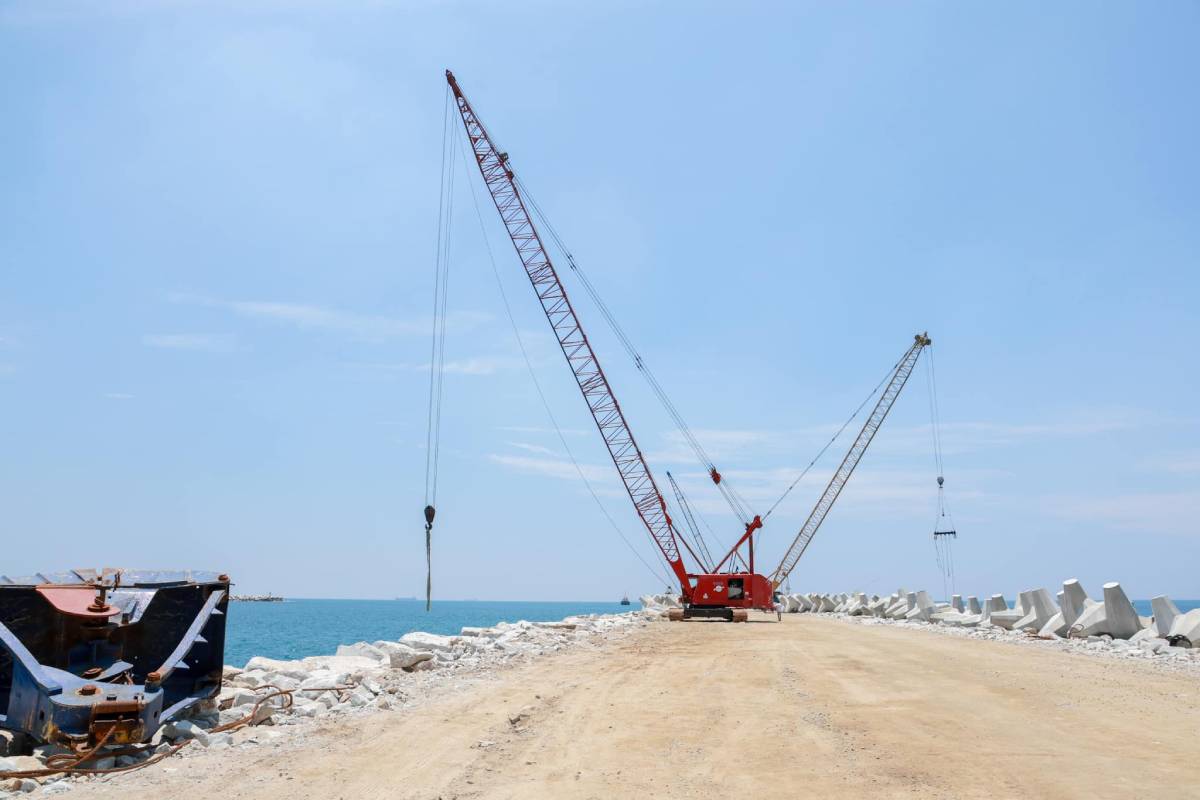
Photo Caption: The megaproject places greater pressure on water resources in a region where abundance and overexploitation of the resource coexist. For example, according to Conagua figures, of the 21 aquifers in Oaxaca, five register deficits; and in Veracruz, of the 20 groundwater tables, five suffer from excessive extraction, such as that of the Papaloapan river basin. All these areas are on the route of the Interoceanic Corridor.
The water does not go up to the house of Elliot Escobar, in the municipality of Matías Romero, Oaxaca. His house is on the first floor, but there is not enough pressure for the water to reach it. Given this, Elliot pumps the water with a hose from his sister’s house, located on the ground floor of the house shared by the two families.
“I store the water in a thousand liter tank, which last me about a month. We recycle the water to water our plants, for example. In the municipality you don’t pay for water because there isn’t any, and it is dirty. This is a worrisome situation,” said the 44-year-old lawyer.
Matías Romero, with just over 38,000 inhabitants, is a geographical component of the Interoceanic Corridor of the Isthmus of Tehuantepec (CIIT) that is under the jurisdiction of the Secretary of the Navy. The CIIT one of the three most important mega-projects of the current government, together with the Mayan Train and the Olmeca refinery system.
The demand for water from the CIIT works is causing grave concern among the local community, already affected by the lack of water resources, explained the lawyer. He shares the house living on the floor over his sister’s with other two members of their family.
“The project will require water and electricity, and there is uncertainty. Everything has to have a methodology, be systematized, the infrastructure must be consolidated. In Salina Cruz there have been complicated water problems in the colonias (neighborhoods), it is a problem that has been going on for years. There are few wells to supply the community,” said Escobar.
The lawyer is a member of the Corriente del Pueblo Sol Rojo organization and spoke to IPS from his town in the state of Oaxaca.
In the area, the people work, at least until now, in agriculture and cattle, pig and goat farming. In addition, the municipality is a crossing point for thousands of undocumented migrants who arrive by train or trucks from the border with Guatemala, en route to the United States.
Despite the fact that water is a fundamental element of the megaproject, the CIIT lacks a water plan, according to responses to access information requests submitted by IPS.
The set of works is part of the Tehuantepec Isthmus Development Program that the Mexican government has been running since 2019 with the purpose of developing the south and southeast of this country of some 129 million inhabitants and the second largest Latin American economy, after Brazil.
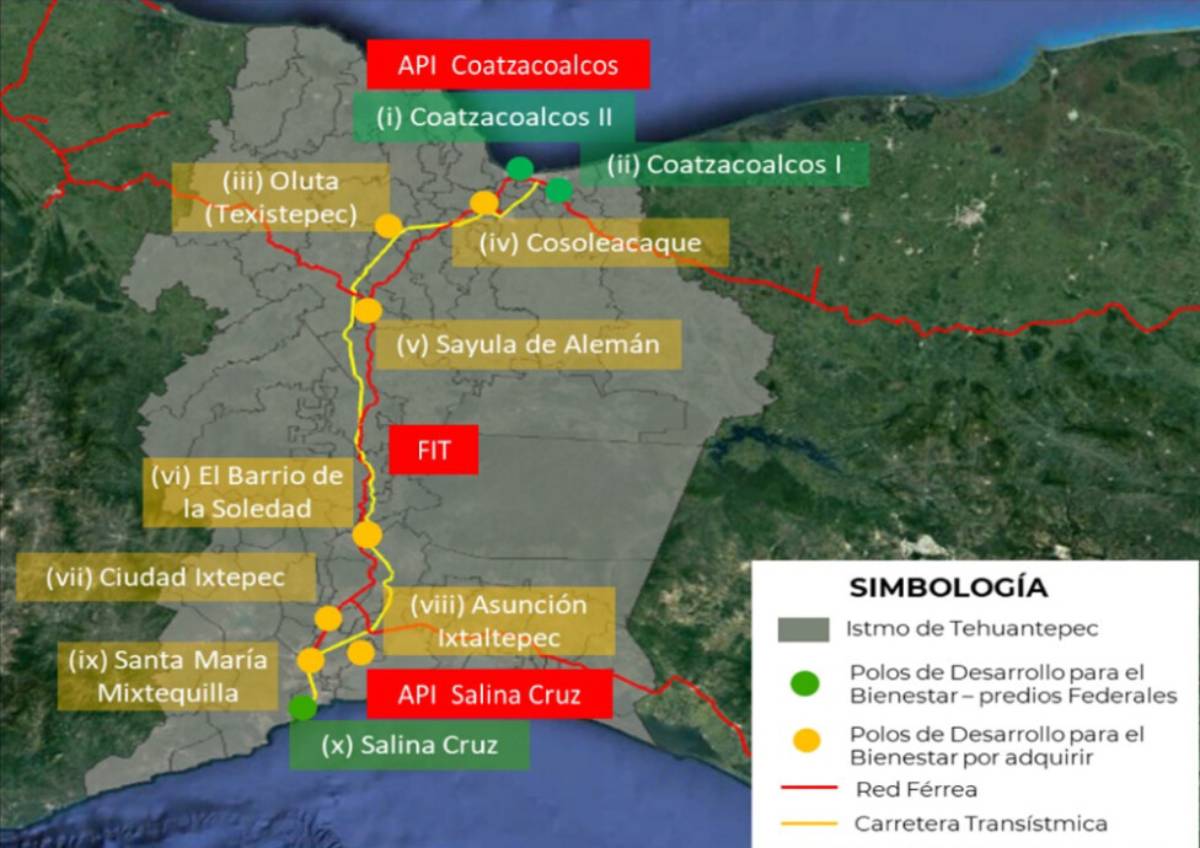
PHOTO CAPTION: Map of the Interoceanic Corridor of the Isthmus of Tehuantepec, about 300 kilometers long, which seeks to connect the Mexican Pacific and Atlantic coasts through highways and a rehabilitated train, to promote industrial development in the south and southeast of the country and encourage exports. Image: Fonadin
An Interoceanic Transformation
The plan for the isthmus, some 300 kilometers long from coast to coast, includes 10 industrial parks, the renewal of the ports of Salina Cruz, on the Pacific Ocean, and Coatzacoalcos, on the Atlantic, connected by the railroad line, Ferrocarril del Istmo de Tehuantepec, under reconstruction.
Likewise, it plans to modernize the refineries of Salina Cruz, in the state of Oaxaca, and Minatitlán, in the state of Veracruz, and laying a gas pipeline and building a gas liquefaction plant off the coast of Salina Cruz.
The development program covers 46 municipalities in Oaxaca and 33 in Veracruz, over a distance of about 300 kilometers. The industrial sites, called “Poles of development for well-being,” each of the 10 require 380 hectares.
Úrsula Oswald, an analyst with the Regional Center for Multidisciplinary Research at the National Autonomous University of Mexico, presented IPS with a comprehensive model that analyzes all aspects of the megaproject.
“The most urgent matter is to make a master plan, which must have a water plan before any other processes. It is crucial, before introducing industries. And each one will need a very strict setup, to prevent contamination of water sources, and to not repeat the chaos like the one in the north,” Oswald said, who is based in Cuernavaca, Morelos.
For the analyst, it is necessary to answer questions such as “which water basins, aquifers? how does surface water interact with groundwater?”
The government of Andrés Manuel López Obrador seeks companies to set up shop in the south and southeast of the country, in an attempt to attract investment and create jobs in those areas that are the most impoverished in the country.
But an obstacle to this development lies in the logistics for moving the products to the US market–the magnet for interested corporations, the lack of trained workers, and the environmental impact in a region characterized by its rich biodiversity.
Some recent cases show the difficulties of these processes. Tesla, a U.S. company that manufactures electric cars, chose the northern state of Nuevo León in March for the construction of its factory in Mexico, despite López Obrador’s interest in establishing it in the south.
Between 2020 and 2022, CIIT’s budget was $162 million in the first year, $203 million in 2021, and almost double in 2022, with $529 million. But in 2023 the budget dropped to 374 million.
Independent calculations place the total investment required for CIIT projects at 1.4 billion dollars, although there is no precise official figure in this regard.
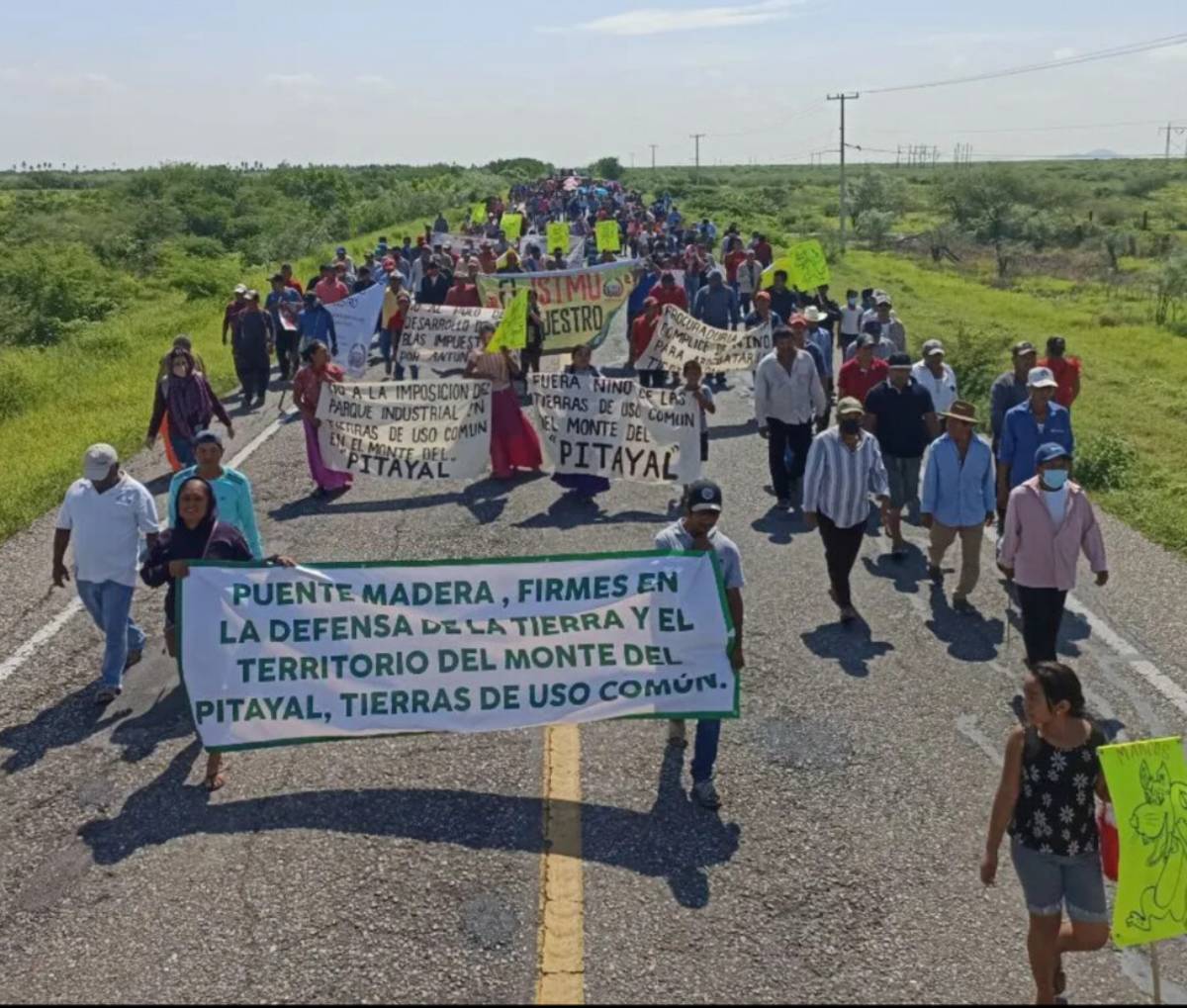
PHOTO CAPTION: A demonstration in Puente Madera, in the state of Oaxaca, against the the Interoceanic Corridor of the Isthmus of Tehuantepec. The CIIT will be built between that southwestern state, Oaxaca, and Veracruz, in the southeast. The Mexican megaproject has generated rejection in some groups in the region, considering it an imposition that affects local communities. Image: APIIDTT
Corridor pressure
The megaproject places greater pressure on water resources in a region where abundance and overexploitation of the resource coexist.
Of the 21 aquifers in Oaxaca, five register deficits, according to figures from the National Water Commission (Conagua). Among them, since the last decade, the Tehuantepec and Ostuta are on the list and are on the corridor route.
In Veracruz, of the 20 groundwater tables, five suffer from excessive extraction, such as the one in the Papaloapan river basin, also in the CIIT zone.
One of the five objectives of the development program deals with increasing biodiversity and improving the quality of water, soil and air with a sustainable approach.
Meanwhile, the CIIT regional program stipulates that the Ministry of Environment and Natural Resources must guarantee the resource both for the companies that arrive and for the localities of the intervened region.
However, the Superior Audit of the Federation did not find information on the increase in biodiversity or the improvement of the quality of water, soil and air in 2021. In addition, it did not have sufficient data to assess if the five objectives of the CIIT were being met.
For the provision of the necessary water, the CIIT identified in its 2022 progress and results report the sale of water rights between users, the transfer from the Tehuantepec aquifer, despite its deficit, and deep wells; the use of dams, rivers or the construction of a desalination plant, in addition to the consumption of treated residual water.
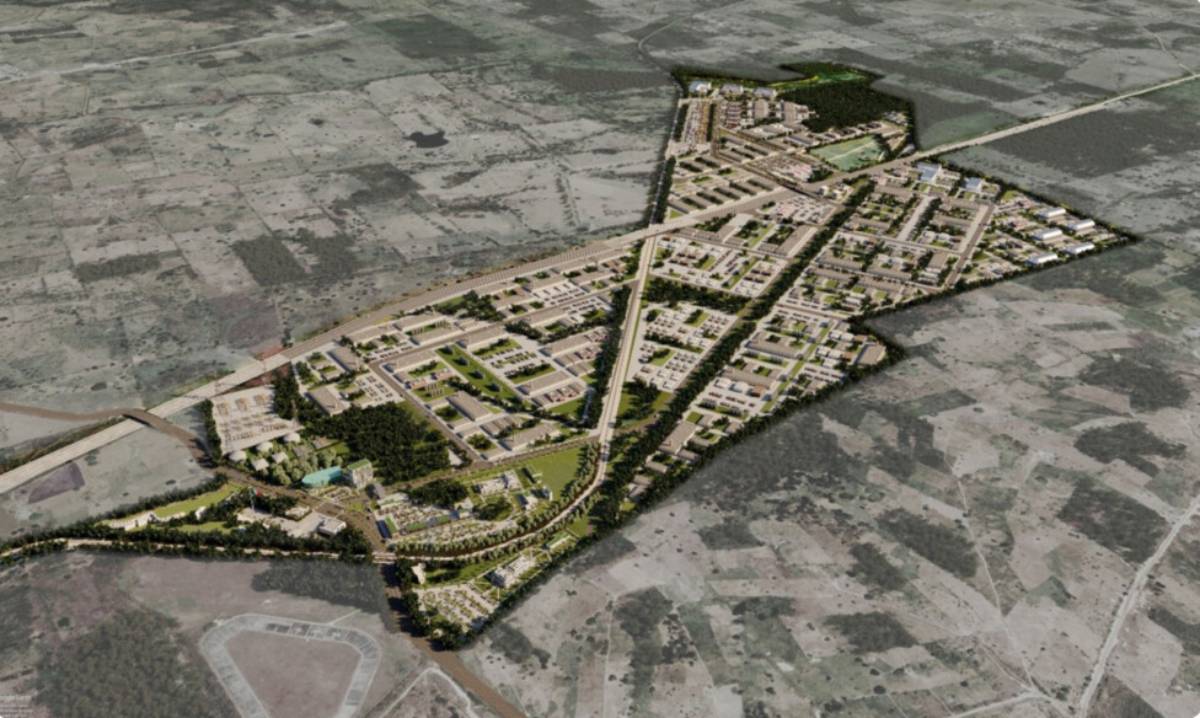
Photo caption: Model of the industrial center of Texistepec, in Veracruz. It is part of the Tehuantepec Isthmus Development Program, which includes the construction of five industrial parks in the southern state of Oaxaca and another five in the southeastern territory of Veracruz, and five of which the Mexican government has already tendered. Image: CIIT
Indigenous peoples
A document from May 2021 on the indigenous consultation in the Oaxacan municipality of Ciudad Ixtepec, also in the Corridor strip, consulted by IPS, also points in this direction. The consultation document recommends studies on the use of recycled and conditioned water for some industrial processes. It also highlights the promotion of the use of rainwater for green areas and the introduction of public awareness programs and responsible use of the resource.
Some 900,000 indigenous people from 10 different indigenous peoples live in the area impacted by the megaproject. However, the consultation process free of interference, prior to the development of the works and with sufficient and timely information, barely covered less than 1% of the indigenous population.
The CIIT has already launched the international bidding for the construction of three industrial parks in Veracruz and two in Oaxaca.
The right to a healthy environment is added to a context that is rife with human rights violations. At the end of July, the Civilian Observation Mission, made up of representatives of non-governmental organizations, verified violations of access to information, free participation and freedom of expression.
For this reason, the lawyer Escobar stressed the need for the attention of the federal authorities.
“Water is not merchandise, it has to be guaranteed to the people. You have to make a strong investment in water and develop awareness about it. We don’t understand their concept of modernity, they think it’s just building megaprojects. There is going to be an environmental problem in the medium term,” Escobar warned.
On her part, the academic Oswald proposed going beyond the traditional investment attraction approach.
“No company is going to invest if it does not have guaranteed supplies, land, the distribution of its merchandise on both sides of the oceans, and labor. It is necessary to link the water, the cost, the social issue,and what indigenous people are in the region. What other mechanisms do I have to provide water? Who is in control in the region? This is basic to understanding conflicts. It is a crucial sociocultural issue, ”Oswald analyzed.
This work was initially published in IPS. Here you can consult the original version.
______________________________
Republished by Pie de Página from IPS, August 14, 2023, here. https://piedepagina.mx/al-corredor-interoceanico-le-falta-agua/
Translated from Spanish to English by the Chiapas Support Committee.
Immediate release for José Díaz Gómez, an EZLN support base

To the national and international Sixth
To the signatories to the Declaration for Life
To the honest media
To those who struggle for truth and justice
From the Network of Resistances and Rebellions Ajmaq we make this pronouncement..
We know that prisons are just another business of capitalism and that Mexican “justice” is characterized by impunity and the violation of human rights, and that it is only at the service of those who can buy it, but not for those who are poor and indigenous, for those who struggle and build alternatives for life are criminalized and their crimes are fabricated. Such is the case of José Díaz Gómez, support base of the EZLN, who has been unjustly imprisoned for 9 months, in the State Center for Social Reinsertion of Sentenced Persons No. 17 “El Bambú,” in the State Center for Social Reinsertion of Sentenced Persons No. 17 “El Bambú” in Catazajá, Chiapas. He is accused of violent robbery, as are four other BAEZLN who have arrest warrants.
José Díaz is an indigenous Ch’ol and campesino, 45 years old, originally from the ranchería “El Trapiche,” in the autonomous Zapatista municipality of Francisco Villa, Caracol V, Roberto Barrios (official municipality of Salto de Agua). He was arbitrarily detained with excessive use of force, tortured, disappeared and held incommunicado by members of the specialized police assigned to the Selva District Prosecutor’s Office. In the prosecutor’s office he was forced to put his fingerprint and sign several blank papers, and he was neither assisted by a translator of his native language, nor by a lawyer.
All these violations of José’s dignity and of the legal procedures themselves are evidence of the fabrication of crime and criminalization. The real reason for José’s imprisonment is the interest in the individual use of the land that they want to impose upon the collective use and care of Mother Earth, but which has its roots in the dispossession of lands from the EZLN provoked by the bad government with its wholesale war of attrition designed for decades by the different administrations.
We have made visits to comrade José Díaz Gómez, and it hurts us to see his pain but it also fills our hearts with his love and dignity for life and freedom. Like the other imprisoned Zapatista comrade Manuel Gómez Vázquez, we see that in these cruel places the violence generates greater psychosocioemotional and economic wear and tear for them and their families. Even so, both maintain a light in the midst of so much darkness.
We demand the immediate and unconditional release of José Díaz and Manuel Gómez Vázquez because we know their innocence, and are aware of the fabrication of a crime against them by the Prosecutor’s Office. We do not trust in the justice of the bad government because they are the ones who imprison innocent people with legalistic trickery, that is why we call to fight politically for the freedom of political prisoners, to disseminate information through all the channels available to us regarding the injustices that these BAEZLN comrades are going through, and to show solidarity with them and their families. As well as to demand the cancellation of the arrest warrants against four more compañeros.
We invite designers, visual artists and people of good heart to make graphic materials for the freedom of José Díaz Gómez, so that they can be spread through social-digital networks, streets and squares. These graphic materials will be received in digital format from August 24, 2023 to the mail ajmaq_chiapas@riseup.net
Freedom for José Díaz and Manuel Gómez Vázquez!
Stop the criminalization of those who struggle!
Down with the prison walls!
Original declaration published on August 26th, 2023.
English translation by Schools for Chiapas.
Neoliberal integration and defense of territory

By: Raúl Romero*
When in 2001 the Mexican political class denied the possibility of a profound reform of the Mexican State, which through recognition of the San Andrés Sakamch’en de los Pobres Accords opened the door to a new relationship between native peoples and the State, contributed to the exacerbation of various problems and generated consequences that we observe to this day.
One of them has to do with the intensification of the process of accumulation by dispossession, which accelerated since the reform to Article 27 of the [Mexican] Constitution, which meant the privatization of ejido and communal land. The territorial reorganization that Mexico needed for neoliberal integration with North America was to extinguish the few and diminished lights of the agrarian revolution of the beginning of the century. Recognizing indigenous peoples as subjects of public law and channeling the discussion on territorial self-determination was something that was in total contradiction to the neoliberal project. Politicians who rejected the San Andrés Accords at the same time ratified their adherence to the neoliberal consensus.
The story that came later is widely known: through projects such as the Plan Puebla Panama, which would become the Mesoamerica Project and which today is taken up again with the misnamed Maya Train and the Interoceanic Corridor, he promoted special economic zones and development poles where the peoples had won historic battles in defense of the territory. If the North American neoliberal integration had been contained, it was thanks in part to the resistance and strong social and community fabric of the original peoples, peasants and broad popular sectors.
Another consequence that must be analyzed is the route of the peoples who decided to promote their de facto autonomy and continue with the defense of their territories. The communities of the EZLN are the most emblematic case worldwide. In their word they say that they went from the time of asking and the time of demanding, to the time of exercising. With their resistance and rebellion they have managed to build a very different world based on commanding by obeying, with self-management and self-determination in 43 autonomous entities, among which the 12 Zapatista Caracols stand out.
The Zapatista communities were not the only ones to opt for this route. Other peoples, communities, neighborhoods, tribes and nations, most of them articulated in the National Indigenous Congress, decided to continue defending their territories. Whether rebuilding their communal guards or community police, boosting their community radios, strengthening their traditional authorities, strengthening their clinics or autonomous schools or recovering and creating productive projects, these indigenous peoples have given all their energy in defense of the commons. To confront municipal, state or federal governments, linked to powerful national and transnational corporations, indigenous peoples have explored various legal and political avenues in resistance. In some cases, they have been met with attacks by paramilitary groups or armed organized crime gangs that, through murders, disappearances, forced displacements, threats and other violence, have tried to eliminate the peoples in resistance.
The Nahua community of Santa María Ostula is an example of the violence that the State and the capital launch against the peoples for the purpose of dispossession. In 2009, thousands of community members of Ostula took on the task of recovering hundreds of hectares of land held by caciques and small landowners and desired by tourism companies, mining, organized crime, precious wood companies.

The people of Santa María Ostula built there an exercise of autonomy that won the attention of other peoples of the region and the world. To eliminate and displace this Nahua people in resistance, the State and legal and criminal corporations intensified a war that today leaves 36 community members murdered and another five disappeared. This violence is not a thing of the past, on August 10, Froylan de la Cruz Ríos, a member of the community, was disappeared and then found brutally murdered. This was happening at the same time that the governor of Michoacán, Alfredo Ramírez Bedolla, threatened to evict the people in resistance.
Within the same strategy of violence for accumulation by dispossession, we could identify the one undertaken against the peoples of the Indigenous and Popular Council of Guerrero-Emiliano Zapata in Guerrero, the aggressions in Oaxaca against the peoples of the Union of Indigenous Communities of the Northern Zone of the Isthmus, the attacks against the Zapatista communities in Chiapas or the murder in Morelos of Samir Flores Soberanes.
These peoples, who since 2001 have undertaken new strategies for the defense of territories and life, in fact dispute in the most concrete the legal and criminal corporations. A different state would bet on strengthening them, not abandoning them, reviling them and waging war on them. So far, that hasn’t happened.
* Sociologist
Twitter: @RaulRomero_mx
Originally Published in Spanish by La Jornada, Saturday, August 26, 2023, https://www.jornada.com.mx/2023/08/26/opinion/017a2pol and Re-Published with English interpretation by the Chiapas Support Committee
We apologize to our readers for the disruption in publishing. A key member of our team had a serious and lengthy medical emergency, which is now at least “under control.”
Violence against activists who oppose the Interoceanic Corridor increases
By Renata Bessi
Original in Spanish published by Avispa Midia, August 16, 2023
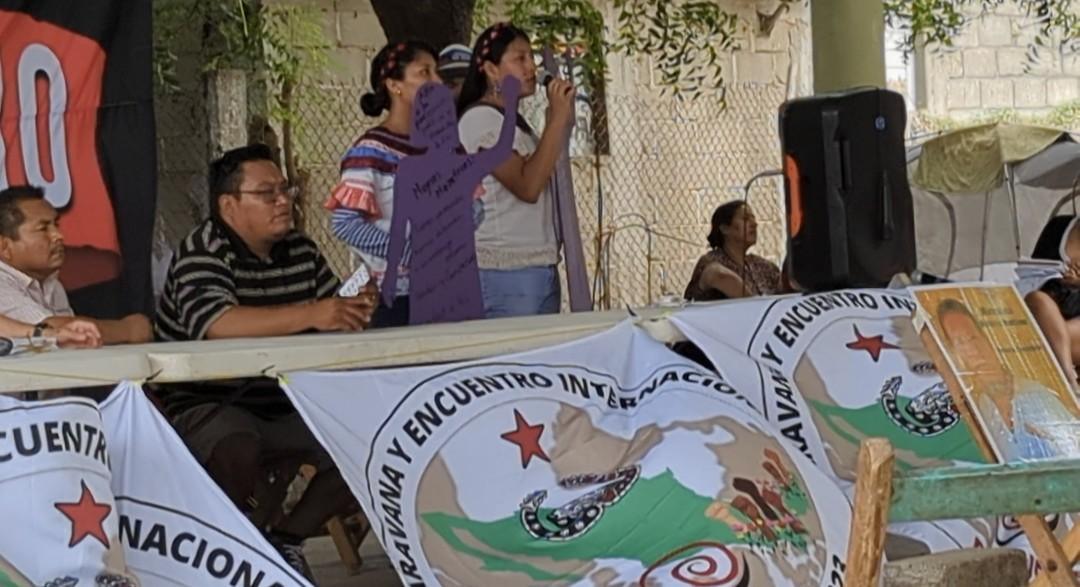
Panel of community speakers at the Puente Madera Oaxaca Foro Político Cultura de Rebeldías y Resistencias held during the El Sur Resiste Caravan (April 2023).
On August 15, a criminal trial hearing was held against human rights defender David Hernández Salazar. The courts accused him of attacking communication routes and causing fire damage in the Isthmus of Tehuantepec, Oaxaca.
The human rights defender has been criminalized for his active role in claiming the right to territory of the Binnizá indigenous community of Puente Madera, by protesting against the installation, on their common lands, of the Polo de Desarrollo para el Bienestar Industrial Park (PODEBI, Industrial Park Development Center for Wellbeing) within the framework of the Tehuantepec Isthmus Interoceanic Corridor (CIIT) project, which is planned to connect with another large-scale investment project, the so-called Mayan Train.
The Ministry of Communications and Transportation (SCT) and the Municipality of San Blas Atempa charged Salazar with criminal activity after he led acts of protest in May 2021,.
In a press conference, held on August 16, they clarified that during the hearing the expert opinions presented by Salazar’s defense were admitted, where they verified the innocence of the indigenous human rights defender.
However, the Prosecutor’s Office and the Public Ministry of Tehuantepec decided to continue with the criminal process, based on “false testimonies and statements,” says Mario Quintero, a member of the Assembly of Peoples of the Isthmus in Defense of Land and Territory (APIDTT).
The next hearing will take place in approximately a month to present the evidence.
In addition to the criminalization faced by David Hernández Salazar, 17 more members of Puente Madera have suffered the same fate and are being investigated and have arrest warrants out for them.
Front Line Defenders, a human rights organization, expressed its concern about the criminalization and violence against Salazar and the other human rights defenders of the APIIDTT.
Front Line Defenders urges the Mexican authorities to drop the charges against the 18 people and the investigations and arrest warrants against the members of the Binnizá indigenous community of Puente Madera and guarantee their right to due process.
Harassment and violence
The Puente Madera community and the APIDTT released a detailed history of all security incidents that have occurred against its members. The harassment and violence have intensified just after the General Community Assembly of Puente Madera defended itself against the declaration of PODEBI in San Blas Atempa in federal courts on human rights matters.
On June 6, 2023, the judge decided to suspend ex officio and ruled flat out against the declaration and PODEBI in favor of Puente Madera.
This may interest you (in Spanish): Justice suspends industrial park of the Interoceanic Corridor
The same day, around 7:30 p.m, Mexican army vehicles entered Puente Madera, settling on the bridge, inside the community a few meters from the Agency and Community Radio. The Army violently searched the residents who were passing by, without giving no explanation, recounted members of the Assembly.
On June 20, 2023, the federal government made public the biddings for all CIIT PODEBIs. Due to the protection filed, the PODEBI of San Blas Atempa does not appear.
Salazar points out that they have had constant surveillance by the National Guard, the Mexican Army, the State Police and the Navy. “We have had a lot of intimidation, they have entered the town, they have implemented checkpoints near the schools, they have detained colleagues without any explanation. We clearly see this as an act of intimidation towards us, towards this community,” Salazar says.
The offices of the APIDTT, in Juchitán and the houses of members of the Assembly have also been watched by armed persons. Anonymous callers are also constantly making threats.
Another of the attempted intimidation strategies is indirect phone calls. On August 10, 2023, at around 10:30 p.m., Salazar received, through his personal number, a message from a person known in the community who asked him about the whereabouts of Mario Quintero, as well as his personal information.
However, this person from the community asked the questions on behalf of people from the Mexican Army based in the Ixtepec Military Zone. In the message that Salazar received, military audios were added to “invite Mario to a meal.” The audio was shared by the APIDTT during the press conference.
“Accidents”
On July 14th of 2023 around 930 pm, two residents of Puente Madera were traveling in a red VW hatchback heading towards the Tehuantepec bus terminal. Near Rancho Los Caporales, a few meters away from the de Puente Madera junction, they were rammed by a gray Jetta. Juan Cortés Meléndez, 31 yrs old, was killed instantly. The co-pilot, Kevin Alberto Solorzano Cortés, 17 yrs old, died days later in intensive care.
On July 19th of 2023, another “accident” occured. David Hernández Salazar and Guadalupe Ríos Maldonado were traveling in a pick-up truck. At 3:30 p.m., they were hit by a 3.5-ton truck a few kilometers from the entrance to Puente Madera, near the Tehuantepec marker. Although the truck in which they were traveling was left with irreparable damage, neither of them suffered physical damage.
“What we see is that threats and persecution are intensifying through the legal and organizational advances made as a community,” Quintero says.
“There is no conflict”
The members of Puente Madera and the APIDTT also responded to the attempt by the head of the Oaxaca Government Secretariat (SEGO), Jesús Romero López, to hide the conflict that is taking place in the Isthmus of Tehuantepec with the arrival of the implementation of the Interoceanic Corridor.
Last Saturday (12), the government official told the media: “We only see two problems, the one that exists in San Blas Atempa, which is a dispute that is in the Agrarian Court and the one in Santa María Mixtequilla, where it’s being discussed.”
“It is not just an agrarian lawsuit or a local land dispute. What is set is the imposition of a large project of catastrophic dimensions for the indigenous peoples, for the environment and that has a geopolitical dimension, with the interests of the United States and China,” declares Quintero.
In addition, Romero López minimized the work of the members of the Civil Observation Mission, who visited communities impacted by the Interoceanic Corridor and classified their conclusions as “biased.”
This may interest you (in Spanish): Observation mission denounces attack and community decision in communities of the Isthmus
The members of the 23 organizations that were part of the Mission found human rights violations, attacks against land defender activists, and the criminalization of indigenous communities, with more than 40 investigation folders.
_______________________
Translated from the Spanish by the Chiapas Support Committee.
Published by Avispa Midia, the original article can be read here.
Chiapas and the Zapatistas face a dramatic increase in violence, Update on Counterinsurgency

By: Mary Ann Tenuto Sánchez
July 28, 2023
At the end of August 2022 and early in October 2022, the Chiapas Support Committee published a two-part report on the dramatic increase in violence in the Mexican state of Chiapas, home to the Zapatista National Liberation Army (EZLN, Ejército Zapatista de Liberación Nacional), as well as its supporters grouped together in social organizations, some of them members of the National Indigenous Congress (CNI). That report was a first attempt to explain the disturbing news from Chiapas. A little less than a year later, a violent situation produced by a battle between two national organized crime groups for control of territory in the state, as well as the complicity of governments and ongoing counterinsurgency actions, has become even more intense.
We addressed 5 issues in the two-part report: 1) Counterinsurgency against the Zapatistas, 2) the violence generated by national organized crime groups fighting each other for territorial for control, 3) the Mesoamerica Project, 4) Municipal Elections and 5) Militarization. Since then, much, much more has been learned and, sadly, the violence is either much worse or we’re just learning about how bad it is.
This Update is published in 3 Parts. What follows below is an update on the issue of counterinsurgency against the Zapatistas.
COUNTERINSURGENCY – “Low-intensity” war against the Zapatistas
Low-intensity warfare, as practiced in Chiapas against the EZLN is, essentially, a War of Attrition; that is, exhaustion from the wear and tear of the different forms of counterinsurgency.
GUACAMAYA LEAKS – SEDENA’s surveillance of the EZLN
A group of activists calling themselves “Guacamaya” published information they hacked from Mexico’s defense agency, the Secretariat of National Defense, known by its Spanish acronym SEDENA. One such report was about SEDENA’s surveillance of the EZLN. SEDENA’s internal documents show that the Army is obsessed with the EZLN, who its support bases are, their activities, photographs of them and their events. The alleged intense surveillance includes Marichuy and the Second International Gathering of Women Who Struggle.

An interesting and possibly the most important revelation in the cited document is the map that accompanies it. The map shows the original route designed for the Maya Train. It would have cut a swath through what is considered “Zapatista Territory” and would have negatively affected one or more EZLN Caracols (Centers of Resistance). The fact that the route was changed to have zero effect on any of the EZLN Caracols may indicate that SEDENA’s obsession with the EZLN is actually a fear of Zapatista resistance and ability to organize.
SEMBRANDO VIDA (Sowing Life)
A federal government anti-poverty program called Sembrando Vida (Sowing Life) pays individual campesinos to plant trees. The government doesn’t pay the community or a campesino organization, it pays the individual. Since most rural communities are organized in a collective way, this can place individual campesinos in conflict with their community and/or their organization. The emphasis on individualism has created a strain on the community fabric in ejidos and other rural communities, including communities with Zapatistas, by creating division. Therefore, it plays a counterinsurgency role. The leaked SEDENA document on “Surveillance of the EZLN,” concludes that the EZLN is losing members due to the implementation of Sembrando Vida. Participants interact with National Guard members in the implementation of the program and intelligence information can be obtained through that interaction. AMLO says that there are 80,000 people in Chiapas enrolled in the program.
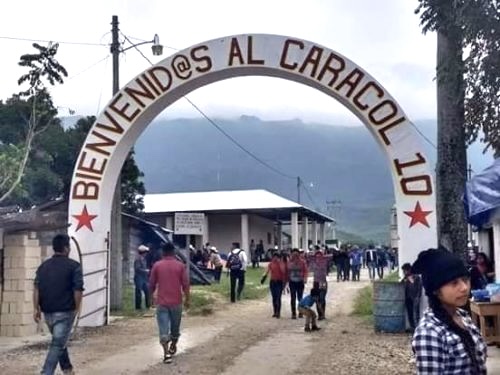
MOISÉS Y GANDHI – On May 22, 2023, narco-paramilitary members of ORCAO carried out an armed attack on this important autonomous Zapatista community. A Zapatista support base, Jorge López Sántiz, was shot in the chest and seriously wounded in the attack. It was difficult to find a hospital that had both the room and the level of care he needed. Somehow, his compañeros were able to get him admitted to the Dr. Gilberto Gomez Maza Hospital in the state capital of Tuxtla Gutiérrez, where initially there was no space in the intensive care unit, as the seriousness of his injuries required. This caused concern because he sustained injuries to his diaphragm, large intestine, stomach and spleen. Reports said his condition was so serious that he was barely clinging to life. He ended up in the intensive care unit of the hospital in Tuxtla for 10 days and in physical therapy for another 4 days.
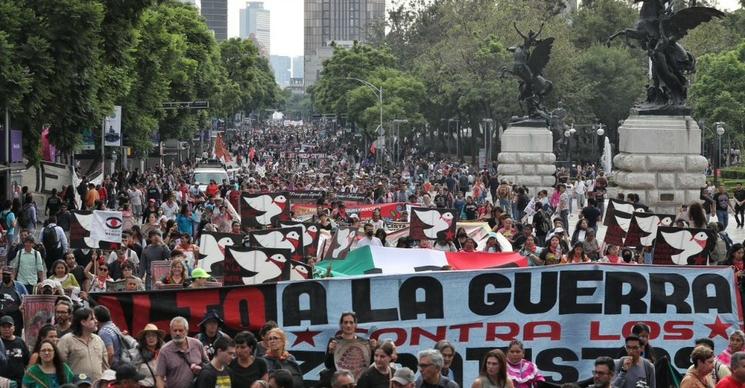
This attack and Jorge’s injury prompted the CNI to call for a Day of Global Action to Stop the Attacks against the Zapatista Peoples on June 8, and to organize a large protest march in Mexico City. Supporters around the world carried out a variety of protests.
On June 19, just 11 days after the protests, the ORCAO again launched a series of armed attacks in the Moisés y Gandhi region. The simultaneous shooting lasted three days, this time against 3 communities: Moisés y Gandhi, Emiliano Zapata and San Isidro. This led to a strong denunciation from the All Rights for All Human Rights Network (TDT Network or, in Spanish, the RedTDT). AMLO had the bad taste to respond by denying the violence that people are experiencing in the state. His denial was full of half-truths and ancient history, which raised the collective blood pressure of Zapatista supporters. In response, supporters called for more protests, more Days of Global Action.
The armed attacks mentioned are the most recent attacks on this community from this same paramilitary organization. Among its many attacks over the years, the paramilitary wing of ORCAO has repeatedly attacked the community’s coffee warehouses located at the Cuxuljá Crossroads, an important source of economic production for the Zapatistas.
ALDAMA – In Aldama, there has been a huge reduction in the amount of shooting into Aldama communities. The reduction in shooting is significant enough to knock Aldama out of the news. The shooting and the news have moved to the Moisés y Gandhi region.
The reduction in shooting is due to the expulsion from the Santa Martha Ejido of many of those who were part of the civilian armed group that was firing their weapons into Aldama day after day and night after night for several years. The sprawling Santa Martha Ejido expelled more than a hundred of its residents involved in the shooting, allegedly because they attempted to poison the spring that provided drinking water to the ejido and also killed six people within their own ejido. Those expelled are now displaced and deny those allegations. It seems that many of them fled to the town of Polhó, a Zapatista-led community that is also the municipal seat of San Pedro Polhó autonomous municipality, where a non-Zapatista allowed the people displaced from Santa Martha to stay in his warehouse.
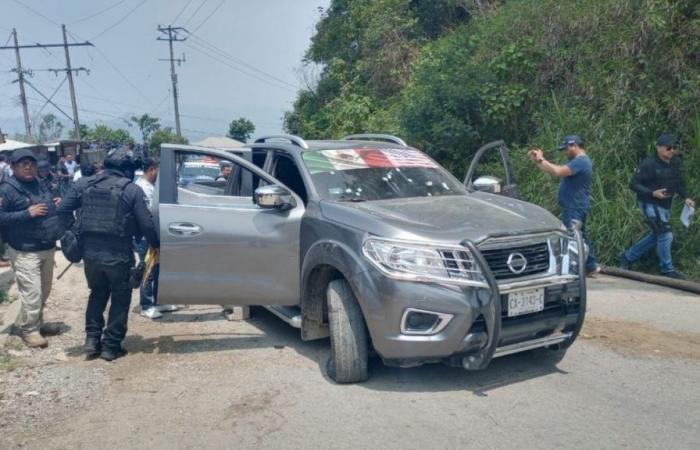
POLHÓ – Apparently, the folks displaced from Santa Martha took their guns with them when they fled to Polhó. In the late afternoon and evening of June 2, they apparently shot and killed six people (one of them a 3-year-old child) from Santa Martha who they claimed drove to Polhó to attack them. Media reports about the violent incident contradicted each other and raised many questions.
Weeks later, an opinion piece from Luis Hernández Navarro clarified key questions, such as Hernández Navarro’s description of the incident as an “ambush” of the family from Santa Martha and the driver’s relationship to Los Herrera and El Machete in Pantelhó. It turns out that the driver is the one who killed the wife of El Machete’s comandante several months ago and the displaced people living in the warehouse ambushed the vehicle he was driving.
The significance of such an incident occurring in a Zapatista-led community is hard to digest and difficult to analyze without more facts; but it appears to be an example of the narco-paramilitary violence in the Chiapas Highlands penetrating and damaging the community fabric in Polhó and elsewhere. (More on Polhó here.)
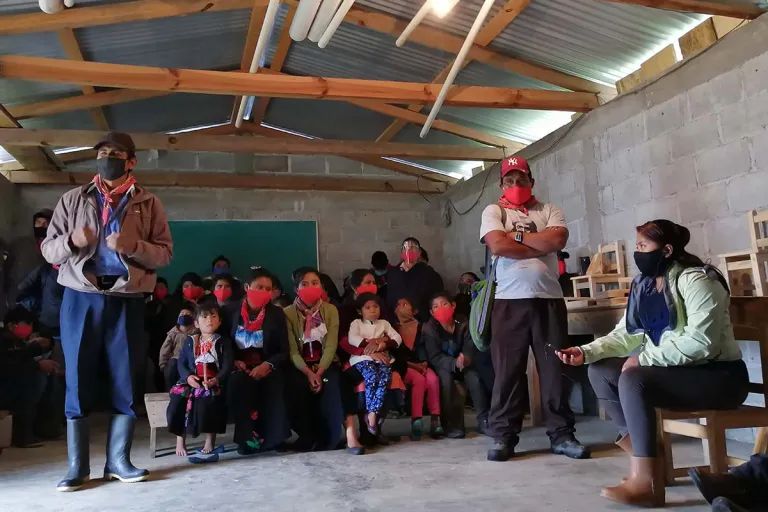
NUEVO SAN GREGORIO – The Latin American writer and analyst Raúl Zibechi visited NSG in September 2022 and reported that two Zapatista families had recently left the community, leaving just 4 families in resistance. Zibechi participated in a meeting with members of the remaining families, as did representatives from the Ajmaq Network and the Fray Bartolomé de Las Casas Human Rights Center (Frayba).
Representatives of the remaining families stated something Zibechi considered “notable.” They told him: “We’re more united now, we feel stronger than when we were a lot more.”
Nevertheless, despite their unity and strength, the four families that were holding out in Nuevo San Gregorio finally had to leave in order to save their lives, especially the lives of their children.
“JUDICIAL DISCRIMINATION” – A new or, perhaps, renamed form of counterinsurgency, which is being referred to by some as “judicial discrimination,” is the criminalization of “being Zapatista.” A recent example is the case of Manuel Gómez Vázquez, a civilian Zapatista support base from El Censo, municipality of Ocosingo, in the Tseltal Jungle Zone. A civilian armed group and the community authorities illegally arrested Manuel on December 4, 2020. He was tortured and suffered cruel, inhumane and degrading treatment. The next day, they handed him over to municipal public security and investigative police from the Indigenous Prosecutor’s Office of the State’s Attorney General (FGE). He has been in pre-trial detention (known in Mexico as preventive prison) ever since, despite the 2-year limit on such detention. [Lawyers tell me that when there is a delay for this long, the prosecutors probably don’t have a witness who is willing to give false testimony.)

Reports do not give the name of the armed civilian group that illegally arrested Gómez Vázquez. Nor do those reports indicate if that group has any connection to a national cartel. What IS known about El Censo, however, is that it has been anti-Zapatista since the early days of the EZLN. An armed civilian group, the Opddic, was born in the communities of El Censo and Taniperla (Ocosingo), on the periphery of the Montes Azules Biosphere Reserve, in the Tseltal Jungle Zone. Hermann Bellinghausen explained that history in La Jornada, on February 27, 2007.
POLITICAL PRISONERS – Judicial Discrimination seems to be another way of saying that Offices of the Chiapas State Attorney General (FGE) are arresting and holding civilian Zapatistas in prison, based on flimsy evidence, or none at all. The Fray Bartolomé de Las Casas Human Rights Center (Frayba) recently denounced a case from the municipality of Salto de Agua, in the state’s far north region near Palenque. The case involves a civilian Zapatista support base from Ranchería El Trapiche (Trapiche, on the maps). His name is José Díaz Gómez, and he has been a prisoner in the Catazajá state prison for eight months, “arbitrarily deprived of his freedom.” The Frayba is concerned about the delays in holding his intermediate hearing and demands his liberation.
José was arbitrarily detained with signs of excessive use of force, torture, cruel, inhumane and degrading treatment at the time he was forcibly disappeared and held incommunicado by members of the Specialized Police attached to the Prosecutor’s Office in the Selva District, who executed the arrest warrant. The warrant was for the crime of “robbery carried out with violence.”
And there’s more!
In addition, the Frayba added, “there is an arrest warrant for the same crime against four more indigenous EZLN civilian support bases, which places their dignity and human right to freedom at imminent risk, as a form of intimidation and harassment of Zapatista autonomy.”

INTER-AMERICAN COURT of HUMAN RIGHTS – Hermann Bellinghausen made public his affidavit to the Inter-American Court of Human Rights, which was used as evidence in the case of González Méndez v. Mexico. The family of Antonio González Méndez, a Zapatista who was forcibly disappeared from a community in Salto de Agua municipality, is pursuing a case against the Mexican government for the reparation of damages. The disappearance occurred in 1995, at the height of anti-Zapatista paramilitary activity. This is a case of first impression for the Court regarding the Mexican government’s counterinsurgency plan against the Zapatistas called the Chiapas 94 Campaign Plan, which included forming paramilitary groups. Lawyers and the widow of González Méndez are asking the Court to find a proximate cause between the government’s formation of paramilitary groups and the disappearance of González Méndez, who left the town with a member of the “Paz y Justicia” paramilitary group.
The affidavit gives a first-hand account of the history of the early days after the EZLN Uprising (1995-1999) and is not only a history lesson, but a good read.
The above is an update to “Chiapas and the Zapatistas face a dramatic increase in violence,” our initial report posted on August 31, 2022. This Update is published by the Chiapas Support Committee, a 501c.3. nonprofit organization and an adherent to the EZLN’s 6th Declaration of the Lacandón Jungle.
Zibechi: The end of the landscape (during the battle)
By Raúl Zibechi
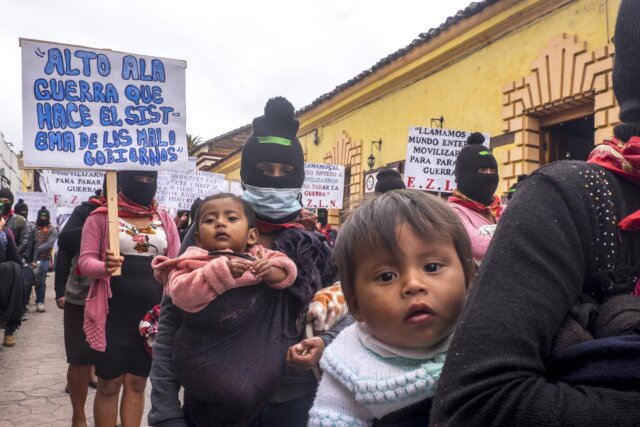
When the war began, a timely communique from the EZLN analyzing the first days of the conflict concluded this way: “The war must stop now. If it is maintained and, predictably, scaled, then there may be no one to account for the landscape after the battle.”
A year and a half later, the journalist Rafael Poch de Feliu, who was a correspondent for more than 20 years in Moscow, Beijing, Berlin and Paris, and is a deep acquaintance of those worlds, fully agrees with the Zapatista assessment. He quotes extensively from American journalist Matthew Hoh who published an article in counterpunch.org on June 30, titled “Destroy Eastern Ukraine to Save It:”
“Whoever ‘wins’ in eastern Ukraine will gain a land depopulated and full of destroyed infrastructure. This land will be contaminated for generations by the military toxins of war and riddled with landmines and unexploded ordnance. Ukrainian mothers are likely to suffer the same as Iraqi, Afghan and Southeast Asian mothers, giving birth for generations to dead, deformed and sick children due to the imperishable toxic legacies of modern warfare. Children and their families, decades from now, will be punished for this madness in Ukraine, just as children and their families continue to be punished in all post-conflict countries.”
Poch’s article is titled “Ukraine is losing the war, but Russia is not winning it,” and does not take sides with either side, although he says that 70% of the responsibility for the war lies with the United States and its allies.
He begins by talking about the failure of the Ukrainian counteroffensive, largely due to “desertions, forced conscription and surrenders to the enemy of Ukrainian troops,” news that the European press rigorously hides. Young people simply refuse to join the armed forces, with only one in five recruited.
He goes on to explain that on the front lines there is real carnage. “There is a horrible picture of young men killed and maimed.” Some analysts consider that the life expectancy of a young man who is sent to the front is only four hours!!
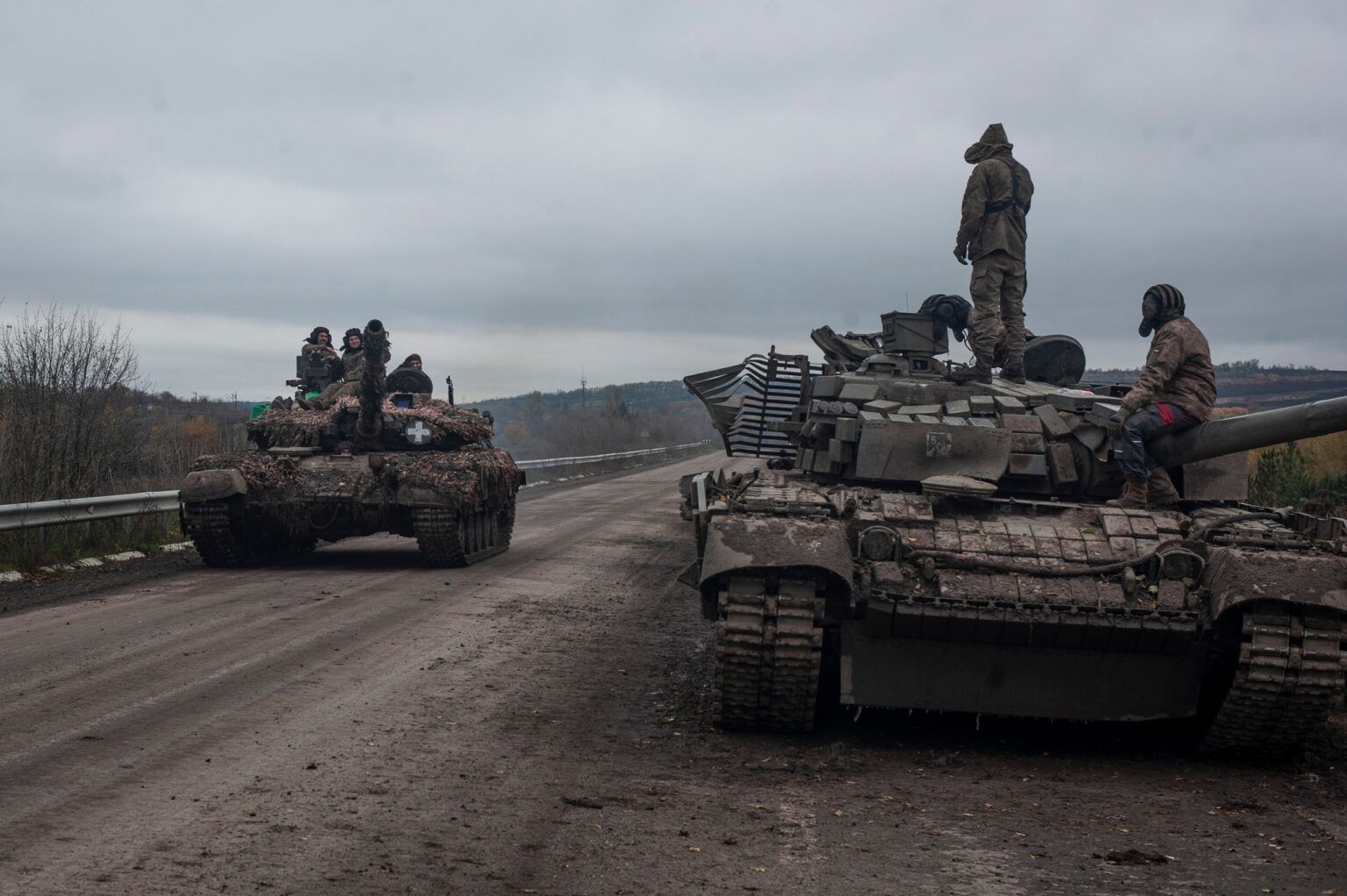
On Russia’s side, things are no better. The country justified the invasion of Ukraine to defend the Russian population of Donbas, but things are turning against it: “The population of Donbas – and part of that of the Russian bordering regions of Belgorod and others – is now suffering much worse bombings and calamities than before the invasion.” Worse, Ukraine’s majority regions will be long-term unstable and increasingly anti-Russian, a sentiment Poch expects to endure for generations.
The truth is that peace is increasingly distant, the two sides cling to their positions without the slightest ability to foresee where the war is going, which, as the EZLN estimated, tends to escalate into a conflict between nuclear powers.
Many of the people on the left that we have heard during these months agree with the analysis of geopoliticians that we are facing a war aimed at changing the relationship of forces between North and South, between the G-7 and the BRICS, and in particular between China and Russia and the United States. Some are already speculating about how long the dollar will last as a reserve currency and the foreseeable erosion of the superpower’s power. They believe that being anti-imperialist boils down to being anti-Yankee. As if it were the only imperialism on the planet.
The great problem with this political position is that it leaves human beings, the peoples who are victims of a war they did not choose, in the ditch. And this point links the war in Ukraine (and in Yemen, in Syria and throughout the planet) with the wars of dispossession that the peoples of Latin America suffer. That is why we must be clear that there is only one war: that of capital against the peoples. It is not relevant that this capital is now based in Europe, the United States, China or Russia. It’s capital, period.
Will we be able to feel the war in Ukraine as an aggression against us? The question also applies to those who still do not feel the aggressions in Chiapas or Oaxaca, in Jujuy or in Peru, as part of a generalized attack from above against those below. As Brecht said, if we do not react now, it will be too late when our turn comes.

Originally Published in Spanish by Desinformemonos, Monday, July 24, 2023, https://desinformemonos.org/el-fin-del-paisaje-durante-la-batalla/ and Re-Published with English interpretation by the Chiapas Support Committee
Dehumanization of the immigrant and political war in the US
By: Miguel Tinker Salas* and Luis Duno Gottberg**
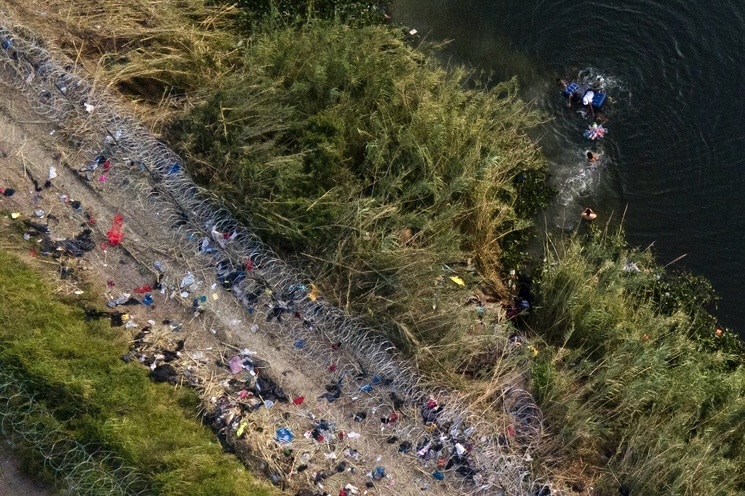
Dehumanizing the other is a step prior to the violation of their human rights. The transformation of the immigrant experience into an abstract statistic, into a criminal act, into an excuse to manipulate or settle foreign and extemporaneous political conflicts, are forms of that erasure of the human that entails violence. This is the current case of the migrant population, which has become a wild card in political struggles within the territory of the United States.
Recent events highlight a systemic practice in which immigrants unknowingly become instruments of propaganda and harassment by Republican Party leaders. This operation is meticulously orchestrated and financed, turning a vulnerable population into deeply cynical chess pieces.
Last June, for example, a plane from New Mexico landed in Sacramento, in order to set off a dehumanizing choreography. Indeed, a bus had even been hired to transport the newly arrived passengers to the office of the diocese of the city, where the driver abandoned them immediately after they got off the bus. Neither the passengers nor those in charge of the diocese knew what was happening. Kidnapped under deception, there they were abandoned to their fate, as if they were disposable beings. This is the sad reality faced by immigrants in the United States, whose humanity is denied.
Interviewed by the press, these immigrants, the vast majority Venezuelans, said they had been recruited in Texas and transferred to New Mexico, and then boarded on a plane that would take them to Sacramento. The person who recruited the immigrants assumed false identities, posing as a Florida government official and, on another occasion, as a former U.S. military intelligence agent. A perverse theater (manipulating those fleeing precariousness and violence) and also a criminal one (usurping the identity of public officials) blur the ordeal of men, women and children, with the sole purpose of harassing the internal enemy in US electoral contests.
Maria, a Venezuelan who walked more than 4,500 kilometers to reach the United States, said that in El Paso they had been promised work and legal advice to regularize their immigration status when they arrived in Sacramento. History repeated itself a week later, when a bus from Texas flew 42 immigrants to Los Angeles. This group had requested asylum and ended up being transferred under deception to where their presence would simply be an instrument of siege within a political game totally alien to this migrant population. In both cases, had it not been for the compassion of community groups, these people would have ended up on the streets of the city.
The perverse practice of manipulating immigrants in this way began in 2022, when Ron DeSantis, Florida’s Republican governor and current presidential candidate, used state funds to recruit immigrants in San Antonio, Texas, mostly Venezuelans, to send them to Martha’s Vineyard, an upscale community and tourist site in Massachusetts. The 2022 Florida state budget allocated $12 million to respond to the covid emergency and DeSantis made these funds available to facilitate the removal of undocumented immigrants, sending them to a part of the country governed by his political adversaries.

After Massachusetts, New York became the next destination to which immigrants were sent. According to the mayor of New York, more than 60,000 immigrants have arrived from Florida and Texas. The purpose of these operations is to collapse public services in these cities and thus provoke an anti-immigrant reaction among Americans. Read again: deceitfully abducting tens of thousands of vulnerable people, and then transferring them to territories governed by a political opponent, in order to collapse public services.
The actions in New York, Sacramento and Los Angeles are the latest chapter in a malevolent policy promoted and funded by Republican Governors Greg Abbott of Texas and Ron DeSantis of Florida. Both are depicted as leaders of a culture war that aims to rescue the supposed traditional values of the United States. Their actions are a logical extension of former President Donald Trump’s slogan to Make America Great Again. But what values do these actions embody? What greatness is the dehumanization of others for the purpose of political gain and destruction of an adversary?
The opportunistic and cruel instrumentalization of immigrants goes beyond the harassment of Democratic enclaves. The phenomenon is part of a broader cultural struggle that is presented, deceptively, as a “conflict of values.” DeSantis often says, for example, that Florida is where “progressive values come to die.”
Deploying an ultra-conservative populist rhetoric that challenges a sector of the electorate by defending the so-called “traditional family”, with the supposed protection of children, marriage and religious principles, the uses of the migrant population are part of a political war that seeks to reverse political rights acquired since the 1960s by people of color, trade unions, women, retirees, the LBGTI community, workers and immigrants themselves.
Here is inserted a strategy of international repercussions, which warns about the alleged existence of a Mexican conspiracy to flood the US with fentanyl, in order to destroy Anglo-Saxon youth. These conservatives even dare to promote military action and even intervention in Mexican territory, to wipe out organized crime.

The discourse on the protection of the family and the protection of national health clashes with the reality of an avalanche of legislation to cut funding in education, prohibit teaching against racism, repeal women’s reproductive rights and weaken the basic rights of access to health care and fair retirement. However, all this ends up invisible by the panic generated by a political war that convinces many Americans of the existence of a conspiracy to corrupt the national body and replace them with “people of color.” Thus, immigrants become subjects who not only seek asylum and protection, but are actually part of an invasion that would transform American culture and society into something unrecognizable and threatening.
It is easy to dismiss these incidents as isolated or simple extreme demonstrations, ahead of the next presidential campaign. However, it should be remembered that, with a similar speech, Trump won the presidency in 2016 and that, in 2020, he obtained more than 70 million votes. How much should this hate speech permeate the population? Consider that, even though he is indicted and facing criminal charges, polls show that Trump has risen in popularity and dominates among Republican candidates vying for the presidential nomination.
The sad reality is that Democrats offer few alternatives and that some answers mimic the actions of conservative politicians. Eric Adams, the mayor of New York, has begun deporting immigrants to Texas and Florida. President Joe Biden has implemented an immigration policy that is little different from Trump’s. Indeed, the number of people denied asylum has skyrocketed in recent months.
Although Biden canceled Title 42, implemented by Trump, he still maintains the measure that if an immigrant does not apply for asylum in any country he passed through on his way north, he immediately loses the right to apply in the United States. As a result, the number of people rejected has skyrocketed significantly. If previously 83 percent of the petitions were approved, in the last month only 46 percent have been approved.
Biden continues to attempt a truly unusual strategy, which incorporates other nations in a process of “externalizing the border.” Thus, it has reached agreements with Panama and Colombia so that, under the so-called Operation Shield, they increase their military presence in the Darien Gap. The operation includes U.S. funds and advisers for the deployment of these operations in which the limits of the North American nation are projected to the south.
Although immigrants are the scapegoats of the present crisis, what is happening here cannot be reduced to a culture war. Rather, it is about the instrumentalization of a vulnerable (or violated) people within a national political conflict that will define the fate of those seeking asylum, but also the relationship with Latin America and, even, the nature of the democratic institution itself within the US.
* @mtinkersalas. Latin American Studies, Pomona College
** http://www.luisdunogottberg.com/ Department of Classica and ModernLiterature and Culture, Rice University

Originally Published in Spanish by La Jornada, Thursday, July 20, 2023, https://www.jornada.com.mx/notas/2023/07/20/politica/la-deshumanizacion-del-inmigrante-y-guerra-politica-en-eu/ and Re-Published with English interpretation by the Chiapas Support Committee
 Chiapas Support Committee