Chiapas Support Committee
Home of the Compañero Manuel blog on zapatistas & mexico
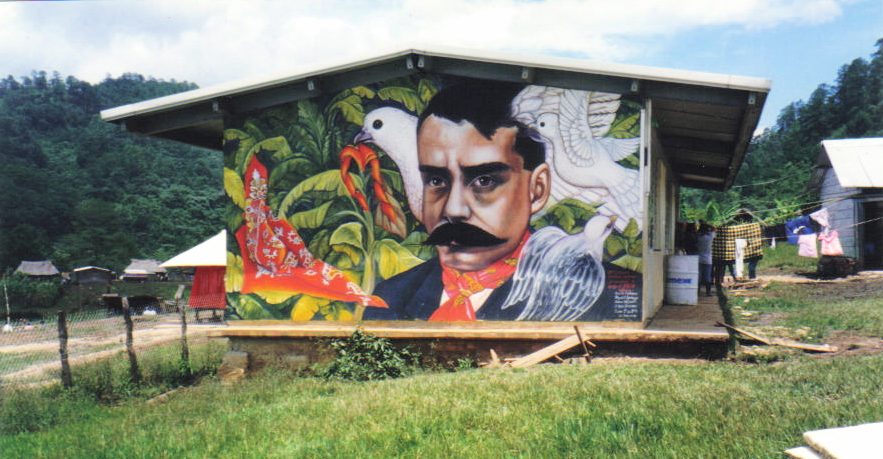
The EZLN commemorates 29 years of struggle with a call to new generations of rebels
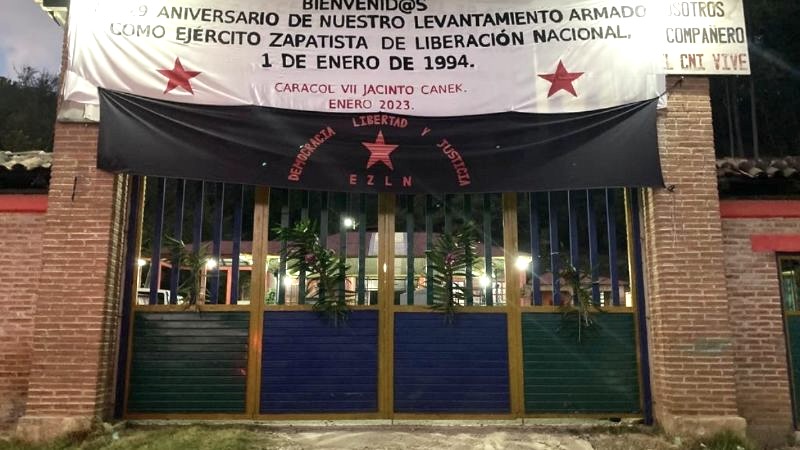
With dances and slogans, members of the EZLN ratified their struggle that began on January 1, 1994 and called on the new generations of rebels not to forget those who gave them their lives.
By: Isaín Mandujano
SAN CRISTÓBAL DE LAS CASAS, Chis (proceso.com.mx)
Between dances and slogans, milicianxs and support bases of the Zapatista National Liberation Army (EZLN) ratified their struggle that began on January 1, 1994 and called on the new generations of rebels not to forget the dead who gave their lives since “the organization” was conceived in the deepest recesses of the Lacandón Jungle.
In the interior of Caracol VII Jacinto Canek, located in the Fray Bartolomé de Las Casas Indigenous Center for Integral Training AC-Universidad de la Tierra Chiapas (Cideci-Unitierra Chiapas) north of San Cristóbal de Las Casas, some two thousand masked members of the EZLN gathered.
After honoring the Mexican flag and the EZLN fighting flag, a black flag with a red five-pointed star in the center, one of the commanders of the armed group took the floor to recall what happened that night between December 31, 1993 and January 1, 1994. as well as the days of war that came afterwards, in which there were many dead, wounded and missing.
While they allowed access to journalists, they did not allow photographs, videos, much less record audio of the speech given only in Tsotsil. Except for the slogans that were in Castile, as they refer to the Spanish language.
The spokesman of the event thanked everyone for their presence to remember this date of the armed uprising “against the bad government.” But above all, he said, remembering the men and women who lost their lives “in those difficult days.”
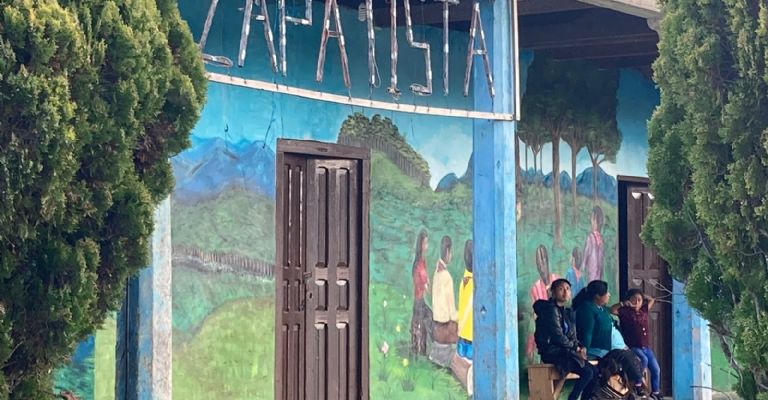
“Let’s remember that this fight is a fight against the bad government, so let’s remember that we must be and continue to be organized, developing what we are doing. Let us all continue to work in unity, let us all continue in the organization because this is a long journey that has been made. It is a job that those who have already died left and we must continue, to continue remembering it,” the rebel commander said.
He pointed out that they continue to demand justice for their dead and disappeared, and that they did not stop shouting it because each and every one of those crimes that remain unpunished must be clarified.
He asked those present not to forget the dead, because thanks to them they have been able to continue fighting for a better quality of life and outlined that their levels of government are now determined by three hierarchies, by groups, by zones, and in each of them each of the men and women have an important role.
“I ask the new generations to learn the form of organization, to learn to work within their towns and communities so that they do not have to migrate to other countries or states to get work, because within organizations there are also jobs that are very important. That is why it’s relevant that the new generations learn all that, so that the organization can continue,” he added.
“Don’t change your way of thinking, keep it up, let’s keep thinking like this because so far the organization has walked well and we follow the legacy and the thinking of those who have already died. And while it has been transformed, this has been in the community, so it’s important that we continue to learn all this, “he said.
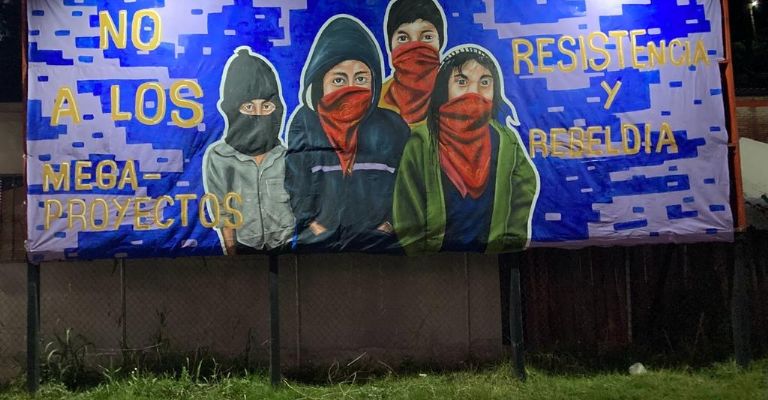
“¡Viva el EZLN! ¡viva the 29th anniversary of the armed uprising!, ¡vivan the insurgentas!, ¡vivan the insurgentes!, ¡vivan las milicianas!, ¡vivan los milicianos!, ¡viva Subcomandante Insurgente Pedro!, ¡vivan all of the fallen!, ¡viva the resistance and rebellion!, ¡viva subcomandante insurgente Moisés!, ¡viva subcomandante Insurgente Galeano!, ¡viva Chiapas!, ¡viva Chiapas!, ¡Viva México!, ¡Viva México, ¡Viva México!”, were the chants at the end of the political event.
Then it gives way to the musical group that enlivened the dance, where men and women filled the sports field.
They were first born as the National Liberation Forces (FLN, Fuerzas de Liberación Nacional) on November 17, 1983 in the heart of the Lacandón Jungle. Later, in 1992, to attend the march on October 12, 1992, to celebrate 500 years of indigenous resistance, they called themselves the Emiliano Zapata National Campesino Alliance (ANCIEZ, Alianza Nacional Campesina Emiliano Zapata). But on January 1, 1994, the whole world knew them as the EZLN.
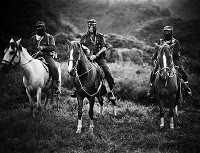
Originally Published in Spanish by Proceso, Sunday, January 1, 2023, https://www.proceso.com.mx/nacional/estados/2023/1/1/el-ezln-conmemora-29-anos-de-lucha-con-un-llamado-las-nuevas-generaciones-de-rebeldes-299540.html and Re-Published with English interpretation by the Chiapas Support Committee
EZLN, 29 years of persistence
By: Hermann Bellinghausen
San Cristóbal de Las Casas, Chiapas
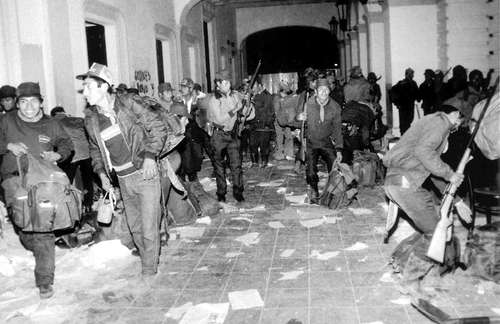
29 years have passed since the armed uprising and the declaration of war against the Mexican state of the Zapatista Army of National Liberation (EZLN) in the mountains of Chiapas. Six presidents and nine governors later, and so much water running under the bridges at the national and local levels since that early morning of January 1, 1994, the challenge posed by the insurrectionary Mayan peoples remains. And its bold and functional autonomy has just turned 28. On December 19 of that same year, the creation of the first 38 rebel autonomous municipalities was announced.
What was born as an experiment in indigenous peoples’ self-government, which the State has never recognized and for seasons has openly fought via the armed forces and police at all levels, still stands when 2023 arrives. The rebellious municipalities persist, different from those at the beginning, but the same. La Jornada toured the regions of some of the at least 12 current Zapatista caracoles and was able to observe the vitality of this autonomy.
In 1995, after the military occupation of the Zapatista communities and, on orders of President Ernesto Zedillo, destruction of the Aguascalientes in the Tojolabal community of Guadalupe Tepeyac, the EZLN created five Aguascalientes, and organized their autonomy regionally around them.
What began as an armed action, for many even suicidal, resulted in new forms of indigenous self-management against the grain of the rampant neoliberal Spring in which the PRI governments claimed to have lifted Mexico. After the San Andrés Accords in 1996, Zapatista autonomy was in fact confirmed by assuming as law the agreements signed and then betrayed by the Zedillo government. This autonomy was rightly seen as an obstacle to the transnational and national megaprojects to come.
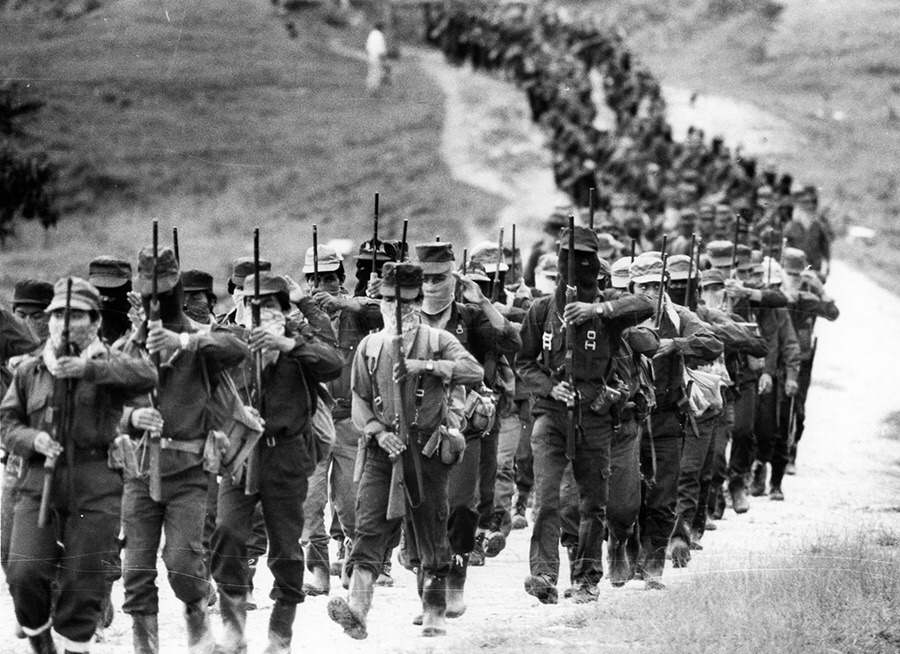
Memorable are the police, military and paramilitary aggressions against the rebel municipalities. Tierra y Libertad, Ricardo Flores Magón, San Juan de la Libertad, San Pedro Polhó and San Pedro de Michoacán are among those that suffered the greatest violence and dispossession. Even so, these governments continued, establishing their own systems of justice, health, education, transportation and management of land and its products.
A large part of these autonomous spaces were, and still are, on land recuperated from the finqueros (estate owners) and cattle ranchers of the Lacandón Jungle after the uprising almost three decades ago. Many others are made up of communities in the traditional areas of Los Altos, the northern zone, the jungle itself and the border region of Chiapas. Choles, Tseltales, Tsotsiles, Tojolabales and Zoques who embarked on resistance.
Six-year term after six-year term, government projects and programs have sought to undermine economically and institutionally this unique indigenous autonomy in the world. In August 2003 another twist was known when the creation of the caracoles was announced, new centers of government in the five Aguascalientes that already existed. Thus, the Good Government Juntas were born, around which the Zapatista municipalities were reorganized.
The experience would be very useful to face the new government attacks after the “declaration of war” from the government of Felipe Calderón to organized crime, which in principle meant militarily surrounding the country’s indigenous communities and the virtual paralysis of the National Indigenous Congress. With Peña Nieto would come the Crusade Against Hunger, a new version of economic counterinsurgency. In 2019 and 2020, already in the period of Andrés Manuel López Obrador, the EZLN established new caracoles and good government juntas, until adding at least 12, and a redistribution of its municipalities.
Now it’s the new state and federal governments of Morena that dispute followers by electoral means (to which the Zapatistas never go) and promote a renewed partisanship of municipalities and indigenous communities, as well as by economic means through social and welfare programs, to which the Zapatista resistance has remained impervious by peaceful and organized means.
Originally Published in Spanish by La Jornada, Saturday, December 31, 2022, https://www.jornada.com.mx/2022/12/31/politica/008n1pol and Re-Published with English interpretation by the Chiapas Support Committee

Pablo González Casanova, a Latin American trajectory
By: Sebastián Rivera Mir*
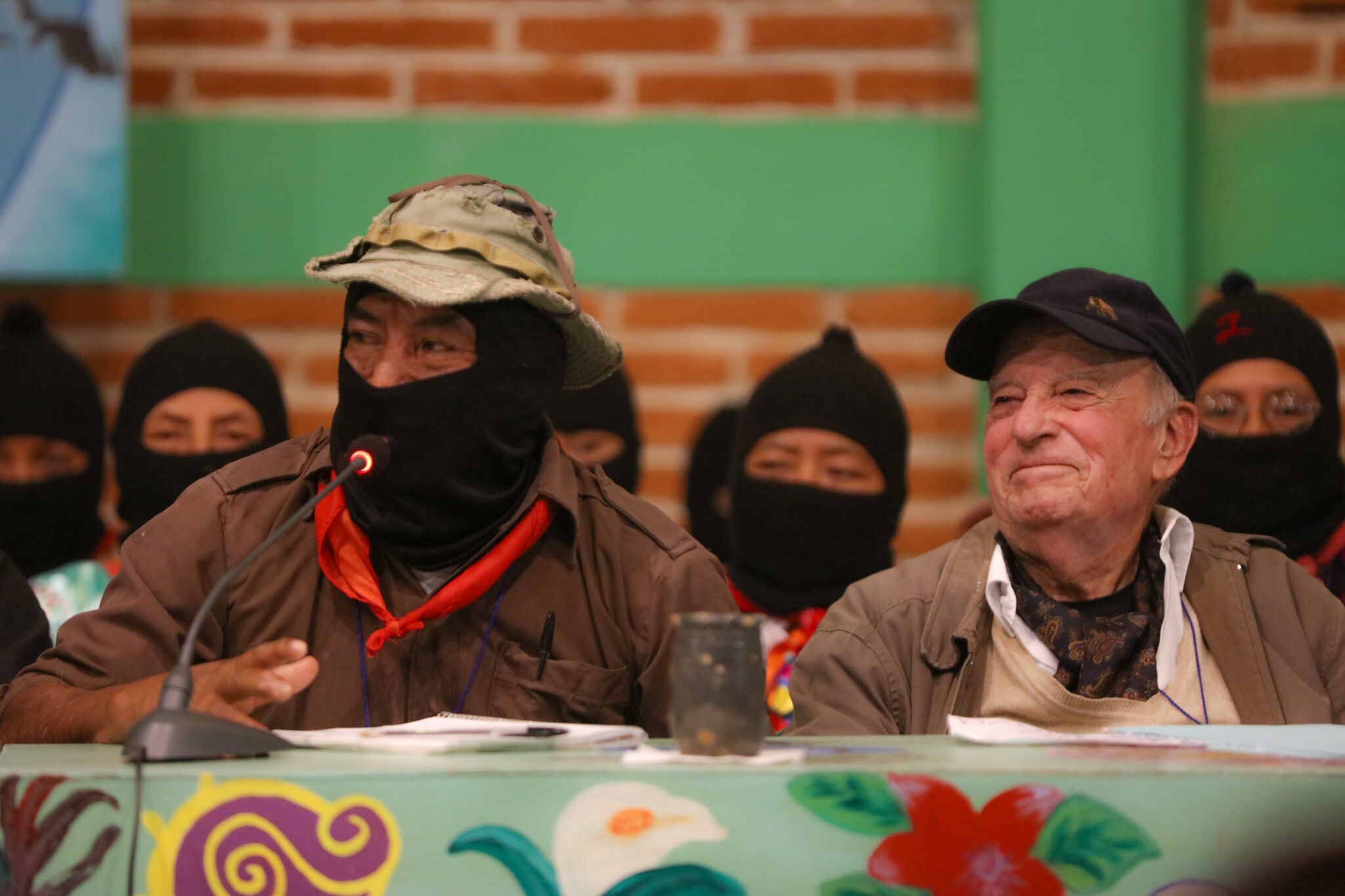
In the 1970s, the Argentine dictatorship decided to outlaw hundreds of books analyzing the continent’s social and political conditions. On Sociology of exploitation, by Pablo González Casanova [1], they declared that it was a book that demonstrated “a form with undoubtedly dissociative tendencies, since they attack the structure of the State or one of its institutions, considering the need for its change by unacceptable means.” Why did one of the bloodiest dictatorships on the continent worry about the approaches of the Mexican historian and sociologist who was more than 8,000 kilometers away? How could a text of rigorous analysis of Latin America’s economic and social future be a threat to Argentine generals?
Beyond the anti-communist hysteria itself, these soldiers seemed to understand one of the main objectives of Pablo González Casanova at the time of carrying out his intellectual activity: it’s not enough to just understand reality, it’s essential to try to change it. His commitment to social movements, to revolutionary processes, cannot be dissociated from his rigorous and critical efforts to analyze political, cultural and economic problems. Of course, the impact of his proposals throughout the continent has ended up becoming a challenge for those who seek to curb democratic processes.
The Latin American gaze of González Casanova began to be cemented from his first steps in the academic field. Paradoxically, one of his first publications in El Colegio de México, where he studied for a master’s degree in history, focused on censorship implemented by Spanish colonial authorities in Latin America. The doctorate, carried out in France together with one of the leading historians of the time, Fernand Braudel, again led him to explore the activities related to the coloniality of thought, although this time from the perspective of the sociology of knowledge.
The need to rethink, from Marxism, those categories that explained the conditions of subordination of the continent led him to build, with a statistical rigor uncommon in the 60s, the concept of internal colonialism. It was a question of understanding how forces were articulated within our countries that contributed and took advantage of the relations of dependency for their own benefit. Like many of his works, it was also based on dialogue with other researchers and political actors. Different approaches were discussed in academic spaces in Brazil, Peru, Chile, Mexico, among other countries. Thus, the result was not a personal interpretation, but a true work of collective criticism throughout Latin America.
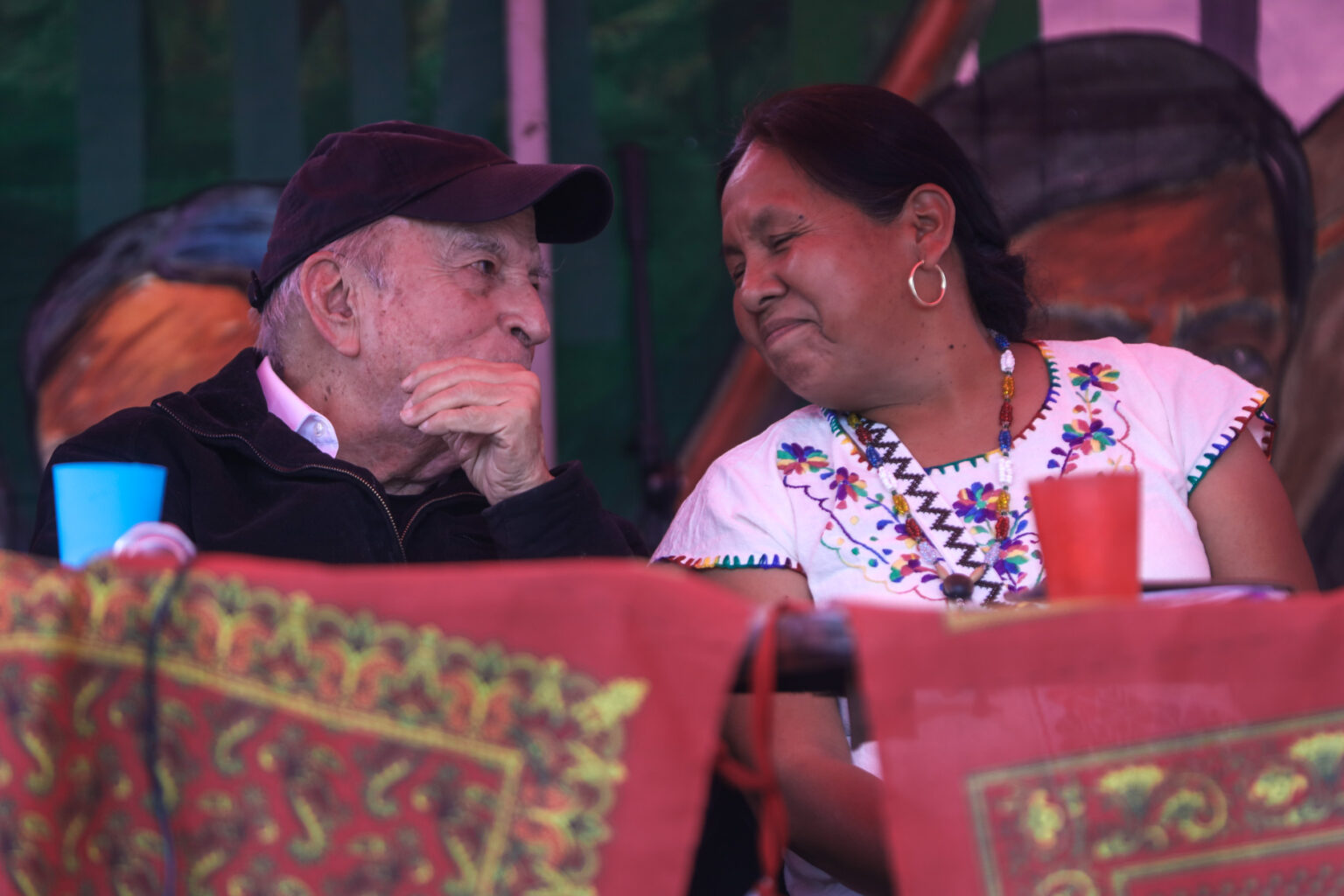
The process of conceptual and reflective elaboration of Pablo González Casanova has been accompanied by the creation of institutions that would allow these intellectual efforts to be sustained over time. At different times, he was linked to the Centro Latino-Americano de Pesquisas em Ciências Sociais (Clapcs; Unesco), the Latin American Association of Sociology, the Latin American Faculty of Social Sciences (Flacso), the Permanent Seminar on Latin America (Sepla), publishers such as the Fondo de Cultura Económica or Siglo XXI, the Salvador Allende Center for Latin American Studies, among other organizations. We could go on enumerating; However, what is relevant is to recognize that his commitment to institution-building has given density to the analytical exchanges required to face problems that often exceed national boundaries.
This last aspect allows us to understand the thematic breadth of his reflections, which have covered elements as diverse as democracy, militarism, peasant and workers’ movements, the constitution of states and uneven economic development. These problems, central to understanding the challenges faced in Latin America, have been part of Pablo González’s political career. For example, his support for anti-dictatorial movements led him to focus his analyses on the role of democracy in the region, or his collaboration with South American exiles pushed him to rethink militarism. Thus, as we have stated, their political practices, their theoretical works and their contributions from the academic field, have formed part of the same process.
That’s why it’s no coincidence that Chilean students at the end of the 60s took up thinking again about university reform, having their books reprinted in different parts of the continent or that even the Federal Directorate of Security continued its activities in support of the revolutionary movements in Cuba, Central America or Mexico. The trajectory of Pablo González Casanova in Latin America has allowed consolidating an alternative political thought and praxis, which continues to encourage the struggles for a different world. And this, as with the Argentine military in the 70s, constitutes a challenge for the defenders of the current neoliberal model.
* Professor researcher of El Colegio Mexiquense
[1] In April 2018, the EZLN named Doctor Pablo González Casanova a comandante in the Indigenous Revolutionary Clandestine Committee of the EZLN (CCRI-EZLN), Comandante Pablo Contreras.

Originally Published in Spanish by La Jornada, Wednesday, December 14, 2022, https://www.jornada.com.mx/2022/12/14/opinion/022a1pol and Re-Published with English interpretation by the Chiapas Support Committee
The return of the old mole
By: Luis Hernández Navarro
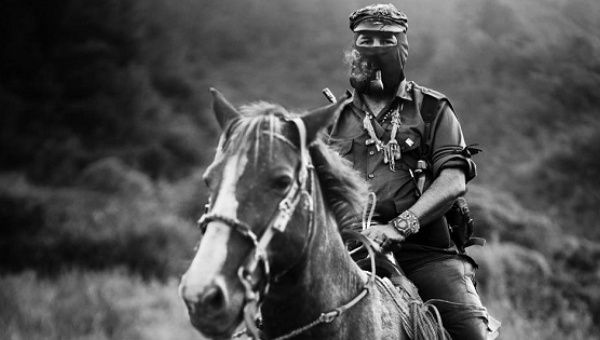
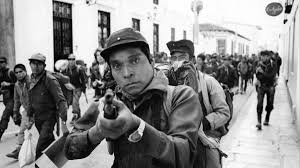
A ray in the darkness of Salinas neoliberalism illuminated Mexico from below on the night of December 31, 1993. At the sound of the drum of dawn, tens of thousands of indigenous Zapatistas militarily occupied the municipal capitals of the main cities of Los Altos and the Chiapas jungle.
Formed on November 17, 1983, the Zapatista National Liberation Army (EZLN) grew for years in silence, underground, until the moment came to rise up in arms. The counter-reform to Article 27 of the Constitution raised the white flag of land distribution and the start of the North American Free Trade Agreement converted the country into “Maquilatitlán;” they left no alternatives on the horizon.
The first public indications of the insurgents’ existence appeared on the 22nd and 23rd of May 1993, when the Army found Las Calabazas rebel camp, in the Sierra Corralchén [mountains] of the Lacandón Jungle [1]. On May 24, soldiers surrounded the Pataté community, gathered its inhabitants in its center and, without a search warrant, went inside to search houses. They found a few low-caliber weapons used for hunting. Eight indigenous men were arrested. Later, they randomly arrested two Guatemalans who were selling clothes. They were charged with treason. The region became militarized and overflowed with new resources from the Solidarity Program. But then path of the rebellion continued.
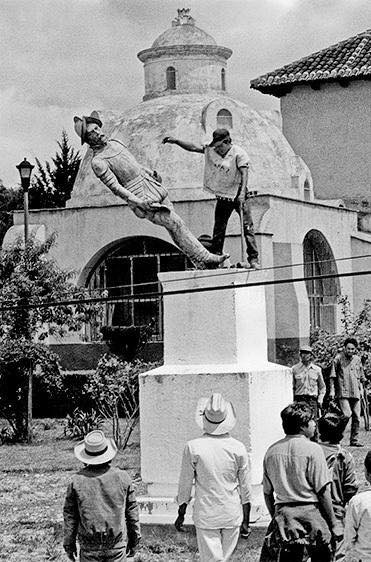
A warning that something was happening in those lands could be seen in San Cristóbal de las Casas, on October 12, 1992. In anticipation of what would be common in other latitudes over the years, a contingent of the National Indigenous Peasant Alliance Emiliano Zapata (ANCIEZ) knocked over the statue of the conquistador Diego de Mazariegos, during the march to commemorate 500 years of indigenous, black and popular resistance. From then on, the ANCIEZ stopped acting publicly.
Out of the press’ spotlight, great transformations began to take place in grassroots organizations. Not a few democratic teachers had to leave their schools in Las Cañadas and moved to teach in other regions. In the assemblies of the cooperatives of small coffee producers, some of their leaders “disappeared” from the map, only to reappear after the uprising, no longer as coffee growers, but as Zapatistas. Others (many of them young) were absent for some time and returned with a surprising political formation. Several more, usually very active in the assemblies of their associations, visibly tired, stopped intervening in the meetings, while they dozed overloaded in the bundles of coffee. Later, it would be known that they used the nights to train in other tasks.
At the same time, many producers who for years had received credits from Solidarity to finance their crops and had religiously returned them, stopped paying them and used the resources for other things. There were not a few who sold their cows and pigs, nor those who stopped planting corn. They were preparing for something big. Meanwhile, communities voted to declare war on bad government.
The imminence of the armed uprising was an insistent rumor in Chiapas circles. There was talk that it would be December 28, April Fool’s Day. It was uncertain whether it would happen, its magnitude and the form it would take.
The Zapatista cry of “Ya Basta!” on January 1, 1994, shook the entire country and reached the most dissimilar corners of the planet. Its manifestations were as unexpected as they were diverse.

At the height of the conflict, the National Coordinator of Coffee Organizations (CNOC), with a relevant presence in Chiapas, became involved in the search for a peaceful solution to the conflict. Although it was composed mostly of indigenous people, its members did not usually identify themselves as such until then. But the uprising disrupted this dynamic and awakened in them an enormous pride of belonging to the original (native) peoples. At an assembly held in the old Ciudad Real (San Cristóbal), the teacher Humberto Juárez, a Mazatec president of the organization, unexpectedly began his speech in his own language, addressing the attendees as “indigenous brothers.” The change was remarkable. At meetings, Spanish was usually spoken and small coffee farmers referred to themselves as “fellow coffee producers.” Similar events took place throughout the country.
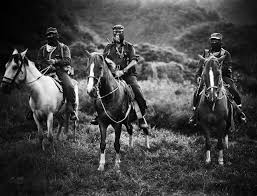
Some 28 years have passed. Since those dates, the Zapatistas have not only survived. They have constructed one of the most astonishing and surprising experiences in anti-capitalist self-government and self-management. They have renewed themselves generationally. They are an exceptional countercultural ferment and a source of inspiration for thousands of those who struggle for a different world all over the planet.
Revolution is the old mole that digs deeply into the soil of history and occasionally shows its head, said Karl Marx. As happened between 1983 and 1994, many of the transformations that the rebels have promoted from below go unnoticed today. Sooner or later, that old mole will come to the surface.
Twitter: @lhan55
[1] The Sierra Corralchén mountain range separates the Zapatista Caracoles of La Garrucha and Morelia in the cañadas (canyons) region of the Lacandón Jungle.
Originally Published in Spanish by La Jornada, Tuesday, December 27, 2022, https://www.jornada.com.mx/2022/12/27/opinion/011a2pol and Re-Published with English interpretation by the Chiapas Support Committee.
Please consider making a donation to the Chiapas Support Committee in support of our work with the Zapatistas. Just click on the donate button. We appreciate every donation and will thank you from the bottom of our hearts.
The wetlands in San Cristóbal, Chiapas, are worth more than a billion pesos and a city’s water
By: Ángeles Mariscal
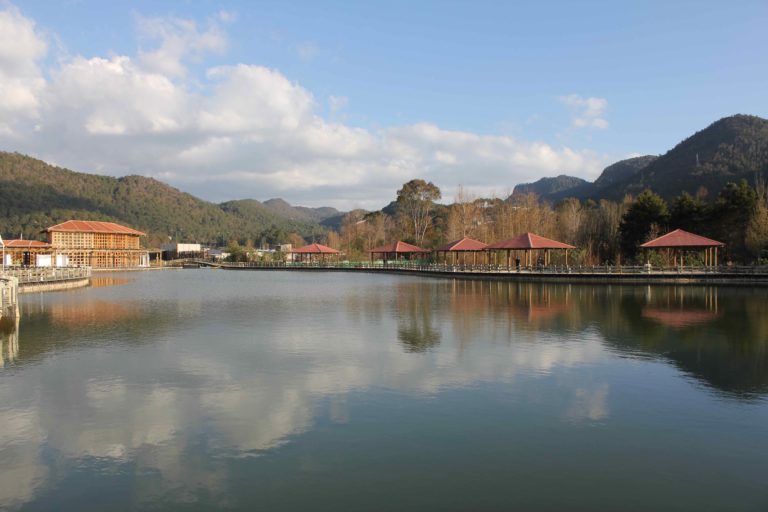
The La Kisst and María Eugenia Mountain wetlands, located in the municipality of San Cristóbal de las Casas, Chiapas, are at risk of disappearing. To assess the cost of the loss to the ecosystem services it now provides, and propose the recovery strategy, the federal government’s National Institute of Ecology and Climate Change (INECC) made an economic diagnosis of what this area provides to the population of this region.
The Kisst and María Eugenia mountain wetlands occupy 347 hectares and are located in the southern part of San Cristóbal de Las Casas, the main tourist attraction in Chiapas and one of the most emblematic and important colonial cities in southeast Mexico.
This area captures and stores carbon and regulates the temperature of the region. It houses species of fish, birds, amphibians and endemic mammals classified for special protection. It also prevents flooding by stopping soil and sediment entrainment, provides recreational services and scenic beauty and provides water to the population of San Cristóbal’s around 123,000 inhabitants, explained María del Pilar Salazar Vargas, Director of Environmental Economics and Natural Resources.
In the economic valuation of these ecosystem services, the INECC details that, for example, the capture and storage of carbon that is carried out in these wetlands, in the carbon market has a cost of 41 million pesos per year; flood control is just over 67 million; providing clean water has a value of 198 million pesos; and providing water to the entire population costs 769.98 million pesos. That is, wetlands provide services that in monetary terms mean 1 billion 77 million pesos each year.
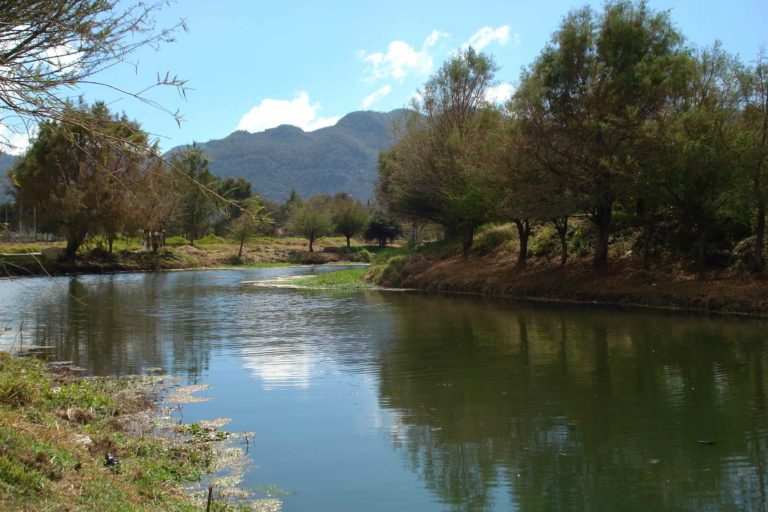
But, according to the INECC study, the place is affected and 86% of its service potential was lost, mainly due to water pollution from fecal waste and other waste that is dumped there; but also due to the extraction of stone material and the pressure that real estate [interests] -many of them linked to tourism- exercise, in addition to the invasion of individuals, who have built houses on top of the wetlands.
This meant that, in April of this year, the federal government decreed the wetland zone of San Cristóbal de Las Casas as a “critical habitat” – the first to be decreed in the country – which allows immediate and urgent strategies to be established for the recovery of the place.
Agustín Ávila Romero, General Director of Policies for Climate Action of SEMARNAT and the one in charge of the General Directorate of INECC, explained that in the strategy that is already applied in the region of these wetlands. They established areas of operation, one of them of maximum protection, where no activity that affects the preservation and recovery of wetlands will be allowed, such as as new constructions.
INECC officials acknowledged that any conservation and recovery project in that area is a challenge due to the social dynamics that are now experienced in that city, including “the interests of criminal groups in the area.”
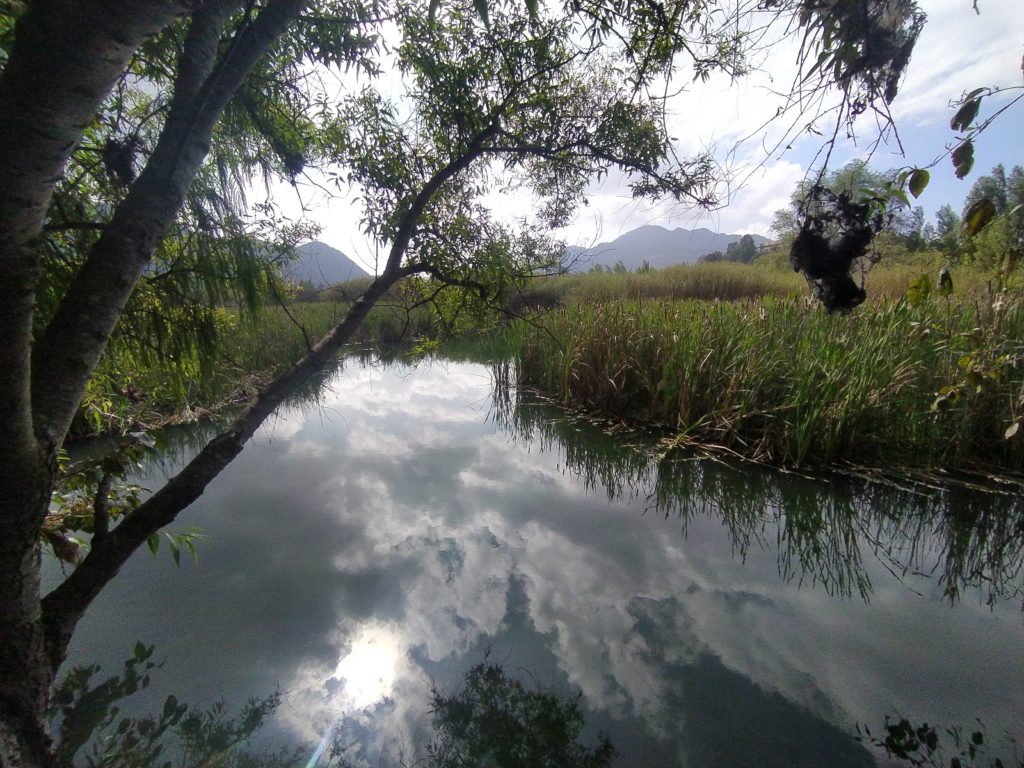
In the maps they presented, they locate three points of the wetlands in which the social dynamics are more complex: the Bienestar Social, Fracción San Cristóbal and San Pablo districts, where the population that carries out conservation actions, as well as the authorities, have suffered physical aggressions.
The problem is such that they have not been able to stop the trucks that take out stone material, “application of the law is lacking,” explained Ávila Romero.
Finally, the specialists explained that recently at the COP27 held in Egypt, it was agreed to reduce greenhouse gas emissions by 35% by 2030, “this entails a set of measures where we have to understand that wetlands are key to combating climate change,” and thus the urgency in attention to the wetlands area of San Cristóbal.

Originally Published in Spanish by Chiapas Paralelo, Thursday, December 15, 2022, https://www.chiapasparalelo.com/noticias/chiapas/2022/12/mas-de-mil-millones-de-pesos-y-el-agua-de-una-ciudad-eso-valen-los-humedales-de-san-cristobal-chiapas/ and Re-Published with English interpretation by the Chiapas Support Committee

Please consider making a donation to the Chiapas Support Committee in support of our work for the Zapatistas. Just click on the donate button. We appreciate every donation and will thank you from the bottom of our hearts.
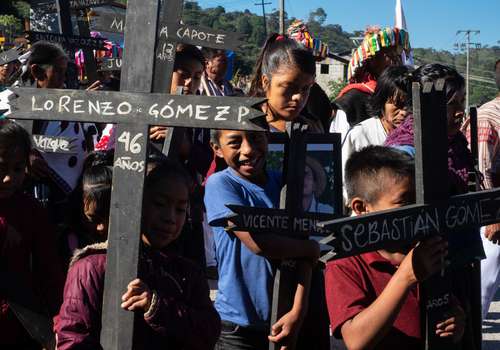
They commemorate the Acteal Massacre with a procession and 45 black crosses
By: Hermann Bellinghausen
Acteal, Chiapas
In front of “the sacred mountains as witnesses,” the survivors and heirs of the victims of the massacre that occurred here 25 years ago stated that they have always struggled “for a dignified and just life,” and their heart “is a guardian of the memory of our own history and walking as peoples.” The civil society organization Las Abejas, to which the 45 Tsotsiles who were murdered by paramilitaries belonged, also celebrated the 30th anniversary of its founding in December 1992.
The organization’s message, read by Guadalupe Vázquez, survivor as a little girl of the massacre and current symbol of the peaceful struggle and demands for justice, adds: “Our heart, like a monument, preserves the tragic event of the Acteal Massacre,” which took place “within the framework Chiapas 94 Campaign Plan’s counterinsurgency war, designed by the Ministry of National Defense and the PRI government of Ernesto Zedillo.”
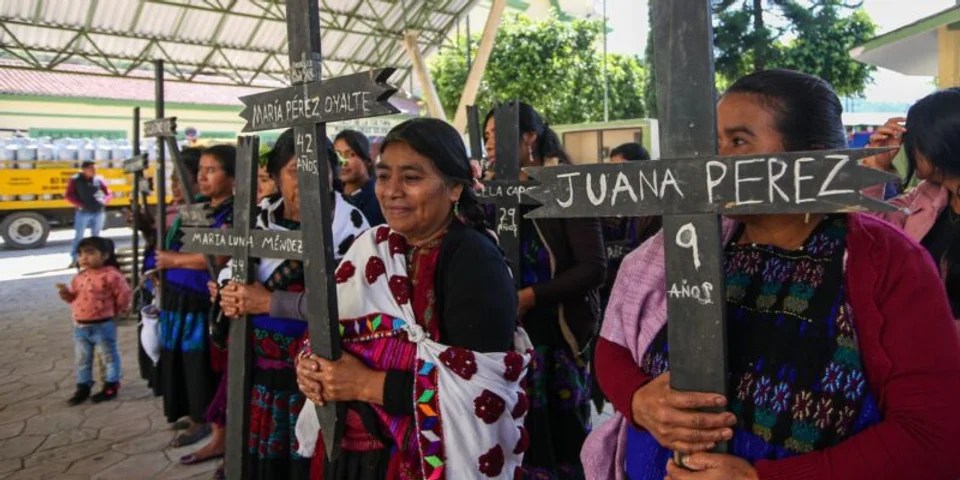
Yesterday morning, having previously met at the Majomut sand mine, hundreds of indigenous people walked to Acteal carrying as many black crosses as there were victims murdered 25 years ago. They descended into the ravine that has since been declared the “sacred land of the Acteal martyrs.”
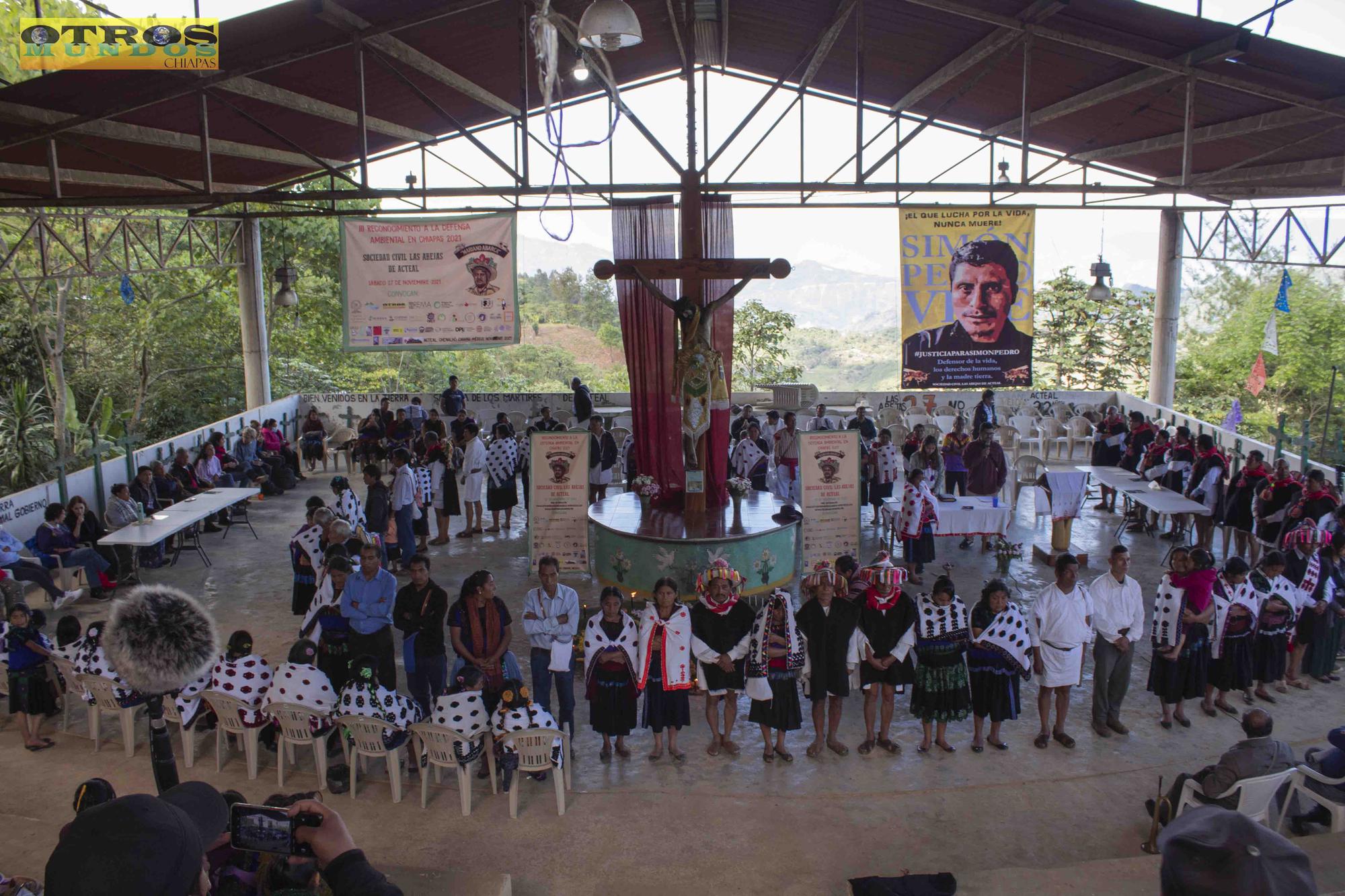
The pilgrims and their companions from the Catholic Diocese of San Cristóbal de las Casas and civil society were distributed on the steps and balcony of the panoramic temple, built on the tombs of the fallen and today sumptuously adorned with flowers, banners, lit candles, a high cross in the center, a modest Catholic altar and portraits of the late Bishop Samuel Ruiz García and the leader of Las Abejas, Simón Pedro Pérez, murdered a year ago by hitmen in Simojovel.
Dominican Bishop Raúl Vera, compañero of Jtatik Samuel Ruiz García in the bishopric at the time of the massacre and current bishop of Saltillo, could not miss the commemoration. For the indigenous people, the brave Bishop Vera, who has always been with them, is their jtotik. [1]
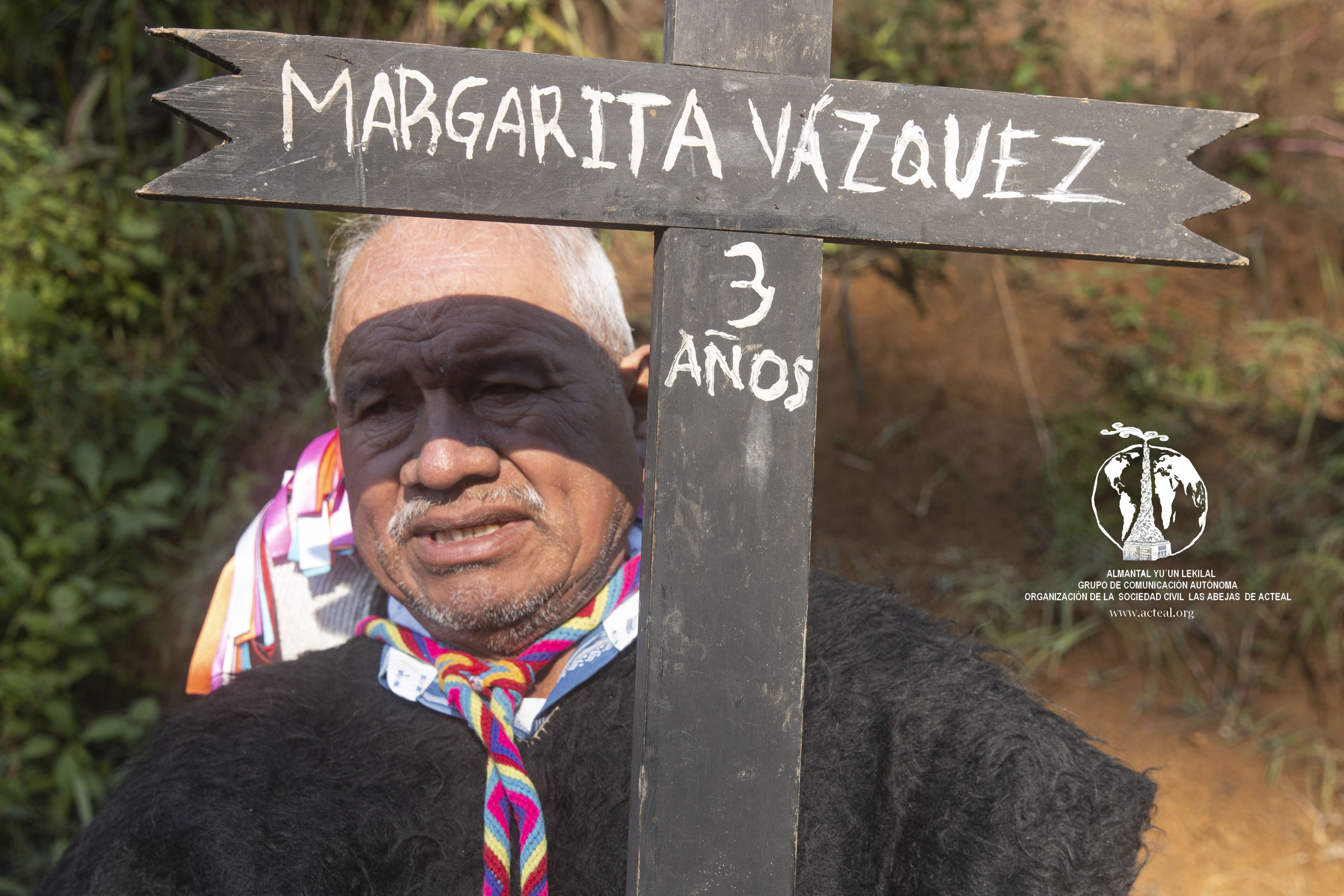
Admitting that: “it would seem that the tragedy has marked us in different ways,” the Las Abejas document states that: “the injustice and abuse of power gave us birth.” It covers the group’s milestones from their struggle for the release of their political prisoners in 1992 to the present day. The “State crime” remains unpunished: “as we have been denouncing month after month for a quarter of a century, the governments, be they PRI, PAN or Morena, instead of applying justice, have created strategies and policies of attrition (wear and tear) towards our organization. That has been their custom for burying truth and justice. The only thing that characterizes us is the tenacity and stubborn long-term memory that we have woven.”
It highlighted the attrition strategies and policies of successive governments, in particular that of Felipe Calderón. Another strategy “has been the procrastination of justice that has caused two divisions in our organization, in 2008 and 2014.”
Impunity has caused “endless conflicts in Chenalhó communities.” The municipality “has been ruled by violence” since 1997. “Impunity for the massacre has not only brought sadness and decomposition of the social and community fabric, but has caused unimaginable violence throughout Mexico. Not only can we say that the Mexican justice system is rotten, but that it is going from bad to worse. It seems that paramilitaries and organized crime have allied themselves.” Las Abejas mentioned Samir Flores Soberanes and Simón Pedro Pérez López.
In another message, the Fray Bartolomé de Las Casas Human Rights Center (Frayba), a historical defender of Las Abejas, said: “It’s inspiring to observe how they build an island of peace and hope in everyday life, a refuge from the storm that surrounds the Los Altos (Highlands) region of Chiapas, where bullets fall like permanent drops and the social fracture widens amid the collusion and inaction of governments.”
Frayba pointed out that “the current federal government has maintained silence and denied before the Inter-American Commission and Court of Human Rights the involvement of Mexican authorities in counterinsurgency actions during the 90s in Chiapas, and has consciously excluded this period from the study process of the Truth Commission.”
Finally, Dr. Adriana Ruiz Llanos, of the Intercultural Health Support Network in Acteal, denounced “the incompetence of the Chiapas authorities to attend to victims of violence.”
[1] jtatik means Father in Tseltal and jtotik means Father in Tsotsil.

Originally Published in Spanish by La Jornada, Friday, December 23, 2022, https://www.jornada.com.mx/2022/12/23/politica/007n1pol and Re-Published with English interpretation by the Chiapas Support Committee

Please consider making a donation to the Chiapas Support Committee in support of our work for the Zapatistas. Just click on the donate button. We appreciate every donation and will thank you from the bottom of our hearts.
Peru, the language of the street
By: Luis Hernández Navarro
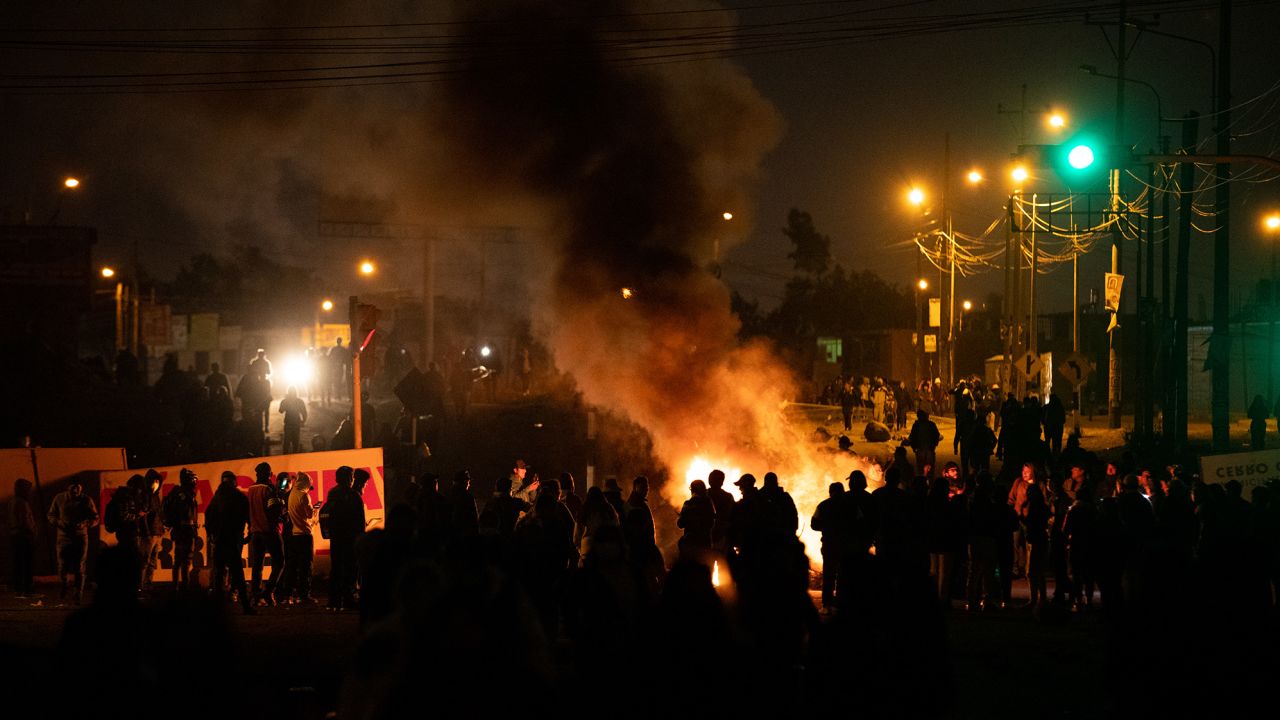
The street is talking in Peru. And it does so loudly. From the farthest and deepest corners of its geography to the megacity of Lima, it cries out for the closure of Congress, for new general elections, a constituent assembly and for the release of Pedro Castillo.
Street struggle has a long tradition in the Andean country. It has defined crucial issues on multiple occasions. A large archipelago of popular movements has flourished demonstrating along avenues and sidewalks, blocking roads, taking charge of their self-defense in Campesino Rounds and facing the devastation perpetrated by open-pit mining.
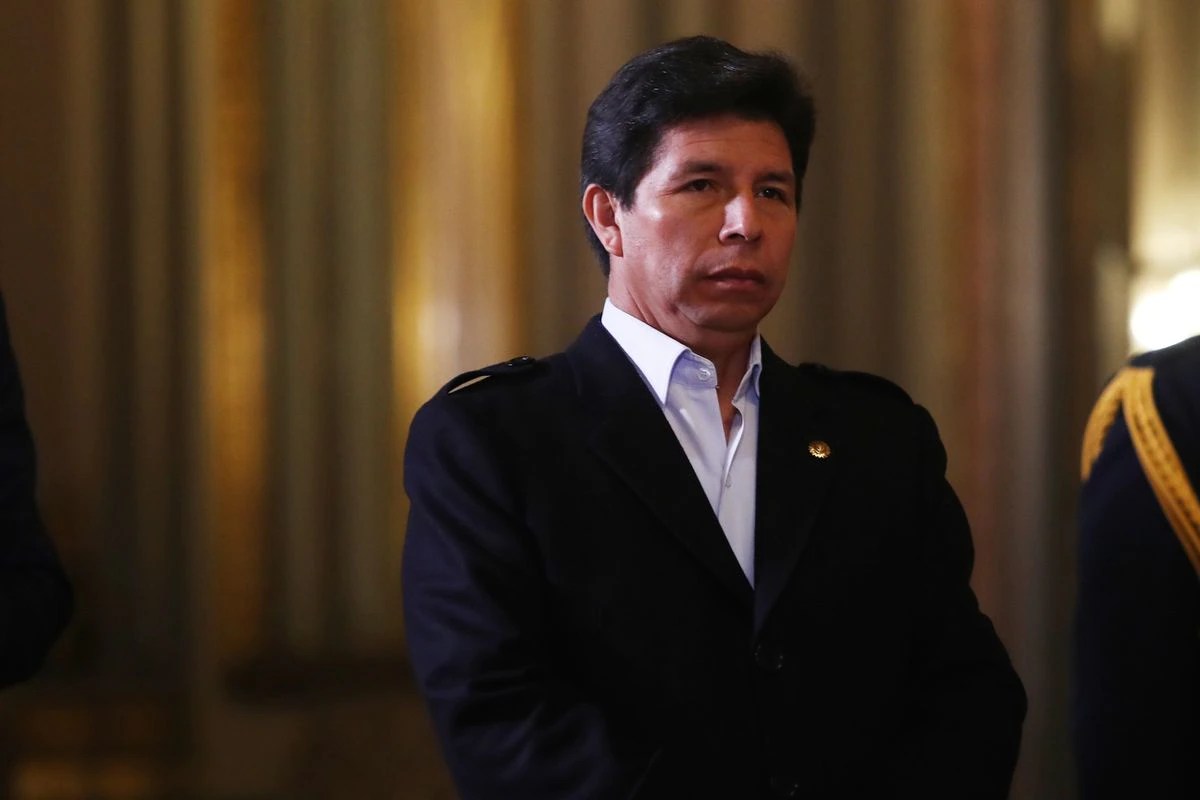
The ongoing call for the popular insurgency is the daughter of the political crisis caused by Castillo’s announcement, less than 500 days after assuming the presidency, that his government was proceeding to “temporarily dissolve the Congress of the Republic and establish an exceptional emergency government,” which would govern by resorting to decree-laws until the installation of a new Congress. and his almost immediate arrest and replacement by Vice President Dina Boluarte, with the approval of the United States and the Organization of American States (OAS).
It is also the product of an endemic political crisis. In four years, six presidents have governed Peru (Pedro Pablo Kuczynski, Martín Vizcarra, Manuel Merino, Francisco Sagasti, Pedro Castillo and Dina Boluarte). The current social emergency originates, in part, in the exhaustion of the regime that emerged in 1993 and its outdated Constitution. There is not only a permanent struggle between Congress and the Executive, but also a lack of political representation of huge sectors of the population.
Historically, the Sindicato Unitario de Trabajadores de la Educación en Perú (SUTEP), the education workers union, has been key in forging the left-wing social force that has taken to the streets over five decades. Its members – some 800,000 teachers – are all over the territory. The invisible fabric of internationalism led SUTEP to establish a close relationship with Mexican teachers in the mid-1970s who, in 1979, founded the National Coordinator of Education Workers (CNTE).
Emerged from SUTEP, Professor Pedro Castillo led a split from that union in 2017 to found the National Federation of Education Workers of Peru. He then formed the Magisterial and Popular Party of Peru, as one of the electoral tools that allowed him to win the presidency.
The rural teacher Castillo was born into a peasant family. His parents were illiterate. He was never a deputy or minister. Coming from progressive evangelism, as a leader of SUTEP he led one of the longest and most important strikes by Peruvian education workers in 2017. In 2021, the teachers became the backbone of his electoral campaign, in which he visited the communities where political parties do not reach, with a huge pencil as an emblem.
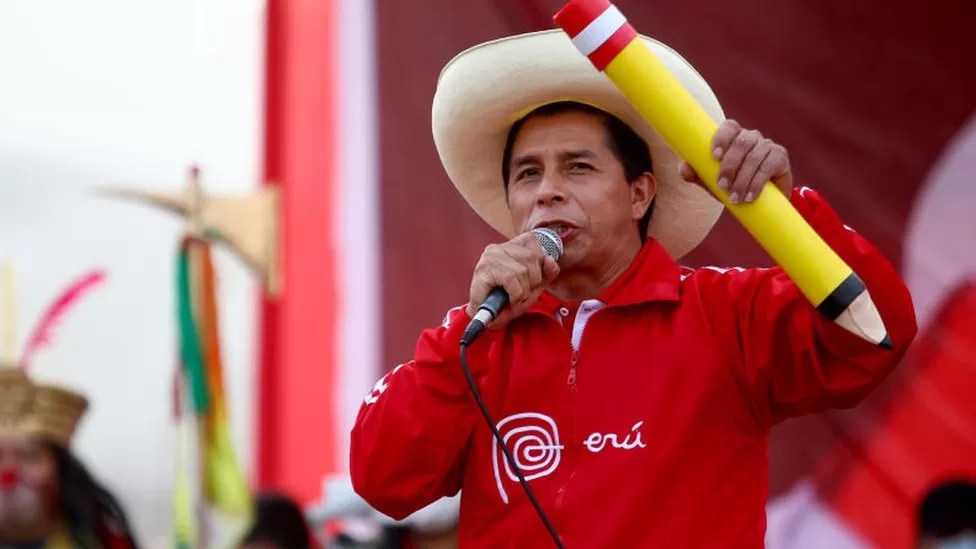
In a markedly racist country, the teacher won the presidential elections in the second round, articulating the social left, indigenous peoples and social sectors not identified with the political system. He offered, for example, to convene a constituent assembly and push for land reform. He defeated the neoliberal kleptocracy headed by Keiko Fujimori, also endowed with an important social base, built during the dictatorial government of her father, around the fight against poverty.
However, beyond the victory at the polls, it soon became clear that Castillo won the presidency, but not the power. He remained in a minority in Congress, did not have the support of either the army or the judiciary, and faced the animosity of the press and the great potentates. Events followed one another quickly. On two occasions, Congress tried to remove him. They did not reach the 87 votes they required.
Faced with the attacks of the right, far from resorting to those who brought him to the presidency, Castillo isolated himself from them. He bowed to pressure from the right and got rid of the best men and women in his cabinet. He set aside the call for a constituent assembly, early elections, land reform and the fight against open-pit mining. As if that were not enough, he called on the OAS to mediate in the pulse he maintained with Congress.
Despite the corruption allegations against him, at the time of the coup he had an approval rating of 31 percent, while Congress had only 9 percent sympathy. On December 7, right-wing legislators had forged a new attempt at a legislative coup, for which they did not have enough votes. However, the president’s failed call to dissolve Parliament precipitated his downfall.
The response of the nobodies against the right-wing coup has been of impressive vigor. Deep Peru speaks with indefinite strikes, caravans, demonstrations, road blocks, burning police barracks, airport takeovers, clashes with public forces. The popular insurgency is underway.
What future will this explosion of the invisibles have? Can it precipitate an early call for elections (not the mockery announced by Boluarte) and a new constituent assembly? Will a state of emergency be declared? Will she be drowned in blood and fire? Regardless of the outcome it has, as happened 151 years ago, when the Parisian comuneros took to heaven by storm, the popular insurgency that today speaks the language of the street in the homeland of José Carlos Mariátegui deserves our solidarity and support.
Originally Published in Spanish by La Jornada, Tuesday, December 13, 2022, https://www.jornada.com.mx/2022/12/13/opinion/019a2pol and Re-Published with English interpretation by the Chiapas Support Committee
Acteal infamy, 25 years in memory
By: Hermann Bellinghausen*
San Cristóbal de Las Casas, Chiapas
A quarter of a century ago, on December 22, 1997, the direst of omens were fulfilled for the communities of Las Abejas and the support bases of the Zapatista National Liberation Army (EZLN) in the Chiapas Highlands: 45 people from the pacifist civil organization Las Abejas [The Bees] were brutally murdered in a few hours by a paramilitary group that had already been fully identified.
The massacre was never forgotten. Not only for the survivors, who for 25 years have taught the country what it is to resist peacefully and demand with dignity. Nor for the indigenous people of all Mexico nor for millions of people in the world. Acteal occupies an important place in the universal calendar of infamy, paraphrasing Borges.
Chiapas had two years of increasing paramilitary violence in response to the Zapatista uprising, officially disguised as “intra or inter-communal” or because of “religious differences.” In 1995, the Development, Peace and Justice group was unleashed, an allegedly civilian organization, soon paramilitary, related to the Mexican Army, widely deployed in the northern zone of the Choles, and greatly benefited by government programs.
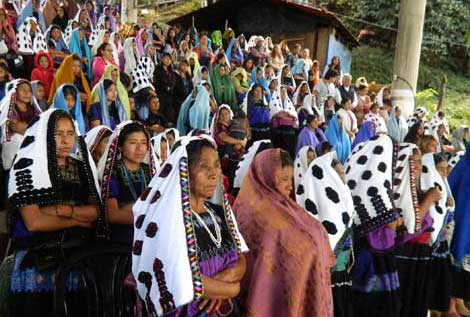
In 1997, the paramilitary activity was unleashed in Chenalhó, And, starting in May of that year, the story was one of murders, houses and plots looted and burned. The people involved had been denounced for bringing firearms into certain communities tolerated by police forces and military checkpoints. Soon, thousands were displaced, completely dispossessed, in the rainy winter of 1997. Las Abejas and Zapatista bases established camps in Acteal and Polhó. Murders and executions paved the way for the massacre.
You didn’t have to be too suspicious to “smell” what was coming. Which by early December of that year, seemed imminent. However, the facts were beyond imagination. When Gonzalo Ituarte, of the diocese of San Cristóbal de Las Casas, communicated to the Secretary of Government of Chiapas, Homero Tovilla Cristiani and his undersecretary Uriel Jarquín, the reports of shootings in the camp for displaced persons of Acteal, they promised to “investigate.”
It was 2 p.m. on Monday, December 22. At 6 p.m., Tovilla Cristiani notified Ituarte that the situation was under control and only “a few shots” were heard.
Attacked from behind
At the same time the first Red Cross ambulances arrived with the wounded survivors of those “few shots.” The State’s responsibility in the crime was enormous. “Its” people attacked from behind and shot indigenous people who were praying or crying. Bullets and machetes courtesy of the government of Ernesto Zedillo, through the obedient path of Governor Julio César Ruiz Ferro and the counterinsurgency cunning of General Mario Renán Castillo, in command of all federal troops in the so-called “conflict zone.”
It took 23 years for the federal government to recognize the responsibility of the State in the massacre, in the voice of the undersecretaries of the Interior Alejandro Encinas and Martha Delgado Peralta. Today, the demands for justice of the historical organization of Las Abejas still stand; they have decided to wait for the verdict of the Inter-American Court of Human Rights, which accepted the case in 2005.
*Hermann Bellinghausen wrote the book that exposed the facts about the Acteal Massacre.
Originally Published in Spanish by La Jornada, Thursday, December 22, 2022, https://www.jornada.com.mx/2022/12/22/politica/010n1pol and Re-Published with English interpretation by the Chiapas Support Committee
Please consider making a donation to the Chiapas Support Committee in support of our work for the Zapatistas. Just click on the donate button. We appreciate every donation and will thank you from the bottom of our hearts.
To gaze without seeing, to think without feeling: the limits of eurocentrism
By: Raúl Zibechi
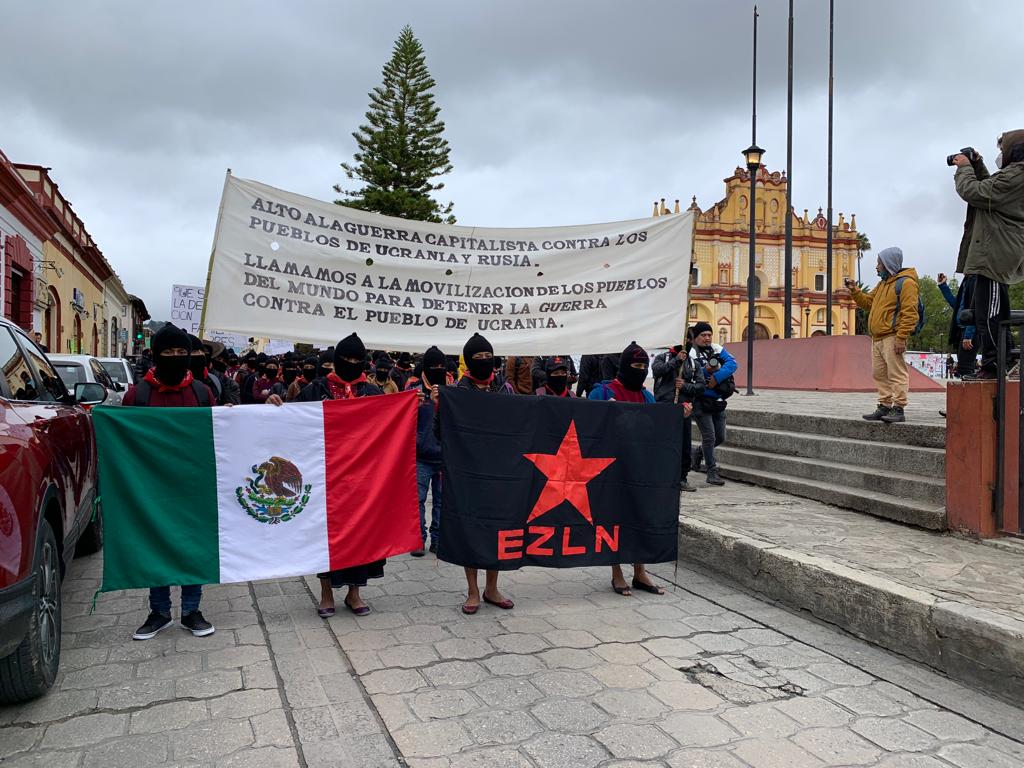
The Russian invasion of Ukraine and the consequent war between powers is having profound effects on critical thinking and movements, but in a divergent way in the North and in Latin America: differences and distances are deepening in the ways of conceiving and practicing anti-capitalist transformations, as well as ways of thinking about reality.
In the history of critical thought, war and revolution have been intertwined, to such an extent that it’s almost impossible not to relate the second to the first. Maurizio Lazzarato’s recent book, War or Revolution. Because peace is not an alternative (Tinta Limón, 2022), recovers the concept of war that, in his opinion, had been “expelled” by critical thinking in the last 50 years.
The core of his work returns to Lenin’s 1914 proposal, in the sense of “transforming the imperialist war between peoples into a civil war of the oppressed classes against their oppressors. “He argues that the great problem has been, in parallel, the abandonment of the concept of class, as well as that of war and revolution. And he assures that the current situation is very similar to that of 1914.
This is a first and decisive difference: on this continent, war is present and cannot be hidden, in particular against indigenous and black peoples, peasants and inhabitants of the urban peripheries. The “wars on drugs” and the appropriation of territories for extractivism are just the latest version of a centuries-long war against the peoples.
However, the central aspect to highlight is something different. The peoples are facing asymmetrical wars against them, not because they are pacifists, but because a long experience of five centuries convinced them that to survive as peoples they must take other paths.

Zapatismo has managed to break the ties that existed between revolution and war and, in the same process, has eliminated its statist adhesions from revolution, to leave its nucleus intact: recovery of the means of production and exchange, creation of new social relations and non-state powers. Autonomies are the way, both to resist the war of dispossession and to affirm themselves as self-governing peoples.
It’s true that the European and also the Latin American lefts have been left without politics, without concrete proposals in the face of war. But the peoples of this continent, experts in surviving the wars of dispossession, are taking unprecedented paths, as do the Mapuche, the Nasa and Misak, the dozens of Amazonian peoples and the black and peasant peoples to face this war. They begin to place autonomy at the center of their constructions and reflections, something that apparently escapes intellectuals on both sides of the ocean.
An additional example of this Eurocentrism that pretends to speak for oppressed peoples, is when Lazzarato points out that “the great merit of the Russian revolution was to open the way to the revolution of oppressed peoples.” He forgets nothing less than the Mexican Revolution and the first Chinese revolution. The deepest processes are born in the peripheries and much later expand towards the center.
It’s not true that during the First World War, “the clearest position in relation to war remains the revolutionary socialist position.” It was very valuable at the time, for the working classes of Russia and Europe. It failed in China, where the communists took very different paths, creating red bases liberated by the peasant army, a process followed by other peoples in the south.
Euro-centrists believe they understand what’s happening in Latin America and consider our struggles as “laboratories” that would confirm their reflections. Some of them feel “theoretically disarmed” in the face of war, but they do not want to learn from the experiences of peoples who have survived five centuries of massacres and exterminations. They only attend to the theoretical production of the academies and the lefts that are referenced in the nation-states, that is, to the coloniality of power.
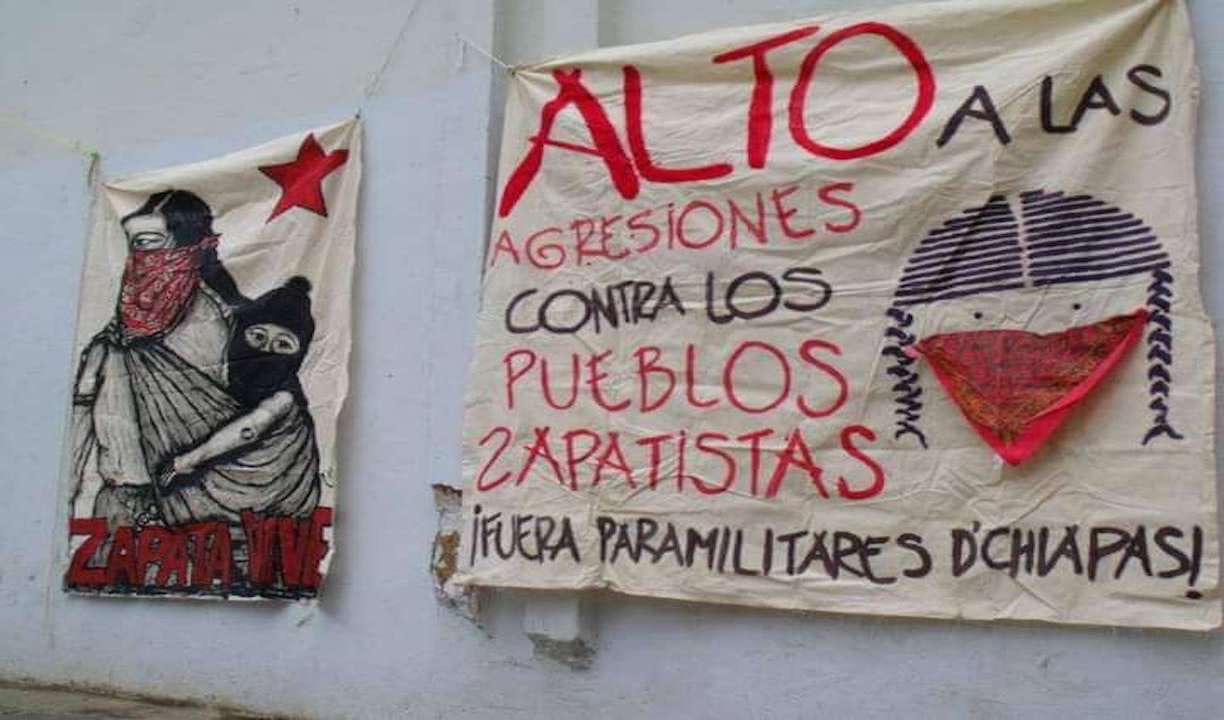
To me it seems necessary to reflect on how the peoples with Maya roots, who are organized in the EZLN, have disarticulated the revolution-war marriage, which did so much damage to us in the immediate past, and obtained such bad results.
It’s no longer possible to ignore those who were exterminated in the Central American wars, and how the vanguards repositioned themselves in legality, abandoning the peoples they used (yes, used) for their “revolutionary war.”
The decision to deploy peaceful civil resistance to confront the Mexican State’s asymmetric war and extermination is a strategic determination, but it doesn’t have the slightest relationship to pacifism. If I have understood anything about Zapatismo, is that it’s a reading from below, from the peoples, of the challenges that the system is throwing at us.
Originally Published in Spanish by La Jornada, Friday, December 16, 2022, https://www.jornada.com.mx/2022/12/16/opinion/019a1pol and Re-Published with English interpretation by the Chiapas Support Committee

Please consider making a donation to the Chiapas Support Committee in support of our work for the Zapatistas. Just click on the donate button. We appreciate every donation and will thank you from the bottom of our hearts.
Join the Chiapas Support Committee on Thursday, December 22, 12:00-2:00pm, in front of the Mexican Consulate in San Francisco, to denounce the capitalist and paramilitary violence and to express solidarity with the struggles of the Zapatista and Indigenous peoples. Details here.
From Ricardo Flores Magón to Julian Assange II
By Carlos Fazio
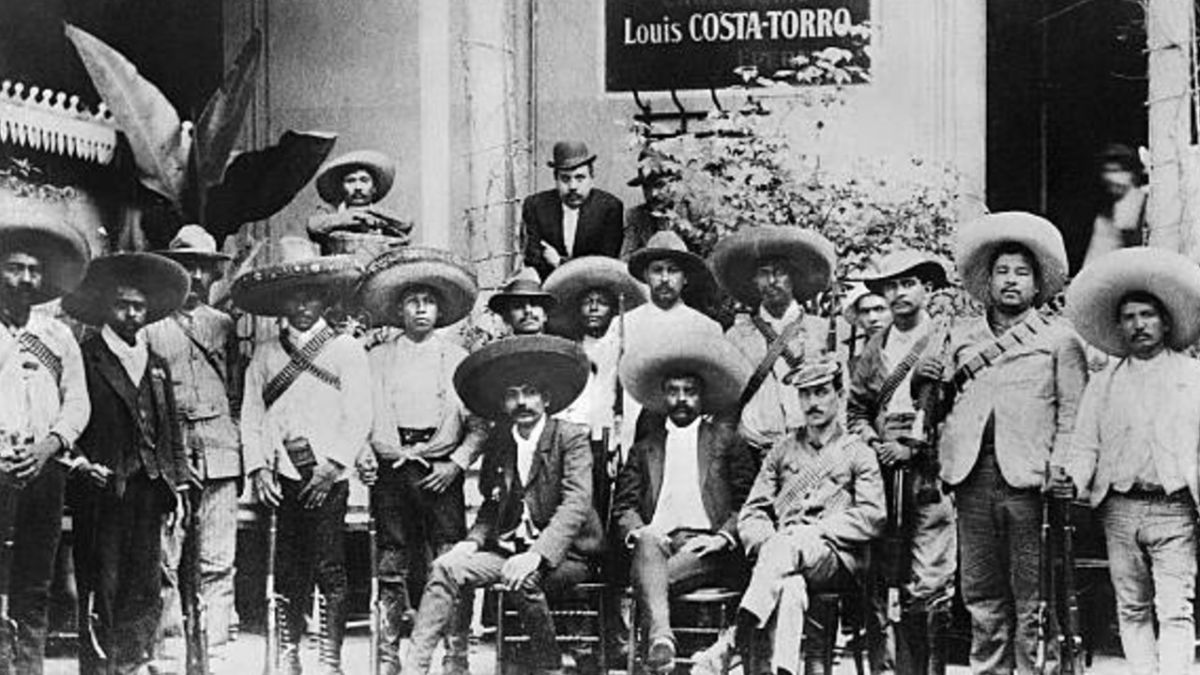
Released in October 1903 and unable to continue his organizing and campaigning in Mexico, Ricardo Flores Magón went into exile in Laredo, Texas, and then to St. Louis, Missouri, a refuge for anarchist and Marxist dissidents and rebels and anarcho-syndicalist migrants. There he became close friends with the Spanish libertarians Florencio Basora, Jaime Vidal and Pedro Esteve, and the Russian Emma Goldman. He studied and disseminated the works of anarchist theorists, such as Peter Kropotkin and Miguel Bakunin, which radicalized his reflections in the newspaper Regeneración on social transformation in Mexico.
Influenced by methods of the Russian libertarian movement against the Czarist autocracy, Flores Magón proposed a social revolution of the poor by armed means; Mexico could only change through the political-military defeat of General Díaz. From St. Louis, Missouri, he directed the network of contacts of the liberal groups in Mexico, led the formation of the Organizing Board of the Mexican Liberal Party (11/28/1905) and defined its political line. Hounded by US and Mexican agents, he went into exile in Toronto, Canada, and in July 1906 drafted the Program of the PLM (already illegal) and designed the revolutionary insurrectionary project, which included the purging and restructuring of the liberal clubs into a clandestine (conspiratorial) political organization with a centralized command in the junta, preparing the logistical conditions for the uprising (training, stockpiling of weapons) and the publication of Regeneración as a political-ideological and propaganda transmission belt for the fight against the “despot, thief and bloodthirsty Porfirio Díaz.
He participated in the attempt to take Ciudad Juárez, Chihuahua, joined the liberal insurrection that began with the taking of Jiménez, Coahuila, and went hopping between Los Angeles, San Francisco and Sacramento. When Regeneración was shuttered, Flores Magón and his comrades created the newspaper Revolución. By then Porfirio Diaz was already offering 25 thousand dollars for his capture. In August 1907 Flores Magón was arrested in Los Angeles and was tried for violations of the Neutrality Laws and for conspiracy. He remained imprisoned for 18 months in the penitentiary of Florence, Arizona. In May 1908, President Teddy Roosevelt declared before the U.S. Congress that “the anarchist is the enemy of humanity […] the deepest degree of criminality,” and called for a ban on the use of the post office by anarchist publications, and an increase in the power of the Secret Service. Released in August 1910, in a rally in Los Angeles, Flores Magón shouted: “Long live social revolution!”
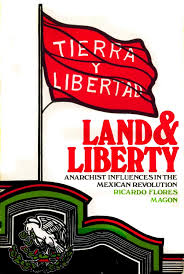
In 1910 there was an explosive class confrontation in Mexico: big landowners and capitalists vs. the proletariat and peasantry (96.6 percent of rural families were totally landless). At the head of a vanguard faction of industrialists, landowners, businessmen and northern regional caciques, Francisco I. Madero launched in October the Plan of San Luis, and on November 5 the Liberal Party pointed out its political differences with the Anti-Re-electionist Party. Considering Madero’s armed insurrectionary uprising to be individualistic, it decided to favor clandestine tasks and the reorganization of the party. On November 19, 1910, in Regeneración, Flores Magón reiterated that the two concepts of his slogan “Land and Liberty!” were the essence of the popular demands in the coming Revolution.
The uprising began on November 20. With the help of Standard Oil and some treachery, Madero triumphed, and he asked Zapata and Francisco Villa to disarm their troops. Diaz went into exile. The Magonistas were persecuted in Mexico and the US. On September 23, 1911, in a manifesto, RFM raised the anarcho-communist flag, and supported the revolutionary strikes of peons in Yucatan and the land seizures of Zapata in Morelos, of the Yaquis in Sonora and Chihuahua against Madero’s forces, of the Sotavento towns of Veracruz, and the indigenous communities in Jalisco, and called to take possession of factories, workshops, mines and foundries. For the PLM, the authority and the clergy were the mainstay of the inequity of capital. That is why it declared war on them. And while Zapata established the Morelos commune based on peasant traditions of self-government, the Magonistas established their commune in Baja California according to the anarchist principles of egalitarianism and direct democracy.
In early 1912 Flores Magón criticized Madero’s agrarian policy. And in an article entitled “A Tomar la Tierra,” (To Take the Land) he used the authority of Kropotkin -who supported the Mexican revolution- to insist that land is the basis of all revolution, of the advent of socialism and that “the agrarian problem in Mexico […] constitutes the backbone of the revolutionary movement.” RFM and the PLM supported Emiliano Zapata. There are public documents of the Liberation Army of the South and personal communications from Zapata to Flores Magón.
In issue 262 of Regeneración, which was the last issue, RFM and Librado Rivera published a Manifesto that would cost them their lives. Both were accused of sedition. Considered a dangerous anarchist by the US Department of Justice, Ricardo Flores Magón was sentenced to 22 years in prison. On November 21, 1922, prisoner number 14,596 in the Leavenworth Penitentiary, in Kansas, died under strange circumstances in his cell. He was 49 years old. In Mexico, the defeated revolution would become the ideological banner that would legitimize the government of the bourgeoisie in the 20th century. Today, land is still concentrated in a few hands and the class war continues.
Originally Published in Spanish by La Jornada, November 14, 2022, https://www.jornada.com.mx/2022/11/14/opinion/023a1pol Translation by Schools for Chiapas, Re-Published by the Chiapas Support Committee

Please consider making a donation to the Chiapas Support Committee in support of our work for the Zapatistas. Just click on the donate button. We appreciate every donation and will thank you from the bottom of our hearts.
 Chiapas Support Committee