Chiapas Support Committee
Home of the Compañero Manuel blog on zapatistas & mexico
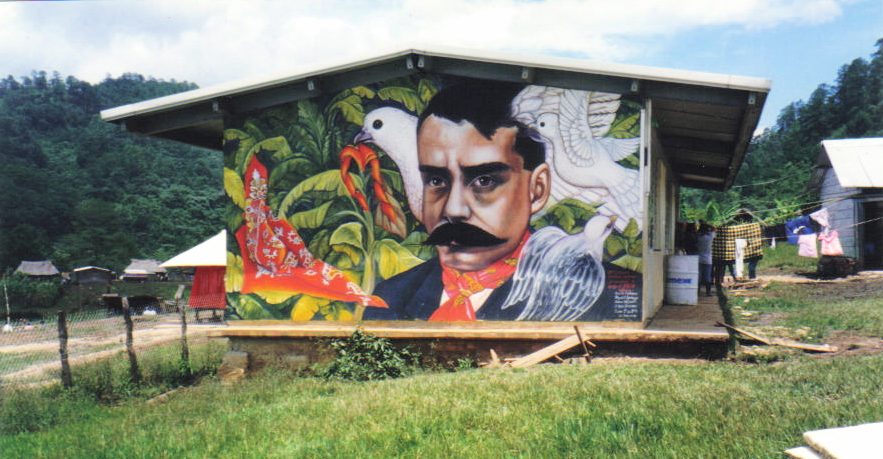
Popular self-defense group emerges in Pantelhó against organized crime

Above photo: El Machete Self-Defense group in Pantelhó
“OUR PATIENCE IS EXHAUSTED, THEY HAVE KILLED 200 OF OUR PEOPLE”
By: Elio Henríquez
San Cristóbal de Las Casas Chiapas
A group called “Autodefensas del pueblo El Machete” (El Machete Peoples’ Self-Defense Forces, hereafter El Machete Autodefensas) [1] claimed responsibility this Saturday for the incursion carried out in the municipal seat of Pantelhó last Wednesday, and warned that its objective is: “to expel the hitmen (sicarios), drug traffickers and organized crime,” because “we don’t want more deaths for poor Tseltal and Tsotsil campesinos.”
First in a communiqué and later in a video recording in which five armed men appeared, the organization stated: “Our patience is exhausted, because we don’t see any hope in the federal and state governments; given the pain due to so much blood spilled, we take the direction of our history.”
The grouping clarified that: “once Pantelhó is free of organized crime headed by Raquel Trujillo Morales (sic), the PRD member and mayor-elect, and the drug traffickers, we will withdraw as self-defense forces of the people, because we do not seek power or money.”
They reiterated: “Once the people of Pantelhó are free, we’ll leave it in the hands of the agents and commissioners of each community to elect their authorities based on our uses and customs, not based on the political parties that have divided and confronted the people and brought many deaths.”
On July 7, armed men irrupted in the headquarters of the indigenous municipality located in the Chiapas Highlands (los Altos de Chiapas), after a shootout with members of the opposing group, Los Herrera, allegedly linked to the PRD municipal authorities.
That day (July 7) in the afternoon, dozens of soldiers and Nacional Guard and state police agents entered the municipality, who were ambushed a day later four kilometers from the center when they tried to unblock Pantelhó-San Cristóbal highway; four soldiers and five state police agents were shot and wounded; two state police cars were burned. Authorities have not announced who attacked them.
The El Machete Autodefensas explained that: “our suffering began 20 tears ago and little by little those who oppress the people were taking (power), but it was in 2002 when Austreberto Herrera Abarca wanted to appoint himself municipal judge of Pantelhó. “He opened the doors to organized crime, to drug traffickers and thus began to kill those who were opposed to those activities; we see that he has killed approximately 200 people.”
They assured that: “at first we denounced him, but the agent of the Public Ministry never took our denunciations into account and some of our compañeros were murdered for denouncing the violence that we were experiencing.
“Austreberto was arrested in 2019, but the violence didn’t end; his sons, Daly de los Santos Gutiérrez Herrera and Rubén Gutiérrez Herrera, continue with organized crime as of this date.”
“There’s no justice, that’s why we said: ‘ya basta’”
They said that: “for several years we have been witnesses to the murders that have been done to our grandparents, parents and children. We have seen how they rob us and dispossess us of our property. Given all that has happened, we don’t see any justice on the part of the federal and state governments. Because of these painful events we were talking and reflecting that we must defend the life of our communities. So, little by little in silence we were forming self-defense forces for our people and on July 7 we decided to enter into the town of Pantelhó, at 4 o’clock in the morning, not to attack the town, but to expel the hitmen, drug traffickers and organized crime.”
They affirmed that: “with Trujillo Morales, the mayor-elect of Pantelhó will bring many deaths; that’s why we said enough now. Enough of so much suffering and spilling of blood!
“Today, our people are dominated by the new Goliath that consists of drug traffickers, sicarios and organized crime, but we are the new David that defends the people, they concluded.
On the other hand, the priest Marcelo Pérez Pérez, parish priest of Simojovel, reported that there was difficulty in deactivating the explosive devices found in a house in ejido Nuevo Israelita, where Simón Pedro Pérez López was from. Simón Pedro was the former leader of the Las Abejas organization who was shot and killed on July 5. Members of the Mexican Army made the explosive devices explode using all the protocols, which caused the total destruction of three houses and the bathroom of a chapel.
He said that one of the houses destroyed belonged to the people who made the devices, who left the community, and the others that were neighbors of Juan López Cruz and Feliciano López Pérez.
[1] There has been misinformation in both the local and national media regarding events in Pantelhó on July 7 and on the following day, July 8, as to what group participated in what event. What has been clarified so far is that the El Machete Self-Defense group is considered the legitimate self-defense force supported by the people of Pantelhó. It remains unknown what group shot and wounded the soldiers, National Guard and state police agents on July 8.
——-Ω——-
Originally Published in Spanish by La Jornada
Sunday, July 11, 2021
https://www.jornada.com.mx/2021/07/11/estados/021n1est
Re-Published with English interpretation by the Chiapas Support Committee
Frayba: A Joint Pronouncement: Mexican Government is negligent and permissive of violence toward the indigenous peoples of Chiapas
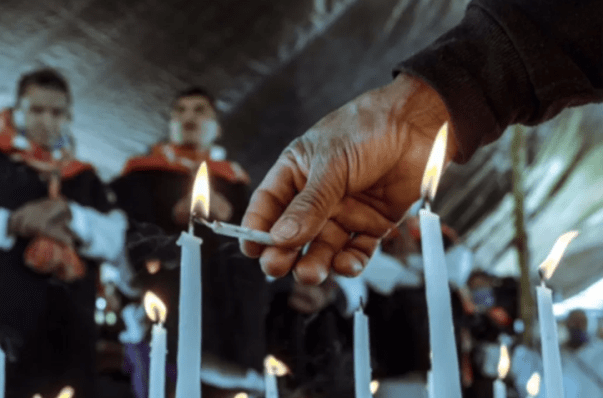
Above: Vigil for Simón Pedro
Defenders of the people of Pantelhó protect their families faced with attacks from Organized Crime
- We demand justice for Simón Pedro Pérez López
We, the individuals, collectives and organizations of national and international civil society that adhere to this statement, deeply mourn the assassination of Simón Pedro Pérez López (Simón Pedro), a Tsotsil Maya, community defender of human rights, catechist and former president that of the Board of Directors of the Civil Society Organization of Las Abejas of Acteal, who are members of the National Indigenous Congress. Simón Pedro was murdered on July 5, 2021 in the municipal seat of Simojovel, Chiapas. This appalling event is the result of the negligence, permissiveness and tolerance among the three levels of government of criminal groups that operate in different municipalities of Chiapas. We join together in the demand for justice and hold the Mexican state responsible for the generalized violence in the different municipalities of the state, like in Simojovel, Chenalho, Chalchihuitán, Aldama, Venustiano Carranza, Chilón and particularly in Pantelhó.
The reason for the murder of Simón Pedro is his being a community defender of human rights, his struggle for peace, denouncing the violence that exists within the communities and his fight for justice. Members of Las Abejas de Acteal have received constant threats, suffered attacks, intimidation and displacement from their places of origin for their non-violent struggle and construction of the “Other Justice” Lekil Chapanel. In June 2015, Manuel López Pérez, who held a religious post in his community in the municipality of Pantelhó, was murdered. The Chiapas Attorney General’s Office knew about this act, but there was no progress made in the investigation and, to this day, the act remains in total impunity.
According to different sources, so far this year, in the municipality of Pantelhó, a criminal group associated with the municipal presidency has perpetrated the murders of 12 people, among them a child, a disappeared person and a woman and child wounded, this on March 12, 2021 to date. This is exactly how countless people have been forcibly displaced, whether it be permanently or intermittently due to the fear and risk of losing one’s life. At the beginning of May 2021, the criminal group arrived in the community of San José Buenavista Tercero, in the municipality of Pantelhó, killed one male, and displaced the community’s inhabitants.
Checkpoints, blockades and incursions by the criminal group, accompanied by units of municipal and state police are a daily occurrence. Similarly, on the 6th of June, during the elections, testimonies reported that by members of said group were driving National Guard vehicles. We know that inhabitants of at least 19 communities in the municipalities of Pantelhó, Simojovel and Chenalhó are at maximum risk. Men, women, girls, boys, adolescents and elderly people live in fear and terror due to the threats that they have received from the people linked to crime. The lives of those who denounce them are at risk.
The documentation that we have, indicates the presence of a criminal group in the municipality of Pantelhó, who acts in complicity with City Hall, and who make up part of the structure of municipal power and currently are linked to the Party of the Democratic Revolution (PRD) that governs the municipality.
The state government of Chiapas has clear knowledge of the situation that prevails in the municipality, and yet, as of this moment it has not acted to protect the life, integrity and personal safety of the population. In various municipalities, there is a power vacuum in which violence and impunity reign, and the government reduces the grave situation to inter-community conflicts that only denotes the racism of the State. In this way the criminal activity of these groups, increasingly and clearly linked to political parties and public officials of all three levels of government, has allowed the power of these groups to be that which prevails and has territorial control over the population, by means of terror, assassination, disappearances, theft, dispossession and forced displacement, and the use of weapons and explosives that are for the exclusive use of the Mexican army.
The State Attorney General’s Office (FGE) has knowledge of the situation, since several inhabitants of the municipality of Pantelhó have issued denunciations for acts of violence perpetrated by criminal groups and their link to the municipal authorities. The Office has been remiss and not very diligent in carrying out investigations and bringing justice to the victims of this violence.
In addition, the Diocese of San Cristóbal de Las Casas, in its prophetic work has denounced, “We again see in Chiapas the reactivation of the forces that mutated from paramilitaries to organized crime allied with the narco government that have invaded our state to control the resistance of the organized peoples who defend their autonomy.”
We have information about acts of intimidation, surveillance and threats from the criminal group against individuals that have not remained silent in the face of this situation, such as the members of the Civil Society Organization Las Abejas de Acteal, as well as the servants of the Parish of Santa Catarina Pantelhó, that includes the communities of Pantelhó, Simojovel, and Chenalhó for which we fear for their life, integrity and personal safety. We hold the Mexican state responsible for any aggression against them.
Faced with a vacuum of the rule of law, as well as the inaction of the federal and state governments that do not fulfill their constitutional mandate to guarantee and protect human rights (as such, life, safety and personal integrity of the population), groups of individuals are defending the children, women, and the population. These groups referred to as Defenders of the People, known in the press as the “Ciriles,” are those who have made the decision to defend life, confronting the criminal group, such as happened the 7th and 8th of July in the municipal seat of Pantelhó. For approximately 6 years, the power of the criminal group has grown, due to the institutional pacts of impunity from the governments, along with complicity and omission, which constitutes acquiescence of the State in perpetrating systematic violations of human rights. It is worth pointing out that on Tuesday, July 6th, two home-made artifacts belonging to the criminal group were found in the community of Nuevo Israelita, which to date have not been deactivated.
The undersigned individuals collectives and organizations make an an assertive call to demand of the governments of Rutilio Escandón Cadenas and Andrés Manuel López Obrador to stop this violence in the zone of Los Altos of Chiapas and prevent further assassinations, disappearances, wounded and forcibly displaced people.
We demand that the Mexican state guarantee the life, integrity and personal safety of the population in the municipalities of Pantelhó, Simojovel, and Chenalhó; in addition, we insist that the Mexican government carry out an exhaustive, quick and diligent investigation to find those materially and intellectually responsible for the murder of Simón Pedro Pérez López, as well as an investigation of the links between the criminal group and the Pantelhó municipal government.
Signatory Individuals, Collectives and Organizations (Local, National and International) can be read here.
—–Ω—–
Originally Published in Spanish by the Fray Bartolomé de Las Casas Human Rights Center Thursday, July 8, 2021
English interpretation by Schools for Chiapas, light editing by the Chiapas Support Committee
Re-Published by the Chiapas Support Committee
Zapatista Community Denounces Dispossession and Harassment; Sees Hope in the Journey of Squadron 421
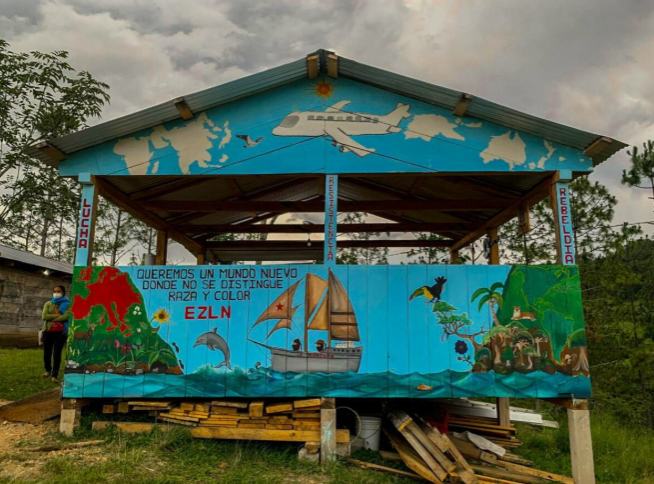
Above: Collective mural about the Journey for Life in the autonomous community of Nuevo San Gregorio. Photo: Sexta Grietas del Norte
The community of Nuevo San Gregorio, in Zapatista Caracol 10, denounces the increasing harassment they are experiencing after being dispossessed of their lands. They focus on organizational work, and on the journey of Squadron 421 in Europe to fight off the attacks of the group “Los 40 invasores (The 40 invaders)” which since November 2020 has been depriving them of land, food, work, education…
By Daliri Oropeza
Photos: Sexta Grietas del Norte
Video: Schools For Chiapas / Summer 2021 Delegation
MEXICO CITY – The families of Nuevo San Gregorio, Caracol 10 Patria Nueva, paint a mural. They do it on one of the wooden walls of “La Casa de Todos” (The House of Everyone) They collectively illustrate the dreams that the trip of the Zapatista delegations to Europe provokes in them. They fill a boat and an airplane with color. They trace with paint brushes after discussing what they want to capture, and reflect on the dispossession of their lands that they are enduring.
Pedro assures that all the continents are represented in the mural, but above all the jungle and the mountains are seen; jaguars, toucans, mushrooms, beetles and flowers. What the Zapatista delegations will share in their journey around the world.
There are three words on the beams that connect the boat and the sea with the plane and the sky: struggle, resistance and rebellion, which they collectively decided to highlight with red paint. They draw a phrase in large black letters: “We want a new world where race and color are not differentiated.”
Pedro participated in the creation of this collective mural. He is a resident of Nuevo San Gregorio. He explains that for them, as residents of Caracol 10 Patria Nueva, the mural means that “we are not alone” and “that we walk in another place.”
“I don’t feel sad or alone, even though the invaders continue to do all this, breaking wire fences, taking away the tools for the milpa, raiding the cattle that graze on land next to the highway,” he said in an interview.
Nuevo San Gregorio is located in a forested area of the Rebel Autonomous Municipality of Lucio Cabañas, among pines, junipers and cypresses. The Tsotsil and Tseltal Zapatista support bases that live here have been under attack for a year and seven months by a group they call “The 40 invaders.” This is the group that Pedro points out is the main aggressor of the community, which is located in the official municipality of Ocosingo, Chiapas.
When they [the Zapatistas] rebuilt everything, members of the community proposed that this cabin where the mural was could be a collective store. But in the assembly they agreed, “it is Everyone’s House.” In spite of the fear, they have organized around it; and they built the health center, the collective carpentry workshop, the women’s center and the Autonomous School.
“The comrades who are making landfall in Europe are not going alone, we are with them. We know that what they are carrying is what we are working for, and what we are living. The struggle has to be one, unity in collectivism. Although the invaders divided the land, I see that they are suffering. This milpa was not like this when we planted it. It was prettier. Now I see that it is very sad. With work it was able to grow. They are not harvesting life. They are harvesting their destruction,” says Pedro, who recounts the changes in Nuevo San Gregorio and points out that now they cut down trees in an uncontrolled way in order to sell the wood.
When Squadron 421 left the autonomous territory for the ship La Montaña, they were sent off from this Caracol. A representative of the Lucio Cabañas and Comandanta Ramona autonomous municipalities told the Zapatista delegation at the farewell:
“With jubilation and encouragement, here in Caracol 10, and I am sure the other Caracoles, are also celebrating now for this first departure of the maritime delegation traveling to European towns. It is not easy, compañeros, it is a long journey, but we are going to do it, history asks it of us.”

The children also suffer emotional repercussions from the harassment of the invading group. The invaders destroyed their school, so the autonomous community built another one: Los Niños Mayas. Photo: Sexta Grietas del Norte
The invasion and aggressions
“The 40 invaders” group stole 145 hectares of the 155 hectares that this Zapatista community recovered in 1994, after the uprising. They fenced them in with barbed wire and light posts in November 2020. They left the inhabitants of Nuevo San Gregorio with less than 10 hectares and destroyed the Autonomous School they had in the old farm called “Casa Grande”.
The community kept this farm because it was the result of the struggle of the grandmothers and grandfathers, who after being peons, took it over during the uprising. There they installed the Autonomous Secondary School, of which the invading group took control.
Since then, human rights organizations grouped together have made observation visits to document the events in Caravana. In March, the Fray Bartolomé de las Casas Human Rights Center set up the Civil Observation Brigades (BriCO) program.
In the reports of these caravans and brigades, organizations detail that they verified the actions carried out by the invading group, such as destroying vegetables, cutting hoses that supplied water in different areas of the community, burning the paddock, cutting fruit trees, breaking the water pipe several times, destroying the garden of medicinal plants.
The organizations claim that the presence of the group “Los 40” invaders “has made it difficult for six families to plant crops. In addition, the women suffer harassment and face vulnerabilities in their daily activities. They document that the violence intensified as of February 1, 2021.
This group of invaders installed two guard posts 50 meters -less than 100 paces- from the center of the Zapatista community, and three more at 250 meters. According to BriCO’s documentation, those who stand guard there carry machetes, knives, knives, slingshots, pointed batons, cell phones, communication radios and binoculars.
The organizations insist in a press conference that this is a strategy of attrition and an attempt to break the process of autonomy that the EZLN is building. Due to the harassment and the siege maintained by the invaders, they have not been able to carry out sowing of corn and beans that the Zapatista families had scheduled for February.
Human rights defenders claim that this group, made up of people from the ejidos San Gregorio Las Casas, San Andrés Puerto Rico, Ranchería Duraznal, and Rancho Alegre, are threatening the physical and mental health of the Zapatista support bases that live there. Also against their right to food. They also identified new mechanisms of violence.
The consequence of this, the organizations decry, is the “conversion of common territory into private property. Invading, fencing and parceling the recovered land to cause terror and despair as they transform all the vital-elemental spaces for the reproduction of communal and autonomous life into exclusive spaces of private property where the relationship with Mother Nature changes to using it as a commodity.”
“We emphasize the counterinsurgent actions (mechanisms of violence) deployed by the group of invaders who are constantly threatening and provoking the families of the Zapatista autonomous community Nuevo San Gregorio. Actions that come, either by agreement or omission, hand in hand with the policies of the three levels of bad government: Federal, State and Municipal,” the organizations state in their latest report.
It should be noted that in the last year, Frayba has documented that members of the Regional Organization of Coffee Growers of Ocosingo (ORCAO) have attacked with gunfire, burned warehouses and harassed the community of Moisés Gandhi of the same Autonomous Municipality: Lucio Cabañas, of Caracol 10 Patria Nueva.
But Pedro is happy that a delegation of supportive people visited Nuevo San Gregorio in May 2021 and videotaped the denunciations of his companions. Thanks to this he does not feel sad. He calls for the resumption of the Human Rights Observation Brigades because he feels more and more harassment.
“As long as we are not allowed to work the land, we are looking for alternatives on how to improve. There was talk of pottery. Just this handful of land that we are working, when we do it, we are watched (by the invaders) for what we are doing. But thank God other things have kept us afloat, such as organization,” says Pedro.
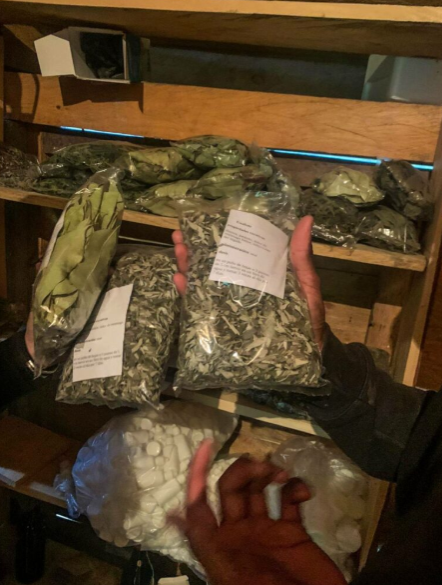
Above: Medicinal plants at the autonomous health center. Photo: Sexra Grietas del Norte

Above: The autonomous health clinic already has medicinal plants. Photo: Sexta Grietas del Norte
Autonomy as a way out of fear
“We had a big party, just like we wanted, because we are showing them that we are happy. They (the invaders) have said they want to bomb this house, that they want to set fire to it. Let them do it. We are not afraid. We have done nothing wrong. We seek life. While we are in search of life, we feel we are innocent. They are looking for ways to provoke us. But thanks to our resistance and struggle, we have not fallen into their provocations.”
Pedro states that the recent celebration of the community of Nuevo San Gregorio is part of the strength they have acquired in these times of attacks by the invading group. The party was organized by all the families who participate in the defense of the land, and who demand that this invading group return the 145 hectares stolen from them.
During this time, the community has focused on building and strengthening the organization through collective work in the carpentry shop, the clinic, the school, the store, and the church.
They already have the women’s collective “Tejiendo Vida y Resistencia (Weaving Life and Resistance)”, where the women meet to make their embroidery and weavings to later sell them. They have also set up the Autonomous School “Los Niños Mayas”, where they have already started planning classes and activities with children.
In the Autonomous Health Center “Floreciendo Vida Sana (Healthy Life Blossoming)” they already have several shelves of medicinal plants that they have collected and planted over time. With the method of the Participatory Community Mural, they painted “La Casa de Todos” (Everyone’s House) dedicated to what they dream of with the delegations in the global voyage.
With community work, the Zapatista families have built the necessary structures to carry out these activities. With the sale of their carpentry or embroidery creations they have been able to obtain profits to continue building these spaces in the hectares where the invading group keeps them fenced in.
“The land belongs to everyone. It belongs to the organization. The land belongs to those who work it. But to those who only want to turn it into a business, in the end there is no business. It is the fruit from the blood of the fallen comrades in 1994. We will not forget it, nor betray it. We will defend it. Even if they kill us. We won’t let ourselves [forget it]. Because we know that we are defending life,” Pedro affirms in the interview.

Above: In this workshop the women gather to embroider. Photo Sexta Grietas del Norte
*The names of these people are changed to protect their identity in the face of intimidation.
——-Ω——-
Originally Published in Spanish by Pie de Página
Sunday, July 4, 2021
English interpretation by Schools for Chiapas
Re-Published by the Chiapas Support Committee
Land & Freedom 2021! Solidarity with the Zapatistas’ Tour for Life
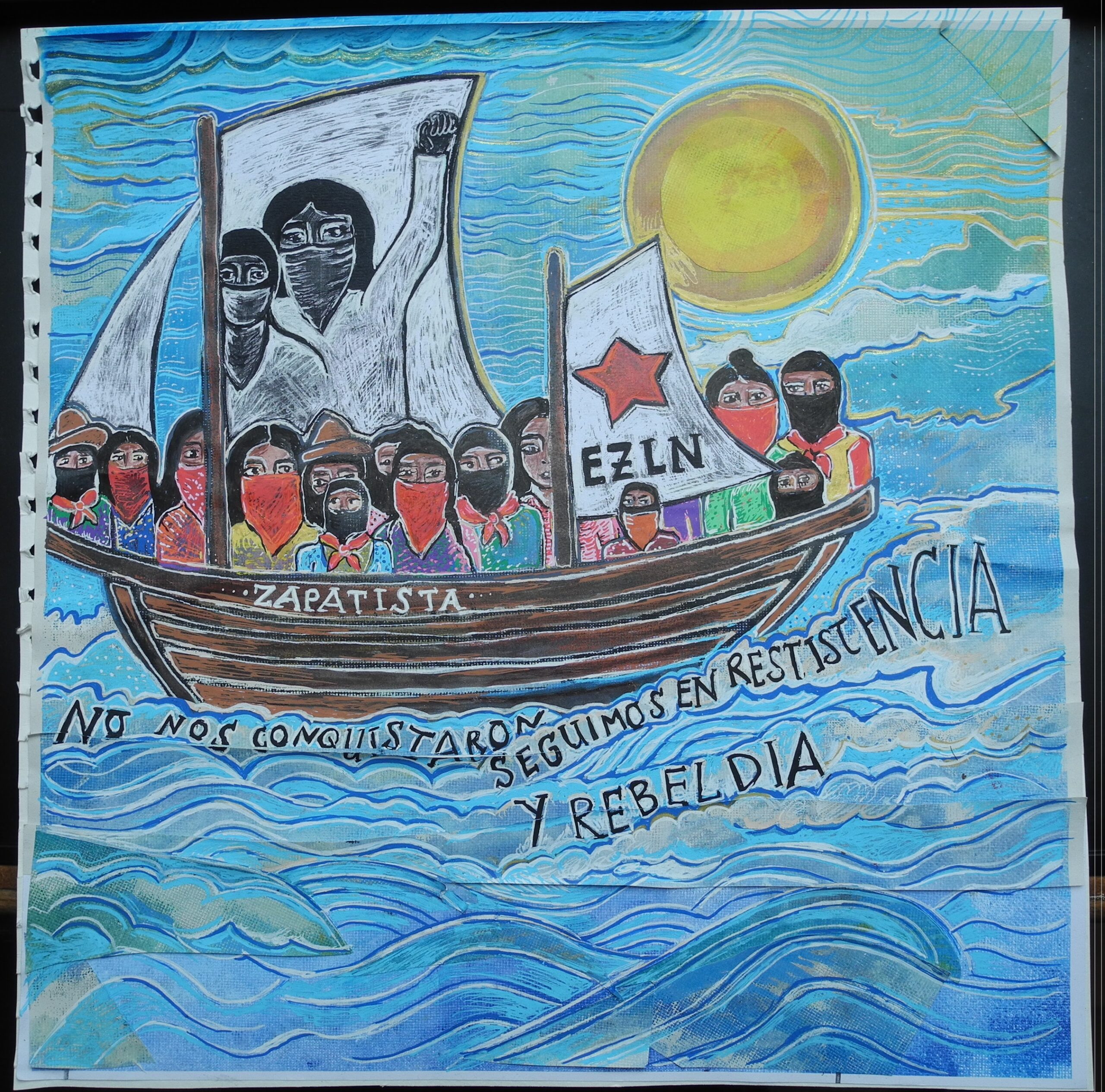
By Michael Löwy.
Posted in Camino al andar.
July 4, 2021.
We are many in this old European continent saluting the Tour for Life of the Zapatista comrades. Due to its global, planetary nature, the Zapatista tour is a historic initiative, without precedent. It is an impressive example of the internationalist force given by the Zapatista experience, which has impacted the consciences of so many people in the most different parts of the world. An experience that, with all its inevitable limits and contradictions, has held the red and black flag of dignity and emancipation high for thirty years.
An expression of this ethical, social, human and revolutionary commitment is the extraordinary A Declaration for Life, which links in a beautiful synthesis the openness to diversity and convergence in the fight against the system.
“It is not possible to domesticate this system,” says the Declaration. Very true! If the system were a wild animal — a crocodile, or a tiger — perhaps it could be tamed. But it is something much worse: a blind machine of destruction, crushing everything in its path. Capitalism — to call it by its first and last name — is an inherently perverse system, whose destructive logic is necropolitical and ecocidal, sacrificing all forms of life, human or not, to the new idols, equivalents of the ancient Moloch, Mammon, and Baal: the Market, Profit, Capital Accumulation.
“The survival of humanity depends on the destruction of capitalism,” says the Declaration. They are a thousand times right! Capitalism, in its destructive dynamics of the planet, is leading us, with an inexorable dynamic, towards an unprecedented ecological catastrophe, which threatens the very foundations of life on the planet: climate change. We need to destroy the system before it destroys us: in other words, we need a revolution. Walter Benjamin, in 1940, defined the revolution not as the “locomotive of history” but as humanity that pulls the emergency brakes to stop the train. Nothing could be more true in our days: we are all passengers on a suicide train, the modern capitalist civilization, which is walking with increasing speed towards a deadly abyss: ecological catastrophe. We have to pull on the emergency brakes of the revolution before it is too late. The Zapatistas are at the forefront of this great planetary fight.
The old slogan of Emiliano Zapata is very current in 2021, engraved with letters of fire on the flags of the Army of the South: Land and Freedom! “Land” in our time means not only the peoples’ struggle for their land – more than ever in the countries of the global South – but also the struggle to save our Mother Earth from the destructive fury of capital. And “Freedom” means not only toppling the various dictators who, like Porfirio Díaz, oppress their peoples, but also liberating humanity from the dictatorship of capitalism, which seeks to lock us all up in a steel cage.
Paraphrasing Che Guevara, we need one, two, three, a hundred rebellious Chiapas in the world
You, comrades of the delegation of the indigenous and insurgents of Mexico, bring us a message of intransigent struggle, of tenacious resistance, but also of hope, of searching for anti-systemic alternatives, of communal ways of organizing life. You represent the oldest -the pre-colonial collectivist and community traditions of the indigenous civilizations of the Americas- and the newest, the self-organization, the self-government of the insurgent communities.
Paraphrasing Che Guevara, I would say that we need one, two, three, a hundred rebellious Chiapas in the world. Perhaps your Tour for Life will help spread, to other places, the will to break with the system, the search for radical alternatives.
Until the Victory of Life, Always!
—Michael Löwy.
Michael Löwy is Research Director of Sociology at the Centre national de la recherché scientifique, Paris. He is the author of numerous books, including The War of the Gods: Religion and Politics in Latin America and Fire Alarm: Reading Walter Benjamin’s “On the Concept of History.”
_______________________________________________
Published in Spanish by Camino al Andar at https://www.caminoalandar.org/post/tierra-y-libertad-2021-solidaridad-con-la-gira-por-la-vida-de-los-zapatistas
Translated by the Chiapas Support Committee.
VOLANTEM EST ALIO GRADIENDI MODE (What are we waiting for?)
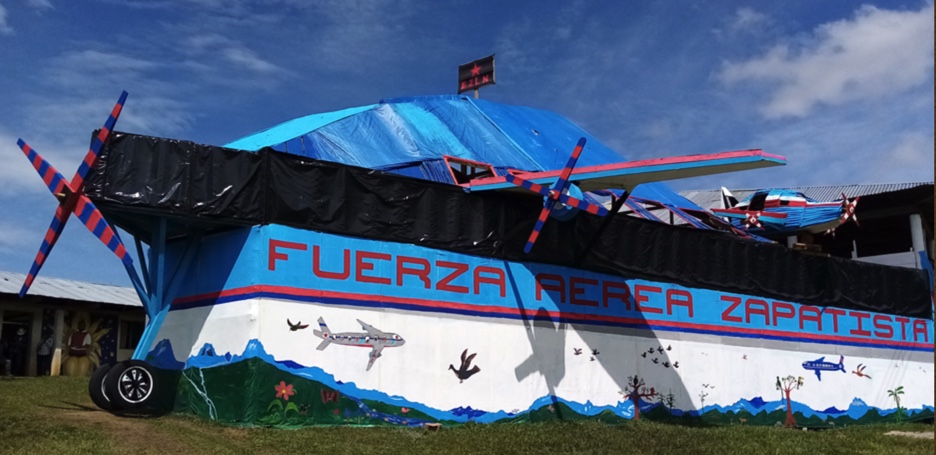
Any day, any month of any year.
Droughts Floods Earthquakes Eruptions Contamination. Current and future pandemics. Assassinations of leaders of native peoples, defenders of human rights, guardians of the Earth. Gender violence escalating to genocide against women -the stupid suicide of humanity. Racism not infrequently hidden behind almsgiving. Criminalization and persecution of difference. The irremediable condemnation of forced disappearances. Repression in response to legitimate demands. Exploitation of the many for the few. Large projects for the destruction of territories. Desolate villages. Millions displaced, hidden under the figure of “migration.” Endangered species or just a name in the “prehistoric animals” folder. Gigantic earnings of the richest of the richest on the planet. Extreme misery of the poorest of the needy in the world. The tyranny of money. Virtual reality as a false exit from real reality. Dying national states. Each individual a strange enemy. The lie as a government program. The frivolous and superficial as ideals to be achieved. Cynicism as a new religion. Death as a daily routine. War. Always the war.
The storm sweeping away everything, whispering, advising, shouting:
Surrender!
Surrender!
SURRENDER!
And yet …
There, near and far from our lands and skies, there is someone. A woman, a man, unoa otroa [a two-spirited person], a group, a collective, an organization, a movement, an original people, a neighborhood, a street, a town, a house, a room. In the smallest, most forgotten, farthest corner, there is someone who says “NO.” That they say quietly, that is barely audible, that they scream it, that they live and die it. And they rebel and resist. Someone. You have to look for them. You have to find them. You have to listen to them. You have to learn them.
Even if we have to fly to hug them.
Because, after all, flying is just another way of walking. And, well, walking is our way of fighting, of living.
So, on the Journey for Life, what do we look forward to? We look forward to looking at your heart from you. We hope it is not too late. We hope… everything.
I attest.
SupGaleano.
Planet Earth … or what’s left of her.
______________________________________
Published by Enlace Zapatista July 6, 2021 in Spanish (and available in other European languages) at https://enlacezapatista.ezln.org.mx/2021/07/06/volantem-est-alio-modo-gradiendi/ and translated into English by the Chiapas Support Committee.
Fuerza Aérea Zapatista: The Zapatista Air Force (video)
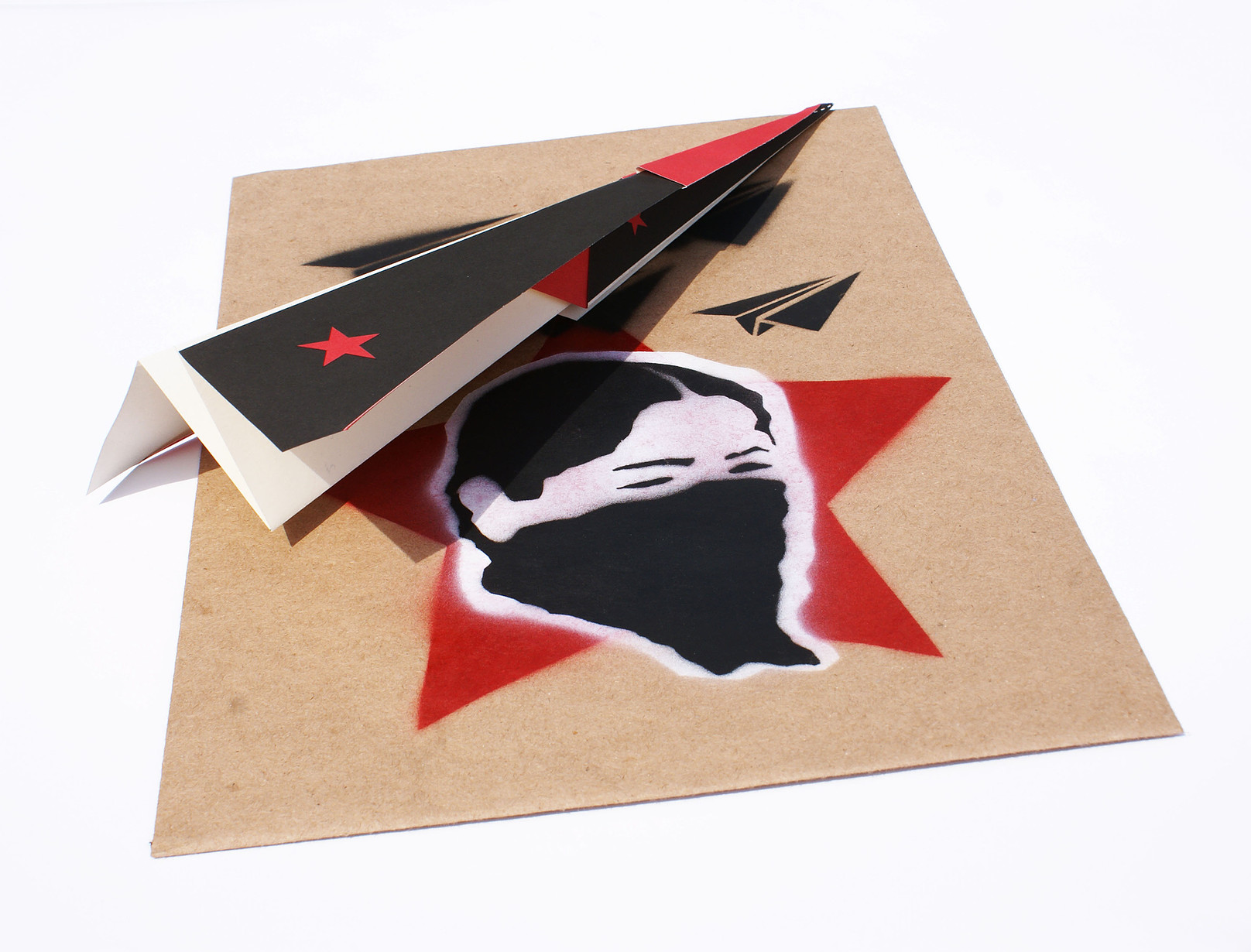
Mini video on the Fuerza Aérea Zapatista (FAZ)
They murder a leader of Las Abejas of Acteal

Above Photo: Simón Pedro Pérez López and his family.
CRIMINAL GROUPS HARASS INDIGENOUS AREAS OF THE CHIAPAS HIGHLANDS (LOS ALTOS)
By: Angeles Mariscal
Simón Pedro Pérez López had been the channel for denouncing criminal groups linked to drug trafficking and other illicit acts. In recent years these criminal groups have taken control of indigenous Tsotsil regions in Chiapas. Nine days after residents of Pantelhó sent a formal denunciation to the state’s Secretary of Government asking for her intervention, Simón Pedro was executed with a shot to the head.
Simón Pedro Pérez López was an activist and a defender of human rights, a member of the Civil Society Organization Las Abejas de Acteal -where he occupied the presidency in 2020-, a member of the National Indigenous Congress (CNI), a catechist of the Santa Catarina Parish in Pantelhó municipality, and the region’s moral leader, the priest Marcelo Pérez explained in an interview.
Marcelo Pérez explained that given Simón Pedro’s leadership, Pantelhó residents had asked him for help in the middle of June to call on aid state authorities for aid, so that they would intervene to stop the harassment that they experience from the criminal groups that have obliged the forced displacement of the inhabitants of a dozen communities.
In a letter that they prepared on June 26 to send the denunciation (complaint) to the Secretary of Government, Victoria Cecilia Flores Pérez, residents, communal authorities and rural agents of Pantelhó, explain in detail the links that in their view, municipal authorities of that municipality -current and elected- have with armed groups that distribute drugs and sell arms, among other activities, in this region.
In the letter they refer, for example, to the fact that in the last electoral process on June 6, through threats of death and dispossession of their property, entire towns were forced to vote according to the interests of the criminal groups.
“We have knowledge that gunmen come from other states of the Mexican Republic like Campeche and Sinaloa. Fearing their threats, since they have complied on past occasions, there are many families displaced from the communities of San Francisco de Asís, Roblar, Dolores Petaquil, Guadalupe Victoria, Santiago los Sabinos, Porvenir, San Clemente, San José Tercero, San Luis, Barrio San Ramón, Barrio Guadalupe, all in the municipality of Pantelhó, Chiapas,” they explain in the letter.
They also refer to the recent murder of 11 people; they ask for the intervention of state authorities and mention that they make the persons indicated in the letter responsible for any act of repression against them derived from the denunciation. “The people of Pantelhó want peace and tranquility” they say in their call for aid.
Nine days after this letter, Simón Pedro Pérez López was assassinated with a gunshot to the head from people who were riding a motorcycle, when the Tsotsil indigenous man was shopping in the market of Simojovel municipality, in the company of one of his four sons.
During the funeral ceremony for the body, the priest Marcelo Pérez specifically pointed out that the origin of Simón Pedro’s murder would be linked to the previous complaint.
YouTube video of the religious ceremony (in Spanish): https://www.youtube.com/watch?v=CQw_Ky8C0DM&t=1s
“The death of Simón Pedro is a consequence of injustice, of the narco-city hall, of drug trafficking, of organized crime in Pantelhó (…) may the blood of Simón Pedro be the seed for peace and for the liberation of Pantelhó, and be the seed to awaken the conscience of struggling for peace. But I ask that you not fall into the temptation of revenge; revenge is not the path,” the priest told the grieving people, after recognizing the moral leadership of the murdered indigenous man.
Pantelhó is part of a corridor that divides San Juan Chamula municipality, extends through Chenalhó, where the headquarters of the Las Abejas of Acteal organization is located and where there have also been complaints about the presence of civilian armed groups. 15 minutes from Acteal is Pantelhó, also adjacent to the municipality of Simojovel, where the murder occurred.
In this whole region, in recent years, according to the denunciations and los testimonies of the area’s residents, the presence of criminal groups linked to drug trafficking, human trafficking and the sale of weapons, among other activities, has expanded.
—–Ω—–
Originally Published in Spanish by Chiapas Paralelo, Tuesday, July 6, 2021,
https://www.chiapasparalelo.com/noticias/chiapas/2021/07/acoso-de-grupos-criminales-a-zonas-indigenas-de-chiapas-acusan-tras-asesinato-de-lider-de-las-abejas-de-acteal/
Re-Published with English interpretation by the Chiapas Support Committee
Mining threatens the world’s most magical forest

Aerial view of the cloud forests of El Triunfo Biosphere Reserve. Chiapas, Mexico.
By: Yessica Morales
Daniel Pineda Vera, a biologist, said that the humid mountain jungle, is today considered as “the world’s most magical forest,” and can be seen inside the El Triunfo Biosphere Reserve in Chiapas; in it are emblematic species for the conservation and preservation of natural ecosystems, such as the peacock, quetzal, tapir, jaguar, as well as for its scenic beauty.
He emphasized that the place is a paradise for birds and plants. The species that characterize it are the peacock and the quetzal, this latter one has a distribution in all the humid mountainous regions of Chiapas, although its numbers have been reduced.

The largest representatives of El Triunfo fauna are tapirs, ocelots, peacocks, jaguars and quetzals (above), the latter two protected to prevent their extinction. Courtesy: Turimexico
We find the peacock, which is a bird typical of the Sierra Madre of Chiapas and the contiguous sierra in Guatemala. We find other species that go unnoticed and that are equally charismatic, such as the clorofonia (bird), according to the specialist.
El Triunfo has the ideal conditions for the development of epiphytic plants (plants that grow over plants) like orchids, bromeliads, ferns, hemi epiphytic plants, which come into contact with the soil and earth, but gradually become epiphytic, or they can remain on the surface, as is the case of araceae (Arums), monster (Swiss cheese plant), hanging telephones and philodendrons.
Pineda Vera said that cloud forests like many other ecosystems and kinds of vegetation in Chiapas are being threatened by multiple factors, but the extractive megaprojects are harmful, especially open sky mining.
Institutions like the Mexican Geological Service and the Secretary of Environment and Natural Resources (Semarnat) opened the door to a lot of concessions to foreign countries like France, Germany, China and Canada so that they can explore, extract and take advantage of the natural mineral and metal resources inside this Reserve.
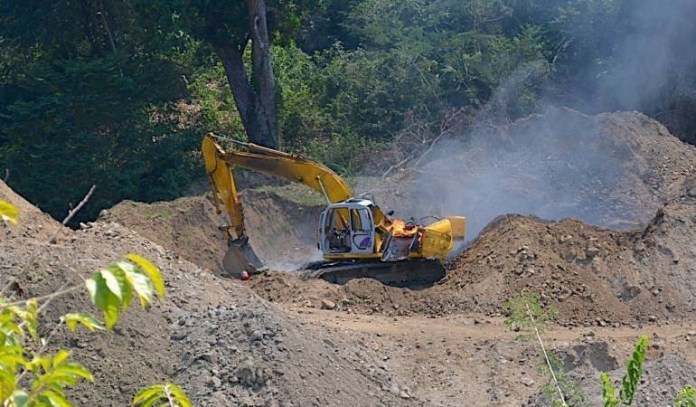
[Above photo] Mining projects in Acacoyagua, Escuintla and Acapetahua municipalities are putting the El Triunfo Reserve and the La Encrucijada mangroves at risk. Courtesy: Gabriela Coutiño
He pointed out that this situation not only devastates the vegetation, but also leaves the soil sterile, due to the use of a variety of chemical products for purifying the minerals and metals, which produce a large quantity of liquid waste as a result of these industrial processes that end up in bodies of water, thus provoking serious pollution. In Acacoyagua municipality the number of cancer cases in the population has increased due to pollution of the rivers from these liquid wastes that the mining companies produce; they also affect the flora and fauna.
These mining concessions far from bringing prosperity and wellbeing, as the politicians usually sell it, are affecting all the social and ecological links that may exist in the zone, fortunately there have been some efforts in the area, but in an effective and tangible way there has been no stop to that kind of mega-project, Pineda Vera said.
Another threat is the construction of highways that seek to cross and divide the Sierra Madre of Chiapas, like many other zones of the state. Consequently, they put the connectedness and health of the ecosystems at stake.
He pointed out that in the cloud forests there is a diversity of plants and trees that dominate the canopy, a mixture of tropical species from temperate zones, where oaks, pines, strangler figs, and a large number of important species can be found.
These species can reach up to 40 metros in height, but due to environmental conditions, the inclination of the relieve, amount of humidity, and soil quality, will make the height of the canopy varied.
At the same time, the area is usually threatened, due to the fact that the traditional cultivation of high-quality shade coffee is carried out there, which has made it famous, but due to industrial pressure and las “Machiavellian intentions” of large companies like Nestlé and Starbucks, producers in search of economic wellbeing, changed their production model.
The new model adopted is café de sol (sun coffee); it implies that the producers cut down the remnant of forest that these lands have, which over time can cause effects. It’s not only a lesser quality of coffee, but there is also a loss of vegetation cover, which gives rise to diseases, suffering and plagues that then cause an abuse of agro-chemicals that contaminate the water and soil.
—–Ω—–
Originally Published in Spanish by Chiapas Paralelo
Monday, June 14, 2021
Re-Published with English interpretation by the Chiapas Support Committee
Forced disappearance and genocide of the poor
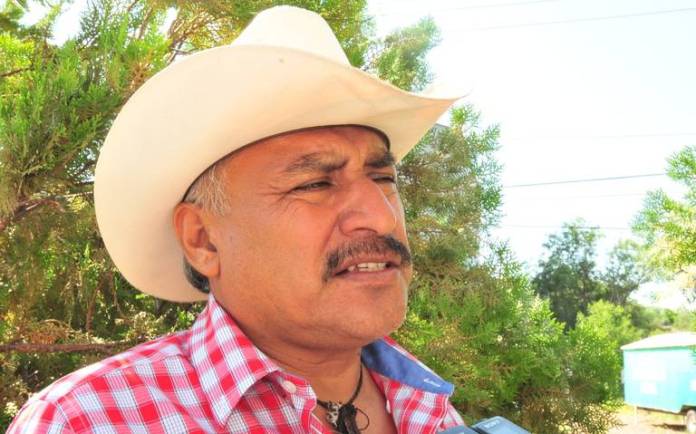
By: Aída Hernández Castillo
The term “genocide of the poor” is a concept that don José Dolores Suazo, of the Committee of Disappeared Migrants from the Center of Honduras (Cofamicenh), has been proposing in various public spaces, expanding the use of the legal concept of genocide, in order to point out the direct or indirect responsibility of the states in the continuance of a policy of death that disappears, massacres and mutilates the bodies of poor people on the continent. Based on deep knowledge of migrant massacres, like the one in Cadereyta, Nuevo León, where they murdered his brother Mauricio Suazo on May 13, 2012, don José Dolores argues that it’s about a hate crime that seeks to totally or partially destroy an ethno-racial group: poor and racialized migrants.
Last June 11 in the discussion Lives in search: disappearance and struggles for justice”(https://www.youtube.com/watch?v=R3toVSgnJl4) the reflections of don José Dolores joined the voices of Diana Gómez, of Sons and Daughters for Memory and Against Impunity in Colombia; Angélica Rodríguez Monroy, of Returning to Casa Morelos; Vanesa Orieta, militant against State repression in Argentina, and Priscila Sette, an activist of the Cree people against the disappearance of indigenous women in Canada. From different geographic contexts, these men and women, who have suffered the torture that having a loved one disappeared implies, coincided in rejecting the legal classification that differentiates forced disappearance from the disappearance by individuals. It was argued that this dichotomy makes invisible the responsibilities that the States always have, either by omission or by direct participation in the disappearance of people. When there are contexts of State impunity and complicity, all disappearances are forced, participants argued. These are imbedded theorizations that emerge from their experiences and knowledge looking for their loved ones and demanding justice for all the disappeared.
The discussion began joining their voices in the demand for the appearance alive of the Yaqui leader Tomás Rojo, disappeared since last May 27 in the town of Vícam, Sonora. [1] Tomás, like hundreds of disappeared indigenous people on the continent, had led the struggle of his peoples in defense of the territory against construction of the Independence Aqueduct that would affect the reservoirs that supply the Yaqui peoples. We also remembered our compañera of Ciesas-Northeast, Gisela Mayela Álvarez, who disappeared 10 months ago in Monterrey, Nuevo León.
With the slogan “We want them alive,” these activists shared experiences and theorizations. Despite differences in national contexts, the testimonies presented have in common the use of forced disappearance as a crime against humanity that is mostly perpetrated against young, poor and racialized people, in contexts of state impunity, sometimes on the part of security forces or in complicity and acquiescence with the perpetrators. In Central America, Argentina, Mexico and Colombia, the use of forced disappearance against political activists during the “dirty wars” and internal armed conflicts, and the decades of impunity around them, created the cultural climate that made the continuity of this practice possible in times of so-called “democracies.”
The 5,000 Native American women who disappeared in Canada; the more than 200,000 migrants disappeared in Mexico; the 100,000 disappeared in Colombia, 87 of them in recent weeks, within the framework of the national strike in that country; Luciano Arruga and the hundreds of young people disappeared or murdered by Argentine police; the more than 80,000 disappeared in Mexico, including the 201 that still wait to be identified in the graves of Jojutla and Telecingo (https://www.jornada.com.mx/2020/ 08/09/opinion/015a1pol), have in common having been treated as lives that don’t matter, stigmatized and criminalized by a racist system in order to justify State impunity and society’s indifference. The voices of don Lolo, Angélica, Diana, Vanesa and Priscila, with the thousands of relatives of the disappeared in the Americas, remind us that as long as they don’t return to their homes alive, no country on this continent can be considered fully democratic.
[1] Tomás Rojo disappeared on May 27, 2021. A body was found several weeks later and recently identified as his.
—–Ω—–
Originally Published in Spanish by La Jornada
Wednesday, June 18, 2021
https://www.jornada.com.mx/2021/06/16/opinion/016a2pol
Re-Published with English interpretation by the Chiapas Support Committee
Otroa Compañeroas | Gender fluidity: A contemporary emergence with ancestral roots
By Sylvia Marcos
Published originally in Camino al andar.
June 20, 2021.
… we know well that there are those who are neither men nor women
and that we call them Otroas
… and it has not been easy for them to earn that right to be what they are …
And are we really still going to force that they be men or women
and put themselves on one side or the other? 1
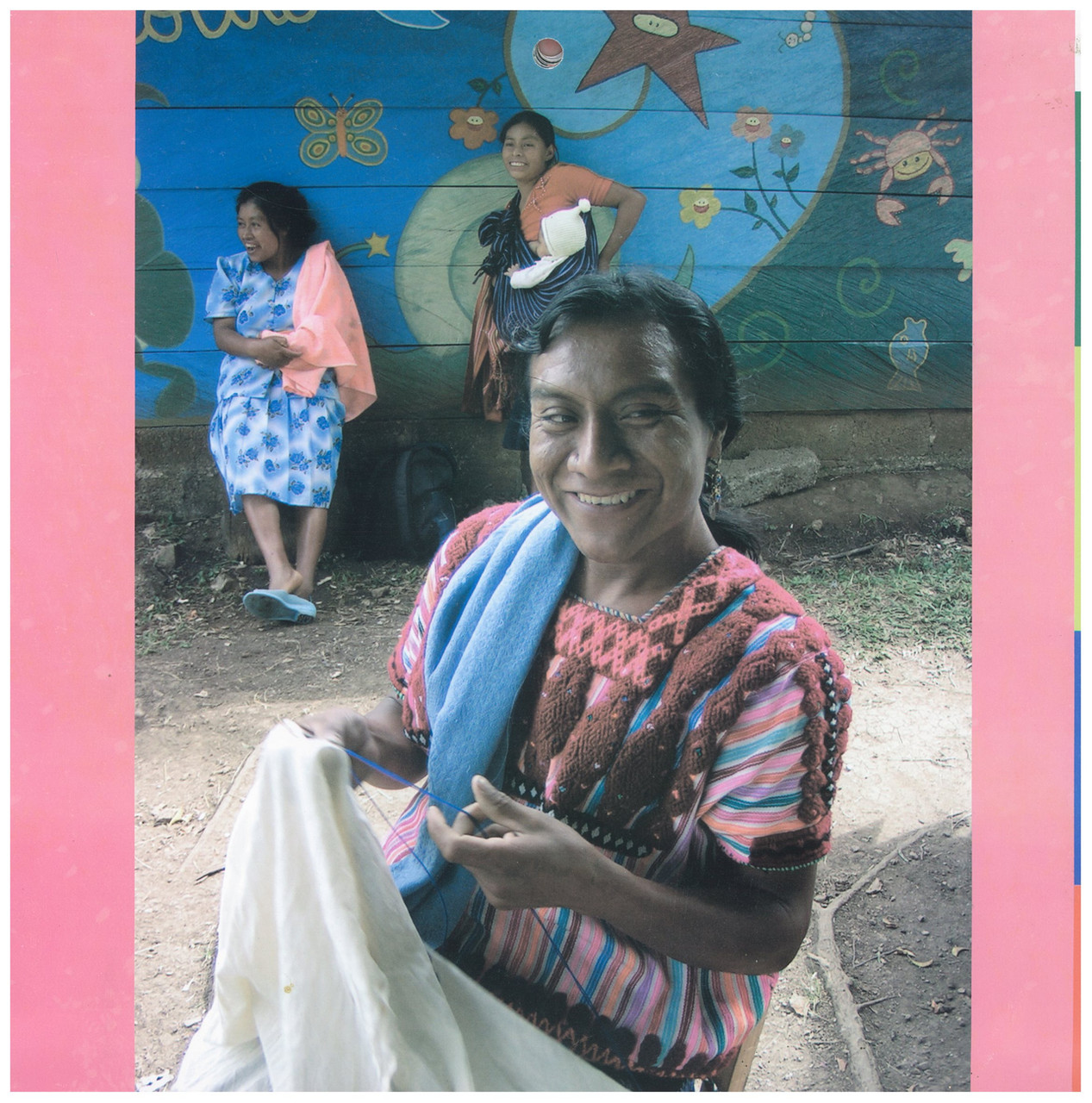
Who is Marijose? The otroa, Zapatista compañeroa, chosen to invade Europe from below, being the first to disembark and put her plant on European territory.
What does it mean that Zapatismo has chosen this presence to arrive first and give the message of its struggles in these stormy times?
The Zapatistas have used (frequently and repeatedly) in recent years this term to designate an identity that outside we call “sex-gender.” What do they want to tell us by this use? A repeated use of the term that turns (transforms) it into a concept. What conceptual meanings can be read in this collective use of the word OTROA? [See editor’s note at end of article.] Compañeroa, but also: niñoa (children), ciudadanoas [citizens], hermanoas [sister-brothers], elloas [he-she-them] … All terms that we find in the speeches and documents of Zapatismo.
“… Major Irma approached her and said ‘tell her they’re not alone.’ ‘tell him they’re not alone,” added Lieutenant Colonel Rolando. “Nor they-he-she alone,” Marijosé ventured to add, who arrived to ask the musicians to play a version of Swan Lake but as a cúmbia.2
A concept with a persistent use; a use that summons and opens up to analogy. It is the fluidity between spaces, behaviors, ways that remake the boundaries between feminine and masculine in everyday life and in struggle.
What do they want to tell us? From Zapatismo, from that very new and ancestral project of political philosophy, they open up another analogical way to recognize, remake and decenter (explode) conventional gender identities.
They tell us: “Good afternoon, day, night, early morning, a todas, todos, todoas [to every-she, every-he, they, them].” They propose a great inclusion that escapes the dual binaries that creep into our language to define us as men and women as sharply opposed and diverse.
Zapatismo once again summons us with its radical thinking to question our axiomatic beliefs. Men and women are permanently different, with a static identity, an untainted identity of the feminine against the masculine, of confrontations because we are sharply and firmly diverse, and even antagonistic. The masculine is superior, the feminine subordinate. “That’s right,” the philosophical traditions in which modernity is rooted tell us.
The Zapatistas say with their corporeal practices, with their political practices, and their discursive practices, a firm: NO. We are fluent. We are flowing from a male border to a female border.
The empirical horizon defines us in intermediates as well. It challenges us, it seduces us with this innovation that is a reinvention that recovers looks and forms from the past that appear as new spaces, that are reinvented in the present.
Otroas, milicanoas, compañeroas, promotoroas, formadoroas: they are horizon concepts. They function as trainers of the empirical field. It can be said that they are cognitive and perceptual landmarks that make up the framework of the experience. They have the same epistemological configuration as the horizon. The horizon is distinguished from the other boundaries and limits, for example, from the border. It is not fixed, as Jean Robert affirms 3, and depends on the collective subjectivity that subscribes to it, in the case of Zapatismo.
I have been collecting excerpts from speeches these last few years, treasure them, connect them and conserve them with my notes. I think they want to tell us something, and something very important about their being women and men and fighters to create another world. I think that they open up, also here, an ethical proposal, an innovative path with their ancestral references. As in so many spaces, Zapatismo moves forward, moves backward (Walter Benjamin’s image of the angel), and they express it with their constant paradoxes. Thus they recreate a world of unprecedented possibilities: “We follow paths and routes that do not exist on maps or satellites and that are only found in the thinking of our oldest.” 4
The concept of otroas expresses an inspired theoretical reference, typical of the philosophical universe of Mesoamerican ancestral legacies; and from the present day of the Zapatista communities and peoples.
From the practices of their own struggles, they propose to embrace, incorporate and not discriminate, or reject, the various nuances of the mobile gender as they are experienced in their struggles and in their daily lives. Those nuances are there: they are collectively perceived pieces in the daily tasks and governance in the Zapatista autonomy.
As the Zapatistas say in their letter “and why are we going to force them to be men or women?” The creativity of Zapatista autonomy seeks to give an account without oppressing or rejecting, without judging, those other ways of being, and of being in community.
They rush towards the imprecise (the unknown) and name it, express it; but they go back to recover millenary inheritances of ways of living as men and as women, and with the intermediates between these two. Thus they recover, rebuild and propose less oppressive futures. These ancestral anchors did not even go away: they remained rooted in the experiences, myths, practices, rites, dreams of all living and lived communities, not only within Zapatismo, but also in communities of peoples of the Mesoamerican region.
“A Zapatista unoa is enough,” they say.
The Colony taught them to be ashamed of being able to be “neither man nor woman,” but both. They were subject to punishment from the catechists, who were eager to impose a sexual morality similar to the one they brought. The colonial Confessionaries express it clearly. All almost re-constituted on the basis of Fray Alonso de Molina 5, they are mainly inquisitions against incarnated lived eros that go against the prescribed distancing of a norm that establishes what is and how to be “only woman” or “only man.”
The conceptual dichotomy of bodies requires conceiving, also, a pathological nature that must be corrected from the anatomy, from the “natural” genitalia of socially constructed bodies, without taking into account other conformations.
By itself, nature demands her presence and respect. The so-called hermaphrodites seem to denounce with their bodies the dislocation (the lag) that the dominant philosophy and culture have made to name this variant –natural– proposing to castrate it, considering it pathological or as “monster” bodies, said, in the urban environment, a person born with this condition.
All this is considered, and implicit, on the basis of the concept otroas. It is to recognize the physical and corporeal variants and their permanent transit, even medically recognized, between one pole and the other. It is a proposal for a perceptual re-creation that can free us from created atavisms. Perhaps the original people’s (indigenous) cultures had already understood it that way?
And, the Zapatistas say, “. . . and why are we going to force them to be men or women and that they have to stand on one side or the other?”
Because, it could also be asked, why do we have to accommodate the world and our multiple, complex, mixed, heterogeneous, combined, bi-morpho body/being into mutually exclusive categories? Or in opposite and antagonistic binaries? In poles of gender identity that exclude each other?
This is alien to the Mesoamerican philosophical roots where what we could call gender is conceived as the fluidity between opposites as complementary, asymmetric, mobile and mutually constitutive. They are cognitive landmarks, as Jean Robert would call them, that we have to recover. 6
Why follow the norm, considered “natural, axiomatic” that one is either a man or a woman?
And what about all the leaks, the slips, in between?
Punished, rejected, invisible, demonized.
But Zapatismo advances by retreating. Certain ancestral nuclei [core practices, beliefs] prevail and reincarnate in today. They reincarnate experientially and politically with other terms, conceptual forms, other proposals to live, to be alive and fight.
Emerging from the Zapatista context, the concept of otroas cannot be subsumed under the concept of transgender, due to the ancestral weight in which it is framed. And this even when the “transgender” proposal has a complex multiplicity of meanings and its struggles refer to the field of social justice.
Nor can it be embedded as one more reference of the LGBTTT movements. Its context and its philosophical conceptual base dislodges this possibility, since it is placed outside the binaryisms that are inevitably recreated within these struggles. The Zapatista thought included in the concept of “otroa” demands a space of its own.
Gender fluidity has been a constitutive philosophical element of Mesoamerican thought and makes its appearance here, in the “sex gender identity.” Which sex? Which gender? Colonial categories that we have absorbed from the dominant philosophical sources.
Here, with living, revived and persistent cultures, there are philosophical matrices that come to us demanding their disappearance from our media. They also show how this absence has impoverished us. “How are we going to force them to be men or women?” “If these persons do not want to, we do wrong if they are not respected,” the Zapatistas ask and affirm with astonishment in that Letter from the Zapatistas in 2019. “Why don’t we respect their rights not to be a man or a woman? But both at the same time, in different gradations and in constant mobile fusion.” And they add: “… they have the right to be what they are without hiding.”
Even today, Marijose is going to be the first Zapatista to set foot on and, conversely, “invade” the European continent.
But to think this, from Zapatismo “as we think of the world,” said Sub Moisés, is not a novelty of modernity. It begins and prevails hidden in the ancestral traditions of the Zapatista Mayan peoples. Reworkings of the “hard core,” Lopez Austin would say. It is in their linguistic practices, in their preference to feminize (the problema, insurgentas, sergentas, jóvenas, comandantas, commissariatas, agentas); and not in generically masculinizing as when speaking of “the rights of man” (as if we women did not exist!). They are conceived within that “gender fluidity” as we would call it today in academia and in philosophy. Gender fluidity that implies the constant transition between the masculine and the feminine with their multiple and internal slips, but also the non-hierarchical organization between opposites, but rather that these are asymmetrically complementary and mutually constitutive.
Starting with Colonialism, suddenly, historically and philosophically, we humans and the world were built with binary and mutually exclusive categories. There is nothing more: You must be defined as “being a man” or “being a woman” to be accepted by the social majority. It is about imposing a static normativity on the movement and a spontaneous oscillation typical of the masculine and the feminine. This internal mobilization, also anatomical and hormonal, already investigated on a physical level, is discarded.
We must also forget the porosity of the body, its extension beyond the skin, its intermittent fusion with the four directions of the universe. All this belongs to the beliefs of the invaded, suffocated cultures, which gradually became references to be hidden clandestinely to protect their local beliefs, rites and myths. “Secretly, our people continued to transmit the wisdom of their ancestors” (Professor Javier affirmed at the Escuelita zapatista in August 2013).
But today Zapatismo emerges, with its strong and lucid women, who have advanced leaving us external feminists behind. They are recovering traditions that ennoble and dignify them in today’s times. They recover that intermediate possibility. They reclaim that fluid and communal place: neither man nor woman, but both at the same time. Memories of references to the fusion of the cat/dog of Sub Galeano, to explain those nameless fusions (of asymmetric and mobile complementarity), of the Mesoamerican cosmos revived today in the flesh of the other. And they come to teach us another way, as in so many other things. Another way, Another world where many quests are synthesized with the clarity and acceptance of the concept of “otroa” [he-she-them/other]: living the fluidity of the body/gender/cosmos.
And they open new paths for us, by invading the multiplicities of denominations of “gender sex,” which are constantly increasing. The Zapatistas synthesize this with an otroa, niñoa [child], compañeroa [companion], hermanoa [brother-sister]. A richness that simplifies and at the same time complicates their conceptual meanings; it makes us land in the philosophical traditions of our lands; It offers us ways to joyfully accept the variability of our bodies, of our flesh, of being born here without the rust of colonial philosophical heritages that overshadow and discard the philosophical core of being on our land.
Partaking of them, lightens us, exalts us, simplifies us and we broaden ourselves to embrace all the diversity of being as it comes to us on this earth.
And the Zapatistas choose one otroa to set foot on the European continent first.
Is it a little clearer to us now?
Open up unthinkable paths that are invigorated and resolved with peace and love.
Precious quotes that I have been carefully keeping. Summoned by this redundant Zapatista bet of expressing the depths of their sentipensar [feeling-thoughts]. Referring now to something they want to tell us, without saying it explicitly; but that they express with their political practices because of the priority space of struggle that they occupy:
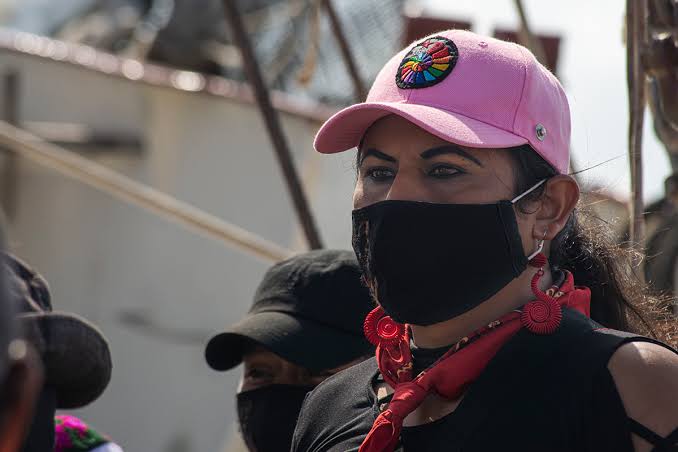
After listing these vital and central spaces for the consolidation of Zapatista autonomy, they add:
“They prepared for 6 months to be a delegadoa [he-she-they delegate]. They volunteer to travel by boat to Europe. They have been designated as the first Zapatista to disembark and, with that, begin the invasion … ok, the visit to Europe.” 7
Marijose occupies, as the otroa, crucial and fundamental spaces for the consolidation of Zapatista autonomy. They are, moreover, an otroa who does not suffer the exclusion of the margins, the discrimination and the violent rejections that they would suffer in external capitalist society.
Whoever can, understand. I only know that I don’t know anything and that I am beginning to walk in this unpredictable discovery of what they might want to tell us. From my world, from my time, from my way, from my direction….
And “with them, ellas [she], elloas [he-she].”
There are times when, if we want to keep thinking, we must think the unthinkable.
*
Sylvia Marcos, Cuadernos Feministas No 38, (in press). Written to honor Zapatista thinker Jean Robert; Cuernavaca, Morelos on June 11, 2021.
_____________________________________________________________
END-NOTES
1 Letter from the Zapatista Women to Women Who Struggle Around the World: (February 11, 2019) Cited in: http://enlacezapatista.ezln.org.mx/2019/02/13/letter-from-the-zapatista-women-to-women-in-struggle-around-the-world/
2 Subcomandante Insurgente Galeano. (October 9, 2020). Part Five: The Gaze and the Distance to the Door.
Cited in: http://enlacezapatista.ezln.org.mx/2020/10/11/part-five-the-gaze-and-the-distance-to-the-door/
3 In Spanish only: Robert, Jean. (1999) Las aguas arquetípicas y la globalización del desvalor. Recuperado de:http://umbrales2.blogspot.com/2021/02/las-aguas-arquetipicas-y-la.html
4 Subcomandante Insurgente Moisés. (August 7, 2019). Communique from the EZLN’s CCRI-CG. And, We Broke the Seige. Cited in: http://enlacezapatista.ezln.org.mx/2019/08/20/communique-from-the-ezlns-ccri-cg-and-we-broke-the-siege/
5 In Spanish only: Marcos, Sylvia. “Erotismo indígena y moralidad colonial” p. 119-138, Tomado de los Labios, cap. 7, Abya Yala, Quito, 2011.
6 In Spanish only: Gil, Yásnaya A. Cumes, Aura. (2021). Revista de la Universidad de México. Entrevista con Aura Cumes: la dualidad complementaria y el Popol vuj. Dossier Descolonización. Recuperado de: https://www.revistadelauniversidad.mx/articles/8c6a441d-7b8a-4db5-a62f-98c71d32ae92/entrevista-con- aura-cumes-la-dualidad-complementaria-y-el-popol-vuj
7 Subcomandante Insurgente Galeano. (April 17, 2021). 421st Squadron. Cited in: http://enlacezapatista.ezln.org.mx/2021/04/20/421st-squadron/
Translated by the Chiapas Support Committee. And originally published by Camino al Andar in Spanish at: https://www.caminoalandar.org/post/otroa-compañeroa-la-fluidez-de-género-una-emergencia-contemporánea-con-ra%C3%ADces-ancestrales
____________________________________________________
Editor’s Note: Otroa, niñoa, compañeroa, are the masculine-feminine fusion of binary words that can have gender, usually denoted by a word ending in “o” as masculine and in “a” as feminine when written in Spanish. The closest concept to otroa is the North American indigenous concept in English that could be used as a translation of otroa is “Two Spirit people.” See for example this explanation provided by Indian Country Today: 8 Things You Should Know About Two Spirit People
https://indiancountrytoday.com/archive/8-misconceptions-things-know-two-spirit-people
Translated by the Chiapas Support Committee. And originally published by Camino al Andar in Spanish at: https://www.caminoalandar.org/post/otroa-compañeroa-la-fluidez-de-género-una-emergencia-contemporánea-con-ra%C3%ADces-ancestrales
The Journey for Life: Where Are We Going?
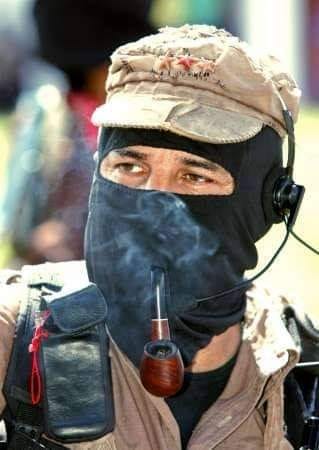
A clarification: Many times, when we use “los Zapatistas” we are not referring to the men, but to the Zapatista peoples. And when we use “las Zapatistas”, we are not describing women, but the Zapatista communities. So you will find that gender “jump” in our words. When we refer to gender, we always add “otroa” to point out the existence and struggle of those who are neither men nor women (and that our ignorance on the subject prevents us from detailing — but we will learn to name all the differences).
-*-
Now, the first thing you should know or understand is that the Zapatistas, when we are going to do something, we first prepare for the worst. We start from an assumption of failure, and, in the inverse sense, we prepare ourselves to face it or, in the best of cases, to avoid it.
For example, we imagine being attacked, the usual massacres, genocide dressed up as modern civilization, total extermination. And we prepare for those possibilities. Well, for January 1, 1994, we did not imagine defeat, we assumed it was a certainty.
Anyway, maybe that will help you understand the reason for our initial astonishment, our hesitations and a perplexing improvisation when, after much time, work and preparation for ruin, we found that… we lived.
It is from this skepticism that our initiatives develop. Some small, others larger, all of them crazy, our calls are always directed to “the other,” that which is beyond our daily horizons, but which we recognize as something that is necessary in the struggle for life, that is to say, in the struggle for humanity.
In this initiative or gamble or delusion or absurdity in its maritime iteration, for example, we prepared ourselves for the Kraken, a storm or a stray white whale to wreck the boat, that is why we made canoes — and they traveled with Squadron 421 in La Montaña until they reached Vigo, Galicia, Spain, Europe.
We also prepared ourselves not to be welcome, that is why we sought consent for the invasion, that is, the visit beforehand… Well, we are not very sure about being “welcome” yet. For more than one or two, our presence is disturbing, to say the least, if not downright disruptive. And we understand, it may be that someone, after a year or more of being in confinement, may find it at least inopportune that a group of indigenous people of Mayan roots, as little as they are producers and consumers of merchandise (electoral and otherwise), wants to talk in person. In person! (do you remember that this used to be part of your daily routine?) And, moreover, that their primary purpose is to listen to you, to fill you with questions, to share nightmares and, of course, dreams.
We are prepared for the bad governments, on both sides, to prevent or hinder our departure and arrival, that’s why some of us Zapatistas were already in Europe… Oops, I shouldn’t have written that, delete it. We already know that the Mexican government will not stand in the way. It remains to be seen what the other European governments say and do –because Portugal and the Spanish State did not oppose it.
We are prepared for the mission to fail, that is, for it to turn into a media event and, therefore, fleeting and inconsequential. That is why we primarily accept invitations from those who want to listen and talk. Because our main objective is not massive events –although we do not rule them out–, but the exchange of stories, knowledge, feelings, assessments, challenges, failures and successes.
We will prepare for the plane to fail, that’s why we made parachutes with embroideries of many colors so that, instead of a “D-Day” in Normandy (oh, oh, does that mean that the air landing would be in France?…. eh? … in Paris?!), it will be a “Z-Day” for Europe below, and it will seem then that from the sky, flowers will shower as if Ixchel, the mother goddess, rainbow goddess, accompanied us and, by her hand and with her flight, open a second front for the invasion. And safer because now, thanks to Galicia of below, the 421st squadron has managed to secure a beach stronghold in the lands of Breogán.

In short, we always prepare to fail… and to die. That is why life, for Zapatistas, is a surprise to be celebrated every day, every hour. And what could be better if it is with dance, music, and the arts?
-*-
During all these years we have learned many things. Perhaps the most important is to realize how small we are. And I am not referring to stature and weight, but to the size of our commitment. Our contacts with people, groups, collectives, movements and organizations from different parts of the planet have shown us a diverse, multiple and complex world. This has reinforced our conviction that any proposal of hegemony and homogeneity is not only impossible, but above all criminal.
Because the attempts (not infrequently hidden behind papier-mâché nationalisms in the shop windows of electoral politics) to impose ways and viewpoints are criminal, because they seek the extermination of differences of all kinds.
The other is the enemy: the difference of gender, race, sexual or asexual identity, language, skin color, culture, creed or non-belief, conception of the world, physique, beauty stereotype, history. Taking into account all the worlds that exist in the world, there are practically as many enemies, actual or potential, as there are human beings.
And we could say that almost any affirmation of identity is a declaration of war on what is different. I said “almost,” and it is to this “almost” that we cling as the Zapatistas that we are.
-*-
Because it turns out that, also by studying and analyzing, we have discovered something that may or may not be important. It depends.
Taking for granted that this planet will be annihilated, at least as we perceive it so far, we have been investigating the possible options.
That is, the ship sinks and up above they say that nothing happens, that it is passing. Yes, as when the tanker Prestige sank off European coasts (2002) — Galicia was the first witness and victim — and the business and government authorities said that only a few spurts of fuel had spilled. The disaster was not paid for by the boss, nor by his foremen or wholesalers. It was paid for, and continues to be paid for, by the people who live from fishing on those coasts. By them and their descendants.
And by “Ship” we mean the planet homogenized and hegemonized by a system: capitalism. Of course, they may say that “that is not our ship,” but the current sinking is not only of a system, but of the whole world, complete, total, down to the most remote and isolated corner– not only that of its centers of power.
-*-
We understand that someone thinks, and therefore acts accordingly, as if it is still possible to mend, patch, paint a little here and there, to refurbish the boat. To keep it afloat no matter what, even selling the fantasy that mega-projects are possible that not only do not annihilate entire villages, but also do not affect nature.
That there are people who think that it is sufficient to be very determined and to put a lot of effort into the make-up (at least until the electoral processes are over). And who believe that the best response to the cries of “Never again” –which are repeated in every corner of the planet — are promises and money, political programs and money, good intentions and money, flags and money, fanaticism and money. Let them be faithful believers that the world’s problems come down to a lack of money.
And money needs roads, big infrastructure projects, hotels, shopping malls, factories, banks, labor, consumers… police and armies.
The so-called “rural communities” are classified as “underdeveloped” or “backward” because the circulation of money, i.e. goods, is non-existent or very low. It does not matter that, for example, their rate of femicides and gender violence is lower compared to that of urban areas. Governmental achievements are measured by the number of areas destroyed and repopulated by producers and consumers of goods, as a result of the reconstruction of that territory. Where once there was a cornfield, a spring, a forest, now there are hotels, shopping malls, factories, thermoelectric plants,… gender violence, persecution of difference, drug trafficking, infanticide, human trafficking, exploitation, racism, discrimination. In short: c-i-v-i-l-i-z-a-t-i-o-n.
Their idea is that the peasant population will become employees of this “urbanization.” They will continue to live, work and consume in their town, but the owner of all their surroundings is an industrial-commercial-financial-military conglomerate whose headquarters are in cyberspace and for whom that conquered territory is only a point on the map, a percentage of profits, a commodity. And the real result will be that the original population will have to migrate, because capital will arrive with its own “qualified” employees. The native population will have to water gardens and clean parking lots, stores and pools where before there were fields, forests, coasts, lagoons, rivers and springs.
What is hidden is that, behind the expansions (“wars of conquest”) of the States –whether internal (“incorporating more population into modernity”), or external with different alibis (such as that of the Israeli government in its war against Palestine)–, there is a common logic: the conquest of a territory by merchandise, that is, by money, that is, by capital.
But we understand that these people, in order to become the teller who administers the payments and fees that give life to the machine, form electoral political parties, fronts — be they wide or narrow — to compete for access to government alliances and “strategic” ruptures, and all the subtleties in which life and efforts are engaged that, behind small successes, hide great failures. A little law here, an official dialogue here, a journalistic note there, a tweet here, a like there, and yet, to give an example of an ongoing global crime, femicides are on the rise. In the meantime, the left goes up and down, the right goes up and down, the center goes up and down. As the unforgettable Marisol from Malaga sang, “life is a raffle”: everyone (up) wins, everyone (down) loses.
But “civilization” is just a flimsy alibi for brutal destruction. The poison keeps gushing (no longer from the Prestige — at least not only from that ship), and the whole system seems to be willing to contaminate every last corner of the planet, because destruction and death are more profitable than stopping the machine.
We are sure you will be able to add more and more examples. Display buttons of an irrational and yet, still active nightmare.
-*-
So, for several decades we have been concentrating on the search for alternatives. The construction of rafts, canoes, boats, and even larger vessels (the 6th as an improbable ark), have a well-defined horizon. Somewhere it will be necessary to disembark.
We read and we read. We studied and continue to do so. We analyze then and now. We open our hearts and our eyes, not to current or old-fashioned ideologies, but to the sciences, the arts and our histories as native peoples. And with that knowledge and tools, we have found that there is, in this solar system, a planet that could be habitable: the third of the solar system and that, until today, it appears in school and scientific books with the name of “Earth.” For further reference, it is between Venus and Mars. That is, according to certain cultures, it is between love and war.
The problem is that this planet is already a pile of rubble, of real nightmares, and tangible horrors. Little is left standing. Even the stage rigging that hides the catastrophe is cracking. So, then, how shall I put it, the point is not to conquer that world and enjoy the spoils of the victor. It is more complicated and requires, yes, a worldwide effort: we have to do it over.
-*-
Now, according to the great Hollywood film productions, the solution to the world catastrophe (always something external –aliens, meteors, inexplicable pandemics, zombies resembling candidates to some public office), is the product of a union of all the governments of the world (headed by the gringos) or, worse, of the US government synthesized in an individual (because the machine has already learned that the farce must be inclusive), who may have the politically correct racial and gender characteristics, but who bears on his chest the brand of the Hydra.
But, far from these fictions, reality shows us that everything is business: the system produces destruction and sells you tickets to flee from it… into space. And for sure, in the offices of the big corporations, there are brilliant projects of interstellar colonization… with the private ownership of the means of production included. In other words, the system is transferred, in its entirety, to another planet. The “all included” refers to those who work, to those who live on top of those who work, and to their relationship of exploitation.
-*-
But sometimes they don’t just look at space. “Green” capitalism strives for “protected” areas on the planet. Ecological bubbles where the beast can shelter while the planet heals from the bites (which would take just a few million years).
When the machine speaks of “a new world” or “humanizing the planet,” it is thinking of territories to conquer, depopulate and destroy, and then repopulate and rebuild with the same logic that now has the whole world facing the abyss, always ready to take the step forward that progress demands.
You may think that it is not possible for someone to be so imbecilic as to destroy the house where he lives. “The frog does not drink all the water in the puddle in which he lives,” says a proverb of the native Sioux people. But if you pretend to apply rational logic to the workings of the machine, you won’t understand (well, neither will the machine). Moral and ethical assessments are of no use. The logic of the beast is profit. Of course, now you may wonder how it is possible for an irrational, immoral and stupid machine to rule the destinies of an entire planet. Ah, (sigh), that is in its genetics, in its very essence.
But, leaving aside the impossible exercise of endowing rationality to the irrational, you will come to the conclusion that it is necessary to destroy this monstrosity which, no, is not diabolical. Unfortunately, it is human.
And, of course, you study, read, confront, analyze, and discover that there are great proposals to move forward. From those that propose a shave and some make-up, to those that recommend moral and logical courses for the beast, passing through new or old systems.
Yes, we understand you, life sucks and it is always possible to take refuge in that cynicism so overrated in social networks. The late SupMarcos used to say: “the bad thing is not that life sucks, but that they force you to eat it and still expect you to be grateful for it.”
But suppose that no, you do know that, indeed, life sucks, but your reaction is not to withdraw into yourself (or into your “world,” that depends on the number of your “followers” in the social networks there are and to be). And then you decide to embrace, with faith, hope and charity, one of the options presented to you. And you choose the best, the biggest, the most successful, the most famous, the one that is winning… or the one that is close to you.
Great projects of new and old political systems. Impossible delays of the clock of history. Patriotic nationalisms. Shared futures by virtue of this option taking power and staying in it until everything is solved. Is your faucet leaking? Vote for that one. Too much noise in the neighborhood? Vote for that one. Did the cost of transportation, food, medicine, energy, schools, clothes, entertainment, culture go up, are you afraid of migration, do dark-skinned people, of different beliefs, incomprehensible languages, different heights and complexions bother you? Vote for…
There are even those who do not differ from the objective, but from the method. And then they repeat above what they criticized below. With disgusting tricks and claiming geopolitical strategies, support is given to those who persist in crime and stupidity. It is requested that the peoples endure oppressions for the benefit of the “correlation of international forces and the rise of the left in the area”. But Nicaragua is not Ortega-Murillo and it will not take the beast long to understand this.
In all those great offers of solutions in the murderous supermarket of the system, many times it is not mentioned that they are the brutal imposition of a hegemony, and a decree of persecution and death to all that is not homogeneous to the winner.
Governments govern for their followers, never for those who are not. Social media stars feed their followers, even at the cost of sacrificing intelligence and shame. And “political correctness” has to suck it up, when later they have to devour those who counsel resignation “so as not to benefit the principal enemy.”
-*-
Is Zapatismo one more great answer, one more answer, to the world’s problems?
No. Zapatismo is a bunch of questions. And the smallest may be the most disturbing: And what about you?
In the face of the capitalist catastrophe, does Zapatismo propose an old-new idyllic social system, and with it a repeat of the imposed hegemonies and homogeneities that are now “good”?
No. Our thought is as small as we are: it is the efforts of each one, in his geography, according to his calendar and way, that will allow us, perhaps, to do away with the criminal, and, simultaneously, to remake everything. And everything means everything.
Each one, according to their calendar, their geography, their way, will have to build their path. And, like us, the Zapatista peoples, it will stumble and get up, and what it builds will have the name it wants to have. And it will only be different and better than what we have suffered before, and what we suffer today, if it recognizes the other and respects them, if it refuses to impose its thinking on that which is different, and if it finally realizes that there are many worlds and that their richness is born of and shines in their difference.
Is it possible? We do not know. But we do know that, to find out, we must fight for Life.
-*-
So, what are we doing on this Journey for Life if we do not aspire to dictate paths, routes, destinies? What if we are not looking for adherents, votes, likes? What if we are not going to judge and condemn or absolve? What if we are not calling for fanaticism for a new-old creed? What if we are not looking to go down in history and occupy a niche in the moldy pantheon of the political spectrum?
Well, to be honest with you as the Zapatistas that we are: we are not only going to confront our analysis and conclusions with the other that struggles and thinks critically.
We are going to thank the other for its existence. To thank them for the teachings that their rebellion and resistance have given us. To deliver the promised flower. To embrace the other and tell it in its ear that it is not alone, alone, alone. To whisper to her that it is worth the resistance, the struggle, the pain for those who are no longer here, the rage that the criminal is unpunished, the dream of a world that is not perfect, but better: a world without fear.
And also, and above all, let’s seek out accomplices… for the sake of life.
SupGaleano.
June 2021, Planet Earth
—————————————-
Originally Published in Spanish by Enlace Zapatista
Sunday, June 27, 2021
http://enlacezapatista.ezln.org.mx/2021/06/27/la-travesia-por-la-vida-a-que-vamos/
English interpretation by Schools for Chiapas
Re-Published by the Chiapas Support Committee
 Chiapas Support Committee