Chiapas Support Committee
Home of the Compañero Manuel blog on zapatistas & mexico
Letter from the Zapatista women to women who struggle in the world
ZAPATISTA NATIONAL LIBERATION ARMY
MEXICO
February 2019
To: Women who struggle in the world
From: The Zapatista Women
Sister, compañera:
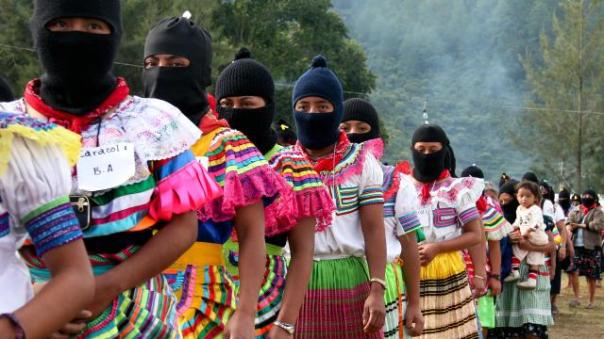
We as Zapatista women send you our greetings as the women in struggle that we all are.
We have sad news for you today, which is that we are not going to be able to hold the Second International Encounter of Women in Struggle here in Zapatista territory in March of 2019.
Maybe you already know the reasons why, but if not, we’re going to tell you a little about them here.
The new bad governments have said clearly that they are going to carry forward the mega-projects of the big capitalists, including their Maya Train, their plan for the Isthmus of Tehuantepec, and their massive commercial tree farms. They have also said that they’ll allow the mining companies to come in, as well as agribusiness. On top of that, their agrarian plan is wholly oriented toward destroying us as original peoples by converting our lands into commodities and thus picking up what Carlos Salinas de Gortari started but couldn’t finish because we stopped him with our uprising.
All of these are projects of destruction, no matter how they try to disguise them with lies, no matter how many times they multiply their 30 million votes. The truth is that they are coming for everything now, coming full force against the original peoples, their communities, lands, mountains, rivers, animals, plants, even their rocks. And they are not just going to try to destroy us Zapatista women, but all indigenous women—and all men for that matter, but here we’re talking as and about women.
In their plans our lands will no longer be for us but for the tourists and their big hotels and fancy restaurants and all of the businesses that make it possible for the tourists to have these luxuries. They want to turn our lands into plantations for the production of lumber, fruit, and water, and into mines to extract gold, silver, uranium, and all of the minerals the capitalists are after. They want to turn us into their peons, into servants who sell our dignity for a few coins every month.
Those capitalists and the new bad governments who obey them think that what we want is money. They don’t understand that what we want is freedom, that even the little that we have achieved has been through our struggle, without any attention, without photos and interviews, without books or referendum or polls, and without votes, museums, or lies. They don’t understand that what they call “progress” is a lie, that they can’t even provide safety for all of the women who continue to be beaten, raped, and murdered in their worlds, be they progressive or reactionary worlds.
How many women have been murdered in those progressive or reactionary worlds while you have been reading these words, compañera, sister? Maybe you already know this but we’ll tell you clearly here that in Zapatista territory, not a single woman has been murdered for many years. Imagine, and they call us backward, ignorant, and insignificant.
Maybe we don’t know which feminism is the best one, maybe we don’t say “cuerpa” [a feminization of “cuerpo,” or body] or however it is you change words around, maybe we don’t know what “gender equity” is or any of those other things with too many letters to count. In any case that concept of “gender equity” isn’t even well formulated because it only refers to women and men, and even we, supposedly ignorant and backward, know that there are those who are neither men nor women and who we call “others” but who call themselves whatever they feel like. It hasn’t been easy for them to earn the right to be what they are without having to hide because they are mocked, persecuted, abused, and murdered. Why should they be obligated to be men or women, to choose one side or the other? If they don’t want to choose then they shouldn’t be disrespected in that choice. How are we going to complain that we aren’t respected as women if we don’t respect these people? Maybe we think this way because we are just talking about what we have seen in other worlds and we don’t know a lot about these things. What we do know is that we fought for our freedom and now we have to fight to defend it, so that the painful history that our grandmothers suffered is not relived by our daughters and granddaughters.
We have to struggle so that we don’t repeat history and return to a world where we only cook food and bear children, only to see them grow up into humiliation, disrespect, and death.
We didn’t rise up in arms to return to the same thing.
We haven’t been resisting for 25 years in order to end up serving tourists, bosses, and overseers.
We will not stop training ourselves to work in the fields of education, health, culture, and media; we will not stop being autonomous authorities in order to become hotel and restaurant employees, serving strangers for a few pesos. It doesn’t even matter if it’s a few pesos or a lot of pesos, what matters is that our dignity has no price.
Because that’s what they want, compañera, sister, that we become slaves in our own lands, accepting a few handouts in exchange for letting them destroy the community.
Compañera, sister:
When you came to these mountains for the 2018 gathering, we saw that you looked at us with respect, maybe even admiration. Not everyone showed that respect—we know that some only came to criticize us and look down on us. But that doesn’t matter—the world is big and full of different kinds of thinking and there are those who understand that not all of us can do the same thing and those who don’t. We can respect that difference, compañera, sister, because that’s not what the gathering was for, to see who would give us good reviews or bad reviews. It was to meet and understand each other as women who struggle.
Likewise, we do not want you to look at us now with pity or shame, as if we were servants taking orders delivered more or less politely or harshly, or as if we were vendors with whom to haggle over the price of artisanship or fruit and vegetables or whatever. Haggling is what capitalist women do, though of course when they go to the mall they don’t haggle over the price; they pay whatever the capitalist asks in full and what’s more, they do so happily.
No compañera, sister. We’re going to fight with all our strength and everything we’ve got against these mega-projects. If these lands are conquered, it will be upon the blood of Zapatista women. That is what we have decided and that is what we intend to do.
It seems that these new bad governments think that since we’re women, we’re going to promptly lower our gaze and obey the boss and his new overseers. They think what we’re looking for is a good boss and a good wage. That’s not what we’re looking for. What we want is freedom, a freedom nobody can give us because we have to win it ourselves through struggle, with our own blood.
Do you think that when the new bad government’s forces—its paramilitaries, its national guard—come for us we are going to receive them with respect, gratitude, and happiness? Hell no. We will meet them with our struggle and then we’ll see if they learn that Zapatista women don’t give in, give up, or sell out.
Last year during the women’s gathering we made a great effort to assure that you, compañera and sister, were happy and safe and joyful. We have, nevertheless, a sizable pile of complaints that you left with us: that the boards [that you slept on] were hard, that you didn’t like the food, that meals were expensive, that this or that should or shouldn’t have been this way or that way. But later we’ll tell you more about our work in preparing the gathering and about the criticisms we received.
What we want to tell you now is that even with all the complaints and criticisms, you were safe here: there were no bad men or even good men looking at you or judging you. It was all women here, you can attest to that.
Well now it’s not safe anymore, because capitalism is coming for us, for everything, and at any price. This assault is now possible because those in power feel that many people support them and will applaud them no matter what barbarities they carry out. What they’re going to do is attack us and then check the polls to see if their ratings are still up, again and again until we have been annihilated.
Even as we write this letter, the paramilitary attacks have begun. They are the same groups as always—first they were associated with the PRI, then the PAN, then the PRD, then the PVEM, and now with MORENA.
So we are writing to tell you, compañera, sister, that we are not going to hold a women’s gathering here, but you should do so in your lands, according to your times and ways. And although we won’t attend, we will be thinking about you.
Compañera, sister:
Don’t stop struggling. Even if the bad capitalists and their new bad governments get their way and annihilate us, you must keep struggling in your world. That’s what we agreed in the gathering: that we would all struggle so that no woman in any corner of the world would be scared to be a woman.
Compañera, sister: your corner of the world is your corner in which to struggle, just like our struggle is here in Zapatista territory.
The new bad governments think that they will defeat us easily, that there are very few of us and that nobody from any other world supports us. But that’s not the case, compañera, sister, because even if there is only one of us left, she’s going to fight to defend our freedom.
We aren’t scared, compañera, sister.
If we weren’t scared 25 years ago when nobody even knew we existed, we certainly aren’t going to be scared now that you have seen us—however you saw us, good or bad, but you saw us.
Compañera, hermana:
Take care of that little light that we gave you. Don’t let it go out.
Even if our light here is extinguished by our blood, even if other lights go out in other places, take care of yours because even when times are difficult, we have to keep being what we are, and what we are is women who struggle.
That’s all we wanted to say, compañera, sister. In summary, we’re not going to hold a women’s gathering here; we’re not going to participate. If you hold a gathering in your world and anyone asks you where the Zapatistas are, and why didn’t they come, tell them the truth: tell them that the Zapatista women are fighting in their corner of the world for their freedom.
That’s all, compañeras, sisters, take care of yourselves! Maybe we won’t see each other again.
Maybe they’ll tell you not to bother thinking about the Zapatistas anymore because they no longer exist. Maybe they’ll tell you that there aren’t any more Zapatistas.
But just when you think that they’re right, that we’ve been defeated, you’ll see that we still see you and that one of us, without you even realizing it, has come close to you and whispered in your ear, only for you to hear: “Where is that little light that we gave you?”
From the mountains of the Mexican Southeast,
The Zapatista Women
February 2019
En español: http://enlacezapatista.ezln.org.mx/2019/02/11/carta-de-las-zapatistas-a-las-mujeres-que-luchan-en-el-mundo/
The business of border security
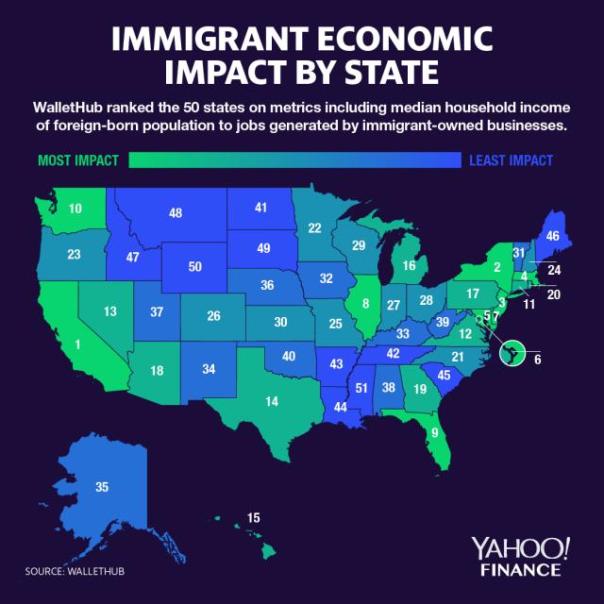
Where immigrants contribute to the economy.
By: Víctor Ronquillo *
To the north of the city of Tijuana, far away and for the purpose of making a social phenomenon invisible, is the El Barretal migrant shelter. The displaced, the arrivals with the caravans coming from the south, protagonists of an exodus that places into evidence the crisis of the model of border control established in the world with the militarization of borders, cope with their condition as refugees and hope for the impossible, reaching the north and the chimera of the dollar. They are victims of one more expression of the 21st century wars, extended throughout the world, where what is sought is profit, sponsored by arms manufacturers and security contractors.
Behind the discourse of the right’s post-fascism, which blames migrants for the economic crisis, for the absurdities of a world-system that touches bottom, are the beneficiaries of the arms business and the construction of walls. On June 15, 2015, at the launch of his campaign, Donald Trump revealed his plan to install a wall on the border of Mexico with the United States. The anti-immigrant speech continues being one of the axes that articulate an economic and political project that favors the military industrial complex, one of the principal foundations of the US economy after the Second World War.
María José Rodríguez Reja, a professor and researcher at the Autonomous University of Mexico City, explains what war capitalism means in our time on the pages of the book La norteamericanización de la seguridad en América Latina (Ed. Akal, 2017): “Neoliberal war capitalism acquires in US conception and strategy a profoundly violent and daring dimension in which it expresses the worldview that it imposes on others, and on which it tries to legitimize its actions; departing from this it constructs the concept of the enemy and defines the threats to face from a war strategy that is substantially the same as its interests.”
And immigrants are the enemy. Some time ago, the Border Patrol promoted tours to the Sonora/Arizona desert border with the intention of dissuading those who would attempt to go north not to attempt it. While we were touring one of the many routes traveled by migrants, some of the officials in charge of that tour proudly told me: “we have everything under control.” The principal attraction was the technology deployed on the desert trails. The militarization of the border, in addition to the growing deployment of surveillance troops, includes a technological network that extends through strategic points in the more than three thousand kilometers that divide not only Mexico and the United States, but also the north and the south of this world of inequality and savage capitalism.
The border security business is booming and has had an impressive growth since September 11, 2011. One of the companies that benefit from this business is Lockheed Martin, a powerful reference in the aerospace field; one of its products is the Lockheed Martin 74 K Aerostat, an enormous drone shaped like a zeppelin. On that trip to demonstrate the technological resources available to the Border Patrol, there was a stellar moment so that a group of journalists coming from different regions of America would be impressed with the images captured by this gigantic drone. The border security budget has been increasing within the United States Defense Budget. In the pages of the book Border Patrol Nation: dispatches from the Front Lines of Homeland Security (City Lights Open Media, 2014) the journalist Todd Miller asserts: “Security technology has been expanding for 25 years (…) this is only the beginning, the projection is that this will increase after the arrival of Donald Trump.”
The war business brings enormous profits for arms manufacturers and on many occasions also for the sophisticated instruments for control of the borders. The political influence of these consortia is determinative.
According to data from the Stockholm International Peace Institute, the global market for arms is at 100 billion dollars. US companies with their decisive political influence are the leaders in that business. The consortia producing arms for war and the technology for security and border control concentrate 34 percent of that juicy global market.
Since the 1980s, when the process of militarizing the border with Operation Guardian began, on the Tijuana-San Diego border, war technology is used in border security. The Lockheed Martin 74K Aerostat drones, vigilantes of the border skies, are an adaptation of the drones that NATO used in the Iraq War.
One of today’s many wars is fought on the borders with its militarization and control, a war that for some represents a good business.
*Journalist and writer
————————————————————
Originally Published in Spanish by La Jornada
Friday, January 11, 2019
https://www.jornada.com.mx/2019/01/11/opinion/019a2pol
Re-Published with English interpretation by the Chiapas Support Committee
Residents denounce uncontrolled paramilitary violence in Chenalhó

A community in the autonomous Zapatista municipality of Magdalena de la Paz (the official municipality of Aldama).
By: Hermann Bellinghausen
At least 25 deaths, dozens of injured and thousands of displaced is the recent result of a conflict caused by the civilian armed groups in Santa Martha, municipality of Chenalhó, Chiapas, against families of Zapatista support bases as well as “partidistas” (members of a political party) in Aldama and Magdalena.
What began as an agrarian dispute has evolved into a real “social problem” because of the impunity of the aggressors and the cooptation policies of the authorities. The Zapatista Good Government Junta (Junta de Buen Gobierno, JBG or Junta) of the Caracol of Oventik, in Los Altos (the Highlands of Chiapas), placed responsibility on the federal, state and municipal governments for the uncontrolled upsurge of paramilitary violence that causes anguish in the region. Between September 2017 and the end of 2018 there were 22 deaths. Between December and January 2019 there were another three. In a report that the Fray Bartolomé de Las Casas Human Rights Center (Frayba) released, the JBG pointed out after “the strongest confrontations,” now in the time of President Andrés Manuel López Obrador and Governor Rutilio Escandón, on January 21 and 22 (“the bursts were heard across the entire river strip that serves as the division between the towns”). As a “solution,” the government sent trucks of soldiers and police to install a base of operations in the community of Cocó (Aldama).”
“That’s how they justify militarization after they themselves insert problems in Zapatista territory,” the JBG adds. “Of course we tell them: they are provoking us and they are obliging us to defend ourselves.” The JBG denounces that: “the bad government told the partidistas that if they did not accept their Guardia Nacional they would take the economic supports away from them.”
The problem is not new. It dates from at least 1977. The source of the dispute is 60 hectares of Aldama property that the government delivered to Santa Martha. “The three levels of government, past and present, are responsible for the division, confrontation, fear and breaking up oif community life.” According to the Junta, “agreements appeared that were not fulfilled, adding more fuel to the fire, because the real objective is to divide the communities,” to facilitate “the entry of the big entrepreneurs into Native territories and the plunder of our wealth.”
In what is the first public statement in five years from a Junta, the Oventik Junta says: “We have always said that the solution is not the militarization of the peoples.” Placing responsibility on the current government for this violence, it points out: “Its policy is to distribute money and crumbs, create conflicts and to militarize the indigenous communities. They (the bad governments) are accustomed to giving money to calm the people. Is that not corruption?”
For its part, the Frayba announced that: “since the beginning of 2018, at least 13 Aldama communities, among them the municipal capital, have been the target of attacks with firearms coming from members of Santa Martha community, Chenalhó. There are currently thousands of victims of forced displacement, besides various persons injured and extra-judicially executed.”
Articles in English describing the origins of this conflict:
https://chiapas-support.org/2017/11/29/7000-displaced-due-to-violence-in-chiapas/
Originally Published in Spanish by La Jornada
Thursday, February 7, 2019
https://www.jornada.com.mx/2019/02/07/politica/013n2pol
Re-Published with English interpretation by the Chiapas Support Committee
Zapatismo and the dispute for (present) history

The EZLN celebrates 25 years of Resistance to Neoliberalism..
By: Mariana Mora and Pablo González*
During the first weeks of 2019 public debates have emerged regarding the role that the Zapatista National Liberation Army (Ejército Zapatista de Liberación Nacional, EZLN) occupies in the history of Mexico and in relation to other anti-systemic struggles on a world scale. From the social networks that circulate in Mexico and in the Unites States we have read different attempts to delegitimize the ethical basis and the political horizon that the Zapatistas have firmly maintained through these years, critics who argue that the EZLN is a product of Salinismo or that Galeano is a regional cacique (political boss) who only appears on the public scene to negate the vote of 30 million Mexicans. On the other hand, different actors and collectives have come out to defend the achievements of Zapatismo, to affirm that the autonomy exercised by their support base is a star to follow. Said polarization inhibits the possibility of entering into a profound (and necessary) reflection on the influences and challenges that Zapatismo has generated among diverse struggles of those below during the last 25 years (including many that now militate in Morena), runs the risk of becoming two rigid sides of the same coin and makes a fundamental dispute invisible.
The sum of different criticisms, both intentional and calculated (some politicians and intellectuals accuse the EZLN of abandoning the struggles of other indigenous peoples and organizations of below), as well as apolitical because their reason for being consists in arousing any thematic hornet in order to provoke sharp reactions (the trolls) points out that controlling the narrative about memory of the recent past is a central element central for the permanent legitimacy of the Fourth Transformation. That’s why the 25th anniversary of the uprising has become the pretext for disputing the role that the diverse “lefts” occupy during the neoliberal period.
History, as the protagonists remind us around the memory of ‘68, legitimizes who is or is not a relevant political actor in the present. In that sense, attempts to undermine the moral and ethical character of Zapatismo seek to weaken its ability to be one of the counterweights to the new administration, with the power to anchor proposals for social transformation on a decolonial, anti-racist (and therefore anticapitalist) horizon. From its enunciated politics there is no room for a project of a developmental cut like the Tren Maya (Maya Train) or for the National Guard.
If we don’t pay attention to the trolls and bots that fill the Twitter world, we are still left with the discourses of those who try to turn the conversation into arguing that the EZLN has abandoned them after they supported it and demonstrated their loyalty. Said arguments have an anti-indigenous rhetoric as a subtext. The EZLN not “us” (read, mestizos) owe absolutely nothing. One of the most luminous aspects of Zapatismo has been the invitation not to reproduce a solidarity policy based on the indigenous peoples as actors that require being saved or who should be grateful for having allies. And it goes without saying that the (recycled) rhetoric about the political military structure of the EZLN (read, Galeano and Marcos) manipulates the indigenous communities in order to fulfill obscure political interests is directly racist.
We limit ourselves to asking what is at play in the (re)-writing of those 25 years that denies the lived reality of the daily struggles of those below, including the Zapatista women and men Tseltals, Tsotsils, Tojolabals and Chols. What contributions do they offer to the debate? In their words and actions we hear the elaboration of a counter narrative that reduces advocacy to Salinismo [1] (and subsequent administrations) for being a limited period of time; they are the most recent expression of broader (neo) colonial policies. The current dispossession, murders and forced disappearances are not only the result of the most voracious phase of neoliberalism or of the interests of global gore capitalism, but a reminder of the permanent presence of colonial forces, even after more than 200 years of independence. That’s why the insistence of the support bases on pointing out that the development megaprojects and extractivist policies reflect the return to the epoch of the fincas, of slavery, of the ajvalil, the patron-government. Structural racism, the motor and effect of these policies, disturbs generations, leaving painful footprints, the uts’inel, a pain that attacks against human dignity and the dignity of nature, as the Tseltal intellectual Xuno López describes well.
For many collectives in the United States, these theoretical contributions from the Zapatista communities have permitted producing and comprehending political action under the Trump administration not as a new moment, but rather the neofascist resurgence of the right as part of a settling of racist colonial forces and of patriarchal violence. They also question how transformative the period of Obama was if during his administration so many acts of violence were committed against black communities and the State’s anti-immigrant policy was widened.
From this optic, it is not enough to stop neoliberal policies, nor to resuscitate state multi-cultural policies or national projects, but rather to elaborate cross-border strategies that feed the constant reproduction of counter-narratives that keep in sight the political visions that Zapatismo shares with other movements, communities and indigenous and Afro-descendent organizations. Trying to erase the living legacy of Zapatismo is also undermining the persistence of struggles like those of the families of the Ayotzinapa 43, Ferguson, Cherán or Standing Rock, among hundreds of collective actions.
*Mariana Mora is a professor and researcher at CIESAS-Mexico City MX; Pablo González is a professor at UC Berkeley.
Note:
[1] Salinismo refers to the politics of Carlos Salinas de Gortari, president of Mexico from 1988-1994.
———————————————————–
Originally Published in Spanish by La Jornada
Saturday, February 2, 2019
https://www.jornada.com.mx/2019/02/02/opinion/015a2pol
Re-Published with English interpretation by the Chiapas Support Committee
Radiography of Chiapas in the 4T
[The system of political and economic bosses (caciques) that Hernández Navarro describes in this article dominated Chiapas at the time of the January 1, 1994 Zapatista Uprising and was a factor leading to that uprising. Now, even the non-Zapatistas are challenging the illegitimate political reign of the current caciques. Admin]

Noé
By: Luis Hernández Navarro
The body of Noé Jiménez Pablo, sprayed with acid, was found in a garbage dump, three kilometers from the municipal capital of Amatán, Chiapas. He had bullets in the abdomen and chest. His head and face were completely disfigured.
One day before, January 17, a group of gunmen at the service of the Carpio Mayorga brothers, Amatán caciques (political/economic bosses), left the house of the ex municipal president Wilber, brother of Manuel, the current municipal president, with ski masks and high caliber weapons. They shot at and savagely beat members of the Movement for Peace, Justice and the Common Good, who, since five months ago, installed a peaceful sit-in in front of the municipal palace to demand the removal of the municipal president. Noé was lying on the ground until the paramilitaries took him away.
Jiménez Pablo was the leader of the Independent Regional Campesino Movement (Mocri, its Spanish acronym), of the Coordinadora Nacional Plan de Ayala-Movimiento Nacional and of the Movement for Peace. He was an active participant in the struggle against the cacique system of the Carpio Mayorga brothers. Amatán is a municipality that borders on Tabasco, part of the corridor through which organized crime transports drugs, weapons and undocumented migrants.
The Carpio Mayorga clan has been in control of the municipality for years. This is protected by the now senator for Morena, Eduardo Ramírez Aguilar, and by ex governor Manuel Velasco. Manuel de Jesús [Carpio Mayorga] was municipal president between 2001 and 2004 with the PAN, and again between 2012 and 2015 with the PVEM. His brother Wilbert succeeded him in that position with the same political party between 2015 and 2018. And in 2018, Manuel de Jesús once again won the municipal presidency with Morena. That party nominated him despite his nefarious record and the complaints that Mocri members made against him.
Noé’s murder en Chiapas is far from being an exceptional event. Sinar Corzo, a human rights defender from the municipality of Arriaga, was murdered in early January. Hours after leaving a meeting with municipal authorities to demand the construction of roads and the improvement of the fishing communities, two individuals aboard a motorcycle shot him after calling him by his name. He had already been threatened with death. He defended the victims of the September 7, 2017 earthquake, and the right to water, health care and basic services of the residents of the municipality.
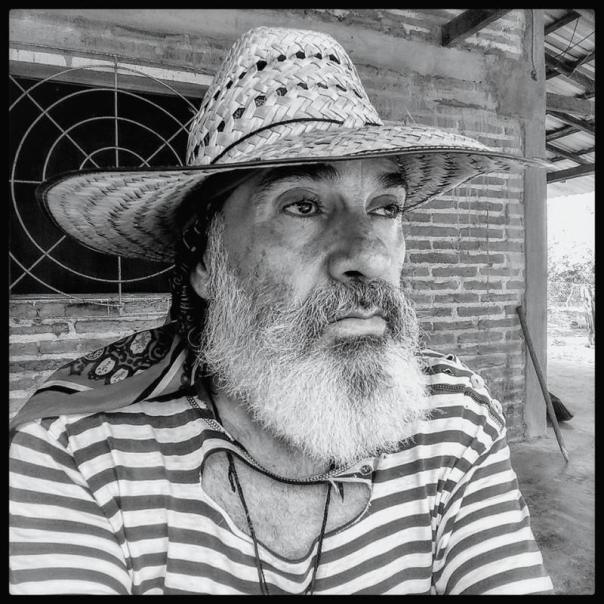
Sinar Corzo
Armed groups linked to local cacique groups have forcibly displaced thousands of indigenous people in municipalities and communities like Chenalhó, Chalchihuitán, Aldama and Chavajeval. And they have generated violence in places like Yajalón. Terror reigns there. Public officials at different levels protect them. Their origins are different an they answer to different interests. In some cases, these groups are the successors of the paramilitaries born from the internal armed conflict. In other cases, they are the creation of local cacique groups. They are members of various political parties. In the administration of Manuel Velasco, as well as in the current one of the Morena member Rutilio Escandón, they have been indifferent to the humanitarian crisis of forced displacements. They have tried to manage and minimize the conflicts, without solving them.
This violence is not a fortuitous event. It comes from the nature of the structure of political power in Chiapas. It is an intrinsic part of its functioning. Here are two examples, among many more. The state’s new attorney general of justice, Jorge Luis Llaven Abarca, is the one responsible for several cases of human rights violations, such as arbitrary detentions and acts of torture committed when he was a delegate of the Attorney General of the Republic and as the head of the Office of Special Prosecutor Against Organized Crime, of the then Attorney General of Justice of Chiapas. Recommendations from the CNDH, such as [Case Number] 26/2002, document it. The new superior auditor, José Uriel Estrada Martínez, was in prison in 2006 after being accused of participating in the torture and execution of the campesino leader Reyes Penagos Martínez.
Many of the surnames that dominate Chiapas politics today are the same ones that decades ago encamped in that state. They are the heirs of the old finqueros (estate owners), now converted into entrepreneurs under the protection of public administration. They re-emerged from the coup that the armed uprising gave them in 1994, first from the hand of the PRD and then from the Green Party and, now, from their local transmutation into Morena. Others are the product of a new generation of politicians. This is the case of Morena’s senators, coming from the ranks of the PVEM (Green Party). Sasil de León is the daughter of Oscar de León González, who arrived in Chiapas in 1994, and founded the Unidad Nacional Lombardista (National Lombardist Unity, Unal), a management and shock group, tightly linked to former governor Julio César Ruiz Ferro, dedicated to fighting Zapatismo. And Eduardo Ramírez de Aguilar, a political operator of former governor Manuel Velasco, a key figure in recruiting the worst indigenous cacique groups linked to the PRI into the ranks of the Green Party [PVEM].
These are just a few of the pieces of the new Chiapas jigsaw puzzle in the 4T (Fourth Transformation). As the classic said, there’s even more…
———————————————–
Originally Published in Spanish by La Jornada
Tuesday, January 22, 2019
https://www.jornada.com.mx/2019/01/22/opinion/014a1pol
Re-Published with English interpretation by the Chiapas Support Committee
Venezuela: gunboat democracy
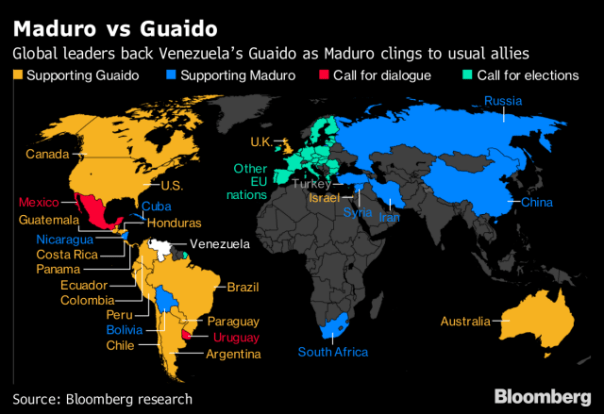
Venezuela allegiances around the world. Bloomberg.com
By: Luis Hernández Navarro
It is false that there are two presidents in Venezuela. There is only one and his name is Nicolas Maduro. On May 20, 2018 he was elected in free, transparent and trustworthy elections, in which 16 political parties intervened. Six candidates participated and he harvested more than 6,248,000 [votes], equivalent to more than 67 percent of the votes.
On that occasion, a sector of the opposition, made up of three political parties (Acción Democrática, Voluntad Popular and Primero Justicia), called for abstention. However, no presidential candidate impugned the results. No evidence or concrete denunciations of fraud were presented. 18 audits were performed on the electoral system.
The electoral system, with which the May 20, 2018 elections were held, is the same one that was used in the parliamentary elections of December 2015, in which the Venezuelan opposition won. That system guarantees the principles of “one elector, one vote.” The voting machine is only unlocked with fingerprints.
The process was accompanied by more than 150 people, among them 14 electoral commissions from eight countries; two technical electoral missions; 18 journalists from different parts of the world; a euro-parliamentarian and a technical-electoral delegation from Russian Central Electoral.
Nevertheless, last January 25, they attempted a coup d’etat (State coup) hatched from Washington. Juan Guaido, president of the National Assembly, declared himself “president in charge” of Venezuela. The figure of “president in charge” does not exist is in the laws of that country.
It is not the first occasion on which the Venezuelan opposition tests a coup to try to take power. Ever since Hugo Chávez won 20 years ago (1998), it has repeatedly and systematically sought to take power, despite the impossibility of winning electorally. The same National Assembly Nacional over which Guaido now presides has tried it unsuccessfully since 2016.
Donald Trump immediately recognized the White House’s straw man (Guaido). And, so that no doubts would remain about his intentions, US Secretary of State, Mike Pompeo, designated the “hawk” Elliot Abrams as his representative in Venezuela. Well known in America, Abrams is a professional in the orchestration of State coups and military invasions. He efficiently promoted and covered up massacres in El Salvador and Nicaragua. He moved the threads behind Iran-contra operation. He was condemned for the sale of illegal weapons to finance the Nicaraguan contras during the Sandinista revolution.
The naming of a government was justified on the alters of the struggle for democracy and human rights. It’s a curious Venezuelan “dictatorship” in which multiple opposition parties operate, call mobilizations, own communications media that say things inadmissible in Western democracies and, even, call for the overthrow of the democratically elected government.
Nevertheless, the truth behind the coup attempt is much simpler. The Standard & Poor’s rating agency divulged it without the heroic garb of great causes. “Guaido –the rating agency published– plans to introduce a new hydrocarbons law that established flexible fiscal and contractual terms for projects adapted to oil prices and the oil investment cycle.” He added: “A new hydrocarbons agency would be added to offer bidding rounds for projects in natural gas and conventional, heavy and extra heavy crude oil.
In his coup attempt, Guaido and the Venezuelan right count on the support of the United States (and the warmongering madness of Donald Trump), Israel, the Lima Group and some European countries, on a sector of the middle class and the Venezuelan oligarchy, and on the mass communications media. For his part, Nicolas Maduro has on his side the immense majority of the Venezuelan people, the Army (and the civic-military union), the republican institutions, the Unified Socialist Party of Venezuela and nations like Russia and China.
As one of the great analysts of the Venezuelan revolution points out, the journalist Marco Teruggi, Chavismo has a characteristic: “its levels of organization and politicization. An organizational fabric exists in the popular neighborhoods and rural areas. We’re talking about communal councils, communes, local committees of supply and production, communal markets, campesino councils, productive undertakings, Bolivarian militias, among other experiences. Chavismo has a territorial and identity dimension. The right has no organized presence there, and that’s why it resorts to armed and paid groups for creating focus groups that can add popular support.”
US gunboat democracy that opened the way to plunder and the colonial subjection of nations threatens to unleash a bloodbath in Venezuela. By all possible means, we must avoid that the attempted State coup succeeds. [1]
[1] As shown on the map above, Mexico and Uruguay disagree with the US position and have called for dialogue between the parties in Venezuela. Maduro has said he’s willing to hold a dialogue. Nevertheless, this week Trump froze Venezuela’s assets in the US (for example, Citgo).
———————————————————–
Originally Published in Spanish by La Jornada
Tuesday, January 29, 2019
https://www.jornada.com.mx/2019/01/29/opinion/017a1pol
Re-Published with English interpretation by the Chiapas Support Committee
The Marshall Plan and border imperialism
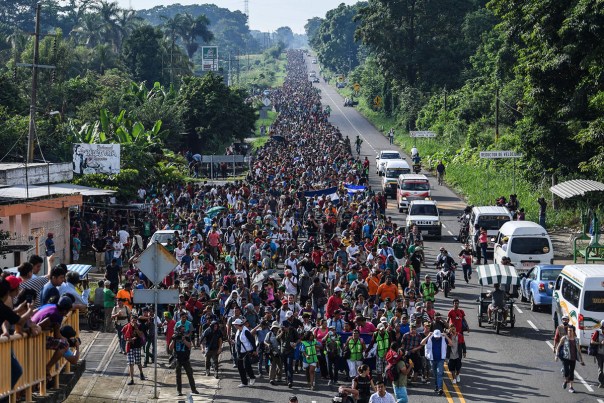
Central American Migrant Caravan.
By: Carlos Fazio
President Andrés Manuel López Obrador has outlined a policy of prudence and non-confrontation with the United States, attached to the doctrine and foreign policy principles established in Article 89 of the [Mexican] Constitution. In that sense, and facing the immigration crisis unleashed by the arrival of thousands of Hondurans in transit towards the northern neighbor in search of asylum, the Mexican president proposed to Donald Trump an investment program similar to the Marshall Plan for the reconstruction of devastated Europe after the Second World War.
Based on four axes: migration, trade, economic development and security, the plan is intended to be applied in states of the Mexican south-southeast and the so-called northern triangle of Central America (Honduras, El Salvador and Guatemala). Seeking to smooth over the current structural violence of capitalism (displacements forced by criminals / State terror), Mexico will destine 25 billion dollars over the next five years for the purpose of creating what Foreign Minister Marcelo Ebrard called a “zone of prosperity.”
To obtain the desired effects, López Obrador has designed the construction of a Maya Train (Tren Maya) on the Yucatán Peninsula, the activation of the Commercial and Railway Corridor on the Isthmus of Tehuantepec and the planting of one million hectares (2,470,000 acres) of timber and fruit trees, which would generate 400,000 jobs, besides other productive projects that will demand a workforce, with Central Americans included.
According to the State Department, Washington would contribute only 2.5 billion dollars, an amount that would not come from the treasury, but rather would be potential investments and loans from the business sector and multilateral banks, guaranteed by the Overseas Private Investments Corporation (OPIC), [1] a governmental financial institution that facilitates capital for “commercially viable” development projects. More debt, and nothing comparable to the 13 billion dollars (of that epoch) for the Marshall Plan!
López Obrador –who saw the Honduran migrant caravan as “strange” and “suspicious” on the eve of the US elections last November– has rejected the scheme the Trump administration proposed, known as “safe third country,” through which Mexico must accept thousands of Central Americans while US courts decide their fate; what it would mean, in fact, is establishing refugee camps in Mexico.
Since the launch of his electoral campaign in June 2015, Trump made immigration control on the southern border of the United States one of the principal axes of his bilateral policy with Mexico and with Central American countries. At the same time, he demagogically exploited the racist and xenophobic premise that millions of undocumented immigrants born in Mexico were murderers, drug traffickers and rapists (“bad hombres”), and also stealing jobs. In order to stop immigration he proposed constructing a “beautiful wall” and in his rallies you could hear: “build the wall” and “kill them all.”
But the militarization and the extension of a security wall along the 3,169-kilometer (1,954 miles) common border with Mexico are the continuation of Operation Guardian initiated in 1994 preventively by William Clinton (as an ominous complement to the North American Free Trade Agreement (NAFTA), who ordered the construction of 600 kilometers of walls, some 800 barriers and increased surveillance by means of armed helicopters, cutting-edge technology (motion detectors, electronic sensors and night vision equipment) and specialized police.
Since then, with his demonization and criminalization –and beyond Trump’s re-election zeal−, border imperialism has meant a lucrative business for military and security industries that provide the equipment and services for immigration control. With its extension: the neocolonialism of borders, applied now by Washington under the virtual imposition on Mexico of the scheme “safe third country” (or retention zone) in cities like Tijuana.
Strictly speaking, Trump’s negotiations with the government of Enrique Peña Nieto to transform Mexico into a center for immigration detention and asylum processing for natives of Honduras, El Salvador and Guatemala, began in May 2018 and were part of the renegotiation of the TLC.
It was never clear if the Stay in Mexico plan, uncovered by Trump via Twitter, included US funding, as occurs in other current models like that of Australia with Papua Nueva Guinea, of Germany with Austria and of the European Union with Turkey. It’s just that the “safe third country” concept refers to an exception to the right of asylum, and the term “safe” implies a country where human rights and the principle of non–refoulement (not forcing refugees or asylum seekers to return to a country where they will likely face persecution) will be respected, conditions that were not met in the Mexico of Peña Nieto.
On December 20, the United States Department of Homeland Security informed the Mexican Chancellery that, unilaterally and punitively, it would begin to “immediately” expel foreigners to the transit country. In other words, it forced Mexico to be the guardian of migrants that seek asylum in the border nation to the north, and Ebrard accepted it for “humanitarian reasons,” thus becoming an accomplice of Trump’s violations of the legislation of his country and of the law of international protection. So, to avoid a confrontation, somehow Mexico will pay for the “wall.”
[1] The Overseas Private Investments Corporation (OPIC) is the United States government’s development finance institution. It mobilizes private capital to help solve critical development challenges and, in doing so, advances the foreign policy of the United States and national security objectives. See comments in Wikipedia:
https://en.wikipedia.org/wiki/Overseas_Private_Investment_Corporation
———————————————————–
Originally Published in Spanish by La Jornada
Monday, December 31, 2018
https://www.jornada.com.mx/2018/12/31/opinion/014a1pol
Re-Published with English interpretation by the Chiapas Support Committee
EZLN: solidarity recognition

By: Gilberto López y Rivas
In light of the EZLN’s well-founded denunciations about the threats and risks that the mega-projects of the Fourth Transformation’s government represent and the violence that structurally accompanies this form of capitalist globalization, hundreds of distinguished personalities from Mexico and the world in the fields of scientific work, philosophy, sociology, anthropology, literature, arts, journalism and political activism subscribed to an unprecedented document of solidarity with the Zapatista Mayas and of categorical rejection to the “campaign of disinformation, lies and slander,” which our newspaper published on the front page.
Those who signed this text recognize the example of resistance, dignity, congruence and political creativity that the Zapatista struggle represents; they consider that their rebellion, “an event of great transcendence,” constituted “one of the first resounding reactions on a planetary level against neoliberal globalization.” They emphasize that the Zapatistas “are and continue being an expression of the original peoples’ legitimate struggle against the domination and contempt suffered for centuries and even today, as well as in favor of their rights to autonomy.”
At the other equidistant pole from the EZLN’s critics, who condemn it to a supposed autarchic isolation in which they experience the “decline” of their movement, the signers identify the popular self-government established in their territories as an “example of real and radical democracy, worthy of inspiring the peoples of the world and of being studied in all the departments of social science on the planet. The construction of Zapatista autonomy represents for us, the constant, honest and critical search for an alternative and emancipating project of highest importance when facing the challenges of a world that seems to be increasingly sinking into a profound crisis, at once economic, social, political, ecological and human.”
Because of this evidence, the signers expressed “their concern for the situation that the Zapatista communities and the indigenous peoples of Mexico face, upon their territories and communities being attacked by mining, tourist, agro-industrial, infrastructure and other projects, like the National Indigenous Congress (Congreso Nacional Indígena, CNI) and the Indigenous Government Council (Concejo Indígena de Gobierno, CIG) have denounced. At this time, we are especially concerned about the large projects the new Mexican government promotes, like the Trans-Isthmus Corridor, the million hectares of commercial trees and the so-called Maya Train, recently denounced as a humiliation and a provocation by subcomandante Moisés, the EZLN’s spokesperson, since it seriously affects the territories of the Maya peoples that inhabit the Mexican southeast.” They oppose their “devastating environmental effects,” the mass tourism development that it will trigger, the haste to start the work and the violation of the rights to a “real, prior, free and informed consultation, as Convention 169 of the ILO and the United Nations Declaration on Indigenous Peoples establish. It seems very serious to us that international commitments assumed by Mexico are violated like that (…) We share the total rejection that the EZLN expressed against these and other large projects that seriously affect the autonomous territories and ways of life of the peoples.”
The document warns of and denounces: “in advance any aggression against the Zapatista communities, be it directly on the part of the Mexican State or through groups and organizations of armed or unarmed ‘civilians’. We place responsibility on the Mexican government for any confrontation that may emerge within the context of the implementation of these megaprojects, which correspond to a model already saturate with unsustainable and devastating ‘development’, decided from heights of power and shamelessly violating the rights of the original peoples.” The signers make an appeal: “people of good heart” to “be attentive to the risk of aggressions against the Zapatistas and the original peoples of Mexico.”
This precautionary warning is based on a global systemic tendency. The mega-projects are imposed by means of different armed actors: armies, police, security agencies, paramilitary groups, drug traffickers and counterinsurgency devices that in Chiapas have not stopped operating since 1994. The country’s militarization process, which will increase with the National Guard, is functional to the corporate neoliberalism that William Robinson specifically characterizes as “militarized accumulation.” Sidestepping the articulation between neoliberal capitalism and State violence is a grave political error on the part of Zapatismo’s detractors.
You can sign onto the international solidarity letter here.
https://docs.google.com/forms/d/e/1FAIpQLSfphtQU56sWy2cm6yjgNjRpS0YYzbHYyzF7W2ztXZE0Sd-hcw/viewform
En español en Enlace Zapatista:
———————————————————-
Originally Published in Spanish by La Jornada
Friday, January 25, 2019
https://www.jornada.com.mx/2019/01/25/opinion/017a1pol
Re-Published with English interpretation by the Chiapas Support Committee
EZLN: 25 years of anticapitalist struggle

Gilberto López Y Rivas
The 25th anniversary of the Zapatista Rebellion on January 1, 1994 was marked by a singular demonstration of the will of anti-capitalist struggle that has characterized the EZLN during these years. Five thousand milicianos and milicianas in disciplined formation listened with enthusiasm to the speech of the political-military organization’s spokesperson, subcomandante insurgente Moisés, in which he sharply reiterated his opposition to the current government, and revealed a virulent campaign of slander, disqualifications and, even, threats of using paramilitary force against the Zapatista Mayas.
It should be noted that the anti-Zapatista campaigns date from the first days of the uprising, and reappear recurrently in certain political contexts and according to the needs of power groups. We remember the diatribes of Octavio Paz criticizing the inopportuneness of the rebellion and the damages that it would cause the country; or the writings of Héctor Aguilar Camín and his group that is made up of representatives of the learned right in its conservative reaction to the armed neo-Zapatista option. Arturo Warman, on the other hand, as a Salinas ideologue, would deny the national character of the indigenous rebels, and, therefore, the authorship of the movement, resorting to the thesis of subjects managed by other actors: “It doesn’t seem to me a movement of the poor but rather the manipulation of poverty, of isolation (…) It is not an indigenous movement, it is a political-military project implanted among the Indians but without representing them (…) We must not confuse: it is not the voice of the Indians, simply some of them are present as in all las expressions of national life.” (Chiapas hoy. La Jornada, 16/01/94.)
At the same time, Mario Vargas Llosa, with the aid of literary assistants working with information from the Mexican police services, contribute to the creation of the myth of indigenous peoples as vulgar “experimental rabbits” that follow the “staging” of the insurgent group’s visible mestizo. Conjecture about the exteriority of the insurrection and the everlasting character of the indigenous as manipulated subject was used by the Army and the Mexican intelligence services, and by “analysts” related to the mass media, to deny indigenous leadership in the origin and development of the Zapatista movement.
Thus, the racist interpretation of personifying in the then subcomandante insurgente Marcos, now Galeano, was installed early on, which in reality has been and is the organizational and political result of a complex and unprecedented indigenous movement that emerged from the bowels of the Lacandón Jungle. The approach repeated over and over again by the gamut of anti-Zapatismo doesn’t recognize that the EZLN is almost entirely made up by indigenous peoples of the different ethnicities of Mayan origin, and it considers that any initiative, declaration or program comes from Marcos-Galeano, against whom attacks and reproaches are launched that cover the entire political spectrum and social psychopathy.
While there is a history of foul designations and all kinds of declarative excesses against Zapatismo during these 25 years, now massively amplified by the social networks and cyberspace, it would not be unreasonable to think about the active participation of state actors in this unusual anti-Zapatista escalation, which President Andres Manuel López Obrador doesn’t seem to control, but rather to tolerate. During these two weeks he has not said anything about the media war, which included the opportunist and irresponsible intrusion of a doctor that threatened to use paramilitary forces in 28 states, which, according to him, would be under his command, “in defense of AMLO” and “against the EZLN.”
So, the unusual miliciano parade and the 25th anniversary harangue constitute the EZLN’s energetic call to attention about the risk to life, territory and self-government involved in the development projects and militarization policies of the current government concretized in the National Guard. They express the unwavering determination to resist the “bad government,” as they have for these 25 years. The National Indigenous Congress–Indigenous Government Council declared: “We warn the bad governments that any aggression against (the EZLN) is also against the CNI–CIG, therefore we make a call to the support networks throughout the country and to the networks of resistance and rebellion in Mexico and in the world to be attentive and organized to act jointly and to construct a world in which we are all able to live.”
Many are the interpretations about the loneliness of the Zapatista rebels alluded to by Sup Moisés after years of fighting a countercurrent. Nevertheless, the solidarity and support for these indefatigable insurgent dream weavers is a provable fact, even in the planetary ambit. The January 1994 slogan of “you are not alone!” continues more valid than ever.
———————————————————–
Originally Published in Spanish by La Jornada
Friday, January 11, 2019
https://www.jornada.com.mx/2019/01/11/opinion/020a1pol
Re-Published with English interpretation by the Chiapas Support Committee
Chiapas communities maintain resistance against mining concessions
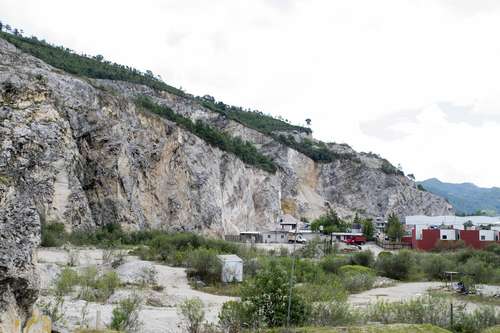
For more than three decades petrous material has been extracted from the Salsipuedes open pit mine, to the southeast of San Cristóbal de Las Casas. The deposit has been expanded to occupy a hundred hectares. Specialists have denounced that the nearby wetlands, declared a natural protected area in 2008, are irreversibly drying up due to the loss of seven of the 25 wells in the zone. Photo: Oscar León
By: Elio Henríquez
San Cristóbal de Las Casas, Chiapas
The communities’ resistance has achieved stopping the operation of 111 mines authorized in Chiapas, which encompass around a million hectares (2.47 million acres), 16 percent of the state’s territory.
An emblematic case is the barite mine in the Grecia ejido, municipality of Chicomuselo, in the highlands, where the (anti-mining) activist Mariano Abarca Roblero was murdered in November 2009. It is alleged that the Canadian mining company Black Fire was involved in this still-unpunished murder.
“Mining is an activity of death that only leaves crumbs and destruction. Those who take away the wealth are the mining companies, so we will never permit them to exploit the deposits that exist in our territories,” warned Luis Rojas Nomura of the June 20 Popular Front (Frente Popular 20 de Junio), with a presence on the state’s coast.
Opposition to the projects has taken place principally in the municipalities of Escuintla, Acacoyagua and Chicomuselo, where the mining companies have abandoned exploration or extraction projects.
“In Chiapas there are 111 concessions for the extraction of gold, silver, titanium and barite, and other minerals, but all these projects are full of cloudiness, anomalies and a lack of information in the communities,” said Libertad Díaz Vera, from the land and territory defense area of the civilian organization Otros Mundos, a member of the Mexican Network of Those Affected by Mining (Rema).
Thanks to the organization of residents of different communities, he said in an interview, there isn’t any mine operating in any of the areas with concessions.
He pointed out that work at the El Bambú deposit, on the Nueva Francia ejido, in the municipality of Escuintla, is suspended, because of the opposition of the residents “conscious of the destruction and contamination that it would occasion.”
The Casas Viejas project has not gone beyond the exploration phase faced with the struggle of the Popular Front in Defense of the Soconusco (an area of Chiapas on the Pacific Coast). However, Díaz Vera pointed out that there were still grave environmental damages.
“The workers removed material. After denouncing them to the Federal Prosecutor for Environmental Protection (Profepa, its Spanish acronym), the people decided not to allow the passage of the trucks and machinery until the company reported about this situation.”
Residents of several communities in Acacoyagua, in the Soconusco, installed a surveillance camp around the mine and after two years “it has been shown that the project in that region is murky and has contaminated.
“In addition to causing skin diseases, there has been an increase in cancer cases; that’s why they have asked the National Water Commission and the Ministry of Health to carry out the corresponding studies to verify the information, but they have refused,” Díaz Vera said.
He added that the residents monitor the entry and exit of machines from the encampments, and “at times have asked the truck drivers to show them what material they carry.”
Luis Rojas Nomura, a representative of the June 20 Popular Front, expressed that ejidos, communal wealth commissions and campesinos “are firm in not permitting mining exploitation, because that is agreed to in the minutes (of assemblies).”
He commented that just in Acacoyagua there are 13 concessions that encompass more than 36,000 hectares and there are 8 in Escuintla, which would affect their water, because the Cintalapa River runs through there.
In the La Libertad ejido, he added: “they destroyed the environment with the Cristina mine. Definitively, mining will cause us problems. Before there was the idea that it would bring progress and development, but it’s a lie, because we already saw what was destroyed. They took away tons and tons of titanium and left our roads destroyed.”
He said that the Cristina del Male company: “offered that if we accepted the passage of machines and dump trucks, they would give us schools, roads, trails, a health center and 50,000 pesos for the ejido. There was never anything and they took away 49,000 tons at 6,000 and 9,000 pesos for each ton in 2015.
“We decided to undertake the resistance so as not to permit the mining companies to take possession of the territories we have in the northern part of Acacoyagua, because the communities of Los Amates, Acacoyagua, Jalapa, La Cadena, San Marcos and others would be affected. It would cause us irreversible damage.”
Rojas Nomura said that if the operation of mines is allowed: “the natural reserves of El Triunfo and La Encrucijada will be affected.”
Meanwhile, Díaz Vera warned that the arrival of Andrés Manuel López Obrador in the Presidency of the Republic is cause for concern to the towns where there are mining concessions.
“The welfare project, as he calls it, includes mining and the Mining Fund, which has existed since 2014, and the idea is to have more Canadian investment. That’s what he told (United States) President Donald Trump,” he said.
With the trust, he added, he intends to share a part of the profits among the poor. That “is giving money in exchange for health. He also talks about green or sustainable mining; however, the damages are in sight and no fund is going to solve them.”
He warned that there will be “more resistance because we don’t believe in sustainable mining or in the Mining Fund. It worries us that instead of doing justice to the affected families, more investment is requested.”
———————————————————————–
Originally Published in Spanish by La Jornada
Monday, December 24, 2018
https://www.jornada.com.mx/2018/12/24/estados/024n1est
Re-Published with English interpretation by the Chiapas Support Committee
 Chiapas Support Committee