Chiapas Support Committee
Home of the Compañero Manuel blog on zapatistas & mexico
Armed group in Chenalhó keeps a community under siege, and murders several residents
By: Ángeles Mariscal
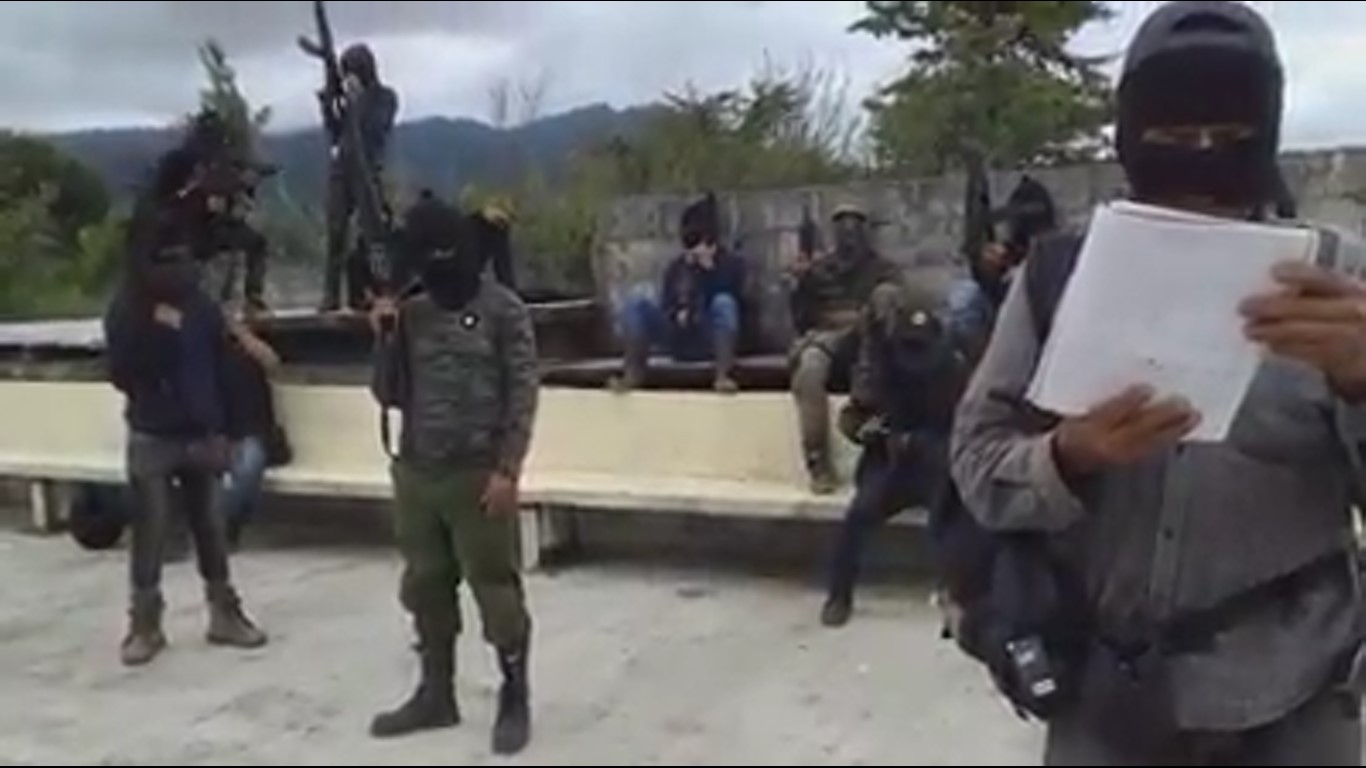
Since Thursday, September 29, an armed group of approximately 60 people in Santa Martha, Chenalhó, has kept the Atzamiló community, located within the same ejido, under siege; it killed at least four people, denounced residents.
The events occurred because at the beginning of this year, in Santa Martha, the population decided to sign a peace and disarmament agreement, which led them to expel from Santa Martha those who make up an armed group that keeps the population of the neighboring municipality of Aldama under siege.
According to the version of Santa Martha residents, this group lowered the level of attacks on Aldama, but keep those who expelled them under threat, and attempt to recover several houses and lands with the use of force.
In this context, last Thursday, September 29, around 10 in the morning, they arrived in the lands of the Atzamiló community to seize cultivation areas. Given the facts, the Ejido Commissioner of Santa Martha, Jesús Jiménez Velasco, went to the place where the armed group attacked, without being injured.
They also shot at the population, burning houses and land with crops on it. Relatives of an elderly man named Juan Antonio Pérez reported that he and another young man died as a result of the shooting. They also explained that Juan Antonio’s wife had to flee with her grandchildren to the nearby mountains.
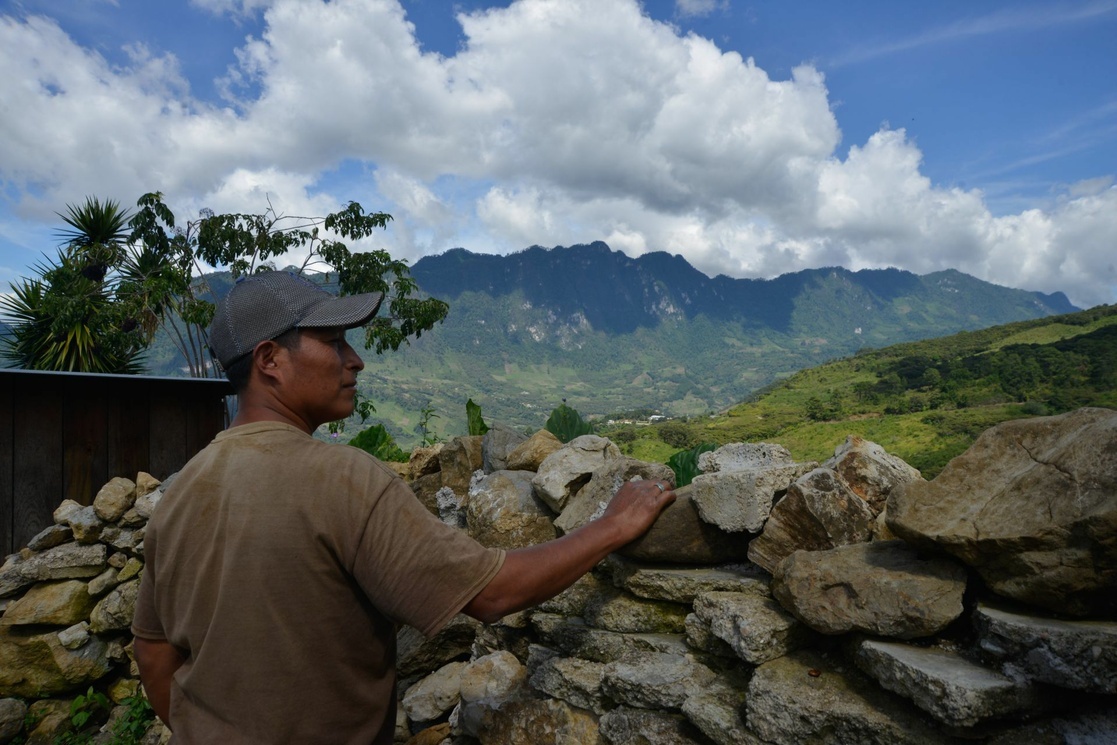
Interviewed via telephone, the Ejido Commissioner, Jesús Jiménez Velasco, said that he fled from the area after the attack given the risk that they would assassinate him: “I left my community because of fear,” he explained. Even before fleeing, the Commissioner had reported the death of a campesino and two more injured by firearms.
Hours later, around eight o’clock at night, neighbors of Atzamiló reported that a state government helicopter flew over the area and was also hit by shots from this community, where the armed group was located.
On Friday afternoon, after a day of being under siege, inhabitants of Atzamiló managed to communicate to denounce that some of them are hidden in the mountains, because the armed group -they say about 60 people- has control of the community and the accesses to the area and to Santa Martha, located several kilometers ahead. They also denounced that there are four people dead and several injured.
They explained that the access roads to that area are blocked by their aggressors, and that authorities of the Chiapas government and the National Guard have not been able to enter area.
“This group wants to continue attacking; they are the ones who attack Aldama. They want to continue the violence; we said no more and that’s why they are attacking us now. We ask that the police arrive because there are people injured and killed by the shots,” explained one of the residents of Santa Martha, who managed to reach the city of San Cristóbal de Las Casas.
The State’s Attorney General (FGE) reported that he opened an investigation notebook for the homicide of Alfredo “N”, “after the events that occurred in the Santa Martha sector, Chenalhó municipality, on the afternoon of Thursday, September 29 of this year.” The agency has not reported on the attacks after the first homicide.

Originally Published in Spanish by Chiapas Paralelo, Friday, September 30, 2022, https://www.chiapasparalelo.com/noticias/chiapas/2022/09/grupo-armado-de-chenalho-sitia-comunidad-asesina-a-varios-pobladores/ and Re-Published with English interpretation by the Chiapas Support Committee
Mexico III. Father Marcelo: “The earth groans the pains of childbirth”
Raúl Zibechi interviews Father Marcelo

By: Raúl Zibechi
“We are living something similar to the times of Jesus. The Romans had no mercy. The narco has no mercy,” says Father Marcelo Pérez, sitting in the dining room of the parish of Our Lady of Guadalupe, in San Cristóbal de las Casas, Chiapas.
The church rises atop a mound that is reached snorting down the 79 steps uphill. The reward is a great panoramic view of wooded mountains above the white colonial city. In between, as if articulating the natural mantle and the urban stones, the church is surrounded by a landscaped square where we find Father Marcelo, always surrounded by people who consult him and ask him for advice.
Marcelo was educated in the Diocese of Tuxtla Gutiérrez, which he defines as “very conservative,” but was sent to Chenalhó in 2001, where his life took a turn. “Acteal gave me light,” he says with firmness. The Acteal Massacre, on December 22, 1997, which left 45 Tsotsils murdered while they were praying at the hands of paramilitaries formed to fight the EZLN, continue having a brutal presence in the municipality and in all Chiapas.
“I was afraid but I could see that in Acteal the people are free. I am a pastor but the sheep are very brave. I joined with them to denounce the impunity and to struggle against the Rural Cities project of the Juan Sabines government,” the father continues, in a story that takes him from the years of formation to the commitment to his people.
He rejects being inspired by Liberation Theology and he recites the four pillars of his thinking and way of doing: the reality that we confront; the word of God before it; the position of the Church; and the commitments that must be assumed. “Talking about Liberation Theology is inserting yourself into conflicts,” he assures pragmatically.
Then he returns to his theme: “Acteal converted me.” The pain that is born when he listens to the survivors, to María, to Zenaida, to women and men who lost their whole family. “How to tell them that God loves them,” the priest exclaims. That’s why the biblical word doesn’t inspire him, or in the theory that is born from sacred text, rather he takes another direction, “to cry with those who cry, to suffer with those who suffer” and, especially, “to walk with them.”
The path is not a change of parties
The words roll over the table with a simple lunch. We are enveloped by his enthusiasm and the sincerity of his pain. “Survivors know how to read, there’s the light.” It is impossible not to forget very similar words spoken decades ago by the murdered Monsignor Oscar Romero, who expressed himself in a very similar way to Chenalhó’s father: “The blood of Rutilio Grande converted me,” he said in reference to the martyr of the Salvadoran peasant movement.
The conversion of Father Marcelo led him to walk with the campesino people. Not only did he accompany the victims but he also denounced the material and intellectual authors of the violence, which caused persecution on the part of the Chiapas government. “In 2008, they set fire to the parish house, then damaged the spark plugs and tires of my car, and on December 12, 2010, two young men beat me up in the street,” he says calmly.
He was close to death when they connected a cable to the vehicle’s gasoline tank, which made him accept his transfer to Simojovel, where he arrived on August 5, 2011. “People started coming to tell their pains, the deaths. There I discovered that the criminals have agreements with the authorities and complaints provoked threats.”
On March 8, he organized a women’s march against the sale of drugs that was done at the side of the municipal presidency. They accused him of being a guerrilla and even a Zapatista, they put a price on his life until in 2014 the municipality and the PRI attempted to mobilize the population against him, with very little popular following.
An inflection point was the pilgrimage of 15,000 people in October denouncing the Gómez Domínguez family, who entered on the scene through sicarios who carried out attempts and a media campaign against Father Marcelo, which led them to offer one million pesos for the head of the parish priest of Simojovel (https://bit.ly/3DIAWbp).
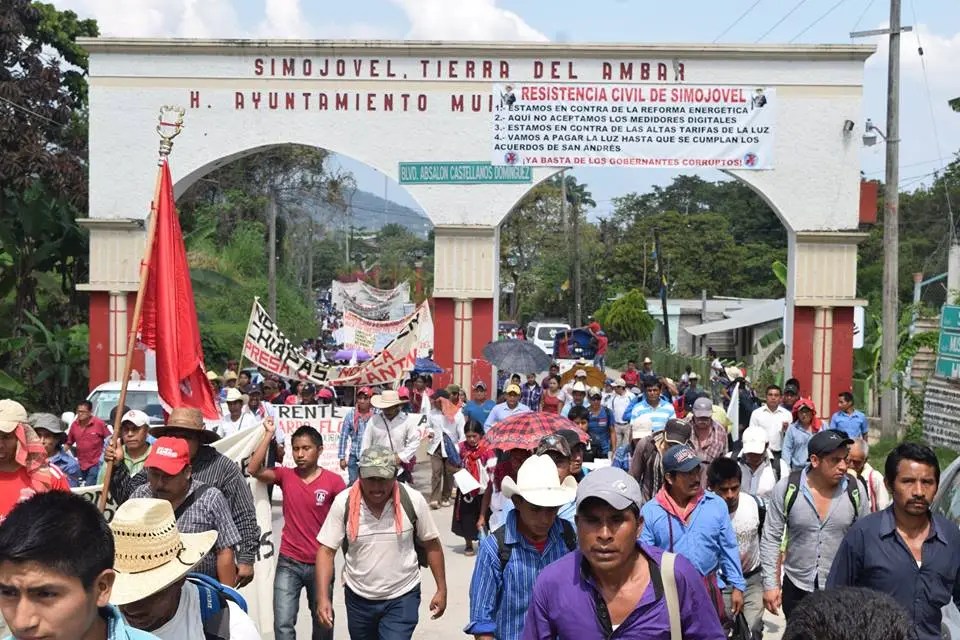
In the cited communication, Pueblo Creyente (Believing People, or People of Faith) conclude that change doesn’t come from a party “but rather from civil society, Native peoples, the poor and the middle class,” and it denounces that Chiapas “is approaching a social explosion.”
Pueblo Creyente’s form of action is to convoke marches/processions, which tens of thousands of people of faith attend, as well as denouncing authorities and politicians. It achieved that the Gómez Domínguez brothers didn’t win the municipal elections but it resulted in a defamation complaint to the PGR [2], although he recognizes that “the path is not changing parties.”
In the years that followed there were sit-ins of the population and assassinations of organized crime, always protected by the authorities. “On December 12, 2017, I had the saddest Mass of my life, for the death by cold and hunger of two elderly people.” The forced displacement of entire communities continues, more violence and deaths, bombs and shootings. But the population continued to resist.
In May 2017, the Indigenous Movement of Zoque People of Faith in Defense of Life and Territory (ZODEVITE, its Spanish acronym) was created and in June it held a mass march/procession to Tuxtla Gutiérrez against concessions for mining and hydrocarbons, since the Mexican government sought to give concessions to foreign companies for more than 80,000 hectares affecting more than 40 ejidos and communities.
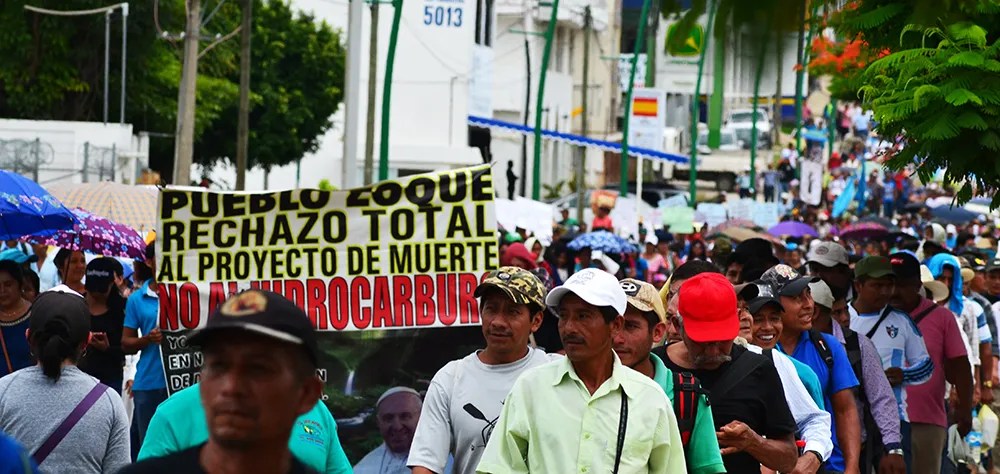
The mobilization was a new defeat of the plans of above, but the violence continues. During 2021, more than 200 deaths crime were committed in Pantelhó by organized crime, in a municipality of just 8.600 inhabitants in the Chiapas Highlands.
On July 3, Mario Santiz López was murdered. On July 5, 2021, they murdered Simón Pedro Pérez López, a catechist and former president of the board of directors of Civil Society Las Abejas of Acteal, who promoted non-violence. He was murdered for the crime of accompanying the Tsotsil communities of Pantellhó. At the wake Marcelo accused the “narco-municipal council,” in other words, the alliance between the State and organized crime.
Although he asked the communities “not to fall into the temptation of revenge,” on July 10 a statement came out from the armed group “El Machete” created by the communities as self-defense in the face of violence. On July 26, 2021, thousands of hooded people took the municipal seat, 19 men were shown in the central square with their hands handcuffed for having links to organized crime.
Although it was a collective community action (an outburst from below), which apparently was not called by El Machete, the Chiapas Attorney General’s Office issued an arrest warrant against Father Marcelo for the disappearance of 19 people in Pantelhó. They did not care that the priest was in another place that day, in Simojovel, that he always called for peace and that he arrived the day afterwards to calm the spirits.
It’s the life of the people, not mine
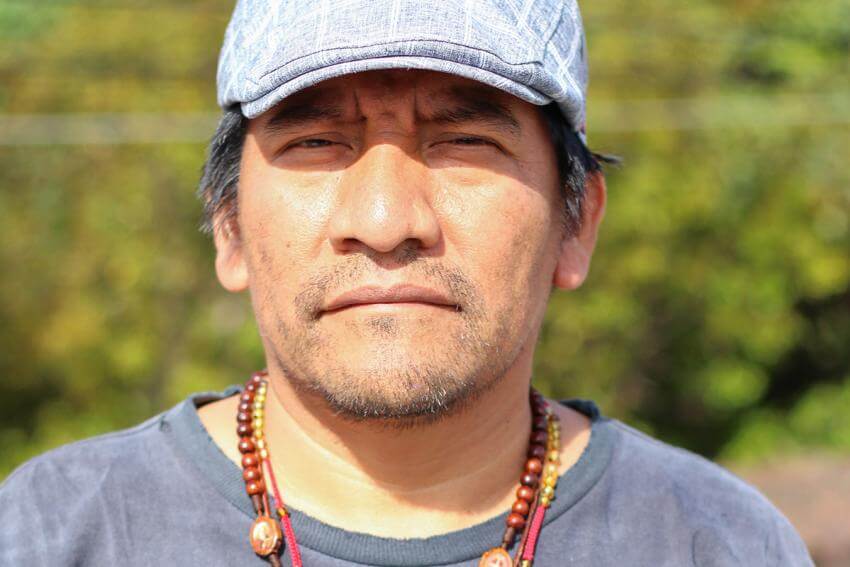
The arrest warrant remains in force. In October [2021] he was transferred to the church of Guadalupe, where he now explains who is provoking violence and death. “The authorities are accomplices of the narco. They have sought a way to silence us, through death threats and defamation on social networks. You feel scared, but that doesn’t stop me. “
In his analysis of the situation, this indigenous Tsotsil who has been a priest for 20 yeas in Chiapas maintains that it’s not possible to stop the violence because the police are sicarios (hit men), because “we have a narco-State.” He is convinced that the violence is going to get worse and that later a certain calm will come, but at the cost of a lot of blood. “May it be the blood of priests and bishops, and not of the people.”
He maintains that we are in the middle of the storm, which is not solved with more storm but by looking for other paths. He distrusts the powers and the powerful: “If they kill me, it’s a scandal; but if they kill a peasant nothing happens. If it helps to give my life, here I am,” he concludes.
Before saying goodbye, he appeals to a biblical phrase, assuring that the pains we go through are “the groans of childbirth”. He puts his principles and values ahead of his own life: “I don’t accept bodyguards. It’s against the Gospel for someone to die in order for me to live. It is not my life but that of the people.” At the end of the final greeting, he confesses: “I don’t trust the police.”

Originally Published in Spanish by Desinformemonos, Monday, September 26, 2022, https://desinformemonos.org/mexico-iii-padre-marcelo-la-tierra-gime-dolores-de-parto/ and Re-Published with English interpretation by the Chiapas Support Committee
Ayotzinapa, the Time Tunnel
By: Luis Hernández Navarro
It seems like a trip through the Time Tunnel, back to the presidency of Enrique Peña Nieto. The EjércitoMX.Noticias tweet reports: Here I leave you the interview with General José Rodrígues Pérez, investigated for the Ayotzinapa case. In front of the camera, in the facilities of Military Camp No. 1, as if he were not in prison, the Brigadier appears, talking with journalist Jorge Fernández Menéndez for a radio program (https://bit.ly/3BO0Qrw).
Jorge Fernández, the military interviewer, is one of the most unconditional propagandists of “the historical truth.” The regimes of the PRI and the PAN made use of his pen to justify the most heinous crimes and filter their versions of the worst atrocities, Ayotzinapa included. His fake documentary, La noche de Iguala (The night of Iguala) is publicity garbage, not only to cover up what happened in Guerrero eight years ago, but also to criminalize the rural teachers’ colleges (normales, in Spanish). His cinematic pamphlet exudes the unmistakable stench of the pipes of power. It is the direct heir of ¡El Móndrigo!,cooked up in the basements of the intelligence services to discredit the student movement of 1968. (https://bit.ly/3LG3d4p).
September 26th and 27th of 2014, now-retired General Rodríguez Pérez held the rank of colonel and led the 27th Infantry Battalion in Iguala, with a long history of counterinsurgency. According to the undersecretary of the Interior, Alejandro Encinas, he had given, among other orders, the one to murder and disappear six students from Ayotzinapa, who were being held alive in a warehouse, four days after the attack on the normalistas (teachers college students).
The general was not arrested. He turned himself in voluntarily (“presented” himself, he says) on September 21st. He is accused of organized crime, not homicide or forced disappearance. In one of the tweets disseminating the interview, @Sedenanoticias warns: Don’t be fooled, the military did not intervene in the disappearance of the normalistas, as Alejandro Encinas wants to make us believe (original typos respected here.) The military man lashes out against the undersecretary: “what they did was vile. It was cowardly, to have spoken outside of the law,” the person states.
The institution is supporting me, the general explains. It’s true. Sedena [1] went all out to protect the ex-commander. It not only allowed the journalist into Military Camp 1 to interview him, eliciting his answers, but also, broadcast excerpts of the program. In addition, along with the military public defender’s office, he added heavyweight lawyers, Alejandro Robledo y César González Hernández, pro bono to his defense, who have just come out of loud legal disputes with the prosecutor Alejandro Gertz Manero.
On August 18th, the undersecretary announced arrest warrants against 20 soldiers related to the night of Iguala. However, so far, only three more have been arrested, in addition to General Rodríguez. Second Lieutenant Fabián Alejandro Pirita Ochoa and the Infantry soldier Eduardo Mota Esquivel. The other, Captain Jose Martinez Crespo, was already in custody and was served with a second arrest warrant.
The Armed Forces’ defense of General Rodríguez and the rest of the military personnel implicated in the forced disappearance of the 43 Ayotzinapa students and in the invention of the “historical truth” is an indicator of its refusal to get to the bottom of the events of the night in Iguala. Their refusal to share the information that they have about what happened, and their refusal to respond to the requests for documentation to clarify the crime against humanity creates tremendous skepticism about the future of the investigation.
This, despite the fact that the report of the Commission for Truth and Access to Justice points out how the military from the 27th Infantry Battalion of Iguala not only did nothing to prevent it and falsified what happened, but also murdered and disappeared some of the 43 youths (https://bit.ly/3C7GIlw).
The report, an investigation made by Encinas, with the powers given to him by decree, has already been submitted to the Special Prosecutor’s Office for the Ayotzinapa Case. The latter should be the one to follow-up, prosecute the investigation and bring the subsequent criminal proceedings.
However, this has not been the case. It was the Attorney General for the Republic and NOT the Special Prosecutor’s Office for the Ayotzinapa Case, that issued the accusation against Murillo Karam. Additionally, inexplicably, it reversed course, to cancel 21 arrest warrants, 16 for organized crime and forced disappearance, which had already been issued for military commanders, and members of the 27th and 41st Infantry Battalions.
In what would seem another return to the past, Vidulfo Rosales, lawyer for the Ayotzinapa families, is being subjected to an insulting campaign of attacks very similar to that which he experienced in the time of Peña Nieto. (https://bit.ly/3fqk1QU y https://bit.ly/3RnFKGs) All for defending the victims and seeking to explain the behavior of the outraged rural normalistas prior to trying them.
According to him, the armed forces are hermetic, closed, and unwilling to contribute to the clarification of this case. They are reluctant to go to the courts. They are not inclined to have mechanisms of judicial control over them. To go to the judges, to give an account of whether they participated or not. There is no such thing. This is our concern. If the armed forces are in this position, it is going to be very difficult for us to come to know the truth(https://bit.ly/3BN8HWr). If this hypothesis is confirmed, the trip to the Time Tunnel will be more than a metaphor.
[1] Sedena is the acronym for the Secretaría de la Defensa Nacional, Mexico’s Defense Department.
Originally Published in Spanish by La Jornada, Tuesday, September 27, 2022, https://www.jornada.com.mx/2022/09/27/opinion/014a2pol/ Translation by Schools for Chiapas and Re-Published by the Chiapas Support Committee
Threat of mining activities without prior consultation in Chicomuselo, Chiapas
By: Chiapas Paralelo
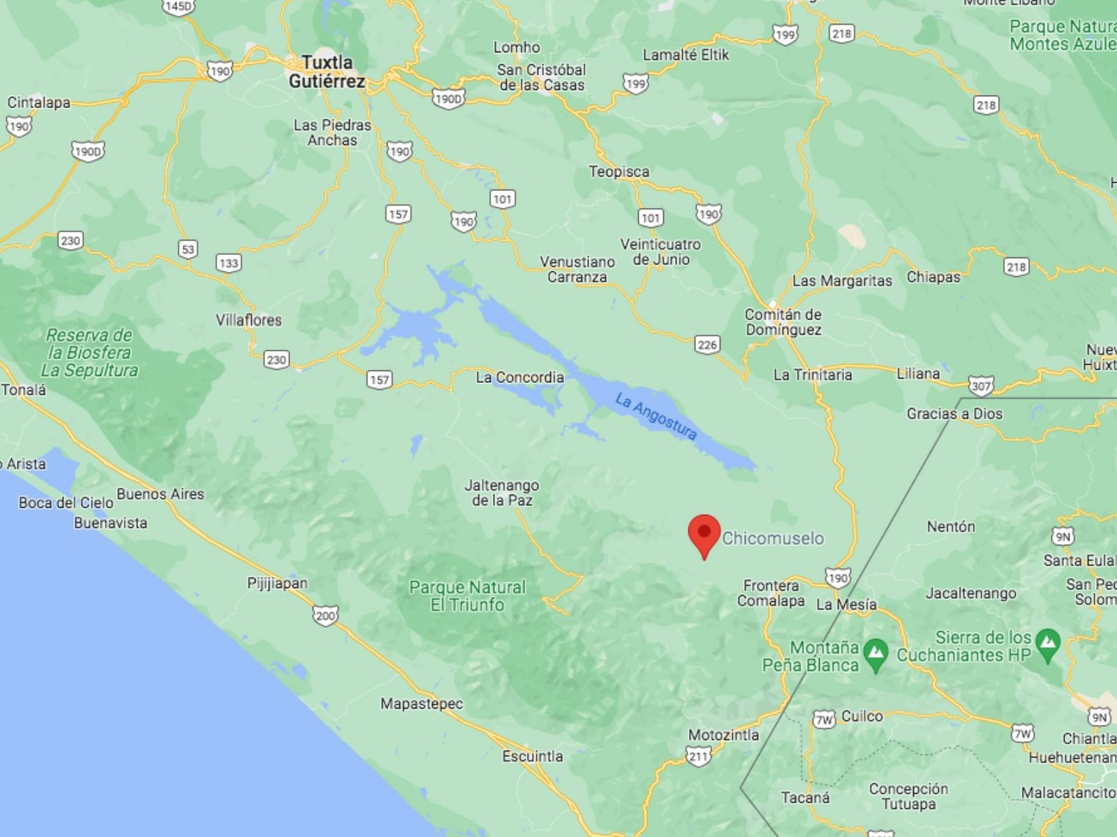
The Movement in Defense of Life and Territory (Modevite), expresses its concern faced with the context of insecurity and violence given the latent threat of reactivating mining activities in the municipality of Chicomuselo, Chiapas, originating from the lack of intervention from the three levels of government.
In recent months, we have learned of the presence of companies and people interested in restarting mining exploitation in the following locations of this municipality: El Naranjo, Nueva Morelia, Santa María, Ricardo Flores Magón, Grecia and Benito Juárez. They are promoting mining activities without prior and informed consultation, without the consent of the ejidos and communities that will be affected by these activities.
“This situation puts at risk the stability of the communities that have decided to reject these extractive projects and have been in resistance by maintaining peace and harmony from the defense of human and collective rights.” The response of these groups with personal, economic and political interests has been intimidation, harassment and death threats against our compañera and compañero human rights defenders as a resource for stopping the struggle in defense of life and territory, that’s why we worry about the integrity and life of each one of those who daily confront different situations for denouncing these actions.
In 2009, residents of Chicomuselo municipality were witness to the environmental effects, damage to health, community division and social conflicts, among others, caused by the Canadian mining company Blackfire Exploration Ltd in the Grecia ejido of Chicomuselo municipality, mainly affecting groundwater, rivers, streams, forests, the health of the population and the community fabric that characterizes the communities of our region, situation that culminated in the murder of Mariano Abarca Roblero.
Mining and illegal activities
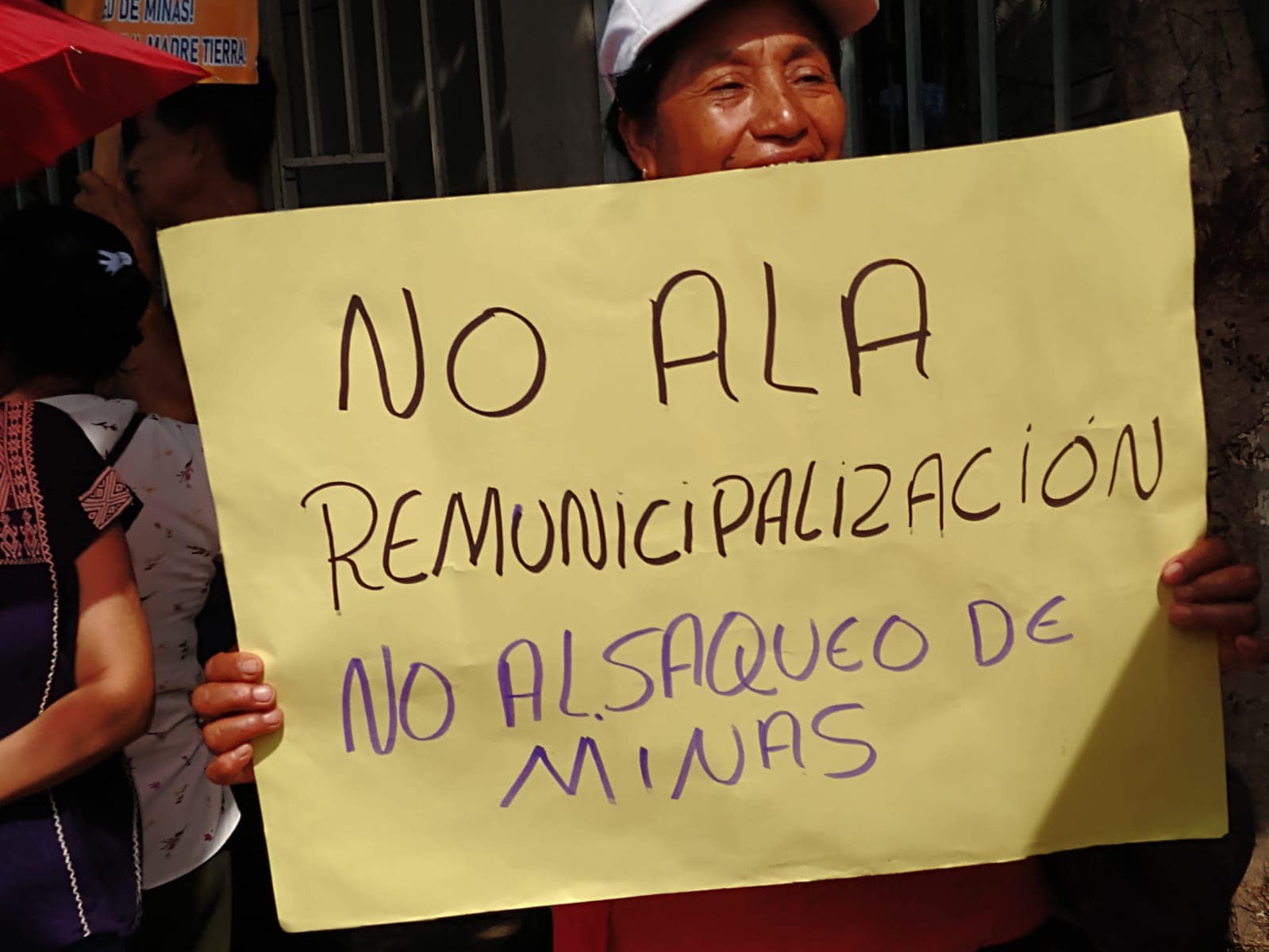
Since November 2021, members of this movement have presented the current municipal president, Jorge Martin Sepúlveda Morales, with the municipality’s social situation and the struggles and resistances against mining exploitation, the MOSCAMED project, the re-municipalization project, the illegal sale of alcoholic beverages, which are a mass problem, as they all violate the human rights and collective rights of communities. They take into consideration that in his campaign the stated that he was against the mining project and would support the people in their struggles and resistances, we see no results during the time of his administration.
The Government Delegation in this municipality has minimized this social problem by not attending to them with responsibility and commitment, since on several occasions people have been arrested who were carrying out mining activity illegally in the municipality and where they have committed not to continue carrying out these activities by presenting the resistance of the people, the government delegate of this municipality has not taken any action taking into account that at the state and municipal level there is no permit for mining activity in Chicomuselo.
Environmental complaints have been formally presented to the Federal Prosecutor for Environmental Protection (PROFEPA) about the Chicomuselo case. However, the response has been a lack of interest wounding the legal foundations spelled out in the national and international legal framework.
Currently, we’re still waiting for a dialogue table with state and federal government officials to address this social problem without any response to date.
Re-municipalization under threat
With respect to the re-municipalization project in the Unión Buena Vista and Pablo L. Sidar ejidos, the conditions don’t exist and don’t meet the legal requirements for becoming a municipality; however, those who have their interests in this project are pressuring neighboring ejidos to accept the project, violating their ejido rights.
The MOSCAMED program in our municipality is becoming an imposed program, although the ejidos have not accepted it, the insistence to enter remains against the people and fracturing the social fabric.
We realize that those who have their interests in our territory are combining these three projects and insisting on deception, intimidation and threats in order to pressure the communities and accept out of fear.
The lack of timely response from the state puts at risk those of us who defend life and territory with peaceful actions within the legal framework.
Therefore, we call on the different levels of government to fulfill their duty to promote, respect, protect and guarantee the individual and collective human rights of the population in general that seeks by peaceful means to generate spaces of unity to build peace among peoples and communities in an environment of respect and harmony.
We hold the Mexican state responsible for any act that puts at risk the integrity and very life of those who defend the territory and human rights that are currently threatened by the economic and political interests of a few people.
Finally, we invite the different social movements of the state and the country, as well as the population in general to strengthen unity and remain attentive to the new social events that violate our rights in order to respond in an articulate, organized conscious way, in adherence to the legal framework.

Originally Published in Spanish by Chiapas Paralelo, Monday, September 26, 2022, https://www.chiapasparalelo.com/noticias/chiapas/2022/09/amenaza-de-actividades-mineras-sin-consulta-previa-en-chicomuselo/ and Re-Published with English interpretation by the Chiapas Support Committee
Autonomy and dignity don’t depend on numbers

By: Raúl Zibechi
In the cities, when we go to demonstrations, one of the usual comments is about the number of people that attended. This attitude is part of our traditional white and urban traditional left political culture, which has been assumed by almost all the organizations. We believe that the movement will be stronger and there will be a better possibility that our demands will be addressed the more people who attend.
In some measure, that’s how things are. When it comes to complaints to authorities, the more powerful the pressure, the greater the chances of having them addressed. However, the question of numbers leaves a couple of central questions blank.
The first is that attending a demonstration is not directly related to one’s attitude in everyday life. Many people, upon returning to their chores, continue doing exaqctly the same thing as before, hoping that their representatives resolve the demands, returning to the role of spectators that they interrupted for a few hours.
The second is that this mode of collective action, in which all the “urbanite” movements are involved, does not achieve profound transformations, since it continues to place at the center the state institutions that, in this political culture, are the subject of collective action.
It’s evident that constructing autonomy is not achieved with demonstrations, nor are territories recuperated through militarism and extractive industries, which are destroying our countries and the social relations below. Since demonstrations are legitimate and necessary, we need something more, particularly in urban movements.
Days ago, I shared a few hours with the Zapatista support bases in Nuevo San Gregorio, and would like to highlight some questions that I learned from them and how challenged I felt by their stubborn resistance.
First, there are very few families that remain in resistance. Just four. Two families left in recent months. Their adversaries in the zone number many more and are armed. Being few individuals and families does not prevent them from persisting, nor sustaining autonomy nor resistance. They are not overwhelmed by that reason.
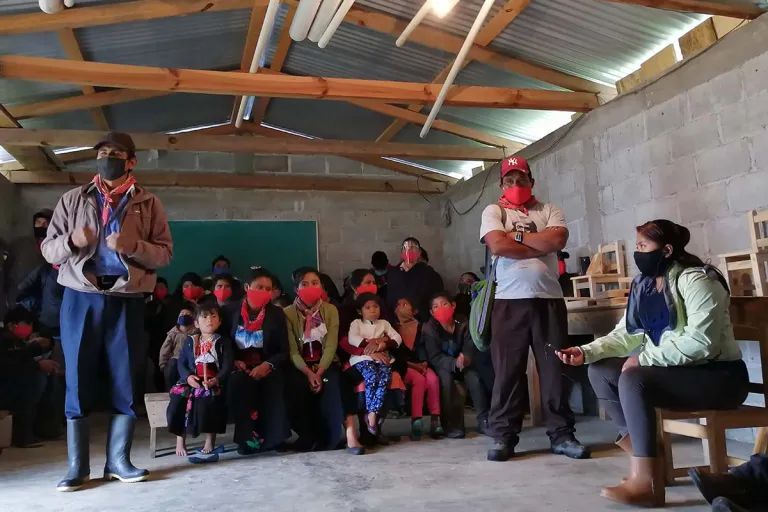
Secondly, in the dialogue in which the Ajmaq Network and the Frayba participated, they insisted on something very notable: “We’re more united now, we feel stronger than when we were a lot more (un chingo),” they told us.
This point seems central to me. The strength of a struggle doesn’t depend on how many people there may be, but rather that each one of them has the necessary commitment and firmness to persist in ant condition, even when everything is against us, when there is no perspective that our resistance can win in the short or medium term.
In the cities we observe that a lot of people withdraw when their demands are not addressed, when repression increases, or simply when they get tired. Some organizations that seemed to be solid and powerful, weaken rapidly when difficulties enter.
Third, I think that real power appears with setbacks. When we are attacked or isolated, demoralization often appears. That’s why I wondered, after the visit to the village, how do they continue when everything is against them: the State, its National Guards and Armies, the para-state “organizations,” organized crime and even their friends and families, including sometimes former comrades in struggle.
That’s the point. Many movements seem solid when thousands are in the streets. But here is a clear example that “yes we can,” even if there are few, in the most absolute solitude, when a simple visit is harassed and it’s not known when people in solidarity will return. It’s an example of human and political dignity and integrity.
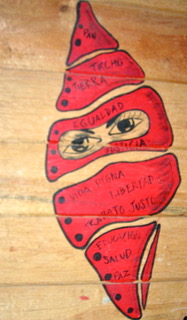
Finally, EZLN’s support bases in Nuevo San Gregorio showed us that resistance is not for one day or for a year. It’s a way of living life. You don’t fight to get something material, or to gain personal or collective advantages. Even less to have immediate results. The struggle is to remain peoples different from hegemonic capitalism. And for dignity.
It’s about a different political culture, in development, but that is still not comprehended or assumed by the immense majority of organizations and people. It will demand time in order to produce a change of such dimensions, which leads us to assume this other way of understanding the ways of organizing, resisting and changing the world, transforming ourselves.
These are just a few ideas about what we learned from the support bases and concretely from Nuevo San Gregorio. We cannot learn, neither individually nor collectively, if we don’t share, if we are not where the events take place, but especially if we don’t have sufficient humility to recognize that we need to learn from those below who resist.

Originally Published in Spanish by La Jornada, Friday, September 23, 2022, https://www.jornada.com.mx/2022/09/23/opinion/015a1pol and Re-Published with English interpretation by the Chiapas Support Committee
Tseltal march demands the freedom of imprisoned and persecuted leaders
By: Isaín Mandujano
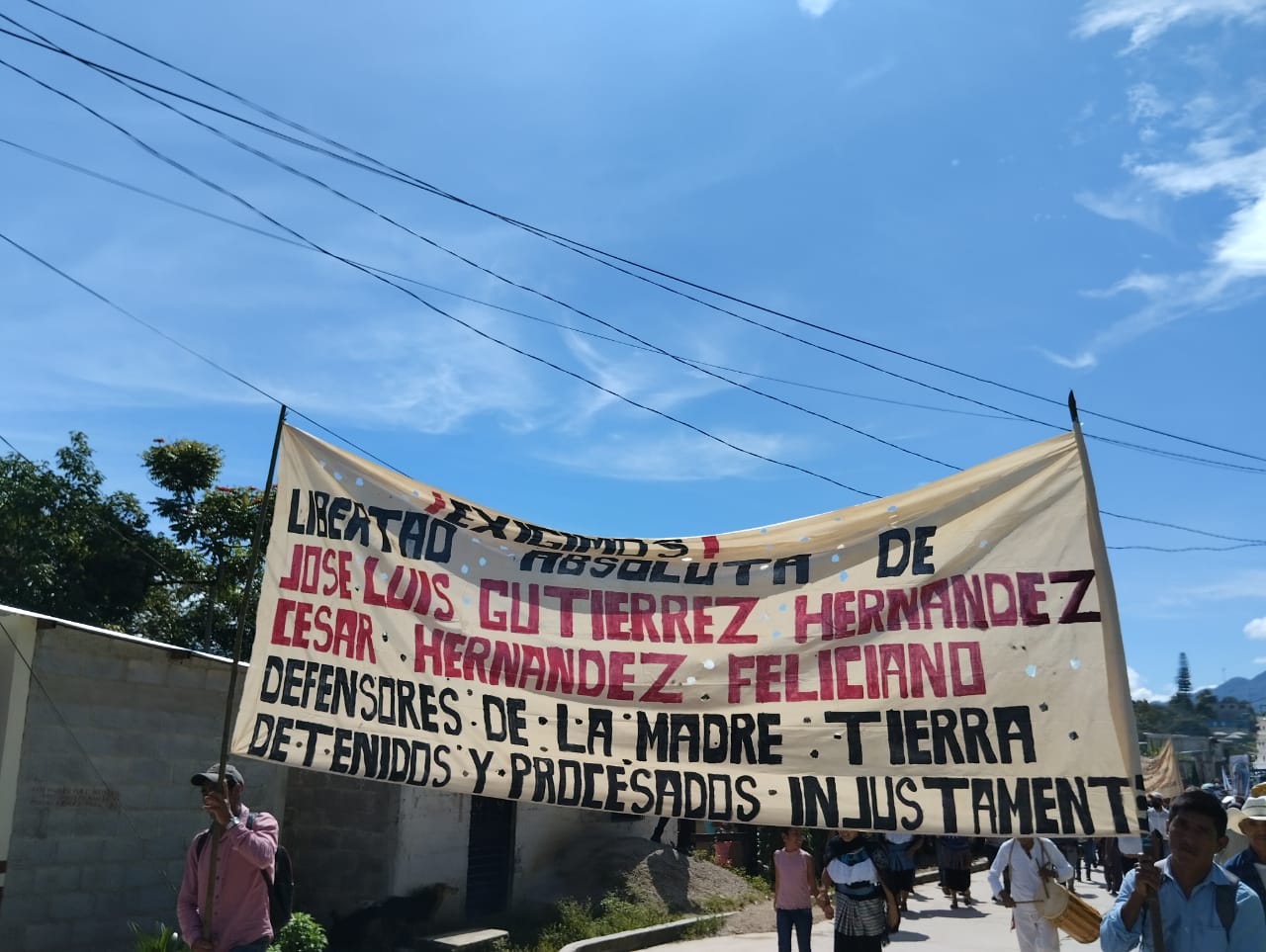
More than a thousand Catholic men and women from the Tseltal region of Chilón held a march-procession to demand the freedom of nine community leaders, two from that region, five from San Juan Cancuc and two from Pantelhó, as well as the parish priest Marcelo Pérez Pérez.
Convinced, they said that they were marching for peace and the construction of justice, as the Mexican Episcopate, the Conference of Major Superiors of the Religious of Mexico, the National Council of the Laity and the Mexican Province of the Society of Jesus have called on them to do; that’s why they took to the streets in Bachajón, municipality of Chilón, to demand justice for the imprisoned and persecuted community leaders.
On September 27, a judge at the Ocosingo prison will sentence two community leaders, José Luis Gutiérrez Hernández and César Hernández Feliciano, who were arrested on October 15, 2020 for participating in a protest.
They also marched and demanded justice for the prisoners from San Juan Cancuc and Pantelhó, as well as for the cancellation of the arrest warrant against Father Marcelo.
Although José Luis and César were conditionally released after being indicted, they face criminal proceedings and trial, but they are afraid that the sentence will harm them: “On October 15, 2020, these brothers, legitimately and in full exercise of their right to demonstrate, went out to protest peacefully, along with other residents, finding as a response, a brutal repression and the loss of their freedom.”
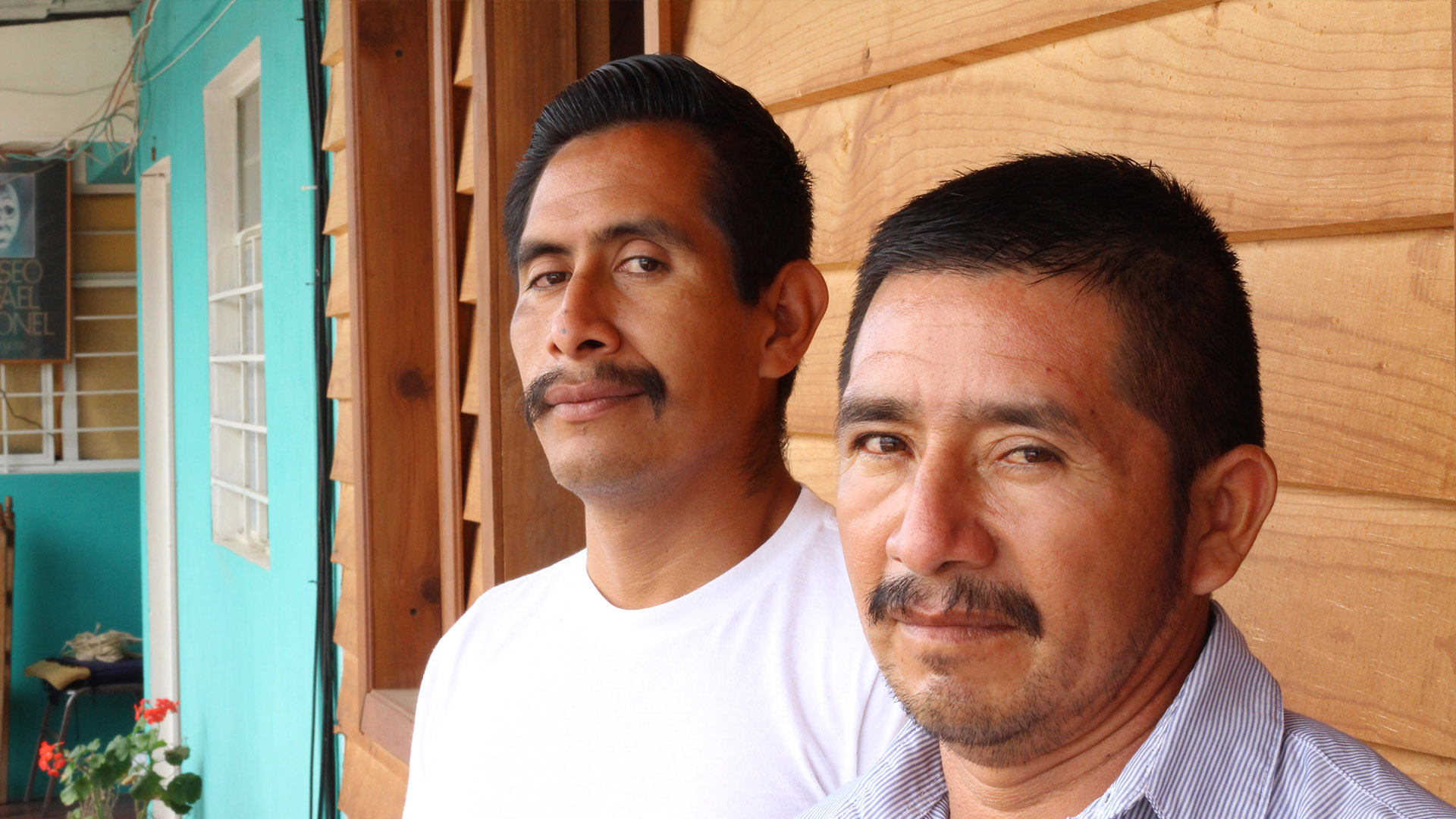
On that occasion, thanks to the solidarity of the human rights defense organizations that intervened, they were released from prison on November 1, 2020, but with the condition of continuing their criminal case and presenting themselves periodically to the Ocosingo Control Court. They face so much injustice. That’s why they demonstrated today to demand their absolute freedom.
Similarly, as Believing People of the Chab team from the Diocese of San Cristóbal de Las Casas, five more community leaders from San Juan Cancuc denounced the arbitrary deprivation of freedom. They are: Manuel Santis Cruz, Agustín Pérrez Domínguez, Juan Velasco Aguilar, Agustín Pérez Velasco and Martín Pérez Domínguez.
They also demanded a just review of the case of two other community leaders from Pantelhó being held in El Amate Prison: Pedro Cortés López and Diego Mendoza Cruz. They also demanded the definitive cancellation of the arrest warrant for the parish priest Marcelo Pérez Pérez, “whose innocence is evident,” they alleged.
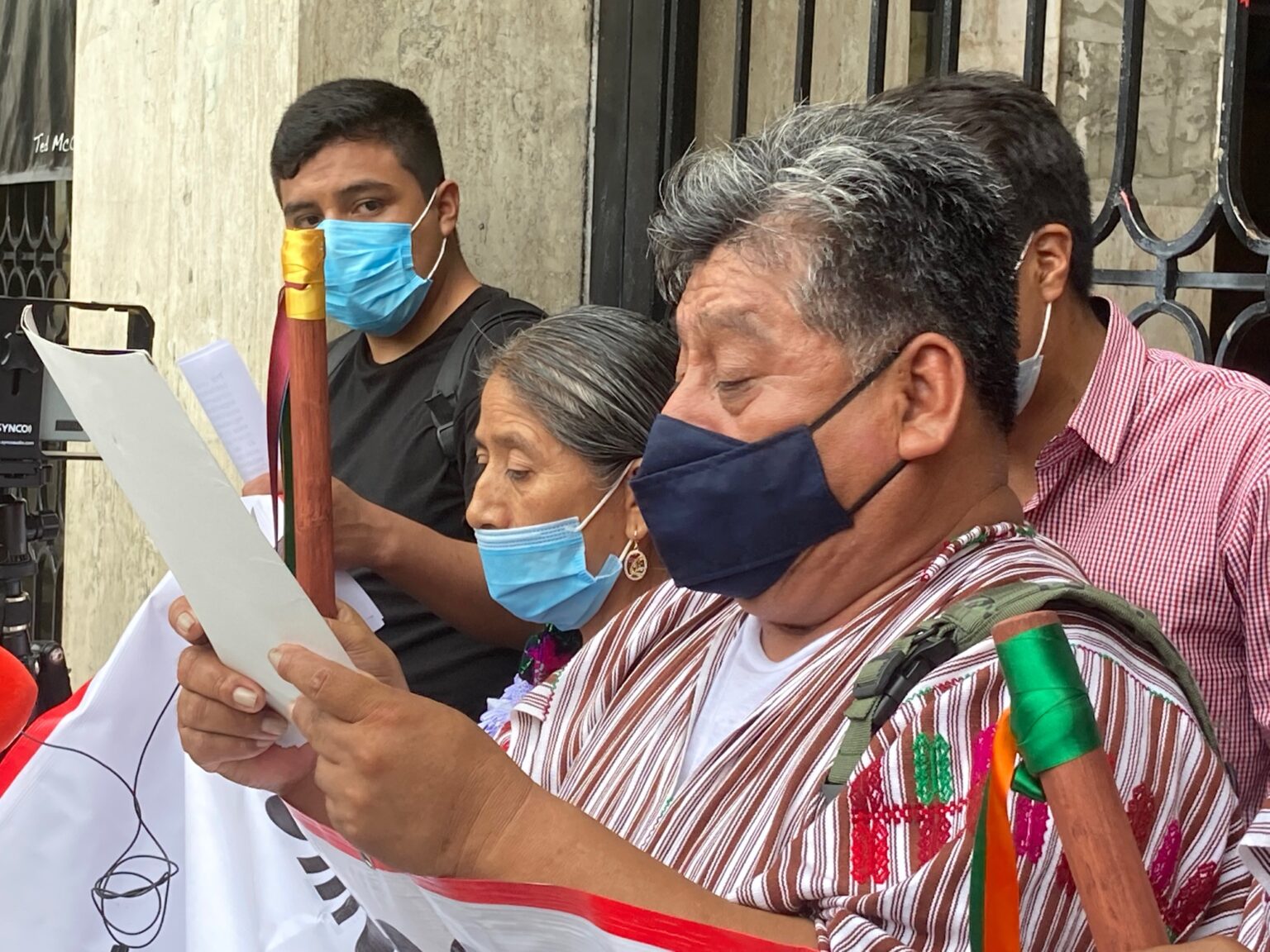
“These arrests try to repress the just complaints of our peoples and place obstacles in the way of peace in our territories. The criminalization of these brothers of ours has been due to defending the rights of the Native peoples, as well as their territory and their customs, a vital sustenance of our communities,” the indigenous people said at a rally at the end of the march.
They called on all the national and international human rights organizations to be attentive and be actively in solidarity with these cases of criminalization, “which add to the persecution of those who seek peaceful paths with justice and dignity for the Native peoples.”

Originally Published in Spanish by Chiapas Paralelo, Wednesday, September 21, 2022, https://chiapasparalelo.com/noticias/chiapas/2022/09/march-procesion-de-tseltales-para-exigir-la-libertad-de-lideres-comunitarios-presos-y-perseguidos/ and Re-Published with English interpretation by the Chiapas Support Committee
Indigenous women of Chiapas close ranks against mega-projects

By: Isaín Mandujano
ASSEMBLY OF THE WOMEN’S MOVEMENT FOR THE DEFENSE OF MOTHER EARTH AND OUR TERRITORIES. CHIAPAS, MEXICO
Chapultenango, September 17 and 18, 2022
We embrace the Women and Peoples who struggle and organize.
Women from the Zoque, North-Palenque, Jungle, Coast and Highlands regions of Chiapas called upon each other to meet again and to share the processes, challenges and challenges after our last Assembly held in May of this year in Rayón, Chiapas.
Today we once again thank and honor our Zoque compañeras and sisters who received us with organization, joy, respect and affection.
As women of the Zoque, Ch’ol, Tseltal, Tsotsil and mestiza peoples of Mexico and Argentina we reaffirm our will to follow our principles: 1) Political-organizational autonomy, 2. Defense of Mother Earth versus the projects of death, 3. Awareness in personal care and collective healing, 4. Women’s participation in decision-making, 5. Rejection of all types of violence towards women, 6. Articulation and political solidarity among peoples, networks, collectives of the EZLN, CNI and the Sixth, 7. The Movement is governed by non-hierarchical, non-centralized Assemblies.
We decided to share the contexts in which we are living as women from the work groups for each one of the regions and, later in the plenary:
We share that in the Tsotsil Highlands Zone there is an increase in canteens, circulation of alcohol, drugs and weapons. Constant movements in vehicles of armed groups. Increased migration by young people and those who stay in our communities no longer respect women and older people. The few men engage in sexual violence against young women.
In the Tseltal region of the Highlands women are not taken into account, they don’t respect our rights, mainly in contempt for widowed women and/or single mothers. The uses and customs of the community violate us and dispossess us of our lands without taking into account that the land gives us life and we feed ourselves from it. In the Jobel Valley we identified a before and after June 14, after the dispute of different organized crime groups: dispossessions are experienced through the invasion of land caused by armed groups; from the complicity of government officials and hotel entrepreneurs who monopolize water through the destruction of mountain wetlands and swamps. There are various groups of armed young people called scooters that make shootings a daily occurrence and put the daily lives of women and children in tension. There is more presence of the National Guard that is made that which does not see, nor hear.
North-Palenque Zone. With the construction of the misnamed Maya Train, the leveling and destruction of hills, water pollution and the dispossession/ displacement of communities have increased. The commodification of the Maya culture is present, favoring private business initiative. Prostitution is increasing and migration is visible. Groups of scooters linked to organized crime have appeared and are carrying out murders, with the National Guard simulating its function and generating fear and terror with its presence in the daily life of the population.
Coastal Zone. Threat of construction of the gas pipeline that comes from the interoceanic project of Oaxaca and that will pass through the entire Coast to Guatemala. Construction of Mega-highways in connection with the Maya Train and Interoceanic Train. Increase in mining projects. Sale of land to business speculation for hotel projects. Disappearance of girls, young people and adults who become most of the time femicides and human trafficking.
Zoque Zone. Being at the head of the basin, it’s being threatened by megaprojects related to mining, hydroelectric, geothermal and hydrocarbon projects. We are convinced of the link to corporate interests, the Federal Electricity Commission and institutions of bad government together with organized crime for the execution of projects.
An example is the “Study for the Integral Management of the Basins” that represents the dispossession and destruction of our lands. Another example is the case of the town of El Platanar [municipality of Pichucalco] as a “territory of sacrifice” where they caused an oil spill that affects the Grijalva River, this due to the negligence of Pemex and complicity of the government, causing forced displacement and that 5 thousand inhabitants do not have drinking water.

In sum; we agreed that Organized Crime is governing in all our territories, we see the increase in the sale and circulation of weapons, drug addiction, prostitution and alcoholism. In complicity with a process of militarization that permits the dispossession and control of our territories. Women are the most affected by the increase in femicides, deaths, hunger and disappearances of girls and young women.
We agreed that we will defend Our Mother Earth from the mis-named Maya Train, from Hydrocarbon Projects and geo-parks, from the gas pipeline and from pesticides, as well as from the hoarding and pollution of water.
However, in the face of this situation of death, we are happy to see young women participating in this Assembly. It is a moment of opportunity to walk and open a different course for all. We are committed to strengthening your dignifying processes to and for Life in a collective and organized way.
We will continue defending Mother Earth with organization and dignity. We will continue carrying out our jobs in our places. We close our Assembly defining the date and place of our next meeting.
Defensoras de Nasakobajk
Tsijilba Bij
Red de Mujeres de la Costa en Rebeldía
Antsetik Tz’unun
Mujeres organizadas de Acteal
Mujeres del Colectivo Jomenäs
Mujeres Productoras
Mujeres del Colectivo Kallpolli
Mujeres a título individual

Originally Published in Spanish by Chiapas Paralelo, September 19, 2022, https://www.chiapasparalelo.com/noticias/chiapas/2022/09/mujeres-de-los-pueblos-originarios-de-chiapas-cierran-filas-contra-megaproyectos/ and Re-Published with English interpretation by the Chiapas Support Committee
Letter: A visit to Chiapas

By Carolina Dutton
I finally returned to Chiapas after two and half years because of the pandemic. This has been the longest time I have spent away from this beloved land of the Mayan peoples in resistance in two decades since I lived in the highlands and worked with women in an autonomous community from 2001-2002. I first went to Chiapas in 1997 with Pastors for Peace and then with Schools for Chiapas to participate–mainly carrying cement, sand, and stones so that the skilled indigenous artisans in resistance could build the Zapatista autonomous secondary school in Oventic.
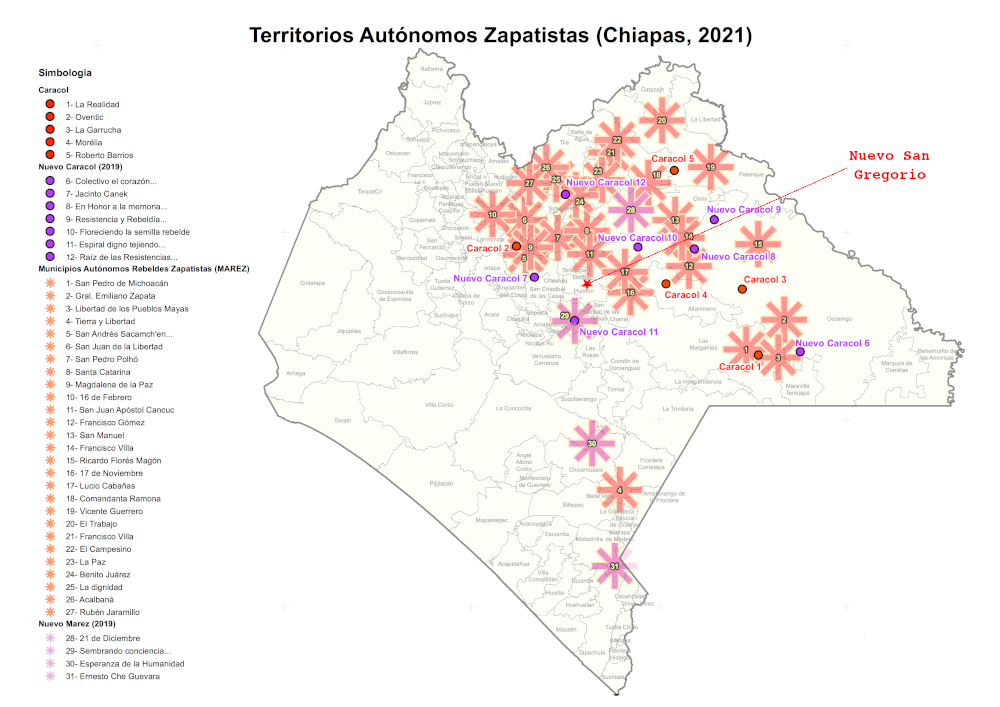
Oventic is one of twelve Caracoles, or centers of Zapatista civilian regional government, where the autonomous communities of the region come together with each other and with internationals. The Oventic caracol’s first buildings were completed two years later and after training promotores (teachers from the communities) the school opened for Zapatista young people in the highland communities to be educated in their own history and to learn skills needed by their communities. Youth are trained to be promotores of education, health, agroecology, or communications. Oventic was the first. In the past 20 years, autonomous secondary schools have opened in other caracoles. The Chiapas Support Committee raises funds for Zapatista primary and secondary education projects.
In Chiapas Summer 2022
This summer I studied in Oventic at the CELMRAZ studying Tsotsil. In 2001 the CELMRAZ (Zapatista Rebel Autonomous Center for Spanish and Maya Languages, Centro de Español y Lenguas Mayas Rebelde Autónomo Zapatista) was formed for internationals to learn Spanish and Mayan languages. The CELMRAZ center, located in Oventic, has for years supported Zapatista autonomous education with the funds people donate to study there.
My tsotsil teachers were promotores trained at the secondary school in Oventic a decade or more ago. We participated in dynamic activities with the Zapatista secondary school students acting out the Seven Zapatista principles and the wheels of capitalism as well as singing together. This is the second time I have studied Tsotsil in Oventic. Although my conversational skills are very limited, my understanding of the philosophy embedded in the language, and the way of relating to the world and each other of the Maya peoples, helps me understand how they have managed to organize themselves, plan an uprising in clandestinity, and keep working together for 28 more years despite continued paramilitary and government harassment. There are three forms of we in Tsotsil grammar, much more important in Tsotsil than I.

Our group of students at the Centro de Lenguas in Oventic this summer on a rainy day.
Entering Zapatista Territory
When I first came to Chiapas it was much easier to go to Zapatista communities, take delegations, and do projects there and connect directly with the people and meet with the autonomous councils. Now, because of ongoing paramilitary violence, security and the pandemic, the communities have been on red alert.
There has been a dramatic increase in paramilitary attacks and violence against the Zapatista communities in the past couple of years. Now one of the only ways for people who do not already have relationships to connect directly with the Zapatistas is through CELMRAZ. The Chiapas Support Committee accredits people to study at the Language Center in Oventic. Contact us if you are interested in attending the CELMRAZ school.
I found that things have gotten more difficult in the past two and a half years both in the Zapatista communities and in the city of San Cristobal. It had been hard for narcos to get a foothold in the highlands of Chiapas, largely due to the tight organization of communities in resistance.
Unfortunately because of various factors—the insecurity of the pandemic, the economic hardship it has caused, the complicity of the local and the state government of Chiapas with cartels and paramilitaries and the lack of action by the national government to stop, arrest or prosecute acts of paramilitary violence—Mexican government inaction, complicity and collusion has led to almost complete impunity for the paramilitary’s violent acts.
Mexican Government Complicity Fuels Paramilitaries
The National Guard supposedly created to increase security just stands by when the paramilitaries have attacked Zapatista and other indigenous communities. The Human Rights Center Fray Bartolome de las Casas (Frayba) sends observers to communities, often internationals, which usually helps deter violence. Because of the impunity, the paramilitaries have threatened the observers in the Zapatista community of Nuevo San Gregorio and Frayba had to withdraw them for their safety.
The city of San Cristóbal is no longer the safe place it used to be. Some neighborhoods have organized civil patrols to monitor who is on the streets. My neighborhood organized a system to warn each other with whistles when attempted robberies take place so that neighbors can come to each other’s aid. Fortunately Oventic is one of the caracoles that is still tranquil and safe.

Artesania made by compas in Nuevo San Gregorio
Take Action to Denounce the Paramilitary Violence September 26
While I was in San Cristobal I met with Frayba to help organize a forum about violence in Chiapas with Frayba and Red Ajmaq, a network of Zapatista supporters in Mexico. The Chiapas Support Committee sponsored this forum with the network, Sexta Grietas del Norte, of which we are a part. You can watch the recording with English interpretation at https://youtu.be/gCuhPTKmEpQ.
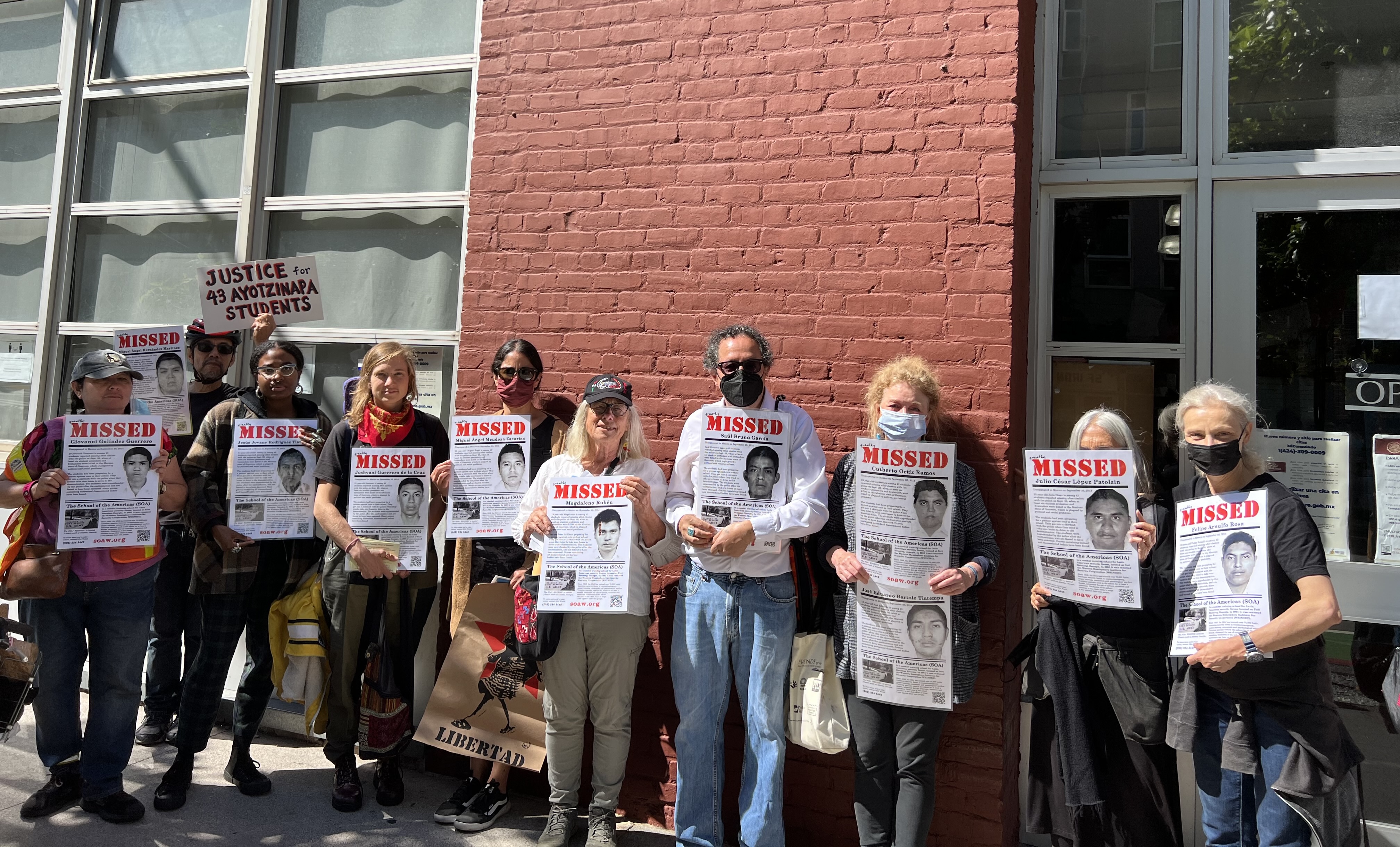
The Chiapas Support Committee has also been demonstrating at the Mexican Consulate in San Francisco to let the Mexican Government know that we are aware of their complicity with the violence and to demand that the impunity be stopped. Our next action will be on Monday September 26, 2022, the 8th anniversary of the forced disappearance of the 43 students from Ayotzinapa.

Please join us on September 26 to demand justice for Ayotzinapa and to demand the Mexican government dismantle the rightwing paramilitary. Watch our facebook page and blog for further details.
______________________________________________________________________________
Carolina Dutton is a member of the Chiapas Support Committee and a long-time community-based activist for justice and solidarity with Indigenous and Latin American people’s struggles for self-determination and land justice.
They ask the UN to urge Mexico to respect indigenous rights

By: Elio Henríquez
San Cristóbal de Las Casas, Chiapas
Organizations headed by the Fray Bartolomé de Las Casas Human Rights Center (Frayba) requested that Cecilia Jiménez-Damary, Special Rapporteur of the United Nations Organization on the Human Rights of Internally Forced Displaced Persons, to “recommend and demand” that the Mexican State “respect the collective rights of indigenous peoples, in particular with regard to territory and autonomy.”
At the same time, they demand a mechanism that guarantees respect for the principles on forced displacements, which include measures for sanction in case of non-compliance; application of the Forced Displacement Law in Chiapas, as well as consolidating the state program with a gender perspective and in favor of childhood in order to address and prevent that situation in the state.
They called for the promotion of the functioning and strengthening of state and municipal protection prosecutors’ offices with an intersectional and gender perspective, as well as the training of their personnel and awareness on the subject, and for the Chiapas State Commission for Attention to Victims to generate a registry with a differentiated approach, which investigates and disarms armed groups, and that those responsible for the injuries, killings and forced displacements are consigned.
In the report delivered during the visit that the official made last week to the state, the organizations, including Caritas, Melel Xojobal and International Service for Peace, also suggested that she “recommend and demand” that the physical integrity and protection of defenders who accompany victims be guaranteed and that there is accountability of the prosecutor’s offices.
They assured that: “This phenomenon may have as its root old agrarian conflicts that began in the 1970s between different municipalities and /or communal assets in the Los Altos region, where armed groups with similar characteristics operate. “
They pointed out that from 2010 to date the displacement of 14,476 people from different municipalities has been documented; Likewise, recently “the presence of organized crime has increased exponentially and with it the trafficking of weapons, vehicle theft, human trafficking, planting and shipment of drugs, territorial control through the imposition of terror in the communities, which has caused hundreds of people to flee their homes.”
Rapporteur Cecilia Jiménez-Damary repeated their request to the government to create a federal registry of victims of internal displacement in order to guarantee a sufficient budget for comprehensive care, as well as to raise awareness about this problem.
After concluding her visit to the country, she stressed that this registration must also include those who have not been legally recognized, since “they are displaced de facto.”
In a statement, she clarified that the census “should not grant legal status, but facilitate protection and humanitarian assistance in accordance with individual and collective needs.”
Originally Published in Spanish by La Jornada, September 13, 2022, https://www.jornada.com.mx/2022/09/13/estados/029n2est and Re-Published with English interpretation by the Chiapas Support Committee
AJMAQ: The government doesn’t exist in Chiapas, it doesn’t see, it doesn’t hear and it doesn’t speak
By: Yessica Morales
On multiple occasions, the Frayba has made the three levels of government aware of the constant aggressions against the EZLN support bases in Nuevo San Gregorio, who remain in resistance and defense of the territory recovered since 1994.
On September 10, 2022, the AJMAQ Network of Resistances and Rebellions and the journalist Raúl Zibechi visited the “New Dawn in Resistance and Rebellion for Life and Humanity” Good Government Junta of Caracol 10, The “Rebel Seed Flourishing,” as well as the Zapatista families in Nuevo San Gregorio community.
The visit was to bring them his compañero embrace, listening, word and view from solidarity, knowing how this war situation against the Zapatista families continues to lacerate and wear down life.
The reality that is being experienced hurts us a lot and deeply: the violence of the invaders continues, and the government in Chiapas doesn’t exist, it doesn’t see, it doesn’t hear and it doesn’t speak, the Network underscored.
To this is added the insistence to create and maintain collective work.
In that place, babies are born, there are boys and girls with looks of surprise, as well as young people creating.
Zapatista men and women caring with patience and hope for seeds so that they flourish, perhaps not there, but in another garden, asphalt, flowerpot and/or mountain.
Meanwhile, the Regional Organization of Ocosingo Coffee Growers (ORCAO, its initials in Spanish), then 40, criminal leaders and the Mexican dis-government are all trying toi raise hell to reach those flowers that continue calling for the word: For life, the Network concluded.

Attacks and Threats
Since November 2019. the Nuevo San Gregorio community, on territory recuperated by the Zapatista National Liberation Army (EZLN, Ejército Zapatista de Liberación Nacional), has suffered constant attacks from a group of some 40 aggressors, resulting in the dispossession of 155 hectares in Lucio Cabañas Autonomous Rebel Municipality and in a situation of grave risk to the life and integrity of the inhabitants.
The Frayba and the Ajmaq Network have denounced the repeated aggressions, stealing cattle and destruction of property, water cut-offs, surveillance, obstruction, control and collection of free transit, as well as kidnapping.
The gravity of the attacks and the serious threats against human rights observers, which occurred on June 10, 15 and 19 and were documented by then BriCOs themselves, led the Frayba to suspend the observation camp on June 29. This has rarely happened in the 28 years of work of the Brigades, which left the affected families even more unprotected.
On the other hand, on February 27, 2020, representatives of the community and the Good Government Junta attempted to dialogue with the aggressors. On that occasion, they gave the aggressors three proposals, including a proposal to cede them one half of the recuperated territory.
However, the aggressors didn’t accept it, seeking to take possession of all the lands. In spite of everything, the affected families continue resisting, constructing autonomy and taking care of the land.
Originally Published in Spanish by Chiapas Paralelo, Tuesday, September 13, 2022, https://www.chiapasparalelo.com/noticias/chiapas/2022/09/gobierno-en-chiapas-no-existe-no-mira-no-oye-y-no-habla-red-ajmaq/ and Re-Published with English interpretation by the Chiapas Support Committee
 Chiapas Support Committee