Chiapas Support Committee
Home of the Compañero Manuel blog on zapatistas & mexico
“Scooters” cause fear in San Cristóbal: 10 arrested
From the Editors of La Jornada
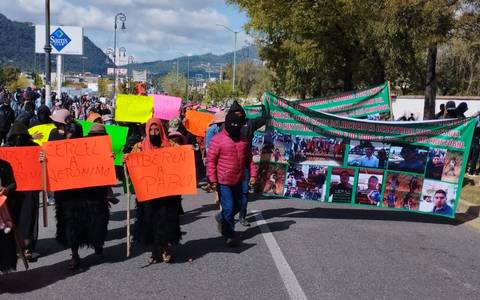
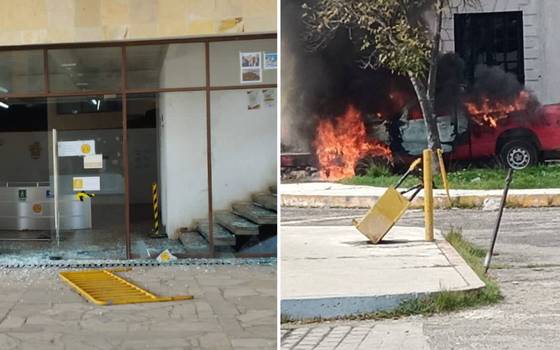
Hundreds of residents of the Cuxtitali el Pinar ejido, who demanded the liberation of Pablo Pérez Sántiz, who is alleged to head a group of gang members that travel on motorcycles, now in prison charged with murder, caused damages in public buildings and burned a vehicle in San Cristóbal de Las Casas, Chiapas.
The State’s Attorney General (FGE), who initiated an investigation notebook against whoever turns out to be responsible for the crime of attacks on the peace and the corporal and patrimonial integrity of the state’s collectivity, reported that 10 males were arrested and four motorcycles were seized.
The more that 500 demonstrators, some on motorcycles and wearing masks, kept local society in fear yesterday for more than two hours, because on Monday night rumors spread that they would “takeover” the palace of justice, where the FGE’s regional offices and lower courts, as well as other public buildings are located, and additionally that they would block the San Cristóbal-Tuxtla Gutiérrez toll road.
Some agencies didn’t work this Tuesday and some 300 agents from the National Guard, as well as state and municipal police, were posted early in the morning at kilometer 46 of the toll road, at the entrance to San Cristóbal, to prevent the scooters from blocking entrance to the city.
In front of the buildings, they broke windows of the courthouse, the administrative unit and the municipal presidency. They demanded the release of Pérez Sántiz and launched rockets. They also set fire to a parked vehicle.
Agents from various corporations, with the support of a helicopter, dispersed the demonstrators with tear gas and a group apparently on its way to block the toll road was restrained by police.
The FGE reported in a statement that “security forces made up of the Ministry of National Defense, the National Guard, the Secretariat of Security and Citizen Protection (state police) and the municipal police began surveillance and presence patrols in the area, as well as in streets and avenues of the city, with the aim of safeguarding the integrity and heritage of citizens. “

Originally Published in Spanish by La Jornada, Wednesday, November 9, 2022, https://www.jornada.com.mx/2022/11/09/estados/032n2est and Re-Published with English interpretation by the Chiapas Support Committee
Luis Villoro, the sentinel
By: Raúl Romero*
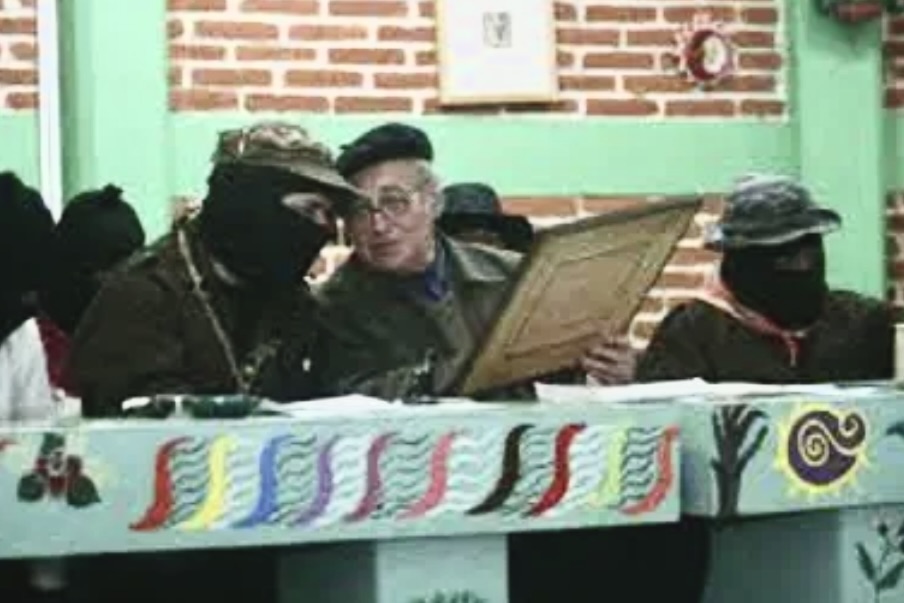
The events take place in 1996. After being introduced by Zapatista Comandante David, Don Luis Villoro Toranzo takes the floor. He speaks in the name of the group of advisors to the EZLN, in the Dialogue for Peace with delegates of the federal government. “In the first place, we want to reiterate the will of the EZLN and of the group of advisors who are trying to support it, the will to arrive at agreements in favor of a peace with dignity. We will do all that is necessary to arrive at these agreements. But there can be no agreement if there is denial of certain fundamental principles. And these fundamental principles should steer our negotiations,” Villoro Toranzo states firmly.
He continues. “It is not, in any way, a question of obtaining aid to solve the problems that indigenous communities have suffered for so many centuries through welfare assistance. It is about a radical reform of the State.” His brief speech reflects his knowledge of the indigenous question and also the serious problems of the Mexican State. It also reflects the depth of the Zapatistas’ message: “The EZLN is not here only to defend the rights of the indigenous people of Chiapas, although it is here to do so. It is not here to only defend the rights of the indigenous peoples in the whole country, although it does take up the demands of all the indigenous peoples of the country. The EZLN, and we its advisors, are here to contribute in a radical new way to a reformed national state that truly recognizes the reality of our people and advances towards social justice and, above all, to contribute to democracy in the country.”
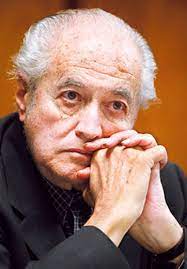
By 1996, the work of Luis Villoro Toranzo was already required reading in universities, and a reference in many different political, academic and social spaces. The Zapatista rebellion of 1994 would mean for Villoro Toranzo something similar to what happened to his friend and contemporary Pablo González Casanova. While for the latter, neo-Zapatismo was in dialogue with the reflections on internal colonialism initiated in 1963, for Luis Villoro the Zapatista rebellion was also in dialogue with the problems raised in his book Los Grandes Momentos del Indigenismo en México (The Great Moments of Indigenism in Mexico), in 1949.
Years later, in 1998, Don Luis would continue to reflect on the pluralist State, and on the pluralism of cultures in the crisis of the nation-state, and insist on the need for a radical reform — this in the context of globalization, the financial unification of the world, and the growth of corporate power. Villoro Toranzo would then propose a plural State, which “could not seek unity in the collective adherence to values shared by all, because it would extend over peoples and minorities that may be governed by different values. It would be obliged, therefore, to foster unity through a common project that transcends the values proper to each cultural group. It cannot present itself as a historical community, whose identity has been forged over centuries, but as a voluntary association born of a common choice. […] The link between the various entities that comprise it would not be the same vision of a past, or of a collective life, but a decision: that of cooperating in a common destiny.”
Don Luis was a great philosopher who understood that in addition to thinking about the world, it was necessary to transform it. His philosophical reflection was always accompanied by his actions from different fronts, and it was in Zapatismo where he spent his last years performing the tasks of a post or sentinel: observing and being attentive to what is happening, building theoretical reflection from critical thinking.
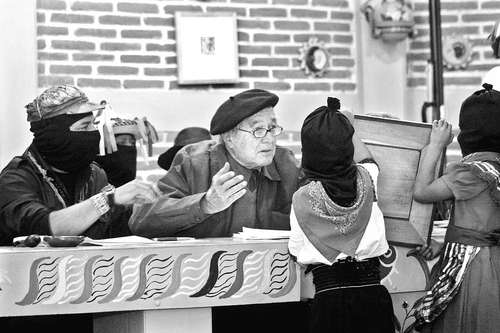
Luis Villoro died on March 5, 2014, but it was not until a year later – due in part to the paramilitary attacks against the Zapatistas in which the maestro Galeano was assassinated – that the rebel Mayas paid tribute to him. In May 2015 in the caracol of Oventik, the Zapatistas revealed how Luis Villoro had asked to join the ranks of Zapatismo. [1] The event was attended by Juan Villoro (his son) and other relatives and friends of Don Luis, relatives of the 43 disappeared from Ayotzinapa, Adolfo Gilly, among others. Pablo González Casanova was unable to attend, but sent a heartfelt message in which he recalled that, in the face of certain challenges, Don Luis had told him that many times the answer is not logical, but ethical. Fernanda Navarro, Luis Villoro’s sentimental companion and partner in struggle, announced that they had decided to sow the ashes of the honoree in rebel territory.
Ethics and justice must be at the center of social life. We must not allow politicians from all ideological spectrums to expel them from there and turn them into mere phrases of discourse, wrote Luis Villoro in the interesting epistolary exchange he had with the late leader Sup Marcos. Luis Villoro, the Zapatista, is an exemplar of life.
* Sociologist (Twitter: @RaulRomero_mx)
Note:
[1] Read Subcomandante Galeano’s 2015 homage to Luis Villoro here.

Originally Published in Spanish by La Jornada, Friday, November 4, 2022, https://www.jornada.com.mx/2022/11/04/opinion/022a2pol with English interpretation by Schools for Chiapas and Re-Published by the Chiapas Support Committee
Understanding the new right, in order to combat it
By: Raúl Zibechi
It’s very common that we face new challenges with attitudes and ideas born in previous contexts that, therefore, don’t adjust to the emerging realities. Something similar happens with the new right: We are content with using adjectives such as “fascist” or “ultra-right,” which may sound appropriate in certain aspects, but it is not enough to understand what it really represents. Therefore, it will be more difficult to neutralize or defeat it.
Believing that the new right can be limited with the existing really democratic institutions is a utopia that disarms us, for several reasons. The first is that the nation-state has been hijacked by the one percent who placed it at their service. The second is that the institutions do not want and cannot fight the new insurgent right, as the armed state apparatuses in Brazil are showing these days.
It seems wrong to me to oppose “democracy” with “fascism” (or Bolsonarism, or Trumpism, or whatever adjective is preferred), because the political culture embodied by this right is the daughter of institutions and the way of doing politics that we call “democratic.” Because it consists of replacing collective action with the management of experts, replacing the conflict of classes, skin colors, sexes, genders and ages, with public policies that relegate them to the role of beneficiaries instead of active subjects.
Humanity has destined enormous efforts to channeling conflicts (from the political-social to the personal) through the most diverse paths, because to insist on denying them or suppressing them leads to social disaster. We have come to believe that conflict is abnormal and destructive, when in reality “the negation of conflict can lead to barbarity;” because “conflict is the foundation of life” and allows the emergence of the new, as Miguel Benasayag and Angélique del Rey maintain in In Praise of conflict.
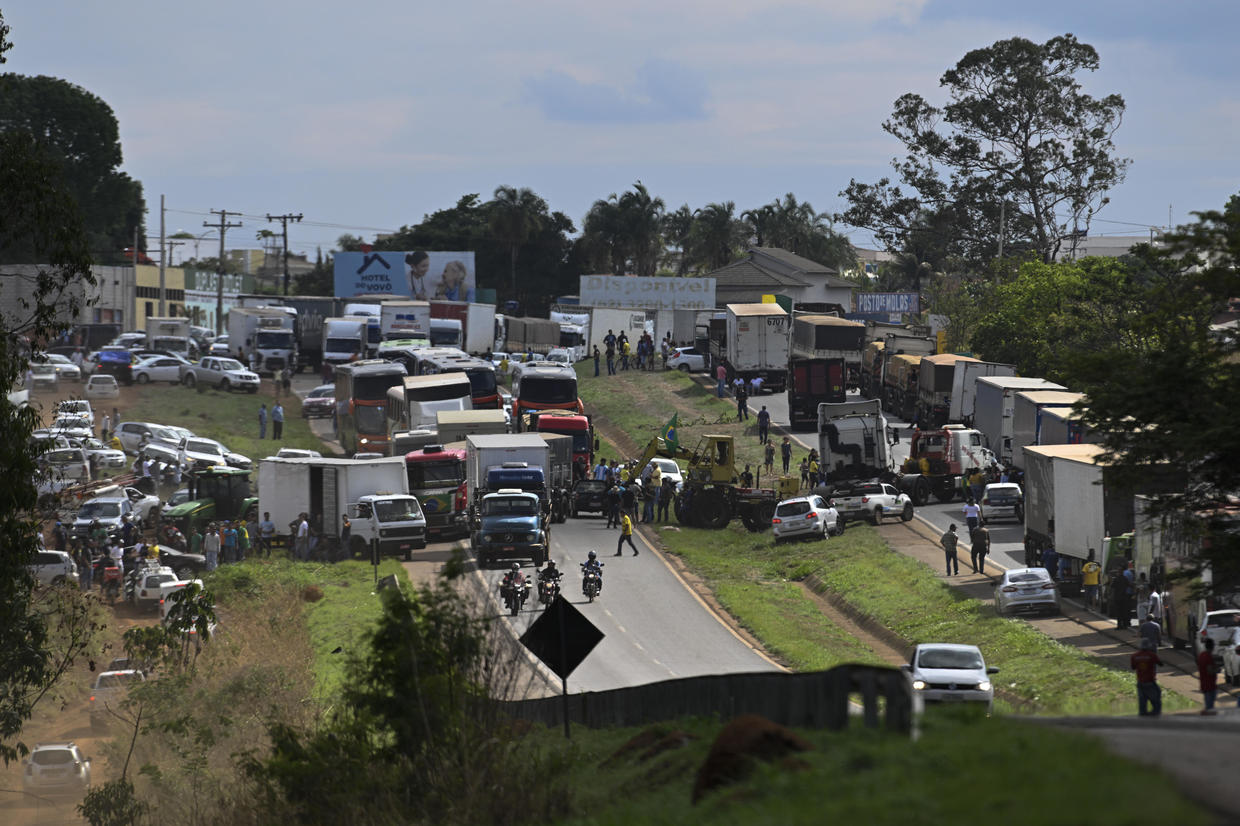
Let’s return to Brazil. A recent article argues that Bolsonaro is not a conservative, but “a far-right revolutionary” who “articulates emerging and insurgent forces present in our society: neo-Pentecostal religiosity, agribusiness aesthetics and sociability in profile” (Folha de Sao Paulo, 1/11/22).
Belonging to Pentecostal churches influences daily behavior, something that Catholics do not achieve who seem to ignore the concrete life of their faithful. The neo-Pentecostal Republican party, the political front of the Universal Church of the Kingdom of God, will govern the largest portion of the population and the most populous state, Sao Paulo.
In Brazil, the emerging power of agribusiness [1], which has economically and culturally displaced the manufacturing industry and the centrality of the working class, has its own aesthetic, as Miguel Lago argues in the aforementioned article. “The rodeo has become the biggest party in the country, and the song that plays the most on Brazilian radio is a kind of country music sung in Portuguese.”
This culture is accompanied by the carrying of guns, is masculine and patriarchal, makes strength and power its hallmarks and contrasts sharply with the working- class culture of the 1970s, when the Workers’ Party was born. Just as working-class culture was linked to liberation theology and base church communities, cattle-ranching culture goes hand in hand with neo-Pentecostal churches.
Anthropologist Jeofrey Hoelle, author of the book Caubóis da Floresta (Forest Cowboys), argues that cattle ranching culture in the Amazon is superimposed on forest culture, which seeks to conserve the forest and defends indigenous peoples. He investigated the cattle culture to understand the logic of those producers who are part of the Triple B caucuses: bulls, bullets and the Bible, which add up to a decisive portion in Brazilian parliaments in recent years.
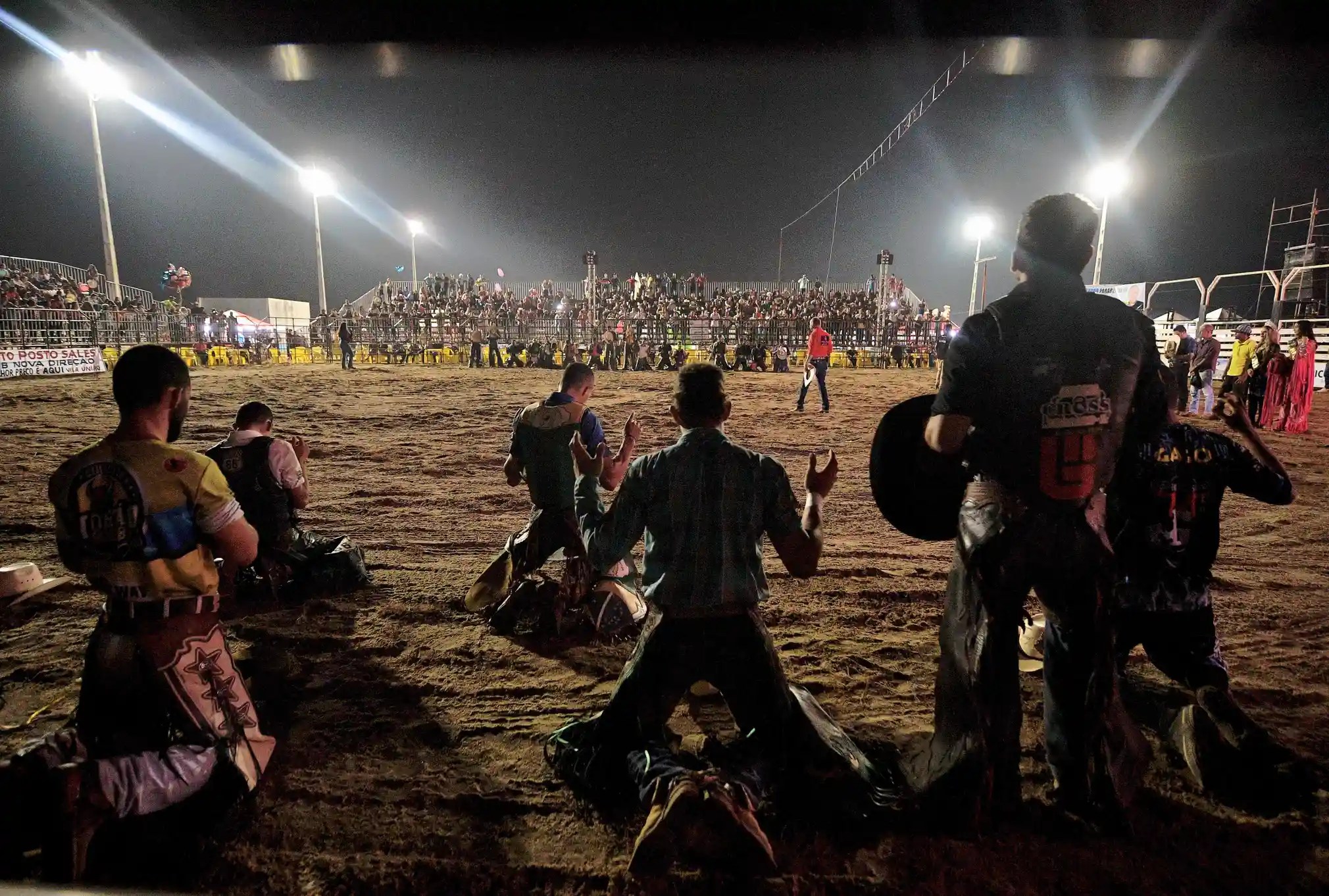
Hoelle concludes that ranchers are aware that their business is the largest source of pollution in the country, but they have a different view. They defend what they call “clean pastures,” which they identify with “order and control,” while “the forest is seen as darkness, savage nature, without value,” he explains in an extensive interview (Amazonialatitude.com, 17/11/21).
In each country and in each region, the new right is based in particular situations, but has some common characteristics: 1) the rejection of environmental protection; 2) attacks on women, diversities and differences and 3) hatred of migrants, black and indigenous populations.
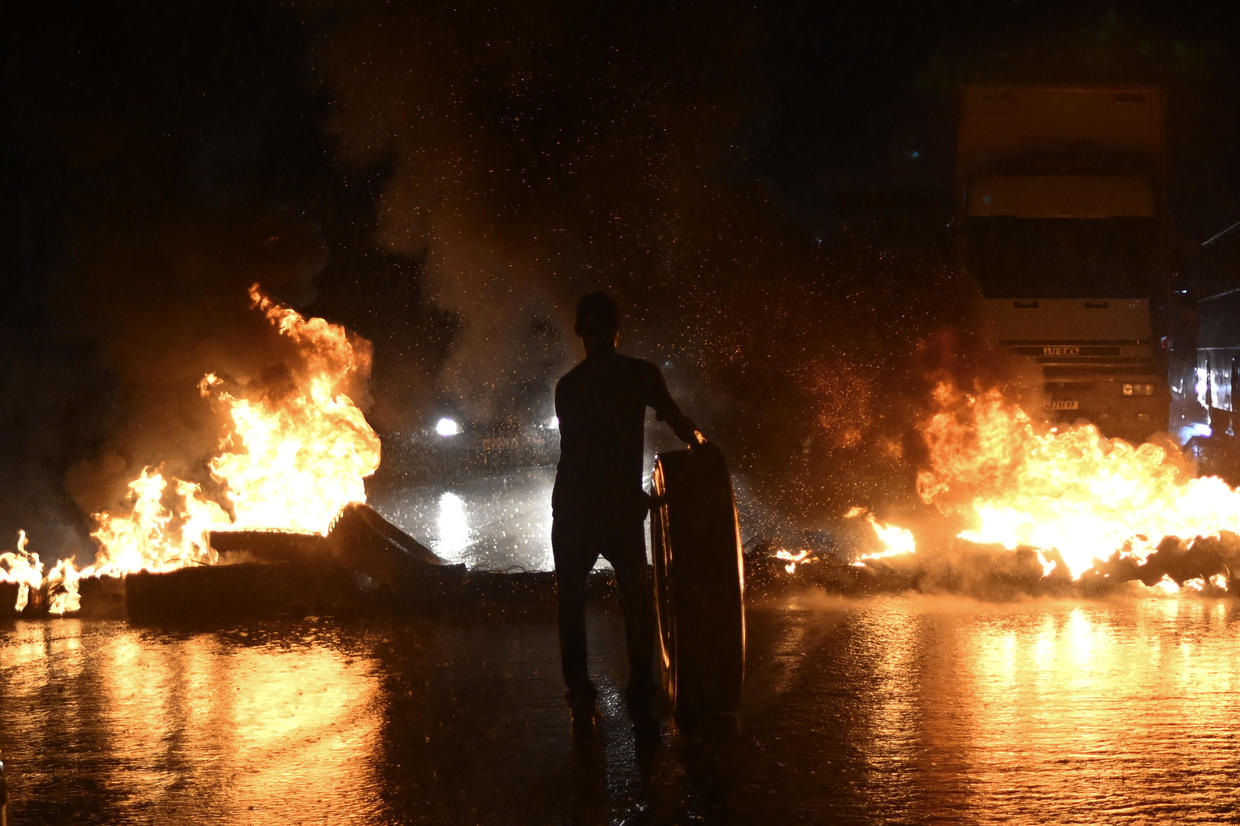
We can only neutralize the extreme right by putting our body on the line, without violence. Not through institutions. In these days of road blockages, soccer fans once again showed courage and determination (https://bit.ly/3Ue2sCA), by going in groups to lift the blockades given the passivity of the police (http://glo.bo/3h85OsI).
As always, we learn from those below.
Notes
[1] Brazil is the world’s largest producer and exporter of sugar, coffee, orange juice and soybean.
[2] The Guardian has amazing photos of the cowboy culture in Brazil’s agricultural regions.
Originally Published in Spanish by La Jornada, Friday, October 4, 2022, https://www.jornada.com.mx/2022/11/04/opinion/023a1pol and Re-Published with English interpretation by the Chiapas Support Committee
Chiapas motorcycle gang demands release of leader

From the Correspondents
Tuxtla Gutiérrez, Chiapas – Supporters of Pablo N, alleged leader of the Los Vans motorcycle gang, which operates in San Cristóbal de Las Casas, and former director of the Sentiments of the Nation organization in the Chiapas Highlands, blocked the Chiapa de Corzo – San Cristóbal highway for six hours yesterday to demand the release of Pablo N, who was arrested and accused of murder.
The so-called “Scooters” (motonetos), armed youth who travel on motorcycles, [1] positioned themselves yesterday shortly before nine o’clock in the morning at kilometer 46 of the toll road, one kilometer from this city, and placed stones on the road.
State and municipal police arrived to ask the protestors to march because they were committing a crime, but they paid no attention. Police remained in the area, while drivers had to use alternate routes to drive to San Cristóbal de Las Casas or Tuxtla Gutiérrez.
A man who identified himself as Cecilio López gave a press conference, in which he demanded that the state government dialogue with followers of Pablo N. “If the government had given us a dialogue table or sent for us, we would not be here; But since they have not taken us into account, and rather turned a blind eye, that’s why we move,” he said.
A commission of the dissidents traveled to Tuxtla Gutierrez to talk with officials of the Government Secretariat. At press time, state authorities had not reported on the matter.
Pablo N, leader of the organization Raíces Fuertes de El Pinar, was arrested last Thursday night in San Cristóbal, accused of the homicide of Mateo N, perpetrated on February 3, 2021. A judge imposed preventive prison in El Amate, located in Cintalapa municipality.
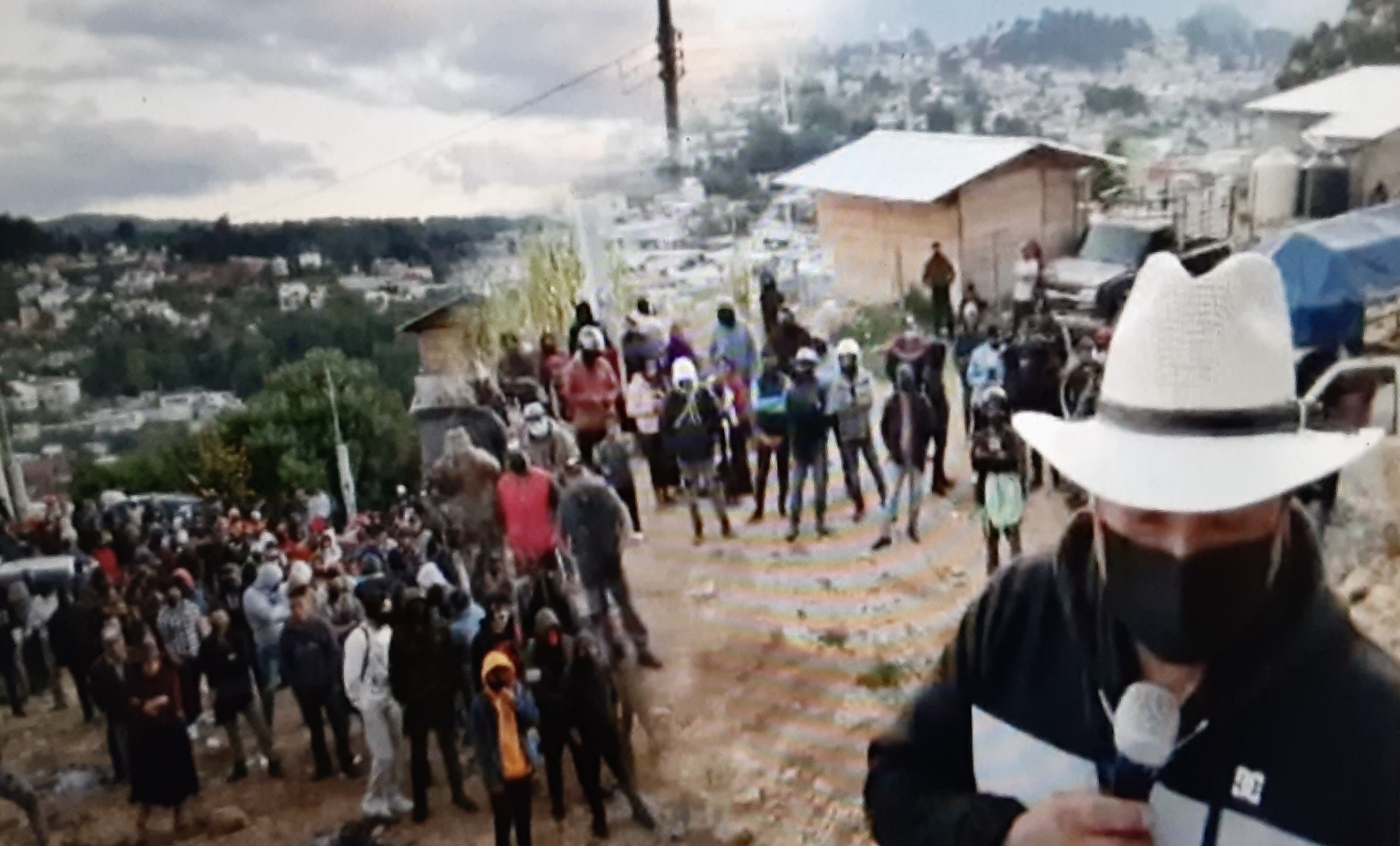
The night of October 27, when Pablo N was apprehended, his sympathizers toured San Cristóbal on their motorcycles firing shots.
Meanwhile, in a communication, inhabitants of the Cuxtitali El Pinar ejido, in the municipality of San Cristóbal de Las Casas, assured that Pablo N’s allies who demonstrated yesterday usurp functions in their community.
“They appointed themselves (inhabitants and ejido authorities) with false minutes of a general assembly that never took place. The majority of the population of this ejido does not support illegality or violence. We do not demand the release of Pablo Pérez; To the contrary, we demand the investigation and punishment corresponding to any person who acts outside the law,” they said.
The ejido members demanded that law, order, “security and tranquility” be restored in their municipality, and that the armed groups that have caused a lot of damage to the population of San Cristóbal because of the constant crimes they commit (threats, violence, use of firearms, invasions, ecocides, kidnappings) be dismantled.”
They warned that they will not allow more illegality or violence in the Cuxtitali ejido. “We are going to carry out the actions that are necessary to guarantee our right to live safely and in peace,” they said.
Note
[1] The “Motonetos” (Scooters) create terror in San Cristóbal by shooting off high-powered weapons to gain dominance over public spaces, as they did in San Cristóbal’s Northern Market.
Originally Published in Spanish by La Jornada, Tuesday, November 1, 2022, https://www.jornada.com.mx/2022/11/01/estados/034n1est and Re-Published with English translation by the Chiapas Support Committee
Chiapas: Violence and displaced persons cause fear of another Acteal
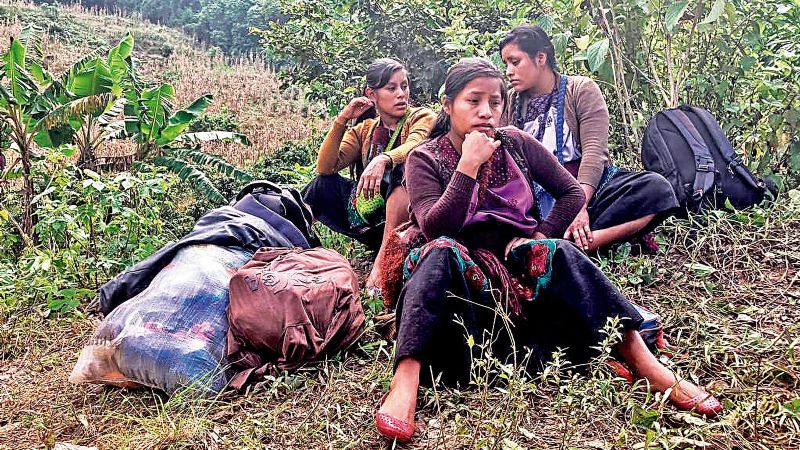
Lack of attention to land conflicts and the growing operation of organized crime groups translates into deaths, rapes and forced displacement of residents.
By: Isaín Mandujano
Civilian organizations, human rights defenders and religious people denounce an unusual increase in violence in Chiapas regions such as the Center, the Highlands and the Border. In their reports – one of which they delivered to the UN special rapporteur – they document that the lack of attention to land conflicts and the growing operation of organized crime groups translate into deaths, rapes and forced displacement of villagers. [1]
Tuxtla Gutiérrez, Chiapas (Proceso)
Clashes between organized crime groups vying for land in the Chiapas Highlands, forced displacement, drug executions, forced disappearances and other forms of violence have prevailed in the state during the four years of the government of Rutilio Escandón Cadenas.
The Diocese of San Cristóbal de Las Casas, as well as human rights organizations, activists and residents say they are desperate due to the government’s failure to address the conflicts in the state.
In the Jiquipilas Valley and Cintalapa, in the Central region of Chiapas, armed civilians staged a series of clashes for control of territory, extending from the border region, particularly on the Comalapa border, adjacent to the Department of Huehuetenango, Guatemala.
This dispute began in July 2021, after the execution in Tuxtla Gutiérrez of the head of the Sinaloa Cartel Plaza on the southern border, Ramón Gilberto Rivera Beltran, “El Junior.” Between September and October, the fighting intensified with scenes previously seen only in the north of the country: convoys of armored vehicles with heavily armed men, clashes and messages with videos of executions.
Between October 9 and 10 of this year, organized crime gangs clashed in Jiquipilas, which had never happened before. Armed men mobilized in all-terrain trucks and only after the intervention of the Army and the National Guard was calm restored. At least 13 men from a gang were arrested with an arsenal aboard several pickup trucks.
Violence in the Central Region is linked to that in the Border Region, where entire families have been displaced from several communities in Frontera Comalapa. And when they organized to demand the presence of the Army and the National Guard with road blockages, they suffered the consequences.
On September 20, 2022, the leader of the region’s Union of Ejidos, who was asking for a military base in the area, Rolando Rodríguez Morales – also ejido commissioner of the Sinaloa community – disappeared in San Gregorio Chamic, Frontera Comalapa municipality.
Violence in the Central Region is linked to that in the Border Region, where entire families have been displaced from several communities in Frontera Comalapa. And when they organized to demand the presence of the Army and the National Guard with road blockades, they suffered the consequences.
On September 20, the leader of the region’s Union of Ejidos, who was asking for a military base in the area, Rolando Rodríguez Morales – also ejido commissioner of the Sinaloa community – disappeared in San Gregorio Chamic, Frontera Comalapa Municipality.
With several road blockages, campesinos from the communities that make up the Union of Ejidos demanded his appearance alive, but to date, his whereabouts are not known.
Note
[1] This text is an advance of the report published in Number 2399 of the printed edition of Proceso, in circulation since October 23, 2022. The online version of Number 2399 is available for purchase here.

Originally Published in Spanish by Proceso, Thursday, October 27, 2022, https://www.proceso.com.mx/reportajes/2022/10/27/chiapas-violencia-desplazados-hacen-temer-otro-acteal-295927.html and Re-Published with English interpretation by the Chiapas Support Committee
U.S. judge rejects lawsuit against gun manufacturers, Mexico to appeal

By: David Brooks, Correspondent | La Jornada
New York
The Mexican government’s lawsuit against U.S. gun manufacturers for their responsibility in nurturing the illicit flow of firearms used by organized crime in Mexico was dismissed Friday by the federal judge in charge of the case in Massachusetts.
“Unfortunately for the government of Mexico, all of their legal claims are prohibited by federal law or fail for other reasons,” Judge F. Dennis Saylor IV of the U.S. District Court in Massachusetts said in his ruling yesterday.
Judge Saylor stated that the federal law, known as the Protection of Lawful Commerce in Arms Act (PLCAA), “unequivocally prohibits lawsuits that seek to hold gun manufacturers accountable for the acts of individuals who use them for their purposes” and there are no exceptions applicable to this case.
He argued that: “this court has no authority to ignore an act of Congress,” upon referring to the federal law that he cites as the basis of his decision.
The judge indicated that: “while the court has considerable sympathy for the people of Mexico, and not any for those who traffic arms to Mexican criminal organizations, I must follow the law.”
The 44-page ruling details the legal reasoning for this decision that, for now, nullifies civil legal proceedings against seven gun manufacturers and a wholesale company in their business: Smith & Wesson, Barrett Firearms, Beretta USA, Century International Arms, Colt’s Manufacturing, Glock and Sturm, Ruger & Co; and wholesaler Witmer Public Safety.

Mexico, the decision recalls, complains that 342,000 of the 597,000 arms sold by the defendants are illegally moved from the United States Unidos each year and that now Mexico occupies third place worldwide in deaths related to firearms; thus, it links the increase of violence to the corporate conduct of the accused. Therefore, the Mexican government formulated nine charges against the defendants.
But in the end the PLCAA prevailed, which grants broad legal immunity to manufacturers, distributors and sellers of arms, and protects these companies from civil lawsuits for the illegal use of their products in the United States.
Mexico presented its civil lawsuit against arms companies and a distributor in the United States om August 4 to the District Court in Massachusetts, arguing that the manufacturers deliberately facilitate the sale of firearms that end up in the hands of organized crime on the other side of the border.
The lawsuit sought both economic reparations for the damage and commitments from these companies to curb the illicit flow of weapons by assuming greater responsibility in the sale and commercial promotion of their products.
Mexico’s legal challenge was supported in court by six of the leading gun violence prevention organizations in the United States, state’s attorneys in 13 states and the capital, as well as dozens of district attorneys around the country, who joined the case in their capacity as “friends of the court. “
==Ω==
There will be a second stage: SRE
By: Arturo Sánchez Jiménez
The Secretariat of Foreign Relations (SRE) is Mexico’s Foreign Ministry. It announced last night that it will appeal the decision of the federal judge of the District Court in Boston, Massachusetts, who rejected the case presented by the Mexican government against the negligence of the US companies that manufacture, distribute and sell firearms, which facilitates their illicit traffic to Mexican territory. [1]
The Foreign Ministry said in a statement that after presenting the Mexican government’s arguments, the judge decided that the defendant companies enjoy the protection of U.S. law and that he is prevented from questioning the will of that country’s Congress, “even though the accusations in the lawsuit may evoke an empathetic response. “
The judge also said that “even though the Court has considerable empathy for the people of Mexico, and none for those who traffic weapons to criminal organizations, it must abide by the provisions of the law.
“This is the decision of the first instance in an unprecedented and courageous action by the government of Mexico to prevent firearms, many of high power, from causing violence in our country,” the SRE reported.
It added that: “it will appeal the federal judge’s decision and will continue insisting that the arms trade must be responsible, transparent and with accountability, and that the negligent way in which they are sold in the United States facilitates that criminals have access to them.”
It affirmed that the lawsuit “has received worldwide recognition and has been considered a watershed in the discussion on the responsibility of the arms industry in the violence that is experienced in Mexico and in the region. State’s attorneys and U.S. prosecutors, academics, civil society organizations and governments of other countries support the government of Mexico in this action.”
The SRE will continue acting to end the illicit arms traffic. “The civil lawsuit for damages against those who profit from the violence that Mexicans suffer passes to a second stage, in which the chancellery will continue insisting that the negligence of those companies seriously affects our country.”

[1] According to a report in Proceso, Mexico’s Secretariat of Foreign Relations filed a notice of appeal with the United States Court of Appeals for the First Circuit in Boston on October 26. And, Mexico also filed a civil lawsuit a few days ago in the Federal District Court in Arizona against 5 arms dealers whom it accuses of knowingly selling high-caliber weapons that will end up in the hands of drug traffickers and organized crime.
Originally Published in Spanish by La Jornada, Saturday, October 1, 2022, https://www.jornada.com.mx/2022/10/01/politica/004n1pol and Re-Published with English interpretation by the Chiapas Support Committee
US: Hypocrisy and Cruelty
From the editorial desk of La Jornada
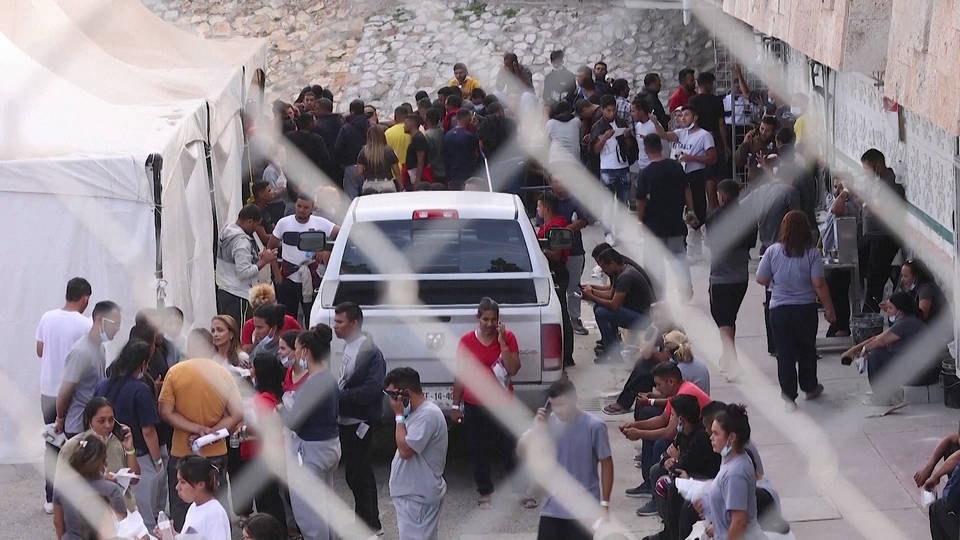
Once again, the immigration issue exposes the hypocrisy, disdain for human rights, manipulation and cruelty of US leaders. Since Wednesday, the policy of granting conditional humanitarian freedom to Venezuelans entering the United States was abandoned, and the automatic application of Title 42 began –a provision established by former President Donald Trump that allows (in flagrant violation of international law on the right to asylum) the expulsion of migrants who enter without documents to its territory, under the pretext of combating the spread of covid-19.
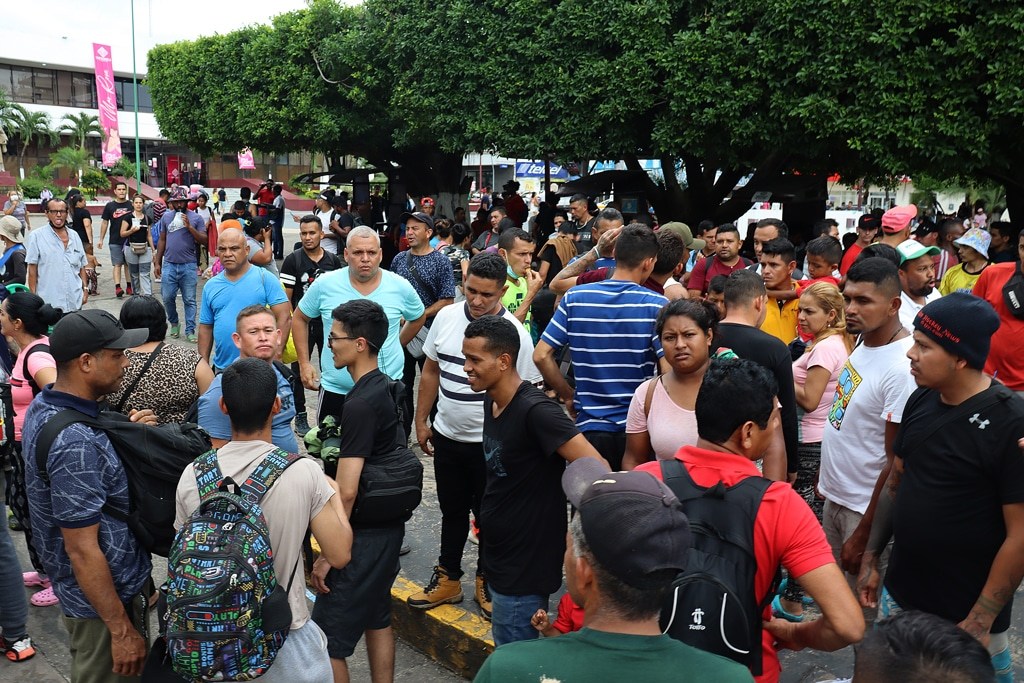
With the new provisions, hundreds of Venezuelans have been expelled to our country (Mexico) in the course of a few hours, and it is estimated that about a thousand will be sent here every day for the next few weeks. Washington announced a new immigration plan that will receive a total of 24,000 Venezuelans who meet strict requirements: they must apply for entry via Internet before traveling, arrive by plane, have a contact that guarantees financial support, have a complete vaccination schedule and pass an evaluation of their biometric and security data. Any Venezuelan who enters the U.S. without meeting these conditions will be expelled. The number of admissions is derisory, given that in the last year 180,000 arrived in the United States, and that only includes crossings at the Mexico border.
If Washington’s treatment of all migrants from developing nations is deplorable and illegal, the turn against Venezuelans is doubly reprehensible when practically the entire U.S. political class is in agreement in denouncing the government of President Nicolás Maduro as an authoritarian, repressive and illegitimate regime, and therefore placing the citizens of the South American nation as the ideal candidates for humanitarian asylum.
It also reveals the sadism of the superpower, which on the one hand undertakes a brutal sabotage against the Venezuelan economy, closing all avenues to provide its population with basic goods and services, and on the other hand slams the door on those who leave their place of origin in search of work, or professional and educational opportunities. In this way, thousands of people are confronted with the reality that Washington’s alleged unlimited support for the Venezuelan people is nothing more than a front for destabilization aimed at overthrowing the Bolivarian government and taking control of the natural resources of the country with the world’s largest oil reserves.
As has been the case since it became a gateway country for migrants from Latin America, the Caribbean and even other regions, the new U.S. policy towards Venezuelan citizens places Mexico in a difficult situation. With services totally overwhelmed and with financial capacities very different from those of its northern neighbor, it will have to find accommodation, provide support and, most likely, take in a large number of asylum seekers indefinitely. It is to be hoped that Mexican authorities and society will remember the mistreatment suffered for decades by our compatriots who have departed in search of the elusive American dream, and will react to the new arrivals with solidarity and empathy.
Originally Published in Spanish by La Jornada, Monday, October 17, 2022, https://www.jornada.com.mx/2022/10/16/opinion/002a1edi/ Translated by Schools for Chiapas and Re-Published by the Chiapas Support Committee
Human Rights and Militarization
By: Miguel Concha
Democracy, simply put in Rousseau’s terms, is that popular and collective will, given to a legitimate person to represent and address the needs of the people for the common good. However, when this political model moves away from human rights, security and the lives of the people, not only is true democracy put at risk, but also the people themselves.
This social peril has worsened in Mexico during the last six presidential terms, with failed security policies and policies to combat organized crime, which have failed to guarantee the rights to life and social peace. On the contrary, they have exacerbated violence in the country. This has been the result of militaristic logic implemented by the government through the increased use of the armed forces, which puts human rights at risk.
The National Guard, promoted by the federal Executive Branch of the current administration, was introduced as the body that would guarantee security and peace for the population, through public security activities with a civilian command. It is important to mention that this promise was made in the context of a war declared against drug trafficking since the six-year term of Felipe Calderón, which has failed to restore peace in the territories, but has increased violence and serious human rights violations. In spite of this, the constant reforms to the regulations of the National Guard, especially those recently approved, have generated fears about respect for human rights.
The regulatory framework at the start of this government, which gave way to the National Guard, established that citizen security should be the responsibility of civilian commanders in order to respect and ensure the rule of law; it also established the obligation for the gradual withdrawal of the armed forces from public security work, which was to take place over the next five years. However, with the recent modification, it is proposed that the direction of the agency will be under the Secretariat of National Defense, thus omitting the previously pledged civilian character and returning to the military nature; moreover, the period for the armed forces to remain on the streets was extended.
As has been pointed out by various civil society organizations and international human rights organizations, placing the military in support of public security tasks violates the rule of law and human rights.
It is necessary to understand that the crisis of violence and institutionality in the country is largely a consequence of capitalist policies that have opted for extractivism and dispossession of lands and territories through violence, and in complicity with the great international economic powers; of the repression of social movements and human rights defenders to protect social order, of the lack of justice in a country with an impunity rate of more than 90 percent, of a security model incompatible with democracy and peace, and the growth of organized crime.
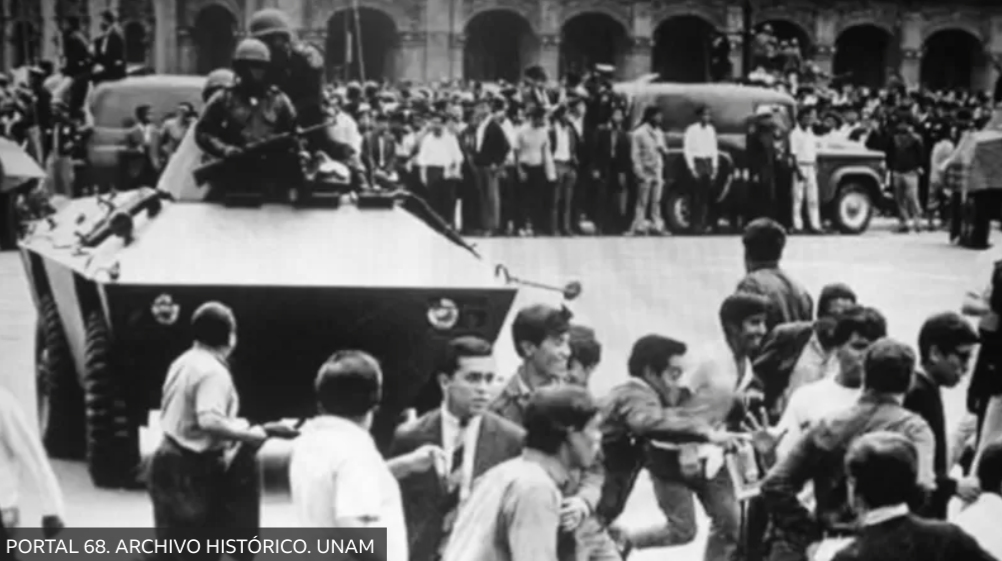
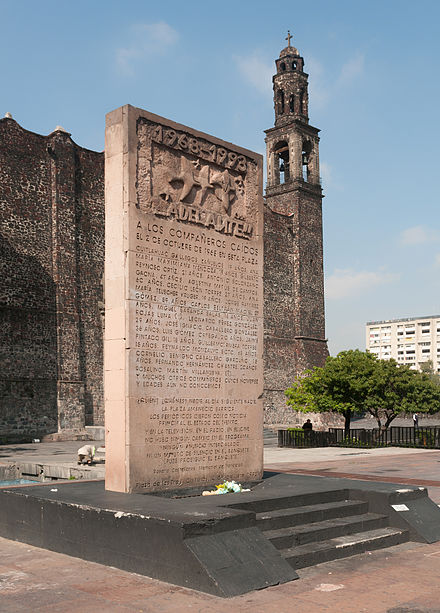
The search for peace, through the clarification of truth and justice, has been the demand of various victims of crimes and serious human rights violations, who have suffered repression, excessive use of force and impunity under military command, as happened with the student movements on October 2, 1968 in the Plaza de las Tres Culturas, in Tlatelolco, Mexico City, or, more recently, on September 26, 2014 in Iguala, Guerrero.
So, without having established the corresponding responsibilities and much less the due sanctions, impunity has been maintained.
These historical references remind us that military rule has been, unfortunately, synonymous with repression of protests and social movements, which has not guaranteed civilian security. Therefore, there is no place for the protection of life and human rights with military personnel doing civilian work.
Opposing the continuation of the failed security strategy of maintaining military rule in the streets is not unwarranted. To the contrary, it is necessary to design security strategies that avoid at all costs granting even more power to the Army, that prioritize guaranteeing the human rights of the civilian population as established in the Mexican Constitution and international human rights standards, and that confront organized crime in a multilateral manner and from different levels of government.
Security cannot be guaranteed with violence, weapons or the military, just as the excessive use of force is unnecessary to solve social inequalities. What we need is to build a social democracy to dismantle social structures and recover peace through the justice that has been taken from us with weapons.
Originally Published in Spanish by La Jornada, Saturday, October 15, 2022, https://www.jornada.com.mx/2022/10/15/opinion/012a2pol Translation by Schools for Chiapas, and Re-Published by the Chiapas Support Committee
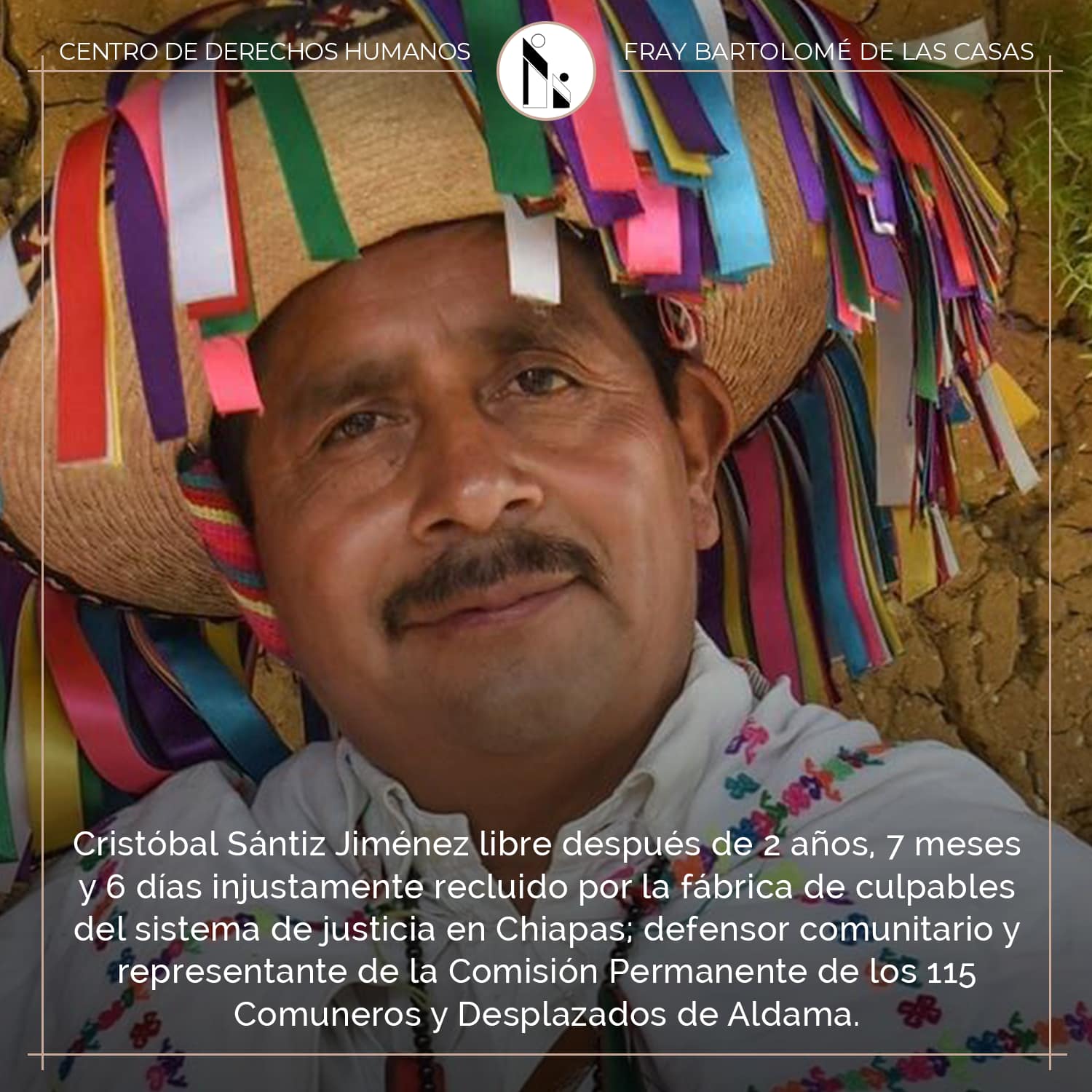
Cristóbal Sántiz is free, more than 2 years after his arrest
The community defender was arrested when leaving work in San Cristóbal de Las Casas by officials of the Chiapas Attorney General’s specialized police
By: Yessica Morales
El Centro de Derechos Humanos Fray Bartolomé de Las Casas Human Rights Center (Frayba) announced that after 2 years, 7 months and 6 days, Cristóbal Sántiz Jiménez, Maya Tsotsil, community defender and representative of the Permanent Commission of the 115 Community Members and Displaced of Aldama, was released.
In 2020, the Frayba denounced that the State’s Attorney General (FGE) perpetrated grave violations of the community leader’s human rights, ever since he has been incarcerated in the State Center for Social Reinsertion for those Sentenced (CERSS) No.14 “El Amate,” in the municipality of Cintalapa de Figueroa; that’s why it demanded the immediate intervention of the federal and state governments for his rapid release.
Likewise, they pointed out that the detention of the defender occurred in a context of criminalization, arbitrary deprivation of his liberty and threats to his life that placed his integrity and personal security at high risk.
Incommunicado, criminalization and arbitrary deprivation of liberty of community defender Cristóbal Sántiz Jiménez Photo: Isaac Guzmán
The arrest was made when he left work on March 14, 2020, at 6:50 am, after 5 hours of being incommunicado, Frayba indicated that the detention was perpetrated by the FGE who transferred him to Tuxtla Gutiérrez and it was until 12:20 pm when the family was informed of the detention and transfer.
The organization also stressed that Sántiz Jiménez is one of the families dispossessed of their land by a paramilitary group from Santa Martha Chenalhó.
They also stated that the Tsotsil defender faced repeated death threats from the armed group and that after denouncing the omissions of the Mexican State over the escalation of violence in the Chiapas Highlands region, said State demanded his silence in exchange for his freedom.
He has been a representative of the Permanent Commission of Community Members and Displaced Persons of Aldama ever since the conflict emerged through generalized violence and forced displacements… and worked for 21 years as watchman at the Training Center for Industrial Work in San Cristobal de Las Casas, they exposed at that time in a statement.
Originally Published in Spanish by Chiapas Paralelo, Sunday, October 23, 2022, https://www.chiapasparalelo.com/noticias/chiapas/2022/10/cristobal-santiz-libre-a-mas-de-dos-anos-de-su-detencion/ and Re-Published with English interpretation by the Chiapas Support Committee
Spirituality and autonomy
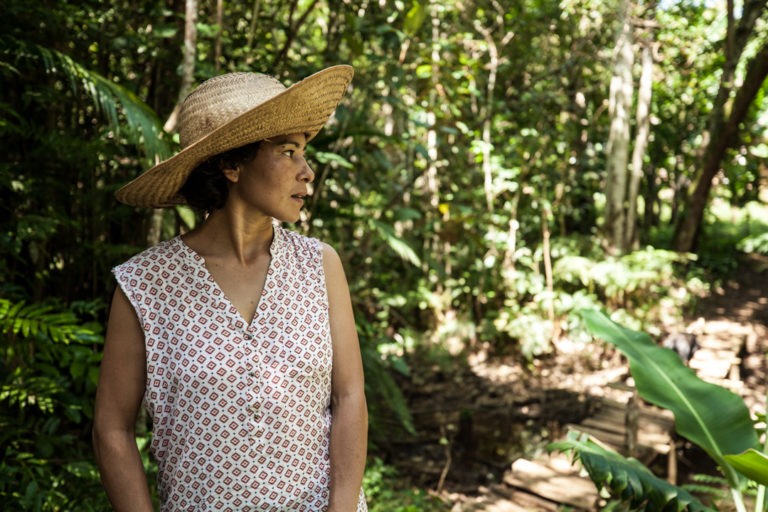
By: Raúl Zibechi
Those of us who have been trained in materialism and Eurocentric critical thought have serious difficulties in comprehending and assuming the role of spirituality in the emancipatory processes. We are deeply dependent on Marx’s famous phrase that referred to religion as “the opiate of the people,” and the reduction of the spiritual to hegemonic ecclesiastical institutions seems to comfort us. However, ignoring the spirituality of the peoples leads to reproducing capitalism through individualism and consumerism.
Thanks to the support of a small group of activists from Brazil, I was able to get to know the Tenondé Porá indigenous territory, inhabited by the Mbya Guarani in the forests of southern Sao Paulo municipality. In the last 10 years, they have developed intense struggles through the “retaking” of ancestral land, a process in which they recuperated almost 16,000 hectares and founded 12 new villages, where before there were just two.
The experience in the Kalipety community, the dialogues with community members, the exchanges with friends and especially having participated in the rituals in the “house of prayer,” showed me the limitations of the critical thought in which we were formed. [1] One of these limitations, linked to a narrow materialism, is the misunderstanding of spirituality as the mortar of the communities, of their link with the land and territory, and as the axis of their past and current resistances.
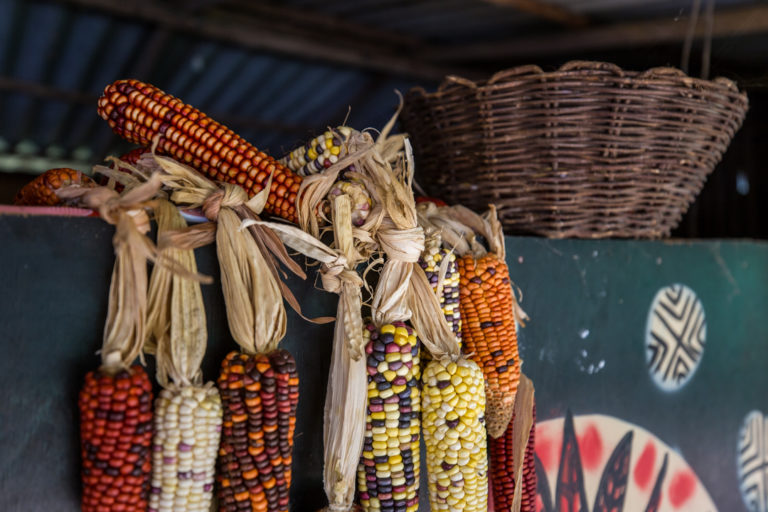
Spirituality that is neither religion nor ideology. It involves bodies and not just minds, recreates itself in everyday life and sustains human and non- human life. Monocultures don’t exist in the villages, nor the concentration of the means of production and everything that is consumed is produced by working, much of it through collective work.
Unlike the mystical or cultural events of social movements, which for short periods accompany mobilizations and formations, for the Mbya Guarani, spirituality extends in a “timeless time,” as Mario Benedetti wrote. The “house of prayer” is the symbolic center of community life. Every day, at sunset, the community dances and sings to the sound of their music, for a few hours. On certain occasions the “prayer” extends until dawn.
Spirituality is not practiced to obtain an end, to attain something that is asked of someone (gods, priests or politicians). We pray to be, to continue being who we are, individually and collectively, to remain different peoples. The video about Las Abejas of Acteal, (Weaving territory), abounds in this theme without mentioning it, because of the naturalness with which the Tsotsil people and the Mayas resist and reproduce their lives.
The spiritualities of the peoples, their world views and values are tightly linked to the struggle for la autonomy. The reflection of Francisco López Bárcenas in “Autonomies and indigenous rights in Mexico” highlights forms of mobilization invisible to the outside, as those that “that they hold within themselves.” In these practices they turn to their spiritual guides with the aim of “restoring harmony between the men of this time and those of the past, as well as between society and its gods. “
In their sacred places they make offerings and commit to “mending their relationships with their ancestors, their deities and nature.” The reflection concludes by linking spirituality and autonomy: “Since many do not see them or seeing them do not understand them, they think that the peoples don’t mobilize, when in reality they are the most significant mobilizations for the peoples, because they construct their autonomy from them.”
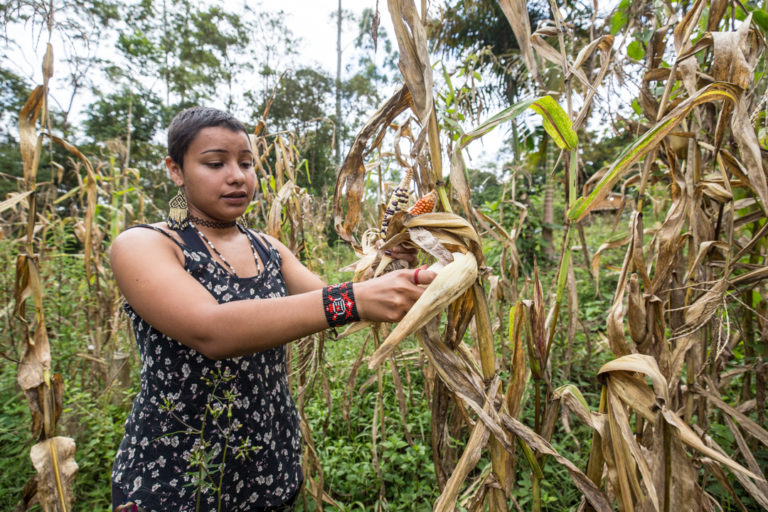
Considering spirituality as a support for autonomy implies overcoming narrow materialism, in order to adopt a broader perspective. In Western thought the key to community is collective land, understood as a means of production and not a comprehensive life space. From what I could sense, and from what is established where the peoples resist (once again I remember the four families in Nuevo San Gregorio), spirituality is a central aspect that complements and sustains the collective possession of land.
The resistances of the peoples are ordered around their own world views and spiritualities. They don’t seem preoccupied with ideologies or programs, as is the case with Eurocentric critical thought.
It still lacks comprehending spirituality as the core of an ethic of life that questions our ways of living, in particular individualism; an ethic that sustains those who resist capitalism, those who don’t sell out, don’t give up and don’t give in.
Photos: Felipe Abreu | Mongabay
[1] My reflections are intertwined with those of several people: Tato Iglesias, from the Transhumant Network in Argentina; Silvia Beatriz Adoue, professor at the Florestán Fernandes School, of the MST, and anthropologists Lucas Keese, Alana Moraes and Salvador Schavelzon.
Originally Published in Spanish by La Jornada, Friday, October 21, 2022, https://www.jornada.com.mx/2022/10/21/opinion/019a1pol and Re-Published with English interpretation by the Chiapas Support Committee
 Chiapas Support Committee