Chiapas Support Committee
Home of the Compañero Manuel blog on zapatistas & mexico
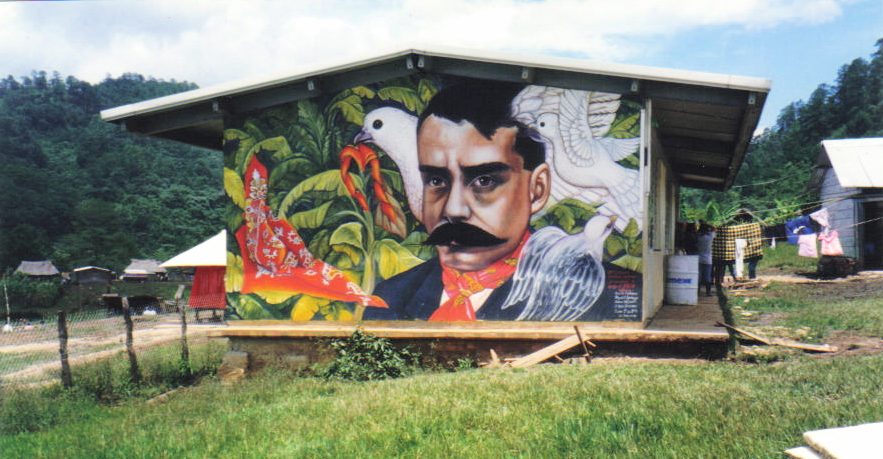
Motonetos frighten neighbors in San Cristóbal with shooting

By: Elio Henríquez, Correspondent
San Cristóbal de Las Casas, Chiapas
Subjects with high-caliber weapons fired shots into the air in the area of the José Castillo Tiélemans Market, the city’s main supply center, which caused panic and anxiety among hundreds of people; Many ran through the streets while others at evening Mass remained locked in two churches.
According to neighbors, at approximately 10 o’clock Saturday night, men identified as members of gangs that move around on motorcycles, known as Motonetos or “Scooters,” fired shots into the air, without any report of people injured. [1]
The neighbors commented that apparently their purpose was to frighten members of an antagonistic group with which they dispute spaces in what’s called “Mercadito 2,” next to José Castillo Tiélemans. Shops closed and waiting vans left in a hurry.
Some Catholics who were at Mass in the churches of Santo Domingo and La Asunción, in the Mexicanos Barrio (neighborhood), remained locked-in, waiting for the situation to calm down.
The municipal police reported that they responded to a first report of three shots at 4 p.m., but the criminals fled.
They added that around 8 p.m. “a second warning of more weapon detonations was received, but shortly before 9:20 p.m. control of the area had already been regained with the collaboration of the Mexican Army, National Guard and state preventive police.”
The incident occurred on the eve of the start of Spring Holiday and Easter, from April 9 to 16, so since this Sunday, security forces of the three government levels increased patrols at strategic points in order to protect all the events that will be held, such as the inauguration, the parade of floats and the coronation of the queen.
In a statement they said: “In addition to surveillance with feet-on-the-ground and motorized personnel in patrol cars, since the early hours of this Sunday security filters and checkpoints have been arranged in coordination with preventive state police, the Mexican Army, the National Guard, civil protection and municipal traffic, in order to guarantee order and tranquility throughout the city.”
The corporation explained that “the corporations that make up the Inter-Institutional Group patrol the perimeter of the José Castillo Tiélemans public market.”
[1] The significance of this note in La Jornada is that the “Scooters” (Motonetos in Spanish) are still organized and active as a criminal gang, despite the arrest and imprisonment of its leader, Pablo Santiz and his right-hand man Cecilio “N” (See the 2nd note below).

Originally Published in Spanish by La Jornada, Monday, April 10, 2023, https://www.jornada.com.mx/2023/04/10/estados/023n2est and Re-Published with English interpretation by the Chiapas Support Committee
They arrest Cecilio “N,” the right-hand man of “Pablo El Pinar,” linked to the Scooters
By: Angeles Vargas | El Heraldo de Chiapas
The State’s Attorney General (FGE), through the Special Issues Prosecutor executed an arrest warrant for rioting and attacks against the peace and integrity of the collectivity of the State of Chiapas against a subject who is linked to the so-called Scooters (Motonetos) of San Cristóbal de las Casas.
Cecilio “N,” the one arrested, is identified by people from Santiago El Pinar, located in the northern zone of San Cristóbal de las Casas municipality, as the right hand of Pablo Santiz or “Pablo El Pinar,” arrested and held in the State Center of Social Re-insertion for those Sentenced Number 3 in Tapachula on October 28, 2022.
Given this situation, members of the Investigative Police assigned to this Prosecutor’s Office, executed a warrant against Cecilio “N” this Thursday. He is identified as second in charge of the “Scooters” gang for the crimes of rioting and attacks against the peace and collectivity of the state, to the detriment of society for the events that occurred at Km 46 of the San Cristóbal – Tuxtla Gutiérrez toll road, for which he was placed at the disposal of the control judge.
According to the authorities on October 30, 2022, Cecilio “N” and other people blocked kilometer 46 of the San Cristóbal – Chiapa de Corzo toll road after the arrest of their leader Pablo Sántiz alias “Pablo El Pinar,” who led the Scooters criminal group.
As it will be remembered, this group has been linked to robberies, uprisings, protection fees and roadblocks, among other crimes. On November 8, 2022, when they caused several disturbances in San Cristóbal de las Casas, among them they confronted police, fired shots into the air, burned vehicles and destroyed the Municipal Presidency and the Palace of Justice.
Additionally, prior to this, they were also linked to a riot where for almost five hours they shot, burned vehicles, blocked streets and took control of a part of the city, terrorizing the people who walked through the streets and had to take refuge where they could, even in supermarkets, while dozens of schoolchildren were trapped in their schools and parents sought to reach them generating great psychosis.
At the same time, another one of the disturbances generated by the so-called “Scooters” was in the place known as the Northern Market, where they also shot more to persuade than to kill, but it was there where a stray bullet hit a young man who died, while the group was masked and fired into the air and the citizens lived hours of terror.
Ω
Originally Published in Spanish by El Heraldo de Chiapas, Friday, March 31, 2023, https://www.elheraldodechiapas.com.mx/policiaca/san-cristobal-de-las-casas-los-motonetos-cecilio-n-9848407.html and Re-Published with English interpretation by the Chiapas Support Committee
Indigenous people: Impunity and social decomposition
By: Magdalena Gómez
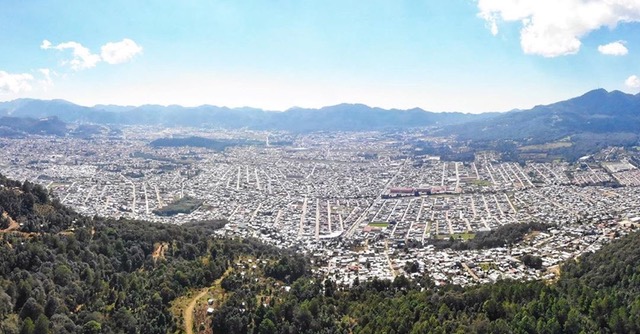
On April 4, 2023, the Diocese of San Cristóbal de las Casas issued a very strong communication directed at the three levels of government. Unfortunately, its central thesis coincides with what happens in other regions of the country: We are worried about the social decomposition that is increasing due to generalized violence in the towns and municipalities. During this time, we have heard loudly like a cry in the desert the situation of structural and institutionalized violence with the presence of organized crime, the proliferation of armed groups, some doing the task of shock groups. The territorial dispute that is increasingly deteriorating the social fabric, the excessive exploitation of natural resources (reactivation of mining extraction; illegal sale of wood, stone material, gasoline, etc.) the manipulation and the stripping of the dignity of our peoples, psychological warfare, femicides, the detriment of community strength, the criminalization of peaceful struggles and resistance. Four days later, a shootout broke out in San Cristóbal de las Casas, presumably by one of the criminal groups, and the SEDENA and the National Guard responded with an operation that they called détente while the authorities have remained silent.
Let’s just put, for example, two recent cases. One in the country’s north and others on the coast of Michoacán. Regarding the murders in June 2022 in Cerocahui, municipality of Urique in the Sierra Tarahumara, Chihuahua, of the Jesuit priests Javier Campos and Joaquín Mora, in addition to Pedro Palma and Paul Berrelleza, the Mexican Province of the Society of Jesus has expressed its concern because the investigations have not made relevant progress and impunity continues.
The case has transcended our borders. On February 1, when granting precautionary measures in favor of 11 Jesuits from Cerocahui, Chihuahua, the Inter-American Commission on Human Rights (IACHR) urged the Mexican government to protect the lives of the religious, considering that they are in a serious and urgency. In June 2022, it pointed out, two Jesuit priests were murdered in a church in Cerocahui, Urique municipality, and their bodies were taken by armed individuals. The attack and the theft of the corpses was attributed to the criminal leader José Noriel Portillo, El Chueco.

The Jesuits have suffered threats and aggressions on the part of organized crime groups, which prevents them from developing normal pastoral activities and activities of support to the communities in the zone. Recent news officially confirmed the death of the one who executed the crimes, José Noriel Portillo Gil, El Chueco, does not mean justice. Rather, it appears as a probable adjusting of accounts between criminal gangs, the Company of Jesus and the Diocese of Tarahumara pointed out. The case remains open.
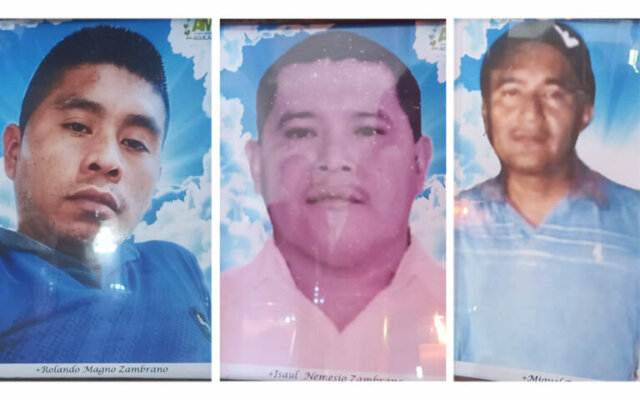
Let’s go to Michoacán and without stopping in Guerrero, which also calls for attention. On January 12, the community guards of Santa María Ostula Isaul Nemecio Zambrano, Miguel Estrada Reyes, and Rolando Mauno Zambrano were murdered; three days later, on January 15, the human rights defender Ricardo Lagunes, lawyer for the Nahua community of Aquila, and the community leader of Aquila, Antonio Díaz went missing. Their truck was found with traces of violence and to date there is no further news.
The case of Eustacio Alcalá Díaz was the most recent assassination in the same area where he was a Nahua defender of the territory and the environment. Through his leadership, the community of San Juan Huitzontla, in the municipality of Chinicuila, Michoacán, managed to obtain the suspension of various mining concession titles delivered without respecting the right of their community to give their free, prior and informed consent. He was kidnapped by an armed group on April 1 and his body was found three days later.

Originally Published in Spanish by La Jornada, Tuesday, April 11, 2023, https://www.jornada.com.mx/2023/04/11/opinion/015a2pol and Re-Published with English interpretation by the Chiapas Support Committee
Bishops warn about an increase of narco-violence in Chiapas
By: Isaín Mandujano
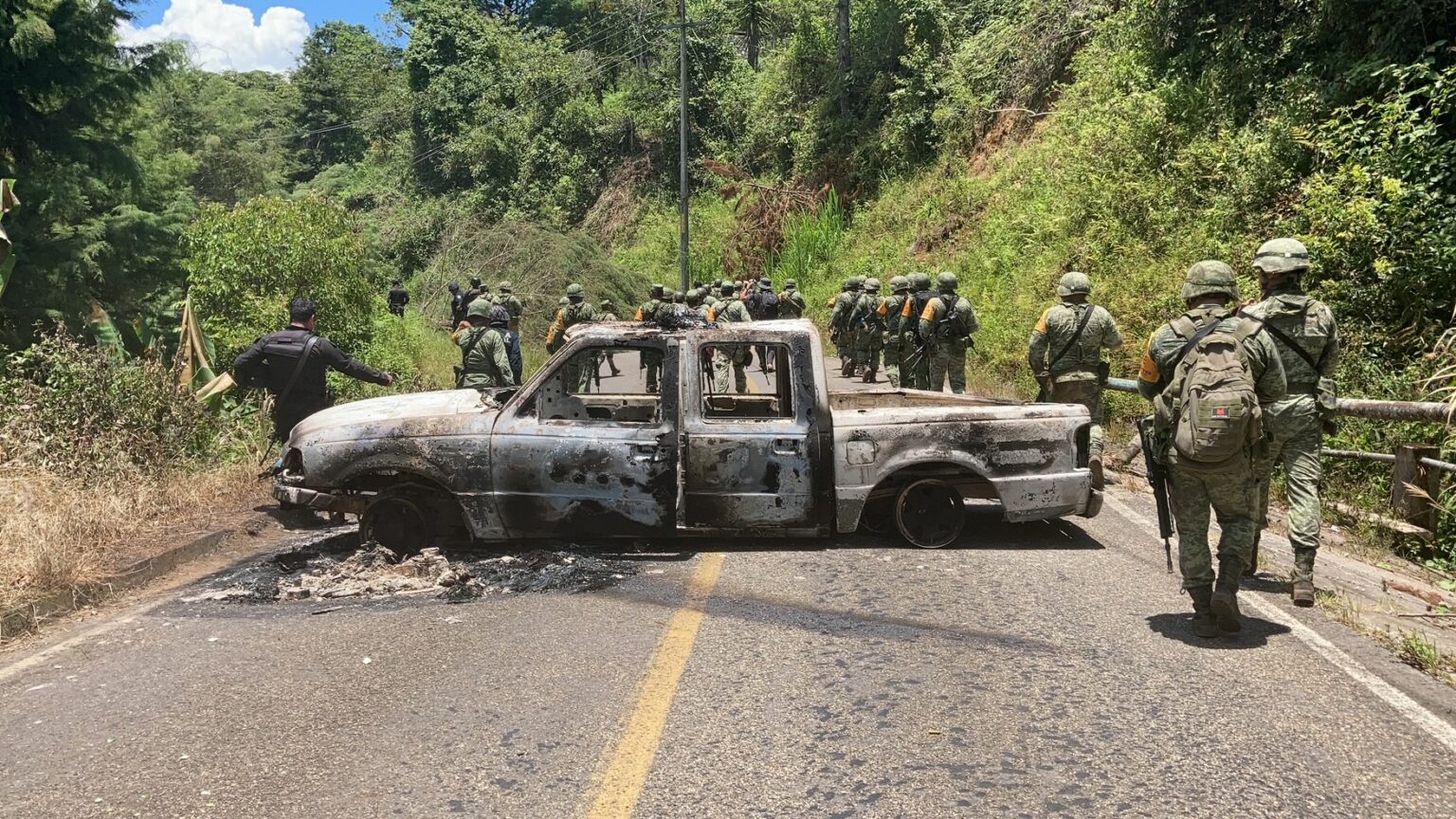
Bishops of the Diocese of San Cristóbal de Las Casas warned today of an increase in narco-violence in Chiapas and the social decomposition that is being experienced in at least 28 municipalities in the state. In view of that, they asked for the immediate intervention of state and federal authorities to stop the persecution and threats against the civilian population belonging to this struggle for territory, but above all, they demanded that the persecution of human rights defenders stop!
In a press conference, Bishop Rodrigo Aguilar Martínez, auxiliary Bishop, Luis Manuel López Alfaro and his pastoral team of this Diocese [1], pointed out today that: “the situation of structural and institutionalized violence with the presence of organized crime, the proliferation of armed groups, some doing the work of shock groups in Chiapas” has been heard strongly as a cry in the desert.
They indicated that “the dispute over territory in Chiapas is deteriorating the social fabric more and more every day, as is excessive exploitation – like the reactivation of mining extraction, illegal sale of wood, stone material and gasoline, as well as the manipulation and dispossession of indigenous peoples’ dignity.
They mentioned that in Chiapas a psychological war, a wave of femicides and other kinds of violence exist that are detrimental to community strength, which increases the criminalization of the struggles and peaceful resistances, as well as of pastoral activities of the Diocese that invite a full conscience about the dignity of the children of God, subjects of law.
The bishops said that it is the role of the Diocese and its pastoral team to do the work of accompaniment in the suffering of the peoples and to seek the true life for them, and that affects the interests of individuals and groups that only look for the maximum profit at any cost, without giving importance to the suffering of the poorest.
“The implementation of the strategies of the political-economic system that governs us has been very clear, when a community organizes to defend its land and territory, to taken care of its community government through its customs and traditions (usos y costumbres), and when, at times, they denounce the injustices that the very same authorities of the communities and municipalities commit,” the bishops indicated.
And the struggles of the peoples in resistance are reacted to with persecution, intimidation, threats and incarceration.
“We worry about the social decomposition that is on the rise due to the generalized violence in towns of the following municipalities: Chicomuselo, Comalapa, Trinitaria, Comitán, Margaritas, Maravilla Tenejapa, Zamora Pico de Oro, Palenque, Salto de Agua, Tila, Yajalón, Chilón, Ocosingo, Altamirano, Chanal, Oxchuc, Huixtán, Tenejapa, Chamula, Chenalhó, Pantelhó, Simojovel, Chalchihuitan, San Cristóbal, Teopisca, Carranza, Las Rosas, Socoltenango, among other municipalities in the Province of Chiapas,” the bishops said. [2]
They added that this reality of insecurity sharpens in some sectors of the population threatened by organized crime groups to enter into the management and commercialization of firearms that are for the exclusive use of the Mexican Army. “A situation that puts the inhabitants at high risk since these groups confront each other in the dispute for territorial control,” they added.
They also denounced the strong impunity that prevails in the state of Chiapas, the increase in insecurity and violence overwhelmed by crime cells, the political-legal system that criminalizes human rights defenders, the lack of access to full justice, the infiltration of people in acts of worship and in meetings of people of faith, the fabrication of crimes, the lack of interest in reconstruction of the social fabric on the part of the competent authorities.
“We demand that the Mexican Government guarantee the lives of the people who live and travel through the State of Chiapas. It is the responsibility of the State to ensure the security and protection of human rights defenders, to respect and take care of Mother Earth, the Territory, to ensure the life and integrity of religious people, priests and pastoral agents of the Diocese of San Cristóbal de Las Casas, because the ministerial exercise of our work within a context of violence makes us vulnerable in the state of Chiapas,” they said in their letter.
And given all this, they asked to stop the threats, persecution and incarceration of those who struggle in defense of land and territory, of those who struggle in defense of water and forests, of those who struggle in defense of the human rights of collectivity.
Translator’s Notes
[1] In order to give proper weight to this statement, it’s important to understand the role that the Diocese of San Cristóbal has played and continues to play within its jurisdiction. Starting with the arrival of Bishop Samuel Ruíz García (1960-2000), an important practitioner of liberation theology and an “option for the poor,” the Diocese has accompanied indigenous peoples in their struggles for land, justice, autonomy and a dignified life, thereby placing their pastoral agents into conflict situations. Bishop Ruíz founded the Fray Bartolomé de Las Casas Human Rights Center (Frayba), which represents indigenous communities and is an adherent to the EZLN’s Sixth Declaration of the Lacandón Jungle. Many grassroots indigenous members of the Diocese are highly organized in Pueblo Creyente, an organization experienced in protesting against injustice and demanding peace. In short, a statement from the Diocese of San Cristóbal is highly regarded in Chiapas and provides a counterweight to the government.
[2] The Mexican state of Chiapas has 124 municipalities. The municipalities enumerated herein appear to all be within the geographical limits of the Diocese of San Cristóbal de Las Casas, which is in the eastern part of the state. Chiapas also has the Archdiocese of Tuxtla Gutiérrez and the Diocese of Tapachula.

Originally Published in Spanish by Chiapas Paralelo, Tuesday, April 4, 2023, https://www.chiapasparalelo.com/noticias/chiapas/2023/04/alertan-obispos-aumento-de-la-narcoviolencia-en-chiapas/ and Re-Published with English interpretation by the Chiapas Support Committee
Extractivism rhymes with militarism

By: Raúl Zibechi
Some very recent events on our continent represent a twist in the militarization of common goods, either legally or de facto, by the hand of governments and their armed forces or irregular armed actors who roam freely when states allow them.
Last week it was learned that the Argentine government, through the General Staff of the Armed Forces, announced eight campaign plans that involve the militarization of areas of natural resources and sovereign spaces, such as Vaca Muerta (Dead Cow), which is the largest hydrocarbon reservoir in Argentina, the South Atlantic and lithium extraction zones (https://bit.ly/3zsiS1R ). Thus, the aforementioned media maintains, the government places military resources to protect the activity carried out by multinationals.

It is just the latest pearl in an extensive necklace of militarizations, ranging from the governments of Mexico and Venezuela to those of Peru and Chile. These were recently highlighted by the indiscriminate violence against the Aymara and Quechua population of the south (Dina Boluarte) and by the massive involvement of the armed forces in the defense of forestry companies before the Mapuche people (Gabriel Boric).
The Brazilian Jair Bolsonaro delivered control of the Amazon to the armed forces, who have protected it since the military dictatorship (1964-1985), but now the government of Lula da Silva seems determined to renew the environmental license of Belo Monte, the gigantic dam in the Amazon that provoked a humanitarian and environmental crisis in one of the most diverse regions of the planet’s largest tropical jungle (https://bit.ly/3Geolgt).
According to Silvia Adoue, a teacher at the MST’s Florestan Fernandes School, after meeting with the armed forces, Lula decided to allocate the Amazon Fund to increase the presence of the Federal Police and the National Highway Police in the Amazon, that carbon credits would be invested in the surveillance of the region by the armed forces, who would also be better equipped to carry out these tasks.
There is no mention of the possibility of reducing mineral extraction from the Amazon. Adoue concludes in the personal communication: The greed awakened in society as a whole by the demand for minerals for industry 4.0, creates a new extractive subjectivity, which contaminates all relationships.
The militarization of natural resources for exploitation by multinationals (common goods for the life of peoples, according to us) has become a strategic feature of neoliberal capitalism in this phase of extreme violence.
The head of the US Southern Command, General Laura Richardson, stressed the importance of the common assets (“the commons”) to her country and emphasized the Lithium Triangle (Argentina, Chile and Bolivia), the gold in Venezuela, the oil in Guyana and recalled that 31 percent of the world’s sweet water is found in the region and, therefore, she said we have a lot to do (https://bit.ly/3UjCAXn).

In its competition with China, the United States needs to subordinate its backyard even more, in the same vein as with Europe but with different characteristics. As historical suppliers of raw materials, it is up to us to continue in this field subordinating the sovereignty of nations to imperial needs. Of the empire that is, it’s necessary to clarify.
If militarization has a structural character, this means that for the peoples and popular sectors, rights and constitutional legality expire in the areas where the military/multinational alliance operates. Therefore, appealing to such rights only makes sense as propaganda, to show that the rules defined by the system are not followed. But it would be very irresponsible to build strategies on the basis of rights that are not going to be respected.
Thus, we must respond as to what we are going to do to defend the commons from the war against the peoples, against life. In reality it’s one of the most complex tasks that we have ahead of us, because there are no precedents, since the militaristic turn of capitalism and the kidnapping of states by financial capital, they modified the rules of the game.

The peoples grouped in the CNI (National Indigenous Congress) and the EZLN have defined peaceful civil resistance, which has enormous costs of attrition for the communities and a great virtue: it is the will of the peoples not to enter into a war that can only benefit capital.
This month the CNI will carry out an extensive caravan through several southern states that will end with an international meeting in San Cristóbal de las Casas, under the slogan El Sur Resiste | The South resists! Accompanying the caravan is one of the necessary tasks to move from indignation in the face of so much dispossession, to collective action for the defense of Mother Earth and the peoples who inhabit it. [1]
[1] The Chiapas Support Committee is presenting a program about El Sur Resiste! (The South Resists) on Tuesday, April 11, 2023. Click here for details.
Originally Published in Spanish by La Jornada, Friday, April 7, 2023, https://www.jornada.com.mx/2023/04/07/opinion/010a1pol and Re-Published with English interpretation by the ˚https://chiapas-support.org/
They integrate a new self-defense group in Chiapas; that warns they will not permit “any cartel to enter”
From the Editors
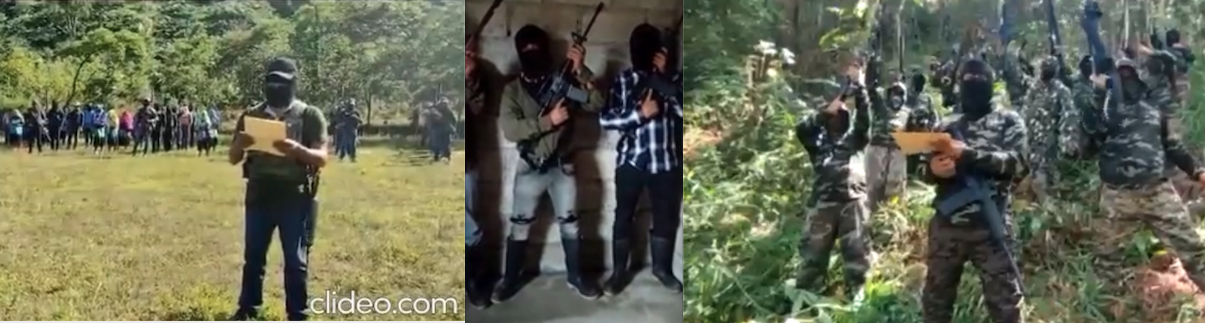
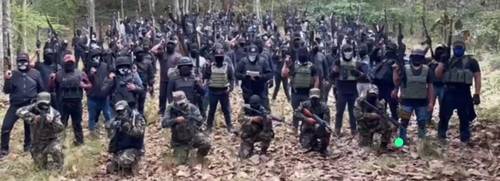
A group of around 50 armed men, uniformed and masked, who call themselves the self-defense forces of San Cristóbal de las Casas municipality, published a video on social networks in which they make their existence public knowledge.
In the video, which they titled: We are not some cartel. We are self-defense forces of San Cristóbal and its surrounding area [1]. One of them appears reading a message directed to all those who want to enter San Cristóbal to destroy the peace and want to form some “place” (plaza).
We tell them that San Cristóbal, Chamula and Betania (a community located in the neighbor municipality of Teopisca) are free, autonomous, and we do not want any cartel, we are nothing like that.
With a distorted voice, he continued: “We already have had enough of the fucking Motonetos (Scooters). We are watching now. That is why we will take care of and watch over the peace, and any scourge that wants to make his mess like Alejandro, alias El Chicle, and (…) that we now know are supported by the director of the municipal police of San Cristóbal, Romeo. They touch one of us and they touch us all. They are warned, we are not going to leave.”
The message was released four days after a television station broadcast a story showing the sale of all kinds of drugs in broad daylight in the markets of San Cristobal de las Casas.
[1] We know nothing more about this group than what is in this article. A similar article appeared in El Heraldo de Chiapas on April 7. We wonder who is financing this group, which appears well-equipped with bulletproof vests, uniforms and high-powered rifles.

Originally published in Spanish by La Jornada, Saturday, April 8, 2023, https://www.jornada.com.mx/2023/04/08/estados/022n2est and Re-published with English interpretation by the Chiapas Support Committee
El sur resiste | The south resists: Gathering on the Zapatista & Indigenous struggles against mega-projects
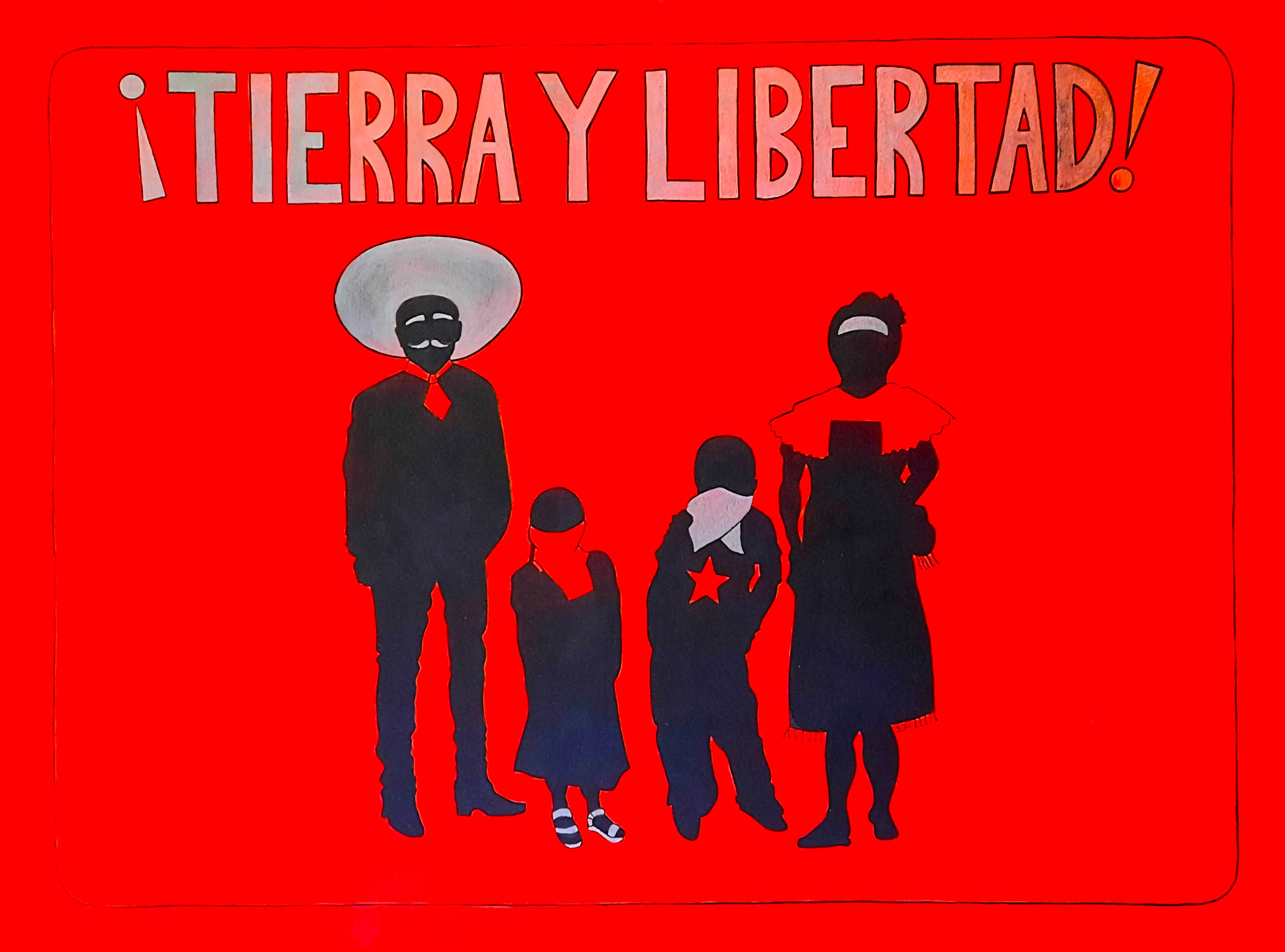
El sur resiste | The south resists
Updates on the Zapatista movement & land justice struggles in México:
On the CNI campaign to stop the “Maya Train” & Inter-Oceanic Corridor
An Evening of Solidarity, Poetry & Zapatismo

At Medicine for Nightmares Bookstore and Gallery
3036 24th Street, San Francisco, CA 94110
Tuesday, April 11, 2023, 6:00-7:30 pm
Sponsored by Chiapas Support Committee | www.chiapas-support.org with
Medicine for Nightmares Bookstore and Gallery
Program
- La poética resistencia: Elizabeth Jiménez Montelongo, Arnoldo Garcia, and more
- Music by Francisco Herrera
- Updates on the Zapatista struggle & movements for autonomy & land justice in Mexico by members of the Chiapas Support Committee
- Information & update on El sur resiste | The south resists, a campaña against the capitalist mega-projects “Maya Train” & Inter-Oceanic Corridor launched by the Congreso Nacional Indígena (CNI, Indigenous National Congress) + short film interviews about the devastating effects of these mega-projects on communities.
For more information on the El Sur Resiste campaign, visit ¡El sur resiste! blog
To work together in solidarity against the mega-projects, connect at: www.chiapas-support.org
Ayotzinapa, the difficult road to truth
Luis Hernández Navarro

Ayotzinapa is an open wound. Eight and a half years have passed since the atrocity and the wound still has not healed. How can it close if the truth doesn’t come? If there is no justice? If the damage is not repaired?
The fifth report of the Interdisciplinary Group of Independent Experts (GIEI), An Overview of the Facts, Those Responsible and the Situation of the Ayotzinapa Case, the latest, shows us, broken down into 36 points, the enormous obstacles to illuminating the darkness that hangs over the tragedy. With proven evidence, they show the impossibility of closing the case.
The report demonstrates that different authorities at the municipal, state and federal levels, including the information services against drug trafficking, that is, the Army, Federal and State Police, the Cisen (Center for Investigation and National Security) and the Iguala municipal police, knew, in real time, about the arrival of the students of the Raúl Isidro Burgos Rural Normal School and their intention to take buses to go to the October 2 march in Mexico City.
The statements of protected witnesses and the documents found by the GIEI paint a terrifying portrait of the narco-state in Guerrero. There was collusion between members of municipal, state and federal security forces and institutions and organized crime in Iguala and nearby cities. Although it was known about the transfer of drugs in passenger buses, the experts have not located any reports about the departure of these buses, or about the filters used by drug trafficking groups to enter the city.
Military personnel were in collusion with drug traffickers, as can be deduced from the Chicago wiretaps (DEA wiretaps of conversations of Guerreros Unidos members) responsible for the 27th and 41st Battalion, in which there is talk of payments to at least one commander and one captain. Protected witnesses have confessed that they periodically received money to enable Guerreros Unidos business.
The rural normalistas were not all captured at the same time, in a single operation. They were attacked with firearms at seven different times, in different places, over four hours. The information about the events was known in real time by the C4 [1]. Despite this knowledge and the brutality of the aggressions, no government authority at any level did anything to prevent it.
Despite President Andres Manuel Lopez Obrador’s order to allow experts full access to critical information, the Secretariat of National Defense (known as SEDENA, its Spanish acronym) is withholding it. Statements by commanders and personnel of the 27th Infantry Battalion, based in Iguala, have been modified as the investigations have progressed. Its members have lied over and over again. For example, they hid their presence in the barracks or said, falsely, that they remained in their barracks that night.
A soldier observed, through technical means, three municipal police vans. In the middle one, civilians were being transported. However, this evidence has not been turned over to the Attorney General’s Office (FGR).
Inexplicably, despite the evidence against them and despite having all the legal support, the arrest warrants against numerous military personnel who participated in the events were cancelled by the Attorney General’s Office in September 2022. Six of them, which are priorities for the GIEI, have not been reactivated.
As part of a counterinsurgency logic, the Army sent three soldier infiltrators as students in Ayotzinapa. Known as search and observation bodies (OBI), they informed their superiors of the students’ agreements and movements. They communicated every day to report on the situation. One was among the 43 missing boys. Another OBI reported on September 27, after the events, and announced to his commanders that he would suspend communication for security reasons. The Secretary of National Defense at the time falsely stated that the missing soldier had suspended the relationship since September 22. On the 27th, the Secretary made contact with the young man’s family. “All of this,” the experts assert, “was concealed in the investigation for seven years, until the GIEI found the documents in SEDENA’s archives following an access warrant from the President of Mexico.”
The SEDENA knew at all times what was being done to the students. Despite this, it did nothing to prevent it, protect them or rescue them. However, the Army denies this, as it also denies the existence, proven with documents, of the Iguala Regional Intelligence Fusion Center (CRFI), when the attack against the youths took place.
They were not the only State intelligence services that knew what was happening in real time. The Cisen had agents and information about what was happening. But these reports have not been made public.
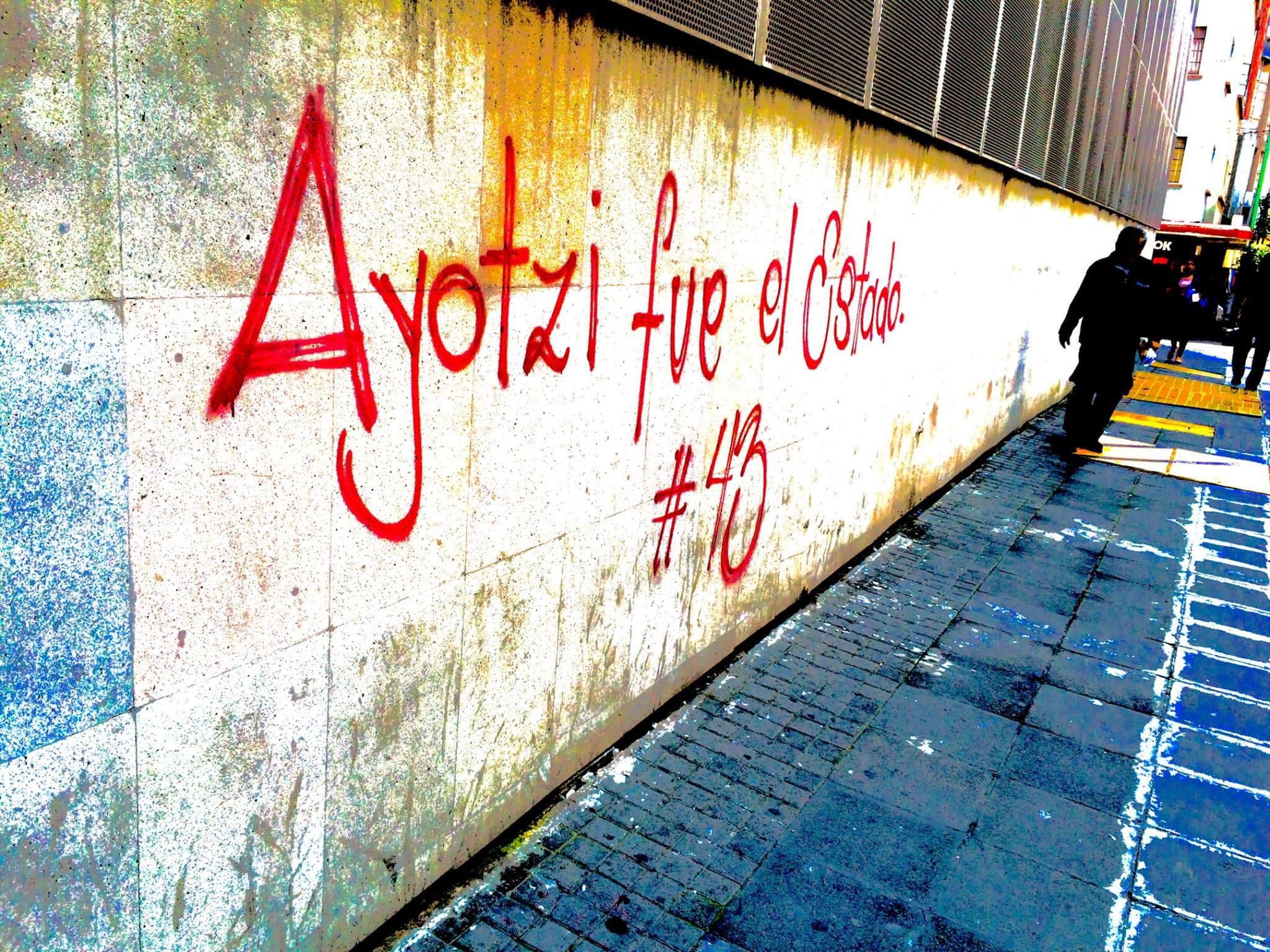
From the GIEI report it is clear that Ayotzinapa was a State crime, a crime against humanity. An atrocity in which the highest civilian and military authorities of Enrique Peña Nieto’s administration are involved, with enough power to stop and boycott the full understanding of the facts. If the truth of the night of Iguala does not emerge and if justice is not served to the victims, the ghost of Ayotzinapa will mercilessly haunt the entire country.
[1] The C4 is an inter-institutional monitoring and intelligence center in Iguala coordinated by security institutions of different levels.
Originally Published in Spanish by La Jornada, Tuesday, March 4, 2023, https://www.jornada.com.mx/2023/04/04/opinion/016a2pol with English Translation by Schools for Chiapas and Re-Published by the Chiapas Support Committee
The sentence of the killer of human rights defender Simón Pedro is not justice
San Cristóbal de Las Casas, Chiapas
Frayba Bulletin No. 09
*We recognize their work in defense of life, land, territory and the rights of peoples and communities.
*May it be guaranteed that there is no impunity in murders of defenders.
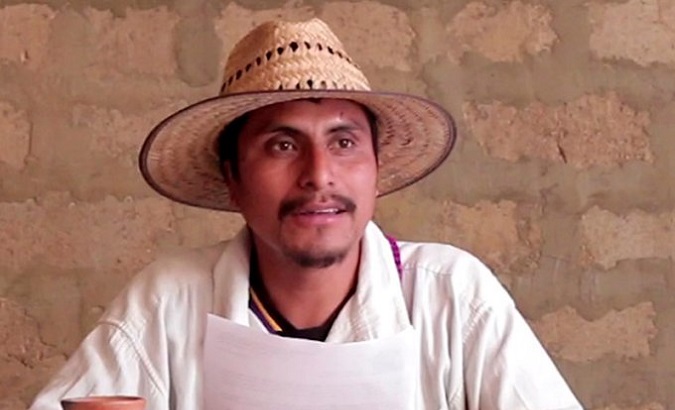
This Fray Bartolomé de Las Casas Human Rights Center (Frayba) widely recognizes Simón Pedro López Pérez (Simón Pedro) as a human rights defender, who walked together with the peoples in the demands for rights that the Civil Society Organization of Las Abejas of Acteal (Las Abejas of Acteal) have historically promoted. The Control Judge of Pichucalco adjusted to the lesser sentence, with the sentence of 25 years in prison against the material author of the murder of the human rights defender, and the economic “reparation” for the families, reflects how narrow and limited is the justice of the State, which denies access to truth and True Justice.
A little over 19 months ago, together with Las Abejas de Acteal, and with the entire family of Simón Pedro, we began to walk justice and truth; we have learned many things, one of them the generosity of Las Abejas of Acteal and the family of the community defender, who at the beginning of the oral trial hearing outside the control court in Pichucalco, shared bread, water and food with the family of the person who deprived Simón of his life.
The sentence and reparation are the lowest and omit his work as a human rights defender that he carried out, as well as adequate and culturally relevant measures of reparation of the damage and non-repetition. From Frayba we exposed the facts based on two eyewitnesses. He had the opportunity to issue a judgment with a human rights perspective by presenting the evidence that showed his activity as a defender.
The sentence is ignored, from what the General Law of Victims dictates, regarding that the criminal process must guarantee the right to the truth. It is not an isolated murder, which is why we demand that the intellectual authors be investigated and that minimum measures of integral reparation be granted, from medical and psychological care, measures of satisfaction, and public recognition of their activity in defense of human rights.
It is important to pay special attention to the continuation of the violence that plagues the region, and to the need for non-repetition measures that can protect their family, the community and the Bees of Acteal.
We will be attentive to ensure that the sentence remains firm and that freedom is not granted in other bodies, in order to guarantee that there is no impunity against murders of defenders, which, like the work of Simón Pedro, commits us to continue walking with the peoples and communities that fight for their dignity and the construction of alternatives of life, where there is Lekil Chapanel (True Justice).
Originally Published in Spanish by Frayba, Friday, March 31, 2023, https://frayba.org.mx/la_sentencia_no_es_justicia and Re-Published with English interpretation by the Chiapas Support Committee
“Sembrando Vida”: Counter-insurgency, neoliberalism and clientelism
Folks in Chiapas say that this federal anti-poverty program is actually a counterinsurgency program that divides communities.

By: Aldo Santiago
While Andrés Manuel López Obrador tours the various countries of Central America to promote the extension of governmental assistance programs such as Jóvenes Construyendo el Futuro (Youth Constructing the Future) and Sembrando Vida (Sowing Life), the latter is implicated in undermining community organization in indigenous and campesino communities in Mexico, according to a report published by the Center of Studies for Change in the Mexican Countryside (Ceccam).
“The indigenous and campesino communities in Mexico have an extensive tradition of collective management of territory, supported by social ownership of the land with the assembly acting as the highest authority. The Sembrando Vida program is intentionally undermining these structures that allow the communities a certain level of autonomy,” Ana de Ita writes in the publication elaborated by Ceccam, Community and Autonomy in the face of Sembrando Vida.
“In addition to this denunciation, there are other consequences of the program: that of causing deforestation in order to enter into the program, the opacity in the management of the government budget, as well as the creation of parallel organizations to that of the communities for decision-making, which is used to buy consciences.
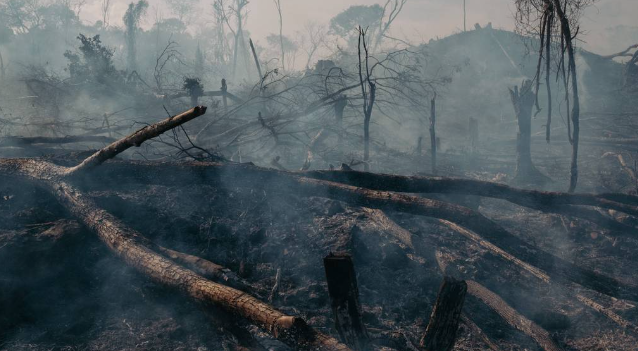
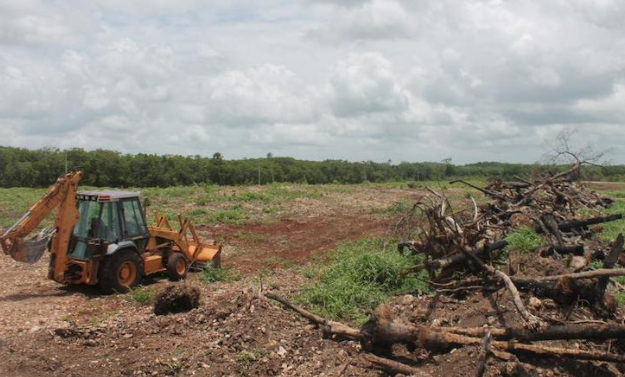
Among these problems, identified by campesino and indigenous communities of Oaxaca, Chiapas, Tlaxcala, Veracruz, Campeche, Quintana Roo, and Yucatan, they underscore that the most damaging effect of the program is the destruction of the community fabric and of the organizing structures of decision-making.”
Ceccam’s publication also brings together the perspectives of agroecologists, researchers and civil organizations that accompany community members in various regions of the country. Because of this, one of the publication’s research projects is to be able to identify the uses that Sembrando Vida can have in the regions where the intent is to impose megaprojects like the Maya Train, the Trans-Isthmic Corridor, “and others where it is urgent that the communities are not an obstacle.”
It is difficult for the participants in the Sembrando Vida program to participate in “social resistance movements, for example, in the face of the government’s megaprojects, or the extractive interest of companies, when they fear that they will lose the benefits of the program,” Ana de Ita reports in her text entitled “Sowing Envy,” included in the publication.
For Ita, this explains the coincidence in the new lines of the “Maya Train” with the locations of Sembrando Vida, as well as the express instructions to include the municipalities of the Interoceanic Corridor in Oaxaca.
Neoliberalism and the reorganization of the countryside
The director of Ceccam indicates that the implementation of the program weakens community organization due to the fact that it follows the neoliberal logic “that leaves the realm of rights and places itself in the realm of handouts, granted to whomever the government decides.” This way, the resources are given to individual producers, who spend the money on personal consumption rather than strengthening community organization.
“In regions in which the program is operating, an increase in luxury spending has been noted, such as beer in a can, since in the rural communities there are not many alternatives for consumption of other goods; health, education, culture, nutrition, etcetera, and what is most readily available is junk food,” Ita denounces.
Another common problem is that young people and women don’t have land, and in many cases they don’t have the 2.5 hectares required, personally, in order to enter the program. According to the program, in these cases, individuals can access the required acreage by establishing a share-cropping contract with the agrarian nucleus until at least 2024.
To Ita, this means that the program encourages collective social property to be parceled and individualized. “In common use land that the ejido cedes for a period of time to campesinos that don’t have it, they will plant fruit and timber trees that will just be producing when the program ends, so it will be very difficult to return this land to the common use of the agrarian nucleus,” the director of Ceccam maintains.
Sembrando Vida proposes the coordination of the program through so-called Campesino Learning Communities (CAC), which in fact form a parallel organization to the community or ejidal assembly, which is the main authority in the territories. “Contrary to the strategy of better organized communities that strengthen the power of their assemblies, the CACs do not report to, nor are they held accountable by the agrarian assemblies,” Ana de Ita reports.
Deforest, in order to re-forest?
The goal of Sembrando Vida is the reforestation of a million hectares, and for this, between 600 million to a billion trees are needed, according to federal government figures.
It does not have this number of trees, however, and since the announcement of the program, forestry experts warned of the absence of capacity for production of such a quantity of plants in Mexico. According to the data from the Secretary of Welfare, in 2019 only 14% of the goal of 575 million trees were planted and survived.

Among the complaints that Ceccam compiled, campesinos reported that they are obliged to plant trees that don’t belong in the region, which is why they frequently die and, despite this, “they demand that they replant them, instead of planting trees that are adapted to their own climatic conditions. For example, in the Northern Sierra of Oaxaca, they are demanding that they plant cedars that need a lot of water that is scarce in the region, which is why many plants have died,” Ita maintains.
This is in addition to the evidence that has emerged in states such as Puebla, Campeche and Chiapas, where farmers, organizations and the press have documented the deforestation of land for the purpose of registering it with Sembrando Vida.
“But this problem can’t be demonstrated, because the government hasn’t made public the location data of each of the 430 thousand parcels,” clarifies the Ceccam researcher.
Audits
The budget assigned to Sembrando Vida in 2022 reaches 29 billion 231 million pesos, an amount close to the total that corresponds to the Secretary of Agriculture (32 billion 750 million). Notwithstanding its resources, the program is only destined for 430 thousand campesinos of the 5.5 million agricultural producers and around 2.5 million agricultural day laborers that exist in the country, according to data from the National Institute of Statistics and Geography.
In this context, the program has been evaluated by entities like the Federal Superior Audit Office (ASF), which detected shortcomings in its design, content and implementation. According to its Individual Report of the Results of the Superior Audit of the 2019 Public Account, “the objective of achieving that agrarian subjects in rural locales with income below the welfare line, have enough resources to make the land productive,” is at risk.
Without participation of the communities
For the researcher, the execution Sembrando Vida, like other federal programs, has avoided social participation in the design of its public policies in accusing the campesino organizations of being corrupt.
For Ana de Ita, it’s necessary to remember that during the current federal administration, the recognition of indigenous rights has not received any impetus, “and the guardians of the forests and the jungles are threatened and persecuted for their labor of caring for them.” According to data by Global Witness, in 2020, 30 environmental defenders were murdered in the country, placing Mexico as the second-most violent in the world.
In this context, the Ceccam member writes, “to not take into account the agrarian authorities, the forms of organization in the countryside, the systems of community authorities, the forms of collective work, the ways of making decisions —and in not addressing the campesino agrarian nuclei as collective owners of the land, but instead as individuals, choosing some and not others —the end of this term [AMLO’s 4T] will not see a single difference, neither in the reduction of poverty, nor in reforestation and care of the forest.”

Originally Published in Spanish by Avispa, May 15, 2022, https://avispa.org/sembrando-vida-counterinsurgency-neoliberalism-and-clientelism/ English Translation by Schools for Chiapas and Re-Published by the Chiapas Support Committee
Is migrating a crime?
A La Jornada Editorial
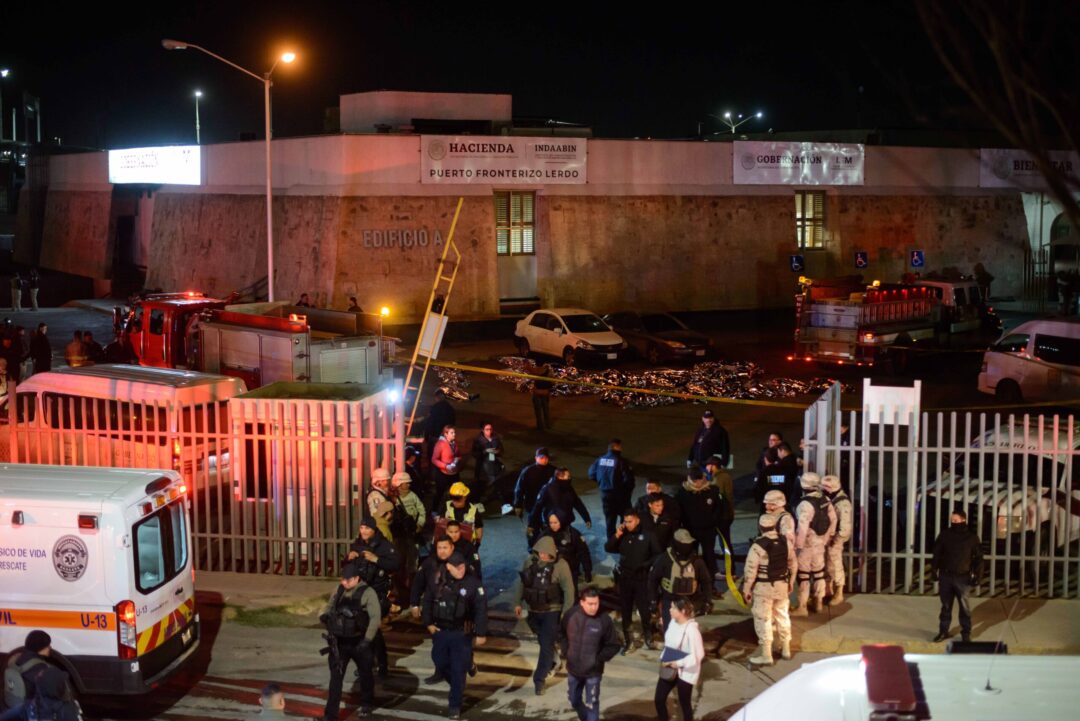
It is devastating that episodes have become increasingly frequent in which dozens of people lose their lives at some point in their journey to reach US territory, and that many of them meet a tragic end when they thought they had achieved their dream, since Washington expels them automatically and arbitrarily, in open violation of the human right to asylum. The U.S. responsibility for tragedies like that of Monday in Ciudad Juarez is all the more palpable considering that migrants repelled by its border guards meet all the eligibility requirements for asylum, as they are survivors of the insecurity, violence and other scourges that plague their regions of origin.
Mexico has been caught between the incessant flow of human beings who travel the continent with the conviction that in the United States is the opportunity they seek to raise their families, develop professionally or be safe from direct or indirect threats to their life and physical integrity, and the stubbornness of the political class in Washington in rejecting any humanitarian solution. sensible and realistic to the migratory phenomenon. In addition to being cruel to migrants, this lack of political will is unfair to our country by involving it in a human drama that has no reason to exist, since the U.S. economy requires foreign labor as much as migrants need a source of employment.
Last Monday’s tragedy [1] shows that it is imperatively necessary for Mexico to abandon all forms of tacit collaboration with the atrocious US immigration policies and assert its sovereignty in this area. That is, it should no longer be accepted that our country continues to be used by Washington as a destination for the expulsion of migrants.
On the other hand, there is no binational circumstance that serves as a pretext or justification for unpresentable migratory actions in national territory. For example, the provisional stay of the National Institute of Migration in Ciudad Juárez did not function as an accommodation or a shelter, but as a center of deprivation of liberty, as was clear in the media conference presented yesterday by the head of the Secretariat of Security and Citizen Protection (SSPC), Rosa Icela Rodríguez, and the human rights prosecutor of the Attorney General’s Office (FGR), Sara Irene Herrerías.
It is inadmissible from every point of view that people are imprisoned for migrating, because if this is a crime, we would have to consider the millions of Mexicans criminals who live in the United States and who, through remittances, are a pillar of our economy. Because of its history, its deep link with migration and a mere ethical imperative, Mexico cannot criminalize human displacements of the same type that it has been asking for decades not to be criminalized when it concerns our fellow citizens.
[1] 39 migrants died and 27 were injured in a fire that broke out at a migratory station in Ciudad Juarez on Monday, March 27, 2023. The migrants were locked in their cells, like prisoners.
Originally Published in Spanish by La Jornada, Thursday, March 30, 2023, https://www.jornada.com.mx/2023/03/30/opinion/002a1edi and Re-Published with English interpretation by the Chiapas Support Committee
 Chiapas Support Committee