Chiapas Support Committee
Home of the Compañero Manuel blog on zapatistas & mexico
Some thoughts on the killings in Polhó
For many of us who care about and support the Zapatista struggle, the killings in Polhó were both a shock and a realization of how much things have changed in that corner of Chiapas. Reports on the killings left us with more questions than answers.
By: Mary Ann Tenuto-Sánchez
First, a summary of the facts, based on reports from journalists
In the late afternoon and evening of Friday, June 2, 2023, a pick-up truck carrying indigenous people, initially alleged to be from an armed group that “left Polhó”, as well as “several residents” from the sprawling Santa Martha ejido, Chenalhó municipality, in the Chiapas Highlands, drove through the Zapatista town of Polhó, also in the official municipality of Chenalhó. They shot and killed the son of a man who owned the warehouse in which people displaced from Santa Martha are staying. (One article says the owner is renting to them.) Initial press reports about this incident were based on information from the State Attorney General’s Office, which stated that seven people were dead, 6 people displaced from Santa Martha and the warehouse owner’s son. “Residents of the area” said that the aggressors attacked the more than 200 displaced persons from Santa Martha. Reports said there were also 3 people wounded. [1]
The following day, we learned that initial reports about the incidents were not true. The six dead were not from the group displaced from Santa Martha. The information from the State Attorney General’s Office was wrong; The 6 dead were from the group alleged to be the aggressor group, no longer described as an armed group that “left Polhó,” but rather as an armed group named “Los Ratones” (The Mice), presumably also from Santa Martha.
Information regarding the warehouse owner’s son was correct and the report of 3 injured was also correct. When reporters and police agents arrived on the scene, they not only learned that six of the dead were from the alleged aggressor group, they also learned the identities of the dead and injured. The six dead are Gilberto Pérez Gómez, supposedly the head of the group of alleged aggressors, his wife, his son-in-law, his 3-year-old grandson and two of his brothers, who were also his bodyguards. Staff from the Office of the Prosecutor of Indigenous Justice said that the body of Gilberto Pérez Gómez was found lying next to his truck with a high-caliber weapon at his side.
Among the wounded are Amalia and Estela Pérez Gómez, ages 11 and 19, the two daughters of Gilberto Pérez Gómez. They are in a hospital with serious injuries. One of the Santa Martha displaced was also wounded and taken to a hospital. Additional information is that several houses had holes from bullet impacts and an electrical transformer was damaged, thus the area was left without power. [2]
Some background on Polhó
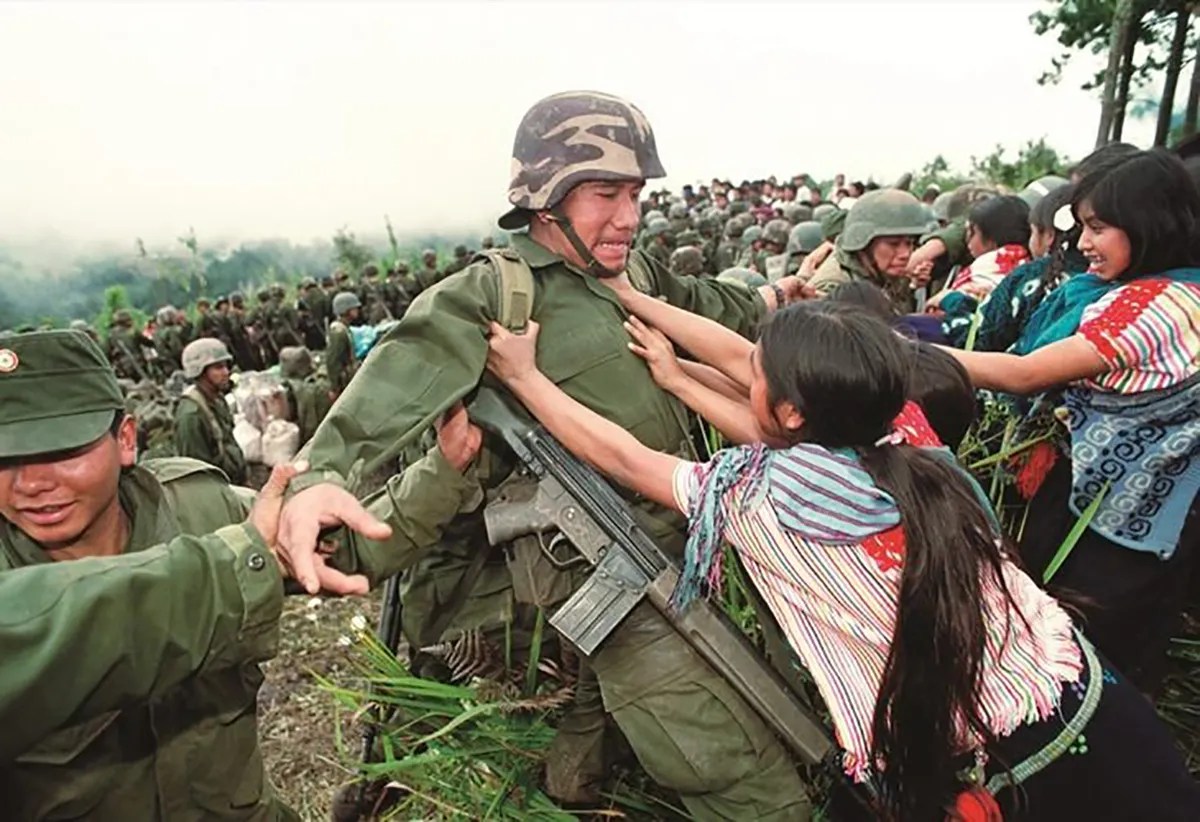
Chenalhó is considered one of the most violent municipalities in Chiapas. [3] It is the municipality where paramilitary violence began to take place in 1997 as part of the Mexican government’s counterinsurgency strategy against the Zapatistas; the paramilitary campesinos were provided guns similar to those given soldiers and those campesinos were trained on how to use them. The violence this produced included house burnings, murders, robberies and rapes. It eventually culminated in the December 22, 1997 massacre of 45 women, men and children in the community of Acteal, also located in Chenalhó, and in approximately 9,000 people fleeing to find shelter in order to save their lives, leaving their homes, crops and belongings behind. That’s why Pedro Faro Navarro of the Fray Bartolomé de Las Casas Human Rights Center (Frayba) told La Jornada that the current violence in Chenalhó is a legacy of the Mexican government’s counterinsurgency plan (Chiapas 94 Campaign Plan).
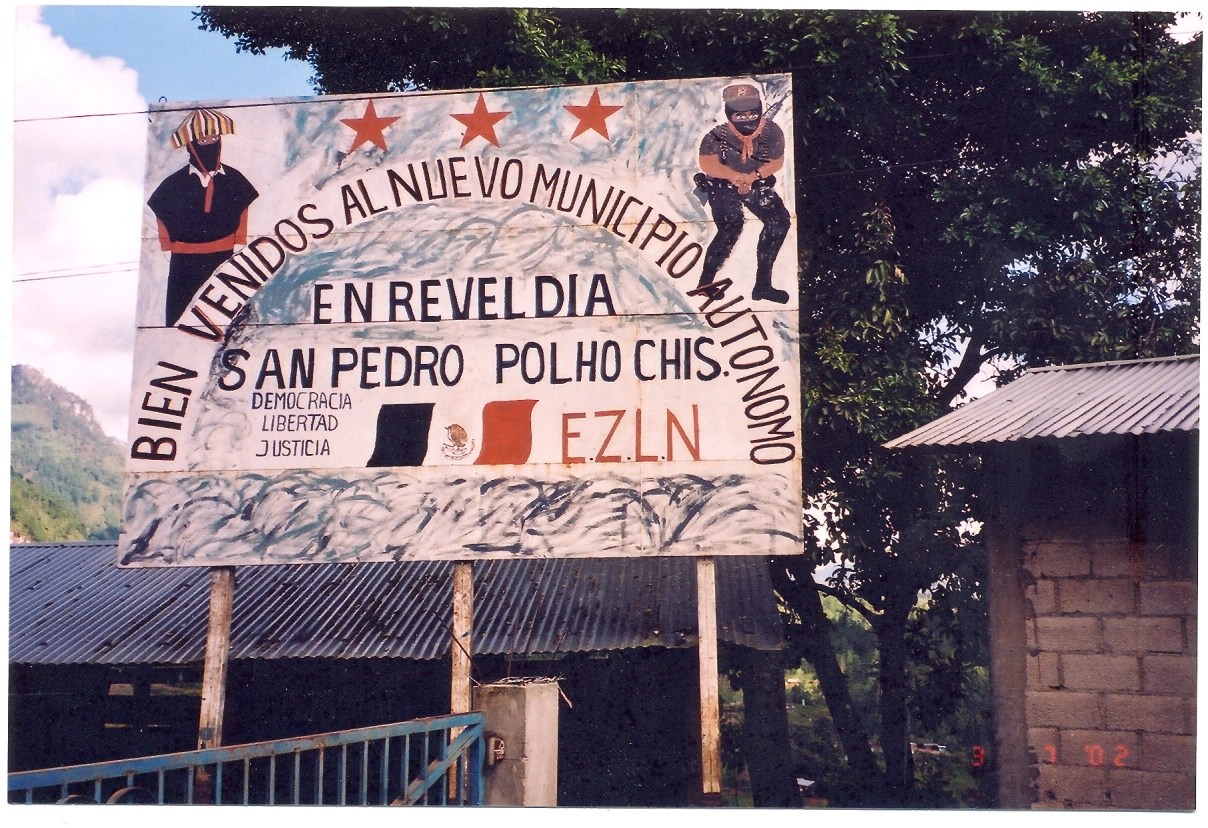
The autonomous Zapatista municipality of San Pedro Polhó serves as the municipal government for members of the Zapatista National Liberation Army (EZLN, Ejército Zapatista de Liberación Nacional) who live in the official government municipality of Chenalhó. Its Caracol is Oventic. The autonomous Zapatista municipal governments operate parallel to the official municipal governments.
The San Pedro Polhó autonomous government took in many of the refugees and provided them with safety, food and shelter for many, many years. The town of Polhó is the autonomous municipal seat. A large majority of those forcibly displaced in 1997 were sheltered in the town of Polhó. Other Zapatista towns accepted the remaining refugees. Chenalhó is so dangerous that some of those who took refuge there in 1997 never returned to their communities of origin. Some folks who were displaced due to the 1997 violence gradually accepted relocation and land from Zapatista municipalities in the jungle. The town of Polhó is just a few miles from Acteal on the asphalt road that runs through Chenalhó municipality.
This writer visited Polhó many times between 1998 and 2008 as a member of the Chiapas Support Committee (CSC), which joined international solidarity groups in efforts to support this Zapatista town full of people forcibly displaced from their homes by paramilitary violence. Those of us who traveled to Chiapas met with members of San Pedro Polhó’s autonomous municipal council many times to discuss conditions in Polhó.
Those displaced from Santa Martha in 2022
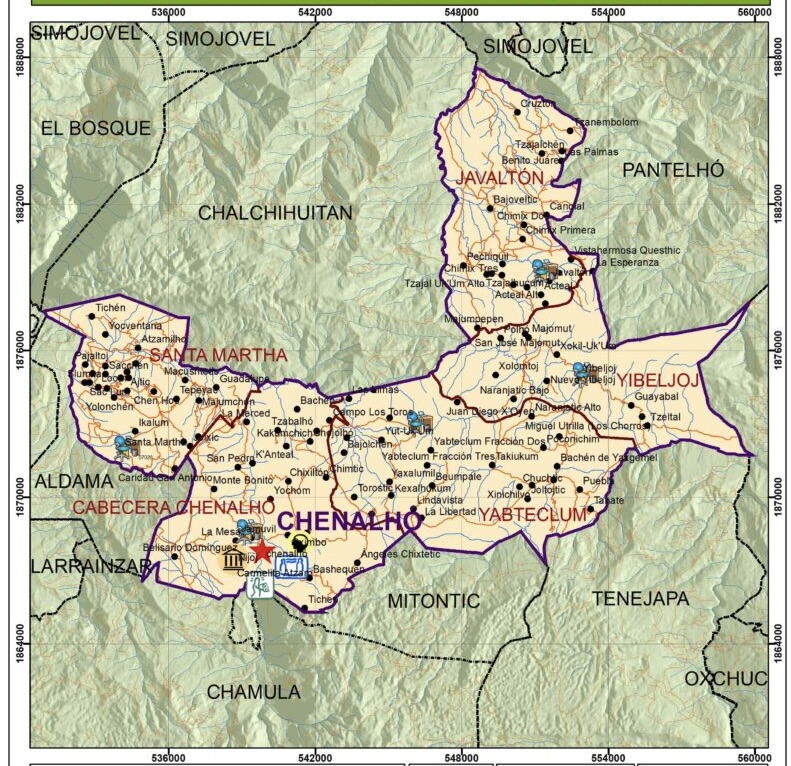
Santa Martha is one of the largest ejidos in Chiapas. There are 22 communities within that ejido. Many of the paramilitaries involved in the 1997 violence and Acteal Massacre were from Santa Martha. The people displaced from Santa Martha in 2022, and currently given refuge in Polhó, are also part of an armed group, the armed group that for years fired shots from high-powered rifles, day after day and night after night, into neighboring communities located in the municipalities of Aldama and Chalchihuitán (see map), in order to gain possession of some of their land. The federal, state and local governments did nothing to stop the shooting. Residents of both Aldama and Chalchihuitán, Zapatista and non-Zapatista alike, were forced to intermittently displace into the mountains when the bullets got too close to them and some lost their land. There were a number of deaths and some people seriously injured as a result of the shooting and forced displacement. Both Aldama and Chalchihuitán gave up some land to Santa Martha. That’s when what the press refers to as “an agrarian dispute” began.
Those who fired their weapons into Aldama and Chalchihuitán apparently were known as “defenders of the land.” According to the Santa Martha displaced, in June 2022, sometime after the lands in Aldama and Chalchihuitán were ceded to Santa Martha, the communal property assembly decided that the newly-acquired lands would be distributed among 195 communal members. According to the Santa Martha ejido authorities, a group of 60 people disagreed with that decision and took up arms and “ambushed” the communal property commission. The men accused of the ambush were taken to the prosecutor’s office, but that office released them and no charges were filed. The dissidents are also accused of murdering a campesino later that same month, so ejido authorities expelled them from their communities, but did not expel their families.
Santa Martha’s ejido authorities said they were prepared to accept the expelled ejido members back into their communities when, on September 29, 2022, the people expelled tried to poison the spring from which the ejido gets its drinking water. They were supposedly caught in the act. On that same date, some of their houses were set on fire and families began to flee. The people who were expelled are accused of killing 6 community members in a fight. They fled with their families. Many who fled ended up in Polhó, but some went to other places where they had relatives who would take them in.
The people displaced from Santa Martha deny the allegations of the Santa Martha authorities. They blame an armed group within Santa Martha and see themselves as victims. Santa Martha ejido authorities did not allow any police or military into the communities where the violence occurred for a week, which suggests that they may have had something to cover up.
To summarize, the people displaced from Santa Martha, now living in Polhó, are the same people who for years fired shots at their neighbors in Aldama and Chalchihuitán, both Zapatista and non-Zapatista, in order to steal a piece of their land.
Some questions and thoughts
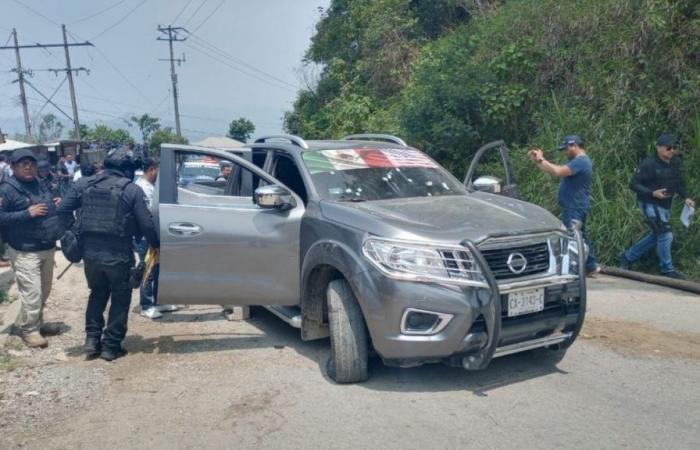
The published facts raise various questions, including but not limited to the following: 1) Why did someone tell the Attorney General’s Office that six of the dead were displaced people from Santa Martha and that the armed group was made up of people who “left Polhó?”; 2) If a civilian armed group (Los Ratones) was actually the group of aggressors who intended to attack both the warehouse owner and those displaced from Santa Martha, why did its alleged leader mount such an attack with his wife, daughters and a 3-year-old grandson in the truck? ; and, 3) Assuming they both survive their injuries, what will the two daughters have to say about the incident?
Luis Hernández Navarro may have provided an answer, or at least explanation to questions 1 and 2. In his La Jornada opinion piece, Hernández Navarro describes the June 2 killing as an “ambush” of Gilberto Pérez Gómez and his family, which means that he and his family were not the aggressors and whoever was the source of the false information given to the State Attorney General’s Office, was creating an alibi to deflect blame for the killings. It most likely also means that the people displaced from Santa Martha brought their guns with them when they took refuge in Polhó. It is highly unlikely that an answer to question 3 will ever be made public.
Moreover, we also learn from the Hernández Navarro piece that Gilberto Pérez is the one who killed the wife of El Machete’s commander, meaning that the people displaced from Santa Martha who ambushed and killed Pérez Gómez will now have El Machete’s “protection.”
The overall impression one gets from the facts published about this incident is one of the pervasiveness of armed violence in the official municipality of Chenalhó, and that state and federal authorities permit it to continue. What leaped out to this writer was the report that Santa Martha authorities took the dissidents to the state prosecutor’s office, only to have that office let them go and not investigate further or file charges. This is the same way that both state and federal authorities treated the continuous day and night shooting into Aldama and Chalchituitán. It is the same way the authorities are treating the repeated armed attacks on Zapatista communities in the Moisés y Gandhi region.
The precise issue of state and federal authorities doing nothing to stop the violence against the Zapatista communities was addressed in a national and international statement. Many of us familiar with Chiapas agree with the analysis of the Frayba Human Rights Center that: “We are in a war scenario as a consequence of the abandonment and complicity of the governments, because of which armed attacks have proliferated.”
The authorities just let people kill each other!
The shock of learning that there are displaced people possessing high-powered weapons living in Polhó has still not worn off; It speaks volumes about the pervasiveness of armed violence throughout Chiapas and, in particular, in Chenalhó.
[3] https://chiapas-support.org/2023/03/23/criminality-and-violence-in-the-chiapas-highlands/

Published by the Chiapas Support Committee, a 501 (c) (3) nonprofit and an adherent to the EZLN’s Sixth Declaration of the Lacandón Jungle.
Group accused of links to crime attempted to expel El Machete

Group accused of links to crime attempts to recuperate Pantelhó, Chiapas
For 6 days they have tried to ambush members of the El Machete self-defense forces. The municipal seat is partially abandoned.
By: Ángeles Mariscal
They say that they entered to liberate the people, that there are about 300 people and that they are all armed; they accuse the El Machete Self-Defense Forces of being the oppressors. In videos that were disseminated, a group of about 20 armed people is seen walking the streets of the municipal capital, and others in the central kiosk asking the population to join them.
According to testimonies of those who support this armed incursion with which they try to wrest Pantelhó from the self-defense groups, this group is headed by José Herrera, the uncle of Dayli de los Santos Herrera Gutiérrez, currently imprisoned accused of being the alleged intellectual author of the execution of the indigenous justice prosecutor, Gregorio Pérez Gómez. José is the brother of Austreberto Herrera, who was a municipal judge of Pantelhó and is also in prison for homicide.
These events come two years after the self-defense group El Machete came to light, to expel what they call “the Herrera group,” whom they accused of having links to organized crime and of having murdered and disappeared dozens of people.
The Machetes emerged on July 7, 2021, after the murder of Simón Pedro Pérez, leader of the Las Abejas de Acteal organization, which occurred two days earlier. Inhabitants of Pantelhó had asked Simón Pedro to help them with a complaint to Chiapas government authorities, to request the arrest of organized crime groups that sold weapons and drugs in the region. After Simón Pedro’s murder, they decided to take control of the municipality.
In the framework of these actions that occurred in 2021, Los Machetes arrested and disappeared 21 people, allegedly linked to organized crime, 19 according to the criminal file for these events.
Then, they formed a municipal government council that was recognized by the local Congress, and agreed to the permanent presence of elements of the Mexican Army in the municipality.
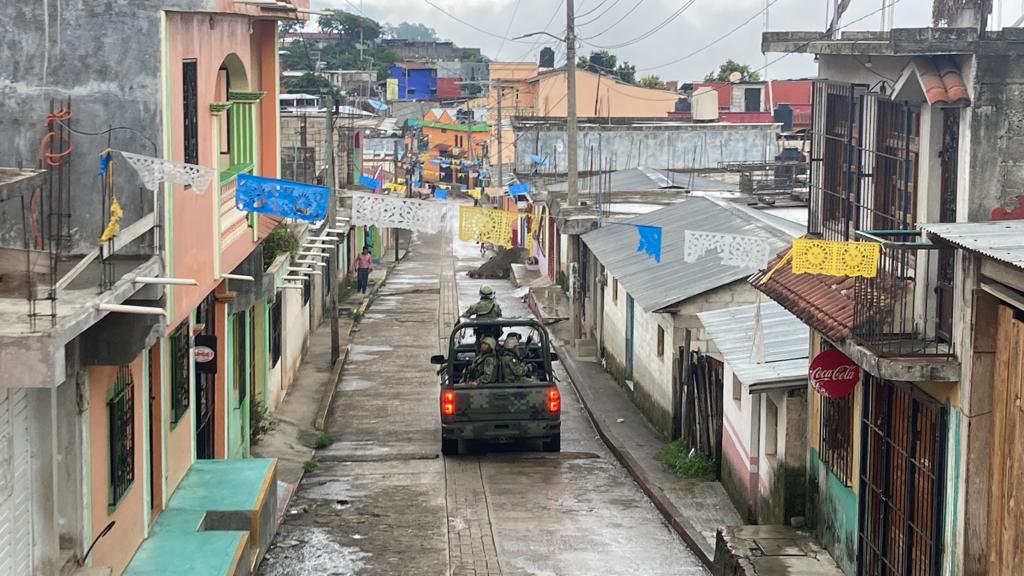
But in the two years that have passed, the dispute for control of Pantelhó has continued with ambushes against members of the self-defense groups, assassinations between the groups in conflict and, since June 30, a group of armed people allegedly under the command of José Herrera, entered the municipal capital and then left the place that is now patrolled by elements of the Mexican Army.
Most houses are closed in the municipal seat, only some shops are open.
This Wednesday, July 5, Los Machetes sent a video where they assure that they remain “with a firm step,” they denounce that the San José Tercera community, where they have one of their strongholds, was attacked.
“But we don’t respond so quickly, we don’t attack people so quickly, we always wait for the government to act … We are just on hold; If I still feel attacked, then the self-defense groups will start moving again.”
They ask in the video that the National Guard and the government act by arresting José Herrera, they warned that they will defend the town of San José Tercera and the municipal capital.
For their part, members of the Mexican Army carried out patrols and arrived at the municipal capital of Pantelhó, where they maintain a detachment. Lieutenant Colonel Alfonso Nava Bustamante said that it is part of the operation called “Operation Union,” through which patrols are carried out in the region that includes Chenalhó and Pantelhó.
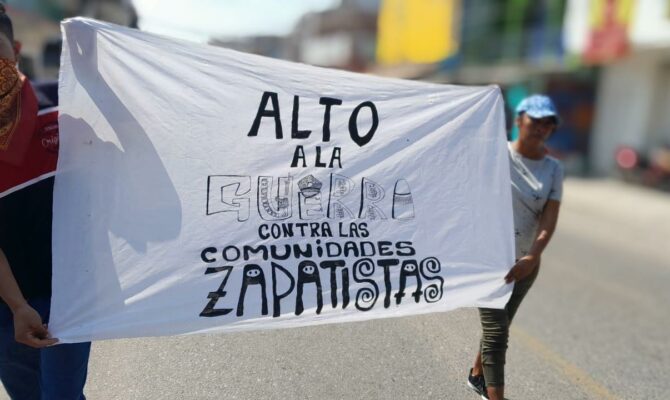
Meanwhile, in the capital of Chiapas, the families of the 21 disappeared demonstrated. They said that “the Machetes continue with their noise; They do not want to respect. People are fleeing, Pantelhó looks like a ghost town again,” they said.
Originally Published in. Spanish by Chiapas Paralelo, Thursday, July 6, 2023, https://www.chiapasparalelo.com/noticias/chiapas/2023/07/grupo-acusado-de-vinculos-con-el-crimen-intenta-recuperar-pantelho-en-chiapas/ and Re-Published with English interpretation by the Chiapas Support Committee
The Battle of Frontera Comalapa

By: Luis Hernández Navarro
The ambush in which José Fernando Ruiz Montejo, El Poni, and three of his bodyguards fell, in the Joaquín Miguel Gutiérrez ejido, Frontera Comalapa, Chiapas, at the border of Guatemala and Mexico, on December 28, 2020, was the beginning of a war between cartels in the state, which escalates more and more every day.
Six months later, in July 2021, the struggle was exacerbated by the murder of Ramón Gilberto Rivera, alias El JR, in Tuxtla Gutiérrez. El Junior was the son of Tío Gil, an operator of the Sinaloa cartel in the state until his capture in 2016. The crime was the work of the Jalisco New Generation Cartel.
Later, on October 9 and 10, 2022, a pitched battle arose between Jalisco and Sinaloa, in Jiquipilas. A name began to spread widely: Juan Manuel Valdovinos Mendoza, The Lord of the Horses, head of New Generation in the state. In a message to the population, the one also known as El Fraile, warned: I will do everything in my power not to let in those scourges of society called the Sinaloa Cartel.
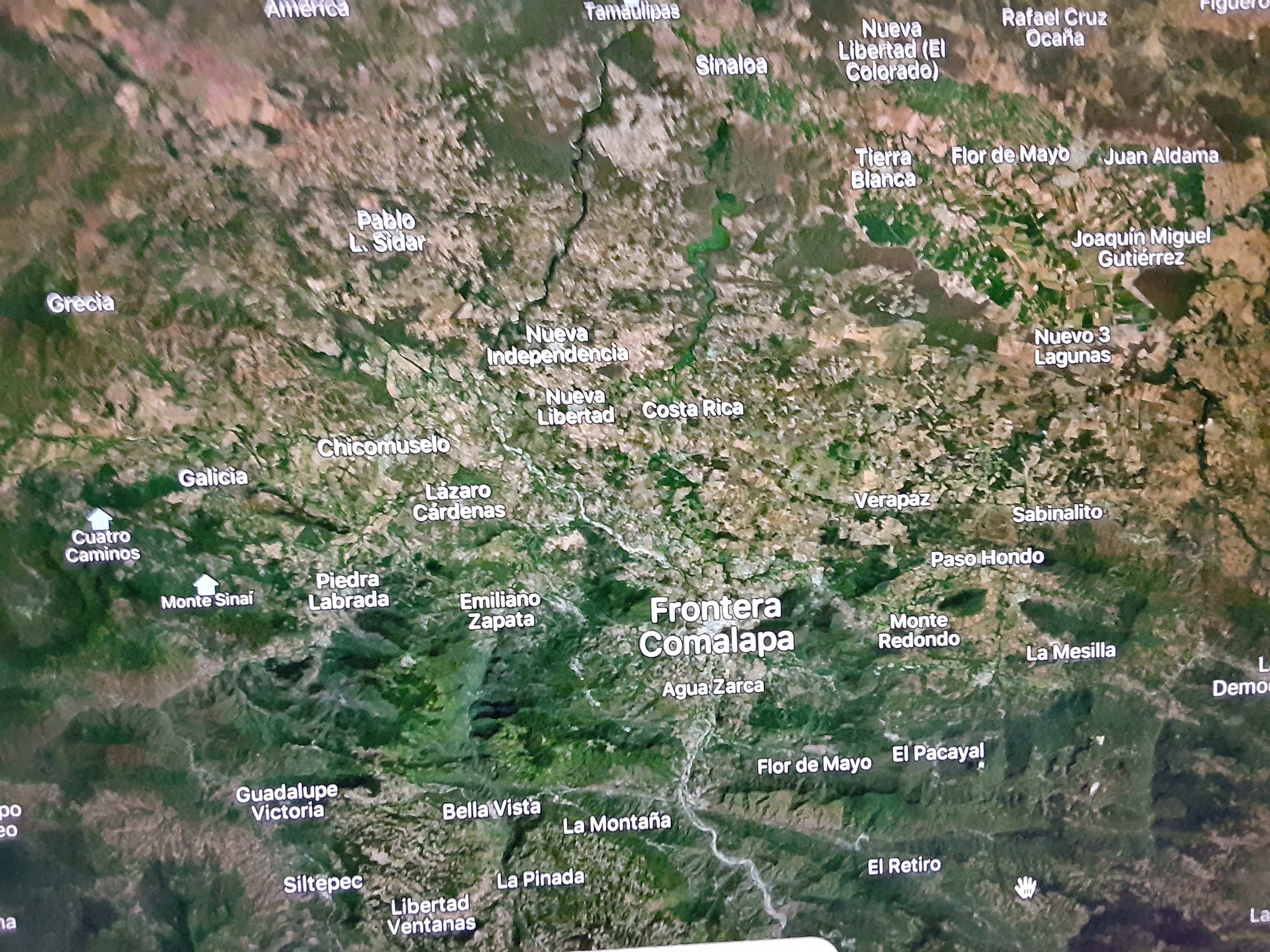
Among other regions of the state, the organized crime dispute over territories, routes and markets moved to Frontera Comalapa, which until 2015 could boast of security, tranquility and peace. It is a municipality that connects the border of Guatemala, La Mesilla, with the Sierra Madre de Chiapas. It is the commercial and monetary flow center in the region. It has about 81 thousand inhabitants and in the municipal seat, 20 thousand. There are large ejidos, such as Paso Hondo and Tierra Blanca. It has long been a passage for undocumented immigrants.
Comalapa has three important areas: 1) The area with irrigation, a real battleground between cartels; 2) The area where crops are seasonal, with ejidos that go from Paso Hondo looking for the dam, and 3) The Grijalva area, which starts from the municipal seat and goes to a part of the dam.
In Holy Week 2020, clashes began to escalate in the region of San Gregorio Chamic, between the CDP [1] and the CJNG, an ally of the Guatemalan criminal group Los Huistas. Chamic belongs to [the municipality of Comalapa], borders La Trinitaria and is a stronghold of the Sinaloa Cartel. Gradually, the clashes became more frequent: from bimonthly to weekly. The murder of El Junior accelerated them.
In their war against the Pacific Cartel, those of Jalisco and The Huistas decided to use the population as a shield, subduing it through the MAIZ Foundation (supposedly, Mano Izquierda). They force transporters, peasants, neighborhood representatives, tenants, to block roads and highways when they order it. If they don’t, there is revenge.
According to a refugee from Comalapa: If you have a taqueria, those from Maiz go and tell you: “You are going to be from the foundation and we will paint you here. When I tell him he has to get out, he’s going to get out. It is only the temporary part. Not in Chamic, because the others are there. They stop the transport and in less than three minutes they paralyze everything.”
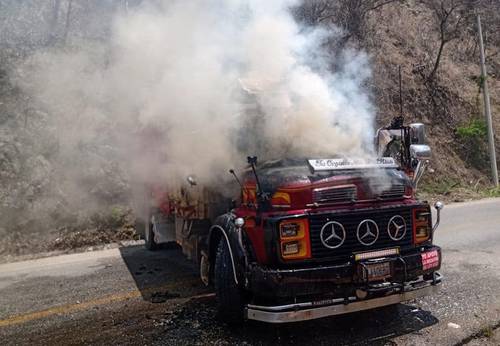
In the early morning of May 22, 2023, the Battle of Frontera Comalapa began. It lasted until Thursday 25. The Chamic wanted to advance through Chicomuselo, Motozintla and Paso Hondo. They were unsuccessful. Finally, they raided the Grijalva area, to take the municipal seat. On the way they savagely cleaned the route of peasants subdued by MAIZ. The zone of attack was Nuevo Independencia. But those from Jalisco arrived earlier, surrounded the ejido and took over the park.
For 48 hours bullets rained down nonstop. Inhabitants locked themselves in their homes and ate what they could. The clash escalated. Drones from both sides flew over houses, dropped bombs and some were shot down by enemy fire. Those of Jalisco took their “monsters” into combat. Bazookas. Finally, the Comalapa group defeated the Chamic group and recovered the community of Lajerío. There was a truce of about four hours. Still the Pacific Cartel tried a counteroffensive unsuccessfully. About 48 hours later, when things had calmed down, the Army arrived.
On May 25, people started walking along the harvest roads and bridle paths, where only horses pass. They crossed mountains, rivers and forests. They grabbed hardly anything. They brought a backpack with clothes, food, water. There were no passenger cars. They could not take private cars because the “narco-checkpoints” prevented passage. The communities were left like ghost towns.
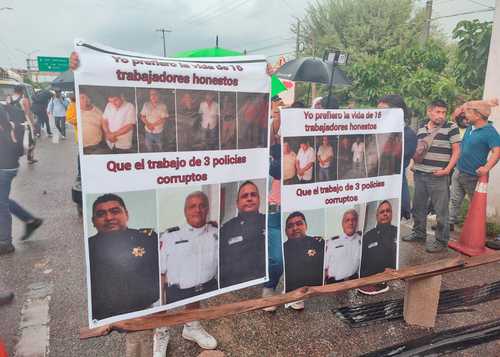
A banner placed in Mazapa de Madero by Motozintla, bordering Comalapa, warned: “We are coming for you, Güero Pulseras [the head of the Pacific]” and also denounced three officials allegedly linked to drug trafficking: Francisco Javier Orantes, undersecretary of Public Security; Roberto Jair Hernández, director of the Border Police, and Marco Antonio Burguete, director of the state preventive police.
On June 27, armed and hooded men “picked up” (kidnapped) 16 employees of the Ministry of Public Security. They demanded for their release the presentation alive of the singer Nayeli Cyrene Cinco Martínez, kidnapped on June 22, probable partner of Fredy Ruiz Güé, lieutenant of Juan Manuel Valdovinos, and the dismissal of three police commanders (those indicated in the narco-banner of Mazapa), accused of protecting those of the Pacific. The abductees were released and arrived 200 meters from the Police Academy to meet their families.
A Big March is planned for July 14 in San Cristóbal
Tired of paying for a rivalry with which they have nothing to do, outraged by the violence, determined to stop a war that does not dare to say its name, on July 14, the three dioceses of Chiapas, the evangelical community and a multitude of social organizations and popular groups will march in San Cristóbal for life, Family and community.
[1] The Sinaloa Cartel is also known as the Pacific Cartel (CDP, Cártel del Pacífico).

Originally Published in Spanish by La Jornada, Tuesday, July 4, 2023, https://www.jornada.com.mx/2023/07/04/opinion/019a1pol and Re-Published with English interpretation. by the Chiapas Support Committee
Tired of paying for a rivalry with which they have nothing to do, outraged by the violence, determined to stop a war that does not dare to say its name, on July 14, the three dioceses of Chiapas, the evangelical community and a multitude of social organizations and popular groups will march in San Cristóbal for life, Family and community[1] The Sinaloa Cartel is also known as the Pacific Cartel (CDP, Cártel del Pacífico)==Ω==
Catholics of Frontera Comalapa ask for peace and maintaining vigilance

They demand that the government ally with citizens, and not with organized crime!
By: Elio Henríquez, Correspondent
San Cristóbal de las Casas, Chiapas
Around 4,000 Catholics from the municipality of Frontera Comalapa made a pilgrimage yesterday [July 2, 2023] to ask for peace and that the security corporations not withdraw from the town. [1]
With the image of the Virgin of Guadalupe in front, people began their walk at nine in the morning from the esplanade of the fair, and after touring the main streets they arrived at the Church of the Santo Niño de Atocha (Holy Child of Atocha), patron saint of that town, where a mass was celebrated.
Long live peace, long live justice, long live unity, long live the communities, long live the pilgrim Church, chanted the demonstrators, men, women and children, dressed in white clothes, carrying flags, summoned by the diocese of San Cristóbal.
We need and want there to be peace, justice and freedom, said Catholics from four of the five areas in which the parish is divided, who sang religious songs and walked accompanied by the sound of the caracol, characteristic among the native peoples.
The pact must be with citizens, not with organized crime, said participants in the mobilization, which took place without any incidents being reported. They wrote on a white blanket: Peace is the fruit of justice.

Some of the attendees commented that they are also protesting against the violence exercised by organized crime groups that dispute territory.
They recalled that at the end of May members of criminal gangs confronted each other with bullets in the town of Nueva Libertad (Lajerío), which caused more than 3,000 residents to move for a week, until the security forces entered the municipality.
They pointed out that since the entry of the security forces, days later, a certain tranquility has been maintained, so they asked that they remain.
They explained that the situation in Frontera Comalapa broke down more than two years ago, when a group of the Sinaloa cartel split and joined the Jalisco New Generation cartel, and now they dispute the territory. This struggle causes frequent clashes, disappearances and roadblocks in the section located between Frontera Comalapa and Comitán.
Until a few months ago, hostilities between the two groups and occasionally between them and security forces occurred in the town of Chamic, about 20 kilometers from the border with Guatemala, but then spread to the vicinity of the capital.
[1] Last week, another 4,000 marched for peace in Frontera Comalapa. They didn’t say who convened that march, but the total of the 2 marches is a lot for a rural municipality.
Originally Published in Spanish by La Jornada, Monday, July 3, 2023, https://www.jornada.com.mx/2023/07/03/estados/029n1est and Re-Published with English interpretation by the Chiapas Support Committree
Zibechi: The impotence of the states
By: Raúl Zibechi
We are accustomed to the fact that defenders of state-centric policy publicize the actions of states, emphasizing their achievements and omitting state criminality, which is usually attributed to drug trafficking groups and armed gangs that multiply thanks to the support they receive from official armed institutions.
However, very little is mentioned about what these states are not doing, what they cannot or do not want to do for the most diverse reasons. They try to hide the fact that violence, which continues to grow in most of our countries, from Mexico to Chile, would not happen without the complicity, silence or direct support of the police and military, as well as businessmen and federal, state and municipal governments.
Let’s look at some examples.
What can states do in the face of the climate crisis and mass migration? The rulers say they do their best, meet, convene expensive international conferences and summits among leaders, but they just remain empty declarations that nobody trusts, except those who benefit from those meetings.
But the question should go deeper. What could the states and governments do if they were led by honest people? Or something more complex: is it possible to stop or reverse climate change? What about migrations?

A study published by the journal Nature Sustainability says that 3 to 6 billion people, between one-third and one-half of humanity, could be trapped outside the environmental niche where life is possible, facing extreme heat, food shortages and higher mortality rates, unless emissions are drastically reduced or mass migration is taken into account.
To reverse the climate crisis, there would have to be a drastic change in two central issues: the accumulation of capital by dispossession or theft and the ways of life of the portion of humanity that lives quite well, that is, the middle and upper classes of the world. Both are impossible. The first because it is the richest one percent who has shown that it does not want to leave its place of privilege.
The second because cultural changes are very slow and nobody wants to lose their standard of living, of consumption. How many of the people who are reading these lines would be willing to live like the original peoples of Chiapas who, just for being poor, are poor and are being punished by the powerful?
It is not easy to change the way of life. Even less to do it by will and not by necessity. If half of the planet’s population can migrate for climatic reasons, it is clear that this huge and brutal proportion cannot be contained even by the most powerful state. United States authorities are absolutely powerless to stop the clouds of smoke and dust caused these days by the wildfires in Canada.
These days I am in Venezuela, where there is no gasoline and the country is paralyzed. I come from Uruguay, where I live and there is no drinking water anymore. Venezuela has the largest oil reserves in the world and Uruguay was a paradise of abundant drinking water of very good quality.
In both cases we see the impotence of states. Refineries in Venezuela are between 60 and 70 years old, have not been repaired and now have almost permanent failures. Venezuela is now dependent on gasoline shipments from Iran. The monoculture of hydrocarbons is at the base of this tremendous crisis.
In Uruguay, agricultural production for export is responsible for the current shortage, although it was aggravated by the long drought caused by climate change. Deforestation, soy monocultures and dairy plantations are at the root of the current water scarcity, since the main basins are polluted without anyone responding, neither the current right-wing government nor the previous left-wing ones.
In both countries, accumulation by dispossession is ultimately responsible for disasters. But the gravity of the situation that affects us can no longer be resolved either with demonstrations (in Montevideo they are daily and are necessary to alert the population to the official silence), or with changes of government. The force of inertia to which Fernand Braudel alluded is so important that not even the collapse of the current world-system is capable of making populations modify their habits, particularly urban ones.
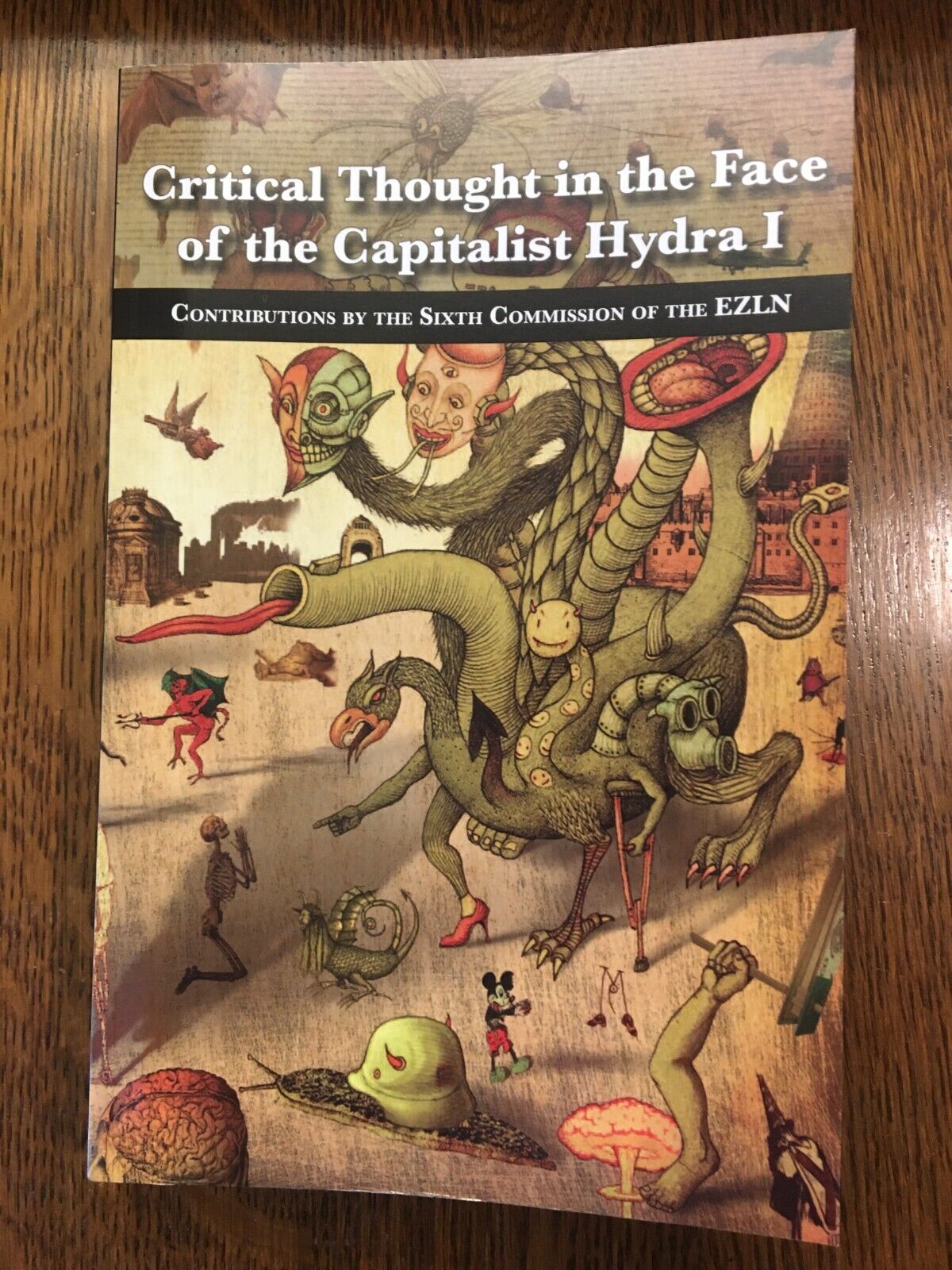
Seven years ago, at the Critical Thought in the Face of the Capitalist Hydra, gathering held in San Cristobal de las Casas, the EZLN warned about the dimension of the migrations expected for this century. To some of us it seemed exaggerated, but reality is surpassing us.
What are we going to do given the evidence that we are facing risks that neither the states nor the governments can resolve? It is evident that we must choose between autonomy and barbarity.

Originally Published in Spanish by La Jornada, Friday, June 14, 2023, https://www.jornada.com.mx/2023/06/16/opinion/015a2pol and Re-Published with English interpretation by the Chiapas Support Committee
Incessant violence
By: Luis Hernández Navarro
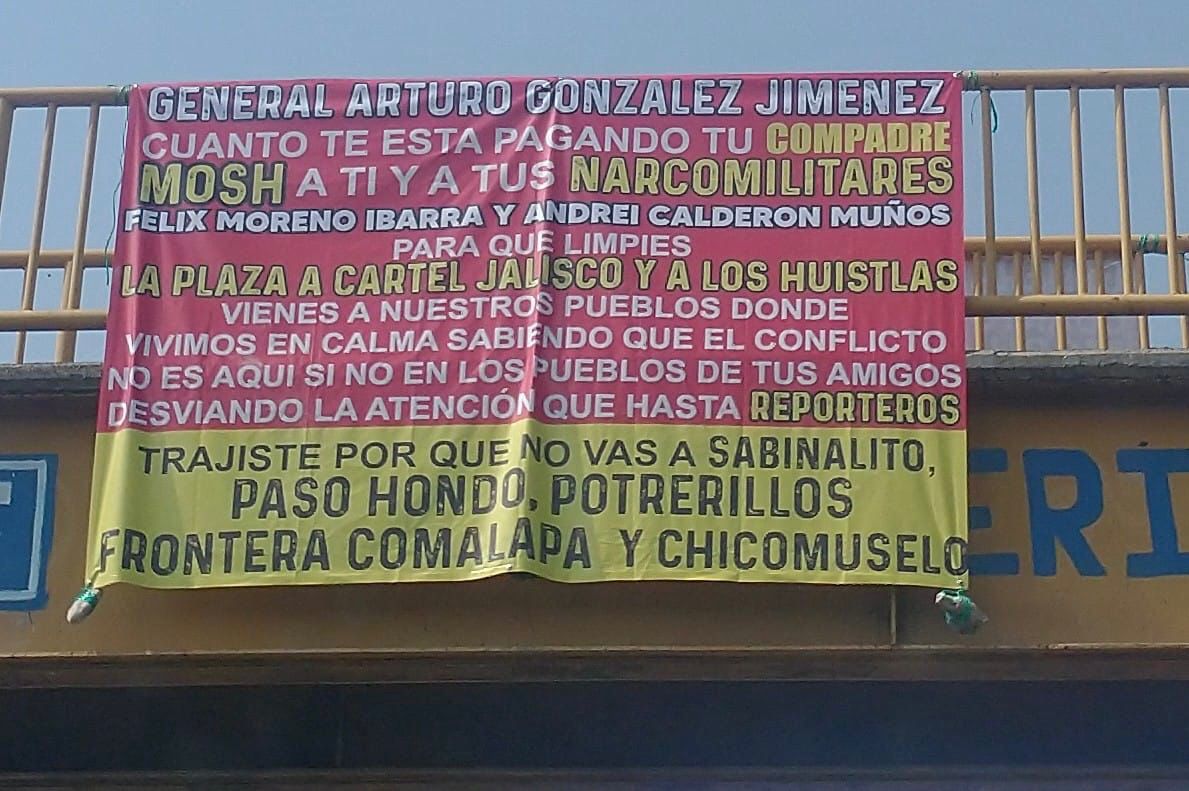
On June 1, narco-banners were hung on four pedestrian bridges in the municipality of Frontera Comalapa, Chiapas. Ten days later, notices reappeared on public roads, indicating that the Army took journalists to report on risk areas.
The local press documented the news and published photographs. On one of the narco-banners, painted on a red and yellow background and with letters labeled in three colors: “General Arturo Gonzalez Jimenez. How much is your compadre Mosh paying you and your narco-military Felix Moreno Ibarra and Andrei Calderon Muños to clean the plaza for the Jalisco cartel and the Huistlas. You come to our villages where we live in calm knowing that the conflict is not here but in the villages of your friends, diverting the attention that even reporters brought. Why don’t you go to Sabinalito, Paso Hondo, Potrerillos, Frontera Comalapa and Chicomuselo” [sic] (https://cutt.ly/AwyeK8RH).
The Frontera Comalapa region, on the border with Guatemala, experienced days of terror in late May and early June. Videos documenting shootings, roadblocks, burned cars, deployment of armored vehicles known as “monsters” and denunciations of forced disappearances circulated profusely in the social networks. Thousands of villagers had to leave their homes and animals to protect themselves from kidnappings (levantones) and violence. On May 30, hundreds of soldiers and National Guard members carried out an operation in the region and established checkpoints.
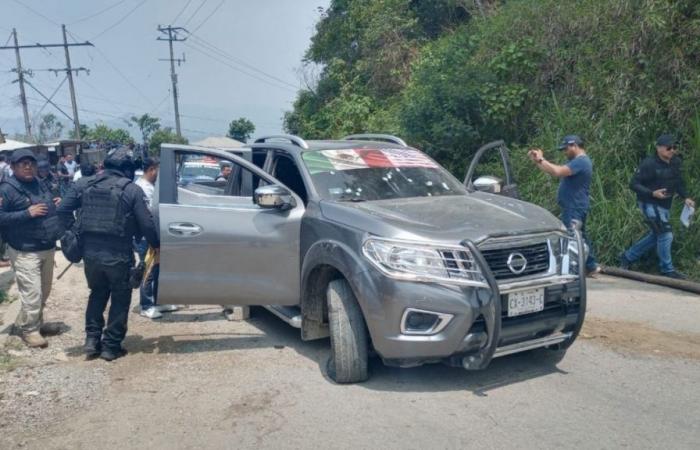
On June 2, 2023, many kilometers away from Frontera Comalapa, in the town of Polhó, municipality of Chenalhó, very close to where the Acteal massacre was perpetrated, seven people died in an ambush. In a warehouse of the community were 200 refugees displaced from the Santa Martha ejido. As they passed by, Gilberto Pérez Gómez, his family and two members of his personal guard, belonging to the Los Ratones group, were ambushed and died. The other person who died is Fernando Ruiz, son of the owner of the place where the refugees live.
Although there are rumors that Los Ratones could have been responsible for the crime, authorized sources indicate that they were traveling in a van behind Pérez Gómez, but many of the bullet impacts on Gilberto’s truck were in the front.
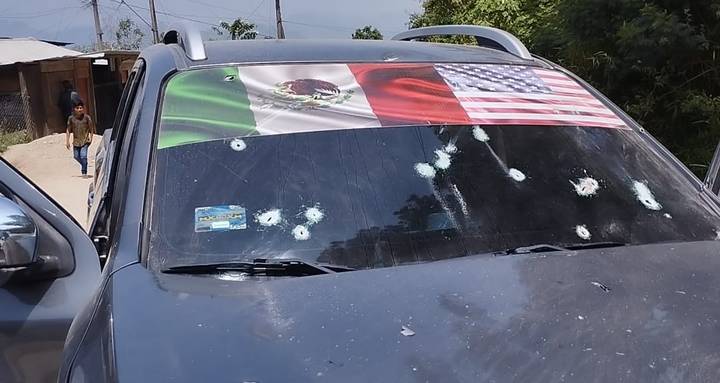
History goes way back. On March 3, gunmen killed Petrona López Pérez, wife of Daniel López Méndez, commander of the El Machete Peoples’ Self-defense Group in Pantelhó. Various sources indicate that Doña Petrona was killed by the late Gilberto Pérez, originally a member of the self-defense group, who ended up allying himself with the Herrera clan, a rival group of El Machete. The people displaced from Santa Martha would have protection from the armed civilian group.
For years, the Herrera family controlled the municipality of Pantelhó with blood and fire. With the support of gunmen from Campeche, Veracruz and Sinaloa, this group conquered territorial control through terror, murders, disappearances, robberies, dispossession and forced displacement, carrying weapons and explosives for the exclusive use of the Mexican Army. Electorally it used the acronym of the PRD (https://cutt.ly/EwyeImaf). The clan’s patriarch, Austreberto, is in jail for killing two people in the municipality in April 2015. In July 2021, the catechist Simón Pedro Pérez, who had chaired the board of directors of the Civil Society Las Abejas de Acteal, was killed in Simojovel.
During their bonanza days, the Herrera clan had Enoc Díaz Pérez (Encuentro Social Party) as an advisor, boss of the criminal gang Los Cacheros, later re-baptized as Los Diablos, and of the paramilitary-style movement named Proyecto Amigo Revolucionario No. 7 (Revolutionary Friend Project Number 7). Enoc had been municipal president of Pueblo Nuevo Solistahuacán, when the municipal council (and the region) was controlled by heroin traffickers, Antonio Laredo Donjuán and his wife Mercedes Barrios Hernández, who were arrested in 2018 at the request of the United States government, which asked for their extradition.
On June 7 2021, the El Machete Peoples’ Self-defense Group irrupted violently in the municipal seat of Pantelhó, to expel the sicarios (hit men), drug traffickers and organized crime, because we don’t want more deaths for the poor Tseltal and Tsotsil campesinos. They successfully fought with firearms against the Herrera group. They have controlled the region since then. However, their self-declared righteous vocation faded very quickly.
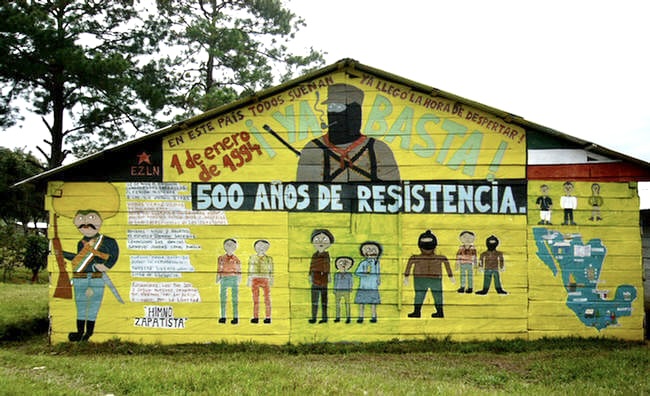
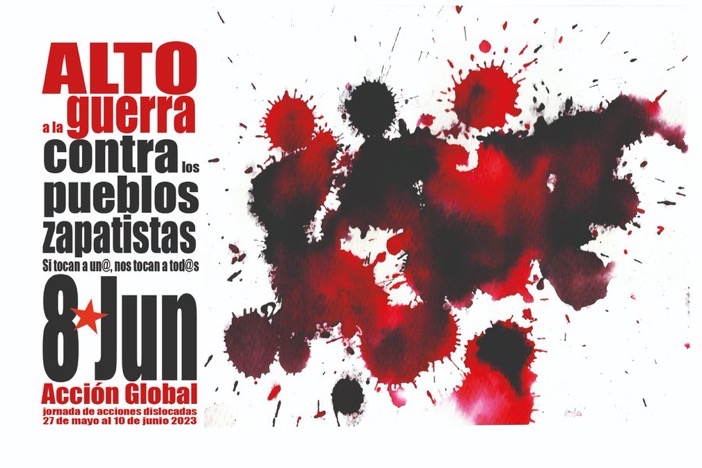
Just this last June 19, the paramilitary group called the Regional Organization of Ocosingo Coffee Growers (ORCAO, Organización Regional de Caficultores de Ocosingo), simultaneously attacked three Zapatista support base communities in the Moisés Gandhi region. They torched plots of land and fired gunshots for three days straight. It is the ORCAO’s eleventh armed attack on the rebels so far, under the current administration. All have been perpetrated with absolute impunity. Not a single person has been arrested for the attacks.
This brief account sets aside, for reasons of space, many other acts of violence against different communities in resistance in Chiapas or in cities such as San Cristóbal. Those acts of violence also intersect with 1) disputes between organized crime gangs that fight over plazas, markets, territories and routes; 2) old and new paramilitary groups (which have been linked to drug cartels and polleros); 3) ) gunmen or gangs that have diversified their activities such as Los Ratones or Los Vatos Locos and, 4) self-defense groups. This, despite the enormous deployment of the Army and the National Guard in the state.
Originally Published in Spanish by La Jornada, Tuesday, June 27, 2023, https://www.jornada.com.mx/2023/06/27/opinion/019a1pol and Re-Published with English interpretation by the Chiapas Support Committee
Some 4,000 march to demand security in Frontera Comalapa
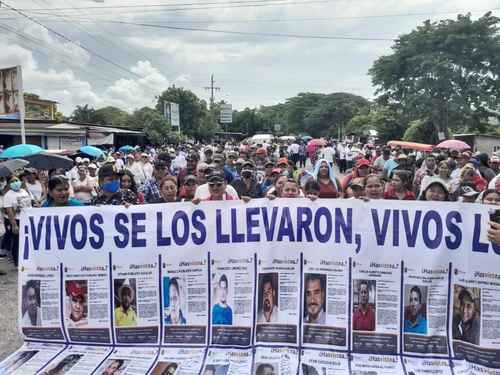
Residents are caught in the middle of a fight between two cartels
By: Elio Henríquez, Correspondent
San Cristóbal de Las Casas, Chiapas
Around 4,000 inhabitants of Frontera Comalapa marched on Monday, June 26, in the municipal seat to demand peace and tranquility.
Men and women with banners and signs that had photographs of missing persons walked about six miles from the New Mexico turnoff to Central Park without incident.
“We want people to be safe. We are united now. We were not forced to come. We are here voluntarily,” said one participant. We wear white because we want peace and quiet in Frontera Comalapa, in its neighborhoods and communities. We are merchants, transporters and inhabitants who want security for our families.”
Another person, who asked not to be named, said: “We demand that the three levels of government look at our municipality. We demand respect for our lives. All we want is to live in peace and to have the rule of law applied equally to all, not just to a few who cannot defend themselves. We are not asking for money nor are we putting up a candidate.”
For their part, residents of Frontera Comalapa who did not attend the demonstration reported that there were three lines of about four kilometers, but many people were forced to participate; In addition, the safety motorcycles of the organizers passed by all the time to keep people in the line.
They said the protesters were given plenty of water and juices, and a lot of garbage was left all along the stretch they walked.
The protesters also requested that the reinforcement of security operations on roads and in cities and communities continue.
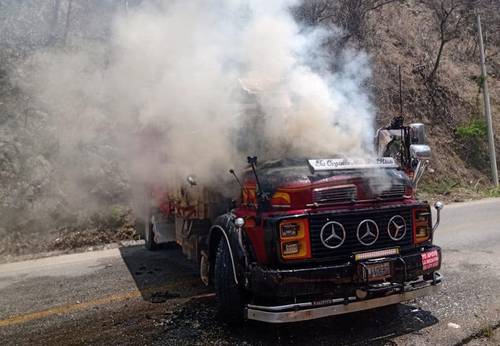
The march took place a month after members of criminal groups exchanged gunfire during a battle in the town of Nueva Libertad, which caused the displacement of some 3,000 residents for a week, until security forces entered the municipality.
Residents said that the situation in Frontera Comalapa got worse more than two years ago, when a group separated from the Sinaloa Cartel and joined the Cartel Jalisco New Generation (CJNG).
Both criminal organizations dispute territories in the state, leading to confrontations, disappearances and road blocks on the stretch between Frontera Comalapa and Comitán.
Shootouts between these criminal groups, and occasionally between them and security forces, occurred in the town of Chamic, about 20 kilometers from the border with Guatemala. But then a few months ago, it spread to the areas surrounding the municipal seat of Frontera Comalapa.
Among those missing (disappeared) are the president and secretary of the Nueva Libertad ejido commission , Jordán Gordillo Genovez and José Marín Carvajal Méndez, respectively, kidnapped on March 22 in the municipality of La Trinitaria. Along with them, five other members of the commission also went missing, but appeared days later.
For their part, Catholic church sources reported that they are preparing a pilgrimage for peace to take place on July 2 in the town of Frontera Comalapa, which is the municipal seat of the municipality with the same name.
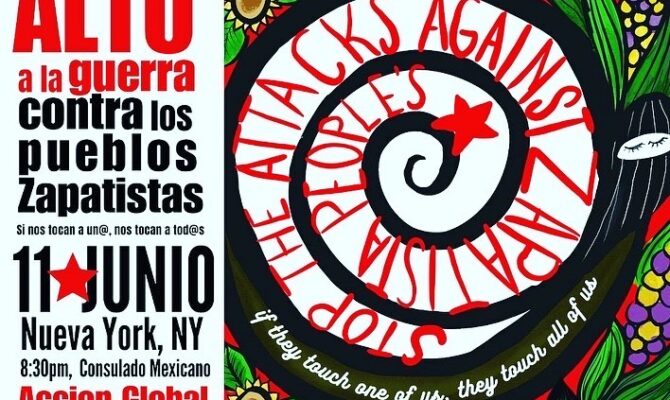
Originally Published in Spanish by La Jornada, Tuesday, June 27, 2023, https://www.jornada.com.mx/2023/06/27/estados/028n1est and Re-Published with English interpretation by the Chiapas Support Committee
Protest the violence against Zapatista communities!
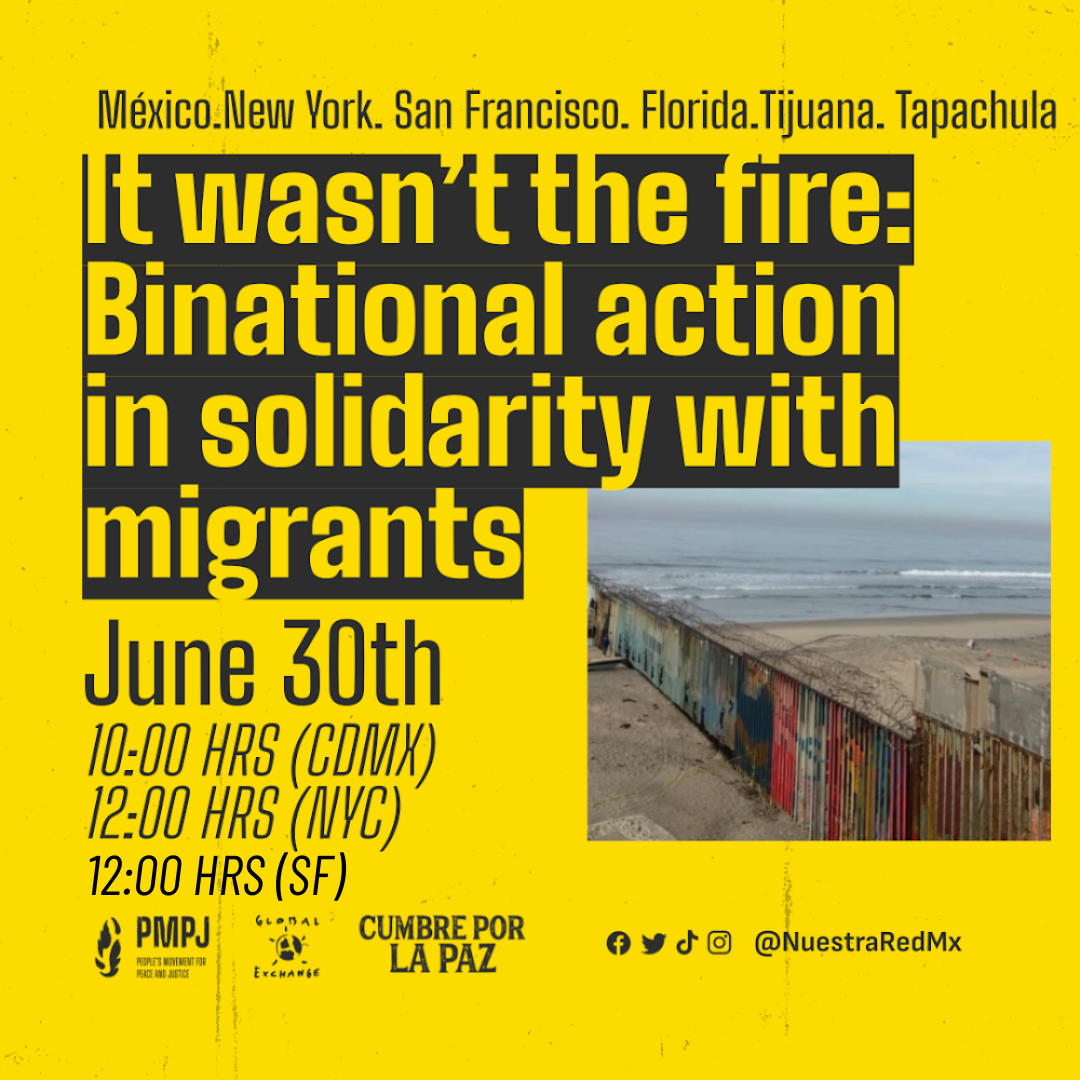
Friday, June 30, 12 Noon, Mexican Consulate, 532 Folsom, San Francisco
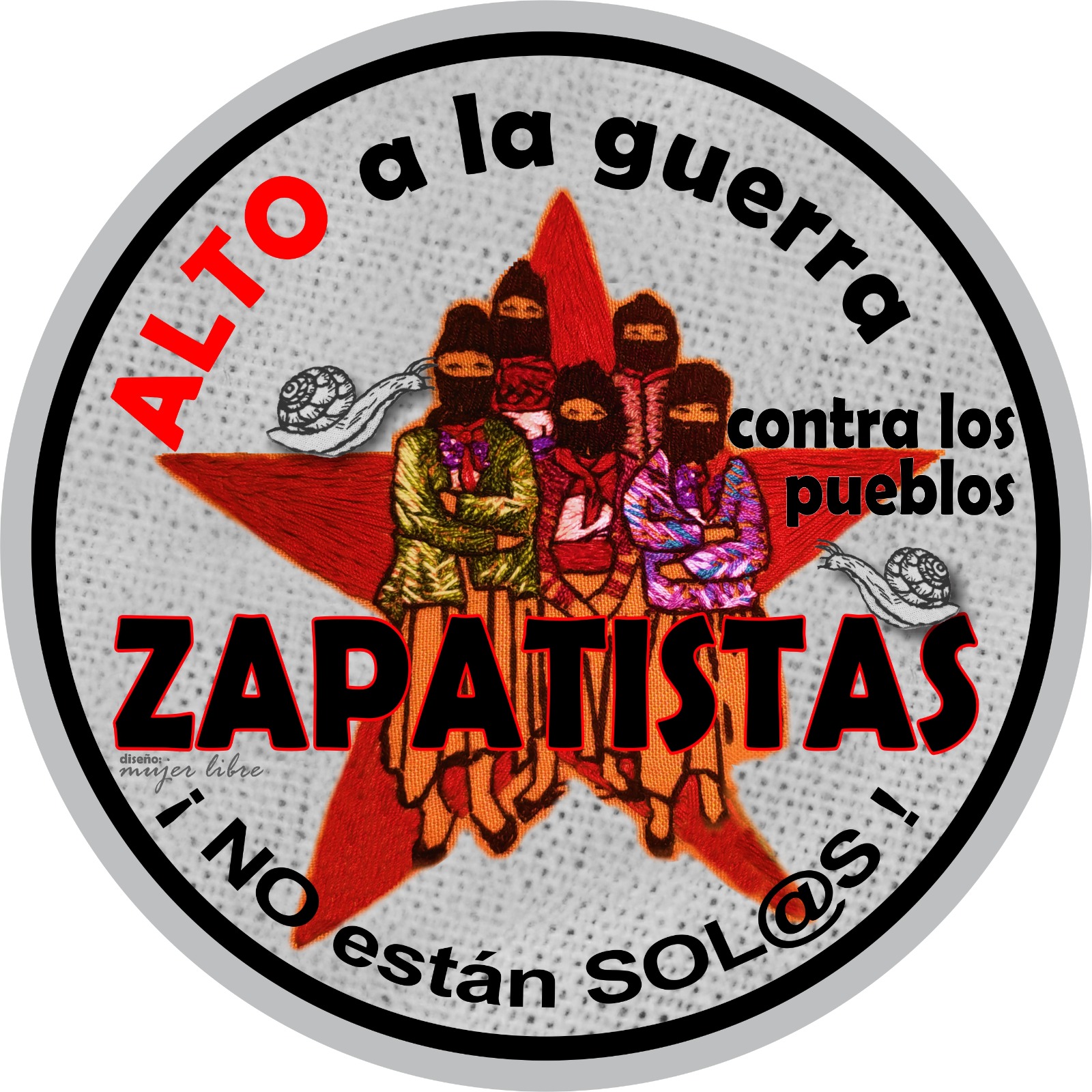
The Chiapas Support Committee is joining “It wasn’t the fire: Bi-National Action in solidarity with Migrants.” Join us to protest both the counterinsurgency war against the Zapatista Peoples and against migrants in Mexico and the United States.
Published by the Chiapas Support Committee, an adherent to the EZLN’s 6th Declaration of the Lacandón Jungle.
Chiapas: “Necro-power” and paramilitarism
By: Carlos Fazio
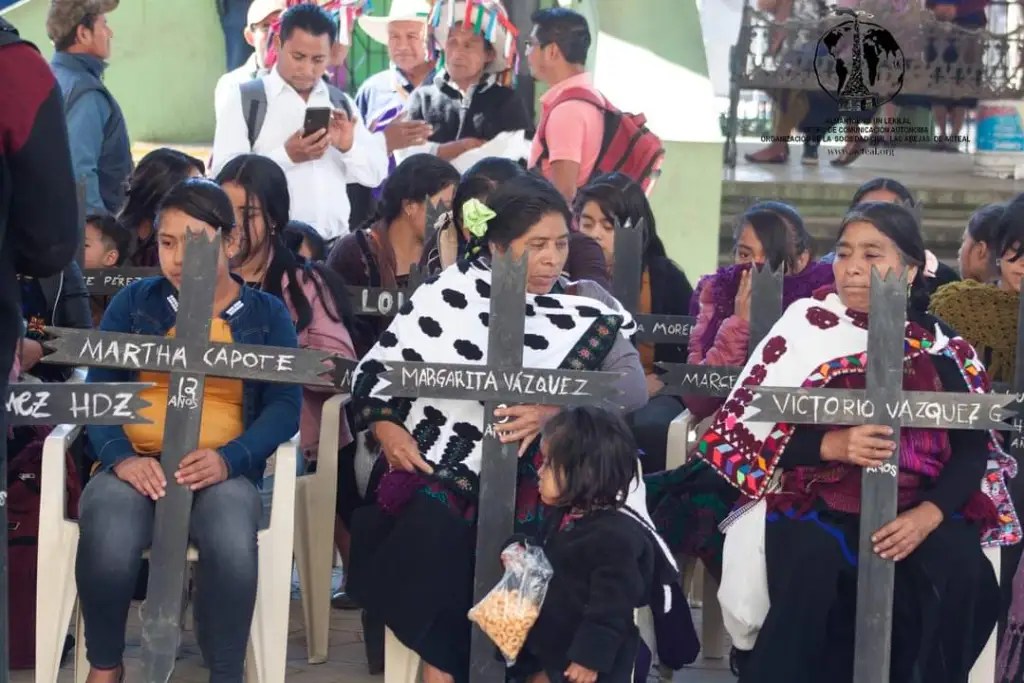
The Fourth Transformation’s “humanism” did not reach the Mexican southeast. Chiapas is a powder keg about to explode. And not because of the absence of the State: given that it is a territory of great geopolitical and geo-economic importance – and also bordering Guatemala – for reasons of national security there is a strong military presence there, as well as the National Guard and the different police forces, which was exacerbated after the imposition, by the governments of Donald Trump and Joe Biden, with the militarized control (by the Mexican State) of the migratory waves coming from Central America. Hence, by action or omission, collusion, cohabitation or acquiescence of the State, the current state and non-governmental criminal violence (paramilitary, criminal) against indigenous communities with support bases of the Zapatista National Liberation Army (EZLN) responds to another logic: that of counterinsurgency.
In Chiapas they knot, intertwine and/or confront a series of contradictions, concepts and categories that include, on the one hand: internal colonialism; neo-extractivism (the main axis of the capitalist megaprojects of the trans-Isthmus corridor and the misnamed Maya Train); diffuse war; necro-politics; racism; State terrorism; population control; forced displacement. And on the other hand: community; self-determination; autonomy; collective rights; anti-systemic and counter-hegemonic principles; organization; resistance; defense of land and territories; dignity.
The EZLN took up arms and declared war on the Mexican State on January 1, 1994. After 12 days of clashes, the government of Carlos Salinas decreed a ceasefire against the Zapatista peoples and negotiations began with the mediation of the then bishop of San Cristóbal de las Casas, Samuel Ruiz. After the San Andrés Dialogues, the regime of Ernesto Zedillo did not comply with the agreements and the EZLN dedicated itself to building de facto autonomy in its territory in a civil and peaceful manner, in addition to being a key actor for the advancement and exercise of the rights of indigenous peoples. But it remains an armed political-military actor.
Since 1995, the Secretariat of National Defense (SEDENA) began a phase of irregular warfare and para-militarization of the conflict, which responded to the guidelines of the so-called Chiapas 94 Campaign Plan. The strategic-operational objective of this plan was “to destroy the EZLN’s will to fight, isolating it from the civilian population and obtaining its support, for the benefit of the Army’s operations.” The tactical objectives of Plan Chiapas 94 included “destroying and/or disorganizing the political and military structure of the EZLN,” for which, along with intelligence, psychological, civilian population control and logistical operations, the organization, training, advice and support of “self-defense forces or other paramilitary organizations” (sic) were instructed. And he added: “If there are no self-defense forces, it is necessary to create them.” In a textual way, it was ordered “to secretly organize certain sectors of the civilian population – among others, ranchers, small landowners and individuals characterized with a high patriotic sense – who will be employed under orders in support of our operations.”
According to the plan, the Army provided training, advice and support of the “self-defense forces” (SDF) and other paramilitary organizations. The paramilitaries were to participate in SEDENA’s security and development programs. Among other tasks, they had to provide information that fed the branches of military intelligence (counter-information, combat intelligence, intelligence for the support of psychological operations, intelligence on the internal situation).
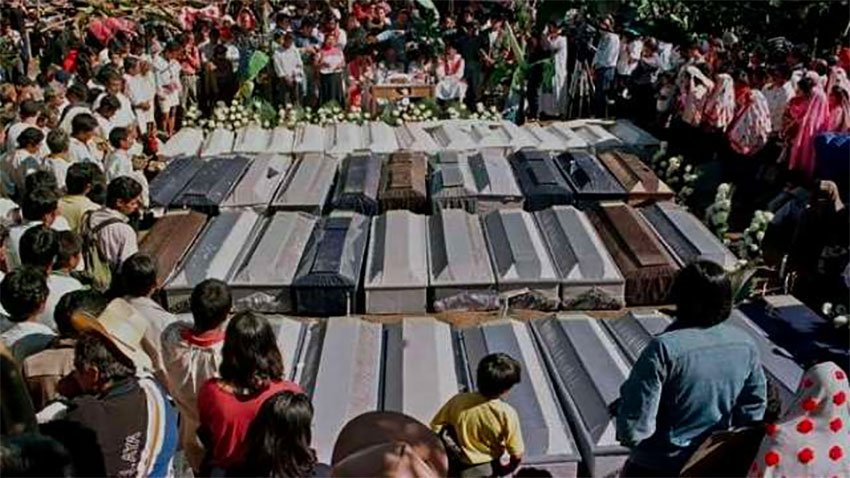
The Acteal Massacre, in December 1997 −when 45 indigenous Tsotsiles were murdered while they were praying in that community’s chapel in the municipality of Chenalhó by the PRI paramilitary group Máscara Roja (Red Mask) and undercover members of the Army−, was a military action that followed the guidelines of the Manual of irregular warfare, counter-guerrilla operations and restoration of order, published by SEDENA. It teaches how to fight the insurgency. Quoting Mao Tse-Tung, it stated that “the people are to the guerrillas as water to the fish.” But the fish, it adds, “can make life impossible in the water, agitating it, introducing elements harmful to its subsistence, or braver fish that attack it, chase it and force it to disappear.” Paramilitaries, then.
Almost 25 years later, the Regional Organization of Ocosingo Coffee Growers (ORCAO) fulfills the role of Red Mask in the Acteal massacre. And together with the ORCAO, criminal groups – in complicity, collusion or under the protection of State security agencies – execute in Chiapas the tasks of generating terror and chaos that organizations of the criminal economy developed in geo-strategic areas of Mexico, such as the states located on the Burgos and Sabinas basin (Coahuila, Nuevo León), rich in uranium, coal and hydrocarbons, considered “Zeta territory” during the diffuse war of Felipe Calderón or in the area of the “hot land” of Michoacán, where the Army armed a civilian self-defense group (Hipólito Mora, Juan José Farías, Miguel Ángel Gutiérrez, José Manuel Mireles and others) to face the Knights Templar of Servando Gómez, La Tuta.
In all cases it is a question of destroying the communal social fabric through necro-politics, a category that, according to Achille Mbembe, implies the decision of who can live and who must die at the hands of “war machines” (state and private) to generate mass death, which exhibits the logic of twenty-first century capitalism as “administration and work of death,” with the material destruction of human bodies and populations judged as disposable and superfluous (killable, says Agamben). The goal of terror and necro-power is social subjugation; the submission of the other as part of a predatory dynamic of dispossession, dispossession and territorial reordering for the purposes of economic domination.
Originally Published in Spanish by La Jornada, Monday, June 12, 2023, https://www.jornada.com.mx/2023/06/12/opinion/015a2pol and Re-Published with English interpretation by the Chiapas Support Committee
 Chiapas Support Committee