Chiapas Support Committee
Home of the Compañero Manuel blog on zapatistas & mexico
Frayba documents new attacks on Zapatista community
By: Elio Henríquez, Correspondent
Mapastepec, Chiapas
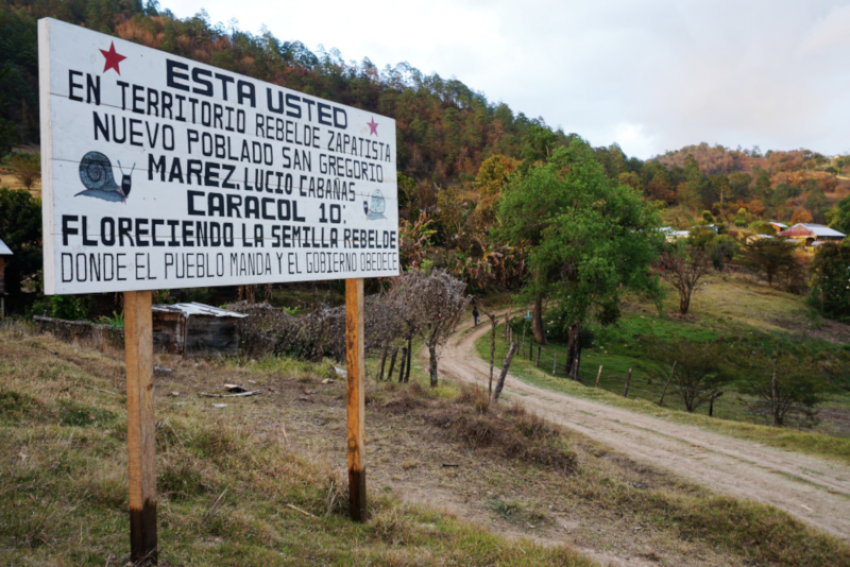
The Civilian Observation Brigades (Brico, Brigadas Civiles de Observación) installed in the community of Nuevo San Gregorio, Lucio Cabañas autonomous municipality, “have documented new attacks that put at risk six support base families of the Zapatista National Liberation Army (EZLN, Ejército Zapatista de Liberación Nacional),” the Fray Bartolomé de Las Casas Human Rights Center (Frayba) reported.
It denounced that on June 9 “at 7:23 am 19 aggressors entered and started to cut down trees to reinforce the barbed wire that they illegitimately installed two and a half years ago in the community.” It specified that “at 1:27 pm they met in the center of the community, the meeting point for the Zapatista bases, insulted the population and especially the Brico obervers;” they also threatened them with death, just like they did to members of the Frayba, before leaving at 2:38 pm.”
The new intimidations “constitute a risk to the physical and psychological integrity of the people and a clear obstacle to international observation based on the Mexican Constitution and the United Nations Declaration on the Right and Duty of Individuals, Groups and Institutions to Promote and protect universally recognized freedoms, which have been signed and ratified by the Mexican State.”
The Frayba pointed out that on multiple occasions it has informed the three levels of government “of the frequent attacks on the EZLN support bases in Nuevo San Gregorio, who remain in resistance and defense of the territory recuperated in 1994.”
The organism over which the Bishop Emeritus of Saltillo, Coahuila, Raúl Vera López, presides reiterated that: “faced with these circumstances, a risk exists to personal security and integrity due to the fact that the aggressor group threatened to forcibly displace and close the houses where the support bases live.
==Ω==
Originally Published in Spanish by La Jornada, Monday, June 13, 2022, https://www.jornada.com.mx/2022/06/13/estados/031n3est and Re-Published with English interpretation by the Chiapas Support Committee
Organized crime increases in Chiapas, organizations accuse authorities of acquiescence

By: Angeles Mariscal
An increase in drug trafficking and consumption, an increase in homicides and disappearances, regions with curfews imposed by armed people, constant armed attacks on entire communities; in Chiapas, the presence of organized crime skyrocketed, a situation that has set off alarms in organizations and citizens who demand action from State institutions.
The National Citizen Observatory reported that according to the investigation folders registered by the State’s Attorney General and compiled by the Executive Secretariat of the National Public Security System, the crime of [local] drug dealing has continued in 2022, “with a pattern of sustained and generalized growth in Chiapas.”
In the month of April alone, the Observatory points out in its most recent report, where it analyzes security and justice statistics, that in Chiapas denunciations of the crime of drug dealing are reported every day, which represents, according to the Observatory, a 400 percent increase in just one month. It adds that there are municipalities with a 2000 percent increase in this crime in the same period of time.
The Network for the Rights of Children and Adolescents in Chiapas (REDIAS), which works to improve conditions for children, provides other data. It refers to San Cristóbal de Las Casas as one of the epicenters of organized crime actions. in that ciudad, on August 11, 2021, the Indigenous Justice prosecutor, Gregorio Pérez Gómez, was murdered; and several more people have died as a result of gunshots fired by members of criminal groups.
REDIAS, also with data con from the Executive Secretariat of the National Public Security System, details that in 2021 there were 14 homicides with firearms towards children and adolescents in Chiapas, and five in which so far this year: last February 26, a 15-year old adolescent was murdered with a firearm from a motorcycle in San Cristóbal de las Casas, on February 28, an 8-year old girl died in Ocozocuautla, the victim of crossfire, on May 22, the homicide of a 14-year old occurred in Marqués de Comillas. Added to this is the fact that in the first four months of this year 112 minors under the age of 18 disappeared in Chiapas.
REDIAS refers to the situation in the indigenous zone of Los Altos, where armed violence has impacted community life; just from January to April 2022 there were 1,113 armed attacks on communities in Aldama; on March 26, a 9-year-old girl was hit by bullets in that municipality.
Another case is that of girls and boys who are left orphaned when their parents die doe to armed actions, as happened on February 19, 2022, when a mother of four children was murdered in the center of San Cristóbal de las Casas.
An additional event that is added in the region is that last June 8, Rubén Valdez Díaz, then mayor of Teopisca, a municipality located 30 kilometers from the city of San Cristóbal de Las Casas, was executed by armed men who shot him in the head, when he was getting into his car outside of his house; the trafficking of persons and arms has increased in this region.

Campesinos, human rights organizations and religious groups are on alert
The National Front of Struggle for Socialism (FNLS, Frente Nacional de Lucha por el Socialismo) rural organization, in a communiqué that it issued this month of June, says: organized crime, drug trafficking and social decomposition are putting the physical and psychological integrity of members of the popular movement and of people in general at risk, especially in the region of Venustiano Carranza, Teopisca, Socoltenango, Comitán de Domínguez and the municipalities on the México-Guatemala border, where the drug trafficking business grows openly, seeks to expand and take root in these regions.
They explain that: “the presence of agents, foreign to the immediate environment, armored cars, intimidating checkpoints and recruitment proposals with payments that exceed the weekly minimum wage by four times (…) sow terror on the towns.”
Inside the Diocese of San Cristóbal de Las Casas, priests and faithful have added on to the denunciation of the impact that the advance of organized crime is having on the state of Chiapas. In a communiqué, Pueblo Creyente (Believing People) of the Diocese denounced that: “insecurity, violence and territorial dispute provoked by organized crime (…) bring very strong consequences for our municipalities and our peoples, such as narco-politics, drug addiction in the ejidos, the increase of cantinas (bars), car and motorcycle theft and murders.”
In Chicomuselo, one of the municipalities in the border zone with Guatemala, where armed groups have confronted each other, they (the criminals) put up checkpoints where they search people in transit, and impose curfews. Matías Rodríguez Jiménez, the parish priest of Chicomuselo, denounced the criminal groups’ harassment: “five motorcyclists followed me, ambushed the vehicle in which I was traveling and told me: “we know who you are and what you do. Be careful.”
The kidnapping and disappearance of people has become constant in that region; however, family members have not made denunciations in the majority of situations. Matilde (N), of the Pueblo Creyente, denounced in a people of faith meeting that last April when she was riding in a public transport van, “some armed men stopped us, they took the women out, not me, I believe because I am an elderly person. They took them away (three women), their families didn’t find them, we haven’t heard from them again, but there is fear of denouncing.”
The situation, and the calls for help from the population to civil society organizations, summoned human rights defenders, who met in this state last June 1 and 2.
In a statement at the end of the meeting, they pointed out: “the grave panorama of insecurity and violence that exists in the state of Chiapas, in the face of a complex context in which organized crime and armed groups linked to political, agrarian and economic cacicazgo (a chiefdom or group of bosses) act against the civilian population with the acquiescence of authorities of the three levels of government.”
After several days of analysis, the Civil Service for Peace (Ziviler Friedensdienst) of Bread for the World (Brot für die Welt) from Germany, the Fray Bartolomé de las Casas Human Rights Center, Aluna Psychosocial Accompaniment, the University of the Earth Oaxaca, Consortium for Parliamentary Dialogue and Oaxaca Equity, CODIGO DH, as well as Serapaz, argued that it is “impunity that protects and encourages the behavior of criminal and business groups that dispute control of territories, resources and markets.”

Community organization is activated
The organizations that met emphasized that: “despite the widespread violence, the communities continue to stand up, building paths of peace and alternatives to strengthen their autonomy and defend their territory.”
For their part, religious organizations linked to the Diocese of San Cristóbal also made a statement in which they pointed out: as Believing People (Pueblo Creyente) we commit to co-responsibility in the search for community security. Therefore, we will also urgently try to articulate more between areas, instances, groups and organizations, in the search for the Common Good.
In the State’s northern zone, peoples of indigenous origin also decided to reinforce measures that could stop the advance of organized crime groups. In May, people from the municipalities of Jitotol, Pueblo Nuevo, Rincón Chamula, Tapilula, Ixhuatán, Solosuchiapa, Ixtacomitán and Chapultenango protested openly in a peaceful march. Residents of the indigenous part of the jungle zone did the same thing.
During the meetings, their statements have called: “to the municipal authorities we ask that you reflect on the role you are playing in the struggle against violence; because the pact must be with the people and not with organized crime.”
However, the organizations that met June 1 and 2 maintained: “we emphasize the responsibility of the Mexican State in these offenses, whether by commission, omission or acquiescence (…) we urge the Mexican State to guaranty access to justice and truth and to combat the co-optation of authorities in the different levels of government by networks of criminal-political-economic interests. It is essential that you make explicit, beyond discourse, actions aimed at the construction of peace.”
For their part, authorities of the federal and state governments, who hold “security tables” every week, have not issued specific statements about the crisis of which organizations and citizens are warning.
==Ω==
Originally Published in Spanish by Chiapas Paralelo, Thursday, June 9, 2022, https://www.chiapasparalelo.com/noticias/2022/06/crimen-organizado-crece-en-chiapas-organizaciones-acusan-aquiescencia-de-autoridades/ and Re-Published with English translation by the Chiapas Support Committee
They discover a stucco head more than 1,300 years old in Palenque
By: Susana D. Zamorano
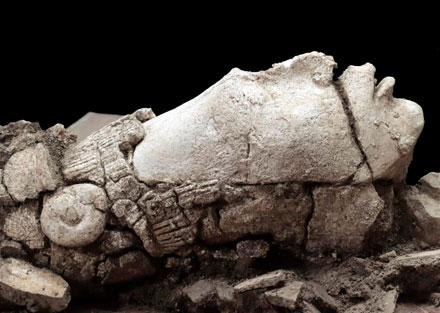
The finding of the first three-dimensional representation of the corn deity, in the archaeological zone of Palenque, Chiapas, a piece that is more than 1,300 years old, was announced this Tuesday by the National Institute of Anthropology and History (INAH).
The archaeologist Arnoldo González Cruz, who directed the work that discovered the stucco head, pointed out to La Jornada that the importance of this news lies in the fact that it’s about a unique object, because in the Maya area the figure of the corn god has generally appeared only represented in mural painting, in scenes painted on ceramic vessels and plates or also etched on this type of object.
An interdisciplinary team co-directed by González Cruz and the restorer Haydeé Orea Magaña worked during the 2021 season on the “Architectural Conservation and Decorative Finishes on the Palace” project. They were in charge of the site’s architectural conservation, a project financed by the INAH in conjunction with the US Embassy through its State Department Ambassadors’ Fund for Cultural Preservation.
The specialist recalled that when working on some local structures that presented conservation problems, “we were fortunate to find this sculpture, this stucco head,” located inside a receptacle made up of three walls.
During the exploration of the south facade of House B of The Palace, the experts found a pond, inside of which was the stucco head and below it a burnt ritual deposit, “where the Mayas carried out a closing event of what we later confirmed is a pond with a highly sophisticated drainage system,” the archaeologist Carlos Varela Scherrer explained in a video released by the INAH.
According to information from the institute, the nose and semi-open mouth of the divinity emerged from under a layer of loose dirt and, as the exploration progressed, it was found that the sculpture is the axis of a rich offering that was placed on a pond of stucco floor and walls –of almost one meter wide by three meters long, approximately–, to emulate the entry of this god to the underworld, in an aquatic environment.

Graceful characteristics
Archaeologists detail that the stucco head –with a maximum length and width of 45 and 16 centimeters, respectively, and 22 centimeters high– had an east-west orientation, which would symbolize the birth of the corn plant with the first rays of sun.
“The sculpture, which must have been modeled around a limestone support, has graceful characteristics: the chin is sharp, pronounced and split; the lips are thin and project outwards, the lower one slightly downwards, showing the upper incisors. The cheekbones are fine and rounded; the eyes, elongated and slender. From the wide, long, flattened and rectangular forehead, a wide and pronounced nose is born,” added Varela, who together with Wenceslao Urbina Cruz assisted as field chiefs.
The fragments of a tripod plate on which the sculpture was placed are another significant thing, since it “was originally conceived as a severed head,” Such an idea emerges upon contrasting the iconography of the young corn god in other pieces and documents, such as a series of plates of the Late Classic period (600-850 AC), a vessel of the Tikal region, of the Early Classic period (150-600 AC), and representations in the Dresden and Madrid codices, in which this deity or characters linked with it appear with their heads cut off.
The head of the young corn god cabeza was found inside a kind of box, where it remained hidden for around 1, 300 years in a humid environment, so it was found very fragmented and had to undergo a gradual drying process to prevent the piece from further deterioration, as a consequence of the drastic change of environment. When the piece is in suitable condition, we can start its restoration in charge of specialists from the National Coordination of Conservation of Cultural Heritage of the INAH.
“The sculpture was extracted in a block in order to be able to transport it to the workshop without suffering losses. There, it was dried little by little in a humid chamber, so that the mud that covered it would not dry violently. The layers of soil that were on its surface were removed little by little with wooden swabs, lightly moistening the soil with water and ethyl alcohol. Most of the soil was removed in order to expose the now clean stucco surface, and later the treatments will be joined with ceramic adhesive,” González Cruz said in the interview; he added that they expect to finish the restoration in November.
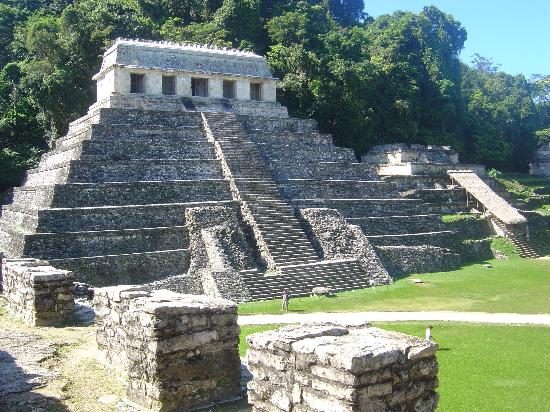
González Cruz said that: “the discovery of the deposit permits us to start to know how the ancient Mayas of Palenque constantly revived the mythical passage about the birth, the death and the resurrection of the corn deity.”
He reiterated that finding the piece in a pond is very important because it places the deity in an aquatic environment, such as we see it stamped on ceramic plates and vessels, which archaeologically proves that there is a consistency in the iconographic scenes present on these objects.
This head is added to the 1952 findings in Pakal’s tomb by the archaeologist Alberto Ruz Lhuillier, as well as the one found in 2018 by Arnoldo González in the same area of the south facade of Casa B in the Palenque Palace.
Due to the ceramic type of the tripod plate that accompanied the head of the “young tonsured corn god” –a description that alludes to the divinity’s haircut, reminiscent of mature corn–, the archaeological context has been dated to the Late Classic period (700-850 AC).
A limestone slab with a small perforation was placed on top of the offering, but not before “sacrificing” the tripod plate, in other words, it was broken almost in half and a portion with one of its supports was placed in the hole of the slab. Then came a semicircular bed of flowerpots and small stone spirits on which the head of the deity rested, which was supported laterally with the same materials, specified the archaeologist, who also discovered the female burial of the so-called Red Queen in 1994, in Palenque, one of the most beautiful archaeological sites in Chiapas.
==Ω==
Originally Published in Spanish by La Jornada, Wednesday, June 1, 2022, https://www.jornada.com.mx/2022/06/01/cultura/a03n1cul and Re-Published with English interpretation by the Chiapas Support Committee
The long march of the Wixárika
By: Luis Hernández Navarro
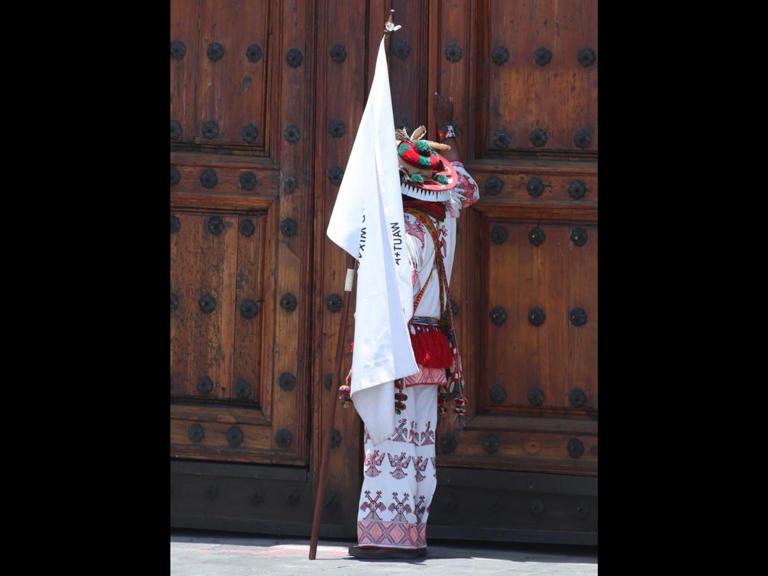
Over 32 days, more than 200 members of the Wuaut+a-Kuruxi Manuwe (San Sebastían Teponahuaxtlán and its annex Tuxpan de Bolaños), located in the municipality of Mezquitic, Jalisco, walked 900 kilometers to arrive in Mexico City, visit the Basilica of Guadalupe and knock on the doors of the National Palace. They belong to the Wixárika people, the people with deep hearts who know. Their goal: to meet respectfully with President Andrés Manuel López Obrador.
Tireless pilgrims, they organized the Wixárika Caravan for Dignity and Conscience to have their lands and territories restored to them— lands which have been illegally invaded by mestizo ranchers protected by agrarian authorities. In their pilgrimage, they carry offerings, perform rituals and learn from the voice of their gods what the custom says.
Despite being a compact demographic, ethnic and cultural unit, the Wixaritari territory spreads out like a hand, across Jalisco, Nayarit, Durango, Zacatecas, and San Luis Potosí. The lines between them separate them into artificial borders. Despite having protected lands with titles in their name since 1718, in the midst of the colonial era, they have confronted aggressive mestizo settlers who illegally acquired the land at the beginning of the last century. The new conquistadors began by renting pasture from the community and later took over the land.
The situation has become more entangled over the years, by the overlapping of plans between provisional endowments, presidential resolutions, omission and the negligence of the Agrarian Reform. In lieu of finding a solution to the conflict, government authorities at all levels have dragged their feet. Many of them have shown their cards by legalizing dispossession in favor of the small landowners.
On January 6th of 1992, agrarian distribution in the country was terminated. With the stroke of a pen, the precepts that regulated the prohibition of the latifundia and the distribution of lands, as well as the institutions in charge of the same, were abolished. In spite of this unfavorable legal framework, the Wixárika communities, blessed with centuries of patience, have managed to recover some of their territories, making use of every legal loophole available.
Tirelessly, over the past decades, they have knocked, again and again, with unity, determination and flexibility, on the door of government institutions to demand justice. They have attended countless and often fruitless official meetings in Tepic, Guadalajara and Mexico City. And, in order to be seen beyond their beautiful handicrafts, in the absence of a solution to their demands, they have taken to the streets and recovered, through deeds, lands that belongs to them.

The Huichol mobilization for the ownership of their territory has come a long way. Despite countless adversities, they have reconstituted themselves as a people in recent years. In March of 1997 they marched for the first time in the city of Guadalajara, demanding the implementation of the San Andrés Accords. Since then, they have not stopped. The protests have grown in waves, combining agrarian proceedings, occupation of lands, pilgrimages, rites and long caravans.
Wixaritari resistance encompasses many aspects, in addition to the agrarian-territorial. The multiplication of mining concessions to devastating companies, like that of the Wirikuta, is one of the most barbaric links in a chain of aggressions.
As a people, it preserves its religiosity around the worship of deer, peyote and corn. These practices clash not only with other religious expressions, but also with legislation. The harassment of uniformed officers against their devotional expressions and the destruction of sacred sites is common. The police have assaulted the jicareros (pilgrims commissioned by their community) during their ceremonies. Large agro-industrial companies which suppress the rain with detonations in the sky to disperse the clouds, destroy campesino life in the Wirikuta desert. The sacred zones of Hara Mara (San Blas, Nayarit) were granted to tourist companies. The main prayer centers have been commercialized. Important sacred sites were inundated by La Yesca and El Cajón dams in Nayarit. The Bolaños-Huejuquilla highway project in Jalisco, destroyed and buried the sacred Paso del Oso site.
The Wirras keep their forms of social organization, language, traditional authorities and normative systems alive in permanent confrontation with the governmental imposition of authorities. For that, they have faced all kinds of insults. To stigmatize their last pilgrimage to Mexico City, there was malicious slander spread that the march was sponsored by Movimiento Ciudadano. [1]
The Caravan of Dignity and Conscience began walking on April 22nd, with the purpose of requesting of the Federal Executive that the territory, which was recognized by presidential resolution on July 15th, 1953, and a protection 240-447 ha-4a-Oca, published in the Diario Oficial de la Federación (Official Journal of the Federation) on September 19th of the same year, be restored to them; as a precedent, in 1718, the Spanish crown, by viceregal title, recognized the Wixárika people as the “legitimate owner of their lands.”
The effort was not in vain. This Monday, May 30th, President López Obrador received them at the National Palace and committed to the restitution of 11 thousand hectares (some 27,000 acres). Today, justice for the heroic Wixárika people is a little bit closer.
[1] Movimiento Ciudadano (Citizen Movement) is a center-left political party in Mexico
==Ω==
Originally Published in Spanish by La Jornada, Monday, May 31, 2022, https://www.jornada.com.mx/2022/05/31/opinion/014a2pol, Translated by Schools for Chiapas and Re-Published by the Chiapas Support Committee
They arrest five indigenous defenders of their territory, organizations demand their release
By: Yessica Morales
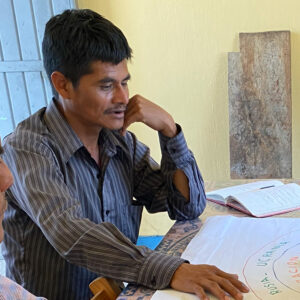
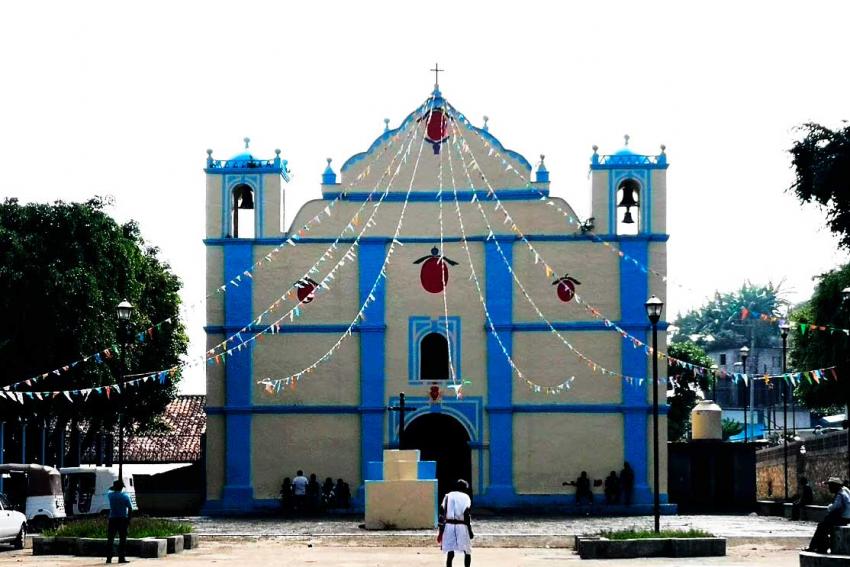
The Diocese of San Cristóbal de Las Casas together with the Parish of San Juan Evangelista in San Juan Cancuc and the Fray Bartolomé de Las Casas Human Rights Center (Frayba), expressed their concern over the arrest and criminalization of Manuel Sántiz Cruz, human rights defender, president of the team of promoters of the Parish and servant of the Diocese of San Cristóbal. And, at the same time, over the arrest of four other people.
That said, San Juan Cancuc parish, together with the Diocese, accompany processes of defense of Mother Earth, training servants committed to peace, reconciliation and the search for justice. They indicated that on several occasions they have spoken out against projects of death, destruction and violence.
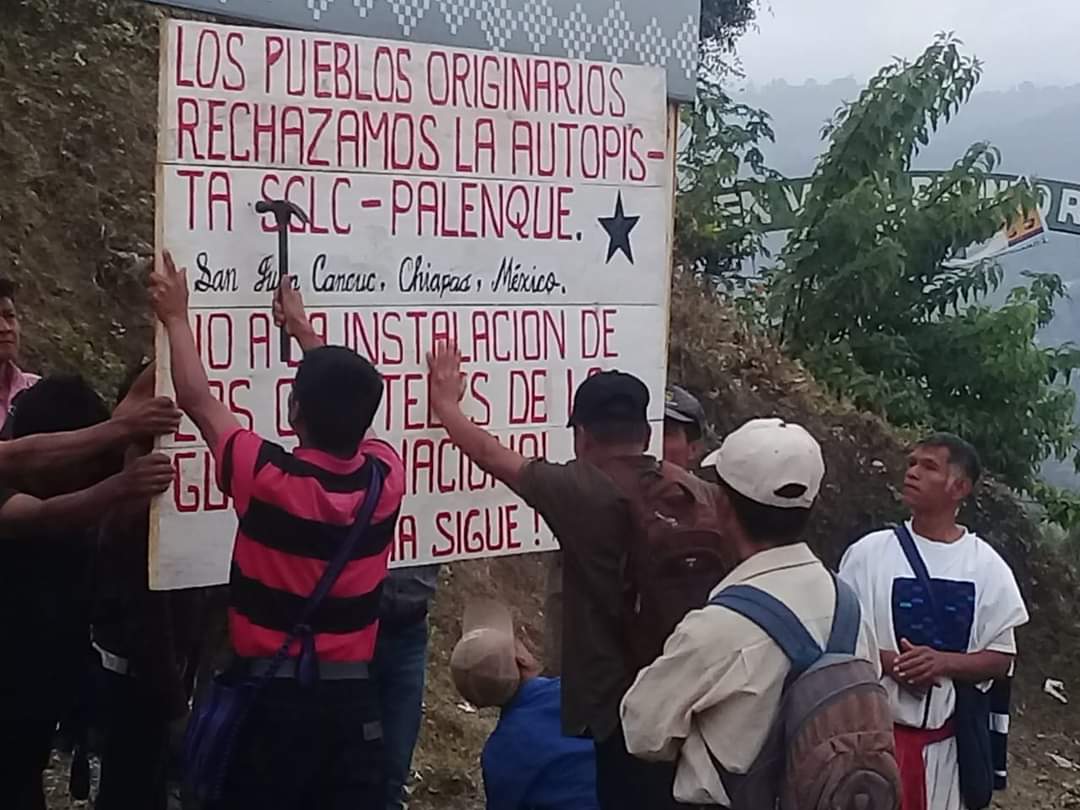
At the same time, they pointed out that Sántiz Cruz, is an indigenous Tseltal man and, since its foundation in 2016, has been president of the San Juan Evangelista Human Rights Committee, which promotes actions around defense of territory against construction of the highway stretch between San Cristóbal de Las Casas and Palenque. They are also opposed to the presence of the National Guard (GN, Guardia Nacional) in the municipality, as well as against the sale of alcohol and drugs in the municipal seat.
At the same time, they emphasized that the human rights defender was detained on May 29 around 7:00 am by the Municipal Police and the National Guard, without an arrest warrant (arbitrarily), in the Abajo (C’ani’) neighborhood of the town of San Juan Cancuc, the municipal seat.
As if that were not enough, he was arrested together with two more people: Agustín Pérez Domínguez and Juan Velasco Aguilar; the three men were taken to San Cristóbal de Las Casas and placed at the disposal of the Indigenous Justice Prosecutor’s Office, until May 30, around 10:00 am.
He was illegally detained for more than 24 hours, before charges were filed for alleged possession of marijuana. He was released on May 31 around 9:00 pm, the protesters said. [1]
However, after his release, members of the state police immediately arrested him, this time with an arrest warrant, for the alleged crime of intentional homicide of a Cancuc municipal police officer. He was taken to the Control Court at the State Center for Social Reinsertion for those Sentenced (CERSS) No. 5.
On June 1, family members of the detainees and members of the Frayba, were in the Control Court. Two more people were arrested in this place: Agustín Pérez Velasco and Martín Pérez Domínguez, who testified in favor of the defender. In addition, state police threatened and harassed the Frayba lawyers and Swefor [2] international observers.
In addition, they pointed out that servants of the San Juan Evangelista parish and the de Derechos Human Rights Committee have made visible the actions in violation of human rights of the municipal president and the municipal police, as well as their opposition to the National Guard’s presence in the municipality.
In view of the foregoing, they demanded from the State government the immediate release of those detained in San Juan Cancuc municipality and to stop criminalizing human rights defenders in Chiapas municipalities.
Translator’s Notes:
[1] According to Frontline Defenders, Sántíz Cruz was not notified of the charges against him and had no access to a translator or lawyer for the 24 hours when he was first detained.
[2] The Swedish Fellowship of Reconciliation is known as SweFor, a human rights organization, which maintains an office and staff in Chiapas.

Originally Published in Spanish by Chiapas Paralelo, June 1, 2022, https://www.chiapasparalelo.com/noticias/chiapas/2022/06/detienen-a-cinco-indigenas-defensores-de-su-territorio-organizaciones-exigen-su-liberacion/ and Re-Published with English interpretation by the Chiapas Support Committee
Altamirano, Chiapas: The remaining 36 kidnapped indigenous men are free
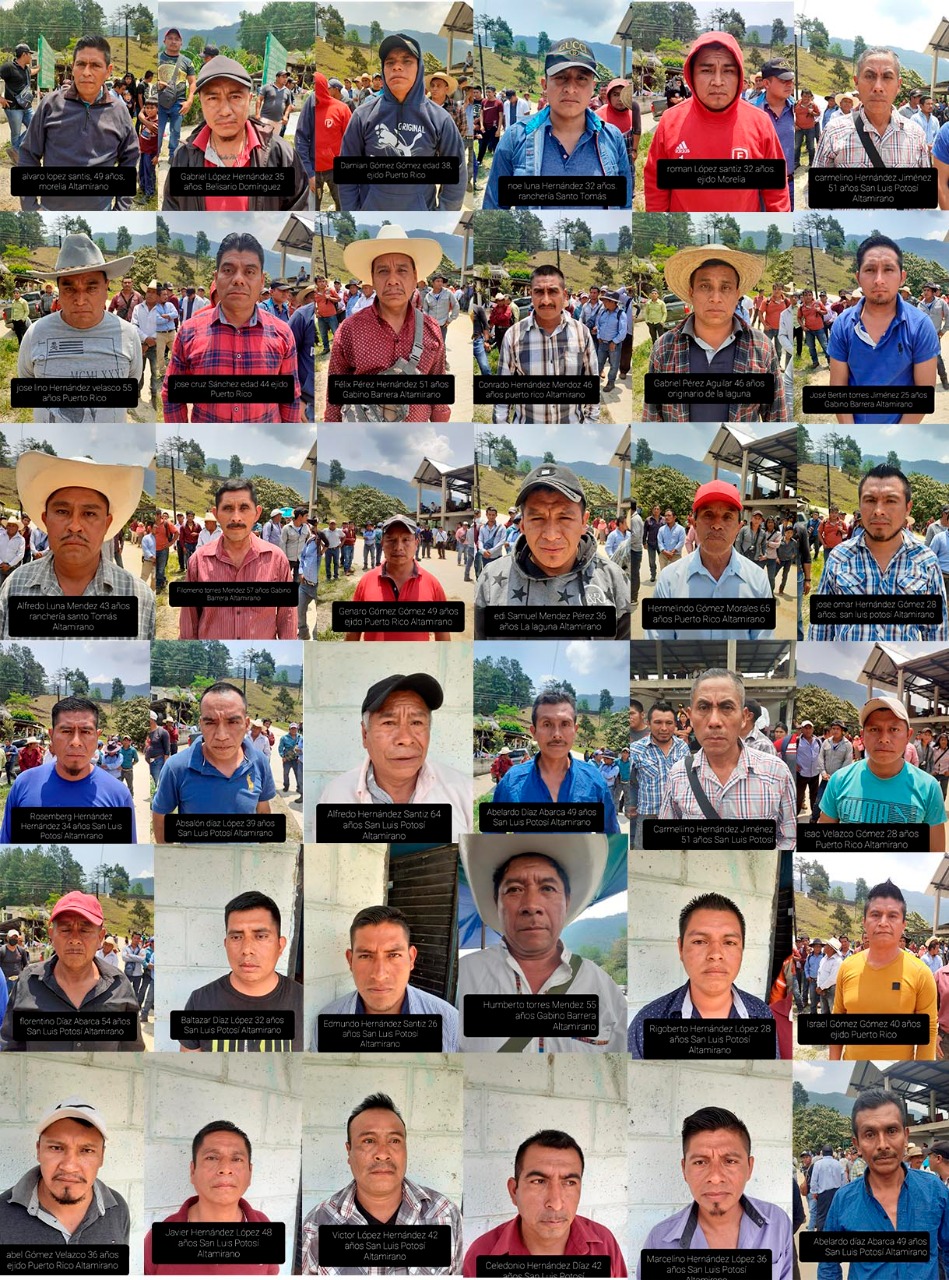
The kidnapping saga has come to an end in Altamirano, but what’s ahead for this important indigenous municipality in which the Zapatista Caracol of Morelia is located?
On May 18, 2022, 35 of the 36 indigenous men kidnapped and held hostage in Altamirano municipality were finally released and were free to return to their homes and families. The 36th man had been released a few days before. During the almost 5 months that 27 of the men were held captive, there was some confusion about how many were being held, but there was no confusion as to who kidnapped them or why they were kidnapped. They were kidnapped by opponents of the current municipal council and held as hostages in order to obtain leverage in a political conflict over control of Altamirano’s municipal government. The kidnappers wanted the current council members to resign as a condition for releasing all the people they kidnapped!
The December 29, 2021 kidnapping of 27 men occurred in the Puerto Rico ejido, a Tojolabal community in Altamirano Municipality, just two months after the Chiapas State Congress appointed the current independent municipal council, which had ousted a Green Party cacique-style government accused of connections to organized crime. The kidnappers who held the indigenous men for almost five months were members of the Alliance of Social Organizations and Left Unions (ASSI), who supported the ousted Green Party municipal government.
Violence broke out in Altamirano after municipal elections in 2018, when the cacique (political boss) Roberto Pinto Kanter was elected municipal president and gave his supporters permits to operate motorcycle taxis, or “moto-taxis,” as they are known in Chiapas. This adversely impacted drivers of regular taxis with permits because a moto-taxi costs 5 pesos, while a regular taxi costs 30 pesos. Moto-taxis and regular taxis were burned, the city hall was set on fire, and houses and cars were burned in the violence.

When Pinto Kanter’s wife, Gabriela Roque Tipacamú, was elected to succeed him as municipal president in the June 2021 elections, opponents kidnapped Pinto Kanter as his term was expiring for leverage to get his wife to resign her position in order to secure his release. She resigned, he was released and, on October 28, 2021, the State Congress appointed an independent municipal council to replace Tipacamú. An indigenous Tseltal woman, María García López, was named municipal president. The kidnapping of the 27 indigenous men occurred 2 months later, on December 29, 2021.
In February 2022, the ASSI kidnapped more municipal council supporters, bringing the total to 36. It also kidnapped a group of 19 truck drivers, along with their trucks, and held them for two months in La Candelaria ejido with the other 36 kidnapped men. Other violence occurred while the men were being held hostage. A girl was shot and wounded in crossfire at a checkpoint near the Puerto Rico ejido, A cousin of the municipal council president was shot and killed. Ejido members in the town of Altamirano blocked the town’s entrances and exits to prevent ASSI members from entering. Relatives demanded the freedom of the kidnapped men in increasingly angry protests. Employers of the kidnapped truck drivers demanded their safe return and an armed civilian self-defense group, sympathetic to the Zapatistas, formed and released political statements in videos. Protesters displayed banners demanding the return of the kidnapped men.
Now that the kidnapped men have been released, it’s an open question as to what may be in store for Altamirano Municipality and its independent municipal council. No public reports of what agreements, if any, may have been reached between the Chiapas government and the ASSI kidnappers.
The moto-taxis have been withdrawn and the town’s residents are complaining because the regular taxis are more expensive. The current municipal council has closed around 200 clandestine cantinas operated throughout the municipality by, or in collaboration with, organized crime. The presence of organized crime was an important motive behind ousting the Pinto Kanter family of political bosses.
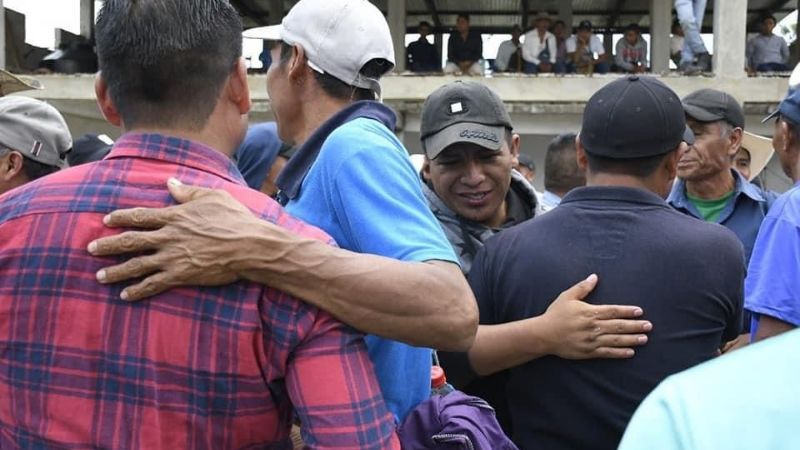
Although the kidnapping saga in Altamirano has come to an end, the dispute for municipal political power has not. The ASSI controls the municipal government of Las Margaritas, the municipality that borders on Altamirano. Its members are armed and allegedly involved in organized crime. It is in their interest to have a municipal government that permits their illegal activities. Their opponents are residents of the Altamirano ejido, who are sympathetic to the Zapatistas and do not want organized crime or political bosses who collaborate with organized crime to be controlling the municipality. This is, unfortunately, a scenario playing out in a number of Chiapas municipalities, as the influence of drug cartels and organized crime grows in the state. And this one is taking place in 2 official municipalities with important Zapatista Caracols: Morelia (Altamirano) and La Realidad (Las Margaritas).
By: Mary Ann Tenuto-Sanchez
Previous articles on Altamirano:
- They demand forming a municipal council in Altamirano – Oct. 9, 2021
- Altamirano residents resort to armed self-defense to shake off caciques – Oct. 11, 2021
- A Tseltal woman is the new mayor of Altamirano, Chiapas – November 8, 2021
- Violence returns to Altamirano, 27 kidnapped –– February 2, 2022
- They release 9 of the 53 kidnapped in Altamirano – March 21, 2022
- The EZLN marches against the war in Ukraine; residents of Altamirano join in and add their demands – March 16, 2022
Published by the Chiapas Support Committee
The sterile illusion of change from above

By: Raúl Zibechi
Colombia, Ecuador and Chile show us relatively similar recent processes. Governments of the neoliberal right faced with large popular revolts of long duration, which opened gaps in domination and put governability in check. The political system responded by channeling the dispute towards institutional terrain, with the approval and enthusiasm of the lefts.
During the revolts, grassroots organizations are strengthened and new ones are created. In Chile, more than 200 territorial assemblies and more than 500 community pots in Santiago when the pandemic is declared. In Ecuador, the Indigenous Parliament and the Social Movements, with more than 200 organizations. In Colombia, dozens of “points of resistance,” free territories where the peoples create new relations among them.
Results from the institutional option usually become visible a while later, when the potency of the uprisings begins to dissipate and there are almost no grassroots organizations left. The Ecuadorian Parliament no longer functions. The Chilean assemblies have weakened in numbers and participation. The same thing happens in Colombia.
The case of Chile is the most dramatic, since all the potency of the revolt was soon neutralized with the signing of an agreement for a new Constitution, although we know that the ultimate goal was to get the population out of the streets, because it is the main threat to the principal domination of the economic and political elites.
Chile is the only one of those three countries in which the electoral process crowned someone who claimed to represent the revolt, the current president, Gabriel Boric. What more could you ask for? A young man who was active in the student protest and who makes up part of the “new” left grouped around Approve Dignity (Apruebo Dignidad).

It is the greatest deception imaginable for those who bet on a change managed from above on the butts of the protest. It was Boric who signed the pact with the right and the center, with the elitist political class, to call for the constituent assembly. He was the one who said over and over again that thinks would change with his government and he promised to demilitarize Mapuche territory, the Wall Mapu.
Two months after assuming the presidency, he decided to establish a state of emergency on those lands. Just like Sebastián Piñera, the rightwing president hated by half of Chile. Just like all the previous governments, including of course the Pinochet regime.
The state of emergency is directed against Mapuche activism, which recuperates land and sabotages extractive companies that destroy Mother Earth. In particular, it’s directed against Lavkenche Mapuche Resistance (RML, Resistencia Mapuche Lavkenche), Coordinadora Arauco-Malleco (CAM) and Mapuche National Liberation (LNM, Liberación Nacional Mapuche), as well as against autonomous territorial resistance organizations.
The military occupation of Araucanía responds to the request of truckers and large landowners (latifundistas). For Héctor Llaitul, leader of the CAM, is “the full expression of the military dictatorship that we, the Mapuche, always suffer;” while the RML considers that “Boric left the new repressive policies in the hands of the Socialist Party, with organized crime’s endorsement” (https://bit.ly/3lYSpSC).
It’s only fitting to add that the economic area was delivered to one of the most outstanding defenders of neoliberalism and the economic orthodoxy, Mario Marcel. There will be no changes. Just makeup. Boric’s popularity plummeted: 57 percent disapprove of him, just two months after taking office (https://bit.ly/3x2dkcz).
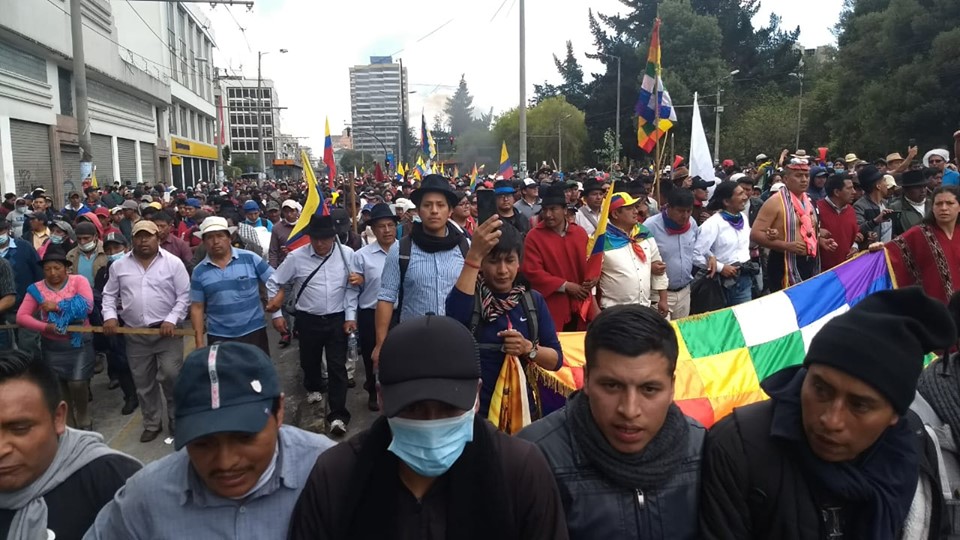
Chile is not the exception, but rather the rule. Something similar is happening in Ecuador, although right-winger Guillermo Lasso won the presidency. In Colombia, lamentably, the social movement got trapped at the polls upon disorganizing its own urban territories. Some reflections.
First: electoral politics depends much more on marketing than on programs and proposals. Just as consumerism is an “anthropological mutation” (Pasolini), electoral marketing reshapes political maps and behaviors from top to bottom.
Two: power, true power, is not born from the ballot box, nor is it in the parliaments or governments, but far from public visibility in ultra-concentrated financial capital, in the invisible 1% that controls the communications media, the armed forces and police, governments of any level and, above all, the illegal narco-paramilitary groups that redesign the world.
Three: the elected governments cannot –in the hypothetical case that they attempt it– touch the interests of the true powers and the powerful. They are shielded behind various armies, state and private, an opaque judicial system and the big media.
Four: it’s about taking other paths, not insisting on those that we already know lead only to re-legitimize what exists and to weaken the other worlds that are born. Don’t dispute their power (or their health, or their media, or their education). Create our own. And defend it.
==Ω==
Originally Published in Spanish by La Jornada, Friday, June 3, 2022, https://www.jornada.com.mx/2022/06/03/opinion/015a1pol and Re-Published with English interpretation by the Chiapas Support Committee
Food Dependency in Times of War
By: Ana de Ita*
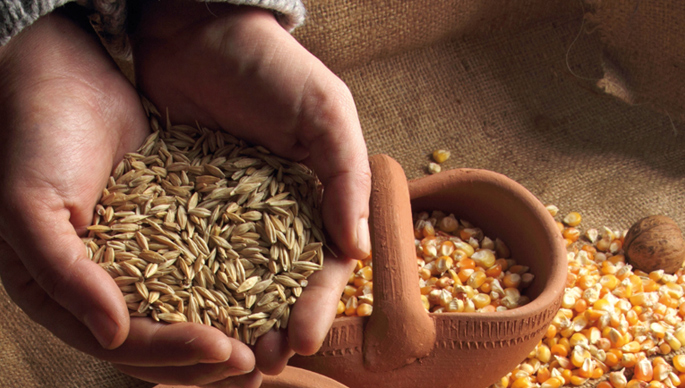
The turbulence in the agricultural markets, provoked by Russia’s war in Ukraine has already led to a sharp increase in prices of cereals and oilseed that impacts all countries, but in the case of those like Mexico, who are heavily dependent on imports, it can jeopardize their capacity to feed their populations.
Since the signing of the old North American Free Trade Agreement, many voices, including those of peasant organizations and agricultural economics researchers argued the importance of not leaving Mexico’s food sources to the whims of the free market. President López Obrador proposed reaching food self-sufficiency when national production only covered 75 percent of consumption (2018), but by 2020 the problem had gotten worse and the figure had dropped to 73.2 percent.
The Russian invasion of Ukraine places Mexico in a very vulnerable situation. In the world, the prices of basic grains, principally corn and wheat, of which Russia and Ukraine are important producers and exporters, have risen since the beginning of the conflict, by 21 and 33 percent as of May 5th, according to data from the Agricultural Markets Consulting Group (GMCA). The Russian Federation has prohibited the export of cereals until June of 2022, while Ukraine’s exports have decreased considerably and its capacity for planting in the next cycle has been reduced. As such, further increases in the costs of tortillas and bread, essential goods, seem imminent.
Last year, Mexico was first place in the world for corn imports, with 18 million tons, according to the GCMA data as there are no official figures, that amounts to 39.6 percent of the consumption, with a production of 27.492 tons. These record imports surpassed the 17 million in 2018, the highest volume from the previous administration, and rose in value to 5 billion 147 million dollars, 2 thousand more spent than a year before, due to the increase in volume and the value of the grain in the external market, but which still didn’t reflect the rise in prices caused by the war.
Under the current government, the production of corn has stayed above 27 million tons, but below the 28.2 and 27.7 million tons reached in 2016 and 2017. Although Mexico’s corn imports come almost completely from the United States, the increase in demand for the grain from nations like China that were supplied by Ukraine, diminishes its availability and has already provoked substantial price increases.
The case of wheat is not better, now that for 2021 the production as well as the imports are at the same levels as those of 2018, with a production of 3, 280 million tons and imports of more than 5 million, which make up 61 percent of consumption. In 2021, 700 million dollars were paid for those imports. Ukraine is the third largest provider of wheat to Mexico, though it only represents 5 percent of the volume.
Maybe one of the most serious effects that has yet to show itself in all of its severity is the decrease in supply of fertilizers and the rise in its prices. Russia is one of the top exporters of fertilizers and Mexico’s top provider. The GCMA estimates that last year Mexico used 5.4 million tons of fertilizer and only produced 2 million, with Russia contributing a million. Since the end of March, there has been a sharp rise in the prices compared to the previous year, of between 120 and 187 percent, depending on the product in question (data from GCMA).
The use of chemical fertilizers began in the middle of the last century as part of the Green Revolution and was generalized and extended to almost all parts of the world. Industrial agriculture is highly dependent on the use of these inputs. In Mexico, 70 percent of farmers use them, including small farmers; 40 percent use organic fertilizers and others employ both. Hence, the increase in prices of chemical fertilizers will affect both Mexican agriculture as a whole and could cause a decrease in the already weak national production if they become scarce or are inaccessible due to their costs.
The seizure of two trailers loaded with fertilizers by Guerrero campesinos this week demonstrates the kind of social conflict that could explode in this scenario.
* Director of the Center of Studies for Change in the Mexican Countryside
==Ω==
Originally Published in Spanish by La Jornada, Saturday, May 7, 2022, https://www.jornada.com.mx/2022/05/07/opinion/011a2pol/ Translated by Schools for Chiapas and Re-Published by the Chiapas Support Committee
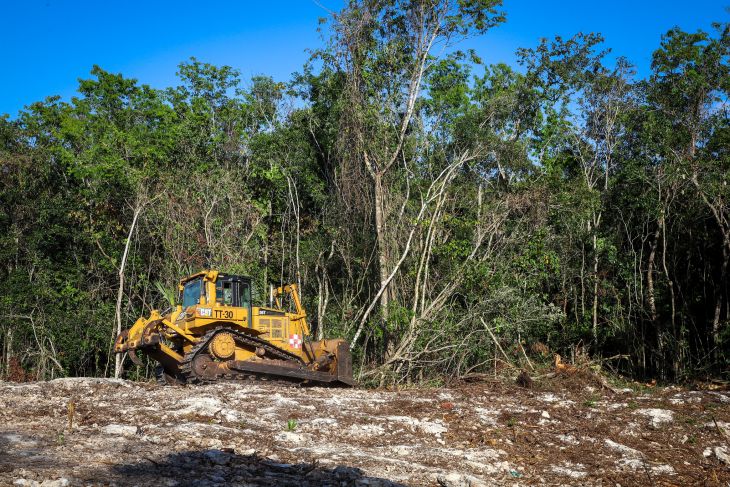
Judge orders definitive suspension of work on Section 5 of the Maya Train
By: Patricia Vázquez Correspondent and La Jornada Maya
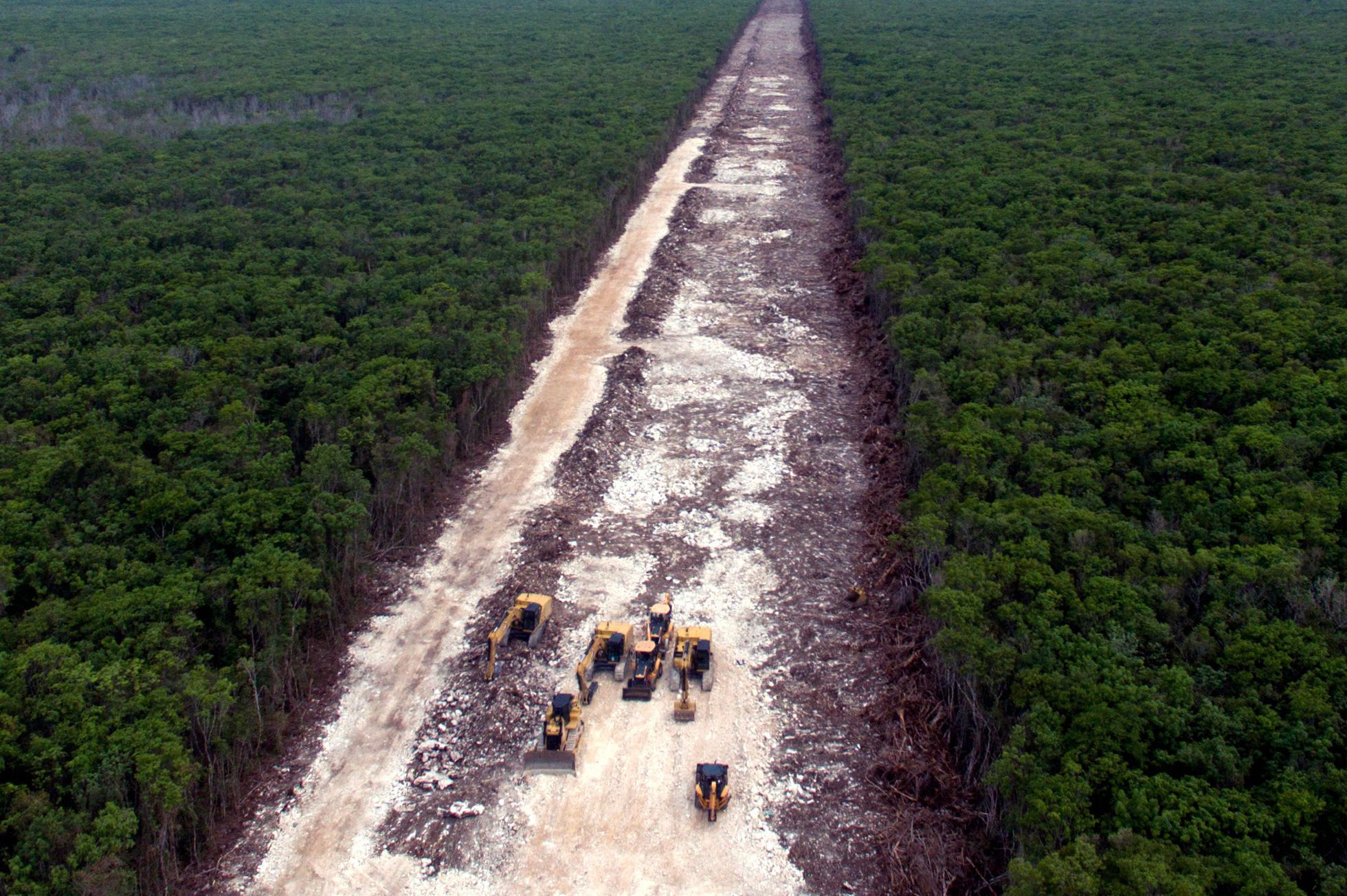
In a hearing held last May 27, the first district court of Yucatán ordered the definitive suspension of work on Section 5 South of the Maya Train, from Playa del Carmen to Tulum. The decision responds to the complaint filed by a group of divers from the Riviera Maya, contained in file 884/2022. The National Fund for the Promotion of Tourism (Fonatur) has five days to appeal the decision.
No personnel or machinery have been working in the area since last week, promotors of the suspension indicated. Adrián Novelo, head of the first district court, based in Mérida, Yucatán, granted the definitive suspension, although partially.
After learning of the determination, in response, the Fonatur said that: “the judicial suspension about work on Section 5 South of the Maya Train is ‘definitive’ only until the Environmental Impact Statement (EIS) on the project currently in process before the Ministry of Environment and Natural Resources (Semarnat) is fully resolved.”
He specified that the EIS related to Section 5 South (that goes from Playa del Carmen to Tulum) is composed of more than 4,000 pages and was elaborated by experts from the Ecology Institute, with support from the National Council of Science and Technology and the Mexican Institute of Water Technology, “which has broad national and international prestige.”
The court “reiterated that what the Fonatur and Fonatur Tren Maya presented (the provisional permit) does not comply with the environmental impact evaluation procedure that should have been obtained before the start of the work.”
He determined that although said authorities indicate that they have presented the evaluation, this is “only the beginning of a procedure.” In addition, “the precautionary principle established that it isn’t necessary to prove imminent and irreparable harm, since this will constitute the substance of the matter.”
Considering that “the imminent danger exists that work is performed that causes irreversible damages,” the definitive suspension was granted, and therefore he ordered Fonatur and Fonatur Tren Maya to suspend or paralyze any act on the construction.
It should be remembered that on May 17, Fonatur presented the EIS on Section 5 South of the Maya Train to Semarnat and it’s currently under evaluation at the agency. This process can take from 60 to 120 business days, according to environmental legislation.
José Urbina, one of the cave divers who filed the appeal for suspension, explained that it is the first suspension that is resolved and it sets a precedent, since there are four other appeals for suspension on that section.
He added that the work that has been done, without authorization of the EIS, has left impacts such as the loss of vegetation that will take 30 years or more to recover.

There are several appeals against the Maya Train pending resolution in the first district court of Yucatán, in charge of Judge Adrián Novelo, the court to which most of the collectives opposed to the federal megaproject have gone.
As of now, two provisional suspensions and one definitive suspension have been granted. There is another hearing scheduled for next June 24.
With information from Angélica Enciso and Eduardo Murillo
==Ω==
Originally Published in Spanish by La Jornada, Tuesday, May 31, 2022, https://www.jornada.com.mx/2022/05/31/politica/004n1pol and Re-Published with English interpretation by the Chiapas Support Committee
Does the government of Chiapas act on its own against the EZLN?
By Magdalena Gómez
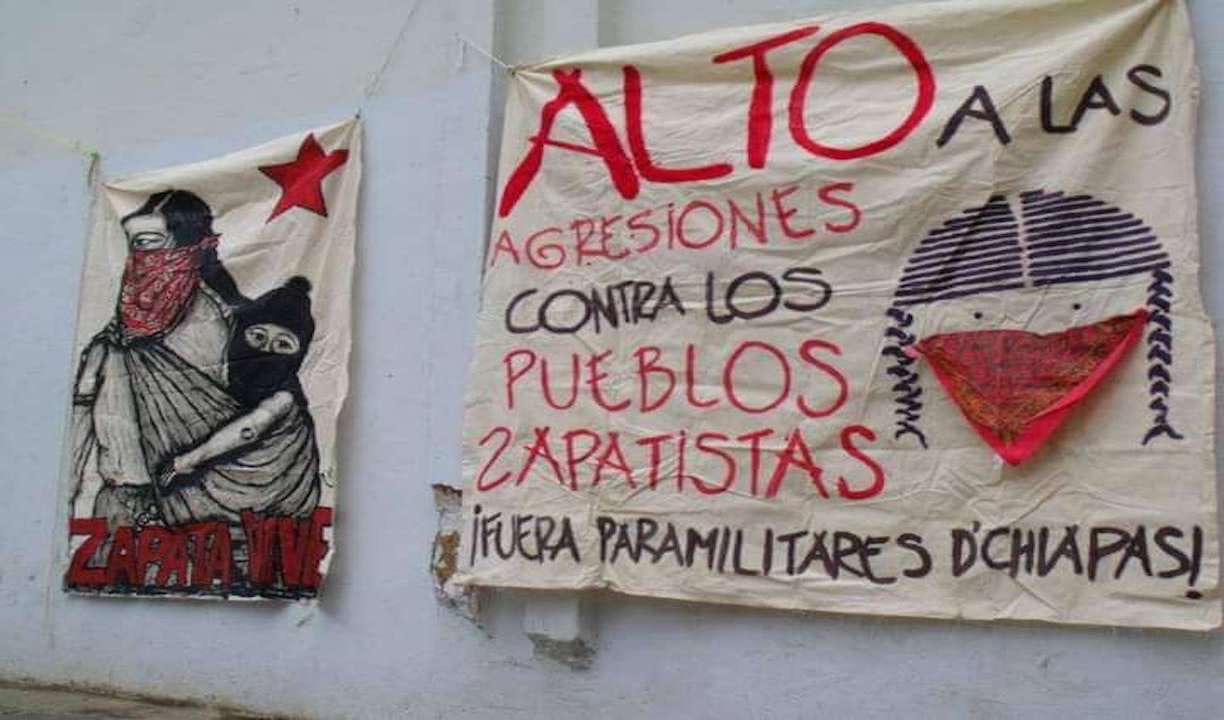
The aggressions against Zapatista communities by ORCAO (Regional Organization of Coffee Growers of Ocosingo), have remained in impunity throughout the years under successive state governments. The names of the participants are known and yet, the official networks of complicity and access to the resources of Orcao has permitted them to continue violent actions against diverse communities which are part of Good Government Councils of the EZLN. This situation is increasing just now in the time of the so-called Fourth Transformation with a governor from the current official party, Morena. On the 19th of September 2021 the Revolutionary Indigenous Clandestine Committee–the commandants of the EZLN–issued a strong communique titled “Chiapas on the brink of a civil war.” It referred to ORCAO as a paramilitary organization in the service of the government of Chiapas, and denounced the kidnapping by that organization 8 days before of two of its members, autonomous authorities of the Good Government Council of Patria Nueva, Chiapas. It recognized the work of Human rights organizations and the progressive Catholic Church; all of this at the same time that the Zapatista delegation was in Mexico City about to leave for Unsubmissive Europe. They were liberated the day of the communique, which enumerated the destabilizing actions of Rutilio Escandón, amount these aggressions against normal school students, violations of agreements with the democratic teachers union, alliances with groups of narcotraffickers whose bands systematically attack the communities of Aldama and Santa Marta. The very relevance of this positioning was the accompanying declaration, “We will take pertinent measures so that justice is applied to the criminals of Orao and officials who sponsor them. That is all, in another occasion there will not be a communique; there will not be words but acts.”
We recognize and value that the EZLN, despite multiple provocations over the years, has maintained a strict respect of the cease fire agreed upon and consigned into law for the dialogue of reconciliation and dignified peace in Chiapas of 1995. Now we ask ourselves if there is a clear political intention of the government of Chiapas in stretching to the limit the aggressions against the Zapatistas and placing them before the decision to respond to the armed attacks which rather than stopping are increasing. It would also be important to establish if Rutilio Escandón acts on his own or in behalf of the Mexican state. We remember that the Commission of Concordance and Pacification (Cocopa), still exists but it’s silence is ominous to say the least.
Just last week the Red de Resistencia y Rebeldía Ajmaq documented on May 2 the attack and forced displacement of the inhabitants of of the communities of Emiliano Zapata and La resistencia, both belonging to the Good Government Council of New Dawn of Resistance for Life and Humanity. In the official municipality of Ocosingo. Again ORCAO, in action against the the Zapatista support bases, led by Tomás Santiz Gómez, José Pérez, Antonio Juárez, Marcos López Gómez y Juan Gómez, shot at the inhabitants of of the previously mentioned communities, provoking displacement of 54 people (11 families). Three days later ORCAO attacked after midnight the community of San Felipe and fired into the autonomous community of La Resistencia. Half an hour later “a group of aggressors burned the Zapatista autonomous school and a garage resulting in the displacement of 29 people (four families).” In total 83 people (all Zapatista support bases) were displaced. Hopefully the artifice of “intra-community conflict” is not revived which the government of Chiapas has resorted to in the past. We don’t know how far the state be captured by factional powers.
The national situation is not in better health. In various regions original peoples are being attacked by forces that look to occupy their territories provoking forced displacement, while the Mexican State is amiss in guaranteeing their collective rights. We see this in the cases of the Rarámuris and the peoples of the Chululteca region in defense of water. Even though they have won judgments in courts of justice, justice is blocked. This is the case for the March for Dignity and Wixárika Consciousness on its way to Mexico City to demand that the president of Mexico return their lands.
An answer from the Mexican Federal government is urgent now to mark distance with the past in Chiapas and all of Mexico.
__________________________________________________________
Originally published by La Jornada May 10, 2022, here: https://www.jornada.com.mx/2022/05/10/opinion/015a1pol
Translated by the Chiapas Support Committee.
 Chiapas Support Committee