Chiapas Support Committee
Home of the Compañero Manuel blog on zapatistas & mexico
They demand immediate freedom for Manuel Gómez Vázquez, a Zapatista
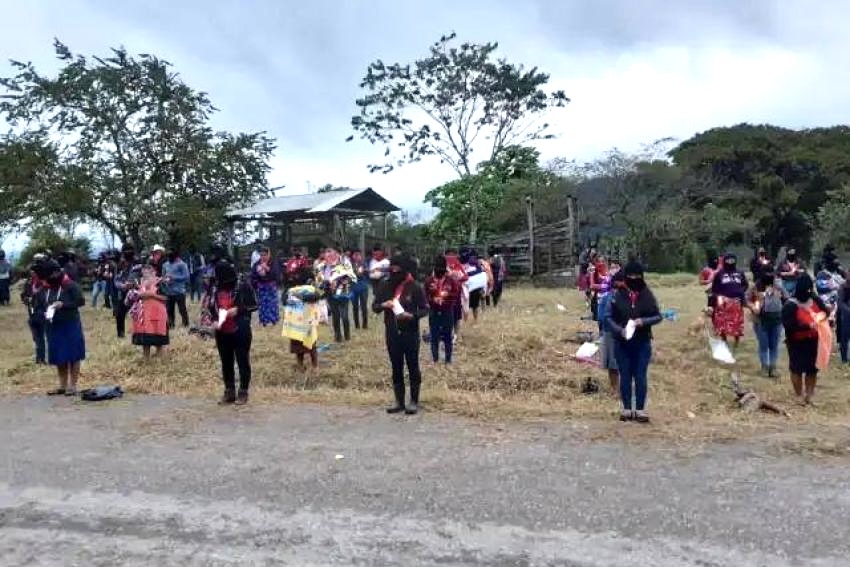
By: Yessica Morales
Manuel, a 22-year-old Tseltal campesino, is a native of Ricardo Flores Magón autonomous Zapatista rebel municipality, Good Government Junta Rebel Thought, Caracol IX, Nuevo Jerusalén, located in the official municipality of Ocosingo.
*The oral trial hearing was scheduled for this March 7. Therefore, they demanded that the Prosecutor’s Office dismiss the accusation against the Maya Tseltal, because it was based on a set-up. However, that did not happen.
The Fray Bartolomé de Las Casas Human Rights Center (Frayba) demanded the immediate release of Manuel Gómez Vázquez, a support base of the Zapatista National Liberation Army (EZLN, Ejército Zapatista de Liberación Nacional), who has been arbitrarily deprived of his freedom for 2 years and 3 months in the State Social Reinsertion Center for the Sentenced (CERSS) No. 16 in Ocosingo.
An armed civilian group and community authorities illegally arrested Manuel on December 4, 2020. He was tortured and suffered cruel, inhuman and degrading treatment. The next day, he was handed over to the Municipal Public Security Secretariat and investigative police from the Indigenous Justice Prosecutor’s Office, under the State Attorney General’s Office (FGE).
He was made available to the Control Court and the Court of Prosecution for the Ocosingo Judicial District on December 9, 2020, added the Frayba Center.
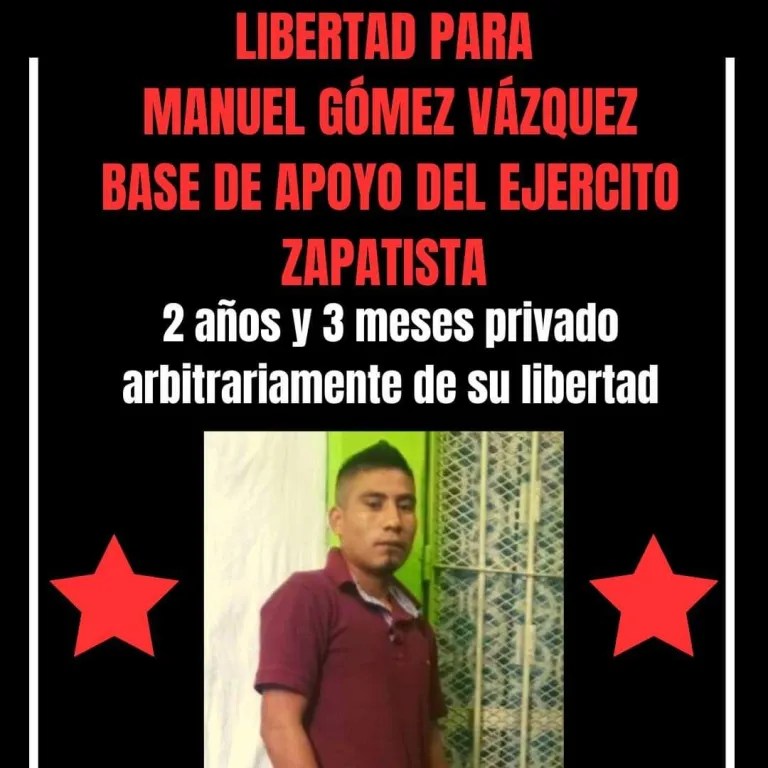
Between December 4 and 5 of that year, in the El Censo ejido [1], in Ocosingo, a series of violent acts took place that resulted in 4 people dead. Therefore, the Human Rights Center affirmed that the Office of the Prosecutor of Indigenous Justice did not carry out a diligent and scientific investigation, charging Gómez Vázquez with homicide, although at the time of the events he was at home with his family.
Manuel is being judicially criminalized along with his family, for being part of the EZLN support base, since the Prosecutor’s Office lacks evidence to accuse him, Frayba said.
To the contrary, Frayba indicated that in a way the Prosecutor’s Office fabricated evidence, since the alleged witnesses do not appear to testify, which has resulted in the Oral Trial hearing being postponed on two occasions. In addition, there are no autopsies for the homicides and the State Judiciary has exceeded the preventive detention that in no case shall exceed two years.
Finally, they made a call to the individuals, collectives, as well as national and international organizations, to be in solidarity and demand that the FGE and the State Judicial Power immediately release the EZLN support base.
[1] El Censo has been anti-Zapatista since the early days of the EZLN. An armed civilian group, the Opddic, was born in the communities of El Censo and Taniperla (Ocosingo), on the periphery of the Montes Azules Biosphere Reserve, in the Tseltal Jungle area. Hermann Bellinghausen explains the history in La Jornada, February 27, 2007.
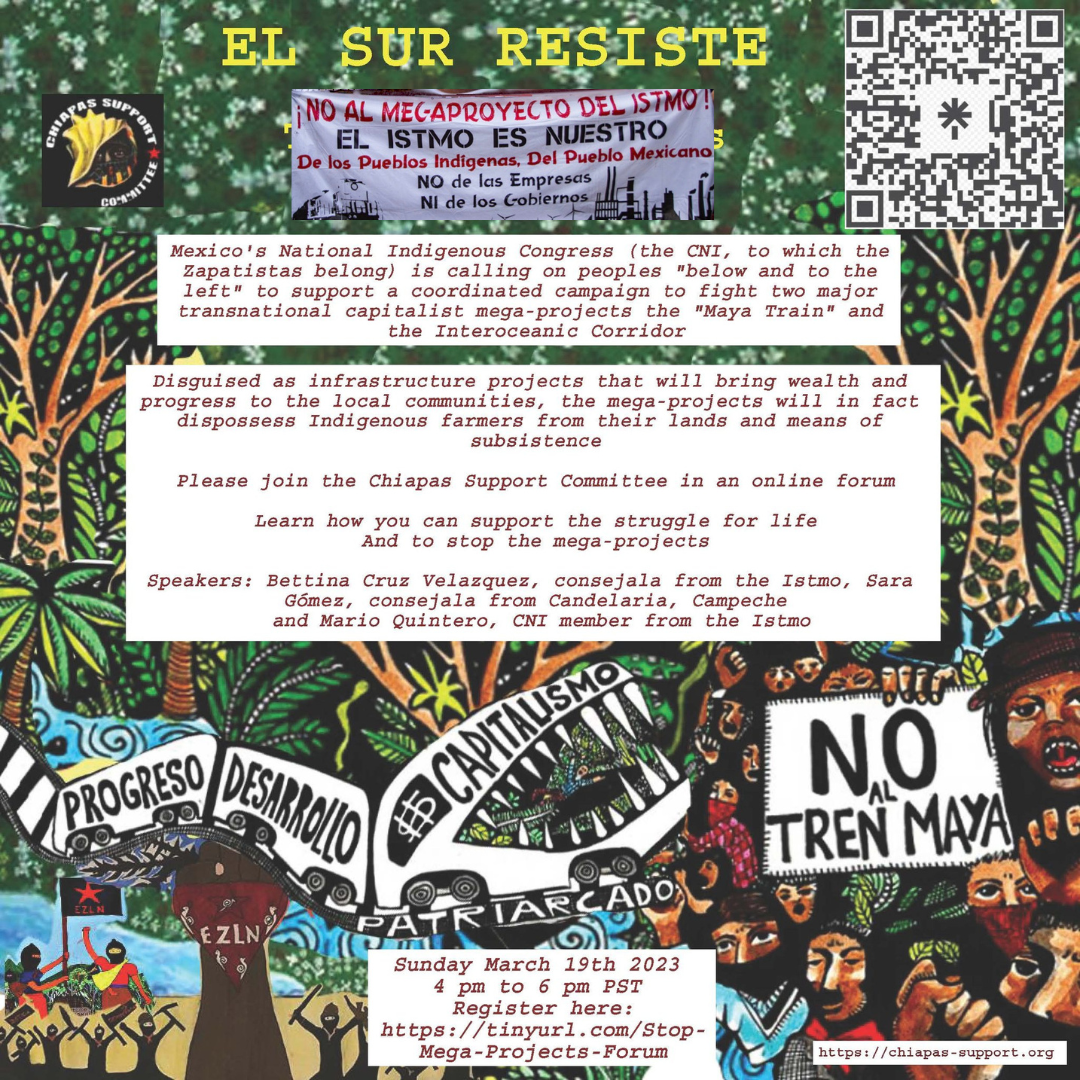
You are invited to participate in the Chiapas Support Committee’s Forum on Megaprojects (Interoceanic Corridor and the “Maya” Train). You can register for the El Sur Resiste / The South Resists forum here.

Originally Published in Spanish by Chiapas Paralelo, Tuesday March 7, 2023, https://www.chiapasparalelo.com/noticias/chiapas/2023/03/exigen-libertad-inmediata-para-manuel-gomez-vazquez-base-de-apoyo-del-ezln/ and Re-Published with English interpretation by the Chiapas Support Committee
And you, where were you?
By: Magdalena Gomez
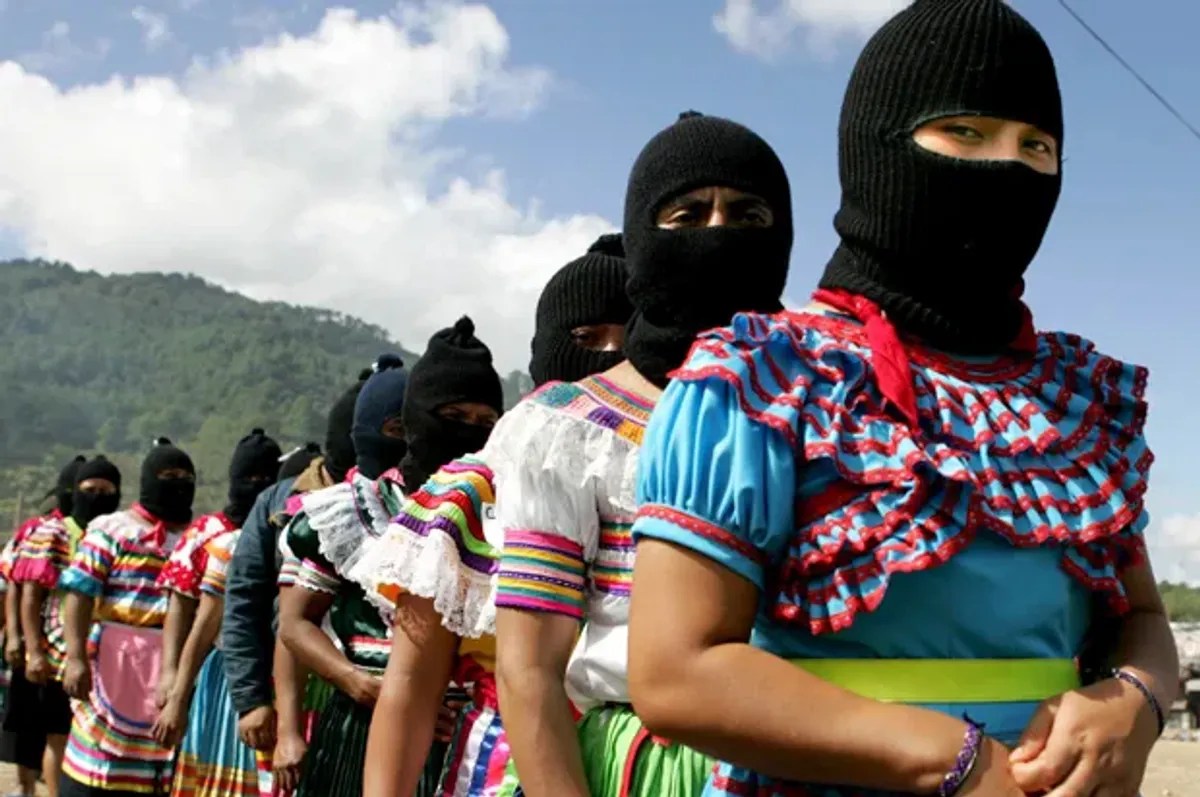
I take up this question, to engage in an imaginary dialogue, but in reverse, toward those who have posed it in order to discredit any criticism or dissent directed at projects of the current federal government. The atmosphere of dismissal that prevails in the country is not conducive to what they call democracy, which is intrinsically linked to the electoral space in a reductionist way.
There are, however, other necessary questions that deserve reflection. One, which I will ask in good faith, will be: and you, where were you when the indigenous peoples were fighting? To provide an answer, one will have to recognize that society as a whole and the political class, of all its acronyms, have not incorporated this dimension into their respective national projects, which is not exclusive to Mexico; it is especially prevalent in all Latin American countries with indigenous peoples.
Pluralism has been seen as a threat, the legal doctrine of monism has been imposed: each country, with only one people. And it is worth noting that this position, in our case, transcends the past six years, its rulers, and even society. Some have used a rhetorical and reactive appeal with the commonplace theme of the “historical debt,” recognizing that they are native peoples, which they have tried to “pay” with folklore, insufficient and various economic supports to combat extreme poverty, they have said, which is now focused on the people who are part of the communities.
We are well aware that in the last decades, for the sake of so-called development, the government has given way to projects directed against the territories of the peoples. Not to mention those that are currently underway. That is where the emergency and the struggle against dispossession has been sparked. It is unavoidable to resort to the example of Zapatismo, without a doubt it is not the same as from 1994 to 1996. In those public beginnings a civil conscience seemed to emerge that led to the coining of the phrase “we are all Indians.” Perhaps those who were there and are no longer there remember it because it has been their silent decision, when after that the “fashionable” trend faded away, we saw it afterwards.
From political correctness they gradually moved on to a realistic vision; they said that first they had to win elections and better if it was the Presidency of the Republic. As the years went by, the EZLN concentrated on the organization in its territories and thus made it known that it already had good government councils, in fact it made the autonomy it demanded from the State a reality and was agreed upon in the San Andres Accords, which they (the Congress) later, in 2001, adjusted to accommodate “legal technicalities” and voided its content; 22 years later there are no realistic signs of a constitutional reconsideration, although there are those who hope for it, it must be said, not the Zapatistas, not the National Indigenous Congress.
That said, it is clear that the indigenous Zapatista path was marked by organization, the struggle to stop the many faces of dispossession; not always successfully, we know. The current phase places our gaze on anti-capitalism beyond our borders, in order to unite with the peoples who face similar challenges. It’s not in vain that they point out at this stage that the struggle is for life.
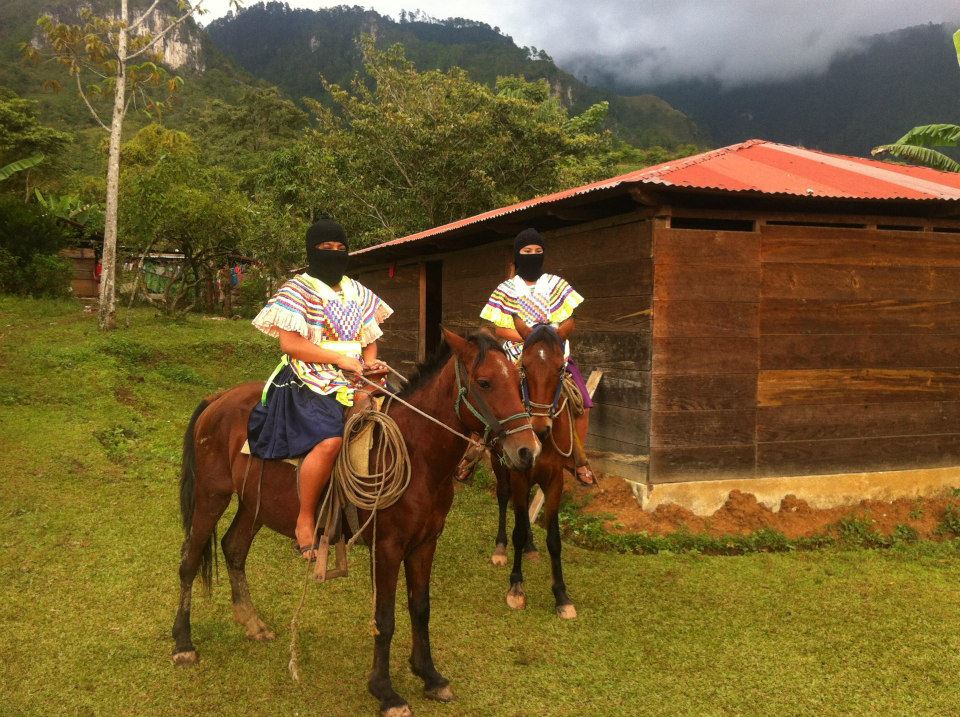
On the other hand, it should be noted that the collective struggle of the peoples does not imply that the situation of its individual members is exempt from dynamics and processes that maintain hegemony in all societies. This is the case of patriarchy. It is a hegemony that is based on a social construction around gender that affects almost all indigenous and non-indigenous women.
The Zapatistas have also realized the need for autonomy to not omit the anti-patriarchal dimension. They did it from the beginning with the revolutionary women’s law, and there are advances with new practices and significant international meetings.
Until today, in general, women’s movements do not take into account the complexity that belonging to a people and the gender factor entails for indigenous women. In this case, they raise their demands and claim their rights, not to go against their culture or their people, but to think about custom from a perspective that includes them and does not violate them. In the last 20 years, they have built favorable spaces for the vindication of their demands as women.
Many of them are similar to the generic demands of all women, but others question, from within their communities, conceptions and practices endorsed by the so-called costumbre (custom). An example of this is the marriages agreed at early ages and against their will, where a legal prohibition will only be the beginning of a process that gives substance to their own slogan: custom is good when it respects women. Having said that: And you? What are you doing from your spaces and conditions to push a pluricultural country that respects autonomy and stops the abuses against the indigenous peoples in the name of the so-called development?
Originally Published in Spanish by La Jornada, Tuesday, February 28, 2023, https://www.jornada.com.mx/2023/02/28/opinion/018a1pol and Re-Published with English Interpretation by the Chiapas Support Committee
Relatives of Simón Pedro Pérez reject an abbreviated trial of his killer
By: Isaín Mandujano
TUXTLA GUTIÉRREZ, Chiapas. (apro)
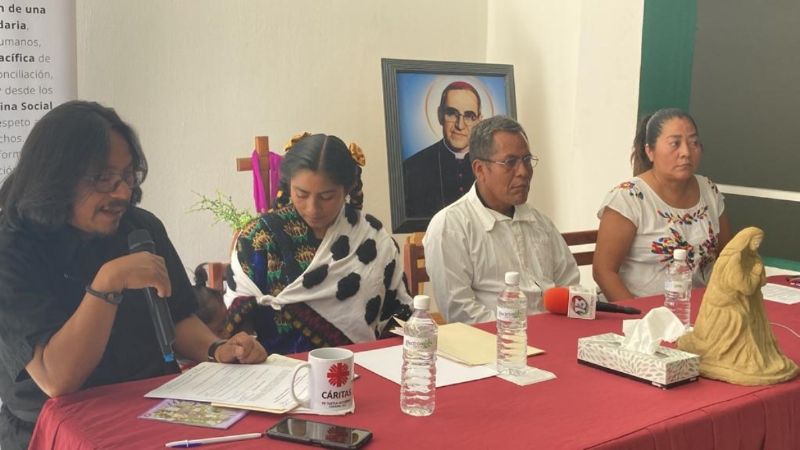
Human rights defenders, members of the civil organization Las Abejas of Acteal and relatives of Simón Pedro Pérez López demanded justice for the indigenous leader from the Chiapas Prosecutor’s Office and the judge in the case, and refused to negotiate an “abbreviated” trial in which the only material author arrested is given a short sentence and the intellectual authors are left unpunished.
Juan Pérez and Crescencia López, parents of Simón Pedro Pérez López, shot dead on July 5, 2021 when he walked with his young son hand in hand through one of the downtown streets of Simojovel, in the Highlands of Chiapas, demanded that his crime not go unpunished.
At a press conference, accompanied by Dora Lilia Roblero García, director of the Fray Bartolomé de Las Casas Human Rights Center, Guadalupe Luna, of Las Abejas, the relatives of Simón Pedro Pérez López denounced that the trial to issue a sentence against the only material author, detained in the El Amate prison, has been delayed.
18 months after the murder, they denounced that with “legal tricks” the trial has been delayed and has also been suspended on many occasions because the case is being handled by a judge in Pichucalco, in the northern part of the state, but the detainee is imprisoned in prison 14 of Cintalapa, hundreds of kilometers away.
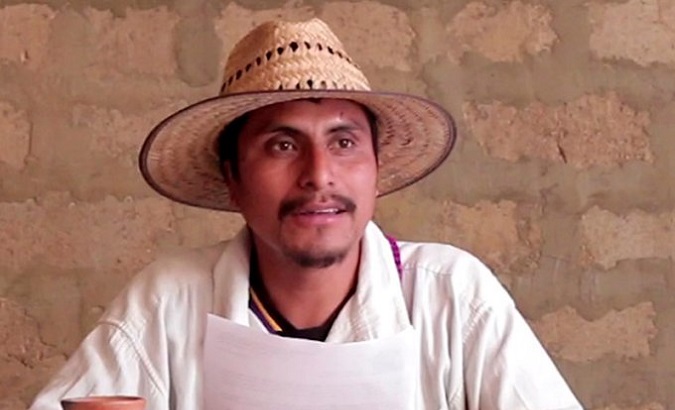
Simón Pedro Pérez López was a Maya Tsotsil human rights defender, former president of the Board of Directors of Las Abejas of Acteal. He carried out activism in defense of the rights of indigenous peoples of the Chiapas Highlands region; he moved mainly within Chenalhó, Pantehló and Simojovel, where he was from originally.
Dora Lilia Roblero, of the Fray Bartolomé de Las Casas Human Rights Center (Frayba) asked the justice authorities on Wednesday to take into account the lines of investigation that guide the causes of his murder.
She reiterated that the motive that led to the taking of Simón Pedro’s life is linked to his work as a defender of human rights and life, in favor of the construction of peace and the denunciation of the existence of a criminal group that locally controlled the political, social and economic sphere in the territory based on threats, murders and disappearances in the region.
On Friday, March 3 and Saturday, March 4, the oral trial is scheduled to take place in the Pichucalco Control Court.
That is why she requested that the judge handling the case and the FGE guarantee the presence of the material author of the murder of Simón Pedro, who is being held in the State Center for Social Reintegration of those Sentenced No. 14 “El Amate” in Cintalapa.
“As we know, the respect, guarantee and protection of human rights are duties that the State is obliged to fulfill through its different organs of government, and thereby avoid delay, continuity of human rights violations and possible discrimination due to the ethnic condition of the victims in the face of access to justice,” said Dora Lilia.

She urged both the Pichucalco Control Court and the State Attorney General’s Office to take into account all lines of investigation that lead to the clarification of the murder of Simón Pedro and find those responsible for masterminding the murder.
In addition, she demanded that the Chiapas justice system promptly guarantee the truth by offering adequate attention to the evidence about the motive for his murder, and that this be recorded in the final ruling.
“The Mexican State has the responsibility to avoid the constant vulnerability and risk faced by human rights defenders, communities and peoples who fight for peace; therefore, we demand that article 10 of the General Law on Victims, which establishes the right to an adequate and effective judicial remedy before independent, impartial and competent authorities, be fully observed and complied with in order to also guaranty the right of the victims, their families and society in general to know the whole truth,” the human rights defender said.
Originally Published in Spanish by La Jornada, Wednesday, March 1, 2023, https://www.proceso.com.mx/nacional/estados/2023/3/1/familiares-de-simon-pedro-perez-rechazan-un-juicio-abreviado-contra-su-ejecutor-302936.html and Re-Published with English interpretation by the Chiapas Support Committee
In Chiapas, a new armed group emerges in Pantelhó; They say they will confront Los Machetes
By: Isaín Mandujano
TUXTLA GUTIÉRREZ, Chiapas (apro)
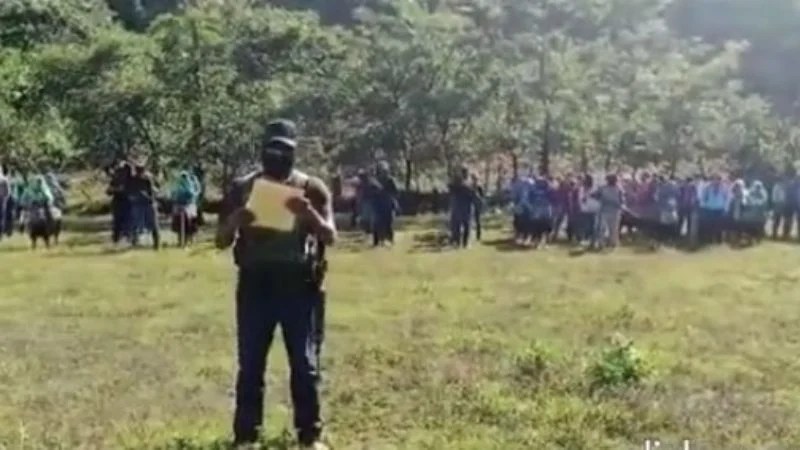
A new armed group emerged in the Chiapas Highlands and says its members have all of Pantelhó surrounded. They say that if the government doesn’t intervene to stop “the criminal actions” of Los Machetes, they will take justice into their own hands with weapons.
In a video, a masked man with a rifle slung over his shoulder reads a communiqué with some 200 people behind him, some armed men and also women are seen in the civilian contingent.
In their message, they pointed out that “the people of Pantelhó are suffering absurd attacks from El Machete, running over innocent people, decent people, children of God people, who are being run over, women and girls who have been imprisoned for more than 48 hours.”
“We are deciding to confront different groups. We are going to tell the government to act in defense of those people who are bathed in broken blood, beaten, women raped, if the government doesn’t act, we’ll give it a little time, otherwise we will take action under the circumstances that El Machete, a bloodthirsty group, forces on us. A really criminal group that is kidnapping and disappearing innocent people,” says the group’s spokesman, who did not give his name.
They accused Daniel López, alias Comandante Machete, of “collecting fees and charging for protection” in the municipality of Pantelhó. That is why they warned: “The strong hand of the government is required or we will act accordingly to rescue our beloved innocent countrymen.”
And that if there is no reason and way to solve the problem as soon as possible, the guns will speak for them.

“If the government does not act severely against this murderous criminal group that has killed more than 21, 30 people or more, they have also grabbed campesinos and disappeared them,” they said.
They said that El Machete passed from being a political group to now being a criminal group that walks around disputing the place between them.
“They are killers,” the video says at 3 minutes 31 seconds.
El Machete emerged on June 7, 2021 to rebel against an armed political group that controlled the municipality from the municipal seat and the City Hall, which for more than a decade kept the population devastated.
Now they are accused of disappearing 21 people directly and of maintaining terror in the municipality.
Two days ago, last Thursday, an armed group antagonistic to Los Machetes, [1] perpetrated an ambush and left four people dead instantly, a woman who turned out to be the wife of Comandante Machete Daniel López, and also three municipal police who belong to that same armed group.
[1] We, the Chiapas Support Committee, don’t know who the members of this new and unnamed self-defense group might be. Nor do we know how much support this new group has among the people of Pantelhó. What we have learned from folks in Chiapas is that El Machete is now a criminal group that has lost the support of the population.

Originally Published in Spanish by La Jornada, Saturday, March 4, 2023, https://www.proceso.com.mx/nacional/2023/3/4/nuevo-grupo-armado-irrumpio-en-pantelho-chiapas-advierten-enfrentar-los-machetes-video-303114.html and Re-Published with English interpretation by the Chiapas Support Committee
Legal protction of lithium in Mexico will favor US and Canada

As part of its program called Lithium Exploration, the Mexican Geological Survey carried out work in 82 locations in 17 states, in which “possible deposits of the mineral” were identified, according to the report prepared by Mining Watch Canada and the Mexican Network of People Affected by Mining. The map above was prepared by the organization Geocomunes, with data from the National Institute of Geography and Statistics.
By: Alfredo Valadez Rodríguez, Correspondent
Zacatecas, Zacatecas
The governments and transnational companies of the United States and Canada will be the principal beneficiaries with the “protection” that the Mexican State has legally granted to the lithium deposits in national territory with the creation of the state company LitioMx, the civil associations Mexican Network of those Affected by Mining (Rema) and Mining Watch-Canada warn.
In a research document, they point out that with said action the two North American countries will be able to “consolidate agreements to link the processing and production chains of individual electric vehicles to a market constituted mainly of upper and upper-middle classes in the global north, at the expense of territories, water, land, biodiversity and culture, as well as the lives of the Mexican communities” settled in the locations where the mineral will be exploited.
“This plan is mainly designed to take advantage of the reforms made in the neoliberal context of the T-MEC and serve the race of the U.S. auto sector, against China’s control, throughout the electric vehicle value chain,” they stressed.
The 70-page text, called Lithium Exploitation in Mexico: Public Interest or Transnational Extractivism? consists of five chapters and was prepared by specialists in the field, Susana Isabel Velázquez Quesada, Yannick Deniau, Andrea Sánchez Mendoza, Jen Moore and Kirsten Francescone.

In the conclusions section, Rema and Mining Watch-Canada argue that lithium is only one of several metals whose exploitation is being stimulated by a “supposed” energy transition, in which it is intended to move from one energy source to another. However, they argue, this “entails the deepening and expansion of the same damages that have already been documented by the extraction of gold, silver, copper and other metals in this country, as well as in many more places around the world.”
Extractivism labeled “green” and “sovereign”
They also warn that: “promoting this mining as a supposed response to climate change and also as the way to construct national sovereignty, makes that this extractivism now labeled ‘green’ and ‘sovereign’ apparently has unanimous social approval.” With that, they say, the circles of people previously critical and sensitive to the socio-environmental, economic and cultural damages of mining, now seem to agree with “the most recalcitrant sectors” in which the extraction of lithium “is necessary or, even, inevitable and indispensable. We say that’s not the case.”
Among the other aspects analyzed in the study, both organizations consider it wrong for the federal government to compare the measures it has adopted to “protect” Mexico’s lithium legally with the ones took President Lázaro Cárdenas del Río in 1938 to nationalize hydrocarbons.

“They evoke historical facts without realizing that this supposed parallelism is riddled with errors and injustices: lithium is neither an energy per se (it is, in any case, a component for its storage), nor will its extraction generate economic abundance, in some way similar to that of oil in twentieth-century Mexico.”
To the contrary, they say, currently in the country “we cannot exercise sovereignty without first untying the hands of the State from the perverse scaffolding of the International Investment Agreements installed since the entry into force of the North American Free Trade Agreement in 1994, and other agreements that promote and sustain the control of transnational companies over the commons.”
Finally, Rema and Mining Watch-Canada question: How can one speak of a decree and a proposal “in favor of the Mexican people” when their natural resources, their territories and life itself will be endangered?
“Regardless of whether the company (LitioMX) is public, private or mixed capital, those affected by mining say no to the exploration, exploitation, benefit and exploitation of lithium and other minerals. The true public utility of these is the determination to leave them in the subsoil, ” they emphasize.
Originally Published in Spanish by La Jornada, Sunday, February 26, 2023, https://www.jornada.com.mx/2023/02/26/estados/020n1est and Re-Published with English interpretation by the Chiapas Support Committee
Second Call to the Caravan and International Gathering the South Resists! 2023

To the peoples in resistance and rebellion of the South-Southeast of Mexico
To national and international organizations of struggle below and to the left
To the world’s human rights organizations
To free, alternative or whatever media are called
After meeting and talking about the meetings, activities and dialogues shared during the «CARAVANA POR EL SUR GLOBAL» (CARAVAN FOR THE GLOBAL SOUTH) held from August 31 to October 7 through different geographies of SLUMIL K´AJXEMK´OP or “Insubmissive Land,” as the Other Europe was renamed, we want to thank the organizations, collectives and people who made this tour possible and received who was delegated to share, listen and walk with you in your territories, struggles, resistance and collective spaces; thank you compas. Taking up from where we last shared, as a reflection and to continue building and weaving networks of rebellion, resistance and autonomy, towards the caravan and international gathering THE SOUTH RESISTS, we comment with the following:
Compas, the stories of our territories, which have been written and told by the victors, are not so different: we have been part of the dispute between rulers with the ambition to control as many territories as possible for the exploitation and looting of their natural and cultural assets, this accompanied by deep colonization processes that in some cases have represented great ethnocide, some known and others unknown. However, here we are resisting, remembering, and fighting against oblivion to recover our stories, our roots, our territories, our cultures and our lives.
With capitalist industrialization and technological advances, the first world was built and sustained on the blood and genocide of the indigenous and Afro-descendant indigenous peoples enslaved, massacred, dispossessed, violently raped and forced to leave their territories, to allow governments and conquerors to trade everything they could put a price on, which businessmen continue to do today. They generated deep processes of geopolitical systems with wars between countries and the imposition of borders that divide us peoples.
The war – not only the war between countries but the war against peoples, against indigenous peoples, unions, students, women, people of sexual diversity, etc and the war between organized crime cartels that affects us all of society – became the perfect pretext to internalize fascism in some sectors of societies, in which being different means being an enemy. We see the endless conflict of the so-called Middle East against the Palestinian, Kurdish, Armenian and many others who have been massacred and forgotten. The spectaculization of the war between Russia and Ukraine overshadows hundreds of other conflicts that do not matter to the international community, because they do not directly affect them.Within the countries, deep conflicts are made invisible due to the distribution of social and natural goods monopolized by the economic and political elites, while the bulk of the proletarian, peasant population, student and migrant are denied the right to a decent life. The historical demands of thousands of peoples have become a single voice of precarious humanity that continues to rethink and demand access to energy, water, land, food, education, health, work, housing, justice, democracy and peace. The Climate Crisis, caused by the patriarchal and colonial capitalist system itself, is having serious social, economic and territorial impacts: massive floods in Pakistan, severe droughts around the world that have caused the loss of millions of tons of crops this year,increasingly aggressive hurricanes, devastating fires such as Australia and a series of climatic and ecosystem anomalies that put the conquest of these demands at risk and life-threatening as we know it.
The energy transition is already underway for the benefit of the big capital and rulers who have 27 meetings to share the energy pie. Faced with the current energy crisis in Europe caused by the war in Ukraine and with the promise of reducing invoice costs, they have reactivated large projects of coal mines and combustion plants, and even plan to build new nuclear power plants as a green solution, the installation of wind and solar projects in sea and land and other high-voltage electrical lines, gas pipelines and pipelines between countries and continents, added to a series of high-speed train and deep-sea projects, for tourism and freight transport all in the hands of International Corporate Capital. They generate energy, industrial corridors commercial and military among those who reorganize as Global North and its transoceanic interconnection with the implementation and imposition of this type of corridor in the countries of the Global South, Africa and America being the priority.
We need to give name and face to the intellectual and material authors of this planetary devastation, list, map and analyze countries, companies, agreements, pacts, alliances: we know it as Global North made up mainly of the G7 with its main United States Finquero, and its main Asian ally, Japan as well as its main military borders in Europe with Germany, United Kingdom, France and Italy at the helm, its servile neighbor Canada, the allies of the Middle East, as well as the European Union, NATO, the WTO, etc. And there is also the other block with China at the head of neocolonialism, Russia and others: many names, many meetings, and the same objective: money and power.
Just as there is much South in the North, there is much North in the South, and all of us who fight against the Global North, we are standing in the South that Resists. Just as they meet to agree on death and destruction, it is necessary and essential to meet to build resistance, struggle, alternatives and autonomy; it’s time to listen to all our voices, share and think about actions of resistance and rebellion. While the powerful vie for the power of the world, those below suffer the consequences of their political, economic and military wars. But also, where those from above destroy, those from below rebuild.
For all of the above, we confirm that we continue to prepare the CARAVAN AND INTERNATIONAL MEETING “ EL SUR RESISTE” (THE SOUTH RESISTS) 2023 ”. The caravan will leave the Chiapas coast on April 25, will tour the Isthmus of Tehuantepec from South to North to continue on the Yucatan peninsula and end with a meeting between all the organizations that attended the different events of the tour the day May 5 at CIDECI / Jacinto Canek Caracol in San Cristóbal de las Casas, Chiapas. On May 6 and 7 will be the international meeting “ El Sur Resiste 2023 ”.
We invite all organizations from the bottom left with a presence in Chiapas, in the Isthmus, Tabasco and Yucatan peninsula region to contact the email elsurresiste@riseup.net to be able to join the events scheduled during the course of the tour.
We invite all national and international organizations to prepare for their participation in the international meeting on May 6 and 7, 2023
We invite you to join the following commissions:
COMMUNICATION: We invite the free, alternative, independent or whatever media, from Mexico and the various continents, to be part of the team and build communication strategies.
OBSERVATION: We invite national and international human rights organizations and centers to be part of the observation and accompaniment team.
INVESTIGATION; We invite the academic community below and to the left, researchers, teachers and students, to join a team of expertise, mapping and participatory research.
These commissions will be coordinated by members of the convening organizations: for more information or to join one of the commissions, write to the email: elsurresiste@riseup.net placing in Subject the name of the commission to participate.
On the other hand, we call on all organizations, communities, movements, collectives and solidarity people to join the global fundraising campaign, holding forums, talks, shares, festivals, dances, collections, raffles, cooperachas, passing the hat, making the cowgirl, printing and selling t-shirts, posters, stickers and everything possible to support the collective financing of these activities.
Bank Account Name: Digna Ochoa AC Human Rights Center
Sucursal Name: 7006
Account number: 859963
Interbank Clabe: 002135700608599636
Bank address: Suc. 324. Hidalgo Avenue · 137. Colonia Centro. Tonala, Chiapas.
Postal Code: 30500
Swift code: BNMXMXMXXX
Banco Nacional de México SA BANAMEX
For any information contact the email: elsurresiste@riseup.net
From various corners of the Mexican South-Southeast:
Coordination and organization commission EL SUR RESISTE
National Indigenous Congress – Indigenous Government Council
¡OUR FIGHT IS FOR LIFE!
¡LONG LIVE THE FLOWERING OF THE PEOPLES!
¡THE SOUTH RESISTS!
_________________________________________________________
To read the original Second Call in Spanish, click here
Para leer el segundo llamado en español, haga clic aquí
El Sur Resiste: A call to stop the capitalist mega-projects
A call to organize delegations and participate in
El Sur Resiste International Gathering
May 6-7, 2023 at the CIDECI/Caracol Jacinto Canek | San Cristóbal de las Casas, Chiapas

March 2023
Dear compañerxs:
We are inviting you and your collectives and organizations to work together to prepare delegations in your regions to participate in the May 6-7, 2023 El Sur Resiste International Gathering being held at the CIDECI/Caracol Jacinto Canek, in San Cristobal de las Casas, Chiapas. (In Spanish: First call, Second Call, to El Sur Resiste. Read the Second Call in English here.)
The international gathering is open to the public in solidarity with the demands of the Zapatistas, the National Indigenous Congress and the El Sur Resiste campaign and peoples in resistance to projects of death in their own geographies.
The Sur Resiste is the culminating event at the end of a caravan of indigenous people in resistance to the interconnected megaprojects of the 4T “TREN MAYA – CORREDOR INTEROCEÁNICO” and all the megaprojects of death traveling through the south of Mexico from April 25 – May 5.
Our invitation here is to collaborate and prepare a joint delegation of members of our committees, collectives and organizations to attend the May 6-7 international gathering, to learn together, strengthen our relationships and connect our work for justice in our communities.
The Chiapas Support Committee will host a series of monthly gatherings on-line and in person whenever possible to have educational and political discussions on the situation we are facing and the organizing we are doing in our regions and communities.
We would ask that the collectives and organizations committing to participate to consider how they connect their work in the following areas :
- Connecting movements across regions and borders against capitalist mega-projects: The forced displacement of communities, oil pipelines and the “Maya” train.
- Connecting your local community with the Zapatista communities and Indigenous struggles in your regions
- Drawing connections between the interest of US capital and the megaprojects affecting the southeast , and to the criminalization of struggles as a strategy of repression.
- Stopping the militarization of borders, communities, education and policing. Connecting these struggles to denouncing the paramilitary violence against Zapatista and Indigenous communities and demanding an end to the paramilitaries; and
- Supporting the autonomy projects of the Zapatista communities
In order to organize nationally, we would invite each one to organize and hold events, fundraisers and forums on art, science, Indigeneity and indigenous anti-capitalism based on your capacity to build momentum and relationships for the El Sur Resiste gathering
Here are some suggestions for the next five months:
- In memoriam of Acteal December 22, 1997:
- Every 22nd of every month: Never again Acteal!
- Stop the paramilitary violence! Disarm and dismantle the rightwing paramilitary groups.
- Derail the “Maya” Train and Interoceanic Corridor: stop the megaprojects of death
- In solidarity with the Ayotzinapa 43: “Vivos se los llevaron, Vivos los queremos!”
- Every 26th of every month mobilize in your community, city and region to demand the return with life of the Ayotzinapa disappeared and an end to the neoliberal war on Indigenous people in Mexico and the U.S.
- February 2 Treaty of Guadalupe Hidalgo, El nuevo fuego against the triple conquest
- March 8 International Women’s Day and Month
- April 10 Zapata’s anniversary: Defend life, protect mother earth.
- May 6-7. Participate in the El Sur Resiste gathering and work together to organize movements against capitalist megaprojects in the U.S. connected with the Zapatista and Indigenous movements
- June: Connect the memories and dreams of resistance, organize against the mega-projects and for solidarity across communities and borders.
We will also hold at least two online meetings to prepare for the trip and read and discuss together key articles on violence against the Zapatista communities and autonomy, the mega-projects, and the organizing and struggles in your regions to develop and strengthen a shared analysis of the struggles and then work we are carrying to the gathering. [Note: CSC will hold the first of the El Sur Resiste forums on-line on Sunday, March 19, 2023, 4:00pm PST; we will have guest speakers from CNI in Mexico. We will post a registration link here soon.]
For peace & solidarity,
The Corn War
By: Luis Hernández Navarro
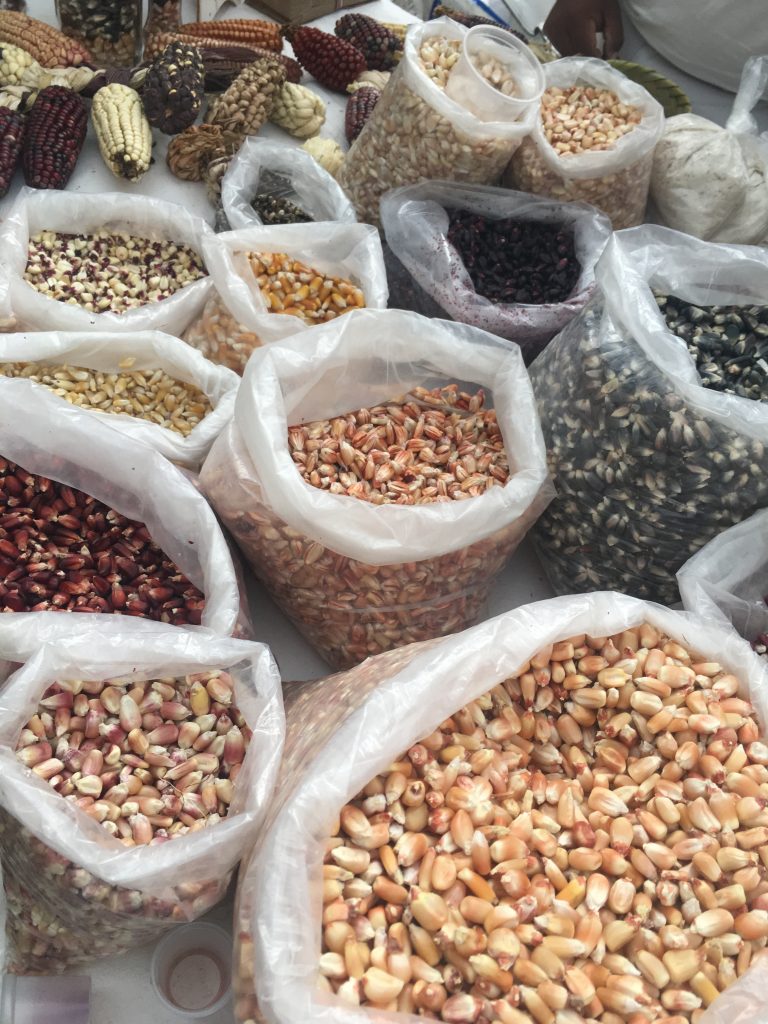
The United States is the world’s largest producer, consumer and exporter of corn. But its crops are used to feed livestock and automobiles, manufacture high fructose sweeteners, snacks, alcohols, oils and, marginally, for people to eat. About 60 percent of local consumption of the grain goes to industrial uses, most significantly to ethanol production. The crop is a business, not part of their culture. [Corn is part of the culture in Mexico.]
Although corn is grown almost everywhere in the United States, mainly with genetically modified seeds, its production is concentrated in the corn belt states, which include Iowa, Illinois, Indiana, Nebraska, Kansas, Minnesota and Missouri. In many of these states, the main political force is the Republican Party. For the most part, it is grown on highly mechanized ranches of more than 500 hectares. The number of family farmers engaged in this activity is decreasing every year.
This cereal is the agricultural product to which Washington allocates the most subsidies. In 2019, it received 2.2 billion dollars. These benefit large agribusiness companies more than producers, and large farmers over small family farmers. As Ana de Ita demonstrated since 1997, in the book Mirage and reality: NAFTA three years later, coordinated by Andrés Peñaloza and Alberto Arroyo, these subsidies are a real dumping mechanism affecting Mexican peasants and farmers.
The US exports between 10 and 20 percent of the total volume of its subsidized production to countries such as Mexico, China, Japan and Colombia. In order to place its grain in other countries without restrictions, it pressures/negotiates access to their markets and the dismantling of sovereign protections through free trade agreements. This is what it did with Mexico, first with NAFTA and now with T-MEC. It competes with Brazil, Argentina and Ukraine, which have increased their presence in the world grain market.
Uncle Sam’s agricultural exports are not just a business. They go beyond that. Food production is a key and powerful weapon that he has been oiling for decades. As Peter Rosset has pointed out, war, food and intellectual property rights have been closely linked to White House economic strategy since the 1970s. Military industrial development, massive grain production and patents have been pillars of U.S. hegemony in the world economy. Food is an instrument of imperial pressure.
By confession, the proof is in the pudding. John Block, Secretary of Agriculture from 1981 to 1985, stated: “The effort by some developing countries to become self-sufficient in food production must be a memory of times past. These countries could save money by importing food from the United States.” Agricultural products made in the USA are one of that country’s main export commodities. With its domestic market saturated, it is pushing aggressively to open the borders to its agri-food products.
President George W. Bush reaffirmed this when he signed the Farm Security and Rural Investment Act of 2002: Americans can’t eat everything the nation’s farmers and ranchers produce. That’s why it makes sense to export more food. Today 25 percent of U.S. farm income comes from exports, which means access to foreign markets is crucial to the survival of our farmers and ranchers. Let me put it as simply as I can: we want to sell our cattle, corn and beans to people around the world who need to eat.
President George W. Bush reaffirmed this when he signed the Farm Security and Rural Investment Act of 2002: “Americans can’t eat everything the nation’s farmers and ranchers produce. That’s why it makes sense to export more food. Today 25 percent of U.S. farm income comes from exports, which means access to foreign markets is crucial to the survival of our farmers and ranchers. Let me put it as simply as I can: we want to sell our cattle, corn and beans to people around the world who need to eat.”
At the end of this year, the new Farm Bill, the Five-Year Plan that regulates the agricultural policies of the northern neighbor, will have to be approved. In the discussion, Uncle Sam’s interest in continuing to make food a weapon for controlling other nations and a big business, the votes of the corn belt farmers and the interests of the large agribusinesses are all mixed up. In the midst of this debate, Mexico’s February 14 decree banning the use of genetically modified corn for human consumption in masa (the dough of ground corn) and tortillas fell like a bombshell. Immediately, interests moved to put pressure on Mexico.
According to Tom Haag, president of the National Corn Growers Association, “the Biden administration has been more than patient with Mexico, as U.S. officials have tried to enforce a rules-based trading system and defend U.S. farmers.” Now, he added, “the integrity of the T-MEC, signed by Mexico’s own President Andrés Manuel López Obrador, is at stake. Giving special attention to corn, our number one agricultural export to Mexico, and rushing through a ban on imports of numerous types of food categories, makes the T-MEC a dead letter unless it is enforced.”
Neil Caskey, vice president of that association, went further: “We have always believed that this would ultimately be resolved through the dispute settlement process of the U.S.-Mexico-Canada agreement. Today we are urging the administration to begin that process immediately.”

The corn war between the U.S. and Mexico has escalated. Unless the grain becomes a bargaining chip in other major negotiations, what is at stake today is the real margin our country has for a policy of food self-sufficiency under the T-MEC.
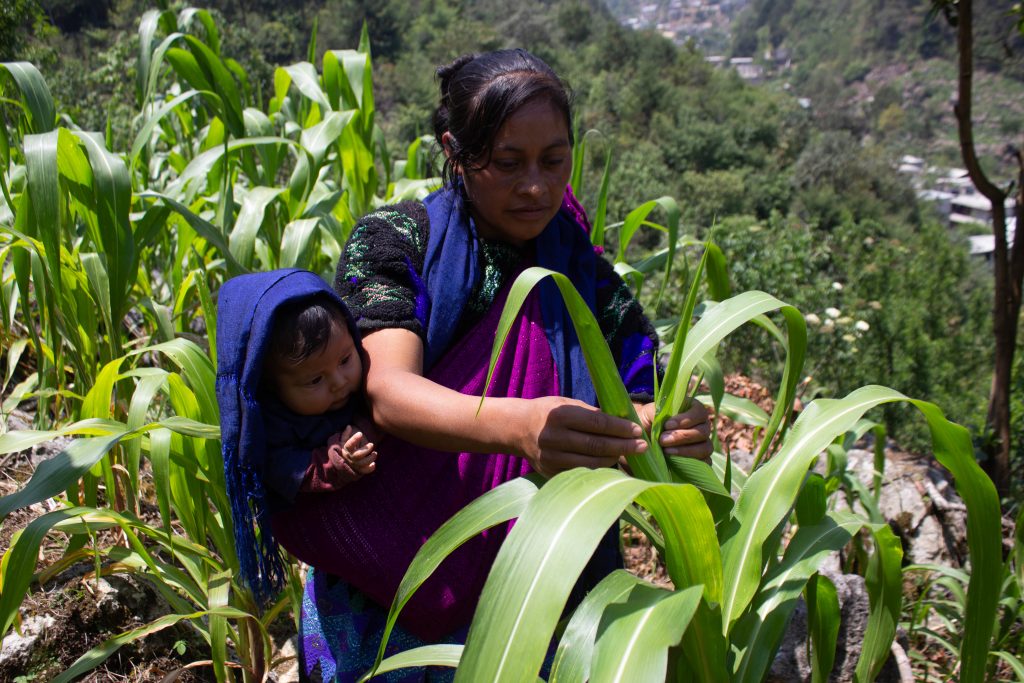
[1] The name “milpa” comes from Náhuatl, the original language of the Aztec people, and means “what is sown in the field.” The milpa has long represented the key to ensuring food security for many indigenous and rural populations in Mexico, and is the most effective way to safeguard and reproduce ancestral seeds.
Originally Published in Spanish by La Jornada, Tuesday, February 21, 2023. Translation by Schools for Chiapas and Re-Published by the Chiapas Support Committee
Samir Flores: four years without justice
A La Jornada Editorial
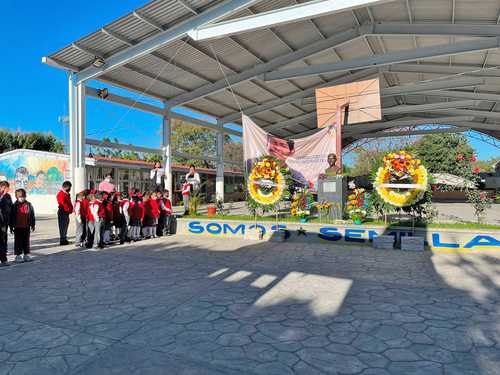
On February 20, 2019, the indigenous Morelos activist Samir Flores Soberanes, a member of the Permanent Assembly of the Peoples of Morelos and the founder of Radio Amiltzinko, was shot and killed in front of his house, in his native Amilcingo. To date, the crime remains unpunished and the investigation does not present any advance.
It should be noted that at the time, the murder of Flores Soberanes took on particular relevance in the eyes of public opinion, since it took place against the backdrop of the conflict over the hydroelectric power plant in Huexca, built mostly in the previous six-year term, and whose completion and start-up were opposed by various local organizations, in which the victim had a prominent participation. No evidence has been found that the killing could be linked to this matter; instead, data have been emerging that point to the possible authorship of the Tlahuica Command, an organized crime establishment that operates in Morelos under the protection of still powerful political groups.
The only solid and indisputable element that could lead to the clarification of the death of Samir Flores is action from the local prosecutor’s office, headed by Uriel Carmona Gándara, which has made an effort to make it impossible to bring justice in this and other cases. From the outset, just six days after the Amilcingo murder, that autonomous institution “lost” the weapon with which the activist was killed and henceforth has not wanted or has not been able to advance in the investigations.
The governor of Morelos, Cuauhtémoc Blanco, declared in September 2020 that Carmona Gándara “already has the investigation, but he does not want to let go because there are many people involved; I hope he really opens up and has enough courage to declare who Samir Flores’ killers were. Days later, the state governor reiterated that his state’s prosecutor “is afraid” and that’s why he did not reveal what he knew.
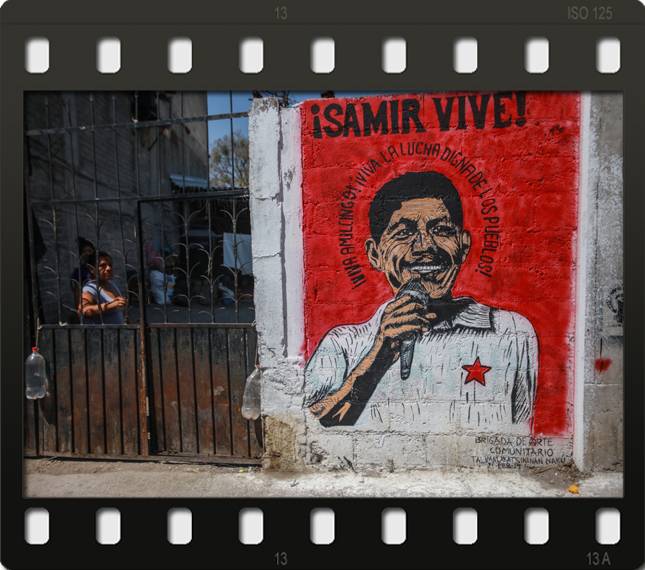
It should be remembered that Carmona Gándara was elected in 2018 by the state Congress, in which the first force was the Party of the Democratic Revolution (PRD), proposed by former governor Graco Ramírez, a member of that party, for a period of nine years. Since then, the prosecutor has been singled out on several occasions for his poor performance in numerous circumstances; for example, the handling of corpses in the clandestine graves of Tetelcingo, with implications of forced disappearance, as well as the abuses of power of his bodyguards and the re-victimization of eight young people murdered in the Antonio Barona neighborhood of Cuernavaca. Likewise, Carmona Gándara was accused of covering up the femicide of the young woman from the capital, Ariadna López Díaz, whose body was found in October of last year on the outskirts of Tepoztlán, and of whom the Morelos prosecutor’s office asserted that she had died of “serious alcoholic intoxication and bronchial aspiration.” She was actually beaten until she died from multiple traumas.
Attempts to remove Carmona Gándara from office have not yielded results. When an attempt was made to submit him to a trial to remove his immunity in the Congress of the Union, he inexplicably obtained an injunction that prevented such a trial. Attempts to remove him in his state’s legislature also failed, and last November the Congress of Mexico City urged its Morelos counterpart to dismiss the questioned prosecutor. [1]
In sum, everything indicates that the murder of Samir Flores fell into the black hole of the Morelos Attorney General’s Office and that it will not be possible to clarify it and do justice until the exit – and perhaps, the criminal accusation – of its attorney general, exponent of that generation of protected state prosecutors that governors of the past regime left in several states of the country, perhaps for the purpose of covering their backs and also achieving lasting impunity.
[1] People’s Front in Defense of Water, Land and Air of Morelos, Puebla and Tlaxcala (FPDTA-MPT), of which Samir Flores was a member, also demands the removal of Carmona Gándara from office.
Originally Published by La Jornada, Tuesday, February 21, 2023, https://www.jornada.com.mx/2023/02/21/opinion/002a1edi and Re-Published with English interpretation by the Chiapas Support Committee
 Chiapas Support Committee
