Chiapas Support Committee
Home of the Compañero Manuel blog on zapatistas & mexico
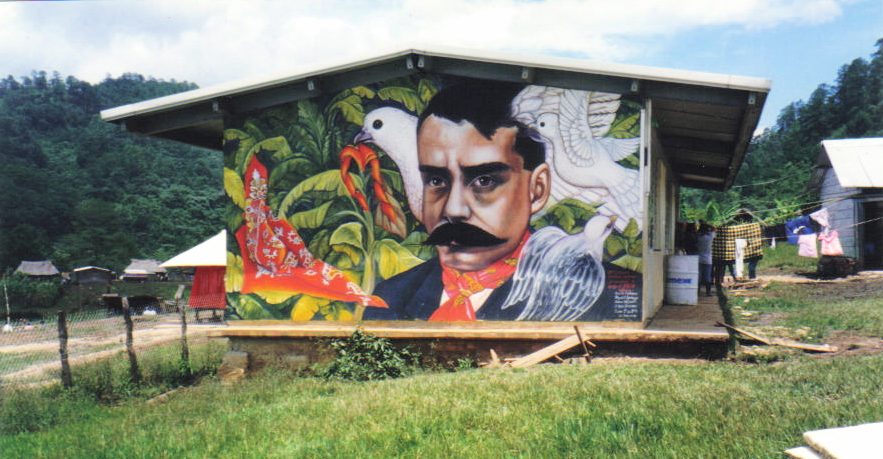
Chiapan demons
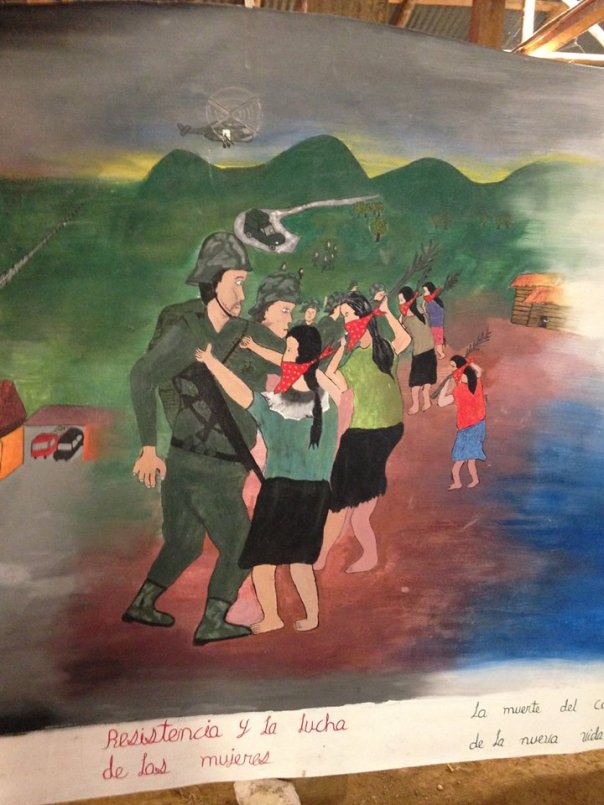
Women’s resistance to militarization after Acteal Massacre. Art from the Zapatista communities.
By: Luis Hernández Navarro
The lifeless body of Ignacio Pérez Girón appeared on the side of the Tuxtla Gutiérrez-San Cristóbal free highway (in other words, not the toll road). It had signs of torture. Two days earlier, on May 4 of this year, his family had reported his disappearance.
Pérez Girón was the trustee for the indigenous municipality of Aldama, in the Highlands (los Altos) of Chiapas. He was 45 years old. Months ago, in January 2019, he had denounced the armed paramilitary attack on the community.
Since February 2018, residents of Aldama have experienced an authentic humanitarian crisis. Several communities in the municipality are constant victims of attacks with firearms from paramilitary groups. Some 25 people have been murdered and several dozen injured. Additionally, more than 2,000 have been violently displaced from their homes and villages. Those who go out to work their fields run the danger of being murdered. The aggressors come from the villages of Santa Martha and Saklum, in the neighbor municipality of Chenalhó.
On five different occasions, Pérez Girón had asked the state government to install tables for dialogue to de-activate the conflict. Before the murder, the journalist of Rompeviento TV, Ernesto Ledesma, asked President Andrés Manuel López Obrador on three occasions about the attacks in this region. After the Pérez Girón murder, he asked him again. From the location of the acts, he produced four reports with multiple first-hand witnesses (https://bit.ly/2wesaOn). Neither the police nor the military presence has stopped the attacks. Those who carry firearms for the exclusive use of the Army move about at their leisure – freely.
This problem has been around since 1977. It emerged because the government gave Santa Martha 60 hectares of Aldama property. According to the Good Government Junta in the Caracol of Oventik, “the three levels of past and present government are responsible for the division, confrontation, fear and rupture of community life.” Because, “agreements appeared that were not fulfilled, putting more fuel on the fire,” in order to “divide the communities.”
The violence in Aldama and in Chalchihuitán is the consequence of the release of the material Acteal killers. On December 22, 1997, in Acteal, Chenalhó, 45 men, women and children who were praying for peace in a chapel were savagely executed by paramilitaries (https://bit.ly/2ELb9A8). Despite the fact that they were fully identified by the relatives of the victims, the Supreme Court of Justice of the Nation liberated the murderers at the beginning of 2009, arguing that due process had not been followed. The criminals never gave up the weapons with which they perpetrated the massacre.
The main promoter of the campaign to liberate the Acteal murderers was Hugo Eric Flores, tied to the theology of neo-Pentecostal prosperity, associated in the beginning of his political career with Ernesto Zedillo, president of Mexico when the massacre was committed. Leader of the Social Encounter Party, he is currently the super-delegate of the Fourth Transformation in the state of Morelos. The Chenalhó paramilitaries that have attacked Aldama residents throughout the past year are the same ones that murdered members of Las Abejas in Acteal almost 22 years ago, or they are relatives of the killers. Rosa Pérez, the ex municipal president of Chenalhó, a key figure in the reactivation of the armed civilian groups, is a relative of those who perpetrated the massacre. Abraham Cruz, the municipal treasurer until recently, is the son of the pastor who blessed the murderers’ weapons.
According to what those displaced from Aldama stated, Rosa Pérez and Abraham Cruz, the current mayor of Chenalhó, reorganized the paramilitary group that has existed in that municipality for years, originally created by the Army, “although this time we were the ones attacked” (https://bit.ly/2Xle8q7).
What happened in Chenalhó, Chalchiuitán and Aldama is not an isolated act. In practically all corners of the Chiapan geography old and new groups of political and economic bosses (indigenous and mestizo) dispute territorial control by means of violence. Members of the Chol people of San José El Bascán, in Salto de Agua municipality, are at risk of an armed attack and forced displacement.
Instead of serving to insert order into the demons of para-militarism, the Army’s presence in the state seems to have focused on encircling and harassing Zapatista territories. The Fray Bartolomé de Las Casas Human Rights Center reported that since the end of 2018 the number of Mexican Army incursions into the headquarters of the Good Government Junta in the Caracol of La Realidad has doubled.
Far from confronting the local power groups, the state government, headed by the Rutilio Escandón of Morena, protects them. The sons and grandsons of the old finquero [1] oligarchy now occupy key positions in the administration of the Chiapan Fourth Transformation. The state’s governor and his government officials are part of the problem, not the solution.
The ghost of Acteal runs through Chiapan territory. The demons are free. Those above opened the door for them.
Note:
[1] Finqueros were the estate owners from whom the Zapatistas took land away in the January 1, 1994 Zapatista Uprising.
———————————————————–
Originally Published in Spanish by La Jornada
Tuesday, June 4, 2019
https://www.jornada.com.mx/2019/06/04/opinion/016a2pol#
Re-Published with English interpretation by the Chiapas Support Committee
For life and against war in the Zapatista communities
 By: Gilberto López y Rivas
Today is being carried out in national territory, and in various countries of the solidarity world (among them, France, Spain, Greece and the United States), a day against the militarization of Zapatista territories and communities, which has been denounced by the Zapatista National Liberation Army (EZLN), and studied methodically by the Fray Bartolomé de las Casa Human Rights Center (Frayba).
The Frayba, through the documentation that the Civilian Observation Brigades (Brigadas Civiles de Observación, BriCO) carry out, sees a 100 percent increase in the number of incursions of the Mexican Army, land patrols, and helicopter flyovers that started in December 2018, and, it concludes, with well-founded reasons, that these acts of intimidation and harassment “mean an attack on their right to autonomy and represent a risk to the life, integrity and security of the entire population. It has been observed that military vehicles often pass at high speed through the communities, without concern about the people, the children or the animals in the road.” The Frayba also documented acts of espionage in the international observation camp of La Realidad, which equally violates the integrity and security of those who carry out monitoring.
This process of militarization is also being carried out through an increase in the activity of paramilitary groups, which the Sedena, for sure, in a reinterpretation of the old metaphor of “taking away the water from the revolutionary fish” (isolating them from the people), considers in its counterinsurgency manuals that it gives better results in counter-revolutionary action introducing “braver fish” into the theater of war. We remember the State crime of Acteal, or the work the killers carried out in the territories in resistance to understand this “metaphorical contribution” of the Mexican military men to global counterinsurgency.
The EZLN, in the communiqué that denounces the military offensive, points out: “The patrols and flyovers don’t follow the drug trafficking routes, or those of the overwhelmed caravans of migrant sisters and brothers who flee from a war that refuses to say its name… to enter another that hides behind a talkative and quarrelsome federal Executive. No, that death threat travels by air and land through the indigenous communities that have decided to stay in resistance and rebellion in order to defend the land, because in it is life. Now, additionally, members of the Federal Army and Air Force go into the mountains and appear in the communities saying that war is coming and that they are just waiting for ‘orders from the very top’.” The obligatory question at this point is: Who is giving the orders?”
In the rest of the country, militarization (and para-militarization) materialize, on the one hand, in the implementation of the National Guard, which constitutes a surrender of public security to the military, now legalized, and on the other hand, in the role assigned to organized crime in the murders of indigenous defenders of territory and of Mother Earth, councilors of the CNI–CIG, many of them community radio communicators, like Samir Flores Soberanes, executed 10 days after the continuity of the Morelos Integral Project was announced.
This process of militarization and para-militarization in Zapatista territories, or in anticapitalist resistance, is carried out without the organic intellectuals of the Fourth Transformation being disturbed, occupied as they are in writing epistles of unconditional support to the federal Executive, or accepting key portfolios of the Cabinet for the eventual granting of the permits necessary to continue the death megaprojects.
The current global crisis of civilization detonates a radical destruction of the basis of life. Among its principal forms in play are ethnocide, ecocide or necro-political capitalism. (See the exceptional book from Luis Arizmendi / Jorge Beinstein, Tiempos de Peligro: Estado de excepción y guerra mundial. UAZ-Plaza y Valdés Editores, México, 2018). Contemporary critical thought is deepening in the denunciation of the new forms of destruction that it brings with it, necessarily, relating to the accumulation by dispossession “of public property, of common property and of generic property (like genetic codes or water)” (Arizmendi, ibíd. p. 20), until reaching death policies as the basis of an accelerated accumulation based on the criminal economy.
The militarization process in Chiapas opens the danger of a new Acteal. De-militarization, the dismantling of the paramilitary groups and respect for the Zapatista communities, their territories and their autonomous processes, must be complied with immediately. ¡El EZLN no está solo! (The EZLN is not alone!)
———————————————————–
Originally Published in Spanish by La Jornada
Friday, May 31, 2019
https://www.jornada.com.mx/2019/05/31/opinion/021a2pol#
Re-Published with English interpretation by the Chiapas Support Committee
CNI-CIG-EZLN communiqué on the violence against the original peoples
 To the peoples of the world
To the networks of support for the CIG
To the national and international sixth
To the communications media
The passage of neoliberal capitalism is marking its steps with the blood of our peoples, where war rages because we don’t cede our land, culture, our peace and collective organization; because we don’t cede in our resistance or resign ourselves to die.
We denounce the cowardly attack perpetrated last May 31 on the Nahua indigenous community of Zacualpan, members of the National Indigenous Congress in the municipality of Comala, Colima, in which a narco-paramilitary fired high-caliber weapons against a group of young people, murdered one of them and left three more seriously injured.
Given the grave facts, we hold the three levels of bad government responsible for permitting the operation of these narco- paramilitary groups in the region, principally the director of public security, Javier Montes García. We demand the full respect for the uses and customs of the Nahua indigenous community of Zacualpan.
We condemn the aggression and destruction that occurred in the early morning of May 31 in the localities of Rebollero and Rio Minas, belonging to the Binizza community of San Pablo Cuatro Venados in the municipality of Zachila, Oaxaca, at the hands of an armed group, which violently destroyed the homes of dozens of families.
A numerous group of people arrived at the place firing high-caliber weapons and accompanied by heavy machinery, and after many shots they brought down the houses, obliging the compañer@s, among whom were minors, to leave and take refuge in the mountain.
They brought down 24 homes, burned corn and other grains stored as seeds for planting, burned the personal belongings of the community like clothes and shoes. In addition, cattle, power generators and water pumps were stolen.
We condemn the repression and dispossession committed against our compañeros and compañeras of the Otomi indigenous community residing in Mexico City who were violently evicted by shock groups at the service of the bad government and the real estate companies, together with hundreds of grenadiers at the service of Néstor Núñez, Mayor of Cuauhtémoc, last May 30 at 11:00 am in the camp that they maintained on London Street No. 7, Colonia Juárez, from where the Otomi community has maintained temporary camps since the earthquake that occurred on September 19, 2017.
We condemn the narco-paramilitary circle that criminal groups, given cover and supported by the three levels of bad government and all the political parties, maintain against communities of the Indigenous and Popular Council of Guerrero- Emiliano Zapata (CIPOG-EZ) in the municipalities of Chilapa and José Joaquín de Herrera, which autonomously construct peace with their struggle.
We make a call to the peoples of Mexico and the world to be attentive and in solidarity with the struggle of the peoples of Guerrero, to break the circle that imposes violence for the capitalist appropriation of indigenous territories, which limits the entry of foods and medications.
We call for supporting the collection of provisions that will be destined to the affected communities, and that will receive products such as corn, rice, beans, cans of chiles, sugar, sardines, tuna, toilet paper diapers and medications on the premises of UNIOS, located at Dr. Carmona & Valle Street No. 32, Colonia Doctores, in Mexico City.
We reiterate that our Mother Earth is not for sale to big capital or to anyone, our existence is not negotiable and therefore neither is the resistance of our peoples.
Attentively,
June 2019
For the full reconstitution of our peoples
Never more a Mexico without us
National Indigenous Congress
Indigenous Government Council
Zapatista National Liberation Army
Conference on Cuba, faced with renewal of Helms-Burton
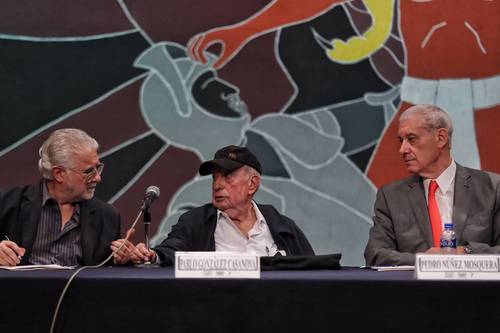
Carlos Fazio, Pablo González Casanova and Pedro Núñez during the debate in the UNAM.
By: Arturo Sánchez Jiménez
“Cuba’s dilemma is independence or annexation to the United States; that’s the way it has been for 200 years and the Cuban people resolved it positively with the revolution that triumphed on January 1, 1959,” Pedro Núñez Mosquera, the Cuban ambassador to Mexico, said yesterday.
In a conference at the Faculty of Political and Social Sciences of the National Autonomous University of Mexico (UNAM), the diplomat spoke of the Helms-Burton law, whose Title III was activated in April by President Donald Trump. This law, he said, “seeks to suffocate the island, but the people of Cuba will not let their homes and hospitals be snatched away, just as we have not allowed ourselves to be stripped of our conquered independence.”
In the gathering Cuba frente a la ley Helms-Burton, the former rector of UNAM Pablo González Casanova, said that at this moment, the government of Mexico, led by Andrés Manuel López Obrador, “can represent a very positive element” for the island. “We have to support measures to support the brother country” taken by the federal administration.
He asserted that Mexico’s aid to the Caribbean country vis-a-vis the United States is a “possibility that did not exist in previous [presidential] mandates. He added that the left must be very precise “not to be in favor or against, in absolute terms”, of the government’s positions, but “to recognize that there are measures that even make it very difficult for many people to take positions”, and invited everyone to adopt the position that they believe is best, “without thinking that everyone should have that because it is perfect. I would say that is the way to reason, although it is very difficult.”
The Helms-Burton Act was passed by Bill Clinton in 1996 to sanction the Havana government for shooting down two US planes. The third title allows its citizens to sue against nationalized or confiscated properties in Cuba in the 1960s. [1]
Núñez Mosquera pointed out that the historical conditions that Cuba has faced are similar to those of Puerto Rico, but with different results. While the first is an independent state, the second is “a colony of the United States euphemistically called Commonwealth.”
He said that after the revolution, all nationalizations of the government of Havana were made with compensation. “All were resolved with other countries, such as Spain, except the United States, which did not accept them because they already had plans to do the same as in Guatemala, where in 1954 they sent a group of mercenaries. And they did it in 1961, but they were defeated. ”
He argued that Title III of Helms-Burton “is something incredible in terms of extraterritoriality. No country that respects itself and that has sovereignty can accept similar pretension. ” He pointed out that this law has provoked international rejection since its creation, such as that of the European Union, Mexico, Canada and other countries.
He explained that in 59 years, the economic blockade imposed by the United States has left losses for Cuba for $933.678 billion dollars.
The academic Carlos Fazio pointed out that the law seeks to erase Cuba’s sovereign right to nationalization and expropriation of property of foreigners and nationals with the terms of compensation that for the purposes are considered in accordance with international law.”Because of its extraterritorial nature, the legislative monster -which has no jurisdiction in Cuba- violates the recognized principles that the ownership of a property is established in accordance with the laws of the country where it is located, the freedom of financing and investment, and the subordination of subsidiary companies to the laws of the resident nation. ”
[1] In April, the Trump administration announced that starting May 2, 2019 U.S. citizens (a great many of them of Cuban origin) who had their property in Cuba confiscated after the 1959 Revolution may sue in U.S. courts any foreign company that benefits from their property, under Title 3 of the 1996 Helms-Burton Act. That announcement is what occasioned the gathering reported above. Title 3 has been suspended by previous presidents due to strenuous objections from the European Union.
———————————————————–
Originally Published in Spanish by La Jornada
Friday, May 24, 2019
https://www.jornada.com.mx/2019/05/24/politica/012n1pol
Re-Published with English interpretation by the Chiapas Support Committee
Marichuy: Militarization, to assure dispossession against indigenous peoples
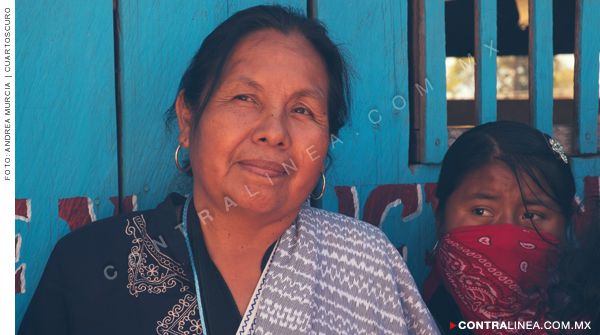
Marichuy, in Zapatista Territory
May 7, 2019
The deployment of the National Guard throughout the country, ordered by López Obrador, has as its principle objective assuring the imposition of megaprojects and the subjection of the peoples that resist, points out the spokeswoman of the Indigenous Government Council, María de Jesús Patricio. The peoples will give their lives, if necessary, but will not give up, she warns.
By: Zósimo Camacho
Abasolo, Guanajuato, Mexico
No president prior to Andrés Manuel López Obrador ordered a military deployment throughout the country like the one that has now been put into effect. The nations, tribes, peoples and communities glued together in the National Indigenous Congress (Congreso Nacional Indígena, CNI) are clear. They consider that the new government acquired compromises with big capital that it cannot avoid, among them the Maya Train, the Trans-Isthmus Corridor and the Morelos Integral Plan. The new administration will be obliged to impose these “deadly megaprojects” at any cost.
María de Jesús Patricio Martínez, a traditional Nahua doctor, a native of the Tuxpan, Jalisco community, is the spokeswoman for the Indigenous Government Council (Consejo Indígena de Gobierno, CIG), an initiative of the CNI to construct a government for Mexico, “from below and to the left.”
While the arrival of a supposed leftist to the Presidency of the Republic, with Andrés Manuel López Obrador, “confused many indigenous brothers” –as María de Jesús recognizes–, it’s also true that the CNI grew like it never had before. Today it has a presence in 25 states of the Republic, in 60 peoples, tribes and nations and in 89 indigenous regions with hundreds of communities.
The CNI, openly anticapitalist, is one of the frontal oppositions against the new government from the left. In a prominent way, the support base communities of the Zapatista National Liberation Army (Ejército Zapatista de Liberación Nacional, EZLN) are founding members of the organization.
The voice of the Indigenous Government Council is heard sweet, slow, clear and simple. There is no stridency, affectation of tone or pompousness. But she is clear, coherent and unequivocal. She receives Contralínea in a pause in the awe-inspiring tour that she makes through the communities most separated from the country’s metropolis. A tour without cameras, microphones or communications media, which has not stopped since she was named spokeswoman and candidate of the indigenous peoples to the Presidency of the Republic for the last electoral process.
The indigenous peoples “don’t see the change that was announced,” María de Jesús points out, who her compañeros of struggle affectionately call Marichuy and, her closest circle, simply Chuy.
“We see that it is the same thing that previous governments have left. Everything that was announced that was going to be changed, like first the poor and then the rich, is not true. We are seeing that everything is a simulation; that there are agreements that [López Obrador] has to continue.”
Small, with skin the color of the earth and 55 years of age, she considers that the administration of Andrés Manuel López Obrador is not a rupture with the Mexican political system, but rather one of continuity. She reproaches the misrepresentation that the new government employs with some of the principles of the indigenous and Zapatista struggle and, especially, the simulation of indigenous consultations for imposing a decision previously made.
María de Jesús refers to the “approval” of three projects: the Maya Train, the Trans-Isthmus Corridor and the Morelos Integral Plan. Referendums (“consultas”) are organized for those three that don’t even have the characteristics of Convention 169 of the International Labor Organization (ILO), which obliges governments to hold free and informed consultations, prior to making any decision that would involve the territories of the original communities and that attempt against their cultures.
“Then we don’t see change. We are seeing continuity. We are seeing that it is the same and, perhaps, a little worse because the forms that they are using are some forms that we have use, and that they are using against our peoples.”
—Like which ones?
—Some comments that talk about “to govern by obeying” or about that we are going to consult the communities. And it’s not true. They are spurious consultations. They are deceiving people, people who dreamed that a change was coming and that maybe now there would actually be a reality that would take the peoples into account, because we see that it doesn’t no. We have analyzed it in this [CNI] assembly and we feel that this situation is the same. It is disguised now as “the left,” but it is the same one that has already been working.
Faced with the López Obrador government, the response of the indigenous peoples “is clear,” says María de Jesús: “The peoples who have walked in the National Indigenous Congress are going to continue organizing. We are going to continue resisting. We are going to continue preventing them from ending life, with the existence of our communities, from continuing to finish off our territory, from continuing to killing off the forests, with our own forms of organizing. And then, well, the Resistencia will follow.”
But also, she assures, they see clearly the government’s “response” to this resistance. She cites the assassination of “our compañero Samir [Flores],” which occurred last February 20 after he stated his community’s opposition to the Morelos Integral Plan, now promoted by the López Obrador administration.
Another two murders would occur after the interview: those of the Nahua councilor from the Indigenous Government Council, José Lucio Bartolo Faustino, and the CNI delegate Modesto Verales Sebastián. Both are from indigenous communities in Guerrero.
But, “the communities are going to continue organizing –María de Jesús reiterates–; they are going to continue resisting, our brothers of the Ejército Zapatista National Liberation Army were clear. They are part of the National Indigenous Congress. And they were clear and said: the Maya Train is not going to pass through here.”
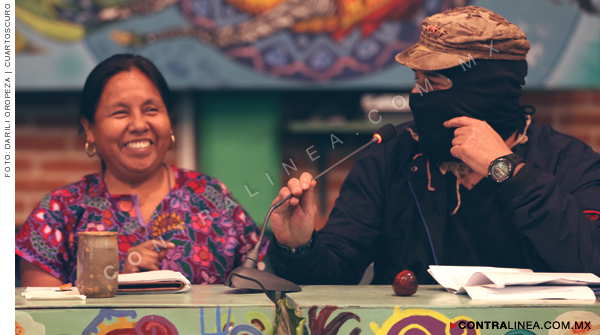
And given the efforts of the federal government and the state governments, “there is nothing left than to resist, to continue opposing these megaprojects that are death projects and that only benefit the one that has money, capital. It’s only going to bring the communities destruction, dispossession, poisoning of lands, more poverty, division and confrontation. And maybe that’s why the militarization is coming into the communities: to impose those megaprojects.”
—Is there the capacity to resist? –the reporter asks her–. López Obrador always wields that he won with 30 million votes. And, according to the polls, he maintains very high approval ratings, above 70 percent.
—The capacity is clear. It’s been more than 500 years and the peoples are still resisting, despite the fact that throughout that time they have been massacred, divided, all the evil that comes from above… But the peoples continue existing. It is a sign, then, that in the communities there is that ability. Why? It’s because it is something collective. It is not about a person, they are complete communities where they decide what is done with the community. They are the guardians of that sacred territory, which is given sacred value, not a peso value. So, there are the communities. Yes there is capacity because they are complete communities and they are going to continue resisting until the ultimate consequences.
As the most urgent matters for the CNI’s attention, she points to four megaprojects that the federal government promotes at this time and that, upon concretion, would imply the amputation of indigenous territories: the Maya Train (in the five states of the Yucatán Peninsula), the Trans-Isthmus Corridor (from the Oaxacan coast to the coast of Veracruz); the installation of wind farms and hydroelectric dams in Oaxaca and Puebla, and the Morelos Integral Plan, which implies the installation of a thermoelectric plant in that state and gas pipelines and other affectations also in Puebla and Tlaxcala.
“We see it as a danger and a form of direct aggression against the peoples who are going to be affected by the implementation of these megaprojects.”
—With the National Guard there will be a military deployment like never before seen in the country. Is there a risk of some kind of confrontation with the indigenous communities?
—There has always been that protest of the communities [with militarization]. It’s because what the soldiers have done in the communities is simply to arrive and repress; they rape the women, they rob… It has not brought benefits. So, what is expected with this National Guard, which is the militarization of all the communities, is that they will work to implement the megaprojects. What these [soldiers] are going to do is serve the master; they are not going to serve the community. It’s clear. We have seen it. We have experienced it. Since he arrives [the president] we are seeing that the word that he said and pledged is not being fulfilled, which is expected with what he wants to develop through the Guard. What we believe is that he is going to militarize in order to ensure the dispossession of the communities.
—After having taken possession in the National Palace, López Obrador made a supposed indigenous ceremony in which he received a staff of command. Was division generated in the communities or within the National Indigenous Congress?
—There was a confusion of some communities, or members, of some indigenous brothers that considered: “Well, perhaps there’s really going to be that change that they are telling us.” Yes there were some who left with the idea that the change already took place: “What are we doing here, let’s go there.” Others, well, grabbed the leaders, which is the way the government has been acting: to grab some leaders who perhaps may not be very clear and who don’t know what this brings. Then, well it’s normal. Always in these processes, in this journey of an organization from below, there are always going to be people who leave with the idea that help will come from the power. And it’s not true, because already being there, well you already have a boss and now they are going to give you orders about what you must do. Then yes, it affected a few, but we believe that those of us who are and continue, we are the ones who have clarity that only organization and being firm in our communities, about what we want, is what will make us move forward.
But, on the other hand, since the beginning of the tour through the indigenous communities more communities have been adding themselves to the CNI. María de Jesús Patricio points out that it was always clear that: “this journey was a call.” It never had collecting votes for the last electoral process as its main objective. “A principle was to denounce all the la problems that exist in the villages. And that’s why our idea was to arrive in all the communities, especially the most distant ones and those that had not been in the National Indigenous Congress.”
She points out that the purpose was always to listen to them and to make them aware of what the CNI consists: “Inviting them to the fact that we had to get organized in the face of all that: the dispossession that is taking place; and that we must unite to, together, stop precisely all this dispossession that capitalism is causing.”
Marichuy visited 29 states on that first tour. She went to towns that were mostly indigenous and that had no relationship to the CNI. That tour was interrupted after an accident in Baja California, in which she was injured together with other indigenous councilors and in which the activist Eloísa Vega died. Days before, in Michoacán, an armed group had intercepted and intimidated the caravan in which she was traveling. In addition, the collection of signatures required by the National Electoral Institute (INE, its initials in Spanish) so that the spokeswoman of the Indigenous Government Council could appear on the electoral ballot advanced slowly. The foregoing because in the majority of the indigenous communities visited there were no voting credentials or smart phones or Internet coverage for “capturing” the signatures.
It was not a defeat at all, María de Jesús points out. “It was a win for us to have visited sister communities that we would never have visited if we didn’t take that initiative, to go and tour the country with this proposal, which was clear to us: not so much about looking above but rather about listening to the people below, making that problem visible and to invite that we have to organize because it is the only thing that can stop all this dispossession.”
—In all of the country’s history the CNI is the organization that has assembled the largest number of indigenous communities. Which peoples lack incorporating?
—Well it has always taken us a little more work with the indigenous brothers that are in Hidalgo, San Luis Potosí and Veracruz, who we consider are important peoples. All that part, which is where they are generally more repressed, dispossessed and which we consider it important that they walk together with us. A few have come close and we believe that it is a first initiative of walking. The most important thing is that they are the engine over there in those regions so that they can join and walk together with us, because our struggle is at the national level, it is not for just a few, but rather for everyone: as our Chiapas brothers have said. We believe that that is our struggle: to integrate the majority of our peoples of Mexico. Let’s walk, because only together will we stop this. We are brothers although we are in different regions. We are brothers and we have that commitment of caring for what our ancestors have left to us to be left to those who come after us.
—How far does the resistance reach? How far to say: no longer?
—No, our position is clear for me. To reach to where our ancestors give us life. That’s where we are going to reach. There is a big commitment, we have said, and we must follow it while we are alive. If we don’t fulfill what we say, we would also be just simulating. We are clear, convinced, that our struggle is going to be as long as we are alive. And those that come afterwards will see that example that they must follow, to where they must fight. Because this dispossession is not going to stop right now and we have to be prepared for whatever.
About the next steps that the CNI and the Indigenous Government Council will take, María de Jesús points out that both bodies will seek to incorporate more communities.
With respect to the Council: “the principal task is to take the word that we gave, that we committed and that we said that we were going to continue working on behalf of our peoples. So it is continuing in that, in the articulation of the other communities and to continue supporting each other to make us strong; to make us strong in order to stop all this dispossession and all the evil that is coming to our peoples.”
For its part, the CNI will continue: “integrating new indigenous brothers of other peoples and continue to strengthen these struggles in the regions where we see that there is more fear of being more repressed and even exterminated. That is our struggle. That is our work. It was said in the Assembly that we are going to continue strengthening this space as the house of everyone. There we are going to continue to strengthen it from the communities, from the regions and at the national level. In that way we would be strengthening the National Indigenous Congress.
—About the Indigenous Government Council, it had been commented that it would not be only indigenous or only national –it is asked.
—It is still being analyzed how to do this, because it’s not that the CNI decides or that the networks decide, but rather that it must be questioned and consulted, and among everyone see what the way is. Yes, of course, it is thought that it must not only be the Indigenous Government Council, but rather that it has to have more forces, that it is broader, where it brings together other brothers who also struggle and who feel part of this struggle. That was clear after the collecting of signatures ended. We saw that there were many people who are willing to continue working and to continue strengthening from where they are. That’s why it is believed that the Indigenous Government Council could be expanded and more would fit there: other brothers that organize from the cities, from organizations and who also feel the need to be articulating those forces to jointly be able to make a face all this dispossession of the countryside and the city, because the workers are also suffering those dispossessions and I believe that way we would be congruent with what we said on that walk, that this struggle is a struggle of all the workers: of the countryside and of the city.
As spokeswoman for the Indigenous Government Council, María de Jesús Martínez Patricio has some words for the president of the Republic, Andrés Manuel López Obrador: “Respect the communities: their way of life! Stop imposing other external forms of protection for the capitalists. First, listen to the voice of two, three and of the entire communities, to everything they say. Don’t just listen to what’s convenient for you; don’t just listen to those who come to dispossess. Listen to those who have been in the communities for years, who are caring for them and who love the land.”
Marichuy points out that: “respecting those collectives, those communities, those territories, those waters, those forests, is respecting the life of everyone, because they don’t belong only to the communities, but rather they belong to everyone.”
She doesn’t hesitate, she barely stops to demand: “Respect for the communities! Stop plundering our territories, because the communities are going to continue resisting.”
————————————————————
Originally Published in Spanish by Contralinea
Tuesday, May 7, 2019
Re-Published with English interpretation by the Chiapas Support Committee
The CRAC-PF goes after the killers from Los Ardillos
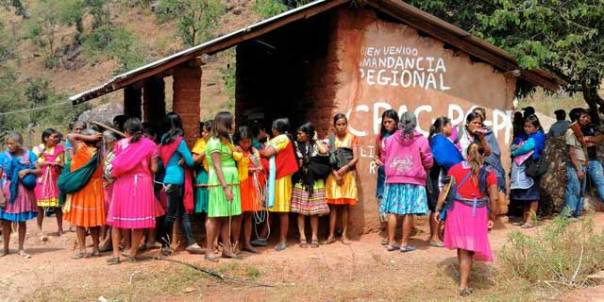
Members of the Regional Coordinator of Community Authorities – Founding Peoples (CRAC-PF) guard the headquarters of that organization in the community of Rincón de Chautla, municipality of Chilapa de Álvarez, Guerrero, where they’re holding three subjects accused of having delivered two of their compañeros that were murdered to a criminal group. Photo: Sergio Ocampo
By: Sergio Ocampo
Chilapa de Álvarez, Guerrero
Members of the Regional Coordinator of Community Authorities-Founding Peoples (CRAC-PF, its initials in Spanish) are going to capture 100 hit men at the service of the Los Ardillos criminal group in at least 17 communities of that area of the Montaña Baja (Low Mountains), David Sánchez Luna, regional coordinator of that security system, announced.
He warned that they will not turn over the three people that they have been holding since May 25, among them a woman, who the CRAC-PF accuses of having turned Bertoldo Hilario Morales and Isaías Xantenco Ahuejote, the two community police agents that were found dead May 24, over to their executors.
One of them, he pointed out, is the nephew of Tranquilino Palatzin Tranquero, one of the leaders of the Paz y Justicia group, linked to Los Ardillos. “They are halcones at the orders of Tranquilino. One of the detainees told us that he no longer wants to return to his town because they are going to kill him. He also told us that that person charges 1,500 pesos to those who don’t attend his meetings.”
Sánchez Luna explained that: “they were detained for complicity and the state government has not pressured us to release them. That seems strange to us because a state police commander was traveling with Tranquilino and others in several trucks to Rincón de Chautla to get the detainees, but they couldn’t.”
On May 25, municipal authorities offered one million pesos to the residents of Xicotlán –where the murdered community police agents were from– to that they would release those held, who would later be moved to Rincón de Chautla.
He added that the three people held do community work and will stay 15 days in each one of the 17 communities in the region. “Only one of them belongs to Los Ardillos; the other two are accomplices, who traffic drugs. The assembly will decide on their release based upon their behavior.”
Sánchez Luna explained that the community police are ready to enter the Nahua towns of Tula, Zacapexco, Ayahualtempa, Paraíso de Tepila, Alcozacan, Xicotlán, San Jerónimo Palantla, Ahuixtla, Xochitempa and Ahuehueitec, among others, to detain lookouts and other members of organized crime.
He also said that the CRAC- PF would continue training the women and children learn how to defend themselves from the criminals and to detain their accomplices. In the communities of Rincón de Chautla, Ayahualtempa and Zacapexco women were already integrated into the community police.
In mid-May a group of children with apparent military training announced that they would defend themselves from criminal groups. A week later, several women did the same.
Interviewed in Rincón de Chautla, Sánchez Luna lamented that for the third time the attorney general of Guerrero, Jorge Zuriel de los Santos, had left them in the lurch, despite the fact that they were going to explain to him issues related to the insecurity and violence in the region.
He warned that as long as the three levels of government don’t arrest those responsible for the violence in Guerrero, the CRAC-PF will continue strengthening the community system.
———————————————————–
Originally Published in Spanish by La Jornada
Friday, May 31, 2019
https://www.jornada.com.mx/2019/05/31/estados/029n1est#
Re-Published with English interpretation by the Chiapas Support Committee
The Morelos “consulta” was not legal
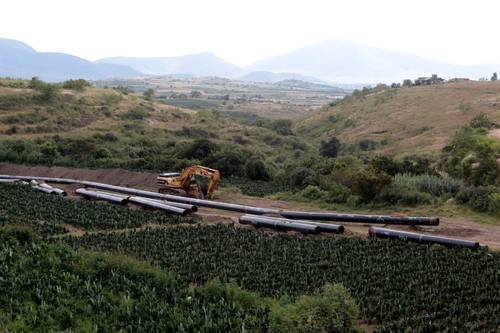
November 2018: Residents of Puebla communities stopped the installation of the Morelos gas pipeline. Members of the Peoples Front in Defense of Land and Water warned that they would continue with their struggle until the Morelos Integral Project is cancelled. Photo: José Castañares / La Jornada de Oriente
By:Yadira Llaven, La Jornada de Oriente
Puebla, Puebla
The first and second collegiate tribunals in administrative matters found in favor of eight communities of Puebla, Morelos and Tlaxcala that are opposed to the Morelos Integral Project (Proyecto Integral Morelos, PIM) and ordered the [lower court] judges to accept the protective order (amparo) requested last February against the citizen referendum (consulta) that the federal government carried out to resolve the viability of the PIM, given the possibility that their rights may have been violated. [1]
According to members of the Peoples Front in Defense of Land and Water (Frente de Pueblos en Defensa de la Tierra y el Agua), the act the communities complained about is President Andrés Manuel López Obrador’s instruction to make decisions about the project by means of a public referendum (consulta).
The previous Tuesday the federal tribunals resolved complaints 62/2019 and 55/2019 filed by the towns of Huexca, Jantetelco, Amayuca, Amilcingo, Santa María Zacatepec, San Damián Texoloc, San Jorge Tezoquipan and San Vicente Xiloxochitla against the dismissal of the amparos that they requested last February 18.
The case of guarantees, they said, was presented two days before the murder of the activist Samir Flores, in Huexca, Morelos. In that case they denounced the violation of indigenous peoples’ right to consultation and free determination about the functioning of a gas pipeline, a thermoelectric plant and an aqueduct as part of the PIM, which would affect more than 60 communities in the three states mentioned.
The first and second collegiate tribunals (higher courts) determined that: “the criteria issued by judges of the first and fourth district [lower courts] located in Puebla erred by dismissing amparos 199/2019 and 209/2019 and permitting the holding of the referendum, despite the fact that it did not comply with the law.”
Puebla’s lower court judges considered that the referendum (consulta) was not an authoritative act and that the peoples affected did not have a legitimate interest in the referendum or in the project.
“That lets us see a watchword of federal judges about denying access to justice to indigenous peoples affected by the PIM, and that no independence of powers exists in this new administration,” accused the Peoples Front.
It pointed out that the second collegiate tribunal determined that: “the merit consulta and its resulting approval by the majority of those polled open the door to the imminent concretion of the PIM, with which it is patent that the legal situation of the complainants would be unilaterally modified with respect to their right to special protection as indigenous peoples and communities.”
The magistrates recognized that: “the peoples must be guaranteed effective participation in administrative measures that can impact their environment or habitat, such as the construction of a thermoelectric plant, an aqueduct and a gas pipeline.”
In a communiqué, the aggrieved communities expressed their “deception” and “courage” and accused the federal government of “betraying” its promise to recognize the Accords of San Andrés Larráinzar and to respect indigenous peoples’ rights.
They said that the federal tribunals determined last Tuesday that the figure of the popular referendum convoked by the Executive “is not found legally regulated in national normative standards.”
They said that the tribunals also recognized that there was no consultation with the peoples affected for the purpose of obtaining their consent about the PIM that: “affects their right to self-determination and a free, prior, informed, good faith and culturally adequate consultation.”
The communities argued that: “it’s inequitable and unjust that the results of a general vote determine the decision of the authorities responsible for finishing the project and its functioning, as happened after the complaint was thrown out.”
They reiterated that the referendum did not comply with Convention 169 of the International Labor Organization (ILO) and asked that that the criteria of the second collegiate tribunal on the PIM set a precedent for confronting megaprojects like the Trans-Isthmus and Maya Trains.
[1] This article is based on a press release from the Peoples Front in Defense of Land and Water. The entire press release can be found on the website of the National Indigenous Congress (CNI):
——————————————————–
Originally Published in Spanish by La Jornada
Friday, May 17 2019
https://www.jornada.com.mx/2019/05/17/estados/025n1est
Re-Published with English interpretation by the Chiapas Support Committee
EZLN-CNI-CIG: Stop the narco-paramilitary war against the CIPOG-EZ!
Urgent Comunicado from the CNI-CIG and the EZLN
“Our struggle is not for power. Our struggle is to save Mexico.”
Today, with indignation and pain we denounce a new and artful crime against our compañeros of the Indigenous and Popular Council of Guerrero – Emiliano Zapata (CIPOG-EZ).
Around 1:30 pm on May 23, near Chilapa, Guerrero, our compañeros Bartolo Hilario Morales and Isaías Xanteco Ahuejote were deprived of their freedom. Both were members of the Community Police in the Nahua communities of Tula and Xicotlán, the first of them a comandante, both promoters of the CIPOG–EZ and members of the National Indigenous Congress (Congreso Nacional Indígena, CNI), who were found dead and dismembered yesterday, May 24.
This cunning crime is added to the recent murder of the compañeros Lucio Bartolo Faustino and Modesto Verales Sebastián, a CNI-CIG councilor and delegate, because of which we denounce the policy of terror that the narco-paramilitaries, with shameless help from the three levels of bad government, are implementing against the brothers of the CIPOG-EZ and all the indigenous territories of Mexico. In the present case the perpetrator of this terrible crime was the Peace and Justice Group (Grupo Paz y Justicia), linked to Los Ardillos, who count on the complicity of the Federal Army.
The indigenous peoples, nations, tribes and barrios are resisting not only the megaprojects with which the owners of the power appropriate nature and land, but also against death, fear and the desolation that their armed groups impose throughout the country. Although they have the t-shirt of Los Rojos, Los Ardillos or the repressive forces of the bad government, the power of money and ambition to profit based on the suffering of the peoples, makes them the very same. Constructing that peace and autonomy for the peoples of Chilapa and the region is the horizon for which our brothers murdered by neoliberal capitalism fight.
That’s why our compañeros continue struggling, because their seed germinates in the determination of the peoples, who together with our Mother Earth, don’t surrender, don’t sell out or give up in the battle to not disappear from history in the midst of total destruction. Their fight, their word and their determination will make it grow in the collective conscience of those of us who dream and struggle for a new world.
We demand that the repression against the CIPOG-EZ stop, justice for our brothers Bartolo Hilario Morales, Isaías Xanteco Ahuejote, Bartolo Faustino and Modesto Verales Sebastián, justice for the dignified peoples of Guerrero.
Attentively,
May 2019
For the full reconstitution of our peoples!
Never more un Mexico without us!
National Indigenous Congress
Indigenous Government Council
Zapatista National Liberation Army
2 More Indigenous leaders murdered in Guerrero!
COMMUNIQUÉ FROM THE INDIGENOUS and POPULAR COUNCIL OF GUERRERO – EMILIANO ZAPATA (CIPOG-EZ) ON THE RECENT MURDER OF OUR BROTHERS BARTOLO HILARIO MORALES AND ISAÍAS XANTECO AHUEJOTE
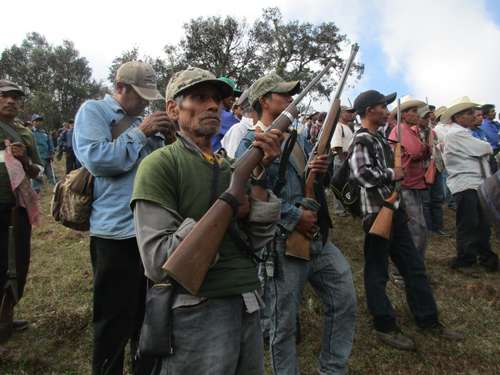
Members of the Regional Coordinator of Community Authorities – Peoples Founders (CRAC-PF) in a November 2018 assembly, in Rincón de Chautla, municipality of Chilapa de Álvarez, Guerrero.
Twenty days after the cowardly murder of our brothers Lucio Bartolo Faustino and Modesto Verales Sebastián, a crime that remains in complete impunity on the part of the three levels of government. With the pain and rage that invade the hearts of the Nahua peoples of the low mountains of the state of Guerrero, we make public the artful murder of our brothers Bartolo Hilario Morales and Isaías Xanteco Ahuejote. Both were indigenous Nahua and local promoters of the Indigenous and Popular Council of Guerrero–Emiliano Zapata (CIPOG-EZ). Those who consummated this atrocious murder are professionals of para-militarism and extrajudicial murder who are agreeable to taking lives. They denigrated and enraged them, dismembered and bagged the compañeros’ bodies, and with this vile act they thought that they could also denigrate their history, and denigrate their life. They were wrong.
Not only were they wrong, but also the dignity of their lives contrasts more and more with the cowardice of their murders. The peoples of the CIPOG-EZ and the CNI of Guerrero, Mexico have guarded the memory if the men and women who have given their lives in the struggle for the reconstitution of collective rights. So, we ask the dignified peoples of Mexico and the world to protect and grow the names, the history and the struggle of our brothers murdered for defending life; Bartolo Hilario Morales and Isaías Xanteco Ahuejote. Lucio Bartolo Faustino and Modesto Verales Sebastián.
The responsibility of los three levels of government, the federal government in charge of Andrés Manuel López Obrador, the State government of Héctor Astudillo Flores and the municipal government of Jesús Parra García, is complete. Each level of government has done nothing more than give continuity to impunity, passing the ball to one another, by saying that the problems are inherited from past governments, that is the PRI attitude that has submerged us in the blood bath that our country has become and doesn’t see any transformation that wants to change things. It seems that important changes only occur in the spheres above, below our lives continue without mattering to the powerful.
Different narco-paramilitary groups have operated in complicity with the Mexican State for more than 25 years in the Chilapa region and today is no exception. The state regime has attempted the disarticulation of our peoples again and again, and we have resisted the war of extermination for more than 500 years. Our crime has been defending our territory from the extraction of what they call natural resources and for us are sacred hills or springs of water and life. We fight to maintain the principle that our grandparents left us, called by us uses and customs, a world very different from the one the Mexican State has constituted and that doesn’t match our way of community government.
Our peoples are suffering a systemic violence in which they disappear or murder our women, children and men, and it would seem like nothing is happening. Everything remains in complete impunity because of this bad government, in which one of the state’s strategies is generating terror in the heart of our people. Using torture, psychological warfare, death threats and persecution against all the members that serve as promoters of community development.
As indigenous people we ask ourselves again and again: Why is there so much dehumanization? Why is human life no longer worth more? Why are some lives worth less than others? And it rather seems that they see those below as merchandise. We ask ourselves again and again: How would they, the powerful, the governments with more than 30 million votes, react if this violence happened to one of their relatives? Or perhaps disappearance, torture and vile murder are only reserved for us?
As a national indigenous movement we fight to reconstitute the social fabric of our peoples, we fight to re-establish our communities in peace, and we seek the recognition and reconstitution as indigenous peoples of our languages, our culture and the thinking of our peoples that is interwoven with Mother Earth.
On May 23, 2019 around 1:30 pm, our brothers Bartolo Hilario Morales and Isaías Xanteco Ahuejote disappeared near Chilapa de Álvarez. On May 24 in the morning we knew the terrible news, their dead bodies were found. Today we denounce it publicly and we ask the honest and dignified compañeros and compañeras of Mexico and the world: no matter how much they wanted to destroy their bodies, let’s embrace today their history of struggle, which is the history of struggle of the indigenous peoples of Mexico and the world.
We demand justice for our murdered brothers: Bartolo Hilario Morales and Isaías Xanteco Ahuejote, Lucio Bartolo Faustino and Modesto Verales Sebastián. That the pain that today besets the family members, friends and compañer@s of struggle, does not remain unpunished, or in oblivion!
FRATERNALLY:
Justice for Bartolo Hilario Morales and Isaías Xanteco Ahuejote, members of the CNI!
Justice for Lucio Bartolo Faustino and Modesto Verales Sebastián del CIPOG-EZ, ex member of the CIG and the CNI!
Justice for Gustavo Cruz Mendoza, murdered indigenous communicator of the CIPO-RFM!
Justicia para Samir Flores Soberanes, murdered indigenous communicator!
Stop the counterinsurgency war against the EZLN!
Freedom for Fidencio Aldama of the Yaqui tribe!
Never more a Mexico without us!
Indigenous and Popular Council of Guerrero – Emiliano Zapata (CIPOG-EZ)
Regions: Costa Chica, Coastal Mountains, High Mountains and Low Mountains of Guerrero
——————————-
Originally Published in Spanish by the Congreso Nacional Indígena
Saturday, May 25, 2019
Re-Published with English interpretation by the Chiapas Support Committee
The San Cristóbal-Palenque highway is back and so is the resistance
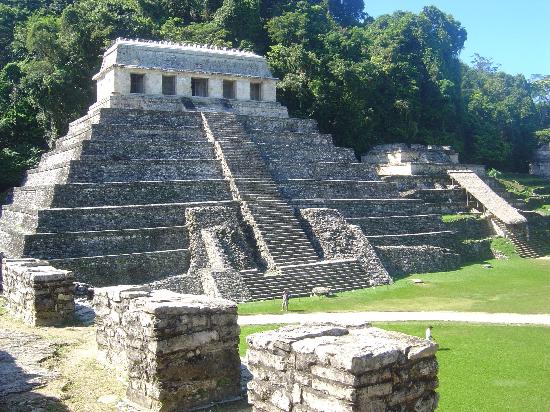
Temple of the Inscriptions, Palenque, Chiapas
By: Mary Ann Tenuto-Sánchez
The San Cristobal-Palenque highway is key to an elaborate tourism development plan, the Palenque Integral Center (CIP, its initials in Spanish), which includes a lush green jungle area in the northern zone of Chiapas, the Agua Azul Cascades, the Misol Ha waterfall and the magnificent archaeological site of Palenque. The highway faced a setback several years ago, perhaps causing some to think the government had abandoned plans for a superhighway and would just improve the existing highway connecting the colonial tourist mecca of San Cristóbal de las Casas to the archaeological site of Palenque and the city of Palenque. Recent news articles, however, indicate that rather than abandoning the highway, the government opted to re-route it through San Juan Cancuc. [1]
The San Cristóbal-Palenque highway and the Palenque Integral Center are part of a regional development plan for Mesoamerica, originally known as the Plan Puebla-Panamá (PPP). [2] The PPP included numerous infrastructure projects that prompted strong opposition from social, environmental and human rights organizations, as well as academics and organized indigenous communities. That led governments and planners to silence the most controversial projects contained in the plan and to re-name it the Mesoamerica Project. In Chiapas, at least up to now, the most controversial projects within the Mesoamerica Project have been the San Cristobal-Palenque highway and the Palenque Integral Center. They go together; the CIP needs the highway to facilitate tourism.
Residents of the areas affected by these projects have had two general concerns: 1) dispossession of the lands of indigenous communities of subsistence farmers through which the highway would pass and the effects on those communities and 2) the massive amount of tourism envisioned in the Palenque Integral Center. Perhaps the best articulation of why the Zapatista communities and other pro-Zapatista indigenous communities oppose and resist the superhighway and the Palenque Integral Center may be in the words of Miguel Vazquez Moreno, a Zapatista supporter from the San Sebastián Bachajón ejido, who was briefly a political prisoner as a result of resistance to the superhighway and the tourism megaproject.
“I am a native of the San Sebastián Bachajón ejido and I am part of the EZLN’s support base, an organization that defends its right to exercise autonomy and self-determination as indigenous peoples, its right to territory and to natural resources. They [the federal and state governments] want to impose neoliberal economic projects on our autonomous territory. As indigenous people, the land is our life, we eat from it, we work, our children grow and it is something sacred, therefore we consider that the land is not for sale but to work and care for. Our territory is rich in water, animals and natural resources. They want to make it into a ‘Chiapas Cancun’ by plundering the indigenous of our life, that is, the land, just so that foreign and national companies can become richer, as well as the government officials that benefit from these projects. They want to cross through our autonomous territory without respecting our rights. They want to impose these projects on indigenous peoples without giving importance to our word, and with discrimination they want to remove us from our lands for tourist purposes and only to benefit rich developers and the federal and state government, putting us aside because to them we give a bad appearance to those eco-tourist centers, being that we are original peoples, descendants of the peoples that have lived on these lands since before anything like an official government existed.” [3]
The San Cristóbal-Palenque highway would pass through small rural indigenous communities, both Zapatista and non-Zapatista, thus dispossessing each community of some of its land and, possibly, dividing those lands in two. It would also alter animal habitats, endanger animal species and cause air pollution from the giant tourist buses. This is not a highway to facilitate local traffic between one town and the next. It’s a superhighway (toll road) to facilitate international mega-tourism arriving by both airplane and cruise ship. Cruise ships dock at Puerto Chiapas and from there passengers can then board giant tourist buses to visit the world-famous Palenque archaeological site and other sites, such as the Agua Azul Cascades, within the mega tourism project that the CIP envisions. Imagine the volume of tourism a completed San Cristóbal-Palenque superhighway and CIP would bring when combined with a completed Maya Train station in Palenque bringing tourists to Palenque from Cancun! It would transform life and culture, as we now know it in that area of Chiapas. Like Miguel Vazquez Moreno above, some have dubbed the CIP “the new Cancun.” [4]
The CIP contains an elaborate plan to convert the area surrounding the Agua Azul Cascades into a “world-class resort destination.” The government plan includes a Boutique Hotel, a European 5-Star Hotel, a Conference Center with golf course, and a Lodge overlooking the waterfall at Bolom Ajaw, a Zapatista community on land reclaimed in the 1994 uprising. Luxury tourists would have to helicopter into the Lodge at Bolom Ajaw due to its remoteness, so plans for the lodge include a helipad!

Agua Azul Cascades
The Agua Azul area has been a flashpoint of conflict between pro-government communities (in favor of luxury tourist development because the government has promised them a cut of the income) and pro-Zapatista communities (opposed to development based on luxury tourism). The controversial project proposed for Agua Azul, of which a superhighway is key to attracting large numbers of tourists, has already generated three pro-Zapatista deaths (one in Mitzitón and 2 in San Sebastián Bachajón), numerous violent conflicts, serious bodily injuries, political prisoners, death threats, torture and the death of at least one government supporter in Bolom Ajaw. The San Sebastián Bachajón ejido includes the entryway to the Agua Azul Cascades.
The government argues that these tourist projects will bring jobs and income into a very poor state, while Zapatista supporters, their sympathizers and allies argue that the volume of tourism envisioned will damage the environment, their food security, their autonomy and their way of life; that is, their culture. Government planners envision converting autonomous subsistence farmers, who believe that the land is sacred, into busboys, maids and bellhops.
The Los Llanos court decision
The Los Llanos ejido is located on the current highway to Palenque, close to where the new highway was originally supposed to start. It is across the highway from the Mitzitón ejido, near the intersection where the current highway to Palenque forks off from the Pan American Highway. In January 2014, the Los Llanos ejido filed for an injunction against the new superhighway crossing through their lands, based on their right to a prior, free and informed consultation (consulta) about the project. [5] The government had not followed the United Nations protocol for consulting with Los Llanos before starting construction. A temporary injunction against highway construction was in place while the case was pending. Two years later, in January 2016, the court granted an amparo (permanent injunction) to Los Llanos, ruling that the government failed to conduct the required consultation with the affected communities. [6] The court decision prevented construction of the superhighway, but only in the municipalities of San Cristóbal de las Casas and Huixtán, where Mitzitón and Los Llanos are located, leaving open the possibility of either re-routing the controversial superhighway or improving the existing highway.
Approximately 9 months after Los Llanos filed its court case, opposition to the San Cristóbal-Palenque superhighway emerged again and it was from La Candelaria ejido in the Chiapas municipality of San Juan Chamula. More than 2,000 representatives, including people of faith belonging to Pueblo Creyente, attended this meeting at La Candelaria’s sacred site of Laguna Suyul and vowed to resist the highway. [7] The clear implication of this important meeting was that government planners intended to re-route the superhighway to begin in San Juan Chamula, a municipality bordering on San Cristóbal de las Casas, and pass close to the sacred Laguna Suyul site. A map of the route is shown in the article. The recent news article about resistance in San Juan Cancuc means that the new route remains pretty much the same as that shown at the time of the La Candelaria meeting and would pass through San Juan Cancuc over the mountains in the direction of the Agua Azul Cascades. Many of the municipalities and organizations represented in La Candelaria have joined San Juan Cancuc in resisting the new route for the superhighway. They issued a statement as members of the Movement in Defense of Life and Territory (Modevite). [8] The list of municipalities signing the statement is a good indicator of the superhighway’s new route and the municipalities that would be affected.
——————————————————
[2] https://chiapas-support.org/2014/03/25/the-plan-puebla-panama-is-changing-chiapas/
[3] Chiapas Update, August 2009, pp. 3-4
[4] https://expansion.mx/obras/pulso-de-la-construccion/chiapas-se-perfila-como-el-nuevo-cancun
[7] https://chiapas-support.org/2014/09/22/opposition-to-chiapas-super-highway/
 Chiapas Support Committee