Chiapas Support Committee
Home of the Compañero Manuel blog on zapatistas & mexico
Capitalism, War and Counterinsurgency in Chiapas II

Sup Marcos speaks during a storm in Ixmiquilpan, Hidalgo during the March of the Color of the Earth on February 28, 2001. Photo: La Jornada.
By: Gaspar Morquecho
Wars come from afar
Some 18 years ago, in June 1997 –when the Moño Colorado [1] was very popular and Zedillo was governing the country–, the Zapatista rebel chief presented us: “7 pieces to draw, color, cut out and try to arm, together with others, the global puzzle;” in other words, the 7 easy pieces of the global puzzle. The pieces are: 1) the concentration of wealth and the distribution of poverty; 2) the globalization of exploitation; 3) migration, the nomadic nightmare; 4) financial globalization and the globalization of corruption and crime; 5) the legitimate violence of an illegitimate power (?); 6) mega-politics and the dwarves; and 7) the pockets of resistance.
The essay is not misspent. It’s certain that when the guerrilla chief proposes and polishes it, putting pencil to paper, it comes out one of his best. Without a doubt, 7 pieces will have a special place once his selected works are published.
Before moving on to the construction of each of the 7 Pieces, the rebel Subcomandante warned: “Modern globalization, neoliberalism as a world system, should be understood as a new war of conquest of territories. (…) The end of the ‘Cold War’ brought with it a new framework of international relations in which the new fight for those new markets and territories produced a new world war, the Fourth. That obliged, as in all wars, a redefinition of the National States. (…) The global order returned to the old epochs of the conquests of America, Africa and Oceania. One wonders at this modernity that advances backwards, (…). In the world of the Cold Postwar vast territories, riches and, above all, qualified workforce, await a new master…”
To cement the concept of World War IV, the guerrilla, argued: “From the end of World War II to 1992, 149 wars have been unleashed in the world. The result of 23 million deaths leaves no room for doubt about the intensity of this World War III.” About that war “between Capitalism and Socialism,” the Zapatista emphasized its characteristics and to the winner: “World War III demonstrated the goodness of ‘total war’ (everywhere and in all forms) for the winner: capitalism.”
World War IV, the war for markets, arrived accompanied by an arsenal of “financial bombs” which, with their expansive waves, “reorganize and reorder that which attacks and remake it as a piece inside of the puzzle of economic globalization.” World War IV constructs a “megalopolis” in extensive geographies of the Earthly Globe: The European Union, the North American Free Trade Agreement. Other “megalopolises” have emerged in North Africa, in South Africa, in the Near East, in the Black Sea, in the Asian Pacific; “financial bombs explode all over the planet and re-conquer territories.” In that process: “Neoliberalism operates as DESTRUCTION / DEPOBULATION on the one hand, and RECONSTRUCTION / RE-ORDERING on the other, of regions and of nations for opening new markets and modernizing the existing ones.”
If anyone learned the lesson of World War III, it was the leaders of China and Vietnam. They had been witnesses to the “political, economic and social breakup of Eastern Europe and the USSR.” The Asian Giant had inherited the social and productive organization of Mao’s China. That country with enormous territory, resources and labor force, opened its borders to receive the massive arrival of capital. Its economy had extraordinary growth and in different geographies we can read: Made in China. That country was profiled to become the world’s largest economy. For its part, Vietnam, a small socialist country with an historic conflict with China and vulnerable in the region, opted for alliance with the United States and its leaders changed the model of which Uncle Ho dreamed.
It can be important to emphasize that when the Zapatista guerrilla wrote 7 Pieces, “5 billion human beings inhabited Planet Earth.” On it, only 500 million people live with comforts while 4.5 billion suffer poverty and try to survive.” In 2015, more than 7 billion people live on Planet Earth. Capital and poverty continue being concentrated in opposite poles. World War IV continues its course. In order to reach the “re-conquest of territories (…) the financial centers bring forward a triple criminal and brutal strategy: they proliferate ‘regional wars’ and ‘internal conflicts,’ capital follows routes of atypical accumulation, and mobilizes large masses of workers.” (…) “World War IV, with its process of destruction / de-population and reconstruction / reordering, provokes the displacement of millions of people.” In 1995 the number of displaced persons was more than 27 million; in 2005 the number came to 38 million. In 2015, the number of displaced or persons or refugees in the word add up to 60 million. Of course, 99 out of every 100 have access to a mobile telephone.
And why all of the above?
It turns out that 18 years after the 7 Pieces from the Zapatista rebel, the United States, the first economic and military power, stirred the waters of the world markets and in the first days of October headed the creation of the largest trade agreement on the planet: the Trans-Pacific Partnership (TPP). The Trade Ministers from 12 nations of the Pacific, Mexico among them, reached an agreement that “would reduce tariffs and establish common standards. With the TPP they propose stimulating trade between the United States, Canada, Mexico, Chile, Peru, Australia, New Zealand, Japan, Brunei, Malaysia, Singapore and Vietnam.
Capitalism reiterated its strength and capacity for strategic planning. Its engineers worked at least 5 years on the design and construction of the TPP. The countries involved took two years so that their respective Congresses may approve it or not. It’ very likely that the impact of the recent financial bombs and the fall of oil prices that unhinged economies in the entire world in 2015, may have created the best of scenarios so that the TPP would come to fruition.
Mexico and Chiapas in the World War IV theatre of operations
The FTA was signed with Carlos Salinas. With Salinas-Peña Nieto, Mexico participates in the TPP. Chronologically, in 2014 Salinas-Peña Nieto strengthened the Pacific Alliance in which it participates with Peru and Chile. In September 2015, Peña Nieto announced the creation of Special Economic Zones that he later located in the port of Lázaro Cárdenas on the border of Michoacán and Guerrero; in Oaxaca, one of the states where the Inter-Oceanic Industrial Corridor is constructed; and in Puerto Madero, Chiapas. On October 5, in Atlanta, it was all consummated. A dozen ministers from the Pacific nations reached the trade agreement.
The president of the United States, Barack Obama, reacted immediately and expressed: “We won’t let countries like China write las rules of the global economy.” A message to the rest of its allies: Brazil, Russia, India and South Africa, in other words, to the BRICS trade block. In Mexico, Salinas-Peña Nieto celebrated the conclusion of the TPP negotiations, by classifying it as a “vanguard agreement” with which Mexico strengthens its trade integration with the world and reiterated the promise of the last three decades: “The Trans-Pacific Partnership will translate into greater opportunities for investment and well-paid employment for Mexicans.”
The other wars in Mexico and Chiapas
A little more than three decades have passed since the governments of Mexico have brought the national economy to navigate in the turbulent waters of World War IV. Independence and Sovereignty are what least remain. If the privatization process started with Miguel de la Madrid and Carlos Salinas, deregulation of the economy and the end of agrarian distribution with Zedillo, Fox and Calderón delivered part of the country to the mining companies. Obeying the Yankees, Calderón established the “drug war” that has left a result of more than 100,000 dead, more than 20,000 disappeared, thousands of orphans and very probably more than a million displaced. The war continues with Salinas-Peña Nieto; a war that covers at least 80% of the Mexican geography and that continues filling thousands of Mexican families with grief or in mourning clothes.
In Chiapas, the counterinsurgency war against the Zapatista peoples and communities followed the violent peace before 1994. The armed forces have occupied the territory. The federal government has responded to each one of their peaceful political and civilian initiatives with a provocation and maintains certain kinds of “internal conflicts:” agrarian policies in different regions of the state; with mining companies in the border zone; wind projects, environmental projects, because of discrimination and because of violations of human rights and of the rights of indigenous peoples.
In the course of the war, Salinas-Peña Nieto’s visits to Chiapas have been frequent: In February 2013, in Las Margaritas he launched the Crusade against Hunger. On February 13, 2014, he inaugurated the Palenque International Airport and re-launched the San Cristóbal-Palenque Superhighway project. The Zapatista Galeano was murdered in May. That crime postponed the EZLN’s programmed events for one year. On July 8, in Catazajá, he broached the theme of immigration. With Pérez Molina, president of Guatemala, he put into effect the Secure Pass program. On August 8, in San Juan Chamula, he affirmed that with the structural reforms Mexico would have a better platform to grow economically. On December 2 in Cintalapa, he celebrated the start of his third year of government and promised 1.8 billion pesos more to Oaxaca, Chiapas and Guerrero.
On March 11, the Secretary of National Defense announced the construction of a new military barracks in Chicomuselo, Chiapas. On March 24, 2015, Salinas-Peña Nieto announced that they would begin actions in Chiapas for the development of Southern Mexico and put into effect a program to impel employment. On August 11, International Indigenous Peoples Day, he announces that communities of Chiapas will enter into the Special Economic Zones Program to create more jobs and generate productive investment in them. On August 29, the Chiapas government released two of the Tojolabal Indians implicated in the death of the Zapatista Galeano. On September 29, 2015, Salinas-Peña Nieto announced in Tapachula, Chiapas, the creation of Special Economic Zones in the indigenous communities of Chiapas with investment from private capital: “We must move from welfare, which has been insufficient and has only permitted us to mitigate poverty, to what we really seek, which is inclusive growth.” In that way, the capitalist plus is added to the expense for social control.
Without a doubt, the Salinas-Peña Nieto War is directed at the “recuperation of lost spaces.” The autonomy of the indigenous Zapatista peoples in Chiapas is another of their military-political objectives. It’s about crushing the “pockets of resistance.” Nevertheless, the plans for the War Front on the Southern Border are the greatest threat in the region.
———————–
[1]. El Moño Colorado translates into English as The Red Topknot – It’s the name of a song that was very popular in the early days of the EZLN and played over and over again at the 1st Gathering Against Neoliberalism and For Humanity in 1996.
—————————————————————–
Originally Published in Spanish by Pozol Colectivo
Translation: Chiapas Support Committee
Thursday, October 8, 2015
En español: http://www.pozol.org/?p=11372
The second level of the Escuelita Zapatista
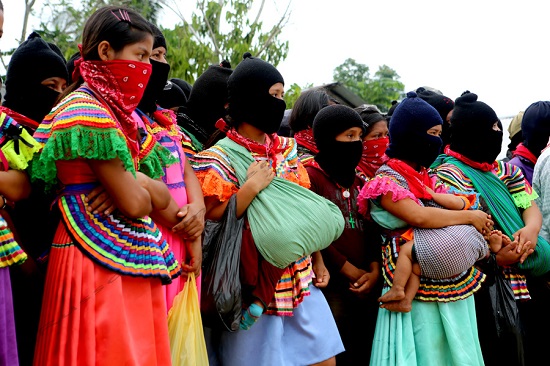
Zapatista youth and women form much of the current EZLN support base. This photo is from La Realidad during the homage to fallen Compañero Galeano – killed in a paramilitary attack in La Realidad on May 2, 2014.
By: Gilberto López y Rivas/I
On October 3 the time period ended for sending in the six questions that each second level student of the Escuelita Zapatista (Little School) must send in order to be evaluated on their performance and, in case of being approved, passing to the next level until eventually completing six. For that, the students must study Chapter 1 of the book Critical thought versus the capitalist hydra, as well as watching a video of a little more than three hours long, in which the genealogy and current characteristics of the EZLN’s resistance and rebellion are shown, in the voice of around 30 of its local “responsables,” [1] men and women, coming from different autonomous municipalities within the five Caracoles where the Good Government Juntas are located: La Realidad, Oventic, La Garrucha, Morelia and Roberto Barrios.
From the study of Chapter 1 what stands out are the participations of the current EZLN spokesperson, Subcomandante Insurgente Moisés, who in the theme of Political Economy is recapitulating how the communities lived 30 years ago, how those who are not organized as Zapatistas live and how the same Zapatistas live now. Before the arrival of the EZLN in 1983, the indigenous of Chiapas did not exist for the capitalist system; they were the abandoned by the governments and survived on Mother Earth. They resisted domination by the landowners, who unlawfully were retaining the best lands, protected by their armed forces, which were called guardias blancas. [2] There were no roads, clinics or hospitals, programs or grants then. With time, it wasn’t enough for them (the landowners) to have the best lands, now they wanted the mountains, nature’s riches and, as a consequence, they organized dispossessions and evictions, because of which they reformed constitutional Article 27, whose intent is to privatize the ejidos, selling or renting Mother Earth. When the uprising happens in 1994, a counterinsurgency policy begins in order to avoid the expansion of Zapatismo. Those communities that let their ejidos be privatized by selling their land are in the streets, because they no longer have anywhere to grow their corn and beans, also remaining at the mercy of this policy. The use of the term partidistas (party members) characterizes this social sector that has fallen into the government’s trap, distinguishing clearly the non-antagonistic contradiction of Zapatismo with those who are even considered brothers and sisters; about the paramilitaries: “those are some sons of bitches!”
The Zapatistas recuperated Mother Earth beginning by organizing collectively, combining different forms of agrarian work at the town, region and municipal level, and by recognizing failed attempts and errors. He warns that we must not idealize the Zapatistas, thinking that when they say clean, everything is clean. The trick is to be organized and to distinguish that it’s one thing to say it and another to do it. They discovered resistance in the various forms of doing collective work reacting to those who had been sent from the government to watch over them, like the teachers, who were expelled from the zone, or coming to the conclusion that they wouldn’t receive anything from the bad government, which, in turn, conditioned the start of a large quantity of tasks in different ambits of the land’s exploitation, production, trade, health and education that were giving sustainability to the autonomous Zapatista process versus dependency, loss of identity, drug addiction and subjection of the party members.In this way Sub Moisés synthesizes the resistance that must be nourished from generation to generation, if one doesn’t want the exploiters to come back: “One of the bases of what constitutes our Zapatista economic resistance, is Mother Earth. We don’t have those houses, cement blocks and all that stuff the bad government gives, but we do have education; and our practice is that the peoples are the ones that command and the governments obey… we don’t pay for electricity water, or land ownership, nothing. But we also receive nothing from the system… And that is our way of being and that’s how we are going to continue working, struggling, and we will die that way if it’s necessary, defending what we are now.”
The Zapatista economy responds to the needs of the resistance and to the counterinsurgency strategy. They handle money only occasionally, like when they have to pay for gasoline. Everything is done starting with political and ideological work, and with much explanation. Sub Moisés gives the example of education, where the teacher with collective work is working his milpa, his bean field, his pasture and that way he can have his little payment. The thing is that no one remains without working collectively for the struggle, for autonomy, and for that the towns, the regions, the autonomous municipalities and the zones are in agreement as to how they want to work. The Zapatista economy has its banks, whose profits also are going to the autonomy movement. Loans are made for emergencies and the funds are made up of contributions from the support bases. He clarified how there were non-governmental organizations (NGOs) that cloaked themselves in the Zapatista struggle and obtained funds to pay for their bureaucracy, in the words of Sub Moisés: “Then from the shoulders of those who are struggling because of injustice and inequality, and misery and everything else, they still hang others from there. How smart we are, right?”
Operations in the rebel clinics are paid for from the rebel economy, even for the partisans, at prices much lower than those of the hospital market. All that is watched over thoroughly, given that it’s the work and sweat of the people; therefore, they demand that their authorities render accounts. Collective work is not idealized and with a great sense of humor the EZLN’s spokesperson comments about those who are smoking their cigarette or smoothing their machete a lot, in order to pass time, in other words, to play tricks. But to these problems, the funny thing is that: “We didn’t stop. We are very stubborn; we are very foolish. We didn’t abandon it. We looked for a solution, counseling, giving clarifications, explanations, well, and that’s how we are going to continue.”
Translator’s Notes:
[1] “responsable” translates into “the one responsible” for something. One of the questions a Chiapas Support Committee member sent in before the October deadline was: for who/what are they responsible?
[2] “guardias blancas” translates as “white guards.” They were the landowners’ private security forces, often local police moonlighting.
—————————————————————
Originally Published in Spanish by La Jornada
Translation: Chiapas Support Committee
Friday, October 9, 2015
En español: http://www.jornada.unam.mx/2015/10/09/opinion/022a1pol
UN: Over 150,000 dead in Mexico Drug War
UN: OVER 150,000 PEOPLE MURDERED IN MEXICO SINCE DECEMBER 2006
[It is doubtful that anyone, including the UN, really knows the number of dead in Mexico. There are different estimates. The federal government hides its dead and the local agencies in Mexico that keep statistics on murders don’t have accurate counts. However, what’s interesting in this article, other than a higher estimate of drug war deaths, is that multilateral organizations have Mexico’s human rights abuses under review. This is front page news in La Jornada. The question is: will anything change? Ed.]
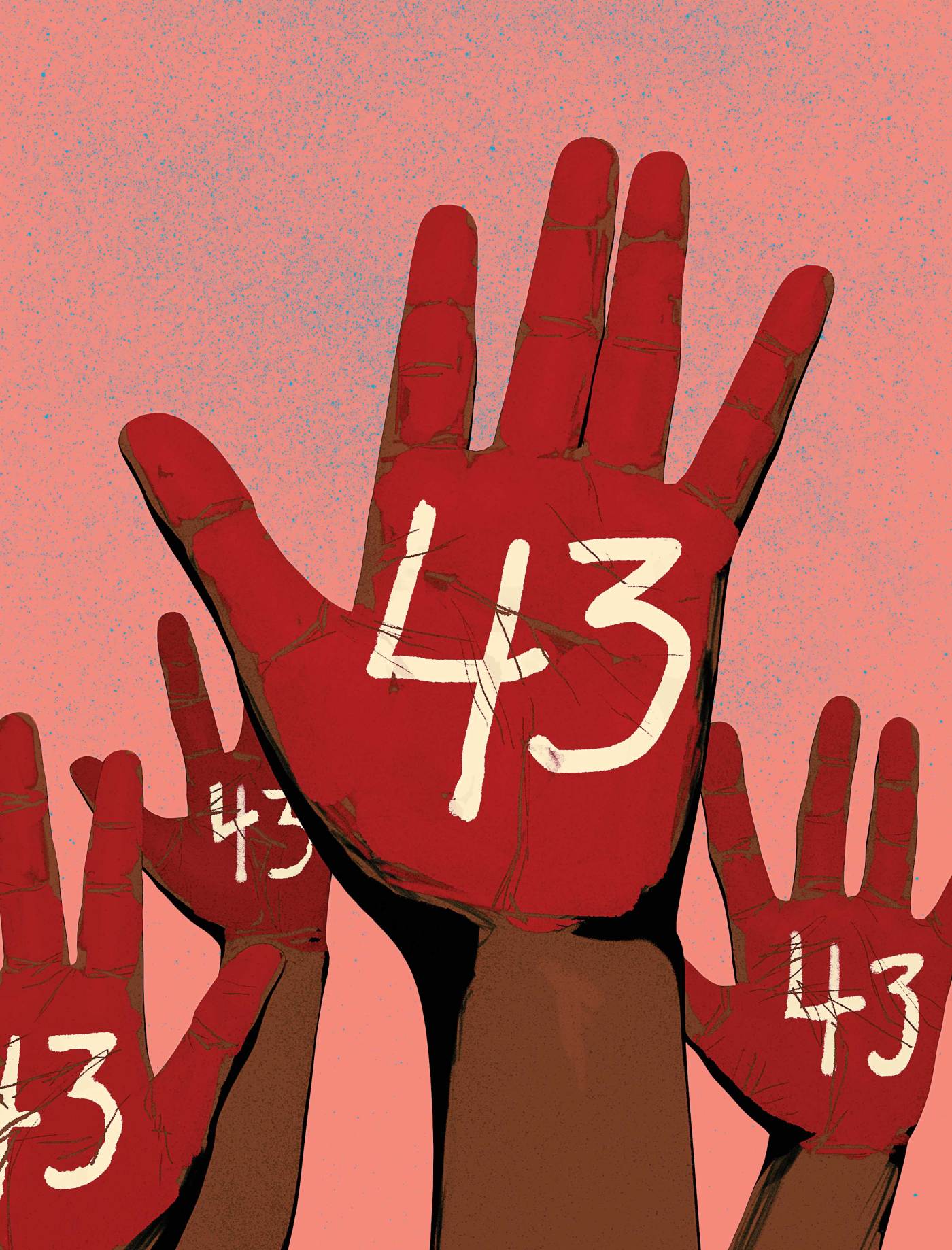
The U.N.’s human rights commissioner said Mexico has a 98 percent impunity rate, while most crimes aren’t even investigated.
More than 151,230 have been murdered in Mexico since December 2006, a figure that includes thousands of Central American migrants making the dangerous trek through the country toward the United States, Zeid Ra’ad Al-Hussein, the United Nations high commissioner for human rights, denounced.
The U.N. official met Wednesday with President Enrique Peña Nieto, after which he delivered a press conference, noting that in Mexico there is a 98 percent rate of impunity, that most cases remain unresolved, and that many more are not investigated.
“Impunity in Mexico is a generalized practice,” he reiterated, while saying there is an urgent need in Mexico to protect women, who are being killed and sexually abused in the thousands.
He also highlighted the grim fact that in Mexico it is very dangerous to be a journalist or a human rights defender.
“I urgently call on authorities in Mexico to offer more and improved protection to human rights defenders, to those who are journalists, and to those who have suffered a terrible series of murders, threats, beatings and other forms of intimidation,” he said.
Al-Hussein also asked the Mexican government to strengthen prosecutors’ offices at all levels and the functions of all security forces, to make sure that all human rights violations be investigated.
The human rights defender particularly asked Mexican authorities to adopt a chronogram for the removal of armed forces from all public safety functions and operations.
There is a “strong convergence of eyes” on Mexico due to the seriously poor situation of human rights, he said, referring to the strong criticism that has surfaced against the Latin American country.
The Ayotzinapa Case
Regarding Ayotzinapa, Al Hussein said Mexican authorities should allow international investigators to interview soldiers who may have witnessed the abduction and apparent massacre of 43 trainee teachers last year; an idea the Mexican Ministry of Defense had strongly rejected.
The enforced disappearance of the Ayotzinapa students in Iguala, in the southern state of Guerrero, and subsequent investigation into the attack, has prompted very harsh criticism of the government of President Enrique Peña Nieto for its inability to solve the case.
Al-Hussein suggested that Mexico’s top military brass should allow a panel of experts from the Inter-American Commission on Human Rights to interview soldiers.
“It is important that the government acts decisively on the recommendations of the (IACHR panel of experts), including its insistence that authorities reverse their decision to not allow the experts to interview members of the 27th Battalion,” said Al-Hussein.
On Monday, however, Mexican Defense Minister Salvador Cienfuegos said he would not permit the panel to interrogate his troops, and rejected any suggestion they may have been involved.
A panel of international investigators last month rejected official accounts, pointing to suspicions of forced confessions and possible collusion by federal and state security forces, including the military.
Published in English by TeleSur
Thursday, October 8, 2015
Para español: http://www.jornada.unam.mx/2015/10/08/politica/003n2pol
OTHER ARTICLES ON THE DEATH TOLL IN MEXICO’S DRUG WAR:
http://compamanuel.com/2014/11/23/the-drug-war-on-our-southern-border/
Human Rights: time to tell the truth
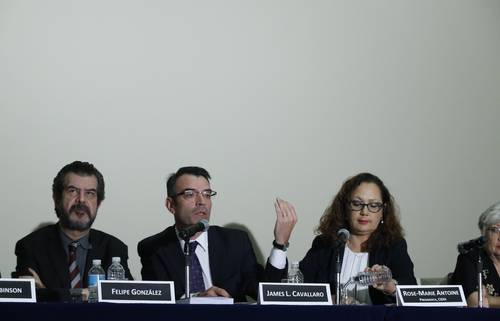
Members of the Inter-American Commission on Human Rights give a report on their 5-day visit.
By: Luis Hernández Navarro
One blow after another! Hard and to the head! The provisional report on the Human rights situation in Mexico, elaborated by the Inter-American Commission on Human Rights (IACHR), caused tremendous discontent in the Enrique Peña Nieto administration.
It’s one more strike at the tiger. Since a year ago, one after the other, the Peña Nieto administration has lost all relevant diplomatic battles about the condition of human rights in the country. His policy of contesting harm in international forums seems strained. His ability to pressure multilateral organisms is extremely diminished. His maneuvers have not been able to impede the grave human rights situation that prevails in the country from being known.
The IACHR delegation was in Mexico between September 28 and October 2. Its arrival was preceded by multiple tensions with the federal government. According to what the director of the Pro Human Rights Center, Mario Patrón, reported at a session in Washington held the last week of July, in which they discussed prolonging the mandate of the GIEI, Mexico’s ambassador to the OAS, Emilio Rabasa, and the executive secretary of the IACHR, Emilio Álvarez Icaza, had a confrontation.
Finally, the Secretary of Foreign Relations (SRE, its initials in Spanish) felt forced to extend an invitation at the IACHR plenary in order to avoid that the organism would include Mexico in the fourth chapter of its annual report. A State is included in the fourth chapter if the organism (the IACHR) assembles information from multiple sources that show evidence of grave and systematic violations of human rights, including the conclusions of other international human rights organisms about the country’s situation.
Rabasa, who, during the time of Ernesto Zedillo headed, with more pain than glory, coordinating the dialogue in Chiapas, wanted to paint favorably in the media his differing with the IACHR. Nevertheless, several sources maintain that effectively the clash was presented and regarded much as being terse. The angry governmental response, accompanied by a media barrage against Emilio Álvarez Icaza, shows that the pulse among both was not exactly hunky-dory.
In the field, the IACHR proved the grave human rights crisis that the country is experiencing, characterized by a situation of extreme insecurity and violence, a lack of access to justice and impunity. What happened to the 43 Ayotzinapa students –the commission concluded– is not an isolated tragedy, but rather part of a pattern of violating human rights.
Regarding the disappeared students from the Raúl Isidro Burgos Rural Teachers College, the Commission’s president, Rose-Marie Belle Antoine, said that in the investigation in charge of the PGR the organism is obliged to determine corresponding criminal responsibilities. Besides –she pointed out– the attorney general’s office must adopt as soon as possible the measures requested by the GIEI: designating a special counsel in charge of the investigation, renewing the whole team, reorienting the investigation and permitting the experts to interview all the witnesses, including the soldiers from the 27th infantry battalion.
The federal government, through the assistant secretary of Governance, Roberto Campa Cifrián, turned to saying that the document of the IACHR “does not reflect the country’s situation,” and that the Ayotzinapa case is “absolutely extraordinary.” He questioned the objectivity of a preliminary report made in just five days, based on their tour through only five federated states and the Federal District.
The arguments of assistant secretary Campa were not very original. They are almost the same that were used to fence with the presentation of the first human rights reports in our country in 1986. One of them is titled Mexico, human rights in rural zones: exchange of documents with the Mexican government on human rights violations in Oaxaca and Chiapas; the other was titled: Amnesty International’s Concerns about Mexico. Miguel de la Madrid was president then. Both reports –like those that would come afterwards– were objected to with the same reasoning that Campa is using now.
The official ignorant stubbornness in the face of the assignations about the grave situation that human rights are held in the country from the beginning of the Enrique Peña administration is not limited to the case of the IACHR. A embarrassing incident also occurred with the UN’s special relator against torture, Juan Méndez, with whom the SRE entered into direct confrontation. Nor did the assignations of the United Nations Committee against Enforced Disappearance Comité and those of the relator against extrajudicial executions, Christof Heyns, sit well with the federal government.
The IACHR’s report given in the preamble to the visit of the United Nations High Commissioner for Human Rights, Zeid Ra’ad Hussein, which started October 4. Together with other pronouncements emitted in the UN, they set a precedent about the orientation that the visit of this functionary could have.
The Inter-American Commission’s report put on the table the need to create an organism against impunity in the country, or for investigating the case of the 43 disappeared Ayotzinapa students, similar to the International Commission against Impunity in Guatemala (Cicig, its initials in Spanish). A great variety of voices, both national and foreign, were heard demanding an exit in this direction.
Immediately, Campa Cifrián hushed them saying that the “outside institutions do not substitute for the Mexican ones, because outside solutions are easy exits that lead to failure… history also assures that Mexicans have to find the country’s solutions.
The governmental version about the human rights crisis has become unsustainable on the international terrain. Its diplomatic maneuvers for conceal what’s evident function less and less each time.
The German dramaturge Berthold Brecht wrote: “When the hypocrisy begins to be of very bad quality, it’s time to begin telling the truth.” In human rights matters that time has come for Mexico.
————————————————————
Originally Published in Spanish by La Jornada
Translation: Chiapas Support Committee
Tuesday, October 6, 2015
En español: http://www.jornada.unam.mx/2015/10/06/opinion/015a2pol
Special Economic Zones for Southern Mexico
SPECIAL ECONOMIC ZONES, AN INITIATIVE FOR DISPOSSESSION

A cruise ship docks at Puerto Madero.
By: Angeles Mariscal, Chiapas Paralelo
Destining 115 billion pesos coming from public resources in order to attract transnational and Mexican private investment to zones “with high productive potential,” sounds like dispossession.
The proposal of a law for the creation of special economic zones that President Enrique Peña Nieto made yesterday (September 29) in the city of Tapachula, Chiapas was clear: designed on behalf of and for private capital, in a market logic –principally transnational-, wherein the population of Chiapas is only present in the project as labor, setting aside the fact that it is the owner of the natural resources and raw materials.
Representatives of the World Bank and of the Business Council Coordinator attended the presentation of the initiative that awaits the approval of the Congress of the Union as guests of honor.
In the presentation of the initiative Peña Nieto said that the proposal seeks to guaranty special customs fiscal benefits for foreign trade, which favors private initiative in regions with high productive potential in the states of Chiapas, Guerrero, Michoacán, Oaxaca, Veracruz, Quintana Roo, Yucatán and Campeche.
In no part of the proposal did he talk about the social sector –owner of the lands and resources- save for tangentially referring to the “poverty” in which the region’s residents live -according to market parameters and logic- and the possibility of them obtaining “employment.”
According to the president, to construct the initiative they had as advisors industrialists and representatives of transnationals that already have operations in Mexico, among them exporters and industrial park developers.
He said that upon approval of the initiative, three special economic zones would be created first; one of them he defined as the interoceanic industrial corridor on the Isthmus de Tehuantepec, Oaxaca, which would permit the movement of merchandise between the Pacific Ocean and the Gulf of Mexico.
Another zone would encompass the states of Michoacán and Guerrero, so that exporting through the Port of Lázaro Cárdenas is favored; and a third one at Puerto Chiapas, through which merchandise would be able to go out towards Asia, through the Pacific Ocean.
According to this project proposed by President Peña Nieto, infrastructure would be created for installing a transoceanic gas pipeline, which goes from Salina Cruz in Oaxaca, to Guatemala, passing through Puerto Chiapas.
As the president said, each special economic zone will offer direct financial benefits to investment and employment, special customs regulations, additional facilities for foreign trade and a regulatory framework that makes it easier to open businesses.
The infrastructure also assures the supply of energy and logistical connections with the rest of the country and with the international markets.
He said that in order for the plan to become a reality, they would offer financing through the development bank, support for training workers, for the implementation of processes for technology innovation, and for the “modernization” of the cities.
Peña Nieto said that the impact and consolidation that the Special Economic Zones would have on the regions where they are installed would be seen in the medium and long-term. Sin embargo, he maintained that he hopes to have the first businesses installed before he finished his term of office.
This project is not new! The World Bank has impelled the creation of other special economic zones in various parts of the world where the private sector can find “permanent first class infrastructure, water and electricity.”
The example of the “success” Special Economic Zones is China, a country that is now considered “prosperous” because its population produces, buys and sells thousands of various products. In Mexico, the country’s northern states are the example of “prosperity.” With these examples, I wonder whether any Chiapas resident would want to have the quality of life that the residents of China have, whether anyone would want to make their home in Monterey.
The basic issue is the concept of “development,” “wealth” and “prosperity.” Is “development” having a job as a qualified laborer? Is it “wealth” to own a car? Is it “prosperity” to live in a city?
What does Chiapas have? What does it have apart from large reserves of water, forests that provide oxygen, minerals, oil, natural gas, thousands of species of flora and fauna, a large extension of fertile land where it’s enough to plant a seed to make a tree full of fruit grow?
In recent years the vindication of some original peoples -owners of the largest part of the land and territory-, of the concept of “good living” (kuxlejal) has been more evident, based not on the accumulation of goods, but rather on the construction of the interior harmony of individuals with community and nature, in a different conception of what quality of life means.
Certainly more than 70% of Chiapas inhabitants suffer from the lack of some components of basic wellbeing, but will have to ask themselves what the cost-benefit of this new governmental “strategy” is and get ready for the process that’s coming.
——————————————————————-
Originally Published in Spanish by Chiapas Paralelo
Translation: Chiapas Support Committee
Wednesday, September 30, 2015
Notes:
- In an article posted here Magdalena Gómez expressed the opinion that the Special Economic Zones were one reason for the release of Compañero Galeano’s killers. http://compamanuel.com/2015/09/12/impunity-and-provocation-of-the-ezln/
- Gustavo Esteva also expressed the opinion that the regressive laws in Oaxaca and the sending of federal troops to the state were connected to imposing the special economic zones. http://compamanuel.com/2015/09/06/esteva-the-storm-in-oaxaca/

CNI Solidarity with Ayotzinapa
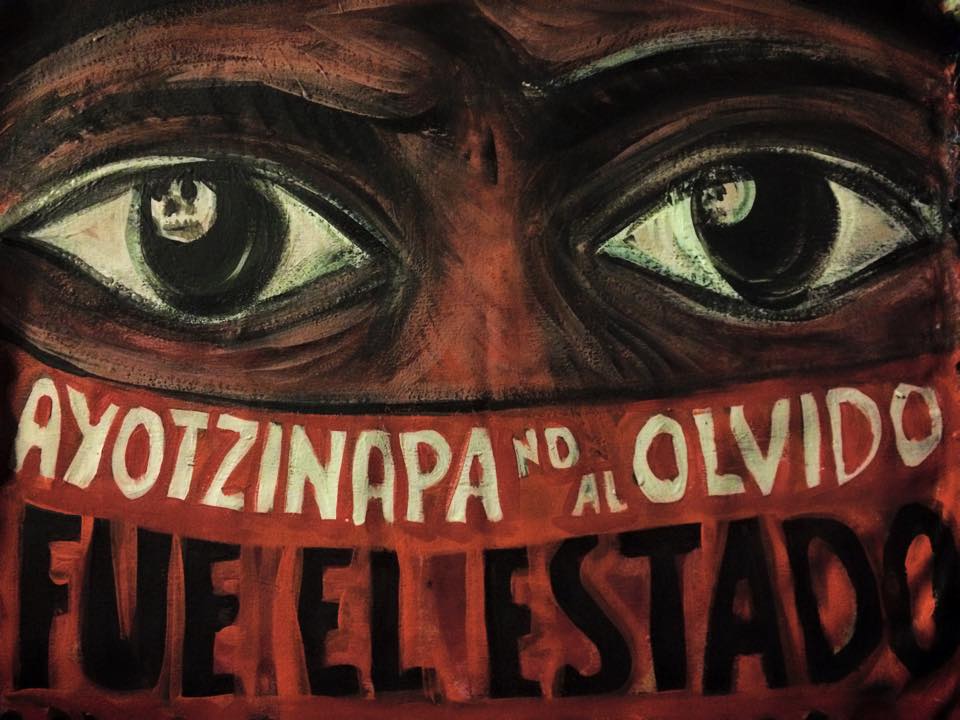
MEMBERS of the NATIONAL INDIGENOUS CONGRESS ARE IN SOLIDARITY with AYOTZINAPA
By Daniel camacho
Chiapas Mexico, September 27, 2015
“With all respect and if you permit us, we want to be in the heart of the young normalistas’ parents, we want to be in the Heart of Ayotzinapa,” expressed members of the Civil Society Organization Las Abejas, members of the National Indigenous Congress (CNI, its initials in Spanish), in a September 26 comunicado, on the one-year anniversary of the enforced disappearance of the teachers college students in Iguala, Guerrero.
“We want to be in the heart, in the dream, in the soul, in the struggle and in the memory and hope of the 43 disappeared, the 3 murder and one other compañero that is in a coma. And we also want to be in the heart, in the dreams, in the memory and hope of the thousands of disappeared in all of Mexico,” the Indigenous Tsotsils added. They held a day of prayer in solidarity with the disappeared students. “We began in the ceremonial center of the Acteal martyrs by presenting the photographs of the disappeared students,” they shared.
“The Other Justice always has to be Memory and Not Oblivion,” the adherents to the Sixth stated. At the same time they pointed out that: “the intellectual authors of the crime against the normalistas are: José Luis Abarca, the former Iguala mayor; Angel Aguirre Rivero, ex Governor of Guerrero; Enrique Peña Nieto, president of Mexico; the Mexican Army and the Iguala Municipal Police.” “Ayotzinapa is the continuation of the rage, of the Hydra’s fire,” they abounded.
For its part the Autonomous Council of the Chiapas Coast, also a CNI member, mobilized in solidarity with Ayotzinapa, through a march in Pijijiapan, Chiapas, together with the teachers movement and social organizations in solidarity. At the end of the march, during the meeting in the coastal community’s central park, the different speakers demanded: “the presentation with life of the 43 normalistas as well as the fulfillment of the eight demand presented to Peña Nieto by the families of the 43 disappeared”
CNI communities of Chiapas, like the Tila Ejido, Candelaria el Alto, Cruztón, San Francisco Teopisca and adherents to the Sixth headed to Mexico City, in order to participate in the march for the one-year anniversary of the enforced disappearance of the normalistas of Guerrero.
On the other hand, the San Sebastián Bachajón Ejido of Chilón, Chiapas, also a CNI member, stated in a comunicado all its “scorn and rage at the narco-government, for all the suffering and pain that it generates for the families of the 43 disappeared compañeros and for the entire world.” In the same vein the Indigenous Tzeltals expressed that on the one-year anniversary of the students’ disappearance: “together and united we will construct a new path and we need to continue adding to our struggle to construct a new world and spaces of freedom.”
In Mexico City contingents of the National Indigenous Congress from different parts of the country, adherents to the Sixth Declaration of the Lacandón Jungle and members of the Network against Repression and for Solidarity, marched together with family members of the Ayotzinapa students and diverse sectors of society in solidarity.
Adherents and sympathizers of the Sixth also demonstrated in San Cristóbal de las Casas “To make the Ayotzinapa 43 present.” The displays of solidarity take place in the context of the mobilizations at the national and international level, demanding that the students are presented alive.
Comunicados:
Las Abejas de Acteal en solidaridad con Ayotzinapa 26sep2015
Consejo Autónomo Regional de la Zona Costa de Chiapas
—————————————————–
Translators’ Note: What seems important here, in addition to the solidarity with Ayotzinapa, is that indigenous communities in Chiapas adhered to the Sixth Declaration appear to be consolidated through membership in the National Indigenous Congress. This is not the first indication of consolidation; however, it’s important to understand in light of the EZLN’s emphasis on “getting organized.”
Originally Published by Pozol Colectivo
Translation: Chiapas Support Committee
September 28, 2015
EZLN mobilizes in solidarity with Ayotzinapa
IN CHIAPAS, THOUSANDS MOBILIZE IN SOLIDARITY WITH AYOTZINAPA

Indigenous Zapatistas give offerings and prayers asking for justice for the Ayotzinapa 43. Photo: Angeles Mariscal/Chiapas Paralelo
By: Angeles Mariscal
Students, independent citizens, collectives, activists, civil society organizations, teachers and members of the Zapatista National Liberation Army (EZLN, its initials in Spanish) participated since early this morning in demonstrations of support for relatives of the 43 students of the Isidro Burgos Rural Teachers College, in Ayotzinapa Guerrero, who complete one year today since they were disappeared after authorities detained them.
The Zapatistas carried out solidarity actions in the headquarters of their good government juntas, which exist in 5 Chiapas regions. On stages in front of thousands of the rebel group’s members, they placed 43 chairs with the names of the disappeared students, as part of silent ceremonies where they named each one of the absent youths, while the crowd shouted “present!” They also lit offerings of 43 candles and flowers offerings on the side of the roads by their communities.
They hung banners with the legend: “The struggle for the 43 disappeared of Ayotzinapa continues and will continue,” “Parents and relatives of the disappeared, your pain is our pain.”
In a prior comunicado announced on the eve of the demonstrations, the EZLN also expressed solidarity with the family members and with thousands of other persons who have disappeared in the country. They questioned the authorities and said that sooner or later those guilty of the disappearances and homicides will pay for their crimes.
They also demonstrated with marches and roadblocks in at least 40 Chiapas municipalities. In each one of them they ask for a transparent and independent investigation of the facts, locating the young men and for punishing those responsible.
The protest actions continue and it is expected that other cultural activities and forums will be held later in support of the parents of the Ayotzinapa students. All the demonstrations have been peaceful.
————————–
Note: The article has many photos of Chiapas/Zapatista solidarity mobilizations attached. Click on the source below for the photos.
——————————————————————
Originally Published in Spanish by Chiapas Paralelo
Translation: Chiapas Support Committee
Saturday, September 26, 2015
Acción solidaria | Join us to demand justice for the 43 Ayotzinapa families
(Versión en español sigue abajo)
The Chiapas Support Committee of Oakland asks you and the members of your organization and community to join us in mobilizing to uplift the demand for deep justice and more starting on Saturday, September 26, 2015, the one-year anniversary of the attack, killing and disappearance of 43 student-teachers from Ayotzinapa in the city of Iguala in the State of Guerrero, Mexico.
Starting now and over the next week, call, email, tweet, and fax the President of Mexico saying:
¡Vivos se los llevaron, vivos los queremos!
You took them alive and we want them back alive!
Tell the President of Mexico:
“I join with the families of the 43 disappeared students from Ayotzinapa in calling for a new internationally supervised investigation and review of former-Attorney General Jesus Murillo and other officials’ involvement in the previous investigation, for their obstruction of justice.”
Fax: +52 55 5520 7125
Phone: +52 55 5093 5300
Email: enrique.penanieto@presidencia.gob.mx
Twitter: @EPN
More background information on Ayotzinapa:
Ayotzinapa: 10 Reasons to Keep the Search for Truth Alive
http://www.huffingtonpost.com/ted-lewis/ayotzinapa-ten-reasons_b_8099778.html
Mexico parents of 43 missing students reject President’s response to demands
http://www.stuff.co.nz/world/americas/72437120/mexico-parents-of-43-missing-students-reject-presidents-response-to-demands
*
Please send us a copy of your message to the President of Mexico to:
enapoyo@gmail.com
For more information, visit:
http://compamanuel.com
_________________________
Únete con nosotr@s para exigir justicia para las 43 familias de los desaparecidos de Ayotzinapa
El Comité de Apoyo a Chiapas de Oakland le invita a usted y a los miembros de su organización y comunidad a movilazarse para alzar la demanda por una justicia profunda y más empezando el sábado 26 de septiembre, 2015, el primer aniversario del ataque, la matanza y la desaparición de los 43 normalistas de Ayotzinapa, en Iguala, Guerrero, México.
Por favor llame, envíe un fax, mande correos electrónicos y twits al Presidente de México empezando ya y durante la semana que viene exigiendo:
¡Vivos se los llevaron!
¡Vivos los queremos!
Díle al Presidente de México:
<<Yo me uno con las familias de los 43 normalistas desaparecidos de Ayotzinapa en su llamada por una nueva investigación bajo la supervisión internacional, incluyendo un repaso de la participación de Jesus Murillo y otras autoridades en la investigación previa, por su obstrucción de la justicia.>>
Fax: +52 55 5520 7125
Fono: +52 55 5093 5300
Email: enrique.penanieto@presidencia.gob.mx
Twitter: @EPN
Más información:
Familias de Ayotzinapa presentan 8 exigencias esenciales a Peña Nieto
http://www.centroprodh.org.mx/index.php?option=com_content&view=article&id=1650%3A2015-09-24-18-58-03&catid=209%3Afront-rokstories&lang=es
*
Por favor enviarnos una copia de su mensaje al Presidente de México a:
enapoyo@gmail.com
Para más información:
http://compamanuel.com
EZLN: For pain, for rage, for truth, for justice
FOR PAIN, FOR RAGE, FOR TRUTH, FOR JUSTICE

September 2015
Compañeras, compañeroas & compañeros of the Sixth of Mexico and the World:
Sisters and brothers of the people of the Earth:
Our collective heart knows, before and now, that our sorrow is not a sterile lament.
She knows that our rage is not a useless release.
We know who and what we are, that our sorrows and rages are born and nourished by lies and injustices.
We are what we are because the one who is above at the expense of those of us below lies as a way of making politics and adorns death, forced disappearance, incarceration, persecution and assassination with the scandal of his corruption.
The one who is above is a criminal with immunity and without shame; the color of his politics doesn’t matter. It doesn’t matter if he tries to hide behind a change of name and banner.
It’s always the same face, the same arrogance, the same ambition and the same stupidity.
As if by disappearing and murdering they also want to disappear and murder memory.
From above and from those who therein dwell, their perversions and meanness, we will only receive the lie as a salary and injustice as payment.
The injustice and the lie arrive on time every day, at all hours, everywhere.
Dispossessing us of our labor, life, land and the natural world doesn’t satiate them.
They also rob us of those who are our sons, daughters, sisters, brothers, fathers, mothers, relatives, compas and friends.
He who is above persectus, incarcerates, kidnaps, disappears and assassinates.
They not only finish off bodies, lives.
They also destroy histories.
On top of forgetfulness he from above builds his impunity.
Forgetfulness is the judge that not only absolves him, but also rewards him.
That’s why, and more, our sorrows and rages seek truth and justice.
Sooner or later we will learn that these are not to be found anywhere, that there is no book or speech, nor judicial system, institution, promise, time, place for them.
We learn that we have to build them.
As if the world was not already sane, as if an emptiness wounded her womb, lacerating the heart of the color of those who are of the Earth.
That’s how we learn that without truth and without justice, there is no sane day or night. The calendar doesn’t take a day off; geography does not rest.
In many languages, idioms, signs, we name those missing.
And every sorrow and every rage takes on a name, a face, a history, an emptiness that hurts and shames.
The world and her history are filled with absences.
And those absences become a murmur, a strong word, a cry or a scream.
We do not scream for regret. We do not weep for pity. We do not moan in resignation.
We do so for those missing can find their way back.
So that they know they are here even though they are missing.
So that they do not forget that we do not forget.
Because: for the sorrow, for the rage, for truth, for justice.
For Ayotzinapa and all the Ayotzinapas that wound the calendars and the geographies of those below.
That’s why resistance.
That’s why rebellion.
Because the time will come when those who owe us everything will pay.
He who persecuted will pay, he who jailed will pay, he who beat and tortured will pay. He who imposed the desperation of the forced disappearance will pay. He who assassinated will pay.
Because the system he created, fed, covered up and protected crime with, dressed as the evil government, will be destroyed. Not prettied up, not reformed, not modernized. It will be demolished, destroyed, finished, buried.
That’s why at this time our message is not one of consolation and resignation for those who suffer because of one or many absences.
Our message is of rage, of bravery.
Because we know that same sorrow.
Because we have in our guts the same rage.
Because, being different, that’s how we are the same.
That’s why our resistance, that’s why our rebellion.
For the sorrow and the rage.
For truth and justice.
That’s why:
Don’t waver. Don’t sell out. Don’t surrender.
That’s why:
¡Truth and justice!
From the mountains of southeast Mexico,
Subcomandante Insurgente Moisés. Subcomandante Insurgente Galeano.
In a corner of the planet called “Earth,” September 2015.
On this day, 26 of September, thousands of Zapatistas, boys, girls, youth, women, men, others, elders, alive and dead, will march in our territories to embrace all the persons who carry sorrow and rage because of the jailings, disappearances and death imposed by those from above.
We will also embrace them because that’s how we will also embrace ourselves, Zapatistas.
And that’s how we call on all honest and reasonable persons of the planet to do the same, in their calendars and geographies, according to their time and way of doing things.
Because while they try to supplant with lies and jeers the lack of truth and justice, humanity will continue being a grotesque smirk on the face of the Earth.
————————————————————–
Originally Published in Spanish by Enlace Zapatista
Translation: Chiapas Support Committee
 Chiapas Support Committee