Chiapas Support Committee
Home of the Compañero Manuel blog on zapatistas & mexico
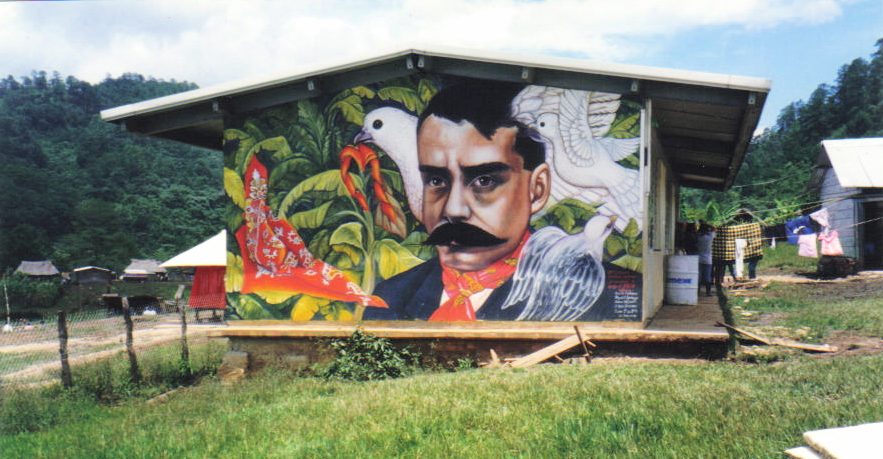
Frayba: The opaqueness and inaction of the Mexican State is an imminent threat to peace in Chiapas
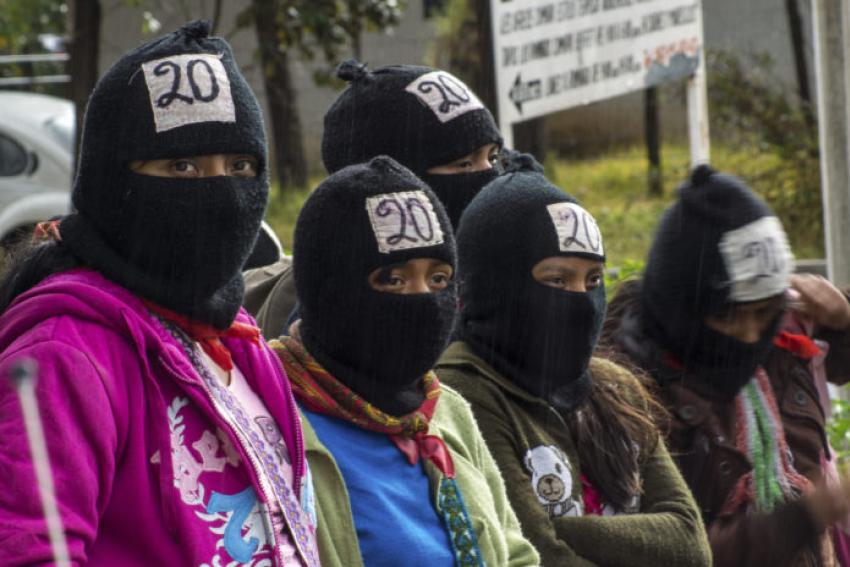
San Cristóbal de Las Casas, Chiapas, México
May 26, 2023
Bulletin No. 12
Tension in Zapatista territory
On January 1, 1994, the Zapatista National Liberation (EZLN, Ejército Zapatista de Liberación Nacional) took up arms, declaring war on the Mexican State, fighting for work, education, health, justice, land and freedom. After 12 days, and due to the pressure of national and international civil society, a ceasefire was decreed for the Zapatista peoples. After the San Andrés Dialogues, the Mexican government failed to comply with the agreements to reform the Constitution and fully comply with the rights of indigenous peoples. Since then, the EZLN has built its autonomy and self-determination within in its territory in a civil and peaceful manner. The EZLN is also a key actor for the advancement and exercise of the rights of indigenous peoples.
During these 29 years, the EZLN has been harassed and continuously attacked by the Mexican Army and groups related to the State. The strategies of war and counterinsurgency modify their methods of violence, in order to destroy and co-opt the resistance and emancipatory movements that are fighting for the respect of their rights, and in this territory for the collective rights that they claim as original peoples.
We have constantly documented and denounced the facts of violations of territory, autonomy and self-determination, aggressions, armed attacks and criminalization, among others, in all spheres of responsibility, such as the unpunished murder of teacher Galeano in 2014, which marked a new scenario regarding organizations allied with the three levels of government (federal, state and municipal).
In this six-year term of Andrés Manuel López Obrador, that has not been left behind. Attacks against the lands recuperated by the EZLN are constant. In some autonomous territories we have documented aggressions, threats and armed attacks, such as that of the Good Government Junta of Caracol 10 in Patria Nueva, where EZLN Support Bases have suffered serious human rights violations such as arbitrary deprivations of liberty, torture, forced displacement and several wounded by firearms.
At present, the Law for Dialogue, Conciliation and Dignified Peace is in force in Chiapas, in which the EZLN is an example and has had a continuous action in which it proposes, builds and resists in a peaceful way, being a watershed for many peoples who are for the defense of life and territory.
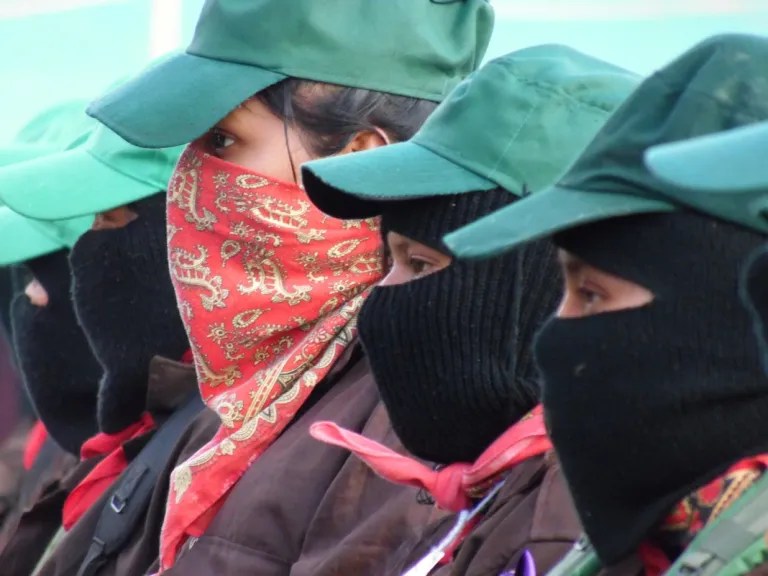
Of all these acts of aggression and attacks against the Zapatista movement, the State bodies that have jurisdiction and that must respect, guarantee and protect human rights have been informed with all documentary rigor, without having shown political will to address the urgent situation. From the Frayba we express our concern about the constant violence that the EZLN has received and that we see increase due to the active impunity generated by the Mexican government.
In one of its last communiqués of 2021, the Indigenous Revolutionary Clandestine Committee-General Command of the EZLN (CCRI-CG-EZLN) warned that Chiapas was on the brink of Civil War. Its perspective is a symptom of those who are living in Chiapas territory.
From the Frayba, we state that we live in constant insecurity, with high risk to life, which has led to an increase in extreme violence against the EZLN Support Bases, such as the violence committed on May 23 in the region of Moisés y Gandhi. This has expanded to other territories that are being wounded from the criminality that controls the lives of communities and towns such as that which takes place on the southern border of Chiapas.
In this context, we declare that our unavoidable duty is to stop this violence that has been growing and we see that it can be done with the organization of towns, communities, organizations, neighborhoods and districts; from their own roots and culture, to deactivate violence and build peace from below, betting on the possibility of the reproduction of existence where the good life is pondered.
It is urgent that the Mexican State do its job fully and immediately address the underlying problem in order to guarantee dialogue and peace in Chiapas, generating clear routes to achieve it.
We call on national and international solidarity to demand that the Mexican State act forcefully, so that the attacks against the autonomous political project of the EZLN and the generalized violence in the state of Chiapas cease immediately. We also ask the solidarity to show signs of support to the peoples who defend life, territory, Mother Earth and peace.

Originally Published in Spanish by Frayba, Tuesday, May 26, 2023, https://frayba.org.mx/la-opacidad-e-inaccion-del-estado-mexicano-es-una-amenaza-inminente-la-paz-en-chiapas and Re-Published with English interpretation by the Chiapas Support Committee
Shootings and roadblocks paralyze Frontera Comalapa, Chiapas
From the Editors
Between Tuesday and Thursday, alleged members of organized crime groups sustained shootouts and maintained intermittent roadblocks at different points on the highway located between the municipality of Frontera Comalapa, Chiapas, and the border with Guatemala due to the dispute over territorial control, residents reported.
They assured that one of the most critical points is located in the town of Nueva Independencia, popularly known as Lajerío, where during yesterday afternoon and evening the men who reside in the area fled into the mountains or to the bank of a river, because one of the cartels is recruiting them.
“They’ve picked up (kidnapped) a lot of people. The armed and hooded men are in the center of the community waiting for the night to take the men out and take them away. Almost all the houses (approximately 200) are empty,” said a resident of the region, who said that people are defenseless because there is no presence of public security forces in the area.
“We left the houses because (the gunmen) are coming in and taking out young people to recruit them. And there is no help to defend us. Today they started doing it and that’s why most of us left. In Lajerío there is the biggest problem and they say there are deaths.”
Other locals reported that this situation began on Tuesday, after the murder of a local transport leader; They assured that the blockades and skirmishes began that day among alleged members of the Cártel Jalisco Nueva Generación and the Sinaloa Cartel.
They indicated that since then there have been no classes in Frontera Comalapa and all activities were suspended. “The streets are desolate because people are afraid and sheltered in their homes,” warned one resident; “The authorities have not shown their face,” he claimed.
Those affected reported that there have been roadblocks in the town of Pacayalito, the exit to the municipality of Motozintla, located in the mountains of the state, as well as in the Tres Maravillas ejido, in the direction of Chicomuselo.
Also, in Sabinada, next to Guadalupe Grijalva, where several skirmishes have occurred, and in the detour of Nuevo México, Santa Rita and Paso Hondo (a few kilometers from the border with Guatemala), the exit to Comitán.
“Everything has been closed since Tuesday and although they opened for a little bit, there have been permanent roadblocks since Wednesday night,” they maintained.
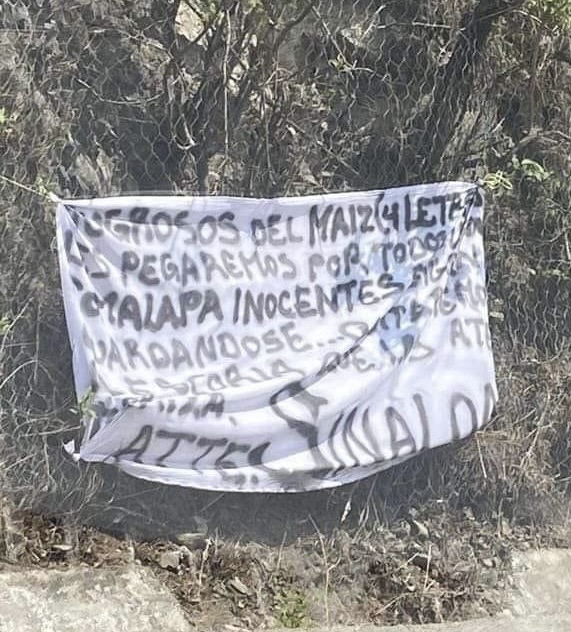
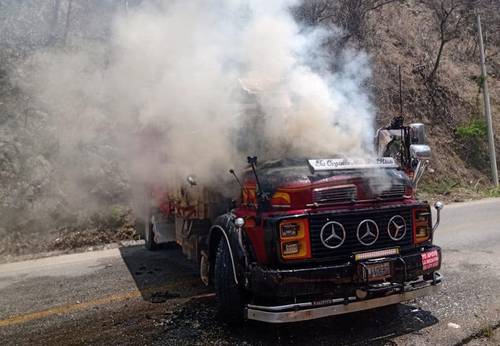
They added that in the municipality of Mazapa de Madero, located in the same area, there was also a shootout yesterday, “they burned a truck and left a narcomanta (narco-banner) addressed to the organization called Maíz; that it has no choice but to accede to what the cartel that dominates the border area wants.”
Meanwhile, in Chicomuselo, neighboring municipality of Frontera Comalapa, according to some residents the situation was also tense yesterday because since Wednesday the entrance was obstructed; “You can’t leave or enter.” In this context, it was reported that activist Fredy Milton Morales Zunun was detained, but hours later he was released.
On the other hand, at the request of the National Human Rights Commission, the State Secretariat of Security and Citizen Protection agreed to implement precautionary measures in the Nuevo Morelia ejido, in Chicomuselo, where alleged workers of a company, supported by armed men, have been removing barite extracted from a mine since last weekend.
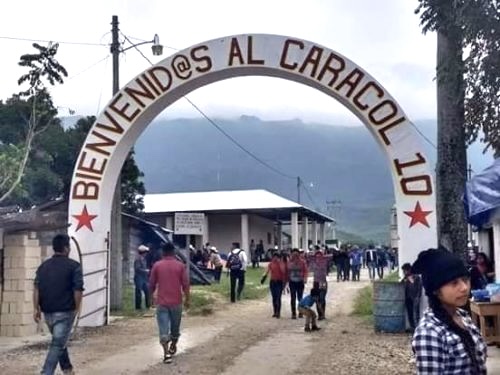
Frayba asked AMLO to guaranty security in Caracol 10
The Fray Bartolomé de Las Casas Human Rights Center asked President Andrés Manuel López Obrador to urgently guaranty “the life, security and physical and psychological integrity of residents of the Moisés y Gandhi region,” belonging to Caracol 10, where Gilberto López Sántiz, a support base of the Zapatista National Liberation Army (EZLN, Ejército Zapatista de Liberación Nacional) was shot and [seriously] wounded on the 22nd of this month.
Originally Published in Spanish by La Jornada, Friday, May 26, 2023, https://www.jornada.com.mx/2023/05/26/estados/026n2est and Re-Published with English interpretation by the Chiapas Support Committee
EZLN support base injured in armed attack on the Moisés y Gandhi community

On May 23, 2023, Jorge López Sántiz, an indigenous Tseltal member and support base of the Zapatista National Liberation Army (EZLN, Ejército Zapatista de Liberación Nacional) was admitted to the Dr. Gilberto Gomez Maza Hospital in the city of Tuxtla Gutiérrez, after public pressure derived from this Urgent Action.
Jorge’s current condition is grave. He is on ventilator support and medications to keep his heart functioning, because he was shot in the upper left side of his chest, which injured several organs. Given his health condition, he has the criteria for being placed in an intensive care unit, but the Hospital has no space in such unit and, therefore, he is in an area that is not adequate to guarantee the highly-specialized care that he requires.
We reiterate the demands enunciated in this urgent action and emphasize:
- The Mexican State is responsible for guarantying the life of the EZLN support base and providing the necessary attention.
- We urge the State to provide adequate attention in the Intensive Care Unit with instruments and equipment necessary for saving his life.
Despite petitions, the Mexican State has remained remiss given the violence in the community, the continuous attacks reveal the complete lack of fulfillment of its obligation to guarantee and protect human rights.
Mexico City, May 23, 2023
On the night of May 22, 2023, Jorge López Sántiz, an indigenous Tseltal member and support base of the Zapatista National Liberation Army (EZLN, Ejército Zapatista de Liberación Nacional) was the victim of an armed attack and his life remains at grave risk. He was shot in the high left side of his chest. Hours before, the Moisés y Gandhi autonomous community, Lucio Cabañas Autonomous Municipality (Ocosingo, Chiapas) reported the armed attack perpetrated by members of the Regional Organization of Ocosingo Coffee Growers (ORCAO).
According to documentary information received by the Executive Secretariat of the TDT Network, it stated that the events began at 4:32 p.m. when members of the ORCAO from the El Sacrificio community, municipality of Ocosingo, activated firearms whose record counted 130 small caliber shots and 15 high-caliber shots.
At 7:59 pm, ORCAO members from the 7 de febrero community also began to shoot from a coffee warehouse located on the side of the San Cristóbal–Ocosingo highway, at the Cushuljá crossroads. First, they fired 8 shots from a small-caliber weapon and 6 from a high-caliber one; then, they fired 18 shots from a high-caliber weapon and initiated a volley of shots that could not be counted.
Today, May 23, testimonies report that the shots against the Moisés y Gandhi Autonomous Community continue and that the public health care services have not wanted to receive Jorge López Santiz, wounded by a bullet, justifying that they do not have instruments and medical personnel to carry out the surgery and necessary care. This documentary information has been verified by civilian authorities of the Good Government Junta of New Dawn in Resistance and Rebellion for Life and Humanity, Caracol 10, the Rebel Seed Blooming, based in Patria Nueva, Lucio Cabañas Autonomous Municipality (official municipality of Ocosingo), Chiapas.
In view of these facts, we urgently demand:
- Urgent medical attention be provided to Jorge Lopez Santiz, injured by a bullet, for the purpose of saving his life and his physical and psychological integrity.
- Investigate and determine responsibility for the criminal act of attempted murder and armed attack perpetrated against the inhabitants of the Moisés y Gandhi community.
- Immediate cessation of armed attacks against the Support Bases of the Zapatista National Liberation Army (EZLN) of Caracol 10 by the ORCAO.
- Carry out the corresponding investigations in order to sanction and punish the persons responsible for the crimes indicated and the human rights violations against the EZLN support bases in Chiapas.

Originally Published in Spanish by the Red TDT, Tuesday, May 23, 2023, https://redtdt.org.mx/archivos/18337 and Re-Published with English interpretation by the Chiapas Support Committee
AMLO issues new decree so that mega-projects are considered as national security

By: Desinformémonos Editors
May 19, 2023
Mexico City | Desinformémonos
President Andrés Manuel López Obrador (AMLO) issued a new decree considering the federal government’s infrastructure projects to be national security matters, just hours after the Supreme Court of Justice of the Nation (SCJN) declared the invalidity and unconstitutionality of the accord that established the same terms and that the president published in November 2021. [1]
With the new decree, the works and operation of megaprojects such as the Maya Train and the Trans-Isthmus Corridor are established as [matters of] national security and public interest, which are protected despite the complaints of indigenous communities, activists, organizations and experts about the environmental and social impacts they will have.
The [new] decree was issued on May 18, the same day that the SCJN determined that the “Agreement declaring the federal government’s infrastructure projects and works as national security and of public interest,” published on November 21, 2021, was unconstitutional for violating the right to transparency and access to information.
According to the Mexican Center for Environmental Law (Cemda), the SCJN’s decision corrected “a situation of constitutional exceptionality” and obliged the environmental authorities of the federal executive to apply the provisions of the environmental legal framework, particularly in the General Law of Ecological Balance and Environmental Protection (LGEEPA).
Cemda recalled that since the presidential agreement was published in 2021, federal executive agencies such as the Ministry of Environment and Natural Resources (SEMARNAT) “began to ‘authorize’ projects without submitting them to the Environmental Impact Assessment Procedure (PEIA), as established by federal environmental law. “
The infrastructure projects that are now considered to be national security projects include the Maya Train | Tren Maya, the Trans-Isthmus Corridor and the airports in Palenque, Chiapas, and in Chetumal and Tulum, Quintana Roo.
Translator’s Notes
[1] The President of Mexico, Andrés Manuel López Obrador (AMLO), placed the Maya Train under the Army’s jurisdiction and declared it a matter of “national security” and “public interest” in 2021. That declaration was challenged and the challenge made its way to the Supreme Court, which declared it unconstitutional. In response, AMLO issued another declaration, this time placing not only the Maya Train as a matter of “national security” and “public interest,” but also the Trans-Isthmus Corridor and 3 airports related to the Maya Train.
Last month, the Supreme Court declared AMLO’s placement of the National Guard under the Army’s jurisdiction and control unconstitutional. So, it seems fair to say that AMLO and Mexico’s Supreme Court are at odds.
Originally Published in Spanish by Desinformemonos, Friday, May 19, 2023, https://desinformemonos.org/emite-amlo-nuevo-decreto-para-que-megaproyectos-sean-considerados-de-seguridad-nacional/ and Re-Published with English interpretation by the Chiapas Support Committee
Armed group loots barite in Chicomuselo and threatens residents
By: Elio Henríquez, Correspondent
San Cristóbal de las Casas, Chiapas
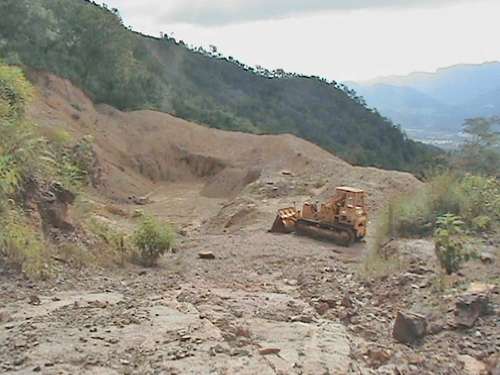
Unidentified individuals began to remove, with the support of armed men, barite extracted a few years ago by the Canadian company BlackFire Exploration Mexico from a mine located in the Grecia ejido, municipality of Chicomuselo, in the mountains of Chiapas, residents of the area reported, who indicated that the workers would be employees of a company whose name they do not know. [1]
“On Saturday, eight trucks entered and made a lot of trips with the barite that is piled up on a platform located on land belonging to the Nueva Morelia ejido (neighbor of Grecia); They say it’s going to take eight to 10 days, because it’s many tons,” they said.
“They were working all day and taking the material, supposedly to the town of Chicomuselo, the municipal seat. The community could not prevent them from entering because when they went to talk to us a few days ago, they were armed, supporting the mining companies so that we don’t oppose them,” they said.
The ejido members recalled that last Thursday armed men came to threaten them to let the trucks pass to remove the material and warned them: “If someone messes with us, you know what’s going to happen to them.”
They said one of the workers told them: “My company doesn’t have a name” and didn’t give them information or submit documents. “They bring violent people and we are peaceful people. We are asking the government to help us, because we are vulnerable and have no way to deal with them,” they said.
Given the entry of the trucks and the threats by force, the neighbors of Nueva Morelia held an assembly the previous Friday, in which they agreed to send a letter to President Andrés Manuel López Obrador asking that he intervene.
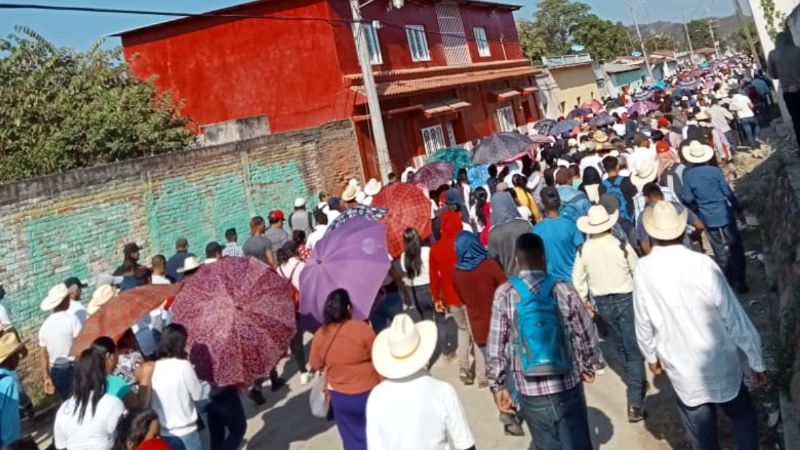
“We met in a general assembly in the Nueva Morelia ejido to express our disagreement with exploitation of the mine in the Grecia ejido. This looting affects a natural spring of water, where the drinking water that supplies our population comes from and that’s why the ejido totally rejects it (the arrival of strangers), because it would harm the health of our population,” they wrote in the document.
They added that “the mining group asked that the population not to get in its way, so it may move freely. We ask the three levels of government for their valuable intervention to solve this problem, since it harms our population, bringing pollution and diseases.”
In another letter they stated that: “the miners, together with organized crime, are taking the barite that is in the Nueva Morelia ejido,” so they asked “attentively to the Ministry of National Defense and the National Guard to arrest them in Chicomuselo and refer them to the Attorney General’s Office for the crimes that result, since mining is under federal jurisdiction.”
The problems for the inhabitants of Chicomuselo communities began 20 years ago, when the Caracol Mining Company began barite exploitation work at the La Revancha mine, located in the San Ramón neighborhood of the Grecia ejido, which borders Nueva Morelia, where the firm constructed warehouses, dormitories and a dining room for its employees.
Caracol left the area, apparently because it was bankrupt, and in 2006 sold its rights to the concession to Blackfire Exploration Mexico, which began working in the area that same year.
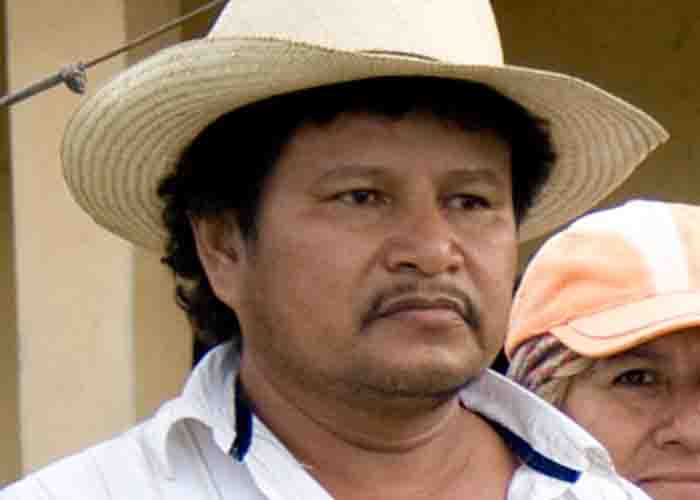
Amid protests by residents of Grecia and surrounding localities over lack of fulfillment of the Canadian consortium’s promises, retention of trucks and workers, Blackfire Exploration Mexico continued to exploit the mine until it was closed after the murder of Mariano Abarca Roblero, a leader opposed to the exploitation of deposits, perpetrated in the municipal seat of Chicomuselo on November 28, 2009.
Blackfire left the area afterwards, without it being officially known who bought the rights to the concession. Not even five years had passed when people began to arrive to harass inhabitants of the region to allow them to continue exploiting the mines to extract barite and remove the material that the Canadian company abandoned in San Ramón and Nuevo Morelia.
Last year the entry of alleged representatives of companies that bought the rights increased, so on several occasions campesinos in the area held them and then released them with the commitment that they would not return.
Faced with the resistance of the farmers, the mining representatives changed their strategy and were accompanied by armed men, allegedly members of criminal groups operating on the border with Guatemala.
About six months ago they entered Santa María, a neighboring town of Nueva Morelia, to extract barite without the inhabitants being able to prevent it. Even the local Catholic parish that played a prominent role in the protests against mining decided to suspend its mobilizations, so as not to risk its parishioners. [2]
“The resistance against the megaprojects has been dying down,” said one resident who requested anonymity. “The presence of organized crime is very strong. The alleged mining businessmen arrive arrogantly, with armed men, but they do not say the name of the company or present documents. The authorities of the communities have already been overwhelmed and do not have the power to contain them. In Santa Maria they have already finished with almost half of the hill,” he said.
Translator’s Notes
[1] A January 2023 march in Chicomuselo, called the “March for Life,” made up of campesinos and people of faith from the local parish demanded “an end to organized crime violence that seeks to impose mining on the region with the complicit silence of the authorities.”
[2] In their April Pronouncement, Bishops of the San Cristóbal de las Casas Diocese specifically stated that mining extraction was damaging the social fabric
Originally Published in Spanish La Jornada, Monday, May 22, 2023, https://www.jornada.com.mx/2023/05/22/estados/027n1est and Re-Published with English interpretation by the ˚Chiapas Support Committee
Zibechi: Rebel Health and Anti-Capitalist Movements

By: Raúl Zibechi
More than half a century ago, the Black Panther Party was probably one of the first organizations to implement a health care system alternative to that of the hegemonic system. The booklet “Medical Self-Defense. Black Panthers and Zapatistas,” not only reveals the similarities between the two health experiences, but details the achievements of the Black American Movement.
The Black Panther Party for Self-Defense was formed in 1966 after the uprising of the black community of Hunters Point in San Francisco, repressed by the National Guard with the same style of bayonets that fought against guerrillas in the Vietnam War, as recognized by the head of the operation.
The concept of “medical self-defense” was conceived as the defense against the medical and pharmaceutical device that reduced black communities to fields of experimentation, but also as the way of appropriating medical knowledge that reduces users to passive objects (patients), exercising material and symbolic violence against the most impoverished communities.
From 1968 the Panthers opened clinics in black neighborhoods in several large cities, such as Chicago, Seattle and Kansas City, Missouri, among the first, which they named as People’s Free Clinics, which expanded to thirteen cities. They were inserted into a broad radical care movement driven by the feminist health movement, among others. They were supported by volunteer medical personnel and were responsible not only for health but also for the education and organization of the population.
As part of their policy of self-determination of the Afro-descendant population, they decided that the communities would take health into their own hands, but at the same time they developed Survival Programs, highlighting primary schools, breakfasts, legal advice and free health, including a dental program, vaccination campaigns and housing cooperatives. They were very clear that it was not about welfare but about a step to the construction of power in the communities.

To equip the clinics, they counted on medical staff who donated radiology machines and provided various services, such as pediatrics, training activists as laboratory technicians and first responders. Thus, some Black Panther clinics managed to see a hundred patients per week.
One particular case is that of acupuncture. Two groups from the party traveled to China to receive training, which allowed them to learn acupuncture that they then practiced as a technique for treating addictions and post-traumatic stress. It was this movement that introduced acupuncture in the United States.
They organized community survival conferences that lasted several days as neighborhood parties and modes of collective protest, in which the history of black people was discussed and free clinics were promoted. They got a bus for prison visits for relatives and friends of the incarcerated, as well as thousands of free tests for sickle cell anemia that mainly affects black communities and that the government did not attend to at the time.
As the aforementioned work points out, “the Panthers had an enormous influence on health initiatives that go beyond the organization itself and its years of activity.”
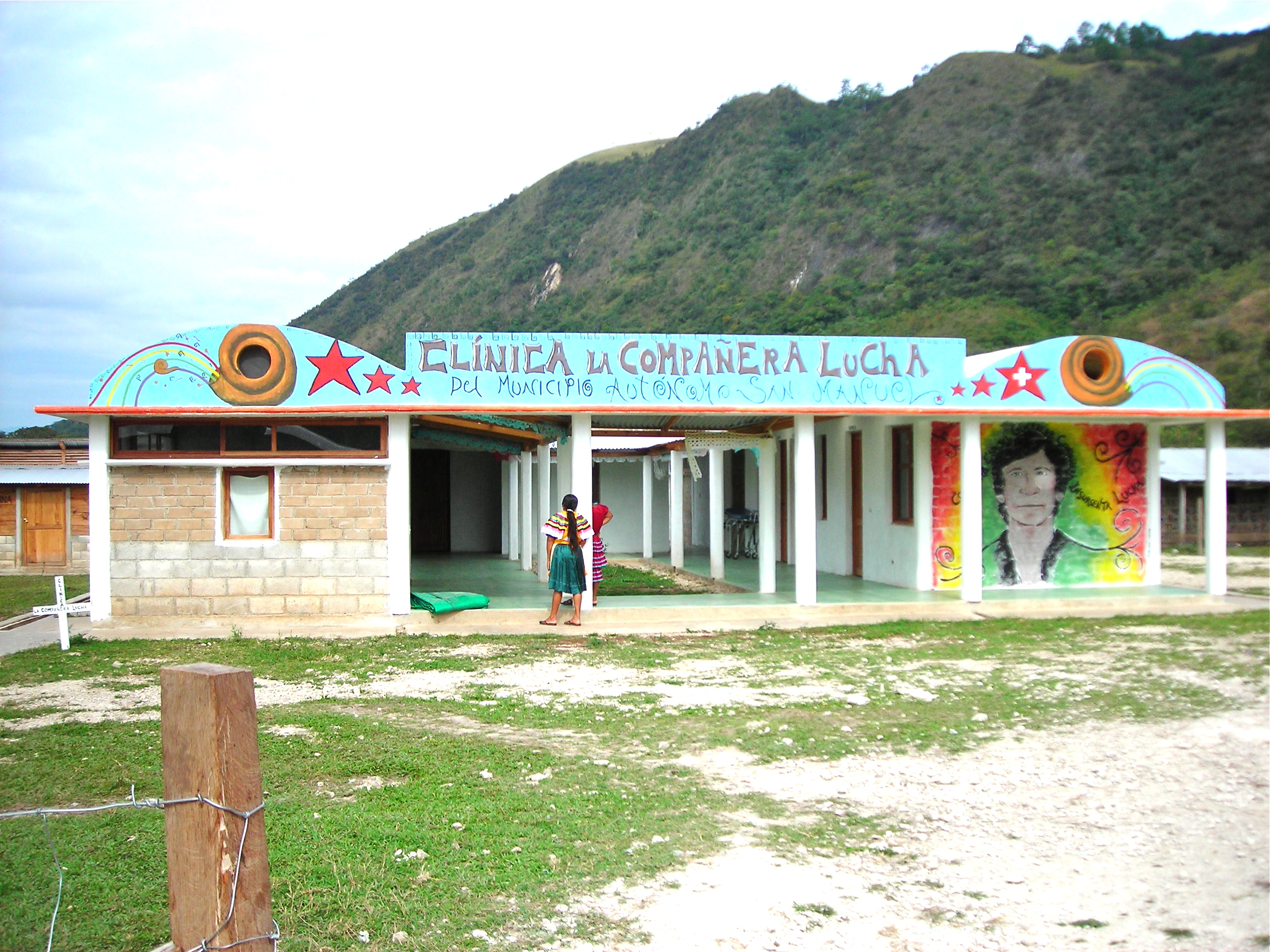
I think this is a central issue. The influence of the Panthers transcends geographies and calendars, as is the case with the Zapatista movement. The achievements of the black movement are more than 50 years old and only in these times are we being able to recover them and appreciate their importance.
It is still too early to understand the transcendence of Zapatismo. We know that it has impacts all over the world, that autonomies grow in all corners of the Latin American continent and that its legitimacy and prestige go beyond Mexican borders. Even so, it will be years before we can assume that we are facing one of the revolutions that transformed the way people do things, the political culture of those below.

Originally Published in Spanish by Desinformemonos, Monday, May 15, 2023, https://desinformemonos.org/salud-rebelde-y-movimientos-anti-capitalistas/ and Re-Published with English interpretation by the Chiapas Support Committee
Chiapas court sentences the “Cancuc 5” to 25 years in prison
Bulletin No. 10
San Cristóbal de Las Casas, Chiapas, Mexico
May 17, 2023
The judicial power of the state of Chiapas condemns the five indigenous Tseltals from San Juan Cancuc to 25 years in prison for defending their territory
The criminalization of indigenous people, a constant issue in Chiapas
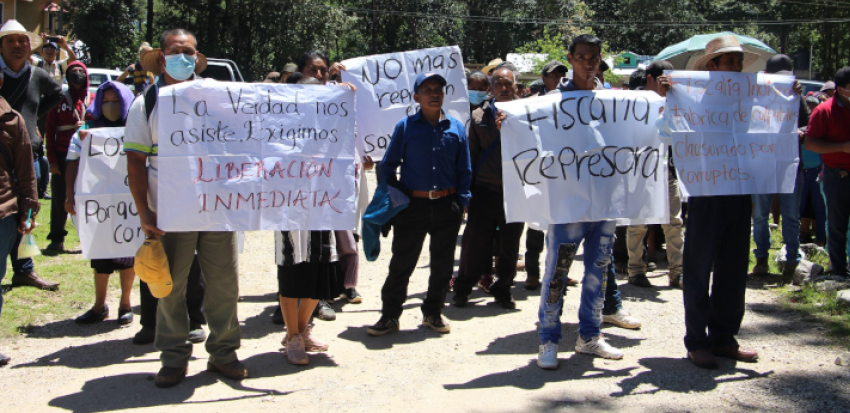
From this Fray Bartolomé de Las Casas Human Rights Center, we denounce the criminalization of defenders of territory. The Chiapas government once again acts with impunity. Today, May 17, 2023, the Judicial Branch of the State of Chiapas found guilty Manuel Sántiz Cruz [1[, Juan Velasco Aguilar, Agustín Pérez Velasco, Martín Pérez Domínguez and Agustín Pérez Domínguez, five indigenous community defenders, of the Tseltal Maya people of San Juan Cancuc, arbitrarily deprived of their freedom for defending their territory, who were sentenced to 25 years in prison for a crime they did not commit.
To establish the sentence, the judge used legal criteria from 1993, that is, criteria from more than thirty years ago, despite all the legal reforms that have occurred in Mexico that should guarantee human rights. The judge gave probative value to the statements of the municipal police, when they should have been the first to be investigated, since the death occurred in the patrol car of the San Juan Cancuc municipal police. Another notorious fact was that he gave value to an altered death certificate.
On May 3, 2023, the five Indigenous Tseltals gave their statement before the Judge, where they mentioned that three of them were arbitrarily detained on May 29, 2022, in San Juan Cancuc, through a joint operation of the Municipal Police, the National Guard and the Mexican Army, to later be handed over to the Indigenous Justice Prosecutor’s Office, who first fabricated the crime of drug possession and then involved them in the homicide for which they were sentenced.
The last two stated that they were arbitrarily detained by members of the Ministry of Security and Citizen Protection and the Specialized Police on June 1, 2022, outside the State Center for Social Reintegration of Sentenced No. 5 (CERSS No. 5) of San Cristóbal de Las Casas, when they visited their compañeros and in retaliation for having witnessed the operation and arbitrary deprivation of liberty. None of these arbitrary elements were taken into account, so once again they give evidence of the constant action of criminalization towards the native peoples who defend the territory.
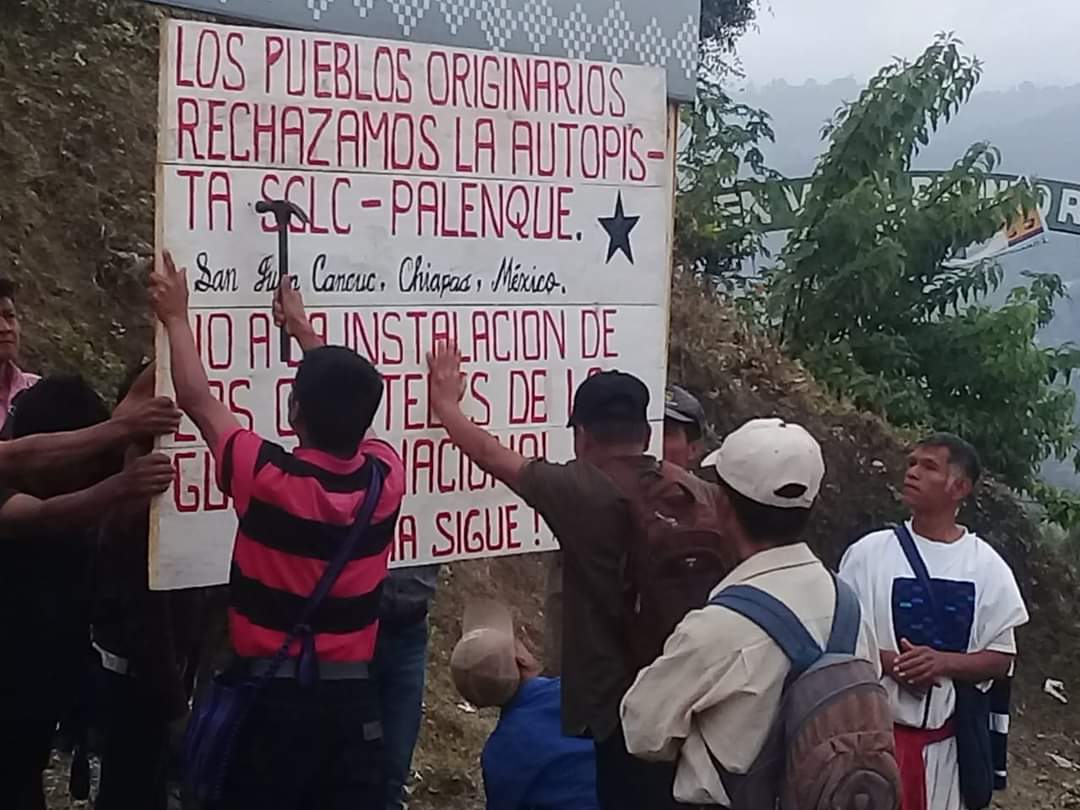
This case is part of a model of complicity that exists between municipal, state and federal authorities, along with judges and prosecutors to manufacture guilt and keep innocent people in prison, so the lack of access to justice is a burden of the Mexican legal system.
Frayba demands freedom and justice for the five indigenous Tseltals of San Juan Cancuc, since we have fully documented the existence of serious human rights violations, including due process of law, noting the ineffectiveness of the investigations of the State Attorney General’s Office, which are devoid of legal value, in addition to the partiality of the Judiciary that acted ignoring the clear evidence of the arbitrary deprivations of liberty, and that the five defenders of territory were targeted. Finally, we refer to the arguments of the United Nations Working Group on Arbitrary Detention, which mentions that widespread or systematic imprisonment or other serious deprivation of liberty in violation of the norms of international law may constitute crimes against humanity. [2]
[1] Manuel Sántiz Cruz “has been president of the San Juan Evangelista Human Rights Committee, which promotes actions around defense of territory against construction of the highway stretch between San Cristóbal de Las Casas and Palenque. They are also opposed to the presence of the National Guard (GN, Guardia Nacional) in the municipality, as well as against the sale of alcohol and drugs in the municipal seat.” Click here to see article on the arrests.
[2] Opinion number 43/2021 of the United Nations Human Rights Council’s Working Group on Arbitrary Detention, adopted on September 10, 2021, regarding Adrián Gómez, Germán López, Abrahám López, Juan de la Cruz and Marcelino Ruiz (Mexico). https://www.dof.gob.mx/nota_d
Originally Published in Spanish by Frayba, Wednesday, May 17, 2023, https://frayba.org.mx/el-poder-judicial-del-estado-de-chiapas-condena-25-anos-los-cinco-indigenas-tseltales-de-san-juan and Re-Published with English interpretation by the Chiapas Support Committee
In Mexico, Mining Law Reform is “Half-Baked”
By: Renata Bessi
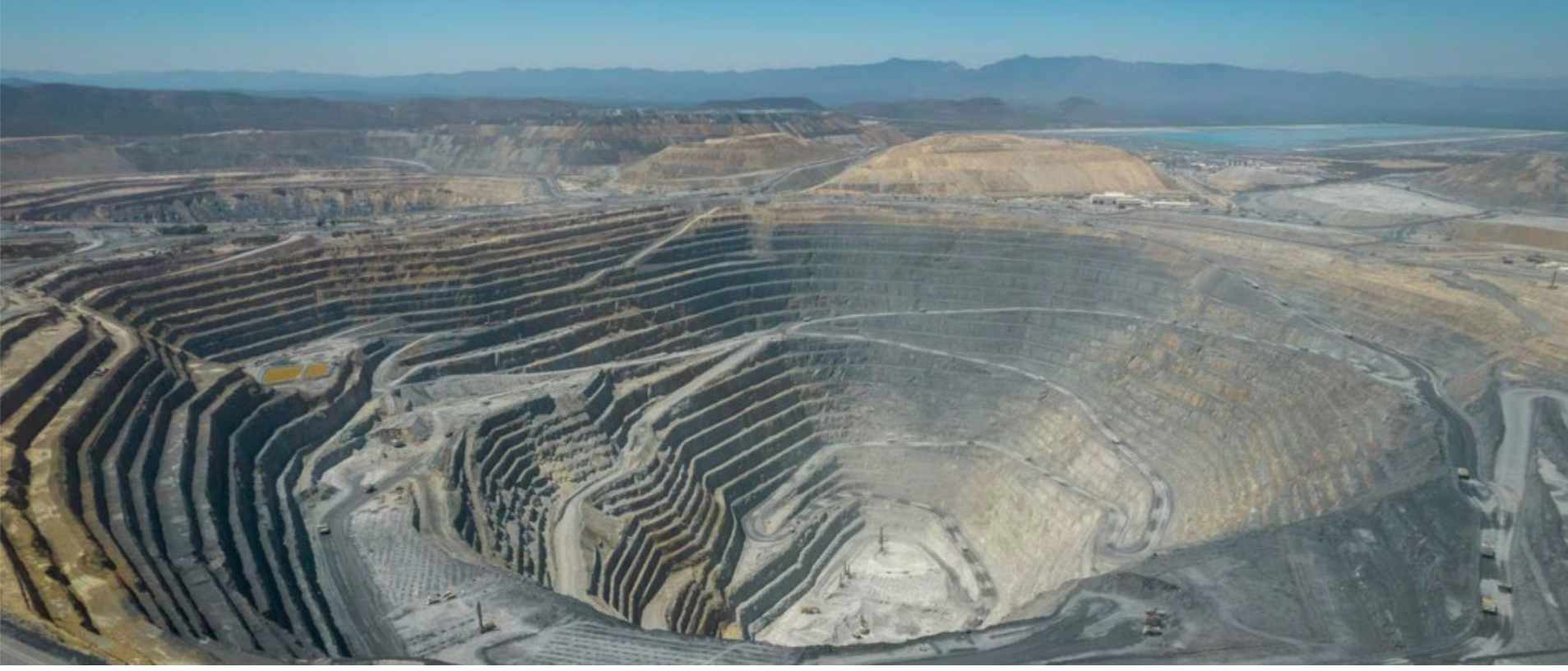
President Andrés Manuel López Obrador published, on May 8th in the Official Gazette of the Federation (DOF), the reforms to the Mining, National Waters, Ecological Balance and Environmental Protection, and Prevention and Integral Waste Management Laws, approved on April 28 by the Plenary of the Senate of the Republic.
While the changes were celebrated by many environmental activists and organizations, the agrarian lawyer who is part of the legal team of the National Indigenous Congress (CNI), Carlos González, classified the reforms as “half-baked.”
“There is no room for half-measures. A deep and committed policy is needed. It is necessary to commit ourselves in a serious and decisive manner. Because humanity and life on this planet are really at risk,” he declared during the International Gathering El Sur Resiste | The South Resists, at the Indigenous Center for Integral Training (Cideci), in Chiapas. [1]
One of the “half-changes” is the reduction of the duration of mining concessions from 100 to 80 years. The original text of the reform, sent by the Executive for approval by the Congress of the Nation, had previously provided for the reduction to 30 years.
“The President sent to Congress an initiative that, it must be said, contained important elements to restrict mining activity and to put limits on mining companies,” admits the lawyer.
However, the bill reached the Chamber of Deputies and was stopped. “Negotiations began with the Mining Chamber. Lobbyists from the Canadian government came. And the initiative was changed,” he says.
At this moment the President of the Republic is distancing himself from the legislative debate, he pointed out. “He got Covid-19 and the debate in the press was whether he had passed out or not, while this important mining initiative was being torn apart. They didn’t defend it, neither the president, nor those who represent him,” he added.
Contrary to the initial text, it was accepted that mining companies may continue to use the working water by simply giving “notice to the National Water Commission (Conagua) and that the rights for that water are granted” as stated in the text of the reform.

“When there is a mining operation, what happens is that the ground is broken, but when the earth is furrowed by water veins, these waters are released and this is the working water. And it is this water that the mining companies take advantage of and will continue to take advantage of without a concession,” explains González.
The percentage of the mining companies’ profit to be allocated to the communities was reduced from 10% to 7%. This percentage is on the amount that is fiscally proven by the mining companies. “Now we are going to ask if a cartel that is mining in the south of Jalisco, in Michoacán, in Colima, in Guerrero, in Oaxaca is going to pay taxes. They don’t even need a concession to operate,” the lawyer points out.
Another change is that concessions may include two or more minerals or substances, while the previous proposal allowed the mining of only one mineral. The objective was to have greater control over the production of resources.
The reform does not apply to concessions already granted, so only future permits will be subject to the new rules. Existing concessions total 120 million hectares, equivalent to 60% of the national territory.
More Control
The reform removed the preferential nature of mining over any other use or utilization of the land. Thus, the exploration, exploitation and processing of minerals will no longer be imposed over any other activity that the communities are developing in their territory, be it housing, agriculture or forestry. It also prohibits concessions in protected natural areas.
Another positive change was the end of the “free land” figure. Under the old law, “with the exception of the areas considered as mining reserves, which are very few, the entire national territory was considered free land. The first one to arrive and bid became a concessionaire,” explains Jorge Pelaez, coordinator of the Legal Clinic for Environmental Justice at the Ibero, a member of the Cambiemos la Ya campaign.
The coordinator explains that the Mexican Geological Service (SGM) is strengthened by granting it a monopoly on exploration to the detriment of private companies.
However, “the person who has information from which it can be inferred that in an unassigned or concessioned lot there are minerals or substances that are not strategic or reserved to the State, can present it to the Secretary (of Economy) so that it can determine the advisability of ordering the Mexican Geological Service to carry out the exploration,” says the text of the reform.
The SGM may enter into a collaboration agreement with such party for the exploration of the lot, with a term of up to five years. If it is determined that there are usable minerals, a bidding process may be carried out to grant the concession.
It also becomes mandatory to consult with the peoples and communities before granting concessions on indigenous territories. Lawyer Gonzalez maintains that what exists in terms of the right to free, prior and informed consultation is contradictory jurisprudence and case law.

“One day they favor the people, the next day they do not. They have turned it into the main right of our peoples. This is how they have presented it: the right to consultation over the rights that are substantive, the right to territory and the right to autonomy. The right to consultation is an adjective right. Its central purpose is to allow States and business corporations to reach an agreement with the peoples to implement policies that are in their interest,” analyzes the lawyer.
Mining companies will also have to submit to Semarnat a mine restoration and closure program, a requirement that did not exist in the old law.
Important for the economy?
The Cambiemos La Ya (Let’s Change it Now) campaign made a study in the public reports of the Ministry of Finance on the economic, financial and debt situation of the mining sector since 2019. “The contribution that the mining sector has to public finances is minimal,” says Beatriz Oliveira, who is part of the campaign.
In the year 2019, the percentage of tax collection of the mining sector with respect to the general collection in Mexico as a whole was 0.13%. In 2020, it was 0.32%. In 2021, 0.97%. “Mining in general, with all the tax contributions it makes does not reach 1% of all federal government revenues,” Oliveira argues.
In relation to income tax, in 2019, it contributed 1.41% of the total collected by the Mexican state. In 2020, 1.37%. In 2021, 2.86%. “There is also no substantive income tax contribution,” Oliveira comments.
A mining company pays to the public treasury per hectare, to have the right to mine, 8 pesos for the first year. Second year, 12 pesos. “That’s what the law says,” says Oliveira. The maximum is 176 pesos.
Poverty
As for what is considered local development, of the 21 municipalities that are classified as gold producing centers, in 10 of them the population lives in conditions that exceed the national poverty levels, as revealed by the data presented by Oliveira.
[1] They also also mentioned mining extraction as a factor causing social deterioration in the statement by Bishops of the San Cristóbal de las Casas Diocese, Chiapas.
Originally Published in Spanish by Avispa, Tuesday, May 16, 2023, https://avispa.org/en-mexico-reforma-a-la-ley-minera-hecha-a-medias/, Translated by Schools for Chiapas and Re-Published by the Chiapas Support Committee
Zibechi: The mind thinks with ideas, not with information

By: Raúl Zibechi
In a recent interview (https://bit.ly/3BuJeRP) the South Korean-born German philosopher, Byun-Chuk Han, points out: “We are very well informed, but somehow we cannot orient ourselves.” His arguments about the social consequences of the over-information we suffer had already been analyzed in his book Infrocracy, published a year ago.
Byun attributes to computerization many of the problems we suffer as a society. He says that the narcissistic ego turned inward “is the cause of social disintegration,” since “everything that unites and connects is disappearing,” neutralizing the possibility of considering ourselves a single society. The bottom line is that there are no longer “common narratives that bring people together.”
He distinguishes between truth and information, asserting that the latter is centrifugal and destroys social cohesion, while the true narrative holds it together. “Truth illuminates the world while information lives on the lure of surprise,” he says, because it generates a succession of “fleeting moments” that have the power to obscure reality and distort instead of informing.
The philosopher continues to provide arguments, such as the fact that now information does not enable the creation of a public sphere. I remember, not so long ago, that in critical situations people swirled around newspaper stalls, commented and shared the news in the public space. But now we no longer have common stories that guide and give meaning to our existence. There are also no rituals, and we barely have consumption and the satisfaction of needs, Byun shoots.
He believes that in the future “people will receive a universal basic income and have unlimited access to video games,” a form that state policy around the world is now taking, in a new version of “bread and circus.”

It can be said that this is not new, but the drift of half a century of increasing positioning of information technologies at the center of our lives. The Austrian physicist Fritjof Capra complements the German philosopher, as he explains in this sentence: “Information is presented as the basis of thought while, in reality, the human mind thinks with ideas, not with information” (The Plot of Life, Anagram, 1998, p. 88).
He recovers many concepts expressed by the American novelist Theodore Roszak in The Cult of Information. Treatise on High Tech, Artificial Intelligence and the True Art of Thinking, published in 1986, almost four decades ago. An important conclusion: “Ideas are integrative patterns that do not derive from information, but from experience.”
That is why the whole commitment of the system with our young people consists of limiting their life experiences and subjecting them to a constant bombardment of information that does not contribute anything, but creates a gigantic cloud of confusion. Consumerism, that “anthropological mutation” that Passolini mentioned half a century ago, is his main window to the world, except of course the fabric of his computer devices.
In this world of information overload there are no ideas, just as there are not in the tremendous flow of data on the Internet. Because ideas have always been dangerous, they are the ones that can give meaning to reality and lives, they are compasses to lay bare oppressions. Without ideas and without life experience, humanity is shipwrecked towards the abyss, just at the most critical moment in living memory, at least since the Black Death (1347-53), the remote origin of capitalism. [1]
Overwhelming us with information and blocking ideas is gain for the system, so I propose to think of the use made by those at the top of the Internet as an immense counterinsurgency policy. On the other hand, progressivisms use and abuse communication to offer an account of their supposed virtues, never to dialogue on an equal footing with ordinary people. They reproduce the systemic subject-object relationship, which they claim to combat, placing their own voters in a situation of passive recipients of their discourses.
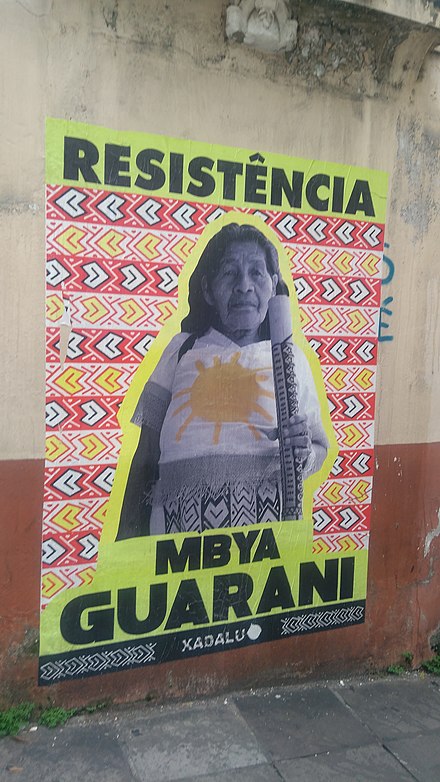
To protect the integrity of their communities, the Mbya Guarani in many villages regulate Internet connection schedules, so that their sons and daughters are not left defenseless in the face of the avalanche of data that they cannot order or hierarchize. In this way they refuse to expose themselves to the disorganizing power of social networks. There are many native peoples who do it, simply to defend themselves.
The long silence of the Zapatista Army of National Liberation, more than a year without issuing communiqués, can be understood as a refusal to enter the media circus that few already attend, and less understand. It is the silence of rage, and of dignity. The Fifth Declaration of the Lacandon Jungle (1998) explains silence as a weapon of struggle, and that “with reason, truth and history, one can fight and win… Permeating.”
[1] Ole J. Benedictow, La peste negra, 1346-1353. La historia se completa, Akal, 2011.
Originally Published in Spanish by La Jornada, Friday, May 19, 2023, https://www.jornada.com.mx/2023/05/19/opinion/014a1pol and Re-Published with English interpretation by the Chiapas Support Committee
Maya Train change causes discord in Nicolas Bravo

Text by: Arturo Contreras Camero, Pie de Página
MEXICO CITY – “We expected the train to pass through the town, to generate the sale of our products, we thought sales were going to grow, but now where they left it is not near the road, they put it in the jungle, it is a departure from the way we had left it,” says Sonia Méndez, an inhabitant of Nicolás Bravo [1] and an ejido member of Laguna Om.
In November 2022, the ejido members of Laguna Om, where the town of Nicolás Bravo is located, met to agree, together with FONATUR [2] and Army authorities, on where the Maya Train station would be built in that community. Courageous, they determined a place known as the old garbage dump. Thus, those who got off the train would arrive in the town, where its inhabitants hoped to benefit from the economic spill they could leave.
“It was just in June of last year that the consultations and measurements of the trace were made. The surveyors who had been in the AIFA – the Felipe Angeles International Airport – came, they made the projections of the line, they looked at those affected, they made measurements of the trees that were there, all that since July,” Sonia Méndez adds.
However, after the announcement of a couple of changes to the area that the train station would use, in February 2023, ejido authorities convened an assembly to approve a radical change to the location of the station. Instead of being close to the village, it would be far away, located in the jungle, suspiciously close to the Explorean Kohunlich hotel, owned by Grupo Posadas. [3] The decision caused a furor among the rest of the ejido members, who, since then, seek to publicize their case, which, they say, is full of irregularities.

On Monday, May 8, Pie de Página took the case to the daily conference of President Andrés Manuel López Obrador, to understand the motivations behind the change. The president’s response, however, did not calm the annoyance of the group of ejido owners, who ask that the democratic decision on the first location of the stop be respected.
“It had been agreed to place the station at a site, but it was more distant from the center, from the archaeological zone of Kohunlich, which is a very important archaeological zone,” López Obrador replied. “It coincides that this company that you mention has a hotel near Kohunlich. That has nothing to do with it. It’s that the station, we consider, would be or will be closer to the archaeological zone.”
Now, both residents and ejido members fear that the benefits that the Maya Train could represent for their community will no longer arrive, and instead, they will stay at the Explorean hotel, a resort with luxury bungalows, at which lodging is around $4,000 to $10,000 pesos per night under the all-inclusive concept.

A rigged process, they accuse
Sonia Méndez belongs to a group of ejido members who believe that the change of the station’s location obeys a spurious negotiation between the ejido commissioner, government officials and the hotel company. On November 6, 2022, an assembly was held to pay the affected ejido members for each of the square meters that would be used for the construction of the station.
“It was a legal assembly, but rigged,” says Lorenzo Vargues, another ejido member. “We were not allowed to reach an agreement with the majority of the ejido members; it seemed that the commissioner had already agreed with the construction management and we were told in assembly: take it or leave it. 110 thousand pesos per ejido member, at 24 pesos per square meter, the lowest payment in the entire Maya Train. “
Subsequently, in January, a couple of changes were announced to the expanse the station would occupy, a little larger than the initial one. Despite this, a higher payment for the increase in land was not considered. However, on February 12, the ejido commissioner convened an assembly to approve the change and the start of construction of the station in a completely different area than the one that had been agreed.
“How are we going to make a new agreement if the old one is not even approved! But that’s what the commissioner wanted, he wanted it to continue, with something that was not positive for the community,” says Lorenzo Vargues about that assembly.
The discomfort of half of the ejido members was such that the assembly had to be suspended. The ejido commissioner declared a recess and resumed the assembly on March 12. However, days before the date, with a low and select call, the commissioner summoned some ejido members to resume it on March 5.

“We went to the assembly, because of the call we had and we realized that the commissioner, wanting to restart the assembly, did not roll call, as if it were the one on February 12.” As he says it, Lorenzo’s voice quickens and rises in tone, as if affected by anger. Many of the ejido members left the assembly, not wanting to participate in what they consider arbitrary. However, despite the lack of a quorum, the ejido commissioner approved the change of location of the station.
It was paid attention to and there were agreements: governor of Quintana Roo
In the days following the spurious assembly, ejido members and neighbors of Nicolás Bravo demonstrated at the president’s event in the region as well as at Governor Mara Lezama’s events. They carried out road closures and sit-ins in front of the state government palace in order to be heard.
On the day the president was questioned about the case, Mara Lezama herself was present at the National Palace. From there, she assured that he had already talked with the dissatisfied ejido members and that an agreement had been reached with them, although that had not happened.
“It’s an important issue, because it’s a tourist stop and also an investment by the state government for the development of that area. The property is already bought, which belongs to the federation. And what they want is more development than the station that will be in Kohunlich, or very close to Kohunlich.
Well, in any case, it will also bring them development, but compañeros, fellow ejido members, were dissatisfied. A new assembly was held, in which there was no manipulation. They wanted the original agreement to be respected, but since there is a general interest, it was reconciled with them and they are going to build a community development center, which is not far away either, and that will benefit as well,” the governor said during the president’s conference.
Faced with the unrest, the residents of Nicolás Bravo now ask that in the area where the station was originally going to be built, a university, an ecotourism park for the inhabitants of the region who cannot afford the costs of the hotel and a handicraft market now be made.

“We said that we still want to create a tourist route in the southern part of town. We are the ones interested in exploiting this tourist aspect, as they do in the hotel,” says Lorenzo. From Explorean it is common to see tourists who make kayak tours through the turquoise waters of the Om Lagoon, or who travel its jungle trails by bicycle.
“We are not against the train; it’s a large and profitable project. We are against irregularities. We just hope that the governor will keep her word that we are going to rescue the south and that they are not just promises, because the population is very offended. We are going to continue insisting that they pay attention, that they assert the right of each one of us,” says Lorenzo with hope, still full of doubts about what is going to happen.
[*This note was produced by Pie de Página, part of the media alliance Red de Periodistas de a Pie.]
Translator’s Note
[1] Nicolas bravo is one of the towns visited by the El Sur Resiste | The South Resists Caravan. In the final “Pronouncement” from the International Gathering, they demand the revocation of the illegal March 5 Assembly.
[2] Fonatur is the Spanish acronym for the Fund for the Promotion of Tourism.
[3] Grupo Posadas is a hospitality company based in Mexico City. It owns, leases, operates and manages hotels, resorts and villas with its several different brands. As of 2020, the company operates more than 150 hotels with 24,000 hotel rooms.
Originally Published in Spanish by Chiapas Paralelo, Thursday, May 11, 2023, https://www.chiapasparalelo.com/noticias/2023/05/cambio-del-tren-maya-desata-la-discordia-en-nicolas-bravo/ and Re-Published with English interpretation by the Chiapas Support Committee
 Chiapas Support Committee