Chiapas Support Committee
Home of the Compañero Manuel blog on zapatistas & mexico
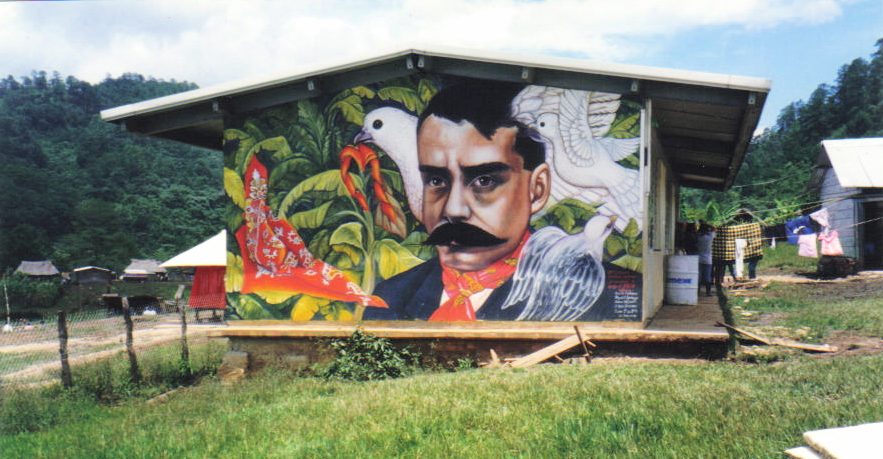
From confrontation to autonomy
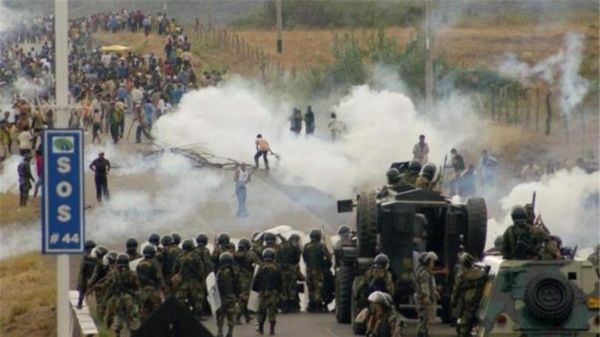
Bagua Massacre
By: Raúl Zibechi
The history of the Autonomous Territorial Government of the Wampis Nation dates back to a half century ago, a process that led to the formation of the Huambisa Aguaruna Council in 1977, under the Peruvian military regime. It was also a response of the Wampis and Awajun peoples to the mestizo colonization of the Marañón River, near the border with Ecuador. A little later they broke with the Jesuits that were working with them and decided to take a path of their own.
In a first stage they insisted on the titling of their lands, as a way of recuperating territorial integrity as a people. This process implied many tensions with external actors, the military, extractive companies and mestizo colonizers, and led to the deployment of communal forces to evict the invaders, which was answered with the incarceration of leaders and directors.
With the crisis of the military government at the beginning of the 1980s, there was what the sociologist Tania Gómez (author of a magnificent thesis about the autonomous Wampis government that inspires this article) calls an “avalanche in the Amazon,” from the hand of the multi-national companies in the context of globalization. Hydrocarbons and gold mining are the two activities that most affect the Amazonian peoples, impelled by the authoritarian government of Alberto Fujimori (1990-2000).
The crisis happened in 2009, when the State disavowed the agreements that it had with the peoples. “The Wampis are learning that both the titling and the environmental categorizations of their territory are insufficient tools. The State begins to modify the legal frameworks for permitting the entry of global forces of enormous magnitude, without taking the effects on the life of the Wampis into account,” points out the aforementioned work of Gómez.
The confrontation between indigenous Awajun and Wampis and police and military forces took place on August 5, after almost two months of intense mobilization in the Amazon for the repeal of the decrees that permitted an abusive exploitation of the communal wealth without consultation or consent of the original peoples, with a result of 33 deaths between demonstrators and police.
The day known as the “Baguazo” (Bagua Massacre) was a parting of waters, besides the synthesis of a long and intense cycle of Amazon struggles. In just six years, on the back of new frustrations that sharpened the historical distrust of the State (criminalization and divisions), the Wampi people decidedly took the path of autonomy.
They had to set aside NGOs and national organizations, including the temptation of municipal administration. This experience also convinced them of the limits of institutions that never treated them as equals, including the laws of prior consultation, which were not applied or were manipulated.
“After participation in these processes, it is concluded that prior consultation is just a convincing procedure in which the State seeks to attack weaknesses of organization.” In order to construct autonomy the communities of two river basins (the Santiago and Morona Rivers) had to articulate and elaborate their autonomous statute in more than a dozen workshops with broad participation of the bases.
One of the central points of the statute emphasizes: “we consider invalid any treaty or consent effectuated in favor of the companies in a separate or partial way before the official process between our nation and the Peruvian State had ended.”
The autonomous government’s organisms of power know four bodies: the principal assembly with 96 assembly members; an executive government with its advisors; governments of both basins and governments of each community with their respective elected authorities.
As the Peruvian sociologist Alvaro Giles points out: “it’s about the first indigenous people in the country to change the strategy of indigenous syndicalism for the idea of self-government.” He adds that there are now three other Amazonian peoples pueblos in the process of founding their autonomous governments, so “we would be facing a new strategy in the world of the Peruvian Amazon.”
Only two observations fit. One is that autonomy is not an option anchored in ideologies, but rather in histories and worldviews that are deployed to face concrete challenges. What shows us that we are faced with genealogies different from those of European origin, analyzed by Castoriadis and others.
Two, that the peoples in movement (a more adequate concept than social movements) are discovering that autonomies and territorial self-governments allow them to confront predatory extractivism in better conditions than any other strategy that may pass for negotiation with the State. In the coming years we will see a proliferation of autonomous processes.
Accumulation by dispossession and capitalism can only be confronted and defeated with other political cultures, outside the institutions and agreements above.
———————————————————–
Originally Published in Spanish by La Jornada
Friday, July 19, 2019
https://www.jornada.com.mx/2019/07/19/opinion/017a1pol
Re-Published with English interpretation by the Chiapas Support Committee
Frayba: forced displacement of 36 people from Chol community in Chiapas
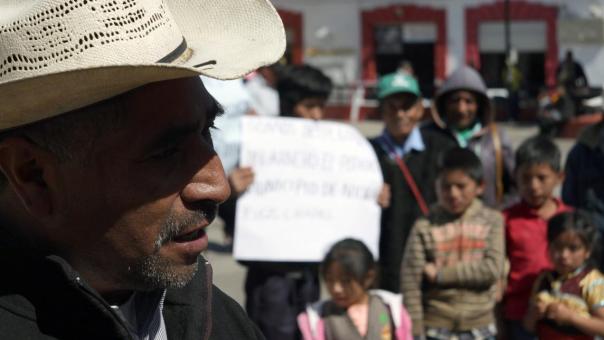
By: Elio Henríquez
San Cristóbal de Las Casas, Chiapas
El Fray Bartolomé de Las Casas Human Rights Center (Frayba) denounced that six families of the la organization Ikoltyañtyel Lak Lumal (The hope of our peoples, in the Chol language), which is organized in the National Indigenous Congress (CNI, its initials in Spanish), were forcibly displaced from the San José El Bascan community, municipality of Salto de Agua, located in northern Chiapas.
It explained in a communiqué that on Thursday, July 18, 2019 at approximately 4 o’clock in the afternoon, a group of people coming from the Tioquipan El Bascan ejido violently entered San José El Bascan community and provoked the displacement of 36 people.
The Frayba added that the aggressors destroyed homes, stole sheet metal from houses and obstructed water wells that supply the families with water and it pointed out that, according to the denunciation of those affected, threats exist against CNI delegates on the part of Artemio Álvaro Vázquez, who says he is the owner of the lands that campesino families recuperated in 1994.
It urged the Mexican State to guaranty the life, safety and personal integrity of the displaced families that are found in the municipality of Salto de Agua; to apply the guiding principles of internal displacements of the United Nations Organization and the Law for the Prevention and Attention of Internal Displacements in the state of Chiapas in order to assure respect for the human rights of the displaced population of San José El Bascan.
It also asked to attend to the conflict over the situation of dispossession of lands that have been recuperated since 1994 by the families of San José el Bascan that are members of the CNI.
———————————————————–
Originally Published in Spanish by La Jornada
Sunday, July 21, 2019
https://www.jornada.com.mx/2019/07/21/estados/021n2est
Re-Published with English interpretation by the Chiapas Support Committee
Recovering Paradise
This documentary film tells the story of indigenous people in Michoacán, Mexico, who recuperated ancestral land in Santa María Ostula and suffered armed attacks as they constructed their autonomy. This screening is a benefit for the National Indigenous Congress and its communities that are under attack. For more information check out the Facebook page.

The family of Toñito will seek extradition of US agent that killed him
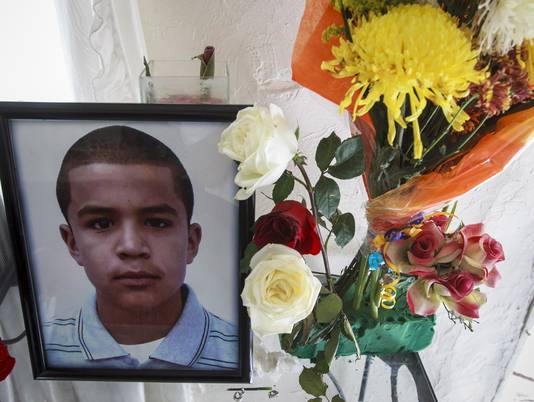
Memorial for José Antonio
By: Blanche Petrich
Lonnie Ray Swartz, a Border Patrol agent in Arizona, was an Army deserter. Corpulent and red-haired, he has a criminal record (two arrest warrants from the Federal Bureau of Investigation already prescribed). He is a shooting instructor.
On October 10, 2012, while on duty on the border that divides Nogales, Arizona from Nogales, Sonora, he fired two shots from his regulation weapon at a 16-year old boy, José Antonio Elena Rodríguez, who was walking along the avenue parallel to the wall. He was absolved in two consecutive trials. He alleged self-defense. Evidence that the boy had thrown stones was never presented in the Tucson courts. He was shot in the back.
For his mother, Araceli Rodríguez, and his grandmother, Tayde Elena, the only opportunity to get justice for Toñito is that now, with this new regime, the Attorney General of the Republic takes up the case, resumes the preliminary investigation opened in 2012 (AP/PGR/SON/NOG-II/972/2012), demands Swartz’s extradition and prosecutes him in Mexican territory.
“We know that it’s very difficult to achieve,” Rodríguez recognizes, who with her mother-in-law and the defense attorney Manuel Íñiguez López traveled to Mexico to promote the case again in the Foreign Relations Ministry and in Mexico’s Senate, to report to civil organizations and to seek a hearing with Attorney General Alejandro Gertz Manero and, if possible, with President Andrés Manuel López Obrador. “But it’s the only way left to us to see that justice is done. The United States, and less now with that man (Donald) Trump in the presidency, is never going to judge one of its own. The Mexican attorney general is the only hope left.”
A pending case exists in the Supreme Court of the United States, which will soon decide if the families of those who were murdered in recent years by the Border Patrol on the Mexican side from US territory have constitutional rights to sue in US courts. That right has been denied up to now to five families. Only the family of José Antonio has received a favorable decision from the ninth district court of appeals.
The Mesoamerican Migrant Movement, which supports the motion, argues that: “if the case is successful and the families can sue, it would be a blunt way of prohibiting innocent people from being killed across the wall. If, to the contrary, they lose that right, they would be legalizing these crimes, which would give a green light to more cross-border crimes.”

The grandmother, Tayde Elena, remembers that Lopez Obrador already knows about this case. “When he went campaigning through Nogales, we handed him a folder and spoke with him very briefly. He promised to look at it.”
The mother and grandmother have engraved in their memory the humiliation they felt when José Antonio’s case reached the Tucson courts. “We attended every day of the trial. The Mexican consulate only supported us with transportation; it did not give us legal advice. We experienced many injustices. The judge did not allow the agent’s criminal record to be presented. Everyone on the jury was white was white: they saw us as weird people.”
The defense presented all kinds of forensic evidence and experts to show that the teenager, who was walking along International Street, was headed to his house three blocks away when he was killed. He received 10 shots in the back and neck, and it turned out to be physically impossible for him to throw stones over an embankment and a metal fence more than five meters high. The agents that accompanied Swartz that day stated that they never felt threatened by the boy and that “it surprised them” that the accused began shooting between the bars of the border wall.
The agent, at his turn, contradicted himself: he first stated that he was disturbed when he observed that a stone “almost hit“ one of the dogs that accompany surveillance at the border, but the police dog-handler denied it. Then he stated that he didn’t remember anything that happened in those moments, and that he had lost his memory.
The defenders of Swartz alleged that the boy was part of the Sinaloa Cartel. “They dirty his name and we were not even allowed to present our version. Toñito was a very intelligent child; he had goals in life, he studied at the open middle school because he wanted to be a soldier. He saw in that path his only opportunity of obtaining studies, which is what he wanted most,” recalls the grandmother, who is still hurt by how a local newspaper, Nuevo Día, broke the news: “They killed another indigent at the line.”
The last session of the trial, in November of last year, was quick. The judge Raner Collins admitted that he was in a hurry to return home to cook his Thanksgiving Day turkey. The jury declared Swartz innocent. “That sentence was a joke to Mexico, one more proof of how they always trample us,” Araceli assures. “We want to speak with the Mexican authorities about all this. We need them to support us in order to achieve, but not only for the family of José Antonio, but for all who, like us, are in the same situation.”
———————————————–
Originally Published in Spanish by La Jornada
Wednesday, July 17, 2019
https://www.jornada.com.mx/2019/07/17/politica/010n1pol
Re-Published with English interpretation by the Chiapas Support Committee
Presidential message: to the EZLN?

The EZLN in Guadalupe Tepeyac in 1994 for the Democratic Nation Convention.
By: Magdalena Gómez
Two recent events contain a marked contrast. We’re talking about the interview that the President of the Republic conceded to the executives and reporters of La Jornada on the occasion of the first anniversary of his electoral victory and the speech that the same Andrés Manuel López Obrador gave last July 6 in Guadalupe Tepeyac, Chiapas, a symbolic space in the Zapatista beginnings. I will in the first place locate the positions expressed in the interview, in order to then place the possible meaning of a pronouncement that obviously the EZLN will decide if it responds to and how, because one way of doing it would also be omitting all reference to it.
To a question about the Army, the President repeated that: “the armed forces receive orders and now they have not received nor are they going to receive an order that means massacring, torturing, disappearing or repressing people.” Later we observe in the video of the interview the questions whose answers would seem to have nuances today: “In the Zapatista communities of Chiapas the situation is very tense. There are military flyovers, at a low level,” to which AMLO said: “That is a fantasy. It’s as if I am here in a vase, and I am not a decoration. No, the theme is very ideological. The Zapatistas, who I respect, do not believe or didn’t believe that I would be able to carry out the transformation through peaceful and electoral means.” The journalists pointed out to him what the Fray Bartolomé de las Casas Center documented and he replied: “Well they are lying.” To which he added: “They don’t usually do that.” Immediately, the issue of the paramilitaries was brought up, which the President also rejected. Then came the questioning about the Maya Train: Wouldn’t we have to consult with the indigenous peoples through whom that project will pass? And the answer also repeated: “It’s already being done.” But not in accordance with the terms of Convention 169 of the International Labor Organization, they specified to him. “Yes, it’s being done,” he said; but there is great disagreement, someone pointed out. AMLO responded: “I don’t agree with you. I have been there. I have listened to their voice. That’s why I talked about two different worlds, because I have submitted to consultation, the conservatives say by raised hand. I would tell you that there is no rejection, there isn’t, well minority.” He insisted: “It reminds them of the Plan Puebla-Panama.”
AMLO: “Yes, because many believe that we are equal; this happened with Zapatismo. [Subcomandante] Marcos came to say that we were the serpent’s egg and that it was better not to vote.” These opinions are well known. The question now is why he brought up the Zapatista issue in Guadalupe Tepeyac without centering it, as he used to do, on the subcomandante that is now Galeano, and recognizing: “When the Zapatista Uprising took place many turned to look at the communities and that helped them to know about a reality of abandonment, of oppression, of injustices, of marginalization” and he recalled that in those years he visited Zapatista territory to later emphasize that in his case he decided to struggle through the peaceful and electoral path, and pointed out that there is also the view that one can transform a reality of oppression through the armed path, as was done in the Independence, the Reform and the Revolution. He finished with the call: “that we don’t fight with each other, that enough now of divisions, that we all need to unite. All together, united as brothers.”
Questions emerge at this point: why and for what [reason] did the President decide to go to that area and in front of military men and the governor of Chiapas vindicate respect for the struggle and path of the EZLN, when days before he rejected and accused the Zapatistas of lying about harassment? Did he collect information that led him to decide that should get off the polarization with the EZLN because very probably it is being taken advantage of to consider that they are good with the top boss by harassing those they consider their enemy? My impression is that the message of conciliation to the EZLN is in reality an order to his subordinates. If so, the tone and content of the speech makes sense. Without a doubt his evaluation about Zapatismo is incomplete. Nevertheless, his presence and message in Guadalupe Tepeyac is relevant. That it is the President and not the self-appointed messenger of the days after the electoral victory has significance. Let’s review: Carlos Salinas declared the unilateral ceasefire because of pressure from civil society; Ernesto Zedillo practiced war in every sense; Vicente Fox said that he would resolve the conflict in 15 minutes and promulgated the constitutional counter-reform without attempting to reopen the process of dialogue; Felipe Calderón and Peña Nieto applied the Salinas maxim of I don’t see them I don’t hear them. López Obrador, in order to transcend his message of unity, should correct the direction of his government without simulations versus the EZLN and the indigenous peoples who are threatened by his megaprojects that violate their rights.
See also: AMLO in Guadalupe Tepeyac
———————————————————–
Originally Published in Spanish by La Jornada
Tuesday, July 9, 2019
https://www.jornada.com.mx/2019/07/09/opinion/016a2pol
Re-Published with English interpretation by the Chiapas Support Committee
CIPOG-EZ denounces murders
[Below is the July 12 denunciation from the CIPOG-EZ that caused the cancellation of the caravan.]
Communiqué given more murders and threats against promoters of the CIPOG-EZ and CNI delegates in Guerrero, while impunity, corruption and omission continue in the three levels of government
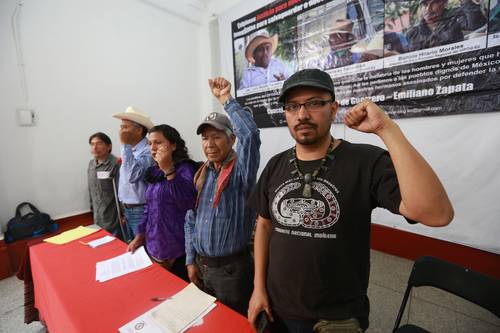
National Indigenous Congress press conference about the Campaign for Life, Peace and Justice in Guerrero.
Community Territory, Guerrero, July 12, 2019
To the Zapatista National Liberation Army
To the National Indigenous Congress
To the Indigenous Government Council
To the Peoples of Guerrero
To the Peoples of Mexico
To the national and international Sixth
To the networks of resistance and rebellion
To the networks in support of the CIG
The men, women, children and grandparents that make up the Indigenous and Popular Council of Guerrero – Emiliano Zapata, must once again lift our voice to denounce the omission of the municipal, state and federal authorities before the humanitarian emergency that intensifies in community territory of the Low Mountains (Baja Montaña) of the state of Guerrero. The narco-paramilitaries continue murdering our CIPOG-EZ promoters and CNI delegates; others have initiated a campaign of threats against our organization, for the purpose of exterminating and disarticulating the organized peoples.
On Monday, July 8, 2019 the indigenous Nahua men David Domingo Alonso and Marcelino Pedro Rojas, local CIPOG-EZ promotors and CNI delegates in Guerrero, natives of the community of Ayahualtempa, municipality of José Joaquín de Herrera. According to the testimonies of neighbors of the narco-paramilitary group “Los Ardillos,” it “picked them up” (kidnapped them) at the Jagüey crossing and they appeared murdered the following day in the locality of Chautla, which is located before the arch of the entrance to Chilapa, and a few kilometers from the Chilpancingo-Tlapa federal highway, a place where it is public knowledge that it is controlled by this group.
On Wednesday, July 10, 2019 the indigenous Nahuas Juana Hernández Ambrosio and Alberta Matías Tendón local CIPOG-EZ promoters and CNI delegates in Guerrero, were cowardly murdered, with the same modus operandi. They were picked up and disappeared at the Jagüey crossing, where they took them off public transportation and around five o’clock in the afternoon their bodies were found on a dirt road in the Corral de Piedra district of the municipal capital of Chilapa de Álvarez. There is a National Guard presence in this zone, although their arrival has not represented any change in the face of the violence of narco-paramilitary groups.
Since Friday, July 5, 2019 and to this date we were informed that the narco paramilitary group “Los Ardillos” conducts investigations and follow-up against various state and regional CIPOG-EZ promoters and CNI delegates, particularly against our Na Savi brother Jesús Placido Galindo, to whom they say that they are: “looking all over the state, to tear him to pieces.” Transport drivers from the High Mountains and other regions of the state confirmed telephone threats, as well as commissioners of the Low Mountains who gave warning to promoters of the organization so that they could alert their compañeros.
The siege of the indigenous Nahua communities that are members of the CIPOG-EZ has not ceased, the narco paramilitary checkpoints continue and they make a list of the population that heads to the municipal capitals at those checkpoints. The State and Federal governments announced with drums and cymbals the arrival of the National Guard, but we don’t see greater security or that justice is done to our brutally murdered brothers and sisters.
Once again we insist and reiterate that we hold the responsables governments of the municipality of Chilapa de Álvarez in change of Jesús Parra García, the state government of Héctor Astudillo Flores, both members of the PRI and federal MORENA government of Andrés Manuel López Obrador responsible for the physical integrity and the life of our Na Savi brother and state promoter Jesús Placido Galindo, as well as of all promoters of the Indigenous and Popular Council of Guerrero – Emiliano Zapata. Since each one of these authorities has been informed directly in different ways since more than a month ago about this alarming emergency. We specifically asked the government of AMLO to apply security measures corresponding to law with urgency due to the gravity of the situation, and as of the moment at more than a month from the request it continues being remiss.
The children and youths of the 22 CIPOG-EZ communities that are under siege from narco paramilitary groups continue without going to school, from kindergarten to high school. Besides the psychological terror that our communities are experiencing, the state of Guerrero and specifically the poor indigenous and campesino communities continue being subjected to a regimen of modern blood and slavery. The actions of the three levels of government evidences their complicity by action or omission and so it seems that what they seek is to create a scenario of tolerance so that the narco paramilitary groups dismantle the indigenous organizations that seek to construct our own destiny, far from slavery and political bosses.

Marichuy with CIPOG-EZ members.
Our only crime is defending life, defending land, defending territory, fighting for the integral reconstitution of our peoples, struggling to open the path to life, in the midst of the death that this system imposes on us. The death sentence for our brothers and sisters José Lucio Bartolo Faustino, Modesto Verales Sebastián, Bartolo Hilario Morales, Isaías Xanteco Ahuejote, David Domingo Alonso, Marcelino Pedro Rojas, Juana Hernández Ambrosio and Alberta Matías Tendón, was for trying to construct a dignified future in peace for their peoples, in the midst of “the finca” that the narco paramilitary groups have constructed in coordination with the bad governments, in order to subject the indigenous communities under fire, taking advantage of the misery and marginalization in which they survive.
The war of extermination against the organized indigenous peoples intensified at the start of 2019, it was just January 20 when Gustavo Cruz Mendoza, a member fue asesinado el integrante of the Concejo Indigenous and Popular Council of Oaxaca–Ricardo Flores Magón (CIPO-RFM), was murdered. Gustavo Cruz Mendoza was an indigenous communicator that fought for his people and for defending their territory in the Chinanteca region of Oaxaca. On June 20, 2019, five months after this cowardly murder, Regulo Jiménez Pulido, Fidel Cruz Mendoza and Mario Cruz Jerónimo, relatives of the late Gustavo and collaborators of the CIPO-RFM, were also murdered. These crimes remain completely unpunished.
On February 20 our indigenous Nahua brother Samir Flores Soberanes from the community of Amilcingo, Morelos was murdered. Samir was an active member of the Peoples Front in Defense of Land and Water of Morelos, Puebla and Tlaxcala, which maintains a dignified struggle against the thermoelectric plant and the gas pipeline in Huexca. Samir was also an indigenous communicator, a well-organized compañero along with his community and communities of the region, and that was his crime.
From March to date in the indigenous Otomí communities in the State of Mexico that resist against the Toluca-Naucalpan Superhighway project, the aggressions, threats, groups of paid hit men, incursions of the State Police protecting the construction companies and the omissions of the bad governments have increased. Despite the fact that they have been winning the legal fight, illegality, corruption and impunity are imposed jointly with public force and violence, in order to isolate them and consolidate this long process of dispossession, which benefits the top business and political groups, and leads to the destruction of the forest, the water and life.
Since March 15, our organized indigenous prisoner brothers in the state of Chiapas that are fighting for their freedom began a hunger strike that continues to this day and has gone on for 121 days. They have been arrested without an arrest warrant and were obliged to confess under torture to crimes they did not commit, among many other injustices, which they continue telling and denouncing. Our indigenous brothers on the hunger strike are: The True Voice of El Amate: Abraham López Montejo, Germán López Montejo, in El Amate prison (Cintalapa); The Voice of Indigenous in Resistance: Adrián Gómez Jiménez and Juan de la Cruz Ruiz in CERSS 5, (San Cristóbal de las Casas) and Men in Resistance: Marcelino Ruíz Gómez, Baldemar Gómez Hernández, in CERSS 10, (Comitán de Domínguez). And as of this moment no authority has offered a solution to their just demands, they have only found deaf ears in the bad governments.
In April 2019, our brothers of the EZLN denounced how the militarization and the counterinsurgency war against the Zapatista communities have increased. They said clearly: “Now, in addition, members of the Federal Army and Air Force enter into the mountains and appear in the communities saying that war is coming and that they are just waiting for orders from the ‘very top.’” The only crime of our Zapatista brothers has been struggling for the just demands of the indigenous peoples of all of Mexico and giving an example of how to organize and defend the life of the original peoples faced with the war of extermination.
In May, an indigenous youth was murdered and three were injured in the indigenous community of Zacualpan in the state of Colima, where they are organized in the Zacualpan Indigenous Council for Defense of Territory. Organized crime and the tolerance of the three levels of government made these acts happen, was how our brothers denounced it.
These are only some of the cases that we know about and remember today, because we understand that the war of extermination is hitting us very hard in Guerrero now, but that it extends throughout our country and is costing lives, a lot of lives. Although the government has changed its skin, it continues protecting the interests of those above, at the expense of other lives. That’s why we reiterate today that the CIPOG-EZ is not going to surrender, it continues and will continue struggling for the life and dignity of the original peoples, despite the fact that we face a system of death and destruction that insists on exterminating us.
For the integral reconstitution of our peoples!
Justice for José Lucio Bartolo Faustino, Modesto Verales Sebastián, Bartolo Hilario Morales, Isaías Xanteco Ahuejote, David Domingo Alonso, Marcelino Pedro Rojas, Juana Hernández Ambrosio and Alberta Matías Tendón, members of the CIPOG-EZ and the CNI-CIG!
Justicia for Gustavo Cruz Mendoza, an indigenous communicator of the CIPO-RFM murdered!
Viva the Otomi indigenous resistance of the State of Mexico against the Toluca-Naucalpan Superhighway!
Freedom for Fidencio Aldama of the Yaqui tribe!
Justice for the indigenous community of Zacualpan!
Stop the counterinsurgency war against the EZLN!
Never more a Mexico without us!
Indigenous and Popular Council of Guerrero – Emiliano Zapata (CIPOG-EZ)
Regions: Costa Chica, Costa Montaña, Montaña Alta and Montaña Baja of Guerrero
July 12, 2019
———————
Originally Published in Spanish by the Congreso Nacional Indígena
Friday, June 12, 2019
Re-Published with English interpretation by the Chiapas Support Committee
4 more dead in Guerrero, caravan suspended
[Admin: Yesterday, July 12, we saw 2 comunicados posted on the website of the National Indigenous Congress; one of them from the CIPOG-EZ denouncing 4 more murders of its members in Guerrero and death threats against the CIPOG-EZ members who are organizing the caravan, and the other from the CNI announcing the suspension of the caravan and urging supporters to continue donations of food, medications and money. Below is an English translation of the CNI’s comunicado announcing the caravan’s suspension.]

COMMUNIQUÉ ON THE SUSPENSION OF THE CARAVAN FOR PEACE, LIFE AND JUSTICE IN THE MOUNTAINS OF GUERRERO
July 12, 2019
To the people of Mexico
To the Peoples of the world
To the Networks of Resistance and Rebellion
To the Networks in Support of the CIG
To the National and International Sixth
To the communications media
The National Indigenous Congress – Indigenous Government Council, denounces the persecution that the organized crime gangs named Los Rojos and Los Ardillos, both protected by the bad governments, increasingly carry out against the communities that are part of the Indigenous and Popular Council of Guerrero – Emiliano Zapata (CIPOG-EZ), threatening death to our compañeros and compañeras that organize to receive the caravan that the National Indigenous Congress – Indigenous Government Council and the Zapatista National Liberation Army call for as part of the Campaign for Life, Peace and Justice in the Mountains of Guerrero.
We denounce the escalation of armed aggressions against the communities that, in the exercise of their autonomy, organize to construct peace and justice from below in the indigenous communities of the low mountains, in the entire state of Guerrero and in the whole country.
With the bad government’s complicity, with its silence and protection that all its political parties and levels give to the narco paramilitary gangs, they make it possible to sow terror and mourning for the territories of the original peoples, where the collective decisions of the peoples continue saying that they don’t want the death that capitalism offers in exchange for life, that they don’t want that power that governs with arms in favor of capitalism and its corruption.
In view of all of the above and not having guarantees of security for free organization in the communities in the region that, with dignity and determination, do not cease in the construction of cracks that will break the circle of death, while to the contrary the war against them rages; the Indigenous and Popular Council of Guerrero – Emiliano Zapata and the Coordination Commission of the National Indigenous Congress – Indigenous Government Council, announce our decision to postpone the Caravan for Life, Peace and Justice in the Mountains of Guerrero, calling to double efforts to support the collection that we have been stockpiling at calle Dr. Carmona y Valle No. 32 in the colonia Doctores, Ciudad de México, with non-perishable food and medications, as well as the bank account in the name of Alicia Castellanos Guerrero, BBVA Bancomer, No. de Cuenta: 0471079107, Clabe Bancaria: 012540004710791072, SWIFT BCMRMXMM, ABA: 021000128, sending a copy of the deposit with name, telephone or address to the following email: aliciac.2145@gmail.com; and stating that said donation is directed to the communities participating in the Indigenous and Popular Council of Guerrero–Emiliano Zapata (CIPOG- EZ).
We call to stay attentive and in solidarity with the word of the indigenous communities that struggle to stop this war against the original peoples, against our resistance and our rebellion.
Attentively,
July 12, 2019
For the Integral Reconstitution of our Peoples
Never More A Mexico Without Us
National Indigenous Congress
Indigenous Government Council
AMLO in Guadalupe Tepeyac
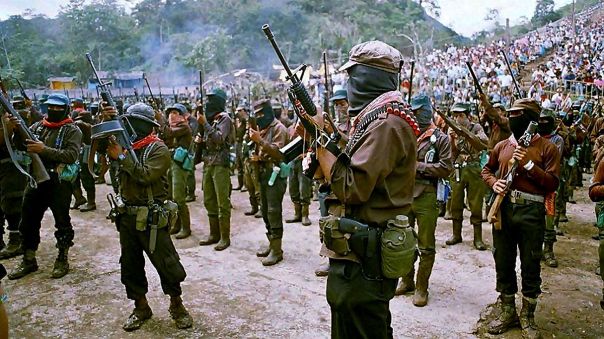
Guadalupe Tepeyac 1994
By: Luis Hernández Navarro
The Tojolabal community of Guadalupe Tepeyac in Chiapas is emblematic. Not in vain, President Andrés Manuel López Obrador sent a message to the Zapatistas from there last Saturday. Before some 300 campesinos, the president expressed his respect for the rebels and called for unity.
The presidential appeal occurred in the context of an increase in the militarization of Zapatista territories. Moreover, the movement of troops into the community preceded the President’s arrival in Guadalupe Tepeyac. For two or three days before, the patrols increased in number and frequency. Soldiers came to speak with the hospital workers.
According to the Fray Bartolomé de las Casas Human Rights Center, since the end of 2018 the number of Army incursions into the seat of the Caracol of La Realidad doubled, including flyovers of communities. The actions of paramilitary groups that murder and displace the population also increased. The president denies that the Fray Bartolomé de las Casas denunciation is true.
To understand the symbolism of Guadalupe Tepeyac we have to do a little history. The ejido represented the hope for a peaceful and profound transformation of the country. But, it later became an emblem of government betrayal and repression.
At the root of the EZLN Uprising, the community functioned as the rebels’ informal capital, a symbol of the global revolt against neoliberalism. It was a kind of a libertarian Mecca to which political figures traveled to meet with the rebel commanders. As the President reminded, he was there years ago to converse with the deceased Subcomandante Marcos, now Galeano.
Located in the municipality of Las Margaritas, the Guadalupe Tepeyac ejido was founded in 1957. Four months before the 1994 insurrection, hundreds of Zapatistas without uniforms surrounded, without him knowing it, the then president Carlos Salinas, who was there to inaugurate a hospital to uselessly try to stop the armed uprising.
On February 16, 1994, its inhabitants, migrants that colonized the jungle, introduced themselves to the world during the delivery of General Absalón Castellanos Domínguez. In December of that year, the EZLN re-named it San Pedro Michoacán.
During July 1994, a ship painted with the colors of hope was built on these lands: the first Aguascalientes. In August of that year, around 6,000 delegates from almost the entire country held the National Democratic Convention (Convención Nacional Democrática, CND), an effort for transitioning to democracy and opening pathways to peace, convened by the Zapatistas.
The CND ship attempted to navigate in the waters of peaceful transition. However, it shipwrecked on February 9, 1995. That day, the EZLN awaited the arrival of the then Interior Secretary (and now the 4T’s Secretary of Education), Esteban Moctezuma, to continue talking about the peace process. Instead of the official, thousands of soldiers came to arrest Subcomandante Marcos. A betrayal! One of the rebels’ demands was a re-run of the Tabasco elections, in order to repair the electoral fraud perpetrated against Andrés Manuel López Obrador.
One day later, the Army entered the ejido. Fifteen minutes before 10 o’clock in the morning the first military helicopters were heard flying over Guadalupe Tepeyac, first four, then 20. Many of the men in the village had been in the jungle since the night before. Their orders were to retreat.
Minutes later, 2,500 soldiers arrived in about 100 armored and armed vehicles, with the support of planes and helicopters. Two hours later, General Ramón Arrieta Hurtado arrived, chief of the Parachutist Section and the one responsible for the operation. He found a desolate village, with part of its inhabitants sheltered in the hospital.
On February 23 and 24, 1995 dozens of soldiers under the command of General Guillermo Martínez Nolasco demolished the Aguascalientes. They built a military barracks in that same place that functioned until April 20, 2001. Guadalupe Tepeyac then became the incarnation of public shame. In response, the Zapatistas built five Aguascalientes in other regions of the state.
From which of the two Guadalupe Tepeyacs did President López Obrador send his message to the EZLN: from the symbol of emancipatory struggle or from the emblem of governmental betrayal? Imagine how it would be interpreted if Donald Trump were to send a message of friendship with Mexico from the Alamo!
In his speech, the President talked about the two ways to transform the country: the peaceful-electoral way and the armed way, and placed the EZLN as an example of the second way. Certainly, the Zapatistas rose up in arms and, thanks to that, the country turned to look at the indigenous peoples. However, ever since the truce was declared, although the rebels keep their weapons, they have not used them. Instead, they have turned to constructing an exemplary and unprecedented experience of self-management and indigenous autonomy. Precision is not artifice.
It’s important that the President speak directly to the EZLN. But it doesn’t seem like enough. To relax the relationship, other substantive steps in the right direction need to be taken.
———————————————————–
Originally Published in Spanish by La Jornada
Tuesday, July 9, 2019
https://www.jornada.com.mx/2019/07/09/opinion/017a1pol
Re-Published with English interpretation by the Chiapas Support Committee
Gramsci, Fanon and after

Antonio Gramsci
By: Raúl Zibechi
Not so long ago someone wrote that what’s important is not who speaks, but rather from where he does it. Recently I was able to understand the central aspects of the Antonio Gramsci’s thinking about the campesino communities of his native Sardinia, where I am participating in debates with the Coordination of Sardinian Committees that bring together 60 grassroots organizations.
The concept of “subalternity,” the founding of a whole anti-colonial theoretical current (although they name it in more sophisticated forms), would not have been formulated by Gramsci if he had not been born on an island colonized for centuries by foreign powers that converted it into an “exploitation colony.”
In lazy thinking, from which we are never safe, there is a belief that the whole West is a colonizer and the whole South is colonized. When in reality, there are peripheries in both parts of the world, and formidable resistances.
In 1906, when Gramsci was 15, Sardinia was shaken by workers struggles and campesino revolts, which were taking a stand about the strong North-South imbalances, the relentless repression implacable of the Italian State and a broad Sardinian movement that the youth carried in his suitcase and in his heart when he migrated to proletarian Turin. He was able to understand Soviet and campesino Russia because of his experience in Sardinia, including the role of intellectuals in the process of emancipation.
Although I was never affiliated with Gramsci’s thinking, due to prejudices and mistrust, I can see that he planted a milestone in critical thinking with his anti-colonial gaze and his commitment to the role of the “subalterns.”
The next stage, to say it in a mechanical and surely unjust way, corresponds to Frantz Fanon, in the period of decolonization and third world revolutions. If Gramsci owes part of his feelings and ideas to Sardinia, Fanon is indebted to the Algeria that rose up to shake off the French colonial yoke.
He understood as few did the “inferiorization” that domination provokes, because of his experience as psychiatrist in the Blida hospital and, later, in active militancy in the National Liberation Front to which he gave his life and his dreams. In this stage of critical thought, the subjects of de-colonization are those “most below,” campesinos and the unemployed, bearers of the collective energy that impels changes. He criticizes the role that the left, in the colonized countries, concedes to the working class, through the mechanical transfer of the experience in the metropolis.

Frantz Fanon
Those of us born to militancy in the 1960s are in deep debt to Fanon, since he could climb the most difficult slope, which led him to debate how to shake off the internalization of the dominator that has caused so much damage to revolutionary processes. This invaluable contribution alone should place him in a prominent place in our world.
But it’s in the third time when the most amazing and hopeful changes are recorded. It is the current moment, let’s say, the one that takes place since the end of real socialism and that has one of its centers in Latin America. Anti-colonial critical thought begins to get intertwined with anti-patriarchal thought, fertilizing a radical anti-capitalism, rooted in collective subjects that, from now on, we will call “peoples in movement.”
The concept came to me by means of a young Quechua student from Abancay (Peru), Katherin Mamani, in a debate in which we reject the Eurocentric idea of “social movement.” I mention it because it embodies the nucleus of the current moment.
First, it’s impossible to separate ideas from practices. The massive and constant actions of the peoples are the fuel of critical thinking, which becomes sterile when one only looks in the mirror of intellectual self-satisfaction.
Second, it’s the imprint of the women from below. This is so obvious that it exempts me from further comments. Although it would have to overcome the concept of thought when we refer to the word of the women that struggle, something that we are still far from achieving.
The third thing is that we are facing collective, communitarian thoughts, which make it almost impossible to determine who coined this or that concept, which overcomes patriarchal/colonial legacy inherited by the academies. Ideas that are germinating outside the institutions, although they always try to co-opt them, and that are the fruit of “sharing” among those below when they debate and fight.
Finally, the new developments are only valid if they show some usefulness for strengthening collective emancipations; and, above all, for constructing the new. Because what it’s about, besides putting limits on the projects from above, is constructing and creating life where the system, the right and the left, only produce death.
It’s not a little thing in the times that run. The path traveled in little more than a century is notable. We are facing collective thoughts that are born putting body to the system and its repressions.
———————————————-
Originally Published in Spanish by La Jornada
Friday, June 21, 2019
https://www.jornada.com.mx/2019/06/21/opinion/016a2pol
Re-Published with English interpretation by the Chiapas Support Committee
Amilcingo obtains total suspension of the Morelos Gas Pipeline
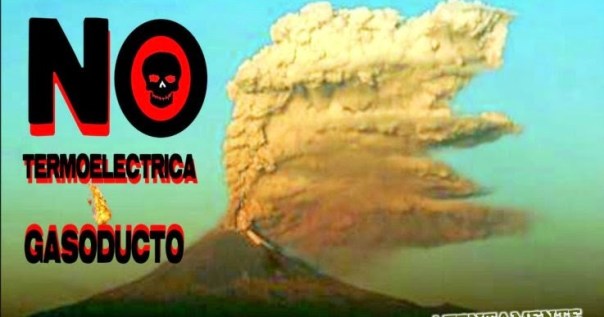
No thermoelectric plant! No gas pipeline!
Last weekend, the Amilcingo ejido was informed of the total suspension granted by the Ninth District Judge in the State of Morelos about the operation of the Morelos Gas Pipeline. This is a victory that had not been obtained in the 7 years of the social and legal struggle against this megaproject and that our brother Samir promoted from the start in the community of Amilcingo. Now his struggle begins to have legal results to protect the community.
Not only is the community of Amilcingo protected with this suspension, but also the 60 communities affected by the Morelos Gas Pipeline, because by not being able to send natural gas through Amilcingo, the gas pipeline cannot operate in the rest of its trajectory to feed the thermoelectric plant in Huexca.
And even when in January 2019 the First Collegiate Tribunal in Administrative Matters in Puebla confirmed the injunction (amparo) for 4 communities of Atlixco to the effect that they must be consulted, there was no suspension of the Morelos Pipeline until now. With the present suspension, which would last for the duration of the amparo and the appeals that are impelled in it, the more than 80 communities affected by the Morelos Integral Project, we can have a new respite that we will not be dispossessed of our natural assets, health and security, unless the Federal Government intends to violate the federal judicial order and start, like previous governments have attempted, the operation of the Morelos Integral Project.
Despite the fact that there are 10 injunctions promoted by 11 indigenous communities that are members of the Peoples Front in Defense of Land and Water of Morelos, Puebla and Tlaxcala, where they claim violation of the right to self-determination of the Nahua peoples of the Volcano, despite the CNDH Recommendation 003/2018, wherein it documents violation of the right to a consultation and the lack of security of the Morelos Integral Project around the Popocatépetl Volcano.
None of the injunctions of the indigenous peoples or the CNDH Recommendation had sufficient force to stop the activities of transporting hydrocarbons that, according to the State, is in the social interest, even when there are imminent security deficiencies in its installation. Only the agrarian rights of an ejido, the Amilcingo ejido, have had sufficient legal force to stop this project, because the rights of an ejido still have a certain constitutional protection facing the danger of dispossession of their rights. That’s why in 2014 the Ejido Commissioners that didn’t fall into acts of corruption with the CFE, were persecuted, criminalized and incarcerated as in the case of Enedina Rosas in Atlixco, a prisoner for 11 months and the ejido commissioners of San Lucas Tulcingo and San Juan Amecac, legally persecuted for 4 years.
That demonstrates the lack of guarantees that the protection of indigenous rights has in our country, where the right to consultation is seen as a right that can be violated and that, once violated, there is no way of restoring and the communities have to subject themselves, like 500 years ago, at the yoke of the owner, of the badly named “progress.”
The total suspension is granted due to the illegal occupation of land that the Morelos Gas Pipeline carried out in the Amilcingo ejido, where the pipe was installed with the presence of the state, federal and army public forces, resulting in 5 compañeros shot on April 13, 2014. This suspension of the Morelos Gas Pipeline is added to the definitive suspension achieved by Huexca so that the Cuautla River cannot be contaminated with the water discharged from the thermoelectric plant, to the total suspensions of at least 3 ejidos of Ayala against the operation of the aqueduct and the amparo won in Atlixco by the 4 communities that set a precedent for the rest of the communities not consulted.
That’s why, even when the President of the Republic says that starting and imposing the Morelos Integral Project is pending, we say that what’s pending is that he listen to us publicly, clarify the murder of Samir, punishment of those responsable for torture, justice for those incarcerated and persecuted, dismantling of the shock groups and that our rights embodied in the San Andrés Accords are recognized and respected. Restoring the social fabric of our peoples is pending, respecting their autonomy and self-determination and punishing whoever may violate the rights of the indigenous peoples of Mexico, the poorest, the most dispossessed, the historical defenders and founders of this country.
We demand that the CFE, the President of the Republic and the companies involved in the transportation of natural gas in Morelos, respect the judicial decision and cease their intention to impose the Morelos Integral Project on Zapatista lands.
We hold the government and the companies responsible for any act of intimidation or repression that the communities affected and its defenders may suffer because of the PIM, either directly or indirectly by means of shock groups, criminals linked to the government and companies, criminalization or repression of any other kind.
Justice for the defender of territory and human rights Samir Flores!
Samir and Zapata live, the struggle continues!
Peoples Front in Defense of Land and Water Morelos, Puebla, Tlaxcala
———————————————————————-
Originally Published by congresonacionalindígena.org
Tuesday, July 2, 2019
Re-Published with English interpretation by the Chiapas Support Committee
 Chiapas Support Committee