Chiapas Support Committee
Home of the Compañero Manuel blog on zapatistas & mexico
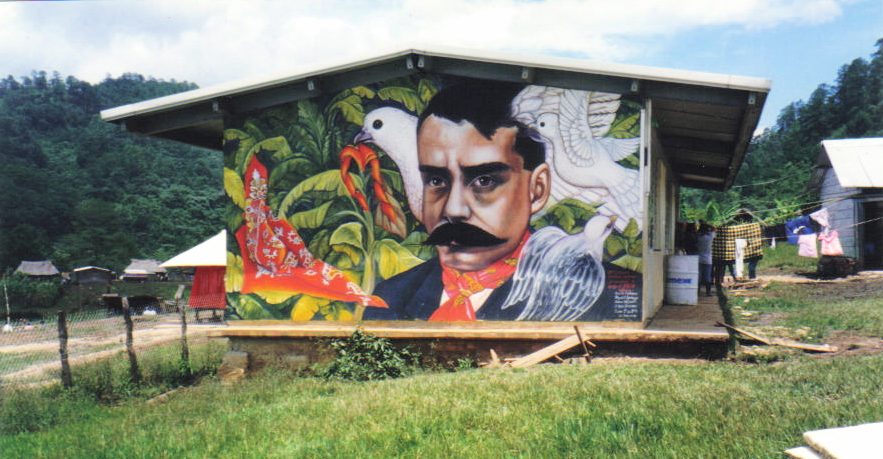
EZLN publishes images of farewell events for group that travels to Europe
By: Elio Henríquez
San Cristóbal de Las Casas, Chiapas
The Zapatista National Liberation Army (Ejército Zapatista de Liberación Nacional, EZLN) published images of farewell events for the delegation that will leave on May 3 for Europe from a Mexican port in the ship called La Montaña (The Mountain).
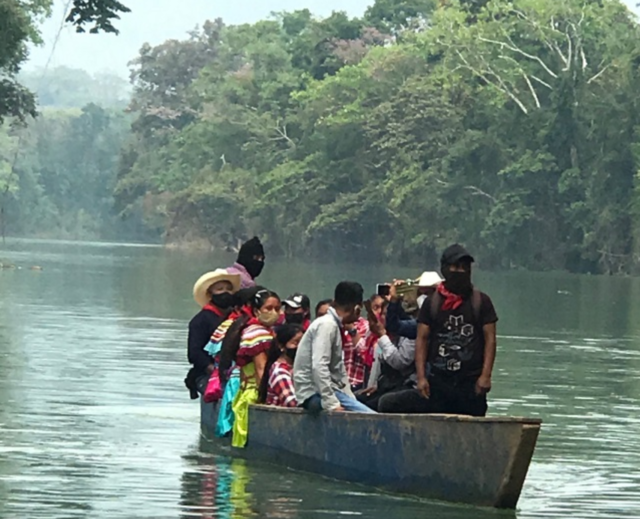
“Visual fragments of the farewell for the Zapatista delegation in some indigenous Zapatista communities, on the banks of the Jataté, Tzaconejá and Colorado Rivers,”[1] in the mountains of the Mexican Southeast, the EZLN said in a short text titled “And meanwhile, in the Lacandón Jungle…”, signed by Subcomandante Galeano.
In the photographs we observe how indigenous EZLN support bases say goodbye to some of their compañeros and compañeras with backpacks on their shoulders and wearing facemasks in events held in recent days.
“We have to save the world,” “We send a greeting to the compañeros and compañeras who have pain, sadness and worry;” “To sow seeds of freedom;” “Cheer up compañeros;” “You don’t have to ask permission to struggle,” read some of the cardboard signs that they show during some of the acts.
In the images taken in the jungle and distributed via Enlace Zapatista, members of the rebel group are observed on horses or on rafts in the waters of the aforementioned rivers, as well as groups of people who participate in the farewell events, carrying cardboard signs and flags of the different European countries.
“Vale. Health and, ‘if you don’t go, I will take you in my heart, I will take you here in my singing,’” Galeano wrote.
He added: “SupGaleano cutting a rug to a slow-mo cumbia, carving the earth, loving it, defending it, dancing it (which is similar, but not the same). Living life! ‘To another continent on Planet Earth.’”
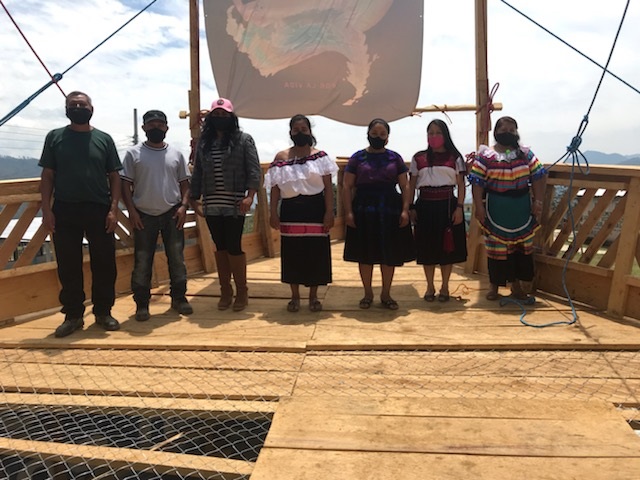
The maritime delegation that the EZLN will send to Europe is called the 421st Squadron (Escuadrón 421) and is made up of four women, two men and one non-binary person (unoa otroa), [2] according to what Galeano reported in a previous communiqué.
The EZLN estimates that the maritime delegation that will visit at least 30 European nations will arrive on the coasts of the old continent during the second half of next June.
“In this part of what we have called Journey For Life. Europe Chapter, the Zapatistas will meet with those who have invited us to chat about our mutual histories, pains, rages, achievements and failures,” Insurgent Subcomandante Moisés said in a previous communiqué.
[1] The Jataté, Tzaconejá and Colorado Rivers are all in the Canyons (Cañadas) region of the Lacandón Jungle east of the city of Ocosingo.
[2] The EZLN denotes non-binary people (in Spanish) by using both the feminine (a) and masculine (o) endings of nouns and adjectives when referring to non-binary people.
—–Ω—–
Originally Published in Spanish by La Jornada on Sunday, April 25, 2021 and Re-Published with English interpretation by the Chiapas Support Committee
A meeting of leaders or of movements?
(Zapatista Maritime Delegation)” from Subcomandante Galeano here.
By Raúl Zibechi
April 12, 2021
In a meeting with the National and International Caravan of Observation and Solidarity with the Zapatista Communities, held on August 2, 2008 in La Garrucha, Subcomandante Marcos explained how the Zapatistas perceive international encounters between movements, within the framework of La Sexta Internacional.
He said that it was a matter of a “meeting of rebellions” for the direct exchange of learning, not as a media opp but as a real exchange.
Since Zapatismo turns everything upside down, as we prepare for the tours, it is worthwhile to review its plebeian ways (this is how we refer to relationships between those at the bottom in my land) of establishing relationships and working.
Marcos recounted that during those months they received delegations from various parts of the world and that members of Vía Campesina were told: “A meeting between leaders means nothing to us, nor does any picture they could take of themselves. If the leadership of two movements don’t help the movements meet and get to know each other, those leaderships are useless”.
We are dealing with a political culture that is completely opposite to what is practiced, even by movements that claim to be anti-capitalist or revolutionary; and this is so unconventional that it deserves some explanation.
First of all, capitalist and patriarchal culture is not only hegemonic in society in general, but also in popular sectors, among black and native peoples and, therefore, also in movements and organizations. Recognizing it and preventing it from reproducing is a central task, since we cannot change the world using the ways of the system itself.
Secondly, in order to minimize the culture of capital in our movements, I am not saying eliminate because it is a very long process, it is necessary to start doing things differently, to avoid inertia, to discuss each and every practice and to do it openly, in dialogue, between those who are organized from below.
A typical feature of capitalist culture within movements consists in giving priority to leaders: men over women, the most experienced and recognized militants over the lesser known, those who express themselves better in the language used by the media displacing those who speak native languages.
In the system’s media there is a clear tendency to “recognize” and give voice to the leaders who express themselves the best, those who stand out for some reason that mirrors the dominant culture, often turning them into the favorites of journalists who always look for them and feel most comfortable with them. This is how the media, rather than the rank and file, ends up electing the leaders.
Popular education has taught us that culture from below has been colonized by capitalism and expresses itself in a complex and distorted way, with many traces of the dominant culture. However, the best features of black, native, land-based and popular cultures still persist. But it is necessary to do internal work, at the very heart of our communities, to winnow—separate the chaff from the wheat—the oppressive aspects of the liberators.
This cannot be done in a single assembly, nor should it be done only by the higher bodies of the organization and the leaders: it is a permanent task for all of us who belong to a collective.
As the EZLN points out, a photograph of leaders makes no sense and goes nowhere, it only occupies space in the media. The important thing is that the people who make up the movements get to meet, talk, learn from each other and exchange knowledge and experiences. This is easier to do in circles, around the campfire, where there is time to share, talk and listen without outside interference. But parties, soccer games and dances also work well for these purposes.
The public forms of movements are even more important than their programs and statements, because their message is more profound and they embody the world they are fighting for. Many speak out against capitalism and neoliberalism, but act in the opposite way. The coherence between what is said and what is done is an ethical question that, ultimately, is the north star that should guide all actions.
______________________________________________________________________________________________________________________
Published in Spanish by Desinformémonos on April 12, 2021. Translated into English by the Chiapas Support Committee.
Read the original in Spanish here: https://desinformemonos.org/encuentro-entre-dirigentes-o-entre-movimientos/?fbclid=IwAR02__Cyhhtj5_IIx6btU50O00my9HFDXTm_1CnSJMQ2TquEDdJw9DrJ-ZY
They denounce ecocide in Chiapas at climate summit in the US

By: Elio Henríquez
San Cristóbal de Las Casas, Chiapas
The Jovel Valley Environmental Network and the General Council of Colonias of the South and the Wetlands of San Cristóbal de Las Casas, Chiapas, sent a denunciation to the climate summit convened by the President of the United States, Joe Biden, about “the grave situation in which the mountain wetlands are found” in this city, because “urbanization and the development of subdivisions are allowed in zones where the natural springs from which the population is supplied are born.”
The groups pointed out in a statement that in the wetlands of María Eugenia Mountain, in San Cristóbal, “there are more than 10 endemic species and that is their only space to live.” They added that: “among the most outstanding species are the popoyote fish and the spatula duck, which moves from north to south on the continent and lives mainly in mountain wetlands.”
They stated that: “with urbanization the habitat of this trinational bird, which travels through Canada, the United States and Mexico, is placed at risk.”
Mountain wetlands, in danger of extinction
The Jovel Valley Environmental Network and the General Council of Colonies of the South and the Wetlands of San Cristóbal de Las Casas, Chiapas affirmed that last Tuesday they sent the corresponding information to the Mexican delegation that participated in the climate summit, which started yesterday and will conclude Friday in Washington, in the context of World Earth Day, which was celebrated yesterday.
“One of the great environmental problems is the loss of biodiversity. We are facing what has been called the sixth extinction, in which the human being is ending the life of the planet,” they pointed out.
They added that: “mountain wetlands, like those being destroyed in San Cristóbal, are unique ecosystems that are at grave risk of being lost.”
They assured that with the information sent to the summit they seek to “draw the attention of the three levels of government, which have been remiss and permissive faced with the destruction of the wetlands and for allowing flag species of international category (five of them included in the catalogue of the International Union for Conservation of Nature) are at risk if disappearing.” Members of the two organizations held a public event in the center of San Cristóbal on Thursday to reiterate their call to defend the María Eugenia mountain wetlands. [1]
Translator’s Note:
[1] In previous protests, these two organizations have pointed out that 70% of the San Cristóbal water supply comes from the María Eugenia mountain wetlands, which also play an important role in flood control.
—–Ω—–
Originally Published in Spanish by La Jornada on Friday, April 23, 2021 and Re-Published with English interpretation by the Chiapas Support Committee
The Yellow Vests will host the Zapatistas

By: Gloria Muñoz Ramírez
While throughout Mexican territory candidates of the different political parties are smashed to pieces in every possible way, inside a tent that excludes society and includes the juggling of electoral authorities, other ways of doing politics are being constructed and encounters are made possible among equals who don’t have the search for power –call it a bone– in the middle.
Last April 10, a group of Zapatista women and men got together in a space called the Comandanta Ramona Seedbed. They make up part of the first group that will leave for Europe in the context of a tour of the five continents that the Zapatista National Liberation Army (Ejército Zapatista de Liberación Nacional) announced in January of this year. The objective: “To look and listen to the other,” then, they explained, “knowing what’s different is also part of our struggle and of our endeavor, of our humanity.”
The French autonomous movement known as the “yellow vests” that rose up two years ago in France against the neoliberal reforms of Emmanuel Macron, will be one of the hosts of the Zapatista delegation, which will also have the participation of representatives from the National Indigenous Congress and the Peoples Front in Defense of Land and Water of Morelos, Puebla and Tlaxcala.
In a letter made public by the “vests,” they assure that with respect to their movement “they have not said the last word,” and that the Zapatistas’
arrival will be an opportunity to exchange with them what they have learned. The meeting with the Mexican delegation: “will be a way to send a message of hope and freedom,” and to call on the peoples who struggle to “recuperate control of their lives” all over the world.
In France and in thirty European countries the collectives in struggle are already preparing tents, rooms or barns for receiving the invited delegation, part of which is already in quarantine. The virus has stopped the lives of millions of people around the world, but not that of capitalism, nor that of those who resist it. The ship sails.
————-Ω————-
Originally Published in Spanish by La Jornada on Saturday, April 17, 2021 and re-published with English interpretation by the Chiapas Support Committee
7 Zapatistas will set sail on May 3 for Europe
México City | Desinformémonos Marijose, a 39-year-old Tojolabal, will be the first Zapatista to disembark in Europe next June. The EZLN presents her as a she-him-they delegate, that is, the first trans Zapatista to be an official part of a delegation. With she-him travels a message of openness and inclusion. “She-he speaks Spanish fluently. She-he knows how to read and write… Maritime experience: canoe and boat. She-he prepared for six months to be a delegate. She-he volunteers to travel by boat to Europe. She-he has been designated as the first Zapatista to disembark and, with that, begin the invasion… ok, the visit to Europe,” Subcomandante Galeano explained in a statement today.
The delegation is also made up of two female commanders, two male commanders, a member of the “tercios compas” [“comrade thirds”] who will be the communication team, an education promoter, a member of one of the Good Government Boards and an education trainer. The delegation’s languages are Tzotzil, Tzeltal, Tojolabal, Chol.
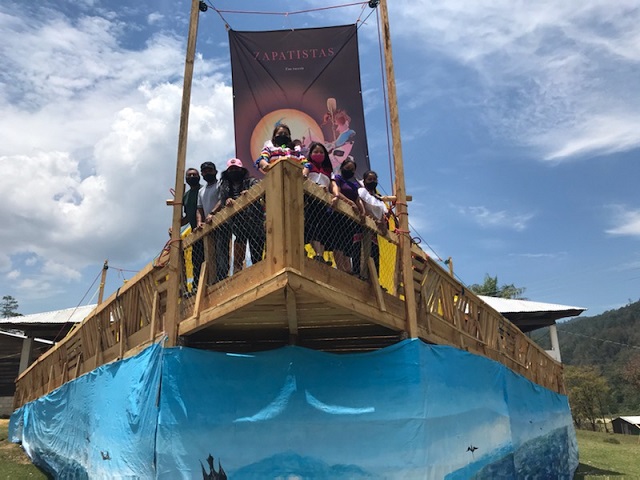
This “maritime fraction of the delegation” bears the name of 421 (four women, two men and one other), and is already quartered in the so-called “Zapatista Maritime-Terrestrial Training Center”, located in the Comandanta Ramona Seedbed, Tzotz Choj zone.
“It was not easy. Rather, it has been tortuous. To reach this calendar, we had to face objections, advice, discouragement, calls to think about it and prudence, frank sabotage, lies, foul-mouthed, detailed accounts of difficulties, gossip and insolence, and a phrase repeated with disgust: ‘that what they want to do is very difficult, if not impossible.’ And, of course, telling us, ordering us, what we should and should not do. All this, on this and the other side of the ocean,” the Zapatistas pointed out.
The maritime fraction is made up of:
Lupita. 19 years. Mexican by birth. Tzotzil from the Highlands of Chiapas. Volunteer to travel by boat to Europe. She will serve as the Tercia Compa on the sea crossing.
Carolina. 26 years. Mexican by birth. Originally Tzotzil from the Highlands of Chiapas, now a Tzeltal of the Lacandón jungle. She is currently a Comandanta in the Zapatista political-organizational leadership.
Ximena. 25 years. Mexican by birth. Cho´ol from the north of Chiapas. She speaks her native language, Cho’ol, and Castile fluently. She has been a youth coordinator and is currently a Comandanta in the Zapatista political-organizational leadership.
Yuli. 37 years. She will turn 38 years old in May at sea. Originally from the Tojolabal jungle on the border, now a Tzeltal from the Lacandón jungle. She has been an education promoter, an education trainer (they prepare education promoters) and a local collective coordinator.
Bernal. 57 years. Tojolabal from the border jungle area. He speaks his native language, Tojolabal, and Castile fluently. He has been a militiaman, a local leader, a teacher at the Zapatista little school and a member of the Junta de Buen Gobierno.
Darius. 47 years. Cho´ol from the north of Chiapas. He speaks his native language, Cho’ol, and Castile fluently. He can read and write. He has been a militiaman, a local responsable (person in charge), a regional responsable and is currently a Commander in the Zapatista political-organizational leadership.
Marijosé. 39 years. Tojolabal from the border jungle area. She-he speaks Spanish fluently. She-he has been a militia member, a health promoter, an education promoter and an education trainer.

____________________________________________________________________________
Translated by the Chiapas Support Committee.
Published originally by Desinformémonos in Spanish on April 17, 2021, here:
https://desinformemonos.org/seran-7-zapatistas-los-que-se-zarpen-el-3-de-mayo-rumbo-a-europa/
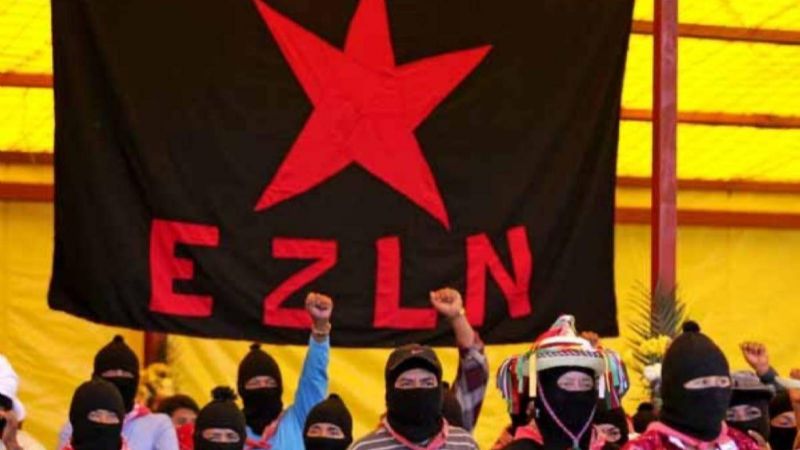
The EZLN prepares to tour Europe; the journey starts April 26
By: Isaín Mandujano
TUXTLA GUTIÉRREZ, Chiapas (apro)
The Zapatista National Liberation Army (Ejército Zapatista de Liberación Nacional, EZLN) set a date for the tour that it will take to Europe in order to extend processes of reflection and analysis about how different organized groups have dealt with the inequality derived from the capitalist economic and social system.
In an official communiqué sent from the heart of the mountains of the Mexican southeast, Insurgent Subcomandante Moisés said that, as they have explained at different times over the last 27 years, they have constructed independent (autonomous) alternatives to the Mexican State to access education, health, food, justice and government that represent their interests and respond to their needs.
Beginning Monday, April 26, EZLN representatives will begin the journey to various countries in Europe, starting with Spain, to learn about other experiences.
The delegation that will participate has begun a quarantine to guarantee that they are not carriers of Covid-19.
In his communiqué “Journey to Europe,” directed at the individuals, groups, collectives, organizations, movements, coordinators and Native peoples in Europe who await the EZLN’s visit, Moisés mentioned that last Saturday, April 10, the Zapatistas who make up part of the first group of delegates on the “Journey For Life, Europe Chapter,” got together in the “Comandanta Ramona Seedbed.”
This is, well, a “maritime delegation,” he pointed out.
After a small ceremony, according to the uses and customs of Native peoples, on Saturday, April 10, the delegation received the mandate of the Zapatista peoples to carry afar their rebel thought, in other words, the heart of the masked ones.
“Our delegates carry a big heart, not only to embrace those on the European continent who rebel and resist, but also for listening and learning from their histories, geographies, calendars and methods,” Moisés said.
He specified that 0n Monday, April 26, they will head for a port in the Mexican Republic. They will arrive no later than Friday the 30th and will board the ship baptized as “La Montaña” (“The Mountain”).
For two or three days and nights, they will stay on board the ship, and on May 3, Holy Cross Day, the ship will set sail for the European Coasts, on a trip that is supposed to take from six to eight weeks. They estimate that they will be in front of the European Coasts in the second half of June.
Prior to that departure, starting on Thursday, April 15, the EZLN support bases will carry out activities in the 12 Zapatista caracoles to say goodbye to the delegation that will travel by sea and air to the geography called “Europe.”
“This part of what we have called the ‘Journey For Life. Europe Chapter’, the Zapatista delegates will meet with those who have invited them to talk about their mutual histories, pains, rages, successes and failures.” So far, they have received and accepted invitations from: Germany, Austria, Belgium, Bulgaria, Catalonia, Sardinia, Cyprus, Croatia, Denmark, Slovenia, Spanish State, Finland, France, Greece, Holland, Hungary, Italy, Luxemburg, Norway, Basque Country, Poland, Portugal, United Kingdom, Rumania, Russia, Serbia, Sweden, Switzerland, Turkey and Ukraine.
Starting that day, Moisés pointed out, Insurgent Subcomandante Galeano will publish a series of texts in which he will chat those who make up the Zapatista maritime delegation, the work that they have carried out and some of the problems they have faced.
—–Ω—–
Originally Published in Spanish by Proceso on April 13, 2021 and Re-Published with English interpretation by the Chiapas Support Committee
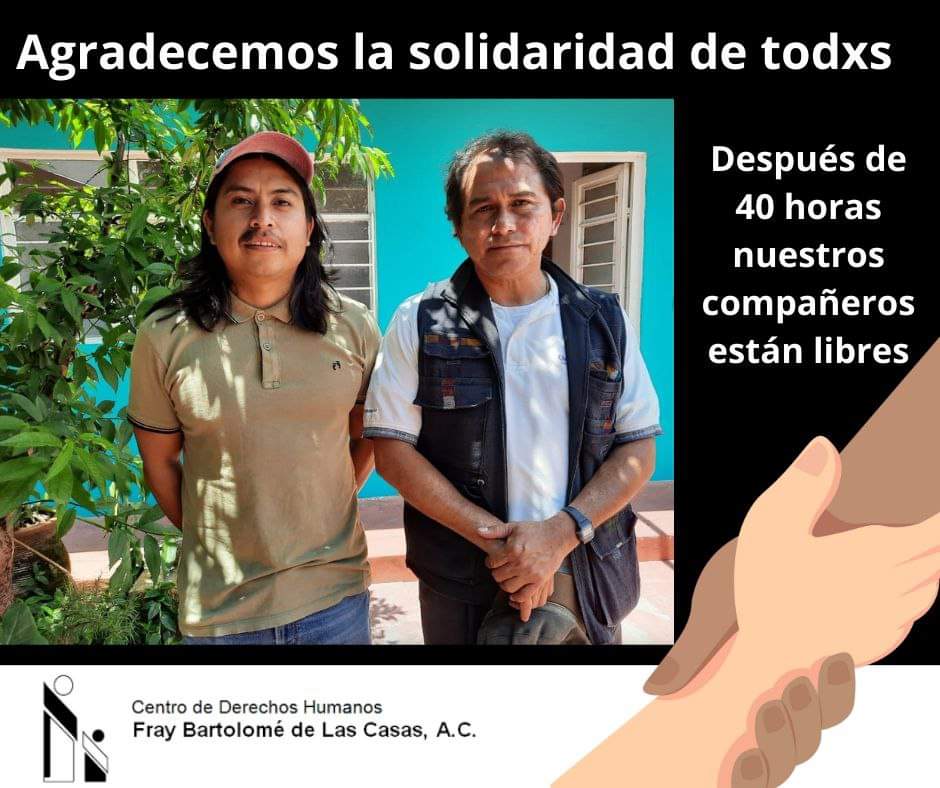
Armed group releases Frayba human rights defenders
 By: Chiapas Paralelo
The human rights defenders from the Fray Bartolomé de Las Casas Human Rights Center (Frayba), Lázaro Sánchez Gutiérrez and Victórico Gálvez Pérez, were released early this morning, after being kidnapped for more than 40 hours.
The work that the Frayba carries out in the Ocosingo area where they were kidnapped, is to make visible the situation of harassment, kidnapping, torture, dispossession of lands and of water sources that armed groups of people carry out against communities in the region.
In November 2020, the communities denounced the actions of those who held the Frayba defenders hostage: “a few meters from where previously burned and looted our cooperative store in Cuxuljá (…) around 3:30 pm, 20 paramilitaries kidnapped and beat up our compañero support base Félix López Hernández.”
On that occasion they presented evidence of the actions their aggressors carry out, bullet casings, some of a heavy caliber, which were left on the floor after the attack, which also included the theft and burning of the installations of the New Dawn of the Rainbow Commercial Center, owned by support bases of the Zapatista National Liberation Army (Ejército Zapatista de Liberación Nacional, EZLN) and located at the site known as the Cuxuljá crossroads, Lucio Cabañas Autonomous Zapatista Municipality, inside the official municipality of Ocosingo.
In January of this year, also through Frayba, the communities that form the EZLN’s support bases in Ocosingo again denounced that for the next three days the Regional Organization of Ocosingo Coffee Growers (ORCAO) attacked them with shots from firearms.
The attacks were directed at Moisés Gandhi community, which is in Lucio Cabañas autonomous Zapatista municipality, Caracol 10 “Flourishing the Rebel Seed” Cabañas. There were “around 170 large-caliber shots and 80 shots from small-caliber weapons,” they explained on that occasion.
This same group was the one that intercepted and kidnapped Lázaro Sánchez Gutiérrez and Victórico Gálvez Pérez last April 12, when they were crossing through the Ocosingo region.
The Chiapas government has not reported the result of the investigation into the kidnapping of the two defenders, nor into the denunciations of prior attacks.
———————————————–
Originally Published in Spanish by Chiapas Paralelo on Wednesday, April 14, 2021 and Re-Published with English interpretation by the Chiapas Support Committee
JOURNEY TO EUROPE…
SIXTH COMMISSION OF THE EZLN, MEXICO
April 10, 2021
To the individuals, groups, collectives, organizations, movements, coordinators, and Native peoples in Europe who await our visit:
To the National and International Sixth:
To the networks in resistance and rebellion:
To the National Indigenous Congress:
To the peoples of the World:
Sisters, Brothers and Compañer@s (Comrades):
TODAY, APRIL 10, 2021, the comrades who make up part of the first group of delegates on our “Journey for Life, the Europe chapter,” are gathered together in the “Comandanta Ramona Seedbed.” It’s about the seafaring delegation.
With a small ceremony, according to our ways and customs, the delegation received the mandate of the Zapatista peoples to carry our thoughts, that is, our hearts, far away. Our delegates carry a big heart. Not only to embrace those on the European continent who rebel and resist, but also to listen and learn about their histories, geographies, calendars and ways.
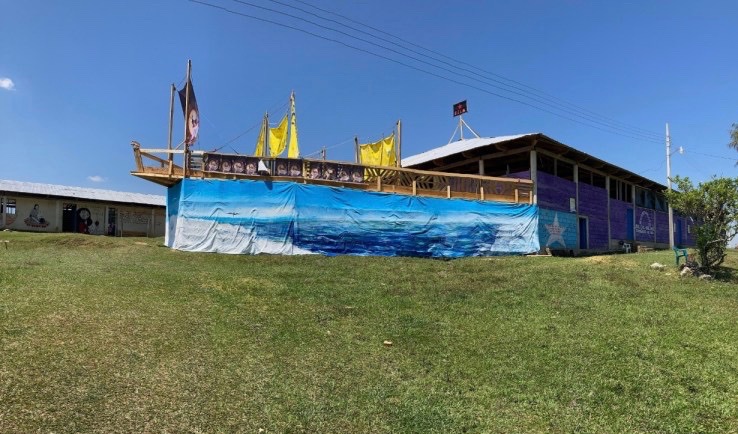
This first group will remain in quarantine for 15 days, isolated in the seedbed, to guarantee that they are not infected with what’s called COVID-19 and so that they are prepared for the time that their journey by sea takes. During those two weeks, they will be living inside the replica of the ship we built for that in the Seedbed.
On April 26, 2021, they will leave for a port on the Mexican Republic. They will arrive no later than April 30 and will board the ship that we have baptized “La Montaña” (The Mountain). For two or three days and nights, they will stay on board the ship and, on May 3, 2021, the day of the Holy Cross, Chan Santa Cruz, the ship “La Montaña” will set sail with our compañer@s (comrades) with destination to the European coasts, on a trip that is supposed to take from six to eight weeks. It is calculated that they will be off the European shores in the second half of June 2021.
Starting this April 15, 2021, from the 12 Zapatista caracoles, our base of support comrades will carry out activities to bid farewell to the Zapatista delegation that, by sea and air, will travel to the geography they call “Europe.”
IN THIS PART of what we have called “Journey For Life. The Europe Chapter,” the Zapatista delegates will meet with those who have invited us to talk about our mutual histories, pains, rages, achievements and failures. So far, we have received and accepted invitations from the following geographies:
Germany
Austria
Belgium
Bulgaria
Catalonia
Sardinia
Cyprus
Croatia
Denmark
Slovenia
Spanish State
Finland
France
Greece
Holland
Hungary
Italy
Luxemburg
Norway
Basque Country
Poland
Portugal
United Kingdom
Rumania
Russia
Serbia
Sweden
Switzerland
Turkey
Ukraine
-*-
Starting today, Subcomandante Insurgente Galeano will be publishing a series of texts in which he will speak with you about those who make up the Zapatista seafaring delegation, the work that they have carried out, some of the problems we have faced and so on.
IN SHORT: We are now on our way to Europe.
That’s all for now.
From the mountains of the Mexican Southeast,
Subcomandante Insurgente Moisés
Sixth Commission of the EZLN
Mexico, April 2021
___________________________________________________________________
Translated by the Chiapas Support Committee. Read the original in Spanish here:
http://enlacezapatista.ezln.org.mx/2021/04/12/camino-a-europa/
View a short video clip of the building of “La Montaña” ship here: https://vimeo.com/535714831
View an eight minute, 27 second video of the EZLN ceremony giving the word to the Zapatista delegation sailing to Europe here: https://vimeo.com/535712413
A Tour from Below and to the Left
By: Raúl Zibechi
In a way, on one hand there are the platforms, the social networks, and the “masses” piled up; on the other the formation of collectives that embody the most diverse oppressions in the most distant geographies.
If there is something Zapatismo cannot be accused of, it is not being coherent. For a long time now they have designed a politics of alliance among those from below, which they will now deploy during the tour on European soils that begins in June.
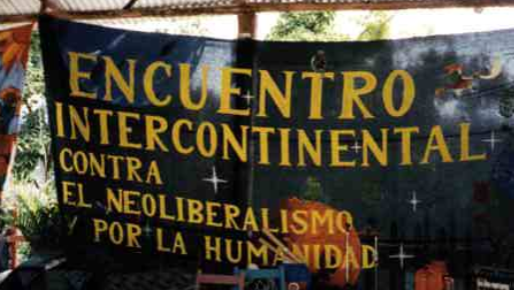
The Second Declaration of La Realidad for Humanity and Against Neoliberalism, released in August 1996, says it with clarity and transparency when it states: “We will make a collective network of all of our particular struggles and resistances. An intercontinental network of resistance against neoliberalism, an intercontinental web of resistance for humanity.”
The objective of this network is for the resistances of the world to find one another, to support one another mutually. And they clarify that the network is “not an organizational structure, it has no guiding or decision-making center, nor a central command nor hierarchies. The network is all of us who resist.
I believe that this declaration, that is now more than a quarter century old, illuminates what the Zapatistas want to do wherever they go. First they did it in Mexico, and went about weaving resistances of the indigenous peoples that gave life to the National Indigenous Congress (CNI), formed in 1996, and later to the Indigenous Governing Council (CIG), which was created in 2016.
The CNI adopted the 7 principles that the EZLN defined as the way to do politics; serve and not serve oneself; construct and not destroy, lead by obeying and not command, propose and not impose, convince and not conquer, to work from below, not seek to rise, and to represent and not replace.
The CIG is made up of 523 communities from 25 states of the country and 43 indigenous peoples. They affirm that “our struggle is not for power,” but to “strengthen ourselves in our resistances and rebellions, which is to say in the defense of every person, every family, collective, community or neighborhood.” (https://bit.ly/3rLJeWl).
The bearing of the EZLN, the CNI and the CIG is the construction of autonomies that collectively self-govern, based on another way of doing politics according to the above-mentioned principles.
It is important to point out that when they go on tour, as they always do, they are going to find the collectives that struggle, without importance to how many are involved, whether they appear in the mainstream media, or if they have more or less of an audience. It’s not about great acts with an illuminated platform for well-known people to go up and speak for the audience to listen, but rather to open spaces to talk amongst equals, to listen and learn, to say how each one is resisting, not to set a course for anyone.
Zapatismo embodies new forms of doing politics, below and to the left, ways that don’t have precedent in the anti-systemic movements of the 20th century. María de Jesus Patricio, Marichuy, spokeswoman for the CIG always says that, “when we are together, we are an assembly, and when we are apart, we are a web.”

In a gathering of women in February of 2018, Marichuy explained the campaign for the collection of signatures that they were conducting, as an excuse to dialogue with the people. “It was necessary to create a space, not so much an organization, so that there wasn’t someone leading and another obeying, but that we all felt we were part of this house.” The objective always consists of organizing from below, because in this way, “we can achieve the dismantling of power for those who hold power and money, those from the bad governments.” (https://bit.ly/3ulJk8R).
While traditional politics, as much on the right as on the left, directs itself to the great “masses” (a terrible word), to isolated individuals, the politics of the Zapatistas seeks to nest in organized collectives that resist the system.
While the dominant forms of doing politics, focused on elections, tend to dis-organize existing collectives, or at least weaken them, the EZLN, CNI and CIG seek the complete opposite: to motivate people to organize themselves, as a way of collectively confronting the evils of the system.
It is a politics that looks from below, not from above, but rather horizontally, below with below, among equals, to share, learn, and chart courses, respecting the ways and rhythms of each.
In traditional politics, big hierarchical organizations are created, in which a small group commands and the rest obey. Pyramids on whose summits are generally installed men trained in academia who speak but don’t listen, who make decisions without consulting, who claim to speak in the name of people that they don’t even know.
In Zapatista politics, each collective speaks with its own voice, no one interprets nor represents it. The women and men who participate listen, ask, and try to learn.
In a way, on one hand there are the platforms, the social networks, and the huddled “masses”; on the other the formation of collectives that embody the most diverse oppressions in the most distant geographies. Media visibility, that does not move the system a single hair, as opposed to the patient and slow organization from below, that bets on containing the oppressions in order to dismantle them in an undetermined period, which in fact, has already begun.
In history, as capitalism was implanted in all of the pores of society, the political culture from below (which always existed, as the Paris Commune demonstrates) was cornered, but it emerges again with strength each time the people stand up.
I am speaking of the territorial assemblies of Chile; of the Ecuadorian indigenous and popular parliament; of the Mapuche organizations and communities; of the Nasa and Misak councils in the south of Colombia; of the guards of self-defense that begin to populate our geographies in the Andes and the Amazon; of the hundreds of popular schools, of the community kitchens and health posts born during the pandemic.
These are the collectives that inspire us and from which we learn. The Zapatistas propose that we connect up and listen to one another to face the system together.
——————-
Originally Published in Spanish by Naiz on April 5, 2021 and Re-Published by the Chiapas Support Committee with English interpretation by Schools for Chiapas
A repressor of indigenous people, the Morena candidate for mayor of Comitán

[Admin: Mexico holds mid-term elections during 2021, so there’s lots of news about the candidates.]
From the Editors
The Morena party nominated former PRI member Jorge Constantino Kánter for municipal president of Comitán, Chiapas. He is one of the most belligerent leaders of the cattlemen and ranchers opposed the Zapatista National Liberation Army (Ejército Zapatista de Liberación Nacional, EZLN) in 1994 and indigenous populations, against which he headed violent operations.
Constantino Kánter was the mayor of Comitán during the 2005-2007 term for the Institutional Revolutionary Party (Partido Revolucionario Institucional, PRI) from which he was expelled a little after finishing his term. He was accused of supporting the Party of the Democratic Revolution Party (Partido de la Revolución Democrática, PRD) in the 2006 elections for governor.
The politician became notorious, among other episodes, for discriminatory phrases, like what he said to TV UNAM journalists who in that year were preparing the documentary The Deepest Root, for TV UNAM: “If the Indians want to live may they live, but not in our state.”
At the front of cattlemen and ranchers in Ocosingo, Altamirano and Las Margaritas, mainly, he headed protests against the EZLN and to demand that the Mexican Army enter the jungle to fight the rebels who had taken possession of their properties, which converted him into one of the principal anti-Zapatista leaders in Chiapas. [1]
His nomination as candidate for mayor surprised Morena militants committed to the project of the Fourth Transformation. “Constantino Kánter is a reactionary, an anti-Zapatista conservative who promoted violence against the indigenous peoples, which does not represent the ideological and political proposal of Morena,” a founder of the PRD and Morena reproached, someone who for more than two decades has worked together with now President Andrés Manuel López Obrador and asked to remain anonymous.
Constantino Kánter’s motto was era: “In Chiapas a chicken is worth more than an indigenous person” and he organized attacks against thousands of those who fought for the elimination of political bossism (Caciquismo) and the restitution of their lands.
He was a staunch enemy of Bishop Samuel Ruiz and the Diocese of San Cristóbal de las Casas. He harassed and sought to expel Sisters of Charity of Saint Vincent de Paul, who since 1976 took care of the San Carlos Hospital in Altamirano, which gave service to poor campesinos at no charge.
Constantino Kánter made his political career under the former PRI governor Roberto Albores Guillén and his son, Roberto Albores Gleason. Many considered him the representative of the most backward sector of Chiapas finqueros (estate owners), who until a few years ago asserted the right of pernada [1], abused women and had to be carried in chairs by the indigenous peoples.
Notes
[1] Constantino Kánter was also featured with members of his family in Nettie Wilde’s “A Place Called Chiapas,” a film about the Zapatista Uprising.
[2] The right of pernada refers to the right of feudal lords to rape their female servants. In Chiapas, that right accrued to the estate owners.
Originally published in Spanish by La Jornada on April 1, 2021 and Re-Published with English interpretation by the Chiapas Support Committee
 Chiapas Support Committee