Chiapas Support Committee
Home of the Compañero Manuel blog on zapatistas & mexico
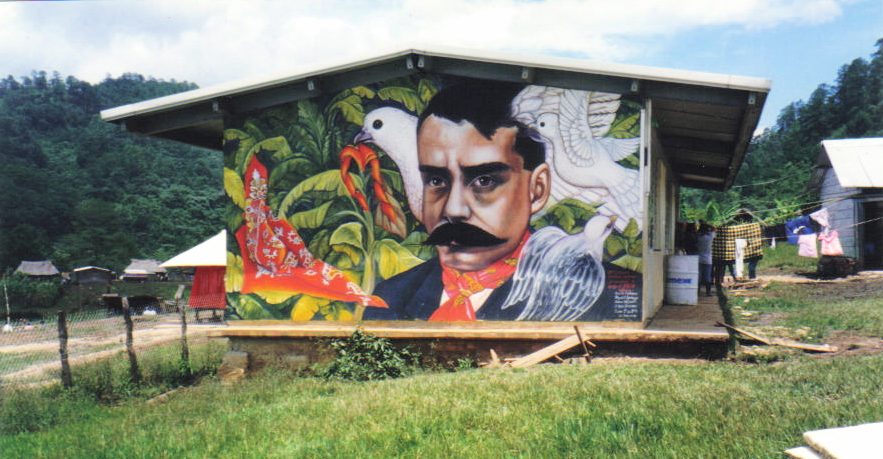
The right of self-determination of peoples and nations
By: Gilberto López y Rivas /I
The principle of self-determination, understood as the right of peoples and nations to freely choose their political, economic and cultural regime, including the formation of an independent State, and to resolve all questions related to its existence, is consolidated as a fundamental element within the international legal framework, at least formally, since the Second World War, when the United Nations Charter specified equal rights among nations and the “self-determination of the peoples.” The principle of self-determination is established in various international documents, like the Atlantic Charter of 1941, the United Nations Declaration of 1942, the Yalta Conference of 1945, among others. The end of the war conflict in 1945, its ideological and political repercussions, and the liberation movements of the peoples of Africa and Asia during the following decades, brought as a consequence the formation of more than 50 states, which emerged in opposition to the triumphant colonial and neocolonial powers in that war, like the United States, England and France, as well as against other metropolises like Portugal, Belgium, Holland, Germany, Italy and Japan. The principle of self-determination appears formulated as a generic criterion, in which concrete circumstances are the ones in charge of giving precise content to that right and, the majority of times, with little observance on the part of the states.
Historically, self-determination has its early origins in the “principle of nationalities,” which finds the same doctrinal bases that gave rise to the emergence of the modern nation and the principle of national sovereignty. The “principle of nationalities” was fully formulated in the first half of the last century, at a time of national effervescence that implied, in essence, that each nationality had the right to have its own State. With all that, the principle of nationality emerges from the ideas of the French Revolution and the Constitution of 1791, in which it is pointed out that: “peoples and states shall enjoy equal natural rights and shall be subject to the same standards of justice.” By introducing the principle of popular sovereignty, the French Revolution fundamentally alters the prevailing conception of the State, by unifying the idea of a political unit, together with the formal will of a people who become a nation. From the revolutionary theory that the people have the right to elect their own government; in other words, a process that takes place from the bottom to the top, we move on to the vindication that people can equally join one State or another, or they can establish their own State.
As a consequence of the democratization of the idea of the State as a product of the “popular will” and the integration of the “citizen” into a common political form, the Nation-State, nationalism, which spreads to all corners of the world, takes the theoretical form of national independence or self-determination, beyond the intention of its original creators. The principle of nationalities on the part of the French revolutionaries was applied selectively and in accordance with the interests of the nascent bourgeoisies, which denied that right to the peoples of their own overseas colonies or to the peoples whose independence was not pertinent to the stability of the European political space.
The principle of nationalities was actually the political expression of the European bourgeoisies in the process of consolidation of their national states and an instrument of struggle against the dynastic systems that had populations and territories at their will. The unification of Germany, Italy, and other European states that were established at the expense of the old Russian, Turkish and Austro-Hungarian multi-national empires was carried out under this principle.
However, in the period of worldwide capitalist expansion, the bourgeoisie of the countries in which the principle of nationalities had been proclaimed renounced its application, since the ideal of their ruling classes at this time is not the national State based on territorial continuity, but rather on a multi-national State of a particular type: the neocolonial empire. The capitalists of these metropolises export their capitals to the colonies in the face of the standardization of mass production caused by the Industrial Revolution, in search of new markets and new sources of raw materials. Thus, the European bourgeoisies didn’t have the slightest intention of extending the principle of nationalities to the colonial peoples, expressing the contradictions between the metropolitan ideal and the colonialist realities and practices that, at the time, theoreticians of the anti-colonial movements would have reproached the old Europe.
==Ω==
Originally Published in Spanish by La Jornada, Friday, May 13, 2022, https://www.jornada.com.mx/2022/05/13/opinion/018a2pol and Re-Published with English interpretation by the Chiapas Support Committee
Indigenous man set free after 20 years in prison
By: Editor Yéssica Morales
*Marcelino was arrested on February 5, 2002, arbitrarily and illegally deprived of his freedom; he was sentenced to 25 years in prison for a crime he didn’t commit.
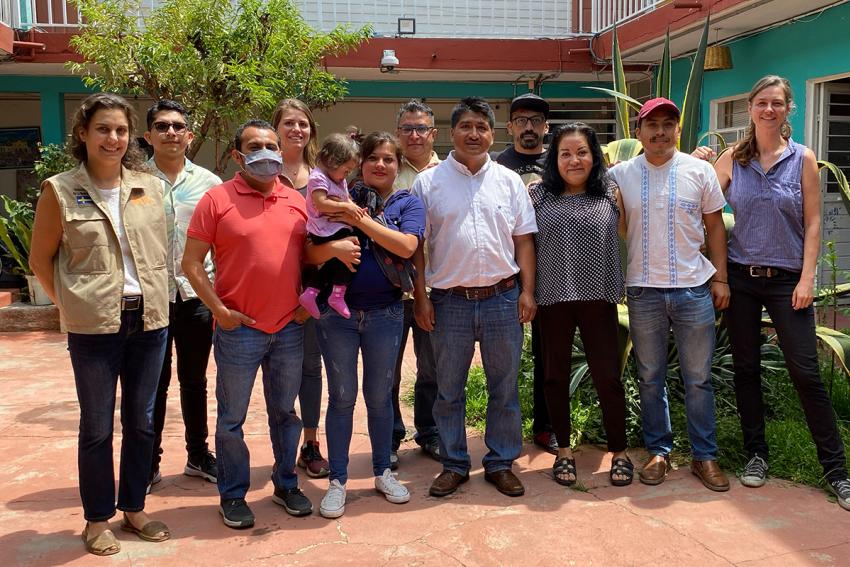
The Relatives of Prisoners in Struggle Collective, the Working Group We Are Not Alone and the Fray Bartolomé de Las Casas Human Rights Centro (Frayba) celebrated the freedom and life of Marcelino Ruiz Gómez, [1] upon his being set free after 20 years, 3 months and 2 days deprived of his freedom.
That said, they recalled their struggle to demonstrate his innocence, with denunciations and making visible the grave violations of his human rights, as well as those of the organization with other victims of the system and exposing their lives by carrying out a 135-day hunger strike, nourishing themselves only with water and honey. On May 7, 2022, he left State Center for Social Reinsertion (CERSS) No. 10 in Comitán de Domínguez.
The foregoing, through the opinion of the booklet 45/MR/2022, after granting him freedom with a suspended sentence, after having spent 20 years, 3 months and 2 days deprived of his freedom, paying for a crime he didn’t commit.
At the same time, they indicated that Abraham López Montejo and German López Montejo, two brothers who in 2011 were arbitrarily deprived of their freedom, are in the same situation. Crimes were fabricated against them that they did not commit no through the use of systematic torture.
Since March 15, 2019, the men deprived of their freedom have been in a struggle to obtain their freedom; they have spent 12 years behind bars, taking advantage of their defenselessness due to not speaking the same language or not having the resources for their defense.
They are victims of simulated justice, of the most complicated, long and cumbersome processes. The damage committed to our families are irreparable, the organizations said.
They mentioned that without further delay the Mexican government and the competent authorities should immediately comply with opinion 43/2021approved by the Working Group on Arbitrary Detention at its 91st session regarding Adrián Gómez, Germán López, Abraham López, Juan de la Cruz and Marcelino Ruiz.
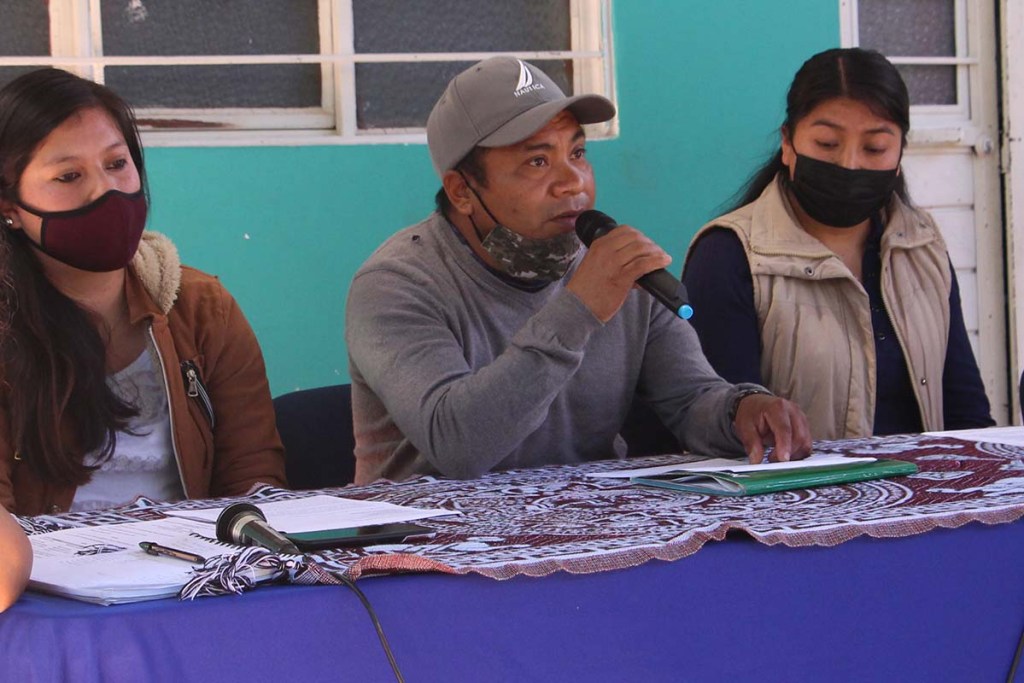
The Working Group considered that the detention of those mentioned above was arbitrary due to non-compliance with international norms related to the right to a fair and impartial trial, enshrined in Universal Declaration of Human Rights.
The Working Group urged the government to carry out a thorough and independent investigation of the circumstances surrounding the arbitrary deprivation of freedom and adopt pertinent measures against those responsible for the violation of their rights. Due to the fact that these cases are not the only ones, the modality of fabricating culprits by the State’s Attorney General’s Office (FGE) of Chiapas, has a long list of victims because of which they will continue struggling.
[1] Marcelino Ruiz Gómez is an adherent to the EZLN’s Sixth Declaration of the Lacandón Jungle. While in prison, he was a member of Indigenous Men in Resistance.
==Ω==
Originally Published in Spanish by Chiapas Paralelo, Monday, May 8, 2022, https://www.chiapasparalelo.com/noticias/chiapas/2022/05/liberan-indigena-tras-20-anos-encarcelado/ and Re-Published with English interpretation by the Chiapas Support Committee
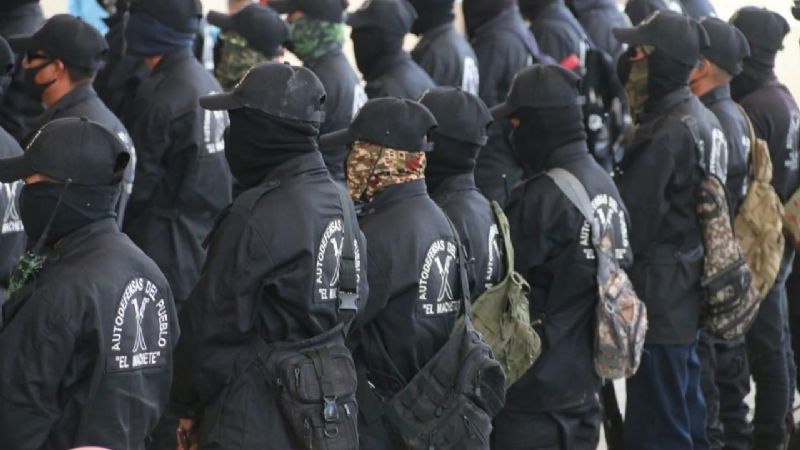
“El Machete” celebrates first anniversary of its struggle against the chiefdom in Pantelhó
By: Isaín Mandujano
*Members of the Pueblo Creyente (Believing People) organization and other civil organizations that have accompanied them were present at the event, from which they also sent a greeting to the Zapatista National Liberation Army (EZLN, Ejército Zapatista de Liberación Nacional) and to all the legitimate self-defense groups here in Mexico.
In an event closed to the press, the El Machete Self-Defense group celebrated the first anniversary of its foundation and ratified its armed struggle until all traces of the cacicazgo (chiefdom or political bossism) in Pantelhó have been banished.
Although they irrupted publicly on July 7, 2021, Los Machetes said that they elected May 8 as the day to celebrate their foundation, because it was on that date that a compañero of theirs, Enrique Pérez Pérez, and his son were murdered when they were working their land together.
Upon celebrating the first anniversary of the armed uprising, Los Machetes said that: “on a day like today drug traffickers from Pantelhó and Los Capotes -an armed civilian group- murdered Compañero Enrique Pérez Pérez while he was at work together with his son.”
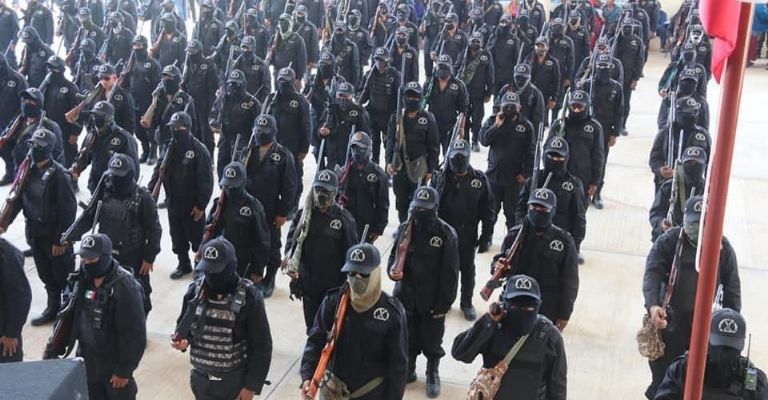
While celebrating the first anniversary of the armed uprising, Los Machetes said that: “on a day like today drug traffickers from Pantelhó and Los Capotes -an armed civilian group- murdered Compañero Enrique Pérez Pérez while he was at work together with his son.”
As a result of this crime, the El Machete Self-Defense group was created to confront the armed group’s assassins that Dayli de los Santos Herrera headed in that municipality and that from the municipal seat of Pantelhó “imposed terror on more than 100 rural communities.”
The Self-Defense group also recalled the murder of the activist and human rights defender Simón Pedro Pérez López on July 5, 2021, executed on a street in the municipality of Simojovel when he was with his son.
Another of the crimes that they attribute to the armed group that used to operate in Pantelhó with Dayli de los Santos Herrera at the head, was that of Mario Santiz López, “who was murdered in his home, but not only that one but also many more that were murdered, more than 20 years, they were murdering campesino compañeros in different communities of Pantelhó and other municipalities.”
We, as El Machete Peoples’ Self-Defense Forces, are going to work with the people and for the people, not with the drug traffickers. We know that in this country it’s getting worse and many people are entering here, most are drug traffickers, that’s why we’re going to be here to defend the people, Comandante Machete said.
==Ω==
Originally Published in Spanish by Chiapas Paralelo, Monday, May 9, 2022, https://www.chiapasparalelo.com/noticias/chiapas/2022/05/el-machete-celebra-primer-aniversario-de-su-lucha-contra-el-cacicazgo-en-pantelho/ Re-Published with English interpretation by the Chiapas Support Committee
Zibechi: When war no longer saves the system
By: Raúl Zibechi
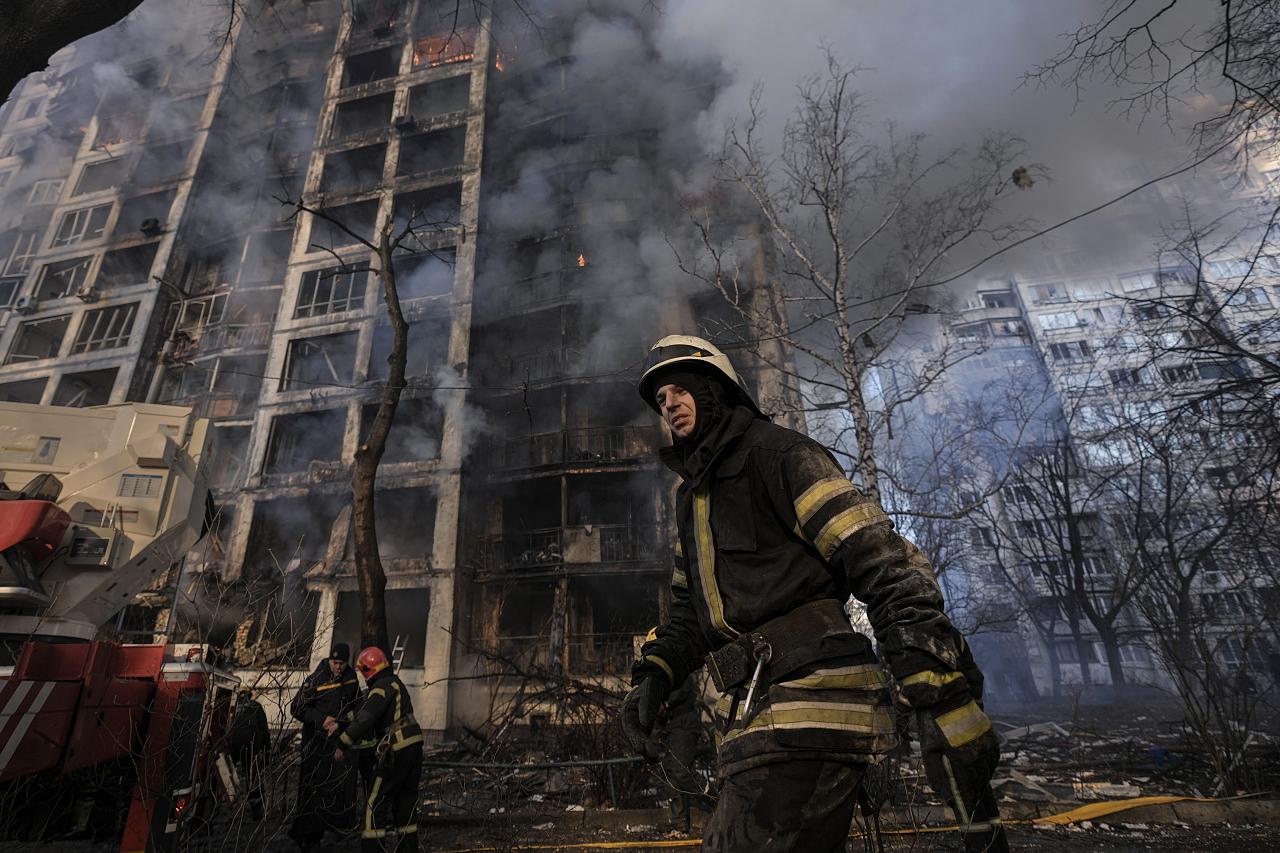
Many data indicate that the large companies of the military-industrial complex have been obtaining juicy profits since the beginning of the Russian invasion of Ukraine. But other data assure the opposite; they say that the capitalist crisis is deepening: the threat of recession in United States, price increases throughout the world, or China’s difficulty to maintain the global supply chains, to give some examples.
We can agree with William I. Robinson in that wars have helped capitalism to overcome its crises and that they divert attention from the deterioration of the system’s legitimacy.
His concept of “militarized accumulation,” a fusion of private accumulation with state militarization, is useful for comprehending the processes underway (https://bit.ly/3Fb5RMa). He considers repression as necessary for sustaining capital accumulation in this period of increasing social protests.
However, it’s likely that we are facing the radicalization of the global elites, who seem willing to provoke a mass genocide against a part of the planet’s population, if they believe that their interests are in danger. In fact, the destruction of the planet continues advancing, despite the declarations and conventions that claim to defend the environment.
Every time that a way of resolving situations enters into crisis, the elites escalate towards another even more destructive model. As war is no longer enough to ensure the indefinite accumulation of capital, it’s used for another purpose: to keep the ruling classes in their place of privilege when capitalism is exhausted.
I believe that Robinson’s theses, interesting in themselves, as well as those of other analysts, do not take into account that we are not facing situations similar to the two world wars of the 20th century, or the “cold war,” but rather new systemic drifts. Strictly speaking, we should no longer speak of repression or crisis, because the mutations underway go beyond these concepts.
In the first place, because the West had never been challenged by non-European nations, like China, which was a victim of the colonialism and racism that still persist in that way in international relations. This doesn’t mean that Chinese elites are less oppressive than Western elites. Or that they are some type of alternative, since they all reason in the same way.
We’re not only facing conflicts for preeminence within Western capitalism, as were the previous wars. Now the racial factor has a determining weight and, therefore, Western elites don’t hesitate –like they did in Iraq and in Afghanistan– to destroy entire nations, including their peoples.
Invasions are measured by different yardsticks according to geo-political interests and the skin color of the victims. At the same time that the Russian Army invades Ukraine, the Turkish Army is invading Kurdish territories in northern Syria, but the big media don’t give it the same importance (https://bit.ly/3P7PxAu).
In the second place, we must not ignore the world revolution of 1968, since it places us before completely different realities: the peoples have organized and are in movement. This is the central fact, not so much the economic and political crisis. The native, black and mestizo peoples in Latin America, the oppressed peoples of the world, are placing limits on capital that it considers unsustainable. That’s why it attacks with paramilitaries and narcos.
The third thing is a consequence of the first two. We are facing something that goes beyond the crises and is much deeper: the decomposition of the world we know, a crisis of modern civilization, Western and capitalist, which is much more than the crisis of capitalism understood as mere economy.
In broad strokes, the situation created in 1968 can be resolved with the installation of a new system, less unequal than the current one, or with the annihilation of the peoples. I believe that we are facing an unprecedented threat because the elites (from the entire world) feel that oppressed peoples threaten their interests, as they have never felt since 1917.
We are in a transition towards something unknown to us, which can be dramatic, but that is more in the form of decomposition than orderly transition. As Immanuel Wallerstein said: new oppressions were born from controlled transitions. That’s why we must lose fear of the collapse of the current system that “can be anarchic, but not necessarily disastrous.” [1]
The problem is that we don’t have strategies to deal with this period. With the notable exception of Zapatismo, we have not constructed knowledge and ways of doing things to resist in militarized societies, in which those above bet on genocidal violence to continue dominating. It’s not easy, but we should work on that or resign ourselves to being an object of the powerful.
[1] In “Marx and underdevelopment”
==Ω==
Originally Published in Spanish by La Jornada, Friday, May 6, 2022, https://www.jornada.com.mx/2022/05/06/opinion/013a1pol and Re-Published with English interpretation by the Chiapas Support Committee
The Government of Mexico foments counterinsurgency against EZLN territories
Sent by ajmaq on May 5, 2022
Jovel, Chiapas, México
May 5, 2022
To the National Indigenous Congress
To the national and international Sixth
To the Networks of Resistances and Rebellions
To the signers of the Declaration for Life
To people who sow Dignity and Organization
Compañeros and compañeras, the persistence of the bad government of Mexico in fomenting War continues / Counterinsurgency against EZLN territories.
This time, the paramilitary group of the ORCAO (Regional Organization of Ocosingo Coffee Growers) forcibly displaced 83 EZLN support bases (BAEZLN) from the town of Emiliano Zapata and La Resistencia, belonging to the Good Government Junta of the Patria Nueva region.
The Ajmaq Network of Resistance and Rebellion has been documenting, denouncing and accompanying the support base communities of the Zapatista National Liberation Army (Ejército Zapatista de Liberación Nacional) in the territory, where they have been carrying out observation and documentation caravans and have been denouncing the situations in Moisés Gandhi and Nuevo San Gregorio.
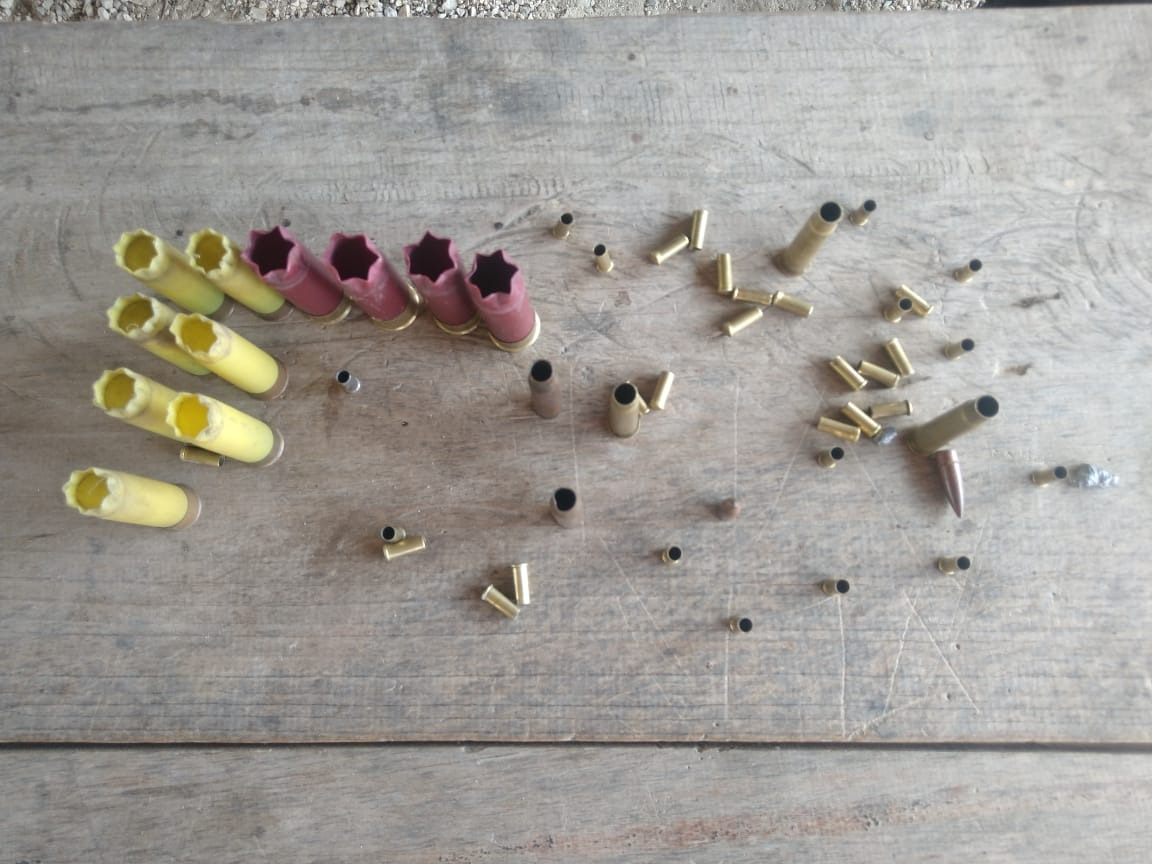
Yesterday, May 4, and today, May 5, we received information from the Good Government Junta “New Dawn in Resistance for Life and Humanity” Caracol 10 “Flowering the Rebel Seed” related to yet another escalation of violence by the ORCAO that has been attacking our BAEZLN compañeras and compañeros in an armed manner, consisting of a series of armed attacks by said paramilitary group. The armed aggressions began on May 2, 2022, around 8:00 p.m. towards Town Emiliano Zapata; the BAEZLN withdrew towards the autonomous school, protecting themselves from the shots: first approximately 300 meters away, then 50 meters away, and later 30 meters away. since the paramilitary group was getting closer and closer. Given the life-threatening circumstances, the BAEZLN chose to displace 11 families, 54 people (among women, men, youth, girls, boys, elderly women and the elderly) due to this violence that has persisted for three years now and has increased in recent months.
The violence continues, we have testimonies that the armed actions of the ORCAO’s paramilitary group continue because today, May 5 at 12:59 am, the ORCAO of San Felipe fired about 32 22 caliber shots towards the Zapatista town of La Resistencia. At 1:30 am the aggressions by the ORCAO of San Felipe continued when a group of them came to burn down the small autonomous Zapatista school and the garage of one of the BAEZLN in the town of La Resistencia; the houses of the BAEZLN are 10 meters from where they burned the autonomous school building. In this context of the burning of the school, they continue to hear shots. Due to this situation 29 people (women, men, young men and women, girls, boys, old women and old men) displaced most of the community of La Resistencia. As of the moment, in the latest report it’s says that they see the houses of the BAEZLN are open, without knowing now exactly the damages that this ORCAO paramilitary group caused.
Regarding the events of May 2, testimonies refer to the following:
“The ORCAO attacked Emiliano Zapata community; it came from 300 meters of distance, so when they were 50 meters away the families had to leave. They were attacked by the group from San Felipe; those who come to attack are from seven communities belonging to the ORCAO.
We won’t fall into provocation. We told the compañeros and compañeras that they attacked us with different caliber weapons. The ORCAO started shooting on February 7; we told the men and women of Moisés y Gandhi that they have to leave when they came within 30 meters, that’s when the families had to displace.
Another group from San Antonio attacked the community of Moisés y Gandhi with different caliber weapons, coming close to the school, withdrawing at 5 o’clock in the morning.”
According to the information received, the ORCAO has been attacking Zapatista communities for three years. These communities have resisted and are going to continue resisting despite the fact that they are armed attacks, theft of crops, destruction of BAEZLN property, the fruit of their labor.
Other testimonies say that:
- “It gives us great sadness because we are suffering with the children. Yesterday, at 3 in the afternoon we left, suffering, walking, enduring hunger, because since the day before yesterday they started to attack around 8 o’clock at night. We went out to hide, with suffering. The children were trembling because we were going out to hide. They began to fire high-caliber bullets, nearby they fired bullets, it calmed down a little and we advanced until reaching the school; we stayed there, we were surrounded, but they saw us because there is no bush. They started to shoot bullets, we laid down on the ground so that the bullets didn’t touch us. We were surrounded until 3 in the morning. They came to tell us to withdraw and we did because we didn’t want to confront and be converted into dead people, so we left yesterday, walking we came withstanding hunger and thirst with this heat.”
- “It’s not the first time, it’s been going on for 3 years and we have always been living with bullets. We go out to work our milpa and we’re always afraid because they’re running us out with bullets. They have been going on like this for 4 years and it continues, and who is going to resolve the problem. The damn government does nothing, or it wants that we die or, you go tell them. We are accustomed to working, to planting out corn and beans; we don’t want to be here for a long time, because we also suffer here; the children are accustomed to being in their homes and also to working, and that the fault of that damned ORCAO…”.
- “It’s been years since they let the BAEZLN work in peace, that increased with the arrival in government of Andrés Manuel López Obrador and his sowing life program that is only causing division and conflict, “they don’t let us work… it’s promoted by its leaders: José Pérez who is the first councilor in the Ocosingo municipal government and Tomas Santiz Gómez, plus Antonio Juárez, Marcos López Gómez and Juan Gómez who are the leaders, who encourage the communities to attack us, the latter done when the seven communities attacked us. They were shooting all night, they also burn milpa and steal corn.”
- “The compañeras have courage and sadness, because they leave their things and animals, because from there they resist and struggle’ There is a compañera who is injured from running into wire; they have to get out as best they can. There is also a compañero who was recently operated on; he had to leave. There is a compañera who is six months pregnant. Those from the ORCAO don’t understand their parents, they are the ones from the government who give them money. AMLO only brought problems between communities, now with his sowing life, they want us to kill each other, that is what the 4T wants.”
From the Ajmaq Network of Resistance and Rebellion, we repudiate the armed actions and aggressions of the ORCAO’s criminal group towards the Zapatista communities of Emiliano Zapata and La Resistencia, we denounce the Mexican government for being part of these counterinsurgency actions and for not stopping the harassment and attacks against the EZLN territories, we call on the compañeros of the Sixth Declaration of the Lacandón Jungle, the Networks of Resistance and Rebellion and all the compañer@s of the struggle for Life and the defense of Mother Earth to demonstrate with denunciations and solidarity actions to demand that these people who are members of the ORCAO and are committing criminal acts against our EZLN compañeros and compañeras in struggle, we demand that the violence against Zapatista territory be stopped.
Solidarity with the Zapatista peoples!
Stop the counterinsurgency actions against the Zapatista peoples!
Ajmaq Network of Resistance and Rebellion
==Ω==
Originally Published in Spanish by Red Ajmaq, Thursday, May 5, 2022, https://redajmaq.org/es/fomenta-el-gobierno-de-mexico-la-contrainsurgencia-hacia-los-territorios-del-ezln and Re-Published with English interpretation by the Chiapas Support Committee
Ukraine, the global war economy and the crisis of capitalism
By: William I. Robinson*
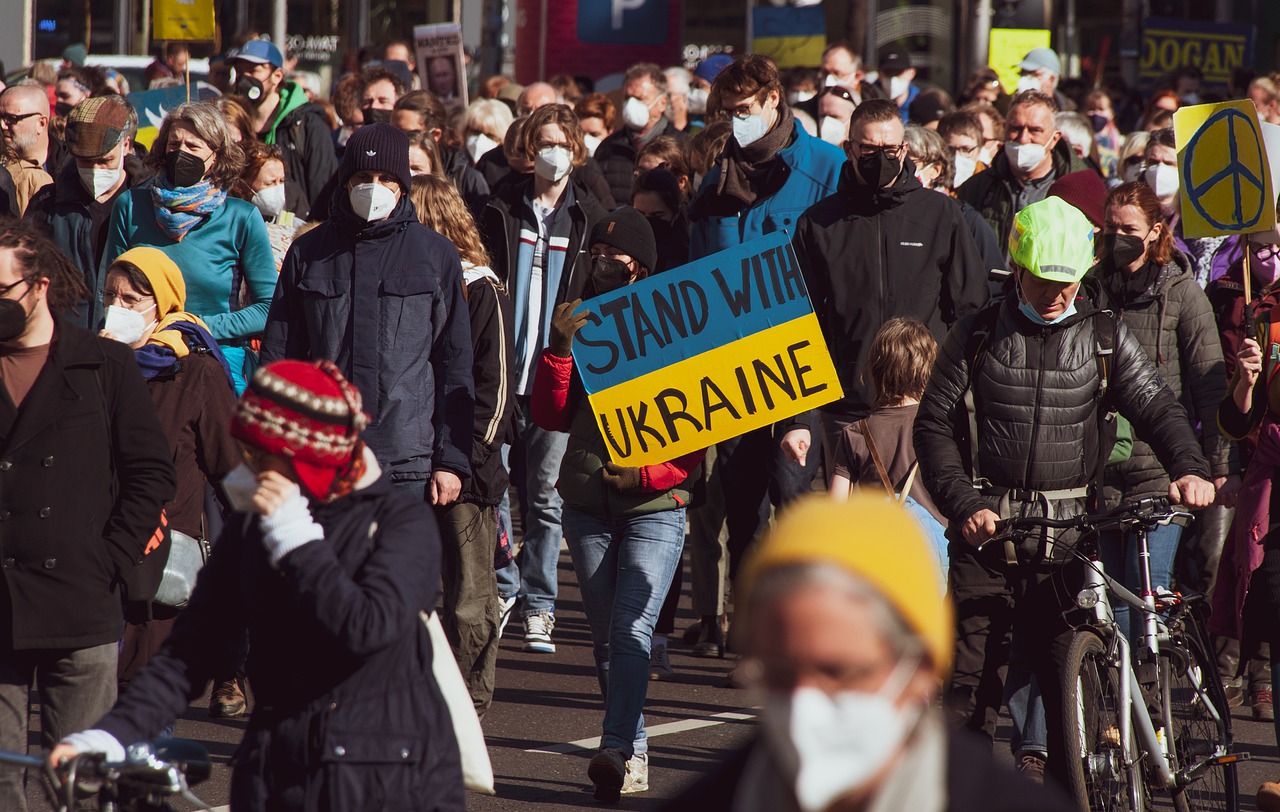
The Russian invasion of Ukraine has unleashed heated political debate on the geopolitical consequences of the conflict. Less noticed, the Ukrainian conflict has opened the way for a broader militarization of what was already a global war economy when global capitalism is sinking in deep political and economic crisis.
In March, the Biden administration announced an increase of 31 billion dollars in the Pentagon’s budget on top of an appropriation approved weeks before of 14 billion dollars for the defense of Ukraine. In 2021, Washington approved a military budget of almost 800 billion dollars even as it ended the war in Afghanistan that year. After the Russian invasion, the governments of the United States, the European Union and others allocated billions more to military spending and sent weapons and private military contractors to Ukraine. Stocks of military and security companies shot up after the invasion: Raytheon (8 percent), General Dynamics (12), Lockheed Martin (18), Northrop Grumman (22). Stocks of military firms in Europe, India and other countries rose similarly on expectations of an exponential rise in global military spending.
The Russian invasion –brutal, reckless and reprehensible– has sparked debate about the role NATO’s expansion into Ukraine played in motivating the Kremlin. US officials were aware that said expansion would impel Moscow toward a military conflict, as a recent report from the RAND Corporation, a Pentagon consultant, affirmed. “The measures that we propose are conceived as part of a campaign to unbalance the adversary, causing Russia to overextend itself militarily and economically.”
Militarized accumulation –endless wars, potential conflicts, civil and political unrest, as well as police actions– plays a central role here in the global political economy, which depends on them to sustain capital accumulation in the face of chronic stagnation and saturation of global markets. These processes encompass a fusion of private accumulation with state militarization to sustain the process of capital accumulation.
The cycles of destruction and reconstruction provide constant outlets for over-accumulated capital, opening possibilities for reinvesting the money that the transnational capitalist class has accumulated. Wars provide important economic stimulus. They have historically have pulled the capitalist system out of crises as they serve to divert attention from political tensions and from problems of legitimacy. It was World War II that finally allowed global capitalism to get out of the Great Depression. The “cold war” legitimized 50 years of increases in military budgets. The wars in Iraq and Afghanistan, the longest in modern history, helped to keep the economy afloat in the face of chronic stagnation in the first two decades of the current century. From the anti-communist fervor of the “cold war,” to the “war on terror,” followed by the so-called “new cold war,” and now the Russian invasion of Ukraine, the transnational elite, led by Washington, have had to conjure up one enemy after another to legitimize the military accumulation and shift attention from internal tensions to external enemies and artificial threats.
September 11, 2001 marked the beginning of an epoch of permanent global war in which logistics, warfare, intelligence, repression, and tracking –even military personnel– are increasingly in the privatized domain of transnational capital. State military spending on a global scale has grown by more than 50 percent from 2001 to date, while profits of the military-industrial complex have quadrupled. For-profit military companies employ some 15 million people worldwide, while another 20 million worked in private security. The amount spent on private security in 2003, the year of the invasion of Iraq, was 73 percent higher than the amount spent in the public sector, and three times as many people were employed in private forces companies than in public law enforcement.
These corporate soldiers and police were deployed to: guard corporate property; provide personal security to executives and their families; monitor, spy and collect data; carry out police, paramilitary, counterinsurgency and tracking operations; crowd control, riot control activities and repression of protesters; manage prisons, and participate in war. These private military firms are flocking to Ukraine. Some mercenary firms offer between $1,000 and $2,000 dollars a day to those who have combat experience.
The crisis of global capitalism is economic, of chronic stagnation and also political, of the legitimacy of the states and of capitalist hegemony. Billions of people in the world face uncertain struggles for survival and question a system that they no longer consider legitimate. International frictions grow as states, in their effort to preserve legitimacy, seek to sublimate political tensions and to prevent the social order from fracturing. Mass strikes and protests have proliferated in the world. Wars and external enemies allow dominant groups –in their quest to retain dominance– to divert attention from political tensions and from problems of legitimacy.
In the US, the class struggle is intensifying, with a wave of strikes and unionization campaigns at Amazon, Starbucks, and other sectors of the gig economy. The current inflationary spiral and the escalation of class struggles in the world underscore the inability of the dominant groups to contain the growing crisis. The impulse of the capitalist State to externalize the political repercussions of the crisis increases the danger that international tensions and local conflicts, such as in Ukraine, will lead to broader international conflagrations with unpredictable consequences.
*Professor of sociology. University of California at Santa Barbara
==Ω==
Originally Published in Spanish by La Jornada, Monday, May 2, 2022, https://www.jornada.com.mx/2022/05/02/opinion/019a1pol and Re-Published by the Chiapas Support Committee
Why we oppose the Maya Train

By: Gilberto López y Rivas
On April 19, a letter titled “Why we oppose the Maya Train” was delivered to the President of the Republic, signed by more than 300 researchers of diverse disciplines, who self-define as follows: “We are not pseudo-scientists, we are not conservatives, we are not adversaries. We are academics with field and cabinet work, who have a deep commitment to the good of Mexico, and we have demonstrated this for decades, throughout which we have pointed out the problems caused by government programs, corporate projects and unsustainable initiatives of any origin.”
The President is reminded that ever since the Maya Train project was announced, and a few days before taking office, a respectful letter was addressed to him in which the reasons why the work should not be carried out were stated, with arguments and data that come from both scientific studies and popular wisdom. In this letter, relegated for the federal Executive, a condition that would be violated by the mega-work was insisted on: the principle of prior, free, informed and culturally appropriate consultation required by Convention 169 on Indigenous Peoples and Tribes of the International Labor Organization (ILO). Nor were the “experts in whom the people of Mexico have invested considerable resources to generate knowledge about the nation’s biocultural heritage” consulted. Currently, construction work on the Maya Train already affects the ways of life, the biodiversity, sustainability, environmental quality and the human and existential rights of the peoples and communities that inhabit the entire region that said project seeks to benefit.”
Given the gravity and irreversibility of the damages and the lack of response to their indications, the signers explain their reasons for opposing the Maya Train, summarized as follows:
1) The project’s ideals of progress, profitability and urbanization violate the ways of life, customs, worldviews, community production and subsistence of the Maya peoples.
2) The archaeological buildings, vestiges and sites will be destroyed in part and converted into merchandise to attract tourists, within the framework of a reality marked by displacement of populations, land speculation and community disintegration.
3) The Yucatán Peninsula is a platform that originates from the chemical weathering of sedimentary limestone rocks, which give the soil a brittle and fragile condition, not adequate to support the weight of fast and heavy trains.
4) The soil has determined the creation of a complex subterranean hydrological system that houses one of the most important aquifers in Mexico, now affected by the Maya Train.
5) Excessive use and contamination of groundwater, inorganic waste, urbanization and productive activities put the peninsula’s aquifer at risk.
6) It also endangers the longest system of underground caves and rivers in the world, its fauna and geological information.
7) The project threatens biocultural wealth of planetary relevance: bacterial reefs, bat caves that are controllers of plagues, dispersers of seeds and pollinators, jaguars, the peccary and an countless species of fish, birds and insects.
8) The ecosystems in which 54 percent of the country’s mangroves are located are in danger.
9) Damage to the ecosystems reduces the population’s vulnerability to climate change.
10) In recent decades, coral cover has diminished dramatically to less than 10 percent of its potential size. As tourism increases, these conditions will worsen.
11) Laguna Bacalar has been gravely affected by tourism, deforestation and the use of chemical fertilizers.
12) Affectation of the biocultural heritage of the communities, with modes of appropriation that break the already fragile balance and ecological sustainability.
13) Mass migration, population growth, ranching, extensive agriculture, agri-business and large-scale tourism developments will impact tropical forests.
14) The train’s infrastructure impedes the natural and indispensable mobility of species.
15) Mass tourism will affect ways of life, sanitary conditions, generation of garbage, consumption and water pollution.
16) In Calakmul they foresee the arrival of 3 million tourists, instead of 40 thousand currently.
17) A real estate and urbanization project, which causes environmental impoverishment.
18) With Cancun as a witness case, an increase in violence, drug trafficking and human trafficking is predicted.
19) A lack of planning, discussion and evaluation that the law determines.
20) Work [being done] without complying with Convention 169 of the ILO, without studies of soil mechanics, without environmental impact statements. All that, in a context of militarization and delivery of the work to the military establishments.
==Ω==
Originally Published in Spanish by La Jornada, Friday, April 29, 2022, https://www.jornada.com.mx/2022/04/29/opinion/016a1pol and Re-Published with English interpretation by the Chiapas Support Committee
Communiqué of the Caravan for Life and Water
To the Zapatista National Liberation Army:
To the National Indigenous Congress:
To the Indigenous Government Council:
To the Sixth Commission of the EZLN:
To the Europe refusing to surrender:
To those who signed the Declaration for Life:
To the peoples who struggle and resist:
To our revered Mother Earth:
The Caravan for Water and Life ends its journey today in the Zapatista lands of Cuentepec, Morelos.
For 34 days we visited our sisters, brothers, and siblings of the Tutunaku, Nahua, Otomí (ñhöñhö), Mazateco, Triqui, Zapoteco, Binizaa, Matlatzinca, Nuntaj iyi, Ayuujk peoples for whom water and land are sacred, who give their very lives to defend and recover what belongs to them.
We linked up and organized with comrades from Germany, France, Greece, Portugal, Guatemala, Chile, Spain, Holland, Switzerland, Australia, and England who also struggle and resist in their territories, and agreed to stand with the caravan and the struggles that comprise it.
We witnessed how the law of the peoples was enforced, which is not at odds with nature but rather reproduces it.
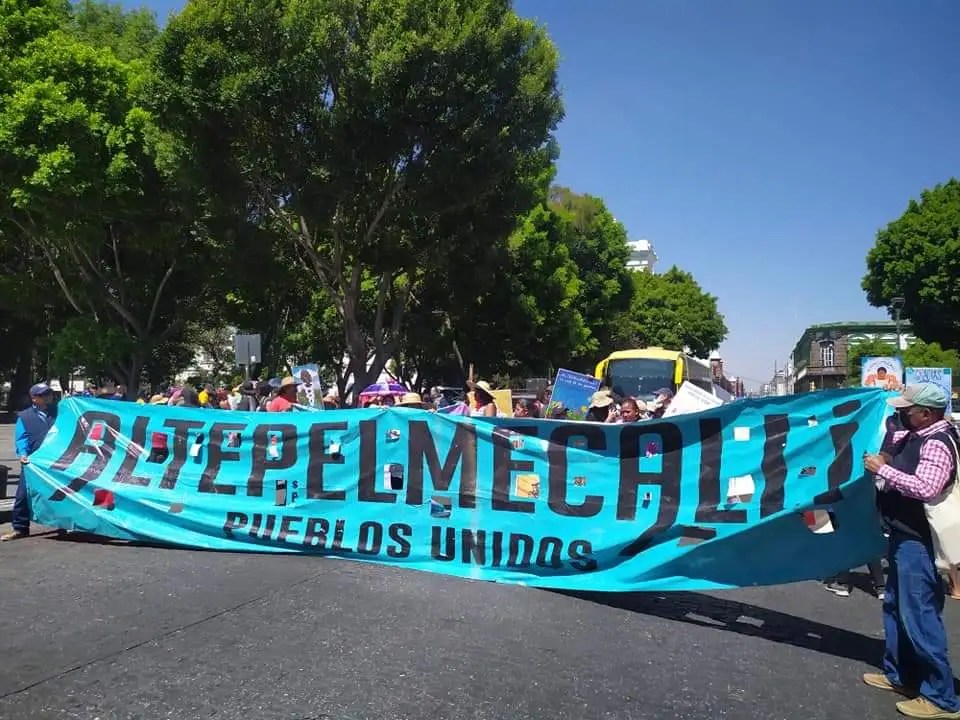
We saw this as the Nahua peoples shut down the Bonafont-Danone company and turned it into the Altepelmecalli, the water returned to their wells; the Santiago Mexquititlán dam regained water after the Otomí people took over the Barrio Cuarto well, which the State refuses to cede the legal rights to supply and control it.
The Tehuacán garbage dump stopped growing after being shut down by the people of Santa María Coapan; in the Sierra Norte de Puebla, 5 mining concessions were canceled and the construction of 2 hydroelectric dams prevented.
The street and market vendors maintain their workspaces thanks to their resistance3; the place where the traitor of the peoples Adelfo Regino Montes used to work, the INPI, was taken over by the Otomí community living in Mexico City and turned into the House of the Indigenous Peoples and Communities “Samir Flores Soberanes,” from where they fight, resist and organize together.
The peoples received the Caravan in their local assemblies. We walked with them, we united our voices, we strengthened each other.
We knew the pains of the others are the same as ours: contempt, repression, dispossession, and exploitation are the forms in which the war that capitalism imposes around the world manifests to all of us.
We went out to look for ourselves in other geographies, to witness other rages and other rebellions, because we are aware that only with the union of the peoples will we have the necessary strength to defeat this murderous system.
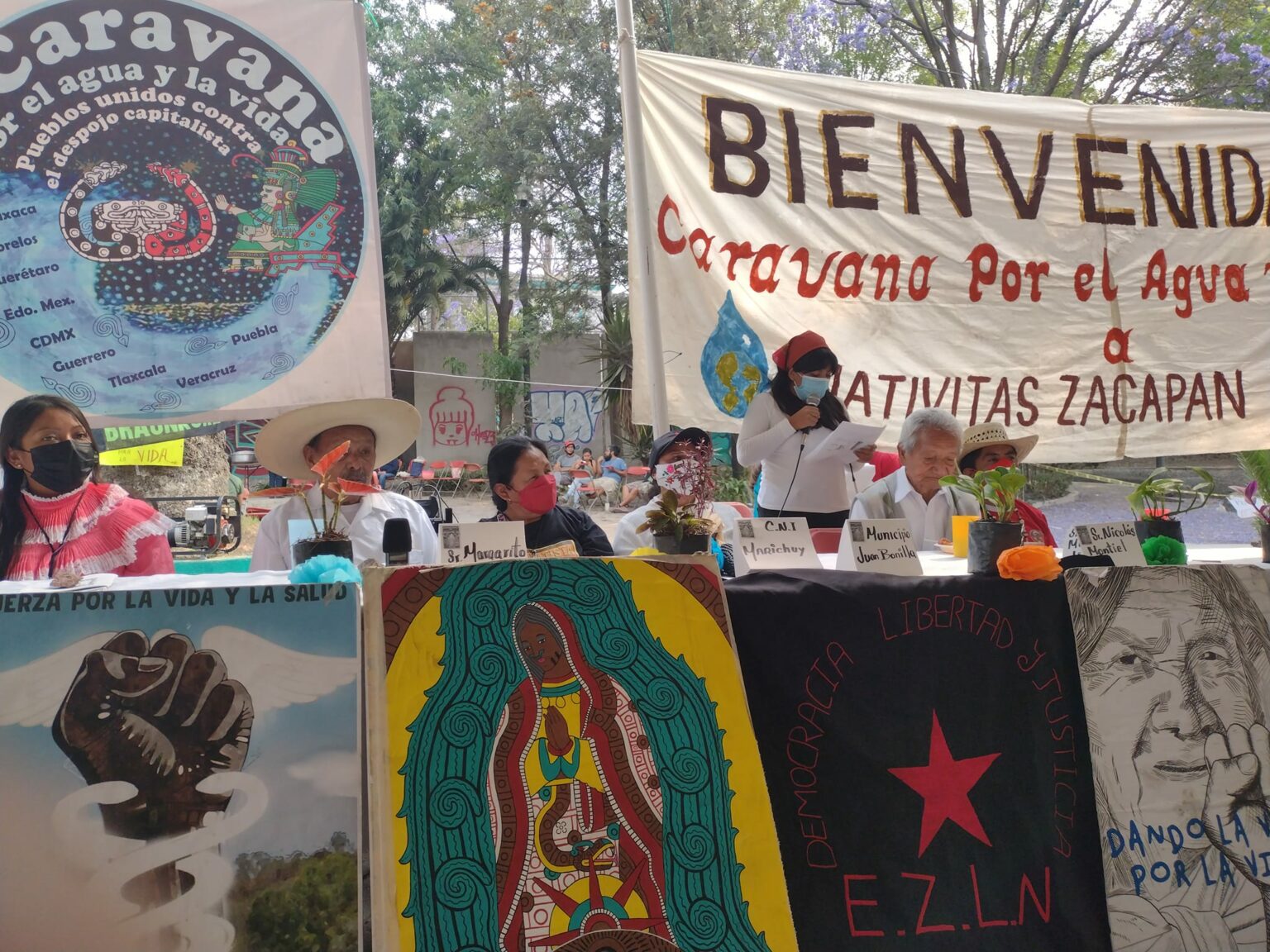
We transgressed the borders that have been imposed on us, we broke the fences, we united and weaved our struggles.
We exposed the voracity of capitalism and its innumerable names:
Mining, water exploitation, real estate, gentrification, contamination of land, air, rivers, and seas, dispossession of territory, transnational mega-projects, assassinations of environmentalists, imprisonments, disappearances, drug trafficking, para-militarism, conscience buying, division of peoples, the commodification of life, precariousness of waged and informal labor, collusion of the state and organized and authorized crime, privatization of education, femicides, repression; violence in all its forms.
We also expose the State, faithful butler of capital, which uses all its repressive apparatus against those of us who fight for life.
It deployed its forces to evict the Nahua peoples of Altepelmecalli, to repress the comrades who defend their source of work; to beat and imprison the participants of Okupa Cuba. It is State intervention what keeps our comrades Fidencio Aldama, Fredy García, Marcelino Ruíz Gómez, Abraham López Montejo, Germán López Montejo and the 7 political prisoners of Eloxochitlán imprisoned.
The State manifests its servant status to capital when it stripped our Otomí comrades living in Mexico City of their work spaces; when it persecutes those who fight for a place to live; when it threatens and murders journalists who defend the truth, when it tries to discredit and defame environmental defenders; harassing the liberated space of the Okupa Chiapaz.
The State perpetrates the impunity for the murders of Bety Cariño, Samir Flores and Meztli Sarabia. It keeps open the unjust criminal trial of Miguel López Vega for defending the Metlapanapa River.
It executed the forced disappearance of Sergio Rivera Hernández, water defender in Coyomeapan and of Dr. Ernesto Sernas García, lawyer for the organization Sol Rojo.
It persecutes students from public universities organizing to defend access to education; it imposes gentrification; it destroys the wetlands of Xochimilco; it displaces entire communities, and hands them over to the mining companies and drug traffickers.
The Mexican State, protecting capital’s interests, tried to disappear the rural teacher training colleges; it tried to hide the truth and justice for our 43 and from here we say:
¡Vivos se los llevaron, vivos los queremos los vivos!
(Alive you took them away, alive they must be returned!)
We expose the State institutions that hand over, privatize and profit from natural land resources, privileging large companies such as Danone, Volkswagen, Audi, Nestlé, Constellation Brands, Coca Cola, Gold Corp, Black Rock among many others.
The Caravan also allowed us to observe and note our contradictions as individuals and as organizations, the capitalist practices that we reproduce and that we can only dismantle as a community, the system that inhabits our bodies and that manifests itself in our actions and words.
To eradicate commercialism, patriarchy, machismo, misogyny, colonialism, racism, and classism, it is necessary to recognize it in ourselves, enunciate it, and build alternatives.
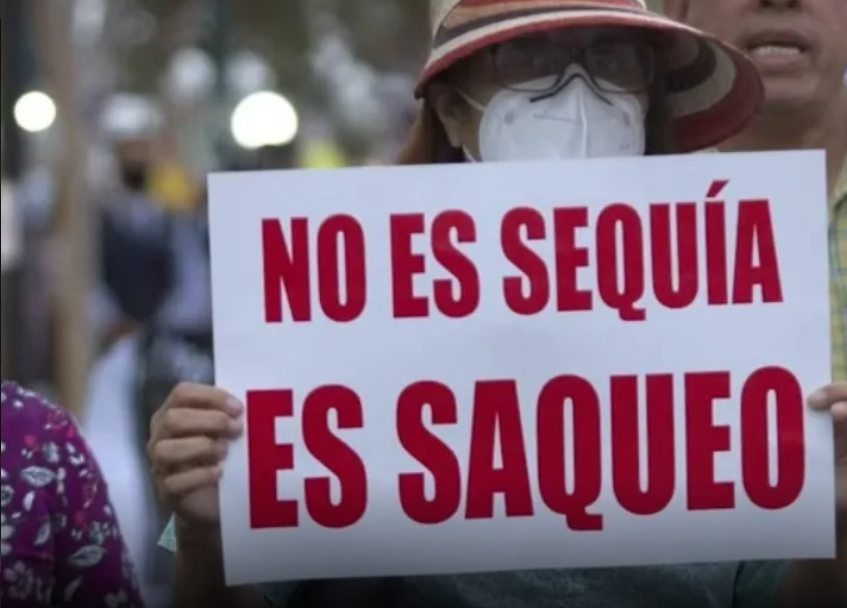
The above photo says: “It’s Not Drought It’s Looting.”
We answer from our spaces, forms, and times that we will continue building processes of autonomy and strengthening self-determination and relations between peoples, we will continue the resistance by taking into our hands the destiny of our territories.
The Caravan also allowed us to observe and note our contradictions as individuals and as organizations, the capitalist practices that we reproduce and that we can only dismantle as a community, the system that inhabits our bodies and that manifests itself in our actions and words. To eradicate commercialism, patriarchy, machismo, misogyny, colonialism, racism, and classism, it is necessary to recognize it in ourselves, enunciate it, and build alternatives.
Today, as the caravan reaches its last stop, we ask ourselves what’s next, as did the EZLN and the National Indigenous Congress on its 25th anniversary.
We answer from our spaces, forms, and times that we will continue building processes of autonomy and strengthening self-determination and relations between peoples, we will continue the resistance by taking into our hands the destiny of our territories.
We now glimpse a common horizon of rebellion, resistance, and organization to continue weaving our struggles in defense of life, strengthened by the national and international alliances we built.
We now have the certainty that if they touch one of us, we will respond as a group and not as isolated individuals.
These are not empty words; it is a warning.
It is a warning to the governments that plot their attack against all of us, little by little there. We will not continue to subject ourselves to an isolated struggle.
It took great effort to carry out this caravan.
We understand that one day in these territories is not enough to understand their particular struggles.
Our brothers, sisters, and siblings resist day and night to stop the destruction of their land.
To learn from the struggles, there is no other way but to live them in our flesh.
«Wake up!», illustration by taller ahuehuete (2022). A Proposal We are aware that after this long journey through 9 states, the lessons learned must be materialized into concrete actions that can be taken to the communities to continue advancing.
That is why the National Indigenous Congress, the Indigenous Council of Government, the Zapatista National Liberation Army, the peoples who struggle and resist, we propose:
Like the Caravan for Water and Life against capitalist dispossession, the construction of autonomous schools in territories that belong to the CNI, in which compañeros and compañeras from Mexico and the world can visit our communities temporarily and share the day to day with us, to know what we fight for.
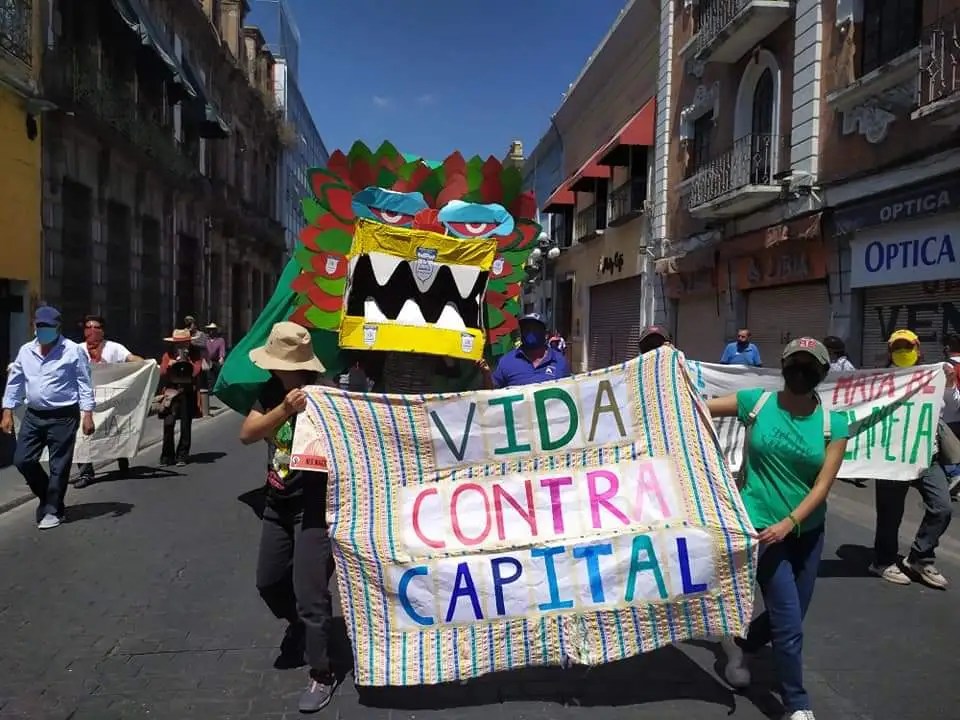
And to witness that now the Nahua, ñhöñhö, Mazatec, Zapotec, Triqui, Binizaa, Matlatzinca, Nuntaj iyi, Ayuujk, and other peoples are the ones who ask the attendees: “and you, what is your story?”
We propose that this provocation be discussed and evaluated in our territories and that on October 12 of this year the answer can be known. If it is accepted, we will begin with the organizational work to make it a reality.
Finally, as a Caravan, we celebrate and support the great step taken today by our brothers and sisters of Cuentepec with the elaboration of the decree against mining for the State of Morelos, a great step not only for the Nahua peoples but for all the originary peoples who struggle for autonomy.
Today is a historic day for all of us. Today the people have decided, once again, to exercise their right to govern themselves.
Cuentepec, Morelos, April 24, 20227. Our struggle is and will continue to be for life. Never again a world without the peoples.
P.S.: The future of the peoples is not in international conventions, it is in the peoples who fight for autonomy and self-determination, it is in the communities that live and dream of freedom and rebuild life, not in opportunists who usurp, supplant the voice of the peoples and profit from the struggle so that this system continues.
For the integral reconstitution of our peoples!
Zapata lives, the struggle continues!
Samir lives, the struggle continues!
Long live the CNI!
Long live the CIG!
Long live the EZLN!
Because they were taken alive, we want them alive!
Long live the people who struggle and resist!
\Long live the women who struggle, organize and resist!
==Ω==
Published in English by Enlace Zapatista, Thursday, April 24, 2022, https://enlacezapatista.ezln.org.mx/2022/04/28/communique-of-the-caravan-for-life-and-water/ Re-Published by the Chiapas Support Committee
The IACHR will visit 22 indigenous communities in Chiapas, victims of violence
One year after the IACHR granted precautionary measures to 12 Aldama communities, the Mexican State has not guaranteed peace and security in the territory
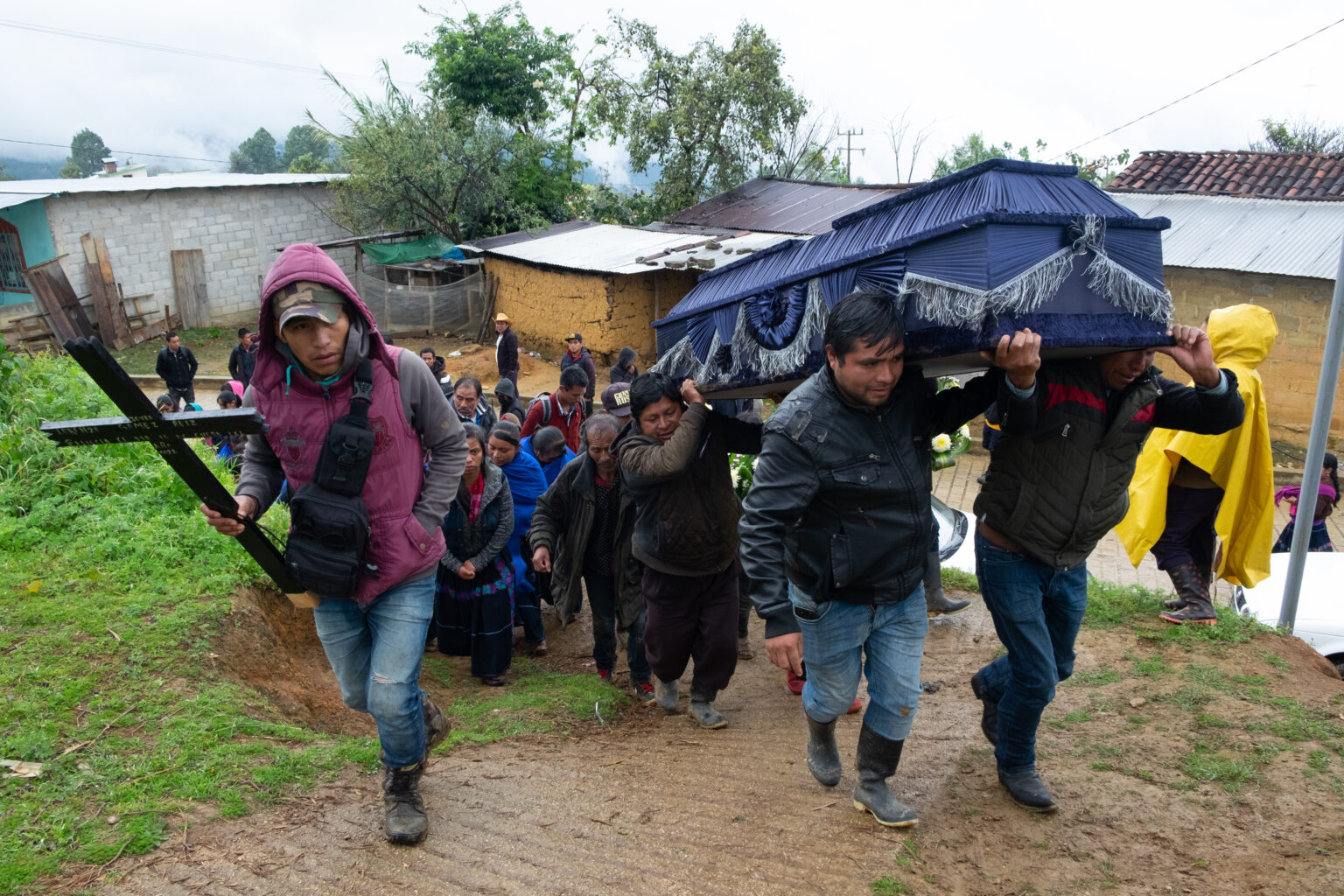
By: Isaín Mandujano
One year after the precautionary measures granted by the Inter-American Commission on Human Rights (IACHR) in favor of twelve indigenous Tsotsil communities in Aldama, Chiapas, the Mexican State has not taken effective actions to guarantee the security of the people who live and travel within these communities.
On April 23 2021, the IACHR issued resolution number 35/2021 taking into consideration the “situation of risk resulting from attacks, harassment and threats due to the presence of armed people in the area, which would have caused their displacement at various times, in the context of a territorial conflict.” It also established that the measures the State adopted (non-aggression agreements, dialogue measures and patrols) have not been effective and suitable given that they have not permitted mitigating the risk situation.
Their analysis took into account different elements that have not been effectively attended to on the part of the State, therefore “the disarmament and disarticulation of the aggressor group has not been achieved,” and that “it would be pertinent to address, at least, the formation, structure, and financing of the armed people, as well as their relationship to the territorial conflict… identifying the origin of the weapons used and the source of training.”

Another relevant point contained in the precautionary measures of the IACHR is the inadequate delimitation of the territories that provokes “a climate of permanent uncertainty” that “can generate major violent situations and can affect the social peace of the collectives.”
The IACHR reaffirmed re-affirmed the foregoing on December 15, 2021, when it issued the follow-up resolution 102/2021, in which it requested to visit 22 indigenous communities in Chiapas that are beneficiaries of precautionary measures (one in Chenalhó, nine in Chalchihuitán and 12 in Aldama). On April 22, the Mexican State notified the Fray Bartolomé de Las Casas Human Rights Center (Frayba) of its consent to the IACHR’s on-site visit and, therefore we are awaiting confirmation of the date.
Since April 2021, when the Precautionary Measures were issued, three people have been shot to death and another five were injured (among them a minor girl). From January 1 of this year to date, 1,095 attacks with high caliber weapons have been reported against Aldama communities. [1]
One year after the IACHR’s resolution we lament that the Mexican State has not taken effective measures to guarantee the life, security, personal integrity and a lasting peace, attending to all elements of the conflict; we emphasize that it’s important to reduce the situation to a dispute over land and the simulation of agreements, which in turn impedes substantive solutions for communities in the region of the Chiapas Highlands that experience prolonged violence with critical and irreparable psychosocial impacts.
[1] Both Zapatistas and non-Zapatistas live in Aldama communities.
==Ω==
Originally Published in Spanish by Chiapas Paralelo, April 26, 2022, https://www.chiapasparalelo.com/noticias/chiapas/2022/04/la-cidh-visitara-22-comunidades-indigenas-de-chiapas-victimas-de-la-violencia/ Re-Published with English interpretation by the Chiapas Support Committee
The Mexican State has not fulfilled the IACHR’s recommendations in Aldama
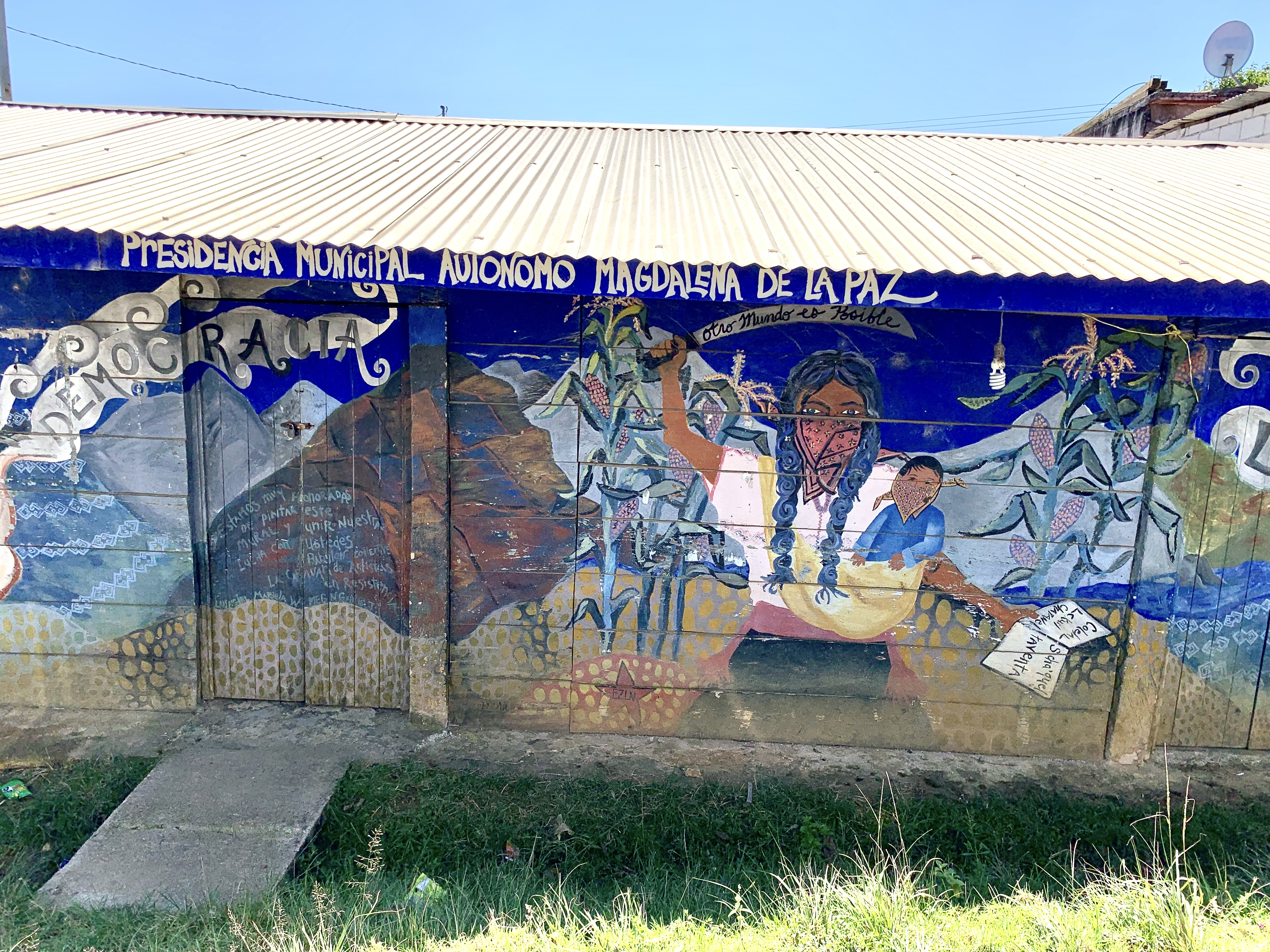
Magdalena Aldama, Chiapas. April 23rd, 2022
To the Inter-American Commission on Human Rights.
To Amnesty International for Human Rights.
To the National Human Rights Commission To Non-Governmental Human Rights Centers.
To the International, National, State and Independent Media.
To the People and the World.
Presente.
Once again, we make known our words and our feelings as the people of Magdalena Aldama and as representatives of the 12 affected communities. We are a people living in abandonment and oblivion, we are a people who suffer threats from armed groups operating in Santa Martha in the municipality of Chenalhó.
One year following the precautionary measures that were issued by the Inter-American Commission on Human Rights with Precautionary Measure No. 284-18, indigenous Tsotsil families from twelve identified communities of Aldama, Chiapas with respect to Mexico Resolution 35/2021; of which we were beneficiaries of said measures since the adoption of the Resolution 102/2021 (also of precautionary measures).
Since issuing said precautionary and protective measures, the Mexican state has not implemented pertinent steps to safeguard the life and physical integrity of the beneficiaries. As a result, on March 25, a minor was injured in the community of Tabac due to the increase in armed aggressions against our people of Magdalenas and our communities.
To date, there has been no progress on our petitions since June 24, 2021, when a meeting was held with government officials and different organizations. The recommendations of the resolutions issued by the Inter-American Commission have not been complied with.
The government supposedly sends its projects for the improvement and advancement of a solution to the conflict, but the only thing it has done with its projects in the repair of the road section is to destroy our road, and it is the only option for entering and leaving our communities, and with the deteriorating condition that the 2-kilometer section is in, it has put our lives at risk and resulted in injuries and deaths of our brothers, following the destruction of the Tabac bridge. Every day we risk our lives to be able to survive and go to our workplaces, these days it is the season for planting corn, we live and subsist all year round by the sweat of our brow. We are not asking the government for handouts — the only thing we are demanding is a true and definitive solution to the conflict, because these armed groups do not let us work our land, nor travel on the roads. If they see us they shoot us, as we have said on several occasions, as if we were animals that they hunt. They watch us from the banks of the rivers and in the different points of attack where they operate to assail us, while they are looting all the timber trees within the 60 hectares in dispute. And the legitimate owners are still unable to work their lands and are without land, and to date, there has been no real solution from the government and the corresponding agencies. It seems that the government is only protecting these armed groups, perhaps because our town of Magdalenas is small—while some suffer from hunger, many live happily. [1]
The only advancement that the Mexican state has made is to fabricate crimes and lock up innocent people who seek true justice for our people and for the government. Also, our brother and comrade Cristobal Santiz Jimenez, who after serving two years imprisoned by the government of Chiapas, the state prosecutor’s office opened another arrest warrant against him. It is very visible that here in our state, justice does not exist, only locking up innocent people who seek true justice. The government is violating human rights, and impunity is permitted, because the government just threatens and intimidates the authorities, in order to be able to appease the situation that we are living every day as indigenous and first peoples. The governments criminalize and threaten the defenders of human rights and life, and lock up innocent people, while these armed groups continue to operate freely, and attack in the direction of our communities.
Faced with these injustices, we ask the Inter-American Commission on Human Rights to visit our community and our comrade Cristóbal Santiz Jiménez, held as a political prisoner by the Chiapas state government and the state prosecutor’s office — who is still in prison. As first peoples we continue to resist in defense of human rights, in defense of territory, water and life — we will not allow them to plunder our lands as is happening in various parts of this republic and the world. “Let us come together and continue with hope, to defend and take care of the blood of the earth and the spirits.”
We demand the immediate and unconditional release of our comrade Cristóbal Santiz Jiménez.
We demand compliance with the recommendations of the IACHR.
We demand the fulfillment of our petitions presented on June 24, 2021.
Compensation for the victims of this conflict.
Sincerely,
Representatives for the Precautionary Measures from the 12 communities benefited by No. 284-18.
[1] Magdalena de la Paz is what the Zapatistas call their autonomous municipality within the official municipality of Aldama.
==Ω==
Originally Published in Spanish by Frayba.org.mx, April 23, 2022, https://frayba.org.mx/no-ha-cumplido-las-recomendaciones-de-la-cidh-en-aldama/ English Translation by Schools for Chiapas, and Re-Published by the Chiapas Support Committee
 Chiapas Support Committee