Chiapas Support Committee
Home of the Compañero Manuel blog on zapatistas & mexico
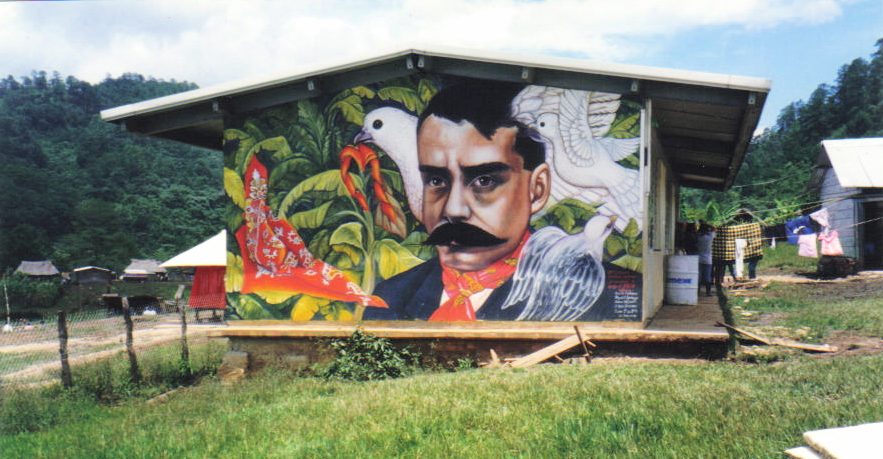
El Cambalache presents: Inter-Change Value
APRIL 1, 2016 7:00 – 9:00 PM
OMNI COMMONS, 4799 SHATTUCK AVE., OAKLAND, CA
The capitalist economic system has provoked a social rupture and loss of community values, such as mutual aid and bartering or exchanging. This rupture foments a sense that people and things are discardable. In El Cambalache (The Swap in English) in San Cristobal de las Casas, Chiapas, Mexico, by using exchange and inter-actions we work to generate change from the personal out to those around us and use things that appear to no longer have value. We seek to mend the rupture that we see in our worlds.
The Cambalache, with its nucleus-generating group of six women involves people through their visits to exchange day by day. The idea is that we re-enforce the development of the Cambalache precisely through constructing networks with people and organizations that have similar goals. In this way we share the construction of an inclusive community through workshops where economy members gather participants to take part in/of the knowledge, abilities and services that are offered. We walk hand in hand with these and other social and political processes. El Cambalache is an economy built in feminism and decoloniality. As women, Mexicans, Americans, and Indigenous people we can create an economy in our own visions that is liberating from the weight and exploitation that comes with capitalism. For more information: (510) 654-9587.

Sponsored by the Chiapas Support Committee
C0-Sponsored by: Global Women’s Strike/Omni Collective
Zibechi: The social bases of the new rights
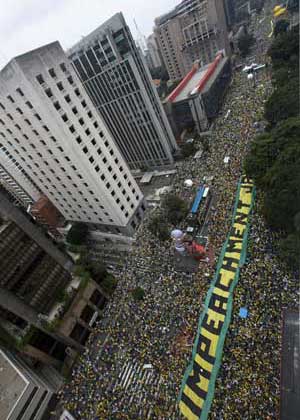
Last Sunday, millions of people demonstrated against the government of Dilma Rousseff. Photo: Afp.
By: Raúl Zibechi
A new right is emerging in the world and also in Latin America, a region that presents its own profiles and a new social base. It’s necessary to become familiar with it in order to combat it, to avoid simplistic judgments and to understand the differences with the old rights.
Mauricio Macri is very different from Carlos Menem. He introduced neoliberalism, but was a son of the old political class, to the point that he respected some legal norms institutional times. Macri is the son of the neoliberal model and behaves according to the extractive model, making dispossession his principal argument. His pulse doesn’t tremble at the time of stepping over the values of democracy and the procedures that characterize it.
Something similar can be said about the Venezuelan right. It’s about attaining objectives regardless of the means. The modus operandi of the new Brazilian right even differs from the privatizing government of Fernando Henrique Cardoso. Today the referents are characters like Donald Trump and Silvio Berlusconi, or the Turkish president Recep Tayyip Erdogan, a militarist and warrior, who don’t respect either the Kurdish people or the legal opposition, whose offices and meetings are systematically attacked.
These new rights relate to Washington, but it’s of little use to think that they act mechanically, following orders emanating from an imperial center. The regional rights, above all those of the big countries, have a certain amount of autonomy in defense of their own interests, above all those that are supported in a more or less developed local business group.
But what’s really novel is the broad support they get from the masses. As has been said, the Argentine right had never before reached the Casa Rosada through the electoral path. This novelty merits some explanation that cannot be exhausted in this short space. Nor does it seem adequate to attribute all the advances of the right to the media. What reasons are there for maintaining that voters on the right are manipulated and those of the left are conscious and lucid votes?
There are two questions that would need to be cleared away before entering a broader analysis. The first is the manner of doing things, the non-stop authoritarianism almost without argument. The second is the reason for the support of the masses, which includes not only the middle classes, but also a part of the popular sectors.
About Macri’s authoritarian decisions, the writer Martín Rodríguez maintains: “Macrismo acts like an Islamic State: his occupation of power signifies a sort of irreverence for the sacred Kirchner temples” (Panamarevista.com, 28/01/16). Mass firings are supported on the firm belief of the middle classes that the state workers are “privileged” and collect paychecks without working. The political cost of those tremendous decisions has been very low as of now.
The comparison to the methods of the Islamic State sounds exaggerated, but has a point of contact with reality: the new rights come in cleaning house, sweeping away everything that gets in their way, from workers rights to institutional rules of the game. For them, being democratic is just counting the pieces of paper in the ballot boxes every four or five years.
The second question is to comprehend the mass support attained. The anthropologist Andrés Ruggeri, a researcher in recovered companies, emphasizes that the right was able to “construct a reactionary social base capable of mobilizing itself, based in the most backward sectors of the middle class, sectors that always existed and that supported the dictatorship in the 1970s” (Diagonal, 13/02/15). That social base is anchored in a voter-consumer “that acquires a vote like a supermarket product.”
He considers that the big error of the Cristina Fernandez government consisted of, instead of fomenting an organized popular subject, in promoting “a dismembered social group, individualistic and consumerist, which also thought that the conquests of the fight in 2001 and the social benefits attained in those 12 years were acquired rights that were not at risk. Convincing them of the latter was a great achievement of the rightwing campaign, the key to its triumph” (Diagonal, 13/02/16).
The middle classes are very different from those of the 60s. They no longer are referenced in the layers of professionals that are formally trained in state universities, who read books and continued studying when ending their careers, aspired to work for mid-level paychecks in state divisions and socialized in public spaces where they come together with the popular sectors. The new middle classes revere the rich, aspire to live in private neighborhoods far away from the popular classes and the urban framework, are deeply consumerist and distrust free thought.
If a decade ago part of those middle classes banged on casseroles against the “economic closures” of the Economic Minister, Domingo Cavallo, and on occasion came together with the unemployed (“picket and casserole, is just one fight,” [1] was the slogan of 2001), now they just worry about property and security, and think that freedom consists of buying dollars and vacationing in five star hotels.
These middle classes (and a part of the popular sectors) are culturally modeled by extractivism [2]: by consumer values that financial capital promotes, so distant from the values of work and effort that an industrial society promoted barely four decades ago.
The defenders of the neoliberal model attain a level of support at around 35-40 percent of the electorate, as all of the processes in the region show. We often don’t know how to confront this new right. It’s not agitating against imperialism like we will overthrow it, but rather demonstrating that one can enjoy life without falling into consumerism, debt and individualism.
[1] It rhymes in Spanish: “piquete y cacerola, la lucha es una sola.”
[2] Extractivism – Zibechi’s use of this term is similar to David Harvey’s accumulation by dispossession. It implies corporations taking a resource or possession away from people in order to create profits.
————————————————————
Originally Published in Spanish by La Jornada
Friday, February 19, 2016
Re-published with English interpretation by the Chiapas Support Committee
Gustavo Castro’s stay in Honduras is risky
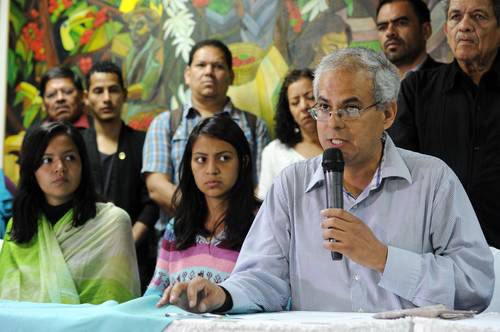
Oscar Castro, Gustavo’s brother, during the press conference held in Tegucigalpa, Honduras, where he denounced that: “the crime scene was altered.” To his right are Berta Cáceres’ daughters. Photo: Afp
By: Blanche Petrich
Mexico’s ambassador in Honduras, Dolores Jiménez, affirmed that the risk that Gustavo Castro Soto runs by remaining in Honduras as a victim and the only surviving witness to a high-impact crime –the murder of Lenca [1] leader Berta Cáceres, last March 3– “is an objective fact,” and therefore the Chancellery has put its effort into achieving that the environmentalist can return to the country as soon as possible.
In a telephone interview with La Jornada, the diplomat emphasized: “what’s notable in Castro Soto’s case is that despite his vulnerability he it very willing to contribute in whatever may be required for the full clarification of the crime.”
Dolores Jiménez expressed that there are “high expectations” that the Honduran government will respond “as soon as possible” to the request that the Chancellery officially sent this Thursday so that Gustavo Soto, director of the organization Otros Mundos, with its headquarters in Chiapas, is permitted to return to Mexico before the 30-day time period expires that a judge set in La Esperanza, where the attack was committed. As of now, the judge’s prohibition on leaving Honduras does not expire for 26 days.
She assured that bilateral agreements between Mexico and Honduras are in effect for cooperation in judicial investigations, like this one, so that Castro would be able to continue amplifying his statements at a distance, from Mexico, by means of the Honduran Embassy. “It’s something very common and is practiced all over the world.”
The environmentalist leader is sheltered in Casa México, a building bordering the offices of the Mexican Embassy and that forms part of the official residence of Mexico in Tegucigalpa. The consul Pedro Barragán accompanies him all the time.
The ambassador pointed out that as of this moment the Honduran government has not responded in writing to Mexico’s request, delivered the day before yesterday (Thursday). She indicated that a communiqué from the Honduran government details the efforts that have been carried out with the Mexican in the process of investigating the murder of the Lenca leaders Berta Cáceres, “and it permits us to have good expectations” that he can return before the time that the judge set expires.”
Nevertheless, this communiqué, published by the Secretariat of Foreign Relations and International Cooperation and directed “to public opinion,” does not make any allusion to the case of Gustavo Castro. It only indicates that: “all lines of investigation are open” and are the object of “active and systematic efforts.” It reports that the agencies involved in the process are the attorney general’s office, the criminal investigations agency and the national police.
Yesterday, in a press conference, human rights organizations, Berta Cáceres’ daughters and a brother of Gustavo, Óscar Castro Soto, asked that, in the face of irregularities committed by the first judge of La Esperanza, in the southwestern department of Intibucá, the murder case record be assigned to another court.
Ambassador Jiménez declined to comment in that regard. “It’s not my business,” she said.
She explained that the Embassy of Mexico has offered the only witness to the crime consular protection from the first moment, “and it will continue offering all that he requires.”
She added that she would insist he be permitted to continue cooperating from Mexico through the Honduras representation. “It’s a very common practice all over the world. Honduras law permits it. There is a bilateral agreement in effect between the two countries for facilitating judicial cooperation in criminal matters.” She also emphasized that the protection that the Mexican government is offering is with full respect to Honduras law.
–Have you received an answer to the official communication from the Mexican Chancellery?
–No, as of now there is no written response. We hope that we will have a prompt and positive answer as soon as possible.
We observe that the State has expressed its commitment to an in-depth investigation and full clarification and punishment of those responsible. That is important. But above all is the protection of the witness’ life, if it should be at risk. One is not incompatible with the other.
–Does the government of Honduras recognize Gustavo as a victim?
–Of course. His legal situation here is that of a protected witness, as a victim and as a human rights defender with protective measures.
The ambassador specified that the witness is not able to stay in La Esperanza, where the case is followed, “because that’s where he would run the most risk. Although the judge ordered him to appear there to give his statements, the consul transported him to Tegucigalpa afterwards. The consul is with him at every moment.”
After emphasizing that: “nothing is superfluous in matters of security,” the diplomat explained the mechanisms that have been activated for the Mexican activist’s protection: a security operation of the Honduras government for his movements, the same security from the Mexican government and the precautionary measures from the Inter-American Commission on Human Rights.
–Why did the Honduran police intercept Castro Soto’s departure in the international airport when he was going to travel to Mexico? Why were the facts presented that way?
–There is a lot of clamor and at times a lack of immediate communication. The day that he was leaving for Mexico, after the prosecutor released him from his responsibility to make a statement, he thanked him and told him that he could leave. He returned to the airport with the consul after getting a plane ticket. But at the last minute a requirement arrived from the attorney general’s office that he had to continue making statements. We knew that a notification could arrive, but it didn’t happen and we decided to take him to the airport. The consul and I went with him. He was there when they delivered the notification. Then we took him back to the Mexican residence in the official car in which we had taken him. We made contact immediately with the authorities to confirm that in effect he was willing to continue giving statements in La Esperanza.
We were organizing a security operation all day Sunday and on Monday, March 7, it was activated at the first hour to take him to La Esperanza with all guaranties.
–Where does the process stand at this time?
–There has already been a bunch of formalities in which he participated in La Esperanza and therefore he is proposing to the Honduras government that he can leave the country and continue collaborating from Mexico in any amplification that is required. The conditions are appropriate for doing it now.
[1] Lenca – Indigenous people in southwestern Honduras and eastern El Salvador.
———————————————————–
Originally Published in Spanish by La Jornada
Saturday, March 12, 2016
http://www.jornada.unam.mx/2016/03/12/politica/003n1pol
Re-published with English interpretation by the Chiapas Support Committee
Ayotzinapa: example of apparent State-crime collusion
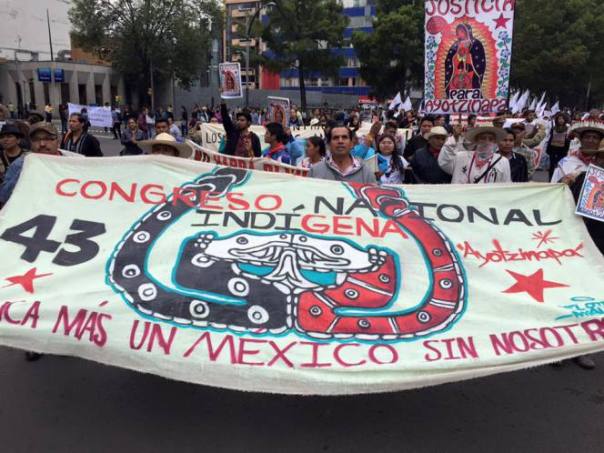
National Indigenous Congress banner in support of Ayotzinapa.
By: David Brooks, Correspondent
New York, March 2, 2016
The Inter-American Commission on Human Rights (IACHR) affirmed in an annual report on Mexico that the disappearance of the 43 Aytozinapa students is “an emblematic example of apparent collusion between State agents and members of organized crime,” and emphasizes that it is an example of the “grave deficiencies” of investigations into these kinds of cases, such as the “structural and almost absolute impunity” in the grave crimes that occur in the country.
“Mexico is going through a grave crisis of violence and security since several years ago,” in large measure because of the “war against drug trafficking” impelled by ex president Felipe Calderón, and by increasing the role of the armed forces in tasks of public security “even greater violence has been let loose, as well as grave human rights violations in which one observes a lack of accountability in accordance with international standards,” points out the extensive annual report entitled The situation of human rights in Mexico, which the IACHR issued today.
Without “substantial changes”
In a summary of the human rights violations and impunity, the report emphasizes that “substantial changes” in security policies are not offered under the current regime, while disappearances, extrajudicial executions and torture continue, as well as women’s insecurity, migrants, human rights defenders and journalists.
Although it recognizes the measures that the government of Enrique Peña Nieto has taken, among them some constitutional reforms and protocols for the investigation of certain human rights abuses, it indicates that: “the State response faces deficiencies, insufficiencies and obstacles in their implementation. The IACHR established a profound breech between the legislative and judicial scaffolding and the daily reality that millions of people in the country experience in their access to justice, prevention of crime and other government initiatives. Time after time, throughout the country, the IACHR heard from victims that the procurement of justice is a simulation.’’
In fact, it emphasizes that despite the change of government at the end of 2012, “there would not be substantial changes in relation to security policies and the levels of violence,” and it’s clear about all the denunciations of disappearances, extrajudicial executions, torture and citizen insecurity, but especially of women, migrants, human rights defenders and journalists.
It affirms that: “Mexico is also considered one of the most dangerous countries in the world for exercising journalism, excepting those that are at war.” It quotes the United Nations High Commissioner on the number of 151,233 homicides from 2006 to August 2015. It also points out that on September 30, 2015 the Mexican State reported 26,798 persons “not located” or disappeared on a national scale.
Around the disappearances, “not a new phenomenon,” the IACHR considers the information “grave” about “the existence of a practice of enforced disappearances at the hands of State agents,” or with their participation and an almost total impunity.
It criticizes the failures in the investigations about the disappearances and emphasized that: “the current crisis of grave human rights violations that pierces Mexico is in part a consequence of the impunity that persists since the guerra sucia (dirty war) and that has championed its repetition until today.” Moreover, it affirms that relatives of the victims have reluctance of going to the authorities, as much because of suspicions of complicity as because of lack of attention.
“The relatives’ finding of graves with dozens of cadavers set forth clearly that they are the ones that faced with the State’s lack of action have assumed the search for loved ones, while the authorities don’t fulfill their duty to investigate, find, identify and deliver the victims with due diligence, as they should.”
In this context, the report broaches the enforced disappearance of the 43 normalistas in Ayotzinapa, which ‘‘constitutes a grave tragedy in Mexico, as well as a call for national and international attention about the disappearances in that country.” The case, it adds, “is a sample of the grave deficiencies that investigations about these acts suffer and the structural and almost absolute impunity in which these grave crimes usually remain. It’s also an emblematic example of the apparent collusion between State agents and members of organized crime.”
At the same time, the IACHR manifests its “gratitude” for the “opening” of the Mexican State to international scrutiny and the work of the Interdisciplinary Group of Independent Experts (GIEI, the group’s initials in Spanish) around the facts of Iguala.
The report also focuses on the use of violence by agents of the State, including the cases of Tlatlaya, in the state of Mexico in 2014; the Apatzingán case, and the confrontation at the border between Tanhuato and Ecuandureo, Michoacán in 2015, making clear the necessity of measures for authorities to render accounts.
“The practice of torture in Mexico is alarming and is also generalized,” the report states. According to official numbers, the Attorney General of the Republic (PGR) has, as of the month of April 2015, 2,420 investigations in process about torture, but only 15 judicial sentences exist for that crime on the federal level. It adds that in the investigation into the facts in Iguala –even with its high profile– 77 percent of the individuals investigated showed bodily injuries.
In its diagnostic, the Inter-American Commission points out that: “the lack of access to justice has created a situation of impunity of a structural character that has the effect of perpetuating and in certain cases impelling the repetition of grave human rights violations. The threats, harassment, murders and disappearances of persons that seek truth and justice have generated an intimidation in Mexican society.”
Therefore, it concludes: “In actuality, the challenge for the Mexican State is to close the existing gap between its legal framework and its unlimited support for human rights with the reality that a large number of inhabitants experience when they seek prompt and effective justice. The State’s big challenge lies in breaking the cycle of reining impunity for the purpose of attaining an effective prevention, investigation, processing and sanction of those responsible for human rights violations.”
———————————————————
Originally Published in Spanish by La Jornada
Thursday, March 3, 2016
Re-Published with English interpretation by the Chiapas Support Committee
Honduran government is preventing Gustavo Castro from leaving |Sign petition
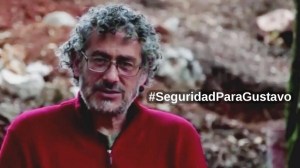
Gustavo Castro Soto
[Please sign the Petition at bottom of post demanding Gustavo’s safety!]
By: Hermann Bellinghausen
Mexico City
Today, the environmental organization Otros Mundos A.C./ Friends of the Earth Mexico reported that Honduras authorities impeded Gustavo Castro Soto from leaving the country. Castro Soto is the Mexican that was injured in the assassination of Honduran activist Berta Cáceres.
This Sunday at 5 o’clock in the morning, Honduran authorities intercepted Castro at the immigration bridge of the International Airport in Tegucigalpa, Honduras, when he was attempting to board the plane that would take him back to Mexico, the organization said in a communiqué.
“We communicate that Gustavo Castro Soto, coordinator of Otros Mundos A.C./Friends of the Earth Mexico continues in Honduras and his personal security continues to be at risk,” the statement added.
The group reported that Mexican diplomats had to protect Castro in the official car to take him back to the Embassy.
“We continue without knowing clearly what his status is or on what basis the Honduran authorities continue to hold him and what proceedings will follow,” the communiqué said.
Unknown subjects murdered Cáceres, a 43-year old prestigious Honduran indigenous and environmental leader, last Thursday, March 3 in her home, the authorities said.
A teacher by profession, Berta Cáceres was known for her fight to stop hydroelectric and mining projects on the lands of the ethnic groups.
———————————————————-
Originally Published in Spanish by La Jornada
English interpretation by the Chiapas Support Committee
Sunday, March 6, 2016
=================================
Click on the English link below to urge Gustavo Castro Soto’s immediate protection
======================================================
Chiapas activist witnessed Berta Cáceres murder
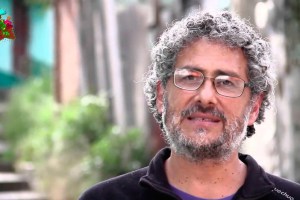
The Mexican activist Gustavo Castro Soto. Foto: Moviac
By: Isaín Mandujano
San Cristóbal de Las Casas, Chiapas (apro) –
Mexican activist Gustavo Castro Soto [1] witnessed the murder this morning of the indigenous environmentalist Berta Cáceres, an attack perpetrated in her house located in the El Líbano neighborhood of La Esperanza, in Intibucá, Honduras.
Castro Soto, a sociologist by profession, was injured during the attack on the Lenca leader and coordinator of the Civic Council of Popular and Indigenous Organizations of Honduras (Copinh).
The police confirmed that Soto is a protected witness and could contribute elements that will permit clarifying Cáceres murder, Honduran newspaper La Prensa emphasized this afternoon.
Human rights defenders and members of the organization Otros Mundos, AC protested this afternoon in this Chiapas city because of the murder of Berta Cáceres and they also demanded assurances of security and protection for the Chiapas activist and environmentalist Gustavo Castro, who was imparting capacity-building workshops in Honduras.
Members of the organization Otros Mundos AC, founded by Castro Soto, demonstrated publicly together with other activists to express their anger over the murder of Berta Cáceres, and at the same time said that they are worried about the status of the Chiapas activist’s physical condition.
The protesters confirmed that: “this morning armed individuals violently entered the house and murdered Berta Cáceres, an attach in which Gustavo Castro was injured. He survived the attack and thus became an actor key to the investigations that will clarify the environmentalist’s murder.
“Berta as well as Gustavo are two people recognized for social and environmental struggle on an international level, which shows the coherence of their lives dedicated to the defense of the rights of indigenous and campesino peoples, who they have accompanied in their resistance processes so that in a peaceful and organized manner, they might avoid the neoliberal project of the regional governments that appropriate Mesoamerican territory through their deadly extractive projects,” friends and compañeros of both activists pointed out in Chiapas.
Therefore, they asked the Honduras government for its prompt attention, intervention and follow up “to this lamentable and most grave event in the life of the Honduran people. We ask you to provide all possible legal and political measures to guaranty immediate protection to our compañero Gustavo Castro so that, once he has given his statement to the Honduran State, he can return to Mexico without problems.”
They also indicated that at this time it’s fundamental to guaranty protection and the life of Gustavo Castro because of the relevant role he acquired in this lamentable murder.
At the same time, they demanded that the security of all the members of the General Coordinator of the Copinh be guaranteed.
Members of the Mesoamerican Movement against the Extractive Mining Model (M4), the Mexican Network of those Affected by Mining (Rema) and Otros Mundos Chiapas organizations participated in the protest.
[The article continues with a list of other Latin American organizations that added their names to the demand.]
[1] Gustavo was formerly one of the founders of Ciepac (the Center for Economic and Political Investigations for Community Action) in Chiapas, an NGO that gave talks to Chiapas Support Committee delegations to Chiapas. The Ciepac went out of business about 5 years ago. The Chiapas Support Committee sponsored Gustavo Castro when he spoke at La Peña in 2005.
——————————————————————————————-
Originally Published in Spanish by Proceso.com.mx
Friday, March 3, 2016
En español:
http://www.proceso.com.mx/432289/defensor-mexicano-presencio-asesinato-activista-hondurena
Re-Published with English interpretation by the Chiapas Support Committee
EZLN: The arts, sciences, original peoples and the basements of the world
THE ARTS, SCIENCES, ORIGINAL PEOPLES and THE BASEMENTS of the WORLD
ZAPATISTA NATIONAL LIBERATION ARMY
Mexico
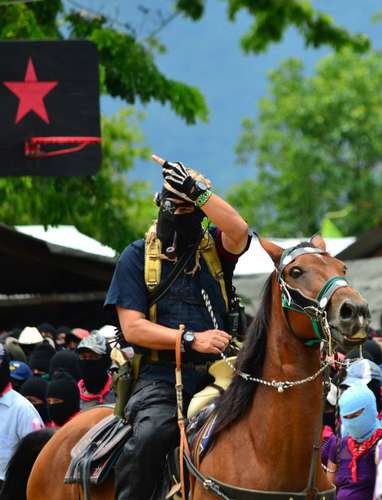
Sup Galeano in La Realidad
February 2016
To: Juan Villoro Ruiz
Brother:
I’m happy to hear that the rest of your family bajo protesta [i] are well, and I appreciate your serving as messenger to send them our greetings and gifts (although I continue to think that ties, ashtrays, and vases would have been a better choice).
As I picked up my pen to continue this conversation with you, I remembered your text “Speech on the rain” (Almadía Press, 2013), written, I believe, for the stage, which I read imagining, clumsily I’m sure, the set and the gestures and movements of the actor delivering the monologue, feeling the intervention more than witnessing it. The beginning, for example, is a summary of my life: the laconic “I lost my papers!” of the first line would make for an encyclopedia if I anchor it in the calendars and geographies of this continual lapse and relapse that I have been.
Because inevitably, after the opening line in an epistle, I lose my point (the “tonelada” (ton), as the compas say when referring to the “tone” of a song). That is, I depart from the concrete objective of the letter. It’s true that clarifying who will receive the letter could help, but often the recipient is a brotherly ear for whom the idea is to provoke not necessarily an answer, but always a thought, a doubt, a questioning, not of the kind that paralyzes but the kind that motivates more thoughts, doubts, questions, etceteras.
So perhaps, as for the librarian-lecturer who is the protagonist in your piece, words come that weren’t purposefully sought out, but rather were just there, lying in wait, pending a moment of inattention, a crack in the everyday in order to accost the paper, the screen, or that wrinkled sheet of “where-the-hell-did-I-leave-oh-here-it-is-when-did-i-write-this-nonsense?” The words then cease to be shield and barricade, lance and sword, and become, very much to our chagrin, a mirror in which one is revealed and kept awake at night [devela y desvela].
Of course, the librarian can turn to their aisles flanked with bookshelves, with their alphabetical and numerical order, their calendars and geographies drawing a map of literary treasures. They can look for the “o” in “oblivion” and see if there they can find what was lost. But here, in this continual moving around, the idea of a library, even a minimal and mobile one, is a chimera. Don’t think I didn’t look with unfounded hope upon the idea of electronic books (on a “USB” or “pen drive” or “external memory” one could load if not Borges’ library than at least a small one: Cervantes, Neruda, Tomás Segovia, Le Carré, Conan Doyle, Miguel Hernández, Shakespeare, Rulfo, Joyce, Malú Huacuja, Edurado Galeano, Alcira Élida Soust Scaffo, Alighieri, Eluard, León Portilla and the magician of words: García Lorca, among others). But no, like the librarian loses papers, I lose USB drives and who knows where they end up.
But believe me, we all have our embarrassing fantasies. In the USBs of electronic books there was usually a miscellaneous selection of authors, perhaps under the assumption that the drive would be lost and the authors would be together and, maybe, I don’t know, after all, literature is a genre of the impossible concretized in words, they could have a “sharing exchange” among themselves.
“Literature is a place where it rains,” you have the protagonist say, having fallen into misfortune and been obliged to strip down, without the clothing of his writing, to show himself for what he is: vulnerable.
So imagine a USB with these or other artists of the word. Imagine it begins to rain. Imagine what they talk about among themselves as they try to make sure a raindrop doesn’t ruin the binary code in which they live and thus begin the misunderstandings: 0-1-0 –stain-1-smudge-0-0-smudge-1 or whatever, and from there emerges the “how dare you!” and then the back and forth of “fuck you” and “I’ll beat the shit out of you,” “go to hell,” “vous êtes fou”, “va’ fa’ ta culo,” while Alcira hands out mimeographed copies of his “Poesia en Armas” [Poetry in Arms], something I think won’t do anything to calm the belligerent attitudes. In sum, all of the happy expectations ruined… because of the rain.
Of course, mutatis mutando,[ii] in your letters it is a cat who provides the meager public for the speaker, and here it is a cat-dog with a little light who may be disconcerted by what I write, as if a cat-that-is-a-dog-that-is-a-cat-that-is-dog with a little light curled up in the shadows wasn’t disconcerting enough.
Do I digress? That seems most likely. After all, this impossible exchange on a USB that trusts that the rain will not ruin its colloquium is just a fantasy.
But if for the speaker the subject at hand is the rain, in this missive the subject is… the storm. Allow me then to take advantage of these lines to continue our exchange of reflections on the complex crisis that approaches, according to some, or that is already here, according to others.
Someone has said that our vision (captured now in the typography of the book “Critical Thought Versus the Capitalist Hydra: Contributions from the Sixth Commission of the EZLN”) is apocalyptic and closer to Robert Kirkman’s “The Walking Dead” (the comic and the television series it inspired or didn’t) than to Milton and Rose Friedman and their “Freedom to Choose” (the book as well as the economic policies that make it their alibi). They have said that we are mistaken because we are not sufficiently orthodox, or mistaken for being too orthodox. That nothing is going to happen, that upon arising each morning whatever one wants for breakfast will be available, that the neighbor’s dog will continue barking at the trash truck, that upon opening the tap what will come out is water and not the sound of the hereafter. That we are just big ugly birds of ill omen, who in any case don’t have media or academic impact (two things that are increasingly the same).
In sum, that the machine functions and that everyone is where they are supposed to be. The jolts are sporadic and they are only that, jolts, and the turbulence is passing and can be chalked up to the fact that somebody is resisting being where they should be. That it’s just like when a watch breaks because a gear or spring has come out of place, and the State is the “watchmaker” that gets rid of the broken piece and substitutes it with another.
The Apocalypse (everything included)? A universal flood? Humanity imprisoned on the apparently eternal or immortal train from Snowpiercer (the film by the South Korean Bong Joon-ho, titled “Rompenieves” on the “alternative production” DVD that was sent to me—and which I now can’t find) and reproducing within itself the same inhumanity that, wanting to solve global warming, induced the cooling of the planet?
Nothing could be further from our thinking. We Zapatistas don’t believe the world is going to end. We do think that the world we currently know is going to collapse, and that its implosion will give rise to a thousand human and natural tragedies.
If this implosion is already in process or is yet to come is still something that has to be debated, argued, investigated, affirmed, or denied. But as far as we know, there is no one who dares to deny it. Everybody up above accepts that the machine is failing, and they trot out a thousand and one solutions, always within the same logic of the machine. But there are those who want to break with that logic and assert: humanity is possible without the machine.
In any case, given what we are, we are not so worried about the storm. After all, the original peoples and the dispossessed of Mexico and of the world have lived through centuries worth of storm. If there is anything one learns below, it is how to live in adverse conditions.
Life then, and in a few cases death, is a continual struggle, a battle fought in every corner of the calendars and geographies. And I’m not talking here about global battles, but about personal ones.
As one can conclude from a careful read of our words that our message is one that goes beyond the storm and its pains.
It is our belief that the possibility of a better world (not a perfect nor a finished one, we’ll leave that for religious and political dogmas) is one without the machine, and this possibility rests on a tripod. More accurately, it rests on the interrelation between three columns that have endured and persevered, with their ups and downs, their small victories and great defeats, throughout the brief history of the world: the arts (with the exception of literature), the sciences, and the original peoples along with the basements of humanity all over the world.
Perhaps you ask yourselves, in part out of curiosity and in (large) part out of direct interpellation, why I have put literature in an exclusive category. I will get to that a little further on.
You will note that, abandoning the classics, I haven’t included politics among the paths to salvation. Knowing us a bit (despite the fact that we now don’t appear even buried in the interior pages of the press, we do have our own abundant bibliography for anyone who has honest interest in knowing what Zapatismo is about), it is clear that we are referring to a classical politics, politics “from above.”
Listen, Juan, brother, I know that this is all heading toward not another letter but really a whole library, since that is what we’ve been talking about, so allow me to leave that point pending. Not because it is less important or transcendent in the storm, but because “I’m on a roll” as the compas say and if I follow whatever tangent that words tempt me with, there is a serious risk that this letter will never get to you, not because of the rain but because it will never be finished.
I have used “the arts” because it is the arts (and not politics) that delve most deeply into the human being and rescue its essence. It is as if the world continued to be the same, but that through art we could find the human possibility among so many gears, screws, and springs humorlessly grinding away. In contrast to politics, art doesn’t try to readjust or repair the machine. Rather, it does something more subversive and disconcerting: it shows the possibility of another world.
I put “the sciences” (and I refer here especially to the so-called “formal sciences” and “natural sciences,” considering that the social sciences have a few things yet to define—note that this doesn’t imply a demand or exigency) because they hold the possibility to reconstruct something atop the catastrophe that “operates” across the entire world territory. And I am not talking about “reconstruction” in the sense of taking what has fallen and putting it back together in the image or semblance of its version before the tragedy. I am talking about “remaking,” that is, “to make anew.” And scientific knowledge can reorient the desperation and imbibe it with its real meaning, that is, “cease to hope.” And anyone who ceases to hope can begin to act.
Politics, the economy, and religion divide, parcel up, split apart. The sciences and the arts unite, connect, convert borders into ridiculous cartographic points.
But, its true, none are exempt from the fierce division of classes and they must choose: they either contribute to the maintenance and reproduction of the machine, or they contribute to the demonstration of its necessary abolition.
It is as if instead of re-labeling the machine, prettying or tuning it up, art and science put out, upon the superficial chrome surface of the system, a laconic and definitive sign: “EXPIRED,” “Time’s up,” “to continue watching, deposit another world.”
Imagine (your generation must have heard some John Lennon; mine is more about sones and huapangos), imagine that everything that gets spent on politics (for example, elections by way of the vote and elections by way of war, equally antidemocratic—“politics and the economy are the continuation of war by other means” Clausewitz would have said had he started from social science) went instead to the sciences and the arts. Imagine if instead of electoral and military campaigns there were laboratories, centers for research and dissemination, concerts, expositions, festivals, bookstores, libraries, theaters, cinemas, and countryside and cities where what reigned were the sciences and the arts rather than the machines.
Of course, we Zapatistas are convinced that this is only possible outside of the machine. And that the machine must be destroyed. Not readjusted, not shined up, not made “more human.” No, destroyed. If something of its remains are useful, it will be as a reminder not to repeat the nightmare, like a landmark one can see in the rearview mirror as that path is left behind.
But we don’t doubt that there are those who think or believe that a readjustment is plausible without altering its functioning, by changing the engineer or assuring that the most luxurious train cars redistribute their riches so that something (not much though, no need to exaggerate) gets to the cars at the tail end. Of course, this is always accompanied by the emphasis that everyone is exactly where they belong. But candidness, brother, tends to be one disguise for perversity.
I have mentioned the original peoples and the basements of the world, yes, as they are the ones with the greatest capacity to survive the storm and the only ones with the capacity to create “something else.” Someone will have to respond tomorrow to the question, “Is there anyone on Earth?” And here the word presents, not without provocative flirtation, another detour that, for the good of this missive, I will avoid with my renowned restraint.
I commented before, in a sarcastic and argumentative tone, on “the arts except for literature.” Well, that’s because I think (and this is an individual opinion) that literature must create ties between the three legs of the tripod, and make clear, happily or not, their interrelation. Literature must be, “The Witness.” But, most likely I am mistaken and it’s just that, in this hand of cards, I have uncovered the “Joker” in order to ask “Why so serious?”
_*_
What do we want? The key to understanding the subterranean message of Zapatismo is in the small stories that, in the form of the little indigenous girl who calls herself “Zapatista Defense,” appear in the book “Critical Thought Versus the Capitalist Hydra.”
Imagine what, because it is necessary and urgent, seems to be impossible: a woman who grows up without fear.
Of course every geography and calendar adds its own chains: indigenous, migrant, worker, orphan, displaced, illegal, disappeared, subtly or explicitly abused, raped, murdered, forever condemned to add burden and sentence to the condition of being a woman.
What world would be birthed by a woman who could be born and grow up without fear of violence, harassment, persecution, disrespect, exploitation?
Wouldn’t that world be terrible and marvelous?
So if at some point they ask me, a ghostly shadow with an impertinent nose, to define Zapatismo’s objective, I would say: to make a world where a woman can be born and grow up without fear.”
Note: I’m not saying that in this world those kinds of violence wouldn’t be lying in wait for her (most of all because the planet could end several times over and still not be rid of the worst of our condition of being men).
I’m also not saying that there aren’t women without fear already. Their rebellious determination has won them that victory in daily battle, and they know that battles can be won, but not the war. No, not until any woman in any corner of the world’s geographies and calendars can grow up without fear.
I am talking about a tendency. Could we affirm that the majority of women are born and grow up without fear? I don’t think so, and probably I’m mistaken, and I’m sure there are figures, statistics, and examples that show I’m mistaken.
But, within our limited horizon, we perceive fear, fear because one is small, fear because one is big, fear because one is slim, fear because one is fat, fear because one is pretty, fear because one is ugly, fear because one is pregnant, fear because one is not pregnant, fear because one is a little girl, fear because one is a young woman, fear because one is a mature woman, fear because one is an elderly woman.
Is it worth it to put effort into that step, into life and death in such a chimera?
We Zapatistas say yes, it is worth it.
And to that task we give our lives, which may be little, but it is all we have.
_*_
Yes, you are right that there will be no lack of those who call us “naïve” (in the best of cases, because in all languages there are cruder synonyms). I like this word processor, with its free and open source software, because every time I want to write “case” or “cases” the spellcheck proposes “chaos.” I think the free software knows more about devastating storms than I do.
In sum, what was I saying? Oh! The lost words, their shipwreck in papers or bytes, the original peoples and the basements of humanity converted in Noah’s Ark, the sciences and the arts as life-saving islands, a fearless little girl as compass and port…
Eh? Yes, I agree with you that the result of all of this has more chaos than case, but this is only a letter that will be, as all letters should be, converted into a paper airplane with the intimidating insignia of the “Zapatista Air Force” drawn on one side, and there it goes looking for its destination. Who knows where you are Juan, brother bajo protesta. [iii] Like grandmothers used to say (I don’t know if they still do), “calm down son,” and get into a jacket or an embrace because it’s cold and “the topic at hand, you know, is the rain.”
From the mountains of the Mexican Southeast,
Subcomandante Insurgente Galeano.
Mexico
February 2016
Translator’s Notes:
[i] “Bajo protesta” can mean both reluctance/protest and “under oath.” As used here, it would seem to indicate a reluctance.
[ii] The Spanish uses “mutandis mutando,” a riff on the Latin Mutatis mutandis (meaning “the necessary changes having been made” or “once the necessary changes have been made”) using the verb “mutar,” to mutate.
[iii] Here again “bajo protesta” can mean both reluctance/protest and “under oath.” Again, it would seem to indicate reluctance.
Zapatistas convoke 2016 activities
ZAPATISTAS CONVOKE 2016 ACTIVITIES

February 29, 2016
Considering:
First: That the serious crisis that shakes the entire world, and that will only worsen, puts the survival of the planet and the entire population, including human beings, at risk.
Second: That politics from above is not only incapable of coming up with and constructing solutions, but is also among those directly responsible for the catastrophe already underway.
Third: That the sciences and the arts rescue the best of humanity.
Fourth: That the sciences and the arts now represent the only serious opportunity for the construction of a more just and rational world.
Fifth: That the originary peoples and those who live, resist, and struggle in the basements of the entire world possess, among other things, a fundamental wisdom: that of survival in adverse conditions.
Sixth: That Zapatismo continues betting, in life and death, on Humanity.
The Sixth Commission of the EZLN and the Zapatista bases of support:
CONVOKE ARTISTS, FORMAL AND NATURAL SCIENTISTS, COMPAÑER@S OF THE NATIONAL AND INTERNATIONAL SIXTH, THE NATIONAL INDIGENOUS CONGRESS, AND WHATEVER HUMAN BEING WHO FEELS CALLED, TO THE FOLLOWING ACTIVITIES:
ONE: TO THE FESTIVAL AND SHARING EXCHANGE “CompARTE FOR HUMANITY” WHICH WILL TAKE PLACE July 17-30, 2016.
All those who practice ART can participate. For Zapatismo, an artist is anyone who considers their activity as art, independent of canons, art critics, museums, wikipedias, and any other “specialist” schemas that classify (that is, exclude) human activities.
The festival will have two major events:
The first will be at CIDECI, San Cristóbal de Las Casas, Chiapas, México, and in any other venues and alternative calendars that are implemented according to the attendance confirmed. All persons, groups, and collectives who register and/or have been invited can participate in this event. The deadline for registration is up to and including June 15, 2016. The email where you can register for this activity is compArte@ezlnorg.mx.
The other will be at the Caracol of Oventik, Chiapas, Mexico. In this event only Zapatista bases of support will offer their artistic expressions. To this end, from the month of February through the month of June, 2016, in the Zapatista communities, regions, and zones, tens of thousands of men, women, children, and elderly Zapatistas will hold meetings and festivals to decide the forms of their artistic expression and select who will participate. The Zapatista part of the festival will begin July 17, 2016.
Invited and registered artists can offer their art itself or a reflection on it.
Entry is free (with previous registration).
TWO: To the FESTIVAL IN HOMAGE TO THE NATIONAL INDIGENOUS CONGRESS for its 20 years of struggle and resistance, TO BE HELD OCTOBER 12, 2016, at CIDECI in San Cristóbal de Las Casas, Chiapas, Mexico. In the days before and after the event, the National Indigenous Congress will hold the activities it considers pertinent in the place or places it determines. Registration for observer-participants in the festival in honor of the CNI can be made at the following email: CNI20aniversario[at]ezln.org.mx.
THIRD: To the gathering “The Zapatistas and the conSCIENCES FOR HUMANITY” TO BE HELD from December 25, 2016 through January 4, 2017, at CICECI in San Cristóbal de Las Casas, Chiapas, Mexico.
In this gathering, participation in the discussion will include ONLY invited formal and natural scientists, in addition to, and as students, Zapatista young people, bases of support, who will present their doubts, questions, and inquiries to the attending scientists. Although entry is free (with previous registration), only the invited scientists and the Zapatista young people who have been selected to attend by their communities, regions, and zones will be able to take the floor to speak. There will be no exam for the students; but for the scientists…well, good luck with the questions. To register to attend as escuchas (listeners), use the following email: conCIENCIAS[at]ezln.org.mx .
We will share more details in the coming days.
From the mountains of the Mexican Southeast
Subcomandante Insurgente Moisés
Mexico, February 2016
————
Originally Published in Spanish by Enlace Zapatista
February 29, 2016
http://enlacezapatista.ezln.org.mx/2016/02/29/convocatoria-zapatista-a-actividades-2016/
EZLN: Why don’t you self-prescribe this?
EZLN: WHY DON’T YOU SELF-PRESCRIBE THIS? [1]
Zapatista National Liberation Army
Mexico
To the Federal Judiciary Council of Mexico:
In all this time the only terrorists have been those who for more than 80 years have so badly governed this country. You are simply the sink where those who commit genocide go to wash their hands and together you have converted the judicial system into a poorly built and clogged latrine, the national flag into a reusable roll of toilet paper, and the national shield into a logo made of undigested fast food. Everything else is pure theater in order to simulate justice where there is only impunity and shamelessness, feigning “institutional government” where there is nothing more than dispossession and repression.
So, prescribe yourselves this (the graphic images):

The Captions read: (Left) From 6 feet under, The deceased and sorely missed (ha!) SupMarcos
(Right) Why so serious? I adhere and subscribe (not prescribe/expire):
SupGaleano
Authorized by the General Command of the EZLN
Subcomandante Insurgente Moisés
Mexico, February 2016
P.S. So, does this mean the Tampiqueño [2] is now free to leave the community and go out for some stuffed crabs? He’ll pick up the tab, of course, otherwise forget it. So he is free now to do what any other Mexican can do? That is, now he’s free to be exploited, mocked, defrauded, humiliated, disrespected, spied on, extorted, kidnapped, murdered, disappeared, and to suffer all those insults to his intelligence from those who say they govern this country? I mean, I’m asking because this is the only thing the “institutions” guarantee any citizen in this country who isn’t above.
Translator’s Notes:
[1] On February 23, 2016, Mexico’s Federal Judiciary Council determined that the outstanding charges and arrest warrant against then Subcomandante Insurgente Marcos were extinguished as a matter of law because the statute of limitations expired after 21 years (February 1995 to February 2016). The charges were for the crimes of terrorism, sedition, mutiny, rebellion, and conspiracy. This comunicado is in response to that determination and plays on the different meanings of the Spanish verb prescribir, which can mean to prescribe (like a remedy) or to extinguish (as in a legal provision). The Mexican Judiciary says his arrest warrant “se prescribe” (is extinguished) and the EZLN answers: “why don’t you “autoprescribirse” (self-prescribe)… this.” Then, the images of middle fingers appear.
[2] “El Tampiqueño” – Refers to a male person from Tampico. In 1995, the Mexican government claimed that it knew the real identity of Marcos. Therefore, it filed charges and issued an arrest warrant against the person they claimed was Marcos. That person is originally from the Mexican state of Tampico and so the EZLN refers to the person as the “Tampiqueño.”
Originally Published in Spanish by Enlace Zapatista
http://enlacezapatista.ezln.org.mx/2016/02/25/asi-que-mejor-autoprescribanse-esto/
EZLN: And in the Zapatista communities?

Zapatista National Liberation Army
Mexico
February 2016
To the compañer@s of the Sixth:
To whom it may concern:
Compañeroas, compañeros and compañeras:
Now we are going to tell you a little bit about the Zapatista communities, where the support bases resist and struggle.
What we are going to share with you now comes from reports by the Zapatista compañeras and compañeros in the communities who are coordinators for their commissions (for example, health, education, youth, etc.), autonomous authorities, or other organizational coordinators. But along with the compas of the Comité [CCRI] we checked to make sure this information wasn’t a lie, that things hadn’t been altered so that the good things would appear and the bad things would remain hidden. The work of these writings is not to lie to our compas of the Sixth or to those who support us and are in solidarity. We won’t lie to you, to them, nor to anyone else.
If things are going badly we will tell you so clearly, but not so that you feel even more sad on top of everything that is happening in your own geographies and calendars. We tell you because it is our way of being accountable, of letting you know what’s happening and so that you know if we are on the path we said we were on or if we have wandered off that path, perhaps repeating the same vices we criticize.
But if we are on the right track, well we want you to know that too in order to bring joy to the collective heart that we are.
How do we know if we are on a good or bad path? Well, for us as Zapatistas it’s very simple: the communities speak, the communities rule, the communities do, the communities undo. The very moment someone heads down a bad path, the collective quickly gives them what is more or less a knock on the head, and they correct themselves or they’re out.
This is our autonomy: it is our path, we walk it, we get things right, we make mistakes and we correct ourselves.
In sum, we tell you the truth because we imagine you are sick and tired of lies. And truth, while sometimes painful, is always a relief.
So we don’t want to be like the bad governments that recently put on a lot of makeup, apparently to please the visitor so that he wouldn’t see what was happening below. But all that makeup only served to show how false the government is. In other words, what reasonably intelligent person wouldn’t see the truth? Now whether that person admits or denies what they see, that is something else and that’s on them.
Okay then, without more fanfare. What we share with you here is happening in addition to what was already explained in the Zapatista Little School textbooks. If you didn’t attend the Zapatista Little School in community or from elsewhere or you don’t know what the textbooks say, we recommend you read them. There you will learn all about the process of the construction of autonomy.
What we are going tell you about now is new, new things that have since appeared, things that weren’t there a year or two ago.
Zapatista growth continues, and more and more young people [jovenes y jovenas] are joining.
In the area of health, the compañeras and compañeros are doing well. We see that there are fewer patients at the autonomous clinics because the work of prevention has grown substantially and the autonomous health promoters attend to the people. Meaning, the people get sick less. Those who are in fact arriving more and more at the Zapatista autonomous clinics are the partisans [people affiliated with political parties].
In the area of education, primary school education is equally available everywhere. But there is a new demand from the communities: middle school and high school education. In some zones there is already a middle school, but not everywhere. There are now young people who are demanding higher education. They don’t want workshops, but higher education in the arts and sciences. But they don’t want a capitalist education in the institutional universities, but rather an education that respects our ways. In this sense we still have a lot to do.
In the area of economy, and not counting what already existed and is maintained through collective and individual work (cultivation of corn, beans, coffee, chickens, bananas, sheep, cattle, vegetable gardens, honey, as well as the supply stores, livestock sales, and other products), what we have seen is that overall production has grown, which has improved our nutrition and health, above all for the young people and children.
In some zones the autonomous health promoters are already being trained to perform ultrasounds, working in the laboratory, holding general medical consultations, and practicing dentistry and gynecology. In addition they carry out preventive health campaigns in their regions. In one zone, the profits from a collective livestock project were used to buy laboratory equipment and an ultrasound machine. They already have compañeras and compañeros trained to operate these devices, which is an outcome of the health promoters of one Caracol teaching those of another Caracol; in other words, they are teaching each other. Another hospital clinic is already under construction where minor surgeries can be carried out, similar to what already exists in La Realidad and Oventik.
Regarding work on the land, the corn cultivation and cattle-raising collectives have grown substantially. With the profits from that work, in addition to buying medicines and equipment for the clinics, the bases of support have bought a tractor.
In the autonomous stores there are no fancy name-brand clothes or the latest fashions, but there is no lack of slips, dresses, blouses, pants, shirts, shoes (the majority of which are made in autonomous shoemaking shops) and everything anyone might want to cover their private parts.
Those who have advanced the most in production and commercialization are the compañeras. A few years ago, with the fruit of the collective work of the comandancia, the comités and the insurgents (yes, we also work in production in order to generate income), a portion of our earnings were sent to each autonomous municipality so that the compañeras bases of support could start a collective of whatever kind they desired.
And they turned out to be much better administrators than the men; in one municipality the compañeras not only put together a successful cattle collective, now they are advanced to a point where they are giving their cattle “al partir” to other communities that have women’s collectives (We Zapatistas say “al partir” to mean that what is earned is divided in half, and one half is given to another party).
The same thing has happened with the cooperative stores: now they are making loans to other collectives or communities in the region, and sometimes even to individual compañeras.
All of the autonomous municipalities have collective projects for cultivating corn and some have livestock. All of the regions have collective work that produces profit. For example, in a recent celebration, the regions all contributed to funds for the cow that they ate at the festival and to pay the musicians.
The great majority of the communities have collective projects. In a few the compañeros don’t have collectives but the compañeras do, and in some communities there are two collectives, one of compañeros and one of compañeras. Individually they all struggle to make a living and they have been able to advance. Milician@s as well as insurgent@s work in production collectives in order to support themselves and to help support the communities.
In the Caracol of Oventik they now have an autonomous tortillería. We don’t know how much a kilo of tortilla costs in your geographies, but in Oventik it’s at 10 pesos a kilo. And these tortillas are made out of corn, not Maseca [processed cornmeal]. Even the public transportation vehicles make special trips to buy their tortillas there. Corn is not produced in the Highlands Zone of Chiapas where the Caracol of Oventik is located. The corn is produced in the Jungle regions and then bought and sold between collectives in the zone so that Zapatista families can get corn at a good price and without middlemen. For this commerce they use trucks that were donated to the Juntas de Buen Gobierno [Good Government Councils] by good people who we won’t name here, but they and we know who they are.
In many Zapatista communities around 50% of people work in collectives and the rest work individually. In some, the majority work individually. Although collective work is promoted, individual work that doesn’t exploit other individuals is respected. Collective work and individual work are not only sustaining themselves but are growing.
The collectives are organized according to local decisions. There are collectives at the community level as well as men’s, women’s, and young people’s collectives. There are regional and municipal collectives. There are zone level collectives and Junta de Buen Gobierno collectives. When one collective does well, it supports the other collectives that are behind or slower. Or, in some regions, the collective production of food goes to the warehouses that supply the autonomous middle schools.
_*_
The news of all these advances made doesn’t come from the Zapatista commanders; in other words, it doesn’t come out of the heads of a few people, but rather from the sharings among the communities themselves.
In those sharings they talk about their work, their advances, their problems and their errors. In that process many new ideas are exchanged among them. In other words, the compañeros and compañeras are learning from each other.
Of course we as authorities also learn a lot from our Zapatista compañeras and compañeros.
The things we see and hear are terrible and marvelous, so much that we don’t know what will come of all these advances.
Right now we won’t tell you about the rearming of the paramilitaries, the increase in military, air, and land patrols, and everything the bad governments do to try to destroy us. We won’t enter into details because we know well that you all don’t have things easy either, that your resistances and rebellions suffer aggressions every day, every hour, and everywhere. And we know that nevertheless, you continue rebelling and resisting.
But we also know that you know that everything that we are telling you about here takes place in the midst of aggressions, attacks, harassment, slander, and complicit silence. In the midst of a war, that is.
And although in dark periods, like that of the present, there emerge all types of “merchants of hope,” the Zapatistas don’t let ourselves be taken in by ecclesiastic, secular, or lay nonsense of those now calling for a “new constituent”[i] that will “save us” and that rely on the same old methods of coercion that they criticize, and that lie about the alleged support of the EZLN while trying to rewrite history under the guise of obsolete “vanguards” that, as of quite awhile ago, ceded their legacy.
The EZLN does not support selling people little mirrors. We are in 2016, not 1521, wake up already. [ii]
_*_
Compas of the Sixth, Sisters and Brothers of the National Indigenous Congress:
With everything that is happening and the threats that pursue us, the Zapatistas are preparing ourselves for the worst, for what is coming.
We are not scared. Not because we are foolhardy, but because we trust our compas.
Indeed, it looks like in the face of the storm that is shaking heaven and earth all over the world the Zapatista support bases have grown. It is as if now is when their ability, wisdom, imagination, and creativity shine brightest.
In reality what these words are meant to do, more than inform or provide an accounting, is to embrace you [iii] and remind you that here, in this corner of the world, you have compas that, despite the distance of calendar and geography, have not forgotten you.
But not everything is going well. We will tell you clearly that we have identified a failure: the Zapatista women are advancing more than the men. That is, there is not equal development.
Everyday less and less remains of that time when the man was the only one who brought money into the home. Now in some zones it is the women’s collectives that are employing the men. And there are more than a few Zapatista homes where the woman is the one who gives money to the man so that he can buy his shirt, his pants, his bandana, and his comb in order to look handsome for the upcoming activities that we will soon announce.
Because maybe we are dirty, ugly, and bad, but this is for sure: we are well groomed.
From the mountains of the Mexican Southeast,
Subcomandante Insurgente Moisés
Subcomandante Insurgente Galeano.
Mexico, February 2016
——-
From the Notebook of the Cat-Dog:
Fragment of a conversation between some partisans and some Zapatistas:
Partisans: The EZLN doesn’t receive government programs like Procampo, Prospera, or Nuevo Amanecer for the Elderly?
Zapatistas: No.
Partisans: Who subsidizes you as an organization?
Zapatistas: We are organized and we work together as support bases, we govern, and we have collective work projects. That is how we generate economic resources to sustain our resistance.
Partisans: How can we as civil society organize ourselves and how can you advise, guide, and teach us?
Zapatistas: Look at the situation of the free media or the National Indigenous Congress. We are not here to say or decide how you should organize yourselves or to give your organization a name. The people must think and decide what to do and how they will organize..
Partisans: What should we do?
Zapatistas: Our idea is to take down the capitalist system.
_*_
Report on the conversation that took place in the wee hours of the night in the month of February, between those two they call Subcomandante Insurgente Moisés and SupGaleano:
SupMoy: A recent report said that there are death threats and that the government wants to attack the Caracols in order to crush Zapatismo, because we make the government look bad.
SupGal:…
SupMoy: It says they are looking for me and for you, in order to kill us.
SupGal: To kill us? It isn’t to arrest us? Take us into custody?
SupMoy: No, the report says “to kill them.”
SupGal: Son of a…. and why me? This is racist-colonialist-hetero-patriarchal-Euro-centrism. You’re the spokesperson, you’re the one they should be after. I’m just the last bastion of Zapatista machismo, which is obviously in clear retreat. And anyway, why such violence? Before they would just say “detain,” “take into custody,” or “arrest warrant,” but now, “kill”? Plus, I’ve already died several times; don’t they take that into account? Why don’t they just accept it and write down “mission accomplished.” But don’t change the subject on me, I was telling you not to put that part about the women’s collectives in the communiqué.
SupMoy: And why not?
SupGal: Because if we include that we’re going to look bad to members of the masculine gender. A whole tradition of film by Pedro Infante and songs by José Alfredo Jiménez is at risk of disappearing. Are you in agreement with the erasure of ancestral cultures? No right?
SupMoy: Well as the ‘deceased’ used to say, Rome is fucked, because I already put that part in the communiqué.
SupGal: What!! And what about gender solidarity?
SupMoy: It would be better to think about how to get the men to try harder so that their collectives advance.
SupGal: Okay, okay, okay. We have to go back to our roots, as they say. I’m going to do a special program for Radio Insurgente. Game of Thrones has nothing on us; this is going to be all songs by that great comrade and leader, the first of his name, king of Garibaldi, father of dragons, and gentleman of “siete leguas”: [iv] Pedro Infante.
SupMoy: Hahahahaha. They’re not going to air it. The programming is run by a compañera.
SupGal: Son of a…. Damn the women’s revolutionary law! And what about José Alfredo Jiménez?
SupMoy: Oooh even less likely.
SupGal: Hmm… how about the Bukis then? The Temerarios? Brindis? Los Tigres del Norte? Piporro?
The discussion went on like that until the cat-dog, grooming its toenails, determined: woof-meow.
It was the wee hours of the night, and it was very cold, but despite a shadow looming over the surface of the earth, a tiny light illuminated the word “resistance.”
I testify, under oath of gender.
Note: This text was written on a word processors with open source free software, with operating system GNU/Linus, distro UBUNTO 14.04 LTS, on a very exclusive and well-known name brand computer “Free handout Z.A of V.C. of L.R” (i.e. “Z.A is “Zapatista Autonomous”; “V.C. is “Virtual Cooperation”; “L.R” is “Ludic Rebellion”), model “Deus Ex Machina 6.9,” “restored (it broke, but we put it back together like a jigsaw puzzle) in the Zapatista Alternative High Technology Department (DATAZ, by its Spanish acronym). Okay, okay, okay, the apparatus ended up as a three-dimensional figure that we call “KEKOSAEDRO”—because nobody knows exactly what it is now—and there were a few cables and screws leftover when we finished but it works well… until it doesn’t work anymore. “UBUNTU” in the Zulu language also means “I am because we are.” Say ‘yes’ to free software. Fuck Microsoft, Apple, and so forth (if you know what I mean)! Linux rules! [English in the original]

Notes:
[i] This reference is to a recent call from some in Mexico for the establishment of a new constitutional assembly.
[ii] The authors refer here to the historical legacy of European would-be conquerors trading beads and mirrors in exchange for enormous tracts of land and vast riches.
[iii] Abrazarlos, abrazarlas, abrazarloas is used for “embrace you” in order to give a range of possible gendered pronouns including male, female, transgender and others.”
[iv] “Siete Leguas” was the name of Pancho Villa’s horse and a “corrido” often sung by Pedro Infante.
===================================
Originally Published in Spanish by Enlace Zapatista
http://enlacezapatista.ezln.org.mx/2016/02/23/y-en-las-comunidades-zapatistas/
 Chiapas Support Committee