By Raúl Zibechi
“There is no anti-capitalist movement that is capable of doing a Tour like they did, to listen without judging, to learn from other experiences,” explains Say, organized in the Zambra collective in the southern city of Málaga [Spain].
La Palmilla is a small enclave on the outskirts of Málaga, the sixth poorest neighborhood in the Spanish State, whose people survive on an average of five euros per day. The enclave is made of four-story buildings of three square meters, without terraces. Most of the community is of gypsy and Arab origin, especially Moroccans, of the third or fourth generation, although there are now many Latinos and Africans.
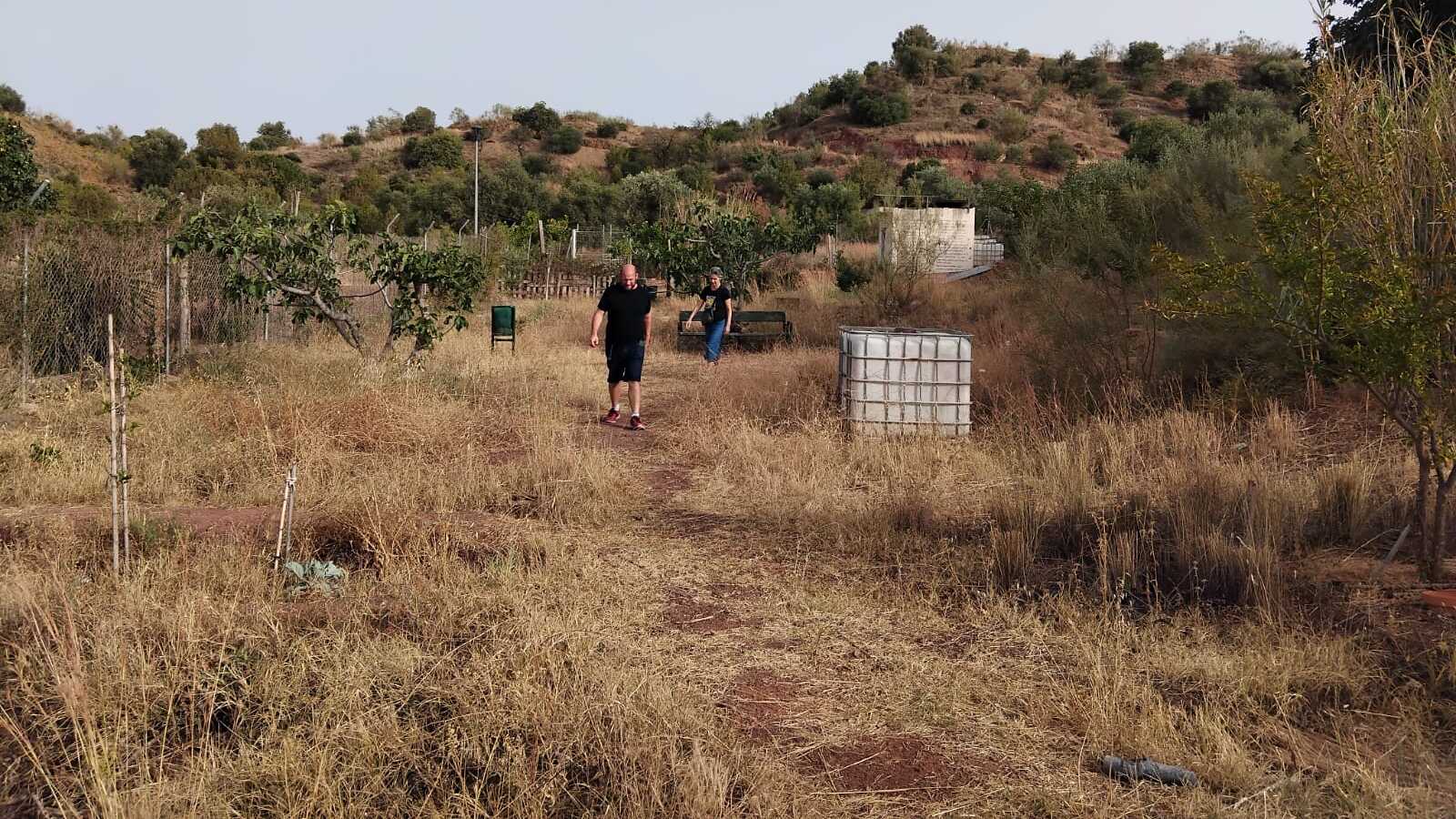
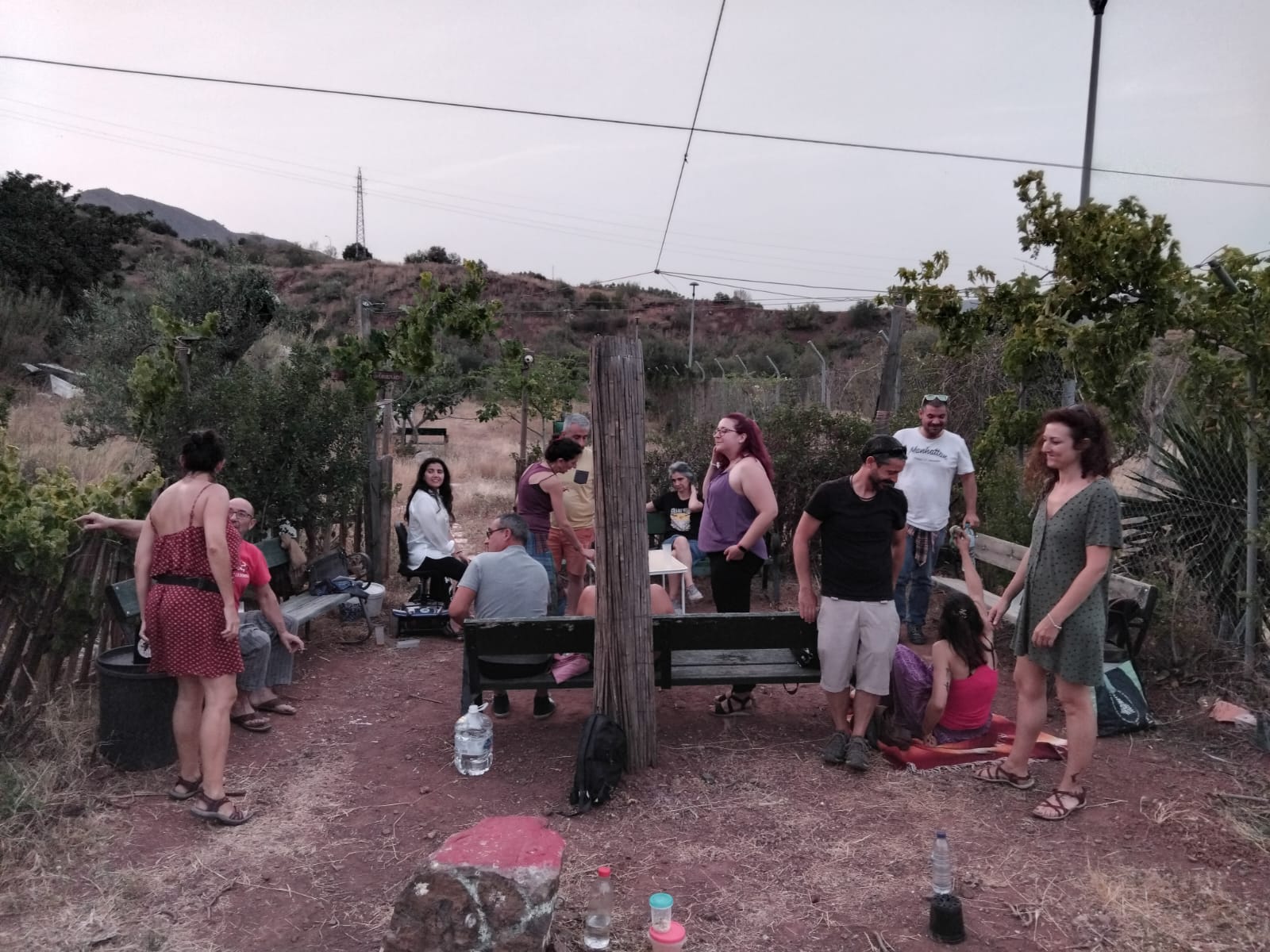
The members of Zambra invited the Zapatista delegation, although they never imagined that twenty young people would come to listen to half a dozen activists. They received them in an occupied orchard called “Espacio Dignidad” [Space of Dignity] that the collective cultivates in a semi-rural area. “They cut off our water, first to this garden and then to all the others,” Say complains because with the heat and sun it is almost impossible to grow crops in those conditions.
The circle is assembled at dusk when the heat subsides. Maite contrasts the difficulties of European movements in achieving a generational relieve with the advances of Zapatismo in that sense and also highlights “the cooperation between generations” that Zapatismo achieves.
“While here we really like to give our opinions, they taught us that there is a collective subject with a high capacity for listening,” Say continues.
Granja Julia [Julia’s Farm] is a collective that works four orchards on the outskirts of Paterna, in Valencia. They work with young Latinos and gypsies who, in the words of the veteran militant “Rubio”, are “the kids segregated from the educational system.” They set up a music school and a ceramics school, and the crops have a dual purpose, both productive and educational. Tomatoes, peppers, eggplants and especially sweet potatoes, a generous crop that consumes little water and is resistant to heat and pests.
Salvadoran Rolando is upset because, unlike what he knew about Zapatismo, “machinery is not shared here. Meanwhile, Joan reminds us that in the face of climate change “the old knowledge no longer serves us as much,” and Lidia reflects on Zapatismo by highlighting that “resisting without creating is one of our problems.”
Rolando intervenes again and, contrary to common sense, assures that “there is a lot of youth militancy,” and wonders if “we will be able to follow the young people.” He believes that “Zapatista listening” would be necessary to understand and give importance to what these young people are doing who, for many adults, are not true militants because they do not follow the old manuals.
Working groups are formed that in their report-backs to the plenary highlight that we are facing “times of monsters,” which makes it necessary to “create communities.” They are not deceived when they say that there is “fear of the system” and they believe that there is a lack of reflection, the ability to take risks and cultivate collective rage.
“Rubio” capped the assembly by saying that “we work with the lepers of this century,” something similar to Marx’s assertion about those who have nothing to lose, only their chains.
In Barcelona we find similar thoughts and experiences, as well as in the Valencia Alternative Fair, which this year celebrated its 35th edition. The fair contains vegetarian food, crafts, music, books, social groups and multiple conversations for three days in a public park located where the bed of the Turia River used to be.
The fair is completely self-managed: all groups must participate in the cleaning and security of the enormous space; Everything sold must be artisanal and not industrial, and each group must present receipts that they have purchased non-industrialized products to be manufactured.
Three decades is a long time: the transition from the dictatorship to the electoral regime, and from the “socialist” governments to the radicalized right.
The impression is that for European groups the Journey for Life was a mood lift, as some say, but also a mirror in which to look at themselves to learn and better understand their limitations. It’s a lot these days.
_______________________________
Originally published by Desinformémonos on June 22, 2024 here. Photographs are by Desinformémonos
Translated by the Chiapas Support Committee: What have we learned from the Zapatista’s listening?
 Chiapas Support Committee