By Emilio Godoy / IPS
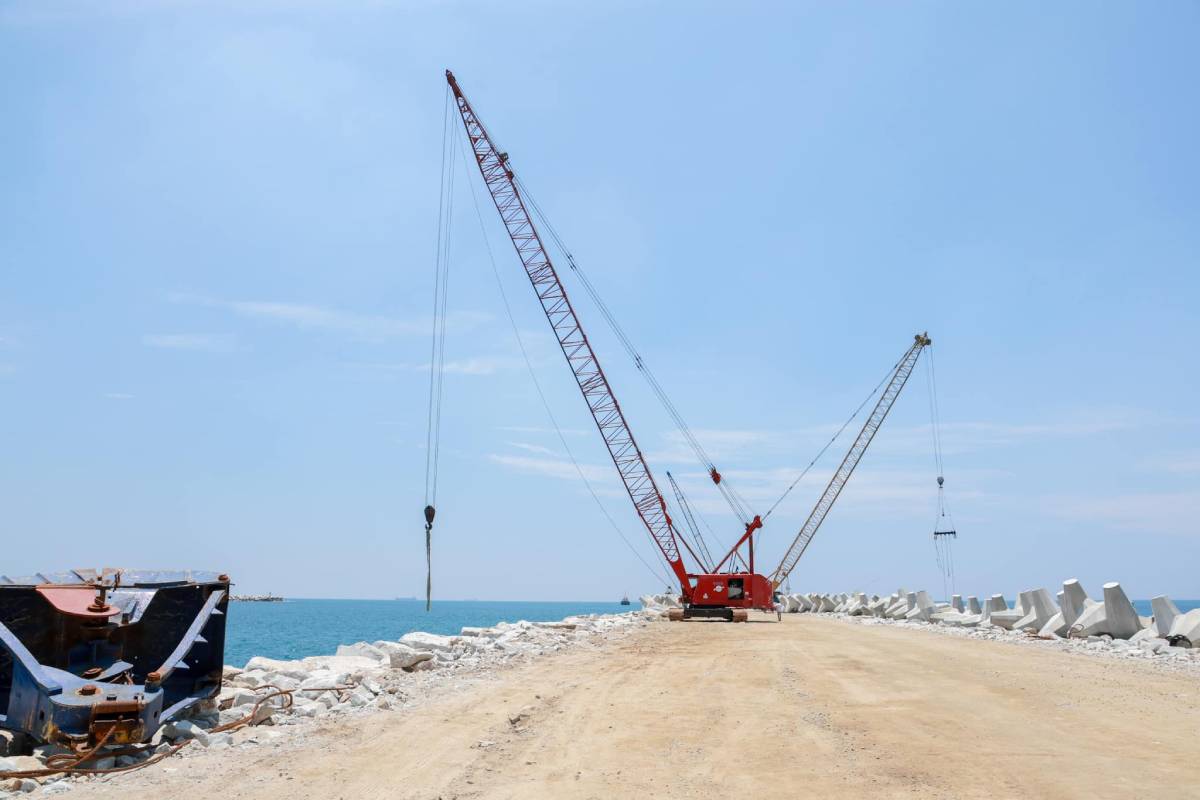
Photo Caption: The megaproject places greater pressure on water resources in a region where abundance and overexploitation of the resource coexist. For example, according to Conagua figures, of the 21 aquifers in Oaxaca, five register deficits; and in Veracruz, of the 20 groundwater tables, five suffer from excessive extraction, such as that of the Papaloapan river basin. All these areas are on the route of the Interoceanic Corridor.
The water does not go up to the house of Elliot Escobar, in the municipality of Matías Romero, Oaxaca. His house is on the first floor, but there is not enough pressure for the water to reach it. Given this, Elliot pumps the water with a hose from his sister’s house, located on the ground floor of the house shared by the two families.
“I store the water in a thousand liter tank, which last me about a month. We recycle the water to water our plants, for example. In the municipality you don’t pay for water because there isn’t any, and it is dirty. This is a worrisome situation,” said the 44-year-old lawyer.
Matías Romero, with just over 38,000 inhabitants, is a geographical component of the Interoceanic Corridor of the Isthmus of Tehuantepec (CIIT) that is under the jurisdiction of the Secretary of the Navy. The CIIT one of the three most important mega-projects of the current government, together with the Mayan Train and the Olmeca refinery system.
The demand for water from the CIIT works is causing grave concern among the local community, already affected by the lack of water resources, explained the lawyer. He shares the house living on the floor over his sister’s with other two members of their family.
“The project will require water and electricity, and there is uncertainty. Everything has to have a methodology, be systematized, the infrastructure must be consolidated. In Salina Cruz there have been complicated water problems in the colonias (neighborhoods), it is a problem that has been going on for years. There are few wells to supply the community,” said Escobar.
The lawyer is a member of the Corriente del Pueblo Sol Rojo organization and spoke to IPS from his town in the state of Oaxaca.
In the area, the people work, at least until now, in agriculture and cattle, pig and goat farming. In addition, the municipality is a crossing point for thousands of undocumented migrants who arrive by train or trucks from the border with Guatemala, en route to the United States.
Despite the fact that water is a fundamental element of the megaproject, the CIIT lacks a water plan, according to responses to access information requests submitted by IPS.
The set of works is part of the Tehuantepec Isthmus Development Program that the Mexican government has been running since 2019 with the purpose of developing the south and southeast of this country of some 129 million inhabitants and the second largest Latin American economy, after Brazil.
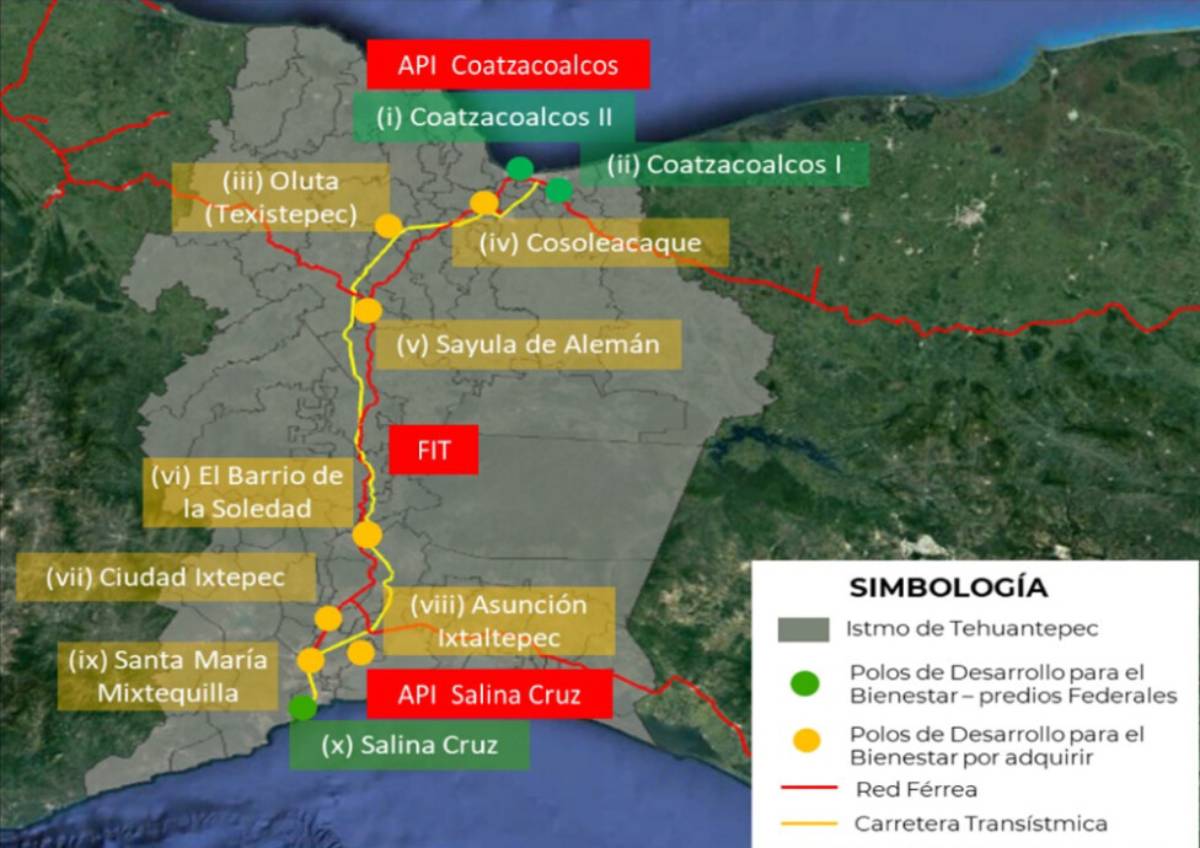
PHOTO CAPTION: Map of the Interoceanic Corridor of the Isthmus of Tehuantepec, about 300 kilometers long, which seeks to connect the Mexican Pacific and Atlantic coasts through highways and a rehabilitated train, to promote industrial development in the south and southeast of the country and encourage exports. Image: Fonadin
An Interoceanic Transformation
The plan for the isthmus, some 300 kilometers long from coast to coast, includes 10 industrial parks, the renewal of the ports of Salina Cruz, on the Pacific Ocean, and Coatzacoalcos, on the Atlantic, connected by the railroad line, Ferrocarril del Istmo de Tehuantepec, under reconstruction.
Likewise, it plans to modernize the refineries of Salina Cruz, in the state of Oaxaca, and Minatitlán, in the state of Veracruz, and laying a gas pipeline and building a gas liquefaction plant off the coast of Salina Cruz.
The development program covers 46 municipalities in Oaxaca and 33 in Veracruz, over a distance of about 300 kilometers. The industrial sites, called “Poles of development for well-being,” each of the 10 require 380 hectares.
Úrsula Oswald, an analyst with the Regional Center for Multidisciplinary Research at the National Autonomous University of Mexico, presented IPS with a comprehensive model that analyzes all aspects of the megaproject.
“The most urgent matter is to make a master plan, which must have a water plan before any other processes. It is crucial, before introducing industries. And each one will need a very strict setup, to prevent contamination of water sources, and to not repeat the chaos like the one in the north,” Oswald said, who is based in Cuernavaca, Morelos.
For the analyst, it is necessary to answer questions such as “which water basins, aquifers? how does surface water interact with groundwater?”
The government of Andrés Manuel López Obrador seeks companies to set up shop in the south and southeast of the country, in an attempt to attract investment and create jobs in those areas that are the most impoverished in the country.
But an obstacle to this development lies in the logistics for moving the products to the US market–the magnet for interested corporations, the lack of trained workers, and the environmental impact in a region characterized by its rich biodiversity.
Some recent cases show the difficulties of these processes. Tesla, a U.S. company that manufactures electric cars, chose the northern state of Nuevo León in March for the construction of its factory in Mexico, despite López Obrador’s interest in establishing it in the south.
Between 2020 and 2022, CIIT’s budget was $162 million in the first year, $203 million in 2021, and almost double in 2022, with $529 million. But in 2023 the budget dropped to 374 million.
Independent calculations place the total investment required for CIIT projects at 1.4 billion dollars, although there is no precise official figure in this regard.
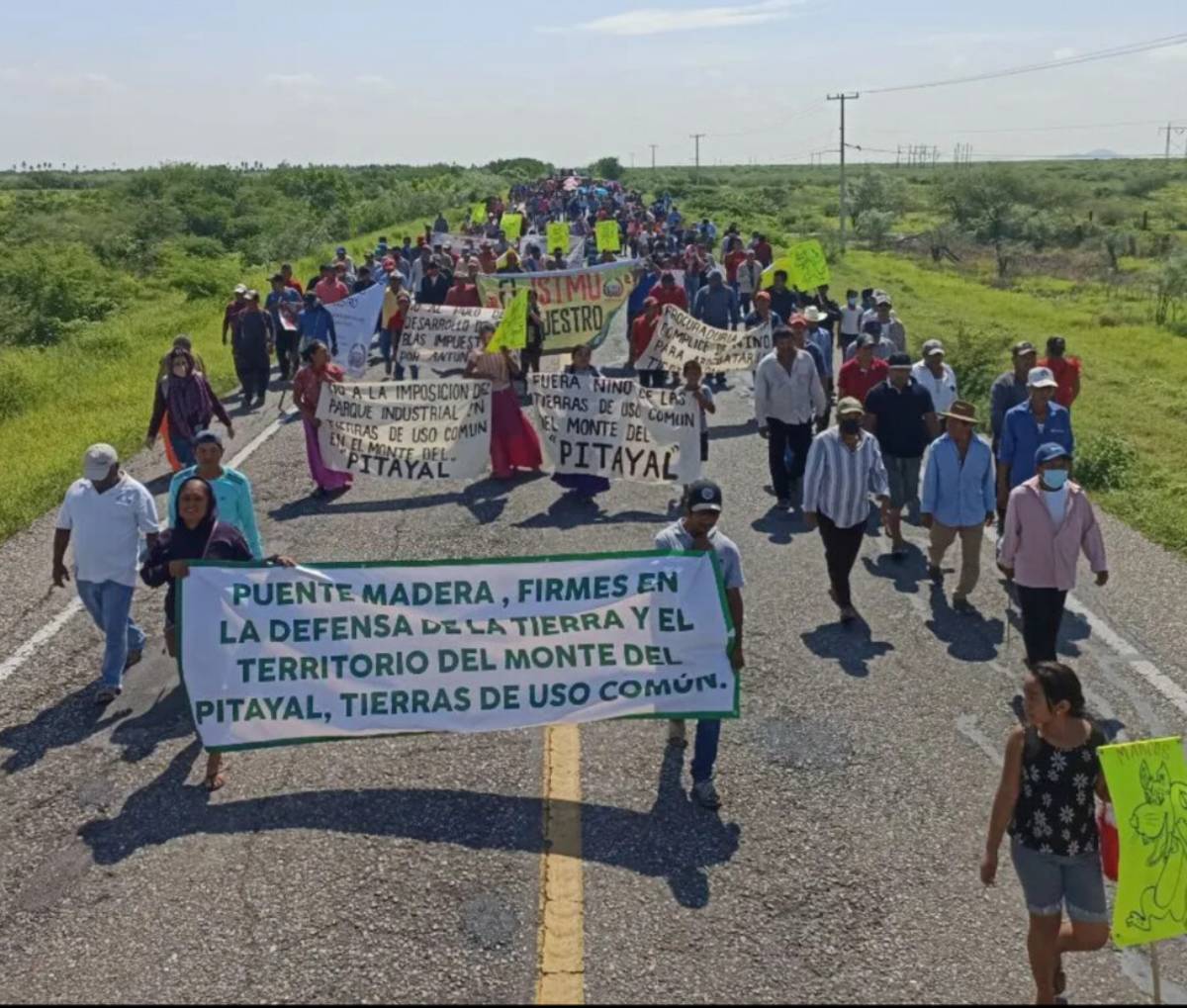
PHOTO CAPTION: A demonstration in Puente Madera, in the state of Oaxaca, against the the Interoceanic Corridor of the Isthmus of Tehuantepec. The CIIT will be built between that southwestern state, Oaxaca, and Veracruz, in the southeast. The Mexican megaproject has generated rejection in some groups in the region, considering it an imposition that affects local communities. Image: APIIDTT
Corridor pressure
The megaproject places greater pressure on water resources in a region where abundance and overexploitation of the resource coexist.
Of the 21 aquifers in Oaxaca, five register deficits, according to figures from the National Water Commission (Conagua). Among them, since the last decade, the Tehuantepec and Ostuta are on the list and are on the corridor route.
In Veracruz, of the 20 groundwater tables, five suffer from excessive extraction, such as the one in the Papaloapan river basin, also in the CIIT zone.
One of the five objectives of the development program deals with increasing biodiversity and improving the quality of water, soil and air with a sustainable approach.
Meanwhile, the CIIT regional program stipulates that the Ministry of Environment and Natural Resources must guarantee the resource both for the companies that arrive and for the localities of the intervened region.
However, the Superior Audit of the Federation did not find information on the increase in biodiversity or the improvement of the quality of water, soil and air in 2021. In addition, it did not have sufficient data to assess if the five objectives of the CIIT were being met.
For the provision of the necessary water, the CIIT identified in its 2022 progress and results report the sale of water rights between users, the transfer from the Tehuantepec aquifer, despite its deficit, and deep wells; the use of dams, rivers or the construction of a desalination plant, in addition to the consumption of treated residual water.
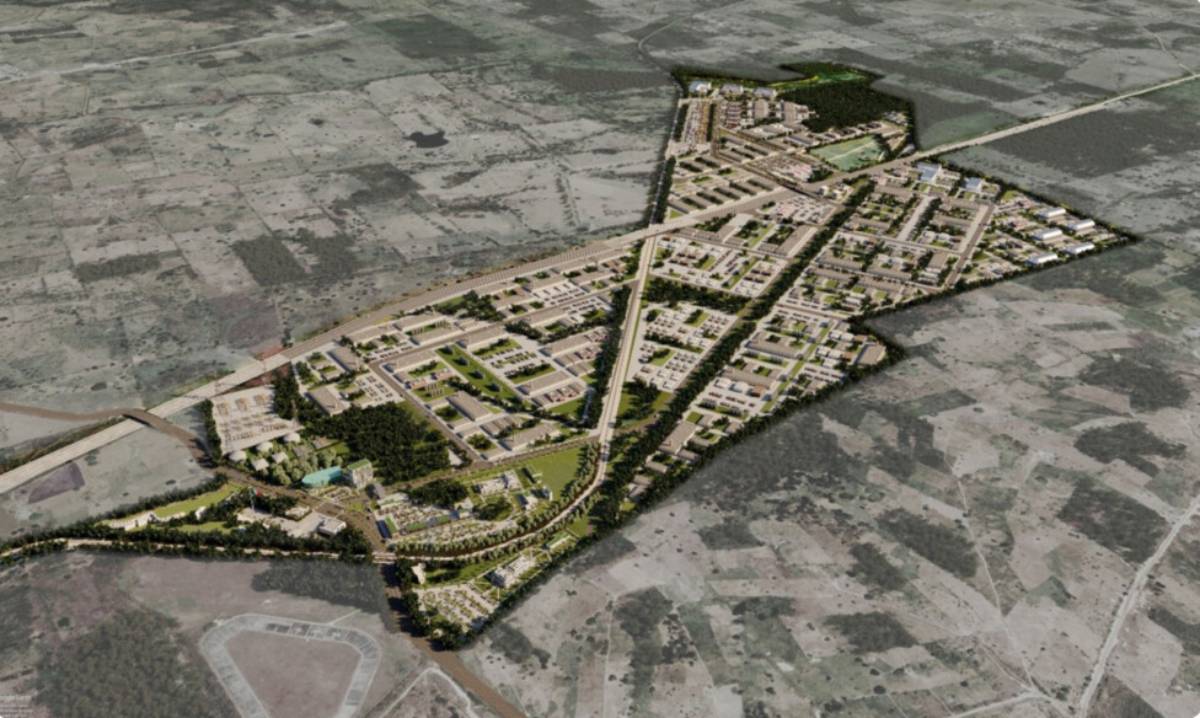
Photo caption: Model of the industrial center of Texistepec, in Veracruz. It is part of the Tehuantepec Isthmus Development Program, which includes the construction of five industrial parks in the southern state of Oaxaca and another five in the southeastern territory of Veracruz, and five of which the Mexican government has already tendered. Image: CIIT
Indigenous peoples
A document from May 2021 on the indigenous consultation in the Oaxacan municipality of Ciudad Ixtepec, also in the Corridor strip, consulted by IPS, also points in this direction. The consultation document recommends studies on the use of recycled and conditioned water for some industrial processes. It also highlights the promotion of the use of rainwater for green areas and the introduction of public awareness programs and responsible use of the resource.
Some 900,000 indigenous people from 10 different indigenous peoples live in the area impacted by the megaproject. However, the consultation process free of interference, prior to the development of the works and with sufficient and timely information, barely covered less than 1% of the indigenous population.
The CIIT has already launched the international bidding for the construction of three industrial parks in Veracruz and two in Oaxaca.
The right to a healthy environment is added to a context that is rife with human rights violations. At the end of July, the Civilian Observation Mission, made up of representatives of non-governmental organizations, verified violations of access to information, free participation and freedom of expression.
For this reason, the lawyer Escobar stressed the need for the attention of the federal authorities.
“Water is not merchandise, it has to be guaranteed to the people. You have to make a strong investment in water and develop awareness about it. We don’t understand their concept of modernity, they think it’s just building megaprojects. There is going to be an environmental problem in the medium term,” Escobar warned.
On her part, the academic Oswald proposed going beyond the traditional investment attraction approach.
“No company is going to invest if it does not have guaranteed supplies, land, the distribution of its merchandise on both sides of the oceans, and labor. It is necessary to link the water, the cost, the social issue,and what indigenous people are in the region. What other mechanisms do I have to provide water? Who is in control in the region? This is basic to understanding conflicts. It is a crucial sociocultural issue, ”Oswald analyzed.
This work was initially published in IPS. Here you can consult the original version.
______________________________
Republished by Pie de Página from IPS, August 14, 2023, here. https://piedepagina.mx/al-corredor-interoceanico-le-falta-agua/
Translated from Spanish to English by the Chiapas Support Committee.
 Chiapas Support Committee