Chiapas Support Committee
Home of the Compañero Manuel blog on zapatistas & mexico
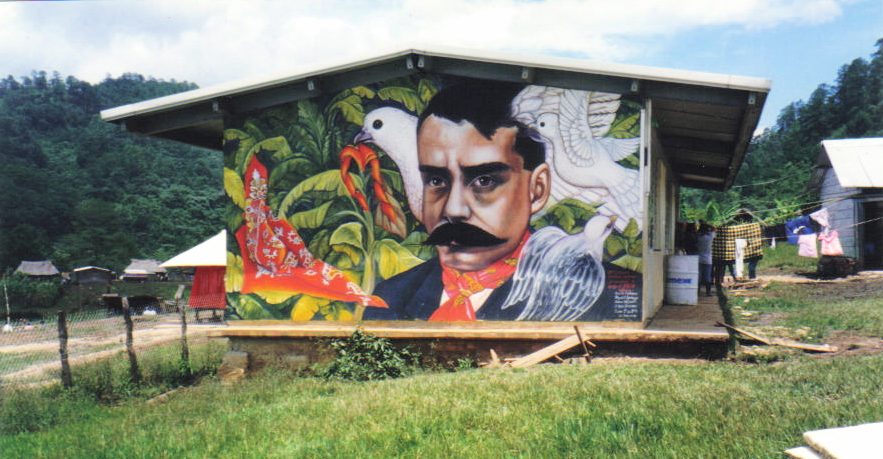
Paramilitarism, Armed Groups and Community Self Defense

The CRAC-PC elects its community police in February 2013
[As this article explains, violence from organized crime and the Drug War in Mexico is rampant in a number of Mexican states. Some indigenous communities have policed themselves for some time, but more and more communities are now taking up their own armed self-defense due to the dramatic surge in violence. The governments fear this trend and are beginning to crack down on (arrest) some of the groups.CSC]
Paramilitarism, Armed Groups and Community Self-Defense
By: Gilberto López y Rivas
For years, the country has suffered a social war whose cost in human lives is now around 100,000 dead, the majority poor and young, while society is a prisoner of uncertainty about the future of the families –surely mortgaged by the 70 million Mexicans living in poverty–, and by the desperation of establishing that the PRI “alternative” means –in fact– the gatopardismo [1] in which everything changes so that everything stays the same (or gets worse).
In this lapse, armed groups have usurped the monopoly on violence, which supposedly corresponds to the State, and devastate the streets, businesses, barrios, communities, regions, and even complete states, which are abandoned in the defenselessness and at the mercy of their criminal actions. At the same time, in territories where the Mexican State has put into practice counterinsurgency strategies or an irregular war, paramilitarism has been activated, with the acquiescence, support and complicity of the authorities and furtively linked to the armed forces, police institutions or intelligence organisms. When I was a member of the Commission for Dialogue and Pacification (Cocopa), and in my capacity as rotating president, I presented in 1998 to the Attorney General of the Republic –with the advice of the lawyer Digna Ochoa– a denunciation about the existence of paramilitary groups, one of which was responsible for the Acteal Massacre. At that opportunity, the same attorney general Jorge Madrazo Cuellar told the members of the Cocopa about the presence in Chiapas of at least 12 groups that are euphemistically called “groups of civilians presumably armed.” A special prosecutor for the case was created, the same one that disappeared without pain or glory, years later.
Since those years, I have reiterated that the state grants a fundamental element for a perfect analysis cabal of paramilitarism, and I have defined paramilitary groups as those that count on organization, equipment and military training, those to whom the State delegates the fulfillment of missions that the regular armed forces cannot openly carry out, without implicating that they recognize their existence as part of that monopoly of state violence. Paramilitary groups are illegal and have impunity because it is convenient to the State’s interests that way. The paramilitary consists, then, in the illegal and unpunished exercise of state violence and in the hiding of the origin of that violence. Historically, paramilitarism has been a phase of counterinsurgency that is applied when the power of the armed forces is not sufficient to annihilate insurgent groups, or when their discredit obliges the creation of a paramilitary arm, clandestinely tied to the military institution. A clear example of this type of grouping is the dreaded White Brigade (Brigada Blanca), a criminal extension of the State during the dirty war, whose commanders were Colonel Francisco Quiroz Hermosillo, Captain Luis de la Barreda Moreno and Miguel Nazar Haro.
Although paramilitarism is tightly linked to counterinsurgency strategies, it can occur that the State uses –by omission, passivity or corruption of its officials– the armed criminal groups for their own purposes of social control, criminalization or violent aggression on opponents, passing through this way of state articulation, to also be constituted into paramilitary groups. This could be the case of the so-called guardias blancas, which in many rural regions formed the gunmen or armed appendage of landholders and regional oligarchies, and that because of class loyalties, the State has tolerated and protected.
When the State does not fulfill the legal and constitutional responsibility of preserving the security of the citizens or administering justice and, to the contrary por, uses the Army, police contingents and the judicial apparatus as a means of control and political-territorial intervention with the population by way of a militarization of society and venal justice at all levels, the emergence of mechanisms of self-defense and community justice of a varied nature take place that fulfill the functions that the State illegally alienates or disrupts. Experiences like the Regional Coordinator of Community Authorities-Community Police (Coordinadora Regional de Autoridades Comunitarias-Policía Comunitaria, CRAC-PC), that which forms the defense of Cherán Municipality, Michoacán, the autonomous rebel zones protected by the EZLN and those emerged in other latitudes of the Mexican geography, articulated by the communities, which control and monitor them, without any relationship with the State but subject to internal regulations and principles like govern obeying, not only are legal and legitimate according to the Constitution and Convention 169 of the ILO, signed and ratified by Mexico, but rather constitute the only socio-political spaces where control has effectively been achieved over what’s called “organized crime.”
Therefore, greater conceptual rigor and institutional seriousness of organisms like the National Human Rights Commission would be hoped for before the natural proliferation of community self-defenses for supposedly “breaking the state of law,” when to all appearances it has been the State that systematically has violated it through the practices of forced disappearances, extrajudicial executions, torture, corruption-penetration by organized crime of all the spheres of public power and the total inability on the part of the authorities to guaranty public security and the administration of justice.
What is also grave is the State’s pretention of submitting organisms like the CRAC-PC to governmental control, through laws and regulations that subvert the mandate of the assembly, to make official what is a service and break the very essence of the normative community systems.
———————————————————-
Translator’s Note: [1] Gatopardismo refers to a political situation in which there is apparent political change, but in reality nothing really changes. It literally translates into the brown cat, referring to the African leopard.
Originally Published in Spanish by La Jornada
Translation: Chiapas Support Committee
March 29, 2013
En español: http://www.jornada.unam.mx/2013/03/29/opinion/015a2pol
Moisés, Another EZLN Comandante
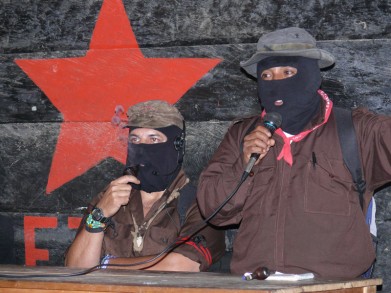
Moisés (speaking) with Marcos
Moisés, Another EZLN Subcomandante
By: Gloria Muñoz Ramírez
Visionary, military strategist, and organizer of the people, these are some of the characteristics of the new Subcomandante of the Zapatista National Liberation Army (EZLN, its initials in Spanish). Known as Major Moisés in early January 1994, he would move to the position of Lieutenant Colonel in 2003. Today, Subcomandante Marcos, Zapatista military leader and spokesperson, introduced him as the new Subcomandante of the insurgent forces.
“We want to introduce you to one of the many “he’s” that we are, our compañero Subcomandante Insurgente Moisés. He guards our door and he also speaks using the words of all of us. We ask you to listen to him, which is, to look at him and so to look at ourselves,” said Subcomandante Marcos during the public announcement of the new appointment.
Moisés is one of the most well known insurgent commanders in the public life of the EZLN. On 16th February 1994, during the handing over of General Absalón Castellanos, the EZLN’s prisoner of war, he was seen for the first time heading what would be the first of the Zapatista public events after the beginning of the war: an act full of symbolism that was finalized with the exchange of the former Governor of Chiapas, known for his ruthless actions, for hundreds of Zapatistas taken prisoner during the first days of the war. The act was taken advantage of to make the ethical presentation of a movement that sentenced him to bear the forgiveness of those he had humiliated, imprisoned and murdered.
“I have come to hand over the prisoner of war, who is General Absalón Castellanos Dominguez. In a few words: The People’s Army, the Zapatista National Liberation Army, has complied as between warriors and rivals. Military honor has value, as the only bridge. Only real men use it. Those who fight with honor, speak with honor.” These were the first words which were heard from the then Major Moisés, in one of the most emotional events of these 19 years of struggle: the first presentation of the Zapatista support bases in Guadalupe Tepeyac.
Subcomandante Moisés came to the Zapatista organization, as he himself has said, in 1983. Of Tzeltal origin, he was sent to “the city” as part of his preparation and there, in a clandestine house, he met Subcomandante Pedro, who later became his leader, and for whom he would become his right arm. Afterwards, he would be very close to Subcomandante Marcos. Moisés was one of the people who opened up the Tojolabal canyon areas of Las Margaritas; he visited village-by- village, family by family, explaining the reasons for the struggle.
Of short stature, and with an enormous heart and political vision, always wearing his black military hat, with a sense of humor which does honor to the depth of the Tzeltal people, it fell to Moisés to withdraw at the side of Marcos during the government’s betrayal of 9th February 1995; this is why much of the literature produced during that period portrays them together, with him as squire.
Witness to one of the last meetings between Subcomandante Marcos and Subcomandante Pedro, his second in command, Moisés describes how the two commanders argued because both of them wanted to go to war. But both said the other had to stay behind, because if one of them fell the other would have to carry on. Both of them went out, the first one to the taking of San Cristobal de las Casas, and the second to Las Margaritas, where he (Pedro) was killed in combat the same morning. At that time, with uncontrolled insurgent troops, the now new Subcomandante assumed the command and control of the operation in the region.
Later on, after the handing over of General Absalón, the dialogues in the Cathedral, and the opening up of the territory in rebellion to civil society and the media, the vast majority of the Zapatista public activities moved to the Tojolabal canyon area, where Subcomandante Marcos appeared regularly alongside the then Major Moisés and Comandante Tacho, among other civilian and military leaders in the region.
During those first months and years, in addition to his work within the organization, Moisés appeared as the middleman speaking with a good part of national and international civil society; he provided media interviews explaining the beginnings of the Zapatista struggle, the content and motives of their peaceful and political initiatives, and, later, the functioning of the Good Government Juntas, of which he was the promoter of their first forerunner, the Association of Autonomous Municipalities.
In 2005, with the release of the Sixth Declaration of the Lacandón Jungle, he was appointed by the General Command to be in charge of international affairs, in a committee known as “La Intergaláctica.” During that period, while Delegate Zero was traveling the country with the Other Campaign, the then Lieutenant Colonel received visits from other countries and sent greetings to international meetings.
Known for his patience, openness and willingness, on the occasion of the 20th birthday of the EZLN, he said: “It is our way to first do the practice, then the theory. And so, after the betrayal, when the political parties and the government rejected the recognition of indigenous peoples, we began to look at what we were going to do.”
Without a doubt Subcomandante Moisés can, with pride, subscribe to his own words: “I think if you have to be a revolutionary you have to be one right until the end, because not reaching its consequences or abandoning people and those things, well it is not right. We the fighters, our other brothers from other states, from this same country Mexico and the world, we need to assume the responsibility….”. And he does.
Originally Published in Spanish by Desinformemonos
En español: http://desinformemonos.org/2013/02/moises-otro-subcomandante-en-el-ezln/
Translated by Nélida Montes de Oca
Editing: Chiapas Support Committee
Resumen de Noticias sobre los Zapatistas – Marzo de 2013
MARZO DE 2013 RESUMEN DE NOTICIAS SOBRE LOS ZAPATISTAS
En Chiapas
1. El EZLN concluye el ensayo ELLOS Y NOSOTROS – Durante el mes de febrero, el EZLN publicó las partes 5, 6 y 7 (la parte final) de ELLOS Y NOSOTROS. Las últimas tres partes, firmadas por Marcos, hablan de cómo las Juntas manejan el dinero, algunas experiencias en la resistencia, incluyendo comentarios críticos sobre Ciudades Rurales, el Proyecto Mesoamérica, antes llamado el Plan Puebla-Panamá, y el actual Plan para México. También revelan un poco de la historia de la organización fundadora (el FLN), revelando que varias clínicas de salud llevan los nombres de 2 compañeras del FLN quienes murieron en la lucha. En la parte 7, titulada “Dudas, sombras y un resumen en una palabra,” Marcos habla de las “sombras” que han hecho posible todo lo que han logrado. También habla de cómo asistir a las Escuelitas para borrar dudas sobre los zapatistas y el aprendizaje, y dice que el Sup Moisés enviará mas detalles sobre las escuelas.
2. Moisés publica fechas y otros detalles sobre las escuelitas – El 17 de marzo, el EZLN difundió un comunicado firmado por Subcomandante Moisés. Contiene mucha información sobre “las escuelitas” donde darán cursos sobre la Libertad Según los Zapatistas. Las escuelitas comenzarán inmediatamente después de la Celebración por el 10 Aniversario de las Juntas de Buen Gobierno (8 al 11 de agosto) y durarán una semana. Otros detalles contenidos en el comunicado incluye que las Juntas de Buen Gobierno por ahora se encuentran cerradas a brigadas, caravanas, entrevistas o cualquier visita que requiera del tiempo de las autoridades porque tod@s l@s zapatistas estarán ocupad@s preparando las escuelitas y los festejos. Los caracoles permanecerán abiertos a visitantes.
3. La corte suprema de México rechaza apelación de Patishtán – El 6 de marzo, la corte suprema rechazó otorgar una audiencia sobre “el reconocimiento de inocencia” a Alberto Patishtán, un maestro, defensor de derechos humanos y prisionero en Chiapas. Ha sido condenado a 60 años de prisión por emboscar y asesinar a 7 agentes de policía, la corte refirió la apelación a un tribunal en Chiapas. Fuentes legales en México piensan que hay pocas posibilidades de que la corte federal de distrito en Chiapas hará lo que la corte suprema negó hacer. Una campaña internacional por su liberación está en marcha.
4. La Suprema Corte Mexicana libera a otro indígena encarcelado por la matanza de Acteal – Una semana después de haber rechazado la revisión del caso del activista social Alberto Patishtán Gómez por su demanda de inocencia, la primera sala de la Suprema Corte anunció la liberación inmediata de Marcos Arias Pérez, quien habia sido acusado y encarcerlado con el cargo de haber participado en la matanza de Acteal el 22 diciembre de1997 (municipio Chenalhó, Chiapas). De nuevo, el argumento que se utilizó para su liberación fue que hubo violaciones de procedimiento en el desarrollo del proceso. El caso de Patishtán también cuenta con varias de tales violaciones, entónces ¿por qué continúa él en la prisión? Se dice que la influencia de algunos políticos de Chiapas son los de la culpa.
Por otras partes de México
1. Audiencia en la Comisión Interamericana de Derechos Humanos sobre violaciones en Atenco – Cuando el gobierno federal mexicano conjuntamente con el gobierno del estado de México condujeron una operación policiaca para aterrorizar, reprimir y torturar a los habitantes de San Salvador Atenco el 3 y 4 de Mayo de 2006, la policía incluyó la tortura sexual (violación forzada) en al menos 26 mujeres detenidas. El grupo de mujeres antepuso una demanda de investigación de su caso en la Comisión Interamericana de Derechos Humanos, una división de la Organización de Estados Americanos con sede en Washington, DC. Finalmente, a mediados de este mes se celebró una audiencia sobre el caso. El gobierno ofreció una “disculpa por los excesos” y habló de una “solución amistosa” del caso, pero el grupo de mujeres víctimas de la agresión sexual rechazaron el ofrecimiento.
2. Corte mexicana anula inmunidad de Zedillo – El 6 de marzo, una corte mexicana emitió un fallo declarando que el ex-Presidente Ernesto Zedillo no era eligible para la protección de inmunidad bajo la Constitución Mexicana e invalidó la nota diplomática del entonces embajador mexicano en los EEUU que pedía al Departamento de Estado en ese país, recomendara inmunidad ante la corte federal de distrito en Connecticut en la cuál Zedillo ha sido demandado por algunas de las víctimas de la masacre de Acteal. La corte decidió que Zedillo ya no tenía derecho a la inmunidad porque ya no era presidente. Ahora vive en Connecticut e imparte clases en Yale. La demanda hecha en nombre de algunas de las víctimas de la masacre todavía sigue vigente en la corte federal de distrito en Connecticut.
3. Tráfico de Drogas, la quinta más grande fuente de empleos en México! – En un documento preparado por miembros de la Cámara de Diputados se estima que la actividad relacionada con el tráfico de drogas emplea alrededor de 468,000 personas, más que PEMEX (Petróleos Mexicanos, la compañía petrolera con más empleados en el mundo). El documento es parte de una propuesta de reforma legislativa que pretende crear una unidad técnica de inteligencia financiera que sea capaz de investigar y perseguir el lavado de dinero. El documento menciona que las ganancias por el tráfico de drogas se estiman entre 25 mil y 40 mil millónes de dólares anuales, y se reconoce que las estructuras del gobierno, incluyendo las policías, han sido infiltradas por la delincuencia organizada por medio de sobornos, chantajes y amenazas. El objetivo de la reforma es el de colocar diques al flujo del lavado de dinero que sirvan para reducir la capacidad de corrupción de esta actividad ilícita.
Compilación mensual hecha por el Comité de Apoyo a Chiapas: Nuestras principales fuentes de información son: La Jornada, Enlace Zapatista y el Centro de Derechos Humanos Fray Bartolomé de las Casas (Frayba).
Zapatista News Summary – March 2013
MARCH 2013 ZAPATISTA NEWS SUMMARY
In Chiapas
1. EZLN Concludes THEM AND US Essay – During February, the EZLN released Parts 5, 6 and 7 (the final part) of THEM AND US. All 7 parts are translated into English on our blog: https://compamanuel.wordpress.com/ The last three parts, signed by Marcos, talk about how money is handled by the Juntas, some experiences in resistance, including critical comments about Rural Cities, the Mesoamerica Project, formerly the Plan Puebla-Panamá and the current Plan for Mexico. They also revealed a little history of their founding organization (the FLN) by revealing that several clinics are named for 2 FLN compañeras who died in the struggle. In Part 7, entitled Doubts, Shadows and one word, Marcos talks about the “shadows” that have made what they have done possible. He also talks about coming to the Little Schools to erase your doubts about the Zapatistas and learning and says that Sup Moisés will send out details about those schools.
2. Moisés Issues Dates and Other Details About the “Little Schools” – On March 17, the EZLN issued a communiqué signed by Subcomandante Moisés. It contains much of the information about the “escuelitas” or little schools” where they will teach Freedom According to the Zapatistas. For details, see: https://compamanuel.wordpress.com/2013/03/20/ezln-moises-dates-and-other-details-for-the-little-zapatista-school/ The Little Schools will begin immediately following the Celebration for the 10th Anniversary of the Good Government Juntas (August 8 to 11) and will last for one (1) week. Another of the details contained in the communiqué is that the Good Government Juntas are now closed to brigades, caravans, interviews or any visit that requires the time of the authorities because all the Zapatistas will be busy preparing for the little schools and the celebrations. The Caracoles remain open to visitors.
3. Mexico’s Supreme Court Denies Patishtán’s Appeal – On March 6, Mexico’s Supreme Court refused to grant a “recognitions of innocence” hearing to Alberto Patishtán, a teacher, human rights defender and prisoner in Chiapas. Sentenced to 60 years in prison for the ambush and murder of 7 police, the Court referred the appeal to a collegiate tribunal in Chiapas. Legal sources in Mexico think the chances are slim that a federal court in Chiapas will do what the Supreme Court refused to do. An international campaign in support of his freedom is underway.
4. Mexico’s Supreme Court Releases Another Man Convicted in the Acteal Massacre Case – One week after it refused to hear the request from the social struggler Alberto Patishtán Gómez for a recognition of innocence, the first hall of the Supreme Court resolved the immediate liberation of Marcos Arias Pérez, accused (and convicted) of participating in the Acteal Massacre on December 22, 1997 in the municipality of Chenalhó, Chiapas. Once again, the rationale for the release was because of due process violations. Patishtán’s case is also replete with due process violations, so what is prohibiting Patishtán’s release? Speculation is mounting that influential politicians in Chiapas may be to blame.
In Other Parts of Mexico
1. Inter-American Commission on Human Rights Holds Hearing on Atenco Rapes – When the Mexican governments and the state government of Mexico jointly conducted a police operation to terrorize, repress and torture the population of San Salvador Atenco on May 3 and 4, 2006, the police included sexual torture (forced rape) on at least 26 women in custody. They filed a complaint with the Inter-American Commission on Human Rights, a division of the Organization of American States, with headquarters in Washington, DC. A hearing was finally held in the middle of the month. The government offered an apology and a friendly resolution, but the women who suffered the sexual assaults rejected the offer.
2. Mexican Court Annuls Immunity for Zedillo – On March 6, a Mexican Court ruled that former president Ernest Zedillo was not eligible for immunity protection under the Mexican Constitution and invalidated a diplomatic note from the then Mexican Ambassador to the United States requesting that the US State Department recommend immunity to the Connecticut federal district court in which Zedillo has been sued by some victims of the Acteal Massacre. The court reasoned that Zedillo was no longer entitled to immunity because he was no longer president. He now lives in Connecticut and teaches at Yale. The lawsuit filed on behalf of some of the victims of the massacre is still an open case in the Connecticut court. For the full story: http://yaledailynews.com/blog/2013/03/25/mexican-court-rules-zedillo-ineligible-for-immunity/
3. Drug Trafficking Is 5th Largest Source of Jobs in Mexico! – A report prepared for members of Mexico’s Chamber of Deputies state that estimates are that drug trafficking employs around 468,000 people, more that PEMEX (the acronym for Petroleos Mexicanos), the oil company with the most employees in the world). The purpose of the report is to support a proposed legislative change to create a financial intelligence technical unit capable of investigating and pursuing money laundering. The report cites estimates of profits from drug trafficking at somewhere between $25 and 40 billion dollars per year and concedes that governmental structures, including police, are infiltrated with drug trafficking employees and corrupted with bribes, blackmail and threats. The conclusion seems to be that there is no way to stop the corrupting influence of that kind of money without putting dams in the way of money laundering.
___________________________________
Compiled monthly by the Chiapas Support Committee.The primary sources for our information are: La Jornada, Enlace Zapatista and the Fray Bartolome de las Casas Human Rights Center (Frayba).
Raúl Zibechi: Can the State Be the Commons?
Can the State Be the Commons?
By: Raúl Zibechi
Rigorous and committed reflections and analyses are essential in this turbulent and chaotic period, in which the anti-systemic forces have difficulties orienting themselves and defining a direction. Some of those analyses have played an outstanding role in the debates that the movements carry out, because they illuminate the themes most important for being oriented in the long run.
The works of the geographer David Harvey, in particular those that permit comprehending better the modes of capital accumulation, have been incorporated by numerous movements for analyzing the reality that they wish to transform. The concept of “accumulation by dispossession,” formulated in his book The New Imperialism (Akal, 2004), is one of the force-ideas accepted by those who belong to anti-systemic organizations.
In other works Harvey persists in comprehending in more depth the movements of capital and its imprint on geographical spaces and territories, emphasizing how they have reconfigured the urban scheme in recent decades. In The Enigma of Capital and the Crisis of Capitalism (Akal, 2012), he established the strict relationship between urbanization, capital accumulation capital and sudden appearance of crisis. Since the postwar (1945), he points out; suburbanization played an important role in the absorption of surplus capital and labor.
Consumption explains 70 percent of the US la economy (compared to the 20 percent that it represented in the 19th Century), which leads him to conclude that: “the organization of consumption through urbanization has been converted into something absolutely decisive for the dynamic of capitalism” (p. 147). Consequent with his previous works, he puts the creation of new spaces and territories in a central place, and considers them the fundamental aspect of the reproduction of capitalism, emphasizing the categories of “rental of land” and “price of land” as the hinges between capital and geography.
The analysis of the “territorial logic” of capitalism, complementary and convergent with the flows of capital that cross spaces with “a logic more systematic and molecular than territorial” (p. 171), leads Harvey to approach power, states and the resistances, remembering that in this period: “the State ands capital are more strictly interwoven than ever” (p. 182). Here he enters into a much more delicate terrain. Although he may seem contradictory with that assertion, he defends “the utilization of the State as the principal instrument of counter-power in the face of capital” (p. 173).
Anyhow, Harvey recognizes the Zapatista Good Government Juntas as territorial organizations capable of creating a new social order. At this point he does not establish any difference between territorial and State organization, or between instituted power and counter-powers. Although he does not work in that direction, the debate about whether all territorial power is synonymous with State remains open and we have still not advanced much in that respect.
I don’t believe that it’s most appropriate to continue a debate of an ideological character about the State –although we know Marx’s position on that, he always held to the need for destroying the State apparatus–, without previously bringing up the paths for leaving capitalism and traveling towards a different world. In his most recent work, Rebel cities, Harvey dedicates a chapter to “The creation of urban communes,” where he criticizes frontally the centralized organization of Leninist inspiration as “horizontalism,” which he accuses of centering on practices of small groups that turn out to be impossible on larger scales and on a global scale.
Harvey also questions the “local autonomies” as spaces adequate for protecting the common good, because in fact “they demand some kind of approach” (enclosure, p. 71). Harvey’s reasoning is anchored in the “scales”: having a community garden in your barrio is something good, he says, but to resolve global warming, water and air quality or problems on a global scale, we cannot appeal to assemblies or to the forms of organization that the movements have today. For that there is no other path than appealing to the State, on a national, regional or municipal scale.
There are three considerations in that regard. What Harvey proposes is inscribed in a profound historic tendency that has regained vigor in recent years. Although the writer does not share it, the bulk of the Latin American movements migrated from autonomous positions to statist and electoral practices. To not recognize this tendency does not contribute to deepening the debates.
The second has to do with the character of the State: can the State, which is not the commons but rather the expression of a social class, have any usefulness for protecting the commons? The community, the true expression of the commons, is the human organization most adequate for protecting the common wealth. It is not accidental that there where that wealth has been preserved is where communitarian ways predominate in their most diverse forms.
In third place, it is necessary to undo a misunderstanding that has earned enormous esteem in recent years: assuming the administration of the State, the government, became for many activists the path for traveling toward a new world. Beyond how the efforts of the progressive governments are evaluated, there does not exist anywhere in the world any experience with construction of new social relations from the State inherited by capitalism.
“The working class cannot be limited simply to taking possession of the State machine such as it is and using it for its own purposes,” Marx wrote in 1872, upon making of the Paris Commune. That we still don’t have the material force to do what Marx recommended is not saying that our horizon ought to limit itself to struggling by administering what exists, because we will never overcome capitalism that way.
—————————————————
Originally Published in Spanish by La Jornada
Friday, March 22, 2013
En español: http://www.jornada.unam.mx/2013/03/22/opinion/031a1pol
English translation: Chiapas Support Committee
EZLN: Moises: Dates and Other Details for the Little Zapatista School
Dates and Other Details for the Little Zapatista School
ZAPATISTA NATIONAL LIBERATION ARMY
MEXICO
March 2013.
Compañeras and compañeros, brothers and sisters of the Sixth:
Regarding visits, caravans, and projects.
As you all know, we are preparing our classes for the little schools; that is what we will be focusing on for now so that they turn out well and make for good students.
And we, together with the [autonomous] authorities, think that there are things that we will not be able to attend to so as not to distract ourselves from this task, for example: agreeing to do interviews, or exchanging experiences, or receiving caravans, or work teams, or discussing ideas for a project. So please don’t make a trip here for nothing, because neither the Good Government Junta or the autonomous authorities, or the project commissions will be able to attend to you in these matters.
If a person, group, or collective is thinking of bringing a caravan with some kind of support for the communities, we ask you to please wait for the appropriate time, or if you have already arranged the trip, then please leave whatever you bring in CIDECI, with Doctor Raymundo, in San Cristóbal de Las Casas, Chiapas, Mexico.
We aren’t saying that caravans of support can never come, but they CAN’T come now, because we want to focus on the little school. We want to let you know this, so that you don’t misunderstand why you are not attended to.
We want to let you know this so that you don’t plan trips that require conversations with our authorities; we won’t be able to attend to you for the simple reason that all of our efforts will go toward our little school, which is for you, for Mexico and the world, and that is why we are directing all our efforts there.
So while we will be in the Juntas de Buen Gobierno of the 5 caracoles; we won’t be able to attend to you, but you can visit the caracoles.
The same goes for ongoing projects in the 5 Juntas, there are things that we won’t be able to attend to, we can only do what is within our ability and which does not require consultations or a lot of movement for our people. If something does require these things, it will be tended to at another time.
We want you to understand us; for us, it is not the time for caravans, projects, interviews, exchanges of experiences, or other things. For us Zapatistas (women and men), it is time to prepare for the little school. We WON’T have time for other things, unless the bad government wants to really mess with us and then yes, that would change things.
We believe that you, compañeras and compañeros, brothers and sisters, understand.
Regarding the School
Here we will give you the first details about the little school, so that those of you who will take classes can begin to make preparations.
1. Everyone who feels called is invited to the fiesta of the Caracoles. The fiesta will be in all 5 caracoles, so you can go to whichever you want. The arrival date will be August 8th, the fiesta will be on the 9th and 10th, and the return date will be the 11th. Note: The fiesta to celebrate the 10th anniversary of the Caracoles is not the same thing as the little school. Don’t confuse them.
2. With this fiesta, the Zapatista bases of support celebrate the 10th anniversary of the Juntas de Buen Gobierno, but not only that.
3. These days will be the beginning of our little school, which is very other, where our bosses—that is to say, the Zapatista bases of support—will give classes on their thought and action on liberty according to Zapatismo: their successes, their failures, their problems, their solutions, the things which have moved forward, the things that have gotten bogged down, and the things that are missing, because what is missing is yet to come.
4. The first course (we will have many, depending on when those who attend are able), of the first level is 7 days long, including the arrival and departure time. The arrival date will be August 11th, the class begins on August 12th, 2013 and ends on August 16th, 2013. And the departure date will be August 17th, 2013. Those who finish the course and would like to stay longer can visit the other caracoles outside of where they had their course. The course is the same in all of the caracoles, but people can visit caracoles different from the one they were assigned, but at that point they will be on their own.
5. Little by little, we will explain how registration works for the little school of liberty according to the Zapatistas, but we will let you know now that it is laic and free of cost. The pre-registration will be with the Support Teams of the Sixth Commission, national and international, on the Enlace Zapatista web page, and by email. Students will then register at CIDECI, in San Cristóbal de Las Casas, Chiapas. We will begin sending the invitations, according to our capacities, as of March 18, 2013.
6. The school is not open to anyone who wants to come; rather, we will invite people directly. We will take care of these compas who we invite, we will give them food, a place to sleep that is clean and satisfactory, and we will give each of them a guardian (or guardiana), their own “Votán,”[i] who will make sure that they are well and that they don’t suffer too much in the class, only a little, but always, yes, some.
7. The students will need to study very hard. The first level has 4 themes: Autonomous Government I, Autonomous Government II, Participation of Women in Autonomous Government, and Resistance. Each theme has its own textbook. The textbooks have between 60 and 80 pages each, and the parts that SupMarcos already gave you to look at are only a tiny part of each book (3 or 4 pages). Each textbook costs 20 pesos, which is what we calculated as the cost of production.
8. This first level of the course lasts for 7 days and/or however much time a compa has available, because we know people have their work, their family, their struggle, their commitments, that is to say, their own calendar and geography.
9. The first course is only first grade, there is still much more to come, meaning that the school isn’t finished quickly; it will take a long time. Whoever passes the first level can go on to the second one.
10. Regarding costs: each compa has to cover their own costs to get to CIDECI, in San Cristobal de Las Casas, Chiapas, and to get back to their corner of the world. From CIDECI they will go to the little school to which they are assigned and when they finish, they will return to CIDECI and from there each one will go home. In the school, which is in the village, they won’t want for anything; it may be beans, rice, or vegetables, but their table will not be lacking. There the Zapatistas will cover the costs for each student. Each student will live with an indigenous Zapatista family. During the days that they are in school this will be the student’s family. They will eat, work, rest, sing, and dance with this family, who will also walk them to their assigned school, to the education center. And the “Votán,” the guardian or guardiana, will always accompany them. That is, we will watch out for each student. If they get sick we will cure them, or if it is serious we will take them to a hospital. But whatever is in their head when they arrive and when they leave, well, we can’t do anything about that; what each compañero or compañera does with what they see, hear, or learn, is their responsibility. That is, we will teach them the theory; the practice they will see about themselves in their own corner of the world.
11. The costs of the school we will figure out ourselves. Maybe we’ll have a festival of music and dancing, or some paintings or artisanal goods, but don’t worry, because we will find a way and in any case, there are always good people who support good things. For those who would like to make a donation to the school, we will leave a jar in the student registration area at CIDECI, with the compas from the University of the Earth, in San Cristóbal de Las Casas, Chiapas. Whoever wants to donate some money can put it in the jar, no one will know who gave money or how much they gave; this way those who gave a lot won’t think too much of themselves and those who gave a little won’t feel sad. We will not allow gifts of money or other things to be given in the schools, Caracoles, or families to which you are assigned. This is to avoid an unfair situation where some people receive things and others do not. Whatever people would like to donate should be left at CIDECI, with the compas from the University of the Earth, in San Cristóbal de Las Casas, Chiapas, Mexico. They will collect it all and then we will divide it evenly among everyone later, that is, if there is anything. If not, it doesn’t matter; what matters is you.
12. There are other ways of taking the course at the little Zapatista school. We are going to ask for support from the compas of the free, independent, libertarian, and autonomous media, and from those who know about this thing called videoconferencing. Because we know that many people will not be able to come because of work issues, or personal issues, or family. We also know that there are people who don’t understand Spanish but do want to learn how the Zapatistas have done what they have done and undone what they have undone. So we are going to have a special course that one can take via video camera wherever there is a group of willing students who are ready with their textbooks, and that way, over internet, they will be able to see the course and ask questions of the teachers—the Zapatista bases of support. In order to plan this, we will invite some alternative media to a special meeting in order to come to an agreement on how to do the videoconferences and also so that they can photograph and videotape the places that we will talk about in the classes, so that everyone can verify if what the professors (men and women) say is true or not.
Another form by which people can take the class is with the DVDs we will make of the course, for those who can’t go anywhere and can only study in their house, so that they can also learn.
13. In order to attend the little Zapatista school, you will have to take a preparatory course where the life of the Zapatista communities and their internal rules will be explained, so that you don’t commit any infractions. And also so you know what you need to bring. For example, you shouldn’t bring those things called “tents” that aren’t good for anything anyway; we are going to provide you accommodations with indigenous Zapatista families.
14. Once and for all we want to make it clear that the production, commercialization, exchange, and consumption of any kind of drugs or alcohol is PROHIBITED. The carrying or use of any kind of weapon, loaded or unloaded, is also prohibited. Whoever asks to join the EZLN or anything militarily related will be expelled. We are not recruiting nor promoting armed struggle, but rather organization and autonomy for liberty. Any kind of propaganda, political or religious, is also prohibited.
15. There is no age limit to attend the little school; but any minors should come with an adult who is responsible for them.
16. When you register, after having been invited, we ask you to clarify if you are a man, woman, or other, in order to accommodate you, as every one is an individual (individuo, individua, or individuoa)[ii] and will be respected and cared for. Here we do not discriminate against anyone on the basis of gender, sexual preference, race, creed, or nationality. Any act of discrimination will be punished with expulsion.
17. If anyone has a chronic illness, we ask you to bring your medicine and let us know about it when you register so that we can keep an eye out for you.
18. When you register, after being invited, we ask that you make clear your age and health condition so that we can accommodate you in one of the schools where you won’t suffer more than necessary.
19. If you are invited and you can’t attend at this first date, don’t worry. Just let us know when you can attend and we will do the course for you when you can come. Also, if someone can’t finish the whole course or can’t come after having registered, no problem, you can finish or make it up later. Remember though you can also attend the videoconferences that will be given outside Zapatista territory.
20. In other writings I will continue explaining more things and clearing up any doubts you might have. But what I have said here are the basics.
That’s all for now.
From the mountains of the Mexican Southeast,
Subcomandante Insurgente Moisés.
Rector of the Little Zapatista School
Mexico, March 2013.
P.S. I put SupMarcos in charge of adding some videos to this text that relate to our little school.
__________________________
Originally Published in Spanish by Enlace Zapatista
En español: http://enlacezapatista.ezln.org.mx/2013/03/17/fechas-y-otras-cosas-para-la-escuelita-zapatista/
Francisco Gabilondo Soler, Cri Cri, with a track that is now a classic: “Caminito de la escuela” (The Path to School).
————————————————————————————-
The Little Squirrels of Lalo Guerrero with “Vamos a la escuela” (Let’s go to school) and Pánfilo’s excuses not to go to school.
————————————————————————————-
School squabbles to the rhythm of ska, with Tremenda Korte and this track “Por Nefasto”.
[i] In the lexicon of the EZLN, Votán is usually used in reference to the legendary Votán – Zapata, in which the spirit of Zapata lives as “the guardian and heart of the people.” See “Closing Speech to The National Indigenous Forum,” EZLN, January 9, 1996.
[ii] The EZLN often uses the suffix –oa (individuoa, compañeroa) to provide a noun form that is not strictly feminine or masculine.
Zapantera Negra: Zapatista Black Panther Art
ZAPANTERAS NEGRAS: Zapatista Black Panther Art in S.F.
April 10, 2013 @ 7:00pm at Rincon 3265 17th St. #204
(Between Mission and Capp) San Francisco CA 94110
In 2012, Emory Douglas, former Minister of Culture for the Black Panther Party, went to Chiapas to work with Zapatista artists to make art, share visions, bringing together the revolutionary art traditions of two communities.
On April 10, artists Emory Douglas and Rigo 23 will present art and photography from the Zapantera Negra art project and share their experiences with the Panthers and the Zapatistas.
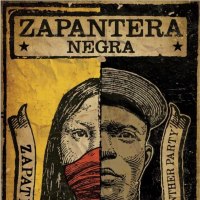
Join the Chiapas Support Committee on April 10 to celebrate the life and
vision of Emiliano Zapata through the art work of two communities
whose hearts and movements lead a struggle for a boundless liberation.
* *** *
All proceeds support Zapatista communities
$5.00-20.00 donation No one turned away for lack of funds
* *** *
For more information contact the Chiapas Support Committee
(510) 654-9587 cezmat@igc.org
* *** *
Chiapas Support Committee/Comité de Apoyo a Chiapas
P.O. Box 3421, Oakland, CA 94609
Tel: (510) 654-9587
Email: cezmat@igc.org
http://www.facebook.com/pages/Chiapas-Support-Committee-Oakland/86234490686
EZLN: Marcos: THEM AND US VII – The Smallest Ones 6 – The Resistance
THEM AND US VII.
The Smallest Ones 6.
The Resistance.
March 2013.
NOTE: The following fragments talk about the resistance of the zap… wait! There’s a Zapatista Airforce?! The Zapatista health system is better than the health system of the bad government?! For over 20 years, the Zapatista communities have resisted, with their own ingenuity, creativity, and intelligence, all of the various counter-insurgency efforts waged against them. The so-called “Crusade against Hunger”[i] of the current PRI overseers does nothing but reiterate the fallacy that all that indigenous people want is a handout rather than Democracy, Liberty, and Justice. This counter-insurgency campaign does not come alone, but is accompanied by a media campaign (the same type of media campaign that today in Venezuela once again shows its desire for a coup against a people that will know how to gain strength from their pain), the complicity of the political class as a whole (in what should be called the “Pact against Mexico,” [ii]) and, of course, a military and police escalation: in Zapatista territories the paramilitaries are emboldened (with the consent of the state government), federal troops intensify their provocations during patrols “to locate the Zapatista leadership,” the “intelligence” agencies are reactivated, and the justice system reiterates its ridiculousness (which rhymes with Cassez[iii]) in denying freedom to teacher Alberto Pathistán Gómez, thus condemning him for being indigenous in Mexico in the 21st century. But the teacher resists, not to mention the Zapatista indigenous communities…
-*-
Good morning compañeros, good morning compañeras. My name is Ana, from the current Junta de Buen Gobierno [Good Government Council], fourth generation 2011-2014, from Caracol [iv] I in La Realidad. I am going to talk to you a bit about ideological resistance, the subtheme that the two of us—the compañero and I—are to talk about. I am first going to talk about the ideology of the bad government. The bad government uses the mass media to control and misinform the people, for example via television, radio, soap operas, cellphones, newspapers, magazines, even sports. They insert commercials on television and on the radio to distract people, and soap operas to hook people and make them think that what happens on television is going to happen to us. In the bad government’s education system, those who aren’t Zapatistas are ideologically managed so that their kids are in school, properly uniformed, every day, but just for the sake of appearances, it doesn’t matter if they learn how to read or write. They also get them scholarships for school, but in the end this just benefits the companies that sell supplies or uniforms. How do we resist all of the bad government’s ideological wrongs in our Caracol? Our principal weapon is autonomous education. There in our Caracol the education promoters are taught the true history of the people, so that this knowledge can be conveyed to the children, along with the knowledge of our [Zapatista] demands. We also began giving political talks to our young people so that they are awake and aware and don’t fall easily into government ideologies. We are also giving talks to the people on the 13 [Zapatista] demands, via the local authorities in each village. That is the little I can explain to you, next the compañero will talk to you.
(…)
-*-
(…)
There are also programs, part of the government projects. The government began to bring in projects so that our brothers and sisters would accept these projects and believe they are good and forget about their own work; so that these brothers and sisters now don’t depend on themselves but rather on the bad government.
What do we do to resist these things? We began to organize ourselves to do collective work, as some of the compas have already said, we do collective work at the village, region, municipal, and zone levels. We do this work to satisfy our own needs, different types of work, it is how we resist falling into the bad government’s projects and how we work to depend on ourselves, not on the bad government.
-*-
There [in our zone] there is a huge hospital in a community called Guadalupe Tepeyac, and right now a children’s hospital is being constructed very close by, about a half hour or an hour away, in the center of La Realidad. But what is happening, what have we seen in that hospital in Guadalupe Tepeyac? In spite of the fact that the government has a lot of equipment, people arrive from different communities, from different municipalities, and what happens? Let’s say they need to do an ultrasound, for example, or a lab analysis. As the doctors there know, our hospital is very close by, our Hospital-School “The Faceless of San Pedro.” The doctors at the government hospital know that they can’t do the analysis there because they don’t have the trained staff to do it, they have the machine but not the staff. So what they do is give the consultation there and send the patient to our hospital, to the Zapatista hospital-school. So [the patient] goes [to the Zapatista hospital] to do the analysis—just look at the level we’re reaching, compañeros— and of course there are rules in this hospital to charge this person a fee, and they do the analysis for them.
Then people begin to realize, begin to admire, that while in the official hospital there isn’t a solution to their problems as many would expect, when they come to our hospital, although humble, as we say, they are told what problems are detected with the ultrasound or in the laboratory analysis. The hospital of Guadalupe is there but there is just one lab analyst and there are many things that that lab analyst can’t do, so they send the patient to our hospital-school. There we have a compañero who is trained and who has now trained various other compañeros, so he does the different analyses. But not just that, this compañero has an advantage over the lab analyst in the official hospital, who just does the lab test and that’s it, and then sends the patient to another doctor to receive treatment. What the compañero in our hospital does when people are sent from the hospital in Guadalupe is perform the lab analysis and at the same time provide the prescription and the treatment for the illness, because our compañero has a lot of knowledge in that area of lab work.
-*-
(…)
To explain a little more about the rural city [constructed, with media applause, by the “left” government of the corrupt Juan Sabines Guerrero], at the beginning houses were constructed. According to what the compañeros have told us, the materials that they used in construction were those things called triplay [3-ply, or plywood], very thin boards, not like the planks that we have here. Currently the constructions are inflated like balloons; when there are strong winds and when it is the hot and in the rainy season the materials with which the houses are built are essentially rubbish. That’s the way it is. So in some communities in that municipality, families went to live [in the rural city] for a few days, and according to the media there’s a kitchen that was constructed with the dimensions of 3×3, really small, and a little room, a living room on the side. But it’s not possible to do anything because if they made their hearth there, well how would they put their hearth or its fire there? They couldn’t.
Currently it is not functioning, the families went for a few days, but what we know is that they had to return to their community. Some families are still there but the conditions are very bad conditions. They say that on a little hill above where the houses are, they made water tanks but these are not working, compañeros, they’re not working. They say that there is a bank there to invest money—I don’t know if it’s a world bank, or a state or municipal bank, I don’t know, but it’s not working. There are just empty shells, already rubbish. It’s not, like they say, a “rural city,” which is a very pretty name but really there’s nothing there. That’s why the compañeros say, why should we believe in these projects and such things? They’re all lies.
(…)
As the compañeros say, it’s part of the enemy’s war, that’s why if some compañeros in this zone have let themselves be convinced by these ideas it’s because the war has gotten this far, not because now they’re going to have a more dignified life. In many places there are those who leave the organization or those who are now in political parties, but the compañeros who are bases of support have had a better life. The rural city—everything they have said and all that they are doing there—is clearly pure lies.
To help you understand the ideological manipulation enacted by the bad government in Santiago El Pinar, they promised the women there that they would give them egg-laying hen farms. So you know these hen farms use chicken feed, and when they gave them the farms they gave them a lot of chickens to lay eggs, and it was great in the beginning because the hens laid a lot of eggs, but the government didn’t seek out a market where they could sell their eggs. The hens laid a lot of eggs but then what were they supposed to do? They couldn’t compete with the big grocery stores that sell eggs. So what they tell us is that they divided up the hens, but then the government stopped providing the feed, and the chickens became sickly and they stopped laying eggs. And so the women asked “now what do we do? We have to cooperate. But how can I cooperate if I already ate the eggs? Where will I find money?” And the hens died; what the bad government says doesn’t bring results. They do all of this just so that the cameramen come and film the inauguration [of the rural city], that everything looks nice or whatever. But this all lasts one month, two months, by three months it’s all over.
So among other things is the problem, as the compa was saying, that the houses are worthless because they inflate, as they say, like a toad. The women are accustomed to making their tortillas either on a hearth or over a fire on the floor, but an earthen floor, and in this case the houses have wooden floors, plywood, and you can’t have a fire there. And so they gave people gas cylinders that no one knows how to use and the gas doesn’t even last a month, and so now you have the cylinders tossed out as garbage and stoves that don’t work. Also, we know that the life of peasants, of the indigenous, is such that behind one’s house there are vegetables, sugarcane, pineapple, plantains, whatever there may be, as is our way of life, but [in the rural city] there is nothing, simply a house and that’s it. So the people don’t know what to do, because now their lands are far away and they need to go there to work, but it is another expense to come and go.
The politics of the bad government is to put an end to life in common, to community life, so that you leave your land, or you sell it, and if you sell it you’re screwed. It is a politics of injustice, it creates more poverty. All of the millions that they receive from the UN, which is the Organization of United Nations, is kept by the bad government – state, municipal, and federal – and used to organize those groups that provoke problems in the communities, above all for those of us who are the Zapatista bases of support.
It is the continuation of the much-touted policy, which now they don’t want to hear mentioned, and which we no longer hear about in the media, the Puebla-Panama Plan.[v] Now it has different name because the Puebla-Panama Plan was highly criticized, but it is the same thing, they only changed the name so that they could go on individualizing the communities, to put an end to the life in common that still exists.
(…)
-*-
-*-
This is more or less how we are doing our work in the resistance, because we are talking about resistance. And in this work, our compañeros who work in the cornfield or the coffee groves, or who have some cattle, sometimes they sell their animal and so they have a little bit of money left. And the bad government is attacking us with their projects for cement floors, for housing, for housing improvement, and the other things that these PRI brothers receive in other communities.
But the PRI are getting accustomed to the money, their gaze is set on the government and they look to the government to give them more money and projects. So the same thing that some of our compañeros from Garrucha described is happening in the Caracol in Morelia. Sometimes these [PRI] brothers sell the corrugated metal, and because it is a government project, the government thinks that its party is growing, but the reverse is happening, we compañeros who are in resistance are using some of the fruits of our labor to buy these things that party supporters are selling.
We’ll give you an example: to buy a sheet of corrugated metal in the hardware store costs about 180 pesos, but [the PRIs] come and sell them for 100 pesos, or 80 pesos; and they also have cement blocks from the government, which might be 5, 6, or 7 pesos in the hardware store, but they sell them for 3 pesos, or 2 pesos. Our compañeros, who are in the resistance and aren’t accustomed to spending the fruit of our labor, buy these and it may be that one day you will see that in some new population centers there are colored corrugated metal roofs, [vi] but really it came from the work of the [Zapatista] compañeros. That is what is happening there.
But the government has realized where its project is heading. It isn’t benefiting the party followers, the PRIs, but rather is being taken advantage of by the Zapatistas, that is where their housing materials are ending up. Now it’s not just the materials, but also the mason. When the material arrives, the mason is already there because he already realized that the Zapatistas were working on their houses. That is why [the government] is changing the project again, the bad governments have tried many things from 94 up to today.
-*-
All right compas, let’s explain again the resistance to the military, for example what the compañera already explained. It’s my job to explain what happened in 1999 in the ejido of Amador Hernández in the municipality of General Emiliano Zapata.
At that time, on August 11, the military arrived and we compañeras and compañeros resisted their entrance into our community. The military wanted to take over the community, but when the soldiers arrived at a dance hall the compañeras confronted them; they kicked them out of that community and made them retreat to a place outside of it. But we didn’t stop there; we made an encampment. And everyone in the zone participated, which is the Caracol of La Realidad. People from civil society came also and all of those in the resistance had to endure a lot, because it was the season of chaquistes [tiny biting insects] and of mud, as is the rainy season. And through all of this we didn’t yield to their provocations, we didn’t confront them militarily, but rather we came peacefully.
And during this encampment, we organized dances; we danced in front of the soldiers. And the people had religious ceremonies, the compas organized event programs, and sometimes spontaneously we gave talks about the politics of struggle.
What did the soldiers do? It seems we began to convince them, because we were face to face with them, and so what the military commanders did was put out speakers so that the soldiers couldn’t hear our words and withdraw them to a place a little bit further out.
What happened then? The compañeros invented new ideas, I think you have probably heard about the little paper airplanes: we wrote why we were having the encampment on the paper airplanes and threw them at the soldiers and the solders picked them up. That was the Zapatista Army’s first air force, in Amador Hernández, but it was pure paper.
(…)
All of this, compas, happened during the resistance to the military incursion, and once we got into a shoving confrontation with the soldiers—there were compañeros and compañeras standing opposite the soldiers who were in two lines. There was one compa—a short little compa—and as the military pushed us with their shields, they had clubs also, this compa stepped on a soldier’s foot, and then the soldier stepped on the compa’s foot. There was another, much bigger, soldier there, and he curiously began to laugh because the compa was stepping on soldiers’ feet and they were stepping on his. So this big soldier starts to laugh and the little compa said to this jerk “what are you laughing at little guy?” even though the soldier was much bigger and the compa much smaller.
(…)
-*-
This is what I have seen and what we are seeing. There you have the results. We didn’t eat tostadas in vain in order to carry out the encampment; tostadas give strength and wisdom. We depended on collectivism a lot. Why do I speak this way compañeros? Excuse the word, compañeras. We learned there with many compañeros in each community, in each municipality, how to face the fucking soldiers that come into our communities to harass us. There the compañeras learned to defend themselves, with I don’t know what, with sticks they kicked out the soldiers, however they had to do it, with rocks, or with shouts and insults, but they did it. That’s how the compañeras organized themselves, I saw it and I remember clearly that the compañeras were convinced that they must confront [the military]; they demonstrated what they are capable of.
(…)
-*-
The authorities also began to take turns and to hear the needs that we presented to them in each community, in each region, and in each municipal seat. And so we worked, and little by little we advanced. Once the organization was in place, we began to create more, to begin the work of health and education, and now as the compañera mentioned, we already have a health clinic in our municipality, called the “Compañera María Luisa” [the nom de guerre of Dení Prieto Stock, fallen in combat on February 14th, 1974, in Nepantla, Mexico State, Mexico], and one in the ejido of San Jerónimo Tulijá, called “Compañera Murcia-Elisa Irina Sáenz Garza,” named for a compañera who struggled and who died in combat at the El Chilar ranch [in the Lacandón Jungle, Chiapas, Mexico, February 1974], there close to where we are, where they died just borders where we are, that is how we named the clinic.
-*-
|
Dení Prieto Stock |

Elisa Irina Sáenz Garza “Murcia” |

(To be continued…)
I testify.
From the mountains of the Mexican Southeast.
Subcomandante Insurgente Marcos.
Mexico, March 2013.
::::::::::::::::::::
TOP SECRET [English in the original]: Training of the Zapatista Air Force (FAZ by its Spanish Acronym – Fuerza Aérea Zapatista), somewhere in the mountains of Southeastern Mexico.
—————————————————————————
Another example of the warrior spirit passed on to the boys and girls in the indigenous Zapatista communities in resistance: here they are reading “The Ingenious Gentlemen Don Quijote of La Mancha” by one Miguel de Cervantes Saavedra, who must be a foreign soviet military advisor…wait, there isn’t a USSR anymore? I’m telling you, this is just more proof that these indigenous are hopelessly pre-modern: they read books! They must do it to be subversive because with Peña Nieto, reading books is a crime.
—————————————————————————–
A song of suffering and rage by a Mapuche mother upon losing her son who was assassinated by the Chilean armed police.
—————————————————————————
A song for the EZLN Caracoles, by Erick de Jesús. At the beginning of the video: words of the Zapatista Women.
————————————————-
Translator’s Notes:
[i] Soon after assuming the Mexican presidency, Enrique Peña Nieto announced what he calls his “National Crusade Against Hunger,” inaugurated in Las Margaritas, Chiapas, area of Zapatista influence. See the EZLN’s previous mentions of the Crusade in “Them and US III: The Overseers” and “Ali Baba and his 40 thieves.”
[ii] Refers to the “Pact for Mexico,” a political agreement regarding national political priorities made immediately after Enrique Peña Nietos’ inauguration between all three principal political parties, the PAN, PRI, and PRD.
[iii] Refers to Florence Cassez, French citizen accused of participating in a gang-related kidnapping in Mexico in a highly controversial case. She was incarcerated 7 years of a 60-year sentence, before her case was thrown out for breaches of legal procedure. She was released on January 23, 2013 and returned to Paris.
[iv] The Caracoles, literally “shells” or “spirals” were announced in 2003 as the homes of the Juntas de Buen Gobierno, or Good Government Councils. When the EZLN first announced their existence they were described, in addition to being the seats of the self-government system, as “doors to enter into the communities” and “windows to see in and out.”
[v] The Plan Puebla Panama (PPP) was a multi-billion dollar development program launched in 2001 by then president of Mexico Vicente Fox (PAN) “to promote regional integration and development” of Southern Mexico and Central America, and later extended to Colombia. The plan was highly criticized because it laid the groundwork for neoliberal free trade agreements and infrastructure at the expense of people of the region. Today, the “Mesoamerican Project” is basically a remake of the PPP with security elements added from the Mérida Initiative, itself a remake of the controversial drug-war oriented Plan México.
[vi] Government issued corrugated metal for house roofs is orange, so the colored roofs would seem to imply government support.
————————————————————–
Originally Published in Spanish by Enlace Zapatista
http://enlacezapatista.ezln.org.mx/2013/03/08/ellos-y-nosotros-vii-ls-mas-pequens-6-la-resistencia/
*********************************
Traducción del Kilombo Intergaláctico.
*********************************
EZLN: Marcos: THEM AND US VII – The Smallest Ones 5 – The Money
THEM AND US VII
The Smallest Ones 5: 
THE MONEY
March 2013
Note: Money, cash, bills, benjamins, clams, dinero, the economy, the finances, etc. The economic question isn’t only about where the resources come from (some people’s morbid curiosity about this will be satisfied in the little school, don’t worry), but also how they are managed (do the authorities get paid? nobody’s sticking their hand in the cookie jar for personal gain? etc.), and, above all, how do we keep track of everything? Wait a second! The Zapatistas have a banking system? Well, continue to be scandalized because, as we have said, this is what the Zapatistas do, unsettle “decent people’s consciences.” The following are fragments from the “sharing” on the economies of the Juntas de Buen Gobierno [Good Government Councils].
-*-
So, up until now there hasn’t been any monetary support [for the authorities of the JBG], and that is how we came to realize that money cannot do the work of autonomy or the work of governing. We have realized this, because no one is getting paid for the work that they do. It’s true, I’ll tell you, that some do receive support from their community for their work, in the form of basic grains or something similar, whatever the community decides is appropriate, but never money. And that is how we have been working these nine years in the Junta.
(…)
How do the members of the Junta travel to your Caracol [i]?
If there is transportation [usually a bus or smaller collective van], then they go in that, and if there is no transportation, then they walk. The Junta’s limited resources cover the cost of their transport, yes, so they do receive financial support for their transport costs, but nothing more. If it costs 20 pesos then they are reimbursed 20 pesos when they arrive.
The compañeros and compañeras that work in these cargos [ii] of the authority, as was already mentioned, do it out of conscience, of their own volition. But these compañeros also live in communities where there are many compañeros, and so there is also communal work, organizational initiatives to organize resistance. And so these compañeros, some of them, have the right to do their work in their free time, and therefore don’t have to also participate in the collective and communal work in their community.
-*-
Autonomous government manages the different work areas, including education, commerce, health, communication, justice, agriculture, transportation, campamentistas, [people who come to stay in the Zapatista villages for awhile], BANPAZ (the Zapatista Autonomous Popular Bank), BANAMAZ (the Zapatista Women’s Autonomous Bank), and administration. These are the work areas managed within the autonomous government. In the beginning, when the Junta de Buen Gobierno began, there weren’t very many compañeros and so each compañero had three or four work areas, because there were very few of them. By the second period of the Junta there were already 12 compañeros, and so the work that they had to do began to balance out a little better, they only had two or three areas per compañero.
In this third period of the Junta de Buen Gobierno we now have 24 people and the work has balanced out. The different work areas are divided among compañeras and compañeros; the Junta has two teams, and there are 24 of us, so we each cover 15 days per month. In each of these different work areas there are two compañeros and two compañeras, and that is how the Junta de Buen Gobierno functions, those are the areas it manages. That’s all compañeros. So now we’ll move on to the next compañero. (…)
-*-
(…) In the communities—as we were discussing with the compañeros, because we have a little bit of knowledge of the zone—there are collective fields of beans and corn, cattle collectives, collective stores, and chicken collectives. There are small businesses, not permanent businesses that are there all the time, but sometimes when there are small events, people bring their small businesses to them. The compañera said that one community in her region started with a chicken farm business, and every now and then they kill a chicken or two and make tamales, then they sell these tamales and little by little they amassed a fund and ultimately used this fund to buy a corn mill. That is how they created their cooperative work.
Another compañero knows of another community that has another way of doing things, it is a center where many people from other communities come, and there the compañeras organized themselves to make a tortilleria [tortilla store], but not because they bought one of those machines that we see in the cities and are there dispensing tortillas from an assembly line. These compañeras are there with their press, making their tortillas by hand and selling their tortillas to the people who buy them, and that is their collective work.
This is how they organize many other things in the communities. And what is this for? Well it is so that when a compañero in this community, it may be the education promoter or the health promoter, has to go and do their work, the community can give them something to cover their transport costs, so that they can do their work.
(…)
-*-
Here in the Caracol II of Oventic, we receive visitors, national and international. Many of those visitors only come in order to visit the center, the Caracol, but some who come wish to support the community leave a small donation. If they decide to leave a small donation, they don’t leave much, they leave it here with the Junta who receives it, and the donor receives a receipt for their visit from the Vigilance Commission. The Vigilance Commission also sends a receipt to the CCRI [Indigenous Revolutionary Clandestine Committee], the original stays with the Junta, and a copy goes to the donor. The small donations are gathered and the Junta administers them. They use them for whatever expenses we have here in the Caracol center, and that is how we spend the donations, but they are small donations, people don’t leave much, it depends, it may be 40 or 50 pesos or 100 pesos or so. But if it gets spent, it is not only the Junta that knows, because each month the Junta makes a report; we make an end of the month report each month.
When the Junta makes its reports, the Junta members don’t do it alone, but rather all 28 of us members get together to make the report, including some compañeros from the CCRI, so that together we can see how the resources that we have here in the Junta in the caracol have been spent, or how the Junta de Bien Gobierno administers them.
-*-
Another obligation of the autonomous government is to govern with sincerity and honesty all of the economic inputs and outputs in each area of government, because all of the goods and materials are for everyone. As I explained a little while ago, the Junta can’t just manage these resources willy nilly, including those donated by compañeros in solidarity.
Each area of [good] government in the municipalities, in the Junta, makes their monthly report, and our reports are very detailed, even 50 pesos spent somewhere has to be noted, it should be clearly stated how those 50 pesos were spent, and that is how we do our report. As I said a little while ago, it’s not just a couple of members who make the report, but all 28 of us get together, including compañeros from the CCRI, and that is how we work here in the caracol center.
(…)
-*-
Also we have a Funds Commission, here in our zone we have a small fund. As the compañera explained, there are three women’s [work] areas, for example herbalists, [bone] healers, and midwives. One time in this work area they elaborated a project, but it wasn’t only for the herbalists, healers, and midwives, but rather for the central clinic, or the health project, which included the three groups or areas of herbalists, healers, and, midwives. This project had a budget for food, which was 50 pesos per day, and the workshop was for three days, so the course costs 150 pesos for the food, but apart from that there were also transportation costs, which also had a budget that depended on the compañeras’ distance traveled and amount spent. And so it was in this budget, in this project, in the entire zone, that all of the regional authorities, the autonomous councils, realized the importance of creating a fund.
The agreement reached was that we wouldn’t spend the entire amount budgeted for food, but rather just a small contribution, or 10 pesos paid by each compañera. But because it was three days, each course or workshop would cost 30 pesos, and so there was some left over. According to the agreement of the assembly of authorities, the rest would be saved as a fund for the zone, not the region, but the zone. Also regarding transportation, an agreement was reached to only spend 50% of the budget, and the community would contribute 50% also, and so 50% was left over for the fund of the zone.
Why did we do it like this? Because we had seen here in our zone that the economic resources are more and more scarce when we have some kind of movement, and that’s why we decided to save part of the money as a fund. And that is how we created this support, the fund for the zone, and that is why we created the Fund Commission, the Savings Commission. I’m not sure if that answers your questions.
(…)
-*-
Who approves the report on the finances and the general report, if there is no one in charge (sticking their hand in the cookie jar)?
Well, during our time as Junta, we worked all together, there wasn’t anyone else who checked the report, only the entire Junta team. But each time we wrote a report on our spending we sent a copy to the Information Commission; all of the purchase reports as well, we planned the food purchases together with the Information Commission. We all decide together in the office of the Information Commission, with the Vigilance Commission also present; the three offices would meet, and we would come to an agreement regarding whether we were going to buy something, or if we were going to have a commission how much its costs would be, and how to report its expenses to the Junta. Each shift would give an account, because each shift would elect a secretary and a treasurer, who would be responsible for the money, who would keep track of it, we didn’t all control it together. If a compañero were responsible for a quantity of money, for example, 10 thousand pesos, he would be responsible for administrating this money for 10 days, and this compañero would be responsible for managing the economy, the expenses, the secretary, and the treasurer. At the end [of that 10-day shift] we would tally how much was spent and if a compañero was missing 100 or 200 pesos, then he would owe that money because he had been responsible for administrating it during those 10 days. This is what we did during each shift, check to see if the accounts balanced, we didn’t let it pile up until the end, but rather during each shift we would be checking to see if it added up to the 10 thousand pesos that corresponded to that 10-day shift. But the purchases were always made on agreement of the three offices.
The question is, do you have data to ensure that these compañeros are telling the truth? That no money is missing? What facts ensure this?
Compañeros, the response to this question is that this is done with the receipt, the record of money entering. If there is a certain amount, let’s say 50 thousand pesos, taken in during a given time, then the compa whose turn it is, as the other compañero said, will manage this 50 thousand pesos for 10 days. If he spends three or four thousand of that, he has to provide a report regarding what the expenses were along with the receipts for whatever he spent, or for the commissions that didn’t have any expenditures except for food, so that the account is balanced. And it has to add up correctly, because it isn’t only the administrator who is keeping track, but also the Vigilance and Information Commissions, because they also have a list of how much money is being managed.
And if it isn’t delivered with a receipt, how can it be verified?
The way that we do it is that all of the money that comes in must have a receipt, because if a compañero in solidarity comes to give a donation, they have to have a receipt to deliver or to tell their collective or organization how much was donated. Copies of this receipt stay with the Junta and with the Information Commission, so nothing can be lost as all donations are recorded. And the financial outputs are handled by the Junta with the commission that is currently learning how to balance the accounts.
-*-
(To be continued…)
I testify.
From the mountains of the Mexican Southeast,
Subcomandante Insurgente Marcos.
Mexico, March 2013.
————————————–
“Zapatista” by the group Louis Ling and the Bombs, from Paris, France. Anarchist Punk Rock. The track is on the album “Long Live the Anarchist Revolutionaries.” They take their name from Louis Ling, who was born in Germany and migrated to the United States at the end of the 19th century (1885). When he was condemned to be hanged, Louis declared to the representatives of capitalist law: “I despise your order, your laws, your force-propped authority. HANG ME FOR IT!” Dedicated to all of the anarchist compas of the Sixth.
The Group Zamandoque Tarahum, from Chicago Illinois, USA, with this rock music entitled “Zapatista.”
From South Africa, the Shackdwellers Movement (Abahlali BaseMojondolo), which struggles for land and dignified housing, sends greetings to the Zapatista indigenous communities through the Movimento por Justicia del Barrio, in the other New York, USA. Resistance and the rebellion connecting Mexico-United States-South Africa, below and to the left.
[i] The Caracoles, literally “shells” or “spirals” were announced in 2003 as the homes of the Juntas de Buen Gobierno, or Good Government Councils. When the EZLN first announced their existence they were described, in addition to being the seats of the self-government system, as “doors to enter into the communities” and “windows to see in and out.”
[ii] Cargo is like a combination of duty and task, or charge; it refers to a position of responsibility.
****************************
Originally Published in Spanish by Enlace Zapatista
http://enlacezapatista.ezln.org.mx/2013/03/04/ellos-y-nosotros-vii-ls-mas-pequens-5-la-paga/
Traducción del Kilombo Intergaláctico.
****************************
THEM AND US VII – The Smallest Ones 4 – The Compañeras take the “Cargo”
THEM AND US VII.
The Smallest Ones 4.
The Compañeras: Taking on the cargo* *Cargo, a duty or task, refers here to a designated position of responsibility and authority.
February 2013
There is nothing more subversive and irreverent as a group of women from below saying, to others and to themselves: “we.”
Don Durito
Note: Below are more fragments from the Zapatista women’s ‘sharing,’ only now the compañeras are discussing their work and the current problems that they face in their cargos of leadership, the teaching and carrying out of justice, and the managing of resources, along with some reflection on the thorny issue of “gender equity” in the construction of a world that proposes to be inclusive and tolerant, a world where “no one is more, no one is less.”
-*-
(…)
Yes, we have had to settle cases like this. Once we had a case—I will comment here on what the other compañera already mentioned—when we had barely entered the Junta [Good Government Council], they put the two of us in charge of a team and a problem was brought to us. A compañera complained that her husband was mistreating her. It is an incredible story and it was a really ugly situation for us. The compañera said:
“I want a separation from my husband,” but this now ex compa already had two wives.
We investigated the situation. We called the children of the first wife and of the second, and from there we started to come up with a solution. That’s why it took us a while, the situation was really messed up. We had asked the compañera:
“And what is it that he did to you,” thinking that he had only hit her.
No, this darned guy had hung the compañera from by her feet and hit her, same as with two of his other children. And so we had to find a solution. What was our solution? The compañera asked for a separation, so we did this by distributing their belongings between the first wife and her children, because it was the man who had committed the offense and we couldn’t leave her with nothing, and the second wife, because she already had a grown son. We didn’t leave anything to the man, we left the rest to the son so that our decision would be clear to the man. We divided up all of his things, this is how we solved the problem, we decided in favor of the compañera who had come to us to make her complaint.
(…)
-*-

-*-
(…)
Yolanda: We’re going to continue with what I am to talk about, which is a little bit about the law [Women’s Revolutionary Law]. As you know, this law was created precisely to address the situation that the compañeras lived on a daily basis. This is why it was created, because before the law they suffered a lot, as we have already heard and I won’t repeat now. This law is already written; we have it in the five caracoles.
(…)
But we see that it is very important that we study this law well, because if we don’t really understand what it is that this law tells us, as we have discussed a little bit in this zone, the same history can repeat itself again, where it is forgotten that woman is the giver of life, as we have heard happened before. If we don’t understand this law that we Zapatistas have, this could occur again.
This law was not made so that now women could give the orders, it wasn’t so that women could dominate their husbands, their compañeros; this is not what it means. That’s why we need to really study this law, because that is not the reality that we are going to create, nor do we want to follow the history that we have now, where the compañeros who are machistas [chauvinist] give the orders. But if we misinterpret this [law], the same thing could happen but where the compañeras will give the orders and the poor compañeros will be left out, and this is not what we want.
What we are after is something like a construction of humanity, this is what we are trying to change, and this requires another world. It is like the goal of everything we are doing, men and women, because as we have already heard, it isn’t a woman’s struggle and it isn’t a man’s struggle. When we’re talking about revolution they must go together, among all men and women, that is how struggle is made.
It can’t be that the compañeros say we are struggling here, making revolution, but only compañeros take on the cargos and the compañeras stay in the house. That is not a struggle for everyone. What we want is a struggle for everyone, both men and women. This is what we want.
But let’s be clear that we are still learning this first law, it still makes us a little dizzy, because the truth is that as compañeras it is still very difficult for us to take on a cargo, any cargo.
(…)
-*-
(…)
You mentioned that there is a commission of honor and justice. What is its job and what is the role of the compañeras there?
On the question of honor and justice and the role of the compañeras, just like in the municipality we take turns, we have two consejas [female members of the municipal council], two consejos [male members], and one man and one woman assigned to honor and justice. So for example if a compañera has a problem, for example in the case of a rape, she would go talk to the compañera assigned to honor and justice. That compañera from the honor and justice commission then coordinates with the man on the honor and justice commission so that the compañera with the problem doesn’t have to feel uncomfortable with the male compa. That is how the honor and justice commission works.
-*-
(…)
At the zone level, we have another example that is a job done especially by women compañeras. It is a women’s initiative where they created a cafeteria-store, that is, they have a small cafeteria and a small grocery store. They started with a loan of 15 thousand pesos and hatched their idea for this project. The initiative was made by the regional and local leaders in coordination with the Junta, which supported them with tables, dishes, and other useful things for the cafeteria. Various people cooperated to make this happen, but it was these compañeras who had the idea, did the work, and organized it all.
They began with 15 thousand pesos, they have organized their leadership responsibilities, and the compañeras in charge locally take turns at the zone level preparing and selling the food. They reported to us that, in their first business ever, they made a profit of 40 thousand pesos. With this 40 thousand pesos they could pay back the loan that they had taken out, which was 15 thousand pesos, and they had 25 thousand pesos left over.
Then they began to think that they were missing some of the things that they needed to round out the project. The Junta had supported them, as I said, with dishes and tables, but they began to think that with their earnings they wanted to improve things a little, and so they used these profits to better equip themselves. Now they are working like this, they have their leadership, the work rotates among the compañeras, and every year they change the makeup of the leadership. The communities control what is sold there, and they have informed us that they currently have 56,176 pesos in cash according to their last account balance.
All of this is work that we have been doing at the zone level, not with the objective to divide it up among ourselves or to spend these small funds that we are generating, but rather to be prepared for anything that we might need in the zone, for the things that will help us in the struggle.
(…)
We know that in the Tzeltal Jungle zone there are compañeras who are comisariadas (like commissioners), or agentas, how does it work there for these compañeras to be comisariadas and agentas, tell us, share with us how it is. Are there compañeras who function as local authorities? How do they do this? How do these compañeras work? Because there are also compañeros who are comisariados and agentes. What we want to do here is share how it is that we teach ourselves, help ourselves, prepare ourselves. In this case, especially with respect to the compañeras, how do the compañera authorities work in the communities?
What do the compañeras do in their communities as a comisariada or agenta?
The agentas, for example, in my community, are the ones who watch over the community, who keep vigil over certain kinds of problems, things like small interpersonal issues, or problems with animals that cause harm or damages. It is the agente who is responsible for solving these types of problems. They also hold meetings to provide guidance on how to avoid problems with alcohol and drug addiction. These compañeras always participate, in every meeting, providing this guidance to avoid arriving at more serious problems. The comisariadas also hold meetings to discuss land issues—the care of the surrounding lands and the use of agro-chemicals. We planned all of this out as regulations that the comisariadas and agentes administer within the communities to maintain this control.
For the compañeras who have already become agentas, whose job is it to solve problems in the communities, can they already solve the problems themselves, or do they do it with the support of compañeros?
In my community, sometimes the compañeras request the support of a local authority to listen to an issue if they aren’t sure how to participate, so they may ask for counsel. That happens often, but there are times when they [the authorities] aren’t there and the compañeras do it alone. For example, in my community, the agent is a compañera, and so is the substitute agent, and so the two of them have resolved problems themselves. As they have seen it done a few times, they follow this example and create solutions.
(…)
Of the 60 members, are they half compañeras and half compañeros?
Yes compañero, we are half and half, no one is more, no one is less.
(…)
-*-
(To be continued…)
I testify.
From the mountains of Southeastern Mexico.
Subcomandante Insurgente Marcos.
Mexico, February 2013.
“Tierra y Libertad,” by the group “FUGA.” The song begins with a fragment of the EZLN’s words in the Mexican Congress, demanding compliance with the San Andrés Accords. An indigenous woman gave our Zapatista word there. The group FUGA is comprised of Tania, Leo, Kiko, Oscar and Rafa. The song can be found on the album “Rola la lucha Zapatista.”
Mapuche women in resistance against predatory mining companies.
Zapatista women in their cargos in the Junta de Buen Gobierno in La Realidad, Chiapas, in 2008.
****************************
Traducción del Kilombo Intergaláctico.
****************************
 Chiapas Support Committee