Chiapas Support Committee
Home of the Compañero Manuel blog on zapatistas & mexico
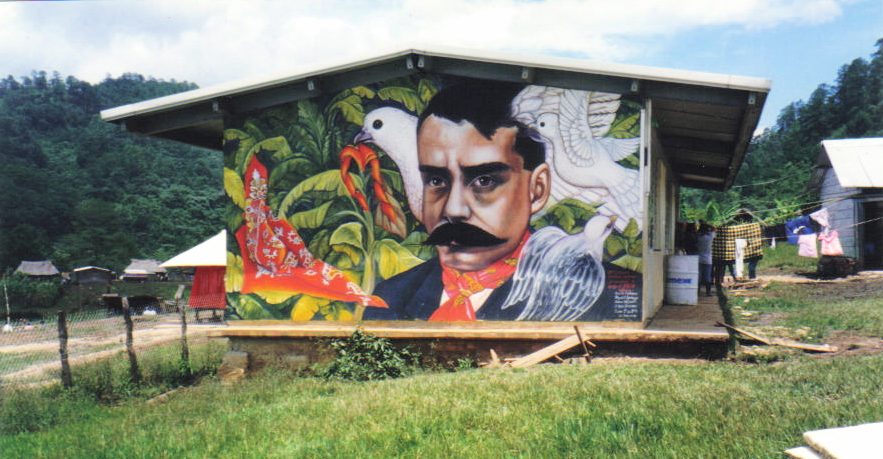
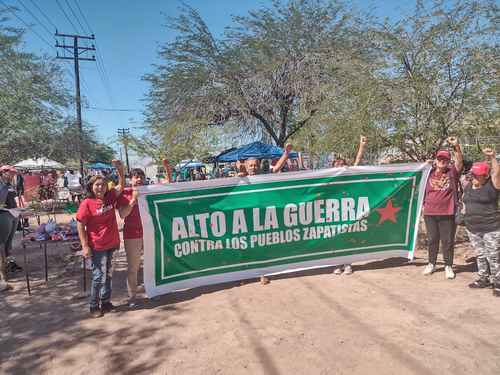
In Baja, Veracruz and Puebla, activists demand a stop to the paramilitary attacks on EZLN communities
The official denialism favors impunity of the aggressors: Frayba
By: Antonio Heras, Correspondent
Mexicali, Baja California
On Sunday morning, members of the Mexicali Resissste Movement protested the armed attacks against communities of the Zapatista National Liberation Army (EZLN, Ejército Zapatista de Liberación Nacional) in Chiapas. EZLN sympathizers also demonstrated yesterday in Puebla and in Veracruz on Saturday.
Stop the war against the Zapatista peoples, said a group of activists in the agricultural area of Mexicali, capital of Baja California.
The demonstration, called by the National Network of Civil Human Rights Organizations, responds to the aggressions suffered in recent days in the autonomous municipality of Lucio Cabañas (Ocosingo), which include the burning of plots of land. The group accused the Regional Organization of Ocosingo Coffee Growers (ORCAO), which has been described as a paramilitary group, of these acts.
Puebla activists demanded that the Chiapas authorities, as well as those of the federal government, stop the war against the Zapatista peoples. They also expressed their solidarity with the populations affected by the paramilitary attacks.
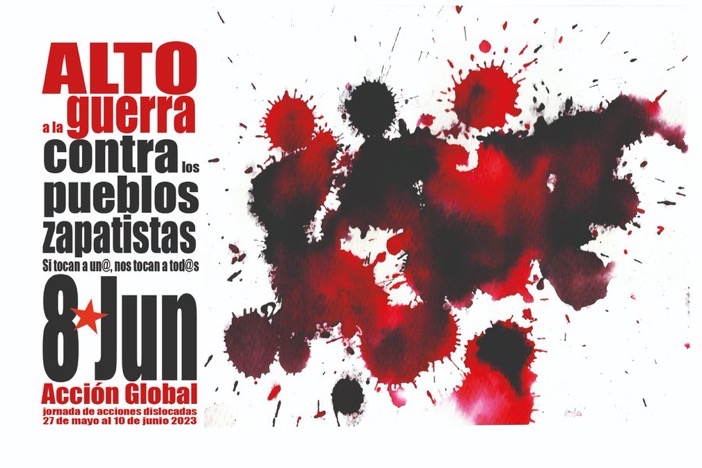
On Saturday, a group of EZLN supporters demonstrated in Sebastián Lerdo de Tejada Square in Xalapa, Veracruz, to demand an end to paramilitary attacks in Chiapas territory.
Last Friday, during his morning press conference, held in Tuxtla Gutiérrez, Chiapas, President Andrés Manuel López Obrador explained that attacks against Zapatista communities in Chiapas are not widespread.
Later, the Fray Bartolomé de Las Casas Human Rights Center (Frayba) asserted that the denial of this violence deepens the impunity promoted by municipal, state and federal actors that contribute to dispossession, exploitation and social marginalization, in addition to exacerbating the human rights crisis.
It denounced the systematic attacks against the political project of autonomy of the EZLN, led by corporatist armed groups, which have perpetrated, since 2019, more than 110 armed attacks against the Zapatista communities that belong to the region of Moisés Gandhi.
In a document, it said the attacks have included burning of schools and coffee warehouses, armed assaults, torture, kidnappings and serious injuries.
The Frayba indicated that it has asked state and federal authorities to guarantee the life and integrity of the communities, but they have been ignored. At the same time, it added, the armed group responsible, the ORCAO, acts with total impunity.

Originally Published in Spanish by La Jornada, Monday, June 26, 2023, https://www.jornada.com.mx/2023/06/26/estados/030n1est and Re-Published with English interpretation by the Chiapas Support Committee
Inter-American Court for Human Rights and forced displacement

By: Magdalena Gómez
Within the very broad cases and situations of human rights violations in our country, a campaign is underway that seeks to stop the war in Chiapas against the Zapatista communities, without this war only affecting them, but has become a complex pattern in many regions of the national territory. All of which, without a doubt, place the focus of attention on the Mexican State, not only on the current government and on the six-year term of office, but on the structural breach, by action or omission, of a central function, which is to guarantee respect for the human rights of everyone, without distinction. For the victims, their families, human rights organizations, the fight against impunity is present and the inalienable decision to use the legal spaces at their disposal at all levels, national and international, the little windows or vents, which the Mixe leader Floriberto Díaz Gómez said, without forgetting the need to maintain the effort in the dissemination of these struggles to achieve commitment and social awareness in this regard. Always facing the risk that before justice the official criminalization of its promoters is received as a clear example that it’s better to eliminate the messenger than to eliminate his message.
In this context, today we call attention to the case of Antonio González Méndez, a member of the EZLN’s civilian bases, who was disappeared on January 18, 1999 by the paramilitary group [ironically named] Paz y Justicia (Peace and Justice), which operated in municipalities in the northeastern zone of Chiapas, within the framework of the counterinsurgency policy implemented by the Mexican State after the EZLN Uprising. As we know well, a central part of it was the formation of paramilitary groups, against civilians, whose objective was to provoke a state of terror that would prevent the communities from supporting the insurgency.
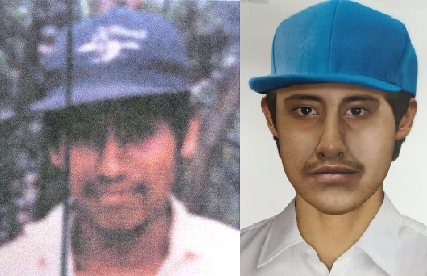
Faced with the adverse national context for justice, Antonio’s family and the Fray Bartolomé de las Casas Human Rights Center (Frayba) decided to go to the Inter-American Human Rights System in 2000 to sue the Mexican State for both his disappearance and for impunity.
After a long international process, the Inter-American Commission on Human Rights (IACHR) issued its merits report in 2019, and recognized that the state’s counterinsurgency policy was considered proven, the participation of the State in the formation of paramilitary groups, and that Paz y Justicia was one of them. Additionally, it demanded an investigation of the facts and a search for Antonio in this context.
The Mexican government, in times of the so-called Fourth Transformation, decided to give a minimum compliance, just the protocol, with the substantive report: the undersecretary of Human Rights, Migration and Population offered a public apology in which he recognized the context of the disappearance. To date, no actions have been taken to search for Antonio González, and even fewer have lines of investigation have been considered in accordance with the internationally recognized counterinsurgency context.
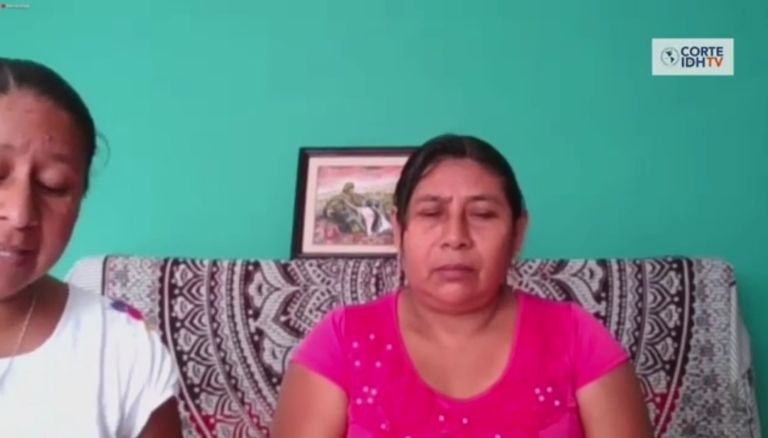
Given the continuity of the State’s omissions, the case was finally presented to the Inter-American Court of Human Rights (Coridh). The Mexican government again denied the counterinsurgency policy. The Frayba has denounced that such a position in fact, makes it an accomplice of previous governments, and responsible for the psychosocial effects that continue to occur due to the lack of truth for the victims of paramilitarism in Chiapas, as is the case of the survivors of the Acteal massacre, or the relatives of the other 37 disappeared and the 85 people “executed” by Paz y Justicia.
The Frayba announced that in the coming days the case will be heard before the Inter-American Court. [1] It highlights and draws attention to the fact that this is the first time that the Court knows about this context, and implies a new opportunity for the Mexican State to be condemned, to recognize the truth about this episode in history, and to finally commit itself to reparations for all the victims of its criminal policy. It is emphasized that the Inter-American Court can strengthen the historical demand for the Mexican State to recognize that the disappearance of Antonio González Méndez was committed within the framework of its counterinsurgency policy, developed in Chiapas during the 90s. Also, the always valid urgency of its exhaustive search, and definitive recognition of the truth and responsibility for all the crimes committed in this period. Because it wouldn’t just be about one case and one missing person.
We are talking about setting an indispensable precedent to speak with solvency of the rule of law in the country.
[1] The case was heard on June 21, 2023. The Mexican State again denied responsibility, claiming that the petitioner had not proven a connection between the State and the paramilitary group. The parties await the Court’s decision.
Originally Published in Spanish by La Jornada, Tuesday, June 20, 2023, https://www.jornada.com.mx/2023/06/20/opinion/018a2pol and Re-Published with English interpretation by the Chiapas Support Committee
Frayba: Denialism deepens impunity
The Frayba Human Rights Center responds to AMLO
From the Editors
After President Andrés Manuel López Obrador (AMLO) explained in his morning press conference that attacks against Zapatista communities are not widespread [1], the Fray Bartolomé de Las Casas Human Rights Center (Frayba) asserted that the denial of this violence deepens the impunity promoted by municipal, state and federal actors who pay for dispossession, exploitation and social marginalization, in addition to exacerbating the human rights crisis.
It denounced the systematic attacks against the political project of autonomy of the Zapatista National Liberation Army (EZLN), led by corporatist armed groups, which have perpetrated, from 2019 to date more, than 110 armed attacks against the communities that belong to the region of Moisés Gandhi.
In a document, it said the attacks have included burning of schools and coffee warehouses, armed assaults, torture, kidnappings and serious injuries.
The Frayba indicated that it has asked state and federal authorities to guarantee the life and integrity of the communities, but they have been ignored.
At the same time, it added, the armed group responsible for these attacks, the Regional Organization of Ocosingo Coffee Growers, acts with total impunity.
It also regretted the statements against civil and human rights organizations in Chiapas. They violate our work in the midst of a deep violence that has worsened in recent years in the state, and that continues to grow, consolidating as a structural element in the territories of the peoples of Los Altos, the Coast, the serious violence on the southern, northern and jungle border.
This, it continued, has had an impact on the peoples, in the midst of a diversification and opacity of armed groups, organized crime groups and the successors of paramilitarism that use violence for social, political, economic and territorial control, marked by the continuity of generalized violence and the counterinsurgency strategy.
In turn, the National Network All Rights for All joined the public statements opposing the accusations against human rights organizations. A change in that presidential discourse is key to guaranteeing the protection of defenders, it stressed.
[1] A translated report of AMLO’s press conference is below.

Originally Published in Spanish by La Jornada, Saturday, June 24, 2023, https://www.jornada.com.mx/2023/06/24/politica/004n3pol and Re-Published with English interpretation by the Chiapas Support Committee

AMLO rejects that aggressions against the EZLN come from the government
Emir Olivares Alonso, Envoy
Tuxtla Gutiérrez, Chiapas
President Andrés Manuel López Obrador assured that although aggressions against the Zapatista communities are not widespread, his government works to achieve peace and tranquility. Despite the differences he said he had with the Zapatista movement, he acknowledged the contributions of the Zapatista National Liberation Army (EZLN) to the country.
The president emphasized that as supreme commander of the armed forces he will never give the order to massacre or torture people and violate human rights, so there is no repression.
He added that differences persist in the communities, because they know the history well. They know that when a movement arises to claim the rights of indigenous peoples, the authoritarian State promotes the creation of groups to confront those who fought for the vindication of indigenous peoples, and that does not disappear overnight.
During his conference yesterday, which was held in the Seventh Military Region located in the capital of Chiapas, he said: we are going to help in everything we can to achieve peace, because we may or may not agree with the Zapatista movement, but there is no doubt that at its time it was a light, a ray of hope, it was a wake-up call to turn to see the dispossessed, the poor; you can’t begrudge them that, and the rest is something else.
Regarding the denunciations that human rights organizations have made about attacks on Zapatista support base communities – the most recent raised over three days (from June 19 to 22) with shots and burning plots of land by members of the Regional Organization of Ocosingo Coffee Growers (Orcao) in the Moisés Gandhi region, municipality of Lucio Cabañas, the president said that little by little peace has been restored in those places through social programs of his government, such as Sembrando Vida (Sowing Life).
–Who is attacking the Zapatista communities? –he le asked.
–No, no, in general there have not been aggressions. There are some cases, but it is not such an action, deliberate, an onslaught. There are problems with former adversaries that were created, even within the same organization, but it is not a widespread, serious issue either, and we do not want it.
He assured that his administration is attending to the conflicts in Frontera Comalapa, Chenalhó and other parts of the state.
But in general, there is peace, there is tranquility in Chiapas. And a very illustrative example is that of Ocosingo. We see that we don’t have many problems there, as far as confrontations in the communities. [the Moisés Gandhi region and Nuevo San Gregorio are all in Ocosingo municipality! Their Zapatista Caracol is on land bordering the cityh of Ocosingo!] There are issues that we regret very much, sometimes there is confrontation of groups, but we are attending to them. There is the National Guard and we are looking for dialogue, for agreements to be reached, for there to be no repression and we are moving forward.
They kept silent
He pointed out that at the time the Zapatistas called not to vote for the movement that he has led and that paid off for the benefit of the mafia of power, because in the regions with the presence of adherent communities, the PRI triumphed in the electoral processes. “They kept silent when there was a narco-state and now they accuse us of everything.”
López Obrador pointed out that there are leaders of human rights organizations who do not see us favorably. That’s clear! Let’s not forget that when we were fighting for change, these organizations opposed us, called not to vote. And it was legitimate for them to think that the only alternative was the armed way, that by peaceful means they were not going to be able. And they considered that we were false; they came to question us very strongly. So, they haven’t changed on that.
He even made this comparison: It’s like the case of the reactionaries, the conservatives, they don’t want to accept that there is a new reality. That’s why sometimes the extremes touch each other. They don’t want to accept that there is already a change. That’s why there are these complaints (of aggressions).
He stressed that as a result of the Zapatista movement, having a social organization in Chiapas became a “way of life,” to the extent that there were as many as rice, the vast majority with financing that did not reach the people, including from the United States government.
He criticized that while he demanded that the king of Spain apologize for the abuses during the Colonial Era, some Zapatista leaders who made a tour of that country questioned who he was to demand and ask for an apology. “But now, as the song goes, what happened, happened.” [1]
(With information from Alonso Urrutia)
[1] AMLO’s entire response seems like he’s talking to the political class in Chiapas.
Originally Published in Spanish by La Jornada, Saturday, June 24, 2023, https://www.jornada.com.mx/2023/06/24/politica/004n1pol and Re-Published with English interpretation by the Chiapas Support Committee
ORCAO attacks 3 Zapatista Communities in Moisés Gandhi region
Elio Henríquez, Correspondent
San Cristóbal De Las Casas, Chiapas
For three days, members of the Regional Organization of Ocosingo Coffee Growers (ORCAO) attacked three autonomous Zapatista communities located in the Moisés Gandhi region, municipality of Lucio Cabañas, with shots from firearms and burning plots of land, the All Rights for All National Network of Civil Human Rights Organisms denounced. [1]
As of Thursday, it said, there had been more than 800 detonations with heavy and low-caliber weapons, with no injuries reported.
It pointed out that starting on June 19, at approximately 2 pm, the armed group fired from San Felipe and San Antonio las Flores, and at least 67 high-caliber and 13 low-caliber bullets were documented, in addition to the burning of plots of land where support base families of the Zapatista National Liberation Army (EZLN) work.
The denunciation explained that, on June 21, the ORCAO attacks began at 12:50 pm, and at 6:50 pm, they counted at least 716 bullets of different calibers. Simultaneously, they attacked the communities of Emiliano Zapata, and San Isidro, as well as Moisés Gandhi.
In the latter they set fire to the parcel of land attached to the autonomous secondary school that is located 50 meters from the houses of the Zapatista families.
Yesterday, the Network said, 25 detonations of various calibers were calculated, according to information from the New Dawn in Resistance and Rebellion for Life and Humanity Good Government Junta of Caracol 10, based in Patria Nueva, in the official municipality of Ocosingo.
The human rights organism demanded that the Mexican State guarantee the life, security and physical and psychological integrity of the support base families of the Moisés Gandhi region, that responsibilities be investigated and determined for the criminal act of attempted murder and armed attacks perpetrated against inhabitants of the Zapatista communities.
It also demanded that comprehensive and quality medical care continue for Jorge López Sántiz, a Zapatista support base wounded by a bullet on May 22 in Moisés Gandhi, in order to safeguard his life and physical integrity. He had four days of hospitalization and 10 days of intensive care; However, he still has an infection that was not noticed by medical staff and an open wound.
The consequences are serious, because the functioning of his intestine was affected. The recovery process is slow, as complications from surgery need specialized care for proper healing, as well as management with antibiotic and analgesic medications, he said.
In the urgent action released last night, the National Network called for an immediate stop to armed attacks against the Zapatista support bases.
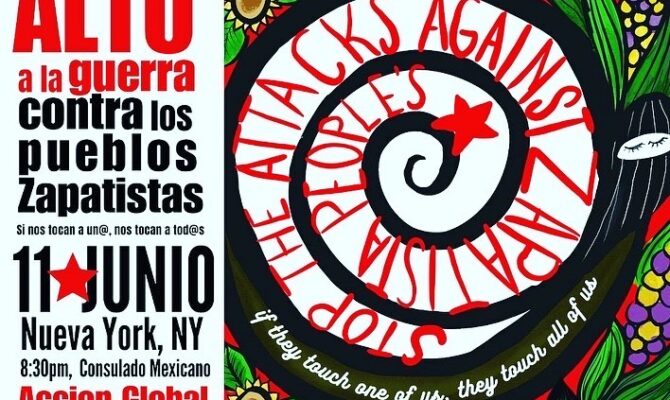
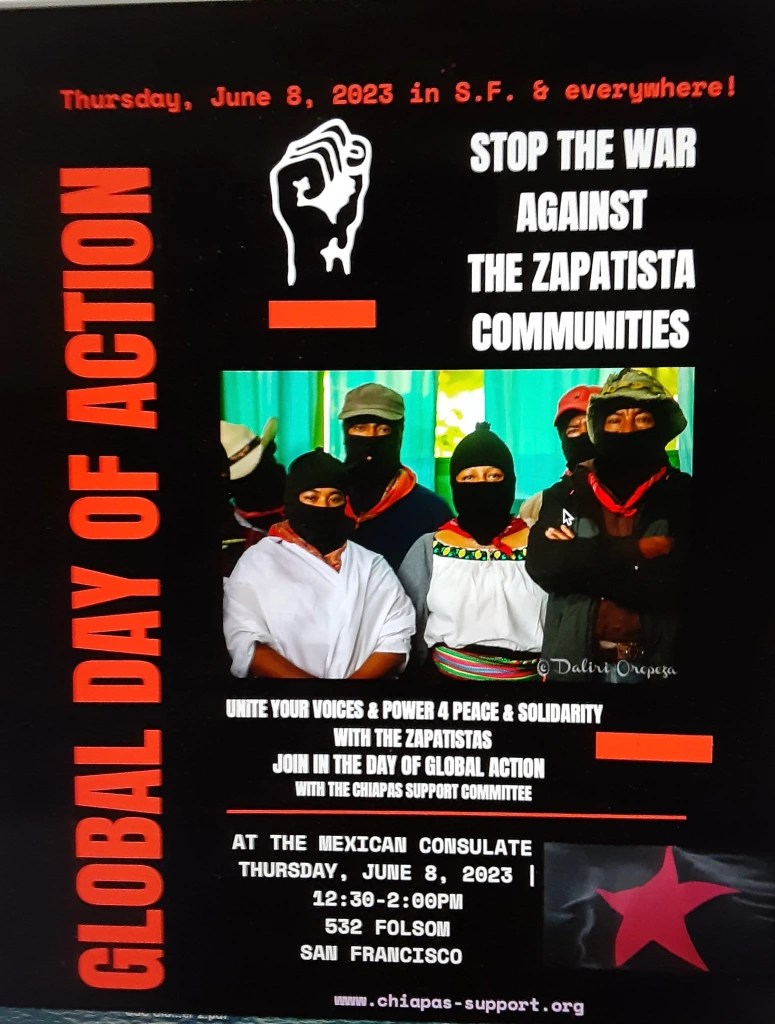
[1] It’s important to remember that these latest attacks began less than 2 weeks after the Global Day of Action to Stop the Attacks against the Zapatista Communities.
Originally Published in Spanish by La Jornada, Friday, June 23, 2023, https://www.jornada.com.mx/2023/06/23/estados/030n1est and Re-Published with English interpretation by the Chiapas Support Committee
Antonio González Méndez v. Mexico, the first case before the Inter-American Court on Chiapas counterinsurgency actions

By: Yessica Morales, Editor
On June 21, 2023, the hearing will be held before the Inter-American Court of Human Rights (IACourtHR) on the case of “Antonio González Méndez vs. México.” Antonio was disappeared in 1999 for belonging to the civilian bases of the Zapatista National Liberation Army (EZLN, Ejército Zapatista de Liberación Nacional), an act carried out by the paramilitary group Paz y Justicia (Peace and Justice), which came to be known as the Desarrollo, Paz y Justicia (Development, Peace and Justice) organization in the northern zone of Chiapas.
This hearing is a historic moment, since it is the first case that the Inter-American Court hears about the counterinsurgency actions of the 1990s-2000s in the State, according to the Fray Bartolomé de Las Casas Human Rights Center (Frayba).
Frayba, who accompanies and represents the family of González Méndez, hopes that the process will result in a conviction against Mexico from recognizing the truth about this episode of history, in addition to forcing reparations to all the victims of its criminal policy.
To date, he indicated that no action has been taken to search for González Méndez, nor have lines of investigation been considered in accordance with the internationally recognized counterinsurgency context.
On the other hand, Zonia López, wife of the disappeared man, has assumed the role of defender since his disappearance, demanding his search before local and national instances.
The process has been tortuous, re-victimizing and full of discrimination against the women of the Ch’ol Maya people, Frayba added.
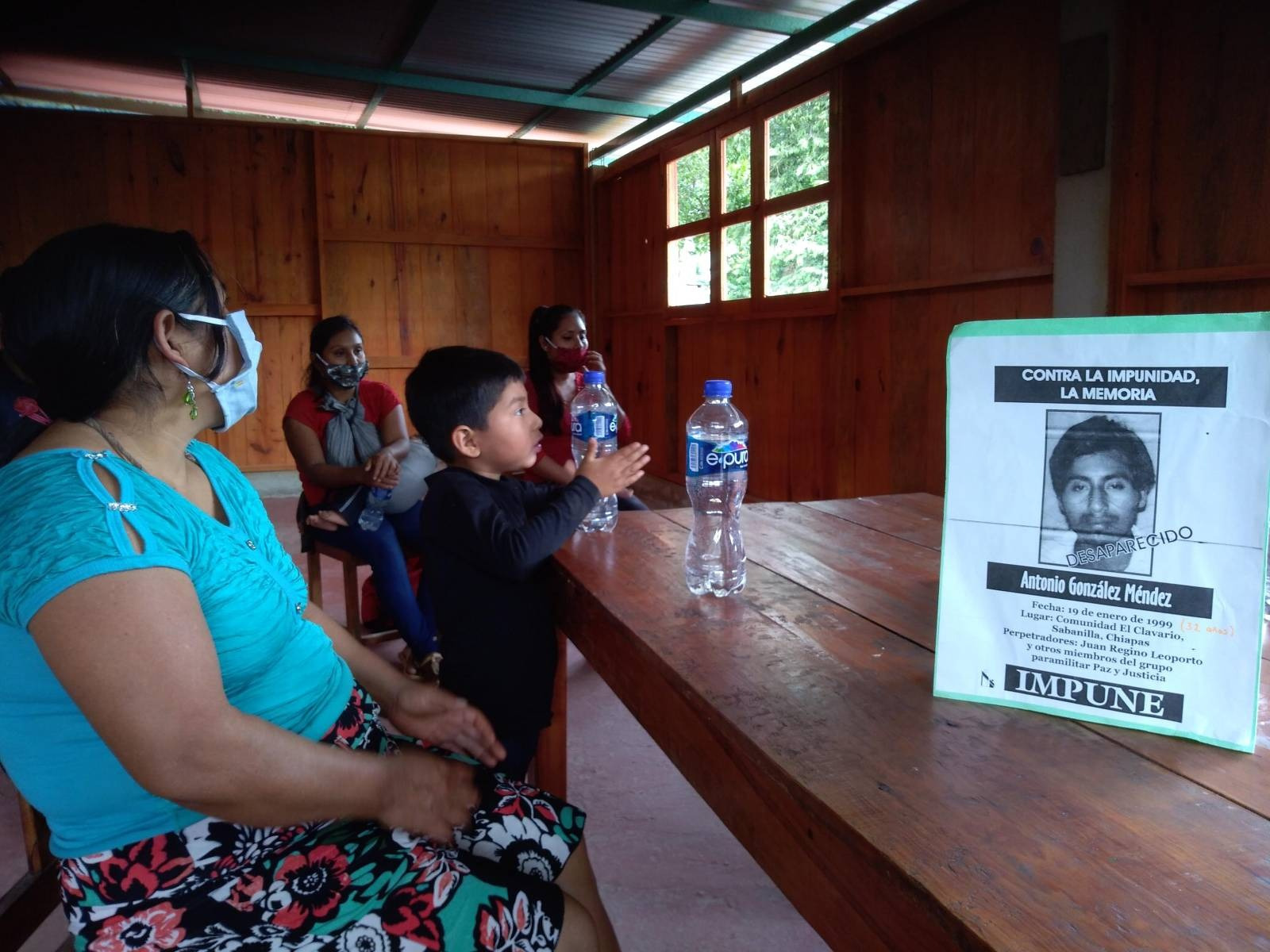
In the absence of adequate search and investigation in Mexico, she and her family decided to turn to the Inter-American Human Rights System in 2000.
The Inter-American Commission on Human Rights (IACHR) issued its merits report in 2019, a far-reaching decision for the case and the search for the truth. It recognizes the participation of the Mexican State in the formation of paramilitary groups, including Paz y Justicia, in addition to demanding to investigate the facts and search for Antonio under that context of terror and criminality.
However, the Mexican government of Andrés Manuel López Obrador gave minimal compliance with the recommendations of the IACHR report.
The public apology in 2022, by Alejandro Encinas, undersecretary of Human Rights, was interpreted by Antonio’s relatives as a simple protocol, given the lack of search and investigation.
Given the continuity of the State’s omissions, the case was presented to the Inter-American Court, where the government of the “fourth transformation” has denied the State’s policy of counterinsurgency where serious human rights violations occurred.
This attitude makes him one more accomplice of previous governments, and responsible for the psychosocial effects that continue to occur due to the lack of justice and truth towards the victims, said the Frayba.

The counterinsurgency actions designed by the Secretariat of National Defense (SEDENA) in its “Chiapas 94 Campaign Plan” included the formation of paramilitary groups following the 1994 Zapatista Uprising.
The Mexican Army and paramilitaries committed crimes against humanity directed at the indigenous population, such as extrajudicial executions, disappearances, forced displacements, among others.
These attacks were largely directed against civilians, aimed at provoking a state of terror that would prevent the support of the communities to the insurgency.
The Frayba documented that Paz y Justicia, just one of paramilitary groups operating in Chiapas, disappeared 37 people and executed 85 more in the region.
Therefore, they demanded that the government of Mexico recognize its responsibility and respond to this demand of historical significance that has to do with serious human rights violations, committed during the nineties, such as the Forced Disappearance of González Méndez.
Therefore, it must comply with an exhaustive investigation and search taking into account the context of political and generalized violence in the framework of an internal armed conflict.
Also, it must fully comply with its obligations in terms of integral reparation of the damages, so that Antonio’s family has the possibility of a life project, which was truncated.

Originally Published in Spanish by Chiapas Paralelo, Wednesday, June 20, 2023, and Re-Published with English interpretation by the Chiapas Support Committee
Who do the paramilitaries serve in Chiapas?
By: Raúl Romero*
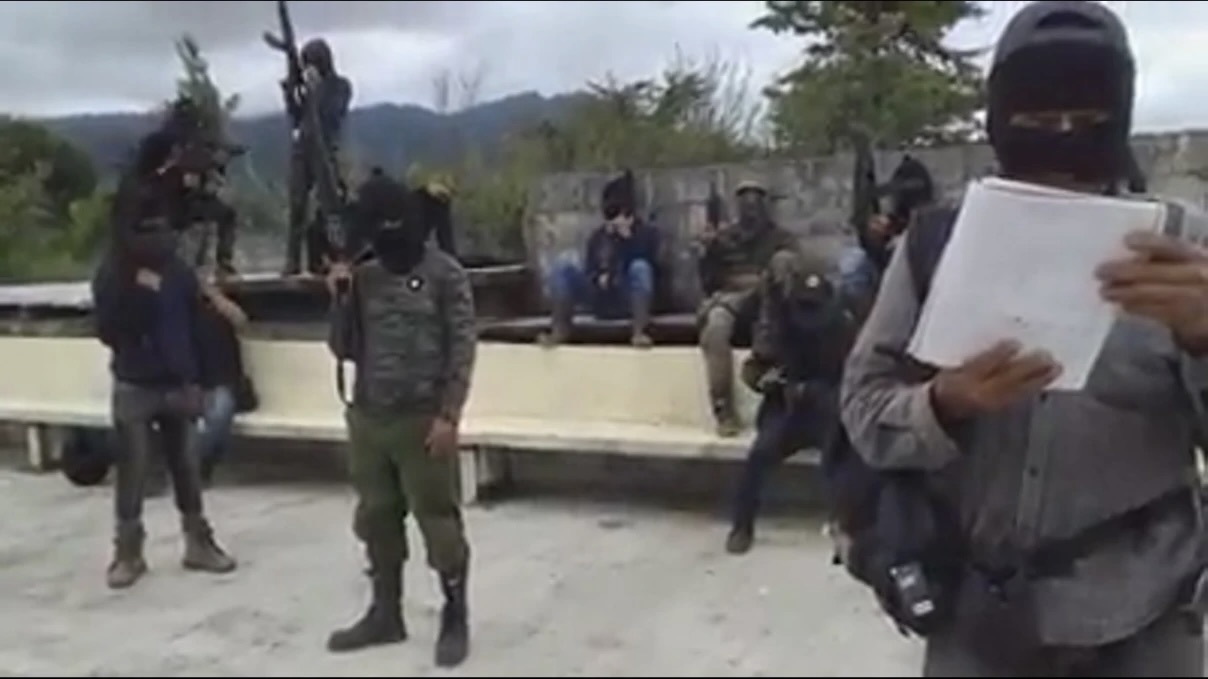
The phenomenon of paramilitarism is historical and widely studied in Latin America. Paramilitaries are armed civilian groups, trained, financed and/or permitted by states. By means of violence, their task consists of maintaining control of the population, eliminating the resistances and sustaining local, regional or national power groups. Paramilitaries are the irregular troops that do the tasks that, because of laws and agreements, the regular armies don’t usually carry out. These groups have political interests or use the ones they detain.
In the second half of the twentieth century, their task in Latin America was aimed at countering the advances of popular armies and revolutionary guerrillas. Gilberto López y Rivas has described how paramilitaries are used to implement tactics such as the hammer and anvil, in which the army is responsible for containing or immobilizing rebel forces and the towns that support them, while paramilitaries execute attacks. This presents the possibility that governments that use such strategies can deny that these are state operations, and even go so far as to argue that they are “intra-community conflicts.”
In Mexico, the antecedents of these groups are the guardias blancas (white guards), at the service of large landowners to facilitate processes of land dispossession and strengthen control over enslaved indigenous populations. Some of these structures survived the colonial era and knew how to adapt and update themselves to the formation of the independent nation-state with its formal army and its claim to the monopoly of legitimate violence. Estate owners, ranchers and large landowners counted on their private armies to guarantee their power and control of campesinos and indigenous peoples.
Also, in the second half of the twentieth century, the Mexican state systematically resorted to paramilitary groups to repress movements. We kept the names of the Olympia Battalion and the Halcones, at the service of the federal government and used to suppress the movements of 1968 and 1971, respectively, in the popular memory. Allied with the right and its youth, in states such as Puebla and Jalisco, there are experiences of how local governments formed or let paramilitary organizations that repressed members of popular structures that fought for a more just world act with total impunity.
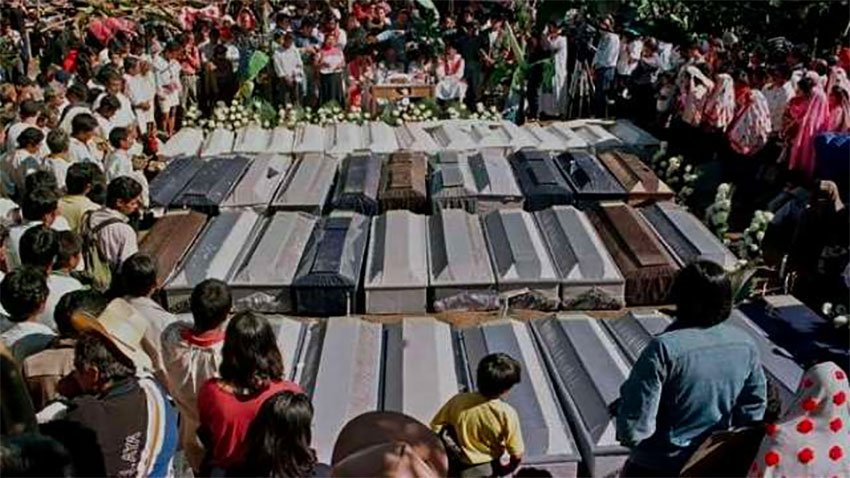
The public appearance of the Zapatista National Liberation Army (EZLN) in 1994 was another moment in which it was possible to observe the survival of paramilitary groups, their link with the army and the permissiveness and impunity that was guaranteed to them. Groups such as Paz y Justicia, Chinchulines or Máscara Roja attacked both Zapatista and non-Zapatista communities, in order to wage war on the EZLN, but also to sow terror among the population. The Acteal Massacre, where a paramilitary commando murdered 45 indigenous people, is an unforgettable event.
In the case of Chiapas, since the arrival of the democratic alternance, in 2000, the power groups and their paramilitaries changed the colors of their tricolor T-shirt to adjust to those of the government in turn: blue, yellow, green, cherry. Justice did not reach them, because when some were investigated, powerful structures were moved to defend them, as happened with part of the paramilitaries responsible for the Acteal massacre that were defended by Hugo Erick Flores.
Likewise, former popular organizations were co-opted to operate in favor of the State. Today there is also talk of second-generation paramilitaries, groups that inherited weapons, contacts, strategies, impunity and that made paramilitarism a way of life. Although the origin is different from that of the traditional formation, its function is the same: through violence, maintain control of the population, eliminate resistance and sustain or sustain itself as a power group.
With the expansion of criminal corporations throughout the country, armed organized crime groups carry out operations that equal and expand those of paramilitaries, but in the service of a parallel form of state that converges and intertwines with the formal state. The paramilitaries of the formal State and the armed groups of organized crime come to coincide and coordinate in their tasks of territorial control and expansion of criminal or extractive economies. In some cases, as documented in Oaxaca, the government of Ulises Ruiz turned directly to organized crime groups for counterinsurgency and repression.
Identifying, in the confusing Chiapas panorama, who they serve and what the interests of the paramilitary groups are is key to finding those responsible for years of war and those who invoke it today.
As truth and justice arrive, for now something becomes urgent: to stop the war in Chiapas.
*Sociologist
@RaulRomer_mx
Originally Published in Spanish by La Jornada, Saturday, June 17, 2023, https://www.jornada.com.mx/2023/06/17/opinion/013a1pol and Re-Published with English interpretation by the Chiapas Support Committee
Stop the counterinsurgency war in Chiapas, the OCSS demands
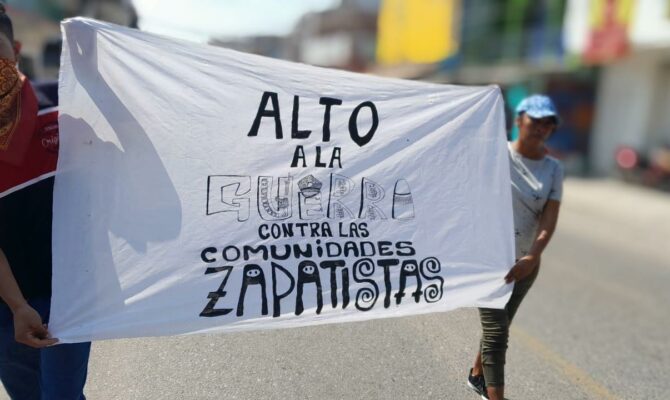
Yesterday, members of the Campesino Organization of the Southern Sierra blocked the Coyuca Bridge, located in the Costa Grande region of Guerrero, in solidarity with the Zapatista National Liberation Army (EZLN).
By: Sergio Ocampo Arista, Correspondent
Chilpancingo, Guerrero
Members of the Campesino Organization of the Southern Sierra (OCSS, Organización Campesina de la Sierra del Sur), with headquarters in the community of Tepetixtla, municipality of Coyuca de Benítez, in the Costa Grande region, blocked the Coyuca Bridge yesterday in repudiation of the counterinsurgency war that “the Mexican State and its paramilitary groups continue implementing” against support base communities of the Zapatista National Liberation Army (EZLN, Ejército Zapatista de Liberación Nacional) and indigenous peoples and campesinos in the state of Guerrero.”
In a communique, they denounced “the incarceration of Manuel Gómez (EZLN support base) and the attacks perpetrated since last May 27 on the support base community Moisés y Gandhi by the Regional Organization of Ocosingo Coffee Growers (ORCAO), a paramilitary group that operates under cover of the three levels of government with absolute impunity.”
The OCSS militants also rejected “neoliberal policies, which only dispossess and murder communities that resist destructive policies that want to disappear” the original peoples “of Mexico and the world.”
They reproached “the growing influence of organized crime groups in Chiapas and Guerrero; All this, they added, has the same purpose, which is the destruction and weakening of the autonomies that the peoples have built for decades and that has managed to stop the death and violence of the capitalist system that governs the whole world.
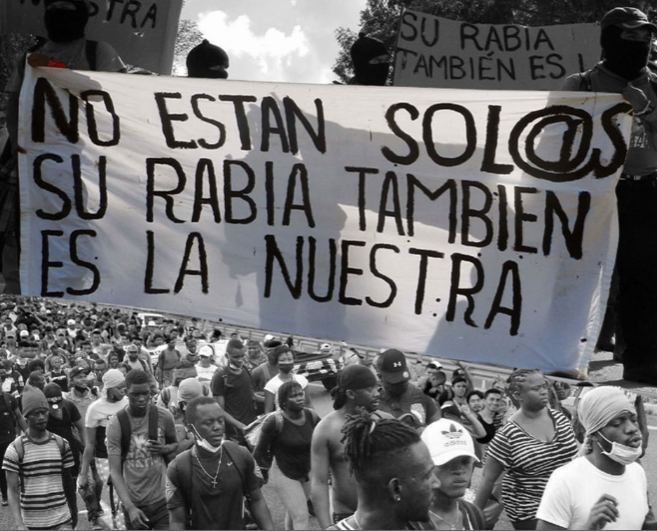
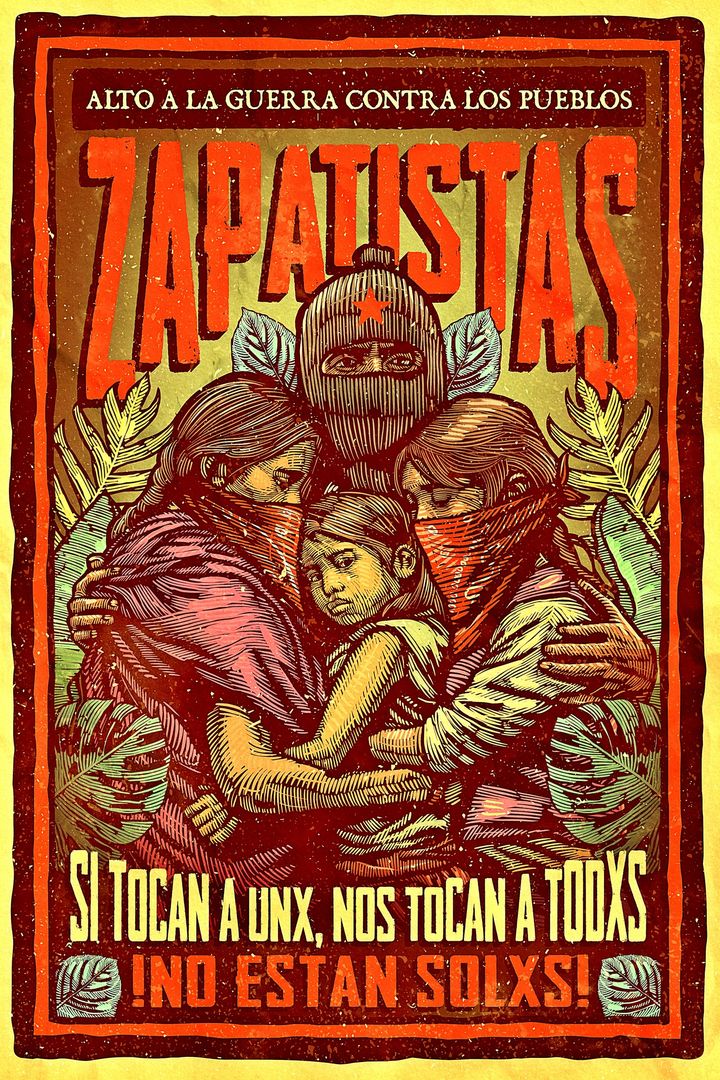
They stated: “Compañeros Zapatistas, we raise our voice telling them that you are not alone and that if they touch one, they touch us all,” and they warned that “with the clear example that you give us, we will defend autonomy.”
They announced their intention to continue “defending the water, mountains, jungles, forests, seas and in general, we will continue defending Mother Earth that, as our Comandante Emiliano Zapata said, belongs to the ones who work it and without it there is no life on this planet.”
“If they touch one, they touch us all”
They said they joined “the call of the National Indigenous Congress and we take up its demands: that the health of compañero Jorge (López Sántiz, Zapatista support base wounded by ORCAO paramilitaries) be guaranteed and that he be given all the necessary attention and for as long as required.
The members of the OCSS also demanded that the armed attack against the Chiapas community of Moisés Gandhi be stopped, and that their autonomous territory be respected; that the material and intellectual authors of these attacks be punished.
Likewise, “that the armed groups through which the war against the Zapatista communities remains active and growing be dismantled, as well as the immediate release of Manuel Gómez, a support base of the EZLN, whose unjust imprisonment we do not forget.”
Originally Published in Spanish by La Jornada, Monday, June 12, 2023, https://www.jornada.com.mx/2023/06/12/estados/025n1est/ and Re-Published with English interpretation by the Chiapas Support Committee
La Santa Muerte

Luis Hernández Navarro
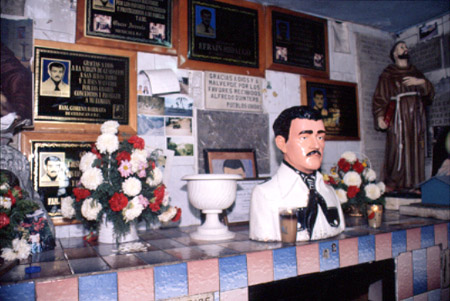
La Santa Muerte and Malverde are everywhere in San Cristóbal de las Casas and in Chiapas cities like Teopisca. Their cult is not hidden. The markets are replete with ritual elements appropriate for their veneration. The herbal and magic shops of ancient Jovel [1] now have monumental Huesudas (Bony) and Malverde welcoming the faithful.
On April 17, Jerónimo Ruiz, leader of the Association of Tenants of Traditional Markets of Chiapas (Almetrach), was shot dead by two men on a motorcycle. Amid the chaos and panic, violence erupted in the northern part of the former Coleta capital. Two armed groups blocked streets, clashed, and set tires and houses on fire. Among other lucrative activities, Almetrach charges the artisans floor rights (protection fees).
Jerónimo was from a community near Betania/Teopisca ironically called Flores Magón. At the altar to the Niña Blanca that the deceased had in his house, there was an oath to avenge her death.
Two days after his crime, a recording warned: “San Cristobal and its surroundings, as you already realized, we have already entered and the cleanup has already begun, we are the Jalisco cartel and what happened to Jerónimo Ruiz is going to happen to Narciso Ruiz, alias El Narso, Calafas, Águila, Birria, Max and all those groups of “Scooters” (Motonetos) that are supporting these scourges.”

Chiapas is where the most diverse denominations flourish. Traditional churches coexist with expressions of popular religiosity. The veneration of the Santísima Muerte (Most Holy Death) has grown exponentially hand in hand with the growth of organized crime but also with other causes completely unrelated to it, such as healing by faith. Not all its faithful are engaged in illicit activities, but often, in a kind of syncretism, many of those who dedicate themselves to them find in the fervor of this religiosity the route to approach the sacred.
Teopisca, 30 kilometers from San Cristobal, is key on the route of undocumented migrants and drugs. In June 2022, gunmen shot and killed the mayor, Rubén de Jesús Valdez Díaz, of the Green Ecologist Party of Mexico (PVEM), as he left his home. The hitmen were allegedly hired from Jovel’s “Scooters.”
The murder is part of the conflict over the municipality between two groups. Those of Betania, whose visible head is Javier Velázquez Díaz, alias La Pulga (now arrested), and those of the local group of former municipal president Luis Alberto Valdez Díaz, accused of robbing the municipality when he was mayor and brother of the murdered mayor. Local rumors point to him as the alleged mastermind of a fratricide.
Both gangs are linked to migrant smuggling (polleros) and the production and distribution of drugs. Those from Betania have laboratories in their deeply evangelical community.

The cult of Huesudas and Malverde proliferates in the village. Large processions are held and there is more and more devotion to them. As part of the norteñización [2] of popular culture, narcocorridos proliferate. The groups “levantan” (lift up, or kidnap) the humblest young people. They walk around the town with impunity with high-caliber weapons and bulletproof vests. It is common to hear bursts shot into the air.
One of the factions wants to establish the municipal council of Teopisca. However, beyond the supposedly democratic demands, its promoters are also narcopolleros, who seek to convince communities by financing religious festivals. At the same time, they promise to build roads to the lowlands of the municipality, the central depression of Chiapas adjacent to the municipality of Venustiano Carranza, a key route to move drugs and undocumented immigrants.
According to inhabitants of the municipality, the group of former municipal president Luis Valdez would be linked to the Sinaloa [Cartel], while those of Betania de La Pulga would be part of the four letters (CJNG). They say that those from the Pacific [Sinaloa], who have more time in the region, do their business and do not mess with people, but those from Jalisco extort, kidnap, charge fees for protection, and so on. From their point of view, those from Sinaloa play at convenience, depending on the businesses in question and are calm, if you do not mess with them. But the New Generation are bad people.
What happens in San Cristobal and Teopisca is just a sample of what is happening throughout Chiapas. It is not an exception, but the rule. It’s part of a much larger plot. It is unimaginable to assume that the activities of these narco-polleros are unrelated to the networks of regional power and those responsible for maintaining order.
The Zapatista communities do not allow the planting, production and transfer of drugs. Their routes are closed to human traffickers. They do not take sides in disputes between cartels for control of markets and territories. They are a brake on the expansion of the criminal industry and on the business of authorities linked to them. Beyond their experience of self-government and self-management, among many reasons, that is why they have declared war on them. Also, because of this, old and new paramilitaries (some converted into narco-paramilitaries) have embarked on trying to destroy the autonomous communities.
The ORCAO attack on the [Zapatista support] bases of the Moisés Gandhi autonomous community, Lucio Cabañas rebel municipality, is part of a counterinsurgency strategy. Like Teopisca, it is not an abnormality but a constant in Chiapas politics. It is enough to look historically at the map of violence in the state to verify this.
The cults of Santa Muerte and Malverde have caught-on in the dry grass of southeastern Mexico. Their proliferation is a thermometer of what is happening socially.
[1] Jovel is the name of the valley in which San Cristóbal de las Casas is located.
[2] Norteñización refers to the popularization of Norteño music.
Originally Published in Spanish by La Jornada, Tuesday, June 13, 2023, https://www.jornada.com.mx/2023/06/13/opinion/019a1pol/ and Re-Published with English interpretation by the Chiapas Support Committee
Coca-Cola’s lack of political transparency is associated with life and death in Chiapas

By: Yessica Morales, Editor
The investors represent more than $140 billion in combined assets.
At Coca-Cola’s Annual Investor Meeting, shareholders presented five proposals, four of them around the company’s political activities, in order to make transparent its financing and advocacy actions through its philanthropy, sponsorship of science, lobbying and other activities.
The proposals voted revolve around: knowing the impact of their corporate practices on employees and populations of color, the mismatch of values in their political and environmental spending; lobbying, corporate policies or actions that seek to limit women’s reproductive rights and lack of transparency around their global political activities.
In that regard, Marcos Arana, of the Center for Training in Ecology and Health for Campsesinos and Defenders of the Right to Health (CCESC-DDS A.C), who also works in indigenous communities in Chiapas, was responsible for presenting the arguments on the importance of the transparency initiative around their global political activities.
From my work in indigenous regions, I can see that Coca-Cola’s lack of political transparency not only has implications that should concern its shareholders, but are associated with life and death,” the doctor declared.
Likewise, he added that the long history of Coca-Cola’s political activity in Mexico, and of its Mexican subsidiary FEMSA – with its opposition to the soda tax, better frontal labeling and its continuous political maneuvering to continue overexploiting water reserves in San Cristóbal de Las Casas, Chiapas – continues to provoke disapproval of the population.
With 26,000 signatures, pressure continues to revoke the concession to FEMSA-Coca Cola of San Cristóbal de Las Casas
He added that a recent survey revealed that one-third of indigenous children are given Coca-Cola before they turn one. Well, in Chiapas, due to aggressive marketing, it is easier to find this soft drink than any healthy food.
The addictive high consumption of the soft drink contributes to increased mortality and diabetes rates among indigenous communities. The company derives a large part of its income from sales to this population.
It is important for shareholders and the public to understand that a significant portion of Coca-Cola’s political expenses in Mexico are tax deductible. The more it spends on awards, donations, and other politically motivated corporate responsibility (CSR) actions, the less taxes the corporation pays. This mere fact implores the need for more transparency, Arana said.
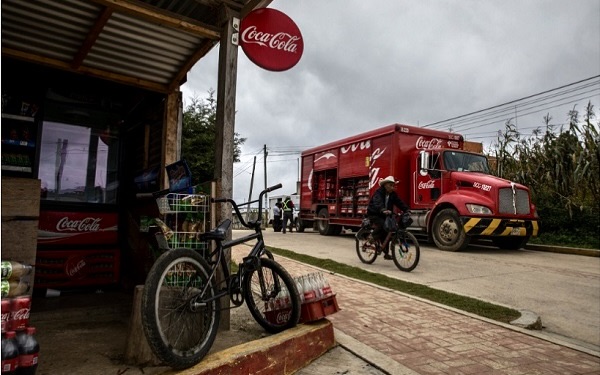
He added that the corporation is trying to hide a health crisis fueled by Coca-Cola and the need for better health laws. Moreover, by ceasing to disclose its political financing, it is telling the public that it has something to hide.
It wants to hide how it is putting access to water for the residents of San Cristobal de Las Casas at risk. It wants to hide the damage that its aggressive commercial practices have unleashed on the health of indigenous children. They want to hide their lobbying and corporate social responsibility actions that prevent us from confronting these threats. Who would feel good about investing in a corporation that has so much to hide?” he said.
On the other hand, political activities face increased statistics globally, as it sponsors climate change talks and plays a leading role in the United Nations World Water Conference.
Arana explained to the company’s shareholders how the Coca-Cola corporation’s capture of politics in Mexico is known and documented for public opinion, through the investigation and reporting of Las fichas de Coca-Cola, which received the FETISOV International Journalism Award 2022.

To this is added the pronouncement of government child protection institutions, as well as international agencies that have expressed the need for children to develop in healthy environments: they also rejected the conflict of interest and interference of this type of industry in public health policies.
For the sake of the children of Chiapas and for the integrity of this corporation and your investment in it: I kindly ask you to support this resolution, as well as the full list of complementary shareholder proposals before you today.
Meanwhile, Coca-Cola’s Board of Directors recommended that its shareholders vote against all the proposed recommendations, which called on the corporate to conduct investigations, audits and/or public transparency reports on its policy actions that affect diversity, inclusion and equity in the United States and policies in other countries around the world.
Finally, in the voting, the initiatives received the approval of between 13% and 30% of the shares of the corporation, lacking the majority required for their adoption, but sending a strong message to the company, its shareholders and the world, that there is a demand inside and outside the company to recognize the implications of its action and political financing and make them transparent.

Originally Published in Spanish by Chiapas Paralelo, Sunday, June 11, 2023, https://www.chiapasparalelo.com/noticias/chiapas/2023/06/falta-de-transparencia-politica-de-coca-cola-estan-asociadas-con-la-vida-y-la-muerte/ and Re-Published with English interpretation by the Chiapas Support Committee
Zibechi: The States exist for dispossession
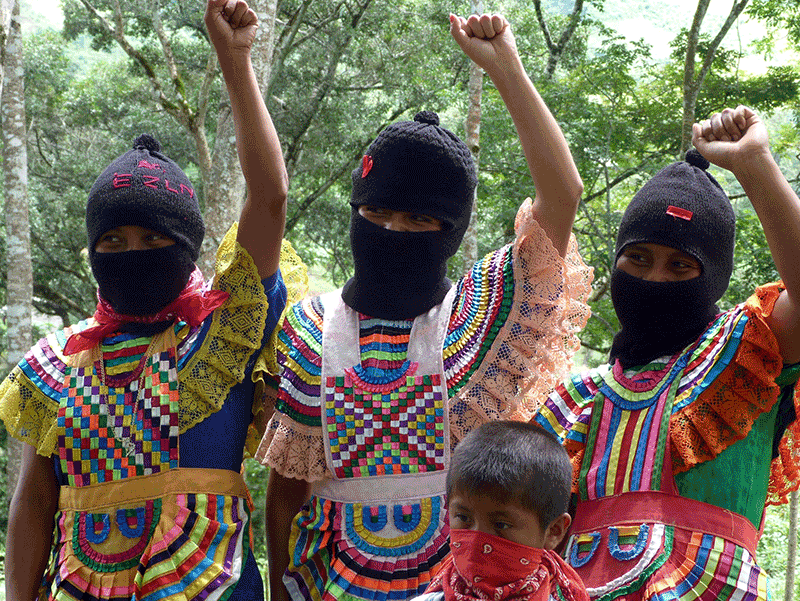
By: Raúl Zibechi
Reality is not how we would like it to be, not even how it was decades ago. Ever since capital declared war on the peoples to appropriate the commons (water, land, air and everything alive), it converted the nation-states into the shield of the powerful, to use and abuse the armed apparatus, legal and illegal, to contain and discipline the popular sectors.
Contrary to what much of the left maintains, neoliberalism is not less, but more state. If we look at it as a whole, militarization is the structural response of capital to proceed with dispossession, control the peoples who resist it and encourage violent and predatory accumulation. It is the State that militarizes the territories where the peoples live; Therefore, without this devastating state presence it would not be possible for capital to realize its misdeeds.
Those who argue that progressivism is not neoliberal because it increases the presence of the state in society and the economy, deliberately overlook the phenomenon of militarization, which transcends governments and political colors to become a suffocating reality throughout Latin America. In Peru, Amnesty International (AI) acknowledges in a February 16 report that state violence against peasants and indigenous people during protests in recent months is a sign of “contempt for the population” (amnesty.org/es).

Érika Guevara, Americas director at AI, said that “it is no coincidence that dozens of people told AI that they felt the authorities were treating them like animals and not like human beings.” What indigenous, peasant or person from the popular sectors has not felt something similar in their dealings with the authorities and in particular with the armed apparatuses of the State?
We must reject the idea of particularism if we want to understand the system. Peru, Mexico, Guatemala, Honduras, Chile, Ecuador, Argentina, Brazil, Venezuela, are going through situations in which similarities and underlying trends are much more important than specific differences. We are moving towards increasingly authoritarian regimes, in all geographies, with differences in times and modes.
The latest example occurs these days in Brazil. President Lula promised the indigenous people during the election campaign that he would legalize their territories, as mandated by the Constitution approved in 1988. He will not be able to because agribusiness blocks any initiative in favor of indigenous peoples and peasants, and it has been preventing solid progress in agrarian reform for years.
A recent report on page Sumauma.com, entitled “Can Lula fulfill what he promised to the indigenous people?”, explains that during the neoliberal administration of Fernando Henrique Cardoso (1995-2002) 145 indigenous territories were legalized in eight years, and that with Fernando Collor (1990-92) 112 legalizations were reached in only two and a half years of government. In contrast, during Lula’s two governments (2003-10) only 81 indigenous territories were legalized and under Dilma Rousseff (2011-16) only 21 territories. It’s shocking that conservative governments have comfortably surpassed the Workers’ Party government both in the legalization of indigenous territories and in the delivery of land to peasants.
We must explain this reality, understand that we are facing a shift of capital and the State. The problem that we do not want to see, partly because of the immediate interests of the left, but also because of the inertia that drags all political culture, is that the State has mutated, that it has been hijacked by the 1% to shield its power and wealth. This mutation of capital, from accumulation by extended reproduction to accumulation by dispossession, is at the basis of the current “States for dispossession” that force peoples to protect themselves in various ways, from indigenous and black guards to autonomies and territorial self-governments.
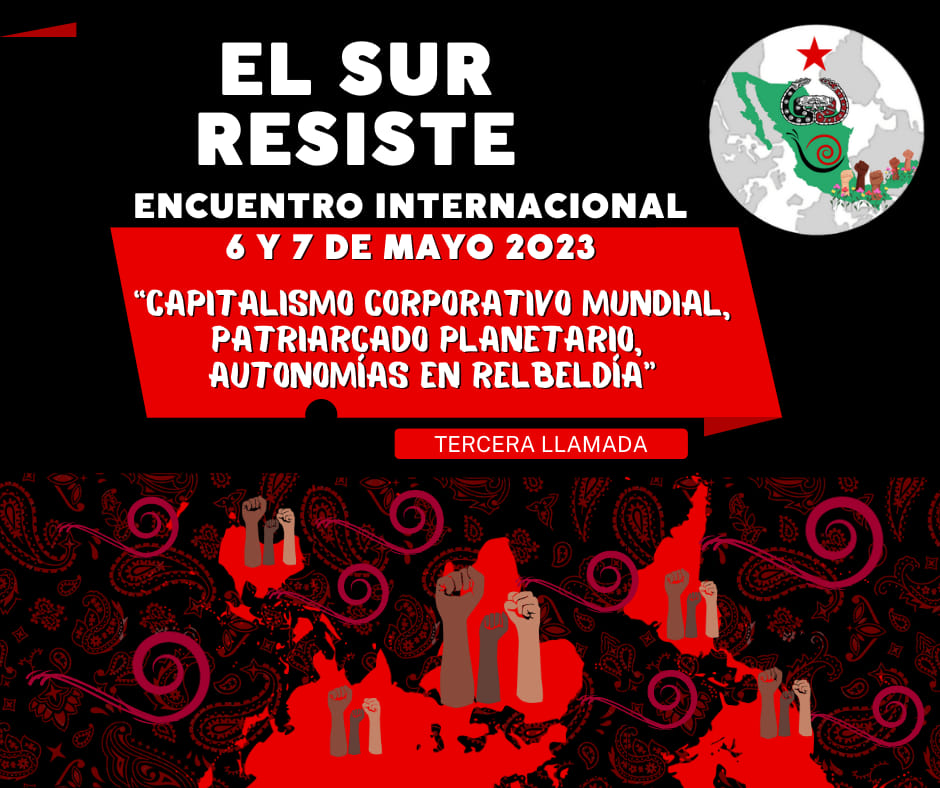
At the recent El Sur Resiste | The South Resists international meeting, convened by the National Indigenous Congress and held in Cideci (San Cristóbal de las Casas), we explained that the war of dispossession is just beginning, because almost 40 percent of the continent’s lands are still in the hands of indigenous and black peoples, small farmers, fishermen and all those families that produce food. according to annual reports of the Institute for Rural Development of South America (http://sudamericarural.org).
The dispute on the continent is over those territories that capital does not yet control. Contrary to Max Weber, we must say that today the State is the institution that articulates violence against the peoples: military, paramilitary, narco and the most diverse gangs. Betting on the State as a tool for transformation means abandoning the peoples to armed herds.
Originally Published in Spanish by La Jornada, Friday, June 2, 2023, https://www.jornada.com.mx/2023/06/02/opinion/015a2pol and Re-Published with English interpretation by the Chiapas Support Committee
 Chiapas Support Committee