Chiapas Support Committee
Home of the Compañero Manuel blog on zapatistas & mexico
Ecologists advocate for Tsotsil priest in Chiapas
By: Carolina Gómez Mena
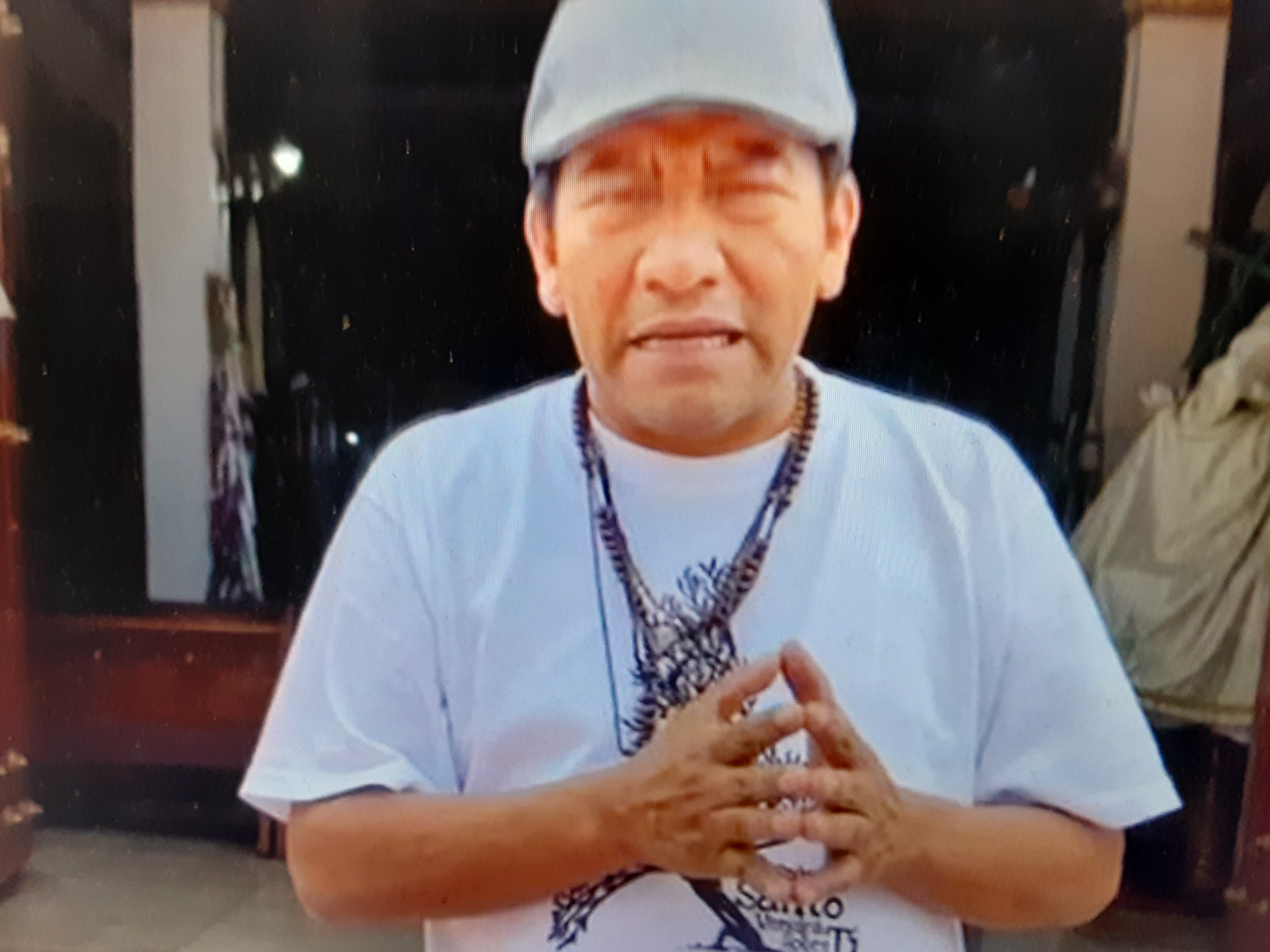
On July 4, the Tsotsil priest Marcelo Pérez found out that he had an arrest warrant against him, but he didn’t flee, because “I am innocent; after praying deeply, I decided to continue with my pastoral activities,” he told La Jornada.
About this situation, the Meso-American Ecological Ecclesial Network (Remam, its Spanish acronym) expressed its solidarity “with Pueblo Creyente of the Diocese of San Cristóbal de las Casas, with Marcelo Pérez, faithful companion of this people,” against whom a judge issued an arrest warrant, presumably for the disappearance of 19 Pantelhó residents, which would have occurred at the end of July 2021.
The Remam expressed its support to all those who “in Chiapas have experienced the constant dispossession of their territory, as well as other forms of violence. We offer them our solidarity and join their voice and their indignation” to all those who “care for and defend the territories.”
The network stressed that it supports those who “take care of our living space” to “preserve it and pass it on to the generations that come” and warned that its work has been subject to various forms of “violence,” because “we face processes of environmental degradation, dispossession of our territories, as well as limitations to the conditions for living with dignity and environmental justice. “
The effects are caused by the “imposition of economic growth as a way of valuing life and nations. This dominance is supported by laws and structural reforms that allow the abuse, privatization and devastation of our common home (the planet).”
It added that: “hundreds of communities face problems of forced displacement or depletion of our soils and waters due to the proliferation of extractive processes, increasing industrialization, and savage urbanization, as well as the technification of agriculture to put it at the service of consumers in rich countries. “
All these dynamics “constitute the daily life of many peoples in the state of Chiapas. However, despite the fact that these peoples have raised their voices for centuries, the commodification of territories continues advancing hand in hand with violent dynamics, whether at the hands of criminals, paramilitaries, police or soldiers.”
==Ω==
Originally Published in Spanish by La Jornada, Monday, July 11, 2022, https://www.jornada.com.mx/2022/07/11/politica/007n3pol and Re-Published with English interpretation by the Chiapas Support Committee
IACHR asks government for investigation and punishment in Aldama case
By: Angeles Mariscal
Esmeralda Arosemena de Troitiño, president of the Inter-American Commission on Human Rights (IACHR) asked the Mexican government for “the commitment to arrest those responsible” for the armed attacks on the indigenous population of Aldama Municipality.
The president of the IACHR, the executive secretary Tania Reneaum Panszi, and two specialists from the precautionary and provisional measures section of that body, visited Aldama municipality, located in the indigenous zone of the Chiapas Highlands, in whose favor the humanitarian organism asked in April 2021, for the implementation of measures that guarantee the safety and life of its population, relentlessly persecuted by armed groups.
These measures to which the Mexican government had to respond, following the commitment it assumed when signing the international agreements that make it part of the Organization of American States (OAS) to which the IACHR belongs, were not fulfilled in their entirety because since the measures were issued to date, 3 indigenous people from Aldama were killed, and 7 more were injured, including children.
Under this scenario and given the constant harassment that the population continues experiencing, the affected people requested the presence of the representatives of this body, who agreed to visit this municipality, as well as those of Chalchihuitán and Chenalhó, where there have also been armed attacks, forced displacements and the murder of indigenous people.
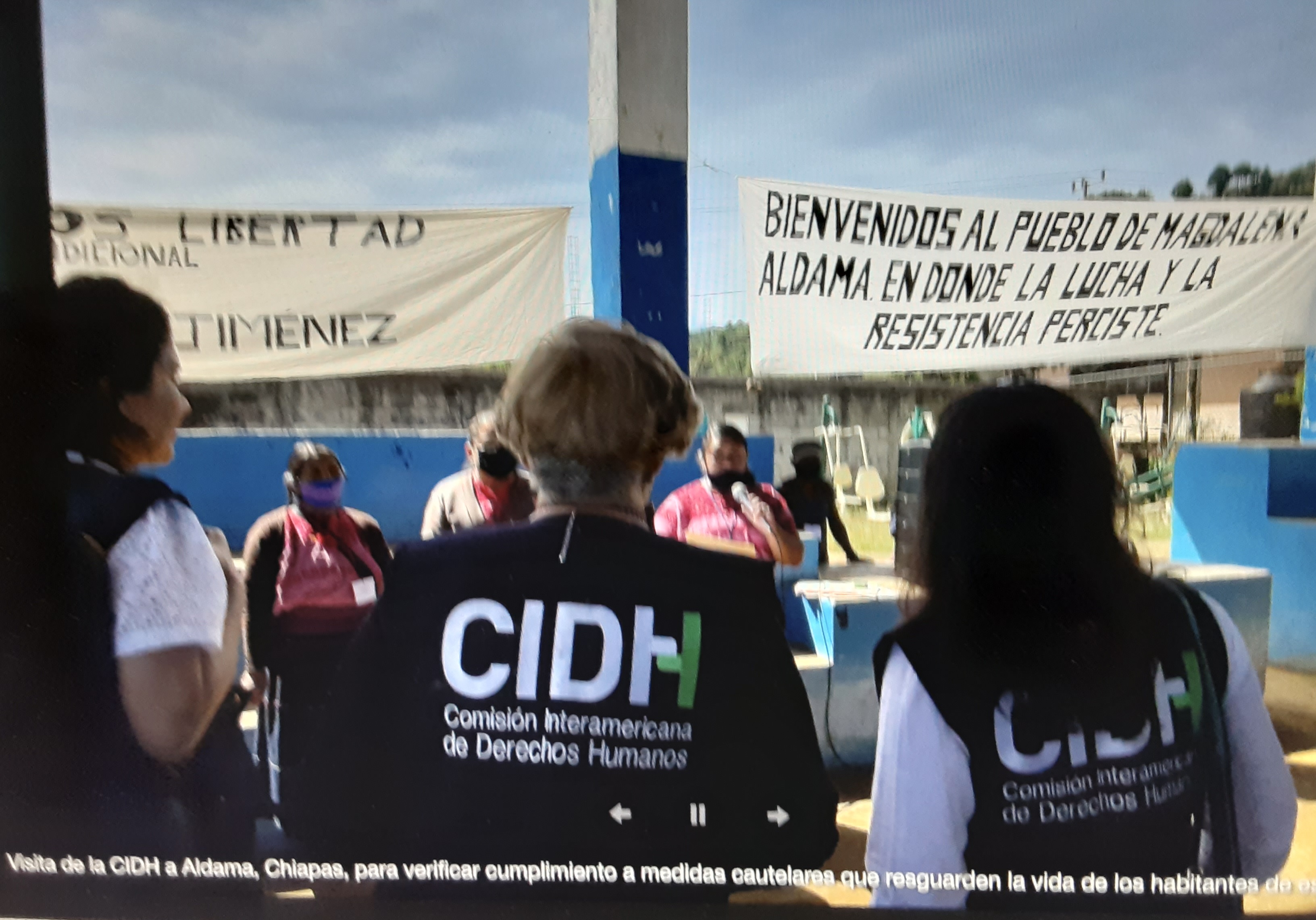
Upon arrival in Aldama, representatives of the affected population received the IACHR commission on an esplanade in the municipal seat where they placed tarps with legends such as: “Welcome to the town of Magdalena Aldama, where the struggle and resistance persist;” “Guaranteeing the rights and security of the defenders of territories is not a favor, it is an obligation of the State;” and “You have the bullet… I the word. The bullet dies when detonated, the word lives when it replicates. ” [1]
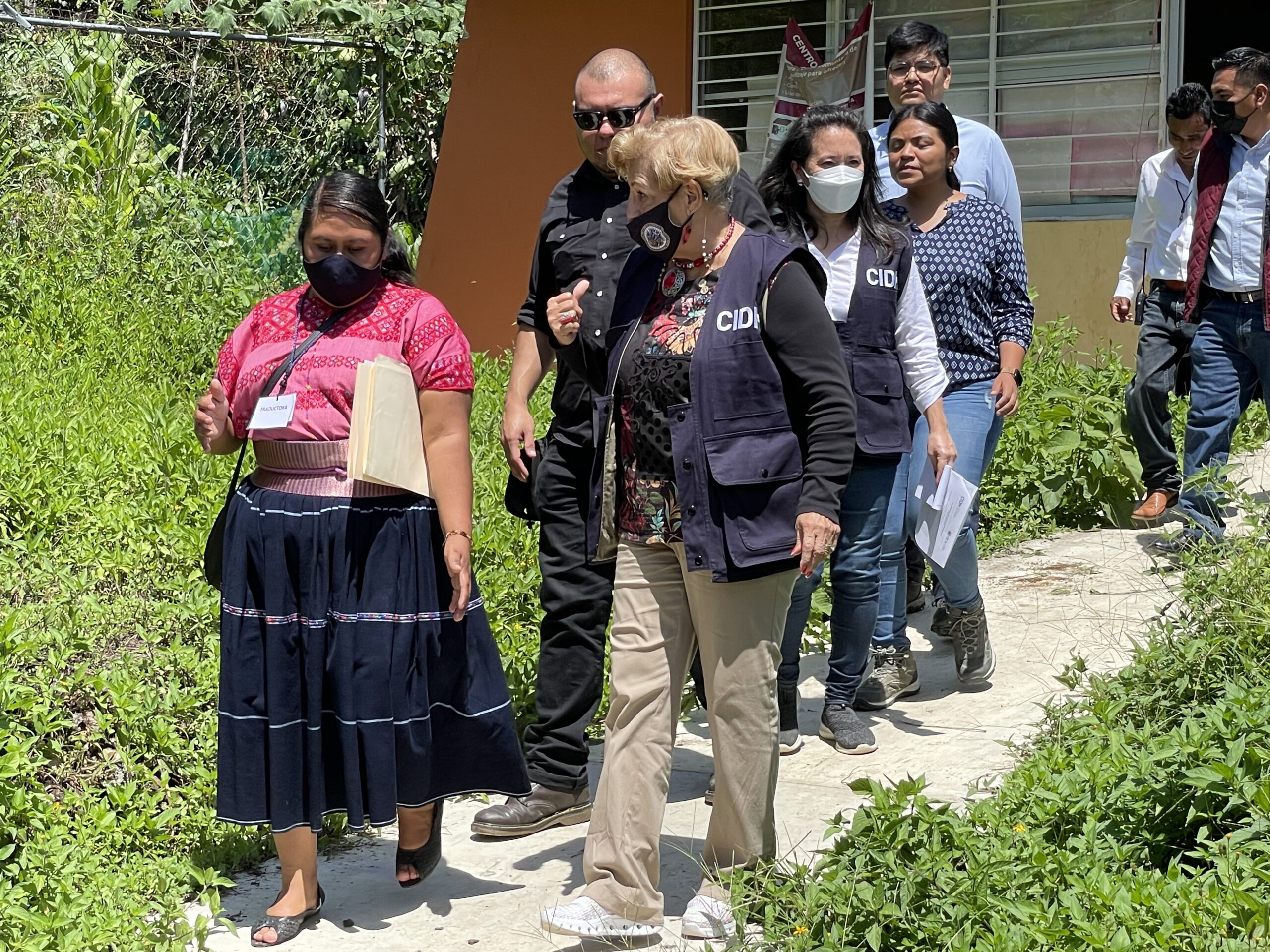
There, Esmeralda Arosemena de Troitiño told them: “we come to listen to you, to see you and to receive a message of solidarity, accompaniment … (We come to) be on the ground to be able to feel this reality, what you are experiencing. Being here commits the entire IACHR to seek the answers we need together, to ensure justice, rights, dignity, equality as human beings. “
Later, in the midst of a strong security operation composed of police and National Guard (NG), the IACHR representatives went to the towns of Tabac and Coco´, two of the most affected by the armed aggressions.
In a school where bullet holes can be observed on its walls, they listened to testimony from injured children, from displaced families, and from the population who explained that the violence upset community life, leaving impacts in emotional, social, and economic ambits, among others.
Later, in another community called San Pedro Cotzinam, they heard testimony from men and women relatives of those killed; and from those who have had to abandon their lands.
The affected population insisted that the fulfillment of the precautionary measures granted in favor of the communities were not fulfilled, because the attacks continued and the armed groups have not been disarticulated or arrested despite the fact that the population of Aldama accepted giving back part of their land to their attackers -the fight over 60 hectares of land is the supposed origin of the conflict.
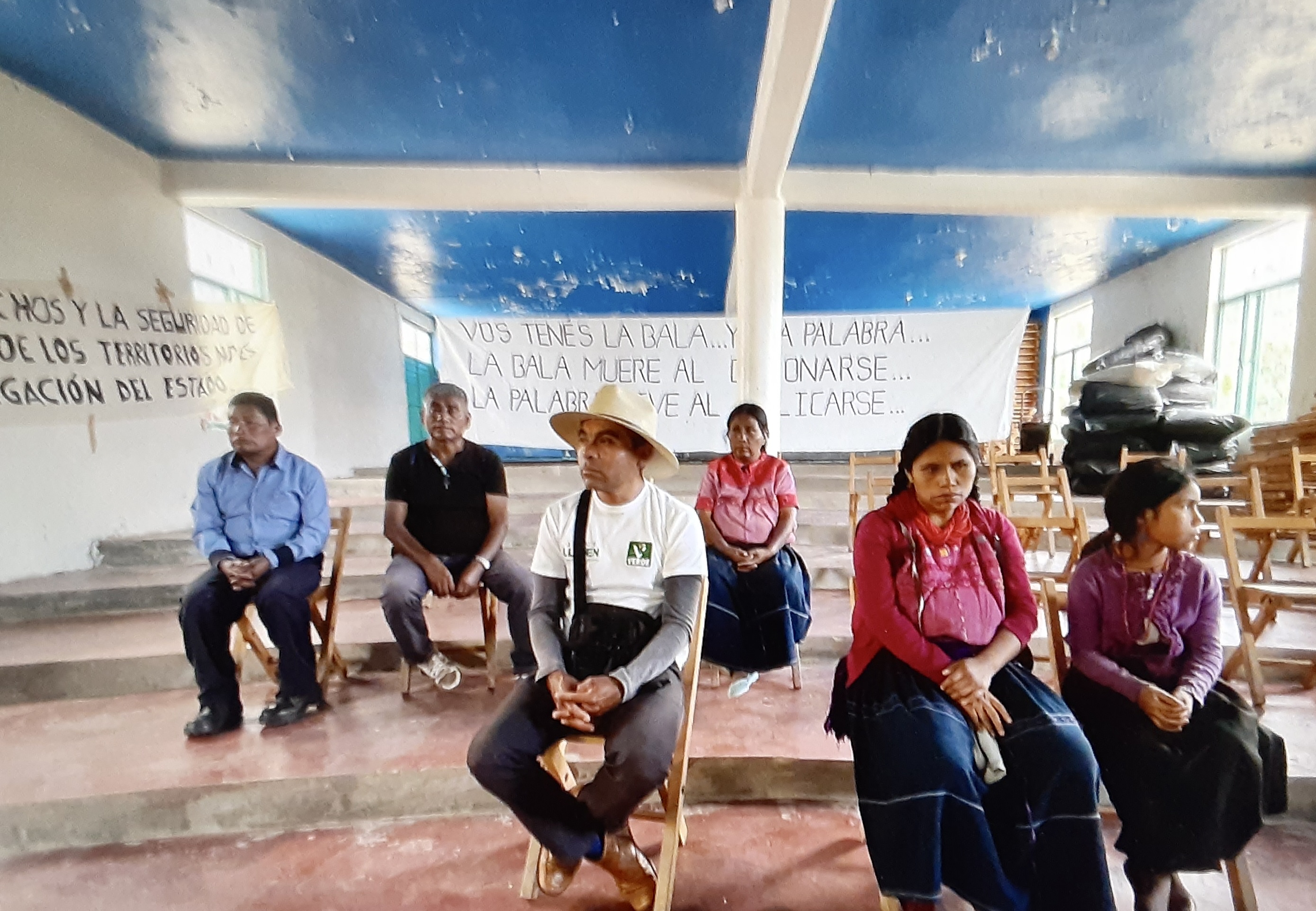
After the meeting, Esmeralda Arosemena de Troitiño said: “when one listens to the experiences of each person, the demand is for justice.
A response must be given to the violent acts in which people’s lives have been lost, then there is a need, and the authorities can work on that with investigation, with the commitment to arrest those responsible for the acts, because they are acts that take people’s lives, and that is a right that must be protected, the right to life.
“Then -she said- for me it’s fundamentally that. There is a need, there are other needs of course, but to start with a judicial decision that identifies those responsible. That is what they demand, an investigation that leads them to identify those responsible, and that they be punished for the acts.” [2]
The IACHR representatives returned to San Cristóbal de Las Casas to spend the night, to undertake visits to the municipalities of Chalchihuitán and Chenalhó on Wednesday and Thursday.
This is the second occasion on which the IACHR has visited the state of Chiapas. The first time was in 1998, in the context of the aggressions experienced by populations in the areas of Chiapas where there was a strategy to undermine the presence of the Zapatista National Liberation Army (EZLN, Ejército Zapatista de Liberación Nacional).
[1] Magdalena Aldama is the Autonomous Zapatista area within Aldama Municipality.
[2] A You Tube video of this talk is available in Spanish.

Originally Published in Spanish by Chiapas Paralelo, Wednesday, July 13, 2022, https://www.chiapasparalelo.com/noticias/chiapas/2022/07/cidh-pide-al-gobierno-investigacion-y-sancion-en-el-caso-aldama/ and Re-Published with English interpretation by the Chiapas Support Committee
They warn UNESCO about damage from Maya Train

The Maya Train Project will connect on the same route 6 assets inscribed on the UNESCO World Heritage List: the pre-Hispanic city and national park of Palenque, the fortified historical city of Campeche, the pre-Hispanic city of Uxmal, the pre-Hispanic city of Chichén-Itzá, ancient Mayan City and the protected tropical forests of Calakmul, and Sian Ka’an in Quintana Roo. More than 10,000 archaeological vestiges have been found on the route where they’re constructing the train tracks.
By: Yessica Morales
Members of #SelvameDelTren delivered a letter to the United Nations Educational, Scientific and Cultural Organization (UNESCO) about the danger that the Maya Train/Tren Maya is causing to the nation’s natural and cultural heritage.
They recalled that Mexico had ratified the UNESCO Convention on the Protection of Underwater Cultural Heritage adopted in 2001. Therefore, said agreement reflects the cultural and historical relevance of this heritage in the country and world, as well as the importance of its care and protection.
The Convention, being in the first place a legal instrument of international scope and Mexico a state party, establishes the ethical and legal commitment for the protection, conservation and correct investigation of the nation’s underwater cultural heritage. Adhering to the provisions and General Principles of the 2001 Convention.
Thus, given the responsibility acquired by Mexico before UNESCO and other organizations involved in the preservation of cultural heritage, the members went to that body motivated by the risk posed by the underwater cultural heritage that lies in the caves and cenotes [the Sac Actun System] of the Riviera Maya in Quintana Roo.
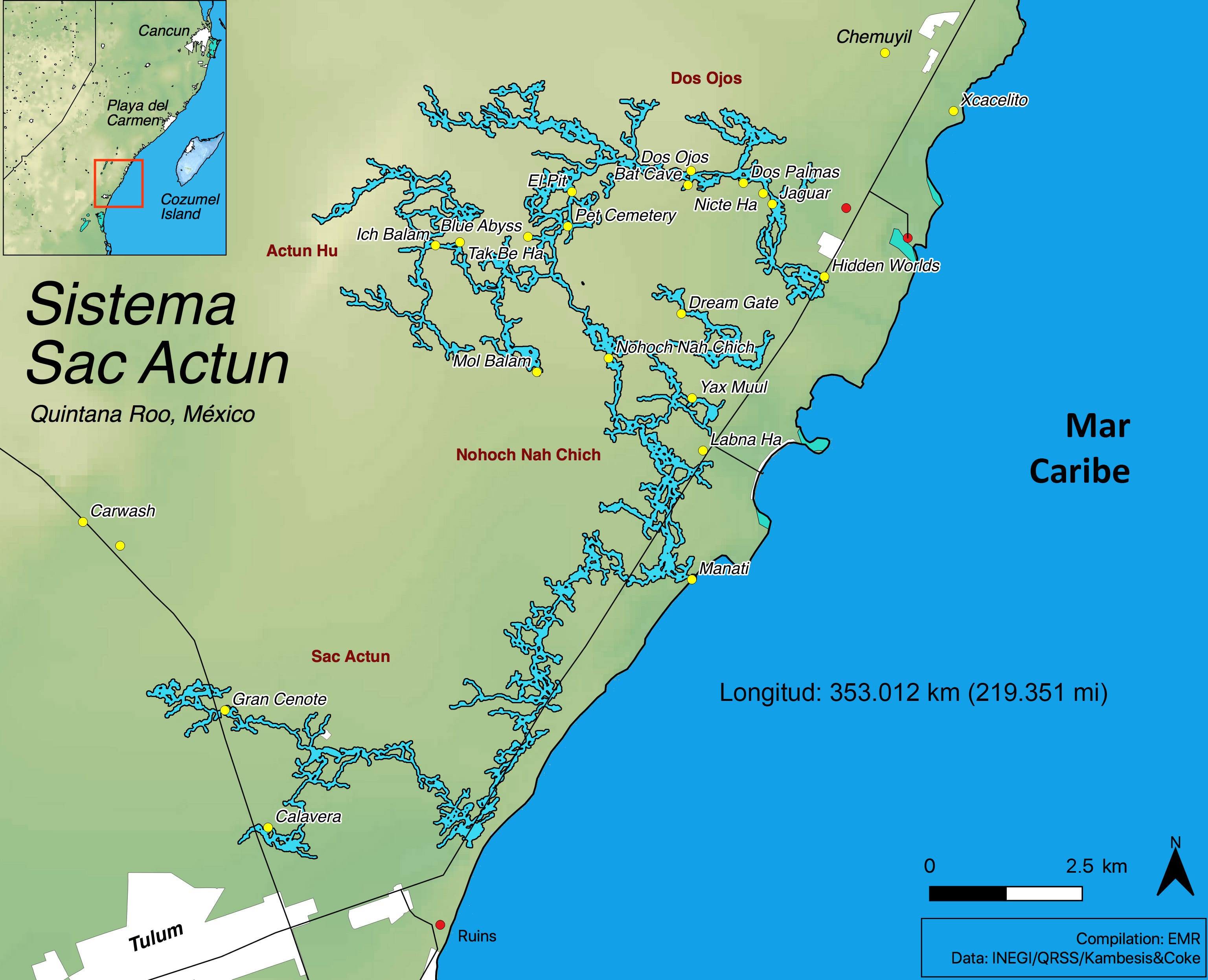
In that sense, they pointed out that it’s in this region of the Mexican Caribbean, where the most extensive flooded cave systems on the planet are located. In their interior, remote archaeological and paleontological vestiges have been discovered, such as the origin of man in America.
Among these early humans of the continent is Eva de Naharon, the oldest human fossil reported on the American continent, members of the campaign explained.
Likewise, the osteological evidence of the ten pre-ceramic humans discovered so far in these caves, now flooded, indicates the occupation of the area by these prehistoric humans towards the end of the last Ice Age.
On the other hand, the vestiges recovered and those that are still there, as well as the caves that shelter them, form part of the archaeological contexts that talk about the history of these prehistoric ancestors and of the caves that provided them refuge and protection in life, a grave and eternal rest in death.
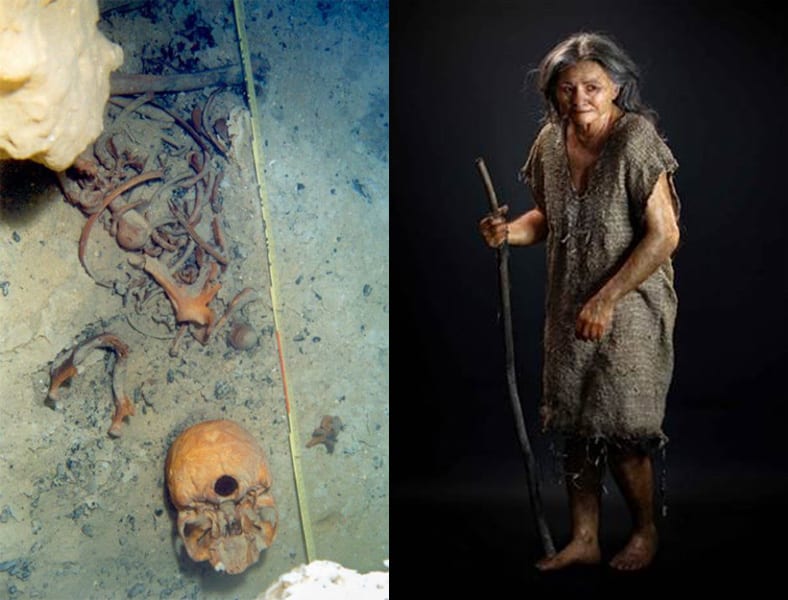
Unfortunately, this heritage is in danger of disappearing forever, members of the campaign stressed.
Given the above, they stressed that the construction of section 5 of the Maya Train project puts at risk the remarkable natural and cultural heritage of Mexico and humanity by trying to build the train tracks near the caves and vestiges that lie there.
In addition, they don’t have reasonable time for an adequate archaeological prospection, which allows safeguarding what’s already known and investigate what is still to be discovered.
Given the eminent risk to the natural and cultural archaeological heritage found in this peculiar and unique geological and geographical region of the Yucatán Peninsula, they requested UNESCO’s intervention.
Thus, the body may generate the due legal protection that ensures the conservation of that heritage, as well as to promote its adequate research in accordance with the Convention and the good practices established for the archaeological research.

Given the relevance of the archaeological and paleontological heritage found inside the Mexican cenotes of the Rivera Maya, the beauty of the underwater cavernous landscapes, as well as the importance of water to sustaining the biodiversity and ecosystems on which they depend, they indicated that this area complies with the criteria of Exceptional Universal Value, in order to be considered a Mixed World Heritage Site.
==Ω==
Originally Published in Spanish by Chiapas Paralelo, Thursday, July 7, 2022, https://www.chiapasparalelo.com/noticias/chiapas/2022/07/advierten-a-la-unesco-del-dano-al-patrimonio-cultural-y-natural-por-el-tren-maya/ and Re-Published with English interpretation by the Chiapas Support Committee
The IACHR will visit Chiapas to evaluate precautionary measures in favor of Tsotsils
By: Jessica Xantomila
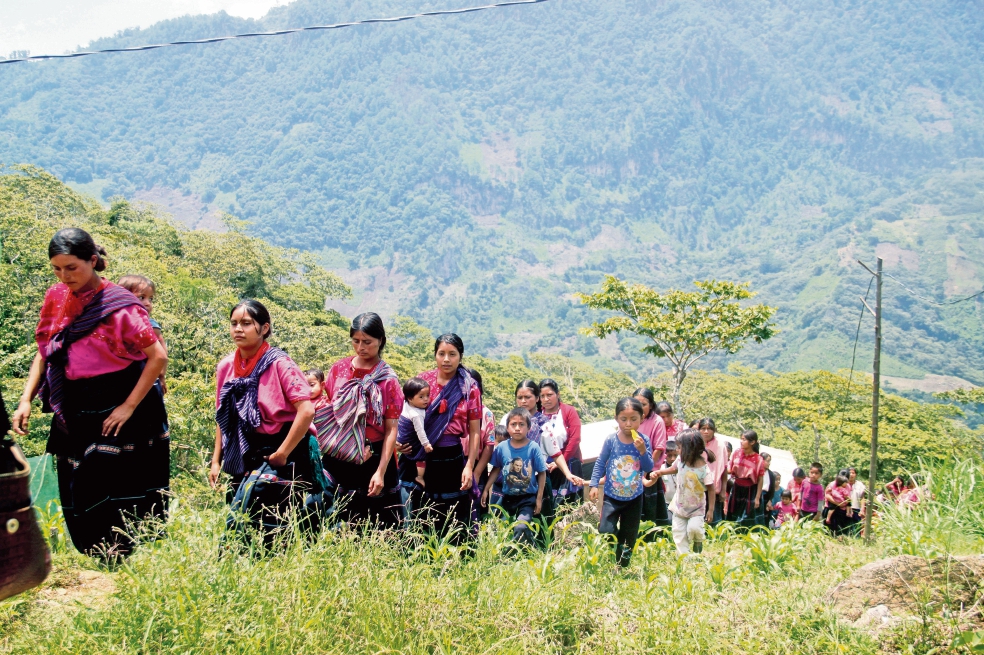
Next week, members of the Inter-American Commission on Human Rights (IACHR), led by the rapporteur on the rights of indigenous peoples, Esmeralda Arosemena de Troitiño, will visit Chiapas, for the purpose of evaluating the precautionary measures dictated in 2018 and 2021 to guaranty the security of the residents in the communities of Chalchihuitán, Chenalhó and Aldama municipalities.
The Fray Bartolomé de las Casas Human Rights Center indicated that the visit, from July 11 to 15, will take place “in the midst of a proliferation of armed groups and the omission of the Mexican government regarding the compliance with the precautionary measures,” which were granted due to the fact that, because of land conflicts, indigenous peoples have been attacked and displaced.
Last December 15, after a follow-up report, the IACHR expressed its willingness to make an on-site visit to Mexico, with the prior consent of the State, in order to verify the situation of the beneficiaries, with whom it will meet.
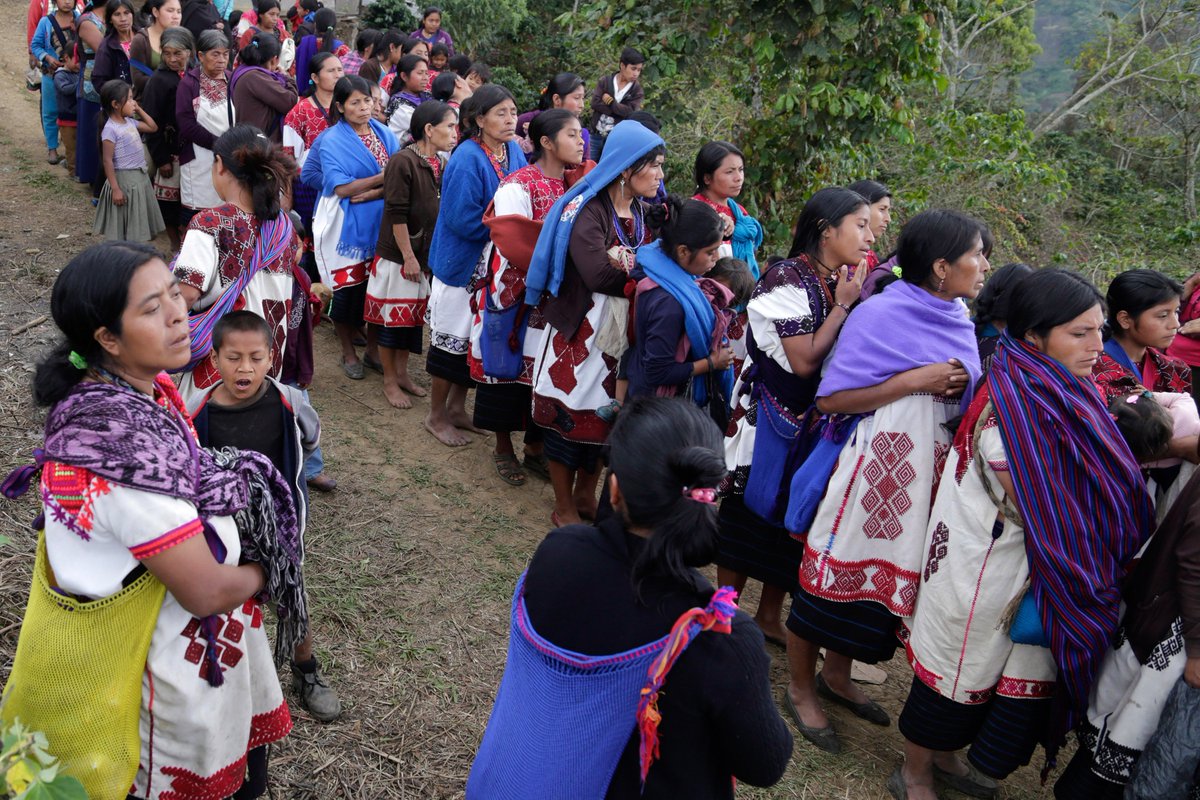
According to the information provided by the human rights center, the experts will arrive on July 11. On July 12 they will be in the municipality of Aldama and on the 13th in Chalchihuitán. That same day they will meet with local authorities.
The provisions were issued in 2018 and 2021
On July 14, they will be in Mexico City to hold meetings with federal officials. The IACHR granted precautionary measures in February 2018 through Resolution 15/2018 for 10 communities in Chalchihuitán and Chenalhó, at the request of Frayba, in order to guarantee the rights of indigenous Tsotsil displaced from the area.
The applicants denounced that there was a situation of violence based on a conflict over territorial limits between both towns, with more than 45 years. This has generated conflict between the communities in the form of robberies, destruction of crops, land invasions and even murders, as well as an increased military presence.
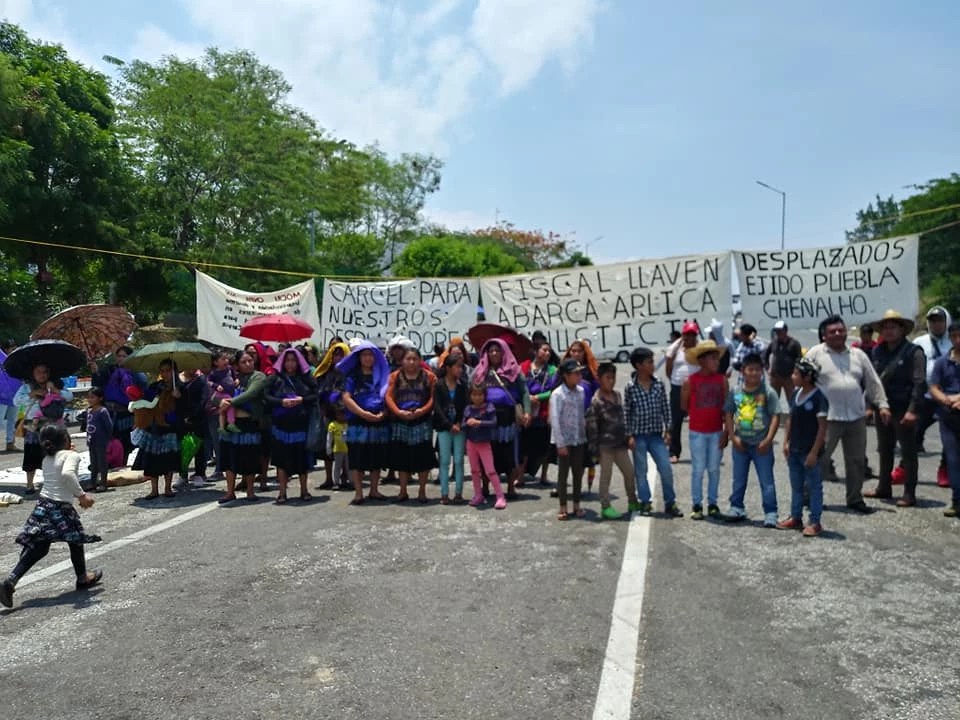
Meanwhile, in April 2021, the IACHR issued resolution 35/2021, by which it granted precautionary measures in favor of Tsotsil families from 12 communities of Aldama, because of the situation of risk due to aggressions, harassment, and threats resulting from the presence of an “armed group” from the Manuel Utrilla ejido, in Chenalhó, as well as because of an “armed group with a paramilitary nature” that would have participated in the displacement that occurred in 2017 in Chalchihuitán.
The situation would also have as a background a territorial dispute between adjoining ejidos. As of September 2020, there was a record of 3, 499 displaced persons from 10 communities.
In its follow-up report for both cases, dated December 2021, although the IACHR valued the protection, security and humanitarian aid measures taken by the State, it decided that they should be reinforced considering that the risk factors still exist.
==Ω==
Originally Published in Spanish by La Jornada, Saturday, July 9, 2022, https://www.jornada.com.mx/2022/07/09/estados/022n1est and Re-Published with English interpretation by the Chiapas Support Committee
A Strategy up for Debate
By: Raúl Romero
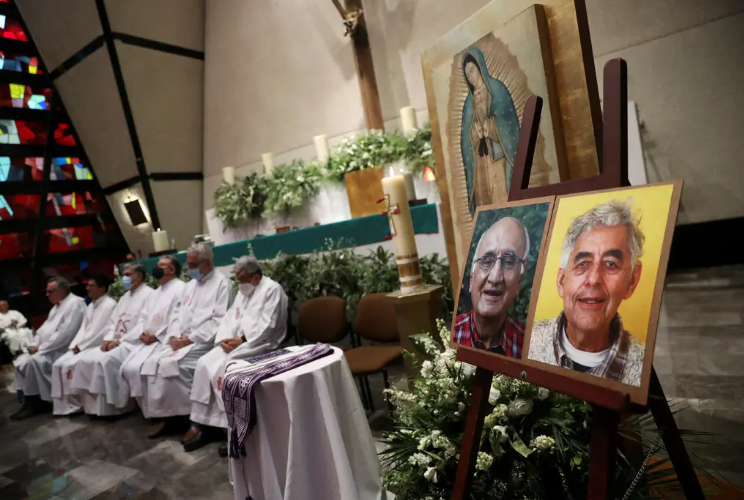
The tragic murder of the Jesuit priests Javier Campos and Joaquín César Mora and of the tourist guide Pedro Palma, [1] as well as the disappearance of two other people, has sparked the public outpouring of solidarity and discontent of various social actors. Rightly, voices such as that of Father Javier Avila have situated the problem as one that affects the entire country and society as a whole, and not as one that concerns only religious people, Rarámuris or the state of Chihuahua. There are thousands of voiceless victims crying out for justice in our nation, said Father Avila.
As a result, in the national press and in other spaces, there have been calls to review the security strategy of the current government, while the President has questioned these calls, placing the debate once again in two options: the current model or that of past governments, hugs or bullets, as the President himself puts it. The problem is that, so far, the hugs are not stopping the bullets.
An initial challenge is to understand the complex, comprehensive and structural nature of the problem. Some currents observe the phenomenon of organized crime as a security problem. This reading, which is the dominant one, has prioritized militarization policies and international cooperation in security to confront an enemy that is at once internal, regional and global. This is the argument behind the logic of war.
Other currents, which tend to complement the previous one, look at corruption problems and observe organized crime as a market anomaly. Rule of law, transparency, financial intelligence or “follow the money” are some of the measures proposed by these approaches. Like the previous currents, they do not question the role of the criminal industry in the current system of accumulation of power and wealth.
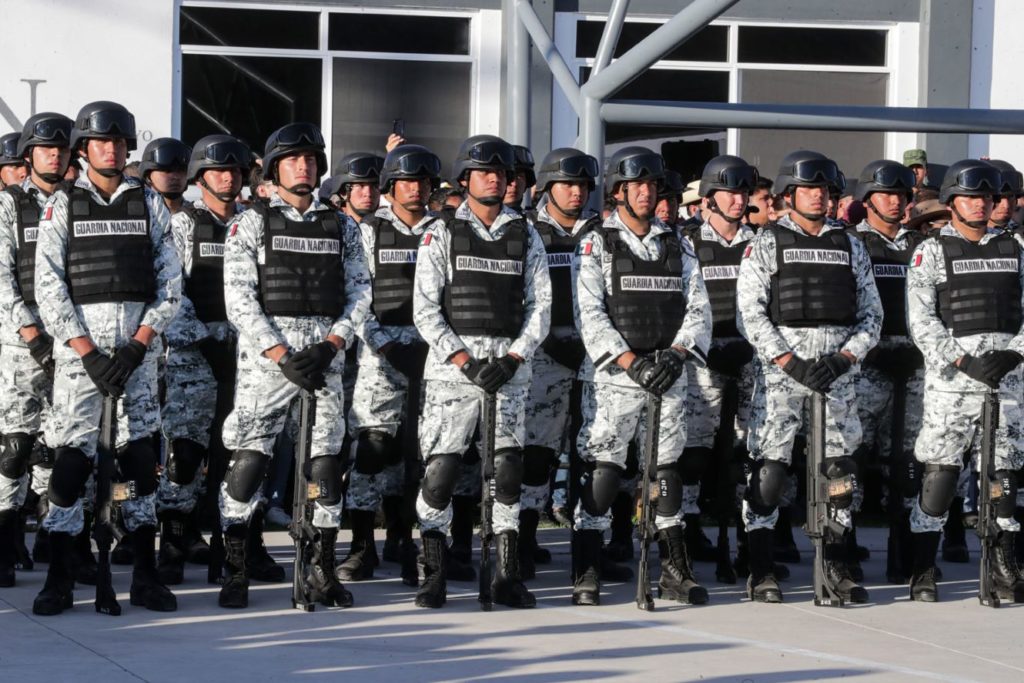
The critical approaches, on the other hand, review the links and relationships of the criminal industry with re-colonization strategies. Organized crime is seen more as an industry that operates through corporations and facilitates processes of accumulation by dispossession, militarized or para-militarized, guaranteeing for the metropolises or imperial centers the supply of natural resources, raw materials – even for drugs, including opening markets and routes for legal or illegal trade, or depopulating territories. The effects of the criminal industry are also often observed as mechanisms of bio-politics, necro-politics or “gore capitalism,” as the philosopher Sayak Valencia has called it.
The phenomenon of violence in Mexico cannot and should not be addressed only as a security problem, and this involves observing the impacts of the criminal industry and its violence on multiple levels: on health, labor, economic, cultural, spiritual?
Mexico, and Central America in general, play an important role in the production and export of raw materials, cheap labor, warehouses and accessible routes for the criminal industry. Meanwhile, the metropolises or centers experience the effects differently from countries on the periphery: in Mexico the drama translates into more than 300,000 people murdered and more than 100,000 disappeared, in the United States 100,000 people die from drug overdoses, 75,600 of them from opioids.
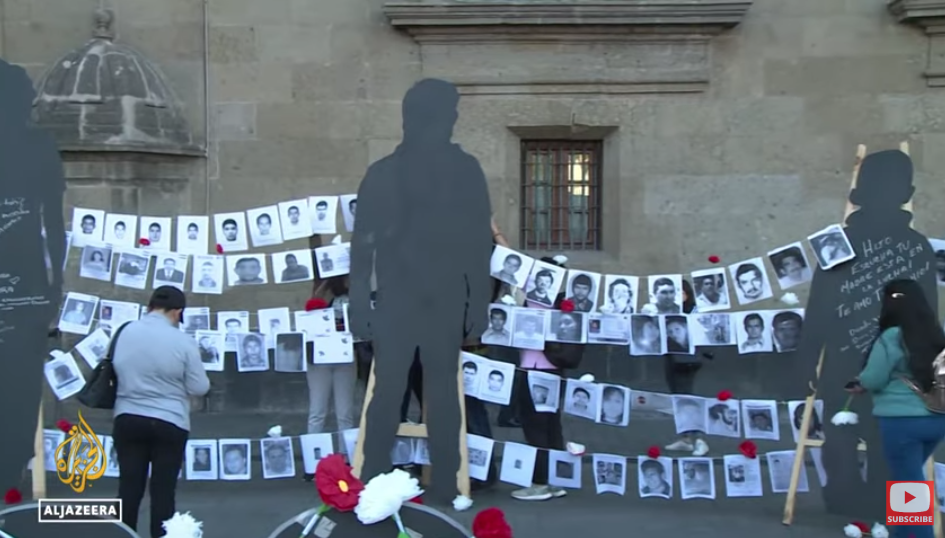
A similar dynamic is experienced within the country. Although the criminal industry has an impact from Tijuana to Tapachula, the indigenous, peasant and poor populations play a different role than the middle and upper-class populations in the cities. A detailed study in this regard would be important to build real solutions. In a way, this is the premise held by those who propose challenging the social roots of organized crime through social programs. Another problem is the starting point: the 2,000 pesos that can be delivered through scholarships or support are little compared to the profits and the immediacy offered by criminal industries in certain regions. Worse still, the individualized nature or the means by which these supports are delivered have also put them into contention by the criminal corporations and their operators in the regions.
The complex, structural and comprehensive nature of the problem is no reason for discouragement, but rather a call to rethink solutions and alternatives. Of course, there are urgent and immediate tasks to be addressed, without losing sight of the short, medium and long term. Implementing a profound agrarian reform to return land to those from whom it has been taken would be a good solution, as would be protecting and caring for the communities and collectivities that have self-managed to prevent or expel criminal corporations from their territories. The recovery of community and social productive hubs would also help. Organizing society not as electoral machinery, but in order to dismantle organized violence. I fear, however, that there are those who still refuse to accept that something is very wrong.
[1] On Monday, June 18. 2022, two Jesuit priests, Javier Campos and Joaquin Mora, as well as a tour guide, Pedro Palma, who sought refuge in their church in Cerocahui, Chihuahua were killed by a local drug trafficker, José Noriel Portillo Gil, “El Chueco,” who is also wanted for the murder of an American tourist.
==Ω==
Originally Published in Spanish by La Jornada, Saturday, July 2, 2022, https://www.jornada.com.mx/2022/07/02/opinion/013a2pol
Translated by Schools for Chiapas and Re-Published by the Chiapas Support Committee
Catholics march in 10 Chiapas cities demanding peace and justice

By: Elio Henríquez, Correspondent
San Cristóbal de Las Casas, Chiapas – Thousands of Catholics of the Diocese of San Cristóbal participated in what was called a Pilgrimage for Peace and Justice in at least 10 cities to protest the violence that reigns in various regions of the state.
Pueblo Creyente (Believing People), a people of faith group affiliated with the Diocese of San Cristóbal, organized and called for the marches before it was known that on June 21 the State’s Attorney General (FGE) asked a judge to issue an arrest warrant for the Tsotsil priest Marcelo Pérez Pérez for the case of twenty Pantelhó residents retained and disappeared since July 26, 2021.
In all the different demonstrations the Catholics expressed their support for and solidarity with the indigenous priest, who is a native of San Andrés Larráinzar Municipality.
According to sources in the Diocese, pilgrimages were carried out in San Cristóbal, Comitán, Palenque, Ocosingo, Salto de Agua, Simojovel, Frontera Comalapa, Las Rosas, Bachajón anf Tenejapa, among other places, and brought together more than 20,000 people.
In San Cristóbal, the long walk of men, women and children divided into two groups: one, with more than 500 people, departed from the church of María Auxiliadora, located in the south, and the other, with more than 400 Catholics, left from the parish of San Juan Diego, located in the city’s north.
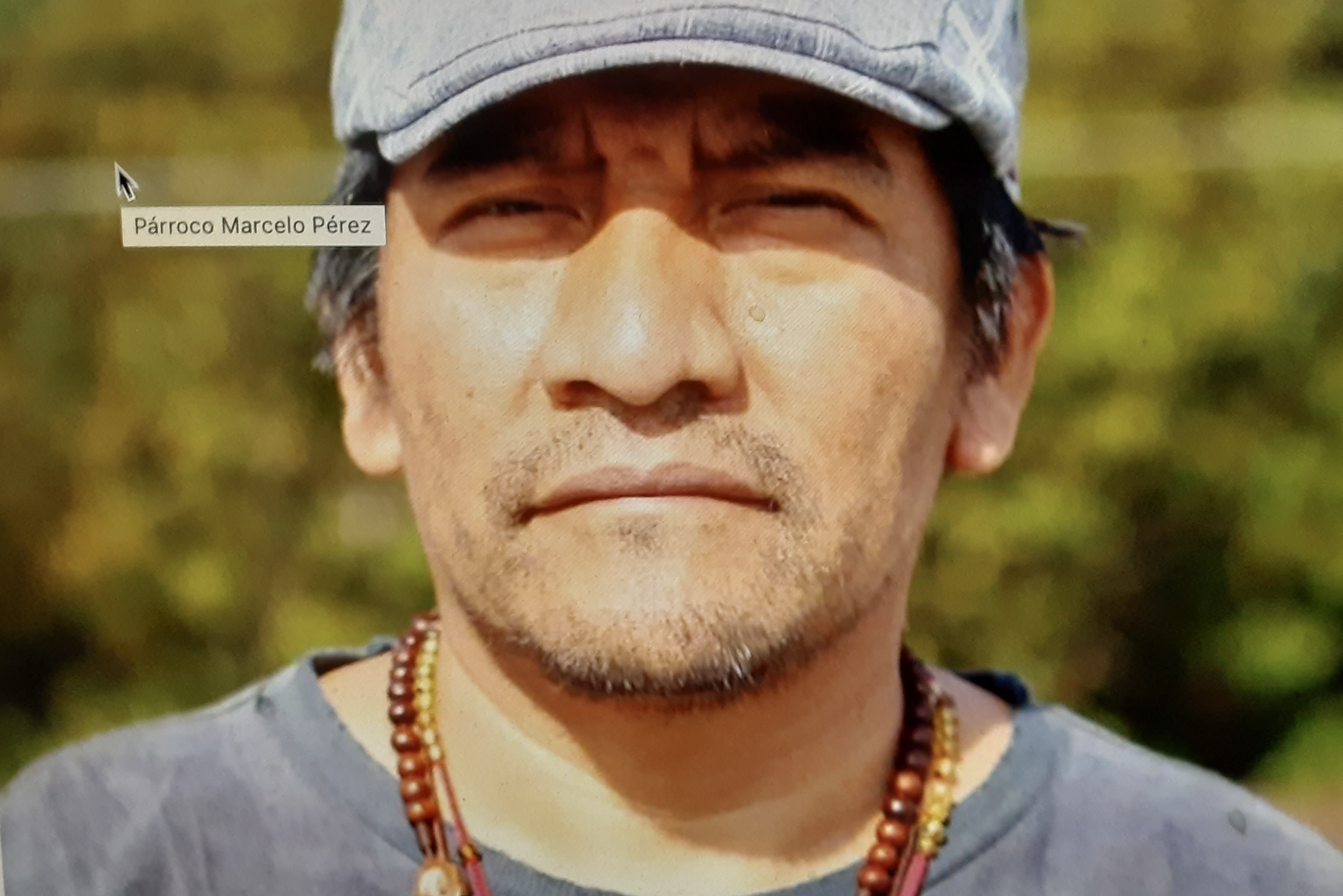
With flowers, religious images, white flags, chants and the majority dressed in white, both contingents ended in Cathedral Plaza.
With a white flag with the word “peace,” Marcelo Pérez marched at the front of the group that began its trajectory at María Auxiliadora, in which various priests and nuns also participated, including some from the Archdiocese of Tuxtla Gutiérrez.
Upon reaching Cathedral Plaza, the Pueblo Creyente group stated: “Victims are criminalized by accusing them of being the cause of the crimes they denounce and they are unjustly imprisoned. And with greater motive if they are defenders of human rights or a prophetic voice of the native and campesino peoples.”
Interviewed at the conclusion of the pilgrimage, Marcelo Pérez disclaimed all responsibility in the case of the Pantelhó residents allegedly retained and disappeared by members of the El Machete Self-Defense Forces of the People on July 26, 2021. [1]
“They blame me for the disappearance, but it’s totally false because I wasn’t in Pantelhó on July 26, but rather in Simojovel. The prosecutor confirmed it because he saw it on my cell phone. And because of the Gospel, I would never give an order to attempt against life because I have a divine mandate to defend life at all costs,” he said.
He said: “I have always asked where the 19 or 21 missing persons are and they don’t give me an answer. It’s totally false that I have participated or given any order to attempt against the lives of those people; to the contrary, we want peace.”
He assured that he will not request a court order to protect him (an amparo) “because I am very calm and my heart is at peace in the Gospel.” Likewise, he invited “all peoples to return to the deep root of the Gospel. Many organizations were born from the Gospel, but now they have forgotten and that’s why they have been divided and there is a lot of violence because of that. He invited us to return to the deep roots of the Gospel, independently of religion.”
[1] According to a statement from the Diocese of San Cristóbal, the Chiapas State’s Attorney General asked a court to issue an arrest warrant for Father Marcelo, who was a mediator in the Pantelhó conflict. As of this posting, the court has not yet issued one.
==Ω==
Originally Published in Spanish by La Jornada, Wednesday, July 6, 2022, https://www.jornada.com.mx/2022/07/06/estados/030n2est and Re-Published with English interpretation by the Chiapas Support Committee
The Diocese of San Cristóbal denounces an increase of violence in Chiapas
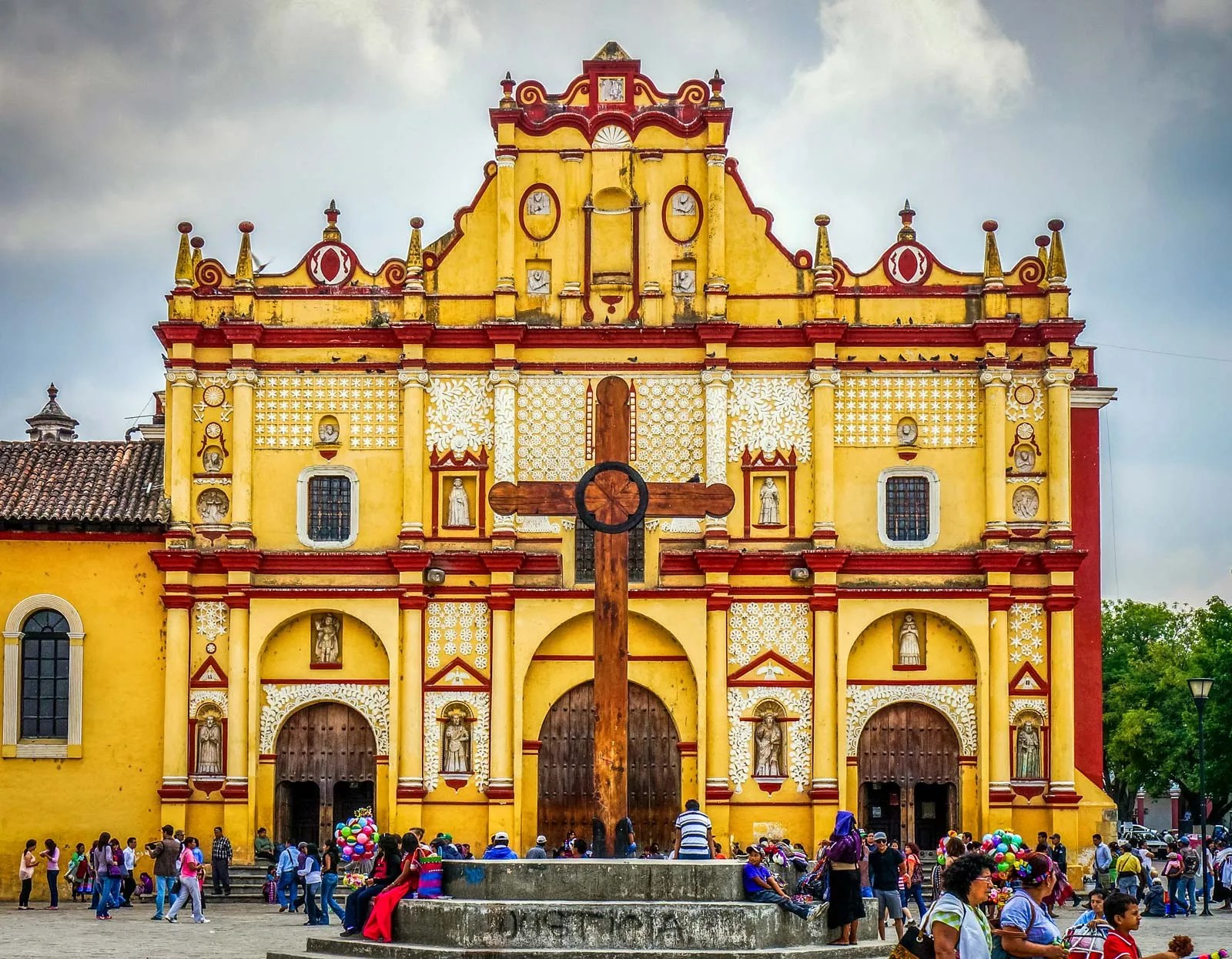
“Every day in our country we experience insecurity and violence in our streets, schools, businesses and unfortunately also in our churches, places that bring us together as a community to meet with our sisters and brothers and with God,” the religious leaders assured.
By: Isaín Mandujano
TUXTLA GUTIÉRREZ, Chiapas (proceso.com.mx)
The Diocese of San Cristóbal de La Casas denounced the increase in violence in Chiapas, as well as the persecution of its pastoral agents who accompany the peoples and communities, as for example, the most recent arrest warrant issued against the parish priest Marcelo Pérez Pérez.
In a statement signed today by Rodrigo Aguilar Martínez, Bishop of the Diocese of San Cristóbal de Las Casas, Luis Manuel López Alfaro Auxiliary Bishop, Sister María Reyes Arias Sarao, Secretary-Chancellor and the priest José Luis Bezares Selvas, Vicar of Justice and Peace, they detail the situation of violence that reigns in many municipalities inside of the jurisdiction of this diocese.
“Every day in our country we experience insecurity and violence in our streets, schools, businesses and unfortunately also ion our churches, places that bring us together as a community to meet with our sisters and brothers and with God. The murder of three people: one a tourist guide and two Jesuit priests, in the State of Chihuahua, inside a Catholic church, makes us see the magnitude of the problem that increases every day,” the religious leaders say in the document.
“Unfortunately, this same situation of violence and insecurity has also increased in our beloved state of Chiapas in recent years,” they add.
They recalled the murders of 2021: On July 5, 2021, the murder of Simón Pedro, former president of Las Abejas of Acteal, of the Indigenous Prosecutor Gregorio Pérez, very close to his place of work; of the journalist Fredy López Arévalo; and in 2022: of Señora Paula Ruíz and last month of the municipal president of Teopisca, among many others.
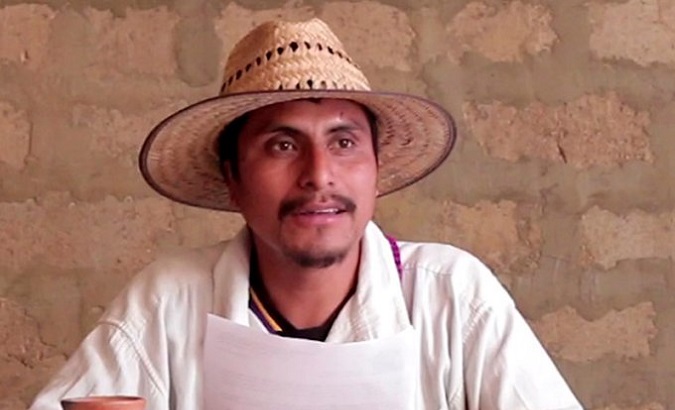
“Every day organized crime occupies more space in Chiapas territory, painfully it’s adding to the national situation, and there is a struggle between [organized crime] groups in competition at the state and local level.
Within this area we find the trafficking of persons for pornography, the sale of organs and the sexual and labor exploitation of migrants and nationals stand out… Said groups and forces, in many municipalities, manage to control the municipal authorities. All this caused insecurity, violence, extortions and forced displacement of people and families,” the document issued this Sunday says.
They point out that in recent weeks our country has been involved in a series of very worrisome violent events. These events have revealed how drug trafficking is linked to the police, judicial and political structures.
Most of the zones in the Diocese of San Cristóbal de Las Casas, present conflict situations and detail that, for example, in the Tsotsil Zone there is violence in the communities within the municipalities of Chenalhó, Aldama, Simojovel, Chalchihuitán, Pantelhó, Chamula, Amatán, El Bosque and Huitiupán.
There are violent situations in the following zones and municipalities: the municipalities of Tila, Salto de Agua, and Palenque in the Chol Zone; the municipalities of Chilón and Sitalá in the Chab Zone; the municipalities of Oxchuc, Cancuc and Ocosingo in the Tseltal Zone; the municipalities of Chicomuselo, Comalapa and Las Margaritas in the Southeast Zone, where there are persecutions over the struggle against mining, which damages the ecosystem, and human trafficking.
In the Southern Zone, which includes the municipalities of Venustiano Carranza, Teopisca, Las Rosas and Socoltenango, – and the Central Zone in the municipality of San Cristóbal de las Casas, where many acts of violence have occurred in recent years.
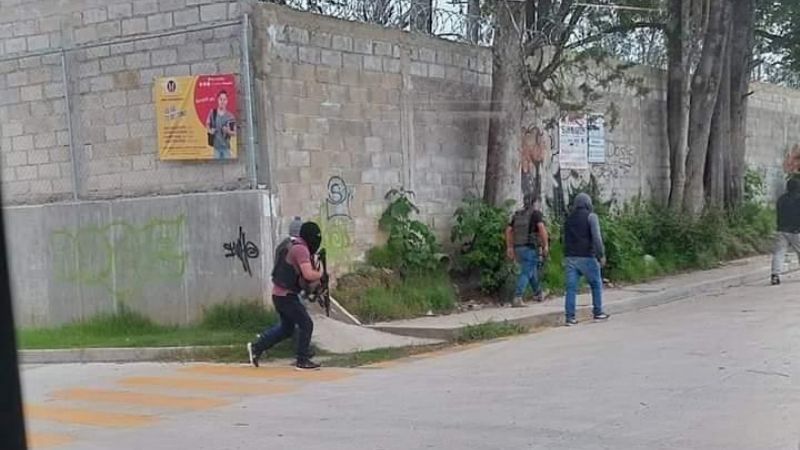
The religious leaders point out that in doing the work of accompanying the suffering of the peoples and seeking true life for them, it affects the interests of individuals and groups who only seek the maximum profit at any cost, regardless of the suffering of the poorest.
“The implementation of the strategies of the economic-political system that governs us has been very clear, when a community organizes to defend its land and territory, to care for its community government through uses and customs, when the injustices they commit are denounced, sometimes, the same authorities of the communities, municipalities, etcetera, it would seem to be a motive for them to react with persecution, intimidation, threats and incarceration,” the letter says.
And it adds that in Chiapas many have been displaced from their homes due to the violence that reigns around them and for taking care of their life and the life of their loved ones, losing all the patrimony that they had achieved with much sweat and tears.
“Our Diocesan Church has also been a mediator in several of the conflicts that have been unleashed in our state, always contributing to the search for dialogue and reconciliation, through peaceful means. This work, arduous and not easy, often brings the ingratitude of some of the actors involved when they only pursue their selfish ambitions and not the search for the common good,” the document indicates.
But all this has brought as consequences threats and intimidations against Pastoral Agents of the Diocese, in several of the aforementioned zones with situations of violence.
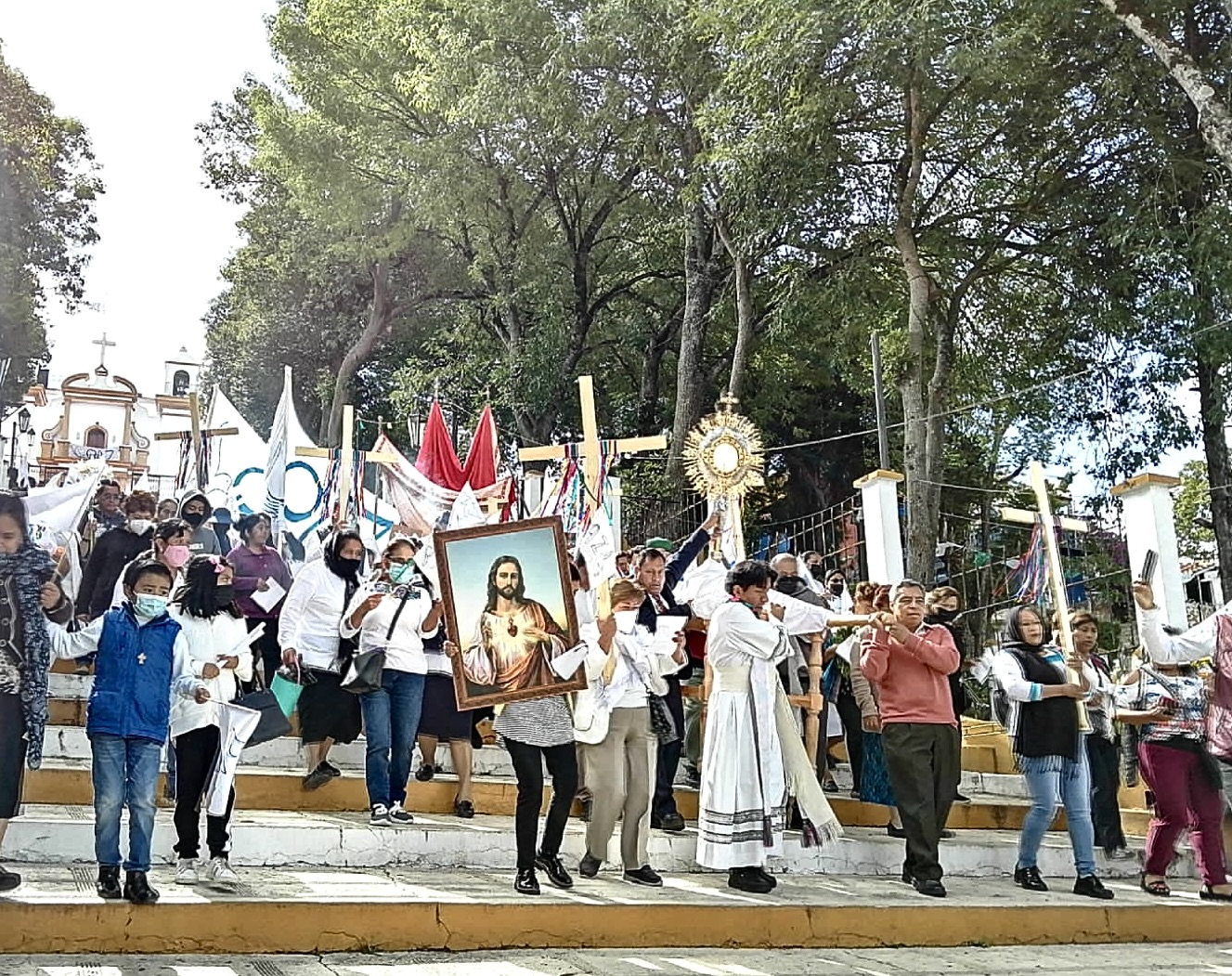
“Among the ones that stand out the most are, for several years, those that have been made against our pastoral agent and priest, Father Marcelo Pérez Pérez, and that have increased in recent days, in addition to the fact that there is a request for an arrest warrant against him,” the Diocese denounced.
They also said that about Pastoral Agents, as is the case of brother Manuel Sántiz Cruz, an indigenous Tseltal and defender of human rights and territory, of the San Juan Cancuc parish, and of the other four deprived of their freedom together with him, with whom due process has not been carried out, thus violating their rights.
And in the arrest of the councilor president of Pantelhó, Pedro Cortés López and Diego Mendoza Cruz, according to the word of those who advocate for them, the eyewitnesses, they expressed that the arrest warrant was not presented to them and it was also done with a luxury of violence, and therefore their rights were also violated.
“But there are other threats and intimidations against sister and brother Pastoral Agents that have not had as much coverage in the media for different reasons. The situations mentioned have been made known in various ways to the authorities of the three levels of government, which are overwhelmed, permissive and/or colluded by the control system that organized crime exercises in national territory,” says the letter sent this Sunday.
“In the face of any aggression that they may receive, we remind those who govern that the Mexican State must guaranty the physical integrity of these sisters and brothers,” they point out.
As the Diocese of San Cristóbal de Las Casas, Bishop Rodrigo Aguilar Martínez and his collaborators demanded: “that the persecution, repression and intimidation cease against the pastoral agents who struggle for the construction of a different and better world.”
==Ω==
Originally Published in Spanish by Proceso.com.mx, Sunday, July 3, 2022, https://www.proceso.com.mx/nacional/estados/2022/7/3/diocesis-de-san-cristobal-denuncia-incremento-de-la-violencia-en-chiapas-288887.html and Re-Published with English interpretation by the Chiapas Support Committee
The Inertia that prevents us from reacting to the collapse

By: Raúl Zibechi
That humanity is beginning to suffer the confluence of crises and pandemics that configure a situation of chaos or collapse of life on the planet, seems out of the question. That the ruling classes play their own game to remain in their place of privilege and that the politicians have little intention of moving, also seems evident to a large part of the population.
What’s disconcerting and causes anguish, is the scant reaction of the sectors most affected by the collapse underway. We attend demonstrations, strikes, even some uprisings of an insurrectional nature like the one that is shaking Ecuador these days, but the main trend is toward inertia, toward a return to normality that, deep down, we all want.
The reasons for the lack of answers to the level of challenges, are very diverse. One of them is that the old forms of collective action, coined especially by the labor movement, are now insufficient given the challenges we face. A new political culture cannot be born overnight, although there are territorial experiences that are extremely auspicious.
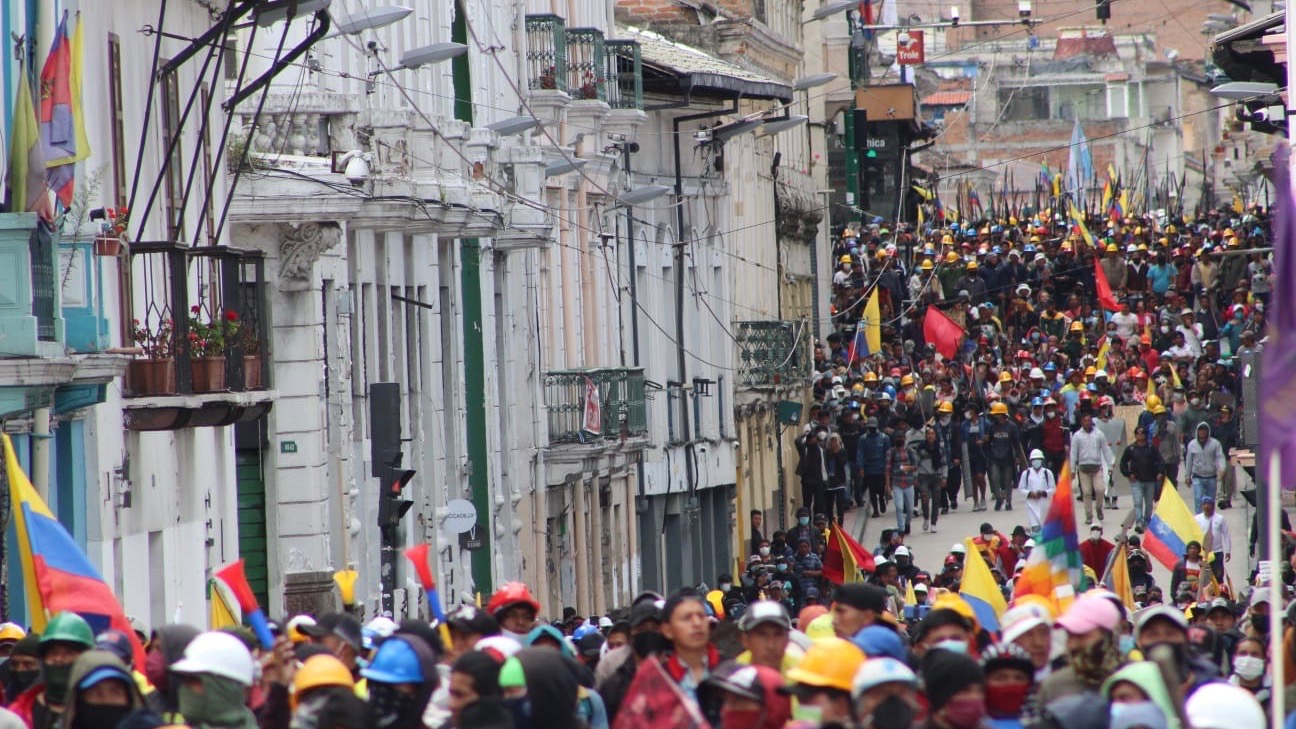
A few days ago, the European Laboratory of Political Anticipation, a French think tank dedicated to analyzing and anticipating global economic developments from an independent European perspective, warned of some central issues in its June newsletter’s editorial.
The first is that we are faced with “a total crisis of a 500-year-old civilization,” which will lead us headlong into “a new global Middle Ages.” Beyond the more than debatable reference to this supposedly “dark” period of history, the big problem is that “the transition to a new systemic organization has not been prepared and, therefore, it will not occur in a controlled way. “
In sum, the coming years can be dramatic. The Laboratory estimates that a “rupture” may occur even this year, given the paralysis of governments, scarcity, widespread impoverishment, “unprecedented” famines and natural catastrophes, which configure a collapse fueled by the unsustainable growth of inequality.
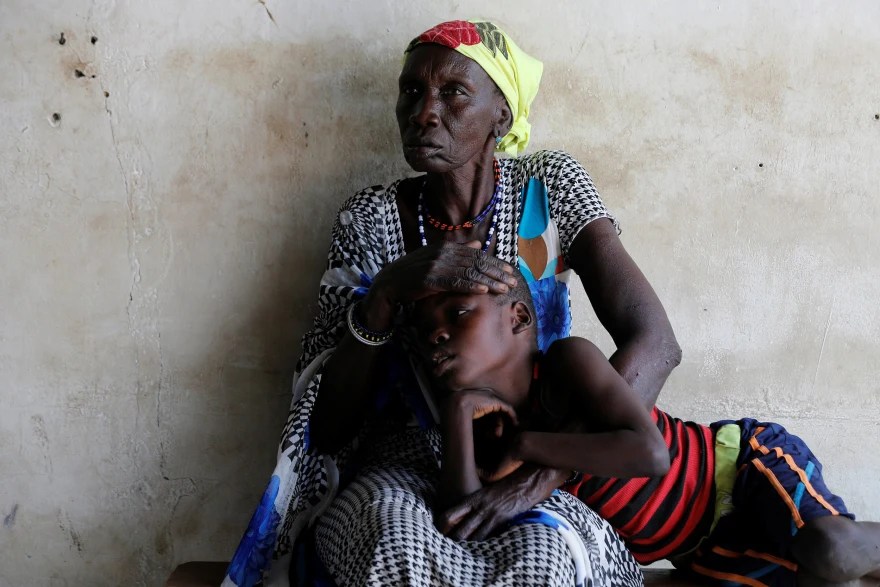
The second, points to the central theme: “Potentially terrifying crises without historical precedent follow each other, without having an irreversible impact on our daily life, which reduces our fear of them and people just return to the normal course of their lives.”
This issue fully challenges us as anti-capitalist movements and people. The debacle we are witnessing finds us ill-prepared to face it; a disadvantage that can be overcome with territorial collective organizations, capable of ensuring survival and life in times of death and destruction. The crisis in Ukraine teaches us that betting on the States, as the European lefts do, is a bad path. If we have not prepared for this situation, the damages can be enormous.
As the cited editorial points out, not even the large States in the North are capable of stopping the collapse. That’s why the system gambles on repression and militarization. “The irresistible temptation to tighten its control over the masses is now the only way to maintain what remains of their system,” estimates the Laboratory. Control facilitated through new technologies that offer “those in command an unprecedented breadth of power.”
Those above have a strategy long-tested in other transitions: militarism and war to redesign the world that is collapsing. It’s the option of the United States and the European Union, but also of Russia and China, and of any other great power, regardless of their discourse.
Some say that China doesn’t act that way, but they don’t want to remember how Beijing crushed popular protest in Hong Kong, resorting to police violence and armed brutality, like any other country that fights for hegemony.
Decades of “democracy” and “progress” have anesthetized a good part of the population that continues to believe that the State or the political leaders are going to save us, or that money will be of some use in the extreme moments of the collapse. Individualism condemns us.
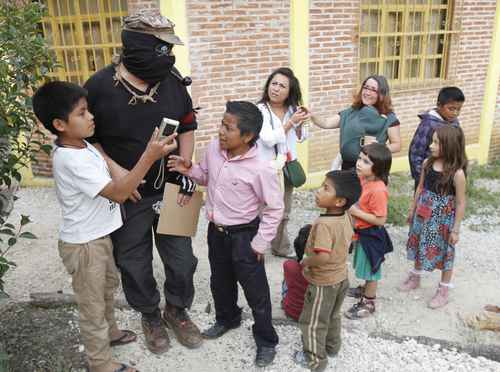
Seven years ago, the Zapatistas warned about the imminence of a systemic storm, but few understood the urgency of the call to organize. The powers of above launch armed packs against the best organized communities, which the media baptize as narcos so as to disguise that they are the spearhead of capitalism.
The world we knew has disappeared; capitalism will collapse in the same way it was born: “dripping blood and mud through all its pores” (Marx). It only remains for us to create collective forms of power, powers from below, in order to survive the collapse and the chaos as peoples.
==Ω==
Originally Published in Spanish by La Jornada, Friday, July 1, 2022, https://www.jornada.com.mx/2022/07/01/opinion/021a1pol and Re-Published with English interpretation by the Chiapas Support Committee
Municipal president of Pantelhó accuses “Los Machetes” of disappearing people, then he’s arrested for the same thing
By: Isaín Mandujano
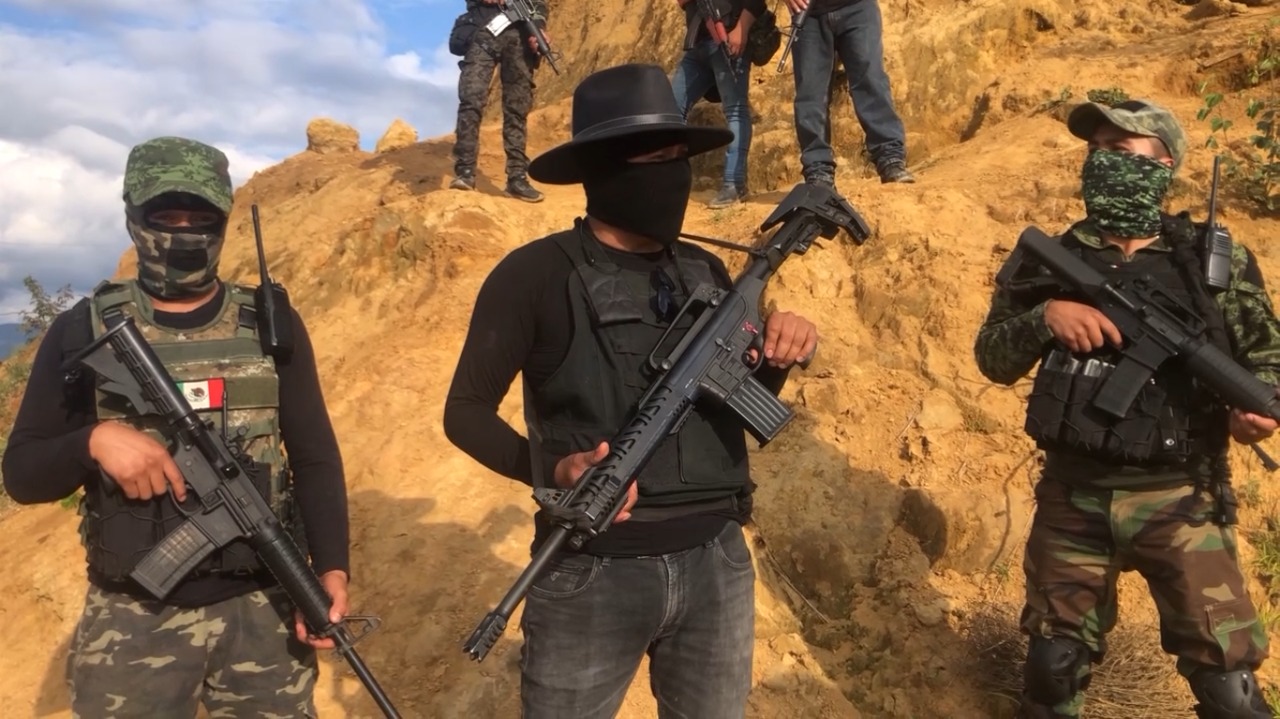
The council president of Pantelhó, Pedro Cortés López, was arrested this afternoon by agents from the State’s Attorney General for the crime of the forced disappearance of 19 people, the crime from which he had disassociated himself this morning and pointed to the El Machete self-defense group, who he accused of different crimes, such as looting the municipal treasury through public works contracts in an arbitrary and discretionary way.
In the morning, Pedro Cortés López, until now the municipal president of Pantelhó disassociated the armed group El Machete, which irrupted on July 7, 2021 in that municipality to expel the “Los Herreras Cartel,” which looted the municipal council for years, and committed, he said, various crimes like murders and forced disappearances, “but the government never intervenes to investigate and never opened investigation notebooks.”
In his public denunciation, he pointed out public servants who were not loyal and honest in the management of public resources and assigned public works contracts to construction companies linked to commanders of the El Machete group to obtain resources from the municipal treasury.
He commented that commanders Juan Méndez Gómez, Daniel López Méndez, Javier Méndez Velasco and Reynaldo Ruiz, as well as another person named José Rodrigo Velasco Álvarez of having benefitted with public works for more than 47 million pesos. He denounced the same situation to the High Auditor of the State of Chiapas.
Javier Méndez Velasco, Daniel López Méndez, Reynaldo Pérez Ruiz and Juan Méndez Gómez, all Machete commanders, obliged us to assign them work. Concerned about the use of the municipal council’s resources and, in order to know the results and control of public revenues and expenses, we decided to visit the State’s High Auditor and we found out that the then treasurer, Juan Méndez Gómez, had not delivered the public account. When the then treasurer and accountant of the municipality were asked about why they had not delivered the municipal council’s public account, Pedro Gómez Gómez responded that as an indigenous people we were not obliged to render accounts, Cortés said.
Regarding the disappearance of 21 people that began on July 26, 2021, at the hands of The Machetes, Cortés López pointed out that all of them were violently taken from their homes, which were burned and “in the presence of all of us the 21 were taken to the Central Park Kiosk and after holding them there for several hours in the presence of all the people, the “Machete” commanders Daniel López Mendez, Javier Méndez Velasco, Juan Méndez Gómez (former treasurer), Reynaldo Pérez Ruiz, Juan Ricardo Luna López, Abraham Gonzales Gutiérrez and Yoni Hernández decided take them to the San José Tercero community aboard various trucks.”

He said that he is not due to Los Machetes, but rather to the assembly of residents of the 86 communities and 18 neighborhoods that make up Pantelhó municipality, as well as the religious organizations that proposed him to coordinate a commission of 20 people who would represent the voice of the town.
We are the proposal of the town, not of the “Machetes;” that’s why in this act we disavow any responsibility for acts carried out by this armed group against the 21 people who remain disappeared. We are willing to testify before the corresponding bodies as to what we saw when they took them to San José Tercero, Cortés López said in the morning.
However, in the afternoon, the Office of the State’s Attorney General (FGE) through the Office of the Prosecutor Against the Forced Disappearance of Persons and Committed by Private Parties, reported that it executed an arrest warrant against Pedro «N» and Diego «N» as probable participants in the acts that could constitute the crime of Disappearance Committed by Private Parties, events that occurred in the municipality of Pantelhó.
In an official letter they pointed out that members of the Specialized Police, attached to the Office of the Prosecutor Against the Forced Disappearance of Persons and Committed by Private Parties the FGE’s Tactical Group complied with the arrest warrant issued by the Control Judge of the Control Courts and Tribunals of Prosecution for Region Two, of the Judicial Districts of San Cristóbal and Bochil, against the aforementioned defendants for their probable responsibility in the crime of Disappearance Committed by a Private Party, committed to the detriment of 19 people belonging to Pantelhó Municipality.
On the afternoon of July 26, 2021, those accused today, together with the group called “Los Machetes” peoples’ self-defense group, deprived the 19 victims of their freedom in the central park kiosk in Pantelhó Municipality, being the last time that those people were seen alive, since as of now their whereabouts are unknown.
Those accused were put at the disposition of the control courts located in El Amate [Prison]; where their legal situation will be resolved in the next few hours.
Although originally the group that EL Machete disappeared was said to be 21 people, they say that three people were released but 19 remain in the hands of that armed group, which irrupted on July 7, 2021 to expel another illegal armed group that had operated for more that 12 years in that municipality.

Update
The Pantelhó Municipal Council was forced out and the State Congress named a new municipal council.
==Ω==
Originally Published in Spanish by Chiapas Paralelo, June 21, 2022, https://www.chiapasparalelo.com/noticias/2022/06/concejal-de-pantelho-acusa-a-los-machetes-de-la-desaparicion-de-personas-luego-la-fiscalia-lo-detiene-por-ese-delito/ and Re-Published with English interpretation by the Chiapas Support Committee
Pantelhó municipal council’s communiqué accuses Los Machetes of crimes
-Communiqué-
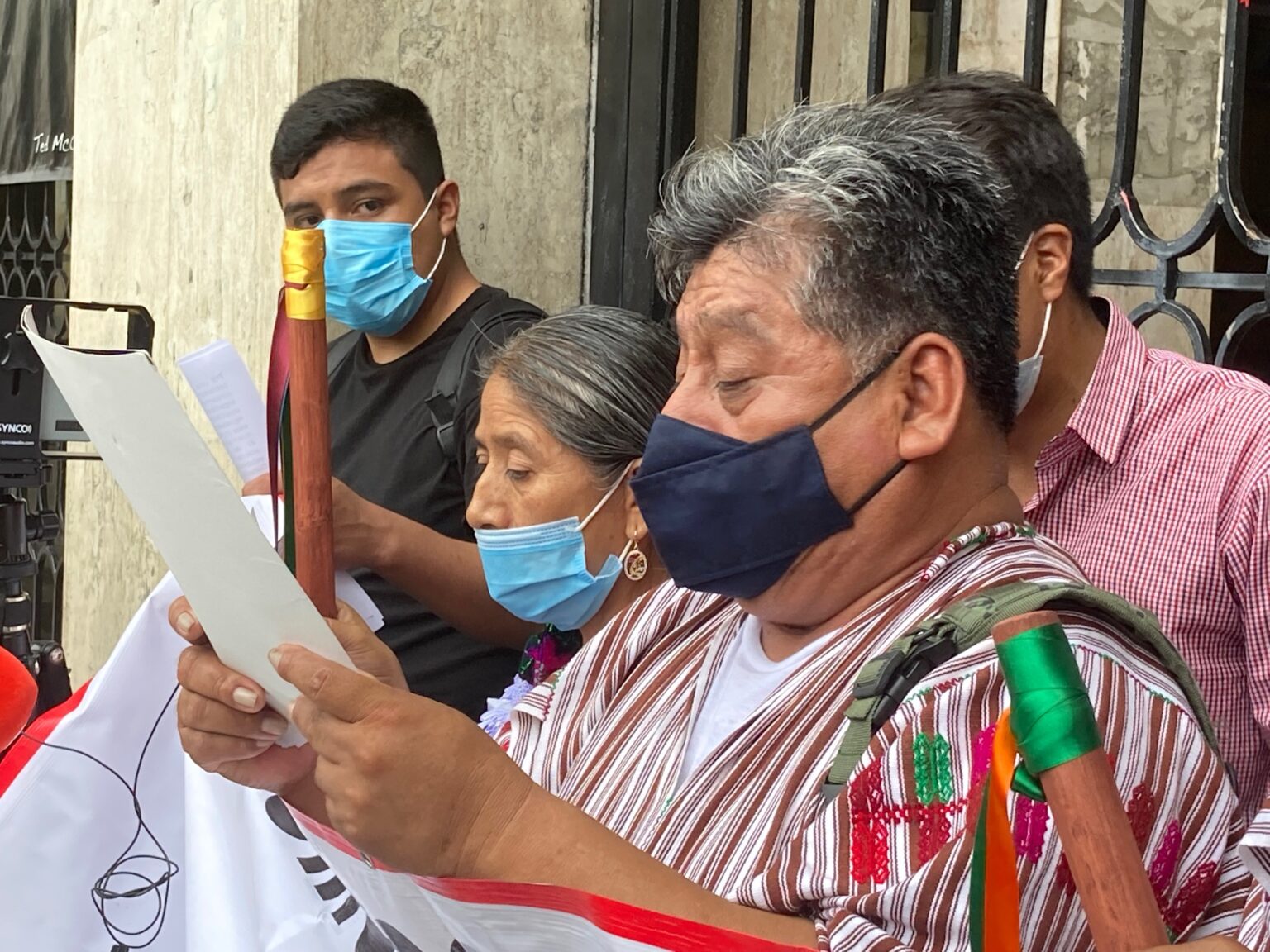
Hello, good morning to everyone, I am Pedro Cortés López Councilor President of Pantelhó and, in the name of the Municipal Council, I thank you for your attendance.
The reason for this press conference is to announce publicly our posture with respect to the illegal conduct of the “Machetes” armed group, and to clarify the erroneous information that has been made public in some information media.
The decomposition of Pantelhó Municipality is not a recent situation, our town began to decompose some years ago because of the “Cartel de los Herrera” (The Herreras Cartel), a criminal group led at that time by Austreberto and Dayli Herrera. These “hit men” imposed authorities, subdued the people, murdered and disappeared many people, including their own relatives, with total impunity. During this period in which we were brutally subdued by these criminals, we did not have the support of any state or federal authority and, to date, justice has not been done to the dozens of murders of our indigenous brothers; in most of these cases no investigation folders were even opened.
The cowardly murder of the catechist and president of “Las Abejas of Acteal,” Simón Pedro Pérez López, in 2020, caused that on July 6, 2021 the then self-defense group, the “Machetes,” clashed against “The Herreras Cartel.” After this confrontation and, in the face of the omissions of the authorities of the 3 levels of government to restore peace in Pantelhó, civil society, Catholic religious organizations, Evangelical, Christian social organizations and the “Machetes” joined to expel the Herreras from the town and, it was on July 6 we concentrated in the municipal capital. Later it was returned to the communities and neighborhoods and it was agreed to return on July 26, 2021 that we all entered and took control of the capital.
I continue being the council president, supported by the town and the communities, says the council president.
Once control of the town was obtained, the presence of the Attorney General’s Office in the municipality was requested, a request to which the indigenous prosecutor Gregorio Pérez Gómez went; upon his arrival, the addresses of the hitmen were indicated to him and he was asked to proceed to search the homes of the hitmen since the people claimed that they had weapons, But at that time the indigenous prosecutor said that it was impossible to do that without a search warrant, that he needed time, he was given names of many killed by the hitmen and said that he did not have that data and that he could not carry out searches that day.
This generated the annoyance of the “Machetes” and, hours after the Prosecutor withdrew, without consulting civil society groups and religious organizations; the Machetes, led by a former director of the municipal police who was not from Pantelhó, entered the houses that had previously been pointed out to the indigenous prosecutor. In that act they burned several houses and detained 21 people. Civil society did not agree with these actions, since that corresponded to the state and federal authorities, that is why we proceeded to put out the fire of some houses and protected some others that the “Machetes” also wanted to burn.
Irritated because they were not supported in these acts and, given the total lack of authority in that moment, the “Machetes,” in the presence of all of us, took the 21 detained people to the Central Park Kiosk, and after having them there for several hours in the presence of all the people, the “Machetes” commanders Daniel López Méndez, Javier Méndez Velasco, Juan Méndez Gómez (ex-treasurer), Reynaldo Pérez Ruiz, Juan Ricardo Luna López, Abraham González Gutiérrez and Yoni Hernández decided to take them to San José Tercero community aboard several small trucks.
On the other hand, I want to express that in assembly the inhabitants of the 86 communities and 18 neighborhoods that make up the municipality of Pantelhó, as well as the religious organizations, proposed me to coordinate a commission of 20 people that would represent the voice of the people.
The members of this commission went looking for Father Marcelo Pérez Pérez who went to Pantelhó the next day, that is, on July 27, 2021. In the presence of the people, we requested his intervention, so that through him we established communication with the General Secretariat of Government and other authorities. After several approaches that Father Marcelo made with different authorities, the first dialogue table with spokespersons of the state and federal government, Secretary of the Interior, Secretary General of Government, State Congress, State and National Human Rights Commission, Secretary of Security and Citizen Protection, commanders of the army and the national guard, was held in the municipal seat on August 3, 2021. The NGO Fray Bartolomé de las Casas and a commission of parish priests of the diocese of San Cristóbal was present. We, the commission of 20 inhabitants of the municipality, and a peace mission from Sweden that is called SWEFOR, were also present. There we raised the demands of the people; we asked for justice, peace and the integration of a Municipal Council that would guarantee the governability of the municipality.
The second dialogue table was held on August 6, 2021, in order to respond to some of the requests that the people had asked for in the first talk. The state government representatives informed us that; due to the resignation of Mayor Delia Janeth Velasco Flores that would finish the last 2 months of her 2018 – 2021 term of office. Giving me the appointment of Councilor President on August 18, 2021, a position that ended on September 31, 2021.
From October 1 to December 15, 2021, there was no authority in the municipality, since the people of Pantelhó rejected Raquel Trujillo Morales as Mayor-elect, a person pointed out as a drug trafficker and June 6, 2021 election day saboteur, behaviors that are presumed to have caused the deaths of several members of the MORENA political party. In the face of this social repudiation, the prosecution ordered the removal of immunity of Raquel Trujillo Morales, an act that caused the resignation of the rest of the Municipal Council members.
Thus, on December 16, 2021, the Deputy María de los Ángeles Trejo, President of the Chiapas State Congress Legislature, gives us our appointments as Councilors. Shortly after receiving our appointments as councilors, the “Machete” commanders responsible for the disappearances of 21 people in Pantelhó, Javier Méndez Velasco, Daniel López Méndez, Reynaldo Pérez Ruiz, Juan Méndez Gómez and Abraham Gonzales Gutiérrez; with the use of firearms broke into the Municipal Presidency, to force us to appoint “Machete” Commander Juan Méndez Gómez as municipal treasurer.

Faced with this situation and committed as authorities to exercise in an honestly and transparently exercise the public resources of the Municipal Council, we appointed Pedro Gómez Gómez as Municipal accountant, without imagining that he would betray the trust we gave him, allying with the “Machetes” to rob the Municipal Council, making improper use of the bank account token together with the former treasurer and “Machete” commander Juan Méndez Gómez.
Later, Pedro Gómez Gómez asked to make a trip to Mexico City (CDMX), arguing that he had appointments with Senators who would help us manage [public] works and programs for the benefit of our people. Trusting in his words, we made that trip with him and Juan Méndez Gómez; without knowing at the time that the trip coincided with the date on which the National Commission for the Search for Disappeared Persons would enter the municipality. We learned that while there, during a call from the Parish Priest Marcelo Pérez Pérez. When questioning Pedro Gómez Gómez and Juan Méndez Gómez about why they had planned a trip on the same date that the aforementioned Commission would arrive in the village, they replied that our presence there was not important. This made us realize that the real objective of the trip planned by Pedro Gómez Gómez and Juan Méndez Gómez, was to boycott the search for the 21 people disappeared by the “Machetes.”
With the practice of the “Machetes,” in which at gunpoint they broke into the Municipal Presidency, thus preventing our correct performance as government officials; on one occasion they took us against our will in the light of the people to the San José Tercero community headquarters of the “Machetes,” the place where they threatened us so that in a period not exceeding 5 days, we would pay them the amount of $ 740,602.00; failure to do so would kill us one by one. This amount corresponded to the purchase of 270 complete military uniforms.
Likewise, the “Machetes” commanders Javier Méndez Velasco, Daniel López Méndez, Reynaldo Pérez Ruiz and Juan Méndez Gómez; obliged us to assign them [public] works for a total amount of $29, 802, 283.16. Concerned about the use of Municipal Council resources and, in order to know the results and control of public revenues and expenses, we decided to visit the Superior State Audit and learned that the then treasurer Juan Méndez Gómez had not delivered the public account. When asked the then treasurer and accountant of the municipality about why they had not delivered the Municipal Council’s public account, Pedro Gómez Gómez responded that as an indigenous people we were not obliged to render accounts.
It’s worth pointing out that weeks before the revocation of mandate, we agreed to promote the exercise of democracy in the municipality, to which Pedro Gómez Gómez responded that this consultation was one more farce by the President of the Republic, Andrés Manuel López Obrador and, that the corruption of Chiapas Governor Rutilio Escandón Cadenas had already manipulated the results of that consultation.
Faced with this situation and committed as authorities to exercise in an honestly and transparently exercise the public resources of the Municipal Council, we appointed Pedro Gómez Gómez as Municipal accountant, without imagining that he would betray the trust we gave him, allying with the “Machetes” to rob the Municipal Council, making improper use of the bank account token together with the former treasurer and “Machete” commander Juan Méndez Gómez.
Later, Pedro Gómez Gómez asked to make a trip to Mexico City (CDMX), arguing that he had appointments with Senators who would help us manage [public] works and programs for the benefit of our people. Trusting in his words, we made that trip with him and Juan Méndez Gómez; without knowing at the time that the trip coincided with the date on which the National Commission for the Search for Disappeared Persons would enter the municipality. We learned that while there, during a call from the Parish Priest Marcelo Pérez Pérez. When questioning Pedro Gómez Gómez and Juan Méndez Gómez about why they had planned a trip on the same date that the aforementioned Commission would arrive in the village, they replied that our presence there was not important. This made us realize that the real objective of the trip planned by Pedro Gómez Gómez and Juan Méndez Gómez, was to boycott the search for the 21 people disappeared by the “Machetes.”
With the practice of the “Machetes,” in which at gunpoint they broke into the Municipal Presidency, thus preventing our correct performance as government officials; on one occasion they took us against our will in the light of the people to the San José Tercero community headquarters of the “Machetes,” the place where they threatened us so that in a period not exceeding 5 days, we would pay them the amount of $ 740,602.00; failure to do so would kill us one by one. This amount corresponded to the purchase of 270 complete military uniforms.
Likewise, the “Machetes” commanders Javier Méndez Velasco, Daniel López Méndez, Reynaldo Pérez Ruiz and Juan Méndez Gómez; obliged us to assign them [public] works for a total amount of $29, 802, 283.16. Concerned about the use of Municipal Council resources and, in order to know the results and control of public revenues and expenses, we decided to visit the Superior State Audit and learned that the then treasurer Juan Méndez Gómez had not delivered the public account. When asked the then treasurer and accountant of the municipality about why they had not delivered the Municipal Council’s public account, Pedro Gómez Gómez responded that as an indigenous people we were not obliged to render accounts.
It’s worth pointing out that weeks before the revocation of mandate, we agreed to promote the exercise of democracy in the municipality, to which Pedro Gómez Gómez responded that this consultation was one more farce by the President of the Republic, Andrés Manuel López Obrador and, that the corruption of Chiapas Governor Rutilio Escandón Cadenas had already manipulated the results of that consultation.
==Ω==
Originally Published in Spanish by Chiapas Paralelo, Tuesday, June 21, 2022, https://www.chiapasparalelo.com/noticias/chiapas/2022/06/gobierno-concejal-de-pantelho-se-deslinda-y-acusa-a-los-machetes-de-diversos-delitos/ and Re-Published with English interpretation by the Chiapas Support Committee
 Chiapas Support Committee