Chiapas Support Committee
Home of the Compañero Manuel blog on zapatistas & mexico
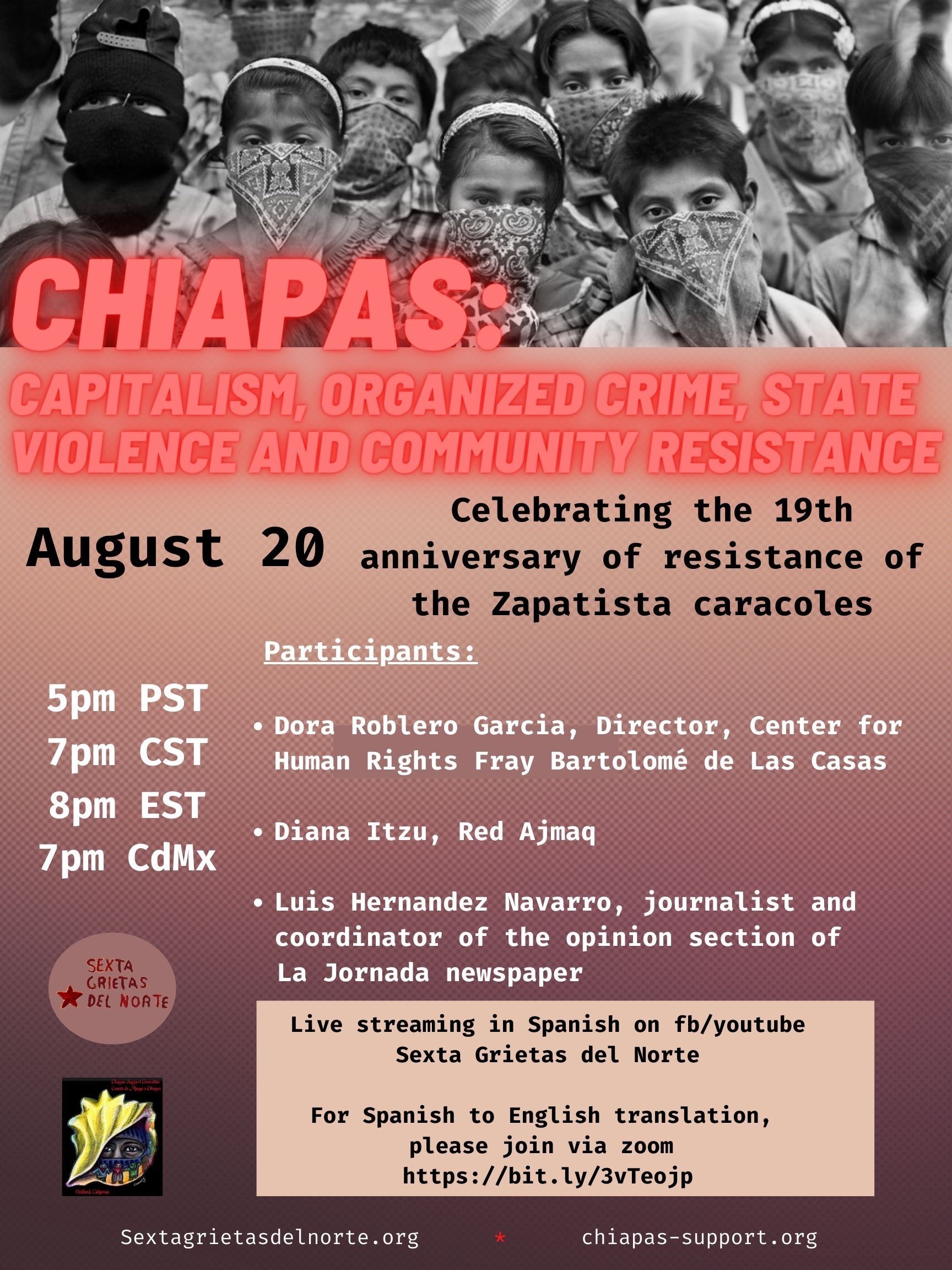
Chiapas: Crimen organizado, violencia estatal y resistencia comunitaria
CELEBRANDO EL ANIVERSARIO 19 DE RESISENCIA DE LOS CARACOLES ZAPATISTAS

Mesa de discusión virtual: 20 de Agosto, 5 pm (Pacific Time) – 7 pm (Ciudad de México)
Con este diálogo celebramos el aniversario 19 de la fundación de los Caracoles Zapatistas y su extraordinaria resistencia anticapitalista, antipatriarcal y anticolonial. Asimismo reflexionamos con preocupación ante la creciente y multidimensional violencia de fuerzas militares, grupos paramilitares y bandas criminales que en concierto van desgarrando a los pueblos de Chiapas. Violencia que acompaña y abre camino a la ilegalización de las personas migrantes y a la penetración de destructivos proyectos y megaproyectos empresariales bajo la bandera de un supuesto progreso y bienestar.
Participan:
Dora Robledo García, Directora del Centro de derechos humanos Fray Bartolomé de las Casas
Diana Itzu, Red Ajmaq
Luis Hernández Navarro, Periodista y coordinador de la sección de opinión del periódico La Jornada
Transmisión en vivo en Facebook: https://www.facebook.com/sextagrietasdelnorte
y Youtube: https://www.youtube.com/c/sextagrietasdelnorte
Versión en inglés vía Zoom:
Enlace: https://bit.ly/3vTeojp
Meeting ID: 842 0154 9599
Passcode: 110768
Invitan:
Sexta Grietas del Norte Sextagrietasdelnorte.org
Chiapas Support Committee Chiapas-support.org

Chiapas: Capitalism, Organized Crime, State Violence and Community Resistance.
CELEBRATING THE 19th ANNIVERSARY OF RESISTANCE OF THE ZAPATISTA CARACOLES
Webinar: August 20, 5 pm PT
We will celebrate the 19th anniversary of the founding of the Zapatista Caracoles and Good Government Councils (Juntas de buen gobierno) and their extraordinary anti-capitalist, anti-patriarchal and anti-colonial resistance. We will also consider the growing and multidimensional violence of military forces, paramilitary groups and criminal gangs that together are tearing apart the peoples of Chiapas. Violence that accompanies and paves the way for the criminalization of migrant peoples and the penetration of destructive business projects and megaprojects under the false banner of progress and well-being.
Speakers:
Dora Robledo García, Director, Center for Human Rights Fray Bartolome de las Casas
Diana Itzu, Red Ajmaq
Luis Hernandez Navarro, Journalist and director of the Opinion Section of La Jornada newspaper
Live streaming on Facebook: https://www.facebook.com/sextagrietasdelnorte
on You tube: https://www.youtube.com/c/sextagrietasdelnorte
For Spanish to English translation, join via Zoom:
Link: https://bit.ly/3vTeojp
Meeting ID: 842 0154 9599
Passcode: 110768
Cosponsored by:
Sexta Grietas del Norte Sextagrietasdelnorte.org
Chiapas Support Committee Chiapas-support.org
Zoom Video
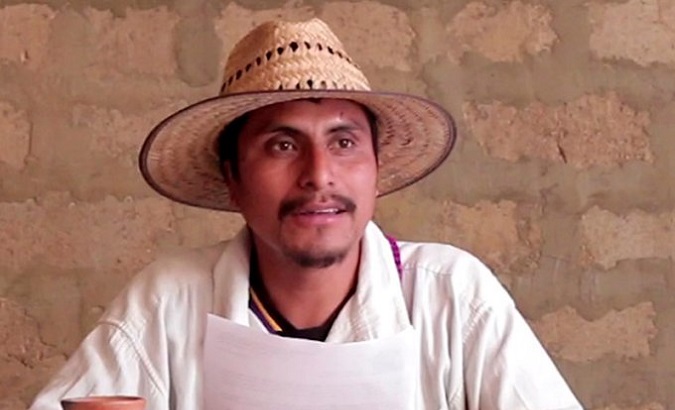
Violence against civil rights defenders in Chiapas worries the Frayba
By: Hermann Bellinghausen, Envoy
San Cristóbal de Las Casas, Chiapas
In the midst of the marked increase of violence and activities of criminal groups that afflict Chiapas, threats and attacks against defenders of human rights and territory are a worrisome aspect.
In the first place, in recent days, one year has passed since the executionby sicarios (hired killers) in the middle of a street in Simojovel of the leader of Las Abejas of Acteal, Simón Pedro. His murder took place in a context of criminality unleashed on Chenalhó and Pantelhó, municipalities of Los Altos (the Highlands) where conflicts between armed groups, and their attacks on the civilian and peaceful population are recurrent.
In another case, the unusual threats and attacks on international observation brigades led the Fray Bartolomé de Las Casas Human Rights Center (Frayba) to close, for the first time in 28 years, a camp in which to protect national and international observers.
Since November 2019, New Town San Gregorio, on territory recuperated in 1994 by the Zapatista National Liberation Army (EZLN, Ejército Zapatista de Liberación Nacional), has been constantly attacked by a group from the nearby San Andrés Puerto Rico, Duraznal y Rancho Alegre villages, who invaded 155 hectares (382 acres) of collective territory in Lucio Cabañas autonomous municipality.
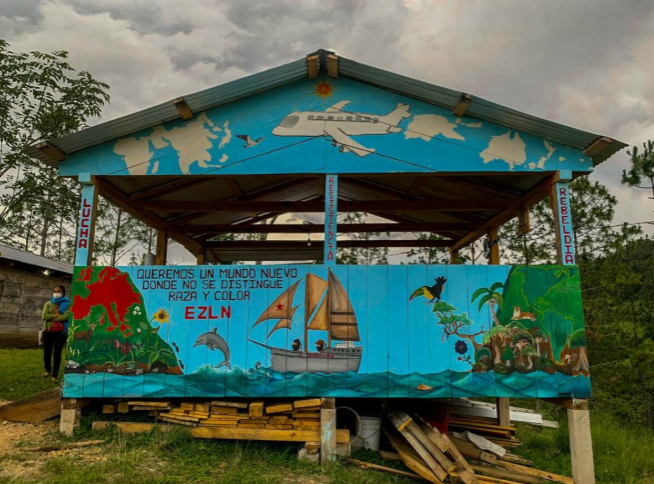
A little more than a year ago, one of the Civilian Observation Brigades (Bricos, their Spanish acronym) was installed there, and, so far this year, has already documented 21 aggressions against the Zapatista families of Nuevo San Gregorio: “Intimidations, threats of death, sexual violence and torture; physical assaults, theft of cattle and destruction of property; water cuts, surveillance; obstruction, control and charging for free transit, as well as kidnapping people. The territory has been fenced off with barbed wire, thereby denying the right to a dignified life, food, health and education.”
In the middle of June, the aggressor group increased its actions and also issued “serious threats against the Bricos.” Frayba points out that the Special Rapporteur on the Rights of Indigenous Peoples and the Special Rapporteur on Internally Displaced Persons, both from the United Nations, have already been informed, as well as the embassies in Mexico whose citizens were in the community.
The omission of the State aggravates the risks
Even so, it points out that: “the three levels of government maintain a deadly silence.” The “omission” of the State to attend to this situation “aggravates the risk to life, safety and integrity of the population, as well as of the members of the Bricos.”
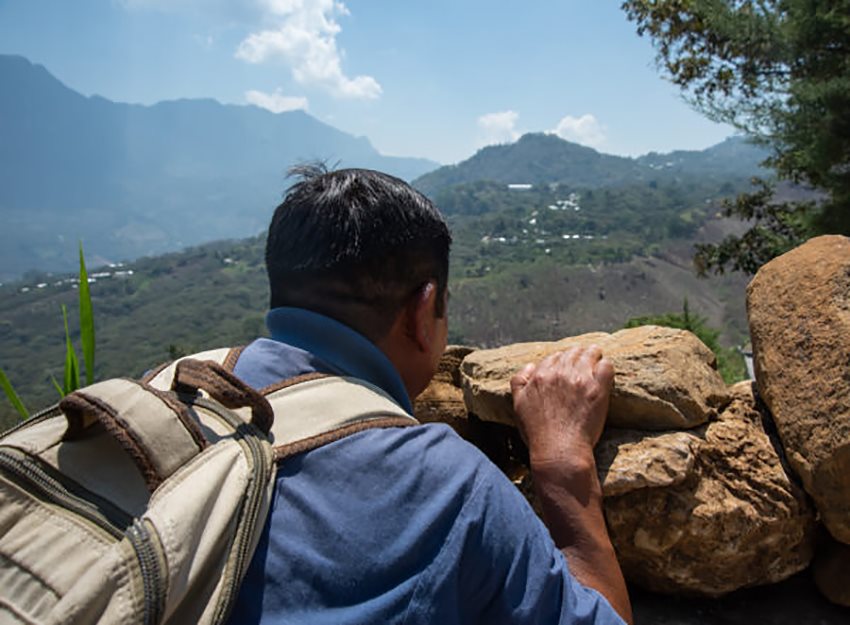
Frayba also lists the cases of police and judicial persecution of defenders, which in the current conditions of violence and impunity in the region have deepened. “The justice system in Chiapas intimidates and criminalizes defenders,” as happened with five social fighters from San Juan Cancuc, who oppose the militarization of their territory and the imposition of megaprojects, and with the recent request for an arrest warrant against the Catholic priest Marcelo Pérez Pérez, “issued by the Attorney General’s Office on June 21,” in direct relation “to his actions of walking peace and taking care of the house in the region of Los Altos. “
The environment of judicial harassment and criminalization, “in which the state government is complicit, it does nothing but fuel the desire for a good, dignified life and to continue building paths for peace.” It’s appropriate to add Cristóbal Santiz, defender of Aldama, where the paramilitaries of Chenalhó do not stop shooting; after being imprisoned, he remains under house arrest on unproven charges.
Another case of criminalization of defenders occurred on October 15, 2020, when Tseltals from Chilón peacefully demonstrated against the construction of a National Guard barracks in their territory. “During the operation, community activists César and José Luis were arrested, and they were victims of torture and mistreatment.” On October 17, César and José Luis were transferred expressly from the regional prison of Ocosingo to El Amate de Cintalapa, without prior notification to the defense. “
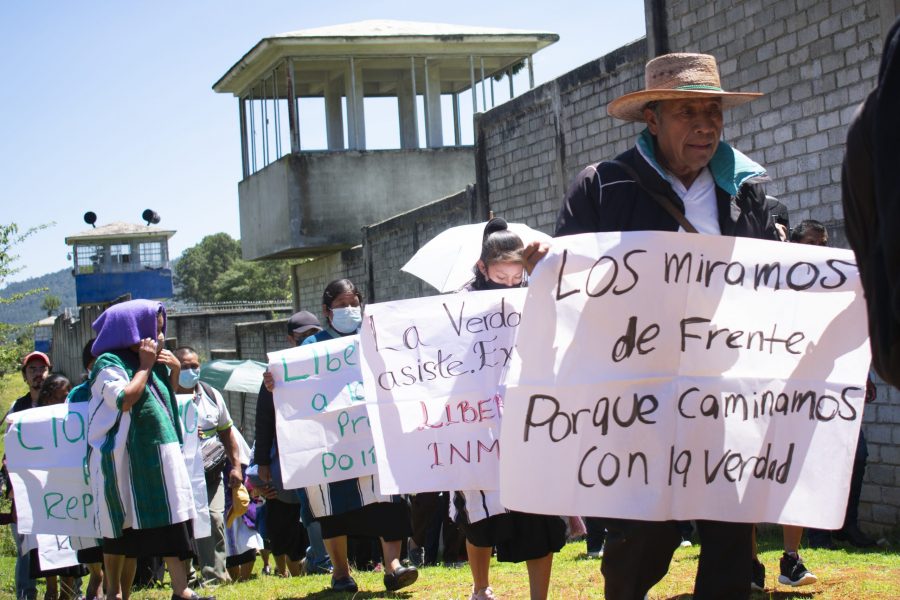
In the aforementioned case of Cancuc, where community fighters were accused of murder, the Frayba demands “a real, effective, scientific investigation that exhausts all lines of investigation to clarify the death of Antonio Aguilar Pérez. “
Likewise, “that this unfortunate event is not used to criminalize defenders of whose innocence there are multiple witnesses,” and that “the authorities do not take advantage of this event to polarize the population.”
Taken together, the documented facts lead the Frayba to declare that: “there is a systematic practice by which prosecutors fabricate versions of the facts beyond an exhaustion of possible lines of investigation, and evidence is invented to force their theory of each case. This malpractice usually includes the indictment of innocent people, a pattern that in turn is endorsed by the State’s Judicial Power.”

Originally Published in Spanish by La Jornada, Tuesday, August 9, 2022, https://www.jornada.com.mx/2022/08/09/politica/009n1pol and Re-Published with English interpretation by the Chiapas Support Committee
Anthropologist and social activist Mercedes Olivera Bustamonte passed away
By: Elio Henríquez
San Cristobal de las Casas, Chiapas
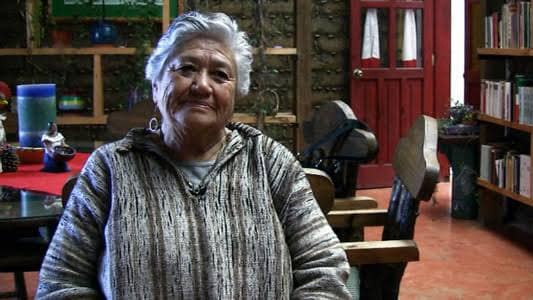
Anthropologist and social activist Mercedes Olivera Bustamante, one of the pioneers of feminism in Chiapas, died yesterday at the age of 87, reported Guadalupe Cárdenas Zitle, coordinator of the feminist collective that bears the academic’s name.
A participant in social movements since the 1970s, she not only excelled in the field of research, but also for her activism and her work with indigenous women, in migration, human rights, labor rights and sexuality, which led her to found different groups and collectives. She supported the Zapatista struggle.
Leader of the Academic Body of Gender and Feminism Studies at the Center for the Study of Mexico and Central America, under the University of Sciences and Arts of Chiapas (Unicach) and PhD in Anthropology from the National Autonomous University of Mexico (UNAM), Mercedes Olivera published anthologies and authored several publications on feminism, including the one that is recognized in Chiapas as the first research on this topic in the state.
Consistent with her activism, in 2018 she renounced an honorary doctorate after the Unicach, which awarded it to her in 2012, announced that it would be given to the then head of the Secretariat of National Defense, Salvador Cienfuegos.
That same year, the Latin American Council of Social Sciences (Clacso) awarded her the Clacso Prize in Buenos Aires, Argentina, and the following year she edited the anthology Mercedes Olivera: Popular Feminism and Revolution. Between Militancy and Anthropology.
“It is a discourse of the constant vindication of rights ranging from the autonomy of indigenous peoples to the liberation of women,” said researcher Monserrat Bosch Heras.
“I met Mercedes during the height of the Central American revolutionary movements, of which she was an active participant through her militancy in the Guatemalan guerrilla process,” although she gradually distanced herself from them for not adopting feminist principles, after which she embraced the Zapatista cause,” Bosch recalled in the anthology.
She also stressed that, “unlike many people, age and the passing of the years did not moderate the strength of her passion for the achievement of a better world, an inclusive world beating with a heart from ‘below and to the left’, as Zapatismo demands.”
Originally from Mexico City, Mercedes arrived in Chiapas in 1970; in San Cristobal de Las Casas, she founded the Center for Research and Action of Latin American Women (CIAM), the Mercedes Olivera Feminist Collective (Cofemo) and the Center for Women’s Rights of Chiapas (Cdmch). She was also a professor at the Faculty of Social Sciences of the Autonomous University of Chiapas (Unach).
After announcing her death, the Fray Bartolomé de las Casas Human Rights Center expressed that she was “tireless in the struggle and defense of women’s rights and the autonomy of the people. She leaves her mark and legacy in those of us who walked with her. May she rest in peace.”
For its part, Clacso, shared on social networks: “Her immense feminist and revolutionary legacy will accompany us in our present and future struggles”.
“We woke up to the news that Mercedes passed away. It is a very sorrowful loss for feminists in Chiapas because she was our teacher for so many years,” expressed Guadalupe Cárdenas Zitle, coordinator of Cofemo.
“It is very sad news, although at the same time it gives me peace of mind to know that she is now resting because her health was bad; she was fighting for years against cancer and a series of complications; her body needed to rest,” she added.
She emphasized that Mercedes, “despite all her health complications, never stopped her work, reflecting and analyzing the problems of women in Chiapas. Her legacy is enormous, she always enlightened us and gave us a lot of guidance on where to walk to achieve that dignified life for women, until her last day.”
She said that the anthropologist and social fighter, who would be 88 years old on September 30, “was a tireless and admirable woman. Feminism in Chiapas was strengthened thanks to her.
Dora Hernández Gómez, “radical feminist of the independent left” and companion “of many struggles since 1990” of Mercedes, announced that she passed away at six o’clock in the morning at her home, located in San Cristóbal de las Casas, where she was accompanied by her children and other family members.
“She is an extraordinary woman who is transcendent as a feminist, revolutionary, humanist, as an integral person in her vision of the women’s struggle. She synthesizes all the efforts of women because she not only defines herself as a feminist but also as a radical left-wing feminist, a definition that is very particular to her,” he said.
She maintained that Olivera “can be defined as a revolutionary of the century and of the millennium. That is how we have understood it. Her legacy is universal. She has left tracks and sown seeds on the five continents, across several generations.”
She asserted that “she is not only a feminist activist, but a scientist with a significance that makes a difference because with her theory, her practice and her exercise of women’s rights she has taught us, she has educated future generations that are just beginning to be glimpsed.”
Cárdenas Zitle pondered: “There is an immense seedbed having to do with her theory and political positioning, her formation, her way of understanding feminism as an anti-systemic struggle.
“That is, it is not the struggle for the happiness of women, but to transform humanity completely in relation to the capitalist, neoliberal, patriarchal and predatory system that is destroying humanity.”
She recalled that Mercedes Olivera “said that feminism has to achieve the autonomy and self-determination of women; if it is not so, it is not complete.”
Originally Published in Spanish by La Jornada, August 8, 2022, https://www.jornada.com.mx/notas/2022/08/08/estados/fallecio-la-antropologa-y-activista-social-mercedes-olivera-bustamante/ Translation by Schools for Chiapas and Re-Published by the Chiapas Support Committee
Bullets rain again in Aldama, Chiapas
By: Hermann Bellinghausen, Envoy
San Cristóbal de Las Casas, Chiapas
After a month and a half of relative calm in the Tsotsil communities of Magdalena Aldama, the rain of bullets from snipers, alleged paramilitaries, posted in different Santa Martha towns, in the municipality of Chenalhó, was reactivó, this Thursday.
According to reports from people displaced from the municipality of Aldama, at 3:50 pm the communities of Tabac and Coco’ were attacked with “high caliber shots fired by armed groups, who come from the attack points of the Police Base and Curva Tontik in Saclum, Chenalhó.” The attack was repeated at 8:24 pm.
The reason for this temporary “respite” is that on June 25 a conflict broke out, with gunfire, between the armed civilian groups themselves in Santa Martha. Since then, the inhabitants of Aldama observe shootings in the community from which they are separated by a large ravine (the disputed territory). There was even an attack on the ejido commission, one of whose members died in the events.
For the communities under attack in Aldama, it was the first time in three years that they were not shot at because of an old agrarian conflict that entered a critical phase five years ago. The representatives of the 12 beneficiary communities of Precautionary Measures 284-18 from the Inter-American Commission on Human Rights (IACHR) and the Permanent Commission of the 115 Community Members and Displaced Persons of Magdalena Aldama expressed in recent days:
“For five years our people have been experiencing a humanitarian and economic crisis after being attacked by armed groups operating in Santa Martha, in the municipality of Chenalhó, due to a dispute over 60 hectares; this has led our people into poverty, to the migration of many people because they cannot work on their plots and crops have also been lost due to abandonment as a result of the attacks, which caused permanent and intermittent forced displacements, as well as several injured and deceased. “
Since April 23, 2021, precautionary measures have been implemented in favor of 12 affected communities in Aldama (IACHR Resolution 35/2021). The commission asked the Mexican State to implement the “security actions necessary to protect and safeguard the life and physical integrity of the beneficiaries.” This has not prevented the shootings. In 2022 alone, more than 200 attacks have been perpetrated.
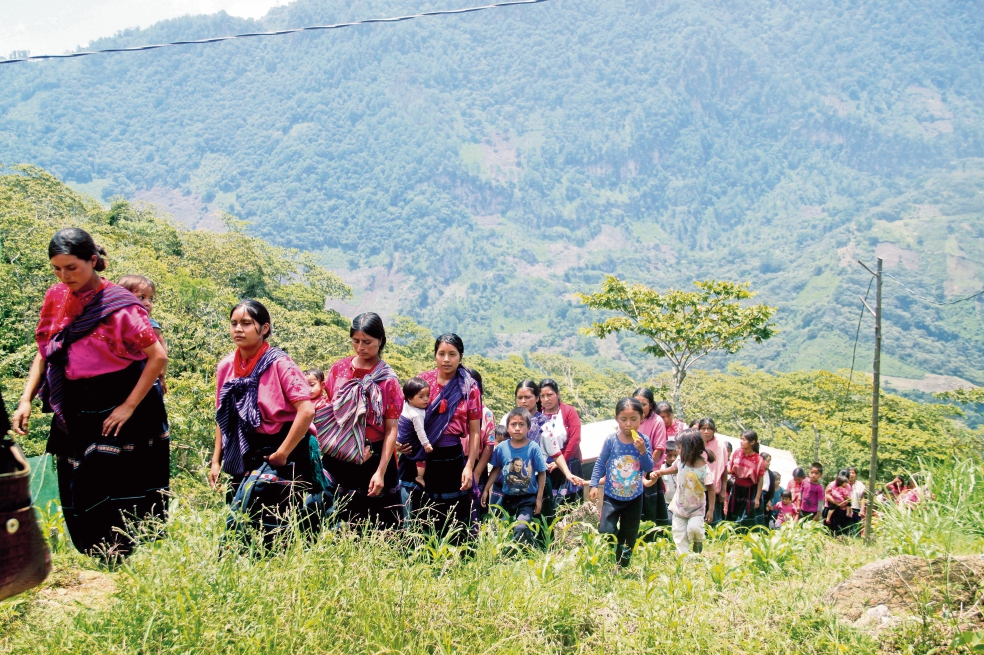
In the opinion of Aldama’s representatives, the internal conflict among their aggressors shows that in Chenalhó there are not one, but several armed groups, and not all are from Santa Martha, they come from other distant towns; those where the Acteal massacre was conceived 25 years ago.
“They continue to operate and murder, as recent events prove. On June 25, a conflict began in Santa Martha between armed groups and the people of the commission over a land dispute.” In fact, there are families displaced from Zapata, in Chenalhó.
The indigenous representatives warn: “If the government doesn’t act in the face of this problem, what happened in Acteal in 1997 could be repeated, because paramilitarism is still active and was never disarmed. The real murderers still move freely, while the innocent, who seek true justice, demand their human rights, their rights to the land, to peace and to defend the territory, continue to be deprived of their freedom, threatened, persecuted.
“The government never dismantled and investigated these armed groups, while the organizers remain free, and the threats against our people continue. The population continues living in fear and with psychological effects, nervousness and illnesses that this situation has caused.”
The displacements are permanent” The communities of Xuxch’en, Coco’, Tabac, Ch’ivit, Stzelejpotobtik and the municipal seat are “high risk zones. The last displacement took place in Ch’ivit on February 20 of this year. But, “intermittent displacement encompasses 10 communities that leave their homes when the attacks are very intense.” This impedes transit and causes “crop damage and losses.”
The Tsotsil representatives declare: “The only thing we ask is to live in peace, to resume our daily lives and that the children return to the classrooms, that transit is free and without fear, that when we go to our parcels we are no longer hunted like animals.” Although some compensatory agreements have been reached in their favor, before the pending granting of the lands to Santa Martha, “the economic, material, physical and psychological damages are still latent in our hearts.” And most of their demands have not been met.

Originally Published in Spanish by La Jornada, Saturday, August 6, 2022, https://www.jornada.com.mx/2022/08/06/politica/010n1pol and Re-Published with English interpretation by the Chiapas Support Committee
Autonomy against all odds
By: Magdalena Gómez
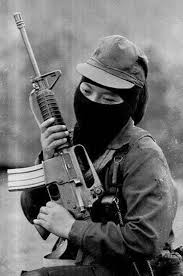
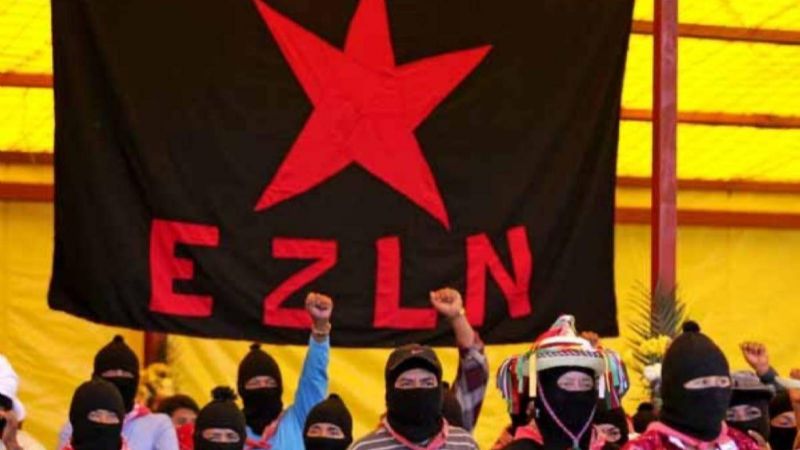
On August 9, 2003, in Oventic, Chiapas, the Zapatista National Liberation Army (EZLN, Ejército Zapatista de Liberación Nacional) announced the creation of the caracoles and the good government juntas, in substitution pf the Zapatista rebel autonomous municipalities (MAREZ), whose functions would continue. An authentic second body for the mediation and resolution of conflicts was proposed through the Juntas to “deal with denunciations against the autonomous councils for human rights violations, investigate their veracity, order the autonomous councils to correct these errors and to monitor their compliance.”
Thus, they constituted an organization unprecedented in Latin America. With this, their congruence in terms of respect for indigenous peoples was reaffirmed against the grain of avant-garde positions. The word of the then Subcomandante Marcos, today Galeano, shared strategic reflections. I highlight two of them: the decision to place the military organization at the level of defense and to demarcate this component from the functions of fully civilian government, speak to us of the reiteration of the position of not supplanting the peoples and, ultimately, of not “militarizing” their culture. On the other hand, the categorical demarcation in the face of the “separatist ghost” (official defensive discourse), said: “Autonomy is not fragmentation of the country or separatism, but the exercise of the right to govern and govern ourselves as established in article 39 of the Political Constitution of the United Mexican States. “
A decade later, at the end of 2013 and January 2014, the EZLN insisted on systematizing and sharing its experience through the Zapatista school, a great effort, with the desire to bring the mirror closer and give support to its constant call to organization in the country and outside it. By the way, the Journey for Life, Europe chapter, held in 2021, continues with the conviction of learning and sharing to strengthen the global the anti-capitalist struggle.
This anniversary of the caracoles and the good governance juntas has nothing to do with a mere festive event. The process has been complex and its development has occurred in a problematic environment such as lack of resources, militarization, para-militarization, counterinsurgency campaigns, harassment from criminals and drug trafficking, among other factors that frame their challenge to the Mexican State to build autonomy in fact and recreate their right to their own law. It is a land of chiaroscuros.
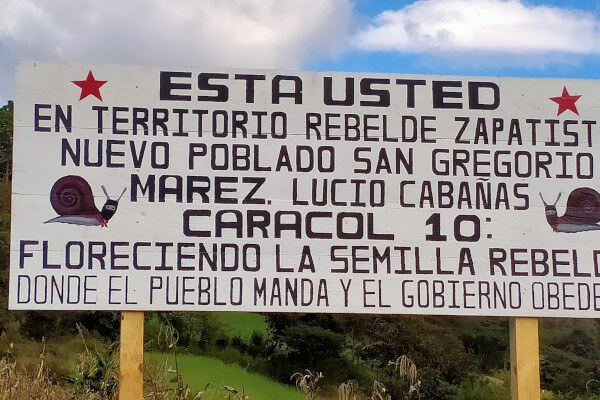
With a significant jump, the EZLN reported on August 17, 2019 that “we have already broken the siege,” created seven new caracoles or centers of autonomous resistance and Zapatista rebellion (Crarez) – most would be the seat of (good government juntas (JBG, juntas de buen gobierno) – in addition to the five it already had, the original five caracoles (Oventic, La Realidad, La Garrucha, Roberto Barrios and Morelia and four new autonomous Zapatista rebel municipalities in Chiapas. And yet, both the Zapatista territories and the rest of the municipalities in Chiapas live under siege and violence, marked by impunity and omission or action from the three levels of government. A serious situation and unfortunately also present in other regions of the country. An example of this is the pronouncement issued on July 28 by the Ajmaq Network of Resistances and Rebellions, the Anticapitalist University Network (Mexico City), Mujeres y la Sexta, Abya Yala, Resistencias Vinculando Dignidad-Movimiento y Corazón Zapatista (Red MyC Zapatista) with the adhesion of numerous people and organizations from Mexico and other countries, denouncing the aggressions against communities of Caracol 10 Flowering the Rebel Seed, of the Good Government Junta New Dawn in Resistance and Rebellion for Life and Humanity of the EZLN: burning their houses, risk of their crops causing their forced displacement.
Who is in charge of stopping violence and dispossession? An axis of the dispute against the Zapatistas is in the territories recovered since 1994 and in the groups that were out of all control or with alliances in political sectors. Such a panorama leads us to suppose that the EZLN is not for celebrations no matter how significant they may be, and in this case, it obviously is. We do not know the specific situation of all the caracoles, they are the ones who decide when and how they issue statements regarding aggressions such as the one denounced against the Caracol 10, which is not the only one. The atmosphere of provocation is active and directed at various sectors of the social movement and indigenous peoples in the state of Chiapas. While this situation is experienced in Chiapas and other states and peoples, it does not surprise us that, next August 9 also being International Indigenous Peoples Day, on the official side dressed not only with a mask, but with a blindfold, the rhetoric of self-complacent celebration is deployed.

Originally Published in Spanish by La Jornada, Tuesday, August 2, 2022, https://www.jornada.com.mx/2022/08/02/opinion/015a1pol and Re-Published with English interpretation by the Chiapas Support Committee
The Lacandón Commune at 19 years
By: Luis Hernández Navarro
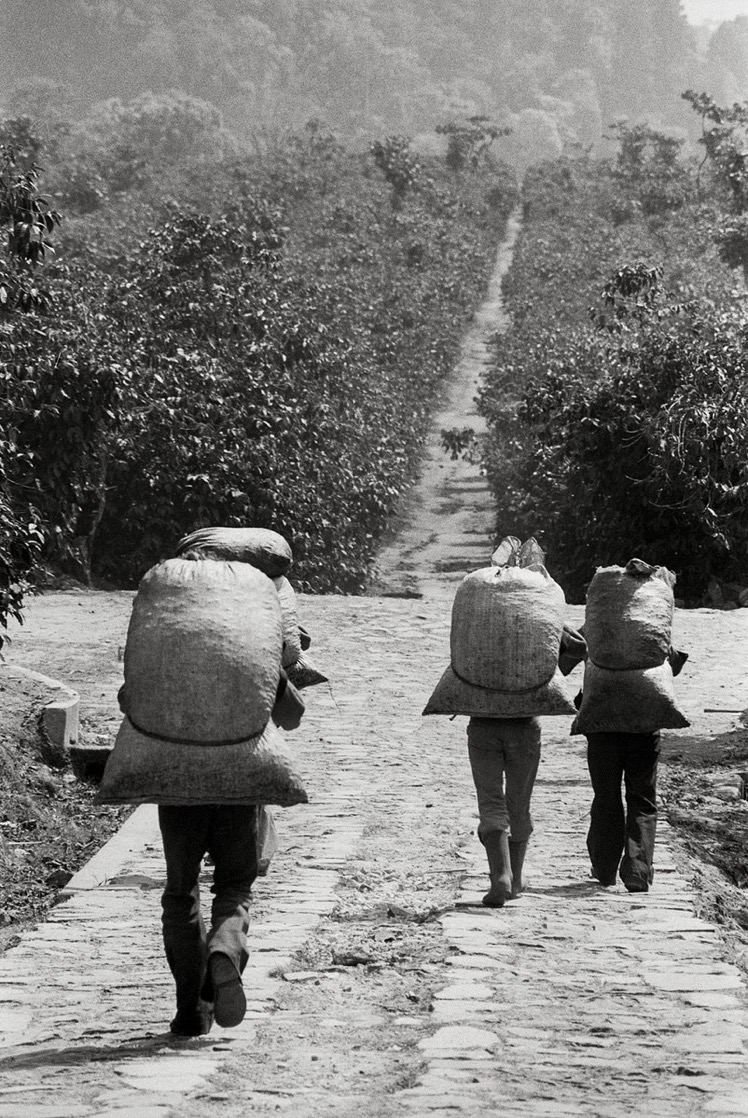
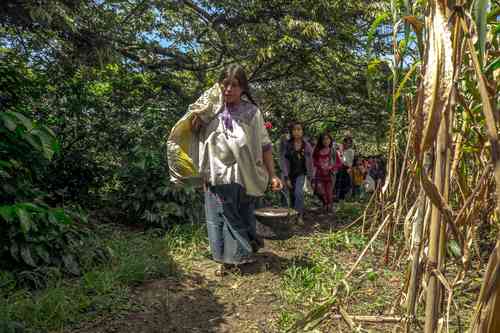
Fabrizio León’s photograph taken in 1985 speaks for itself. With heavy bundles of coffee on their backs and the aromatic coffee orchards spread out to the mountainside in front of them, three indigenous Chiapanecan day laborers walk to drop off their load. It is the final push of the day. After the endless chore picking the cherries, they are on their way to leave their load with the landowner before the sun sets. It is a fruit harvested with blood and sweat, plunder and pain.
The story told by the image is far from anecdotal. That past is still present. It is etched in the skin and memories of those who suffered it, but also in their children and grandchildren. In her powerful book, Justicia Autónoma Zapatista: Zona Selva Tzeltal, Paulina Fernández Christlieb, wrote: For those who were born and worked on those farms, what still matters to those old men and women is the beastly treatment they were given, the whip lashes they received as punishment. They are the workdays of more than 12 hours without pay, the kilometers between the farm and the city to where they had to go, and from where they had to carry loads on their backs.
From the bitter experience of being born and working as laborers on farms and in the mountains, from the abuse of women by the masters of gallows and knives,[1] but also from the exodus to the jungle to build another future, was born the fury and the obligation to change things, the will to rebel against an order that was not only unjust, but also indecent.
In the early 1970s, hundreds of thousands of indigenous people, mostly Tseltales, Tsotsiles, Choles and Tojolabales, set out to recover their lands, crops and lives. They occupied large estates; they formed cooperatives to market their coffee, cattle, corn and handicrafts without coyotes; they tried to form unions to negotiate better working conditions; they recovered their language; they sought to provide for themselves and their health.
Their audacity in stitching the social fabric of the resistance resulted in them paying a very high price in blood, jail and police and military persecution. One example, among many more: in the summer of 1980, in Wolonchán,[2] municipality of Sitalá, peasants unfenced and occupied thousands of hectares unjustly appropriated by cattle ranchers. Juan Sabines Gutiérrez was governor of the state. In an attempt to put things in their place, on May 30 of that year, from the long guns of the forces of law and order came the fire that massacred 50 indigenous people.
With permanent harassment from White Guards [3]and gunmen in uniform, the campesinos had to undertake a modern-day ordeal to have the possession of their lands recognized. They futilely visited public offices and knocked on the doors of agrarian officials. They walked the paved road that connects Tuxtla Gutiérrez with Mexico City. All too often, the legal route proved useless to them. The legal route only served to deny them justice.
But many of these indigenous people looked beyond their immediate demands. Abraham López Ramírez was the historic leader of the Cholom Bolá Cooperative. In addition to marketing his coffee, he dreamed of establishing the Chol Republic. On the walls of his office hung a poster announcing the imminence of his wish coming true, printed years ago, at the time when the Franciscans worked in the region.
The mixture of old grievances and the unresolved struggle against them, facilitated the conditions for the creation of a peculiar three-legged social animal in a good part of Chiapas: productive peasant organizations, the word of God and the instrument to defend themselves from the bad government and the Chiapas family, and the Zapatista National Liberation Army (EZLN). On January 1, 1994, these communities, in struggle for decades, said Enough is enough, and rose up in arms. They were not alone. The uprising connected with a deep national discontent.

At the end of 1995 a window seemed to open to address part of their long list of grievances, and to constitutionally recognize a new pact between the State and the indigenous peoples, which would admit their existence as such and their right to self-determination and autonomy as part of it. In this direction, on February 16, 1996, the San Andres Accords on Indigenous Rights and Culture were signed.
The Mexican State never kept its word (it still has not). Instead, it approved a caricature of a constitutional reform that recognized the rights of the original peoples as long as they could not exercise them. Without asking permission, in silence, the Zapatistas dedicated themselves to putting into practice what should have been approved in the law: building autonomy. In August 2003 they announced the formation of good government juntas and caracoles, as organs to govern themselves. Thus, the commune of the Lacandón was born.
It has been 19 years since then. Since then, on the margins of the party officials (partidistas, as they call them) and of the counterinsurgent action against them, they appoint their own authorities, exercise justice, self-organize agricultural production, take charge of the health and education of their support bases, develop art and sports, without accepting governmental resources.
With its memory fixed on the hell of what life was like on the plantations (fincas), the Lacandón Commune has brought up several generations of indigenous rebels. Despite the passage of the years, its emancipatory impulse and vocation is maintained with extraordinary vigor. Within its flexible borders, there is no exploitation like the one shown in Fabrizio León’s photograph. Many things have changed in the country and in the world thanks to it [the commune]. Still more will change.
Notes:
[1] The expression in Spanish, “señor de horca y cuchillo” (masters of gallows and knives), refers to a tyrannical feudal leader who managed his serfs under threat of capital punishment.
[2] If you do a Google search for Wolonchán, you will find it Hispanicized as Golonchán.
[3] The Guardias Blancas, or White Guards, in the history of Chiapas, were hired guns of the local politicians and estate owners belonging to the PRI political machinery. The Guardias Blancas were used to gain control of land. These groups gave way to para-militarization in order to control land rights in the state.

Originally Published in Spanish by La Jornada, Tuesday, August 2, 2022, https://www.jornada.com.mx/2022/08/02/opinion/014a1pol Translation by Schools for Chiapas, and Re-Published by the Chiapas Support Committee
Guatemalan president unharmed after shooting incident near Chiapas border
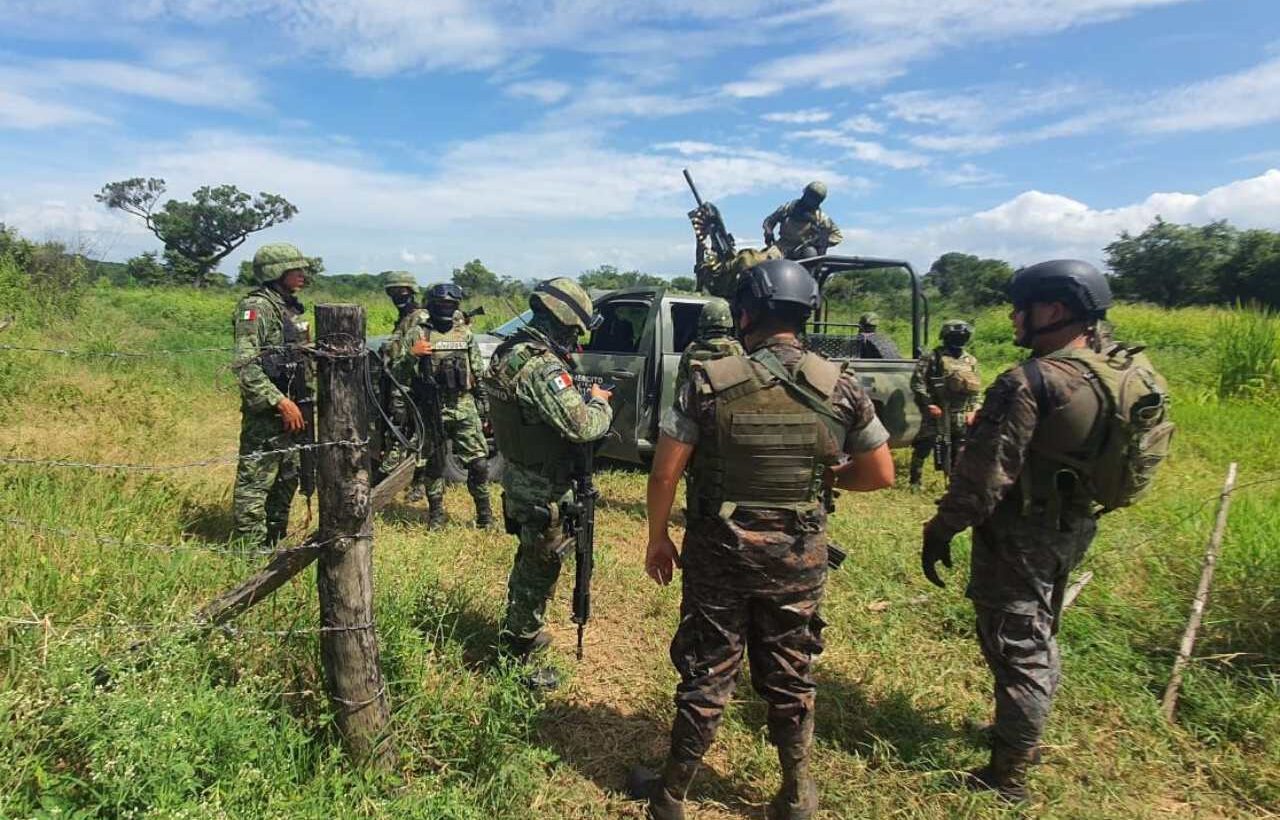
The president of Guatemala, Alejandro Giammattei, was not injured this Saturday in an armed attack on his entourage when he was leaving a village in the northwest department of Huehuetenango, a local radio station reported.
“Shooting at the presidential entourage in the La Laguna village of Jacaltenango, Huehuetenango,” the radio station Sonora es la Noticia (SN) first reported [1], and it added that there were injuries, although “President Alejandro Giammattei was not injured and is safe.”
The attack took place in La Laguna village in Jacaltenango, Huehuetenango, when members of the Guatemalan Army identified a suspicious vehicle and demanded that it stop. In that moment, its crew opened fire on the soldiers and, therefore, also on the president and his entourage that came in a caravan.
The soldiers repelled the attack and injured one of the crew members, who was injured in the leg. The rest of the passengers fled into Mexican territory, but were arrested by the Mexican Army. Those arrested are four, all of Guatemalan nationality.
Minutes before the attack, Giammattei and his Minister of Agriculture, José Ángel López, participated in an activity to incentivize small producers and entrepreneurs in order to publicize their articles and market them.
“Guatemalan Army units stopped a vehicle that was approaching their location; however, when members of the vehicle’s crew noticed the presence military personnel they started shooting and the soldiers responded,” the Army’s spokesperson, Rubén Tellez, indicated.
“The reaction of the members of the vehicle deserved the response that was given and to treat it as a possible attack on the entourage and the integrity of Mr. President, “said the official.
In the event, a man of Mexican origin who identified himself as Josué López Velásquez, an alleged member of the Jalisco Nuevo Generación Cartel, was injured. Apparently, the sources said, Lopez is the alleged leader of the structure that confronted the Guatemalan military.
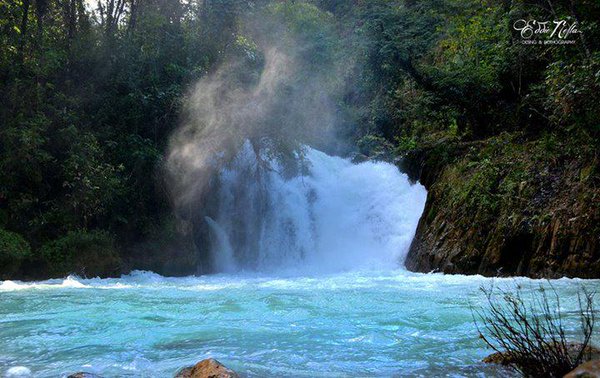
The zone is frequented by human traffickers, as well as drug traffickers, many of whom work for Mexican cartels.
The Presidency has not reported anything about that event and journalists from the state News Agency who accompanied the president on that work tour explained to Efe that they are well and that they are on their way back to the capital. “We’re doing well and we went to the first activity,” assured the journalist Brenda Larios, who covered the president in La Laguna.
Giammattei had traveled to Huehuetenango by helicopter on a work tour to promote products that the inhabitants of La Laguna cultivate, so that they can be marketed. “We are promoting local products in Huehuetenango, to support the small producer,” said the president, who shared with the neighbors, according to the official agency.
He suffered the attack when he was withdrawing from the event.
[1] Chiapas Paralelo reported: “The Guatemalan radio station Sonora es la Noticia was the first to report the event. In a note it warned that the events occurred while the Guatemalan and Mexican Armies were patrolling at a point on the border, when: “a group of armed individuals attacked them and they repelled the attack within the Guatemalan side.” And that the person injured was identified as a member of the armed commando, whose name is Carlos José López Velásquez, approximately 27, of Mexican nationality. The entire region is an area disputed between organized crime groups. Just last July 16, there was a confrontation in these border municipalities.
==Ω==
Originally Published in Spanish by Infobae.com, Saturday, July 30, 2022, https://www.infobae.com/america/america-latina/2022/07/30/atacaron-a-balazos-al-presidente-de-guatemala-alejandro-giammattei-y-a-su-comitiva/ and Re-Published with English interpretation by the Chiapas Support Committee
A world without hegemonic power

By: Raúl Zibechi
Instead of lamenting or rejoicing over the drift of the war in Ukraine, for or against one or the other side, I think that we ought to understand how changes in the world order are affecting the peoples and popular movements. Geopolitics should be useful to us for defining the ways of acting of those below in the face of the storms underway.
A recent article by José Luis Fiori, a Brazilian researcher at the Institute for Strategic Studies on Oil, Gas and Biofuels, highlights in an article in IHU Unisinos that the world is moving from an “almost absolute unilateralism” to an “aggressive oligarchic multilateralism,” in a period in which the world “will live for a time without a hegemonic power” (https://bit.ly/3PwEctf).
This statement seems to me to be as accurate as it is important. For a few decades we will live in a world where no power will be able to unilaterally define the rules and, therefore, we’ll enter a period of chaos and decomposition of the world-system. The rules will very often be imposed by armed gangs or packs of parastatal killers.
A relatively brief period, in historical terms, of profound convulsions and gigantic storms, as Zapatismo has already analyzed. Something like this has happened during the wars of independence, the transition between the Spanish and British hegemonies, or in the first half of the 20th century, with two world wars and multiple revolutions in the third world, which marked the rise of the United States.
Although things will not be identical now (due to the sum of the climate crisis, nuclear weapons, the rise of non-Western powers and the crisis of capitalism, among others), history can serve as a mirror and an inspiration, because the popular sectors of the world were brutally attacked and could not make their own projects prevail, when they had them.
Based on the fact. that we are entering a world without a hegemonic power, I would like to present some ideas about the role that those from below can play in this convulsive stage.
The first point is that we must reject both the old decadent power and those aspiring to replace it. These are wars between empires and ruling classes in which our interests are absent. In the Latin American wars of independence, the native, black and mestizo peoples risked their lives so that the Creoles could take power.

For them nothing changed. Even worse, in many cases the new republics were more brutal than the viceroyalties, as evidenced by the case of the Mapuche people who suffered dispossession and genocide in the so-called Pacification of Araucanía.
The second point is that it is essential to open spaces typical of the peoples, to launch long-term projects that do not benefit either the old elites or the new emerging ones. If we’re not able to raise our own projects, we will be absorbed by the ruling classes that will use media propaganda to add us to some of their projects of domination, as is currently the case with the invasion of Ukraine.
The third point is that no one is going to defend us and many are killing us or trying to tame us. The existence of multiple forms of violence exercised by all kinds of armed gangs – from drug trafficking to paramilitaries and state forces – are the product of a system in decomposition, in the same way that femicides show a wounded and decadent patriarchy, thus more brutal.
For now, we must create self-defense modes for the peoples and the social sectors that decide to defend themselves, using the forms that each one considers adequate. Although we can chose nonviolent and peaceful resistance, when it’s about defending life we should be flexible at the time of choosing the ways.
Finally, in a chaotic world crossed by multiple violence, where famines, wars and catastrophes of all kinds occur (the fires of this Boreal summer are a small sample of what is to come), we can survive if we create collective autonomous arks capable of navigating the storms.
The peoples who are already traveling this path are not just a few. From the native peoples and neighborhoods grouped in the Indigenous Government Council in Mexico, to dozens of Amazon peoples, Mapuche in Chile and Argentina, Nasa and Misak, in Colombia, among others. As always happened in history, it is in the peripheries where the new is born, where they teach us ways that we can replicate without imitating.
To travel the path of the autonomies from below, we must stop looking towards above, getting excited about the electoral circuses, with candidates of the system and even with the constituents, because it saps our energies for the most important task, which can pave the way for our collective survival: the construction of multiple and diverse integral autonomies.

Originally Published in Spanish by La Jornada, Friday, July 29, 2022, https://www.jornada.com.mx/2022/07/29/opinion/020a2pol\ and Re-Published with English interpretation by the Chiapas Support Committee
Joint Statement against the aggressions towards communities of the EZLN’s Caracol 10
Jobel, Chiapas, Mexico
On July 28, 2022
To the Zapatista National Liberation Army (EZLN, Ejército Zapatista de Liberación Nacional)
To the National Indigenous Congress
To the National and International Sexta
To the Networks of Resistance and Rebellion
To those who sign the Declaration for Life
To the people who sow Dignity and Organization
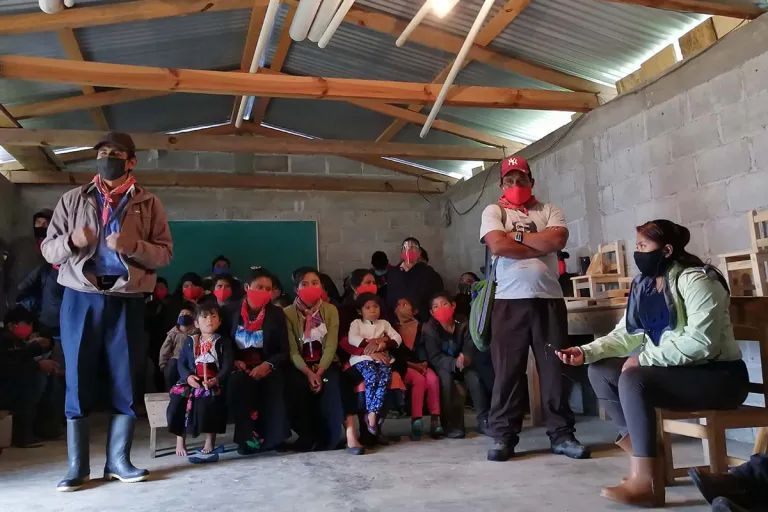
Organizations, collectives and networks adhering to the Sixth Declaration of the Lacandón Jungle denounce the persistence of aggressions, harassment and forced displacements with the complicity and impunity of all three levels of government towards the autonomous communities of; El Esfuerzo, Comandanta Ramona Zapatista Rebel Autonomous Municipality; Nuevo San Gregorio, Moisés y Gandhi region, Poblado La Resistencia, Poblado Emiliano Zapata, Poblado San Isidro and 16 de febrero, Lucio Cabañas Rebel Zapatista Autonomous Municipality, of Caracol 10 “Blossoming the Rebel Seed,” of the Good Government Junta “New Dawn in Resistance and Rebellion for Life and Humanity” in Chiapas, Mexico. We also denounce the obstruction of human rights work carried out by the Civil Observation Brigades (BriCO).
On Thursday, July 14, 2022, the Fray Bartolomé de Las Casas Human Rights Center (Frayba) documented that at approximately “08:00 hours, ejido members from Muculum Bachajón, headed by the ejidal commissioner together with municipal police and civil protection agents, arrived at the town of San José Tenojí, Chilón, where they held a meeting, and at around 13:50 hours they violently entered the town of “El Esfuerzo,” Comandanta Ramona autonomous municipality (comprised of 54 hectares of land recovered in 1994 by the EZLN), displacing six families Bases of Support of the Zapatista National Liberation Army (BAEZLN) who left their usual location to protect their lives and moved to the community of Xixintonil, they also set fire to the houses and their property and there is a risk that 20 hectares of corn and beans that have not yet been harvested will be lost” [1].
On June 29, 2022, at a press conference, our comrades from Frayba presented a report in which they denounced the death threats against national and international observers and the obstruction of their defense work. [2].
Remember that since March 2021 a camp for the BriCOs was set up in the Zapatista community of Nuevo San Gregorio with the objective of safeguarding the physical and emotional integrity of our Zapatista comrades. In a context of constant aggressions since November 2019 by a group of people coming from different neighboring communities known as “Los 40 Invasores,” (the 40 Invaders) who have encircled and dispossessed 155 hectares of land recovered in 1994 by the EZLN, which are part of the collective territory of Nuevo San Gregorio [3].
Since April 2019, the Moisés y Gandhi Region has been the target of armed aggressions by the paramilitary group of the Regional Organization of Coffee Growers of Ocosingo (ORCAO), due to an agrarian interest in dispossessing lands recovered by the EZLN [4].
On May 5, 2022, the paramilitary group ORCAO forcibly displaced four families made up of 29 people in the town of La Resistencia, as well as 11 families made up of 54 people in the town of Emiliano Zapata. To this we add the paramilitary aggressions towards the town of San Isidro and the town of Moisés y Gandhi [5].
In another attack, on January 10, 2022, at approximately 01:00 hours, the autonomous community of 16 de Febrero was attacked, where an unidentified group of about 15 hooded and armed people entered the autonomous community, in addition to beating some families and disappearing four people for a few hours [6].
As adherents to the Sixth Declaration of the Lacandón Jungle, we have been witnesses to the dignified processes of resistance of the Zapatista families in order not to give in to criminal provocations. In the same way we have been witnesses, and we have accompanied the work of the observers and our compañerxs of Frayba. We can assure that we have tried to do an impeccable job as defenders of rights, where the main objective is and has been to safeguard the project of autonomy and life that the Zapatista struggle represents. The importance of the work of the BriCOs is fundamental within the political work in the state of Chiapas, a work that has been carried out for 28 years. We find it highly worrisome that this work, which is committed to life, is being threatened in different ways, even to the extreme of threats of rape directed against our fellow observers. It is truly regrettable that the observation activities in this territory have been suspended, we know and share the reasons why our Frayba comrades have taken this decision, as it leaves the inhabitants of the Zapatista community of Nuevo San Gregorio vulnerable. Today, once again we see the misgovernment of the supposed and cynical “Fourth Transformation” that allows the life, physical and emotional integrity of human rights defenders to be threatened.
Faced with this whole scenario of war against the life and autonomy of the Zapatista peoples, we can say that for 28 years Mother Earth has been resisting and sustaining the autonomy of the Zapatista peoples, guardians of the recovered lands that are legitimately the lands of the EZLN. From there the fabric of life blossoms and produces seed that resists and rebels against this criminal capitalist system; through a relationship of respect and care for Mother Earth with organizational processes where the autonomy of the community and the collective are places of resistance that illuminate the horizon and we can look at ourselves in the mirror that another world is possible.
Therefore, we call on all comrades adhering to the Sixth Declaration of the Lacandón Jungle and Networks of Resistance and Rebellion, so that all of us as comrades in the struggle for Life and for the defense of Mother Earth can join in from our geographies, according to our own ways. We call on all of us, as comrades in struggle for Life and for the defense of Mother Earth, to join together from our geographies, according to our ways and times, to DEMONSTRATE AS SOON AS WE CAN, with the objective of denouncing this war against life, the autonomy of the Zapatista peoples, for the integral security of human rights defenders and to demand that the Mexican government cease its complicity and impunity.
We also make a call to participate in dislocated and public actions during the first week of August 1-8 to jointly make visible the denunciations. That is to say, we call to demonstrate spontaneously and jointly, without in any way canceling the other to break the media siege… All voices!
Stop the harassment of the Zapatista communities!
Stop counterinsurgency practices against the communities of Caracol 10 of the EZLN!
Network of Resistances and Rebellions AJMAQ
Anticapitalist University Network (Mexico City)
Women and the Sixth, Abya Yala
Resistencias Enlazando Dignidad-Movimiento y Corazón Zapatista (Red MyC Zapatista)
More endorsements: Send email to ajmaq_chiapas@riseup.net
[1] https://frayba.org.mx/desplazamiento-zapatistas-el-esfuerzo
[2] https://frayba.org.mx/amenazas-de-muerte-contra-observadores-nacionales-e-internacionales
[3]https://frayba.org.mx/brigadas-civiles-de-observacion-en-la-comunidad-autonoma-nuevo-san-gregorio
[4] https://redajmaq.org/es/informecaravana2020
[5]https://redajmaq.org/es/denuncia-de-desplazamiento-forzado-las-comunidades-zapatistas-poblado-la-resistencia-y-poblado
[6]https://frayba.org.mx/desaparicion-forzada-de-4-bases-de-apoyo-zapatistas-del-caracol-patria-nueva-municipio-de-ocosingo
Endorsements:
Sexta Grietas del Norte
Red de Resistencia y Rebeldía Tlalpan
Mexicanos Unidos
Armando Soto Baeza
Carolina Concepcion González González . Profesora – Investigadora en la UABCS . La Paz, Baja California Sur
Peter Rosset
Espacio de Lucha contra el Olvido y la Represión (ELCOR-Chiapas)
Diana Itzu Gutierrez Luna (Chiapas, México)
La Cátedra Jorge Alonso
Colectivo Nodo Solidale (México – Italia)
José Antonio Olvera Llamas
Colectividad Nuestra Alegre Rebeldía(NAR) de la Red Morelense de Apoyo al CNI/CIG
Lumaltik Herriak
Desmi A.C.
Charlotte SaenzCaitlin Manning, San Francisco, CA
Comite de Apoyo a Chiapas, Oakland, CA
Miriam de Nazaret García del Saz
Enrique Bauza Ferre
Red de Solidaridad con Chiapas, Buenos Aires – Argentina
Raúl Zibechi (Uruguay)
Colectiva Corazón del Tiempo / Puelmapu territorio ancestral Mapuche
Ramona Mercado Autogestivo Natural, Córdoba, Argentina
Valeria Sbuelz, Córdoba, Argentina
Red de feminismos descoloniales
Citizens Summons, Bonn, Alemania
Tampico abajo y a la izquierdaConfederación General del Trabajo (CGT)
Constanza Araya Sandoval, Antropóloga, Madrid
Associació Cultural el Raval-El Lokal
IF Mexicogruppen, DinamarcaRed Latina sin fronteras
Patrícia Rios Brandi
Centro de Documentación sobre Zapatismo – CEDOZ-
Elena Cedrón portal Confraternizarhoy, Argentina
¡Compas arriba! Medios Libres
Olivia Meehan
Asociación Cultural Q’anil, San Juan Sacatepéquez, Guatemala
Francisco De Parres Gómez – Antropólogo / Fotógrafo
Carolina Elizabeth Díaz Iñigo – Antropóloga
Colectivo Transdisciplinario de Investigaciones Críticas (COTRIC)
Asamblea Libertaria Autoorganizada Paliacate Zapatista, Grecia
Y Retiemble!. Colectivo de apoyo en Madrid al CNI-CIG y al EZLN
Miriam Barranco Díaz
Ma. Eugenia Sanchez Diaz de Rivera. Puebla
Colectivo gata-gata. Alemania.
André Nascimento
Assentamento Utopia e Luta – Porto Alegre-Brasil
Valentina Cisneros
Israel Mora Pirra
Antonio Gritón (artista visual)
Arturo Anguiano Profesor-investigador
Morfin Otero, Francisco
Inés Durán Matute
Escuelas para Chiapas
Kate Keller
Alicia Castellanos Guerrero
Gilberto Lopéz y Rivas
Sylvia Marcos
Bárbara Zamora
Raúl Delgado Wise
Ana Esther Ceceña
Juan Villoro
Jorge Alonso Sánchez
Márgara Millán
Servando Gajá
Comunidad Circular AC
Sashenka Fierro Resendiz, Ensenada, BC
Magdalena Gómez
JAD Co.Productions
Núria Gràcia
María Eugenia Sánchez
Magdalena Gómez
Aída Hernández
Juan Carlos Rulfo
Elisa Cruz Rueda
Raúl Romero Gallardo
Silvia Resendiz Flores, Activista feminista, Ensenada Baja California
Luiz Alberto Barreto Leite Sanz
Epifanía Pérez Vázquez, Adherente a la Sexta Declaración
Cassio Brancaleone
Arbel Mendoza Pérez/ Misión de Guadalupe, Chiapas
Clara Redal Montané, Madrid
Unitierra Oaxaca
Carlos López Beltrán
Paula Mónaco Felipe
Mujeres de la Sexta Jovel
Coopia
Lengualerta (cantor-CDMX)
Fernanda Navarro
Renata Ferreira da Silveira – Porto Alegre/Brasil
Marcelo Argenta Câmara – Porto Alegre/Brasil
Dilermando Cataneo da Silveira – Porto Alegre/Brasil
Bárbara Gonçalves Hesseln – Porto Alegre/Brasil
Nelson Rego – Porto Alegre/Brasil
Sinthia Cristina Batista – Agb Porto Alegre – Docente UFRGS – Porto
Alegre/Brasil
Ateneu Libertário A Batalha da Várzea – Porto Alegre/Brasil
Associação dos Geógrafos Brasileiros – Seção Porto Alegre
Teia dos Povos – Brasil
Teia dos Povos São Paulo – Brasil
Teia dos Povos Rio Grande do Sul – Brasil
Teia dos Povos Ceará – Brasil
Teia dos Povos São Paulo – Brasil
Território Junana – Maquiné/Brasil
Utopia e Luta Assentamento Urbano – Porto Alegre/Brasil
Federação Anarquista Gaúcha – FAG – Brasil
Resistência Popular Vale dos Sinos – Brasil
Deriva Jornailsmo Independente – Brasil
Mecha de Arizona State University
 Chiapas Support Committee