Chiapas Support Committee
Home of the Compañero Manuel blog on zapatistas & mexico
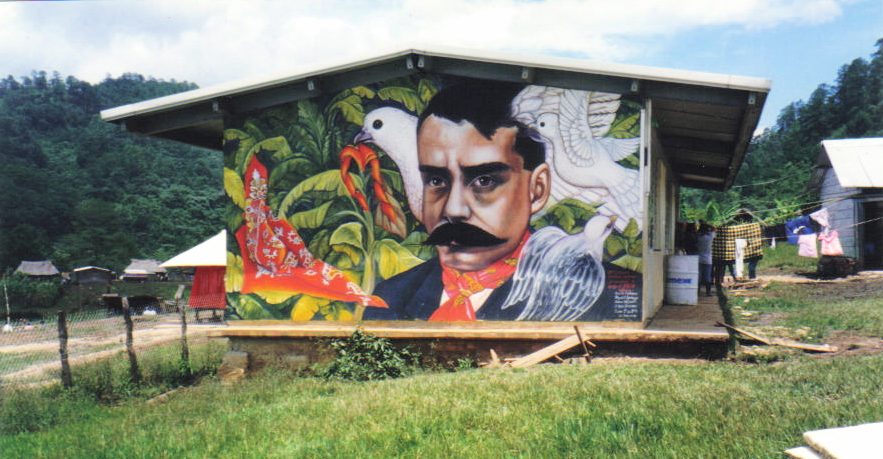
Zapatistas do cleaning and maintenance on Huitepec Reserve
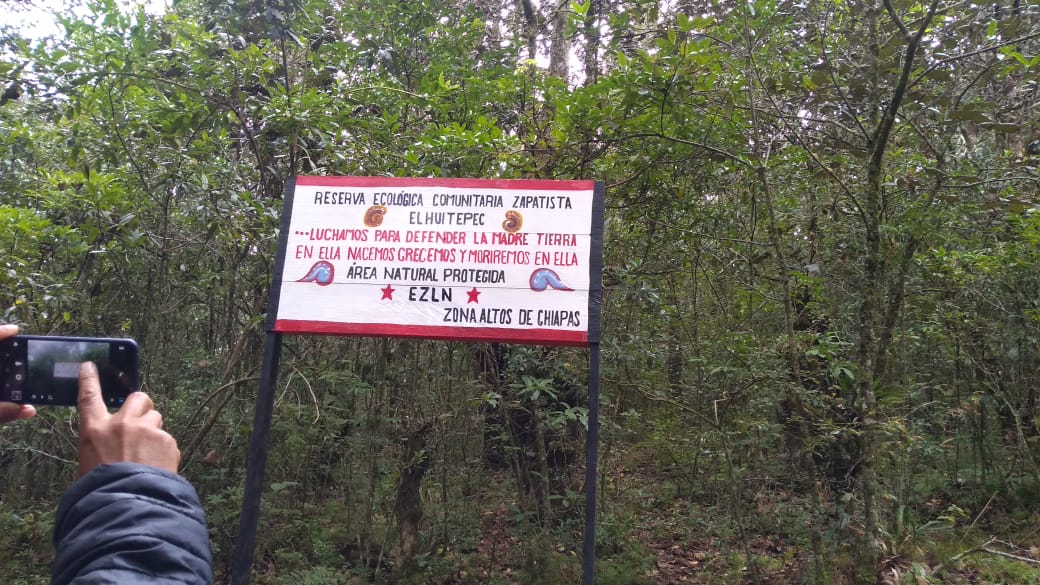
The sign also reads: “We struggle to defend Mother Earth. We are born in her, we grow up and we die in her. Natural protected area. EZLN, Zona Altos de Chiapas (Chiapas Highlands Zone).
By: Chiapas Paralelo
Support bases of the Zapatista National Liberation Army (EZLN, Ejército Zapatista de Liberación Nacional) carried out community work in the Huitepec ecological reserve, located in the municipality of San Cristóbal de Las Casas.
An attempt was made to delimit the land by installing cairns (boundary stones), place signs and carry out cleaning actions in this zone that was recuperated by the Zapatistas for its conservation.
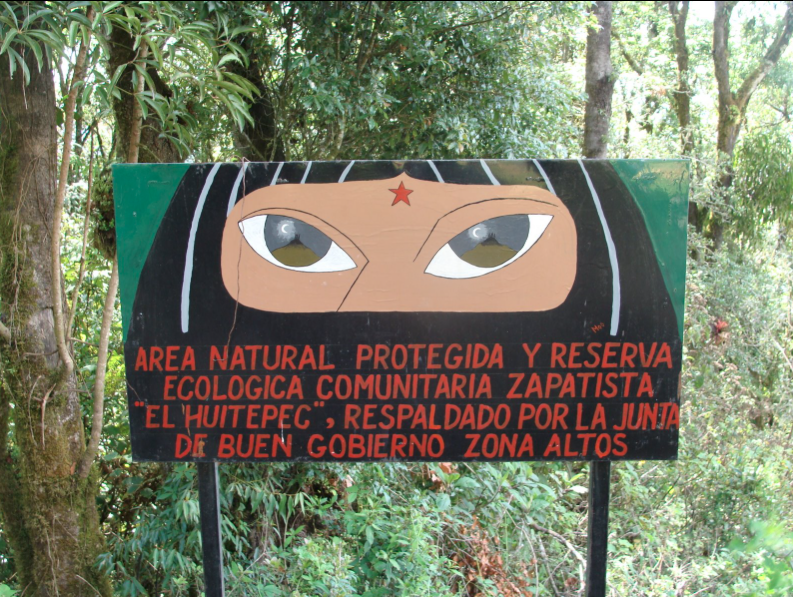
Zapatistas who belong to Caracol VII Jacinto Canek gave notice of the performance of these activities to constitutional government authorities, because they moved about in 10 cars through the routes connecting to San Cristóbal, and thus avoid confusion due to the fact that there are military patrols, as a result of the actions of organized crime groups in that municipality.
It should be remembered that the Huitepec Reserve has been an area of dispute that a group called “Guardians of the Huitepec Reserve Alcanfores”, who who are promoted by Mayor Mariano Díaz Ochoa, an open promotor of movements against the EZLN, demand for themselves.

Originally Published in Spanish by La Jornada, Friday, November 18, 2022, https://www.chiapasparalelo.com/noticias/chiapas/2022/11/zapatistas-realizan-limpieza-y-mantenimiento-en-reserva-huitepec/ and Re-Published with English interpretation by the Chiapas Support Committee
Being different, to save the world
By: Raúl Zibechi
All the efforts of the ruling class are focused on eliminating or flattening differences in the ways of life, in the daily practices of peoples, classes and individuals, with respect to the dominant culture. For this purpose, entire regions are militarized, genocides and exterminations of populations have been taking place for five centuries.
The forced evangelization promoted by the conquerors aimed to destroy the political and cultural autonomy of the native peoples, which was rooted in communal ways of life and diverse spiritualities but unyielding to the dispossession of nascent capitalism. It was not a question of religions, or of true or false gods, but that peoples should not continue to live in their own way, according to their customs.
The destruction of the English peasants’ way of life was key to the implementation and expansion of capitalism, as Karl Polanyi analyzes in The Great Transformation. For this, violence from above was employed, stripping the peasants of their communal lands to turn them into vagabonds who would end up as workers imprisoned in the satanic mills, key pieces of the industrial revolution.
The offensive against taverns and other workers’ spaces at the beginning of the 20th century sought to destroy the spaces where workers spent their free time to relate to each other in ways different from those imposed by capitalist logic, turning them also into territories of cultural autonomy and organization of their resistance, as James Scott explains in Domination and the Arts of Resistance.
We can go back to the days of slavery (when quilombos and palenques were spaces of freedom and revolt), or land in our days (when soccer stadiums, which were spaces differentiated from the working class, become mechanisms of accumulation by dispossession and financial speculation), to verify that the history of struggles is also that of the destruction and reproduction of differences of class, skin color, gender and sexual diversity.
The war suffered today by the native and black peoples of the entire continent, the peasants, women and youth who resist, is aimed at stripping them of their way of life and making them dependent on capital. To force us into service. To turn us into wage slaves, who for less than a minimum wage, dedicate our lives to lubricate capitalist accumulation.
The brutal offensive against the native peoples, from Chiapas and the Tarahumara mountains to the south of Chile, aims to expel them from their lands to turn them into commodities, certainly; but also, because in their territories the peoples live in a heterogeneous way with respect to capitalism. In this case, territory and difference are intertwined, and are what allow the continuity of resistance.
In her latest work, Beyond the Periphery of the Skin, feminist Silvia Federici points out that during the Great Depression white working-class women were sterilized when they were considered mentally weak, a category used by social workers and doctors to label women considered promiscuous and prone to having children out of wedlock. That is, for being different from the capitalist model of womanhood.
Difference, differences, are potentially anti-capitalist, but not in a mechanical way. In the same sense, we can assure that if there are no ways of life, no cultures and cosmovisions (worldviews) different from the hegemonic ones, any lasting resistance is impossible, any aspiration to change the world and overcome capitalism by constructing other worlds that are new and, above all, that are different. This point has been sufficiently emphasized by the Zapatista National Liberation Army.
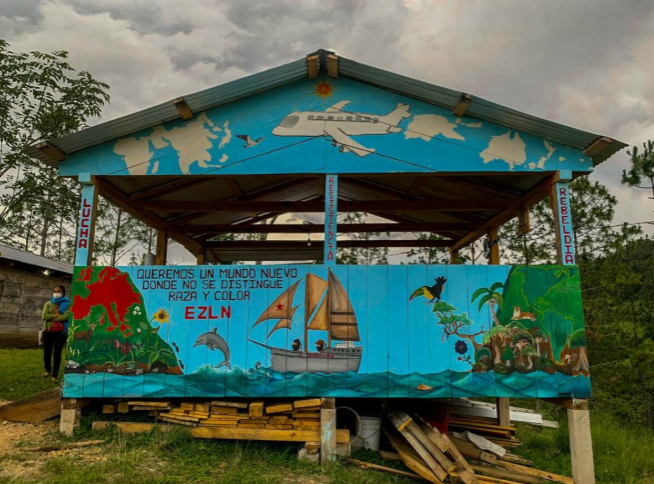
The second point is that difference does not fall from the sky, it is not a fact of reality, inherited or fixed. It must be cultivated, defended, and deepened, every day, every hour, in resistance against those who want to eliminate it. The system does this in various ways. One of them is violence and siege, like the one suffered by so many communities and support bases, as we were able to verify in Nuevo San Gregorio, in the territory of Caracol 10.
More subtly, capitalism tends to neutralize us with the temptation of consumption, which is a powerful force of attraction for young people. The impulse to migrate, to stop being who we are, is a way of suppressing the differences from below, as a complement to outright violence.
Because of this, the struggle takes place on multiple fronts: in the defense of the territory, in the affirmation of our own culture, in the effort to not allow ourselves to be dragged into ways of life that they want to impose on us in order to disfigure us as peoples and as persons.
The way I see it, difference is the sacred fire that we must protect, care for, deepen and multiply every day of our lives.

Originally Published in Spanish by La Jornada, Friday, November 18, 2022, https://www.jornada.com.mx/2022/11/18/opinion/020a1pol Translated by Schools for Chiapas and Re-Published by the Chiapas Support Committee
Rock against fascism
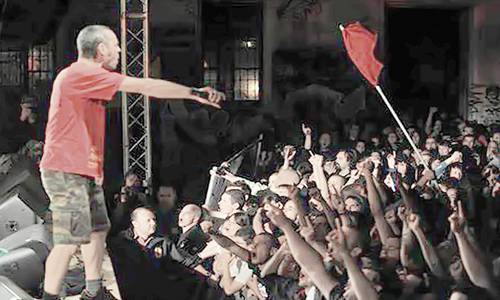
A few months ago, more than a thousand artists from Spain and Latin America signed a document called Rock contra el fascismo (Rock against fascism). Years ago, we saw artists join forces in the United States in campaigns against the then President George Bush, and give birth to some compilations called “Rock Against Bush,” and thus criticize his violent warmongering and obscurant policies.
In Italy, the musical tradition against fascism is wide and it moves, maintains, and changes from the ‘70s until today. Certainly, the new generations, almost globally, are more interested in other sounds, fewer distorted guitars and more bases on which to sing in rhyme are the main element of the songs that throb the era of feminism, indigenismo and the Black Lives Matter struggle.
Precisely, from these considerations, perhaps we should ask ourselves a question: what is fascism today, and therefore, how rock can cope with this phenomenon, which sadly grows in a world increasingly polarized between very few rich and many poor.
A question for which the answer cannot be unique: fascisms are many, as well as their expression in different countries. Certainly, in Europe, to link fascism only to the historical period in which it was a protagonist between the Italian or Nazi regimes, in Germany; Francoism, in Spain, or the military regime in Greece, etc. and, therefore, turning it into universal “value” no longer works.
I think the same thing can happen in Latin America with the dictatorships of the 90s. The times of history, the death of the protagonists of the time and the speed of today’s society, with profound operations of historical revisionism, have changed the perception of the term “fascism” that is now considered a political option, like any other.
So today a band that sings against authoritarianism, racism and sexism or against de facto violence, is placed in the realm of anti-fascism, because it opposes it in content. Whoever today, even in the field of aesthetics, rejects the gender binary helps to break the neo-fascist narrative about the singularity of being male or female.
Even without a generation of bands like Pink Floyd, Rage Against The Machine or Punkreas, Ska-P or Panteón Rococó, openly anti-fascist, there are many groups and artists who, in terms of aesthetics and content, oppose what fascism proclaims in half the world: Green Day, Radiohead, Against Me!, Ministri and Laura Jane Grace, for example. But then there are the anomalies like the international network of anti-fascist death metal bands or the interesting experience of the Moscow Death Brigade in Russia.
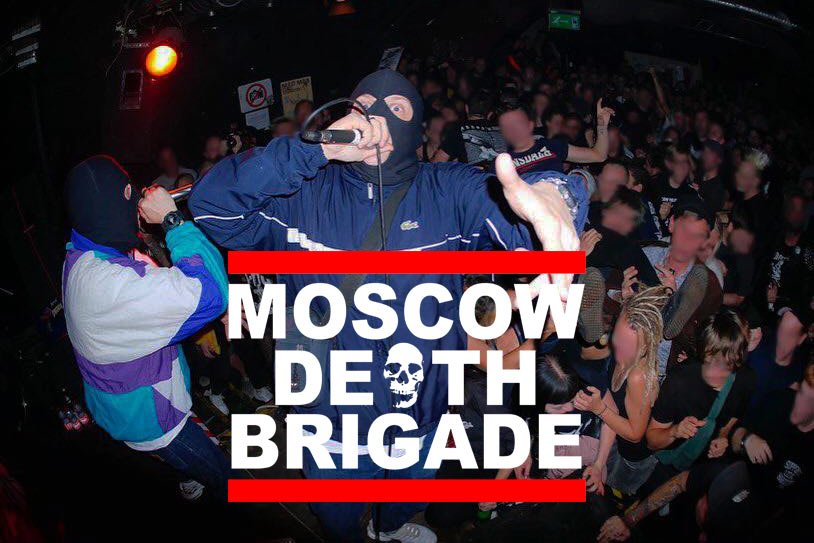
In short, anti-fascist rock changes its face, but it’s still alive; However, it’s often found in the contents, not only in the vindication of the artists.
* Andrea Cegna is an Italian journalist who specializes in music and counterculture.
Originally Published in Spanish by La Jornada, Friday, November 18, 2022, https://www.jornada.com.mx/2022/11/18/opinion/a07a1esp and Republished with English interpretation by the Chiapas Support Committee
The November Marches
By: Luis Hernández Navarro

The anti-Obrador day of November 13 was the largest mass mobilization convened by an opposition front of the current six-year term. Under the pretext of defending the National Electoral Institute (INE) and democracy, a motley coalition of anti-AMLO center-right forces managed to bring out to the streets several tens of thousands of citizens, many dressed in white and pink, almost all over the country.
Its magnitude was far from reaching the size of the popular rallies called by the President. Undoubtedly, it will also be smaller than the one that the President’s supporters will hold this December 1st. But, even so, it would be very delicate to disregard the meaning and scope of last Sunday’s protest.
The streets are not the primary terrain of struggle of the center-right. They have other means of pressure. John Lennon, composer of Working Class Hero, knew this well when, in 1963, at The Beatles’ show before Queen Elizabeth II, he quipped: “For our last number, I’d like to ask for your help. Could the people in the cheapest seats clap your hands? And the rest of you, if you’d just rattle your jewelry.”
A protest against López Obrador the size of this Sunday’s gathering is something that hasn’t happened since June 27, 2004. On that date, the business and media right wing, under the façade of the fight against public insecurity, orchestrated a great mass onslaught against the then head of the Mexico City Government, which served as a rehearsal to prepare his impeachment. The offensive was orchestrated through the electronic media, repeatedly broadcasting images of violence, which generated a feeling of uncertainty and fear in the public opinion of the country’s capital. Hundreds of thousands of people, many dressed in white, marched to rescue Mexico.
Among other differences present in both mobilizations is that, unlike the one in 2004, the one on Sunday was not promoted by the electronic media, but by a very important part of the written press and the social networks associated with right-wing public intellectuals. Probably, the way in which the President recriminated the call to defend the INE and referred to some of its promoters was what catalyzed the protest.
In analyzing the day of November 13, it is important to distinguish between the organizers and those who attended the mass marches. They are not the same. The organizing core is formed by the alliance of openly backward businessmen, opposition parties, religious hierarchs and an archipelago of intellectuals (the transitologists) with enormous weight in the INE and the organization of electoral processes. The demonstrators were a diverse conglomerate of affluent sectors, rabidly anti-communist groups, middle classes and popular clienteles of the Mexico City municipalities in the hands of the opposition, dissatisfied with the federal government for different reasons.

Entire families participated enthusiastically in the pink tide, many for the first time in their lives. In the human river that walked unorganized in contingents along Paseo de la Reforma in Mexico City, there were people of all ages unaccustomed to chanting slogans.
Like a fraudster version of the Rocky Horror Picture Show, the march was attended by a collection of embarrassing partisan egos, who paraded energetically, and who in other circumstances would hardly have coexisted under the umbrella of the same event. In the streets, their presence faded before a crowd that ignored and overflowed them, but they were rescued from anonymity by the press. As if his biography embodied the history of INE, the figure of the morning was José Woldenberg. A unique speaker, he served as the rising star of a right-wing opposition without strong political figures, and with washed-up intellectuals. It remains to be seen if the anti-Obrador coalition will continue to placate him.
Beyond the presence of consummate electoral fraudsters disguised as ordinary citizens, such as Ulises Ruiz, Elba Esther Gordillo or Roberto Madrazo, the protests confirmed the increasingly waning support for the 4T among middle sectors, anticipated in the mid-term elections of 2021. In those elections, the opposition won half of the mayors’ offices in Mexico City (the jewel in the Obrador crown) and many of the state capitals in dispute. Despite winning the elections, the ruling coalition lost the qualified majority in the Chamber of Deputies and had 9 million fewer votes than in 2018.
The mobilizations were a receptacle for part of the uneasiness towards the 4T among university students, liberal professionals, doctors, housewives, artists, human rights defenders, feminists, relatives of victims of violence, scientists, environmentalists and small businessmen. Many are not conservatives. Quite a few supported the President in the past. But they no longer do so. They are disenchanted and even angry. The extent of their dissatisfaction led them to join the call of figures such as the disgraceful Claudio X. Gonzalez, the most rancid of the parties, ultra-right-wingers who came out of the closet, and prominent electoral tricksters, hidden under the mask of INE’s defense.
Beyond the outcome of the electoral reform promoted by the President, Sunday’s pink tide was, for the right-wing opposition, not a citizens’ day, but the starting gun for their electoral campaign for 2024. It remains to be seen if they can keep the momentum and mass support they had.

Originally Published in Spanish by La Jornada, Sunday, November 13, 2022, https://www.jornada.com.mx/2022/11/15/opinion/018a2pol Translated by Schools for Chiapas and Re-Published by the Chiapas Support Committee
The EZLN announces mobilizations for its 39th anniversary
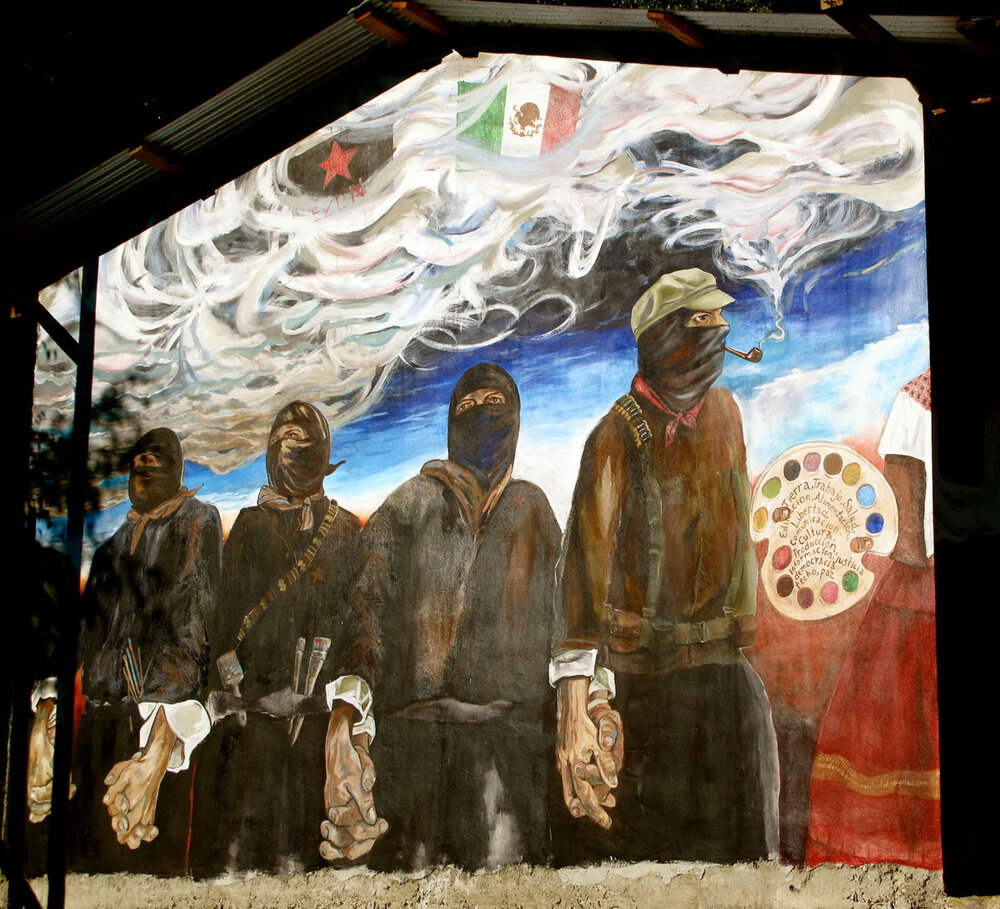
The EZLN was founded on November 17, 1983 in the Lacandón Jungle, in the municipality of Ocosingo.
By: Gilberto Morales | El Heraldo de Chiapas
Altamirano
The Zapatista National Liberation Army (EZLN, EjércitoZapatista de Liberación Nacional), announces a mobilization to celebrate its 39th anniversary in the caracoles, autonomous municipalities and Good Government Juntas that exist in the state of Chiapas.
The EZLN was created on November 17, 1983 in the Lacandón Jungle, municipality of Ocosingo. According to them it was for the purpose of doing away with the bad governments and announcing to the entire world that millions of indigenous peoplein Mexico are being stepped on, mistreated, ignored, incarcerated by the government for many years.
A little more than ten years after its creation, they officially announced the armed uprising on January 1, 1994 in the municipal seats of de: Altamirano, Ocosingo, Palenque, Las Margaritas, Comitán, Rancho Nuevo, San Cristóbal de Las Casas and Oxchuc, among others and that for 3 consecutive days they confronted the Mexican Army in Rancho Nuevo, where various deaths are spoken of in both the rebel group and the Army, which never officially announced the number of dead.
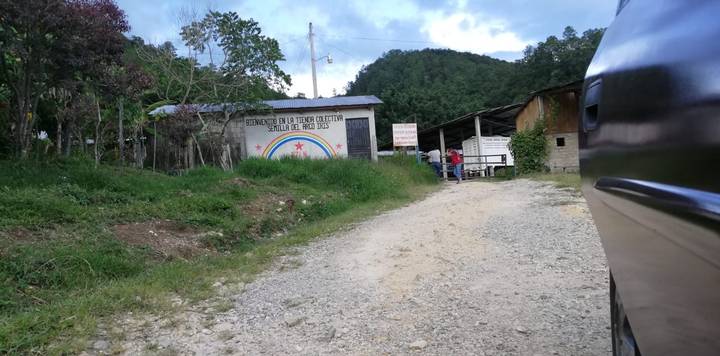
For many years, the Zapatistas were recognized throughout the world for their struggle and until now the armed civilian group has lost strength militarily and Subcomandante Marcos now Galeano himself, for many years pointed out that they will no longer take up arms but will continue to fight for the benefit of the indigenous population. In addition, in the past elections María de Jesús Patricio Martínez, known as Marichuy was appointed by the National Indigenous Congress, to which the Zapatistas belong, to participate in the presidential elections as an independent candidate. But, because of the difficult requirements for an independent candidate to get on the ballot, she was left out of the presidential elections.
This November 17th, 39 years after its foundation, the EZLN will once again come out of their trenches [1] and gather in the different caracoles, good government juntas and autonomous municipalities to celebrate what was created on Novembern17, 1983 in the heart of the Lacandón Jungle of Chiapas.
Starting November 16th, Zapatistas and non-Zapatistas, as well as organizations, will gather in November 17th autonomous municipality, located within the official municipality of Altamirano and also in San Cristóbal, in order to commemorate the 39th anniversary of the Zapatista National Liberation Army.
[1] The Zapatistas did not reopen their Caracoles to the public after closing them due to the pandemic. The reason for the continued closure is the violence in Chiapas, the presence of organized crime and, thus, the need for tight security.
Originally Published in Spanish by El Heraldo de Chiapas, November 13, 2022, https://www.elheraldodechiapas.com.mx/local/municipios/ezln-anuncia-movilizaciones-en-festejo-al-39-aniversario-9184918.html and Re-Published with English interpretation and editing by the Chiapas Support Committee.
Unpunished, the 2006 massacre committed by paramilitaries in Viejo Velasco
By: Elio Henríquez
San Cristóbal de las Casas, Chiapas
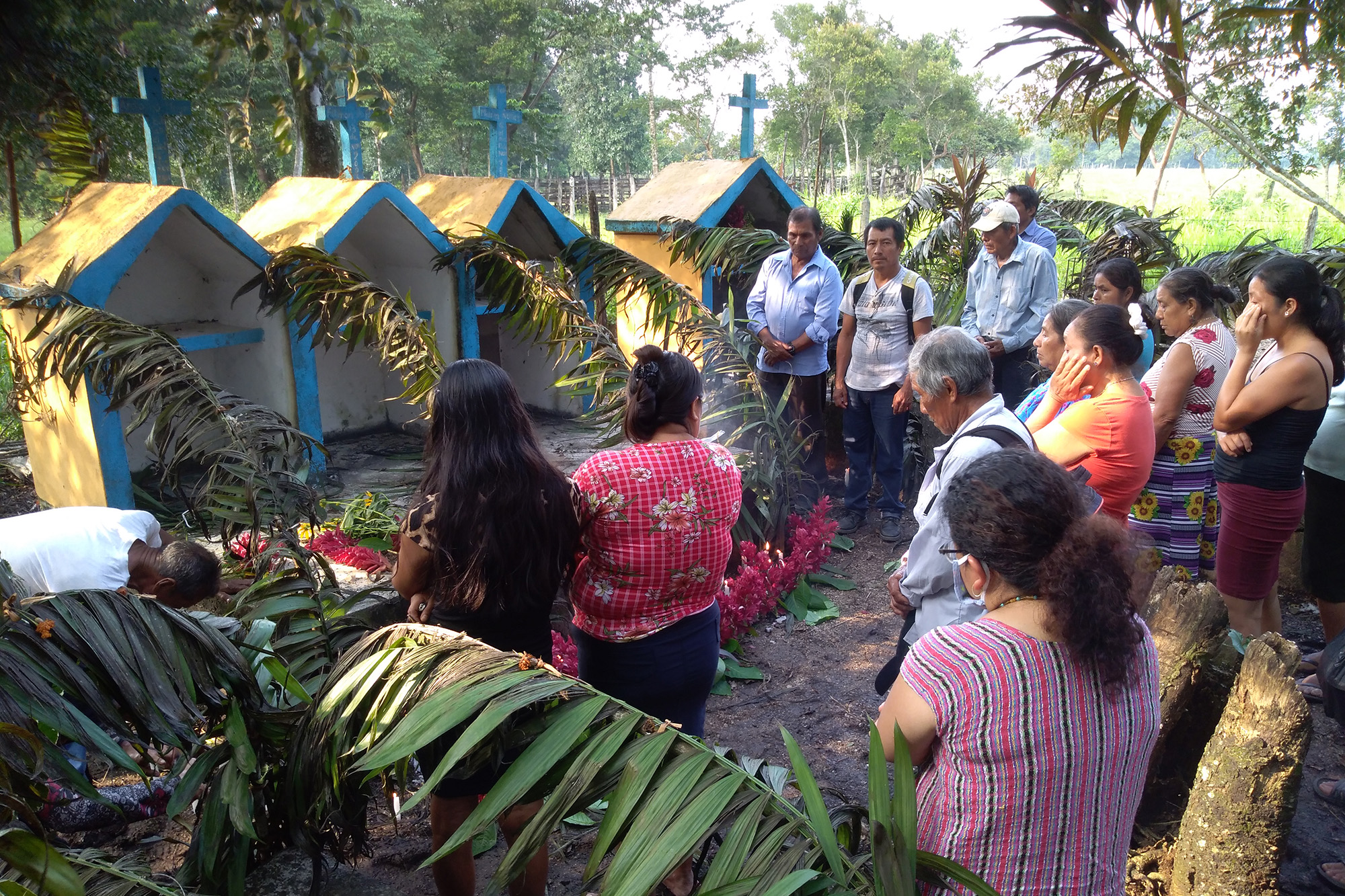
The massacre committed 16 years ago in the Viejo Velasco community of Ocosingo municipality, where six people were executed, including a pregnant woman, “remains unpunished,” nine civilian organizations assured, among them the Fray Bartolomé de Las Casas Human Rights Center (Frayba).
In a joint pronouncement, they remembered that on November 13, 2006, it also caused the forced displacement of 36 people, the disappearance of four individuals, as well as the illegal deprivation of freedom and torture of the disabled youth Petrona Núñez, who died in 2010 because of the physical and emotional suffering to which she was submitted.
The massacre occurred in the small Tseltal and Ch’ol indigenous community of Viejo Velasco, Ocosingo (in the Lacandón Jungle), when in a paramilitary operation, around 40 people coming from the towns of Nueva Palestina, Frontera Corozal and Lacanjá Chansayab armed with machetes, sticks, escopetas and rifles, some with military and police uniforms, entered violently,” they added.
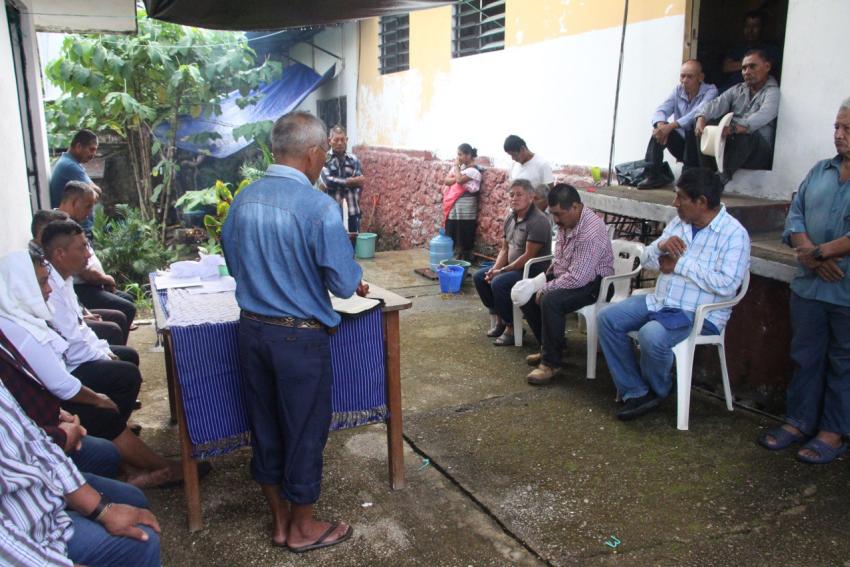
They said that, according to the Xi’nich group, “the aggressors were accompanied and protected by 300 members of the then Chiapas Sectorial Police, carrying high-powered weapons.” They added that “the presence of five Public Ministry prosecutors, two experts, the Jungle Zone Regional commander of the then State Agency of Investigation with seven members under his command, and a representative of the then Ministry of Social Development were also documented.”
The groups assured that “16 years after this massacre of our indigenous Tseltal and Ch’ol brothers, justice has not been found. [1] The survivors and relatives of the victims continue without guarantees for their return and without reparation of the damage.”
[1] Two years ago, Frayba reported that the Inter-American Committee on Human Rights (IACHR) admitted the case for investigation in September 2020.
Related: The Viejo Velasco massacre took place in the heat of paramilitary conflict against both the Zapatista communities and communities and organizations sympathetic to the Zapatistas. An article that describes the politics around the massacre is available here.˚

Originally Published in Spanish by La Jornada, Monday, November 14, 2022, https://www.jornada.com.mx/2022/11/14/estados/033n3est and Re-Published with English interpretation by the Chiapas Support Committee
And yet it moves

By: Raúl Romero*
The study of social movements is important in that it indicates, among other things, some of the “great national problems” that concern and mobilize different social sectors. There are mobilizations and movements of the left and right; Identifying the differences between them does not imply greater complication than reviewing their background, the type of demands, the actors that compose them, the structure, the financing, the repertoire of protest and other elements that, put together, help to understand them. There are mobilizations that do not manage to become movements, that is, they fail to give themselves structure, objectives or strategic route. There are also movements that are the articulation of various movements, the movements of movements. And there is also what are called parties-movements, which, among other things, aspire to put the party structure at the service of social movements.
In the Mexico of today, there are different social movements that make us look at old problems that have become more acute and others that have been emerging. They are movements that honestly defend values and ideas identified as leftist, and that raise different causes. At another point it’s worth reviewing initiatives of openly right-wing groups, such as the National Front for the Family, or other initiatives that take up social flags, but that in reality seek to preserve and restore privileges of displaced elites.
In the analysis of these movements, we must set two moments that are important to understand their context. The first is on July 1, 2018, with the triumph of Andrés Manuel López Obrador as president. The second is the social and health emergency due to the pandemic and the effects it unleashed.
The triumph and arrival of AMLO to the Presidency of Mexico is a key moment, because it was the massive expression of rejection of previous governments taken to the polls. It was also a kind of synthesis of many demands from different sectors. In fact, social leaders joined that government and its party and distanced themselves from the social struggle. In a certain way, the discomfort and constant and rising social mobilization were channeled by the Obradorismo, a political expression that placed its agenda and objectives in other movements. But this did not mean the incorporation of all the movements into the ruling bloc, nor that those who joined that strategic moment of 2018 bet entirely on the promised project.

2018 is also key because it led different organizations and collectives to pause in their mobilization process, to distance themselves or confront actors of the movement or within other movements, mainly by putting party and state interests before the causes and dynamics of popular organizations. There were even those who reoriented their goals: in the dispute over budgets, resources, positions in the party or in government structures, there are those who began to support policies and projects that they previously opposed. With the early federal and state elections, these dynamics deepen under the argument of the continuity of the project. A detailed analysis of the above, as well as the variations that may occur, are important to know what led us to the current moment. In any case, what needs to be highlighted is the demobilization process that came with the arrival of the new government in 2018.
The social and health emergency due to the covid-19 pandemic, as well as the policies of confinement and distancing, are another moment in which social dynamics were broken and modified that had an impact on organizational processes. In Mexico, the process of independent political rearticulation from below was truncated. For example, many villages and communities had few possibilities to respond articulately to the construction of the megaprojects that continued during this stage. New forms of solidarity and actors emerged in the most difficult days of confinement, collectives that organized to distribute food and pantries among the most impoverished sectors, boost local and family economies, and even solidarity networks to locate hospitals and oxygen distribution centers.
Surviving the pandemic, surviving as independent organizations and also surviving the criminal violence that we experience in the country have been some of the challenges that independent social organizations have endured in the last four years. But it seems that this is about to reach its end. While different collectivities have not stopped organizing and struggling, they have begun to reunite, to re-articulate. They are movements of disappeared, of Native peoples, of young people and students, of professors, of women, union organizations and of a very wide reach. They are movements that respond to problems of their own sector, but that have had a meeting point in recent days: the struggle against militarization and for justice.
* Sociologist (@RaulRomero_mx)

Originally Published in Spanish by La Jornada, Monday, October 17, 2022, https://www.jornada.com.mx/2022/10/17/opinion/016a2pol and Re-Published with English interpretation by the Chiapas Support Committee
“Scooters” cause fear in San Cristóbal: 10 arrested
From the Editors of La Jornada
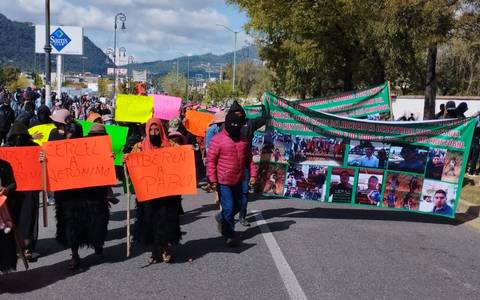
Hundreds of residents of the Cuxtitali el Pinar ejido, who demanded the liberation of Pablo Pérez Sántiz, who is alleged to head a group of gang members that travel on motorcycles, now in prison charged with murder, caused damages in public buildings and burned a vehicle in San Cristóbal de Las Casas, Chiapas.
The State’s Attorney General (FGE), who initiated an investigation notebook against whoever turns out to be responsible for the crime of attacks on the peace and the corporal and patrimonial integrity of the state’s collectivity, reported that 10 males were arrested and four motorcycles were seized.
The more that 500 demonstrators, some on motorcycles and wearing masks, kept local society in fear yesterday for more than two hours, because on Monday night rumors spread that they would “takeover” the palace of justice, where the FGE’s regional offices and lower courts, as well as other public buildings are located, and additionally that they would block the San Cristóbal-Tuxtla Gutiérrez toll road.
Some agencies didn’t work this Tuesday and some 300 agents from the National Guard, as well as state and municipal police, were posted early in the morning at kilometer 46 of the toll road, at the entrance to San Cristóbal, to prevent the scooters from blocking entrance to the city.
In front of the buildings, they broke windows of the courthouse, the administrative unit and the municipal presidency. They demanded the release of Pérez Sántiz and launched rockets. They also set fire to a parked vehicle.
Agents from various corporations, with the support of a helicopter, dispersed the demonstrators with tear gas and a group apparently on its way to block the toll road was restrained by police.
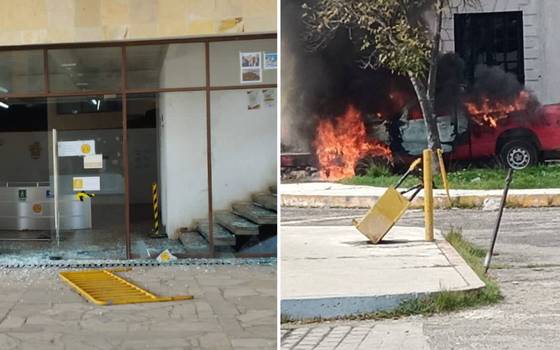
The FGE reported in a statement that “security forces made up of the Ministry of National Defense, the National Guard, the Secretariat of Security and Citizen Protection (state police) and the municipal police began surveillance and presence patrols in the area, as well as in streets and avenues of the city, with the aim of safeguarding the integrity and heritage of citizens. “
Originally Published in Spanish by La Jornada, Wednesday, November 9, 2022, https://www.jornada.com.mx/2022/11/09/estados/032n2est and Re-Published with English interpretation by the Chiapas Support Committee
Luis Villoro, the sentinel
By: Raúl Romero*
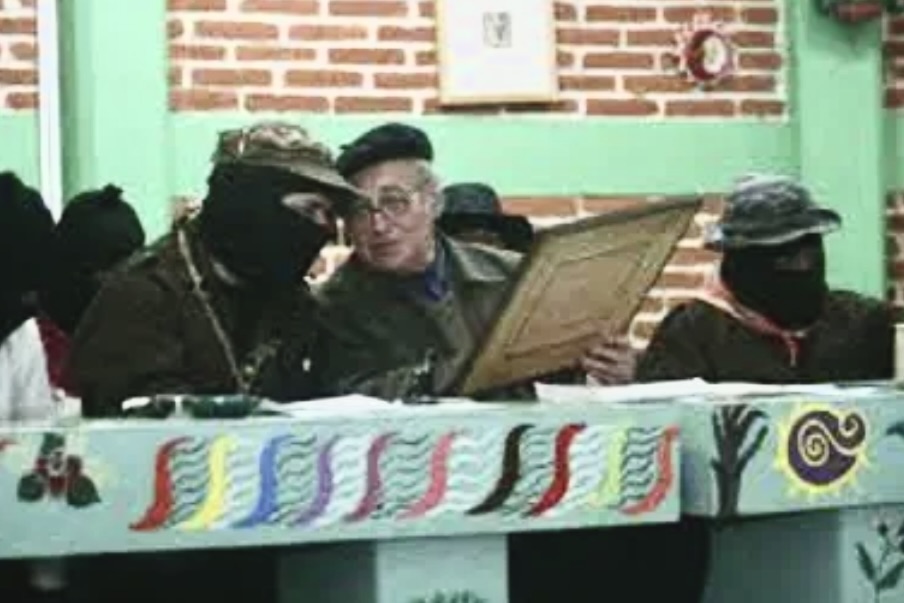
The events take place in 1996. After being introduced by Zapatista Comandante David, Don Luis Villoro Toranzo takes the floor. He speaks in the name of the group of advisors to the EZLN, in the Dialogue for Peace with delegates of the federal government. “In the first place, we want to reiterate the will of the EZLN and of the group of advisors who are trying to support it, the will to arrive at agreements in favor of a peace with dignity. We will do all that is necessary to arrive at these agreements. But there can be no agreement if there is denial of certain fundamental principles. And these fundamental principles should steer our negotiations,” Villoro Toranzo states firmly.
He continues. “It is not, in any way, a question of obtaining aid to solve the problems that indigenous communities have suffered for so many centuries through welfare assistance. It is about a radical reform of the State.” His brief speech reflects his knowledge of the indigenous question and also the serious problems of the Mexican State. It also reflects the depth of the Zapatistas’ message: “The EZLN is not here only to defend the rights of the indigenous people of Chiapas, although it is here to do so. It is not here to only defend the rights of the indigenous peoples in the whole country, although it does take up the demands of all the indigenous peoples of the country. The EZLN, and we its advisors, are here to contribute in a radical new way to a reformed national state that truly recognizes the reality of our people and advances towards social justice and, above all, to contribute to democracy in the country.”

By 1996, the work of Luis Villoro Toranzo was already required reading in universities, and a reference in many different political, academic and social spaces. The Zapatista rebellion of 1994 would mean for Villoro Toranzo something similar to what happened to his friend and contemporary Pablo González Casanova. While for the latter, neo-Zapatismo was in dialogue with the reflections on internal colonialism initiated in 1963, for Luis Villoro the Zapatista rebellion was also in dialogue with the problems raised in his book Los Grandes Momentos del Indigenismo en México (The Great Moments of Indigenism in Mexico), in 1949.
Years later, in 1998, Don Luis would continue to reflect on the pluralist State, and on the pluralism of cultures in the crisis of the nation-state, and insist on the need for a radical reform — this in the context of globalization, the financial unification of the world, and the growth of corporate power. Villoro Toranzo would then propose a plural State, which “could not seek unity in the collective adherence to values shared by all, because it would extend over peoples and minorities that may be governed by different values. It would be obliged, therefore, to foster unity through a common project that transcends the values proper to each cultural group. It cannot present itself as a historical community, whose identity has been forged over centuries, but as a voluntary association born of a common choice. […] The link between the various entities that comprise it would not be the same vision of a past, or of a collective life, but a decision: that of cooperating in a common destiny.”
Don Luis was a great philosopher who understood that in addition to thinking about the world, it was necessary to transform it. His philosophical reflection was always accompanied by his actions from different fronts, and it was in Zapatismo where he spent his last years performing the tasks of a post or sentinel: observing and being attentive to what is happening, building theoretical reflection from critical thinking.
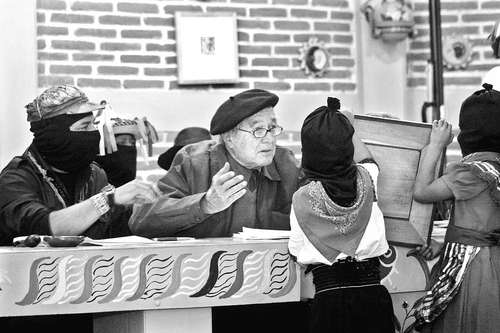
Luis Villoro died on March 5, 2014, but it was not until a year later – due in part to the paramilitary attacks against the Zapatistas in which the maestro Galeano was assassinated – that the rebel Mayas paid tribute to him. In May 2015 in the caracol of Oventik, the Zapatistas revealed how Luis Villoro had asked to join the ranks of Zapatismo. [1] The event was attended by Juan Villoro (his son) and other relatives and friends of Don Luis, relatives of the 43 disappeared from Ayotzinapa, Adolfo Gilly, among others. Pablo González Casanova was unable to attend, but sent a heartfelt message in which he recalled that, in the face of certain challenges, Don Luis had told him that many times the answer is not logical, but ethical. Fernanda Navarro, Luis Villoro’s sentimental companion and partner in struggle, announced that they had decided to sow the ashes of the honoree in rebel territory.
Ethics and justice must be at the center of social life. We must not allow politicians from all ideological spectrums to expel them from there and turn them into mere phrases of discourse, wrote Luis Villoro in the interesting epistolary exchange he had with the late leader Sup Marcos. Luis Villoro, the Zapatista, is an exemplar of life.
* Sociologist (Twitter: @RaulRomero_mx)
Note:
[1] Read Subcomandante Galeano’s 2015 homage to Luis Villoro here.

Originally Published in Spanish by La Jornada, Friday, November 4, 2022, https://www.jornada.com.mx/2022/11/04/opinion/022a2pol with English interpretation by Schools for Chiapas and Re-Published by the Chiapas Support Committee
Understanding the new right, in order to combat it
By: Raúl Zibechi
It’s very common that we face new challenges with attitudes and ideas born in previous contexts that, therefore, don’t adjust to the emerging realities. Something similar happens with the new right: We are content with using adjectives such as “fascist” or “ultra-right,” which may sound appropriate in certain aspects, but it is not enough to understand what it really represents. Therefore, it will be more difficult to neutralize or defeat it.
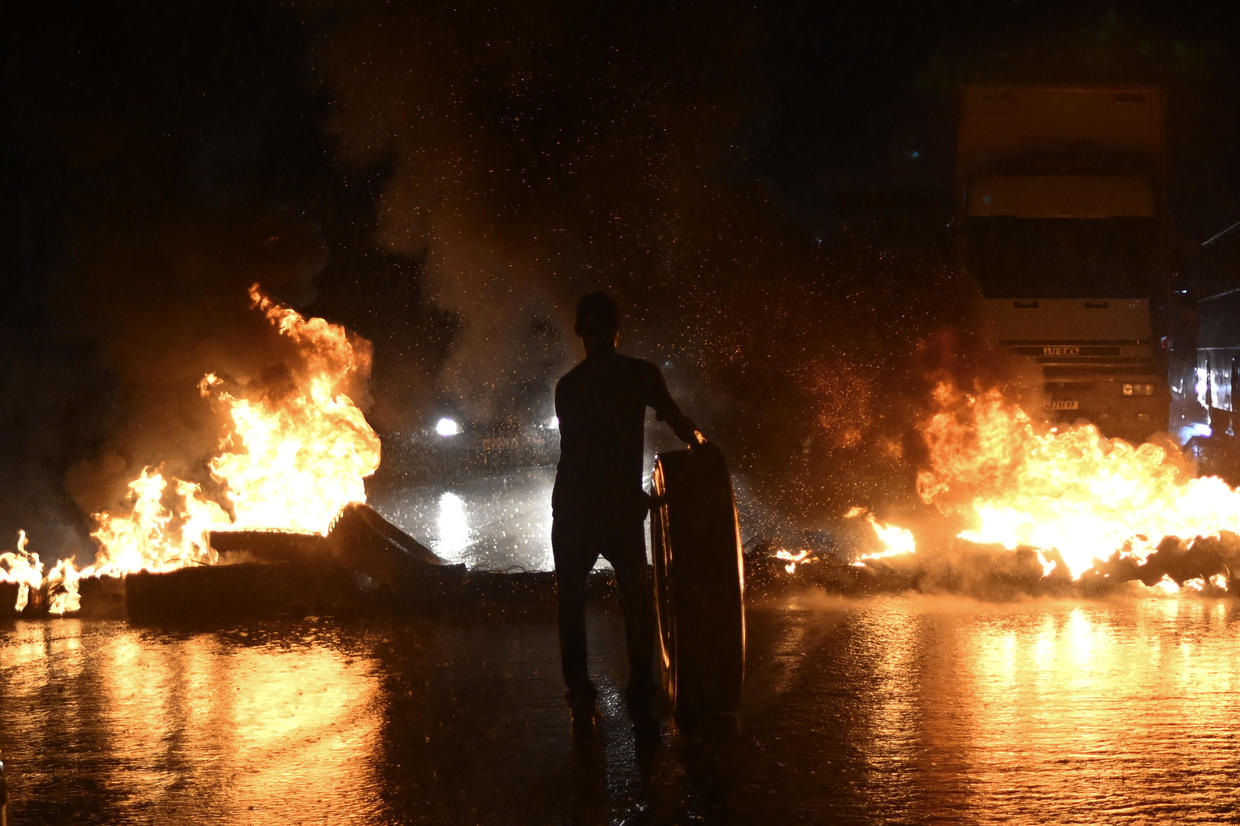
Believing that the new right can be limited with the existing really democratic institutions is a utopia that disarms us, for several reasons. The first is that the nation-state has been hijacked by the one percent who placed it at their service. The second is that the institutions do not want and cannot fight the new insurgent right, as the armed state apparatuses in Brazil are showing these days.
It seems wrong to me to oppose “democracy” with “fascism” (or Bolsonarism, or Trumpism, or whatever adjective is preferred), because the political culture embodied by this right is the daughter of institutions and the way of doing politics that we call “democratic.” Because it consists of replacing collective action with the management of experts, replacing the conflict of classes, skin colors, sexes, genders and ages, with public policies that relegate them to the role of beneficiaries instead of active subjects.
Humanity has destined enormous efforts to channeling conflicts (from the political-social to the personal) through the most diverse paths, because to insist on denying them or suppressing them leads to social disaster. We have come to believe that conflict is abnormal and destructive, when in reality “the negation of conflict can lead to barbarity;” because “conflict is the foundation of life” and allows the emergence of the new, as Miguel Benasayag and Angélique del Rey maintain in In Praise of conflict.
Let’s return to Brazil. A recent article argues that Bolsonaro is not a conservative, but “a far-right revolutionary” who “articulates emerging and insurgent forces present in our society: neo-Pentecostal religiosity, agribusiness aesthetics and sociability in profile” (Folha de Sao Paulo, 1/11/22).
Belonging to Pentecostal churches influences daily behavior, something that Catholics do not achieve who seem to ignore the concrete life of their faithful. The neo-Pentecostal Republican party, the political front of the Universal Church of the Kingdom of God, will govern the largest portion of the population and the most populous state, Sao Paulo.
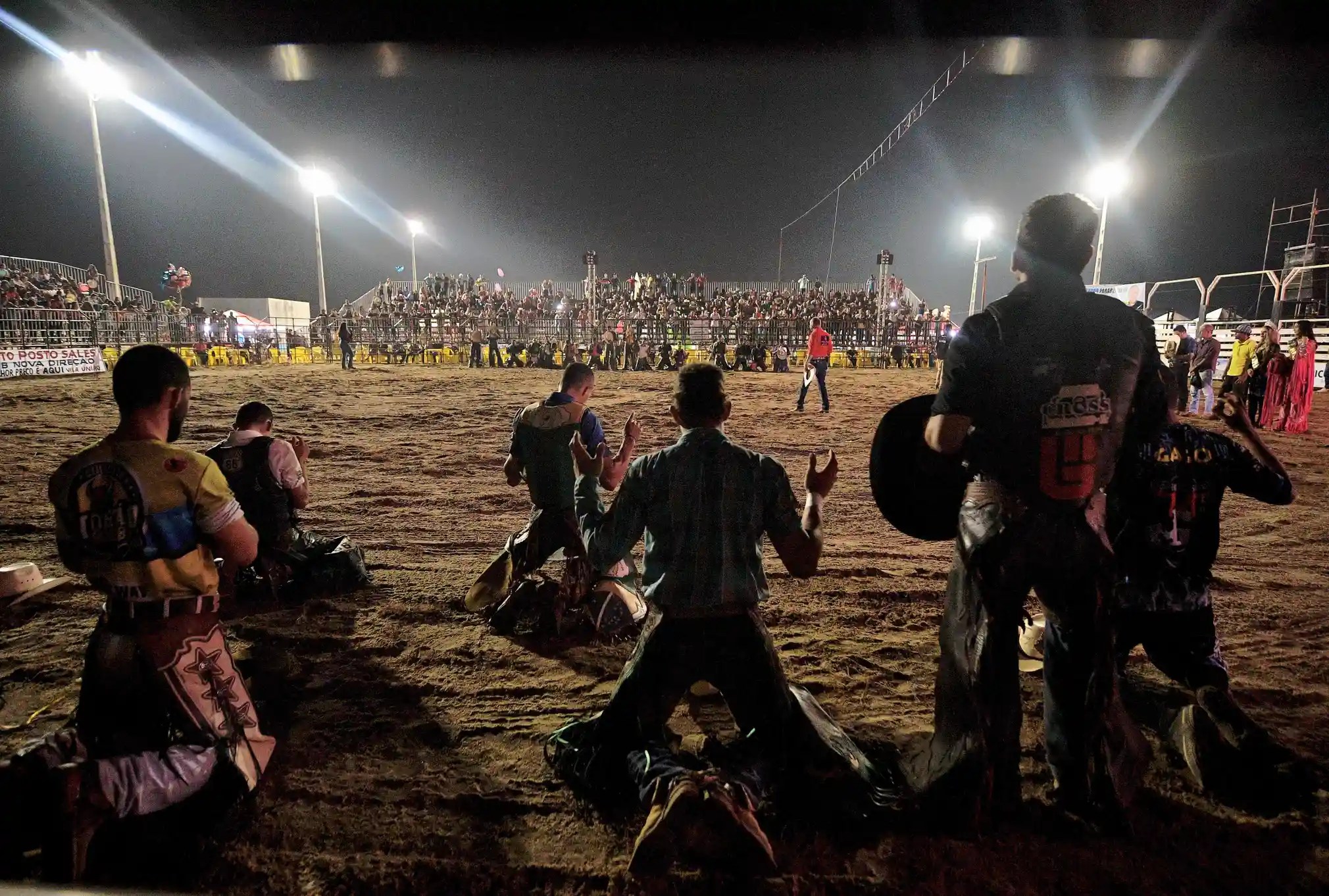
In Brazil, the emerging power of agribusiness [1], which has economically and culturally displaced the manufacturing industry and the centrality of the working class, has its own aesthetic, as Miguel Lago argues in the aforementioned article. “The rodeo has become the biggest party in the country, and the song that plays the most on Brazilian radio is a kind of country music sung in Portuguese.”
This culture is accompanied by the carrying of guns, is masculine and patriarchal, makes strength and power its hallmarks and contrasts sharply with the working- class culture of the 1970s, when the Workers’ Party was born. Just as working-class culture was linked to liberation theology and base church communities, cattle-ranching culture goes hand in hand with neo-Pentecostal churches.
Anthropologist Jeofrey Hoelle, author of the book Caubóis da Floresta (Forest Cowboys), argues that cattle ranching culture in the Amazon is superimposed on forest culture, which seeks to conserve the forest and defends indigenous peoples. He investigated the cattle culture to understand the logic of those producers who are part of the Triple B caucuses: bulls, bullets and the Bible, which add up to a decisive portion in Brazilian parliaments in recent years.
Hoelle concludes that ranchers are aware that their business is the largest source of pollution in the country, but they have a different view. They defend what they call “clean pastures,” which they identify with “order and control,” while “the forest is seen as darkness, savage nature, without value,” he explains in an extensive interview (Amazonialatitude.com, 17/11/21).
In each country and in each region, the new right is based in particular situations, but has some common characteristics: 1) the rejection of environmental protection; 2) attacks on women, diversities and differences and 3) hatred of migrants, black and indigenous populations.
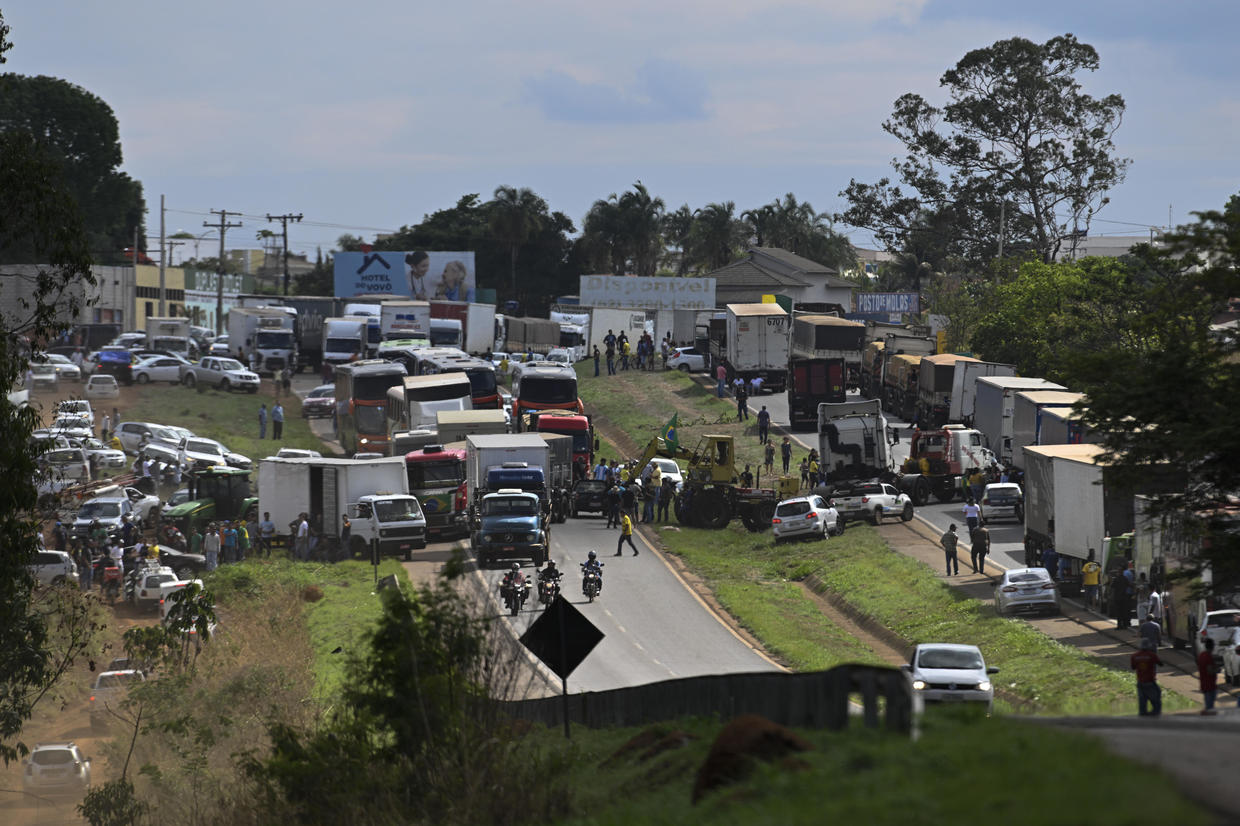
We can only neutralize the extreme right by putting our body on the line, without violence. Not through institutions. In these days of road blockages, soccer fans once again showed courage and determination (https://bit.ly/3Ue2sCA), by going in groups to lift the blockades given the passivity of the police (http://glo.bo/3h85OsI).
As always, we learn from those below.
Notes
[1] Brazil is the world’s largest producer and exporter of sugar, coffee, orange juice and soybean.
[2] The Guardian has amazing photos of the cowboy culture in Brazil’s agricultural regions.
Originally Published in Spanish by La Jornada, Friday, October 4, 2022, https://www.jornada.com.mx/2022/11/04/opinion/023a1pol and Re-Published with English interpretation by the Chiapas Support Committee
 Chiapas Support Committee