Chiapas Support Committee
Home of the Compañero Manuel blog on zapatistas & mexico
Zapatista News Summary – June 2013
JUNE 2013 ZAPATISTA NEWS SUMMARY
In Chiapas
Comandanta_Ramona
1. Moisés: There’s No More Space in the Little Schools – On June 13, Subcomandante Moisés released a communiqué reporting that the little schools where students will study “freedom according to the Zapatistas” are now full. There are no spaces left. It seems that there were a total of 1500 spaces and more people wanted to go. However, Sup Moisés says there will be another session of the little schools later, probably around December/January.
2. Marcos Issues Communiqués About the Little Schools – In a series of communiqués entitled Classmates, Subcomandante Marcos issued (so far) 5 reports on who will be and who will not be attending the little schools. Those who will not be present include the disappeared and political prisoners; among them, Alberto Patishtán, Leonard Peltier, Mumia Abu-Jamal, Julian Assange, Bradley Manning and members of Pussy Riot. Edward Poindexter and Mondo we Langa were also included. They are former members of the Black Panther Party (BPP), targeted in the U.S. government’s COINTELPRO program that spied on and infiltrated the BPP. Another group that will not be present includes those not invited; such as, current and former members of the Cocopa, the US State Dept., the CIA, FBI, etcetera. In the fourth comunicado, Marcos explains that the original peoples of the Americas will not be present because the Zapatistas have nothing to teach them. Rather, the Zapatistas have learned from them and they will have their celebration on August 17-18 at the Seminar Tata Juan Chavez Alonso. The most recent communiqué describes who the students are at the little schools, where they are from and how many there are.
3. GREAT NEWS! A Chiapas Court Frees Miguel Vazquez Deara – On June 26, a Chiapas Court released Miguel Vazquez Deara from prison. Vazquez Deara is from San Sebastián Bachajon and is an adherent to the EZLN’s Sixth Declaration, an active participant in defending the loss of their lands to luxury tourism interests. He was arrested in September 2011 and charged with armed robbery and criminal association based on the false accusation of government supporters with an interest in the Agua Azul Cascades. He confessed under torture and was sentenced in November 2012. His illegally obtained confession was the only evidence used to find him guilty. On appeal, the court threw out the confession because Vazquez Deara did not have a lawyer or translator present when he gave his confession. This misuse of the criminal justice system is a weapon used against those who defend their land in Chiapas and throughout Mexico.
4. Worldwide Campaign: Juan Vazquez Guzman Lives! The Bachajon Struggle Continues! – Organizations in Solidarity with the Zapatista struggle launched a worldwide week of struggle –June 25 to July 2– to remember Juan Vazquez Guzman, who was assassinated on April 24. Vazquez Guzman was the leader of the resistance to tourism interests that want to take away land in Bachajon for “boutique” hotels with helipads for politicians and corporate executives. You can read more information about the Worldwide Campaign here.
5. Police Violently Repress Chiapas Teachers – On Saturday, June 29, Chiapas state police and special riot police violently broke into a statewide union congress and evicted all those present, arresting 28 and injuring around 200. Four teachers are hospitalized. According to several reports in La Jornada, Local 7 of the SNTE was electing representatives and a secretary general at the congress of delegates. When it became obvious that Section 7’s “democratic block” had the majority, representatives of the national union decided to break up the meeting by accusing the congress of “kidnapping” because the doors were locked to prevent outsiders from entering and voting illegally. The national reps went to the state government and accused the local teachers of kidnapping. The state government sent its elite police corps. The democratic block is to the Left of the national union’s leadership; in other words, they are a dissident voice within the union. Of concern here is the response of Chiapas police. Photos of the bloodied teachers can be found on the front page of Sunday’s La Jornada.
In the United States
1. Mexico Is One of the Countries the US Spied On – WikiLeaks revealed that the United States National Security Agency spied on the Mexican Embassy and that Mexico was only one of the US allies on which it spied according to the Guardian. Click here to read the full story.
2. US Immigration Bill Worries Mexico – June 24, a border security amendment seen as crucial to the passage of an immigration bill backed by President Barack Obama cleared a key procedural hurdle in the U.S. Senate, helping pave the way for the biggest changes to U.S. immigration law since 1986. The amendment would double the number of agents on the southern border to about 40,000 over the next 10 years and provide more high-tech surveillance equipment to stop crossings without inspections at the U.S.-Mexico border. The amendment also calls for finishing construction of 700 miles of border fence. The bill would grant legal status (work permits) to millions of undocumented workers, who would be put on a 13-year path to citizenship. The Mexican government is worried about further militarization of the border and the violence that generates.
___________________________________
Compiled monthly by the Chiapas Support Committee.The primary sources for our information are: La Jornada, Enlace Zapatista and the Fray Bartolome de las Casas Human Rights Center (Frayba).
We encourage folks to distribute this information widely, but please include our name and contact information in the distribution. Gracias/Thanks.
Click on the Donate button of www.chiapas-support.org to support indigenous autonomy.
_______________________________________________________
Chiapas Support Committee/Comité de Apoyo a Chiapas
P.O. Box 3421, Oakland, CA 94609
Tel: (510) 654-9587
Email: cezmat@igc.org
http://www.facebook.com/pages/Chiapas-Support-Committee-Oakland/86234490686
Marcos: Classmates V – The Students
Classmates V. The Students.
June 2013.
Zapatista Dolls
To the adherents of the Sexta in Mexico and in the world:
To the Little Zapatista School invitees:
Compañeros, compañeroas, compañeras:
Here we are posting some data to give you an idea of the type of plebes…err, that is, people, who will be your classmates, or compañeros in study, at the Little Zapatista School. Here you go:
-Invitations sent: about 3,000.
-Invitations accepted: about 2500.
-Not yet responded: about 500.
-Invitations rejected: 1.
-Of those who have already completed the registration form, a bit more than half are men and a bit fewer than half are women (that is to say, we men are winning – note from SupMarcos contributing “a gender perspective” as they say), in addition to an indefinite number who identify themselves as others [otr@s].
-There are 1500 students who will attend the little school in the communities during the scheduled dates in August 2013. More than half are men (ahem, ahem), less than half are women, and nine identify as “others” [otr@s].
Of these 1,500 students, more than 60 are children younger than 12 years of age. Of these 60 plus children, 19 are younger than four years old. Note the following statistic: for every one girl that is coming, there are two boys coming. That is to say, among the minors we are also winning – another commentary from “a gender perspective” by Supmarcos.
Of the more than 1400 adults that are coming to the communities, more than 200 are over 50 years old.
-Around 200 people will attend the course at CIDECI in San Cristóbal de Las Casas, Chiapas in August 2013.
-More than 200 people will take the [little school] course via videoconference.
-More than 130 people have asked for the materials because they cannot attend the course in the communities.
-More than 500 people have asked to register for the course for next December-January. Note: if you did not receive an invitation it was because of the lack of available space, but you will be invited. Simply send an email to the webpage, and if we missed you this time around, we will put you on the list for the next course.
-There will be students from 5 continents. Some of the countries of origin of the students in the course, Freedom according to the Zapatistas, include: Argentina, Bolivia, Brazil, Canada, Chile, Colombia, Costa Rica, Cuba, Ecuador, the United States of America, Honduras, Nicaragua, Panama, Peru, Puerto Rico, Dominican Republic, Uruguay, Venezuela, Germany, Austria, Belgium, Denmark, Slovenia, the Spanish State, France, Greece, Holland, Italy, the Basque Country, United Kingdom, Switzerland, Sweden, South Korea, India, Iran, Sri Lanka, Australia, New Zealand, South Africa, and the Canary Islands.
The furthest point of origin of students is Sri Lanka, which is more than 17 thousand kilometers from Zapatista territory. Then follows India (more than 15 thousand kilometers away), Australia (more than 13 thousand kilometers away), and New Zealand (more than 11 thousand kilometers away).
-The oldest students are more than 90 years old.
– The youngest students will be 11 months old in August 2013. And they are, of course [original in English], male. Their names are Brian and Eduardo.
-Among the little school students, at least 34 have PhDs in diverse areas including: Philosophy, Sociology, History, Anthropology, Literature, Political Science, Physics, Mathematics, Psychology, Economy, Urban Studies, and Theology.
-More than 50 students are professors and researchers in universities.
-Several students have won Mortal Kombat video game tournaments. We aren’t including their names or nicknames in order to protect the innocent (that is to say, the men, as here we are also the majority. Amen).
-The following are some of the institutions of higher learning where some of the compas who are now students in the Zapatista little school study or previously studied, work or previously worked as researchers and professors:
Escuela Normal Superior.
Universidad Nacional Autónoma de México, México.
Facultad Latinoamericana de Ciencias Sociales, México.
Escuela Nacional de Antropología e Historia, México.
Universidad Nicolaíta de Michoacán, México.
Universidad Autónoma de Puebla, México.
Universidad de Ciencias y Artes de Chiapas, México.
Centro de Estudios de México y Centroamérica, México.
Universidad Autónoma Metropolitana, México.
Instituto Nacional de Antropología e Historia, México.
Universidad Iberoamericana, México.
Universidad Autónoma de Chiapas, México.
Instituto Tecnológico de Monterrey (TEC-Monterrey), México.
Universidad Autónoma de Sonora, México.
Universidad de Chapingo, México.
Universidad de la Tierra Chiapas, México.
Universidad de la Tierra Oaxaca, México.
Universidad Autónoma de la Ciudad de México (UACM), México.
Universidad Autónoma de Zacatecas (UAZ), México.
Universidad Autónoma de Aguascalientes (UAA), México.
Instituto Politécnico Nacional (IPN), México.
Escuela Superior de Guerra, México.
Instituto Maurer, México.
University of Cambridge, England.
University of Oxford, England.
École Nationale de Sciencie Politique, París, France.
Universidad de las Naciones Unidas, de la UNESCO.
University of California, Berkeley, USA.
Stanford University, California, USA.
University of Chicago, USA.
University of Maryland, USA.
Columbia University, New York, USA.
Yale University, USA.
National Humanity Center, North Carolina, USA.
Université de Toulouse, France.
Universidad Nacional Mayor de San Marcos de Lima, Peru.
State University of New York at Binghamton: Fernand Braudel Centre, USA.
Centro ‘Juan Marinello’ de La Habana, Cuba.
Columbia’s Institute for Scholars at Reid Hal, París. France.
Universidad de Antioquia, Colombia.
Claremont Graduate University, California, USA.
City University of New York, USA.
Smith University, USA.
Mount Holyoke College, USA.
University of Massachusetts Amherst, USA.
New Hampshire University, USA.
Humanities Research Institute of the University of California, USA.
Drew University, USA.
Harvard University, USA.
Univerza V Ljubljana, Eslovenia.
University of California Riverside, USA.
University of Utah, USA.
Universidad de La Habana, Cuba.
CIMI, Brasilia, Brazil.
University of Edimburgo, Great Britain.
McGill University, Canada.
Duke University, USA.
École des Hautes Études en Sciences Sociales, París, France.
University of New Mexico, USA.
Universidade Federal do Río de Janeiro, Brazil.
Université Paris- Sorbonne, France.
Universidad del País Vasco, Basque Country.
Universidad de la Laguna, Canarias.
– Some of those who are now students in the Zapatista little school have their writings translated into: German, Catalan, Chinese, Korean, Spanish, French, Galician, Greek, English, Italian, Polish, Portuguese, Romanian, Russian, and Turkish.
-The following are some of the video game consuls where some of our invincible compas have confirmed their supremacy with the combo “mega-super-duper-hyper fatality-machoman” (Yeah! None of this angry birds and other girl stuff): the video games from the neighborhood store, Atari, Sega, Xbox, GameCube, Gameboy, Xbox360, PSP, PS1, PS3, PS4, PS5…huh?…there is no PS5?…ok, ok, ok, typo. I’ll continue: PSVita, Nintendo 64, Wii, WiiU, Nintendo 3DS.
-More than 100 students are actors, actresses, directors, musicians, painters, cartoonists, photographers, cultural promoters, writers, editors, politicians, lawyers, union and community organizers.
In general, after analyzing the data with the most pre-modern intelligence equipment, we can say that an undetermined number of people that will attend the little school – we’ll need to see them to count them – are dirty, ugly, and bad.
Without regard for their age, creed, color, weight, brains, or sex, they have conducted themselves, throughout the entirety of their lives, with absolute irresponsibility in the face of Power in all of its forms. They have been repudiated in their respective social circles for their stubborn non-conformity; they have scandalized decent folk and behavioral norms; they have reiterated their rebellion and their passion for freedom despite rumors to the contrary; and they have fought according to their conscience rather than according to the latest fashion. In sum, they have not sold out, they have not given up, they have not surrendered.
I am telling you this so that later you don’t complain that you are criticized for keeping “bad company.”
Oh, and of course, the vast majority of the people who are coming to participate as students are men, women, boys, girls, elderly, and youth who have something extraordinary that we, the Zapatistas appreciate: they are our compas.
And I haven’t included everyone, because there is always some infiltrator who comes to see if we are really giving military training instead of teaching what is in our hearts.
Vale. Cheers and welcome to the generous heart that opens its windows to us.
From the mountains of the Mexican Southeast,
SupMarcos.
Mexico, June 2013
P.S. OF CELEBRATION. – To celebrate that, for the first time in the almost 20 years of Zapatista public life, we men have outdone the women…huh?…ok, we have outdone them only in quantity…for now…what? Of course I didn’t cheat! I’m incapable… and the numbers were calculated by a woman from the support team…huh? No, the support team is not majority women…or is it?… Okay well, that’s not the subject, the point, or the issue here.
Moving on: To celebrate this fact that confirms the superio…uhm?…ok, ok, ok, to celebrate the fact that the gender equality scoreboard is in our favor, we have instituted the prize “THE DUCKS SHOOTING AT THE RIFLES,” which can only be won by boys….uhm?…okay, okay, okay…by boys AND girls who are under a certain chronological age (because I saw the list and there are a number of people who are of infantile mental age). The prize will consist of a voucher that the boys…okay, the girls too…can redeem with one of the male teachers…okay, okay, or female teachers of the little school. With this voucher they can punish their mothers…what? And their fathers too? But it’s always the moms that dole out the punishment! And this is a “get one free” pass for revenge of sorts, a kind of “what comes around goes around”, or “you asked for it…” Okay, the dads too…but only in extenuating circumstances…okay, okay, okay, without extenuating circumstances…And so the male teacher…or the female teacher, will punish the moms of the children who win the prize. Why? For misbehaving. Yes, even though they haven’t misbehaved, because sometimes we get punished even though we haven’t misbehaved…sometimes they even give us injections, even though we are innocent. The boys that is, because the girls are always guilty. Huh? Stop interrupting me, I need to finish this and send it.
To win the prize, the children have to select one of the following responses with regard to the video below called “Little Carlos Lettuce and the Drama of the Little Balloon [globe].” The question is:
Whose fault was it that Little Carlos Lettuce lost his little Balloon?
a) – The little balloon [globe], that is, neoliberal globalization.
b) – Women in general.
c) – Television and the bad governments.
The boy who responds correctly (without copying and without asking for help from anyone) will receive a voucher for “THE DUCKS SHOOTING AT THE RIFLES,” valid only in Zapatista territory and only one time during the period between August 12-17, 2013 (Good Government Council Permit #696969). For the girls, regardless of what answer they give, they will receive a knock on the head…Nah just kidding, nobody’s going to get a knock on the head. But in place of a voucher, they will receive a poster-sized statistical graph, where they can see that that we boys are the majority…yes, to help them in their “gender training,” as they say.
Note: moms, dads, and tutors: no fair whispering the answers (none of this “it’s C honey, choose C”), nor can you exchange that voucher for one that will get you out of eating that pumpkin soup.
And so it’s been said. For gender equality, scoreboard 2-1 in favor of us guys, that is, the real machos.
El SupMarcos.
Aviation Pilot Studies and Correspondence Synchronized Swimming (aha, that’s why there is a Zapatista Air Force) and graduate, with top academic honors, of the Machist Institute of Apology Research (English acronym MIAR), located in the mountains of southeastern Mexico, the last bastion of resistance against women in the worldwide world. The above name (me) currently teaches at that prestigious institute, the seminar, “the problem began when our mother Eve manipulated our father Adam…” Registration open, space unlimited. The MIAR motto is “We will regain control, be it only of the remote control,” or “Really woman you carry a knife.” huh? Our anthem? You would be right to think that it is “What has this woman done for you,” by Gilberto Parra Paz, interpreted by Pedro Infante in the movie of the same name. Ok then! Sing or I’ll blow the house down! Ajúa!
I testify…huh?..but it’s raining!…okay, okay, okay….after I wash my clothes, I testify…hahaha, I didn’t say that I was going to wash them with them still on, if not what good is the rain? hmm…I’ll just bathe in it and that way I’ll save soap…
Huh? As you can imagine, I hide…but they find me. Arrroz con leche. Haiga cosa. Arriba el norti, ji jiñor!
Now for real. I testify.
Yomero [me for real].
::::::::::::::::::::::::::::::::::::::::::::::::::::::::::::::::::
Listen to and watch the videos that accompany this text:
From the best news show that has existed in world TV, “31 Minutes,” the segment “Little Carlos Lettuce and the Drama of the Little Balloon.” Children younger than 12 years old: you must watch this video to compete for the prize: “THE DUCKS SHOOTING AT THE RIFLES.”
Pedro Infante and Luis Aguilar perform Gilberto Parra Paz’s “What has this woman done for you,” MIAR’s anthem, in the movie by the same name, from 1951.
“Mi Cariñito” by Manuel Esperón, with Pedro Infante in the movie “They call me a womanizer” (it’s a lie, those are just rumors, don’t believe it). This song is dedicated to the grandmother of the Zapatistas, Maria Luisa Tomassini (who has already said she is coming), to our much admired Grandmothers of the Plaza de Mayo and to all of the mothers of the disappeared and of the political prisoners. Check out Tucita supporting “the suffering of the damned.” (Didn’t I tell you? The girls are spoiled from the beginning).
Ok, I didn’t get to combo fatality, but here is what I did get as, of course, “Sub-Zero.”
********************************
Traducción del Kilombo Intergaláctico
Marcos: Classmates IV – Our Teachers Will Not Be Present
CLASSMATES IV. OUR TEACHERS WILL NOT BE PRESENT.
Moisés and Marcos
June 2013.
To the adherents of the Sexta in Mexico and in the world: To the students of the Little Zapatista School:
Compañeros, compañeroas, compañeras:
The truth is that I think you will find, in your classmates at the little school, something of the best of this world.
But you will also miss, once you are in these lands of resistance, the presence of others who are and have been very important for us as Zapatistas. They are those who have always accompanied us, guided us, and taught us with their example, but who are not, just like many others in every corner of the world, from the EZLN. Some are part of the Sexta, some part of the National Indigenous Congress, and many more have built their own “houses” (organizations) but nevertheless walk the same path that we do. All of them are, in some way or another, participants in our advancements, as great or modest as these may be.
Only we are responsible for our errors and failures, which have not been small or few, .
We tell you this because perhaps you have asked yourself how or by whom we were taught to resist, to struggle, to persevere.
And most importantly, perhaps you will ask yourself why, at the little school, the native peoples of Mexico and the world—particularly those of Latin America—will not be at your side as fellow students.
The answer is simple: because they are and have been our teachers.
Thus those who came first, whose blood and pain built the modern world, the original peoples, will not be present.
Neither the indigenous peoples nor their most representative organizations will be your classmates.
We didn’t invite them to the little school
Perhaps you are asking yourselves if we have gone crazy, or if this is some kind of dirty trick—politician-style—to supplant the Indian peoples and present ourselves as THE indigenous people par excellence.
But no, we simply didn’t invite them because we have nothing to teach them.
Could we teach the Indian peoples what it means to be treated as a stranger in these lands that were ours long before the world would begin that twisted telling of history from above, and where they imposed, in our skies, foreign flags?
Could we teach them what it means to be the object of ridicule for our clothing, our language, our culture?
Could we teach them what it means to be exploited, dispossessed, repressed, and disdained for entire centuries?
What could we teach to the brothers of the Yaqui tribe and the Mayo Yoreme about the theft of natural resources and what its necessary resistance means?
What could we teach to the Kumiai, the Cucapá, the Kikapú, the Pame, about what it is to be persecuted almost to extermination and nevertheless persist?
What could we teach to the Nahua, whose lands have been invaded by mining companies and corrupt government officials but who, without regard for the persecution and death that they suffer, continue their struggle to throw out those invaders who come under the flag of money?
What could we teach to the Mazahua and the Ñahñu about how it feels to be ridiculed for their dress, their color, their way of speaking, and instead of being shamed, paint the wind with sound and color?
What could we teach the Wixaritari about the destruction and dispossession of culture under the banner of “progress,” or about resisting under the guidance of their elders?
What could we teach to the Coca, the Me´hpaa, or the Teneke about not surrendering?
What could we teach to the Amuzgo about fighting for their rights?
What could we teach to the Maya about the violent imposition, theft, and criminalization by a foreign culture subjugating their original one?
What could we teach to the Purépecha about the value of the life in indigenous culture?
What could we teach to the Popoluca, Zapoteco, Mixteco, Cuicateco, Chinanteco, and Chatino about what it means to keep fighting even though everything is against them?
What could we teach to the Rarámuri about a quiet hunger and an invincible dignity?
And in the greatly pained Latin America:
Could we teach anything to one of our older brothers, the Mapuche people, about what it means to resist the continuous war of dispossession and extermination? About how to survive a long list of lies, aggressions, and ridicule painted all of the colors of the politicians above?
What could we, the Zapatistas, the smallest of them all, teach any of the originary peoples of Mexico, of the Americas, of the world?
What are they going to learn from us?
To resist?
Their very existence demonstrates that they should give classes in the great school that is the world, not receive them.
So no, we didn’t not invite the original peoples to the little school for the simple reason that, in our history, we have been the clumsy students of these giants.
Of course we will send them the materials. But…
Are we going to teach them what it is to live in a community, to feel what it is to have another culture, another language, another way?
To struggle?
To imagine and create resistances?
Unthinkable.
In any case, we the Zapatistas still have much to learn from the Indian peoples.
So they will come after, and we will go learn from them.
And when the special gathering with them takes place [the Seminar Tata Juan Chávez Alonso scheduled for August 17-18], our best sounds will be played, the most vivid and diverse colors will adorn their path, and our heart will open once again to embrace them, our older brothers, the biggest and the best.
Because to honor those who teach is to honor the earth.
They will come to our homes, and with them we will share food and memory.
We will lift them above us.
Standing on our shoulders, they will rise even higher.
And we will ask them what they see.
We will ask them to use their eyes to teach us to look further, wider, deeper, higher.
To give us their word and let us drink from it.
To help us grow and be better.
We have always and will always offer them our greatest embrace.
So, our teachers will not be at the little school.
But don’t be sad. We are sure that these peoples, who have resisted until now every possible kind of attack, will know how to be generous and, when the time comes, will open their hearts to you, as we do now.
Because they taught us not to look at the noise that deafens and blinds.
Because they taught us not to listen to the colors of trickery and money.
Because they taught us to look at them and look at ourselves, to listen to them and listen to ourselves.
Because they taught us that to be indigenous was to have dignity as a home and a destiny.
Because they taught us not to fall but to rise up.
Because they who taught us the value of being the color of the earth.
Because they taught us not to be scared.
Because they taught us that to live, we must die.
Vale. Cheers, and silence so as to listen to the step that comes from deepest point of the world that the world is and has been.
From the mountains of the Mexican Southeast.
SupMarcos.
Mexico, June 2013
::::::::::::::::::::::::::::::::::::::::::::::::::::
Watch and listen to the videos that accompany this text.
Sub-verso, with Portavoz, with the track, “Lo que no voy a decir” (what I’m not going to say), with honor and greetings. Long live the Mapuche People.
::::::::::::::::::::::::::::::::::::::::::::::
In memory of Juan Vázquez Guzmán, tzeltal indigenous member of the CNI and adherent of the Sexta, murdered in April of 2013 in Chiapas, Mexico. Here remembered by his compañeras and compañeros of the Ejido San Sebastián Bachajón, and by all of us.
:::::::::::::::::::::::::::::::::::::::::::::
Aho Colectivo, with Venado Azúl, Rubén Albarrán (Café Tacvba), Poncho Figueroa (Santa Sabina), Roco Pachukote (Sonidero Meztizo), Lengualerta, Hector Guerra (Pachamama Crew), Moyenei Valdés (Sonidero Meztizo), Valle González-Camarena, Memo Méndez Guiu and Moi Gallo in the musical part, Marcoatl, el Gallo, Benjamin Ramauge, Gaby Fuchs, Damian Mendoza and Jose Matiella, making it clear that WIRIKUTA DOES NOT SELL OUT, WIRIKUTA DEFENDS ITSELF!
**************
Traducción del Kilombo Intergaláctico **************
Letter from Raúl Zibechi
From Uruguay: Raúl Zibechi Letter About the Worldwide Week of Action: “Juan Vázquez Guzmán Lives, The Bachajón Struggle Continues!”
http://vivabachajon.wordpress.com/en-ingles/

Raúl Zibechi
For all the sons, daughters and children of the Mother Earth, as our compa Raúl Zibechi suggests, it “is possible to weave bridges between those who are different if we recognize their differences … We invite you to continue building a new and different world, one with room for all the colors, from the distinct and intense colors of the earth to the pale colors of the cold lands.” Thank you, Compañero Raúl Zibechi.
Here is our compañero’s letter:
To the Week of Worldwide Action: “Juan Vázquez Guzmán lives, the Bachajón struggle continues!”
To the compañeros and compañeras from: Movement for Justice in El Barrio, Dorset Chiapas Solidarity Group, England, Committee of the True Word from Kolkata, India, and Committee of the True Word from Alisal.
Death also has a color, a class and a geographical location. Like life. Like pain.
When I was looking for what to say to the compas who are organizing the week of action in tribute to Juan Vázquez Guzmán, I found the testimony of an African American woman, black and, therefore, poor, who was born in Harlem in the terrible decade of the1930s, when the rich offloaded the crisis on to those from below.
This woman was called Audre Lorde, she was a poet and, among many other things, she said: “For us, the whole of life is tinged with violence. We not only face it in the front line, or at midnight in dark alleys, or in places where we dare to express our resistance. Violence is the very fabric of our lives.”
I feel that Audre Lorde and Juan Vázquez Guzmán are siblings in blood who became brother and sister five centuries ago somewhere in this world, while the Juans were resisting the conquistadores and the Audres were seeking to escape from the slaveholders. The resistances united and continue to unite the people of the color of the earth. Juan and Audre send us, from somewhere, the message that it is possible to unite the resistances, to weave bridges between Indians and blacks, between men and women, between people who live in the North and people who live in the South.
Juan Vázquez Guzmán
It is possible to weave bridges between those who are different if we recognize their differences. If we do not judge them. If we mix the resistances, making the cause of each one into our cause. Audre defined herself as “black, lesbian, mother, warrior, poet”. Juan’s smile and his love for the people of his community, San Sebastián Bachajón, represents a program for life which he adhered to strictly until his final day.
The death of Juan, the murder of Juan, is a punishment of the community for defending the waterfalls of Agua Azul from tourist speculation. The goal of capital and of the Mexican state is to use the gifts of nature to accumulate wealth, or to turn life into death. The war against the peoples to appropriate nature is turning the population of San Sebastian Bachajón into military targets. Juan was one of them, for having been prominent in the defense of the community.
I want to say to those who live in New York, in California, in England, India or anywhere in the world, or to those who live in Montevideo and Buenos Aires, and who are not Tzeltal like Juan, or black like Audre, that we can join together in fellowship with them in multiple resistances, and that from this fellowship, and only from it, a new, different world will be born, one with room for all the colors, from the distinct and intense colors of the earth to the pale colors of the cold lands. And that in this fellowship there will be a heart with the name of Juan; and with Juan we will name the heart of all.
Health and a good week of fellowship,
Raul Zibechi
Montevideo
June 23, 2013
Marcos: Classmates III – Those Not Invited
The Classmates III – Those Who Were Not, Are Not, and Will Not Be… Invited
June 2013.
To the adherents of the Sixth in Mexico and the world:
To the students of the Zapatista Little School:

Subcomandante Marcos
Compañeros, compañeroas, and compañeras:
The following people won’t be your classmates in the little school, because we didn’t invite them:
The legislators who made up the Peace and Reconciliation Commission (COCOPA) in 1996-1997. It would, however, have been beneficial for them to realize that they had not been mistaken in their initiative for the constitutional recognition of indigenous rights and culture, which was betrayed by all of the political parties, as well as the legislature, the executive, and the judiciary.
The current legislators of COCOPA. Although it would have helped them to discover where the door to reactivate dialogue with the EZLN is located.
The presidents of the registered political parties (PRI, PAN, PRD, PVEM, PT, MC and NA). Because we don’t have enough antacids to alleviate the outrage it would cause them to see the evidence of what can be done, not only without the political parties, but despite them.
The chairmen of the legislative committees and the coordinators of the parliamentary factions. Although it would have been good for them to see what even their counter-reform of the indigenous law could not prevent.
The Secretary of National Defense, the Secretary of the Navy, the Center for Research and National Security (CISEN), the Attorney General (PGR), the National Security Commission, the Secretary of Social Development, and the Supreme Court of Justice of the Nation. Although they would have been able to confirm their intelligence reports, which tell them that the standard of living in the Zapatista indigenous communities has risen significantly despite their counterinsurgent efforts, their support for paramilitary groups, and their policing approach to a just and legitimate struggle. Beyond that, they could have confirmed first hand the persistence of that which they have tried so hard to destroy: indigenous autonomy.
The North American State Department, the CIA, the FBI. Although it would have helped them understand their repeated failures…and those yet to come.
The various espionage agencies languishing in boredom in San Cristóbal de Las Casas, Chiapas, where their only occupation is to encourage the raging gossip among the local [Coleta] NGOs.
The Boss, [i] who really gives orders to all of them, and to whom they bow and flatter. Although he would have shuddered to see that his recurrent nightmare has become a reality.
They have never been, nor are they, nor will they be our guests.
Rather, they have been, are, and will be our persecutors, those who search for a way to destroy us, to break us, to buy us, to force us to surrender.
They will always be spying on us, watching us, and cursing us, as they are now, as they were yesterday, and as they have been for 10, 20, 30, 500 years.
We are not inviting them not only because curriculum doesn’t include groups with no learning capacity, or so as not to encourage the ‘bullying’ to which they would be subjected by the other students (I know, what a shame), or because we have better ways to waste our time.
We are not inviting them because, just as we will not stop resisting and struggling, neither will they stop despising us, trying to exploit us, repress us, to strip us of what is ours, and to make us disappear.
And just as we will never learn the language of money, they will never learn to respect that which is different.
Above all, we are not inviting them because they, and he who commands them, will never understand why, instead of dying, we live.
-*-
And so, oh well, you can’t count among your classmates such ‘illustrious’ people. And therefore you won’t appear in the written media, or on the radio, or on television, and there won’t be roundtables, debate, or brainy analysis. That is, as they say, the air will be clean. And the land, which birthed us and nurtured our growth, will appreciate the dignified step that walks upon it: yours.
Vale. Health and freedom, the step of those below is welcome here, as is their heart.
From the mountains of the Mexican Southeast,
SupMarcos.
Mexico June 2013
::::::::::::::::::::::::::::::::::::::::::::::::::::::::::::::::::::::
Watch and listen to the videos that accompany this text:
Oscar Chávez and los Morales pointing to the chupacabras, which, as you see, are the same as ever.
A brief explanation of the Mexican government’s counter-insurgent strategies and the use of paramilitary groups.
Guillermo Velázquez and los Leones de la Sierra de Xichú, accompanying Oscar Chávez in this long “Pleito entre el peso y el dólar” (dispute between the peso and the dollar).
[i] This refers to former president of Mexico [1988-1994], Carlos Salinas de Gortari.
Traducción por El Kilombo
Marcos: Classmates II. The Political Prisoners
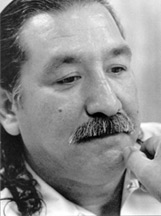
Leonard Peltier
CLASSMATES II. Still missing: THE POLITICAL PRISONERS.
June 2013.
To the adherents of the Sixth in Mexico and in the World:
To the students of the Little Zapatista School:
Compañeras, compañeros, compañeroas:
In addition to the fallen and the disappeared in the struggle, who won’t be present but will indeed be accompanying us in the Little Zapatistas School, are the political prisoners who, under various juridical ruses, are held in the prisons of the world or in political exile.
There are thousands of them throughout the world, and our small word won’t reach all of them. Even as we are relying on our compañer@s in the National Network Against Repression and for Solidarity to try to reach as many as possible, there will always be some we don’t get to.
That is why we are sending this invitation, among many others, to some of the political prisoners who symbolize not only the absurdity of trying to lock up freedom, but also, and above all, the dignified resistance and perseverance of those who are not defeated by guards, walls, and bars.
Among them you will find:
Alberto Patishtán Gómez.- Sentenced to 60 years in prison. This June 19th he will complete 13 years behind bars. His crime: being Mexican, Chiapan, indigenous, a professor, and a Zapatista sympathizer. Despite the evidence of his unjust incarceration, the judicial authorities are delaying his liberation. In the words of one government official: “If we free Patishtán it will be a doubly bad sign: it will give evidence that the judicial system is a bunch of shit, and it will encourage the struggle to free the other prisoners. It is something that does not suit us from any perspective. It is better to wait until those who are making so much noise about this get tired.” But here we already know that the judicial system in Mexico is a bunch of shit and that those who fight for the freedom of the political prisoners will not tire…ever.
Leonard Peltier.- Has served 37 years in prison. His crime: belonging to the native Sioux Chippewa (Anishinabe-Lakota) people and struggling for the rights of native peoples in the American Union. He was taken prisoner in 1976 and sentenced to two consecutive life sentences (perhaps because his persecutors wanted to be sure he wouldn’t get out dead or alive). He was accused of killing two agents of the FBI (Federal Bureau of Intelligence). The incident took place on Pine Ridge, sacred territory of the Sioux people, in South Dakota, USA, where there are uranium and carbon fields.
He was sentenced without any proof and despite over 10,000 pages of documentation evidencing his innocence. The FBI’s accusation can be summarized like this: “Somebody has to pay.” Robert Redford made a film about his case, a film which has never been shown in North American theaters. Meanwhile, the FBI “boys” and “girls,” who come off so well in television mini-series, have killed 250 Lakota indigenous people. There isn’t a single investigation of these crimes. This in a country built on the dispossession of the lands belonging to the native peoples of that part of the American continent.
Mumia Abu Jamal.- United States citizen. Prisoner for 30 years. His crime: being a journalist and an activist for those discriminated against because of their color, in the United States. He was initially sentenced to death, and is now serving a life sentence. The whites accused him of killing a white, he was judged by whites, sentenced by whites, he was to be executed by whites, and he is guarded by whites. This in a country built on the exploitation of the blood and sweat of the slaves brought from Africa who, of course, were not white.
Edward Poindexter and Mondo We Langa.– United States citizens. Their crime: fighting for the rights of the African American population in the United States. Victims of the Counter Intelligence Program (COINTELPRO) of the FBI, they were accused of killing a police officer in 1970 by blowing up a dynamite-filled suitcase. Despite the confession of the real culprit, the FBI manipulated and planted evidence against these two militants of the Black Panther organization. Various items of juridical evidence prove their innocence. They are still imprisoned in a country that values the integrity and impartiality of its juridical system.
Julian Paul Assange.- Originally from Australia and a citizen of the world. He is now a political refugee. His crime: to divulge to the world, among other things, the corruption of US foreign policy. Assange is currently pursued by the US and British governments, the two supposed defenders of justice and liberty.
Bradley Manning.- First class soldier in the US army. His crime: to release a video showing US soldiers killing Iraqi civilians from a helicopter. Among those killed are two journalists. He is also accused of having leaked documents about the barbaric US actions in Afghanistan and Iraq. The principal charge against Bradley Manning, which could lead to his execution, is that of “aiding the enemy,” that is, aiding the world in knowing the truth. This in a country held together by the lie of a constant external threat (Muslims, Asians, Latinos, etc., that is, the entire world), and according to the recently revealed “intelligence operations” (really spying), US citizens are also a threat.
Antonio Guerrero Rodríguez, Fernando González Llort, Gerardo Hernández Nordelo, Ramón Labañino Salazar and René González Sehwerert.- The homeland of these five people is Cuba, the first free territory in the Americas. They are also knows as “the five Cubans.” Their crime: to have leaked information about the plans of terrorist groups with bases in the United States. In June of 1998, Cuba gave the FBI a report obtained by the five Cubans, including hundreds of pages of documents, videos, and audios of terrorist activities in the US. Instead of dismantling the terrorist cells, the FBI detained the five Cubans who, in reality, had saved the lives of dozens of people, principally tourists, who would have been the target of the attacks. Antonio is an engineer, Fernando a diplomat, Gerardo a cartoonist, Ramón an economist, and René a pilot. They are prisoners for the crime of spying, even though during their trial the prosecutors themselves testified that the material they had obtained did not affect the national security of the United States, and that Cuba did not represent a threat. All this in the territory of they who say they are fighting international terrorism.
Maria Alyójina, Yekaterina Stanislávovna Samutsévich y NadezhdaTolokónnikova.- Russians, members of the punk rock group “Pussy Riot.” Their crime: denouncing the complicity of the top clergy of the Orthodox Church in the imposition of Vladimir Putin. They were arrested and taken prisoner for playing punk music in a church. The lyrics of the song asked the mother of god to throw Putin out of government. They were sentenced to two years in prison for “undermining the social order.” This in a country that prides itself on having liberated itself from “communist tyranny.”

Pussy Riot Prisoners
Gabriel Pombo da Silva.- Anarchist born everywhere and nowhere. He has been in 20 different prisons over almost 30 years in Spain and Germany. His crime: being a person of principle. To his persecutors he said: There is nothing more deplorable than a satisfied slave… an individual disposed of memory and dignity… it is preferable to be taken to the scaffolds for having rebelled than living 100 years of “conditional freedom,” conditioned by the fears and lies that they have sold us, indoctrinated in us…” Regarding his condition as a political prisoner, he has been clear: “I am certain that for me (as for many others) the possibility of getting out of prison for reasons based on their laws is impossible…because their legality requires my renunciation of my political identity… And obviously whoever renounces their own political identity not only betrays himself but all those who have come before him in this long march for dignity and freedom. There is nothing heroic nor “martyr-like” (the cemetery is already full of those) in this perspective. I believe it sincerely and with all of my hear and that is why I am willing to accept “paying my tax” for being honest with myself and what I think and feel…”
(…)
Why do I tell you about these political prisoners, so different and distant from each other? Because for the Zapatistas, freedom is not the patrimony of a creed, an ideology, a political position, or a race. In the videos you will see what we are talking about and this will help you listen, which is how one begins to understand. These consist of about 15 minutes that will help you to peer into the many worlds that exist in this world.
Like these men and women, hundreds of political prisoners have been invited to the Little Zapatista School. We have sent all of them a letter much like the one I annex here. We hope they have received them, as well as the books and audios and videos where we tell our story. We hope that they accept our invitation, not because we think we could teach them anything, but so that they know what it is we call freedom here.
Here it is:
ZAPATISTA ARMY OF NATIONAL LIBERATION.
MEXICO.
May of 2013.
For: ___________________________
From: The Zapatista women, men, kids, and elderly.
Regarding: Special invitation to participate in the Little Zapatista School.
Compañer@:
We send you a greeting from all of the children, old people, women, and men of the Zapatista Army of National Liberation.
We write you because we want to extend to you a special invitation to participate in the Little Zapatista School, “Freedom According to the Zapatistas.”
We know that perhaps it will be impossible for you to participate personally on this occasion. But we know well that the day will come when the doors of the prisons will open for those who, like you, have been taken prisoner by injustice-made-government. And those same doors will remain open long enough so that the bankers and their helpers can go in.
In the meantime, we will see about a way to get you the materials. These consist of texts with the words of our Zapatista compañeras and compañeros, in their great majority Mayan indigenous people, in which they tell their own story of struggle. It is a story surely similar to yours, full of the continuous ups and downs that make up the struggle for freedom, the pain that fills it, the hope that overflows it, and that persistent stubbornness that, like you, doesn’t give in, doesn’t give up, and doesn’t sell out.
Perhaps these won’t get to you just now. It is very probable that your jailers and prosecutors will confiscate the material, alleging that the package contains dangerous material. Because merely the world “freedom,” when it is lived from below and to the left, is one of the many horrors that fill the nightmares of those who are above at the cost of pain for everyone else.
In any case we wait here for your attendance, sooner or later. Because if our resolve is for freedom, one of our distinguishing characteristics is patience.
Vale. Cheers and let liberty be what it should be, that is, the patrimony of humanity.
In the name of all of the Zapatistas of the EZLN,
Subcomandante Insurgente Moisés. Subcomandante Insurgente Marcos.
Mexico, May of 2013.
(end of the invitation letter to the political prisoners)
(…)
Well then, now you know a few more of those invited to participate in the Little School with you.
Don’t be scared of them. They aren’t criminals; that designation belongs to those who keep them prisoner.
Vale. Cheers and may you find freedom the only way possible, that is, with all of them.
(To be continued…)
From the mountains of the Mexican Southeast.
Subcomandante Insurgente Marcos.
Mexico, June of 2013.
::::::::::::::::::::::::::::::::::::::::::::::::::::
See and listen to the videos that accompany this text:
Bishop Raúl Vera, always on the side of those below, talking about the political prisoner Alberto Patishtán.
……………………….
Silence and the word according to the native Lakota people.
…………………………
The group “The Last Poets,” with “True Blues,” a recorrido, in a blues rhythm, about the oppression of the African American population throughout history.
…………………………..
The North American actors Danny Glover and Peter Coyote in solidarity with the 5 Cuban political prisoners in the United States.
……………………………..
The punk group Pussy Riot in the performance where they oppose Vladimir Putin.
………………………………………….
The punk group “Espina Negra” with this track called “El primer Anarquista” (The First Anarchist).
Marcos: Classmates I. The Disappeared
Classmates I. First those who came first: THE DISAPPEARED.
June 2013.
To the adherents of the Sixth in Mexico and in the world: 
To the students of the Zapatista Little School:
Compañeroas, compañeras, compañeros:
As you surely don’t know, the first phase of the first course “Freedom According to the Zapatistas” has been completed.
The support materials are ready; the teachers are ready; the registration spots are filled; the indigenous Zapatista families that will host you are figuring out how many students they will have and building structures, gathering kitchen utensils, and setting up the places where students will sleep; the chaufferologists, as Sub Moisés calls them, are fine-tuning their motors and sprucing up their vehicles to transport students to their schools; the insurgents are weaving and unweaving artisanship; the musicians are practicing their best pieces to liven up the party to celebrate the 10-year anniversary [of the Good Government Councils], the arrival of the students, and the end of the course; and a healthy climate of collective hysteria is evident among all those who support the organization. The lists are being reviewed to see who is missing… or who is present and shouldn’t be; and in CIDECI, site of the Unitierra [University of the Earth] San Cristóbal de las Casas, Chiapas, the preparations for the little school and for the Seminar “Tata Juan Chávez Alonso” are moving forward.
And, as was expected, the federal and state governments are reactivating the paramilitaries, encouraging provocations and confrontations, and doing what they do to avoid that you (and others, through you) confirm the advancement of the Zapatista communities, and the stark contrast between Zapatista communities and those communities and organizations who cover themselves with the thin cloak of governmental assistance.
It’s predictable, you know. So typical the counterinsurgency manual, so typically ineffective, so useless. So the same as 10, 20, 500 years ago. PRI, PAN, PRD, PVEM, PT, all of the political parties, with imperceptible variations in their discourses, doing the same thing… and reiterating their failure.
Who would have thought that all of the governments, of the entire political spectrum, would so fear the improvement of indigenous quality of life? And we understand their nervous restlessness, their poorly disguised panic, because the message that comes from our side is clear and presents a double-edged threat to them: they aren’t necessary… and they are in the way.
In sum: there is a lot of movement, inside and outside, by them and by us.
And everything, looking at it from the top of this ceiba tree, approximates an orderly disorder (I was going to say a “desmadre,” but those who generously support us with translation to other languages would complain about the abundance of “localisms” that are impossible to translate). I could add that all of this moves seemingly without rhyme or reason, to the rhythms of the ballad-corrido-ranchera-cumbia of the musicians that are a kind of soundtrack to all this movement, and that have a sound that is, to say the least, disconcerting.
Anyway, everything’s moving along.
Now it’s my job to tell you who your classmates will be. Women, men, and ‘others’ of all ages, from different corners of the five continents, from distinct histories.
I have climbed the ceiba tree not just because of my fear of being assaulted by an impertinent beetle, a supposed errant knight, or by the melancholic stories of the cat-dog… well, yes also because of this, but most of all because, in order to tell you about those who were invited first, one must look at one’s heart, which is what we the Zapatistas call the act of remembering, making memory.
The first on the list to be invited are, and will be, those who have come before us and who have accompanied us in this unfinished path to freedom, the fallen and the disappeared in the struggle.
To all of them (male and female) we send a letter of invitation like the one that I annex here. We sent it to them not long ago: yesterday, a month ago, a year ago, 10, 20, 500 years ago.
To understand this letter it will be necessary not only to look and listen to the videos that accompany this text, but also necessary will be a certain dose of memory… and of dignified rage.
Here goes:
ZAPATISTA ARMY OF NATIONAL LIBERATION.
MEXICO.
To all those fallen or disappeared in the struggle for freedom:
Compañera, compañero, compañeroa:
We send you a greeting from…
Hmm…
Yes, perhaps you are right. Perhaps this has something to do with the lyrics of Gieco, Benedetti, Heredia, Viglietti, Galeano, the stubbornness of the grandmothers and the mothers of the Plaza de Mayo, the incorruptible dignified courage of the women of Sinaloa and Chihuahua, the pain made into persistent search of the relatives of thousands of disappeared across the continent, with all of these people who are so stubborn, so… admirable.
Could be. What is certain is that, in thinking about who could be interested in seeing and listening to us in this act of showing ourselves that we call “the little Zapatista school,” you were the first people that came to mind. All of you. Because despite the fact that we don’t know many of your names, knowing one of you is knowing all of you.
So, if someone is to be responsible for these lines, blame it on memory, that continuous and persistently impertinent thing that won’t leave us in peace, that is always at battle, always at war.
And this is good, we think, as indigenous, Mayas, Zapatistas. It is good that this war against oblivion does not cease, that it continues, that it grows, that it becomes global.
Well yes, it could also be because here we are all a little, or a lot, like the dead, like the disappeared, knocking at the door of history, demanding a place, a small one, small like us. Demanding memory.
But it seems to us, after really thinking it over, that the blame lies with memory.
What’s that?
Yes of course, also with oblivion.
Because it is oblivion that stalks, attacks, conquers. And it is memory that keeps vigil, defends, resists.
That is why we’re making this invitation.
Where will we send it you ask? Yes, that was a problem. Don’t think we didn’t think about that quite a bit.
Yes, maybe that’s why you think it has something to do with León Gieco and that song of his, “In the Country of Freedom.”
Was it because of you all that we called this course “Freedom According to the Zapatistas”? In order to have a place to send the invitation? Well, that hadn’t occurred to us, but now that you mention it, yes, that could be. We would thus avoid the mess of looking for addresses, post offices, email addresses, blogs, webpages, nicknames [English in the original], social networks, and all of these things for which our ignorance is encyclopedic.
You know what? There has been here, and continue to be, not just a few difficult moments. Moments in which it seems that everyone and everything is against us. Moments in which thousands of reasons, sometimes dressed mortally in lead and fire and sometimes dressed finely in comfortable conformist arguments, have attacked us from all sides trying to convince us of the advantages of giving up, selling out, surrendering.
If we didn’t succumb, it wasn’t because we were so powerful and had a great arsenal (of weapons or dogmas, as the case may be).
It was because we are made up of you, by your memory.
You already know of our obsession with calendars and geographies, our very ‘other’ way of understanding ourselves and the world.
Well, here memory is not a question of one day’s ephemera that serves as an alibi for forgetting during the rest of the year. It is not a question of statues, monuments, or museums. It’s, how could I tell you… something less fussy, with less pomp and circumstance. Something quieter, barely a murmur…but constant, stubborn, and collective.
Because here, another way of saying that we do not forgive nor forget, is to not give up, to not sell out, to not surrender.
And instead, to resist.
Yes, agreed, it is not very “orthodox,” but what can you do. It’s one of our ways… or anyways… depending.
So, we wait for you here.
This letter we remit then to “the country of freedom,” the only nation with no borders but with every flag… or no flag (which isn’t the same but is equal nonetheless), and which is the most difficult nation to get to… maybe because the only road there is memory.
We know the current impossibility of you coming to our communities, and sending you the preparatory materials is problematic. But in any case, now, the same as yesterday and tomorrow, you have a special place with us.
…
Perhaps we will run into each other sooner than planned…or as planned…knocking on some door or peering out a window, but always opening the heart.
In the meantime, don’t forget that when the Zapatistas say “here we are,” we include you in that statement.
Vale. Cheers and let memory resist, that is, live. Because alive they took you and alive we want you back.
In the name of all of the Zapatistas of the EZLN.
Subcomandante Insurgente Moisés. Subcomandante Insurgente Marcos.
Mexico, May 2013.
(End of the letter-invitation to the fallen and disappeared in the struggle for freedom).
(…)
So now you know who will be among your fellow students.
They’ll be around here. No, they won’t scare anyone. Well, unless someone fears memory and comes looking for forgetting. But since I don’t believe this will be the case, you don’t have anything to worry about.
Perhaps, without meaning to, you will run into the great mother ceiba, the tree that sustains the world. If you have the necessary patience and imagination, gaze at its trunk and ask it a question. Perhaps the mother ceiba, with these very ‘other’ classmates as its company, will respond in the dry creases of its trunk. Ask it whatever you want, but above all, ask it the most important thing:
Ask: With whom will all this be done? And it will respond: With you.
Ask: For whom is this effort? And it will respond: For you.
Ask: Who made it possible? And, maybe with a light tremor, you will hear: You.
Ask: For who is this path?
And the mother ceiba, the earth, the wind, the rain, the sky bleeding light, all of our fallen, our disappeared, will respond:
Freedom…Freedom!… FREEDOM!
So now you know: when you are here in these mountains of the Mexican Southeast, where it rains, it blows, the sky covers or discovers its light, and the earth becomes wet, it will be because, at the foot of the mother ceiba, the sustainer of the world, someone is asking questions…and most importantly, because they are receiving answers.
What comes next then? Well, it seems to me that it will be up to you to tell that story.
Vale. Cheers and let memory neither fall nor disappear.
(To be continued…)
From one corner of memory.
SupMarcos.
Mexico, June 2013.
:::::::::::::::::::::::::::::
See and listen to the videos that accompany this text.
Mario Benedetti, always welcome, and Daniel Viglietti, sing, that is, yell for the disappeared, about the disappeared, with the disappeared. Dedicated to the mothers and grandmothers who don’t give up, don’t give in, and don’t sell out.
…………………………………
Once again Mario Benedetti, emphasizing, with his voice, the impossibility of forgetting. Dedicated to those who don’t forget.
……………………………..
León Gieco sings, a song of his own writing, “La Memoria,” that stubborn, relentless, fierce memory of those who are not here, but have not gone, nor will they go… as long as there is someone who doesn’t forget them.
………………………………
León Gieco with his song “El País de la Libertad” (The Country of Freedom), that address to which memory must be directed.
…………………………………….
Víctor Heredia explains why “We still sing,” that is, why we don’t forget.
Zibechi: Disproportionate Enchantment With the Pacific Alliance
The Disproportionate Enchantment With the Pacific Alliance
By: Raúl Zibechi
The managerial and media elites quickly pronounced campaigns with the Seventh Summit of the Pacific Alliance, held in Cali (Colombia) between May 20 and 24. The gathering summoned abundant delegations of directors of big corporations and the presidents of the four member countries that belong to it: Enrique Peña Nieto, Sebastián Piñera, Ollanta Humala and Juan Manuel Santos. The prime minister of Canada and the presidents of Spain, Costa Rica, Panama and Guatemala also attended.
Delegations from Uruguay, Australia, Japan, Portugal, New Zealand and the Dominican Republic, who already had observer status, also gathered in Cali. Ecuador, El Salvador, France, Honduras, Paraguay and Portugal and were added this time.
We’re dealing with a gathering to oil businesses and exploit the export of commodities that the president of Colombia persisted in calling “integration,” as he did a year ago in Antofagasta upon assuring that we are facing “the most important process of integration that Latin America has made.” [1] Without anyone asking him, he emphasized that the alliance “is not against anyone,” although it is evident that it is oriented against the Mercosur and the Unasur and, more concretely, seeks to isolate a Brazil.
The Alliance’s defenders emphasize that it represents 35 percent of the Latin American GNP and 55 percent of the region’s exports to the rest of the world, and that during 2012 the four countries had greater growth than the rest of the region. However, they don’t contribute any basic data. It is certain that they export more than the Mercosur (573 billion dollars compared to 438 billion), but their exports are concentrated in raw minerals and hydrocarbons. Only 2 percent of the exports are directed to other countries of the Alliance, while 13 percent of what the Mercosur members export is intra-zone trade, which always entails greater value added.
If we look back a little further, the data are even more convincing. The Pacific Alliance’s intra-zone trade increased 215 percent in the last 10 years, while Mercosur’s internal exchange expanded 376 percent in the same lapse. [2] In Parallel, the four presidents of the alliance made ridiculous announcements that they put into evidence: they created a fund of one million dollars (250,000 dollars per country) to support projects against climate change, in favor of science and technology, corporations and social development.
Theotonio dos Santos is right when he was asked about the Pacific Alliance: “What is it that the United States government can offer the countries of the Pacific area? Trade with the United States.” And he clarifies: “The countries that enter into such an association do not make agreements with each other, each of them makes an agreement with the United States: that is not integration. It is more, each one of them in the relationship with the United States is going to become a debtor.”
In effect, the Pacific Alliance has three objectives: One: to subject countries of the Pacific as exporters of natural wealth, consolidating them as countries without industry with enormous inequalities and, therefore, with increasing doses of internal militarization; two: to impede the consolidation of regional integration and isolate Brazil, but also a Argentina and Venezuela; and three, and what its defenders never say: to form the American leg of the Trans-Pacific Partnership (TPP), which the United States wants to convert into the economic arm of its military mega-project to contain China.
Since the Left has appropriately denounced that the Pacific Alliance is inscribed in the United States policy of consolidating its hegemony in the region, which passes for impeding that blocks emerge out of its control. They do not explain, nevertheless, why the Mercosur is stuck and in crisis, to the point that the Uruguay of José Mujica propones to enter the Pacific Alliance. Nor does one talk about the reasons for which the Banco del Sur (Bank of the South) does not advance or that it takes suspiciously slow steps. Nor are the reasons in depth for the chronic trade crisis between Argentina and Brazil mentioned.
Bringing up these problems would be much like submitting the policies of the region’s progressive governments to scrutiny. Perhaps the biggest limitation of progressivism is its inability to confront, ideologically and politically, the corporate elites, above all on the part of Brazil and Uruguay, but also of Bolivia and Ecuador. Where there is certain confrontation, in the cases of Venezuela and Argentina, it is due to the offensives of the right but country models are not debated and they continue gambling on an extractivism that carries water to the mill of the Pacific Alliance. Regional integration doesn’t matter for exporting oil, soy, beef and wool to China.
The right speaks clearly. Roberto Gianetti, of the Federation of Industries of the San Pablo State, proposed being free from “Mercosur’s straitjacket” and reducing it from a customs union to a free trade zone. “We are not going to conclude any agreement having Argentina and Venezuela as associates,” he said in relation to the 14 years that the Mercosur has negotiating a FTA (free trade agreement) with the European Union.
Aécio Neves, candidate of the right in Brazilian elections next year, said that the Mercosur is paralyzed and proposed transforming it into “a free trade area that permits each member State to sign trade agreements with other countries” and places the Pacific Alliance as an example of dynamism. The ineffable Domingo Cavallo, one of those most responsible for the Argentina Crisis, says the same thing. It is evident that we are facing an offensive of the right allied with Washington that launch a challenge to which the Left doesn’t know how to or does not want to respond. The Pacific Alliance does not grow because of its own merit but rather because of the ambiguities of progressivism.
————————————————-
[2] http://www.lanacion.com.ar/1589843-la-region-mira-al-pacifico-alianzas-que-dejan-fuera-al-mercosur
[3] http://alainet.org/active/64680
Originally Published in Spanish by La Jornada
Chiapas Support Committee
Friday, June 14, 2013
En español: http://www.jornada.unam.mx/2013/06/14/opinion/017a2pol
Moisés: Little Zapatista Schools in the Communities Are Full
Space in the Communities for the Little Zapatista School is Full
ZAPATISTA NATIONAL LIBERATION ARMY
MEXICO
June 2013.
To: adherents to the Sixth in Mexico and the World:
To: those invited to the little Zapatista School:
From: Subcomandante Insurgente Moisés.
Compañeras and compañeros of the Sixth and students of the little school:
Receive Zapatista greetings, everyone. We want to let you know how we’re doing with preparations for our little school.
Good, well there’s good news and bad news:
First the bad news:
There is no longer space for attending classes in a community on the August 12 to 16 2013 dates. And space for the course in CIDECI, en San Cristóbal de Las Casas, Chiapas, is also about to fill up.
There are many compañer@s want to attend the little schools in our Zapatista communities. Many more than what we expected. More than what the people believed that changed their allegiance saying that the Zapatistas were no longer fashionable, that their initiatives were no longer ‘attractive,’ and the foolishness that those that have nothing to do repeat.
Then, what we want to report to you is that all the spaces for those who attend in a community in August are already full, all the little classrooms are full; in other words, there is no more space, there is no more room for students. Because not only are we dealing with receiving them, we also have to see that they are housed and fed well, according to our humble abilities, of course.
First we had prepared to receive 500 students in the Zapatista community. It filled up quickly. Later we expanded to 1,000 students, and that didn’t last. Now we made space for 1500 students and now that’s also full. And we are no longer able to fit more this time around because we think about taking good care of them and keeping them happy.
But don’t be sad, or get discouraged; to the contrary, because we are looking for another date, for another month, for those that will not be able to enter into the little school in a community this time. We’ll advise you of the date later. What’s most certain is that it will be for next December-January.
And now the good news:
Our Zapatista compañer@s, the ones that will be the teachers, are now finishing their preparations for being teachers.
Yes, they are finishing their preparation because all of the Zapatista peoples will participate in the school. You will have three teams of teachers: the compañeras and compañeros from the communities who will receive, house, and feed you; the compañeras and compañeros who will accompany you at all times and who will take care of you, that is, the guardians, or your “VOTAN”; and also your teachers in the little school.
But SupMarcos, in a separate communiqué, will explain further the three teams of teachers and how things will be in the schools. His computer is almost fixed.
In addition there will be teachers for the videoconference, and for the DVD version they have almost finished recording the class lectures.
The textbooks are also ready. We only need to add the DVDs, filmed by our own compañeras and compañeros in the Zapatista media, which show what we have done in every Zapatista corner here in Chiapas.
Don’t forget that afterwards there will be videoconferences or you can request these materials.
And we are also thinking of sending, later, a team of teachers to other places where there are people who would like to understand our struggle for freedom. Of course, only if they are invited.
In another communiqué, SupMarcos will give you some more information about how everything is going with the students. For now, I will just let you know that the vast majority are young people.
I would also like to take this opportunity to extend a general invitation to everyone who would like to come for the party to celebrate 10 years of the Good Government Juntas.
I also remind you of the “Seminar Tata Juan Chávez Alonso,” which is open to everyone that wants to attend, and that will be celebrated in the CIDECI of San Cristóbal de Las Casas, Chiapas, starting August 17, which is also when all the students are leaving the communities, so that those that are in the community will also be able to attend and to listen to the word of other original peoples of Mexico that struggle for indigenous rights and culture. Precisely in the month of July, we will have a meeting of the Organizing Commission, in other words of those who call everyone to the homage for our beloved compañero Don Juan Chávez Alonso.
It is all for now. We await you here.
From the mountains of the Mexican Southeast,
Subcomandante Insurgente Moisés,
Mexico, June 2013
:::::::::::::::::::::::::::::::::::::::::::::::::::::
En español: http://enlacezapatista.ezln.org.mx/2013/06/13/cupo-lleno-en-comunidades-para-la-escuela-zapatista/
Click on the link above to listen and watch the videos below that accompany this text:
The song “The Anarchist” by Paradoxus Luporum. Dedicated to the anarchist compas, the new major enemy of the institutional “left.”
Mario Benedetti, in his own voice, “What can the young people do?” also for the anarchists.
So that you can start practicing your steps for the party on the 10 year anniversary of the caracoles and the Good Government Councils: Zapatista Band in Oventik.
Mayo de 2013 Resumen de Noticias sobre los Zapatistas
MAYO DE 2013 RESUMEN DE NOTICIAS SOBRE LOS ZAPATISTAS
En Chiapas
1. Noticias actualizadas sobre Alberto Patishtán – El 27 de mayo, la Corte Suprema de México remitió al Primer Tribunal Colegiado del Vigésimo Circuito en Tuxtla Gutierrez, Chiapas el expediente penal de Alberto Patishtán trasladado por vía terrestre. No se dió explicación en los informes de los medios de comunicación por el largo retraso. Sin embargo, los abogados de Patishtán esperan que haya una decisión en junio (antes del periodo vacacional en el mes de julio). Los informes de los periódicos también indican que trasladaron a Patishtán a la Ciudad de México dos veces para revisiones médicas en el Instituto Nacional Neurología y Neurocirugía después de su cirugía cerebral, una vez en abril y la otra en mayo, pero estos reportes no dan ninguna información sobre los resultados de las revisiones.
2. Sigue la disputa legal por la caseta de cobro en San Sebastian Bachajón – El 16 de mayo, un tribunal en Chiapas emitió una decisión en el caso de San Sebastian Bachajon (SSB). La decisión ordena reemplazar el procedimiento que supuestamente autorizó al gobierno quitar varias parcelas del ejido – muy oportunamente todas las parcelas pertenecen a adherentes a la Sexta Declaración del EZLN – para instalar una caseta de cobro donde los visitantes a las Cascadas de Agua Azul pagan por el acceso. Los adherentes del SSB reclamaron a la corte que el procedimiento utilizado para otorgar al gobierno la autoridad para tomar sus parcelas era ilegal. Pidieron que la corte les devuelva sus parcelas y que emita una orden que impida al gobierno quitárselas. La decisión no les devuelve la tierra, sino ordena que el asunto sea presentado ante la asamblea ejidal para su decisión en este asunto legal. A los adherentes de SSB les preocupa que la facción pro-gobierno del ejido, especialmente el comisionado, vayan a manipular el proceso. Por lo que dos adherentes de SSB fueron a la Ciudad de México para presentar su perspectiva ante un miembro de la Corte Suprema. También visitaron las oficinas del Alto Comisionado de Naciones Unidas para Derechos Humanos pidiendo su intervención, y las oficinas de la Comisión Interamericana de Derechos Humanos, buscando medidas cautelares después del asesinato el mes pasado (24 de abril) de un líder comunitario, Juan Vasquez Gomez.
3. Dos campesinos asesinados en Venustiano Carranza – El 5 de mayo, dos campesinos murieron por heridas de bala durante un enfrentamiento ocurrido en el municipio de Venustiano Carranza que al parecer tuvo que ver con conflictos agrarios y políticos. Además de los dos muertos, 20 hogares también fueron quemados ó destruidos, y hubo vari@s herid@s. De acuerdo a informaciones periodísticas, el ataque tuvo que ver con un conflicto por el control de la Casa del Pueblo, que se profundizó con la llegada de un nuevo presidente municipal en enero del 2013, quién había sido acusado de haber “perdido” 67 cabezas de ganado. El conflicto radica entre la Organización Campesina Emiliano Zapata-Casa del Pueblo (OCEZ-CP) y un grupo disidente interno. Este grupo, compuesto por 49 familias, sufrió de expulsión forzada el año pasado, y actualmente ocupa unos edificios gubernamentales, y sus integrantes exigen poder volver a sus propios hogares. Los que dirigen la OCEZ-CP quieren que el gobierno del estado reubique a los disidentes. Al parecer, 12 de los integrantes de la OCEZ-CP fueron detenidos acusados de haber participado en la violencia del 5 de mayo. La organización y los que la apoyan han instalado una protesta pública en la plaza frente a la Catedral de San Cristóbal. Los del lado de la OCEZ-CP dicen que grupos paramilitares apoyados por el estado tienen la responsibilidad en el caso de la violencia. Los dos grupos en este conflicto no tienen ninguna relación con el EZLN, pero se rumora que simpatizan con el EPR.
4. Maestr@s chiapanec@s resuelven paro – El 15 de mayo, Día Nacional del Maestr@, l@s maestr@s chiapanec@s comenzaron un paro laboral para protestar contra la reforma federal de educación que se había aprobado por el Congreso federal. L@s maestr@s de varias partes de México iniciaron movilizaciones masívas el 15 de mayo en contra de la reforma, que niega algunos de sus derechos laborales y también la establidad del contrato de trabajo, además de que podría promover la privatización de la educación. El paro terminó 5 días después de que los representativos sindicales llegaran a un acuerdo con el gobierno estatal, que firmó un documento donde se compromete a no estandarizar las evaluaciones de maestros de manera punitiva, en tal manera que no afectaría los derechos laborales de los obrer@s de la educación. La administración estatal también se comprometió a garantizar que el acuerdo entre el consejo del Pacto por México, el gobierno federal, y la CNTE “será ratificado por el gobierno estatal de Chiapas.” La reforma educativa forma parte de los cambios neoliberales que el gobierno de Enrique Peña Nieto está promoviendo.
Por otras partes de México
1. Siete años después del terrorismo policiaco en Atenco – El 3 y 4 de mayo, la comunidad de San Salvador Atenco conmemoró el séptimo aniversario del brutal ataque policiaco que resultó en la muerte de dos jóvenes, el encarcelamiento de más de 150 personas y el acoso sexual de policías contra 26 mujeres que se encontraban detenidas. Como resultado de este terrorismo policiaco, los líderes del Frente de Pueblos en Defensa de la Tierra (FPDT) fueron encarcelados en una prisión de máxima seguridad con sentencias más largas que la duración de una vida humana. El FPDT es la organización basada en San Salvador Atenco que exitosamente resistió (con machetes alzados) al plan gubernamental de tomar sus tierras agrícolas para usarlas en la construcción de un nuevo aeropuerto internacional en la Ciudad de México. La acción de la policía estatal y federal el 3 y 4 de mayo de 2006 fue vista por muchos como una venganza por la resistencia exitosa del FPDT’s contra el aeropuerto; mas su significado fue más allá de la resistencia contra el aeropuerto. Durante ese tiempo, las y los zapatistas estaban viajando a través del país durante la “Otra campaña” y acababan de estar en Atenco solo un par de días antes del ataque policiaco. La represión policial en San Salvador Atenco paralizó a la Otra campaña por varios meses y, en general, fue un mensaje a los movimientos sociales de qué esperar en el futuro. El 3 y 4 de mayo del 2006, el gobernador del estado de México, donde está localizado Atenco, era Enrique Peña Nieto. Ahora es el presidente de México y una vez más hay planes de construir un aeropuerto, un parque industrial y suburbios en las tierras que pertenecen a Atenco y otros ejidos circundantes.
2. Amnistía Internacional emite informe sobre la violencia en México – Amnistía Internacional (AI) recientemente emitió su informe de 2013 sobre derechos humanos. Se refiere al sexenio de Felipe Calderón. Un gran número de abusos a los derechos humanos son detallados, incluyendo el hecho de las autoridades mexicanas de no reconocer la gravedad del problema y la complicidad de funcionarios públicos en los abusos. El informe completo sobre México puede ser leído aquí. De acuerdo con las cifras emitidas por el gobierno federal y publicadas en La Jornada, hubo 5,296 homicidios en México, presuntamente vinculados al crimen organizado, durante los primeros 151 días de la presidencia de Enrique Peña Nieto; en otras palabras, del 1 de diciembre del 2012 hasta el 30 de abril del 2013. Esto representa una disminución leve durante el mismo périodo del año anterior bajo el gobierno de Calderón, pero es, sin embargo, un número trágico de muertos.
En Los Estados Unidos
1. El Presidente Obama visitó México el 2 de mayo – El Presidente de los Estados Unidos, Barack Obama, visitó México a partir del 2 de mayo. Se reunió con el Presidente Peña Nieto y pronunció un discurso ante una audiencia de estudiantes y gente de negocios. Informes de prensa indican que los dos presidentes hablaron menos sobre seguridad y más sobre economía. Obama dijo que estaba esperanzado en que se dé la reforma migratoria, pero no tanto sobre las restricciones a las armas. La economía mexicana se beneficia de el dinero (remesas) que los mexicanos que viven y trabajan en Estados Unidos envían a sus familias en México. Las remesas son una de tres fuentes superiores de ingresos de México. Los Estados Unidos también es el proveedor más grande de México de armas ilegales que terminan en manos de grupos del crimen organizado lo cual alimenta la violencia en México.
__________________________________
Compilación mensual hecha por el Comité de Apoyo a Chiapas.
Nuestras principales fuentes de información son: La Jornada, Enlace Zapatista y el Centro de Derechos Humanos Fray Bartolomé de las Casas (Frayba).
_________________________________
Chiapas Support Committee/Comité de Apoyo a Chiapas
P.O. Box 3421, Oakland, CA 94609
Email: cezmat@igc.org
http://www.facebook.com/pages/Chiapas-Support-Committee-Oakland/86234490686
https://compamanuel.wordpress.com
 Chiapas Support Committee