By Pietro Ameglio | Originally published by Desinformémonos in Spanish.
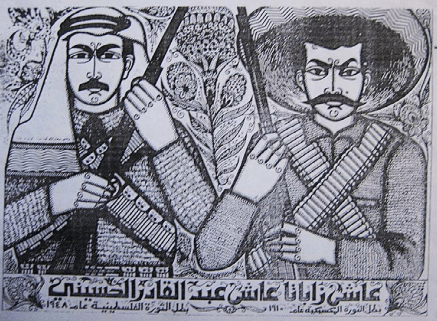
For this article we will take as a basis the textual words chosen from particularly significant moments, of Palestinian and Zapatista protagonists about their struggles, challenges and sufferings, since they seem to us in this case stronger and more effective than any other reflection.
1. Palestinian genocide in Gaza: Moral Compass of humanity
We return to the question in the title of our previous article in this medium (in Spanish at https://desinformemonos.org/por-que-el-papa-y-el-patriarca-ortodoxo-junto-a-lideres-rabinos-e-imanes-no- are-accompanying-with-their-bodies-today-Palestinian-and-Israeli-families-in-Gaza/ ): why have the Pope and religious leaders of Judaism, Islam and other traditions not yet gone to “place their body” in Gaza, alongside Palestinian families? It is a brutal snapshot of the level of growing inhumanity that affects our species. It shows the lack of a living incarnation with the victims on the part of the leaders of religious traditions, unlike their people and faithful believers who have carried out numerous acts of solidarity. And also of the helplessness, with little voice in key decisions and the lack of challenges in the most radical nonviolent action of the people of God in those religious traditions, where we are not capable of making — as the Zapatistas would say– the authorities “lead by obeying” the people, and do what the sacred words of their texts say unambiguously: Put their bodies next to the victims “until they give their lives for them.”
Regarding the impossibility of risking nonviolent actions that “oblige” our religious hierarchs to fulfill “their duty,” a passage from the Gospel comes to mind (Mc. 2, 3-5), where relatives of a sick person, seriously ill such he could not go to Jesus Christ in his public healing meetings to be cured, had to take him up to the roof of a house where Jesus was. Then they lowered him through the roof so that he could see him and cure him, which is what happens. It seems to me, in all ignorance and simplicity, but also with audacity and humility, that this evangelical story could give us a clue about how we should act nonviolently so that the Pope and other religious hierarchs “land” -yes or yes!- in Gaza, even if it had to be removing rubble.
Father Donald Hessler, whom I have cited more than once in this medium as an example of nonviolence, used to ask people to question the type of faith they had in their lives: “Where do you want to die: in bed?” or on the cross?” It is the question that should be asked at least to the Pope and the Christian religious heads now regarding this genocide. In the only passage of the gospel where Jesus refers to the Last Judgment – something that goes beyond any religious belief, it seems to me – he calls himself “Son of Man” (not of God), and clearly indicates what the measure will be. with which our life will be measured: “I was hungry and you fed me, I was thirsty, I was imprisoned, naked… (Mt. 25, 31-46)”… I was bombarded. As we have said, it is not about seeking any form of gratuitous martyrdom but about embodying the Word of God and the will of the people suffering from him, which is the only thing that justifies exercising that religious power.
For a few days now, a video has been circulating on the networks about a homily (“Christ under the rubble”) by the Palestinian Lutheran pastor Munther Isaac, made in Bethlehem the day before Christmas (https://www.youtube.com/watch ?v=CjIG2YZBXpo&ab_channel=PEAPIECUADOR See links below.), which seems to me to be very strong, profound and clear regarding this issue and the current emergency of humanity, with which we are in full harmony since our previous articles.
The pastor begins by saying that “Gaza as we knew it no longer exists. This is annihilation. It is a genocide. The world watches, the churches watch. The people of Gaza send live images of their own execution … We are tormented by the silence of the world. Leaders of the so-called ‘free world’ are lining up to give the green light to the genocide of a captive population.” And he adds: “If you are afraid to call it genocide, it is your responsibility, it is a sin and it is darkness that you voluntarily welcome.”
This political sphere is complemented by another, which is the cover-up of “theological protection” by Western churches; In South Africa the concept of “state theology” was created: theological justification of the status quo of racism, capitalism and totalitarianism. In Palestine “we confront the theology of the Empire that masks oppression under the cloak of divine decrees: it speaks of a land without people, it divides people between ‘them’ and ‘us’. It dehumanizes and demonizes… calls to empty Gaza (go to Egypt, Jordan… to the sea).” And he continues to question the theology of the Empire, asking: “How does the murder of 9,000 Palestinian boys and girls amount to self-defense? How is the displacement of 1.9 million people, the murder of more than 20 thousand Palestinians, self-defense? They transform the colonizer into a victim and the colonized into the aggressor.” And he adds that it is evident that “The world does not see us as equals… If 100 Palestinians have to be killed to hunt down a Hamas militant, then go ahead. They don’t see us as humans. In the eyes of God, no one can take away our humanity.”
Pastor Munther says that the genocide in Gaza “has become the moral compass of the world today” (of the current moral state of humanity). And he continues to reflect self-critically: “If you are not horrified by what is happening in Gaza… there is something wrong with your humanity. If as Christians we are not outraged by genocide and the use of the Bible to justify it, our Christian witness is distorted.” He then adds that “We are outraged by the complicity of the churches. Let’s be clear: silence is complicity. An empty call for peace without demanding a Ceasefire and End to the Occupation, and superficial empathy without direct action, all of this is complicity.”
He also wonders, remembering how Jesus was displaced by the empire and had to flee to Egypt – just like the Palestinians today -, what Jesus exclaimed with great pain on the cross: “My God, why have you abandoned me?” And he answers that through the supportive people, nearby, they know that God has not abandoned them, He is among the rubble there: vulnerable, displaced, refugee. That is precisely where the Incarnation is: “we see it in every murdered boy and girl…in every displaced family wandering around in despair without a home.”
Finally, the pastor concludes with a message to the world: “This Genocide Must Stop Now!” And he adds that the Palestinians, as they have always done, will rise up and continue fighting; however the moral problem will lie with the rest of us who may have been complicit in our silence: “Look in the mirror and ask yourself: where was I when Gaza was passing through a genocide?”
This resistance and permanent moral and material strength in their bodies to fight against inhumanity and injustice deeply unites the Palestinian people with the Zapatistas.
2. Zapatismo: 30 years of building humanity and a profound “common root” change
Zapatismo has been much more than a great and heroic revolution of a people in arms in a very specific, mainly indigenous Mayan territory of the Mexican southeast. It has also been more than an enormous, original and inspiring global phenomenon of cultural, social, economic and political resistance against neoliberalism and for humanity. There is also an unobservable social long-term history: A humble and very concrete advance, totally real, of the millennia-long process of humanization of our species. An important community in number within a certain territory – also large – is trying – with very precise results and also limitations – to build a model of community life from the principles of equality and community co-operation, non-capitalist as much as possible. There are no more examples and results – not even close in quantity and quality – in universal human history, for a similar number of bodies and territory, with that temporality and continuity.
How is the structural reorganization of Zapatista autonomy proposed today?
The EZLN in the last and twentieth part communiqué from a few days ago, titled “The Common and Non-Property,” delves into the explanation about a “new stage that the Zapatista communities have decided:” “Let’s say that the first 10 years of autonomy, that is, from the uprising to the birth of the Good Government Boards in 2003, was a learning experience. The next 10 years, until 2013, were about learning the importance of generational change. From 2013 to date it has been about confirming, criticizing and self-criticizing errors in operation, administration and ethics.”
In November of last year they had already advanced the main points of their decentralized political structural reorganization of the autonomy project, in their IX part of their communiqué (“The new structure of Zapatista autonomy,” where they pointed out that the base would be the Local Autonomous Governments (GAL): “There is a GAL in each community where the Zapatista support bases live. The Zapatista GAL are the core of all autonomy. They are coordinated by autonomous agents and commissioners and are subject to the assembly of the town, ranchería, community, area, neighborhood, ejido, colony, or however each population calls itself. Each GAL controls its autonomous organizational resources (such as schools and clinics) and the relationship with neighboring non-Zapatista sister towns. If before there were a few dozen MAREZs, that is, Zapatista Rebel Autonomous Municipalities, now there are thousands of Zapatista GALs…” and they also address all forms of corruption that may arise.
In turn, according to the reality of the area, “several GALs convene in Zapatista Autonomous Government Collectives, CGAZ, and here they discuss and make agreements on matters that interest the GALs that gather. When they so determine, the Collective of Autonomous Governments calls an assembly of the authorities of each community. Here the plans and needs of Health, Education, Agroecology, Justice, Commerce, and those that are needed are proposed, discussed and approved or rejected… Each region or CGAZ has its directors, who are the ones who call assemblies if there are any “an urgent problem or one that affects several communities…that is to say, where before there were 12 Good Government Boards (JBG), now there will be hundreds.”
On another scale, there are “the Assemblies of Collectives of Zapatista Autonomous Governments (ACGAZ), which are what were previously known as zones. But they have no authority, but depend on the CGAZ, and the CGAZ depend on the GAL. The ACGAZ convenes and presides over zone assemblies, when necessary…They have their headquarters in the caracoles, but they move between the regions.”
In this way, in this profound political and social change towards a process of decentralization and more direct control of power and decisions from the community bases and their assemblies, “the Command and Coordination of Autonomy has been moved from the JBG and MAREZ to the towns and communities, to the GAL. The zones (ACGAZ) and the regions (CGAZ) are governed by the people, they must be accountable to the people and find a way to meet their needs in Health, Education, Justice, Food and those that arise due to emergencies caused by disasters. natural disasters, pandemics, crimes, invasions, wars, and the other misfortunes that the capitalist system brings.”
What will the Common and Non-Property be like?
In the very recent communiqué-part number XX (“The common and Non-Property,” they explained that the aim will be to “establish the extent of the recovered land as common land. That is to say, without property…without papers…of ‘nobody’, that is, ‘of the common’.” To achieve such revolutionary advance in its social order and community organization, in terms of the ownership of the land, its use, work and the social relations between those who occupy and work on it, “there must be an agreement between the residents regardless of whether they belong to a party or are Zapatistas…that they work together in shifts.”
Why did they come to this decision to face the current “storm,” which is one of survival?
The reasons are varied: “nature’s dissatisfaction” with current exploitation; “breakdown of the social fabric because of violence;” the capitalists “don’t care what happens tomorrow;” “Western civilization” only brings wars and crimes.
How did you build the knowledge necessary for this new path?
For years, a community process developed, from the elders and collective memory, where “We remember how it was before… and we saw that (the storm) came with private property… in all cases it is the bad government that issues the papers.” The farmers have to go out of their way to obtain their papers and apparent property rights, fighting among themselves, violently dividing families, being subjugated and deceived by chiefs and parties… all for a fucking piece of paper.” And they add how natural resources are a commodity “as were your parents, grandparents, great-grandparents… as you are, and your children will be.” This new approach questions at its roots one of the main bases of the capitalist system, such as private property, and the entire machinery of its apparatus and legalistic bureaucracy, which largely starts from a “fetishization” of the signature and paper, rather than the recognition of justice and social equality.
What will the “material base” be like in this new stage of the common?
Individual-family work (small personal property) will be combined with collective work (the land belongs to a collective) -existing until now- and what is now proposed as work in common or non-property: “A portion of the land recovered is declared as ‘common work’. That is, it is not parceled out and is not owned by anyone…according to the nearby communities, they mutually ‘loan’ that land to work on it. It cannot be sold or bought. It cannot be used for the production, transfer or consumption of narcotics. The work is done in ‘shifts’ agreed upon with the GALs and the non-Zapatista brothers and sisters. The benefit or gain is for those who work, but the property is not, it is a non-property that is used in common.”
What do the young generations say about the new change in their autonomous revolutionary process?
In the recent celebration of the 30 years of the uprising in Caracol VIII of Dolores Hidalgo, they reflected – amidst group music – young people born free, new generations built in these decades through autonomy projects, self-government… especially in areas of health, education, good government, production and food…We share here verbatim some phrases that we consider significant to understand this revolutionary social process in the Zapatista lands of Chiapas: “Today 30 years later, let us be the guardians of Mother Earth, make this world the sharing of working the land and water in a common way…We will leave them a better life for the future of our generations. We and you sow life, together we will reap life together.”
And going deeper they added: “The community is the wisest inheritance that our grandfathers and grandmothers left. In the community we are everything and without the community we are nothing…Unity has made us resist. With organization we advance in autonomy, we can destroy those who oppress us.” And in turn, “I, Mother Earth, belong to everyone and for everyone, I am not anyone’s property. New is life in common, where the master and the boss do not exist.”
Likewise, regarding autonomous education, they pointed out that: “Between the shadows of the giant trees, between wind and heat, among the mountains a volcano of imagination is made, this is how education is born…Boys and girls already prepared for a decade, we look for another way and we find it. It’s time to form a story of no return. Build now a new way of educating ourselves together…We are the men and women of Mayan roots, we are the ceiba of history…we long for a dream of another tomorrow without distinctions.”
Towards the end, a young man recited a very significant poem about the current struggle titled “It is not a time to cry:”
This is not the time to cry…
It’s time to wake up and prepare together
It is time to jointly challenge the main enemy
It is time for unity and saving humanity
It is time to cultivate and defend mother earth
It is time to resist and rebel against the great storm that we are going to face.
___________________________________________________________
Translated from the Spanish by the Chiapas Support Committee. Published originally in Desinformémonos here.
VIDEOS
From the sermon: Christ Under the Rubble (full service; clip from the Sermon)
 Chiapas Support Committee
I’ve been working alongside, supported, and followed the efforts of the EZLN, in some capacity, since 1998. I’m saddened to see you associate the Zapatistas with Palestinians. Suffering in one part of the world isn’t transferable to another people’s plight. It is shallow and insulting that Chiapas Support has jumped on the latest “trend fight”; you are diluting the truth and the Zapatistas’ story of great work, dedication, and commitment to make their world better for generations.
The men and woman of the EZLN are fighting to keep their way of life, land, language, and dignity. They are not aligned to nor use religious fundamentalism to build their base. Beyond that one example, there are many more that separate those that fight because they hate and those that fight because they have heart.
Please don’t let the story of the Zapatistas be on any side of history but their own!
Thanks for sharing your opinion. You’re somewhat right that our suffering and theirs is not transferrable. However, the struggles are the same: both original peoples want and are fighting to get their lands back. There is no religious war in Palestine over Gaza. The Israeli genocide against Palestine is the same that Indigenous people have faced in the Americas for over 500 years. Some have been decimated and disappeared and others down to a stand still but continuing to resist. The Zapatista and Palest9inian struggles are the same — indigenous people reclaiming their right to the land — and different.
That’s all