Chiapas Support Committee
Home of the Compañero Manuel blog on zapatistas & mexico
Zapatista News Summary – May 2013
MAY 2013 ZAPATISTA NEWS SUMMARY
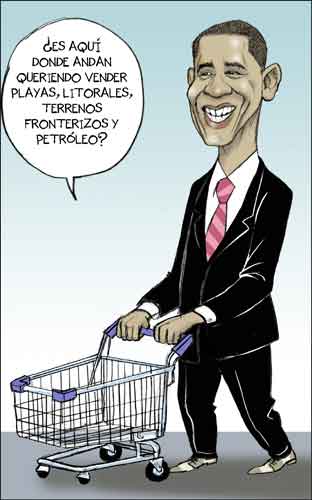
Is this where they want to sell beaches, coastal regions, borderlands and oil?
In Chiapas
1. News Update on Alberto Patishtan – On May 31, the FPDT (Atenco), Las Abejas and Alberto Patishtan’s son, Hector, released a short documentary on YouTube about Alberto’s case. On May 27, Mexico’s Supreme Court sent its file on the Alberto Patishtan case to the federal circuit court in Chiapas via ground transportation. There is no explanation in these press reports for the long delay. However, Patishtan’s lawyers are hoping for a June decision (before the July vacation break). Newspaper reports also indicate that Patishtan was taken twice to Mexico City for medical follow-up on his brain surgery at the National Neurology and Neurosurgery Center, once in April and recently in May, but these reports give no information about the results of the examinations.
2. San Sebastián Bachajon Legal Dispute Over Ticket Booth Continues – On May 16, a Chiapas court issued its decision in the case of San Sebastián Bachajon (SSB). The decision orders a replacement of the procedure allegedly authorizing the government to take several parcels of land away from the ejido, conveniently all on land belonging to adherents to the EZLN’s Sixth Declaration, for use as a ticket booth where visitors to the Agua Azul Cascades pay an entry fee. The SSB adherents went to court claiming that the procedure used to grant the government authority to do that was unlawful. They asked the court for the return of their land and an order restraining the government from taking it. The decision does not return the land to them, but rather orders that the matter be presented to the Ejido’s Assembly for its position in a lawful procedure. The SSB adherents are concerned that the pro-government contingent in the ejido, especially the ejido commissioner, will manipulate the process. Consequently, two SSB adherents went to Mexico City to present their position in the matter to a member of Mexico’s Supreme Court. They also visited the offices of the UN’s High Commissioner on Human Rights, asking for intervention, and the offices of the Inter-American Commission on Human Rights, seeking precautionary measures following last month’s (April 24) assassination of the community leader Juan Vasquez Gomez.
3. Two Campesinos Murdered in Venustiano Carranza – On May 5, two campesinos died of gunshot wounds in a confrontation that occurred in the municipality of Venustiano Carranza, allegedly over agrarian and political disputes. Two campesinos were killed in the confrontation and 20 houses burned or damaged. There were also injuries. According to newspaper accounts, this attack stemmed from an old dispute for control of the Casa del Pueblo, which was aggravated with the arrival of a new president (in January of last year), who accused his predecessor of “misplacing” 67 heads of cattle. The dispute is between the Emiliano Zapata Campesino Organization-Casa del Pueblo (OCEZ-CP) and an internal dissident group. The dissident group of 49 families was expelled last year and is sheltered in government buildings near the state capital and demands a safe return to their homes. Those in the current OCEZ-CP leadership want the state government to relocate the dissidents. It arrears that 12 OCEZ-CP members have been arrested in connection with the May 5 violence and that the organization and its allies have set up an encampment and are occupying Cathedral Plaza in San Cristóbal. Supporters allege that paramilitary groups backed by the state government are responsible for the violence. The groups involved are not connected to the Zapatistas in any way, but are part of a large leftist campesino organization in Chiapas.
4. Chiapas Teachers Settle Strike – On May 15, National Teachers Day, Chiapas teachers belonging to Local 7’s Democratic Block went on strike over reforms to the federal education law passed in the federal Congress. Teachers throughout much of Mexico staged massive demonstrations on May 15 against the reforms which take away some of their union rights and job security, and can also lead to the privatization of education. The strike ended 5 days later after union negotiators reached an agreement with the state government. The state government signed a memorandum with the teachers committing that “the entry (hiring), promotion, recognition and permanence (job security) of education workers “will not be conditioned by any standardized evaluation with punitive character that might affect their labor rights.” The state administration also committed to guarantying that the agreements between the rector council of the Pact for Mexico, the federal government and the CNTE “will be ratified by the Chiapas government.” The education reform is part of Peña Nieto’s package of neoliberal reforms. See our blog for more information about the teacher protests and the education reform. Also see: http://newpol.org/content/mexican-teachers-rebel-against-governments-educational-reform
In Other Parts of Mexico
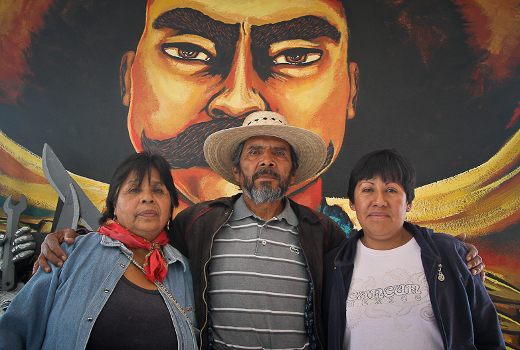
FPDT Leaders
1. Seven Years After the Police Terrorism in Atenco – On May 3 and 4, the community of San Salvador Atenco commemorated the 7-year anniversary of the brutal police repression that resulted in 2 young people dead, more than 150 jailed and 26 women sexually assaulted by police while in custody. As a result of this police terrorism, the leadership of the Peoples Front in Defense of Land (FPDT, its initials in Spanish) were placed in a maximum-security prison with sentences longer than the lifespan of a human being. The FPDT is the San Salvador Atenco-based organization that successfully resisted (with raised machetes) the government’s plan to take away their agricultural lands in order to use them for building a new Mexico City international Airport. The state and federal police action of May 3 and 4, 2006 was seen by many as “payback” for the FPDT’s successful resistance to the airport; but, its significance went beyond the airport resistance. At that time, the Zapatistas were traveling the country during the “Other Campaign” and had visited Atenco just a couple of days before the police action. The police repression in San Salvador Atenco halted the Other Campaign for several months and, in general, put Mexico’s social movements on notice of what to expect in the future. On May 3 and 4, 2006, the governor of the state of Mexico, where Atenco is located, was Enrique Peña Nieto. He is now Mexico’s president and once again there are plans to build an airport, industrial park and urban sprawl on lands belonging to Atenco and surrounding ejido lands.
2. Amnesty International (AI) Issues Report on Mexico Violence – Amnesty International (AI) recently issued its 2013 Report on human rights. It refers to the term of Felipe Calderón. A number of human rights abuses are described, including the fact that Mexican authorities do not recognize the gravity of the problem and that there is complicity in these abuses by public servants. The complete report on Mexico can be read here. According to numbers released by the federal government and published by La Jornada, there were 5,296 murders in Mexico, allegedly related to organized crime, during the first 151 days of Enrique Pena Nieto’s presidency; in other words, from December 1, 2012 to April 30, 2013. This represents a slight decrease from the same time period the previous year under Calderón, but it is, nevertheless, a tragic number of deaths.
In the United States
1. President Obama Visited Mexico on May 2 – United States President Barack Obama visited Mexico beginning May 2. He met with President Peña Nieto and gave a speech to an audience of students and business people. Press reports indicate that the two presidents talked less about security and more about economics, thereby prompting the shopping cart cartoon above. Obama said he was hopeful on immigration reform, but not so hopeful about restrictions on guns. The Mexican economy relies on money (remittances) that Mexicans living and working in the United States send to their families in Mexico. Those remittances are one of Mexico’s top three sources of income and foreign exchange. The United States is also Mexico’s largest supplier of illegal weapons that end up in the hands of organized crime groups and thus feed the current violence in Mexico.
————————————————
Compiled monthly by the Chiapas Support Committee.The primary sources for our information are: La Jornada, Enlace Zapatista and the Fray Bartolome de las Casas Human Rights Center (Frayba).
We encourage folks to distribute this information widely, but please include our name and contact information in the distribution. Gracias/Thanks.
Click on the Donate button of www.chiapas-support.org to support indigenous autonomy.
_______________________________________________________
Chiapas Support Committee/Comité de Apoyo a Chiapas
P.O. Box 3421, Oakland, CA 94609
Email: cezmat@igc.org
http://www.facebook.com/pages/Chiapas-Support-Committee-Oakland/86234490686
Raúl Zibechi on State Coups and Extractivism
To Clip the Wings of Coup D’Etats One Must Get Rid of Extractivism
By: Raúl Zibechi
This week the strategy of tension and chaos that United States agencies promote to destabilize governments was in evidence. If we take into account the most recent experiences, including the “Arab Spring,” we are able to conclude that State coups are just one of the various paths possible for evicting disturbing governments. Neither the Pentagon nor the White House bet on just one strategy for obtaining their ends, but they rather put into play a fan of converging and complementary actions.
The global economic crisis and the necessary contention for military expenditures (apparently the Southern Command saw its budget reduced by 26 percent, but it can have hidden entries) grant priority to “soft power;” in other words, mechanisms not so apparent as tanks and bombarding of government palaces. The communications media, legal and semi-legal action, including the masses in the streets, which always serve to legitimate unnamed projects, are some of the tools in use.
In the case of Venezuela and the destabilizing escalation that was staged hours after the publication of the electoral results, a group of messages emerge that time will permit completely unveiling, but that show the appearance of new and more refined strategies. To show not just the negative aspects of the juncture, one would have to mention that the almost unanimity of the Unasur members showed their support to Nicolas Maduro, including a rapid recognition on the part of Colombia’s President, Juan Manuel Santos.
In the South American region only the Paraguay of Federico Franco, who has only been in charge for a short time, is aligned with the United States. That is relevant because it shows Washington’s isolation and the growing autonomization of governments like Colombia. It seems evident that the destabilizing strategy is not convenient for anyone in this part of the world, very particularly a government that seeks peace que with the guerrillas with the opposition of the best ally of the warmonger George W. Bush, ex president Álvaro Uribe.
The consolidation of the regional institutions and alliances, as much the Unasur as the Mercosur, is proving to be an efficient barrier against the North’s interference in the South American region. Nevertheless, just like we establish that some governments don’t mechanically follow United States policy (Ollanta Humala and Sebastián Piñera don’t add themselves to Washington either), it is very probable that we are facing a relative autonomization if the laws of those same power centers.
I want to say that the laws do their own reading of the global reality and they also play their own game; above all when the tendencies toward a multipolar world are intensified. Five of the world’s 10 principal economies no longer use the dollar in their exchanges with China (Russia Today, April 14, 2013); among them, Russia, India and Brazil, but also Japan, an important US ally. Australia, another Washington ally, is the last country to set the dollar aside in its trade with China. India and Japan also started to effectuate transactions in their respective national currencies.
The new global reality hits in such a way at the imperial center that even its military expenditures fell, for the first time in 20 years. The United States has a 40 percent smaller participation of global military expenditures, which in 2012 alone fell 6 percent, while the military expenditure of NATO members in Europe contracted 10 percent (SIPRI, April 15, 2013). In contrast, military expenditures of the emerging nations grew continuously, although they are very far from the Pentagon’s defense budget.
Nevertheless, other less visible forces operate but just as destabilizing or more than the ones that we have known for a long time. I refer to the extractive model or “extractivism.” “With the extractive model of mega-mining and agro-businesses one cannot deepen democracy,” assures Diego Montón, a member of the Union of Rural Workers Without Land of Mendoza (Argentina) and the new continental coordinator of CLOC-Via Campesina (Página 12, April 17, 2013).
Extractivism is much more than a productive model and a model of accumulating capital. Strictly speaking, it forms part of the complex financial speculation that now dominates the world. It has predatory effects in our countries: it is creating a new power block, politically corrupting, polarizing, socially exclusive and environmentally predatory.
In the political, the extractive model needs a group of agents that feed on their immense profits (soy, open pit mining and several mono-crops), which hide their interests (universities, national or local governments, media and intellectuals). Hardly exaggerating, extractivism plays a disintegrating role similar to drug trafficking, because it destroys the social fabric, expels campesinos from their lands, swells cities to unsupportable limits and kills people, particularly the poorest, who don’t have access to a quality health care system.
In all the countries of our region, extractive paradises of global speculative capital or of expansionist interests of emerging countries like China, a long decade of extractivism has done nothing but strengthen the (political) right. I do not refer only to political parties or conservative politicians, but to a diffuse right, social and cultural, which promotes individualism, an atrocious and predatory consumerism with social links, almost fascist behavior towards the poor; in other words, against the youth of the popular barrios, in particular the people of the color of the earth.
Denouncing the coup d’etat is indispensible. Defending oneself from the Pentagon is urgent. Increasing militancy is key (not just declarations and deployments); but the extractive model continues breeding and creating gangs of conservative young people that seek ultra-right leaders.
———————————————————————-
Originally Published in Spanish by La Jornada
Translation: Chiapas Support Committee
Friday, April 19, 2013
En español: http://www.jornada.unam.mx/2013/04/19/opinion/025a1pol
145 Organizations Ask Presidents to Re-Evaluate Drug War
[Editors’ Note: The Chiapas Support Committee is participating in a national Drug War Working Group through the Latin American Solidarity Coalition (LASC). We are also organizing a local group in the Bay Area. The letter below was sent to heads of State at the time of President Barack Obama’s visit to Mexico and Central America (May 2-4, 2013).]
145 ORGANIZATIONS ASK PRESIDENTS TO RE-EVALUATE REGIONAL SECURITY POLICIES
Dear Honorable
President Barack Obama
President Enrique Peña Nieto
President Laura Chinchilla
President Otto Pérez Molina
President Porfirio Lobo
President Mauricio Funes
President Daniel Ortega
President Ricardo Martinelli
Attorney General & Minister of Foreign Affairs Wilfred Elrington
April 30, 2013
We, the undersigned civil society organizations from throughout the region, are writing to you on the eve of your meetings in Mexico and at the Summit of the Central American Integration System (SICA) in Costa Rica.. W We welcome the opportunity for our nations to discuss cooperation on critical cross-border issues and urge our States to address our concerns about the dire human rights crisis in Mesoamerica.
Our organizations have documented an alarming increase in violence and human rights violations. While we recognize that transnational crime and drug trafficking play a role in this violence, we call on our governments to acknowledge that failed security policies that have militarized citizen security have only exacerbated the problem, and are directly contributing to increased human suffering in the region.
It is time to refocus regional dialogue and resource investment to address the root causes of violence, understanding that for many citizens and communities, drug trafficking is not the principal cause of insecurity. Harmful “development” policies have similarly caused increased conflict and abuses, while forced migration and criminalization of migrants and human rights activists continues to divide families. Most importantly, the region’s challenges must be addressed without violating fundamental rights and human dignity.
We offer further analysis and recommendations of the key issues that require urgent attention:
1. Militarization of the drug war has caused increased violence and has failed to provide citizen security. Human rights abuses against our families and communities are, in many cases, directly attributable to failed and counterproductive security policies that have militarized our societies in the name of the “war on drugs.” The deployment of our countries’ armed forces to combat organized crime and drug trafficking, and the increasing militarization of police units, endanger already weak civilian institutions and leads to increased human rights violations.
- In Mexico, drug-related violence and the militarized response has killed an estimated 80,000 men, women, and children in the past six years. More than 26,000 have been disappeared, and countless numbers have been wounded and traumatized. With little civilian control over security forces, massive deployments across the country have contributed to increases in forced disappearances, extrajudicial killings, torture and attacks on human rights defenders. Meanwhile, prohibited narcotics continue to flow into the U.S. market virtually unabated.
- In Guatemala, rates of violence have again reached wartime levels, and rampant impunity for these crimes continues. As the nation only begins to address past atrocities committed by the armed forces against the civilian population, controversial “security” policies have placed the military back onto the streets. This has placed the peace process in jeopardy, and with it, the fragile democracy built on the 1996 Peace Accords. The Guatemalan army´s massacre of six indigenous protesters in October 2012 is tragic evidence of these misguided policies.
- Perhaps the starkest example of a breakdown of democratic institutions today is Honduras. Since the coup d’état that forced the elected president into exile in 2009, the rule of law has disintegrated while violence and impunity have soared. We are witnessing a resurgence of death squad tactics with targeted killings of land rights advocates, journalists, LGBT activists, lawyers, women’s rights advocates and political activists. Both military and police are allegedly involved in abuses and killings but are almost never brought to justice.
- Even the host country, Costa Rica, which has no army and a constitutional mandate for peace, finds itself drawn into a mounting military effort to confront drug trafficking that compromises its independence and tranquility.
- The U.S. government’s domestic and regional policies that promote militarization to address organized crime directly affect the human rights situation in Mesoamerica, resulting in a dramatic surge in violent crime, often reportedly perpetrated by security forces themselves. The narrow focus of these policies have proven ineffective in addressing other, often related human security issues, such as sex and labor trafficking and femicides, which have increased at an alarming rate throughout the region. Meanwhile, the lack of effective gun control in the U.S. has led to the massive and nearly unrestricted transfer of arms to criminal networks throughout the region.
2. The imposition of large-scale extractive projects on marginalized communities does not constitute “development.” The violence we face today has its roots in the poverty, injustice and inequality of our societies. National and bilateral investment policies enshrined in Free Trade Agreements exacerbate these problems. Large-scale “development” projects are imposed on the region’s most vulnerable populations with little or no regard for their lives or livelihoods. This results inforced displacement, especially of indigenous, peasant, and Afro-descendant communities; bloody conflicts over resources; environmental destruction and impoverishment. Governments and businesses routinely violate communities’right to consultation. Communities across the region that oppose large-scale transnational projects have suffered repressionat the hands of government security forces, and we have documented systemic patterns of threats, criminalization, and attacks against land rights activists.
3. Violations of migrant rights continue while policies disregard the root causes of migration. The harmful consequences of U.S. regional security policies such as the “war on drugs” and the imposition of mega-development projects have displaced hundreds of thousands of people from their land and communities and limited local economic opportunity. Many are left with few options other than to migrate to the United States in search of safety and economic opportunity. Meanwhile, the United States has criminalized and detained immigrants in ever-greater numbers within its own borders. Any humane and sensible immigration reform must consider the impact of policies that force persons to migrate.
To meet these regional challenges, we must first and foremost make the protection of fundamental human rights – economic and social, civil and political –a focal point of this SICA gathering and future regional dialogues. We ask our governments to:
- a. Take executive action in the United States to stop the flow of assault weapons and other firearms across the U.S.-Mexico border.
- b. Recognize and protect human rights defenders, with specific attention to the contributions of women, indigenous and Afro descendant defenders, and acknowledgement of the risks they face.
- c. Propose a new model for security cooperation that provides alternatives to the ongoing war on drugs, such as regulation rather than prohibition, strong regional anti-money laundering efforts, and withdrawal of the armed forces from domestic law enforcement. We call on the U.S. government to end military aid and instead channel scarce public resources into strengthening the institutionalization of the rule of law in our countries.
- d. Promote development through democratic dialogue, not repression, with respect for human and environmental rights, and with prior consultation of affected communities as mandated in ILO Convention 169.
- e. Address the root causes of migration and stop the criminalization and deportation of migrants; investigate and prosecute crimes against migrants as they travel through Mexico, as well as human rights violations at the border and within the United States.
We hope to see these concerns reflected in final statement of the SICA conference and in ongoing bilateral conversations about security, investment, development and immigration reform.
To see all the organizations that signed on:
Resumen de noticias de los zapatistas – Abril de 2013
Abril DE 2013 RESUMEN DE NOTICIAS SOBRE LOS ZAPATISTAS
Viaje de shopping
En Chiapas
1. Asesinato político de líder pro-zapatista en San Sebastian Bachajón – El miércoles 24 de abril, Juan Vázquez Gómez, líder de los pro-zapatistas en San Sebastian Bachajon, fue asesinado por individuos no identificados mientras caminaba hacia su casa. Era dirigente de los ejidatarios adherentes a la Sexta Declaración de la Selva Lacandona en su resistencia al despojo de sus tierras por parte del gobierno para la explotación turística. Es el primer asesinato político en Chiapas contra zapatistas o pro-zapatista en un largo rato, y puede indicar un aumento en la represión ahora que el PRI está en el poder.
2. Amenazas de desalojo forzado continúan en San Marcos Avilés, caravana recibe amenazas – El 19 de abril, la Junta de Buen Gobierno en Oventik publicó una denuncia que enumera todas las amenazas contínuas y actos de hostigamiento sufridos por los bases de apoyo zapatista en el ejido San Marcos Avilés desde julio del 2011. La Red por la Paz en Chiapas luego anunció que el 21 y 22 de abril una Caravana de Observación Civil iría a San Marcos para escuchar testimonios de los zapatistas. La Caravana fué amenazada por “miembros de partidos políticos” en San Marcos Avilés. Amenazaron con quitarles los vehículos a la caravana y que “correrá sangre” si no se los entregaban. Afortunadamente, las amenazas no se convirtieron en acciones y la caravana logró recopilar testimonios sobre las contínuas amenazas de muerte, incluyendo amenazas con matar a niños, y robo de tierras.
3. Marcha en Chiapas por la liberación de Patishtán – El 19 de abril, el movimiento a favor de la liberación de Alberto Patishtán organizó una movilización en Tuxtla Gutiérrez, capital del estado de Chiapas, para exigir su libertad. En la marcha participaron much@s tzotziles de los Altos del estado, además de la organización católica Pueblo Creyente, Las Abejas, y el Bloque Democrático de la Sección 7 del Sindicato Nacional de Trabajadores de la Educación, quiénes en total sumaron unos 15,000 manifestantes. Los inconformes marcharon hacia la sede del Poder Judicial federal en el estado, donde se espera se pronuncie una decisión sobre el caso de Patishtán en los próximos dias.
4. La Suprema Corte mexicana libera a otros 15 hombres encarcelados por el caso de la masacre de Acteal – El 11 de abril, la Suprema Corte de Justicia de la Nación liberó a otros 15 de los indígenas procesados y sentenciados por su participación en el asesinato en Acteal de 45 indígenas tzotziles el 22 de Diciembre de 1997. Esta liberación y reconocimiento de inocencia, al igual que en los casos anteriores, estuvo basada en la falta de pruebas y violaciones al debido proceso. De los 87 que originalmente fueron condenados por el crimen, ya sólo permanecen 6 en prisión. El obispo Felipe Arizmendi, de la diócesis de San Cristóbal de Las Casas, lamentó esta nueva liberación de los sentenciados, muchos de cuáles habían confesado su participación en la masacre. En su rechazo a esta nueva liberación, la Organización Civil Las Abejas denunció que muchos de ellos ya se han visto caminando por los alrededores de Acteal y comunidades cercanas. Tanto Las Abejas como el obispo Arizmendi se preguntan, “Si los hombres anteriormente condenados y ahora liberados no son los responsables de la masacre, ¿quién fué?”.
Por otras partes de México
1. Las comunidades forman sus propias patrullas de policías – Como resultado del crecimiento dramático del crimen organizado y la total incapacidad de las fuerzas de seguridad de México para tratar con él, un fenómeno nuevo está surgiendo. Algunas comunidades están tratando de proteger a sus residentes formando sus propias patrullas de policías comunitarias. Hasta el momento, al menos 40 comunidades en ocho estados han formado tales patrullas. Mientras mucha de la violencia que está plagando a las comunidades está vinculada al narcotráfico y los oficiales gubernamentales, la policía y los militares corrompidos por las narco pandillas, las comunidades también están buscando protegerse de la tala ilegal y la invasión de compañías mineras y sus “guardias” armadas. Algunas comunidades indígenas siguen la tradición de elegir a los policías/guardias que protegen a las comunidades de crímenes comunes como el robo o la embriaguez en vía pública, y los crímenes relacionados. Han estado haciendo esto por más de 15 años. Estas policías comunitarias tiene sus armas de caza, machetes y garrotes, ningunos de los cuales son ilegales. Sin embargo, otras comunidades tienen policías armados con armas de alto calibre que son ilegales. Los gobiernos estatales y federales están preocupados sobre este nuevo acontecimiento y quieren poner estas patrullas comunitarias bajo el control de autoridades locales con rango oficial. Pero las comunidades ven a las autoridades locales como parte del problema.
En Los Estados Unidos
1. El presidente Barack Obama visitará México y Costa Rica el 2-4 de Mayo – El presidente de los Estados Unidos, Barack Obama, tiene planes para visitar México el 2 de mayo. Mientras que México espera lograr un acuerdo sobre más dinero para la Iniciativa Mérida, el Secretario de Estado estadounidense John Kerry, dice que el presidente Obama también quiere enfocar su visita en tratar asuntos económicos y de comercio. Organismos de derechos humanos, sin embargo, enviaron una carta al Presidente Obama, al presidente de México Peña Nieto y a los presidentes de Centroamérica solicitándoles, entre otras cosas, re-pensar el modelo de seguridad regional (la guerra contra las drogas) y considerar la regulación de las drogas en lugar de su prohibición. También, 23 congresistas estadounidenses, de ambos partidos, enviaron una carta al Secretario Kerry para expresar su preocupación por el incremento en cinco veces más de las quejas contra personal militar sobre abusos en los derechos humanos en los últimos 6 años . La congresista Barbara Lee, de Oakland, firmó la carta.
__________________________________
Compilación mensual hecha por el Comité de Apoyo a Chiapas.
Nuestras principales fuentes de información son: La Jornada, Enlace Zapatista y el Centro de Derechos Humanos Fray Bartolomé de las Casas (Frayba).
_________________________________
Chiapas Support Committee/Comité de Apoyo a Chiapas
Email: cezmat@igc.org
http://www.facebook.com/pages/Chiapas-Support-Committee-Oakland/86234490686
Zapatista News Summary – April 2013
APRIL 2013 ZAPATISTA NEWS SUMMARY
In Chiapas
1. Political Assassination of Pro-Zapatista Leader in San Sebastián Bachajón – On Wednesday, April 24, Juan Vazquez Gomez, leader of the pro-Zapatistas in San Sebastian Bachajon, was assassinated by unidentified individuals as he was entering his home. He led the ejido owners who are adherents to the EZLN’s Sixth Declaration of the Lacandón Jungle in their resistance to the government taking away their land to exploit for tourism purposes. This is the first political assassination in Chiapas involving Zapatistas or pro-Zapatistas in some time and could signal more repression now that the PRI has returned to power. Click here for more details.
2. Threats of Forced Eviction Continue in San Marcos Aviles, Caravan Threatened – On April 19, the Good Government Junta located in Oventik issued a denunciation that listed all the continuing threats and acts of harassment suffered by the Zapatista support bases in the San Marcos Aviles ejido since July 2011. The Chiapas Network for Peace then announced that on April 21 and 22, a Civil Observation Caravan would go to San Marcos to collect testimony from the Zapatistas. The Caravan was threatened by “political party members” in San Marcos Aviles. They threatened to take away the Caravan’s vehicles and that blood would run if the vehicles were not turned over to them. Fortunately, the threats did not turn into action and the Mission was able to collect testimony of specific continuing death threats, including threats to kill children, and land grabbing.
3. Chiapas March for Patishtan’s Freedom – On April 19, the movement to free Alberto Patishtan organized a march in Tuxtla Gutierrez, the capital of Chiapas, to demand Patishtan’s freedom. The march of many Tzotzil supporters from the Highlands, the Catholic organization Believing People and Las Abejas was joined by the Democratic Block of Section 7 of the national education Workers Union, a total of 15,000 people. Marchers went to the Chiapas headquarters of the Federal Judicial Power, which is supposed to issue a decision on Patishtan’s case any day now. For more info about the march, see: https://compamanuel.wordpress.com/2013/04/20/chiapas-march-for-alberto-patishtans-freedom/
4. Mexico’s Supreme Court Releases Another 15 Men Convicted in the Acteal Massacre Case – On April 11, Mexico’s Supreme Court released another 15 of the men accused and convicted in the Acteal Massacre of 45 Tzotzil indigenous on December 22, 1997. The release and recognition of innocence was based on the use of illegal evidence, the same as in the prior releases of those condemned for the Acteal Massacre. Of the original 87 who were convicted only 6 remain in prison. Bishop Felipe Arizmendi of the San Cristobal de las Casas Diocese lamented the release of those convicted, many of whom had confessed to their crimes. In condemning the release of these men, the civil organization La Abejas noted that they are seen walking around Acteal and nearby towns. Moreover, Las Abejas reported hearing gunshots from several communities. Both Las Abejas and Bishop Arizmendi ask: “If the men convicted and now released are not responsible for the massacre, who is?”
In Other Parts of Mexico
1. Communities Form Their Own Police Patrols – As a result of the dramatic increase in organized crime and the utter inability of Mexico’s security forces to deal with it, a new phenomenon is emerging. Some communities are trying to protect their residents by forming their own community police patrols. So far, at least 40 communities in 8 states have formed such patrols. While much of the violence plaguing communities is connected to drug trafficking and government officials, police and military corrupted by the drug gangs, communities are also seeking protection from illegal logging and the encroachment of mining companies and their armed “guards.” Some indigenous communities have a tradition of elected police/guards who protect the communities from common crimes like theft or public drunkenness and its associated crimes. They have been doing this for more than 15 years. These elected community police have their hunting rifles, machetes and clubs, none of which is illegal. However, other communities have police that are armed with high-caliber weapons that are illegal. The state and federal governments are worried about this new development and want to bring these community patrols under the control of local authorities in some official role, but the communities see the local authorities as part of the problem.
In the United States
1. President Obama to Visit Mexico and Costa Rica May 2-4 – United States President Barack Obama has plans to visit Mexico beginning May 2. While Mexico hopes to obtain an agreement on more money for the Merida Initiative, US Secretary of State John Kerry says President Obama also wants to focus on economic and trade issues. Human rights groups, however, sent a letter to President Obama, Mexican President Pena Nieto and the Central American presidents asking them, among other things, to re-think the regional security model (Drug War) and consider the regulation of drugs rather than their prohibition. Additionally, 23 US Congresspeople, of both parties, sent a letter to Secretary Kerry expressing concern over the five-fold increase in human rights complaints against military personnel over the last 6 years. Oakland Congresswoman Barbara Lee signed the letter.
Juan Vázquez Assassinated in Bachajón, Chiapas
Bachajón Ejido Owners Demand that Juan Vázquez Guzman’s Death Not Be Left Unpunished

Juan Vázquez
** The indigenous leader “and Other Campaign” adherent was assassinated Wednesday
** They warn that the struggle over the defense of land and the natural springs “will not diminish”
By: Hermann Bellinghausen, Envoy
San Cristóbal de las Casas, Chiapas, April 28, 2013
The San Sebastián Bachajón ejido owners, adherents to the Other Campaign of the Sixth Declaration of the Lacandón Jungle, in Chilón, Chiapas, demanded that the assassination of their compañero and representative Juan Vázquez Guzmán, which occurred Wednesday, “is not left in impunity” and warned that: “after the compañero’s death, the struggle will not diminish: we will continue forward, because we know well that his death was because of the defense of our Mother Earth because the mountains and the natural springs are masters of those who care for them.”
Directing themselves to the Good Government Junta of Los Altos and the National Indigenous Congress, to which the assassinated leader also belonged, the Tzeltal ejido owners relate that last April 24, at to o’clock “hour of God” (11 o’clock, “national time”) [1], Vázquez Guzmán “was resting in his house when a person came knocking on his door and he was riddled with six high-caliber bullet impacts, and the guy fled in a red pickup truck in the direction of Sitalá.”
In the communiqué “they make known” who Juan Vázquez was: “An active member of the ejido and of the Other Campaign adherents. We walked with him for seven years after the Sixth. On April 18, 2010, he was named Secretary General of the three centers of the ejido.”
On December 24, 2011, municipal and judicial police detained him without showing him an arrest warrant, when he was entering his house, and he was taken to prison number 16 in Ocosingo.” Hours later the then Commissioner Francisco Guzmán Guzmán arrived, “carrying a file in his hand and pointing to Compañero Juan as the leader against the neoliberal project but, thanks to the mobilizations of organizations and the intervention of human rights defenders, he was released at midnight and they returned him to his house without making him sign any release paper asking for pardon and forgiveness.”
On November 26 and 27, 2011, Vázquez Guzmán, “accompanied by Compañero Domingo García Gómez, he participated in a National Indigenous Congress workshop of dialogue and reflection at San Mateo del Mar (Oaxaca).” He was in charge of following up on the case of protective order (injunction) 274/2011 “against the Neoliberalism Project” and the accompaniment of the three political prisoners from his community
He maintained his participation in the political prison forums and the mobilizations for the freedom of the political prisoners in Chiapas, in particular of Alberto Patishtán, “and in all Mexico;” also in mobilizations for the defense of land, like the one on May 7, 2011 in San Cristóbal de Las Casas, and in the Tila and Mitzitón ejidos. He went to the country’s capital “in accompaniment of the liberation of the last five San Sebastián Bachajón political prisoners.” He also appeared in several video messages for distributing the community’s demands internationally.
———————————————————-
Originally Published in Spanish by La Jornada
Monday, April 29, 2013
En Español: http://www.jornada.unam.mx/2013/04/29/politica/020n1pol
Mexico-US: Interventionism and Double Standard
[As the US government prepares its new budget, the first thing that should be cut are funds for continuing the bloody drug war in Mexico! An editorial from Mexico’s progressive daily newspaper, La Jornada, is translated below. CSC]
La Jornada Editorial 
Mexico-US: Interventionism and Double Standard
Upon giving details about United States President Barack Obama’s coming visit to our country –to be realized in May–, the Assistant Secretary of State for Narcotics Issues, William Brownfield, said that the US head of State will reaffirm his willingness to continue cooperating in security matters with the government of Enrique Peña Nieto, but that he will be “the one that decides the policy, strategy, the areas where we are able to collaborate and where we are going to collaborate in the future.”
If one were to give credit to what the US official said, Obama’s next visit to Mexico would have to derive into a profound reconfiguration of the bilateral relationship in security matters, a that until now has been marked by subordination and by the growing interference of U.S. authorities in ambits that only Mexicans compete. It turns out particularly necessary to advance towards the reformulation of the Merida Initiative, a bilateral instrument on security matters and the combat of criminality that, judging by the results obtained, has not only been useless for reducing the activities of the criminal gangs that operate in Mexico, but has rather been one of the factors in the sustained deterioration of public security and the state of law, has led to an abdication of sovereign powers and responsibilities in matters of intelligence, security, procuring of justice and control of territory, and has stirred up the divisions and rivalries at Mexican [government] agencies and at the state and federal levels of government, as was discovered in diverse diplomatic State Department cables obtained by Wikileaks and published in a group form with this daily newspaper.
For the rest, if Washington’s sought-after collaborationist spirit is anything more than mere demagogy, an obligatory first step would be the abandonment of the double standard characteristic of that government in the matter of fighting drug trafficking: while in our country the anti-narcotics guidelines promoted by the superpower have translated into tens of thousands of deaths, an unprecedented decomposition of the institutions and a more desolate citizen despair every time, US authorities maintain an unconcealed passivity in the face of the operating of networks of distribution, transportation and commercialization of drugs that operate, without great obstacle, in US territory. The data divulged last Tuesday in a report from the University of California, that four out of every five individuals detained for the shipment of drugs at the common border are US citizens is significant, because it contradicts the version of Washington authorities that the drug trade in that country is controlled by Mexican drug-trafficking groups.
With all that, the greater inconsistency of the White House policy on matters of narcotics is that, despite official allegations against drug trafficking, the same authorities of that country have established themselves as providers of weaponry for the cartels that operate in our country –through operations like Fast and Furious and Open Receptor–, have been tolerant of the presence of Mexican drug lords with the status of United States residents and have even facilitated operations with illicit money inside their financial system, like the DEA has been doing since at least 1984 under the pretext of “investigating how criminal organizations move money.” The foregoing is complemented with the impunity that US financial institutions enjoy –Wachovia, American Express, Western Union, Bank of America and Citigroup, among others– that have incurred in money laundering without any of their officials having been incarcerated and without having been punished with anything more than minimum fines.
Before coming to discuss “policy, strategy and the areas where we can collaborate,” it would be preferable that the government in Washington be centered on combatting drug trafficking inside its own borders. The current government of Mexico, for its part, must demand from its US counterparts what its predecessor was never capable of asking for: congruence and respect for our country’s sovereignty.
——————————————————————–
Originally Published in Spanish by La Jornada
Translation: Chiapas Support Committee
Friday, March 29, 2013
En español: http://www.jornada.unam.mx/2013/03/29/edito
 Chiapas Support Committee