By: Luis Hernández Navarro
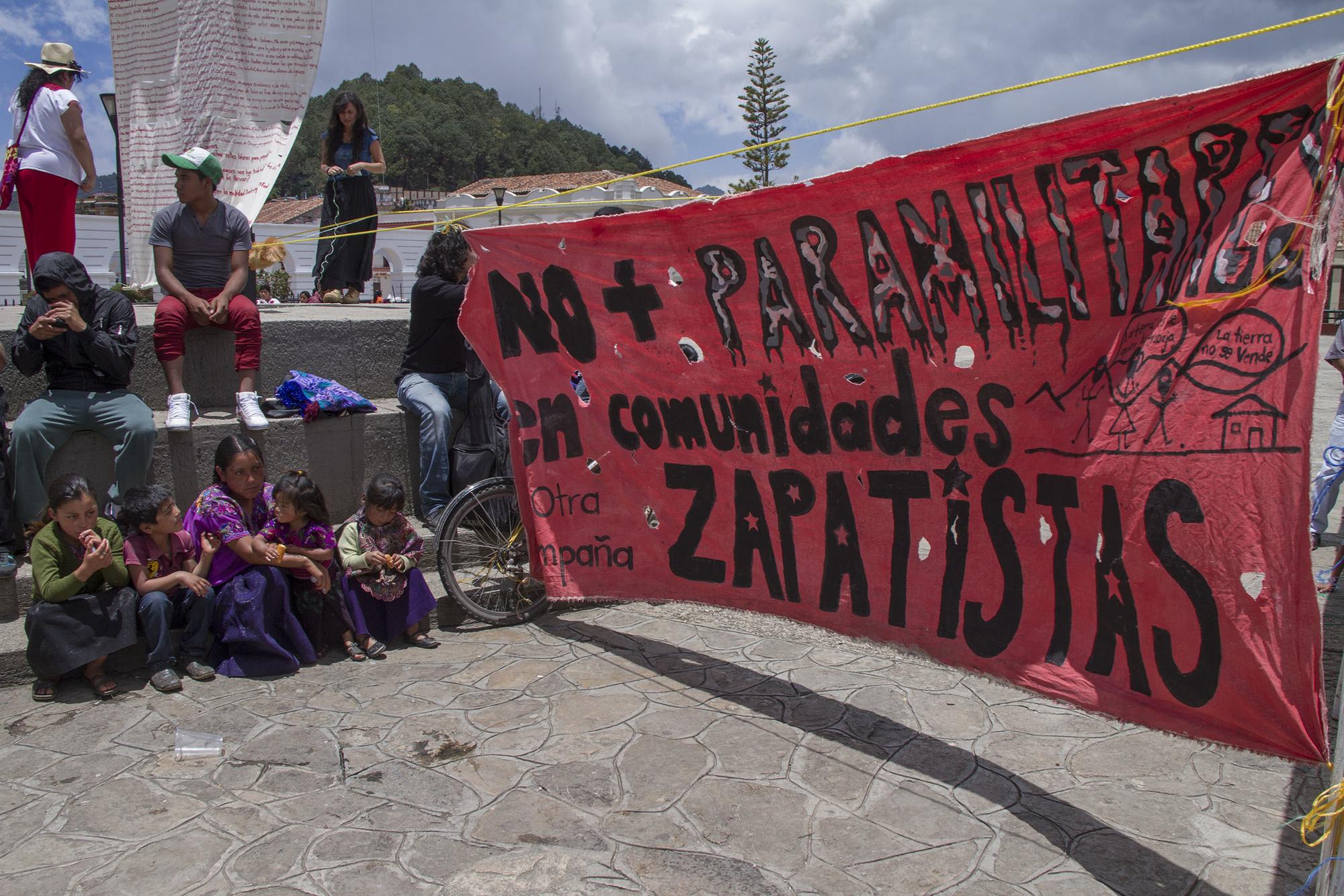
Chiapas is a powder keg about to explode. Violence multiplies alarmingly. Armed attacks by paramilitaries against Zapatista communities are frequent and intensifying. Organized crime groups organize levies (forced recruitment) of young people to swell their armies. Thousands of displaced people live in the bush or in makeshift villages. Motorized criminal gangs star in real pitched battles in San Cristobal to control markets and drug routes. Cartels fight with blood and fire for control of the border with Guatemala.
It is a diverse violence, fueled by the combination of ancestral conflicts and new disputes linked to land, trade and drug trafficking. Despite the presence of the Army and the National Guard, high-caliber weapons are obtained with astonishing ease. In the face of government inaction, paramilitaries, hitmen, self-defense groups (Pantelhó, Altamirano and San Cristóbal) and “private security” agencies are multiplying throughout the state.”
The paramilitary groups, sheltered by the authorities, have been associated with organized crime, which subrogates their services. They work double duty. On the one hand, they seek to keep at bay the processes of expansion of rebellious communities and the protests of peasants in struggle. On the other, they move undocumented migrants, move large volumes of drugs and engage in drug dealing, distribute pirate merchandise and indigenous pornography, traffic stolen cars and weapons. Now, as can be seen in the case of Chicomuselo, they also steal minerals.
Those gangs, which often control local transportation and routes in various regions, serve local politicians. The “new Chiapas family,” which is the recycled “old Chiapas family,” has become deeply intertwined with them. The same has happened with a part of the traditional indigenous chiefdoms, some of which have successfully ventured as polleros {migrant smugglers) and/or narcos.
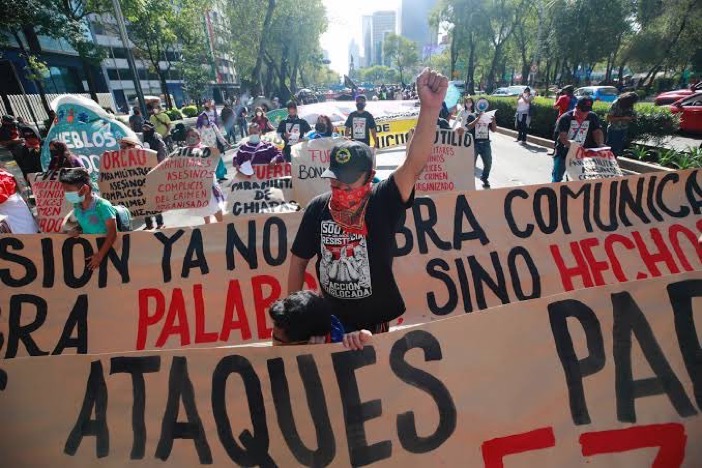
One of the central axes of this violence is the paramilitary aggressions against Zapatista support bases. (https://chiapas-support.org/2021/10/02/orcao-the-paramilitary-arm/). Just on Monday, May 22, as part of an aggression that lasted four days without the authorities intervening, the paramilitary group of the Regional Organization of Ocosingo Coffee Growers (ORCAO) shot the Tseltal Jorge Gilberto López Santis, from the Moisés Gandhi autonomous community, rebel municipality Lucio Cabañas. He is in serious condition. His diaphragm, large intestine, stomach and spleen were punctured. He hangs between life and death. Over the last few months, the ORCAO has attacked the rebels more than 10 times, with absolute impunity. It has burned coffee warehouses, schools and kidnapped indigenous peoples.
Among other things, the ORCAO seeks to dispossess the Zapatistas of lands that they recuperated in the 1994 Uprising, in part, to collect government support from the Sembrando Vida program. Their aggressions, perpetrated with the absolute complicity of the authorities, show the serious deterioration that exists in the state and send a very dangerous signal. It is not just another onslaught. The underlying conflict is at a critical point.
The situation is also very serious, among many other municipalities and localities, in Teopisca, Comalapa, Betania, the Las Choapas-Ocozocoautla [federal] highway, San Cristóbal, Frontera Comalapa, Trinitaria and Chicomuselo). Roadblocks in Teopisca are becoming more than frequent, due to the formal demand to dismiss Mayor Josefa María Sánchez and form a municipal council. Just last May 21, three people were injured in a shootout between state agents, who tried to arrest leaders of the movement, and peasants who defended them.
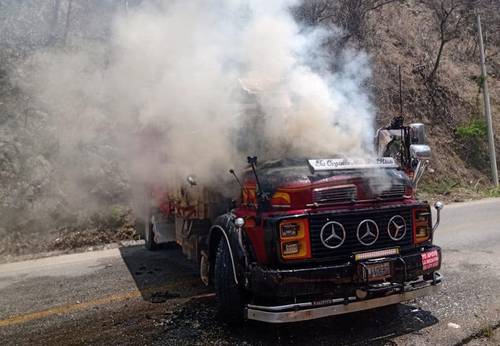
A little more than 120 kilometers away, on the Las Choapas-Ocozocoautla highway, on May 25 there were roadblocks (for five hours), gunshots and a trailer set on fire. Hooded men assaulted trucks and Coppel stores and set fire to small businesses. On February 8, something similar had just happened. At the height of Malpaso, the cartels fight over the transit of drugs, collection of protection money, passage of undocumented migrants, weapons and stealing gasoline (huachicól).
Last week was particularly tragic in Frontera Comalapa, where criminals dispute the territory, murdering innocents in the crossfire. Volleys of bullets, roadblocks, burned cars, caravans of artillery vehicles (the famous “monsters”), are part of the region’s usual landscape in recent days. In communities near Nueva Independencia, where El Maíz (a subsidiary of the Cartel Jalisco New Generation) operates, young people are recruited and given weapons to confront their rivals. Some 3,000 people who were displaced from their villages had to take refuge in the mountains and on the banks of the river.
According to the Fray Bartolomé de las Casas Human Rights Center, there is “acquiescence of the State,” because in the “El Jocote community there is a detachment of the Mexican Army. On the Paso Hondo-Frontera Comalapa highway stretch there is a detachment of the National Guard. And in the municipality of Chicomuselo is the largest barracks of the Mexican Army.”
This is no exaggeration. The Chiapas powder keg can explode at any time.
Twitter: @lhan55

Originally Published in Spanish by La Jornada, Tuesday, May 30, 2023, https://www.jornada.com.mx/2023/05/30/opinion/011a1pol and Re-Published with English interpretation by the Chiapas Support Comittee
 Chiapas Support Committee