Chiapas Support Committee
Home of the Compañero Manuel blog on zapatistas & mexico
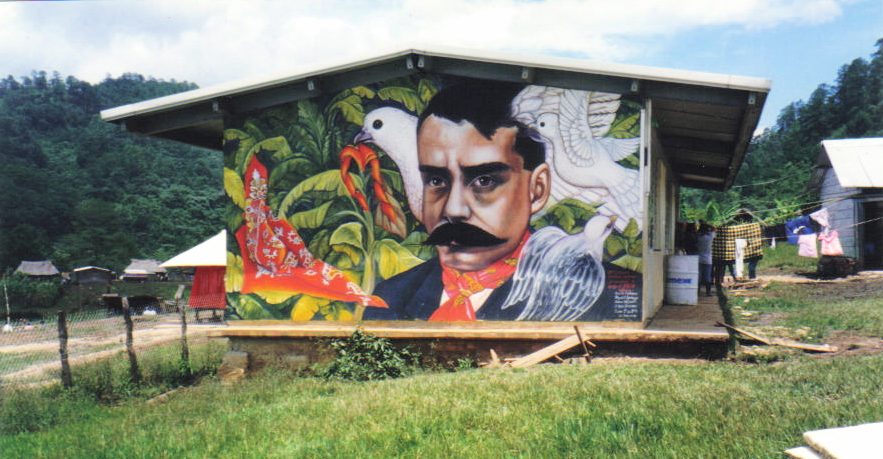
Mexican Uprising Deepens
THE MEXICAN UPRISING DEEPENS

Protest over privatizing Pemex, the state-owned oil company
By Admin | Published September 20, 2013
Less than one year after taking office, the administration of Mexican President Enrique Pena Nieto faces serious challenges to its core policies. Leading the opposition are tens of thousands of public school teachers protesting the new No Child Left Behind-like law they contend will cost jobs, aggravate educational inequities and lead to privatization.
The protest, which counts months now, is expanding in both scope and participation and more and more assuming the character of a multi-issue popular movement.
Increasingly, the teacher protest is transforming from a single-issue opposition to the education reform into a broad movement against the cornerstones of the Pact for Mexico, the political program promoted by President Pena Nieto and the leaders of the Big Three political parties, which implements controversial educational, labor, energy and taxation reforms.
In Chiapas, for instance, teachers, labor unions, university students, farmers, and community activists have forged the Unitary Struggle Front from the fire of the teacher strike. “This will help us because from now on every struggle will be shared by the working class and not just a particular sector,” said Alejandro Ovando Rodriguez, front spokesman. “That’s because the education, tax and energy reforms will affect all the Mexican people.”
This week, even as sizable chunks of the country were reeling from the left- right double punch delivered by Hurricane Ingrid and Tropical Storm Manuel, teachers and their allies intensified their protests. Thousands of educators blocked not only the glitzy hotel zone of touristic Cancun for a repeat time, but temporarily cut off the principal access points to the entire city. Fellow teachers in Tlaxcala did the same thing.
In Baja California, teachers infuriated by the state government’s initiation of firing procedures against 75 strikers and the levying of fines against hundreds of others, blockaded commercial export lanes in the border city of Tijuana and announced the expansion of protests to Mexicali, Tecate, Ensenada, and the agro-export region of the San Quintín Valley. In Chiapas, where an estimated 70,000 teachers and their supporters staged a September 14 protest rally, rank-and-file members of the official SNTE union issued a call for a “teacher and popular uprising” and later occupied a Pemex plant.
As the week wore on, rolling work stoppages were reported in Michoacan and other states. Contingents of pro-movement parents, students and small farmers turned out for marches in Veracruz and elsewhere.
“If there is repression, there will be revolution!” chanted students and teachers in Xalapa, Veracruz, where police violently broke up a protest on the city plaza last weekend. In Mexico City, thousands of public school teachers from around the country were undeterred by the government’s eviction of their protest encampment last week. Now reinforced by university students and faculty, the movement flexed its muscle with more street marches and demonstrations outside commercial television stations the protestors accuse of being behind a concerted campaign of teacher-bashing.
“The protests have made evident the enormous incapacity of politicians and media personalities to understand the nature, composition and behavior of the national teachers,” wrote La Jornada columnist Luis Hernandez Navarro.
“Every two days, an imminent end to the problem and a return of the teachers to the states is announced. The press even shows pictures of teachers packing their suitcases. Despite this, every day more teachers arrive in Mexico City and increase their protests in other places of the country.”
Organizationally separate from but ideologically akin to the teachers’ movement, another anti-Pact for Mexico mobilization picked up steam this week when a group of prominent politicians, intellectuals and activists issued a four-point statement that rejected President Pena Nieto’s education, energy and tax reforms as harmful to national interests.
Among the personalities issuing the call for peaceful civil resistance were Coahuila Bishop Raul Vera, former national university rector Pablo Gonzalez Casanova and human rights activist Miguel Concha. Left opposition leaders Andres Manuel Lopez Obrador and Cuauhtémoc Cardenas, two men who had long been politically distanced, jointly supported the appeal.
In a statement, the group slammed a “media campaign of lynching” against the “just causes” of the teachers, and urged the Mexican people to resist the “sacking of the nation and of our people that the government and transnational oil companies promote.”
In recent days, Mother Nature tossed another ingredient into an already boiling political stew. “Biblical” rains and flooding unleashed by Hurricane Ingrid on the Gulf coast and Tropical Storm Manuel on the Pacific side of the nation disrupted the lives of more than one million people and caused nearly 100 deaths, with the number of fatalities likely to reach much higher. Neighborhoods and commercial centers were inundated, highways and bridges washed out, homes buried in mud, and rural communities isolated.
The storms laid bare the myriad social and economic contradictions always simmering beneath the surface of Mexican life: rural versus urban, rich versus poor, indigenous versus non-indigenous, developed versus undeveloped, government versus society.
Already, sharp polemics are raging over the alleged unpreparedness of the government to first warn of and then respond to the double disasters. In Mexico and Latin America, natural disasters, which always contain a large man-made component, frequently have significant political consequences, as witnessed by the 1972 Nicaraguan earthquake that spelled doom for the long-running Somoza regime, or the 1985 Mexico City earthquake that is widely credited for eventually helping bring about an end to the domination of the Institutional Revolutionary Party.
Perhaps with history in mind, President Pena Nieto has been careful to visit Acapulco twice since Manuel slammed into the city. Manuel’s impact was hardest felt in the southern state of Guerrero, a stronghold of the teacher and other social movements.
“Chilpancingo is totally collapsed,” is how Mayor Mario Moreno described the situation in the Guerrero state capital in the aftermath of Manuel. In the countryside, scores of communities were rendered incommunicado and the threat of hunger and deprivation mounted.
In a statement, the Tlachinollan Human Rights Center of the Mountain, a non-governmental organization that works closely with indigenous communities in the impoverished La Montana region, sharply criticized the government response to Manuel.
“There is a complete lack of coordination among the three levels of government and there is no political representation that is attending with speed the proposals and demands of the victims,” Tlachinollan charged. “Until now, the victims of La Montana are not receiving sufficient attention from government agencies, and the worst consequences of these natural disasters falls on the population of the region in extreme poverty. Once again, the most marginalized men and women are also the most forgotten.”
In Guerrero’s biggest city and its environs, Acapulco, scenes of chaos erupted after the tourist resort suffered its worst disaster since 1997’s Hurricane Paulina, an event that also had a political impact. In the wake of Manuel, residents and tourists denounced food and water shortages, price gouging by some merchants and abandonment by government authorities. Some flood victims blocked roads demanding relief, while others looted big department stores.
On the other hand, utility company work crews in Acapulco and the community police of the CRAC in the Tixtla region were praised for quickly responding to the disaster and working to restore services and assist the population.
In Chilpancingo, business leaders declared that the government was overwhelmed by the magnitude of the disaster and announced the formation of the “Let’s Raise Up Chilpancingo” collective to activate civil society alongside the Red Cross in flood relief.
Acapuclo, meanwhile, is expected to be without running water for up to three weeks because of severe damage to the city’s water delivery system. Striking on the September 16 holiday weekend, Manuel hit Acapulco when an estimated 40,000 mainly Mexican tourists were in town, or so they thought, for a three-day beach break from the daily druthers.
But with the Acapulco-Mexico City highway shut down from storm damage and the airport inoperative due to flooding, many visitors remained trapped in the city as the week dragged on and a blistering sun beat down on them. In response to the crisis, the federal government began flying tourists home from the Pie de la Cuesta military base outside the city. There, scuffles broke out between soldiers and tourists desperate to board flights. Less affluent tourists hurled complaints of discrimination, charging that soldiers were allowing well-heeled or well-connected tourists to cut in line.
One reporter sketched a scene of soldiers escorting “couples followed by their domestic employees carrying the children.” Nieces of soldiers, the writer continued, were afforded VIP treatment, as were their friends and “tourists with clear skin, and ‘good girls’ without a hair out of place and dressed like it was for a vacation fashion catalog.”
In the middle of a swirling enviro-political storm, U.S. Vice President Joe Biden landed in Mexico City for meetings with President Pena Nieto and other officials. Biden gave an endorsement to the Pena Nieto government’s education and other reforms as “necessary,” and the vice-president’s office noted U.S. and Mexican economic ties as a backdrop to the trip.
“The global competitiveness of both our countries requires continued and deepened economic integration, commercial exchanges and policy alignment,” Biden’s office stated.
As the fall season kicks in, the after-effects of Ingrid and Manuel, the militancy of the teacher movement, protests against the upcoming energy and taxation legislative packages, and a host of other contentious local and regional issues are all carving out a quite surprising and explosive political landscape.
———————————————————————–
Sources: El Sol de Tijuana, September 20, 2013. Article by Daniel Angel. El Universal, September 19, 2013. Article by Carina Garcia. Proceso/Apro, September 15, 16, 17, 18, 19, 2013. Articles by Isain Mandujano, Jenaro Villamil, Alvardo Delgado, Marcela Turati, and editorial staff.
La Jornada, September 18, 19 and 20, 2013. Articles by Rosa Elvira Vargas, Carlos Paul, Alma E. Munoz, Luis Hernandez Navarro, Georgina Saldierna, Roberto Gonzalez Amador, Karina Aviles, Laura Poy, Notimex, and editorial staff. La Jornada (Guerrero edition), September 17, 18, 19, and 20, 2013. Articles by Citlal Giles Sanchez, Francisca Meza Carranza, Hector Briseno, and editorial staff. El Sur, September 18 and 19, 2013. Articles by Daniel Velazquez, Aurora Harrison, Karina Contreras, Francisco Magana, correspondents, and editorial staff. El Diario de Juarez/El Universal, September 17, 2013.
—————————————————-
http://fnsnews.nmsu.edu/the-mexican-uprising-deepens/
Originally Published by:
Frontera NorteSur: on-line, U.S.-Mexico border news Center for Latin American and Border Studies New Mexico State University Las Cruces, New Mexico
For a free electronic subscription email: fnsnews@nmsu.edu
Notes On “Freedom According to the Zapatistas”
Notes from the Course “Freedom According to the Zapatistas”
By: Gilberto López y Rivas
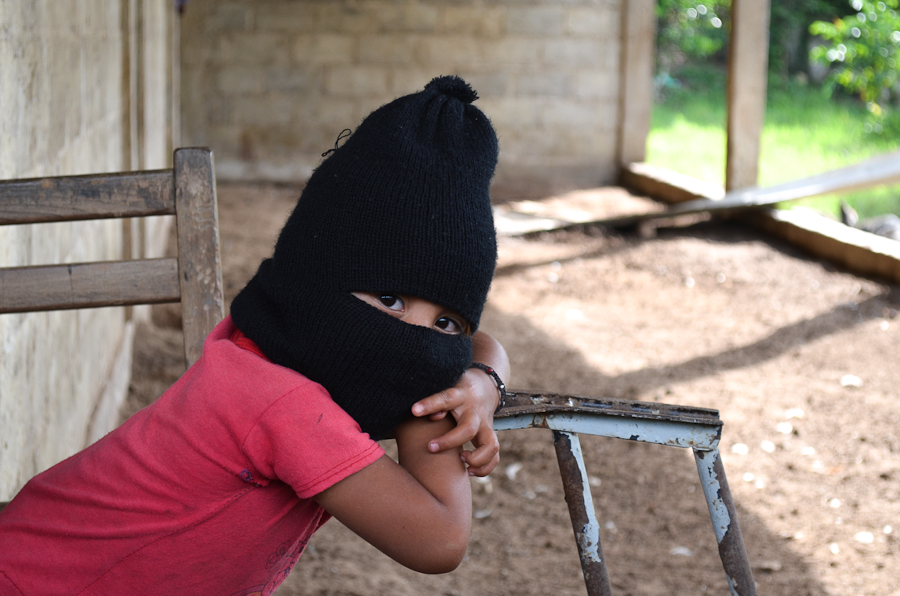
It was a privilege to attend the first grade course “Freedom according to the Zapatistas” as a student, which was paralleled in various territories of the autonomous governments, as well as in the Indigenous Center of Integral Capacity Building –Unitierra, in San Cristóbal de Las Casas, Chiapas, from August 12 to 17.
Because of its multiple political, strategic, programmatic and tactical meanings in the current tragedy of a country devastated by the government of national treason and its corporate-repressor associates (including organized crime), the course imparted by Indigenous peoples from the different ethnicities that make up the autonomous Zapatista governments constitutes an urgent call to the national conscience, to men and women with dignity and integrity to organize, resist and struggle for a better world where those that govern obey the peoples, departing from the seven principles: 1. Serve and don’t self-serve, 2. Represent and don’t supplant, 3. Construct and don’t destroy, 4. Obey and don’t order, 5. Propose and don’t impose, 6. Convince and don’t conquer, 7. Go down and not up, and based on the maximum ethic that reigns in the EZLN: “Everything for everyone, for us, nothing,” that is, the opposite poll of conduct with which the Mexican political class acts.
Throughout this memorable week, accompanied by our Votán, the tutor or “guardian-heart of the people and the land,” and of our textbooks for reading-consultation-discussion, the students enter into the studying the history of autonomous government. The arduous years of clandestinity are remembered, with the arrival of the Forces of National Liberation in the Lacandón Jungle on November 17, 1983; the 10 years of preparation that precede the declaration of war; the slow but extended process of awareness about the role to play “when so many men and women emerge that think about the rest, that rebel to demand land and liberty.”
They remember the establishment of 38 Zapatista autonomous rebel municipalities (municipios autónomos rebeldes zapatistas, Marez), once the failure to fulfill the San Andrés Accords was consummated and, afterwards, the teachers explained the conditions and problems that led to the creation of the five Good Government Juntas on August 8, 2003. The students learned how government is organized within the community, municipal and regional ambits. With linguistic gyrations and a large capacity for synthesis and conceptualization, our teachers demonstrated the course of construction and strengthening of their autonomy by means of a collective practice of men, women, children and elderly, with trials and errors, throwing out what doesn’t work and changing what’s necessary. “If something goes wrong, we make it better. It’s only been 19 years that we have been constructing our autonomy, against 520 years of oppression!”
In the conveyance, participation and thematic content of the course, they emphasized the scope and victories of women in the autonomous governments, in the commissions of education, health, productive projects, in the changes that take place in day-to-day life, domestic work and care of children, as well as in sports and public events. Here also, the women teachers remembered how in clandestinity the integration of women started in the militias, in the ranks of the insurgents, making the current gender parity in the three levels of government a manifesto. The machistas (macho men), which there are, now are faced with the autonomous authorities, the assemblies and the right that women have to report any mistreatment. If the woman holds a position, “the compañero has to take care of the children, make the food, wash the clothes,” my Votán commented to me.
Another important theme of the classes was that of resistance, because the bad government has not left the Zapatistas in peace for one single day. They know well that the [communications] media are powerful instruments of propaganda that lie all the time; therefore, they have created their own communications media. They identify the political parties of all signs as instruments of division and manipulation that promote the attacks against the Zapatistas peoples and their governments. But in this conflict, the Zapatistas assume a non-confrontational policy that has accrued to their benefit: “we have tried to not become irritated to avoid violence. By not becoming irritated, we have come out winning. With our patience, we have been able to resolve many problems. Our strength is our organization, without attacking those who do us harm.” That’s the way the teachers refer to how the “party member brothers” have become so dependent on government aid and programs that they abandon productive work and sell their land, while the Zapatistas collectively work on the recuperated lands and have their own resources and savings. Paradoxically, many party members end up asking the Zapatistas for help. They go to their clinics, where they treat them like human beings, and they resort to their governments to impart justice and expedited conflict resolution. “We bring resistance per se forward. Resistance has given us the strength to construct autonomy. Since 1994, the bad government wanted to see our face; it sought ways for how to attack us, but today, we are here! It (the bad government) introduces its policies and we organize ourselves and struggle for everyone.” Like that, our teachers demonstrated how they resist in the ideological, the economic, the political, the cultural, “which is the way of living.” They demonstrate how neither soldiers nor paramilitaries have impeded the development of their autonomies.”
Many more themes were treated, all with con depth, a sense of humor and frankness, with pride in all they achieved, but with modesty. Upon finishing the course the moment arrived to say goodbye to the teachers and Votáns, with a lump in our throats and many openly crying. For those who graduated from the Escuelita, the world will not be the same.
——————————————————————————-
Originally Published in Spanish by La Jornada
Translation: Chiapas Support Committee
Saturday, August 30, 2013
En español: http://www.jornada.unam.mx/2013/08/30/opinion/019a1pol
Raúl Zibechi RE: US Espionage on Brazil
ESPIONAGE IS PART of the TOTAL WAR
By: Raúl Zibechi

President Dilma Rousseff’s decision to postpone her visit to the United States because of the espionage that the National Security Agency (NSA) carries out in Brazil is hardly the most visible part of the geopolitical dispute that occurs in the region of South America. Before communicating the suspension of the trip, she received diverse and opposing pressures, that of former president Luiz Inacio Lula da Silva among them, who demanded explanations from the government of Barack Obama.
In reality Rousseff had little chance of maintaining her trip to Washington after the June mobilizations that decimated her popularity and placed her government under public scrutiny. Shaking the hand of the president responsible for the espionage of her personal communications and the world’s fourth oil company, Petrobras, would have put at risk the incipient upturn of her approval levels one year before the presidential elections.
The distancing has an elevated political cost for the White House after the complex situation that it is going through because of the failed attempt to attack Syria. The United States needs to maintain cordial relations with Brazil, who it says publically is a strategic ally, but in reality it considers the only country capable of leading the region and avoiding restraints against its interests.
Ever since Sunday, September 1, the Globo Network asserted that Edward Snowden, ex CIA agent, had data that pointed to the fact that the state-owned Petrobras had been the object of NSA espionage. Rousseff did not hide her government’s indignation. “It is evident that the motive for the espionage is not security or the fight against terrorism, but rather economic and strategic interests” (Valor, September 10, 2013). That’s how she waylaid the ridiculous excuse of the United States agency.
In effect, everything points to interest in Petrobras. Three specialists consulted by the daily O Globo agree on that appreciation. Armando Guedes Coelho, president of Petrobras between 1988 and 1989, emphasized that the company is the world leader in ultra deep-water exploration and that it carries out more perforations than “Shell, Exxon and BP together.” The White House’s interest would be to know the real existing reserves on the coasts of Brazil and Africa, because they (Brazil and Africa) can “alter the current geopolitics of oil,” since the supplies would pass to being generated “in areas without large political conflicts” (O Globo, September 9, 2013).
Other specialists, like the director of the Brazilian Infrastructure Center, point out that the principal interest is “to steal technology secrets” so that “United States companies can explore any place in the world, like Alaska.” Meanwhile, sources at the National Oil Agency estimate that an additional interest for the espionage is to have privileged information about the auction of oil-bearing blocks that the Brazilian State realizes.
In response, the Brazilian government decided to tighten ties with Argentina to collaborate in cyber-defense. The Minister of Defense, Celso Amorim, said in Buenos Aires that: “Brazil considers it fundamental to initiate a process of cooperation in the area of cybernetic defense with its principal strategic ally.” He added that: “it is perhaps the most important area for defense in the 21st Century,” because it will be more difficult every day to use conventional weapons, while “cybernetics can be weapons of mass destruction” (O Globo, September 13, 2013).
The recent meeting of the Defense Ministers of both countries, Agustín Rossi and Amorim, resulted in a statement in which they point out: “the need to impel cooperation in cyber defense and the creation of a bilateral working sub-group on the theme” (Defense Ministry, September 13, 2013). They also agreed to organize a visit of Argentine authorities to become familiar with the Brazilian Army’s Cyber Defense Center.
In parallel, Brasilia decided on the creation of its own system of electronic mail that can enter into service in the second semester of 2014 and will be “a Brazilian alternative to the popular Hotmail, from Microsoft, and Gmail, of Google” (Folha de Sao Paulo, September 2, 2013). According to the Minister of Communications, Paulo Bernardo, the e-mail that the state of Correos will put into effect “will have cryptography to protect the privacy of users, and the data will be stored in Brazil, different from what occurs when one uses Gmail.”
For some time Brazil has been impelling a regional fiber-optic network within the UNASUR so that the Internet traffic between the South American is not forced to pass through the United States. For 2016, the state-owned Telebras communications will have in orbit the first national satellite for civilian and military Internet traffic, thus overcoming the current dependency on the sector’s multinationals.
Numerous investments are necessary to protect the country’s sovereignty and that of its most important companies. The president of Petrobras announced that in 2013 2 billion dollars will be invested in the security of its information and that the company will invest 10 billion dollars in that rubric until 2017 (Valor, September 18, 2013). She also reported that the oil company has three thousand civil servants involved in the information security area, which is equivalent to 5 percent of its 80,000 employees, and that the seismic data for production and exploration are moved through physical means and not through the Internet.
It is a war that involves states and corporations, whose methods of acting are more apparent all the time: a silent war that is played with sophisticated weapons, often invisible, but with enormous capacity for destruction, as Minister Amorim pointed out. It is a war that is not won with speeches and for which not all are, physically and mentally, prepared. It is how the current system functions, where dispossession and pillage are more important than the traditional forms of accumulation. It is total war.
————————————————————–
Originally Published in Spanish by La Jornada
Translation: Chiapas Support Committee
Friday, September 20, 2013
En español: http://www.jornada.unam.mx/2013/09/20/opinion/027a2pol
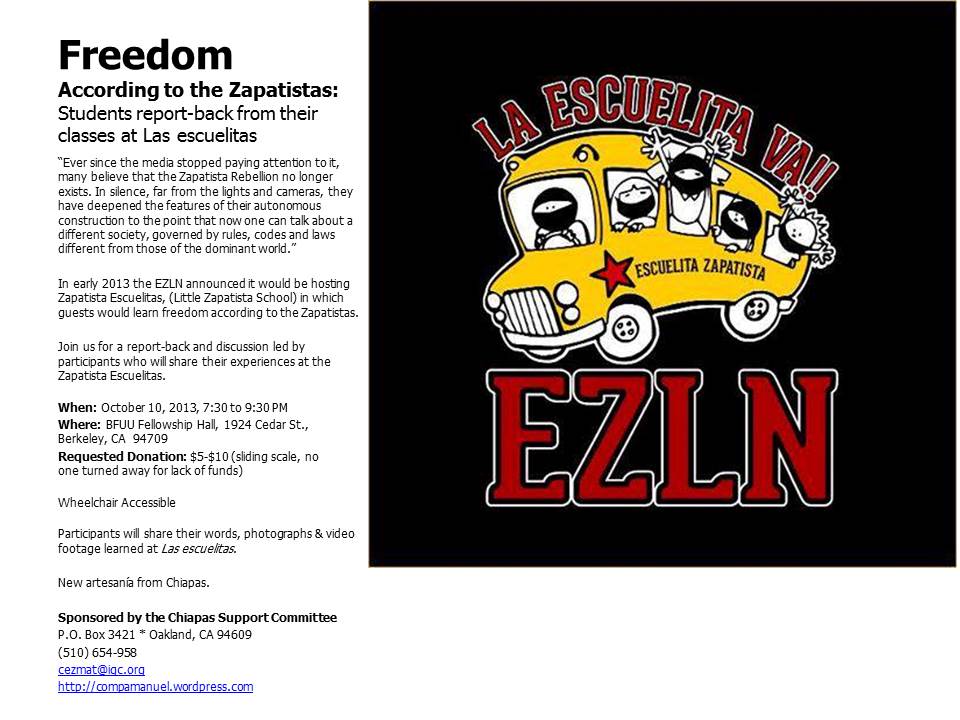
Freedom According to the Zapatistas: A Report on the Escuelitas
THURSDAY, OCTOBER 10, 2013 – 7:30 PM – BFUU CHURCH, 1924 CEDAR ST., BERKELEY
Albert Patishtán Denied Freedom
[This Thursday (September 12), a Mexican Court rejected Alberto Patishtán’s appeal for a recognition of innocence. The article below appeared the next day in the Opinion section of La Jornada.]
ALBERTO PATISHTÁN: MESSAGE from the STATE
By: Luis Hernández Navarro
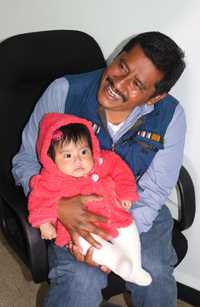
Alberto Patishtán with granddaughter
Alberto Patishtán is not a French kidnapper like Florence Cassez, nor a drug trafficker like Rafael Caro Quintero, nor one of the assassins of the Acteal massacre. He is a Tzotzil teacher, a member of the Other Campaign, who has been unjustly imprisoned for the last 13 years. She, they and he are not the same. The justice system set Cassez, Caro Quintero and the paramilitaries from Chenalhó free even though they are guilty, while it keeps the teacher Patishtán in prison despite his innocence.
The judiciary at this time had the possibility to make amends for the damage done to the indigenous Tzotzil from the municipality of El Bosque. But on Thursday, the First Collegiate Tribunal of the Twentieth Circuit based in Chiapas declared the evidence by which his lawyers sought to obtain his acquittal to be unfounded.
Adding dishonor to shame, the Supreme Court of Justice of the Nation decided to be an accomplice of injustice and washed their hands. Only last March, their First Chamber decided, by three votes to two, not to retain jurisdiction over the motion for recognition of the teacher’s innocence. The case was returned to the tribunal that declared the evidence in favor of Patishtán to be unfounded.
In a country where the administration of justice has a strong political bias and where the judges are rarely independent of the Executive, the decision of the judges of the First Collegiate Tribunal of the Twentieth Circuit, Freddy Gabriel Celis Fuentes, Manuel de Jesús Suárez Rosales and Eduardo Arturo Garduño Zenteno, can only be interpreted as a message from the State. A message sent both to the prisoner himself and to those who see him as emblematic of the struggle against injustice. The teacher is a hostage of power.
Alberto Patishtán is not just any detainee: he is the country’s most notorious political prisoner. He is an emblematic figure of the indigenous movement, in whom racial discrimination, procedural carelessness and the partisan use of justice to deprive original peoples are all summed up; a symbol of dignity against the abuse of power.
Literally thousands of voices inside and outside Mexico have demanded his immediate liberation. The Believing People, the EZLN, the indigenous movement, the National Coordinating Committee of Education Workers (CNTE), Amnesty International and hundreds of human rights organizations and public intellectuals are convinced of his innocence and demand his freedom. It is to these that the State delivered its last word: your reasons do not matter to me; I hear you, but I pay no attention.
The story is well known. On June 12, 2000, in the hamlet of Las Lagunas de Las Limas, Simojovel, seven policemen were ambushed. On that day and at that time, Patishtán was many kilometers away from that place. It did not matter. They held him responsible for the murders anyway. He was sentenced on charges of organized crime, intentional homicide, possession of weapons for the exclusive use of the armed forces, and bodily injuries. There were no translators at his trial. The witnesses lied and did not present solid evidence of his guilt. The judges did not care. He went to prison anyway.
Throughout the country, the indigenous peoples resist environmental devastation and dispossession of their lands, territories, waters and seeds. To defend themselves in the face of public insecurity, they have formed community police. Keeping Patishtán in prison is a warning from the Mexico of above about what may happen if they continue to persist with the same obstinacy in the defense of their natural resources and of their ways of exercising justice.
Hundreds of thousands of teachers are demanding the repeal of the labor reforms recently approved by Congress disguised as reforms of education. In their demonstrations and their list of demands, they insist that the detained teacher, one of their own, be released. Refusing to release him from prison is a warning of what awaits them if they do not stop their acts of disobedience.
The Zapatista movement is determined to be self-governing and to keep its weapons, on the periphery of government institutions. It continues to be a source of inspiration and example to many indigenous communities in the country. Having a member of the Other Campaign behind bars is a warning that the war against the rebels in the Mexican southeast has not ended.
In a country where the law is regularly applied contrary to justice, the Mexican State does not care whether Alberto Patishtán is innocent or if his trial was full of irregularities. It does not trouble them that his imprisonment is an international scandal. The State wants, plainly and simply, to send a message to those who sympathize with the teacher and his cause to take warning. It will not succeed. Like Patishtán, the many who stand in solidarity with him resist, and will continue resisting.
———————————————————-
Originally Published in Spanish by La Jornada
Friday, September 13, 2013
Source en español: http://www.jornada.unam.mx/2013/09/13/index.php?section=politica&article=021a1pol
English translation by the UK Zapatista Solidarity Network for the:
International Zapatista Translation Service, a collaboration of the:
Chiapas Support Committee, California
Wellington Zapatista Support Group
UK Zapatista Solidarity Network
Raúl Zibechi: The Art of Constructing A New World
THE ART OF CONSTRUCTING A NEW WORLD: Freedom according to the Zapatistas
Written by Raúl Zibechi August 29, 2013
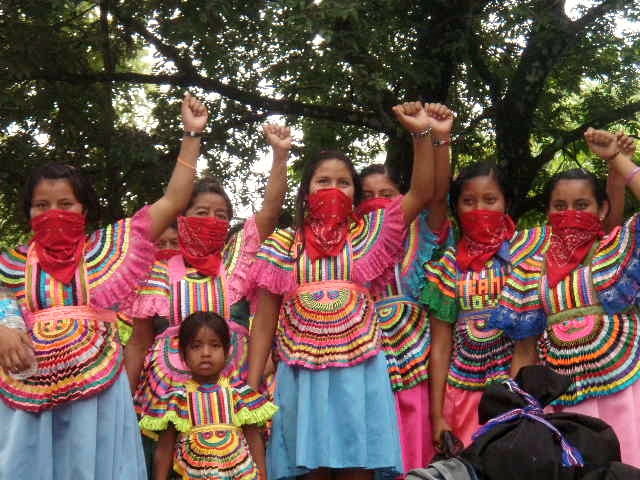
Zapatista Women
Ever since the media stopped paying attention to it, many believe that the Zapatista Rebellion no longer exists. In silence, far from the lights and cameras, they have deepened the features of their autonomous construction to the point that now one can talk about a different society, governed by rules, codes and laws different from those of the dominant world.
From his six-year old height, Carlos Manuel hugs his father’s waist as if he would never let go. He looks at the roof and smiles. Julián, his father, attempts to get loose. The child gives in but remains together with the father. Irma, his eight-year old sister, observes from a corner of the kitchen where her mother, Esther, works over the fire turning the corn tortillas that continue being the principal food of rural families.
The other three children, including the eldest, Francisco, 16, observe the scene that is repeated during the meals as if it were a ritual. The kitchen is the place for talks that scatter as slow as the smoke that rises above the zinc roofs. The words are as frugal and flavorful as the food: beans, corn, coffee, bananas and some vegetable, all grown without chemicals, harvested and prepared by hand. Bred in the open field, the chicken has a different flavor, like all the food in this Tojolabal community.
When the meal ends, each one washes his plates and tableware, even the father, who at times collaborates in the meal’s preparation. I ask if it’s what’s normal in these lands. They answer that it is the custom in the Zapatista communities, not so in the communities of the “bad government,” in reference to those that, without scorn, they call “PRI brothers.” Those communities, neighbors to those that clutch the red star on a black background, receive vouchers and food from the government, which builds houses of block and soil material for them.
There was not the least gesture of aggressiveness between the father, mother and children during the week; not even gestures of bad humor or reproach. Apparently, prohibition of alcohol consumption softens human relations. The women are the ones that most enjoy the changes. “I distinguish the Zapatistas by the way in which, above all, the women stand up,” the experienced journalist Hermann Bellinghausen comments.
The day of the end of the world
The new stage that Zapatismo is traveling started on December 21, 2012, the day marked by the media as the end of the world that for the Mayas is the beginning of a new era. Tens of thousands of EZLN support bases concentrated in five municipal seats of Chiapas, the same ones that they had taken on January 1, 1994.
The reappearance of Zapatismo moved a good part of Mexican society. Not only had they not disappeared, but rather that they re-emerged with more strength, showing that they were capable of mobilizing an important number of people in military formation, although without weapons.
In the December 30 communiqué Subcomandante Marcos assures that “in these years we have strengthened and significantly improved our living conditions. Our level of life is superior to that of the indigenous communities related to the governments, which receive alms and waste them on alcohol and useless articles.”
He adds that different from what happens in communities related to the PRI, in the Zapatista communities “the women are not sold like merchandise,” and that “the indigenous PRI members are going to our hospitals, clinics and laboratories because in the government’s there is no medicine, or apparatus, or doctors or qualified personnel.”
Something like that could verify who went to the first Escuelita between August 12 and 16. In reality only fellow travelers were summoned, which supposes a profound turn in their ways of relating with civil society: “Starting now, our word will begin to be selective in its destination and, save on rare occasions, will only be understood by those who have walked and walk with us, without surrendering to media and popular fashions,” the communiqué recites.
He adds that: “very few will have the privilege” of knowing the other way of doing politics. In a series of communiqués titled “Them and Us” emphasized the differences between the political culture of the system and the culture of below or zapatista, assuring that they do not propose: “to construct a big organization with a directing center, a centralized command, a boss, be it individual or collegiate.”
They emphasize unity of action must respect heterogeneity of the modes of doing: “Every attempt at homogeneity is no more than a fascist attempt at domination, hidden with a revolutionary, esoteric, religious or similar language. When one speaks of “unity,” one omits pointing out that that “unity” is under the leadership of someone or something, individual or collective. On the deceitful altar of “unity” not only are differences sacrificed, the survival of all the little worlds of tyrannies and injustices that we suffer is also hidden.”
To comprehend this focus, which led Zapatismo to promote the August Escuelita, you must comprehend the problems that pierced relations with the electoral left and with people that, in their opinion, “appear when there are stages and disappear at the hour of work without noise [publicity?].”
The logic of the Escuelita is opposed to that political culture. It’s not about going to listen to the Indian commanders or to Subcomandante Marcos, but rather to share daily life with the common people. It’s not about the discursive and rational transmission of a codified wisdom. The thing goes another way: experiencing a reality to which one can only accede through a ritual of commitment, in other words staying and sharing.
A new life
“We no longer have difficulties” Julián says, seated on a rustic wood stool, in his house with a metal plate roof, walls of wood and tamped-down dirt floor. He says that naturally in front of someone who has spent four days sleeping on wooden boards, barely covered with a fine sheet. Julián entered the clandestine organization in 1989. Marcelino, my guardian or Votán, entered a little before that, in1987.
With enjoyment they tell about the clandestine meetings in remote caves in the mountains, to which dozens of Zapatistas arrived at night, while the plantation owners and their overseers slept. They walked all night and barely returned by dawn to go to work. The women cooked tortillas for them in the dark, to not arouse suspicion. Well viewed, he’s right when he says that it was worse before: the whip of the plantation owner, the humiliation, the hunger, the violence and rapes of the daughters.
On January 1, 1994 the plantation owners fled and the overseers ran away. The “8 de Marzo community,” to which fifteen of us student strangers (half Mexicans, one a 75-year old Yankee, a Frenchman, a Colombian, two Argentinians and a Uruguayan) is on the land that used to be occupied by Pepe Castellanos, brother of Absalón, lieutenant colonel, ex governor and the owner of fourteen fincas (plantations) on lands usurped from the Indians. His kidnapping, in that distant January, was the spigot that precipitated the flight of the big landholders.
The community has more than one thousand hectares of good land. They no longer have to plant on the rocky and arid slopes. They harvest traditional foods and at the recommendation of the la commanders they also grow fruits and vegetables. Not only did they free themselves of the whip; they are also better fed and get to save in a very particular way. Julián harvests six sacks of coffee, some 300 kilos, from which one sack is for family consumption and he sells the rest. According to prices, he gets to buy between two and three cows with each harvest. “The cows are the bank account and when we have a necessity we sell them.”
By “necessity” he means health problems. His eldest son had to submit to a treatment and he sold a bull to pay for the expenses. The community applies the same logic. They carry out collective work around coffee on the community’s land and with the harvest they buy horses and cows. Between animals of the families and those of the community they have 150 horses and almost 200 vaccinated cows.
Days before the students were to arrive the water filter wore out and they decided to sell a cow to repair it. In that same fashion they maintain health services, the school and all the expenses that transportation and lodging require for the comuneros to fulfill their duties at the three levels of self-government: the local or community government, the autonomous municipal government and the Good Government Juntas (regional).
The women also have community enterprises. In that community they had a coffee field with which they bought six cows and a chicken coop with half a hundred birds whose savings are used for travel and other expenses the women have that occupy positions or attend courses.
The few necessities that the families do not produce (salt, sugar, oil and soap) they buy at the municipal headquarters in Zapatista stores, installed in places that they occupied after the 1994 Uprising. That way they don’t need to go to the market and their whole economy is kept inside of a circuit that they control, self-sufficient, linked to the market but without depending on it.
The comuneros take turns tending the stores. Julián explains that at certain times it falls to him to be in the Altamirano store for one month (an hour from the community), which obliges him to leave home. “In that case the community maintains his milpa for 15 days and I support in the same way that he has to go to the store.” Esther was in charge of the Junta, in the Caracol of Morelia, one half hour from the community, and her duties were covered the same way, which we can call reciprocity.
Health and education
Each community, no matter how small it is, has a school and a health post. There are 48 families in the community of 8 de Marzo (March 8th), almost all Zapatistas. The assembly elects its authorities, half men and half women, its teachers and those in change of health. No one can refuse because it is a service to the community.
The school functions in a room of the big house abandoned by the plantation owner. An iron bar still survives through which he paid his peons, who could hardly see the hand that let coins fall, since the darkness hid the plantation owner’s face.
Early in the morning, the children form on the basketball court in front of the big house. They march in file with a martial step, guided by a youth from the community that must not be more than 25 years old. Zapatista education suffers from a lack of infrastructure; the classrooms are precarious, just like the benches and the buildings. The teachers are not paid a salary but are sustained by the community just like those in charge of health.
Nevertheless it has enormous advantages for the students: the teachers are members of the community, speak their language and are their equals, while in the state schools (those of the bad government), the teachers are not Indians but rather mestizos that don’t speak their language, and even scorn them, live far away from the community and maintain a vertical distance with the children.
The climate of trust in the autonomous schools enables more horizontal links and facilitates the participation of parents and students in the management of the school. The children participate in many of the community’s tasks and, among them, in the support of the school and of its teachers. A distance does not exist between the school, its teachers and the community since they are part of the same grouping of social relations.
If the official school has a hidden curriculum through which it transmits values of individualism, competition, vertical organization of the educational system and the superiority of the teachers over the students, Zapatista education is the reverse. The curriculum is constructed collectively and they want the students to appropriate the history of their community, to reproduce it and sustain it.
The transformation and the critique are permanent and work to construct knowledge collectively since the students are accustomed to working in teams and a good part of the school time transpires outside the classroom, in contact with the same elements that configure their daily life. What in state education is separation and hierarchy (teacher-student, classroom-recreation, knowing-not knowing), is integration and complimentary in the autonomous schools.
In the little room for health medications from the pharmaceutical industry live side-by-side with a wide variety of medicinal plants. A very young woman is in charge of processing syrups and pomades with those plants. The hall has a bonesetter and a midwife, who complete the basic health team in all the Zapatista communities. In general, they attend to relatively simple situations and when they seem overwhelmed they transport the patient to the clinic in the Caracol. When they cannot resolve [a situation], they go to the state hospital in Altamirano.
Health and education are arranged in steps on the same three levels as autonomous Zapatista power. The most advanced clinics usually function in the Caracoles, including one that has an operating room where they perform operations. In the Caracoles, which shelter the Good Government Juntas, the autonomous secondary schools are usually located.
The Little School
It took seven hours to tour the hundred kilometers that separate San Cristóbal from the Caracol of Morelia. The caravan of thirty trucks and cars left late and advances like a turtle. About two o’clock in the morning, we arrived at the Caracol, an enclosure where a group of constructions are seated that house the institutions of autonomous region: three municipios, twelve regions and dozens of communities, governed by the Good Government Junta.
There is also a secondary school and a hospital under construction, clinics, amphitheaters, stores, dining rooms, a shoe shop and other productive enterprises.
Despite the hour, a long line of men and another of women were waiting for us decked out with their paliacates. We arranged ourselves by gender and one by one we met our Votán. Marcelino extends his hand and asks that I accompany him. We go directly to the enormous events hall to sleep on the very hard benches.
In the morning (there were) coffee, beans and tortillas. Later the members of the Junta talk and explain how the little school is going to function. In the afternoon, almost at night, we left for the community. Among the students we were able to see Nora Cortiñas, of the Madres de Plaza de Mayo, and Hugo Blanco, campesino leader and ex Peruvian guerrilla, both around 80 years old.
We arrived in the community around midnight after a half hour of tumbling in the back of a small truck. The whole community, formed in lines of men, women and children with their ski masks, receive us with their fists raised. They welcome us and each student is introduced to the family where he will live. Julián introduces himself and when everyone has recognized his family, we went off to sleep.
First surprise. They divided the house with a partition, left a room for the guest with its own door and the seven family members crowded together in a similar surface. We woke up at the first light of dawn to eat breakfast. Later we go to work cleaning the family coffee field, machete in hand, until the dinner hour.
The second day was the day to tie up cattle to be vaccinated and the third for cleaning the community coffee field. Thus each day, the work combined with detailed explanations of community life. Afternoons were the time to read the four notebooks that they distributed about Autonomous Government, Autonomous Resistance and the Participation of Women in the Autonomous Government, with stories from the indigenous and the authorities.
Each student could formulate the most varied questions, which doesn’t always mean that they were answered. We were able to live together with a different political culture than that with which we are familiar: when they are asked a question, they look at each other, dialogue in a soft voice and, finally, one person responds for everyone. It was a marvelous experience, of learning, doing, sharing and savoring the daily life of the peoples that are constructing a new world.
Raúl Zibechi is an international analyst for the weekly Brecha of Montevideo, teacher and investigator on social movements at the Multiversidad Franciscana de América Latina (Franciscan Multiversity of Latin America), and an advisor to various social groups. He writes the Monthly Zibechi Report (“Informe Mensual de Zibechi”) for the Americas Program (Programa de las Américas) www.cipamericas.org/es.
—————————————————————
Originally Published in Spanish by the Americas Program
Translation: Chiapas Support Committee
En español: http://www.cipamericas.org/es/archives/10446
Zapatista News Summary for August 2013
AUGUST 2013 ZAPATISTA NEWS SUMMARY
In Chiapas
1. Around 1700 Students Attend “Little Zapatista Schools” – From August 12 to 16, around 1700 students attended the “Little Zapatista Schools” (Escuelitas), to learn about Freedom According to the Zapatistas. Prior to attending classes, many of the students participated in the celebration for the 10th anniversary of the Good Government Juntas. After attending the schools, many students stayed in San Cristóbal to participate in the Seminar in honor of Juan Chávez Alonso. Several of our members and friends who attended these festivities gave brief and inspired reports Saturday evening at the La Palma Taquería in Oakland. We are planning a full Report Back with film on October 10. Two of our members went to the same Zapatista Caracol as the Uruguayan political analyst Raúl Zibechi. You can read his analysis here.
2. Violence Continues in Chenalhó: 95 Displaced – Paramilitary violence continued in the Puebla ejido during August and, as a result, there are now 95 displaced persons living in as refugees in the community of Acteal. In one incident, para-militarized youth from the Puebla ejido prevented the first wave of displaced persons from returning to their homes, despite an agreement reached with the state government. Another incident involved the unprecedented detention and beating of the Chenalhó parish priest. More detailed information can be found on our blog.
3. Government Commissioner Visits Alberto Patishtán – On August 27, the federal government’s Commissioner for Dialogue with the Indigenous Peoples of Mexico, Jaime Martínez Veloz, visited Alberto Patishtán in prison because his liberation “is fundamental for generating minimal levels trust” with the EZLN that would permit the reconfiguration of conditions for the fulfillment of the San Andrés Accords. Meanwhile, a caravan of Patishtán’s supporters went from Mexico City to Chiapas and met with one of the magistrate’s involved in hearing the appeal for recognition of innocence. They learned that a decision on Patishtán’s appeal is expected mid-September.
4. Court Refuses to Restore Land to San Sebastián Bachajón – On August 1, a court in Tuxtla Gutiérrez denied a request from San Sebastián Bachajón (SSB) to restore its land confiscated 2 years ago by the state government. The confiscated land involves a proposed tourism mega-project at the Agua Azul Cascades. Lawyers for SSB said the ejido would appeal.
5. Migrant Tragedy Involving Chiapas: 11 Dead – In the wee hours of Sunday morning, August 25, the freight train known as The Beast, or La Bestia in Spanish, derailed in a remote area of Tabasco, close to the Chiapas border. Eleven migrants died and 16 were injured. Reports indicate the dead are all from Honduras. The Beast is used by Central American and other migrants. They hop on the freight cars in Chiapas and ride the train to its destination, risking their lives on a difficult and dangerous journey to the United States. Many of the migrants cross the Chiapas border with Guatemala and then hop the train in Arriaga. The story of Central American migrants in Chiapas and throughout Mexico is perhaps one of the most under-reported stories out of Mexico, at least in English, and often involves abuse, exploitation and even death at the hands of criminal gangs.
6. Mining Company Appears In Chicomuselo – On August 15, La Jornada reported that: “Residents of Monte Sinaí ejido, in Chicomuselo Municipality, denounced mining prospecting activity and offers from employees of the Montecristo 114 Company, part of Grupo Industrial, S. A. De C. V., in three of the location’s barrios. The towns in this region of the Chiapas Sierras have agreed, since May 14, 2009, ‘by majority vote, not to permit the entry of mining companies that seek to harm their lands and put the residents lives at risk,’ and they stated that they will defend their lands ‘even at the cost of their own lives.’” This is the same municipality where Mariano Abarca, an anti-mining leader, was murdered. After his murder, the Governor of Chiapas declared a “moratorium” on mining in the state, which has apparently expired. The ejido detained the company’s agents and made them sign a document “in which they promised not to return and to respect the autonomy of the communities.” They also asked the government that the procedure for expediting licenses for exploration and exploitation of mineral resources be revised, “when those affected have not been consulted about these projects or have not been informed about the impacts that they represent.”
7. Mexico’s Southern Border with Guatemala – Last month we reported that, according to the outgoing Homeland Security Secretary, Janet Napolitano, the United States was prepared to “act” on Mexico’s southern border. Although we asked Senator Feinstein’s office for information which would explain the meaning of “act,” we received no explanation. The Los Angeles Times, however, provided some information about what is planned. It appears that the US will at least partly finance “high-tech biometric kiosks” that record fingerprints, photos and other identifying information of those applying for temporary visitor and work permits; in other words, those attempting to cross legally. What?? Those aren’t the folks the US and Mexico are worried about. They’re worried about the people who cross without inspection and ride “The Beast” in hopes of some day reaching the United States. According to the Times, the Mexican government also plans to set up “internal control stations” (checkpoints?) and strengthen security near commonly-used migration routes.
_________________________________________
Compiled monthly by the Chiapas Support Committee.The primary sources for our information are: La Jornada, Enlace Zapatista and the Fray Bartolome de las Casas Human Rights Center (Frayba).
————————————————————-
Paramilitaries Re-Emerge Near Site of Acteal Massacre
PARAMILITARIES RE-EMERGE NEAR SITE OF ACTEAL MASSACRE
by: Mary Ann Tenuto-Sánchez

Those Displaced from Colonia Puebla Attend Mass in Acteal
“We fear another massacre; we know that the police can again train the paramilitaries, who are active, and can extend the violence to other communities,” Las Abejas representatives from Yaxgemel told La Jornada, in reference to the recent violence in the Puebla ejido.
On Monday, August 26, 2013, the civil society organization Las Abejas welcomed 95 newly and forcibly displaced persons to a camp in Acteal community, located in San Pedro Chenalhó County, in the Mexican state of Chiapas. This occasion and the events leading up to it have special significance to those familiar with the recent history of Acteal and Chenalhó.
On December 22, 1997, paramilitaries attacked unarmed refugees who were praying for peace in an Acteal chapel and massacred 45 women, children and men. Others were injured and the paramilitaries also cut 5 fetuses from the wombs of their murdered mothers. The dead and injured were all members of Las Abejas (The Bees), a Catholic pacifist campesino organization. In the six months preceding the massacre, the paramilitaries drove anyone they didn’t like from their homes at gunpoint, burning homes and crops, making death threats, robbing cash, food and belongings. Those they didn’t like included Zapatistas, non-Zapatistas sympathetic to the goals of the EZLN (like Las Abejas) and even their fellow PRI members who didn’t agree with the paramilitaries’ use of violence.
Mexico’s progressive daily, La Jornada, quoted Las Abejas members from Yaxgemel [another community in Chenalhó] as follows: “To those of us that suffered the forced displacement of 1997 in the flesh, the displacement that our brothers and relatives from Puebla suffer angers and psychologically represses us, because the way this conflict is developing and the violence there have been identical to the process that led to the dirty war.” Referring to Colonia Puebla, they say: “it is where the first paramilitaries emerged, those who extended the conflict and incited para-militarism in various Chenalhó communities in 1997.”
San Pedro Chenalhó County (a municipio in Spanish) is the official name of the county in which the community of Acteal is located, in the Highlands (los Altos) of Chiapas. The name of the Zapatista autonomous county covering the same geographic area is San Pedro Polhó. Ever since the Acteal Massacre, Acteal has remained the headquarters for Las Abejas and the Polhó ejido has been the county seat for San Pedro Polhó. Both Acteal and Polhó housed refugees that fled both before and on December 22, 1997. Many of the displaced Zapatistas continue to live in Polhó and other communities, rather than returning to their home communities containing paramilitaries that were never arrested or disarmed.
The international outcry over the massacre prompted the arrest and eventual conviction of some of the paramilitaries, 75 of them to be exact. In August 2009, however, Mexico’s Supreme Court began to review those convictions, and has gradually overturned almost all of the cases, thereby releasing 69 paramilitaries back into Chiapas society. The last group released was in April of this year. Jacinto Arias Cruz, the only paramilitary from Puebla that went to prison, was in that group. According to Las Abejas, the problems in the Colonia Puebla began a few days after his release. The Chiapas state government made efforts to keep the released paramilitaries from returning to their home communities and even offered them money and housing elsewhere. Nevertheless, Las Abejas maintains that many of them come back to visit friends and relatives in Chenalhó communities.
Approximately four months ago a dispute arose in the Puebla ejido, also referred to in some news articles as the Colonia Puebla, over the re-construction of a Catholic chapel. Evangelical and Presbyterian members of the community claimed that the land did not belong to the chapel, the Catholics claiming that it did. Building materials disappeared. Then, suddenly, on July 20, 2 Zapatistas and one non-Zapatista were detained in the Puebla ejido in Chenalhó. The 2 Zapatistas were beaten and tied to posts on the basketball court and threatened with having gasoline poured on them and being set on fire. They were accused of poisoning a water tank in the community. The 3rd man was arrested and beaten for protesting the treatment of the Zapatistas. All three were taken to the prosecutor in San Cristóbal and placed in jail, where they were held for 3 days. They were not fed and did not receive medical treatment for their injuries. All 3 were released on July 23 due to a complete lack of evidence. That wasn’t too surprising since the aggressors cleaned the water tank before police investigators could test it for poison, thereby casting suspicion on the charges. Notwithstanding the release of the three from jail, the question of those displaced by the July 20 violence remained pending.
Throughout July and August, Las Abejas continued to warn about the renewal of paramilitary activity in the Puebla ejido and in Chenalhó County in general. Meanwhile, the state government mediated an agreement between Catholics, ejido authorities and the state government that provided for free movement within the ejido and a stop to the attacks.
Despite the agreement, the renewed paramilitary activity that started in July continued into August, and when the families displaced in July attempted to return in a caravan to Puebla on August 20, they were prohibited from entering the ejido by some 100 young people that were urged on by 6 men with military haircuts. The youths yelled words of hate, insulting caravan members and throwing stones at their vehicles.
Then, on August 21, the Catholic parish priest of Chenalhó, Manuel Perez Gomez, was in Puebla to sign the official agreement. A state government official and a municipal representative were with him. At approximately 1:30 in the afternoon, Perez Gomez was grabbed and beaten by a group of people from the Presbyterian and Evangelical churches. The state and municipal officials were also detained. Perez Gomez was taken to the school and tied up. The group threatened to pour gasoline on him and burn him alive. Families that were gathered in the Catholic chapel said by telephone that they were all in the church and were surrounded by the aggressors and were threatened with being burned alive. Later it was learned that the community kitchen used by the Catholics had been burned by the aggressor group.
Perez Gomez was released shortly before midnight, but not before being forced to sign away the land for the chapel and an agreeing not to tell the media about what happened and not to give a statement to the Indigenous Prosecutor. The three government officials were also released and Perez Gomez made his statement to the Indigenous Prosecutor. The following day another 14 families left Puebla, fearing for their safety and are now in Acteal with the original 5 families as displaced persons.
The Las Abejas representatives from Yaxgemel believe that the violence in Puebla: “established that what began as a religious problem is a strategy and disguise of the bad governments and essentially a direct attack on our compañeros.” And they go on to state that the problem: “is of a counterinsurgent character, which we have already experienced and (therefore) know how to identify…” They accuse the governments of complicity and reveal that the police are now in Puebla “accompanying the those who generate the violence.”
The Catholic, Baptist and Pentecostal families that remain in Puebla are considered in grave danger. As Las Abejas stated in their August 22 pronouncement: “The reactivation of paramilitaries in the Puebla ejido and a possible massacre of the Catholic families is established in Mexico and in the world.
Zapatista Film: Corazon del tiempo (Heart of Time)
Community Film Screening, Music & Discussion
With the Zapatistas at the movies! | Con l@s zapatistas en el cine!
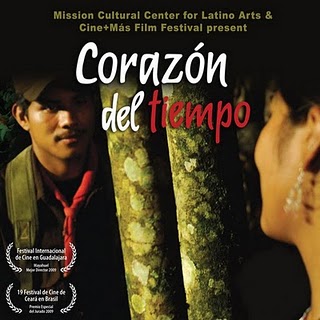
“Corazón del Tiempo”
“Heart of Time”
In Spanish with English subtitles
A love story between two Zapatistas!
Saturday, Aug 31, 2013
Eat + music 7:00 pm | Movie at 8:30 pm
At La Palma Taqueria
4171 MacArthur Blvd, Oakland, CA 94619
Eat some great Mexican food & drinks starting at 7:00 pm
Movie starts about 8:30 pm (or as soon as it is dark enough)
The movie will be shown on parking lot wall!
Bring a folding chair & blankets.
A donation will be requested to support the Zapatista communities.
For more info call or email Chiapas Support Committee-Oakland:
https://compamanuel.wordpress.com/2013/08/09/zapatista-film-heart-of-time-corazon-del-tiempo/
Raúl Zibechi: The Little Schools of Below
THE LITTLE SCHOOLS OF BELOW

Little Zapatista School Art
By: Raúl Zibechi
There will be a before and after the Little Zapatista School; of the recent one and those that will come. It will be a slow, diffuse impact, which will be felt in some years but will frame the life of those below for decades. What we experienced was a non-institutional education, where the community is the educational subject. Face-to-face self-education; learning with the spirit and with the body, as the poet would say.
It’s about non-pedagogy inspired in campesino culture: selecting the best seeds, scattering them on fertile ground and watering the earth so that the miracle of germination produces, which is never certain nor can it ever be planned.
The Little Zapatista School, for which more than a thousand students went into autonomous communities, was a different way of learning and teaching, without classrooms or blackboards, without teachers or professors, without curriculum or qualifications. Real teaching begins with the creation of a climate of fellowship (hermanamiento) among a plurality of subjects, previously with division between an educator with power and knowledge, and ignorant students in whom knowledge must be inculcated.
Among the many apprenticeships, impossible to sum up in a few lines, I want to emphasize five aspects, perhaps influenced by the conjuncture that we are crossing through in the continent’s south.
The first is that the Zapatistas defeated the social counterinsurgency policies, which are the way found by those above for dividing, coopting and submitting peoples that rebel. Side by side with each Zapatista community are communities related to the bad government with their little cinder-block houses, who receive cash certificates and hardly work the land. Thousands of families succumbed, something common everywhere, and accepted gifts from above. But, what’s notable and exceptional is that other thousands continue forward without accepting anything.
I don’t know of another process in all of Latin America that has been able to neutralize the social policies. This is a major virtue of Zapatismo, attained with militant firmness, political clarity and a never-ending capacity for sacrifice. This is the first lesson: it is possible to defeat the social policies.
The second lesson is autonomy. Years ago we listened to speeches about autonomy in the more diverse movements, something very valuable for sure. In the autonomous municipalities and in the communities that make up the Caracol of Morelia, I can testify that they constructed an autonomous economy, health, education and power; in other words, an integral autonomy that contains all aspects of life. I don’t have the least doubt that the same thing happens in the other four Caracoles.
A couple of words about the economy, or the material life: the families from the communities don’t “touch” the capitalist economy. They hardly border the market. They produce all their own food, including a good dose of proteins. They buy what they do not produce (salt, oil, soap, sugar) in Zapatista stores. They save the family and community excesses in cattle, based on the sale of coffee. When there is a need, for health or for the struggle, they sell a head.
Autonomy in education and in health are placed in the community’s control. The community elects those who will teach their sons and daughters and those who will care for their health. There is a school in each community, in the place for health midwives, bonesetters and those who specialize in medicinal plants work together. The community sustains them, like it sustains their authorities.
The third lesson is related to collective work. As a Votán said: “Collective work is the motor of the process.” The communities have their own lands thanks to the expropriation from the expropriators, the inescapable first step for creating a new world. Men and women have their own collective jobs and spaces.
Collective work is one of the cements of autonomy, whose fruits usually spill into hospitals, clinics, primary and secondary education, in strengthening the municipalities and the good government juntas. Not much that has been constructed would be possible without the collective work, of men, women, boys, girls and the elderly.
The fourth question is the new political culture, which is rooted in family relations and permeates all of Zapatista “society.” Men collaborate in the domestic work that continues falling on the women; they take care of their children when the women leave the community for their work as authorities. The father-son relationships are affectionate and respectful, within a general climate of harmony and good humor. I did not observe a single gesture of violence or aggressiveness in the home.
The immense majority of the Zapatistas are young or very young, and there are as many women as men. The revolution cannot do it without the very young, and that has no discussion. Those that govern obey, and it is not just a discourse. They appoint the body, which is another of the keys of the new political culture.
The mirror is the fifth point. The communities are double mirrors: in which we are able to look at ourselves and where we can see them. But not one or the other, but the two simultaneously we see ourselves looking at them. In that coming and going we learn about working together, sleeping and eating under the same roof, in the same conditions, using the same latrines, stepping in the same mud and getting wet in the same rain.
It is the first time that a revolutionary movement carries out an experiment of this kind. Until now the learning among revolutionaries reproduced the intellectual models of academia, with an above and a below stratified, and frozen. That’s something else. We learn with skin and senses.
Finally, there is a question of method or of the form of work. The EZLN was born in the countryside with a concentration that represented vertical and violent relations imposed by the plantation owners. They learned to work family by family and in secret, innovating the mode of work of the anti-systemic movements. When the world seems more like a concentration camp every day, their methods can be very useful for those of us who continue engaged in creating a new world.
——————————————————————————-
Originally Published in Spanish by La Jornada
Translation: Chiapas Support Committee
Friday, August 23, 2013
En español: http://www.jornada.unam.mx/2013/08/23/opinion/023a1pol
 Chiapas Support Committee