BY: Gilberto López y Rivas
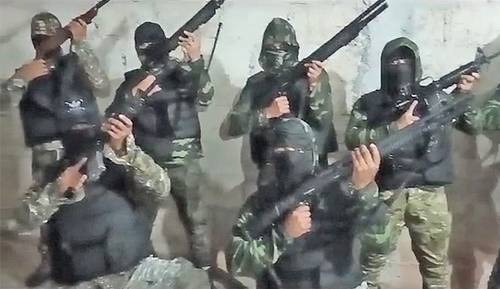
In the context of the multiple forms of neoliberal violence that prevail at the global and national levels, in the forum: “From the horror of war to the resistance for life,” summoned by the emergency situation that prevails in territories of the Zapatista National Liberation Army, I exposed, at the table around violence, the deepening of the counterinsurgency war strategy through the action of various armed actors. On the one hand, paramilitary groups, such as the ORCAO, which multiply their attacks against Zapatista communities, and, on the other, the growing presence throughout Chiapas of cartels of so-called organized crime, within the framework of a process of militarization and militarism continued by the current government.
The action of paramilitarism has lasted for several decades, starting with a military counterguerrilla tactic known as anvil and hammer, according to which the Army and police institutions adopt the passive function of containment forces (anvil), which allow them to perform, in this case, the active function of harassment of paramilitary groups (hammer) against the EZLN and its support bases. Since the outbreak of the Zapatista rebellion, the paramilitary groups have been reformed.
Thus, there is a crucial element in the counterinsurgency strategy: the action of paramilitaries who are used in tasks that the armed forces prefer not to perform directly. This was a tactic used in Guatemala, although there the army directly played the fundamental role in the genocide against the indigenous people. In the Guatemalan conflict, exacerbated in the 1960s, we find what could be the workshop of para-militarization and militarization in Central America and Mexico. Ultra-right groups that showed themselves to be autonomous, but attached to the intelligence section (G-2) of the Guatemalan army, civil self-defense patrols, which in principle were forcibly recruited by the army and played a role in massacres and military control of communities, scorched earth practices during the government of Efraín Ríos Mont (brought to justice for genocide), in the 80s, which were nothing more than the bombing of the communities with the population inside, are samples of an experience that left, over a period of 36 years, 100 thousand dead, 40 thousand disappeared, 50 thousand refugees abroad, many in Mexico, a million displaced to other parts of the country, 600 collective killings and an accumulated experience of repression that transcends the borders of Guatemala: the kaibiles, a particularly bloodthirsty army corps that trains the Mexican armed forces.
The state link provides a fundamental element for a definition of the Latin American experience: thus, paramilitary groups are those that have military organization, equipment and training, to which the State delegates missions that the armed forces cannot carry out openly, without implying that they recognize their existence as part of the monopoly of state violence. Paramilitary groups are illegal and unpunished because it suits the interests of the State. The paramilitary consists, then, in the illegal and unpunished exercise of State violence and in the concealment of the origin of that violence. Above all, in the cases of Chiapas, Guerrero and Oaxaca, paramilitarism serves the purposes of counterinsurgency, destroying or severely deteriorating the social fabric of communities and social organizations in resistance. It acts under the most diverse expressions: it attacks social service providers, causing conditions of expulsion and displacement of indigenous and peasant communities, colludes with civil authorities, exercises harassment through the actions of venal judges and judicial police, infiltrates religious associations, carrying out intelligence work, poses developmental dilemmas that cause clientelism and environmental deterioration, as Sembrando Vida (Sowing Life), and places as enemies of development communities that refuse to follow the logic of capital and, above all, originates or increases the spiral of violence in communities by imposing that this is a way of life. The insertion in the communities of Chiapas, and other states of the country, of phenomena such as prostitution, alcohol consumption, and domestic violence, are also the result of the presence of the Army, as documented by Juan Balboa since 1997 (La Jornada, 1/27/97).
This is only part of the broad-spectrum war that is being waged in Chiapas (and in other states of the country), and that we denounced in that forum, with the purpose of breaking the media siege and denialism that the Mexican State encourages impunity.

Originally Published in Spanish by La Jornada, Friday, August 4, 2020, https://www.jornada.com.mx/2023/08/04/opinion/019a2pol and Re-Published with English interpretation by the Chiapas Support Committee
 Chiapas Support Committee