By: Raúl Romero*
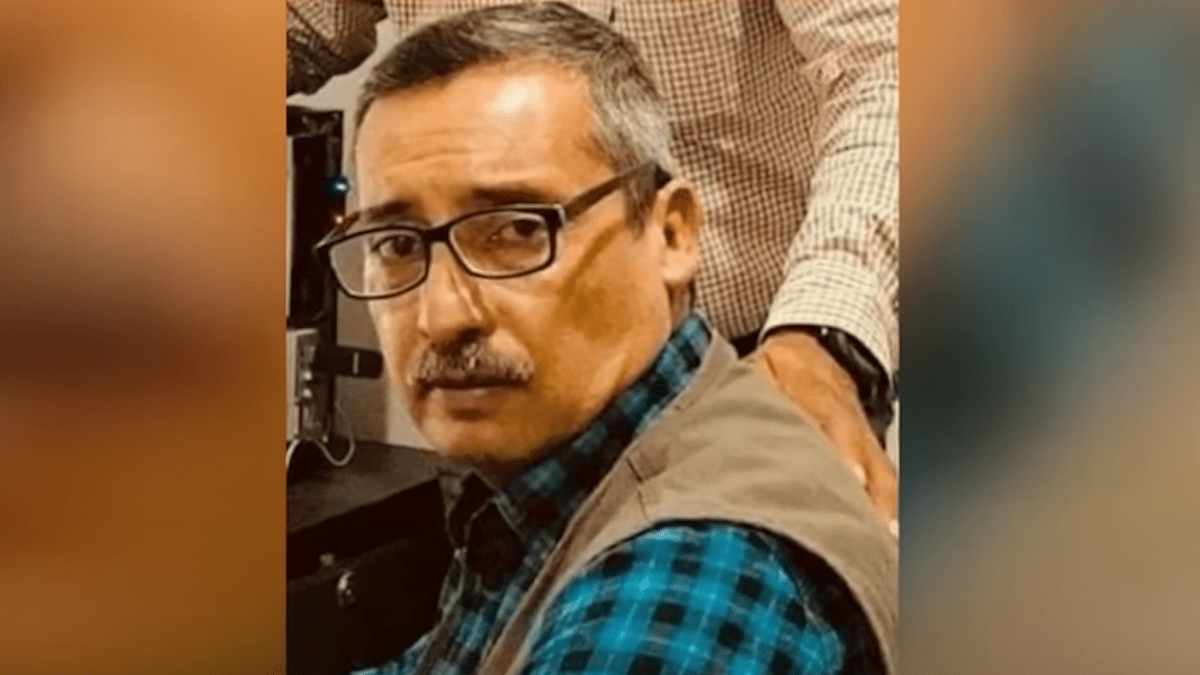
Tuesday, July 5, 2023, in Nayarit, La Jornada correspondent Luis Martín Iñiguez Sánchez is disappeared. A few days later they will find his lifeless body. Monday, July 10, 2023, in Guerrero, more than 5 thousand people, identified as the social base of the local cartel Los Ardillos, “take” the city of Chilpancingo and kidnap police and officials to demand the release of a transport leader. Tuesday, July 11, in Jalisco, municipal and state police are ambushed and at least six people are killed and 12 others are injured by buried explosive mines. In Mexico, today, we wrote in our last installment (https://n9.cl/e1dmfo), unfortunately we are in a context of war.
To understand the war that we are experiencing in Mexico, it is necessary to understand the old and new modalities in which they are developed. In the literature on the subject, there is talk of fourth-generation warfare, hybrid warfare, full-spectrum warfare, total war, and so on. Wars are not only fought on armed terrain or openly, they are also fought covertly or with “low intensity”, media, economic, commercial. The armies of the national states are now also integrated as regional militias – always at the service of financial centers – or strengthened with private troops, such as those of organized crime. The goal remains the annulment and submission of the adversary, but above all control of the territory and its reorganization to guarantee gains to the occupying force.
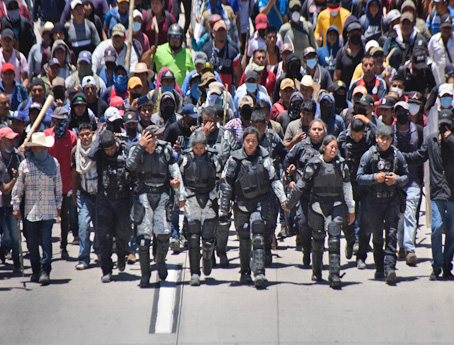
Although the warmongering rhetoric was abandoned in the current administration of Mexico, in fact the use of military forces for intervention in this war scenario was reinforced, providing them with legal certainty, social legitimacy, economic power and possession of infrastructure. These measures, together with the use of other concepts such as national security, show that the military will only leave the barracks in times of war.
In the war we are experiencing in Mexico, legal economic corporations intervene that dispute territories and natural resources. These corporations have the forces of the State that guarantee security in the looting of minerals, water and other common goods. The armed forces join this work as a construction company, occupying and reorganizing territories to make them useful to capital. Whether from transnational or national companies, private or from the State, the conquest, reorganization and administration of territories to put them at the service of capital is one of the characteristics of this war.
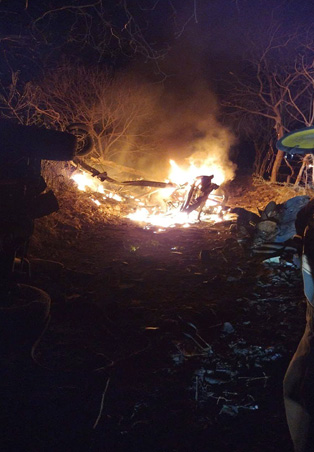
Another of the actors involved in the current conflict in Mexico are illegal economic corporations, organized crime and their armed groups that have a presence and control in various branches of the national economy. These groups have impressive economic, political and armed strength. They are capable of building their own armored cars, financing political campaigns or imposing candidates, and they have the firepower and technology capable of confronting sections of the army, of detonating car bombs, of disappearing thousands of people, of filling the country with clandestine graves and much more. Criminal corporations have gained presence in the cultural industry and many aspects of daily life, to the extent that they are, for many social sectors, a source of employment, a benchmark for social mobility and even a model of success.
Legal and criminal corporations are strongly intertwined, not only in aspects such as money laundering, or in territorial political control, but also in the use of services. In Chicomuselo, Chiapas, and in Aquila, Michoacán, as well as in other regions of the country, mining companies acquire the services of armed organized crime groups to impose their businesses. Depopulating territories and annulling resistance are also part of the objectives of war.
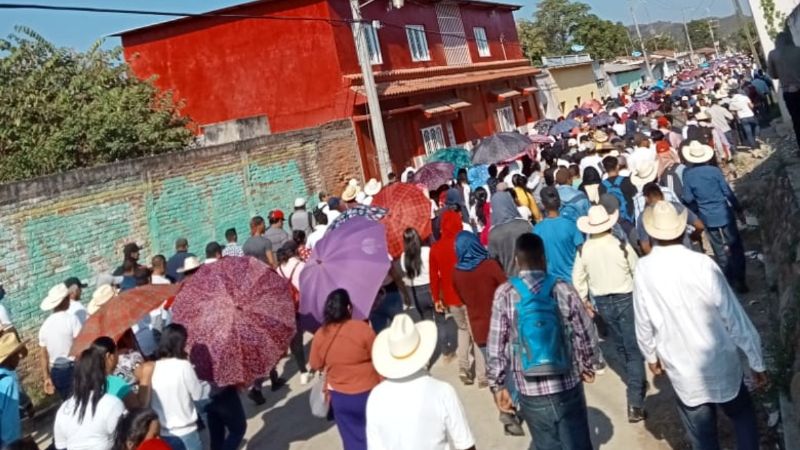
In Chiapas, this war for territory deployed by legal and criminal corporations is combined with an old counterinsurgency war that the Mexican state left installed against the Zapatista peoples through paramilitary groups, corporatism and social programs. It is in Chiapas where the wars rehearsed in other regions of the world such as Colombia are combined, for the conquest and territorial reorganization of a geopolitically fundamental area, seasoned by the drama of migration that they know well in southern Europe and for other illegal cross-border businesses, and exacerbated by the counterinsurgency war that has not stopped.
The war in Mexico finds a fundamental point in Chiapas. There is already a struggle in which the peoples bet on life with peace, justice and dignity. Zapatismo is an advance of that struggle, that is why we must all demand an end to the war against the Zapatista peoples, which is at the same time the cry to stop the war in Chiapas and throughout Mexico.
*Sociologist

Originally Published in Spanish by La Jornada, Tuesday, July 18, 2023, https://www.jornada.com.mx/2023/07/18/opinion/012a1pol and Re-Published with English interpretation by the Chiapas Support Committee
 Chiapas Support Committee