
By: Luis Hernández Navarro
The ambush in which José Fernando Ruiz Montejo, El Poni, and three of his bodyguards fell, in the Joaquín Miguel Gutiérrez ejido, Frontera Comalapa, Chiapas, at the border of Guatemala and Mexico, on December 28, 2020, was the beginning of a war between cartels in the state, which escalates more and more every day.
Six months later, in July 2021, the struggle was exacerbated by the murder of Ramón Gilberto Rivera, alias El JR, in Tuxtla Gutiérrez. El Junior was the son of Tío Gil, an operator of the Sinaloa cartel in the state until his capture in 2016. The crime was the work of the Jalisco New Generation Cartel.
Later, on October 9 and 10, 2022, a pitched battle arose between Jalisco and Sinaloa, in Jiquipilas. A name began to spread widely: Juan Manuel Valdovinos Mendoza, The Lord of the Horses, head of New Generation in the state. In a message to the population, the one also known as El Fraile, warned: I will do everything in my power not to let in those scourges of society called the Sinaloa Cartel.
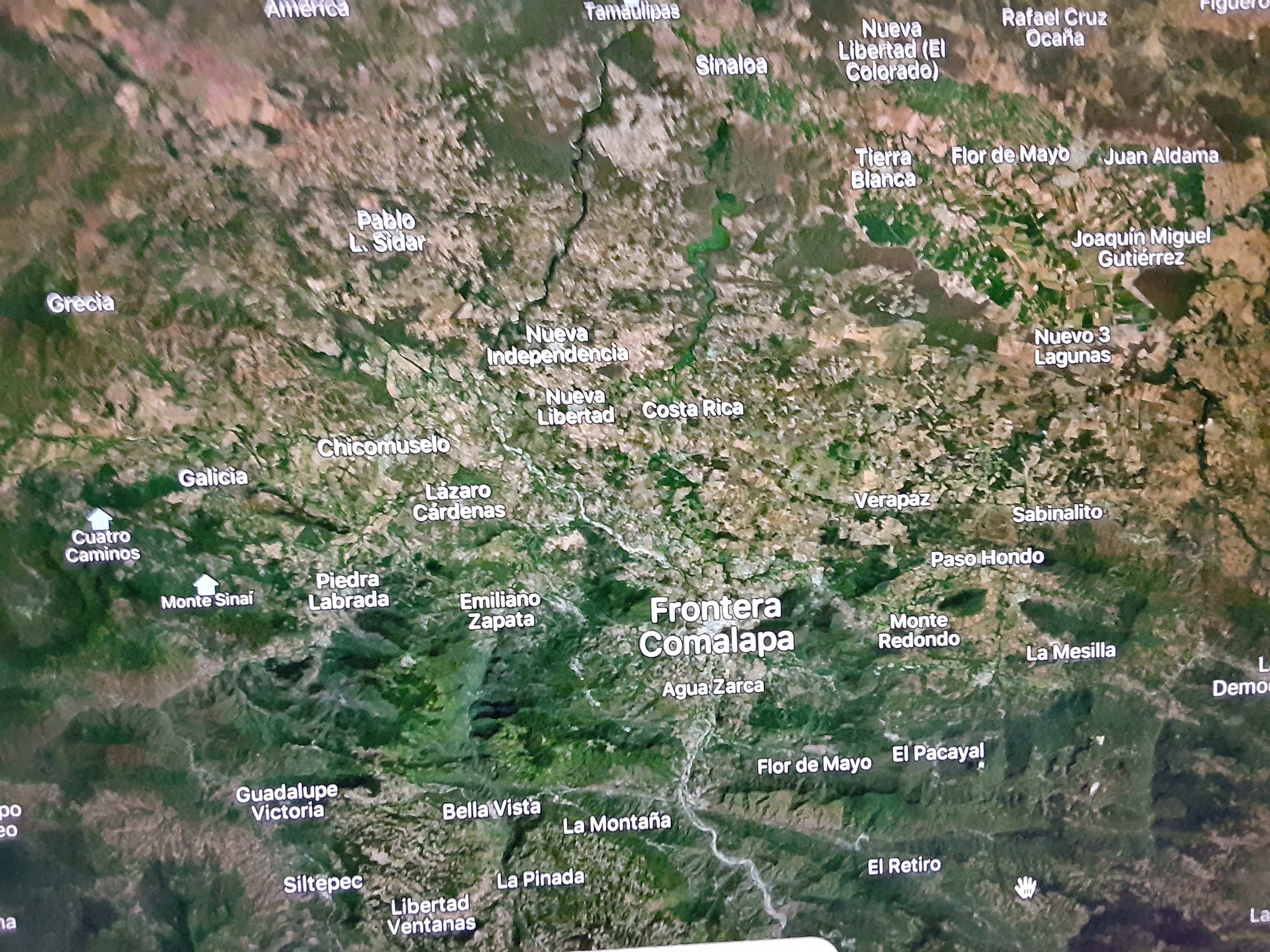
Among other regions of the state, the organized crime dispute over territories, routes and markets moved to Frontera Comalapa, which until 2015 could boast of security, tranquility and peace. It is a municipality that connects the border of Guatemala, La Mesilla, with the Sierra Madre de Chiapas. It is the commercial and monetary flow center in the region. It has about 81 thousand inhabitants and in the municipal seat, 20 thousand. There are large ejidos, such as Paso Hondo and Tierra Blanca. It has long been a passage for undocumented immigrants.
Comalapa has three important areas: 1) The area with irrigation, a real battleground between cartels; 2) The area where crops are seasonal, with ejidos that go from Paso Hondo looking for the dam, and 3) The Grijalva area, which starts from the municipal seat and goes to a part of the dam.
In Holy Week 2020, clashes began to escalate in the region of San Gregorio Chamic, between the CDP [1] and the CJNG, an ally of the Guatemalan criminal group Los Huistas. Chamic belongs to [the municipality of Comalapa], borders La Trinitaria and is a stronghold of the Sinaloa Cartel. Gradually, the clashes became more frequent: from bimonthly to weekly. The murder of El Junior accelerated them.
In their war against the Pacific Cartel, those of Jalisco and The Huistas decided to use the population as a shield, subduing it through the MAIZ Foundation (supposedly, Mano Izquierda). They force transporters, peasants, neighborhood representatives, tenants, to block roads and highways when they order it. If they don’t, there is revenge.
According to a refugee from Comalapa: If you have a taqueria, those from Maiz go and tell you: “You are going to be from the foundation and we will paint you here. When I tell him he has to get out, he’s going to get out. It is only the temporary part. Not in Chamic, because the others are there. They stop the transport and in less than three minutes they paralyze everything.”
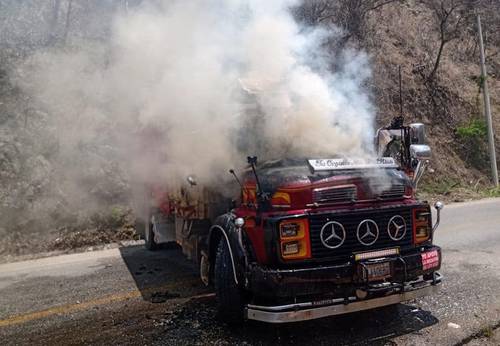
In the early morning of May 22, 2023, the Battle of Frontera Comalapa began. It lasted until Thursday 25. The Chamic wanted to advance through Chicomuselo, Motozintla and Paso Hondo. They were unsuccessful. Finally, they raided the Grijalva area, to take the municipal seat. On the way they savagely cleaned the route of peasants subdued by MAIZ. The zone of attack was Nuevo Independencia. But those from Jalisco arrived earlier, surrounded the ejido and took over the park.
For 48 hours bullets rained down nonstop. Inhabitants locked themselves in their homes and ate what they could. The clash escalated. Drones from both sides flew over houses, dropped bombs and some were shot down by enemy fire. Those of Jalisco took their “monsters” into combat. Bazookas. Finally, the Comalapa group defeated the Chamic group and recovered the community of Lajerío. There was a truce of about four hours. Still the Pacific Cartel tried a counteroffensive unsuccessfully. About 48 hours later, when things had calmed down, the Army arrived.
On May 25, people started walking along the harvest roads and bridle paths, where only horses pass. They crossed mountains, rivers and forests. They grabbed hardly anything. They brought a backpack with clothes, food, water. There were no passenger cars. They could not take private cars because the “narco-checkpoints” prevented passage. The communities were left like ghost towns.
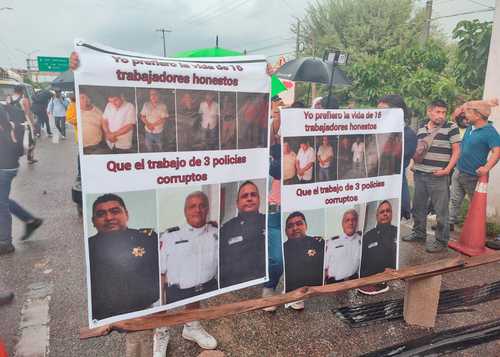
A banner placed in Mazapa de Madero by Motozintla, bordering Comalapa, warned: “We are coming for you, Güero Pulseras [the head of the Pacific]” and also denounced three officials allegedly linked to drug trafficking: Francisco Javier Orantes, undersecretary of Public Security; Roberto Jair Hernández, director of the Border Police, and Marco Antonio Burguete, director of the state preventive police.
On June 27, armed and hooded men “picked up” (kidnapped) 16 employees of the Ministry of Public Security. They demanded for their release the presentation alive of the singer Nayeli Cyrene Cinco Martínez, kidnapped on June 22, probable partner of Fredy Ruiz Güé, lieutenant of Juan Manuel Valdovinos, and the dismissal of three police commanders (those indicated in the narco-banner of Mazapa), accused of protecting those of the Pacific. The abductees were released and arrived 200 meters from the Police Academy to meet their families.
A Big March is planned for July 14 in San Cristóbal
Tired of paying for a rivalry with which they have nothing to do, outraged by the violence, determined to stop a war that does not dare to say its name, on July 14, the three dioceses of Chiapas, the evangelical community and a multitude of social organizations and popular groups will march in San Cristóbal for life, Family and community.
[1] The Sinaloa Cartel is also known as the Pacific Cartel (CDP, Cártel del Pacífico).

Originally Published in Spanish by La Jornada, Tuesday, July 4, 2023, https://www.jornada.com.mx/2023/07/04/opinion/019a1pol and Re-Published with English interpretation. by the Chiapas Support Committee
Tired of paying for a rivalry with which they have nothing to do, outraged by the violence, determined to stop a war that does not dare to say its name, on July 14, the three dioceses of Chiapas, the evangelical community and a multitude of social organizations and popular groups will march in San Cristóbal for life, Family and community[1] The Sinaloa Cartel is also known as the Pacific Cartel (CDP, Cártel del Pacífico)==Ω==
 Chiapas Support Committee