
By: Magdalena Gómez
Within the very broad cases and situations of human rights violations in our country, a campaign is underway that seeks to stop the war in Chiapas against the Zapatista communities, without this war only affecting them, but has become a complex pattern in many regions of the national territory. All of which, without a doubt, place the focus of attention on the Mexican State, not only on the current government and on the six-year term of office, but on the structural breach, by action or omission, of a central function, which is to guarantee respect for the human rights of everyone, without distinction. For the victims, their families, human rights organizations, the fight against impunity is present and the inalienable decision to use the legal spaces at their disposal at all levels, national and international, the little windows or vents, which the Mixe leader Floriberto Díaz Gómez said, without forgetting the need to maintain the effort in the dissemination of these struggles to achieve commitment and social awareness in this regard. Always facing the risk that before justice the official criminalization of its promoters is received as a clear example that it’s better to eliminate the messenger than to eliminate his message.
In this context, today we call attention to the case of Antonio González Méndez, a member of the EZLN’s civilian bases, who was disappeared on January 18, 1999 by the paramilitary group [ironically named] Paz y Justicia (Peace and Justice), which operated in municipalities in the northeastern zone of Chiapas, within the framework of the counterinsurgency policy implemented by the Mexican State after the EZLN Uprising. As we know well, a central part of it was the formation of paramilitary groups, against civilians, whose objective was to provoke a state of terror that would prevent the communities from supporting the insurgency.
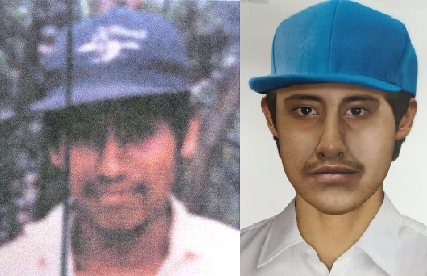
Faced with the adverse national context for justice, Antonio’s family and the Fray Bartolomé de las Casas Human Rights Center (Frayba) decided to go to the Inter-American Human Rights System in 2000 to sue the Mexican State for both his disappearance and for impunity.
After a long international process, the Inter-American Commission on Human Rights (IACHR) issued its merits report in 2019, and recognized that the state’s counterinsurgency policy was considered proven, the participation of the State in the formation of paramilitary groups, and that Paz y Justicia was one of them. Additionally, it demanded an investigation of the facts and a search for Antonio in this context.
The Mexican government, in times of the so-called Fourth Transformation, decided to give a minimum compliance, just the protocol, with the substantive report: the undersecretary of Human Rights, Migration and Population offered a public apology in which he recognized the context of the disappearance. To date, no actions have been taken to search for Antonio González, and even fewer have lines of investigation have been considered in accordance with the internationally recognized counterinsurgency context.
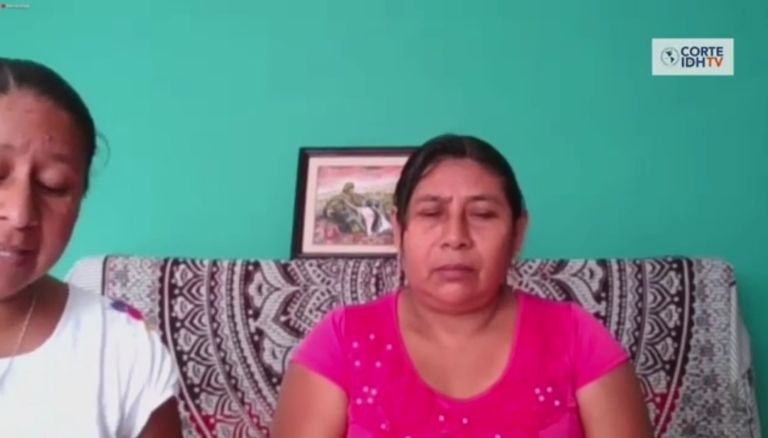
Given the continuity of the State’s omissions, the case was finally presented to the Inter-American Court of Human Rights (Coridh). The Mexican government again denied the counterinsurgency policy. The Frayba has denounced that such a position in fact, makes it an accomplice of previous governments, and responsible for the psychosocial effects that continue to occur due to the lack of truth for the victims of paramilitarism in Chiapas, as is the case of the survivors of the Acteal massacre, or the relatives of the other 37 disappeared and the 85 people “executed” by Paz y Justicia.
The Frayba announced that in the coming days the case will be heard before the Inter-American Court. [1] It highlights and draws attention to the fact that this is the first time that the Court knows about this context, and implies a new opportunity for the Mexican State to be condemned, to recognize the truth about this episode in history, and to finally commit itself to reparations for all the victims of its criminal policy. It is emphasized that the Inter-American Court can strengthen the historical demand for the Mexican State to recognize that the disappearance of Antonio González Méndez was committed within the framework of its counterinsurgency policy, developed in Chiapas during the 90s. Also, the always valid urgency of its exhaustive search, and definitive recognition of the truth and responsibility for all the crimes committed in this period. Because it wouldn’t just be about one case and one missing person.
We are talking about setting an indispensable precedent to speak with solvency of the rule of law in the country.
[1] The case was heard on June 21, 2023. The Mexican State again denied responsibility, claiming that the petitioner had not proven a connection between the State and the paramilitary group. The parties await the Court’s decision.

Originally Published in Spanish by La Jornada, Tuesday, June 20, 2023, https://www.jornada.com.mx/2023/06/20/opinion/018a2pol and Re-Published with English interpretation by the Chiapas Support Committee
 Chiapas Support Committee