By: Raúl Romero*
The phenomenon of paramilitarism is historical and widely studied in Latin America. Paramilitaries are armed civilian groups, trained, financed and/or permitted by states. By means of violence, their task consists of maintaining control of the population, eliminating the resistances and sustaining local, regional or national power groups. Paramilitaries are the irregular troops that do the tasks that, because of laws and agreements, the regular armies don’t usually carry out. These groups have political interests or use the ones they detain.
In the second half of the twentieth century, their task in Latin America was aimed at countering the advances of popular armies and revolutionary guerrillas. Gilberto López y Rivas has described how paramilitaries are used to implement tactics such as the hammer and anvil, in which the army is responsible for containing or immobilizing rebel forces and the towns that support them, while paramilitaries execute attacks. This presents the possibility that governments that use such strategies can deny that these are state operations, and even go so far as to argue that they are “intra-community conflicts.”
In Mexico, the antecedents of these groups are the guardias blancas (white guards), at the service of large landowners to facilitate processes of land dispossession and strengthen control over enslaved indigenous populations. Some of these structures survived the colonial era and knew how to adapt and update themselves to the formation of the independent nation-state with its formal army and its claim to the monopoly of legitimate violence. Estate owners, ranchers and large landowners counted on their private armies to guarantee their power and control of campesinos and indigenous peoples.
Also, in the second half of the twentieth century, the Mexican state systematically resorted to paramilitary groups to repress movements. We kept the names of the Olympia Battalion and the Halcones, at the service of the federal government and used to suppress the movements of 1968 and 1971, respectively, in the popular memory. Allied with the right and its youth, in states such as Puebla and Jalisco, there are experiences of how local governments formed or let paramilitary organizations that repressed members of popular structures that fought for a more just world act with total impunity.
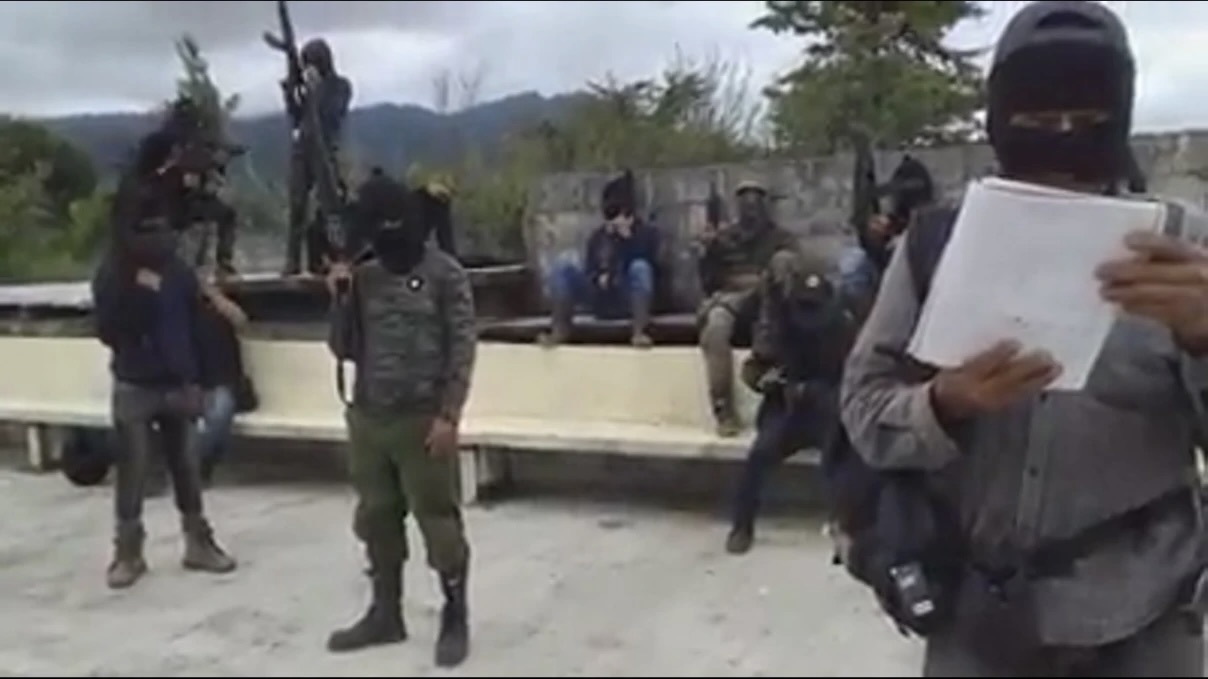
The public appearance of the Zapatista National Liberation Army (EZLN) in 1994 was another moment in which it was possible to observe the survival of paramilitary groups, their link with the army and the permissiveness and impunity that was guaranteed to them. Groups such as Paz y Justicia, Chinchulines or Máscara Roja attacked both Zapatista and non-Zapatista communities, in order to wage war on the EZLN, but also to sow terror among the population. The Acteal Massacre, where a paramilitary commando murdered 45 indigenous people, is an unforgettable event.
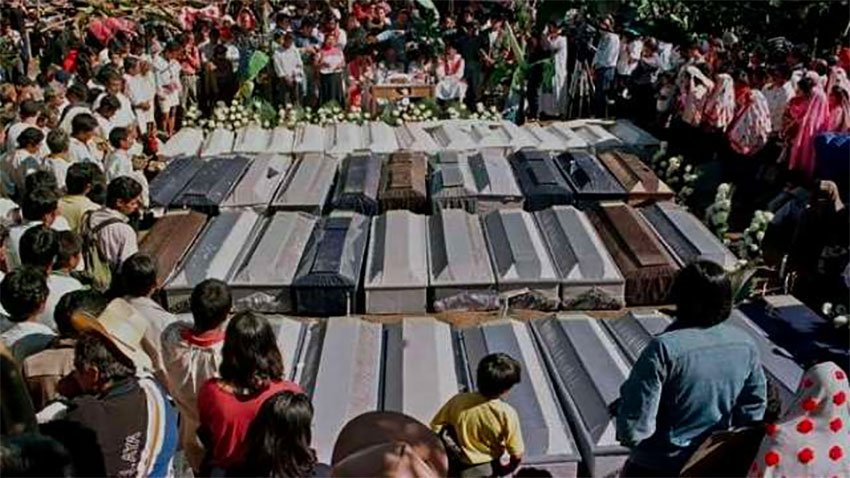
In the case of Chiapas, since the arrival of the democratic alternance, in 2000, the power groups and their paramilitaries changed the colors of their tricolor T-shirt to adjust to those of the government in turn: blue, yellow, green, cherry. Justice did not reach them, because when some were investigated, powerful structures were moved to defend them, as happened with part of the paramilitaries responsible for the Acteal massacre that were defended by Hugo Erick Flores.
Likewise, former popular organizations were co-opted to operate in favor of the State. Today there is also talk of second-generation paramilitaries, groups that inherited weapons, contacts, strategies, impunity and that made paramilitarism a way of life. Although the origin is different from that of the traditional formation, its function is the same: through violence, maintain control of the population, eliminate resistance and sustain or sustain itself as a power group.
With the expansion of criminal corporations throughout the country, armed organized crime groups carry out operations that equal and expand those of paramilitaries, but in the service of a parallel form of state that converges and intertwines with the formal state. The paramilitaries of the formal State and the armed groups of organized crime come to coincide and coordinate in their tasks of territorial control and expansion of criminal or extractive economies. In some cases, as documented in Oaxaca, the government of Ulises Ruiz turned directly to organized crime groups for counterinsurgency and repression.
Identifying, in the confusing Chiapas panorama, who they serve and what the interests of the paramilitary groups are is key to finding those responsible for years of war and those who invoke it today.
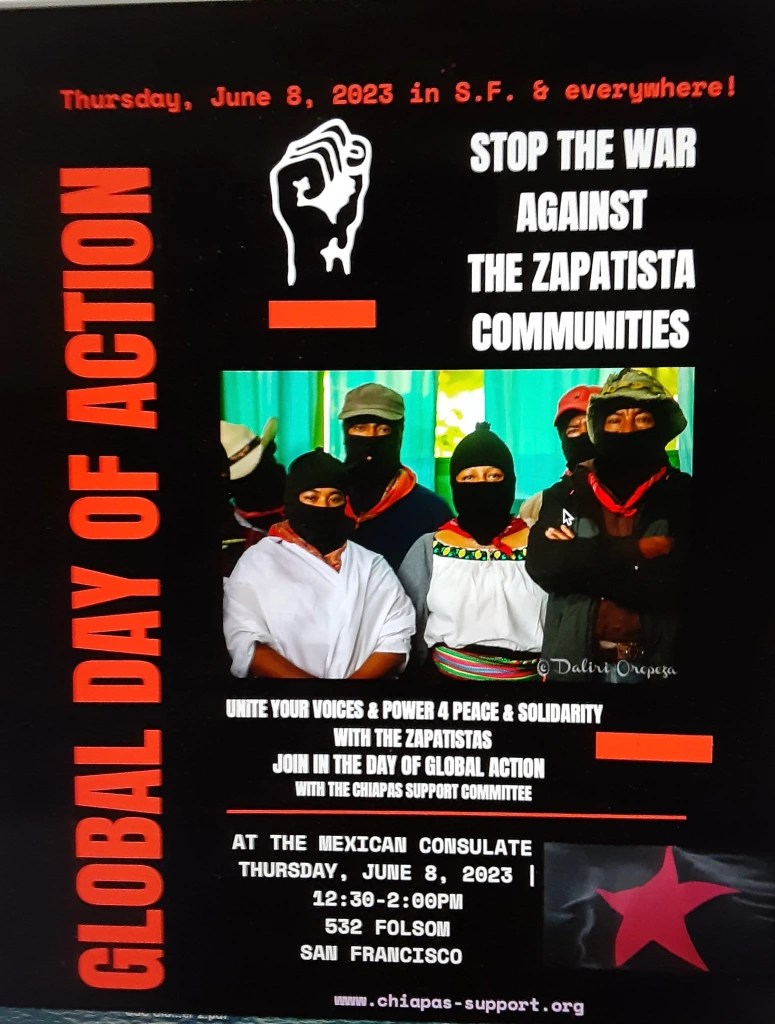
As truth and justice arrive, for now something becomes urgent: to stop the war in Chiapas.
*Sociologist
@RaulRomer_mx
Originally Published in Spanish by La Jornada, Saturday, June 17, 2023, https://www.jornada.com.mx/2023/06/17/opinion/013a1pol and Re-Published with English interpretation by the Chiapas Support Committee
 Chiapas Support Committee